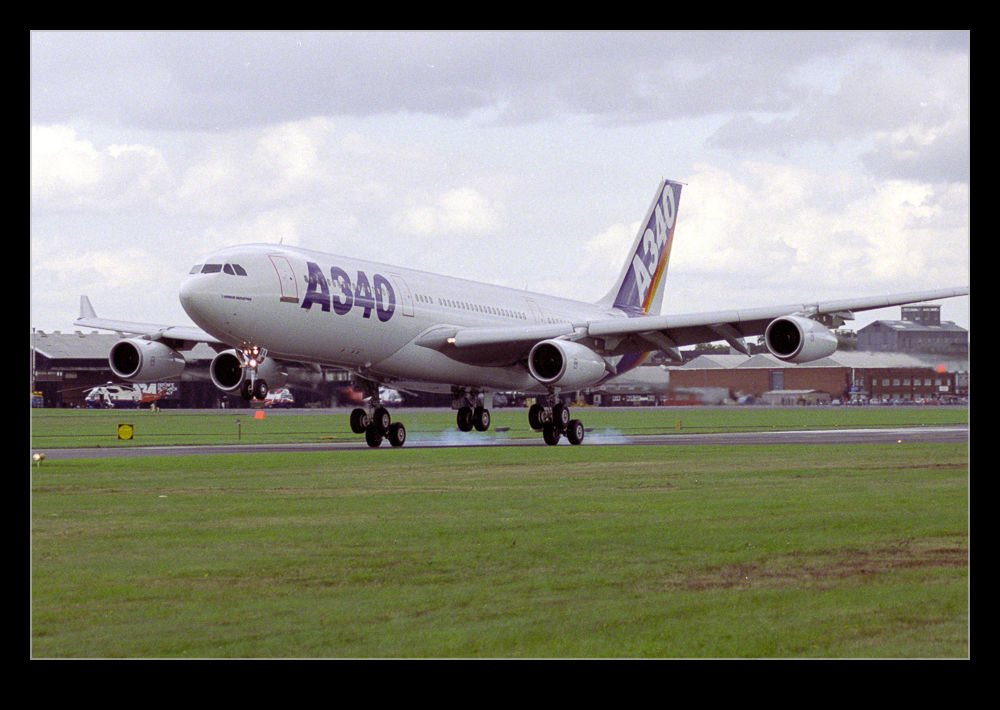
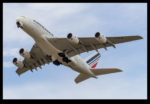
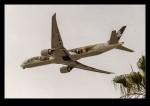
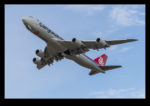
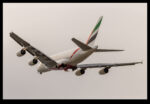
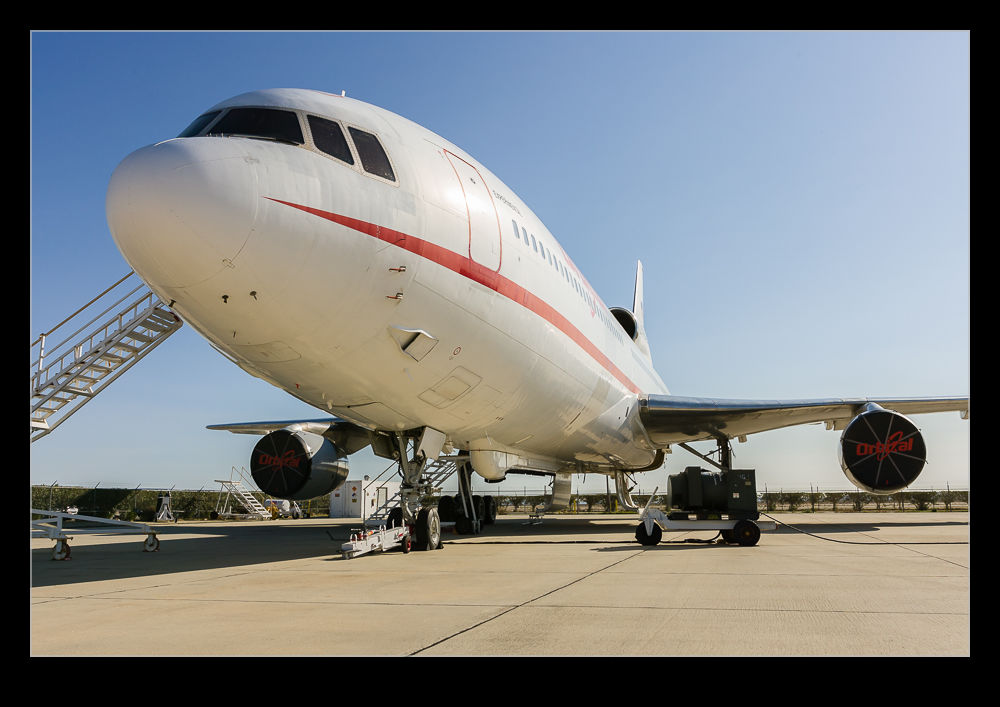
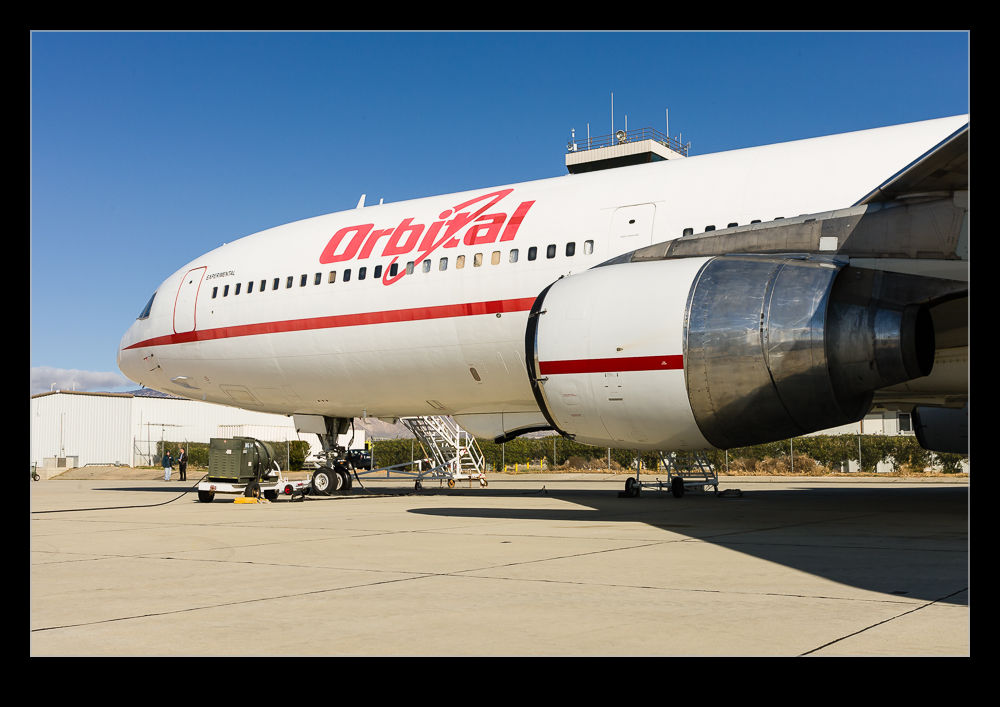
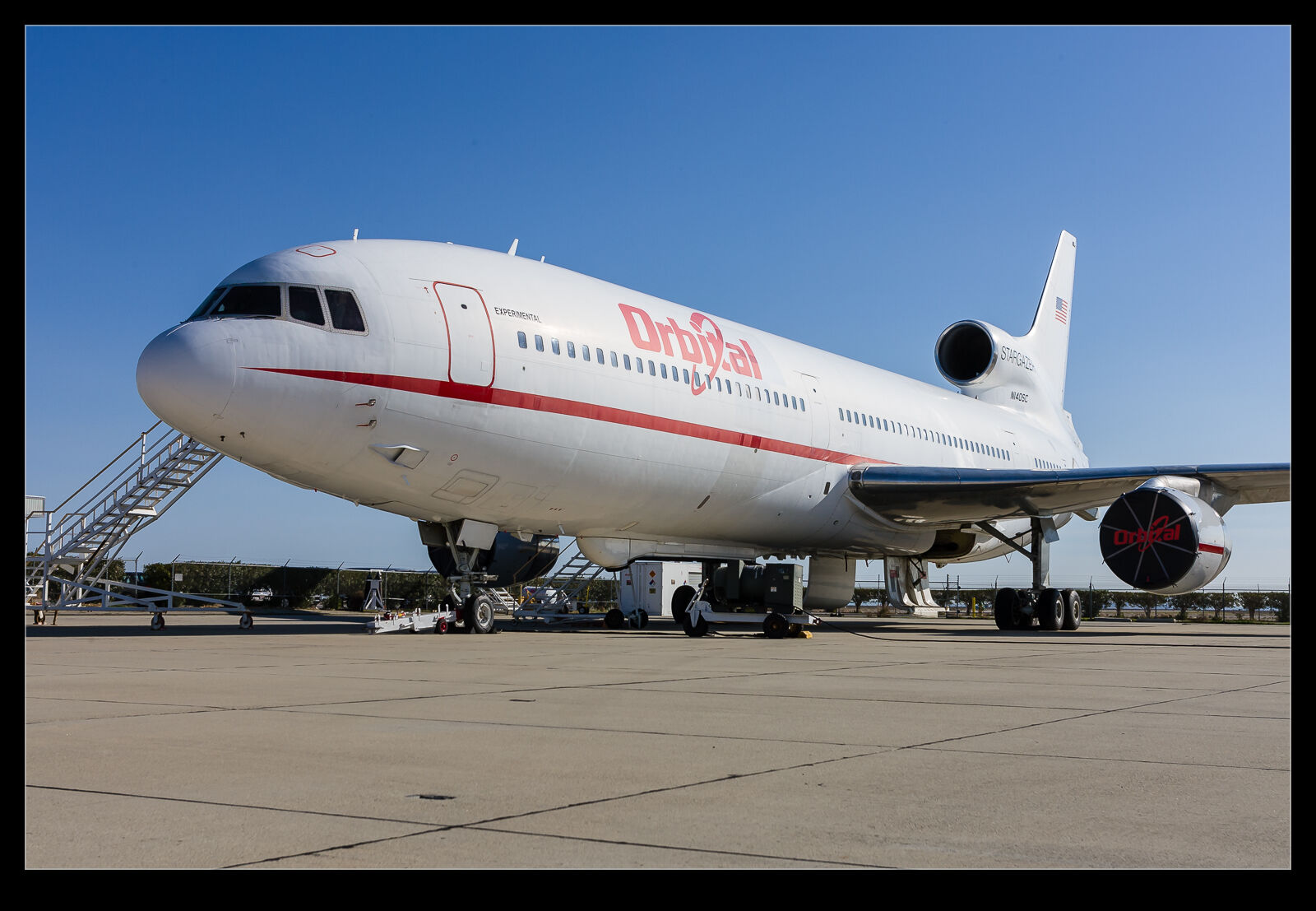
Another opportunity that Richard organized for us while at Mojave was the chance to shoot Orbital Science’s Lockheed L-1011 TriStar. This is an airframe that was modified to provide the launch platform for their Pegasus orbital launch vehicle. The underside of the fuselage is modified to mount the Pegasus which is then taken to altitude and dropped before the booster ignites. The TriStar is a type that disappeared from service far faster than its rival, the DC-10, so seeing one in great condition was pretty cool.
Tag Archives: airliner
Big Boys at LAX
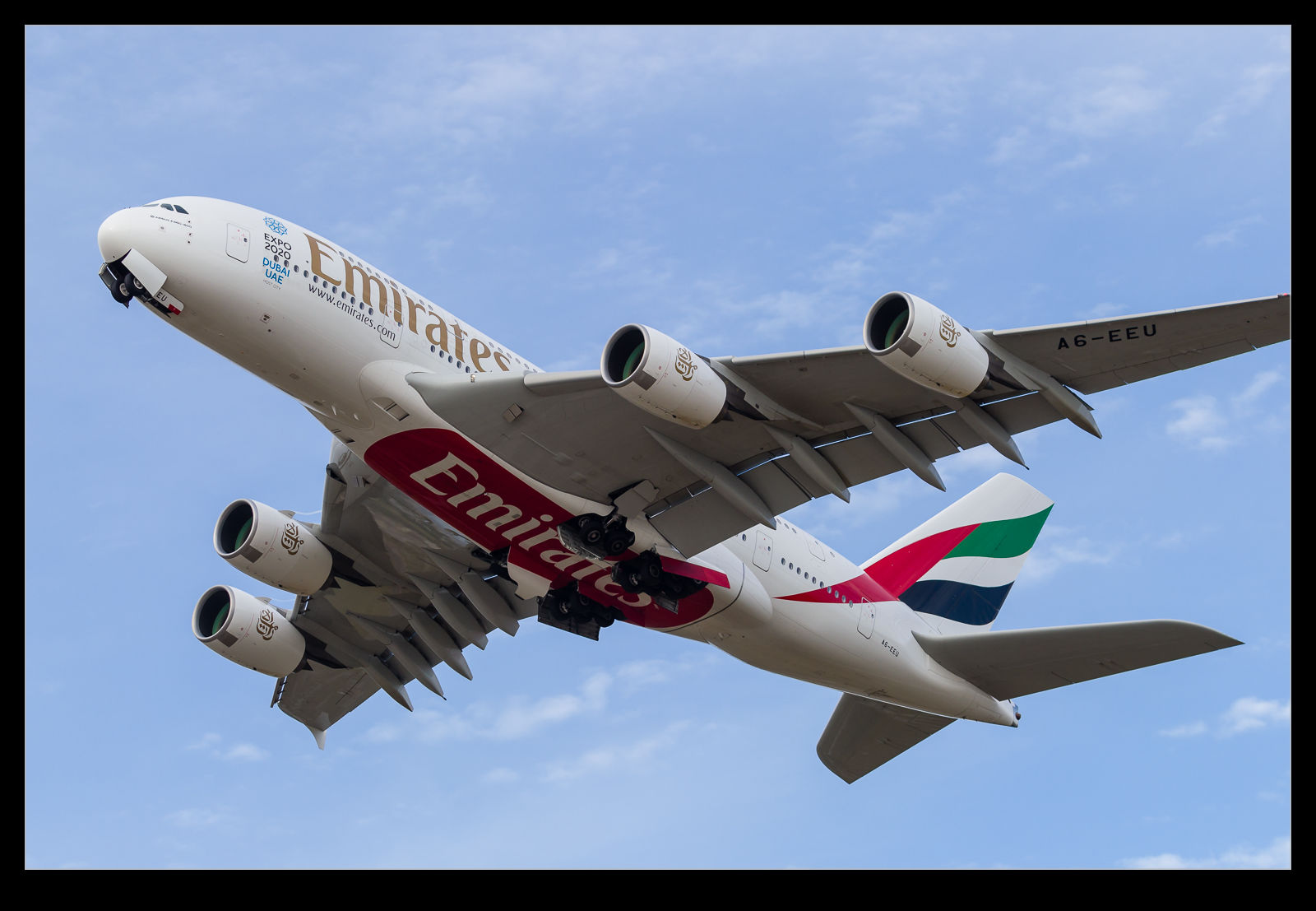
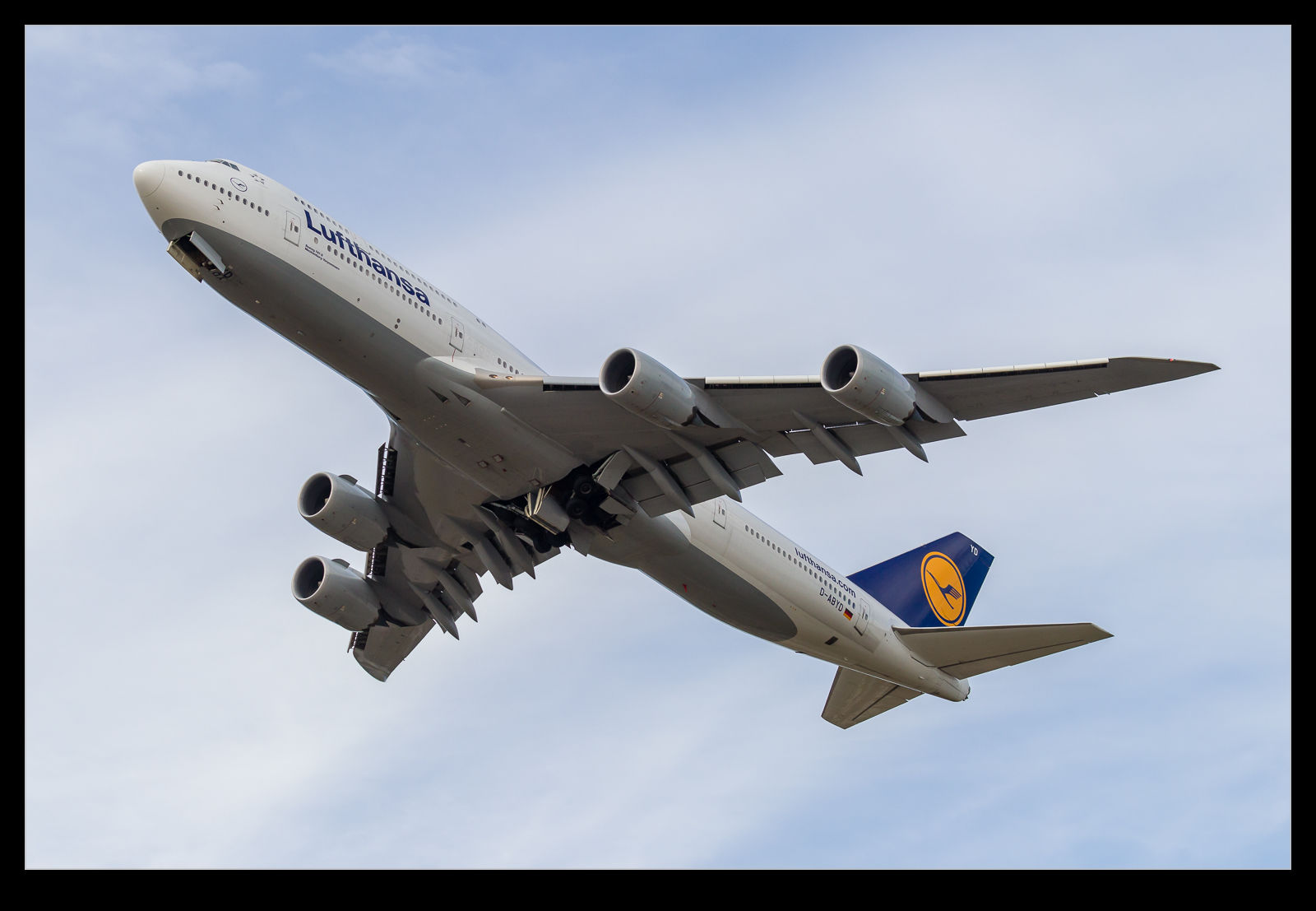
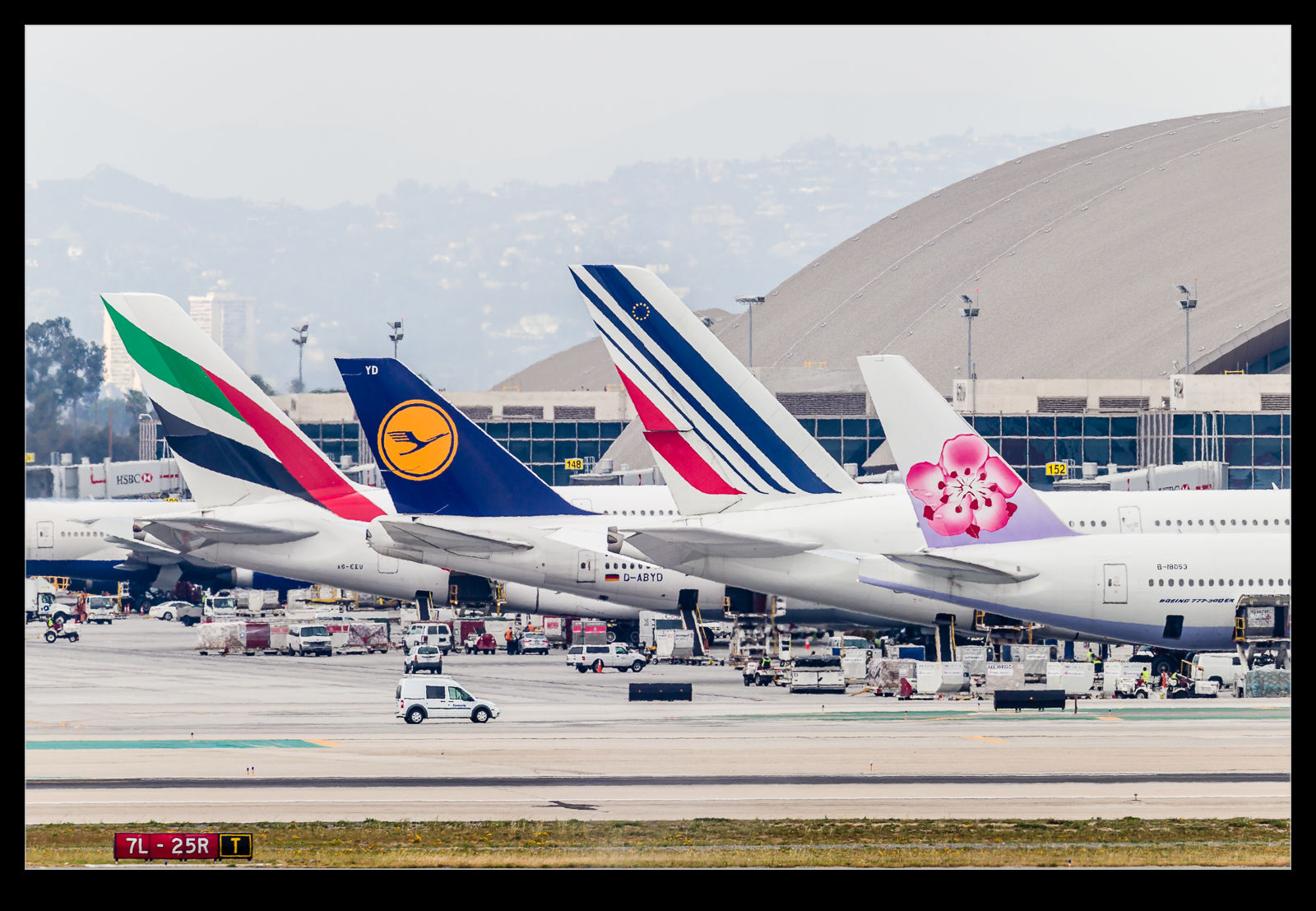
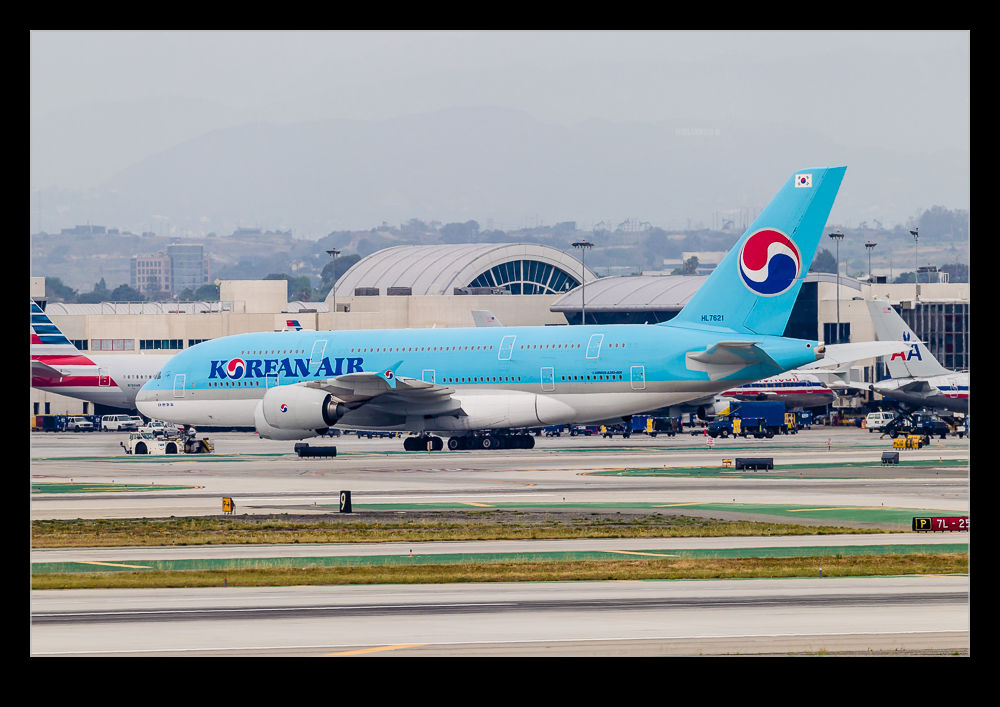
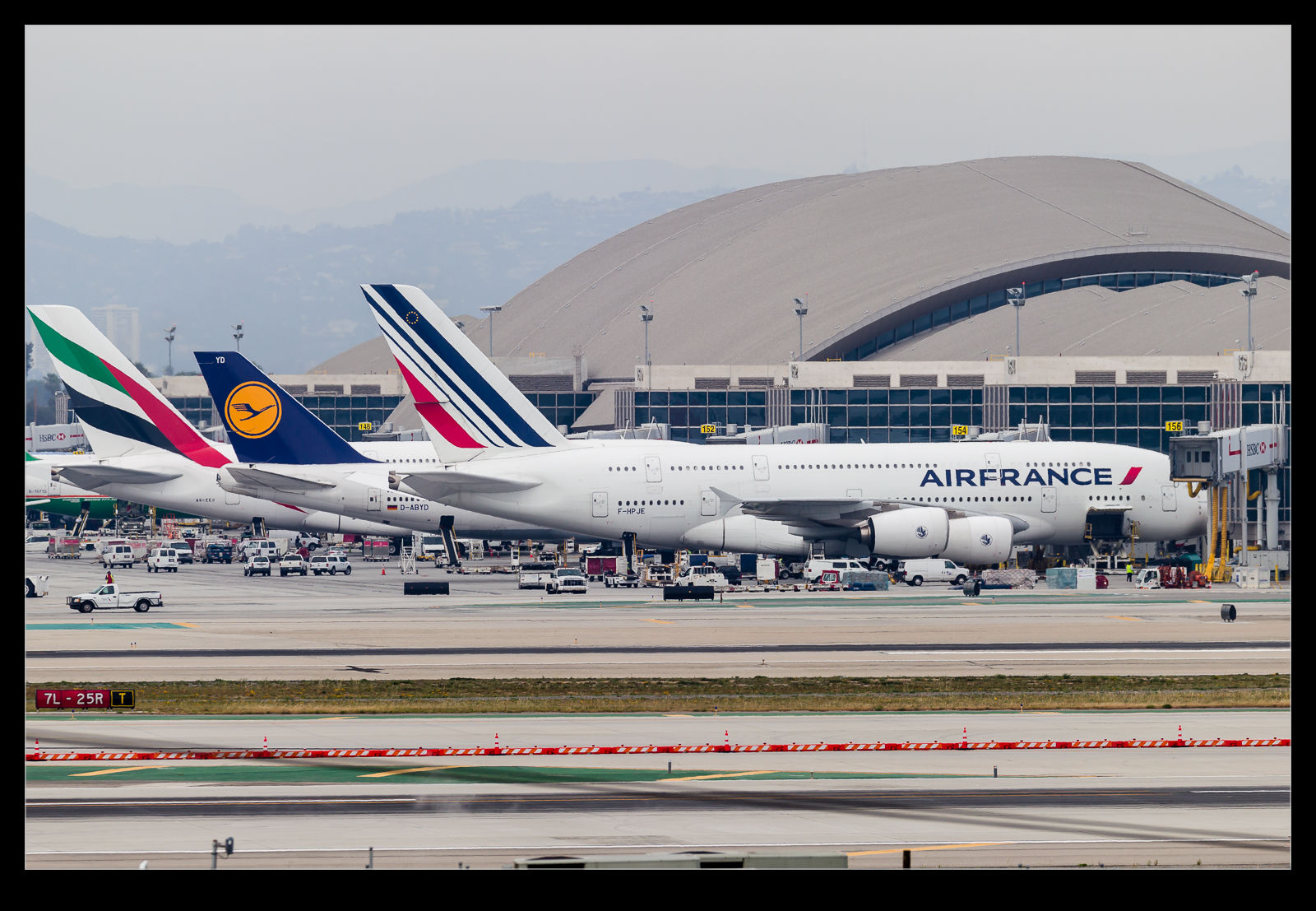
I was in Los Angeles a little while back and managed to get a few shots of things at LAX between other activities. This is a quick picture post. The new international terminal has been opened and the big jets are often arrayed along it at the right time of day. The thing that I find funny about this shot is that the small fin in the middle is a Lufthansa Boeing 747-8. This is not a small plane but the Airbus A380 fins make it look tiny!
Another 777-300ER Wheel Post?
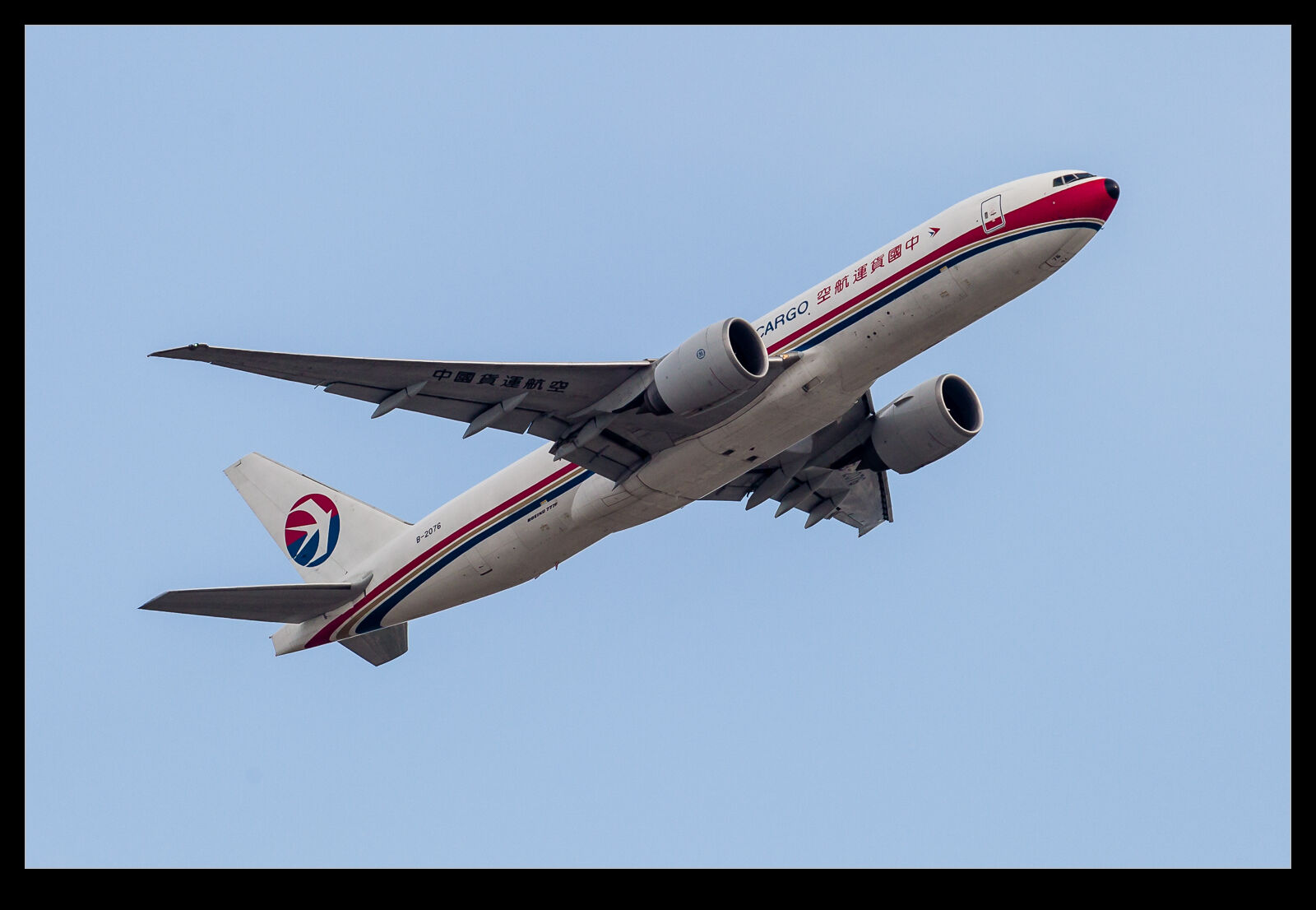
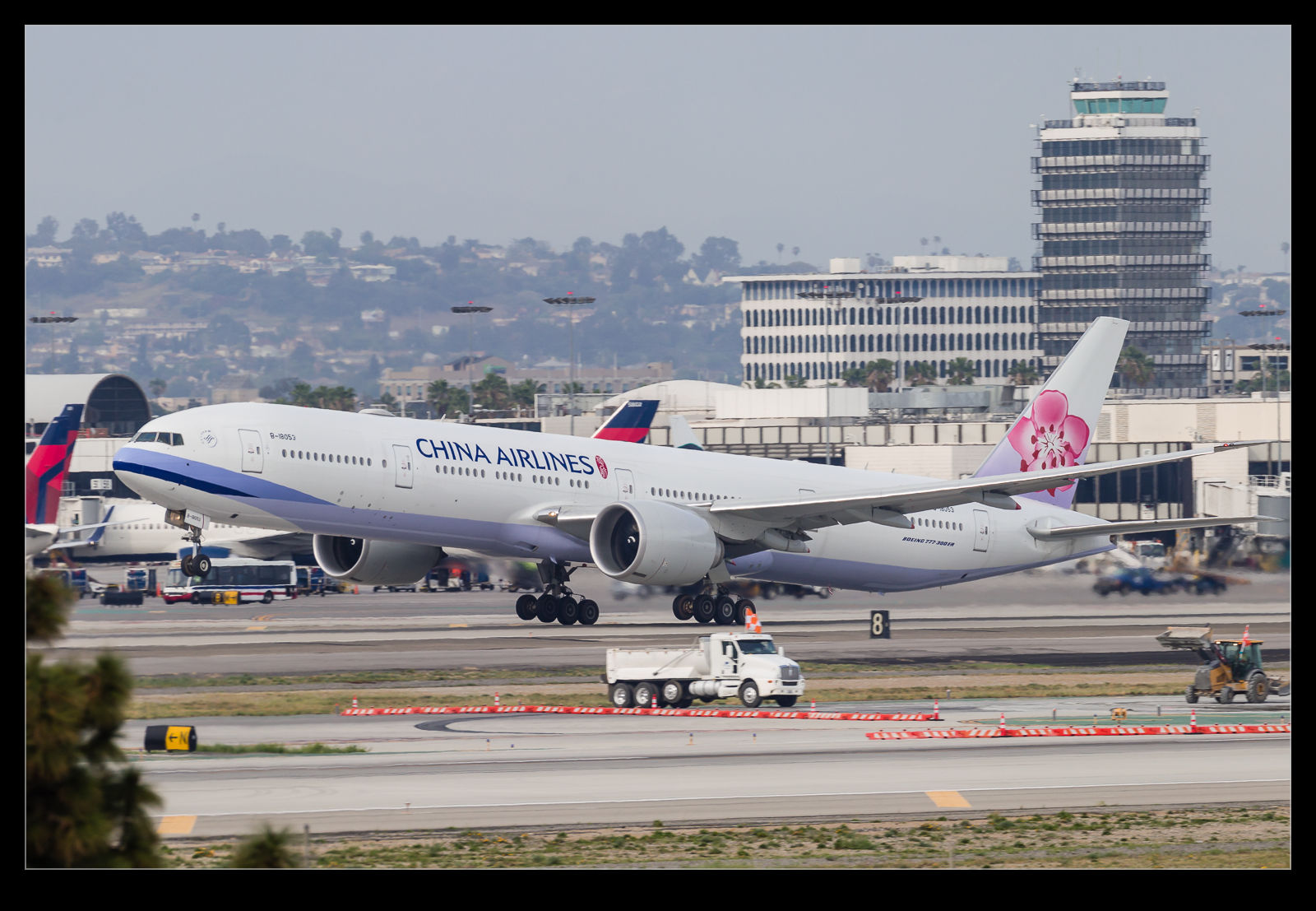
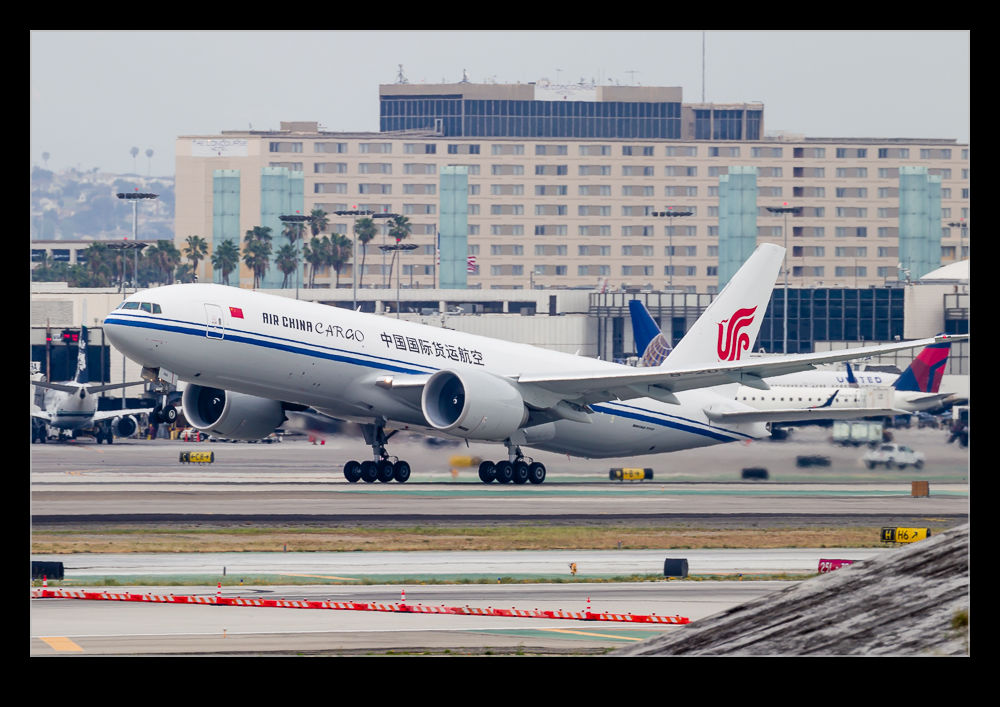
If you aren’t already bored with my quest for something definitive on the takeoff characteristics of the Boeing 777-300ER, here is something more on the topic. Rather than animation, this time it is a couple of still shots. The first is a 777-300ER rotating. The second is a 777F. You can clearly see that the truck is rigidly rotating on the 300ER while the freighter has all wheels firmly planted on the ground up into it gets airborne. Maybe I will call that it for now. I promise no more posts on this for a while!
Gear Down and Locked
There are some shots that it is just hard to get. They are possible but it depends on what you have available. One idea that I have been trying to come up with a solution for is getting good shots of airliners as they lower their gear. The sequence for lowering the gear is pretty cool and the outline of the plane when it has flaps deployed but no gear is of interest to me too. However, to get a shot like that, you need to be high up further out on the approach. Unless you are in another aircraft, that is tricky to do.
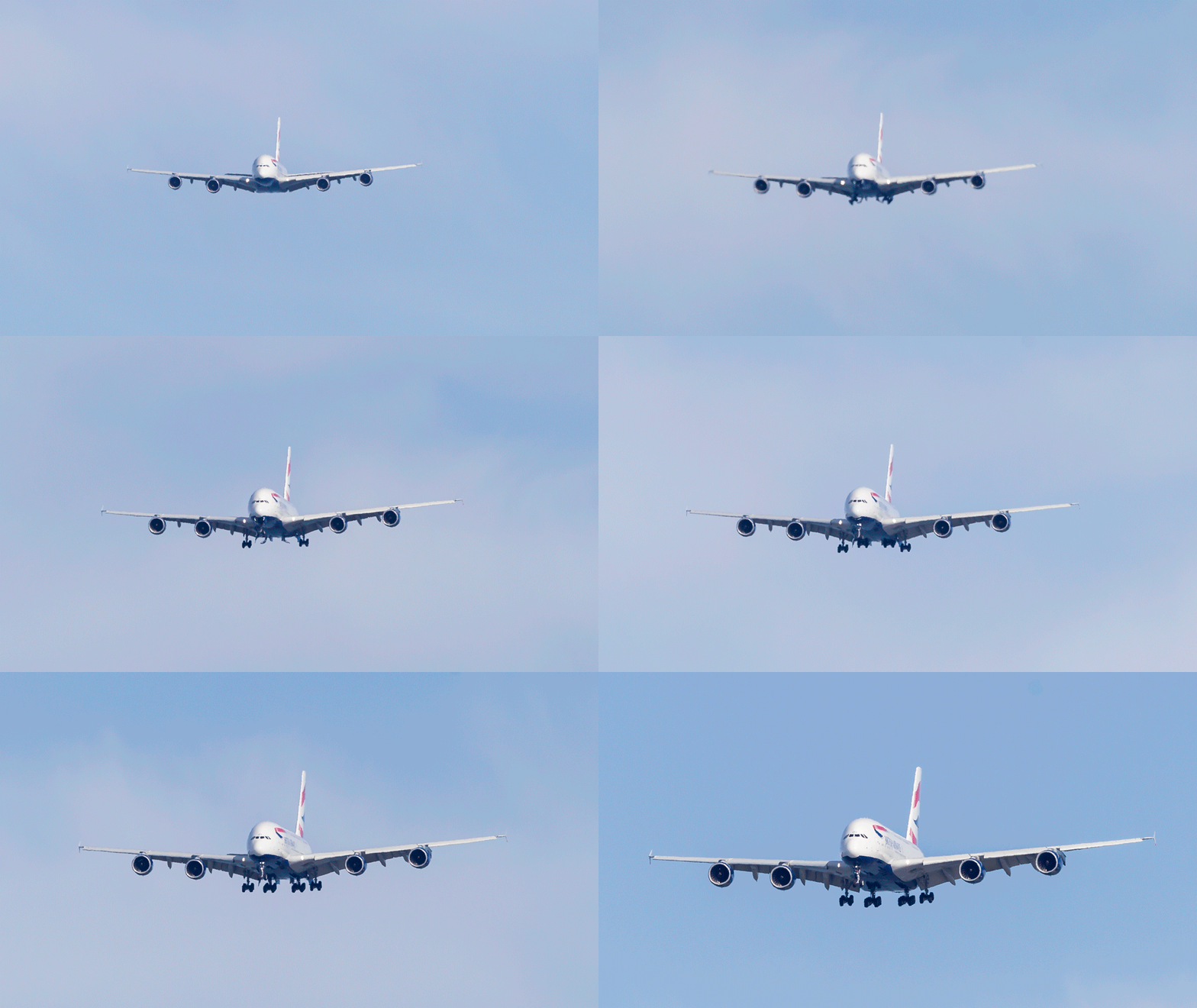
From the normal locations on the ground, the aircraft is just too far away to get a decent shot. Not only is it in the distance and, therefore, small but you also have to cope with atmospheric disturbances like heat haze and dust in the air. It doesn’t make for a compelling shot! Instead, I decided to try something different. I would shoot the sequence of shots of the approach and then animate them. This would mean that the reduced quality of an individual shot would be lost as the sequence would require a certain amount of motion blur anyway.
What I didn’t realize until I tried this on an A380 was that this jet has an unusual gear sequence. I was looking at trying a 747 or an A380 since they are large and have interesting wing configurations when approaching to land. As it turns out, the A380 lowers the outer two gear legs first before the two center body legs come down. I had not appreciated this before trying this shot. Animating the sequence really put the computer under some pressure. Creating a file with over 100 layers and then adjusting each layer to align properly took some time and really made the machine work hard. Ultimately, I got the sequence you can see above.
Northrop Grumman Testbeds
Every once in a while I am looking for things to include in the blog from previous photographic outings. I was discussing an aircraft with an unusual radar installation which will now show up in an upcoming blog post as well. However, it triggered another thought about some radar testbed aircraft that I used to see quite regularly. For a number of years I was working in Washington DC on a regular basis and I would fly in to BWI airport. Aside from being a popular hub for Southwest, it is also the home of a Northrop Grumman radar plant.
They have a hangar on site which not only deals with their corporate aircraft but also their testbeds for the airborne radar programs. This hangar is located along a tree lined taxiway so everything is pretty obscured from view (unless you are airborne when you can see in a lot more clearly). The two testbeds that I saw quite frequently were a Sabreliner business jet and a BAC 1-11 airliner. The 1-11 was a regular sight when I was a lot younger but now they are almost all gone. Therefore, this was the one I was always pleased to see.
Sadly, I often saw them when I was without a camera or the camera was away. No electronics below 10,000’ in those days. However, I did catch them occasionally so these shots are a reminder of what was there. I suspect that the 1-11 is no longer in use. I imagine it was becoming a pain to maintain but I don’t know for sure whether it still is around. If you know, please do tell me.
Above SFO
This blog has had plenty of pictures that have been taken at SFO. Most of them have been of the planes flying into and out of the airport. Not many have been of the airport itself. If you find yourself on the left side of a plane out of Oakland heading south, you will get a pretty good view of the airport on the other side of the bay as you climb out. That includes a view along the departure runways as you head towards the city and then a turn that takes you close to over the top.
You climb quickly so start to end up a bit high for good shots but it still is a pretty neat view. The aircraft windows provide their usual problems but moving the camera around gets a better chance of a reasonable shot. I also have been experimenting with using a smaller aperture. I used to think shooting wide open would be best to avoid showing the scratches and any other blemishes on the windows. However, since the distortion in the windows is quite variable, shooting with a narrower aperture might restrict the light to a smaller part of the window and increase the chances of getting the clear area for the whole shot. Who knows? Individual aircraft vary so much, it is hard to tell at this point.
It would have been cool to have more traffic at SFO as we flew over but the planes were pretty small anyway so that may not have made any difference in the end.
Centurion Freighter
I was in the vicinity of SeaTac when I saw on Flightaware that a freighter operated by Centurion Cargo was inbound. This was not an operator I had seen much of and, since I had a few minutes before I was heading to my next appointment, i thought I would try to catch it. Getting arrivals at SeaTac in the afternoon when they are coming from the north restricts the options for shooting. however, there was a place I had been before for departures that I thought I would try.
I got there with a few minutes to spare so was able to get an idea of what was possible with some other arrivals. The location was not ideal with a lot of trees in the vicinity which, even though it was winter, tended to obscure things a bit. There was a view through the trees up the approach and then along a road as they passed by. Neither was very good. I got a British Airways 777 which gave me a clue as to where the Centurion jet would appear and how much free space there would be. Not much as it turned out. However, I did get a brief view which will have to do for now.
Hyper Lapse Landing at Phoenix
Hyper lapse is not something I have tried a lot of but I have done a little experimentation. For those who are expert at it, my description might be a bit simplistic but it is basically a time lapse when the camera doesn’t stay still and the movement through a scene is accelerated. I had a go at this out of a window of a Southwest flight that was approaching Phoenix. Keeping the camera still and in the same reference to the aircraft is a little tricky but the nice thing about time lapse shooting is that small movements get blurred out quite quickly.
I liked the idea of the rapid passing of the scenery, the rapidity of the maneuvers and the speedy deployment of the flaps showing up. I decided to let it run until we were back at the gate. As my friend Paul said, “Don’t all Southwest flights taxi at that speed?”
Two New 737s
Boeing Field not only is the home of development flight test activities for the commercial aircraft business but it is also where the production flight testing for the 737s is done. After the first flight from Renton, the jets come to Boeing Field for acceptance testing and delivery to the customers. Therefore, you can see 737s that you are unlikely to see again once they get into service. I had three customer aircraft on test flights at various times while I was there on one trip.
One of them is not such a surprise for anyone in Europe. A Ryanair 737 landed just as the sun was setting. That is a sight that many European travelers will have seen although we don’t get to see them over here. However, the other two were slightly more interesting to me. One was an Aeroflot jet and the other was from Iraqi Airways. I got the Aeroflot jet twice as it happened. It departed when I was passing through on my way to a meeting and it happened to come back late that day when I was coming back.
The Iraqi jet was one I had seen parked up as I drove by but I didn’t see it leave. However, it was due to return at the end of the day and actually came in not long before the Aeroflot jet. It was clearly going to be in before the sun went down. Aeroflot was a bit of a closer call. We knew it was coming but were watching the shadows stretch across the field and some clouds drift in. Fortunately, the cloud passed just in time and the sun was still just above the horizon so we ended up with some lovely light.
Scimitar Tips
Aviation Partners Boeing has been very effective over the years in getting their technology into mainline airline service. The winglets they developed for the Boeing 737 have been very widely adopted with installations on 300 Series, 700 Series, 800 Series and 900 Series jets around the world. The BBJs have also had them extensively. I don’t think any new 737s are delivered without them. The programs for the 757 and 767 have also been well adopted.
The 737 Max is going to have a new winglet design that Boeing have created. However, it is a way from flying. Meanwhile, APB has not stood still and they have created a new winglet design that has a downward portion mated to an updated winglet under the name scimitar. This is now making an appearance on a lot of jets as a retrofit. Southwest, United and Alaska have all started rolling the installation out.
I like the look of the new design. The tip seems to be a bit of a styling effort. The downward facing portion is well aligned to avoid creating a drag inducing choke area at the root. The configuration is actually quite reminiscent of the original winglet designs in the paper Richard Whitcomb wrote when first proposing the concept. I suspect we shall be seeing a lot more of them in the future.