Tag Archives: air show

Ye Olde Pub Gets Closer to Home

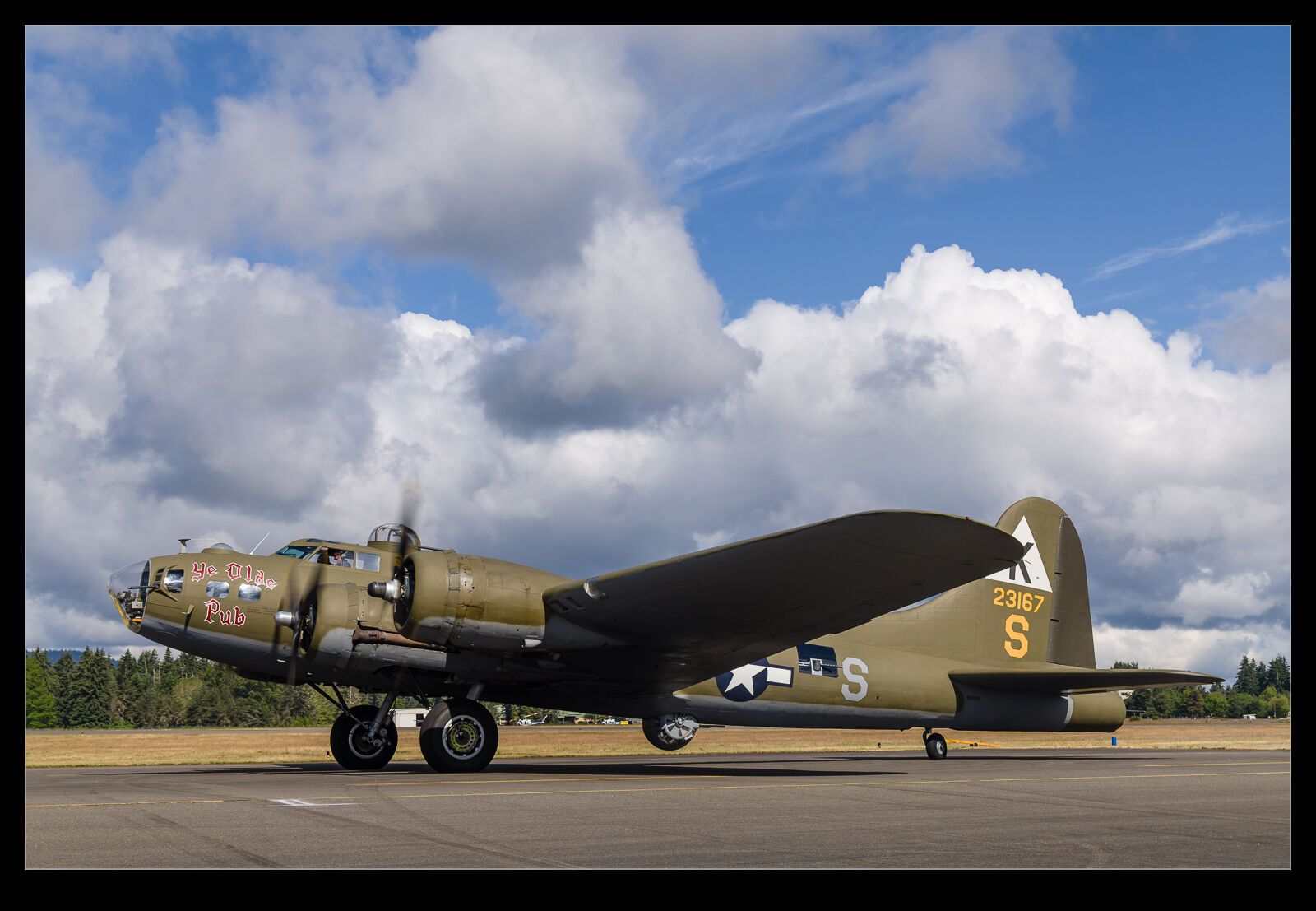
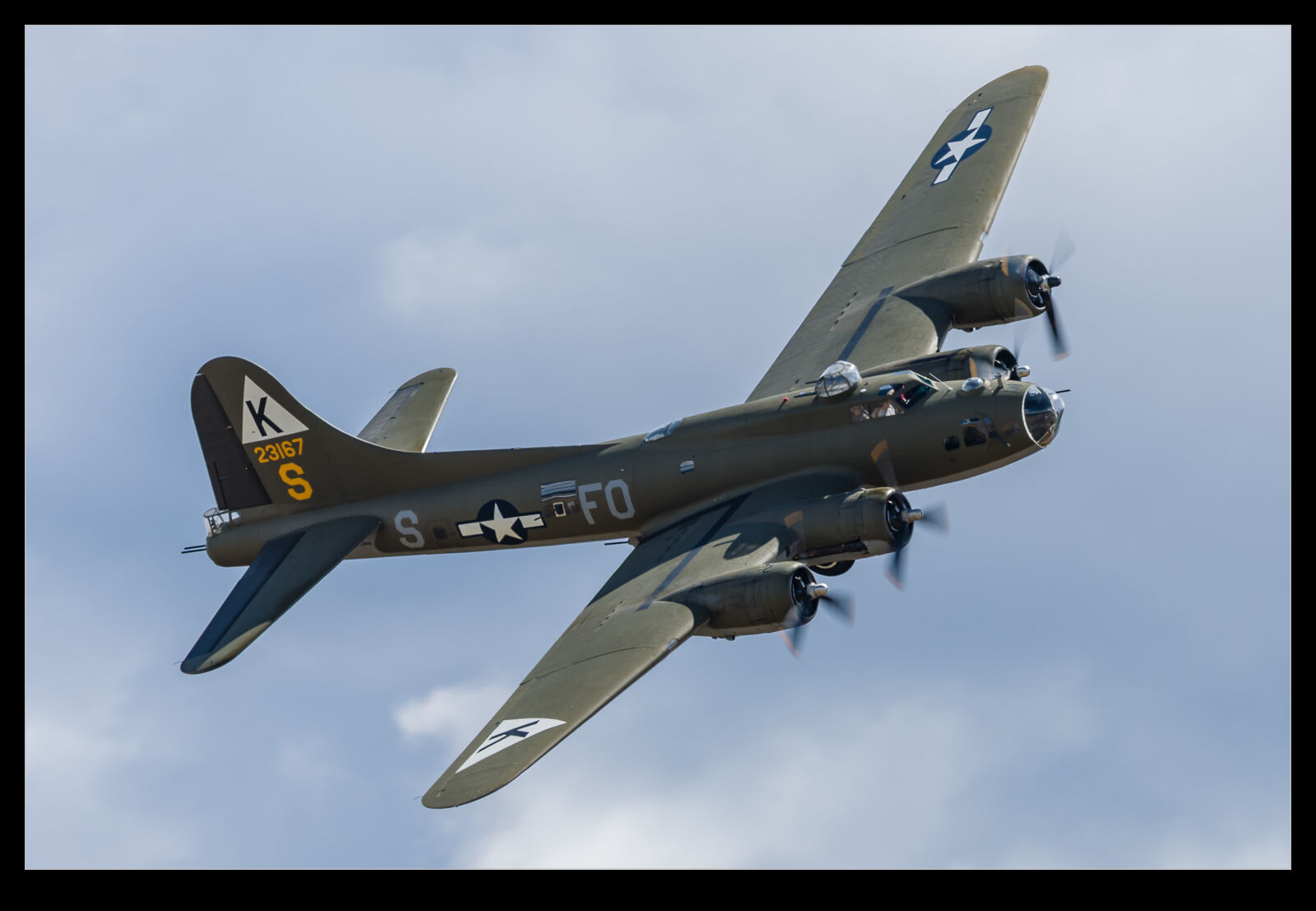
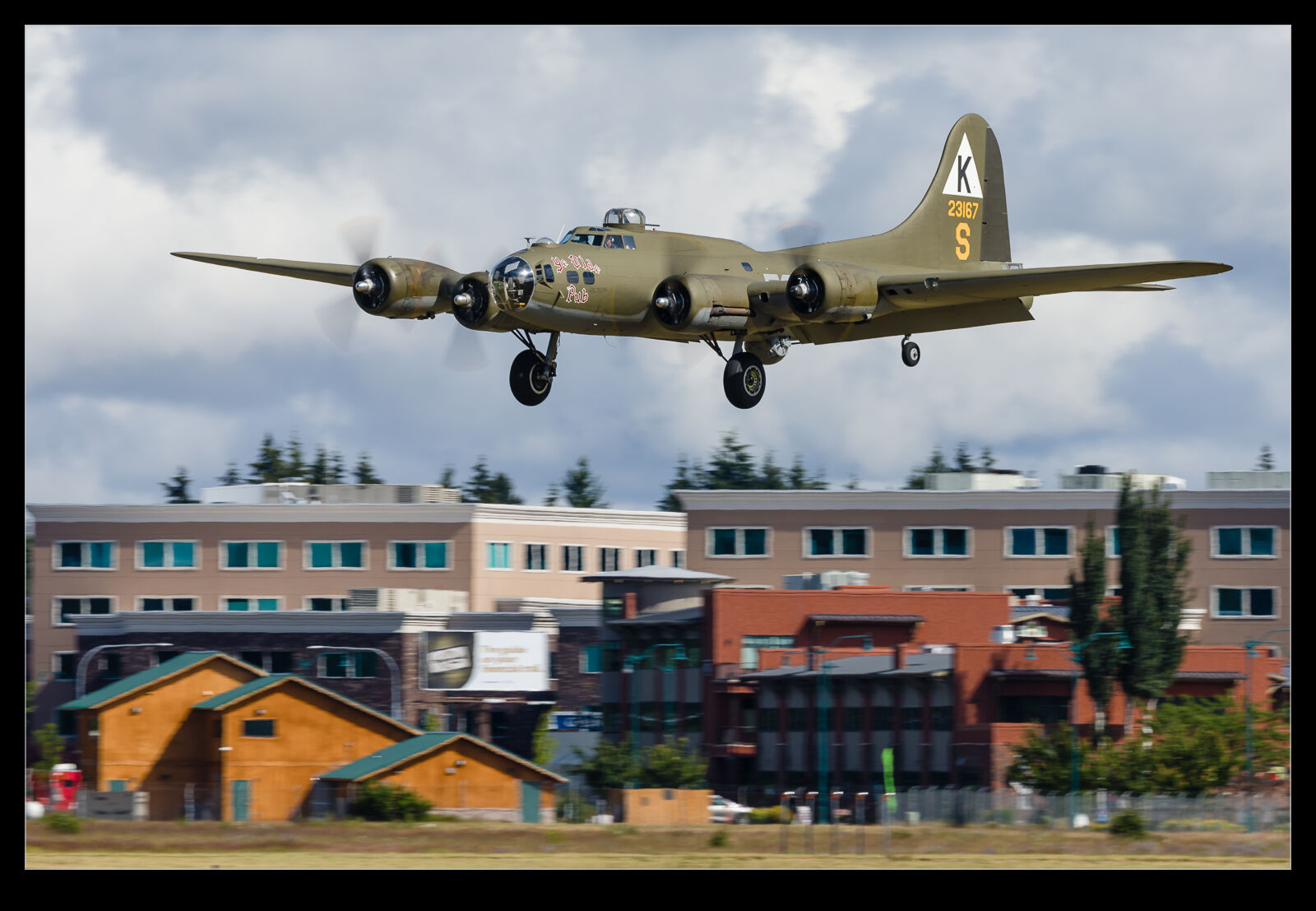
I had been able to photograph the B-17, Ye Olde Pub, when it appeared at the show down at Klamath Falls in Oregon. That was a bit of a hike to get to. In 2024 it put in an appearance at a show a lot nearer to our then home – the Olympic Air Show at Olympia. That made for a far shorter trip to see it – its home in Madras OR is also a fair trek. Olympia is only about 1:45 away if the roads are good.

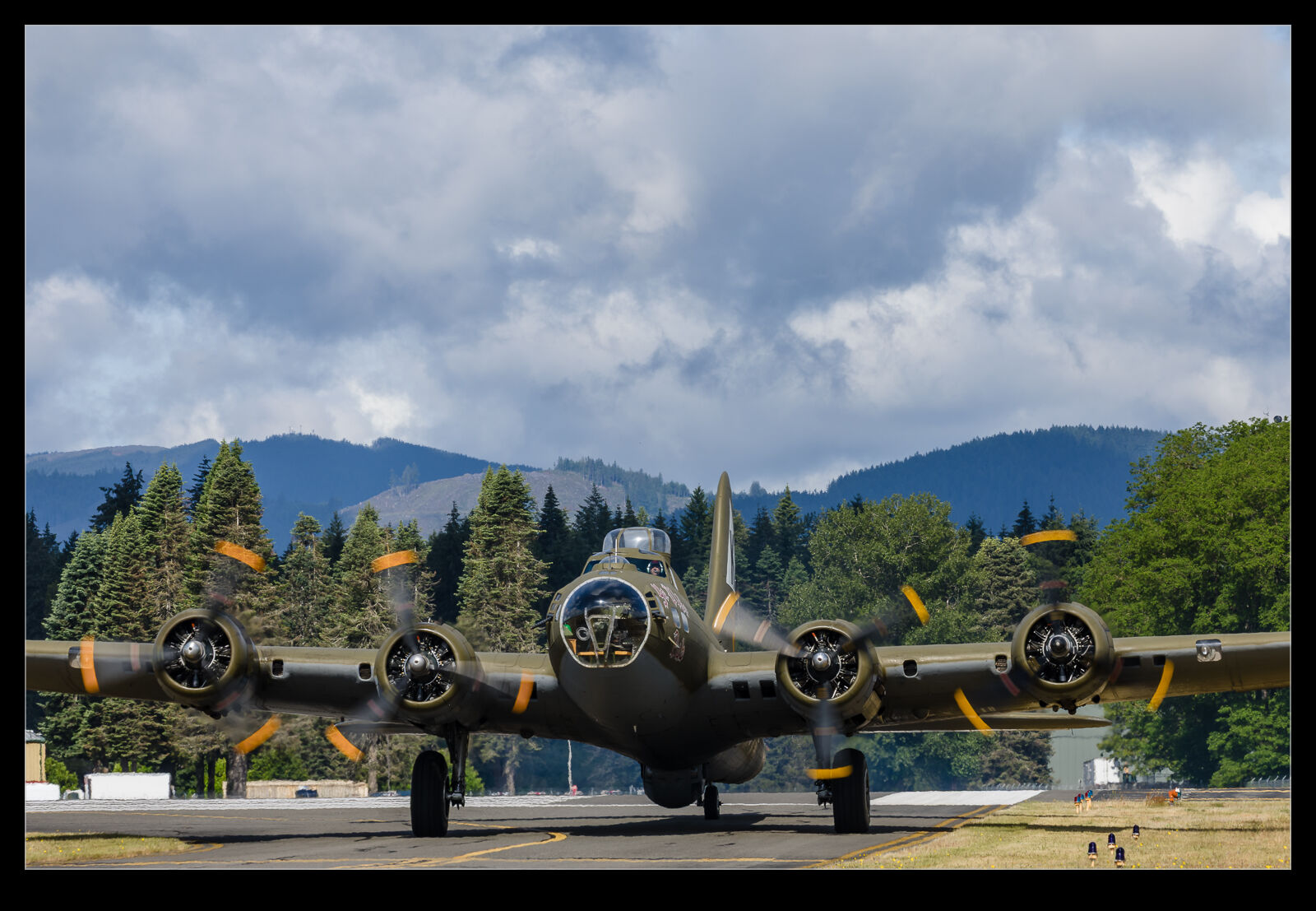
The put on a good flying display for the show. The light was surprisingly good for Olympia! It is held on a weekend in June that has a remarkable track record of delivering substandard weather. The local photographers constantly wish for it to be moved to a different time of year without any success. The plane was operating from the main ramp area which meant it was very close to you when it taxied in and out.

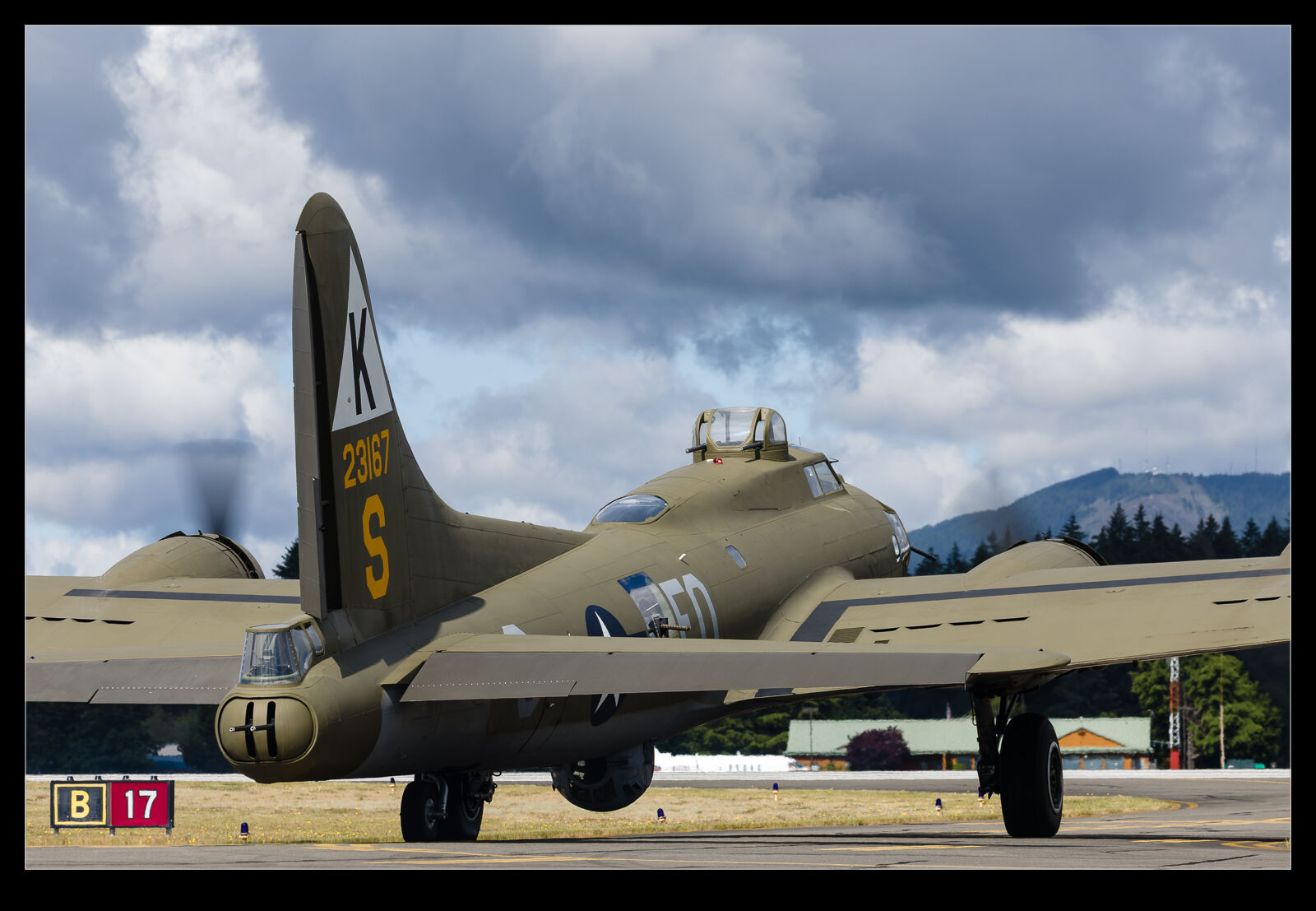
I wasn’t the first to spot this so I can’t claim to be the inspired person, but there is a taxiway marker board at Olympia that says B17. That made it quite easy to get a shot of the plane taxiing out with the B17 board in frame. A bit cutesy but I don’t think anyone was objecting. It seems like a lot of the airworthy B-17s are having major maintenance undertaken at the moment so having Ye Olde Pub active is great. I won’t even get upset about the use of the words “ye olde”!

Performers Keeping the Crowds Happy

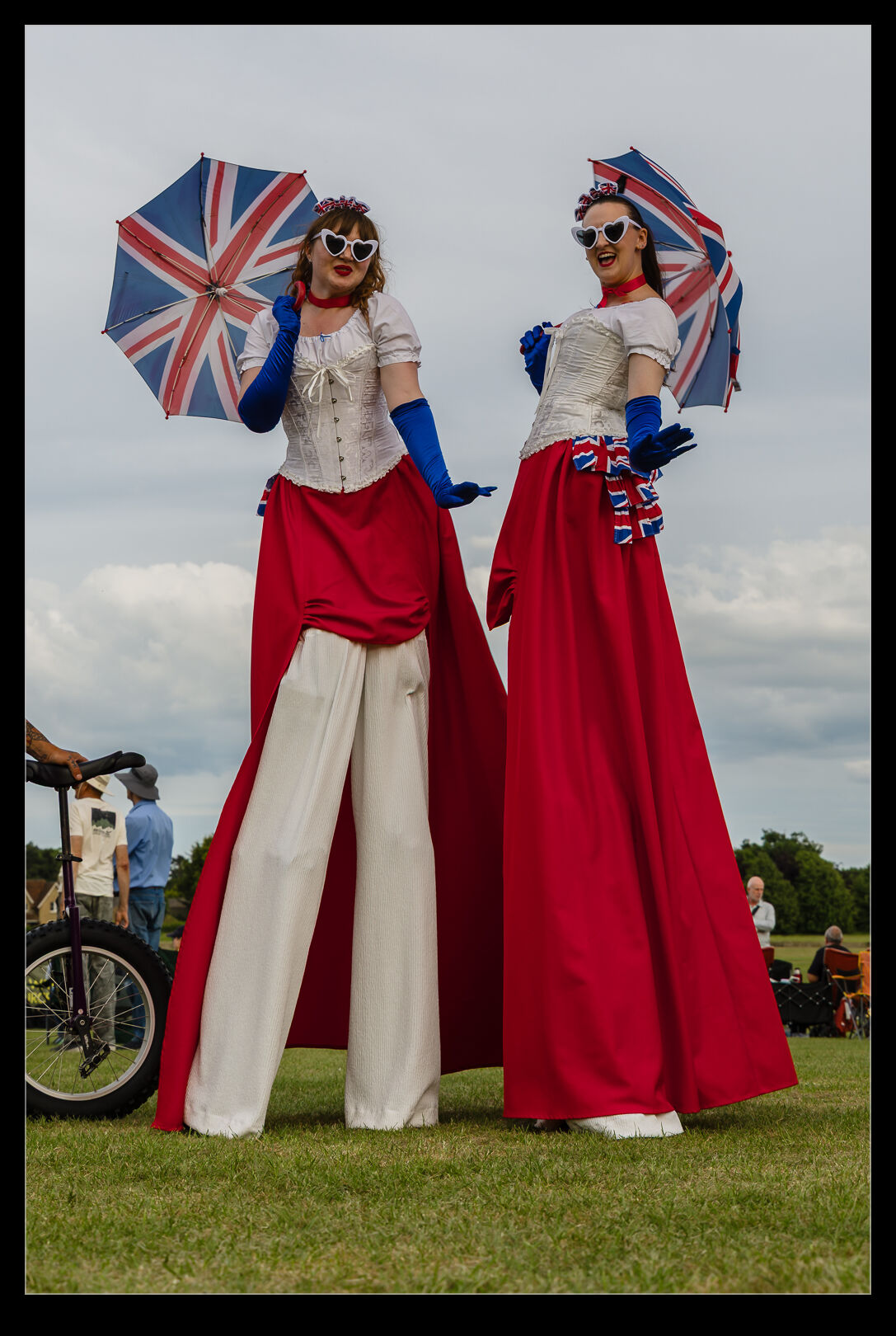
As a plane guy, I can often be a bit dismissive of the non plane related things that are brought to air shows. I do realise that making an appealing day out for everyone is necessary and I am in the minority. The Shuttleworth show had some performers in the crowd to amuse the visitors. There were two women that were walking through the crowd on stilts. They were keen to engage with everyone which, of course, is what they are there for.

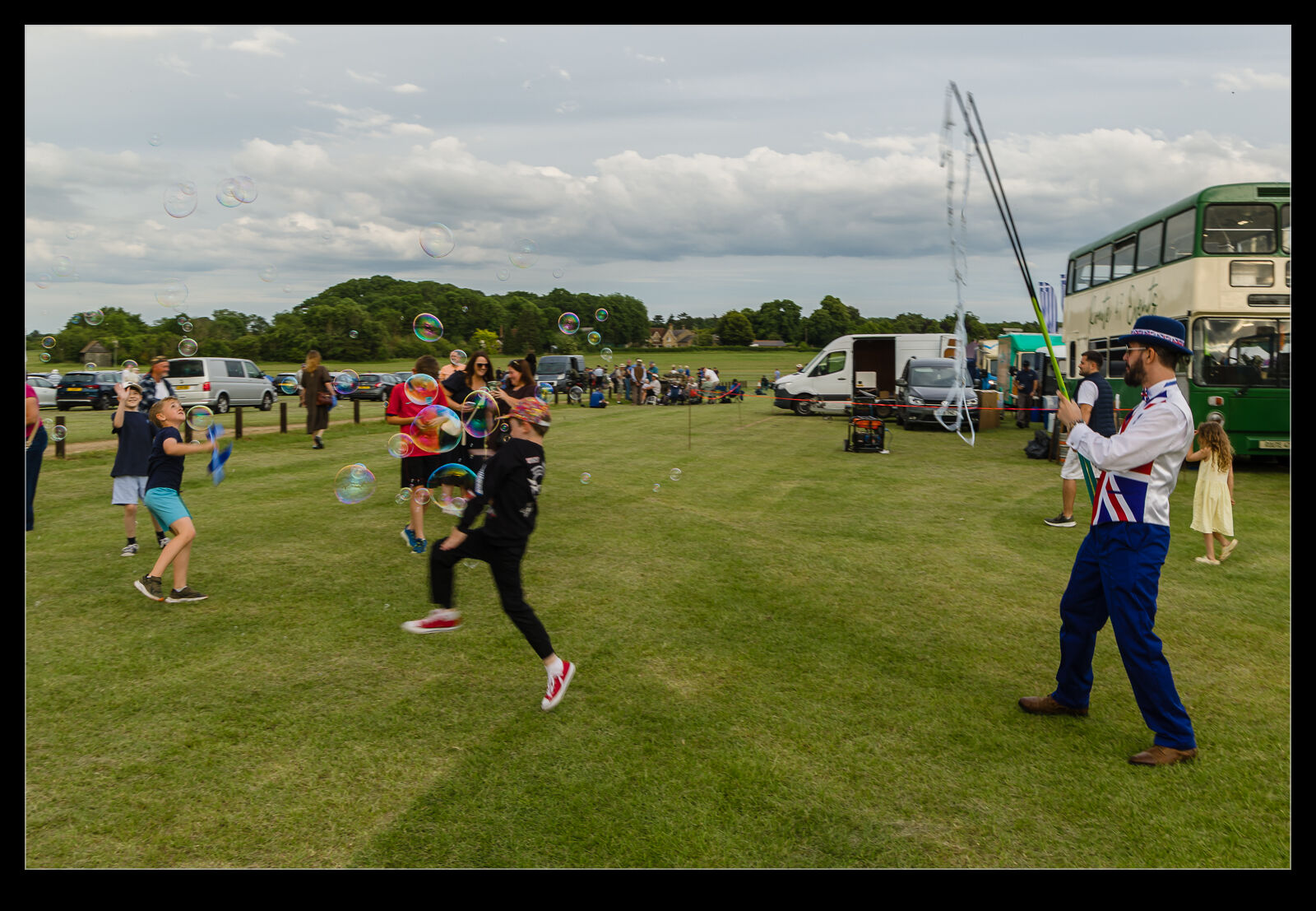
Additionally, there was a guy creating large bubble clouds. The kids were certainly loving these and I suspect a few adults were too even if they were pretending it was all for the kids. I love bubbles so I bet they might too.

The Conditions Are Calm at Last

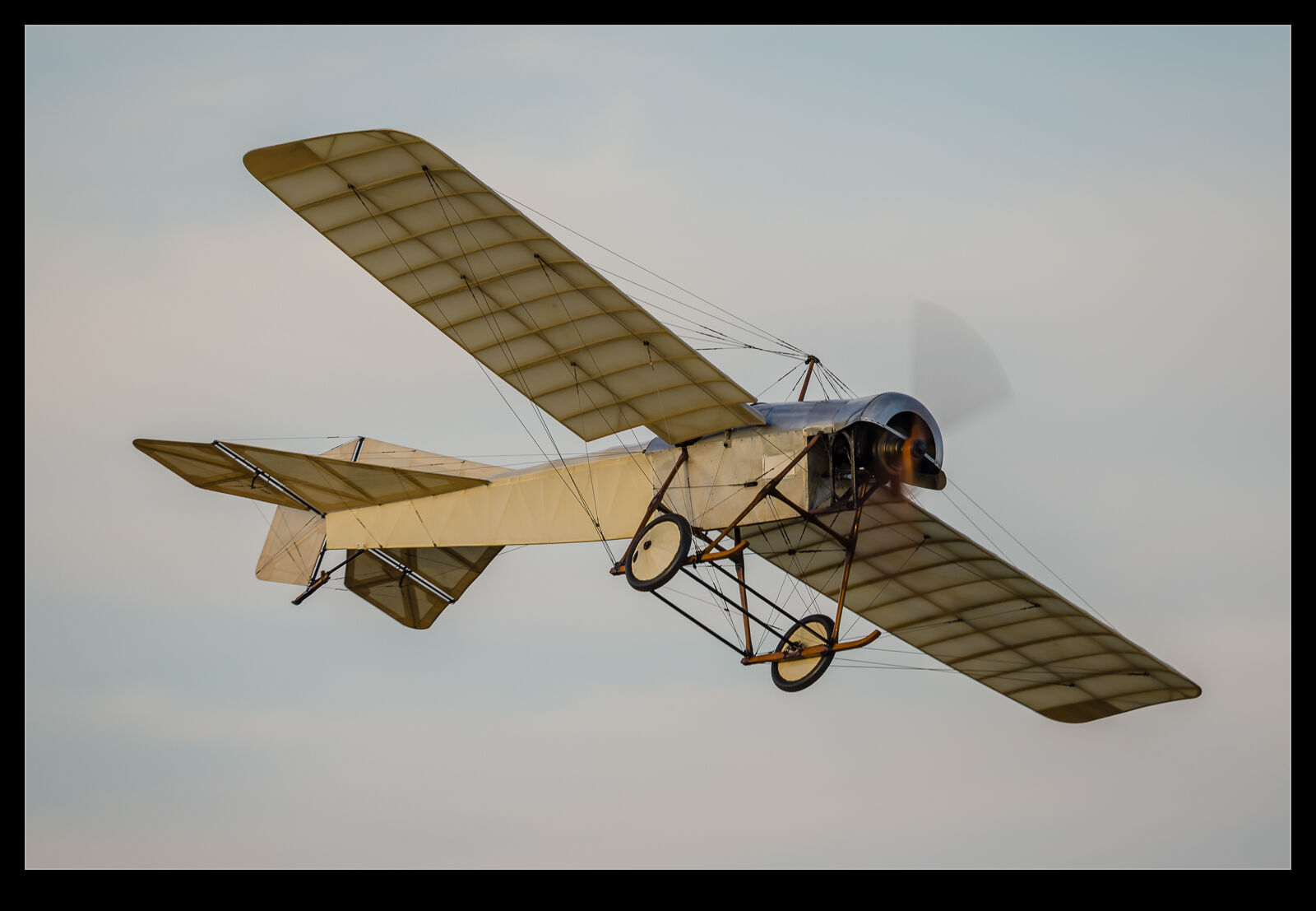
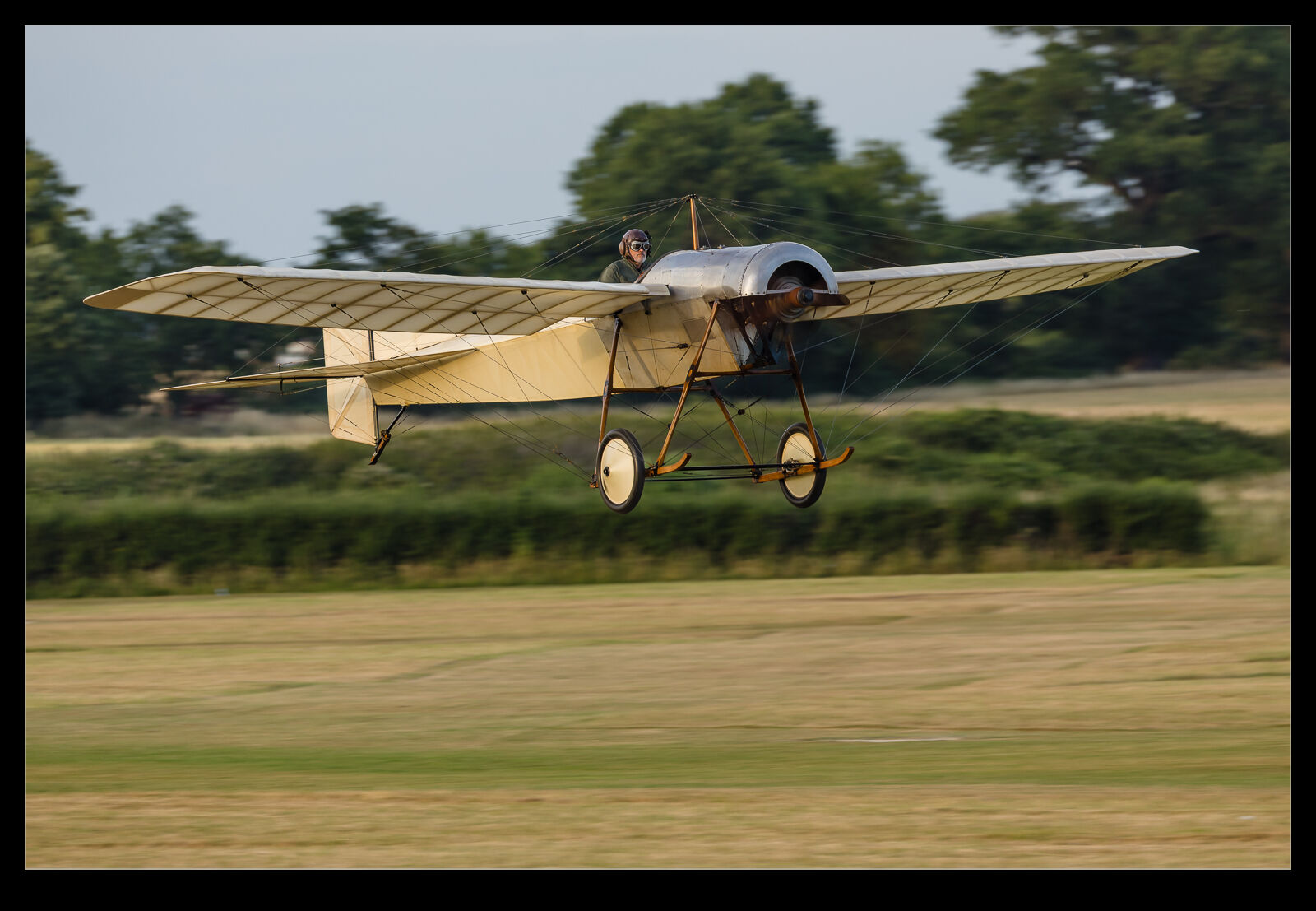
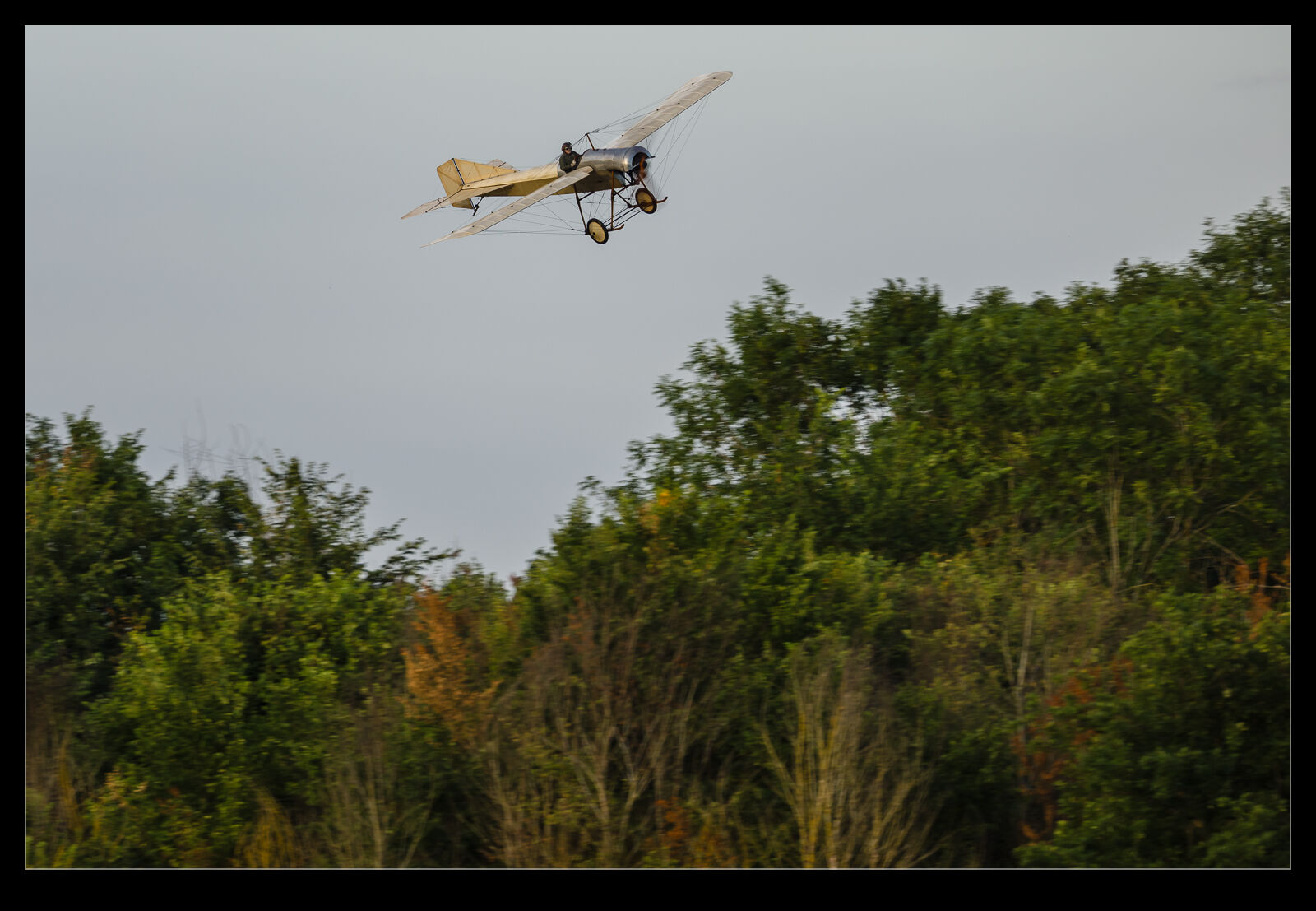
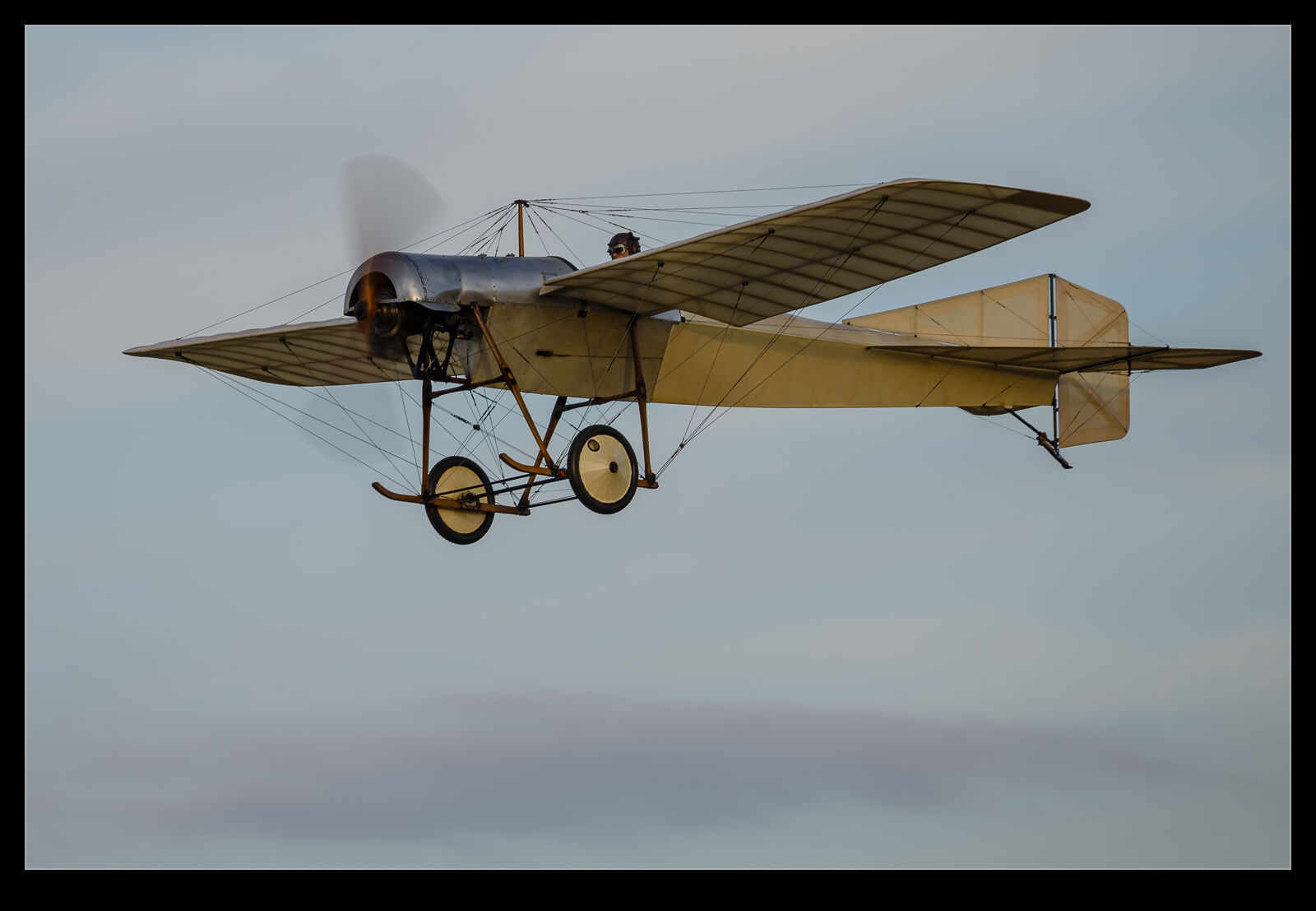
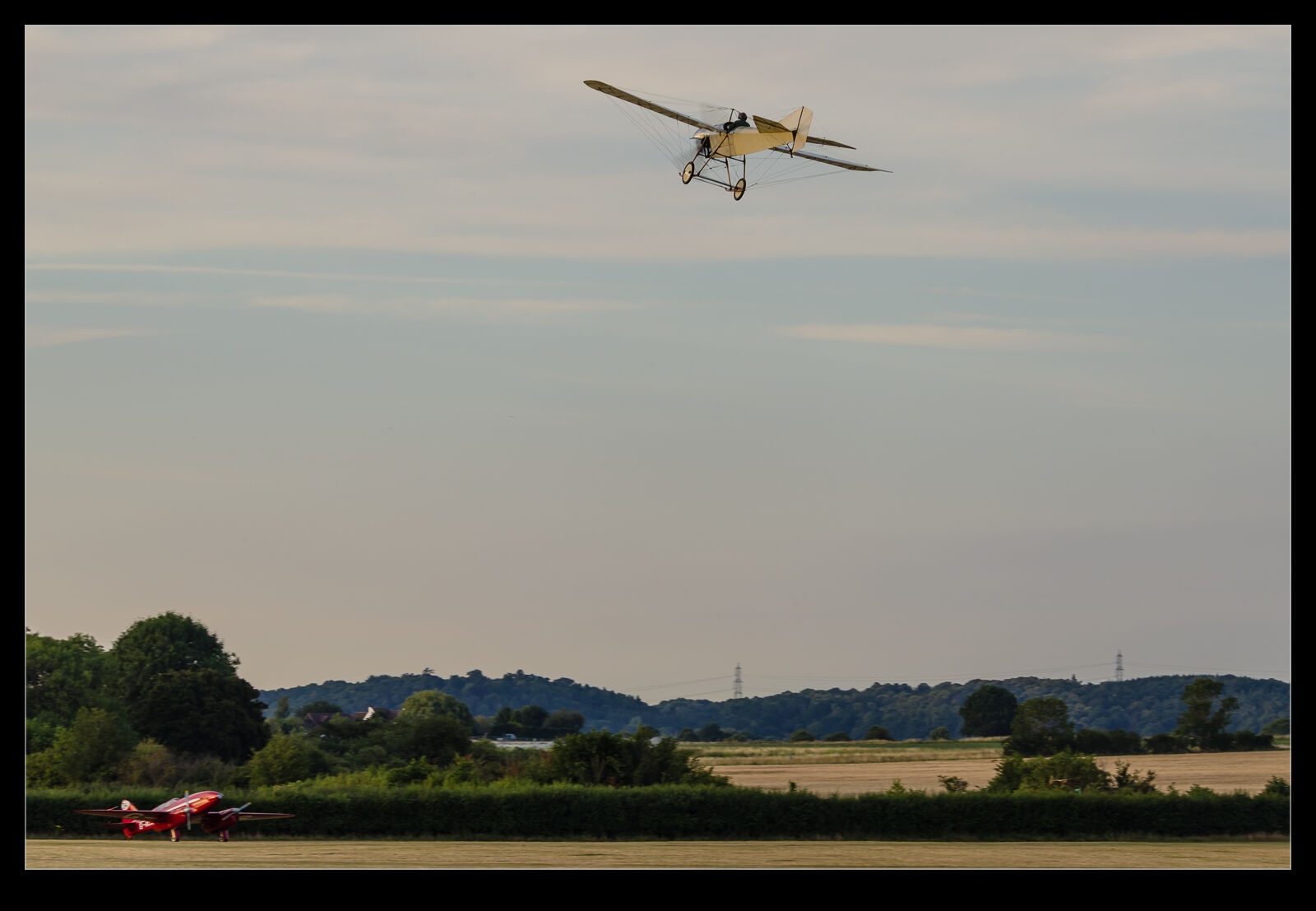
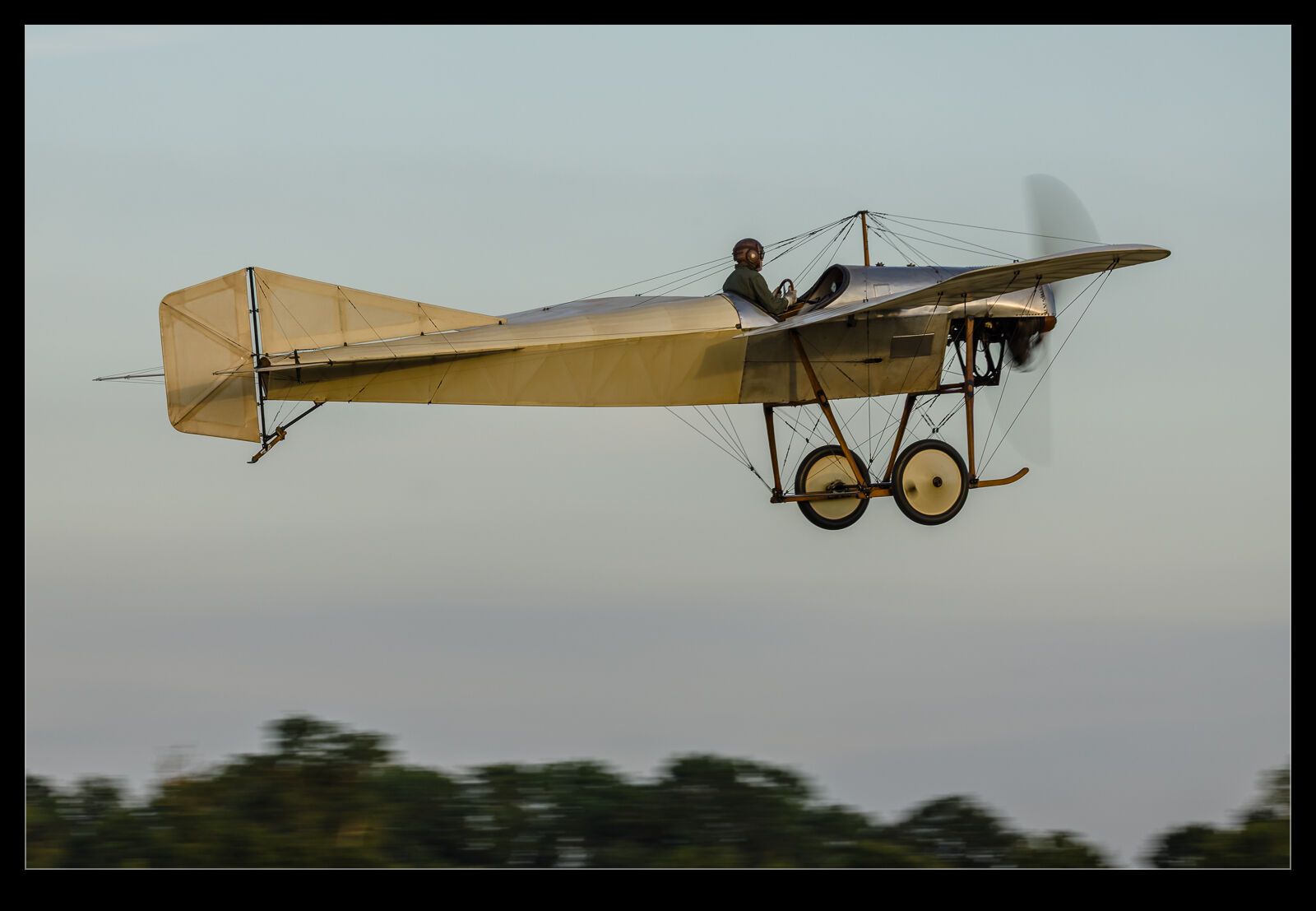
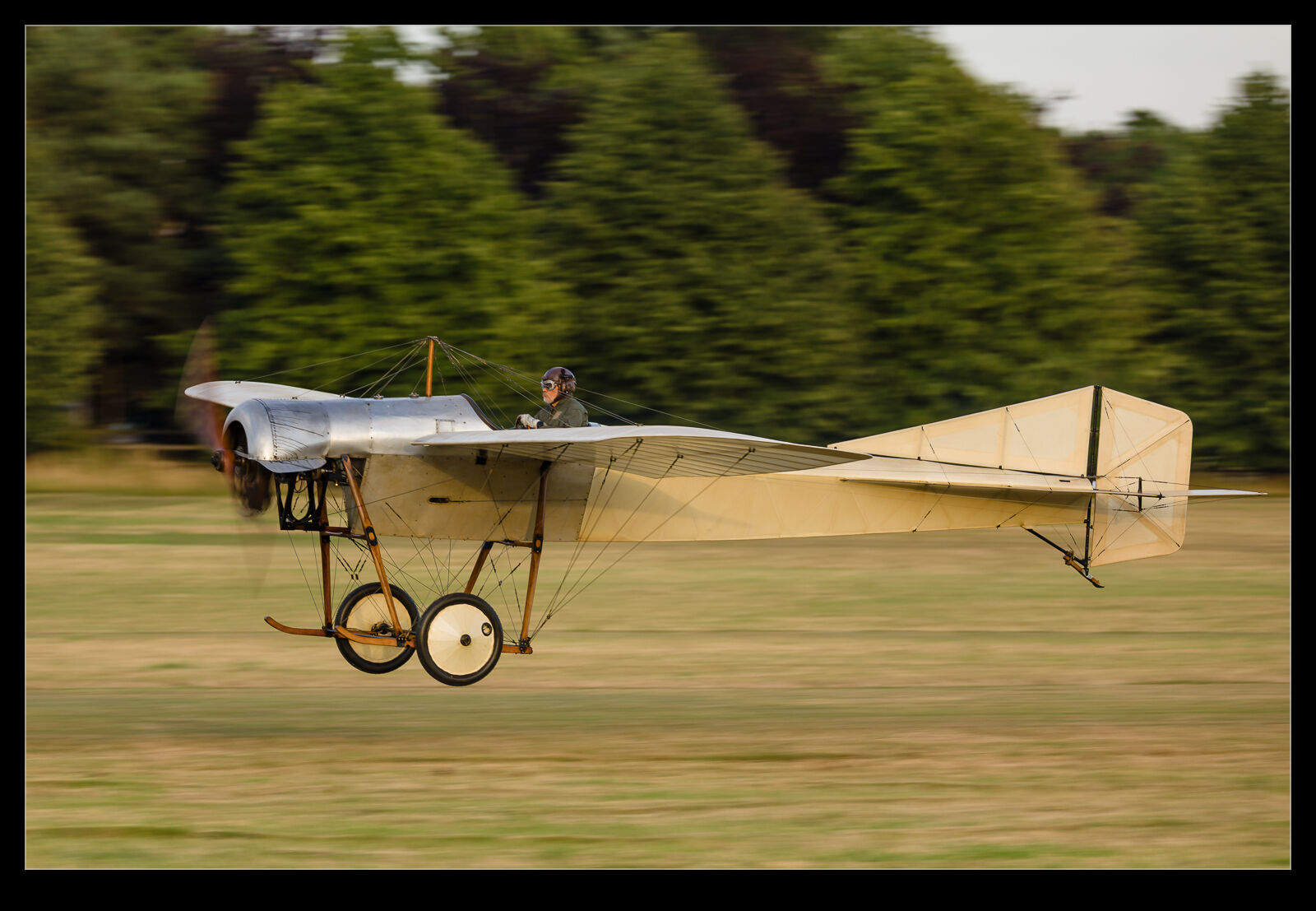
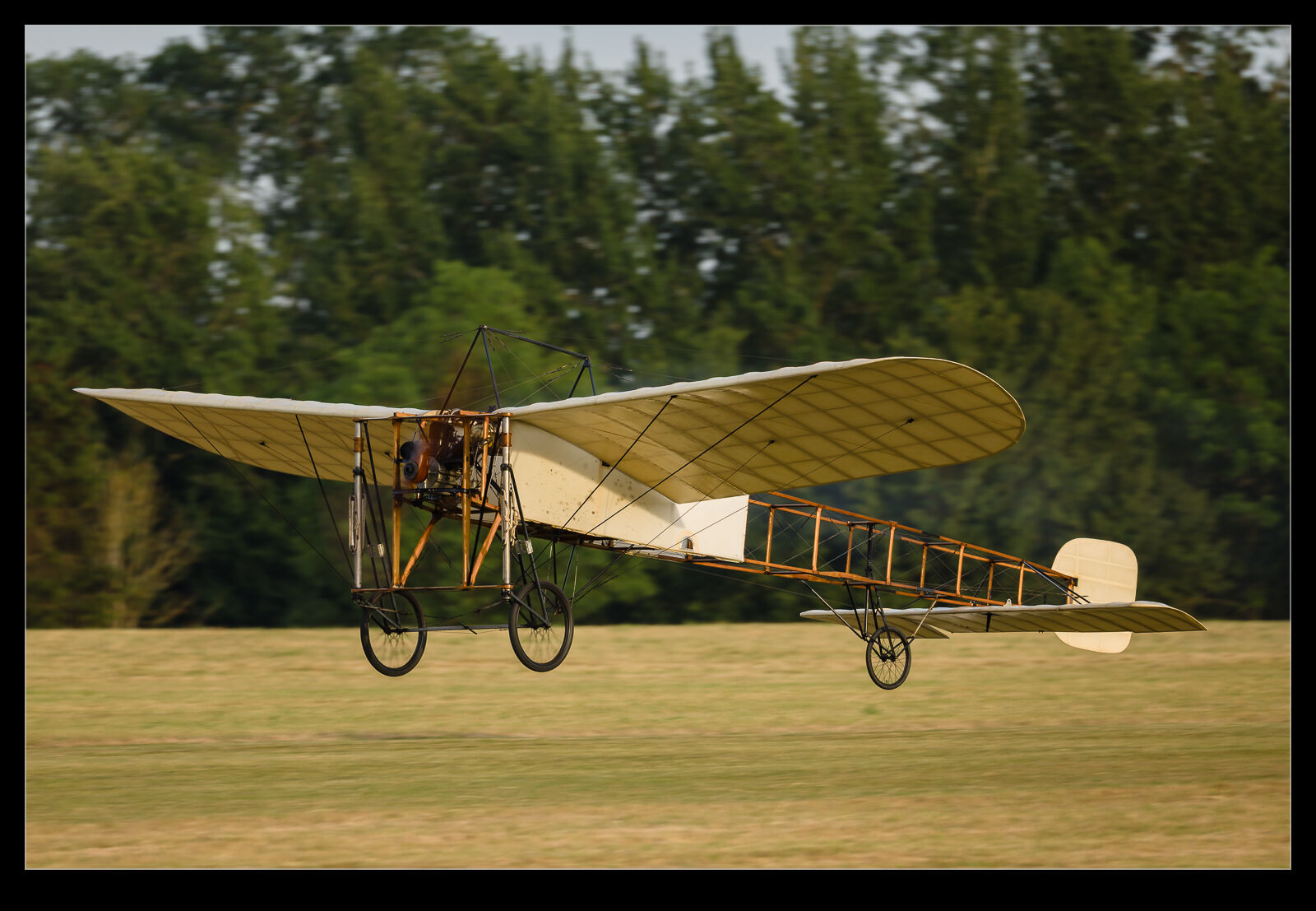
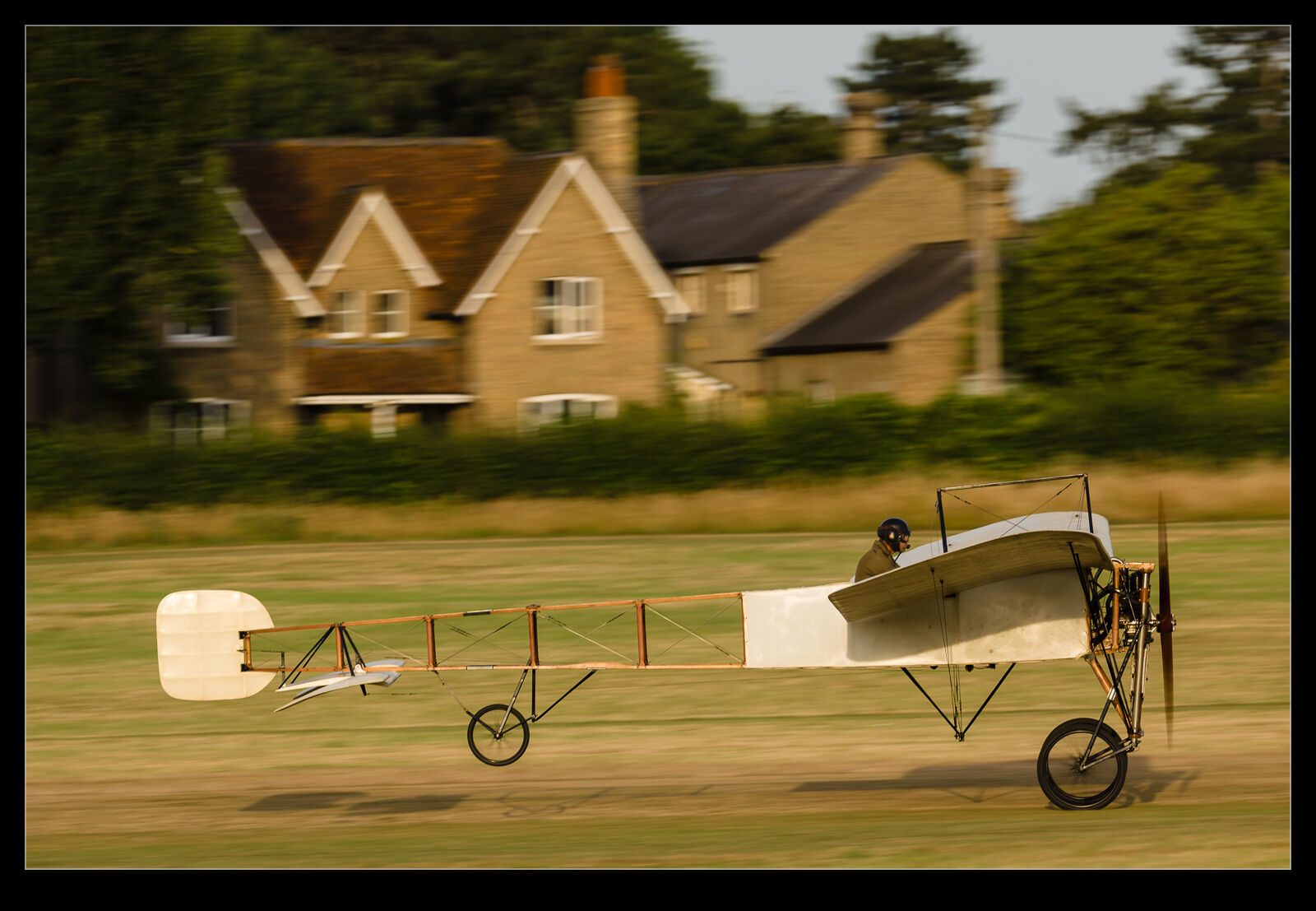
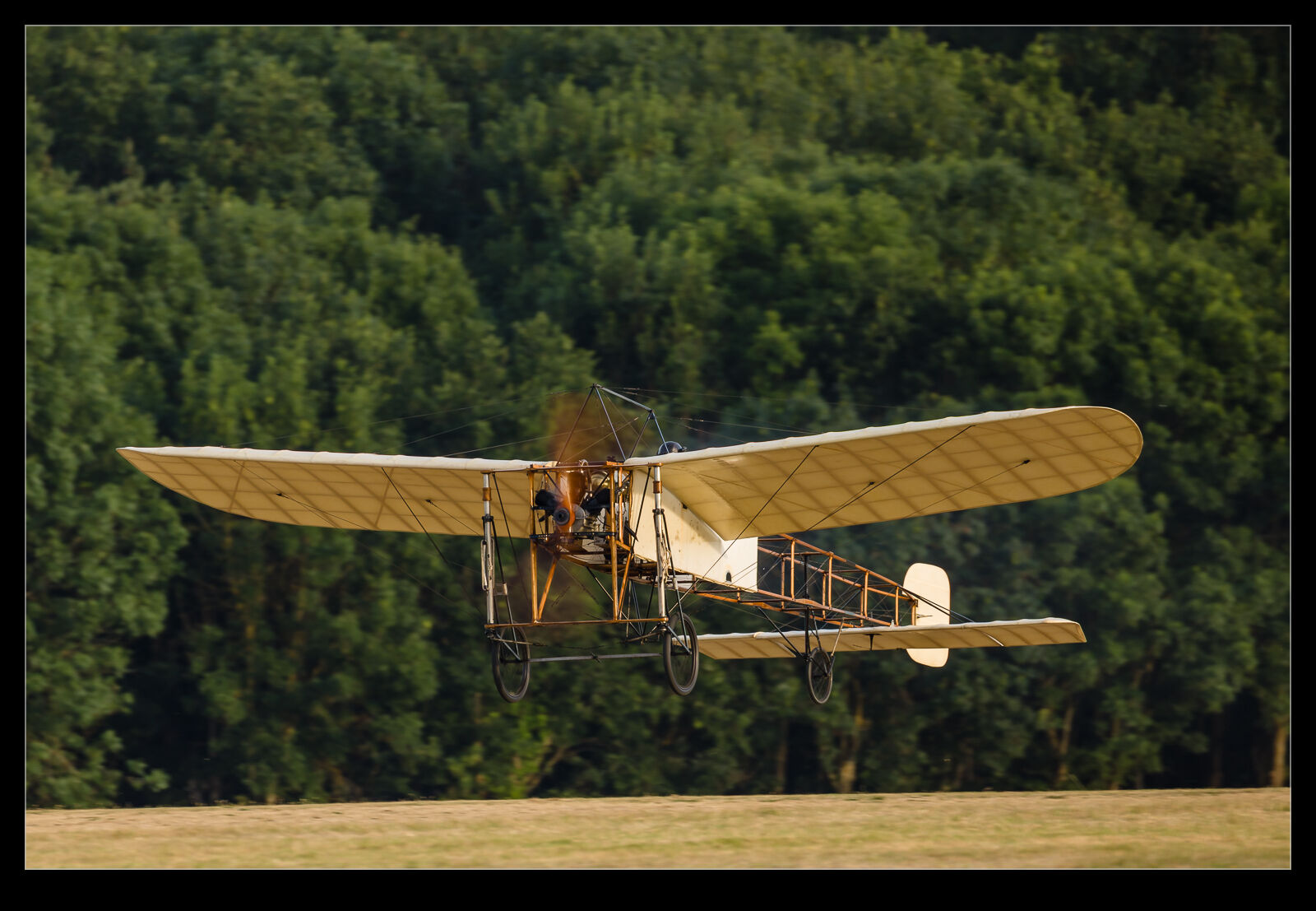
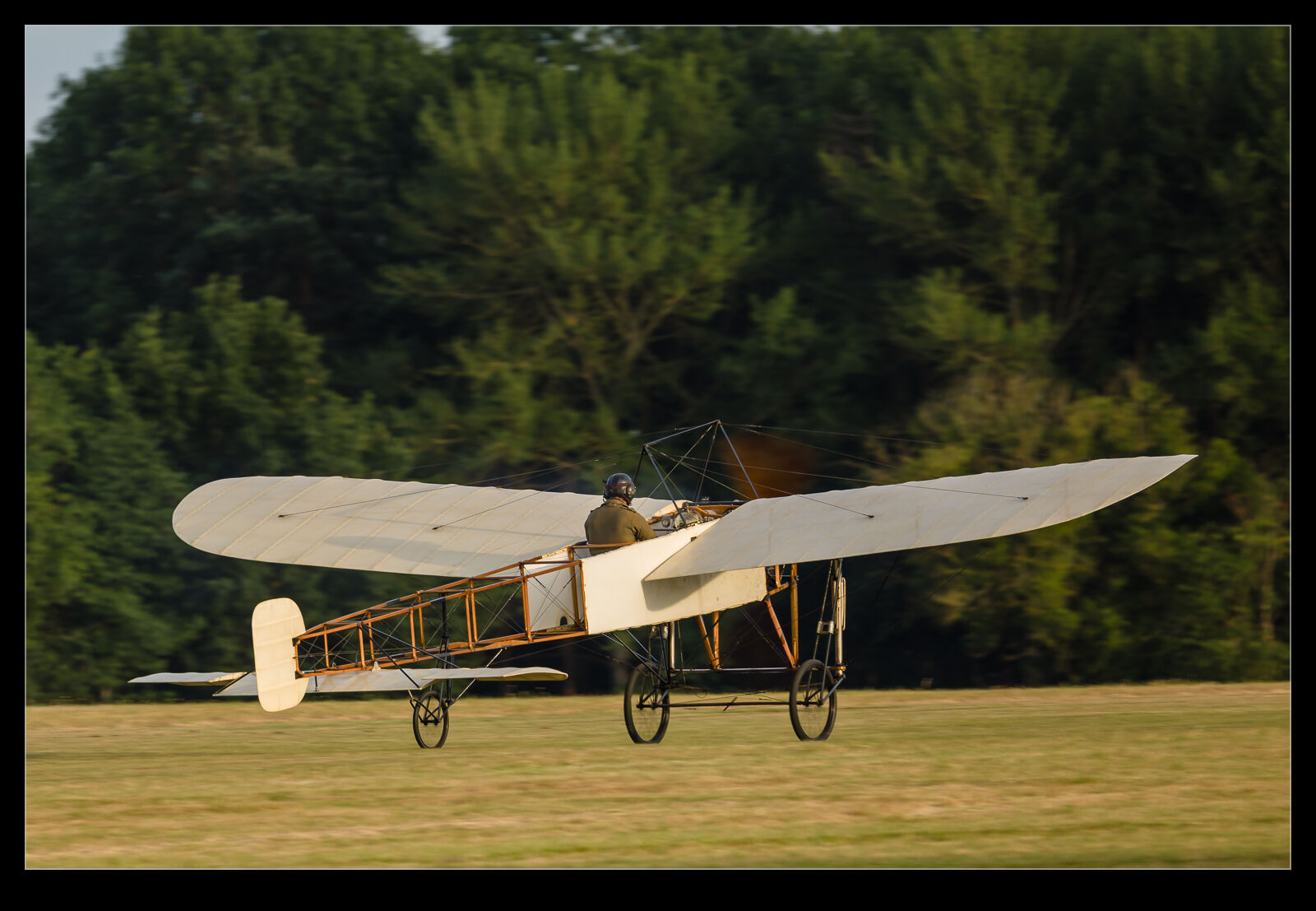
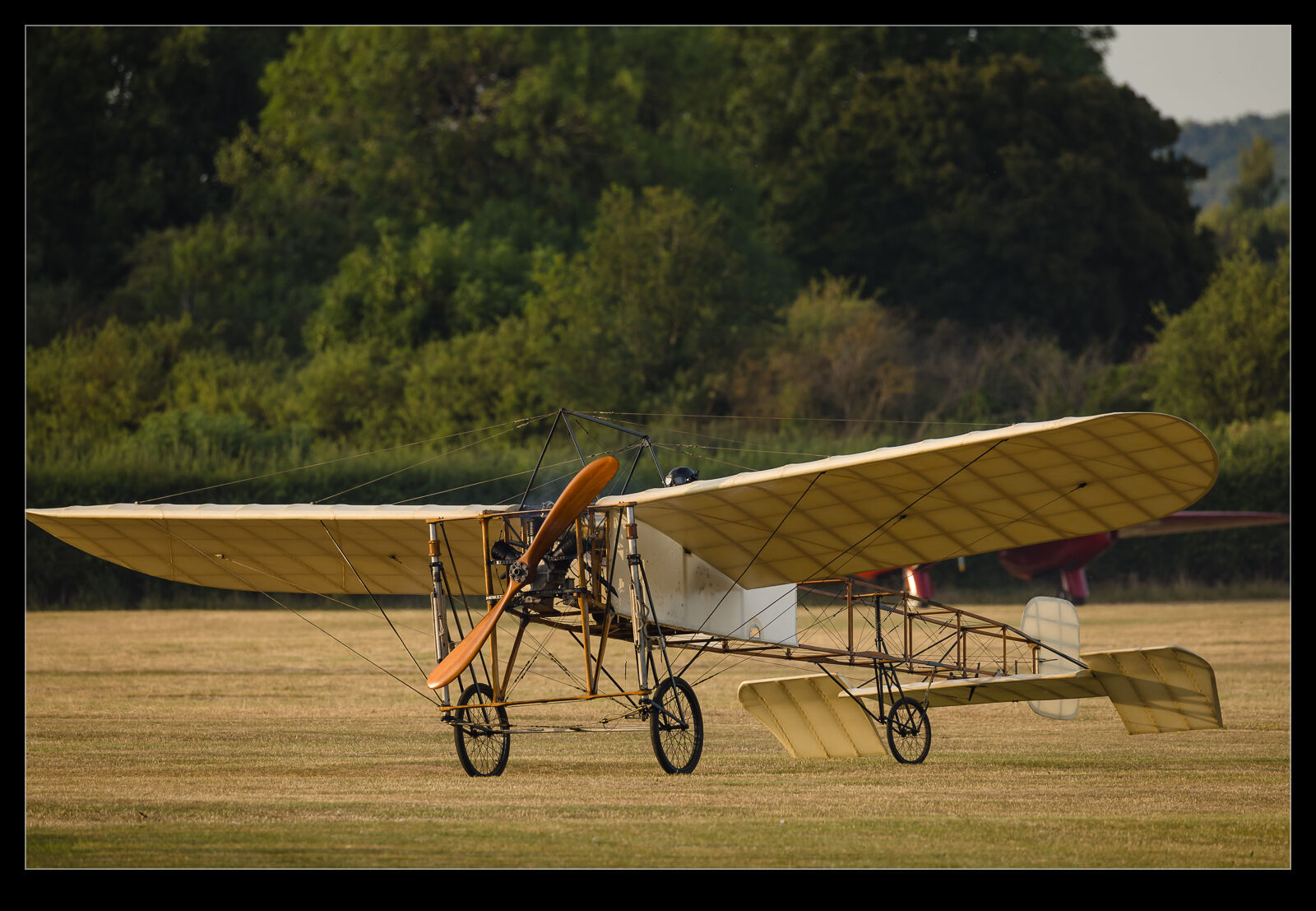
During my first show at Old Warden, there was a reasonable amount of wind throughout the day. This was in the back of all of our minds, and we wondered whether things would calm down enough to launch the Edwardian planes later in the day. The forecast was not for this to happen. As the sun started to get lower in the sky, I was quietly optimistic that the wind would calm but it was proving me wrong for the longest time.

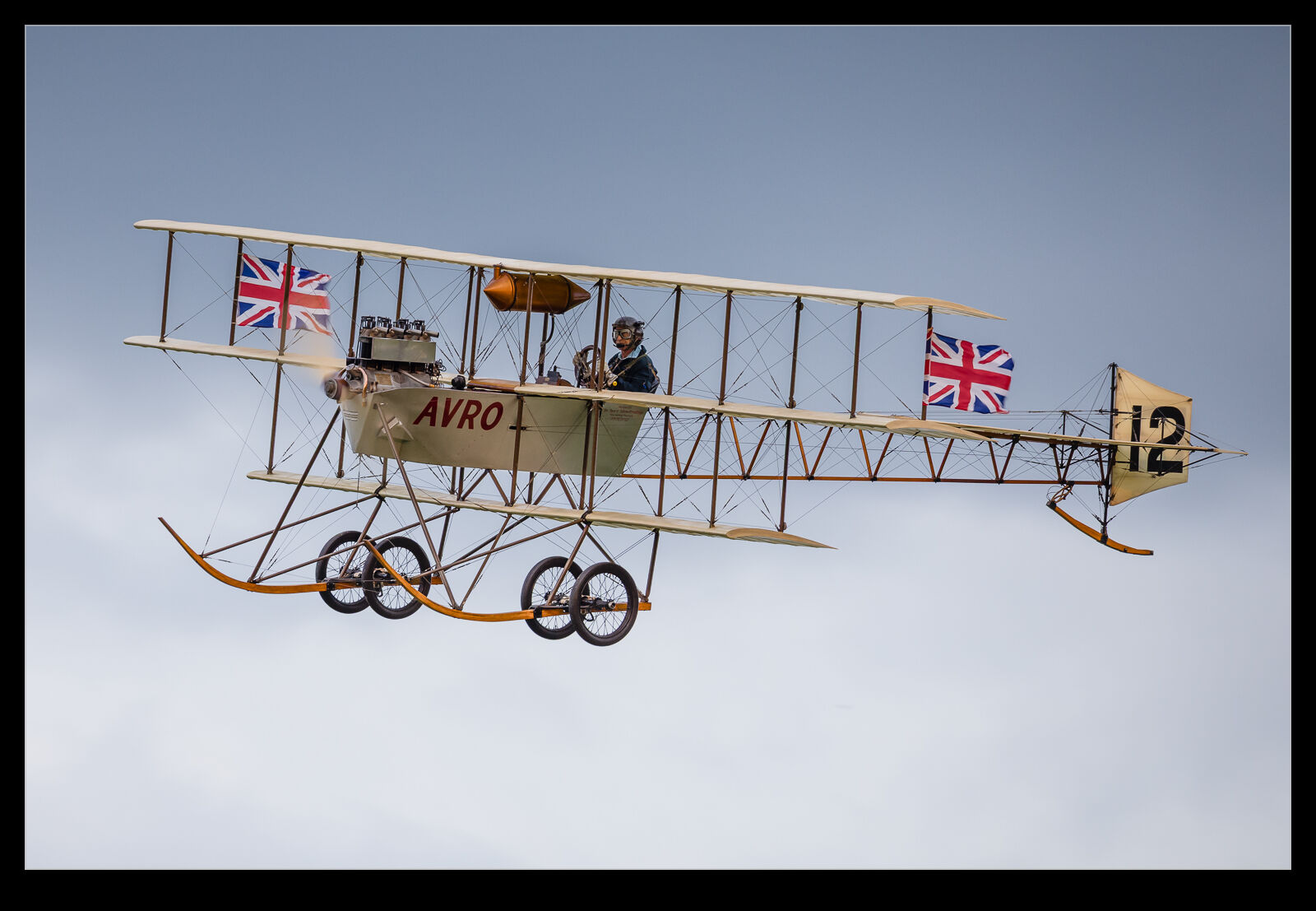
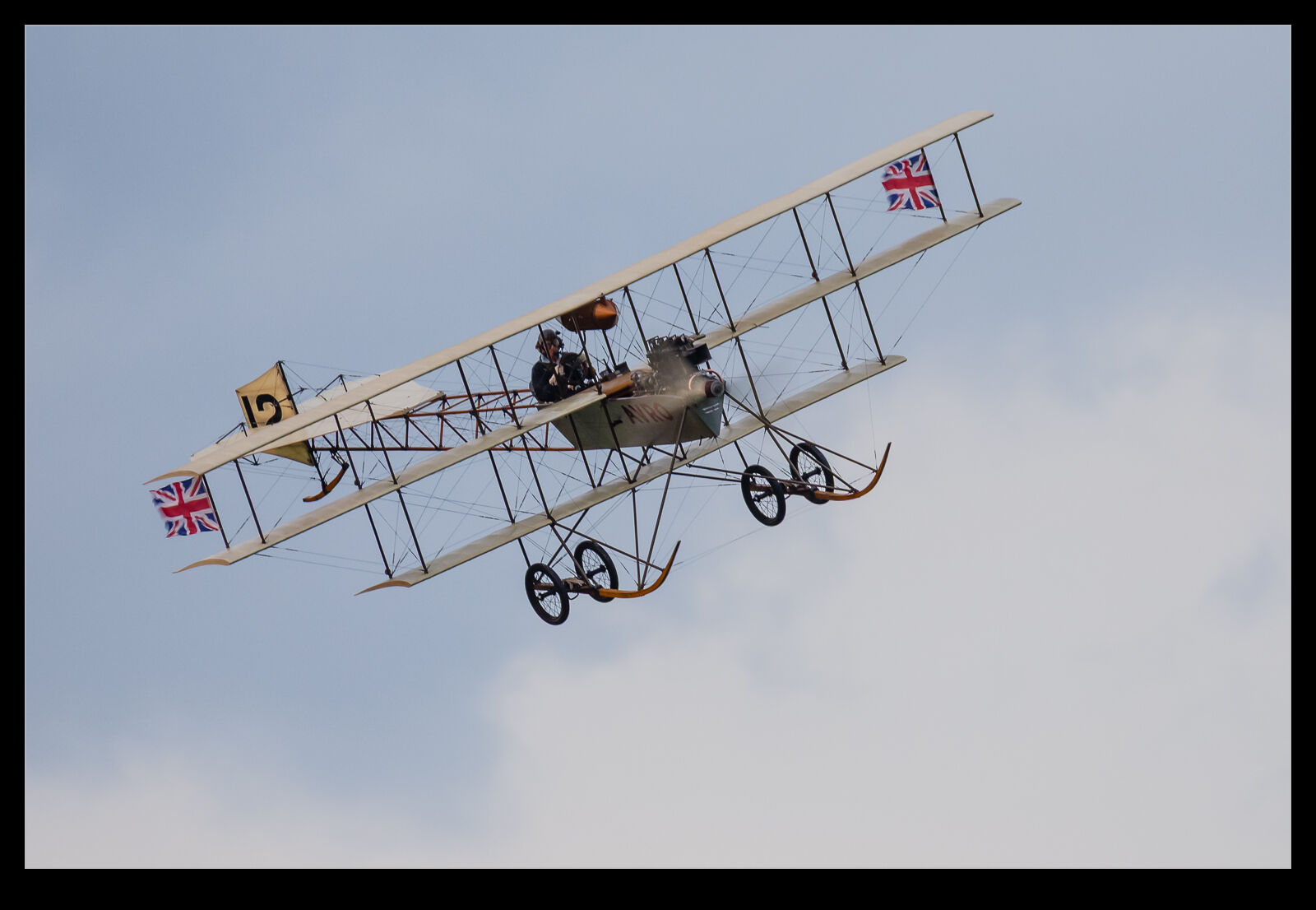
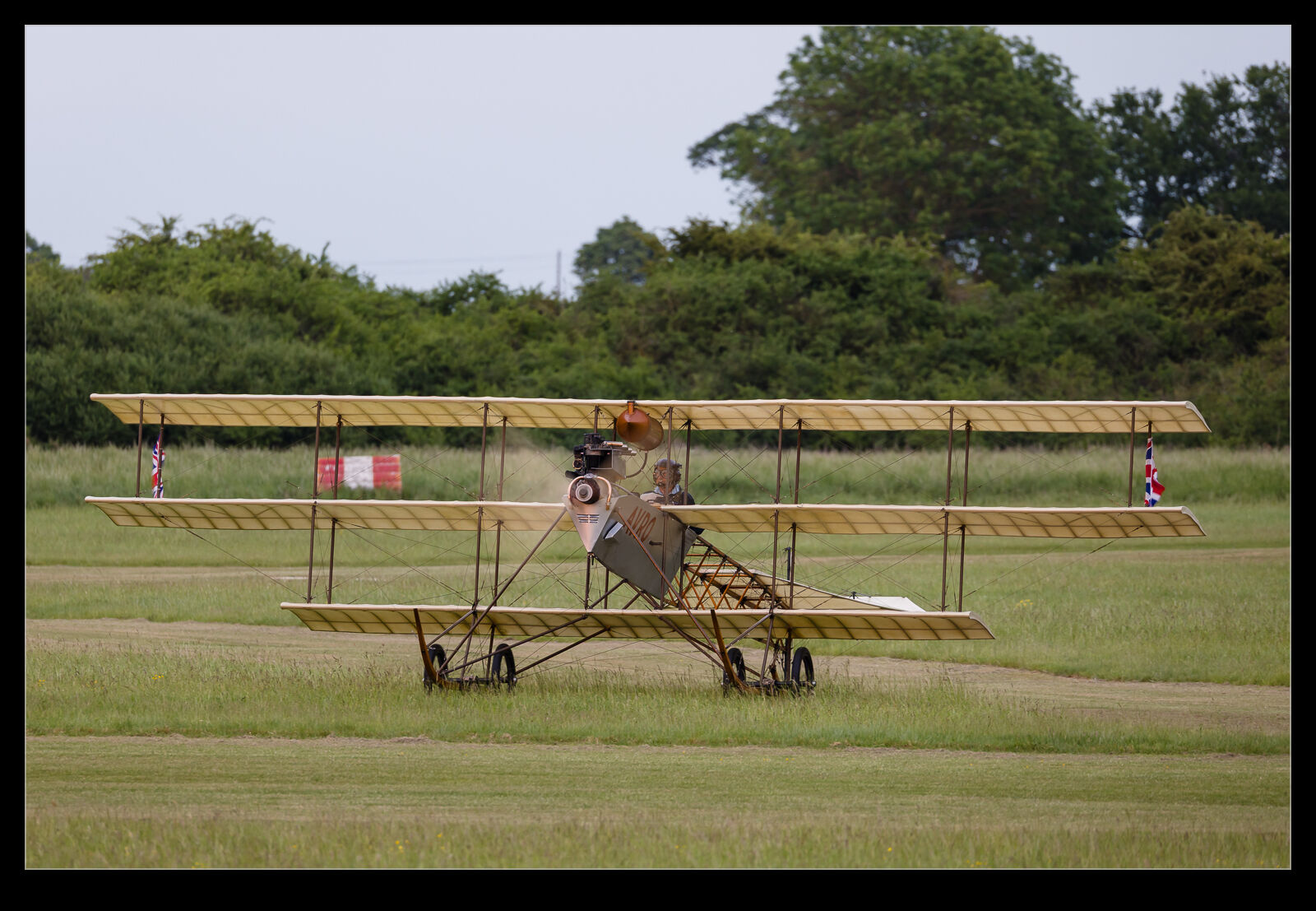
Then, very quickly, things seemed to change, and the organisers realised that there would be a chance to get some more fragile types up in the air. Then it was just a question of what would be willing to fly. Getting these vintage types airborne requires, skill and effort but also a bit of luck. They didn’t all play ball, but the Avro Triplane was up for the challenge. I know it is a reproduction but that doesn’t stop it being great to see it fly in the lovely evening conditions.

Getting the Shutter Speed Wrong Makes Editing Quicker

I have made this mistake before and, no doubt, I shall make this mistake again. Setting up the camera for one shot and then not changing the settings before shooting something else. I had the 200-800 lens on the camera, and I dropped the shutter speed down to 1/100th of a second for some take off shots. This is where I left it while shooting the flying display of a couple of aircraft. A long focal length and moving target with a slow shutter speed means that there are a ton of shots that are totally unusable. That really does help in the process of deleting shots. Most of them are toast. A few did survive and that was quite a relief!

These Old Cars Are a Bit Temperamental

There was a parade of old cars as part of the Festival of Flight at the Shuttleworth Trust. It was a very hot day so possibly not ideal for cars that were designed a very long time ago. Sadly, one of the vehicles found the conditions not to its liking. The driver had to hop out and see what could be done to sort it out. There didn’t seem to be an immediate solution as, the last I saw of it, a bunch of people were pushing it away. I hope it was nothing too serious. I suspect owning a car this old comes with regular moments of this type.

Messing Up the F-35B Departure

Since I switched to my R3 bodies, I have been playing a lot more with low shutter speeds to emphasise speed in images. This has been a topic in multiple posts on the blog in recent years. However, it doesn’t always work out well. I know that the keeper rate will fall when shooting fast moving objects at low shutter speeds, but you hope/expect that you’ll get something worthwhile from the ones you take.

However, that doesn’t always happen. During Seafair last year, the US Marine Corps F-35B departed Boeing Field for its display. I decided to go low with the shutter speed from my location up on the tower with the aim of having the airfield background blurring out and leaving me with the plane as the dominant element in the shot with little distraction. However, when I came to go through the sequence of shots that I took, I had some sharp ones as it approached me and as it flew away but nothing that really pleased me as it was closest and alongside me.

Some of them weren’t terrible but it was a huge disappointment as I clicked through the images and came to the realisation that I had blown it. You can’t always get lucky, and I knew what I was doing so I can’t be totally surprised that it didn’t work out, but it was still a bit galling. Does this mean I won’t do it again? No. Getting the record shot is fine, but I am more bothered about having a shot I really like these days. Might as well give it a go!

An Unusual Pairing for “Formations”

In the late 1980s, the RAF had just introduced the Tornado ADV to service. The squadron boss of the OCU displayed the jet with a Spitfire of the BBMF. This dissimilar formation caught my attention at the time. This was repeated in the 2000s when the RAF repeated the idea with a Typhoon and Spitfire display. However, I think I saw something that trumped both of those combinations at the Shuttleworth Military Air Show. The combination of a Great War SE5a and Spitfire was really something else. You might think that a fast jet and a Spitfire is a tough combination, but jets can fly slowly quite well, and Spitfires are no slouch.
However, an SE5a is not a speedy plane while a Spitfire is still no slouch! How to make this work then? Some very clever use of speed differentials and spacing is the answer. The SE5a would fly some curving passes closer to the crowd line while the Spitfire offset further out – slowing into the pass and then accelerating away. The result is a view from the crowd where both planes are quite well aligned.

The idea was very interesting. I won’t say it is innovative because I’m sure someone has done something like this before, but it was the first time I had seen it. The result was surprisingly effective, and they did it on a few passes. I don’t know just how precise the initial points have to be and how much scope the pilots have to adjust on the run in to make it work. I assume the SE5a pilot just flies the pass, and the Spitfire pilot has the power and control to make the adjustments. Whatever the approach, it worked well.

My First Real Comet Aerial Shots

The de Havilland Comet was an air racing aircraft from the 1930s that won the MacRobertson Air Race from the UK to Australia. I first saw the aircraft at the end of the 80s but I didn’t see it fly at the time. There is a replica of the aircraft that is based in the US and I saw that at Oshkosh one year. However, it was this year that I finally saw it flying. It is a very elegant looking aircraft and one with a fair turn of speed.

It performed during the Military Air Show that the Shuttleworth Trust held at their Old Warden Aerodrome. The sun was going in and out while it was up which was not ideal but still provided plenty of opportunities to get some shots. Various passes were made, and I was quite pleased with how it looked head on as it ran in towards the crowd. I should have more chances to photograph it this year so let’s see how we do.

My First Shuttleworth Show

For someone that is a keen aviation enthusiast, it is very strange that I have only been to the Shuttleworth Collection at Old Warden once and that was a quiet weekend day in the late 80s. I have never been to a show until now. They were holding their Military Air Show, and I wanted to be there. I had heard that the flying could be good with a display line that is close to the crowd and an interesting variety of planes taking part. I headed up there on the Saturday morning and was a little disappointed that there was an accident closing the A-1 so I had a slightly cross-country route to get there. However, this didn’t really cause a problematic delay.

When I got there, I parked up and was pleasantly surprised how easy the walk was to the main area of the show. Not only was it not a long walk but it was alongside the main runway, so I got to watch some movements as I headed in. It was like the show had already started before I even got there. It is true that this meant my walk took longer than it should have done but this was good for me.

When I was young, my interest was all about modern aviation so the types of planes that were at this show would not have been my thing. Now I am interested in a far wider range of subjects. However, that doesn’t mean I am very knowledgeable about them. First World War aviation is a bit of a mystery to me. This show got me familiar with types that I might have heard about but could never have previously picked out.

While it was a show with a military focus, there were other types taking part. Sometimes there might be a slightly tangential reference to their role in developing other planes as was the case when the de Havilland Comet took part, but I appreciated the variety. There were planes I knew nothing about in the flying display – some of which were unique examples. With so many shows including displays by types I have seen many times, this was a definite plus.

The conditions were pretty good for the show with good light throughout most of the day. We did get a period when the clouds got a little heavier and some of the dark paint on those older planes can really suck in the light. The bigger concern was the wind. It was a rather gusty day on occasions. This had me a little concerned. There were actually two flying displays. The afternoon display and an evening show. If the wind would play ball, this might be the time that the Edwardian aircraft could come out. More of that on another day’s post.

Between the afternoon and evening displays, I finally took time to walk around the grounds. I hadn’t paid to go and see the house and I shall probably do that at some point in the future. However, I did now go and look through the aircraft parked up on the flight line and the infield. There are also the hangars for the collection. This had grown substantially from what I saw when I was last there in the 80s! The collection would definitely fit the term eclectic!

It was funny watching a flying display when the Spitfires would be considered the modern aircraft. A recalibration of what constitutes an old aircraft for sure. The evening light did work out pretty well. For some of the later displays, the sun had crept under the cloud layer to make for some nice photography conditions. With it being summer, the flying could last late into the evening. It meant it was well into the night by the time I got home. It was well worth doing. Thanks also to Chris and his friends for providing good company throughout the day.

Chichester Miles Leopard

The late 80s and early 90s was a time when a lot of unusual planes were being developed and, much like the later time when VLJs were the trend and now with the EVTOL craze, most of them never made it past the test phase and in to service. One such plane was the Chichester Miles Leopard. I originally saw this plane at a Farnborough air show when it was displayed by their test pilot – a guy that also flew our Jetstream when I was on my Cranfield flight testing course as part of my degree.

Even at the time, I thought the thing looked ridiculous. It had this angular fuselage shape and was a tiny thing. The prototype was powered by a little turbojet by a company called Penny and Giles. I had never heard of them before, and I imagine the engine came from some sort of missile or other. Supposedly the plan was for it to be replaced by some (slightly) larger turbofan which would have improved performance, reduced fuel consumption and the noise! I don’t think that ever came about.

The Bournemouth Aviation Museum has an airframe on display. Looking at it closer up than I was able to at Farnborough showed just what a strange concept it was. I remember it looking spindly when I saw it previously but now it looks so fragile as to be hard to believe. The fuselage is stripped out, but it doesn’t look like it would have made for a comfortable ride. I will have to do some reading on how the testing went. All I can ponder when I see this is that someone thought it was worth spending a ton of their own money on. I wonder how those around them felt about it.