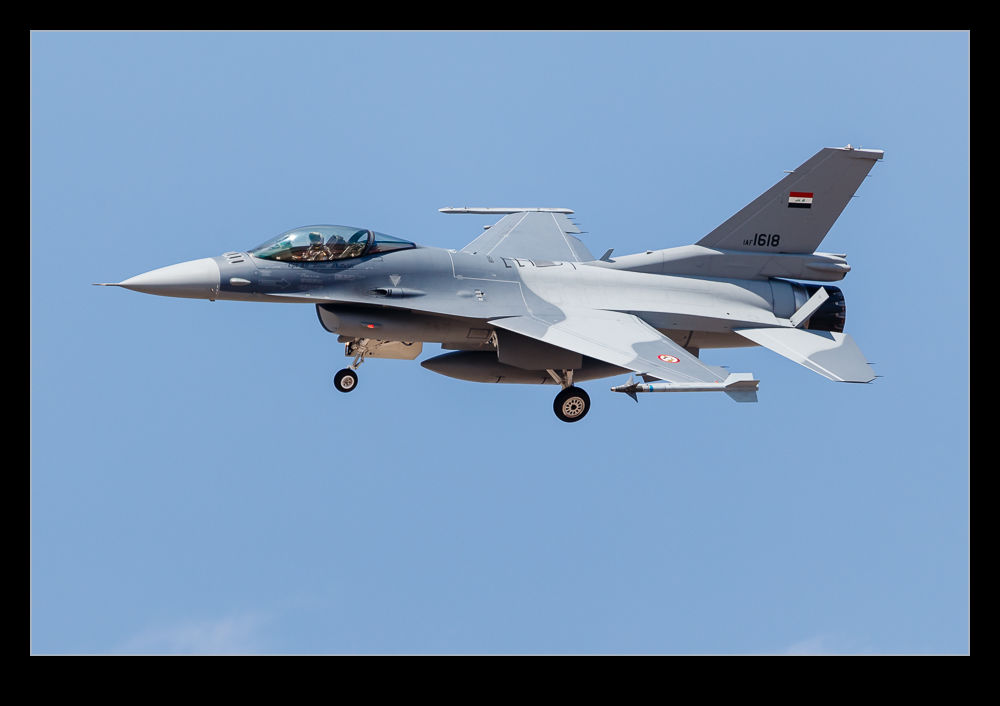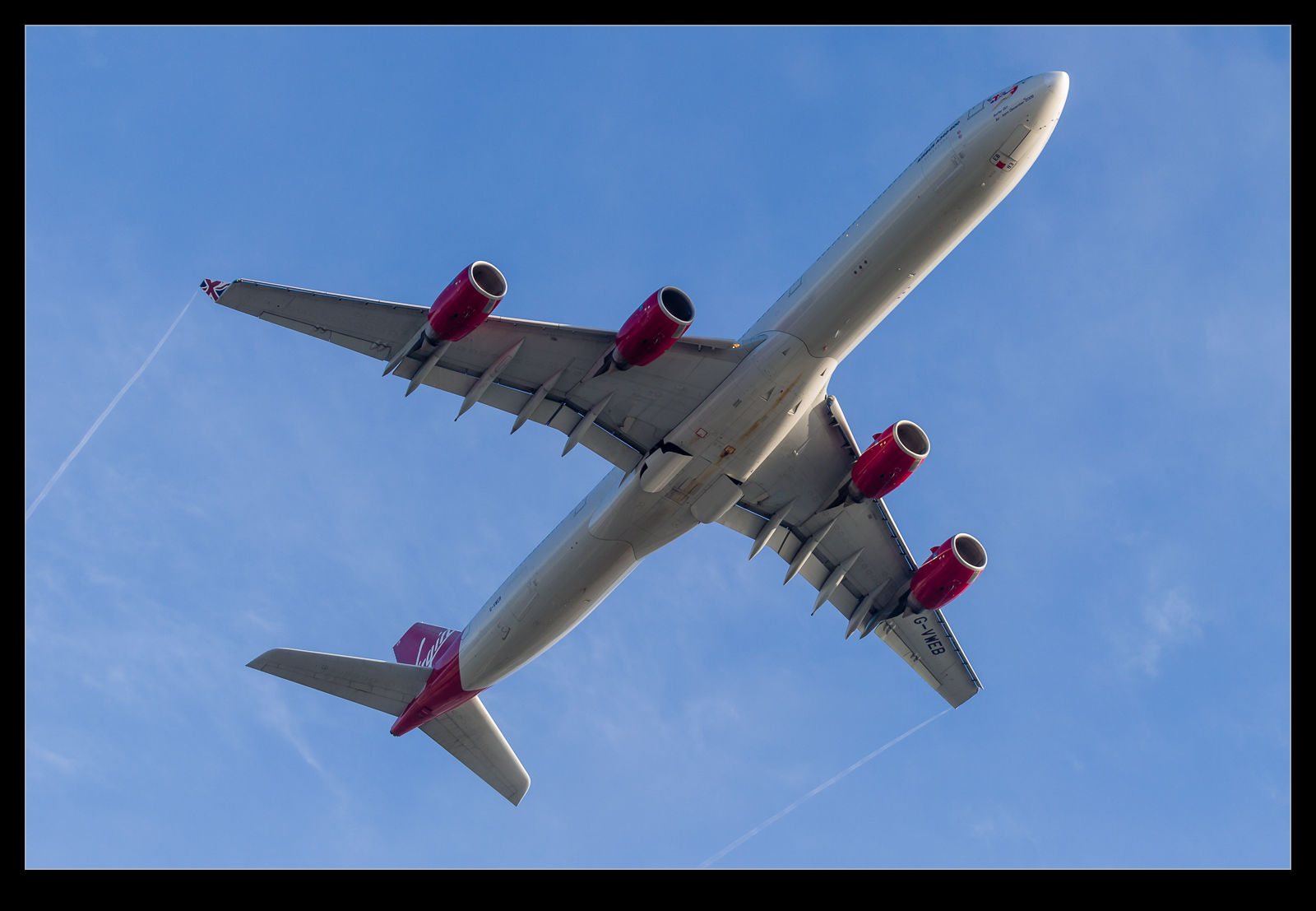
1DX Mk II First Impressions

After a little bit of time shooting with the 1DX MkII, I have started to build my impressions of how it is working for me.  This is definitely only a first impressions review since there will be a lot of time before I have got totally used to it and have worked out the details of its functionality.  For reference, I have previously been shooting with the 1D MkIV so things have moved on a lot from that.

Focus is a good place to start.  I didn’t have a particular problem with the MkIV but this one does seem to be a bit snappier when it comes to focus.  I was recently shooting some subjects which had a lot of scope for the focus to get confused.  However, it seemed to be reliably on target – certainly far more than I used to experience.  There are a multitude of focus points and combinations.  I haven’t even started to get into them yet.  I tend to have simple requirements of the focus points, generally based around the center point but I will be trying more in due course.

Exposure has thrown up a couple of things of note so far.  First is the amount of light you get with a full frame sensor.  I have read a few things about the way camera manufacturers reference ISO and aperture combinations with crop bodies but I hadn’t had a chance to explore this.  Using the same ISO and aperture as I used to, I am getting shutter speeds noticeably higher than before.  I will now revisit what my settings are since I don’t need speeds that high.  The other change is in the handling of backlight.  I had got a good grip on what exposure compensation I needed for various sky conditions with the previous body.  Starting with those resulted in overexposure.  I find the body is better able to get it right itself so I have been tweaking the exposure comp down.

Video capabilities have been significantly expanded but I have yet to get too far into them.  I started out with the default HD settings but I have changed to a larger file size format to get more latitude for editing.  Having not done any detailed editing yet, I have not found out how much of a difference this makes.  I have not played with 4K at all yet.  The big thing in video is the dual pixel autofocus.  Previously I had to fix focus before the shot started and any zooming would tend to move things out of focus.  Now I can select by touch what I want to track and the camera seems to do a nice job of keeping that sharp during motion, panning or zooming.  This is a nice addition to have when dealing with motion relatively close in.

The setup of the control buttons is an evolution of what I know.  There are some additional buttons to work with and they are configurable.  I haven’t tried reassigning anything yet since I want to find out what I need most often before I do so.  They have made a switch in the stills to video control with that now having its own control.  I am still getting used to it compared to the way I did it on the MkIV but I firmly believe the new configuration will be a big improvement.  I just need to retrain myself to use it without thinking.

Preset configurations are a great addition.  I moaned about this to a Canon rep many years ago.  The 40D had preset configurations you could program and switch between quickly.  When shooting props and jets, this is a nice thing to be able to do very quickly.  Everything about the setup is programmed so it is a powerful addition.  Finally I have it on a better body.  There are three presets.  I have one for jets, one for props and the third I have configured so I can give the camera to someone else to shoot without having to explain back button focus and center points.  It is in a more user friendly configuration to hand off.  I shall see whether that gets much use or not.

The card configuration is now CFast in one slot and Compact Flash in the other.  The camera came with a 64Gb CFast card and I have put existing 64Gb CF in the other slot.  So far I have not had to use the CF so I haven’t noticed the write speed.  Buffer is huge so I doubt this will be an issue.  The CFast is working fine.  It does seem to download very quickly via the USB3 card reader that was also included.  The card does also get noticeably warm when working a lot.  No specific upside or downside so far.  The CFast is required for 4K at 60fps but otherwise CF will work fine.

Now for one of the big surprises.  Canon has upped the frame rate to 14fps.  It was 12fps on the 1DX and 10fps on my old MkIV.  I did not think that this would be a big deal.  A small increase?  I was wrong.  This thing flies along.  A quick squeeze of the shutter and suddenly I have three shots.  It buzzes rather than has the sound of individual actuations.  This means a slight variation of shooting technique for me.  I used to shoot short bursts for each view.  I could then pick my favorite of the burst during post processing.  I can still do this but now it is a shorter hold of the button to get the same effect.
A small addition I like is the built in GPS.  I have been using an app on my phone to create a gpx file tracklog during photo shoots.  I can then import this in Lightroom and it matches with the shot times to tag the images.  With a built in GPS, the shots are automatically tagged.  This will help when flying which often meant I couldn’t get the tracklog to work in the old process.  As a aside, the GPS allows the camera time to automatically update so no need to plug them in periodically to get the time synced up.

I can’t overlook the fact that the 1DX MkII is a full frame camera.  I was a little concerned about losing the crop factor I had on the MkIV.  Shooting aircraft sometimes makes the extra reach of the crop factor helpful.  The pixel density is a little below what it was before so I don’t have the virtual crop to play with.  However, so far I am finding that I am just shooting like normal based on what I see in the viewfinder.  We shall see if I notice the difference as I get to do a variety of shoots.

File size is a step up as a result of the higher pixel count.  This is resulting in a bit more effort for the computer when it is rendering the shots.  I can see a noticeable difference in the speed with which the 1:1 renderings get completed.  This is not yet causing a problem but I shall see whether a bottleneck develops.  I will also see how this impacts my backups.  I previously used to back up files in blocks of 1,000 per Blu-ray disc.  If there were no video or large edit files, the disc would have spare capacity.  Currently, it looks like I might still be able to do the same thing but with less margin.  Another thing to watch as experience is gained.

Battery life is officially down on the previous camera.  The increased processing power requires more juice from the batteries.  I have been on a couple of big shoots on consecutive days with many thousands of shots over the days without having gone through one battery.  If there is a reduction, it is certainly not causing me any operational concerns.

That summarizes everything I have identified so far.  I have a long way to go in learning to make good use of the camera but I have to say I am very happy with it so far.  It is a great piece of kit.  I have much to still try.  I have not even got in to the high ISO capabilities at this point.  This is something I want to play with before too long.  Longer days will make that a bit trickier but the opportunity will present itself.  When I do, anticipate a post on that too!  Overall, I love it.  Anyone want to buy a MkIV?

The Camera Might See But Autofocus Doesn’t

C59F0628.jpgAnd I could barely see much myself!  We were on the ramp at Moffett Field for the arrival of Solar Impulse.  There was some time to wait while we were out there.  As I looked around, I thought I could see something parked further down the ramp.  There was very little light but there appeared to be some aircraft.  I figured it was worth a look given that I had a tripod.

In the days of film shooting, I couldn’t trust the camera metering for long exposures.  Reciprocity failure was part of the issue but the cameras were a lot less advanced in those days.  In this case I trusted the camera for the first shot and it worked out really well.  Sadly, there was nothing to focus on so I made my best forts at focusing on what was visible and it was some background lights.  Sadly, they were too far away to get focus on the aircraft.  The sensor was able to gather the feeble light without any problem though.

It turns out that there was a pair of Navy E/A-18G Growlers sitting on the ramp.  Leave the camera to it and you get a reasonable exposure.  When I saw the shot appear on the screen, I was quite amazed.  I was looking at the jets and I could barely make anything out.  The camera was able to see the whole thing – just out of focus based on my inability to focus it properly.

Baker Beach

AE7I0054.jpgThe Bay Area is not short of photogenic locations.  Probably the most famous is the Golden Gate Bridge.  I have certainly photographed it many times from different places.  One that I have not shot from before, though, is Baker Beach.  Located on the outside of bridge on the south shore, it provides a nice angle on things.  I had seen plenty of shots from there before but my previous effort at visiting had occurred on a day when visibility on the shore was just good enough to see your hand in front of your face.

AE7I0021.jpgNancy and I decided to check it out as a fall back when something else we had planned proved to be so busy we couldn’t find anywhere to park.  We headed to the beach and strolled along the sand avoiding (most of the time) the waves rolling up on the shore.  The view of the bridge was much as expected.  As we wandered around, a number of container ships came into view heading for the bay.  I was curious to see just how large they looked when compared to the bridge.  We loitered until one of them went under the bridge.  It suddenly looked a lot less impressive, even though it reached a good distance towards the bridge deck.

AE7I0094.jpg

Solar Impulse and Shooting at Midnight

C59F0747.jpgThe round the world trip of Solar Impulse, the solar powered aircraft conceived of by Bertrand Piccard and built/flown by him and Andre Borschberg, resumed its journey after an enforced stay in Hawaii while they dealt with some overheating issues with the batteries.  By the time the batteries were fixed, it was too late in the year to continue.  The aircraft charges its batteries during the day and uses them at night.  If the day is shorter and the night longer, the flight is not sustainable.  The arrival of spring meant they could resume the trip.

AU0E4289.jpgOriginally the leg from Hawaii to the continental US was supposed to go to Phoenix. The break meant they came up with a revised route which included a stop in the Bay Area at Moffett Field in Mountain View.  This meant I could cover it for Global Aviation Resource.  There are two articles I prepared which you can see here and here.

The arrival was scheduled for about midnight.  Late landings and early departures are scheduled to provide the calmest conditions.  The very high aspect ratio, lightweight airframe is sensitive to turbulence.  It also is easier to schedule a very slow aircraft in to the air traffic patterns during the night.  While the time moved around a bit, it ended up being pretty much as expected.  This brought the issue of how to shoot an aircraft at midnight.

C59F0827.jpgI took a second shooter with me in the person of Hayman Tam.  I wanted stills and video for the story and can’t get both at once so we worked on it together.  He would focus on stills and I would get video.  I would also get some stills too.  The plane is sufficiently slow that you can get both for most situations apart from the landing itself.  It didn’t hurt that Hayman had just taken delivery of his D500 which should be a lot better in low light.

C59F0888.jpgI was mounting my camera and the 100-400 on a gimbal mount to steady it for video.  This was also helpful for getting stills.  Not ideal but better than nothing.  I was at the max ISO for my camera of 12,800 (excluding the extended ranges) with -1 to -2 in exposure compensation.  Even so, it was still a very slow shutter speed.  Some bursts of shooting were necessary to get a reasonable shot.  Fortunately the aircraft has a lot of lights of its own otherwise there wouldn’t be much to see.  It’s a shame my new bodies hadn’t arrived at the time as they might have been able to get better results.  Even so, I was quite pleased with what I got considering that I was shooting in the darkest conditions I have ever tried for a plane.

Texas One Retires (for now)

AE7I0650.jpgI saw online this weekend that Southwest Airlines had retired Texas One, a jet painted up in Texas colors.  Texas One is a 737-300 and Southwest is accelerating the withdrawal of the 300 Series jets.  It flew out of Dallas to a facility that will break the jet for parts.  By coincidence, I happened to shoot this very jet the day before when it arrived at SFO.  I had no idea that it would be at the end of its career.  Nice surprise.  For those that like the colors, fear not.  I hear that Southwest will be painting another jet in this scheme before too long.

AE7I0659.jpg

Michael Jordan’s Gulfstream

C59F2567.jpgWaukegan Airport is the home for a number of corporate aircraft. One of the regular visitors is a Gulfstream belonging to a man who has a home in the area and who is associated with Chicago area sports in a big way. However, the aircraft is wearing colors that are more associated with his college playing days in North Carolina. The result is possibly not the most attractive paint job you have ever seen. It does include the logo of the man in question in his trademark (literally) pose of Air Jordan. I once spent a portion of a day driving around the airfield with the Airport Manager. As we went through one of the electronic gates, he spotted the remnants of a cigar on the ground outside the gate. Apparently, this is one of Michael’s cigars. He is not allowed to smoke them when on the ramp so he drops them just before entering the area.

C59F2575.jpg

The Royal Navy Comes to Farnborough

Scan 2-1586.jpgAnother flashback post today.  This one is an old Farnborough airshow and it included a rather large flying contribution from the Royal Navy.  I don’t now recall exactly why the Navy was so committed to this show.  This wasn’t even on the public show days when the display is often modified for the public from the format used for the trade days.

Scan 2-1585.jpgThe main element of the display was six Sea Harriers.  These were FRS1 models prior to the F/A2 upgrade program.  The aircraft took off in groups of three and included a formation hovering routine with the jets arrayed along the runway providing a jet in front of most of the viewing crowd.  Some fast flying was also a part of the display of course.

Scan 2-1579.jpgHelicopters also contributed to the display and the low speed capabilities of the Harrier meant that it was possible to combine the fixed and rotary elements together in one formation.  The whole thing made quite an impression as a recall.  The sound of six hovering Harriers was certainly enough to give the eardrums a workout!

Adam A500 – Rare But Still Out There

QB5Y3829.jpgI was talking with a longtime friend of mine about some stuff recently and it got me thinking about a project he had worked on a few years ago. He was heavily involved in Adam Aircraft based out of Centennial Airport south of Denver. The company had two projects; the A500 twin piston and the A700 twin jet. The company ultimately folded with only about half a dozen of the A500s delivered to customers and the A700 still in flight test. I was wondering whether I had any shots of either type.

QB5Y3825.jpgI did make a visit to the company while he worked there and got to walk around the flight test hangars. Sadly, no cameras were allowed so I don’t have any images of the work the company was doing. That is a big shame. However, I did come across A500s twice. One time was at Oshkosh where a couple of the planes were on display together. Later I also saw one parked up at Palwauckee (now called Chicago Executive) where it had a cover over the fuselage. I believe some are still flying but, without manufacturer support, I imagine they are not cheap to keep.

C59F6792.jpg

80s Airliners

Scan 2-1427.jpgIn previous posts I have talked about the program I am going through the scan all of my old negatives and transparencies.  It is a far speedier process than I used to use but it is still pretty time consuming and I am about a third of the way through the collection.  It will depend on how many rainy weekend days I get as to how quickly I go through them.  Something I am discovering as I go is that I have a variety of shots I had completely forgotten about.  Over the years I have gone through the sheets of negatives from various aviation events that I wanted shots from.  I was pretty familiar with what was there.  What I hadn’t realized was that my old film days would often include two or three shots of an aviation topic in amongst a bunch of other shots.

Scan 2-1433.jpgI have been coming across all sorts of shots, both civil and military that I had forgotten about.  The majority of them are airliners, some of which are types now out of service and occasionally airlines that don’t exist anymore.  Old 747-100s, some early Airbuses, 727 and 737-200, the occasional Ilyushin and even a Shorts Belfast show up.  Needless to say there are some appearances by Concorde too.

Scan 2-1202.jpgA combination of poor technique, less than ideal conditions and some less than pristine negatives means that these shots are not going to be gracing the walls any time soon.  However, they are an interesting reminder of things that have gone.  I wish I had more comprehensive coverage of the time but I actually didn’t take that many pictures at that time.  A tad disappointing but I can’t change it now.

Crosswind Training in the Citabria

AU0E0833.jpgThis Citabria was flying circuits at Hayward while I was there. The wind was pretty strong and coming across the runway so the pilot was taking the opportunity to practice their crosswind landings. A lot of wing was down into wind in order to compensate for the conditions and, while they occasionally struggled with some of the bigger gusts, they did seem to have good control of the aircraft. I guess awkward conditions are a reason a lot of flyers would stay on the ground but this one saw an opportunity to get some good practice in. Nicely done!

AU0E0829.jpg