Woolwich Ferry

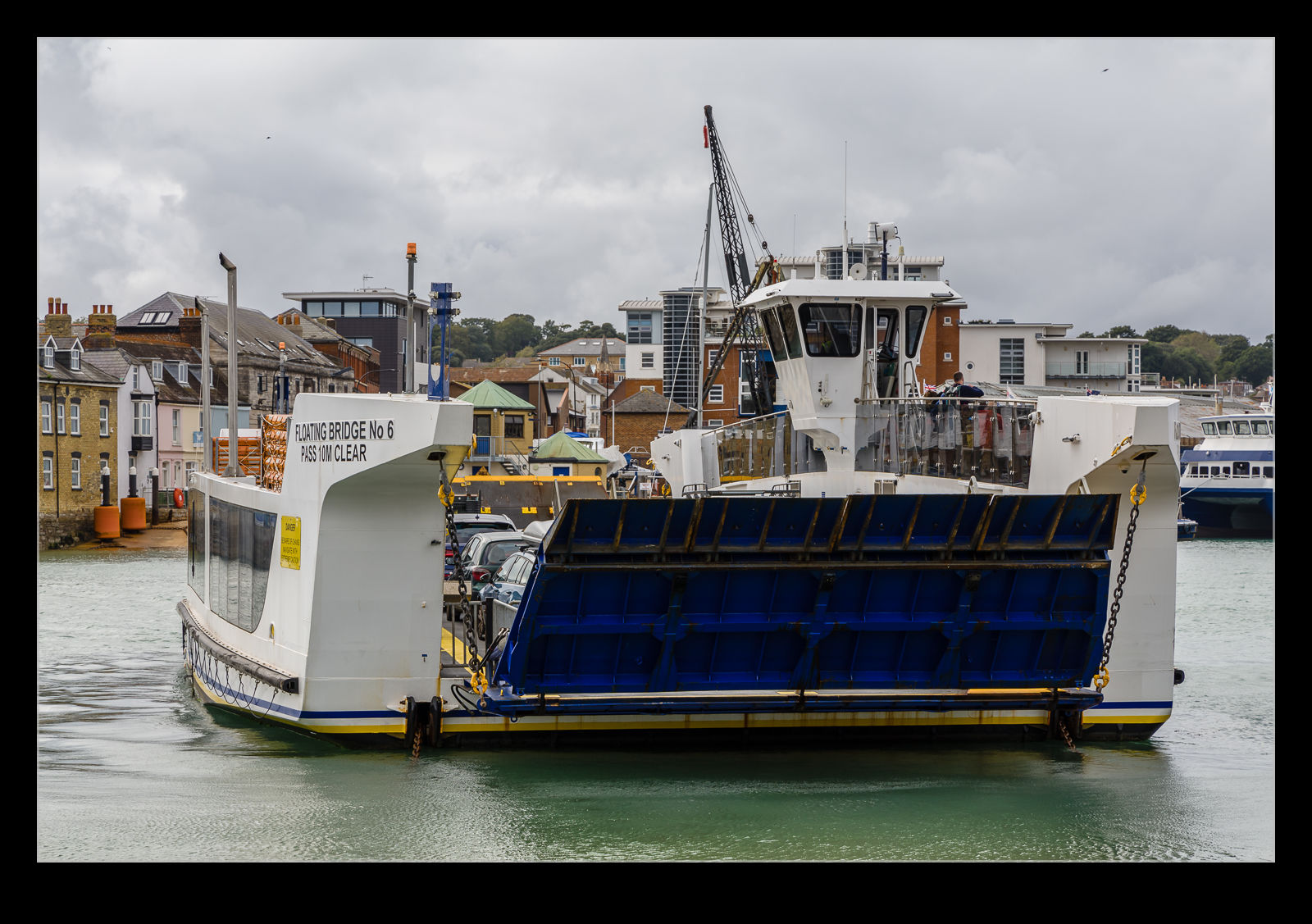
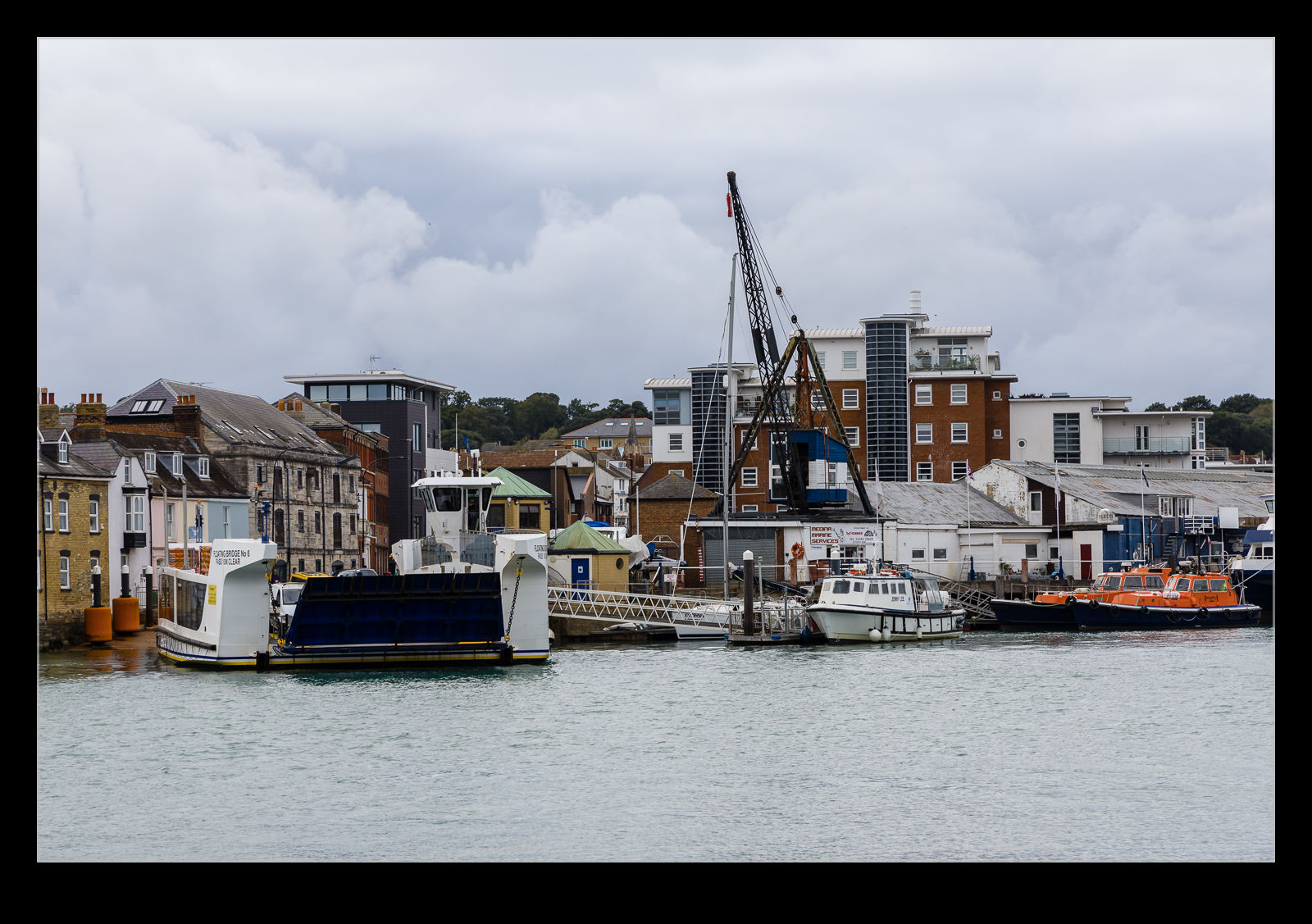
I last used the Woolwich Ferry around 1990.  At no point since then have I needed to do so.  However, on my exploitation of the eastern parts of the Thames (at least while still in London), I started out in North Woolwich and needed to get to Woolwich.  The foot tunnel was an option but the ferry runs frequently and is free so it was my preferred option.  From what I have read, they replaced both ferries relatively recently.  One of them has an obvious name – the Dame Vera Lynn.  The other one is named Ben Woollacott in honor of a young crewman who lost his life on duty a few years ago.  I think that is a nice touch.

The two ferries run at the same time with each loading on opposite sides of the river and then departing at the same time.  There is an odd “dance” that they do with one going upstream  and one down as they cross each other before then sliding in to the dock to unload and repeat the process.  When I boarded the ferry, I didn’t know how this worked so was quite confused as we headed up river.  However, it all became clear quite quickly.

The ferries are very maneuverable.  They was in which the crews can put them wherever they need to while operating on a river that has some strong currents is quite impressive.  They seem to slide into the berths sideways when coming from one direction while they approach the northern side in a more traditional way.  If you haven’t heard of a Voith Schneider drive, I suggest you look them up.  Very clever stuff.

I made the crossing and got some shots and video while doing so but my interest was now piqued so I ended up spending a little longer on the south bank of the river watching them repeat the process to see how it looked from the outside.  A slick operation.  As I got off, I saw the holding area for the vehicle traffic that was waiting to board.  It seemed that there was a lot more going south to north than in the other direction at that time of day.

The F-16XL That Most People Ignored

There was a grey camo F-16 on the ramp at the air show at Edwards this year.  When I saw it I was really excited but I think I was in the minority.  I mentioned to a photographer next to me how cool it was and he commented on the air data boom.  I told him it was an F-16XL and he had no idea what that was.  The XL was the long range strike version of the F-16 that went up against and lost to the F-15E Strike Eagle.  Two jets were built and they ended up having some test duties including so work for NASA.  The single seater was the jet on the ramp for the show.

It has a large cranked delta wing but, from a normal viewpoint, that can be seen but isn’t obvious.  A look at the shadows, though, and you know what you are dealing with.  The airframe is an early fiscal number – the next jet became the AFTI aircraft – and the rear fuselage has the mounting points for an anti-spin chute rig.  This jet has done a lot in its flying days but it is now a museum piece.

Sapsucker Got A Lot Of Attention

While I am wandering around Juanita Bay park, I meet plenty of people that are very knowledgeable about birds.  I am not so I tend to follow what others are looking at and shooting.  I came across a woman starting up a tree at a bird that she informed me was a sapsucker.  She could have been telling me a tale for all I know.  It was at an awkward angle but I tried to get some shots of it anyway.  When I came back, she was gone but it was still there.  It had moved to a slightly more convenient angle for a photo but not by much.  For you twitchers out there, is this a sapsucker?

Fat Albert Arrives First

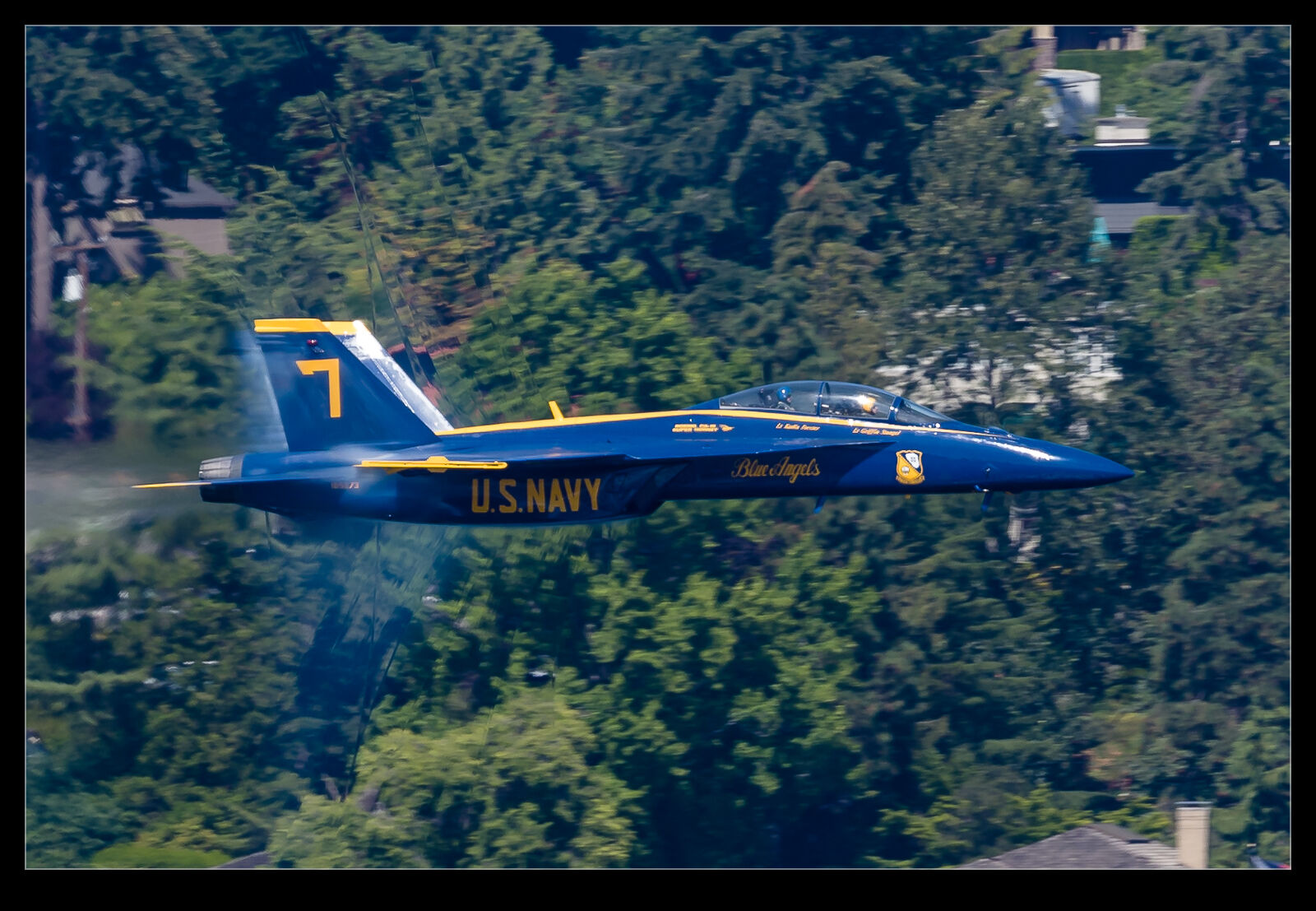
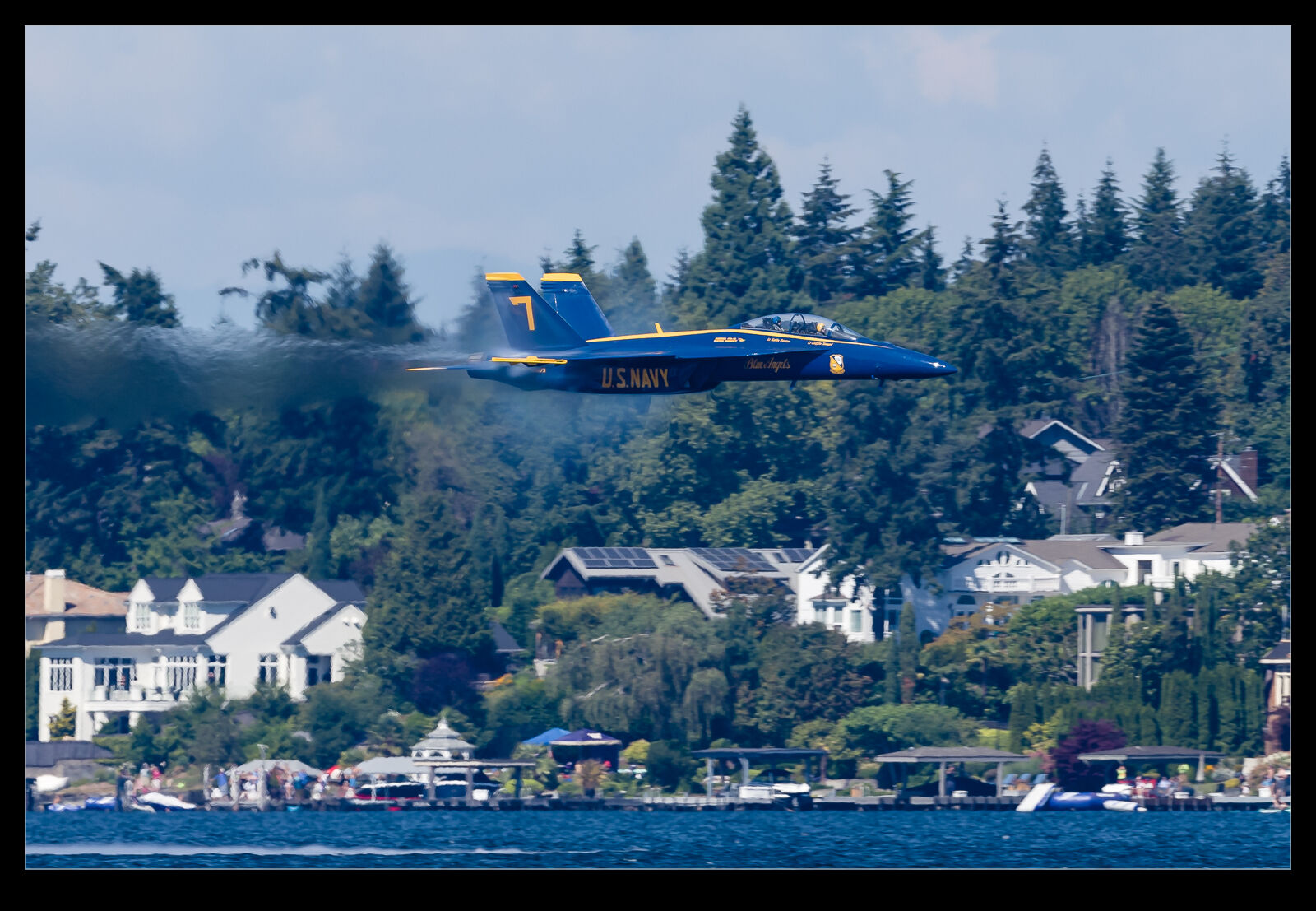
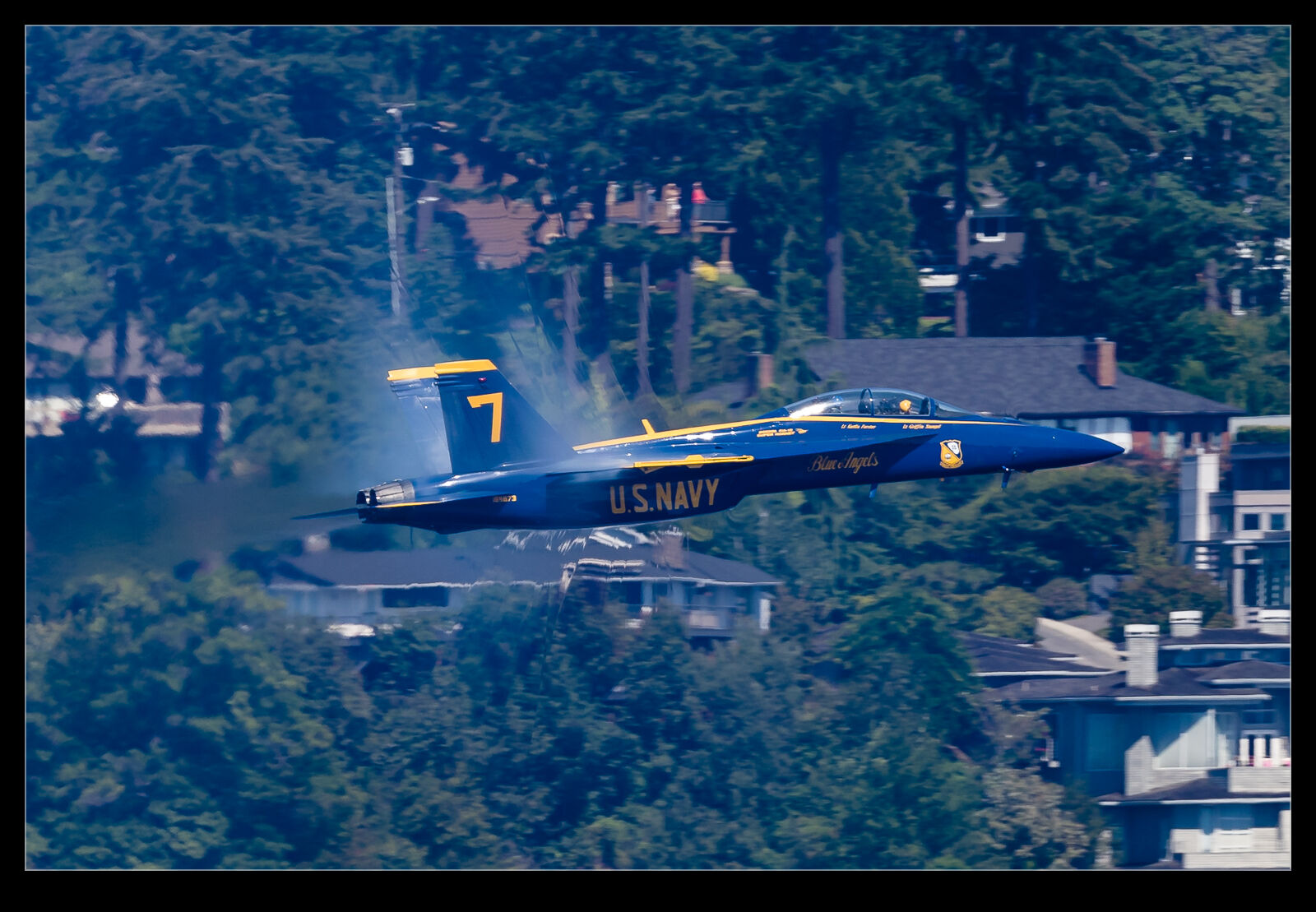
Seafair means a lot of aircraft coming to Boeing Field.  The Blue Angels are always the feature part of the show and this was going to be my first chance to see their new aircraft.  Yes, they have replaced the Hornets with Super Hornets and I shall cover that separately but they have also replaced Fat Albert since last I saw them.  The C-130T has been replaced with a C-130J that was sold to them by the Royal Air Force.  It has a new paint scheme to complement this change of era.

I was at Boeing Field for the arrival of the Blues and the jets were preceded by the arrival of Albert.  The good thing is that it is tractable on ADSB so I knew it was going to arrive and when.  Of course, a Herc coming down the approach is not as dramatic as a bunch of Super Bugs blasting over in formation but it is still good.  I did manage to catch it again in the coming days as part of the display so had more than one chance to get some shots.

Evening Stroll Around Westminster

When we first got to London on our vacation, it was later in the afternoon.  We got checked in to the hotel and dropped off our luggage before heading out for a stroll.  We weren’t going too far and just restricted ourselves to the area around Westminster Bridge and up to Hungerford Bridge.  There were so many people around, even walking across the bridges was something that required constant attention.  Everyone was taking photos and not really paying attention to anything around them.

Since the sun was in the west, the main face of Westminster Abbey and the Houses of Parliament from Parliament Square were better lit as was the London Eye from across the river.  I was only carrying my phone with me so was grabbing the occasional shot rather than focusing on the photography but it was nice to be back in Town and having a look around.  It did feel awkward being a tourist when I have spent so much time there scorning the tourists but so be it!

Return of the G-III On A Sunny Sunday Morning

A G-III is going to be of interest but when it comes on a Sunday morning when the sun is out and conditions look nice, I am going to try and be there.  This was the One Flight jet which I had seen before but I wasn’t going to pass it up because of that given how good the conditions were.  I got there in time to see it land and it parked up on the ramp a little north of me although not easy to get a shot of.  It wasn’t staying for long so I was able to catch it taxiing back out for departure and then taking off too.  Not a bad result for a start to a Sunday morning.

English Day at Exotics@RTC

I didn’t get to Exotics@RTC this year as much as I would have liked.  Sometimes the weather conspired against them and sometimes I couldn’t make it anyway.  I did mange to make some of the special days, though, and one of these was the English Day.  This tends to have more of a vintage feel to it than some of the other special days.  Yes, there are plenty of McLarens and Aston Martins but a lot of older stuff to mix it up a bit.

You get the Bentleys and Rolls (not sure how well they qualify as English anymore) and there are Jags all over the place but there are plenty of less common types and definitely a few of the ones that probably keep mechanics busy.  You have no idea how many jokes about Lucas electrical systems you can hear in the space of an hour.  Aside from these shots, I also took a little video to share with my sister on the day and have edited that down a bit to include below.

Department Of Natural Resources Demo

Let’s head back to the summer and the Olympic Air Show in Olympia.  This is a show that often has a helicopter theme but this year it had an extra rotary element that was cool to watch.  Earlier in the day, I had been looking across the field to where a selection of Hueys were parked up.  These belong to the Department of Natural Resources for the State of Washington.  What I hadn’t realized was that they were going to be part of the flying display.

Two of the Hueys took part.  They undertook a demonstration of aerial firefighting techniques.  While both helicopters were fitted with the underfuselage tank, one was configured to use the tank while the other was set up with a Bambi bucket.  A large water container – looked like a giant paddling pool to me – had been set up at the far end of the field.  Why they chose to put it so far away from the public I don’t know.

The helicopters took it in turns to fill up with water, either with a snorkel or by dunking the bucket.  They then went to the opposite end of the field and demonstrated different techniques for dropping water on the fire.  These would include a direct run overhead, a vertical drop, a toss maneuver and so on.  Each Huey would use the technique with the only variation for each cycle being the difference between the integral tank and the bucket.

Everything was a bit distant from the crowd so it was stretching the capabilities of the lenses (and the dope holding them) but it was one of the times that you were grateful for it not being too sunny since the heat haze was barely an issue.  It would have been fun to have it all a bit closer to the crowd but it was still a good demonstration of the capabilities the Department has for dealing with wildfires, something that was, no doubt, put to good use later in the year.

Remains of The Woolwich Naval Base

As I explore the Thames further, I walked along the shore heading west from Woolwich.  I came across what is left of the naval base that used to be there.  I didn’t realize that a naval base had been there but a few signs explained my ignorance to me!  There was a gun emplacement facing the river that, judging by the guns, was clearly very old.  Not sure how an engagement would have occurred but it would have been messy.

Additionally, I came across a couple of dry docks.  They weren’t dry and they were permanently walled off from the river but they were a testament to what had once gone on here.  As an aside, I recently learned a little more about dry docks as a result of something at work.  I had figured that what I was seeing was a dry dock, and it is, but there is more than one type of dry dock.  Some are floating docks (of which I have seen a fair few) and this type is known as a graving dock.  Never too old to learn!

Preserved Defender

My visit to the Army Flying Museum made reference to some of the exhibits having their own posts and this is one such post.  As part of the recent refurbishment, they added a Britten Norman Defender to the collection.  This was recently retired from service and was refurbished for display.  Having grown up on the Isle of Wight, the Britten Norman Islander is a plane that I have a soft spot for.  The Defender is the militarized version of the Islander and it has served in numerous roles around the world from the basic transport role to surveillance of those that don’t want to be seen.

This one is mounted in a dynamic pose which rather dominates the first display hangar.  Things are rather tight in the space and definitely dark so trying to get some shots of it that I wanted was a little challenging.  I did shot some panos to try and get more of it in than my lens would normally allow.  There is a balcony around the upper level of the hangar and that provides a good vantage point on the Defender too.  I was happy to get as much as I could of the airframe since I have had very few encounters with them while they were in service.