Category Archives: Travel

Tokyo Dome for a Baseball Game

Some colleagues arranged for us to buy some tickets for a baseball game while we were in Tokyo.  The Giants were the home team playing another local team called the Swallows.  The game was played inside Tokyo Dome, an inflatable structure and thankfully one with air conditioning!  Here is a panorama of the interior of the dome during the game.  Baseball games in Japan have some notable differences from those in the US, mainly relating to crowd behavior.  That may get a separate post so I will leave it for now.


Three Types of Wightlink Car Ferry

Having traveled on the car ferry from Portsmouth to Fishbourne on the Isle of Wight for all of my life, I have seen many generations of ferry come and go.  The oldest ones I recall are Fishbourne and Camber Queen.  These would amaze current travelers with their limited car capacity and very limited customer amenities.  They were replaced by a bigger and better equipped fleet which were replaced in turn but the fleet of Saint named ferries.  Their time has mainly come and gone and now most have been replaced again.

On this trip, I got to ride of two ferries from the newer generation.  They have  a significant increase in capacity that has required the introduction of two level loading to allow the schedule to be kept.  While traveling on each, I got to see the other heading in the opposite direction along with one of the older Saint class.  The latest ferry has again gone away from bi-directional operation and has also added a hybrid power drive of some sort.  No idea how it works but the large logo on the side leaves you in no doubt that it is there.

Fastnet Race Start in the 90s

We recently had the 40th anniversary of the Fastnet race that ended up with a significant loss of life and boats.  Weather forecasting technology and the methods of communicating were very different forty years ago and some of the boats were ill-suited to open water racing of that nature.  Growing up in Cowes, the Fastnet race was always a big deal.  It was every other year as part of the Admiral’s Cup.  Some of my school friends got to crew on it.  I watched the start of one of the races when we still lived in the UK and I scanned in some of the shots I got that day.  The start was always frantic.  Boats are jockeying for position, often very close to shore.  Lots of shouting goes on.  With a good wind, big sailing boats look so cool to me.

Island Flyer

Regular readers know I like the hovercraft.  I didn’t make a specific visit to Ryde on our last trip to see them but I did get to see them on our two ferry crossings and we also stopped at Southsea where I got to see a couple of arrivals and departures.  The new hovercraft have not had a trouble free introduction but I suspect they have had a few fixes embodied.  The memory of introduction problems will probably last far longer than the actual problems but I don’t know for sure whether they are doing fine now or not.  All I know is that the service was running while we were there.

I was rather pleased that one of the crossings ended up getting very close to the ferry as we headed in to Portsmouth.  It provided a far more interesting angle on the hovercraft than I would normally get.  Combine that with some shots from the beach at Southsea and I was happy with having got some shots of the new craft which I hadn’t really seen before.  During the departure, I was conscious of the potential for spray sideways as they lifted off.  What I hadn’t considered properly – pretty annoying given how I know to deal with jetwash when on a ramp – is that the departing craft got quite far offshore before you got blasted with their propwash.  That was mixed with seawater – an ideal combination for electronic equipment!  No permanent damage though.

Southsea Naval Memorial

The journey to Portsmouth on the ferry is one I have made more times than I can recall and one of the landmarks that is embedded in my mind is the Naval Memorial on the front at Southsea.  This obelisk is a clear sign of either arriving or leaving but it is something that I have never actually looked at in any detail.  After we departed the Island on our last trip, we stopped off on the seafront at Southsea and walked along to the monument to check it out.

The obelisk is all I had in mind previously, but the memorial is so much more.  The original monument was created after the First World War for all the seaman that lost their lives.  There are many panels around the column with names and ranks of seamen.  Just looking at the different roles of sailors in that era of ships is interesting and to think of them all lost is sobering.

The memorial was expanded after the Second World War.  The walls surrounding the tower and the columned end sections were added along with sculptures of sailors.  The detail of them is impressive considering how long they have been exposed to the sea air and the Woolly sweaters, boots, beards and hats have a very authentic feel to them.  I find it hard to believe I have passed by this memorial all my life and only now did I stop to look and appreciate it.

SC Maglev Museum

Nagoya is home to a museum of Japanese rolling stock.  The museum name focuses on Maglev technology and there is a Maglev prototype in the museum.  However, the exhibits are really a cross section of the Japanese rail industry over the years.  I will probably post some more from the museum as there were quite a few interesting exhibits.  Most of it was inside – most welcome on such a hot day – but the N700 prototype was outside.  I did have a look at that briefly along with an old steam locomotive but I was soon driven back inside by the temperatures.

When I first got there, you are directed into a hall with three significant exhibits.  It was so dark, I was wondering whether there would be any decent photo opportunities.  However, this was just the initial introduction and there were periodic videos and light shows to allow you to see these exhibits more clearly.  A little patience was required.  The main hall had the majority of the exhibits and they were lit normally.  There were plenty of people in the museum taking pictures with small children that didn’t seem to be enjoying it as much as the parents would have liked!  Maybe they wanted to be at Legoland across the street?

He Is Heavy, He’s My Buddha

A big reason (literally and figuratively) for going to Kamakura was to see the Buddha statue that is there.  It dates back to the 13th Century but has undergone some work since then.  It is a pretty bloody large statue.  It is also a popular tourist attraction so we were not alone on this day, even though it wasn’t a weekend.

Wandering around the Buddha and seeing it from all angles gives a good impression of its scale and also how it was made of many segments.  There are vents on the back to cool the interior (a little) which is good because you can go inside it.  It is very dark in there but you see the shape clearly.  The coloration also makes it clear which bits have been repaired over the years.  The temperature on a warm day will quickly encourage you to head back outside, though.

It is easy to get fixated on the Buddha itself but the environment in which it is displayed is really nice too.  The surrounding sculptures are interesting and there are some leaves on the ground with engravings.  Apparently there were many more at one point but only four of them remain now.  I hope nothing bad befell those who pinched the others!

Inshore Lifeboat Deployment

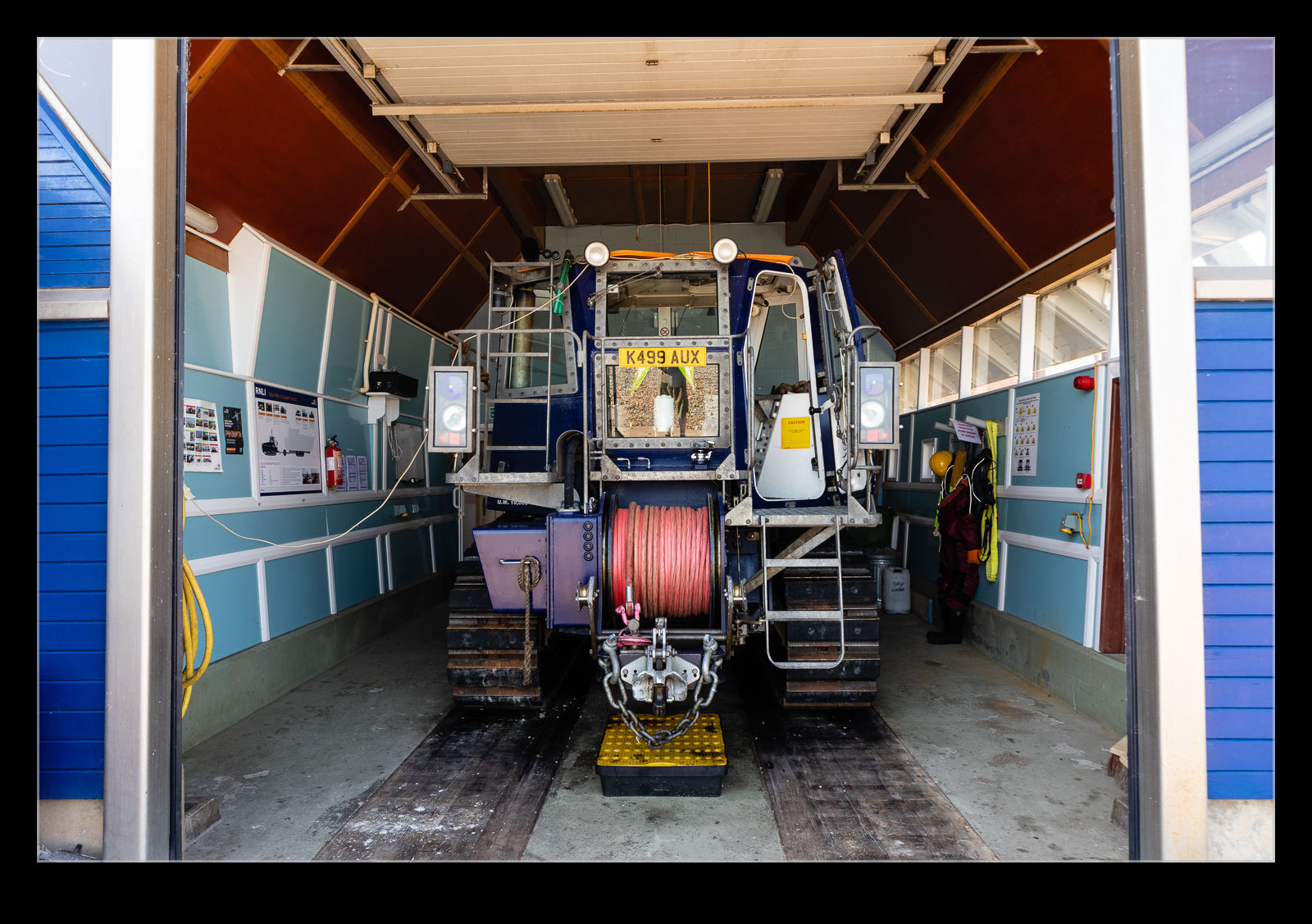
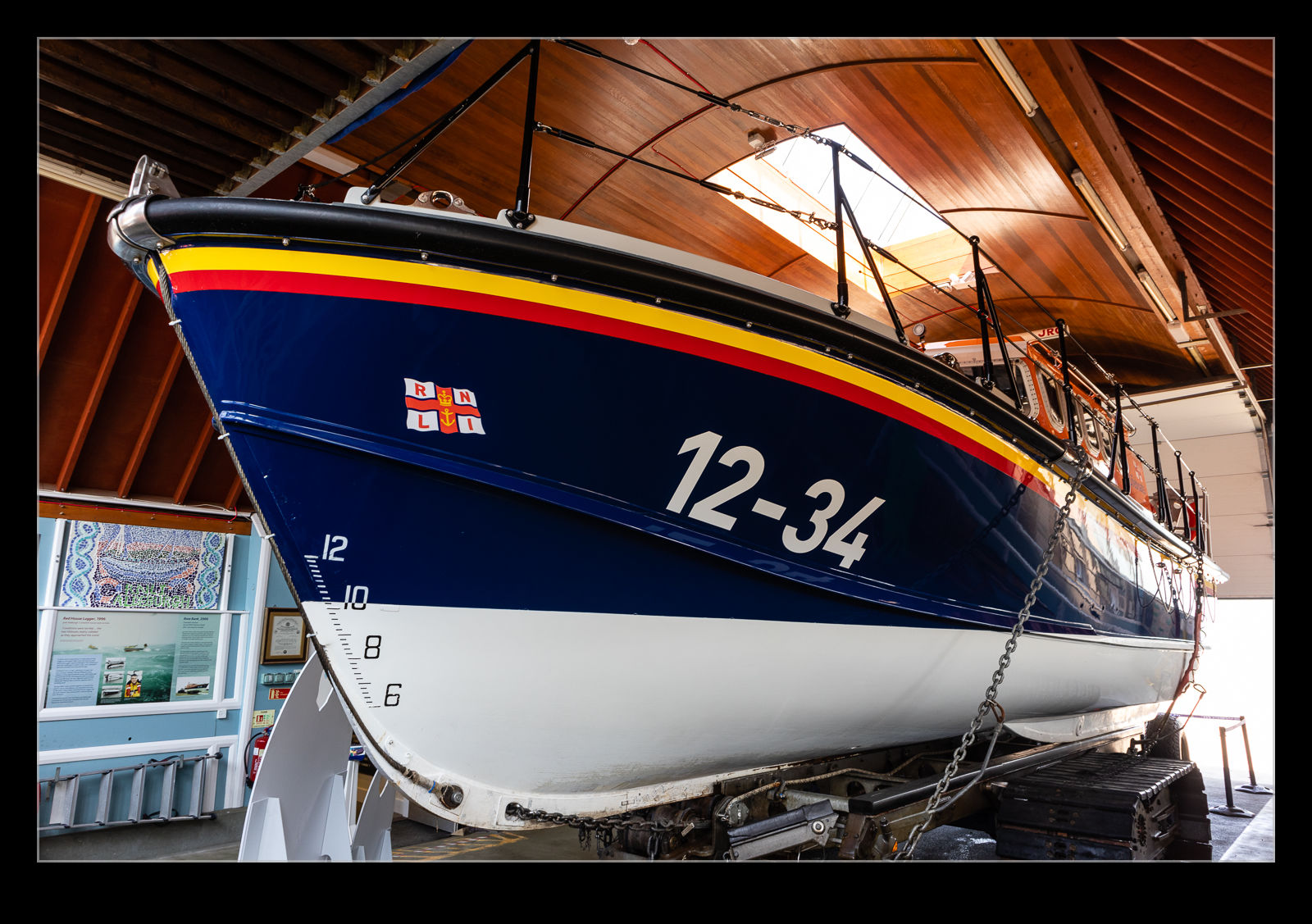
Bembridge has two RNLI lifeboats.  The launch of the all-weather Tamar boat has got a lot of coverage on the blog but I shouldn’t overlook the inshore boat that is also stationed there.  This boat can deal with lots of issues close to shore which the big boat is ill-suited for.  You might think this is less perilous work than that on the open seas but some of the rescue the inshore boats have carried out have really put the crews in harm’s way, often with them entering the water in rough and rocky shallows in breaking surf to rescue people trapped by changeable conditions.

After the all-weather boat had launched, the crew took the inshore boat out.  It is mounted on a trailer with a tug to move it out.  The tide was out and the reason for the boathouse pier is obvious with the exposed rocky shoreline.  They maneuvered the boat on its trailer in to the water and then got on board and powered it up.  Then it was off for training with the all-weather boat as well as on their own.  Again, the commitment of these crews should not be left unmentioned.  If you can do anything for the RNLI in any way, whether it is a membership or just donating when you see someone collecting on the high street, please do it.

A Sentinel Looks Glossy When it is Hammering Down

Based on a Global Express business jet, the RAF’s Sentinel battlefield surveillance jet has plenty of lumps and bumps to distinguish it but the paint scheme is a different story.  It is painted plain gray and, aside from one example I saw at Red Flag, it doesn’t have any interesting squadron markings.  The Friday of RIAT was a very wet a dreary day but this had the effect of making the Sentinel look rather glossy.  I have never seen them look too interesting before (aside from Red Flag) but this looked okay.  I did shoot it departing too on an overcast day and it didn’t look too bad then so maybe this one was fresh out of the paint shop?

Big Steam Engines

In the days of steam, power was produced by huge machines.  If you needed a more powerful machine, you just made it bigger.  The huge wheels and pistons that resulted were most impressive.  The Henry Ford has quite a selection of these old steam engines of various designs.  The efficiency improved as they introduced multiple phases to the machines to recover more work from the output of the engine.  The big beams and pistons remained a theme, though.  The large brick structures and the associated metalwork have been nicely preserved and displayed.