Category Archives: Air Shows

United 747 Flying a Display

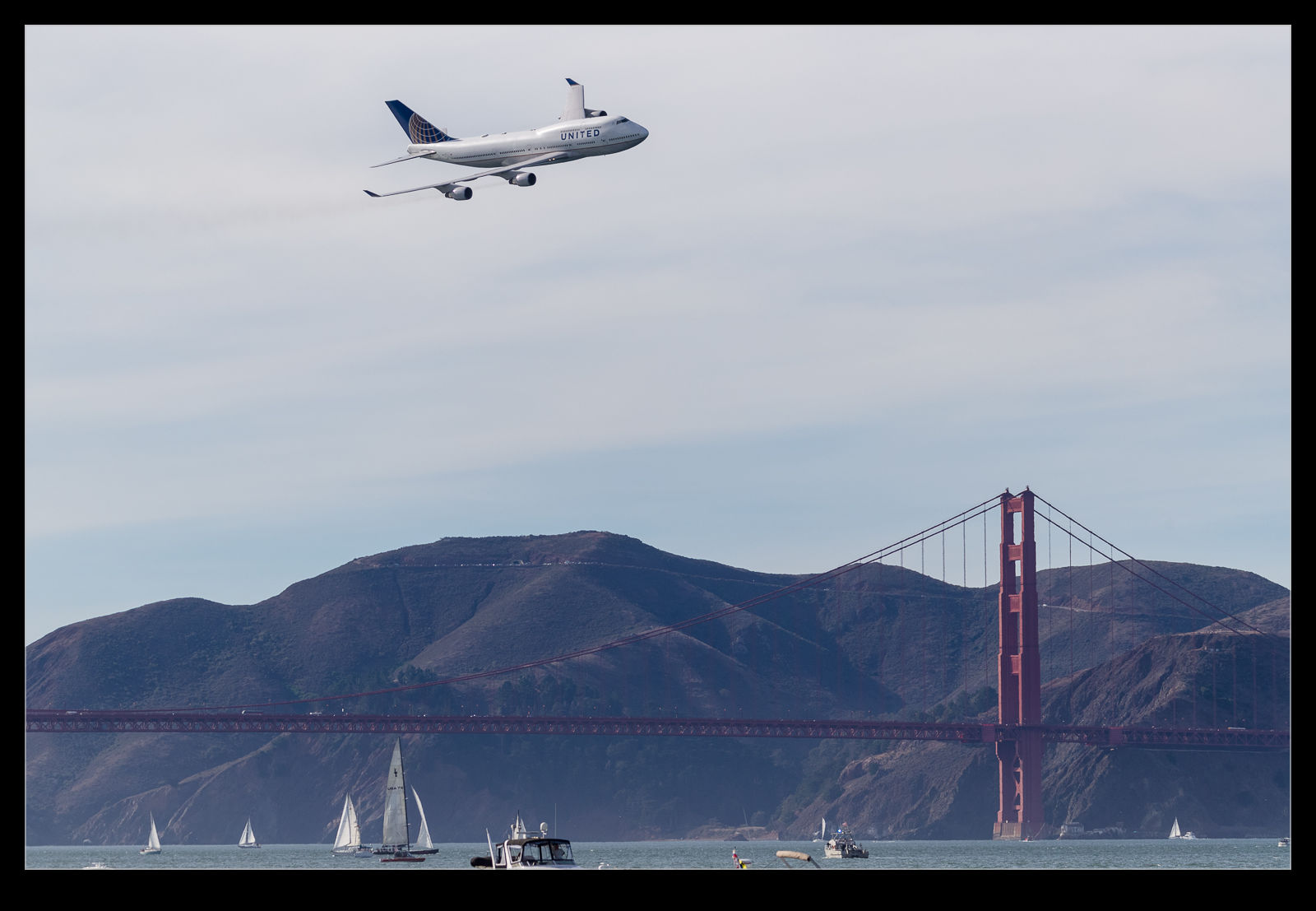
B11I1667.jpgAir shows include a lot of planes that are regular performers.  However, some shows manage to include something a little different and having a big airline with a local hub will help.  The Chicago Air and Water Show would feature American Airlines jets when I lived there.  San Francisco Fleet Week gets United to bring a jet.  This year they brought a 747-400 to the flying display.  Seeing a big jet like this thrown around the bay is really cool.  Whether it is flying low over the bay or turning in near the Golden Gate Bridge, this is something you don’t get to see too often.

B11I1678.jpg

P-26 Peashooter

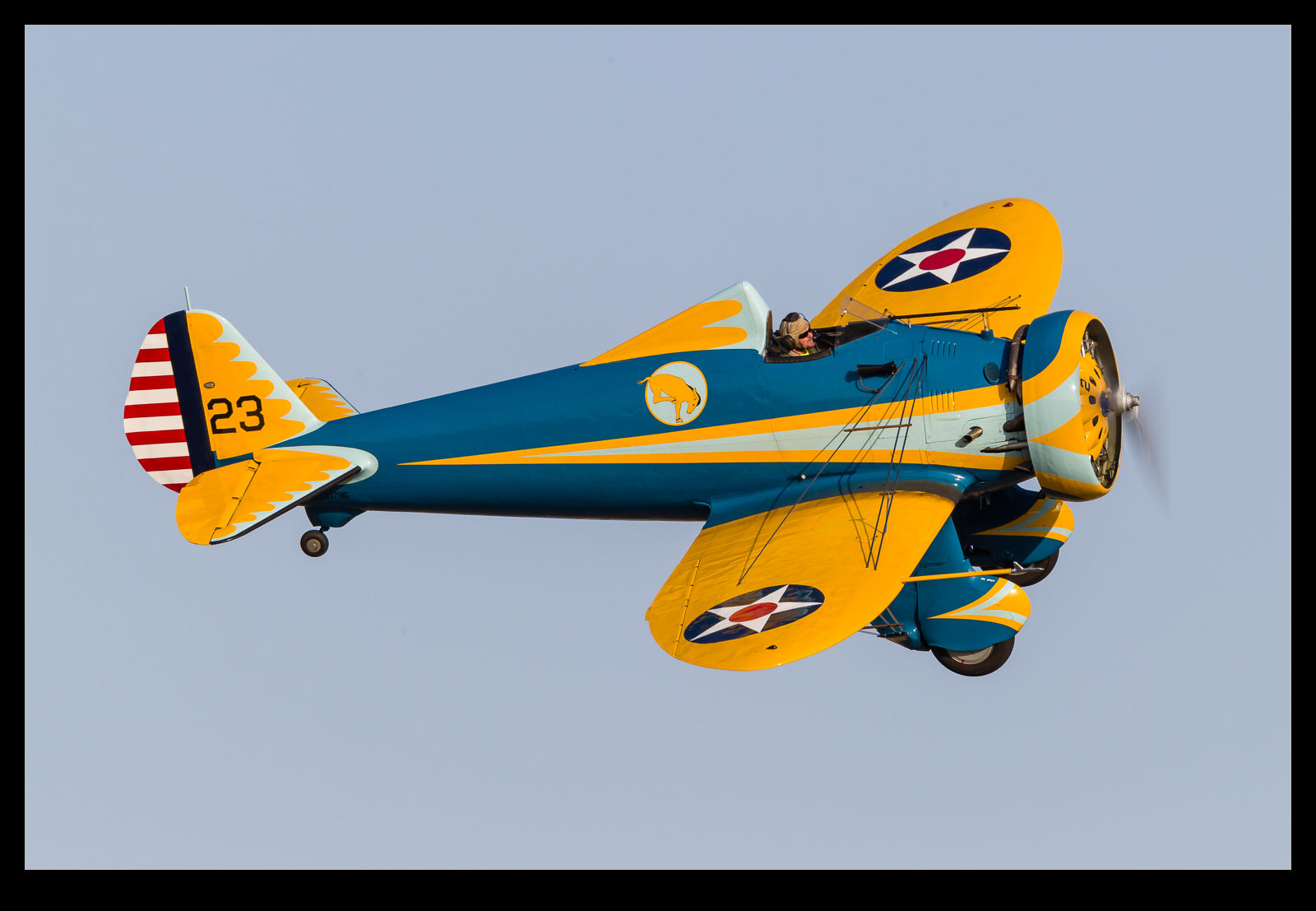
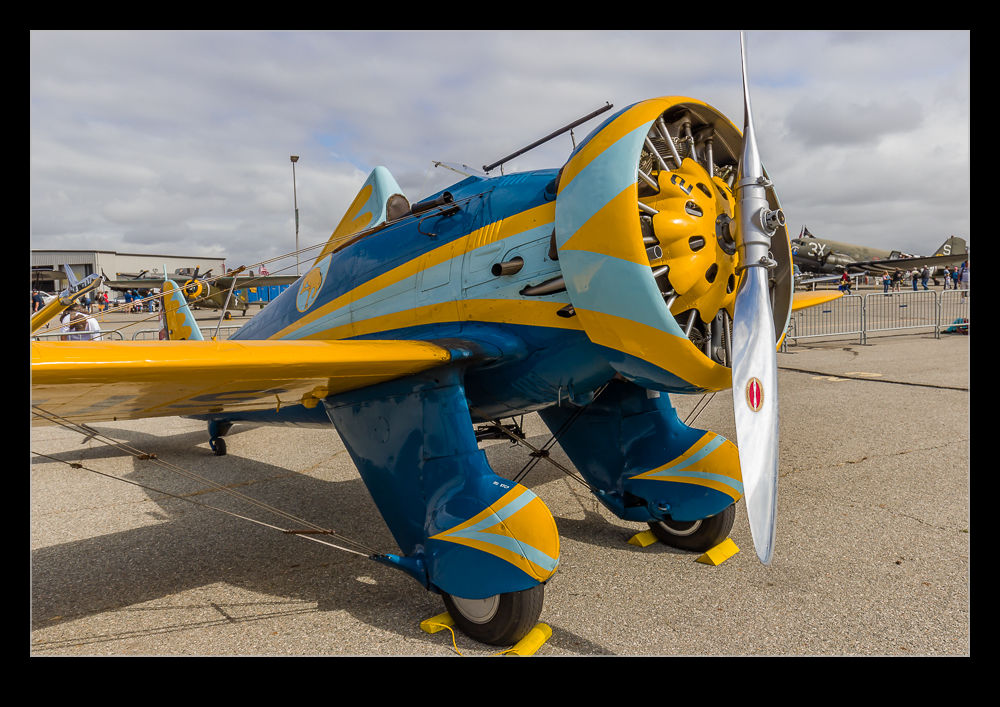
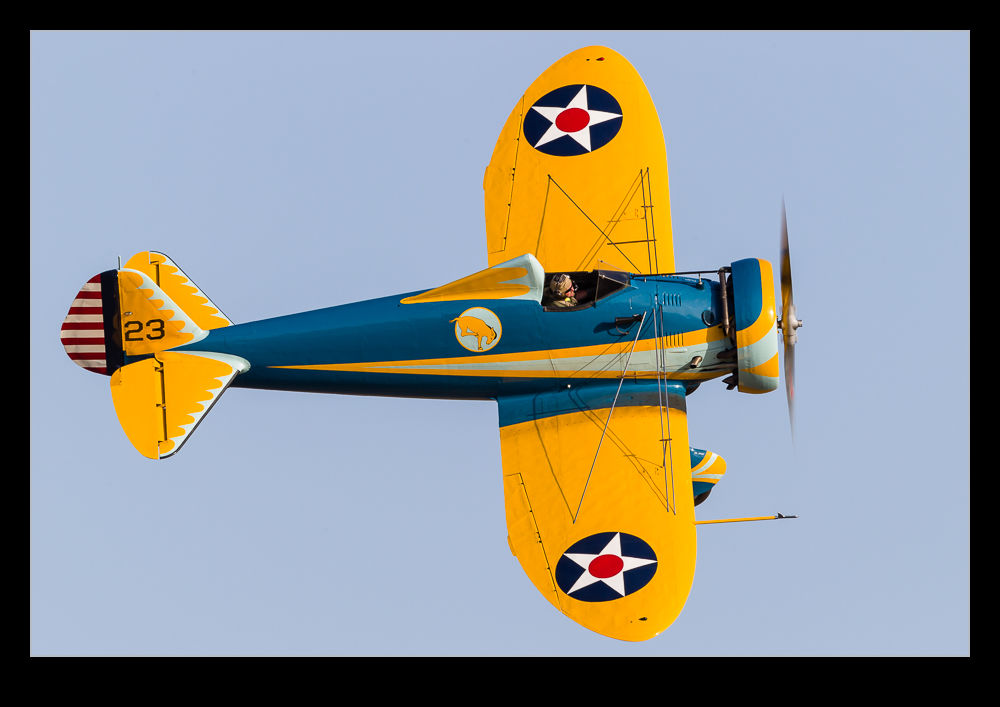
AU0E4966.jpgOne of my favorites when visiting Chino for the Planes of Fame Airshow is the Boeing P-26 Peashooter. A pre-WWII aircraft, this is the end of a generation of aircraft. Once the war started, aircraft really advanced quickly. For those that had been involved in conflict before the US actually entered the war, the aircraft had already moved on. The P-26 is a bit of a stranger in a time warp. However, the shape and technology combined with the colors make it a curious aircraft for me. Seeing it fly during the twilight show at Chino was cool and the evening light was a lot more impressive than seeing it during the day.

AU0E6149.jpgAU0E4974.jpg

AWACS Oddity

Scan 2-1594.jpgA number of different airframes have been used for airborne early warning requirements. The Boeing E-3 Sentry is the most well-known but there have been a number of other types over the years. SAAB developed a radar system that has been mounted on Embraer 145 jets, SAAB 340s and SAAB 2000s. The development of this system was started in the 1980s and a testbed was produced prior to the system appearing on a production airframe. This testbed was a Fairchild Metro turboprop. It made an appearance at the Farnborough airshow where I got some shots of it. It was camouflaged in what was then the standard Swedish camouflage scheme. This was a cool look for their planes and I do miss it.

Scan 2-1595.jpg

Rafale A Demonstrator

Scan 2-1502.jpgThe Dassault Rafale is a fantastic looking aircraft. Gradually being built in reasonable numbers, it has broken into the export market and has customers in Egypt and Qatar and probably India although exports to India are always hard to pin down! The French air force and navy will no longer be the sole operators. The Rafale B is a two seat version and the C is the Air Force’s single seat version. However, there was the Rafale A. One of them was built in the mid 1980s as a demonstrator. It looks almost identical to the production version but was actually slightly larger. Painted in Dassault’s house colors, it made a number of air show appearances. At the time, it was competing for attention with BAe’s EAP demonstrator. I didn’t get to see EAP until I got to Warton where I wasn’t able to photograph it!

Scan 2-1535.jpgHere are some shots of the Rafale A. It was originally powered by GE F404 engines although later one was swapped for the M88 that would power the production Rafale. The first Rafale C was rolled out in an all black paint scheme which made it look very cool. The size difference is not immediately obvious but a number of detail design changes were incorporated too including lots of sensors required for an operational type rather than the demonstrator. The wing planform was also altered slightly based on the experience gained with the demonstrator. I understand that, when the aircraft was retired, it went to the Museum at le Bourget in Paris.

Scan 2-1536.jpg

Mean and Moody Sky

AU0E6095-HDR.jpgIt’s always a nice combination when you can get some light on the foreground subject of the photo and have a really dark and menacing cloud structure in the background.  The brightness of the foreground exposure is much higher than the background so it makes the clouds look even more dramatic when exposing for the subject.  Having a play with post processing will also help to make things look more dramatic.  This Wildcat was parked on the flightline at Chino for Planes of Fame just as the lighting worked to my advantage.  I may not have been happy about the weather conditions but this was one of the upsides to a cloudy sky.

Westland Black Hawk

Scan 2-1611.jpgThe Sikorsky Black Hawk is a ubiquitous helicopter. They are in service around the world and Sikorsky has a second production facility getting established in Poland. What is not so well known, though, is that Westland attempted to become a license producer of the helicopter for the UK and other markets. They went as far as to build an airframe from a knocked down kit. Meanwhile, another airframe was converted to with what was then the Rolls Royce/Turbomeca RTM322 turboshaft engine for testing purpose. Together, these two airframes were demonstrated at Farnborough. The Westland derivative was not ordered by anyone and both airframes were ultimately converted to other configurations and sold on to other operators.

Scan 2-1637.jpg Scan 2-1610.jpg

Optica Flashback

0701.jpgA few outlets have recently been covering the reemergence of the Edgley Optica.  In the 80s, his was an aircraft that was coming in to production.  Designed as an observation platform, it is a rather interesting looking airframe.  A bulbous fuselage sits ahead of the wing and the powerplant is mounted in the rear driving a ducted fan.  The unrestricted view is supposed to make the aircraft ideal for seeing what is going on below.  Supposedly, the ducted fan makes for a low noise signature which helps the “stealthiness” of the aircraft.

Scan 2-1603.jpgThe ownership of the design moved through a few entities and the program experienced some setbacks including a crash and a fire that destroyed a number of in production aircraft.  Ultimately, the whole thing sputtered to a stop.  A few airframes are still in use around the world but John Edgley, the original designer, has bought back the rights and is now trying to relaunch the project.  I saw the aircraft at Farnborough back at the end of the 80s and beginning of the 90s.  These shots were taken then.  I really would quite like to track down some of the currently active airframes.

Scan 2-1604.jpg

The Royal Navy Comes to Farnborough

Scan 2-1586.jpgAnother flashback post today.  This one is an old Farnborough airshow and it included a rather large flying contribution from the Royal Navy.  I don’t now recall exactly why the Navy was so committed to this show.  This wasn’t even on the public show days when the display is often modified for the public from the format used for the trade days.

Scan 2-1585.jpgThe main element of the display was six Sea Harriers.  These were FRS1 models prior to the F/A2 upgrade program.  The aircraft took off in groups of three and included a formation hovering routine with the jets arrayed along the runway providing a jet in front of most of the viewing crowd.  Some fast flying was also a part of the display of course.

Scan 2-1579.jpgHelicopters also contributed to the display and the low speed capabilities of the Harrier meant that it was possible to combine the fixed and rotary elements together in one formation.  The whole thing made quite an impression as a recall.  The sound of six hovering Harriers was certainly enough to give the eardrums a workout!

Everyone Has a Trainer Design

Scan 2-1646.jpgThe late 80s was a period when a whole bunch of companies were trying to come up with the perfect trainer.  A large number of sir forces were considering the replacement of their trainer fleets and much discussion was underway about what the appropriate type of trainer was for the future.  Basic jet trainers were ultimately going to be replaced with turboprops in a lot of places but that was in the future.  Meanwhile, all sorts of trainer designs were in the works either for the basic training task or for slightly more advanced levels of tuition.

Scan 2-1590.jpgSome of these designs made it to production.  Some of them never got beyond the prototype stage.  Not all of them went away entirely.  Even today you can still see some of the designs in an upgraded and modernized form being pitched at much the same market as they were thirty years ago.

Scan 2-1600.jpgLet’s start with the Redigo.  Built by Valmet in Finland, the Redigo was a turboprop evolution of a previous piston trainer, the Vinka.  It was seen as a capable but low cost training solution.  Finland bought a number although they are now retired.  A couple of export customers also took some.  Aermacchi bought the rights to the aircraft in the 90s but I haven’t heard much about it since.

Scan 2-1647.jpgThe Microjet was a small French design.  Powered by a couple of diminutive Marbore turbojets, it produced way more noise than its small size would have suggested.  The V tail configuration was distinctive and it made a number of airshow appearances.  The project was supposedly driven by Microturbo, the manufacturer of the Marbore engine – presumably to create a market for the engine.  It never proceeded beyond the prototype stage though.

Scan 2-1664.jpgPromavia created the Jet Squalus aircraft.  Promavia were a Belgian company but the design was originally from Stelio Frati in Italy.  Painted in colors that represented Belgium, it showed up at a number of air shows.  However, it also never proceeded beyond the prototype stage.

Scan 2-1649.jpgThe RFB Fantrainer was a German program.  It was a tandem seat aircraft with a ducted fan behind the cockpit.  It was designed to provide fighter-like handling characteristics in a training aircraft.  It was judged successfully in a competition to provide a trainer for the Luftwaffe but instead they went with a USAF based training program and did not take the aircraft.  It was sold to Thailand, though.  I don’t know what their current status is.  The aircraft was also the basis for a jet powered aircraft offered for the US JPATS competition by Rockwell.  However, it lost to what became the T-6 Texan II.

Aerial Firefighting Demonstration

C59F7974.jpgEvery other year the Aerial Firefighting conference comes to North America.  This year it was held at McLellan Field near Sacramento.  A tow day conference, I originally was going to attend on both days.  Unfortunately, I had a work conflict and had to miss the first day.  Fortunately I was able to be there on the second day which was the day that included a demonstration session on the airfield.  An internal exhibition of products and services was open for the entire time but the demonstration included a wide number of airframes – far too large to fit indoors.

C59F8003.jpgThere was a wide variety of types on display.  Helicopters are a big part of aerial firefighting and there was a number on display.  Airbus Helicopters had brought their H215 demonstrator along as the conclusion of their North American tour.  This version of the Super Puma is a derivative of the AS332 (and indeed this airframe had a data plate that listed it as an AS332) and is designed to be a simplified and cheaper version providing a more affordable utility type.  It was alongside a new Bell 412 and some refurbished airframes including a Bell 205 and a freshly refurbished UH-60 Black Hawk.

AU0E2137.jpgFixed wing types came in all shapes and sizes too.  Air Tractor AT802s were on display in both wheeled and amphibious configurations and these two aircraft put on a number of water drop demonstrations.  A Pilatus PC-12 provided a demonstration of management of a fire with down linked information.  Calfire had a Bronco and a Tracker on the ramp while a bunch of Broncos were busy in a flying program to get ready for the season.  MAFFS had a P-3 on the ramp while another took off early in the program.  A Bombardier CL415 shared ramp space with a Neptune conversion of the BAE Systems RJ85.

C59F7932.jpgHowever, the ramp was dominated by one aircraft.  Global Supertanker had brought their converted Boeing 747-400 to show off.  They have taken the system from the 747-100 airframe previously in use and added it to a more modern version of the airframe.  Fresh from the paint shop and shortly to receive approval of the STC, they were keen to show off the aircraft.  I am not sure how well it will fit in with the needs of firefighting agencies around the world but it certainly is an impressive beast.

C59F7979.jpgI didn’t get to take as many stills as I had planned.  The organizers asked me to shoot some video for the, which I did.  Hayman was working with me so he made sure we had the necessary shots for the GAR feature.  After a few passes, I was able to switch and get some stills anyway.  I also got roped in to taking the group photo for the conference attendees.  If I had known that was required, I would have made some arrangements to get a better vantage point.  Still, it was a good day out and the conference sessions I saw were similarly informative.  Next year it is in France.  Perhaps we shall have to go!