Tag Archives: photo

More El Centro Stills

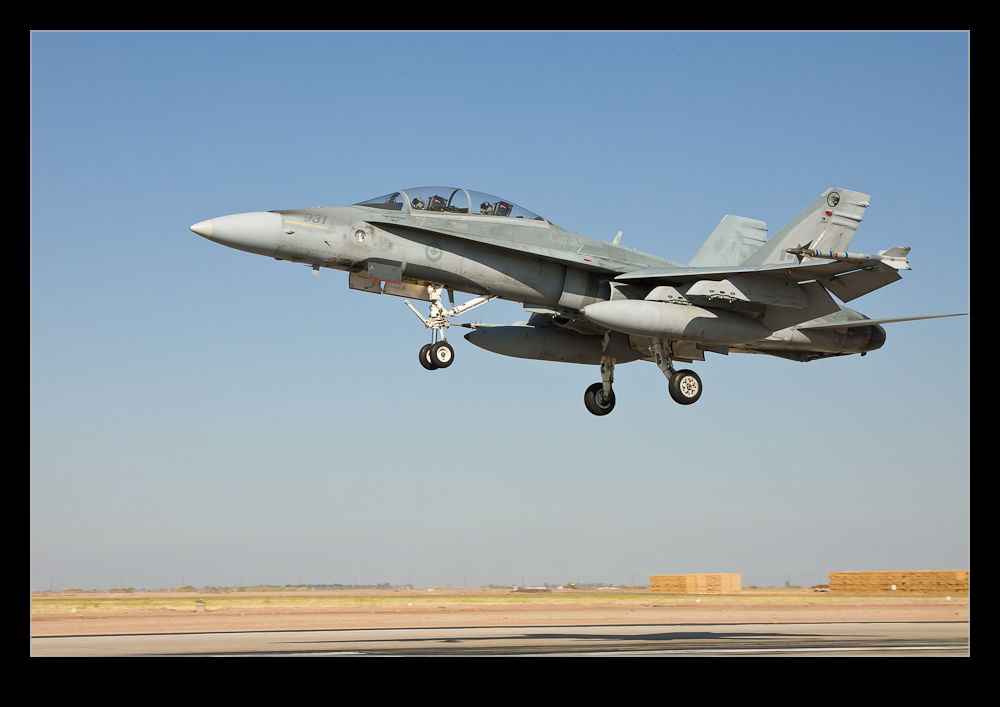
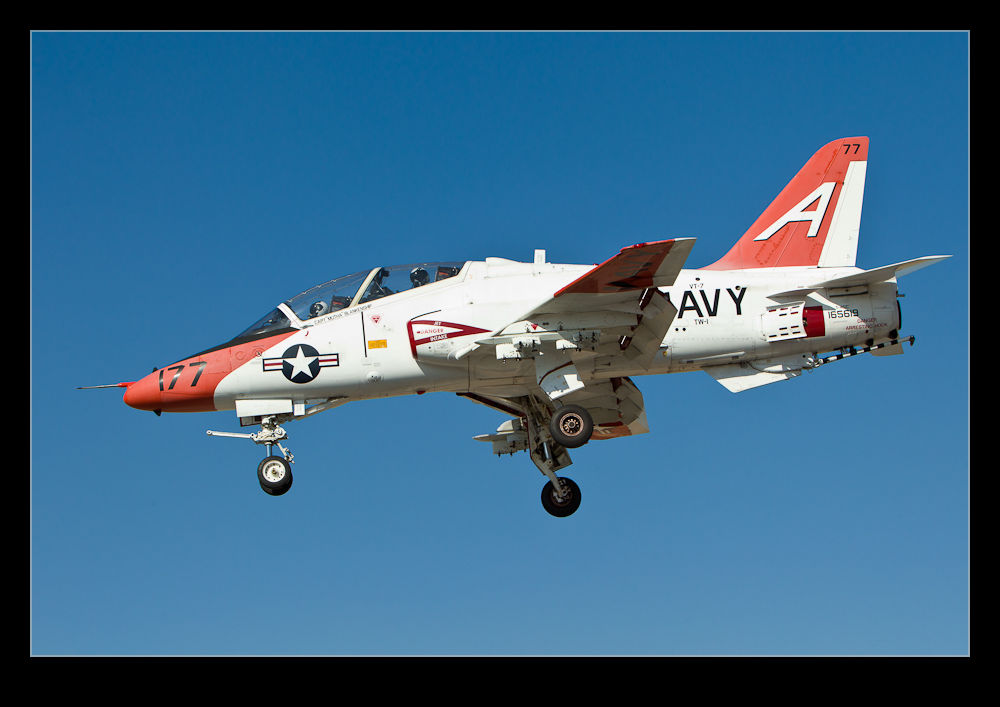
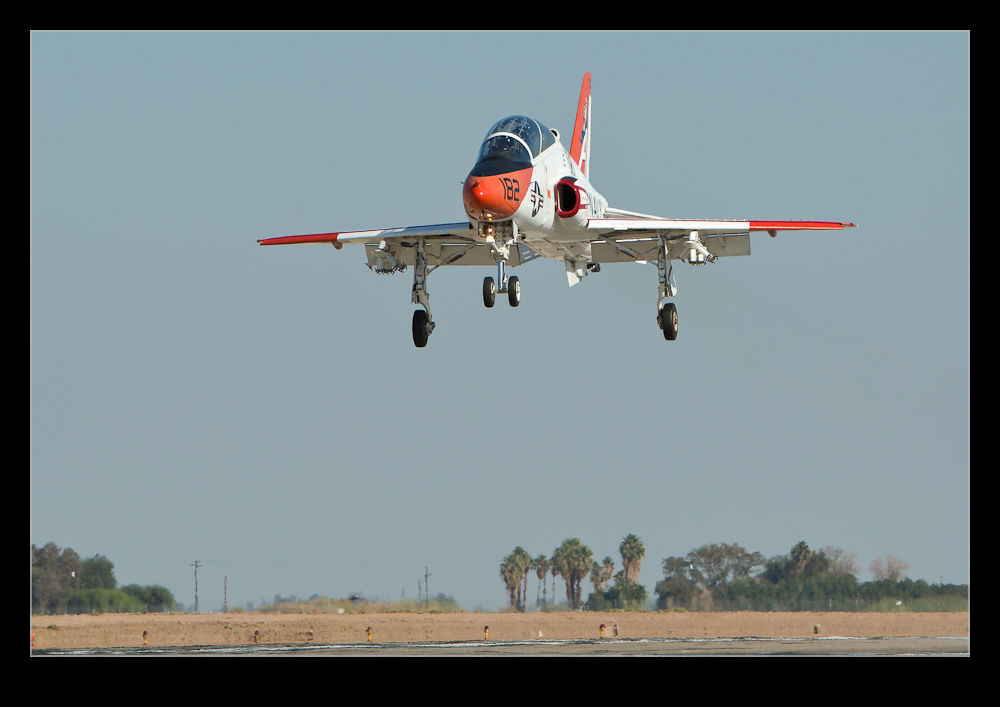
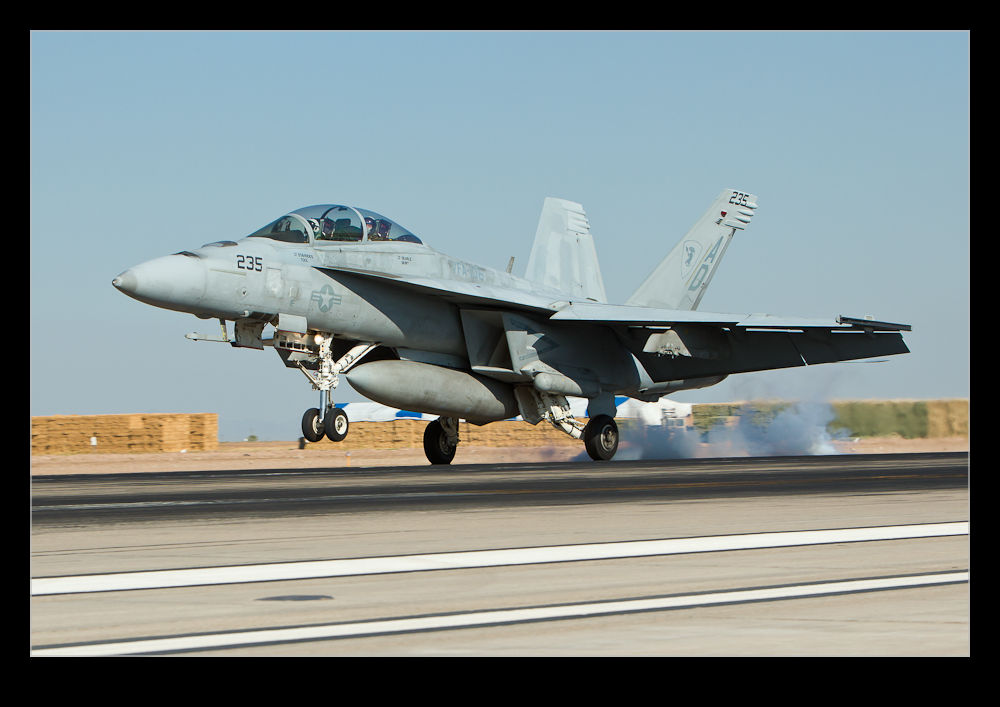
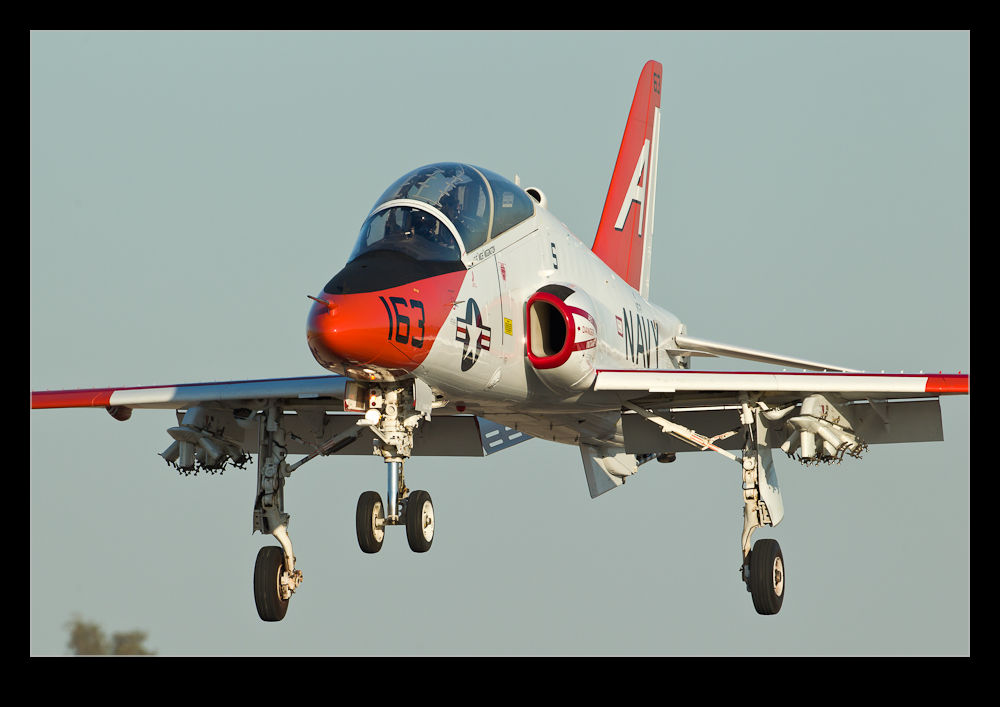
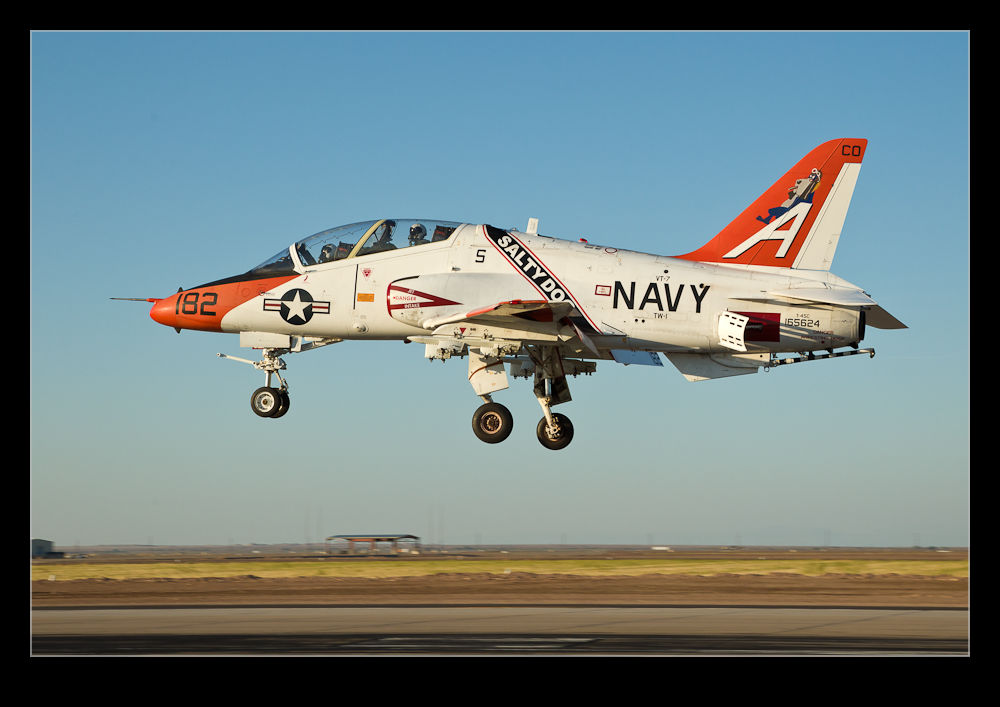
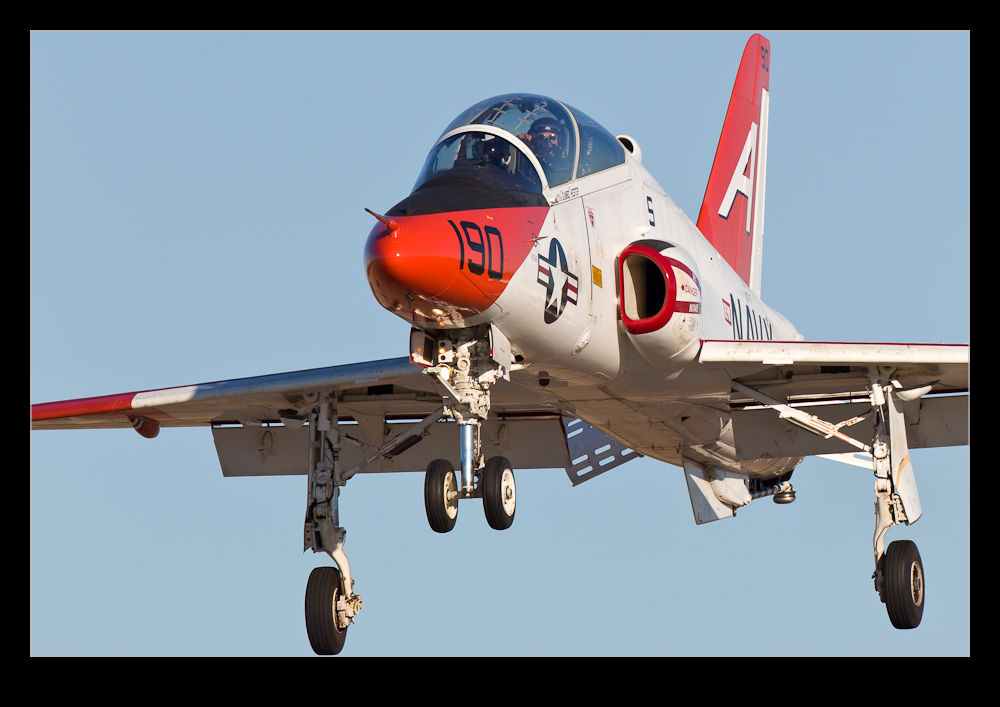
The main purpose of the visit to El Centro was to shoot still images.  I have previously posted some of the shots from outside here and some video from inside here but the real purpose was the stills on base.

Michelle Dee and her team at El Centro are very progressive in their approach to allowing photography on base.  They organize regular visits for photographers where it is possible to shoot from right alongside the runway at the LSO shack.  This means the aircraft are touching down right beside you and launching past you in close proximity.  This provides a chance for some shots that are not the norm.

Such access is quite unusual but the success of these events is hopefully persuading other facilities that it can be done safely.  A big part of this is having people on the shoot who understand what is possible and what is not and following those rules.  Everyone is ready to self-police as well.  Besides, the location is so good, where could you possibly be that would be any better?

Anyway, enough of the description.  Thank you again Michelle and team and thanks to Kevin for setting things up from our side.  Great to see you again buddy.  Here are the pictures.


Gerry Holtz Exhibition

I was recently in Los Angeles and, while there, took the opportunity to catch up with Gerry Holtz.  Gerry is a great guy I met at the Kennedy Space Center when we were both there to witness the launch of the space shuttle Atlantis.  Gerry lives in LA where he runs his own business in the video editing and production business with much of his work being on your TV screens on a regular basis.

However, Gerry is also a photographer and a pretty good one at that!  One of the things that he has been working on in recent years is a form of panorama shooting that creates a 360 degree view in a single square format image.  Gerry has an exhibit running presently at a cafe in Hollywood.  If you are nearby, the details of the venue are below and, without jumping to the end of the story too quickly, I do recommend a visit.

Gerry makes use of some familiar software tools to create the panoramas but the important elements of his work are the ability to visualize how the components of the scene will appear in the finished image and the willingness to do more than just use the basic software tools.  He works on the details of the image – both the elements and their blending and the dynamic range that can be present in a shot covering such a wide area.  The result is a far more time consuming process to create the final image but a result that justifies the effort.

He also has put a lot of effort into the display of the images for this event.  A number of them have been mounted on rotating frames since the image can be viewed from many angles and the rotating frame makes this easier for the viewer to achieve.  A smart idea and one that works very well.

You might have noticed that I normally have a number of images in my posts but this time there are none.  Since this is Gerry’s work, I did not want to reproduce it here.  However, you can certainly take a look at what he does by visiting his Facebook page.  Go to www.facebook.com/gerradaholtzphotography to take a look at examples of Gerry’s work.  I think you will be both impressed and fascinated.  Some of the images can appear very abstract but then you can explore them further to see more of what is there.  Some will be of familiar locations and others you will not have seen before.

I would like to thanks Gerry for taking the time to show me around the exhibit and to wish him well with further displays of the work.  I understand he is considering a book of more of the images and think this would be a great idea.  The exhibit is at 6547 Santa Monica Boulevard, Los Angeles, CA 90038 .  If you are in the area, take a look!

Looking forward to El Centro

One of the benefits of the blog being relatively new is that I have the opportunity to dig up stuff from the past and turn it into a post.  I will shortly be heading to El Centro in California for a shoot at the Navy base there.  Last year I made a similar trip and I thought I would remind myself and prime you for some of what might be there.

What will show up on a given day is hard to predict.  Last time we had some T-45s that had made the trip across from Meridian TX.  Whether there will be any this time, we shall see.  Hornets may drop in from other bases to use the facilities and last time some Canadian Hornets were in to use the ranges.

It is the luck of the draw what you get but one thing you can, hopefully, rely on is the weather.  El Centro has sun most days of the year.  I have had bad luck at some locations with weather but I am hoping this one will behave.

What might I try differently this time?  Last time I used a variety of lenses and positions.  The heat haze is a big issue so looking to far back up the approach is problematic.  Getting ahead of, beside and behind the touchdown location mixes things up a bit.  Getting the aircraft and the hold is also worthwhile and I may spend more time there.  I am also going to try and mix in more video this time too.

We shall see how it goes and what I can get off base before and after as well.  Wait to see what we get!

Oh, to have been digital then…

When I am working on a project that relates to something older than 10 years ago, I have to dig into my film archives and see what I have shot in the days before digital came along.  Almost invariably, when I undertake such a task, I am struck by how things have changed when shooting digitally compared with film.

There are two main differences I notice between now and then.  First the number of shots and second the quality I can get from them.  I should, at this point, confess that I always shot negatives rather than transparencies (well, almost always) when I was a film shooter and they will be plenty of photographers who will consider never speaking to me again as a result.  However, while the reasons for that are in the distant past, I don’t know whether it would really change much at this point.

Numbers are easily explained.  When I shot film, every frame had a cost.  The film had to be bought and then it had to be processed.  It also then needed to be stored which I didn’t always do as well as I should.  Consequently, some images that should be available are in less than perfect condition.  That is my fault, of course, not that of the technology.  This cost meant that shots were taken sparingly.

When I went to airshows in the late 80s, I would probably shoot about six or seven rolls of the 36 exposure.  I used to think this was a lot and my none photographic friends used to think it was extravagant.  About 200 shots was a lot.  Compare that to a show today and I can safely say things have changed.  I would miss good shots because I was waiting for what I hoped was the slightly better one to come.  Now I shoot all of them and worry later.  A reduction in skill and technique?  Maybe or perhaps it is just making use of what is available to you.  Certainly, I can experiment with a number of different shot types now in a way I couldn’t before.  Slow shutter speeds are a particular example.

I still have to store them of course but storage is cheap and digital files don’t degrade – you can lose them completely of course but backups are straightforward which they certainly weren’t for film!

Quality is another issue.  RAW converters continue to improve and you can extract some good detail from the shadow and highlight areas if you are not too reckless.  The film is set at development and then you have to work with it.  Again, a skill that can be controlled but going back is a lot more difficult.  I don’t have access to the best of film scanners but getting a crop out of an old neg is a bit hit or miss.  Compare that with a crop of a digital file and I think the benefits to me are obvious.

I look at shots of long gone airframes from events in my past.  First, I wish I could have them as digital files from a camera rather than a scanner.  However, I am more shocked when I see something rare and look at the next few frames to see what I shot and see a totally different subject.  How could I have been so blase?  I guess this is a lesson to learn now.  We might be bored with what we see a lot of now but, one day, these things will be history too so we had better make the best of what we have now and learn from our/my mistakes of the past.

An Evening with Vincent Laforet

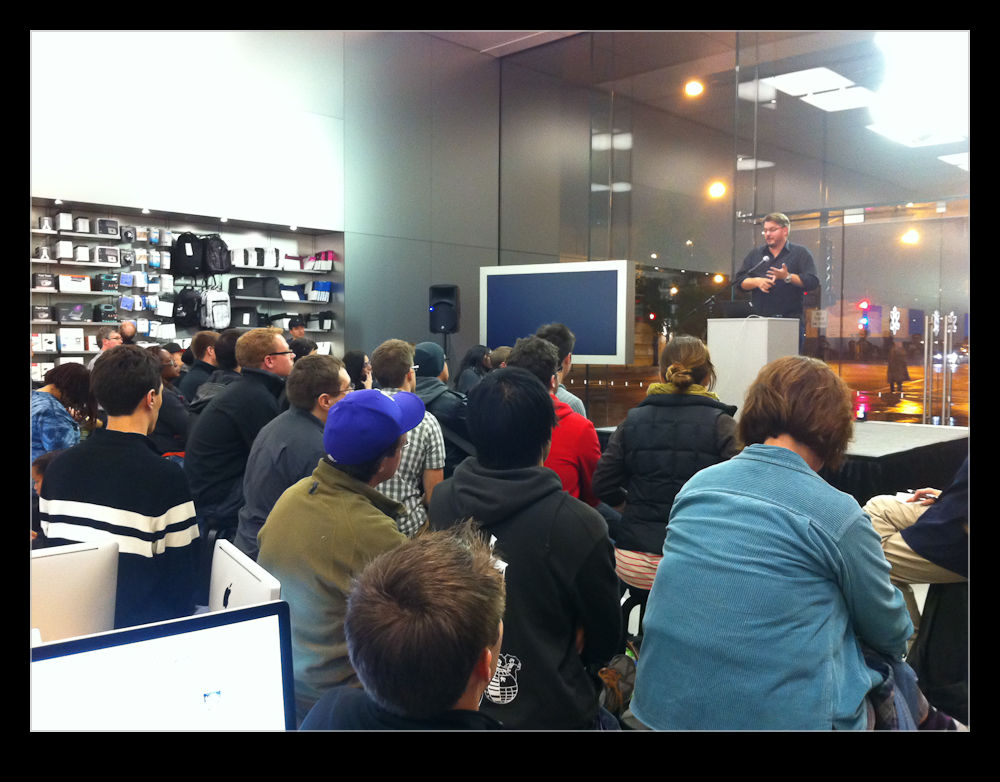
Okay, maybe not a full evening but an hour and a half so close enough.  A damp Monday evening in early November is not the sort of time that you are planning a trip out.  However, Vincent Laforet was giving a talk at one of the local Apple stores and I was keen to be there.

I saw Vincent once before at my first ISAP symposium in Pensacola FL.  He was still predominantly a still photographer in those days.  He gave a talk about his aerial photography in New York and an unbelievably moving account of his time in New Orleans during Hurricane Katrina which was accompanied by some equally moving imagery.

When Canon released the 5D MkII, Vincent filmed a short called Reverie to demonstrate the capabilities of the camera and it went viral.  I don’t know whether this was the start of his move to film or whether he was already on the way there beforehand but he is now a director and a bit of a go to guy on the techie issues with HDSLR video.

His talk was a combination of some of his history – a fair bit of stills work since his audience included a lot of photographers – along with some of the video work he has been doing.  I follow his blog so the video material was stuff I had already seen but that was not a problem.  He talked a bit about what the newer technology is bringing to the video world and how different the workflow is.

The real interest came at the end of the evening though when he had a Q&A session.  This really got to the heart of the issues people were interested in and he was very frank in his answers.  He challenged people to think about what they were doing and who was going to be coming after their work environment (and what that environment would even be).  He answered technical questions and gave thoughts on how to self-teach some of the things associated with film making.

He was a very approachable guy and willing to talk to everyone who wanted to get a moment with him afterwards.  If you get a chance to see him at any event, I would certainly recommend it.  In the mean time, his blog is well worth a look.  He doesn’t always blog regularly but, when he does, it is good stuff.  He also has a great gear page if you want some insight into the stuff he uses himself.  Check it out at blog.vincentlaforet.com if you are interested.

Are you ready for some football?

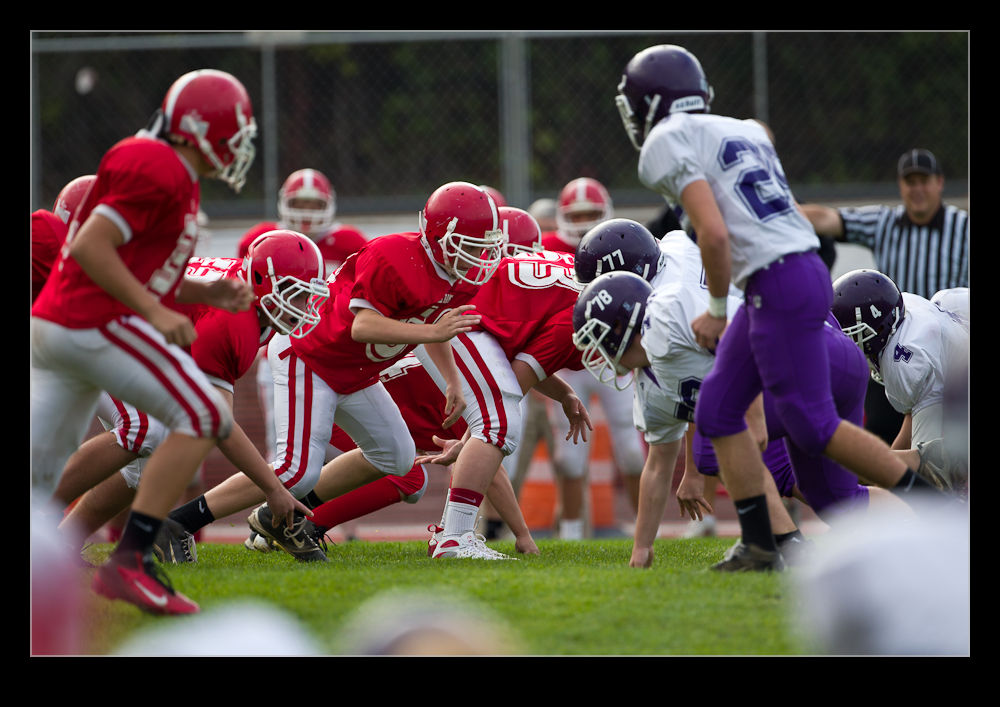
Devoted followers of this blog (that’s all of you, right?) will know I have had a couple of attempts at photographing football (the American version as opposed to the one that uses a foot to kick a ball). This involved preseason training camp for the Chicago Bears but not a real game. For my first attempt at a live, unplanned action, I did not have a professional game. It was time for High School.
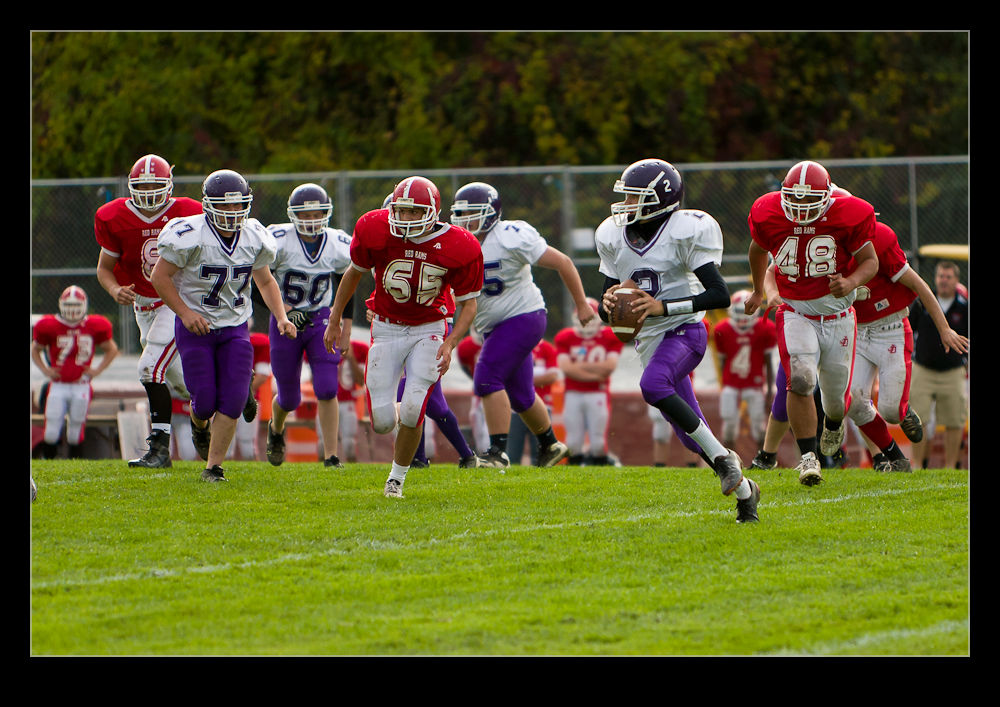
My nephew plays for his high school JV team and they had a game when we were going to be visiting so I took my camera along – like I wouldn’t have done so anyway!  I checked that there wouldn’t be a problem photographing at a school event and was reassured that it would be fine.
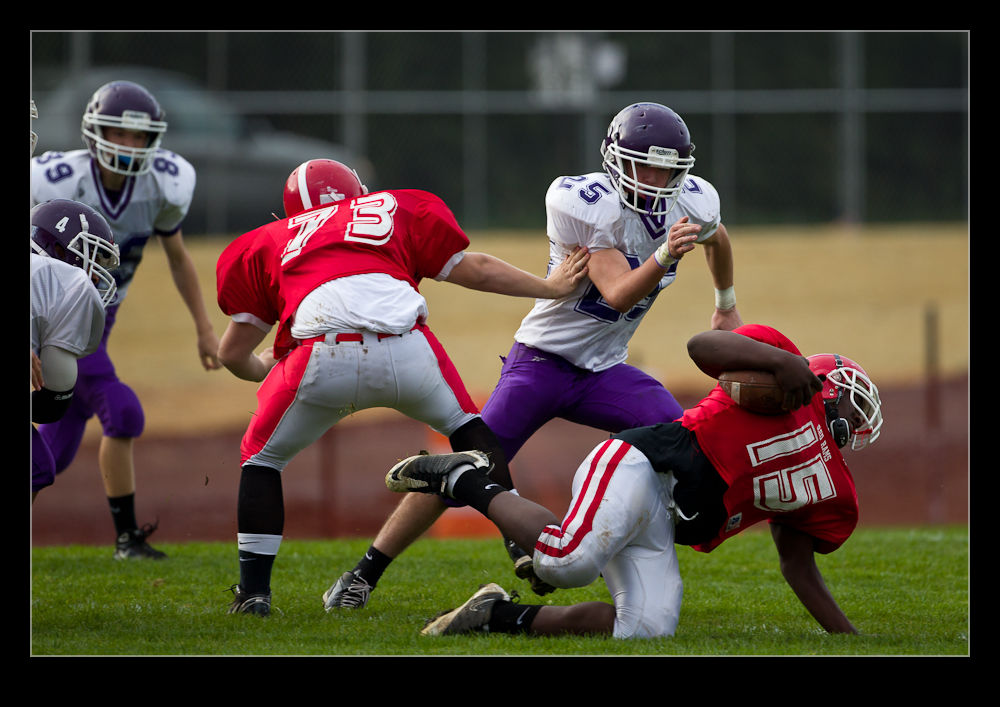
First something about the surroundings.  There was a fence around the field that no-one was to enter.  This limited me from some of the things I wanted to do but wasn’t too big a deal.  Second, this game was taking place in October in Syracuse NY.  This is not a combination that you select for good weather.  While I wasn’t bothered about the rain, the lack of light would be an issue.
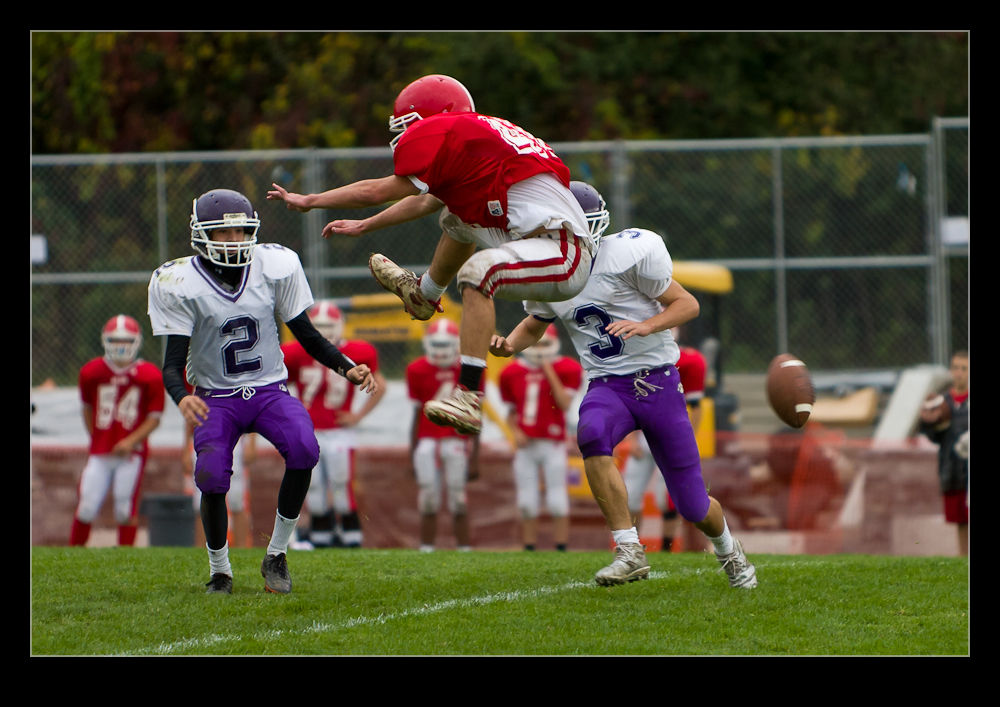
More of a problem initially was keeping track of what is going on.  When watching football on TV I have little trouble keeping track of how the plays are developing.  Doing it from the side of the field is a surprisingly different experience.  For a while, I could easily lose the ball completely.  A bit of practice and this improved considerably.

When the game started out, there was plenty of light and I could get the shutter speeds I was looking for.  As the game progressed, the light faded a lot.  I kept ramping up the ISO to compensate but it was still a struggle to get a high enough shutter speed.  Eventually the lights came on but they were only some compensation.  Even at the higher end of the ISO range I was happy to try, the shutter speeds were getting low.  Consequently, some of the later shots were as much luck as judgement!
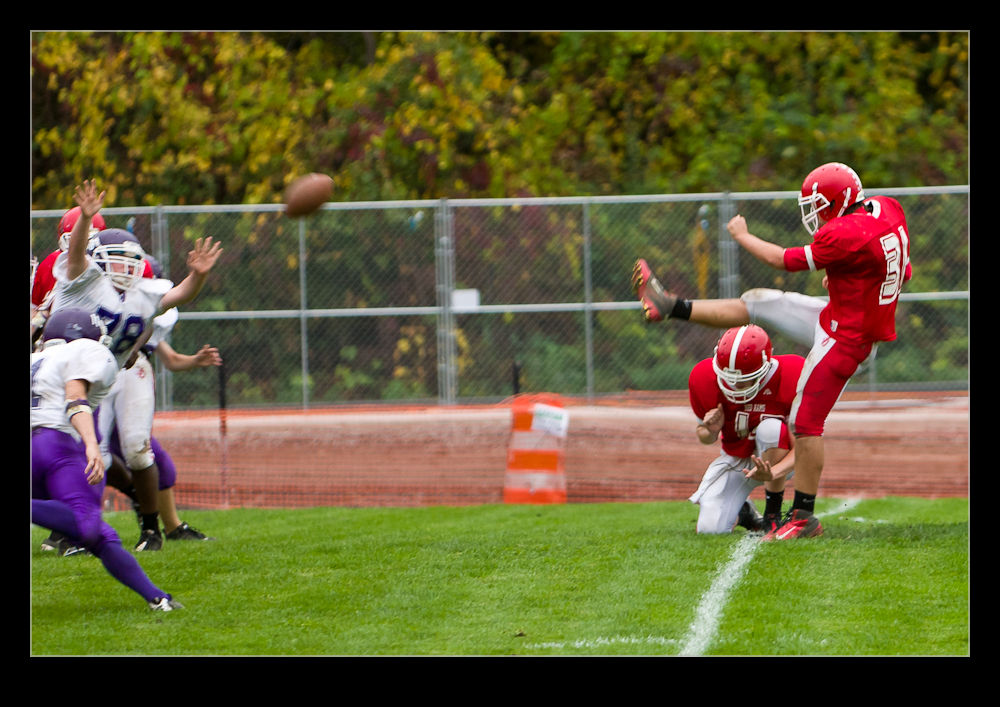
I shot a lot of images during the game.  You don’t get a chance to decide in advance whether a play will be any good.  Moreover, it is hard to see at a given time whether the key components of the shot are there.  I got plenty of shots with some dynamic movement from the players but no visible ball.  Without the ball, they really could be anything.  Off to the trash with them!
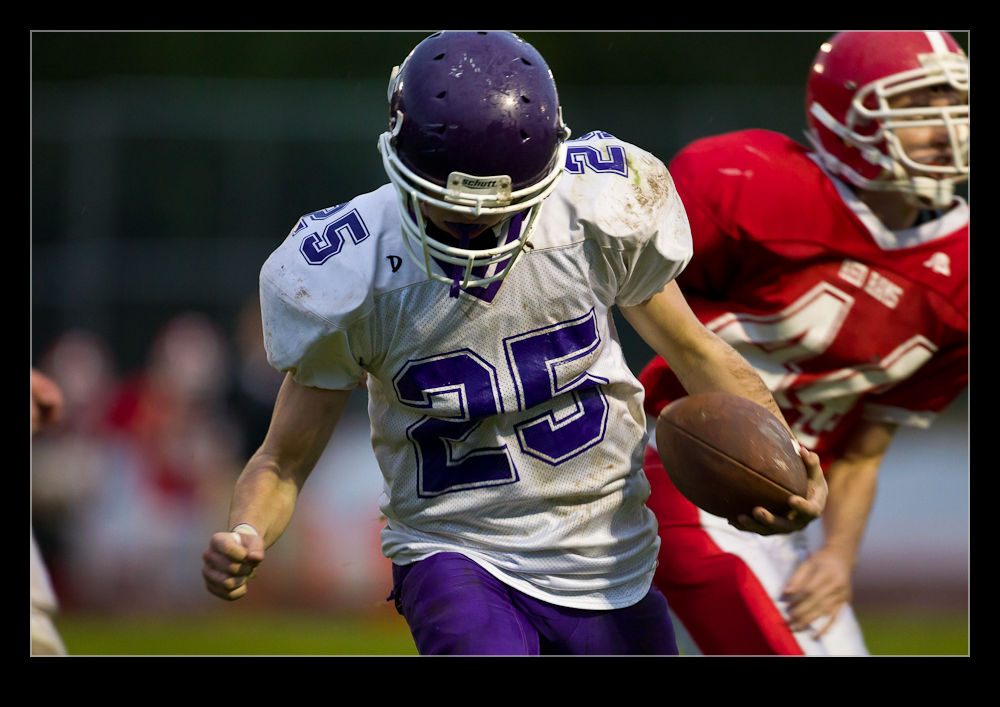
I wandered around the field to try different angles.  Starting at the side was fine and I could try some shots along the line of scrimmage.  I could also move up and down with the play as the teams advanced.  Later I tried shooting from both ends of the field.  That provided some quite satisfying angles but you also ran the risk of being at the wrong end when something happened or you saw the back of everything – again, no ball to be seen.
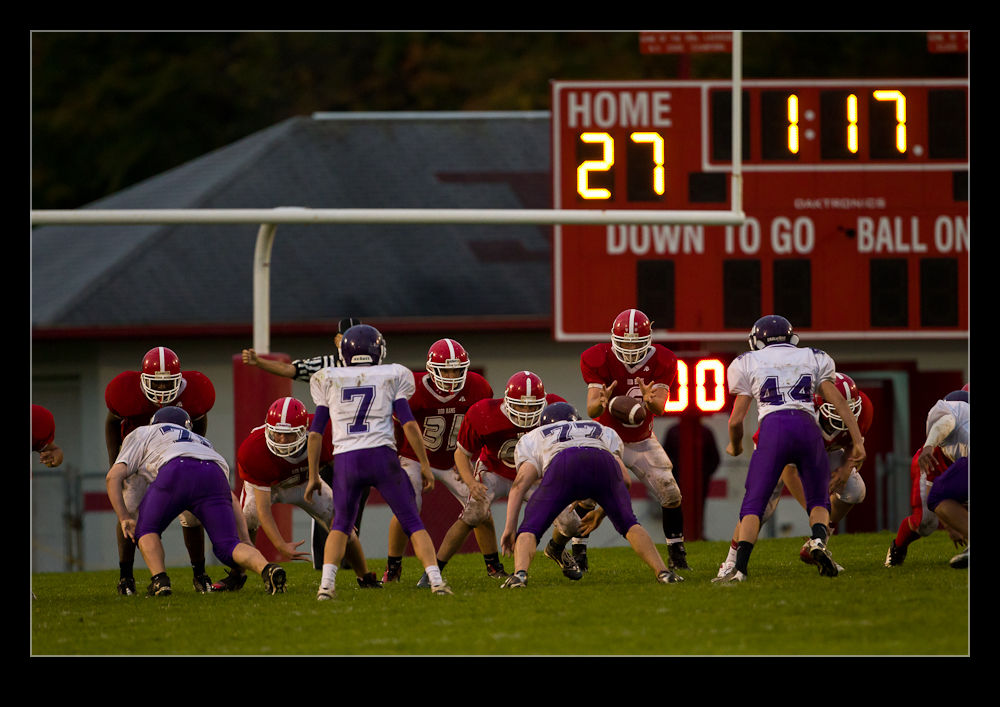
I was not alone on the sidelines.  Several parents of the players were also trying to get shots.  Between all of us, we probably managed to get a fair few that would be of use.  It was fun to talk to them as the game moved on to compare notes on what we were trying to get and what we had got so far.
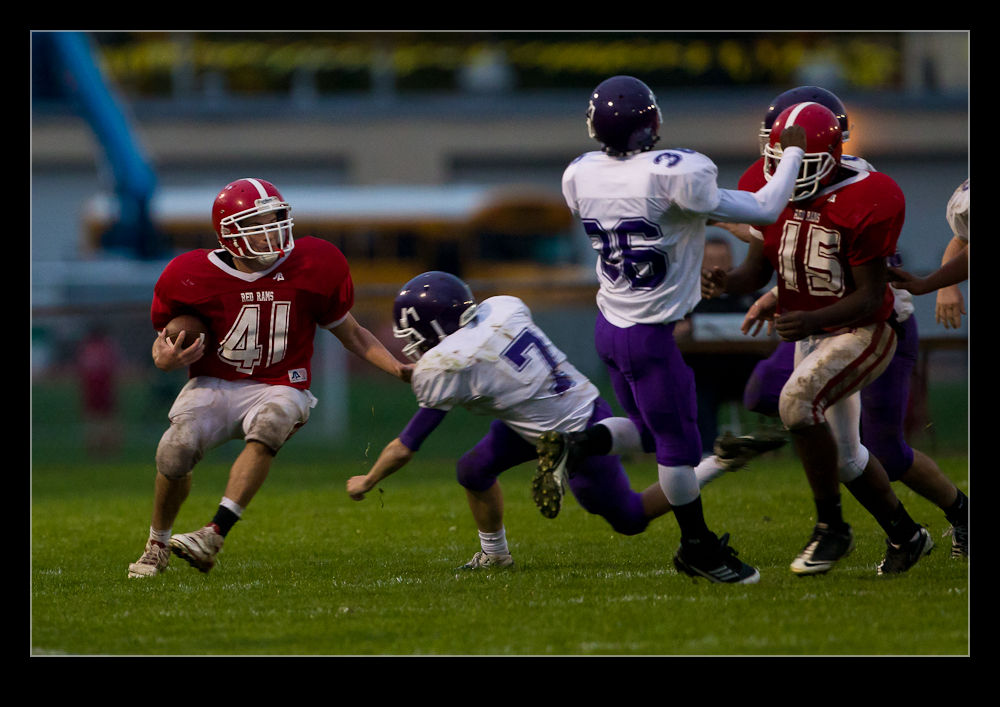
When I ran through the pictures afterwards, I wondered whether any of them would be useful to the team.  You can see some interesting things about the way players lined up and engaged with the other team.  You also get to record all of the penalties that the officials missed!
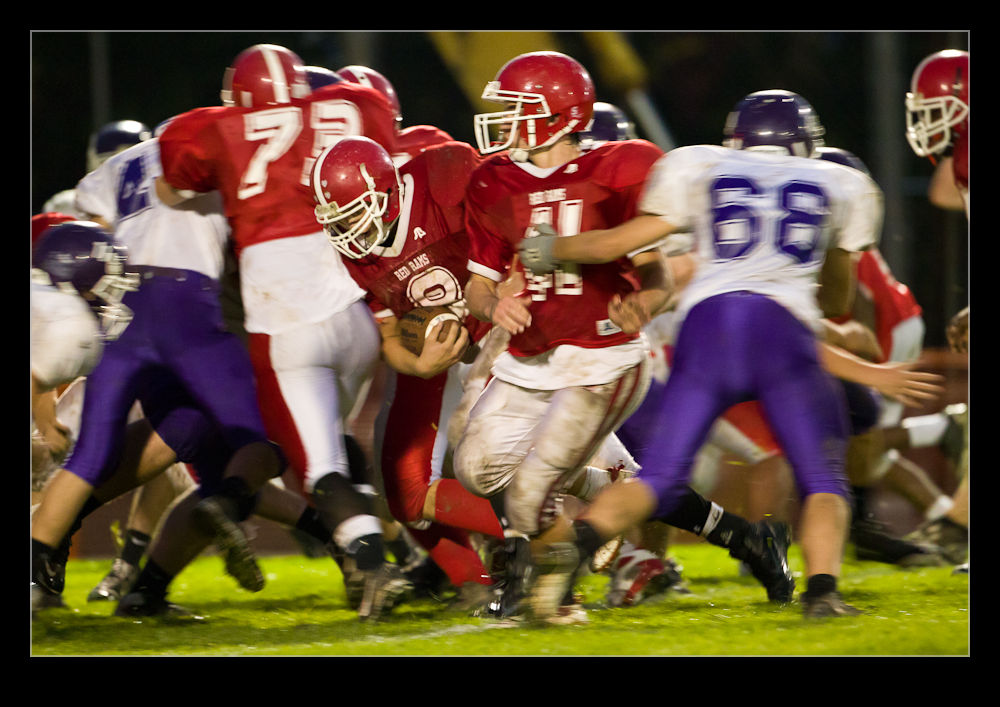
I had a great time (and stayed a lot warmer than the rest of the family since I was always on the move).  I would certainly like to try it again although next time it would be nice to have a bit more light to play with.  It was the penultimate game of the season for my nephew’s team I guess I won’t see them play again until next year.  Oh yes, they won so well done Jamesville Dewitt!

Something Fishy

Let’s get the statements of the obvious out of the way first.  Yes, I am a bit of a “gear head”.  I am quite partial to stuff!  Does this mean that I sometimes get things that I don’t necessarily “need”?  Yes, of course.  Having got past that, let’s move on.

One thing I have been pondering for a while on the lens front was a fish-eye.  Not something that is needed on a regular basis but something that has its moments.  Canon had a couple of fishes that I was looking at.  They had the 8mm fish and the 15mm fish, both of which had things that interested me.  Which one was better for me?  My two main bodies are 1.3 crops but I do have a couple of APS-C sensor cameras which have the 1.6 crop.  All of this impacts the effect.  Besides, when buying lenses, who knows whether I will have a full frame camera at some point.

The result of all of these variables was that I never bought a fish-eye at all.  I just pondered what I should do at length and did nothing in the mean time.  Imagine, then, my delight when Canon announced the introduction of the 8-15mm fish-eye zoom.  Have they been bugging my thoughts to find out what I want?  I guess so.  That reminds me, I must start thinking more about other things I want them to develop!

Of course, the announcement of a new lens does not mean the availability of a new lens.  Recently, it seems the announcement can be far ahead of the delivery.  Obviously the issues in Japan resulting from the earthquake and tsunami have had a major impact but I suspect there is more to it than that.  Anyway, the thing is finally in the wild.  My friend Jim Koepnick was the first person I saw to have one.  They would appear in stores and be gone almost as fast.  No biggie since it wasn’t like I had been struggling without it.  Once they were regularly in store I placed my order.

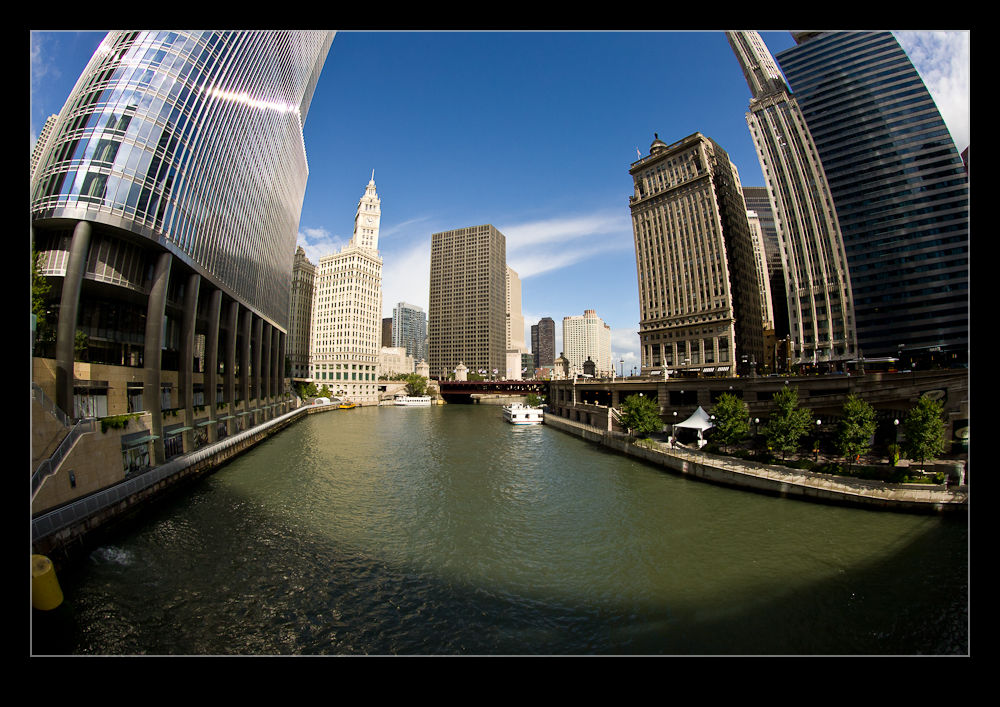
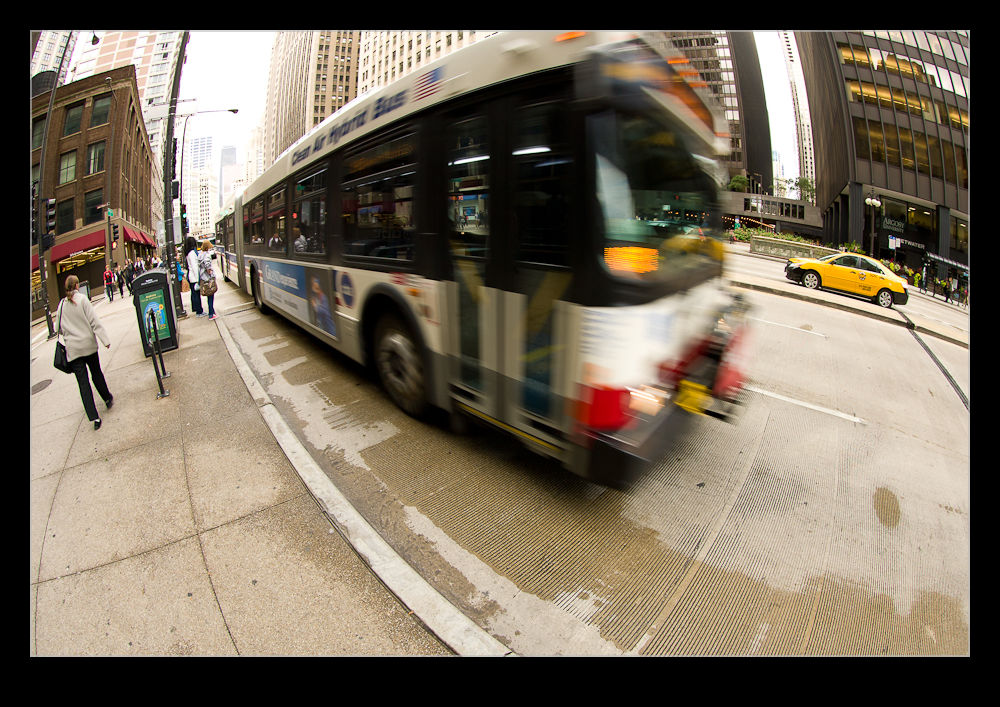
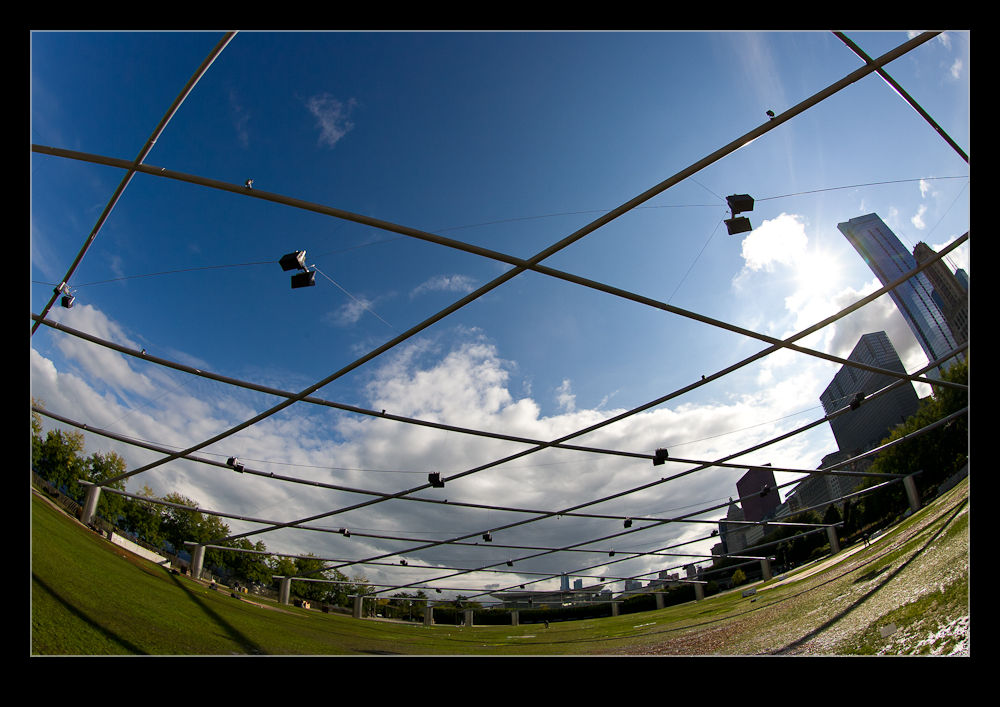
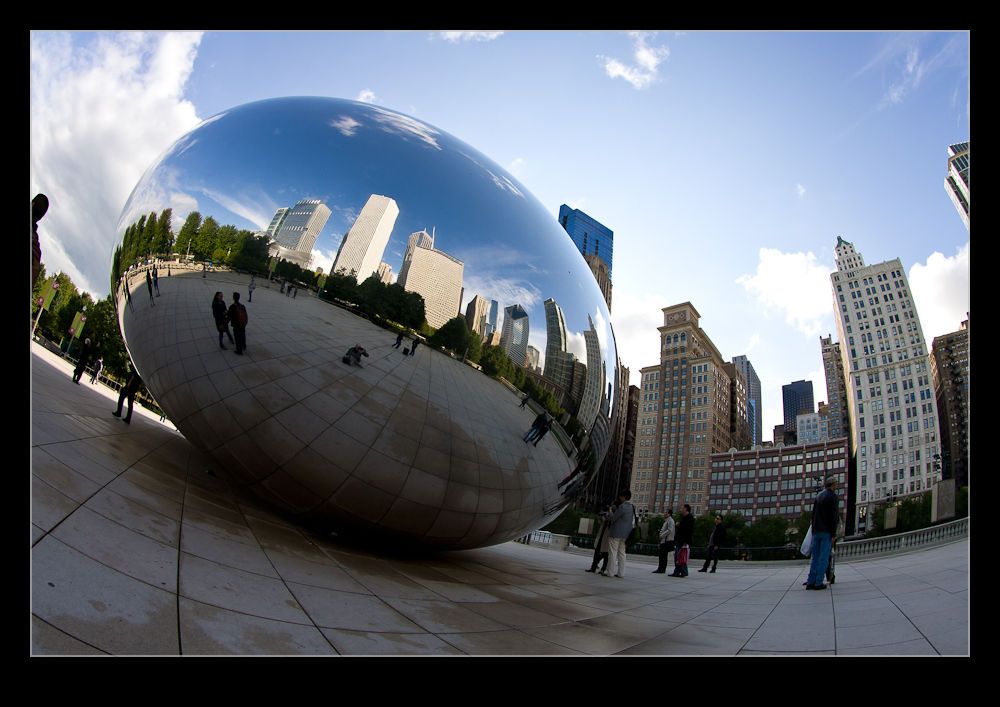
I have to say, I love the thing.  It feels great in the hand and, despite what I have heard from some reviews, I have had no issues with the lens cap.  It is also a chance for me to start learning what can be done with such a lens.  There are the obvious effects you can get and the access to a lot of width in tight spaces.  However, it can also create interesting effects by changing the angle at which you hold it.

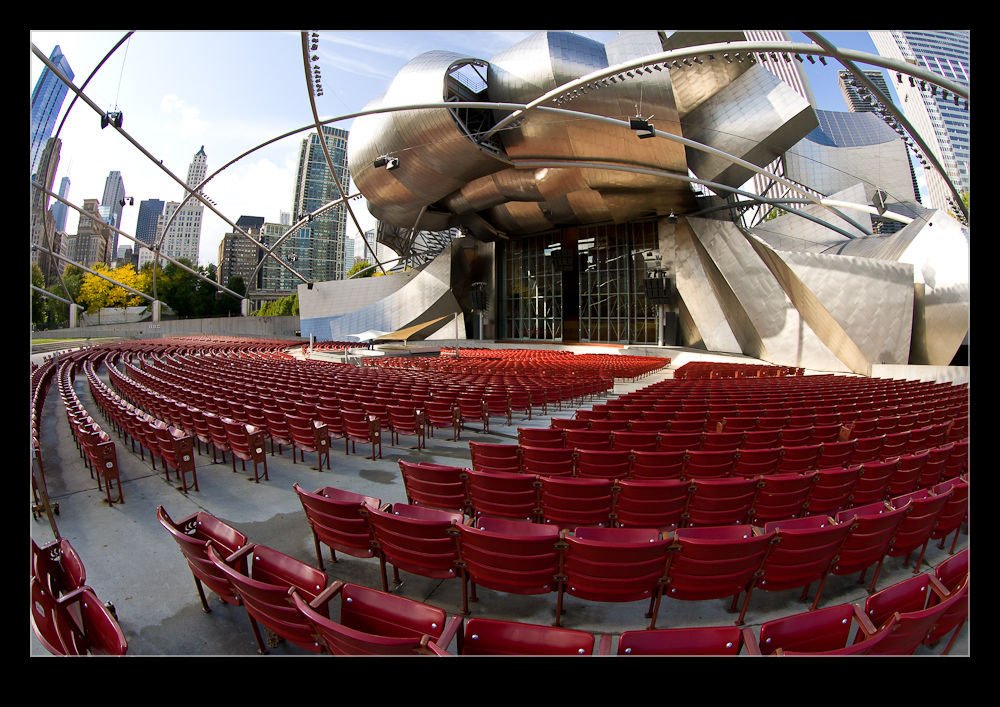
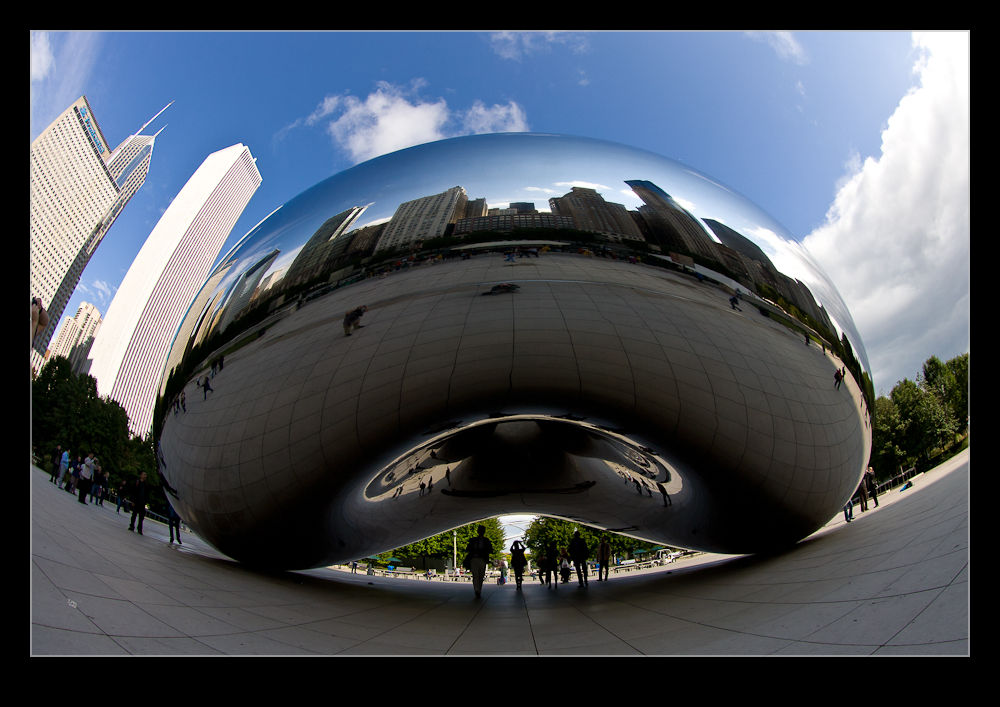
I went out in the city to give some time to experimentation.  I ended up in Millennium Park which is a slightly odd place to play with a fish since many of the features already have a slightly “fishy” look to them anyway.  Of course, that does sometimes allow the subject to be more tolerant of some distorting effects.  It was a fun place to shoot since it is always busy and getting close and using the fish provides some options as well as making surrounding people disappear into the background quite quickly.

I also played around with a couple of effects.  There is a metal frame across the lawn at the Pritzker Pavilion.  By tilting the camera down, I could really emphasise the curvature but by tilting it up, the frame became almost totally flat.  Something to remember.  I also played around with slightly rotating the camera.  This made the edge of the frame level and the receding horizon appears to turn up dramatically.  Not something to overdo but still a concept to remember for the future.

I am certainly happy that I have added the fish to the arsenal.  Now I have to make sure I make good use of it without slipping over the edge into using it when I shouldn’t.  Hopefully my friends will warn me if that is the case.  That, and I have to remember to keep myself out of my own shots!

Diamond Head Hike

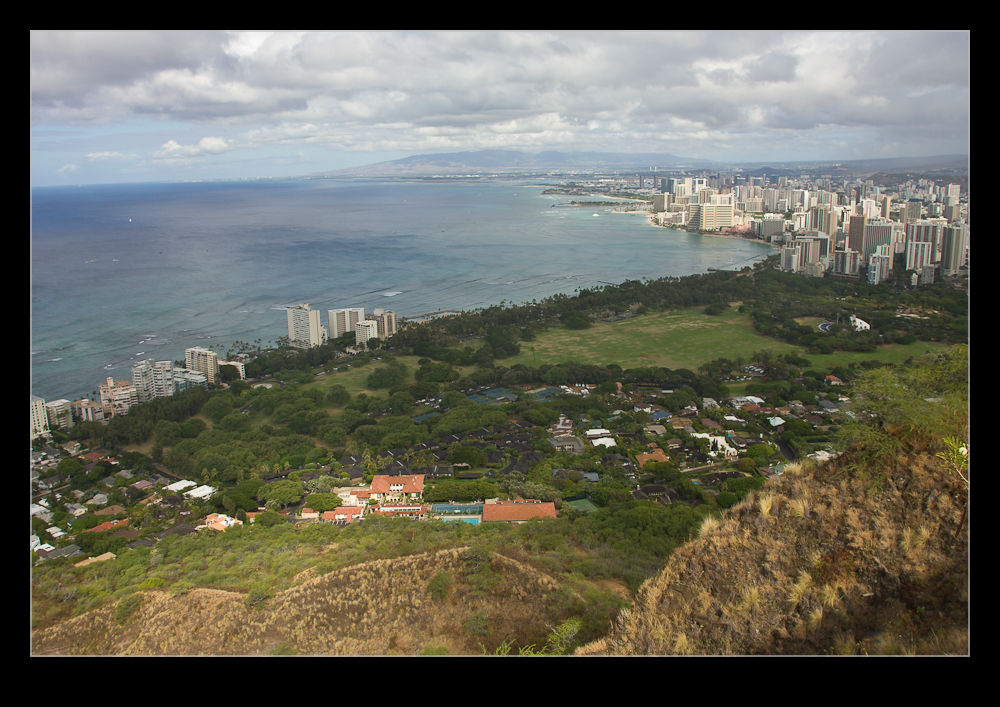
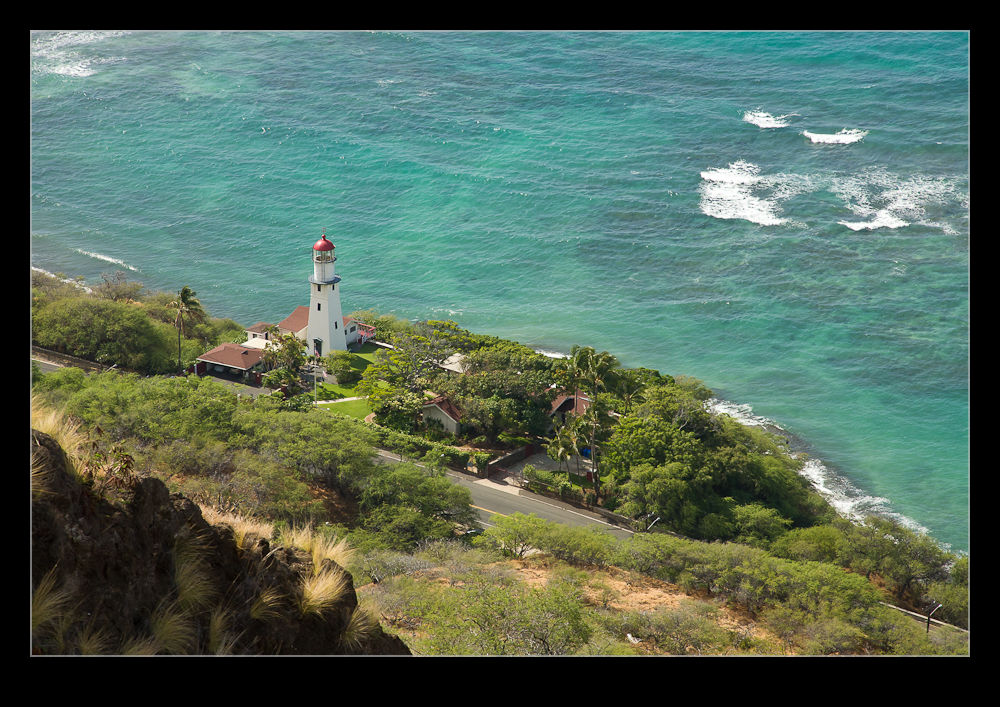
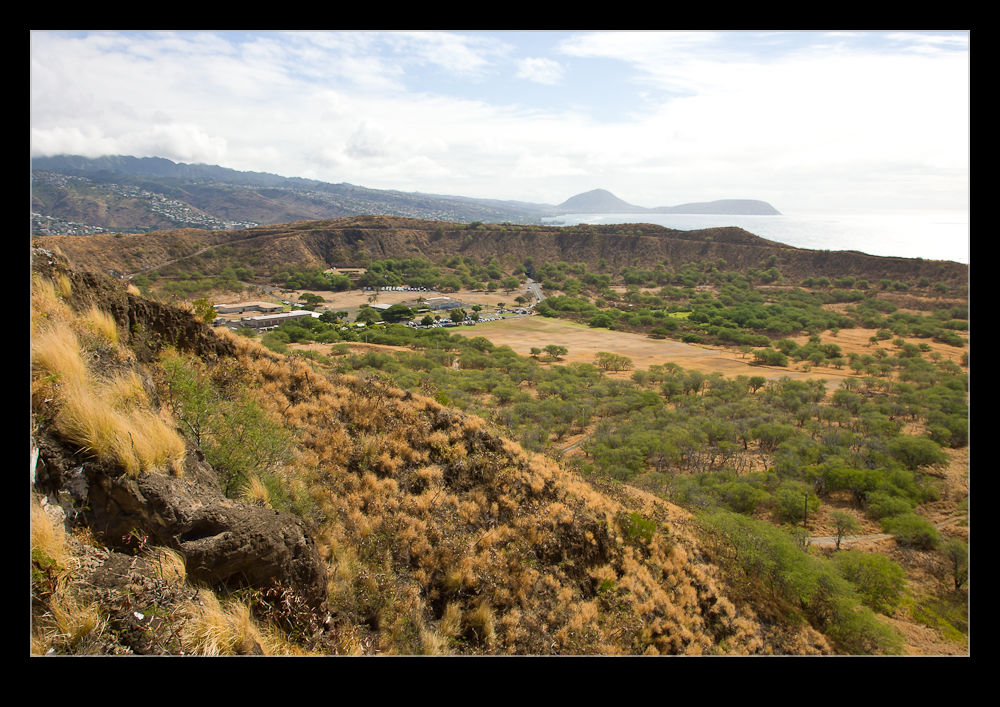
Just beyond Waikiki in Honolulu rises the remains of an extinct volcano.  Diamond Head is the most obvious geological feature in the vicinity of the city and is a famous landmark.  The crater (not such to be honest whether it counts as a crater or caldera but who is keeping score?) is home to a park.  You can drive in to the park through a tunnel and then park up to climb to the top.

We took the advice of the guide books and went early in the day.  Given how hot we got, I hate to think what those who went later in the day and had the midday sun to deal with felt like.  It is quite an exertion.  I don’t consider myself an athlete but I am not too out of shape either.  This was quite a climb.  There is a trail that is well maintained and the final stages include several flights of stairs – some quite steep.

When we reached the top, we were both pretty relieved to be there.  It was worth it since the view across the city was very good.  We enjoyed it a lot and anyone who suggests that our extended viewing was an excuse to take a rest can’t prove anything.  The trip down was a lot better than the climb up!

Aerial Waterfall Adventure

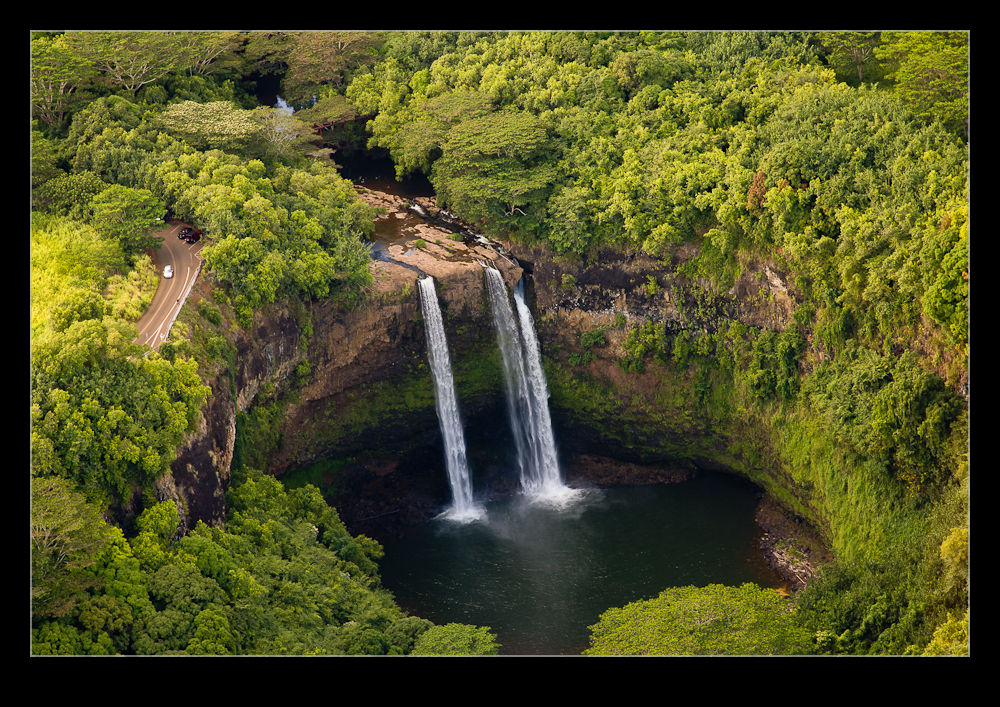
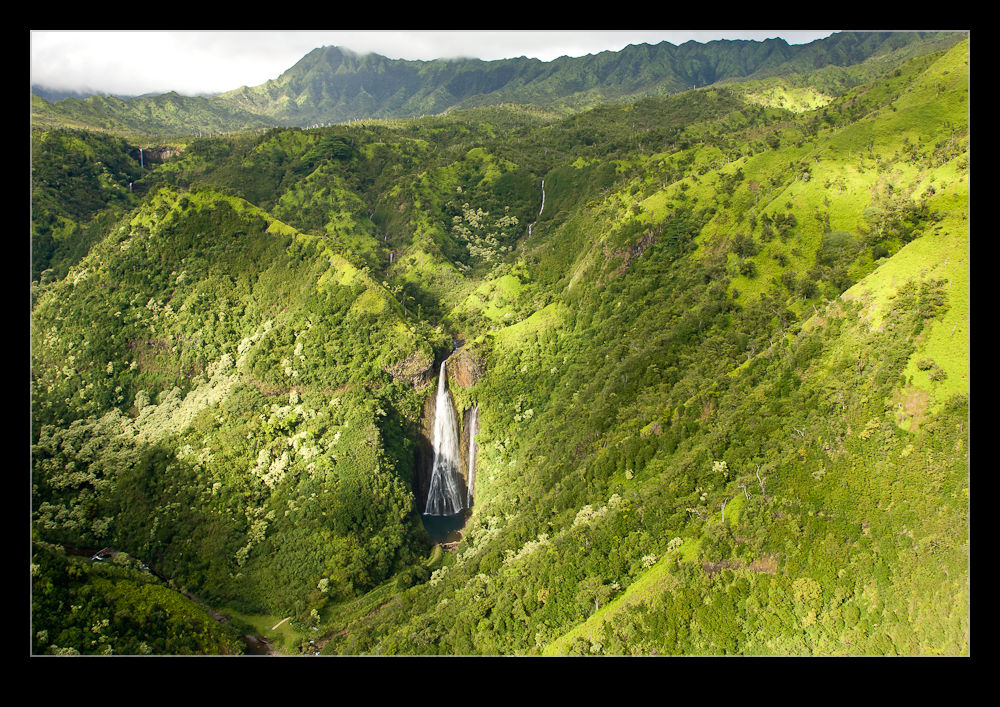
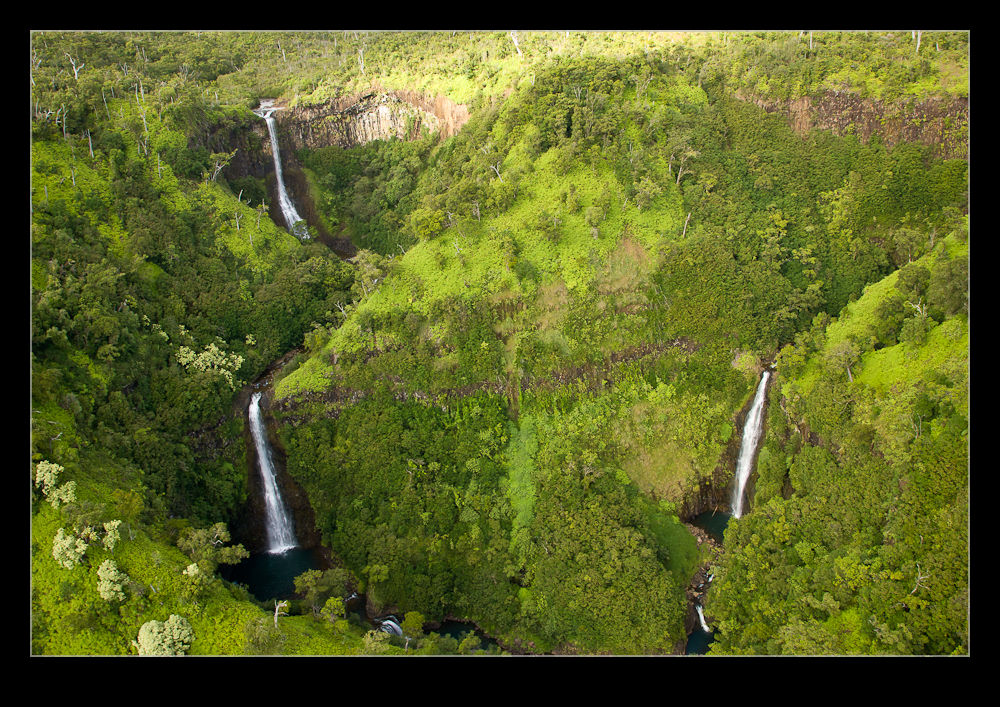
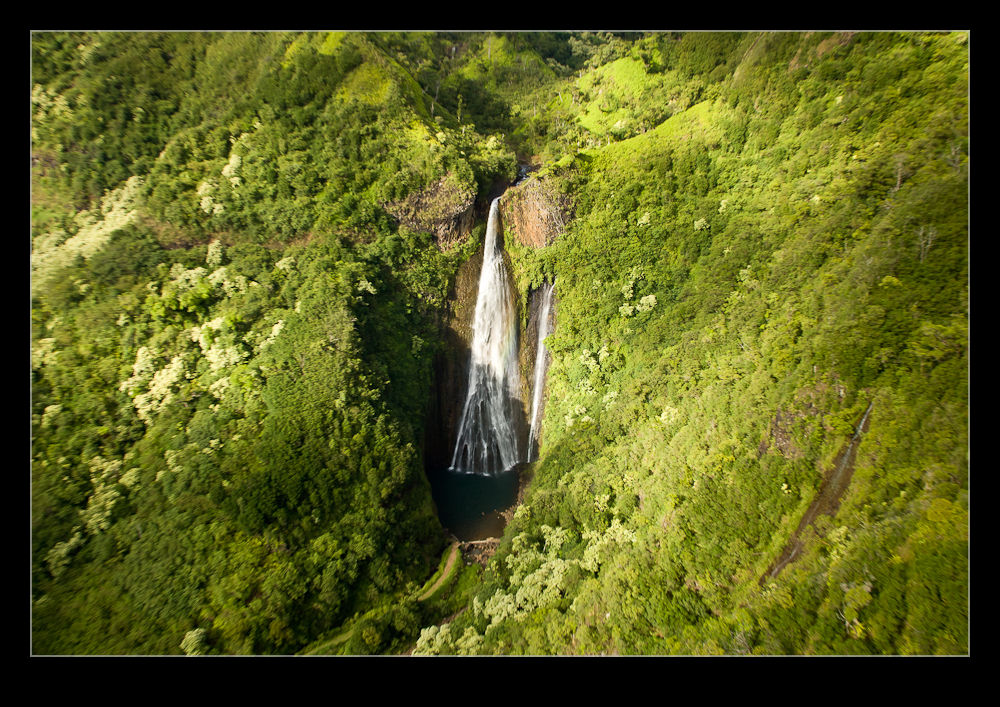
One thing you won’t be short of if taking a tour of Kauai is waterfalls.  You have an island that has a lot of high terrain and a regularity of rainfall (including the wettest place on the planet) so that means there is lots of water making its way from the high ground to the sea.  Sometimes that means taking the quickest route – off the edge.

Some of these falls can be seen from ground level and that is certainly worth doing.  However, taking to the air gives you two advantages.  First, you are above the terrain and can get a better view of the falls themselves.  Second, since you are no longer constrained by the location of roads or trails, you have access to the more remote locations which also tend to be the sites of the more interesting falls.

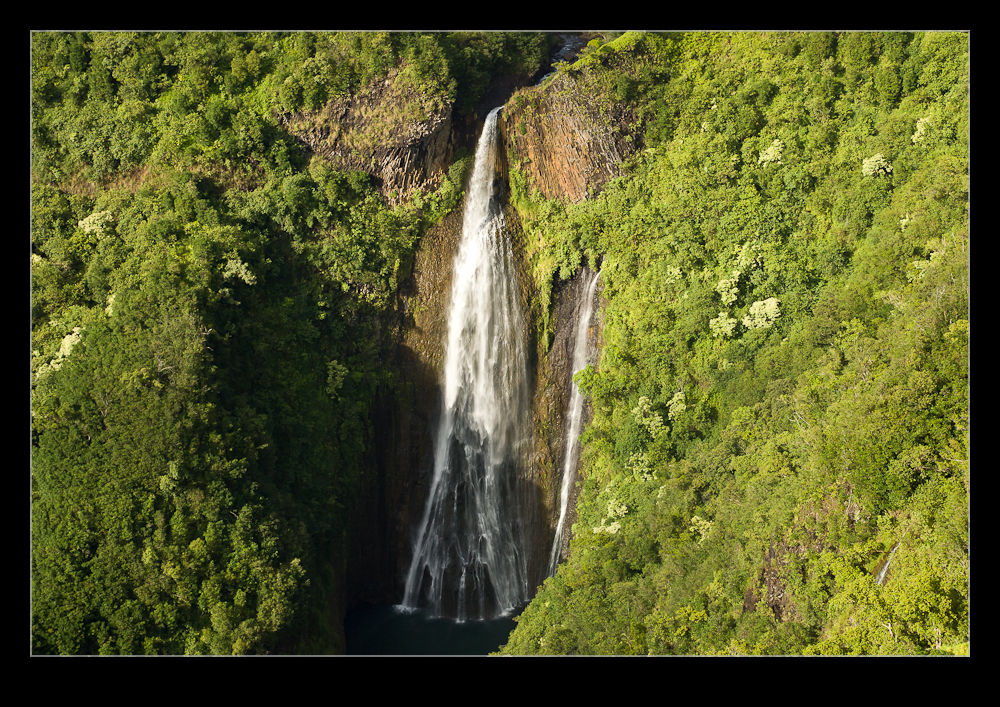
We saw a lot of falls while we were up in the helicopter.  Some of them we had seen on the ground but plenty of others we hadn’t.  In truth, we saw so many we lost track of them.  In some locations the water was running down in multiple locations so you couldn’t even say which bit was “The” fall.  Others were a bit more obvious.

In the end, who cares.  They all looked amazing.  The scale of the scenery is such that a photograph can never truly convey what it was like to be there but hopefully they provide a taste.

Ziplining

Recently, I bought myself a GoPro camera.  They seem to be ubiquitous these days showing up on TV shows on a regular basis to provide the footage from unusual angles or mounted on fast moving items.  They make good cockpit cameras as well and are really very affordable.

As part of the Kauai trip, we spent a few hours riding zip lines at Princeville Ranch Adventures.  I took the GoPro along with us in case a good opportunity came up to use it.  I was not alone as another person in our group had one.  Originally, I had intended to get a head strap for the camera for use on the lines.  Unfortunately, I didn’t order one in time before we left and couldn’t get one locally.  GoPro stuff seems to sell out very quickly so I guess I am not alone in liking the gear.
As it was, I think this proved to be a lucky break.  Since I didn’t have a mount, my only option was to handhold the camera.  Since it has a very wide field of view, this can be done without needing too much accuracy in pointing.  I could also then point the camera in any direction I wanted.  Having a fixed wide view is not always ideal but it seemed to work pretty well.

From the footage I shot that day, I have put together a short video of the ziplining adventure.  I don’t think it is going to win any awards and those people I know who are real editors will, no doubt, cringe at the quality of my cutting but it is a vacation memento at the end of the day so I am not going to get too bothered about it.  Besides, as Vincent Laforet said in a recent interview, when you need editing done properly, get a proper editor to do it.  You can’t do everything!

Here is the video.  Hope it gives you a bit of a feel for a great day out.