Tag Archives: washington

Growler Overhead

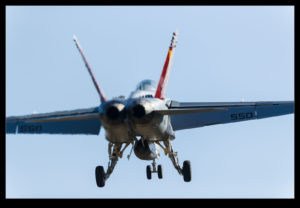
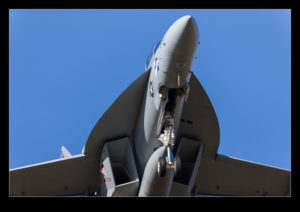
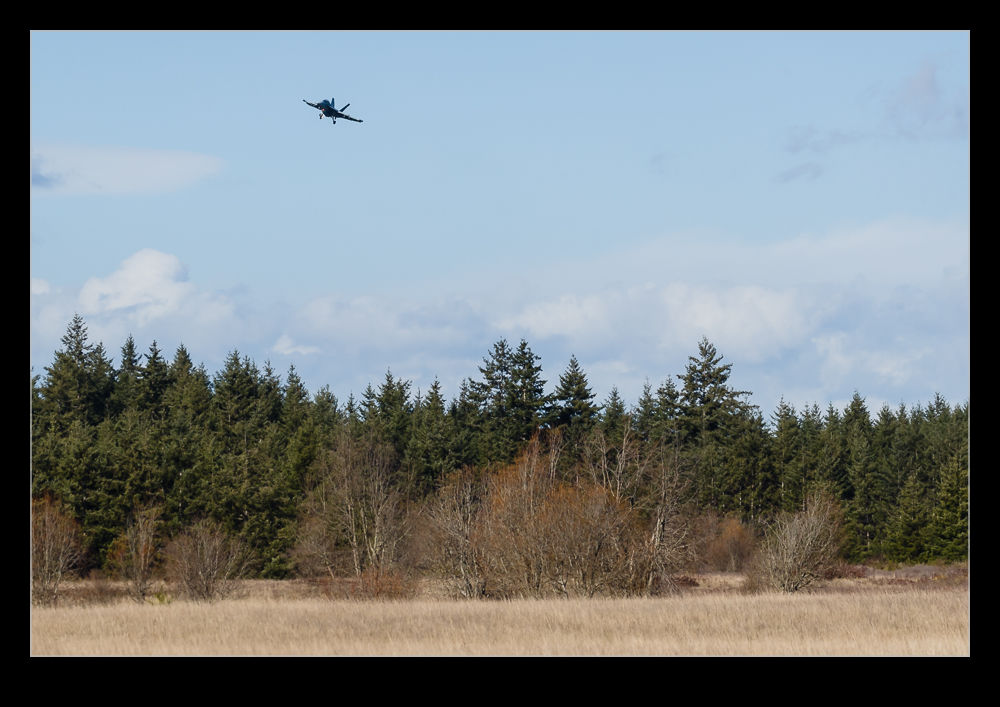
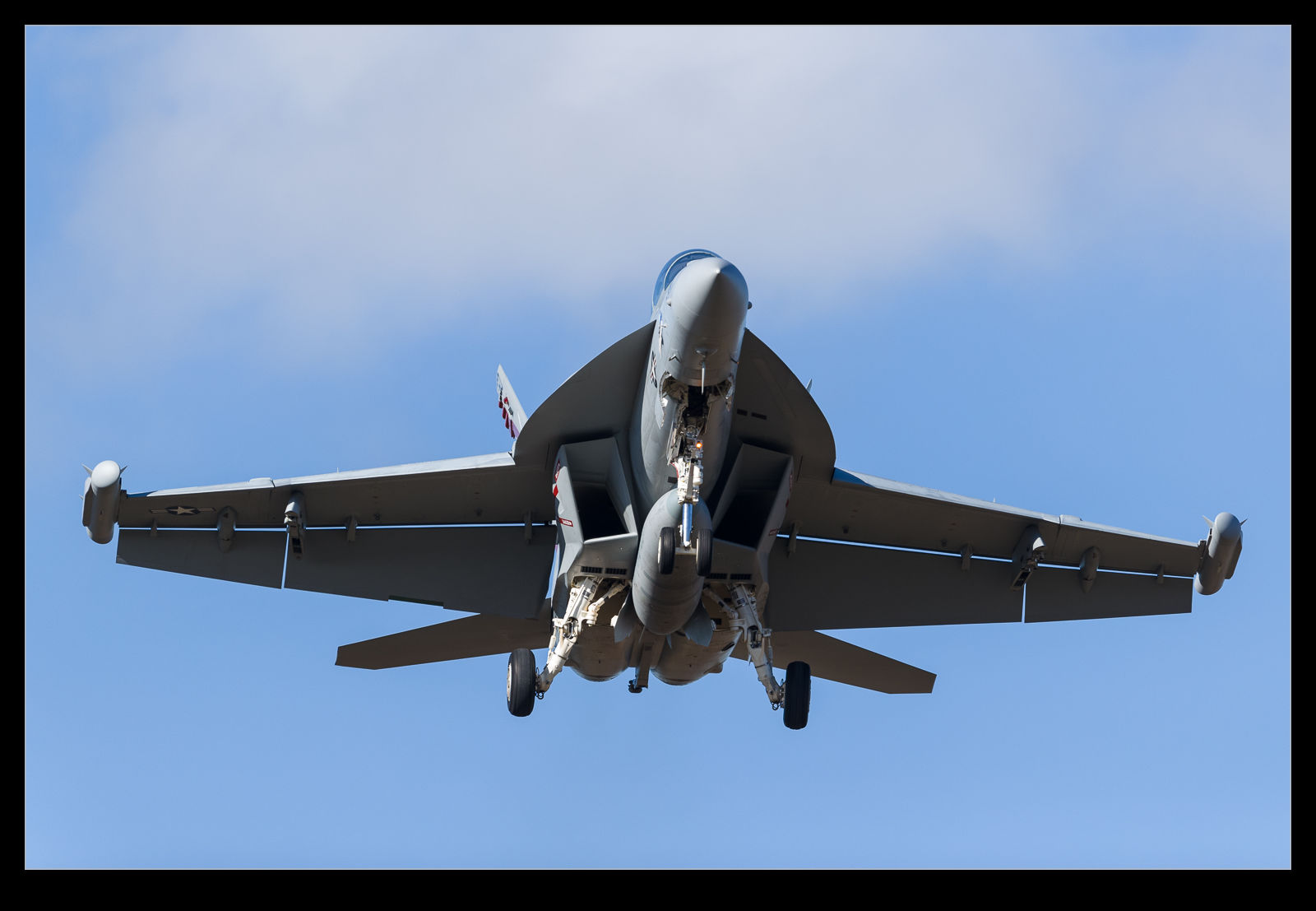
The approach to the runway at Coupeville brings the jets right over one of the local roads.  This meant I had the opportunity to go for some head on type shots of the jets.  As they came right over the top of me, I got a nice view of the underside of the jets.  I also experienced the noise level of a Growler.  I hadn’t thought to bring hearing protection and, if I go back, which I am pretty sure I shall do at some point, I will remember to take some.  You are really quite close and the sound levels are high!

Fort Casey Emplacements

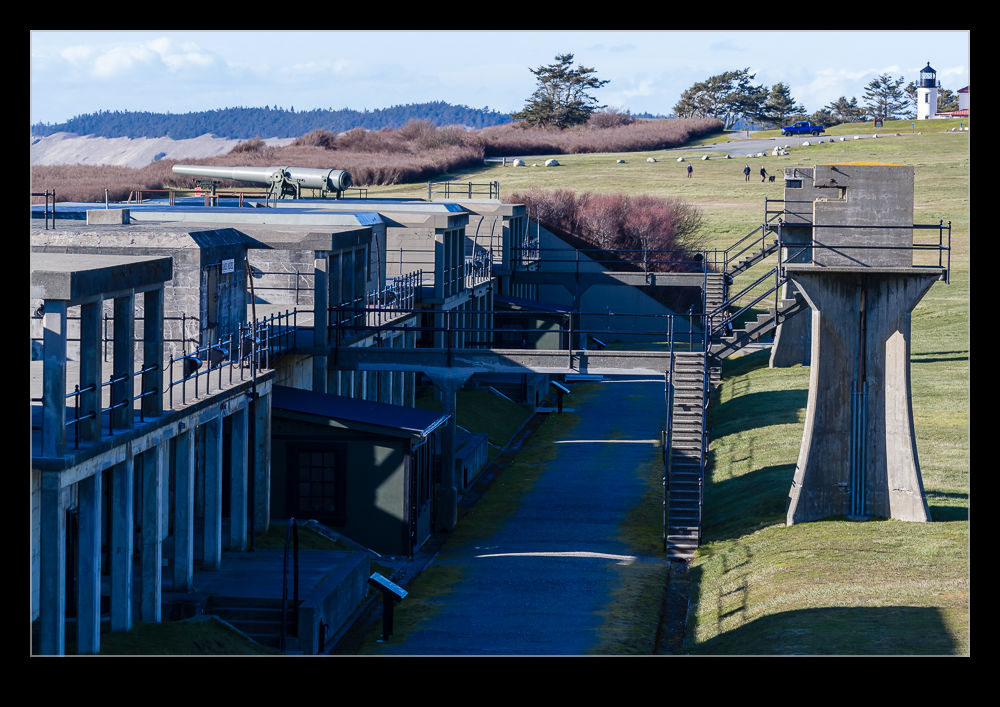
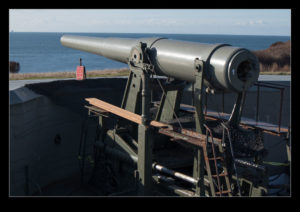
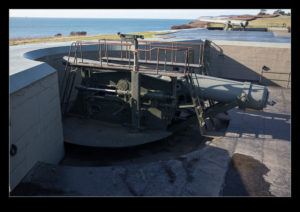
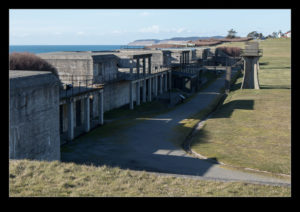
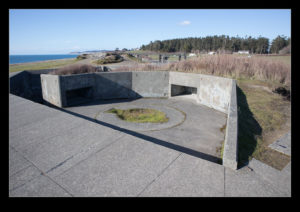
I posted about the lighthouse at Fort Casey here but the fort is obviously a lot more than just a lighthouse.  It was built to defend Puget Sound and this meant some big gun emplacements.  Much like similar emplacements along the west coast, most of the hardware is now long gone but some has been kept in place to show how things once were.  The emplacements themselves are pretty substantial and are well maintained by the park team.  With the guns gone, you see just how big the space taken up by the guns was.

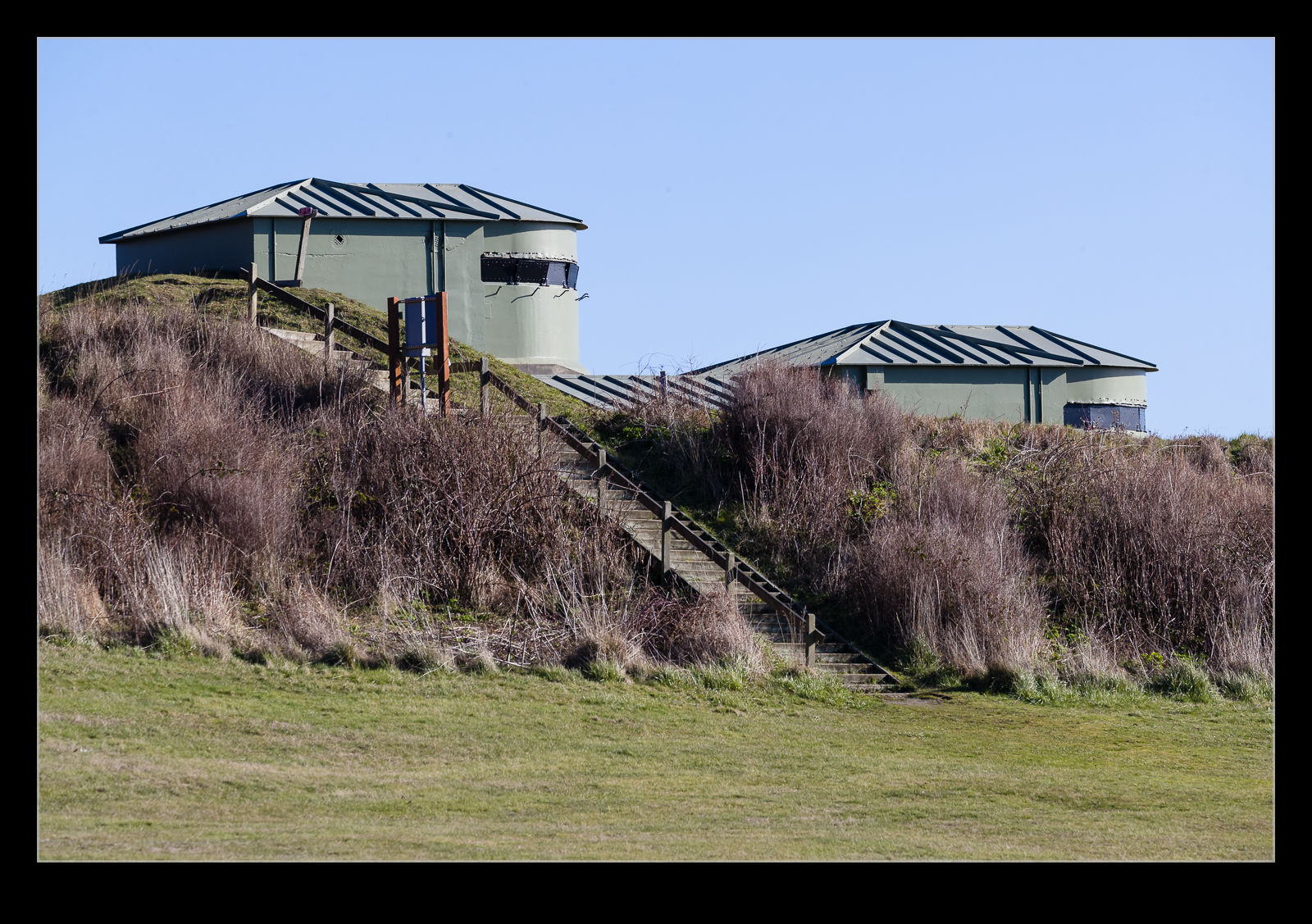
Meanwhile, a couple of installations are still equipped.  One has a gun elevated to the firing position while the other has the mechanism retracted.  The complexity of the gearing to raise, lower, elevate and rotate the guns is old school engineering at its best.

Behind the guns are some of the spotting towers.  From here the crews would have identified targets and called in the sighting requirements to the gun crews for them to engage.  They are painted green to blend in with the background since they would have been a primary target for any invaders.  As it happened, no-one came so these forts never engaged any enemies.

FCLP Training for the Growlers

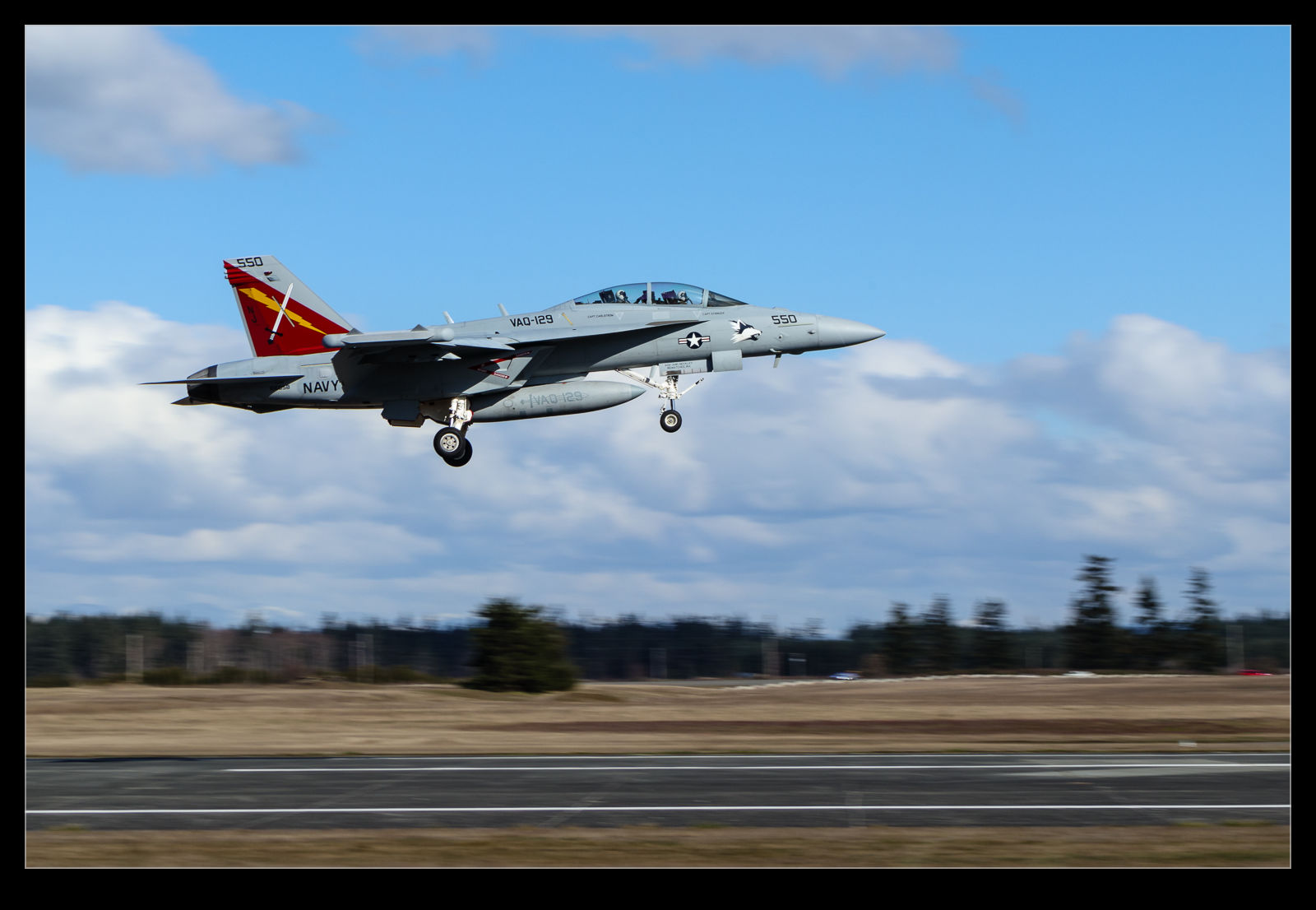
Naval aviators have to practice the art of landing on a carrier a lot.  Before they ever go to the boat, they undertake a lot of field carrier landing practice.  This involves flying the carrier pattern to a runway as if it was the boat.  The outline of the deck landing area is painted on the runway, the lighting is replicated and the guidance calls are provided by crews alongside the runway just as if they were at sea.  The crews fly around the pattern and thump onto the runway just like it was the deck and then apply power just like they would if they were aiming for a wire.
Of course, there is no wire so they power up and fly away to repeat again.  The goal is to be as practiced with the whole procedure as possible before they ever go to sea.  Naturally, there is still a difference dealing with a static runway in a field as opposed to a moving ship in open sea.  Still, it is the way to prepare.  Naval air stations tend to have separate fields away from the main base at which this training can take place.  They are away from the normal base flying and allow this training to take place uninterrupted.
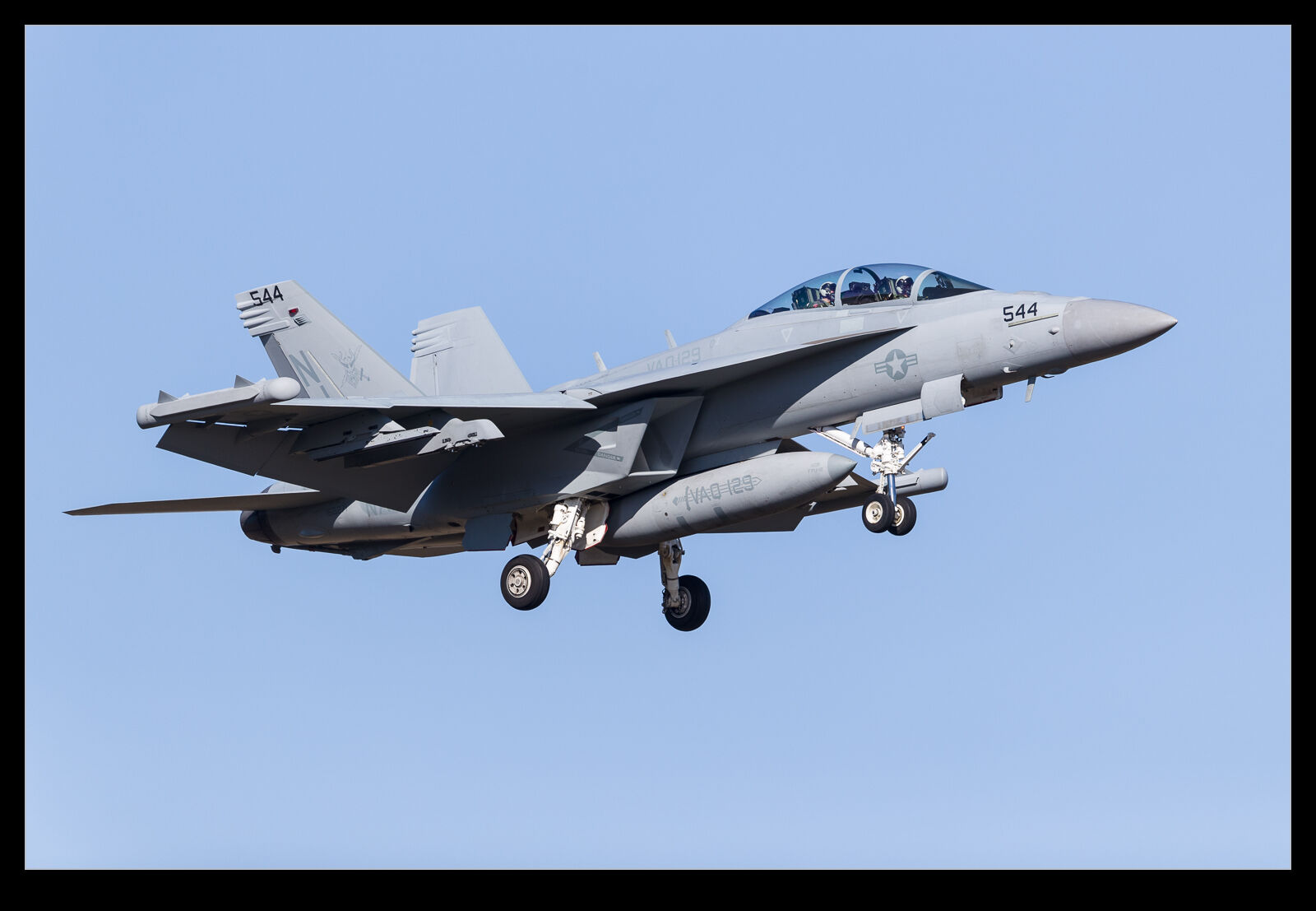
NAS Whidbey Island has its outlying field at Coupeville.  They announce when flying training will take place there in order to keep the local community aware of the potential noise.  Usually there is little chance for me to go because of work but it turned out that one of the flying days was scheduled to have good weather and I should be able to take time off.  Not only was the weather due to be good but the wind was in a direction that meant they would be flying to the end of the runway that is more accessible.  I planned to be there.
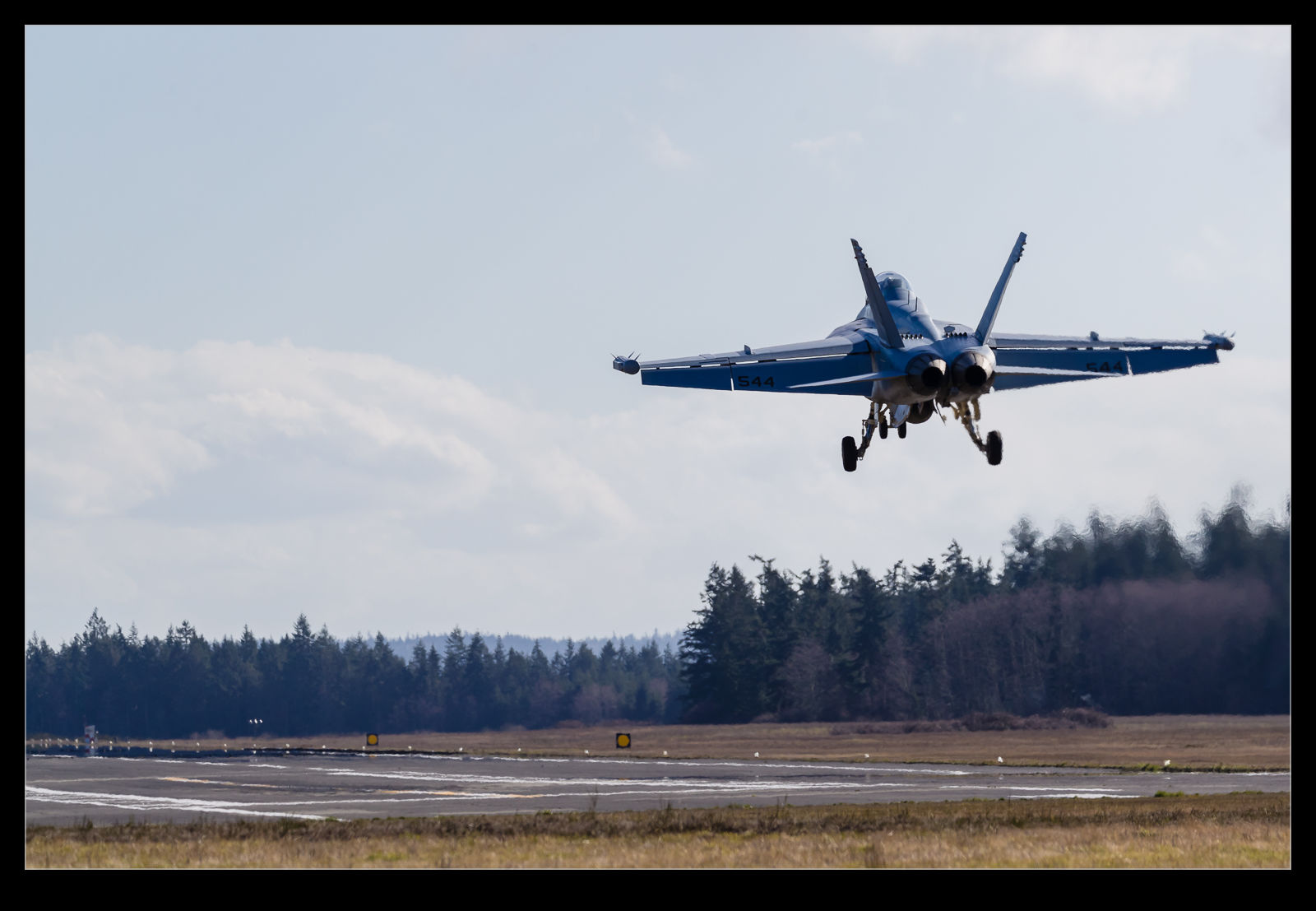
As it happened, something came up at work and I had to go to Seattle before I could leave.  Consequently, I was behind schedule.  I eventually managed to get on my way and I got to Mukilteo just in time to catch a ferry.  Once on the island, I headed up to Coupeville and, sure enough, as I got closer, I could see Growlers flying patterns.  I got to the field and parked up away from the road.  I walked back, all the time hearing jets flying around.  Then I was in position to get some shots.
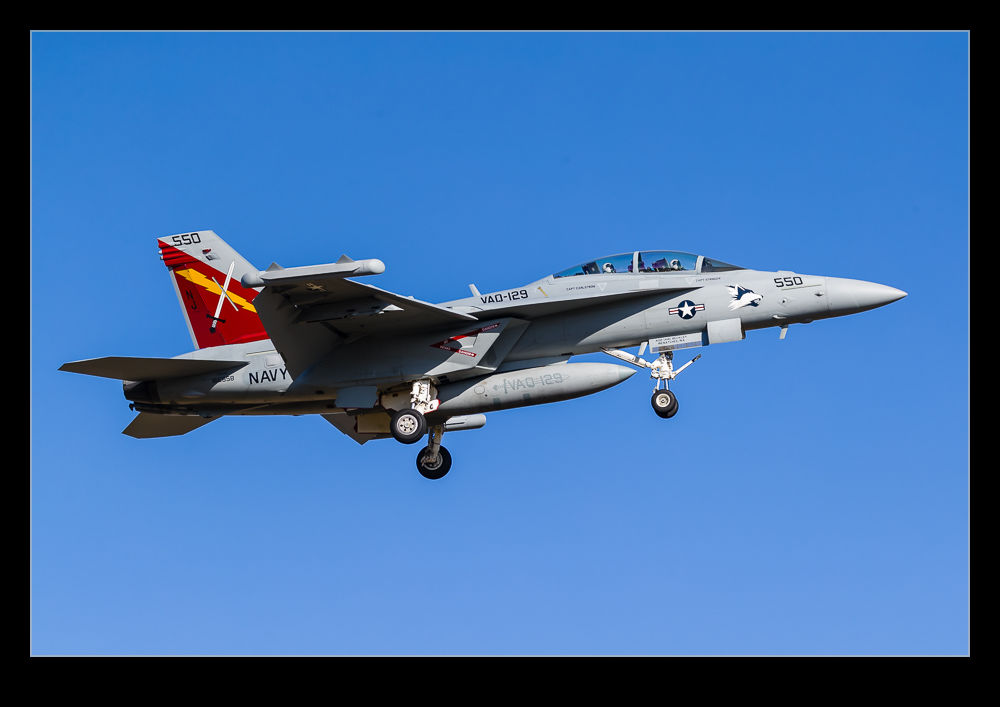
I kept moving so I could get closer to the touchdown point but the flying stopped as I got closer.  Then they packed up operations.  They were done, at least until the evening.  If I had missed the boat, I would have missed the whole thing!
Fort Casey Lighthouse

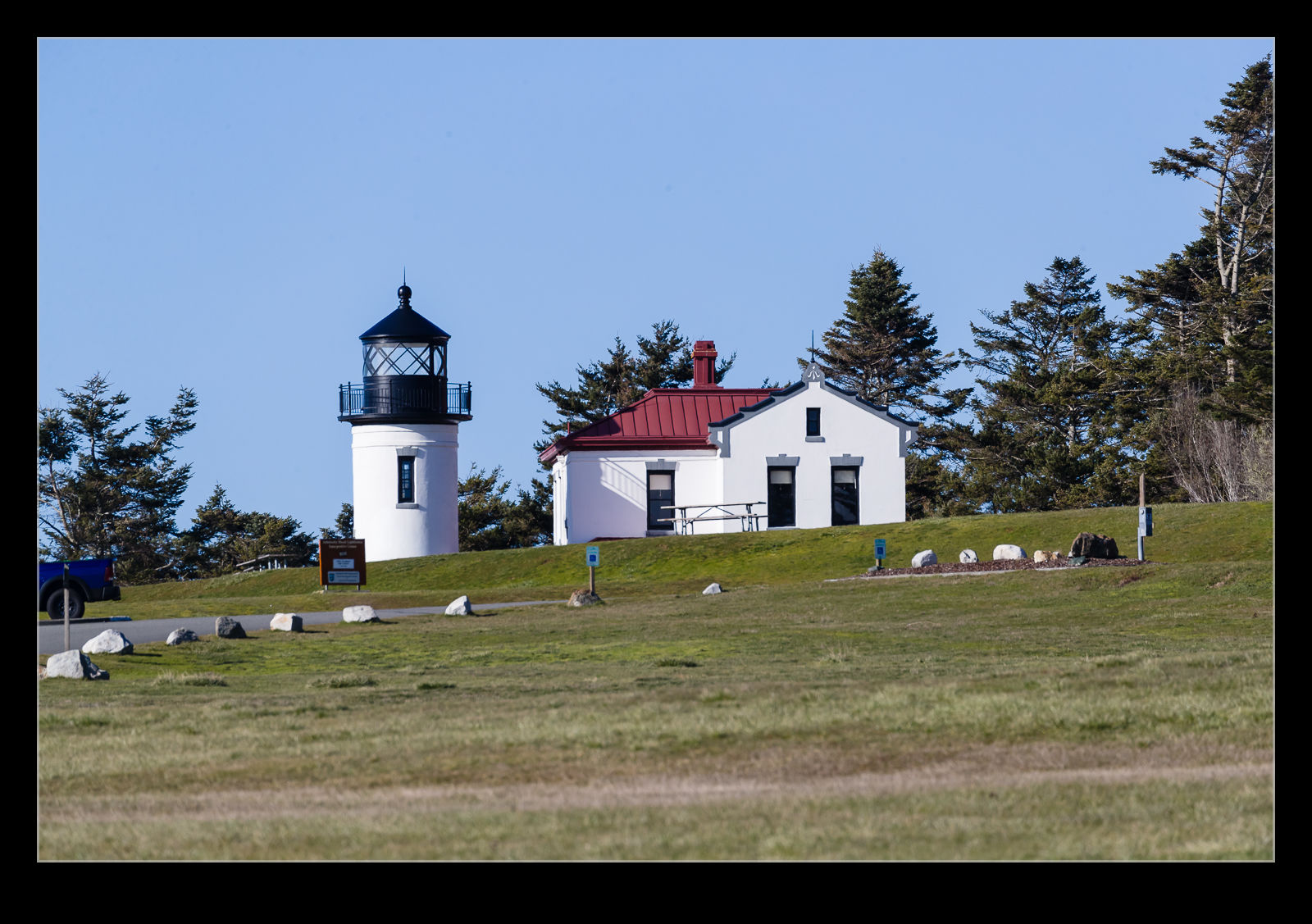
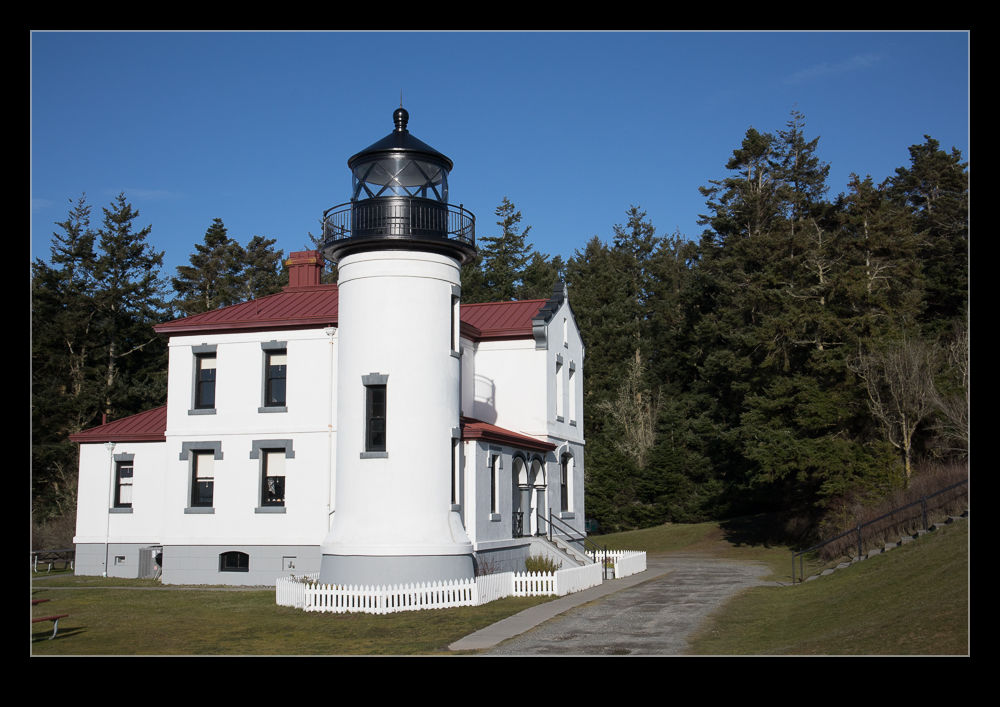
My trip to Whidbey Island meant I had a fair bit of spare time to work with.  I was chatting with a guy while I was there and he suggested a trip to Fort Casey.  It was barely five minutes from where I was and it was a sunny day so why not.  Fort Casey is one of the forts that were built to protect the Puget Sound area from possible invasion.  Not only was it a fort but it also has a lighthouse.  When I first got there, the lighthouse was off in the distance but, after a little exploration, I headed over to see it.

As with a lot of lighthouses in this part of the world, it is not terribly large.  It doesn’t have to shine too far since there are islands all over the place blocking the line of sight so no need for it to be too high.  Still, it is well maintained and comes in standard lighthouse white!

A Sick IL-76 Waiting for Help Perhaps?

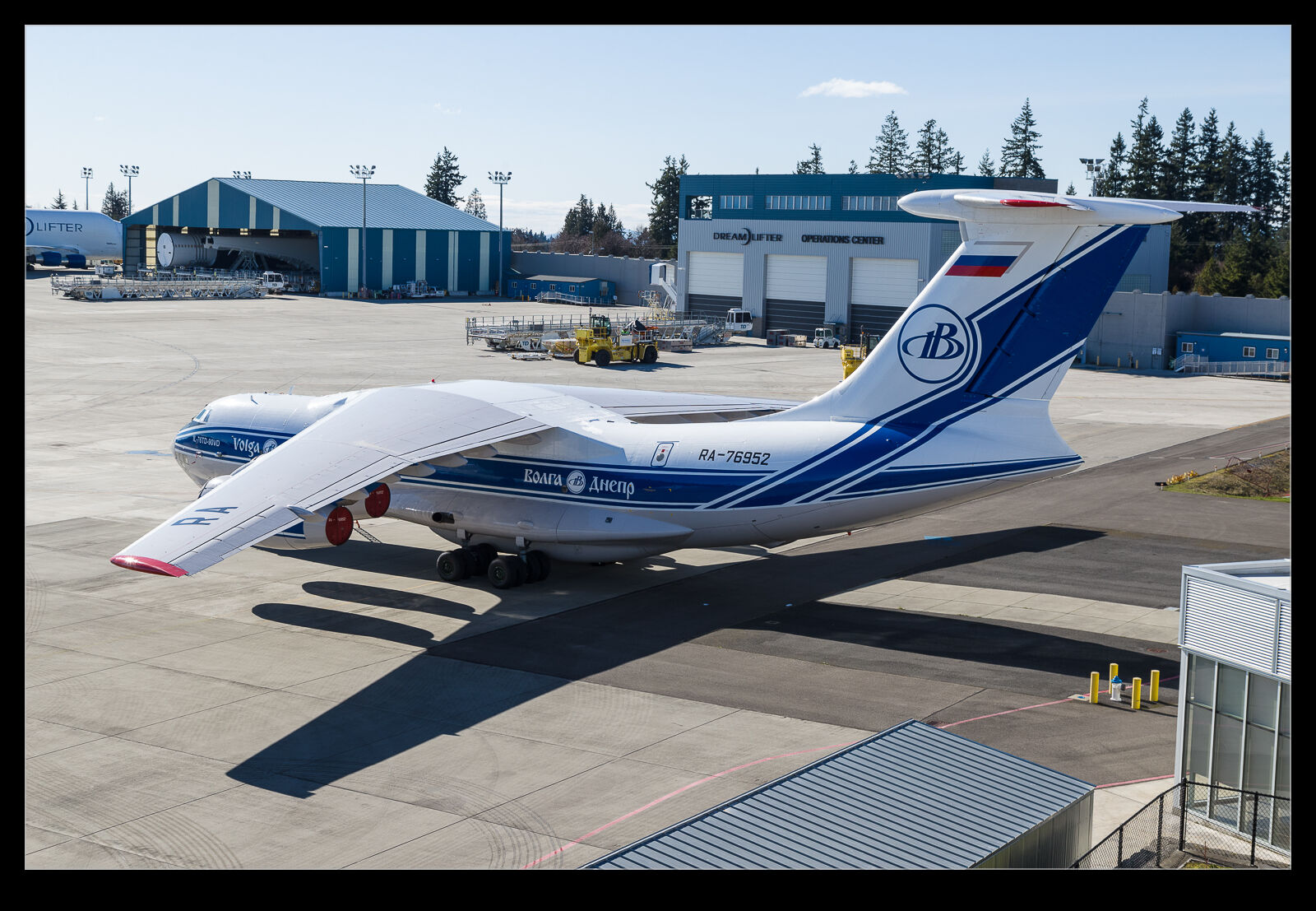
Suddenly IL-76s are appearing at Paine Field on a regular basis.  I came across one by surprise not long ago but didn’t get a chance to track its progress.  However, a quick check on Flightaware showed it had departed.  Fortunately, I checked the flight and realized that it did a quick pattern and then landed again.  After that, it didn’t move for ages and was still there when I next visited.  I wonder whether it got sick and has been awaiting parts?  Anyway, since taking this shot it has departed to Iceland successfully.  At the time of writing, it is back though.  So much Ilyushin traffic!

Swans on the Lake

When I was still at college (and because I am an old git, I was shooting on film), I spent some summers in Huntingdon, a town in Cambridgeshire that my mum lived in at the time.  The river Ouse ran through the town (actually separate Huntingdon from Godmanchester) and there was a park along the river that I walked in frequently.  One afternoon I was walking there when a swan took off on the water alongside me and I grabbed a single shot of it that was one I was really happy with.  (After I write this, I will go back through my stuff to see if I have a good scan of it to add to the bottom of this post.)

Ever since I have been shooting digitally, I have wanted to get shots of swans flying.  However, I haven’t lived in places where swans were very common.  That has changed since moving here.  There are some wetlands north of here that are heavily populated by swans and I shall be checking them out before too long.  However, we do get some swans in Juanita Bay.  Nancy and I were out for a walk a while back when three pairs of swans took off from the water near us and flew right by.  You can probably guess that I wasn’t carrying a camera that day.

A week or so later, I was back at Juanita Bay with the camera this time and there were swans hanging out in the same area.  I thought that, this time, my planning would pay dividends.  Sadly, that was not to be.  They seemed very content where they were and all I got was pictures of them sleeping, swimming or occasionally stretching their wings.  I shall be back for another attempt though.

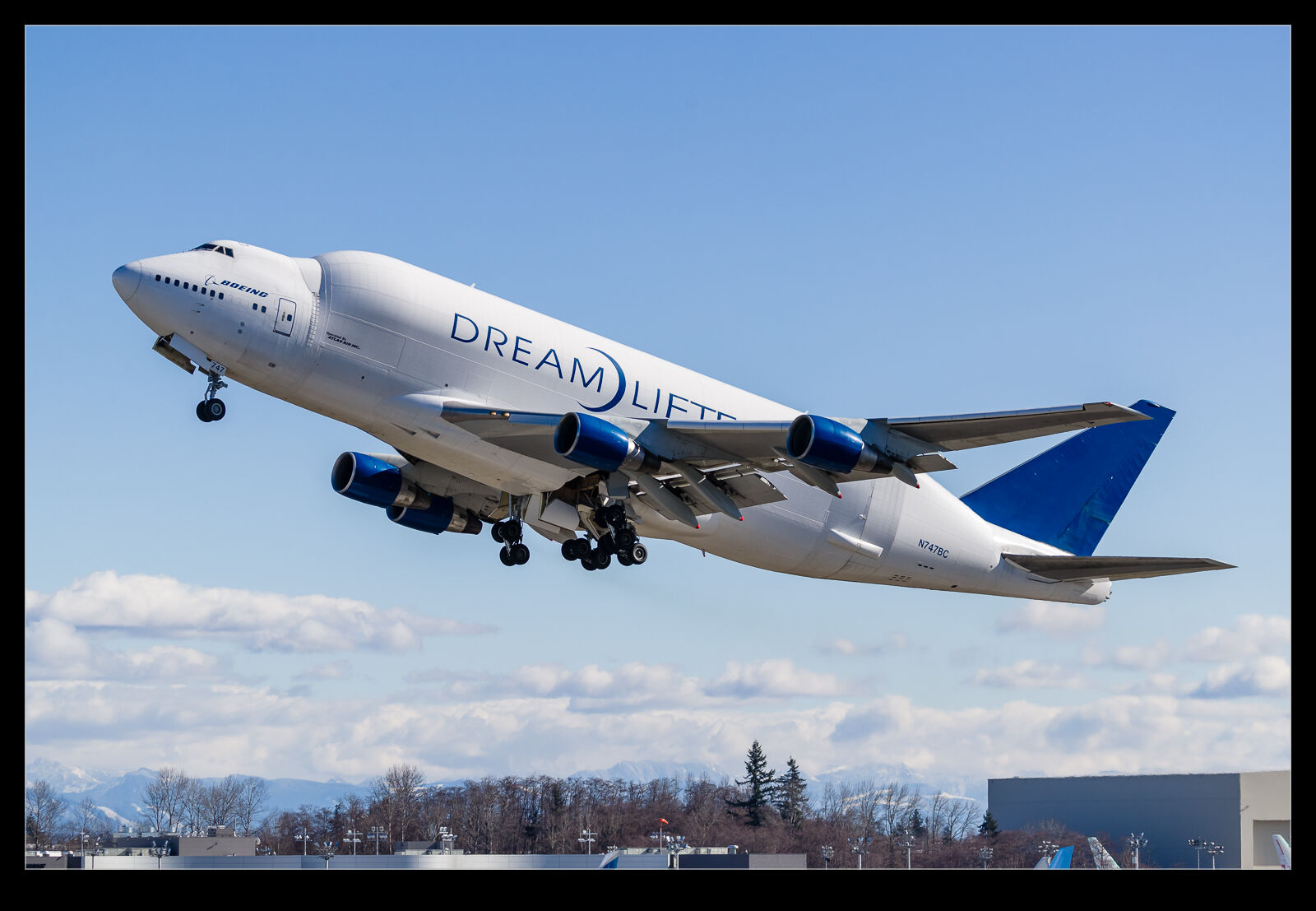
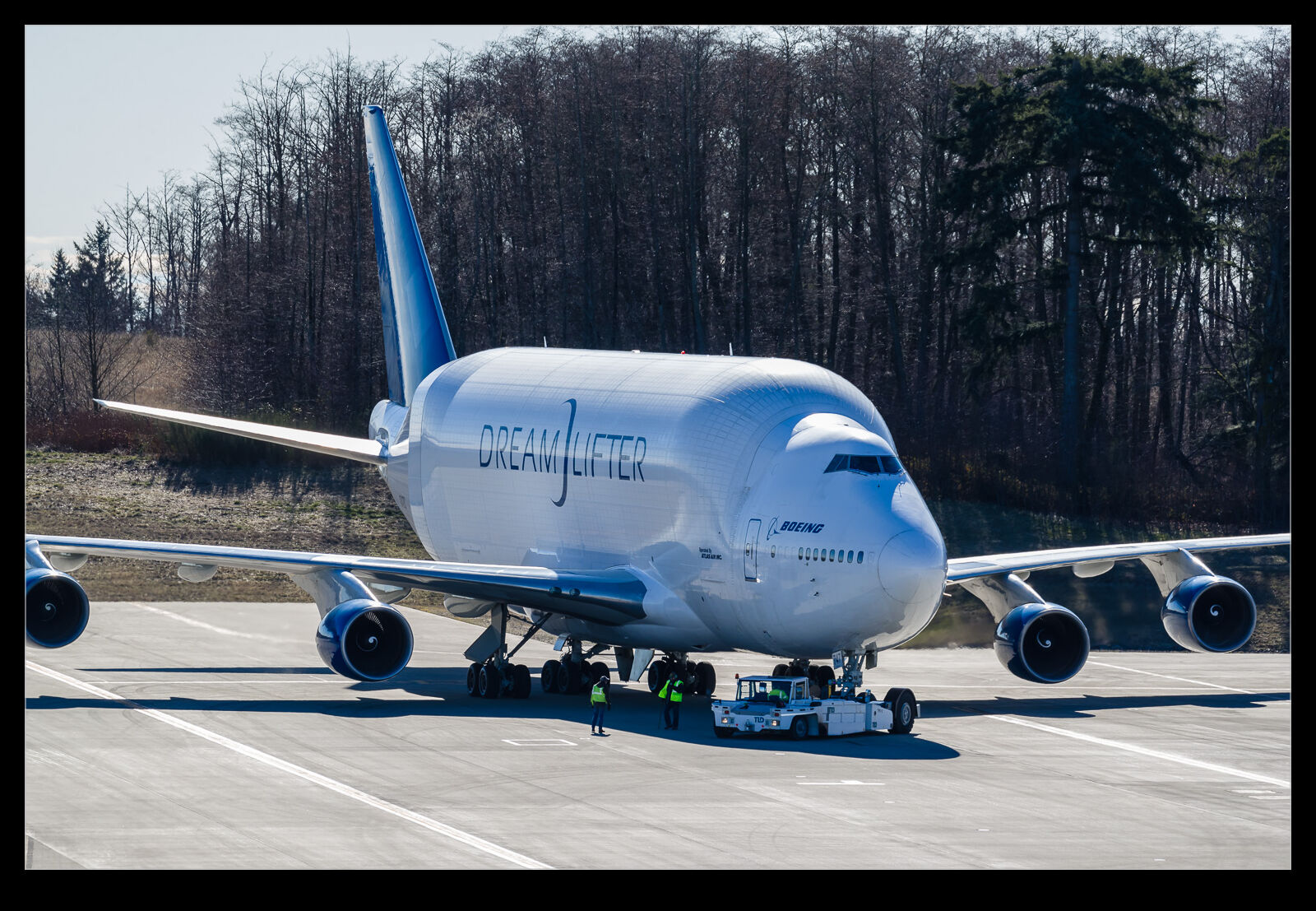
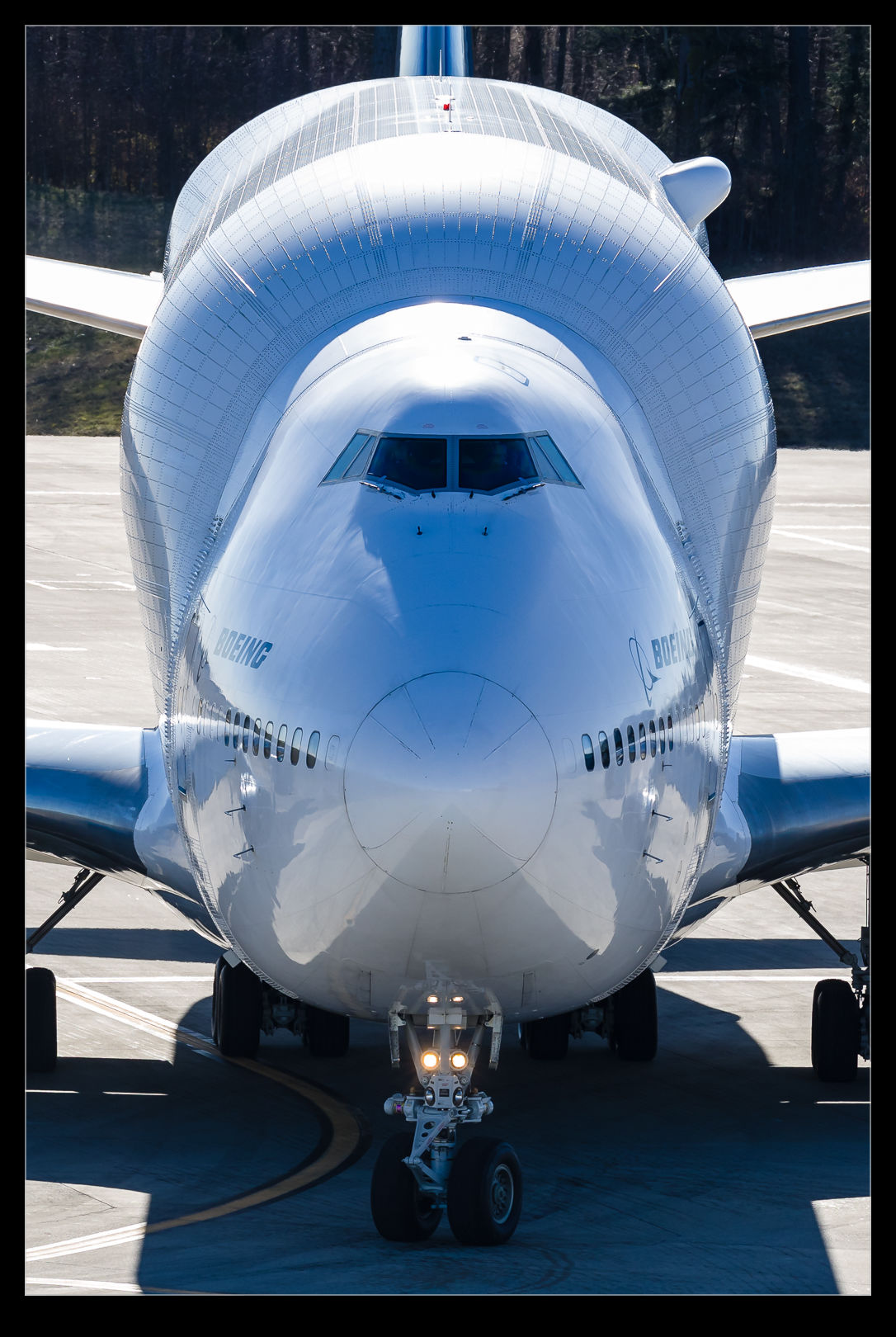
One of My Better Encounters with the Dreamlifter

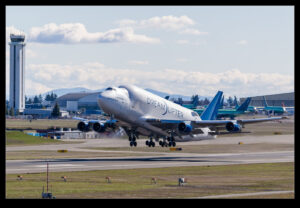
I have had some mixed luck with the Dreamlifter.  Light failing at the wrong moment or the sun setting just before departure are two examples.  On this occasion, though, things worked out pretty well for me.  I was visiting Future of Flight so I was on their viewing deck when the jet departed.  I watched them start up (including some nice puffs of smoke as fuel and oil burned off at ignition) but they were partly obscured by a hangar.

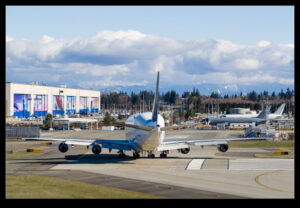
Pushback made everything easier and they then taxied right towards me.  It is true that you are looking into the sun at this point but it was still not a problem to get shots of the plane without a problem.  They taxied out past the parked IL-76 and then held in front of us for a moment.  The wind was good for northerly departures so they taxied across the threshold and then down Alpha to the other end of Paine Field.

Take off had to wait for a couple of Cessnas and then they lined up and headed our way.  I was definitely not alone on the viewing terrace at this point!  Little areas of snow alongside the runway were apparent when the outboard engines disturbed them.  Then they were rotating and climbing towards us.  Finally I got some decent conditions for some shots.  Now, I guess, this will happen a lot and I will wonder why I ever was bothered about not shooting the jet in nice light.

Qantas Celebrates Aborigine Art Again

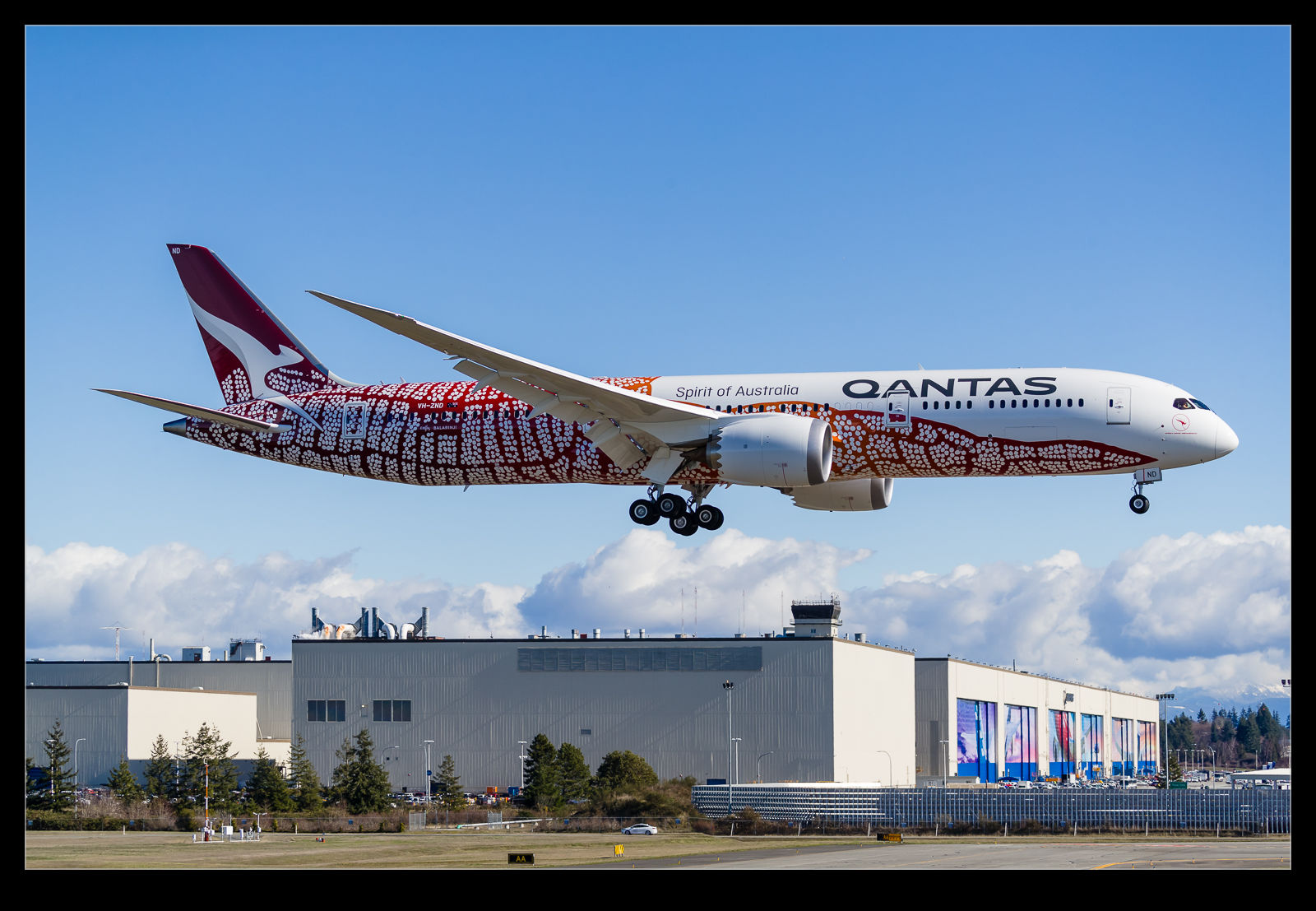
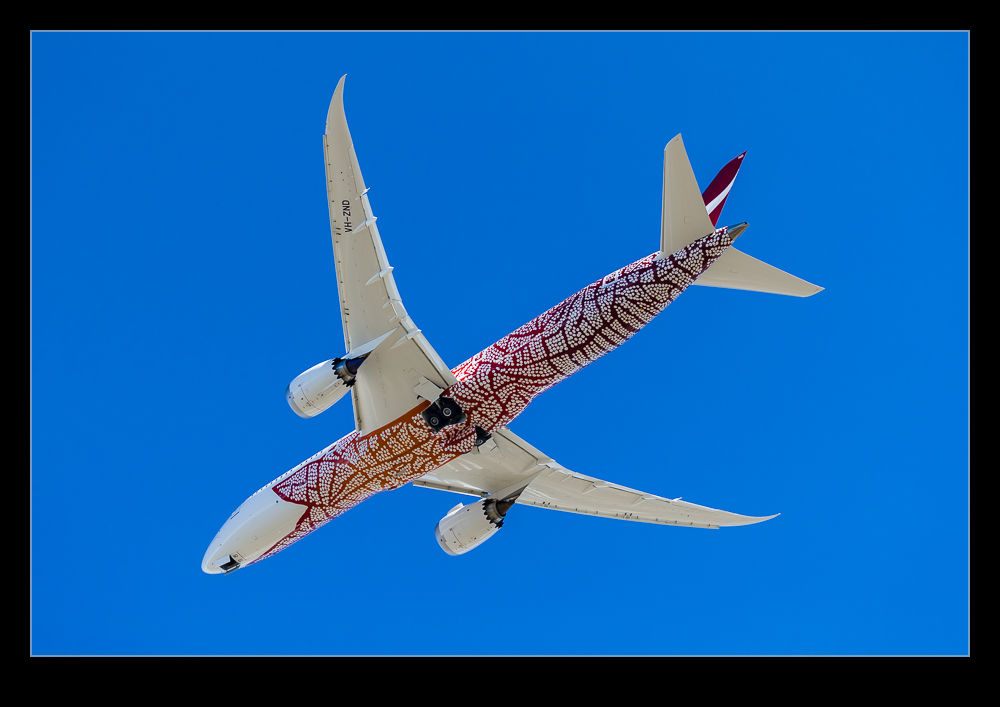
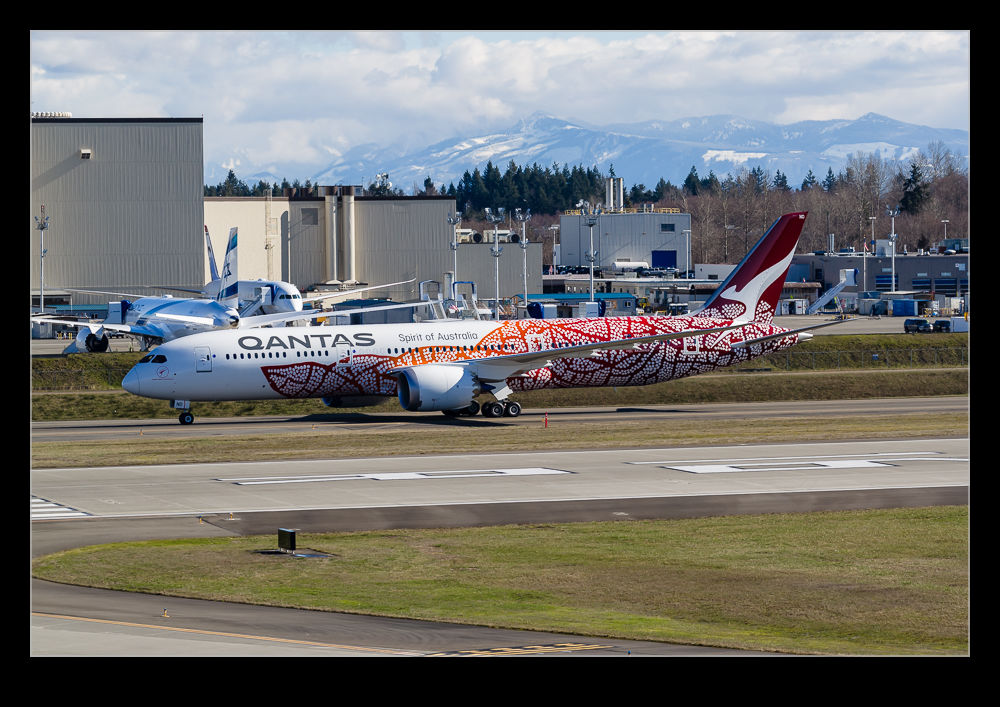
Qantas has decorated previous aircraft with liveries that encompass aborigine art.  Their Wunala Dreaming aircraft was well known around the world and, in an age when airline liveries tend to be rather bland, these colorful jets are a welcome change.  They have taken a similar route with one of their new Boeing 787-9s and I saw it at Paine Field during test flying.  It came in from the south and executed a go around from relatively low level.

Then they caught me out by heading north to turn and make an approach from the opposite direction.  This required some rather swift repositioning by me.  In fact, I got to the parking lot as they were on final approach and, rather than park, I just pulled to the side, ran up the bank, grabbed the shot and then got back in the car to park properly.  It was tight but it worked out okay.

Pegasus Testing with the Hornet (and it’s not raining)

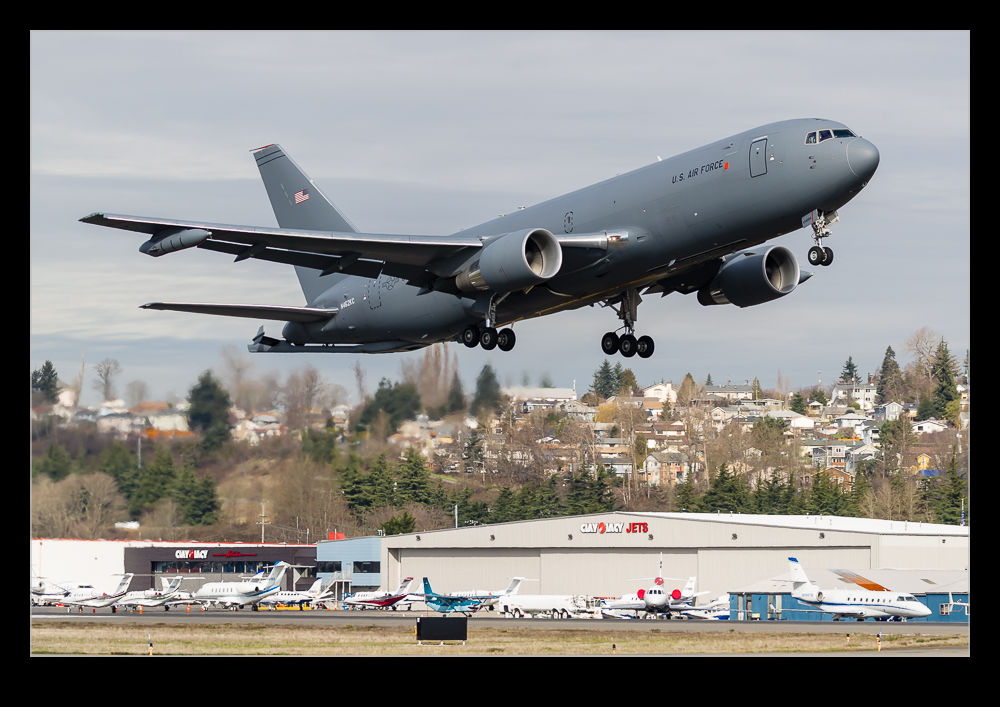
My luck with KC-46s and bad weather broke recently with a Pegasus launching out of Boeing Field on a glorious day.  It was carrying out trials work with a US Navy Hornet.  This jet was the subject of its own post.  The KC-46 followed it down the runway.  It rotated in a good location and the light was so much nicer than I have had recently so I was very happy to get shots of it as it climbed out and headed off to the airspace set aside for testing.