Tag Archives: transportation

Duquesne Incline

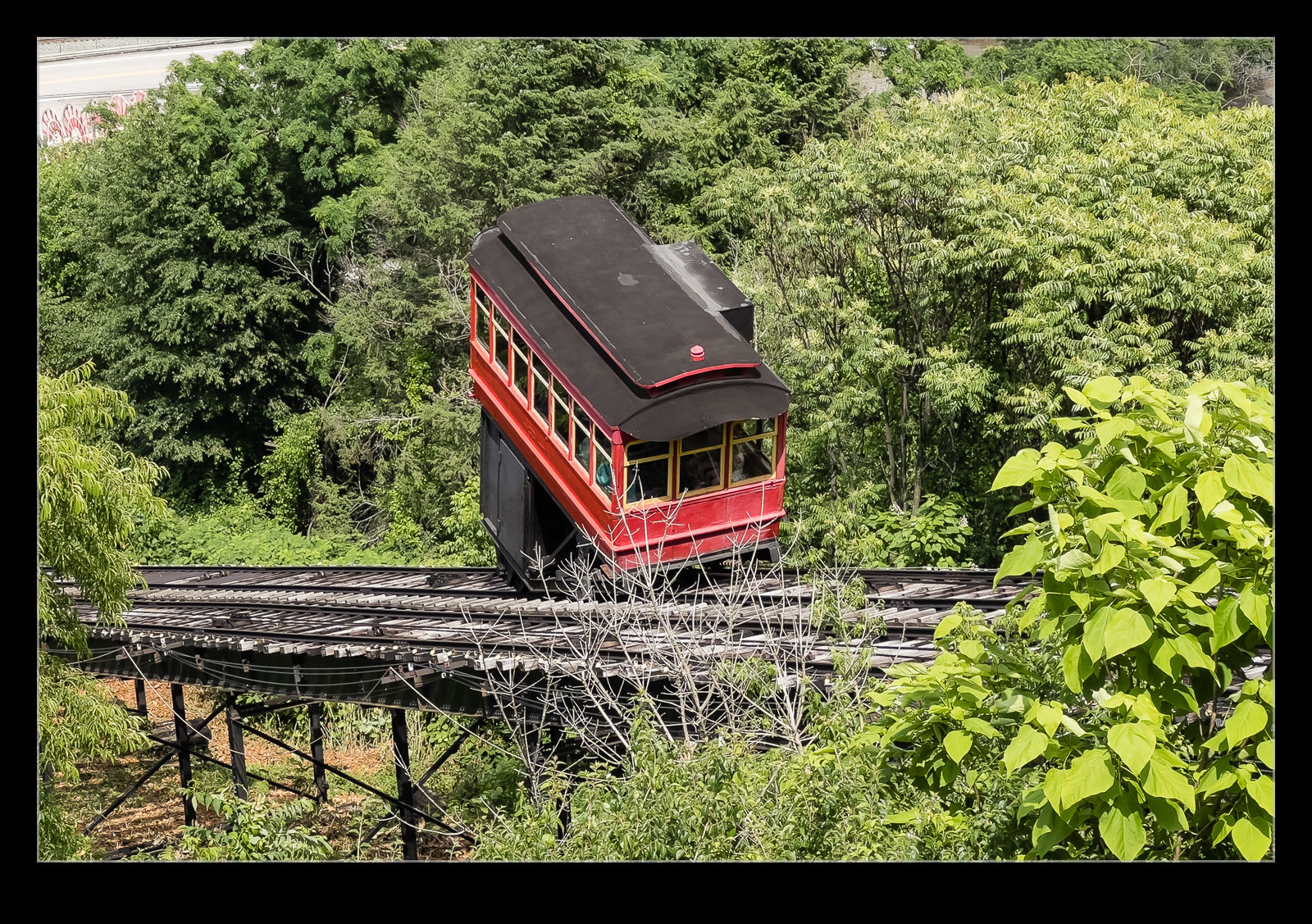
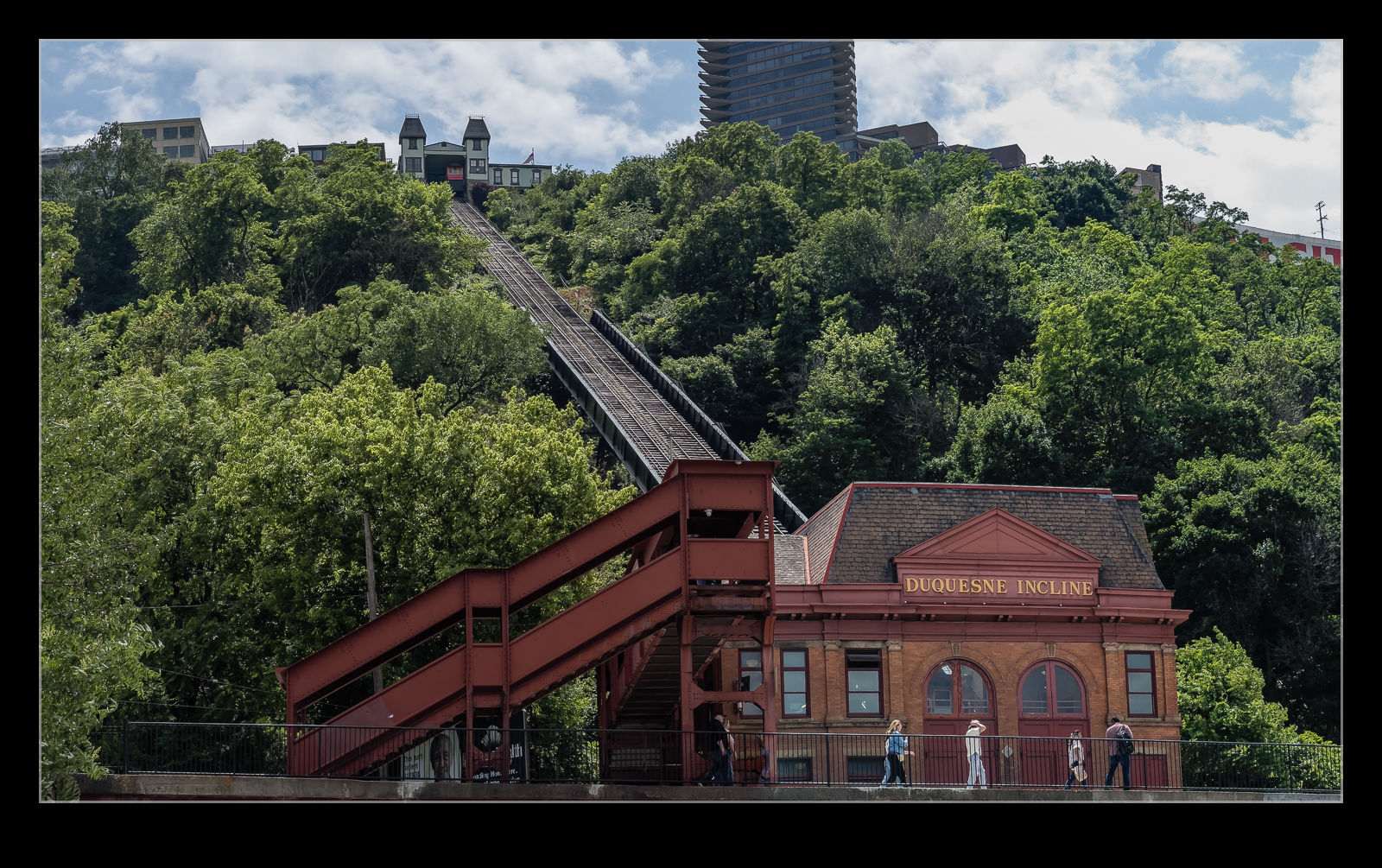
At the end of my recent visit to Pittsburgh, I wrapped up my meetings and had lunch prior to heading to the airport.  I did have about 90 minutes spare and was able to slot in a visit that I had thought about before going but that had slipped my mind for much of the visit when I was tied up with work stuff.  This was to check out one of the incline railways that Pittsburgh has.  Originally, there were twenty of these funicular railways on the hills surrounding Pittsburgh but now just two remain.
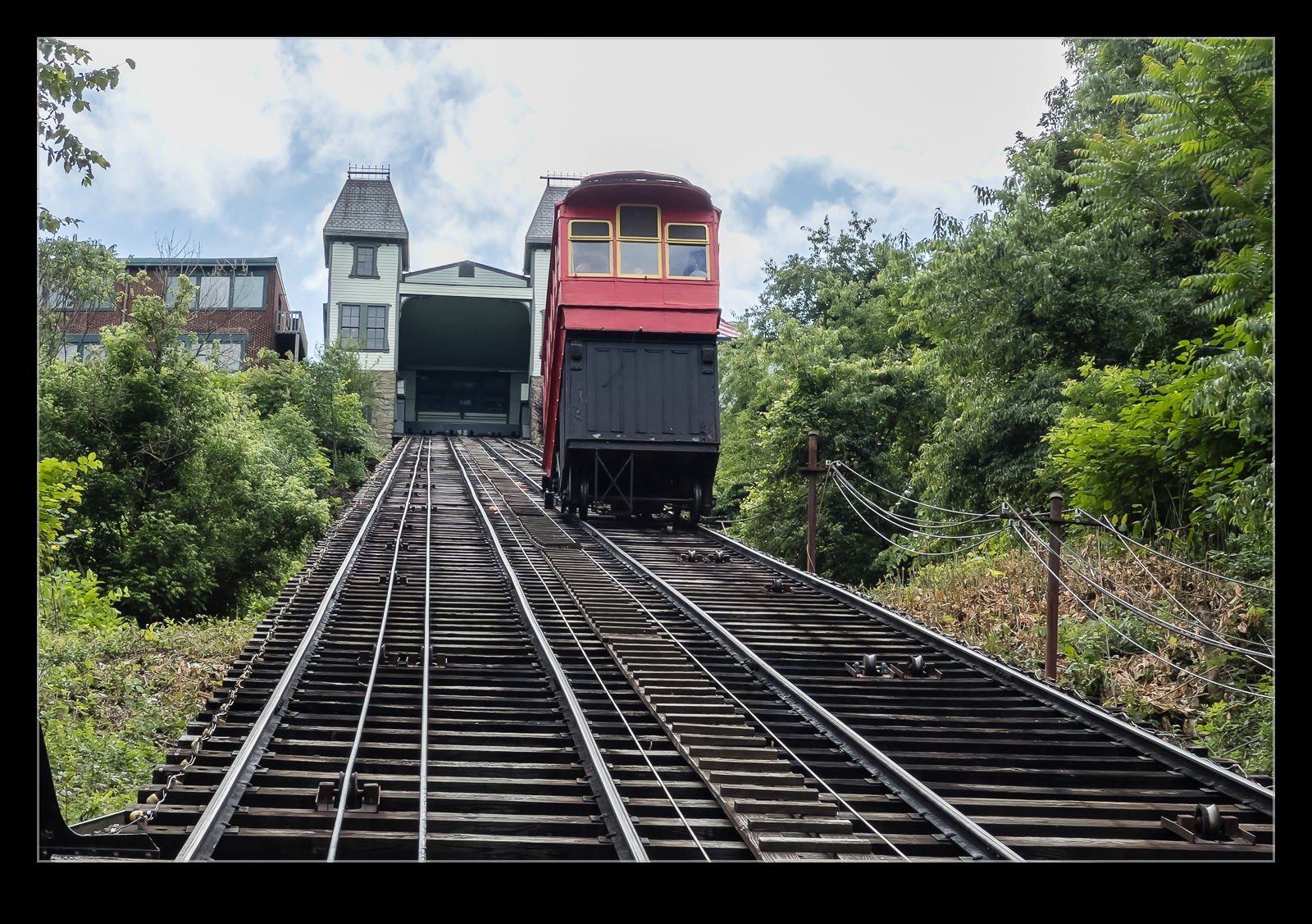
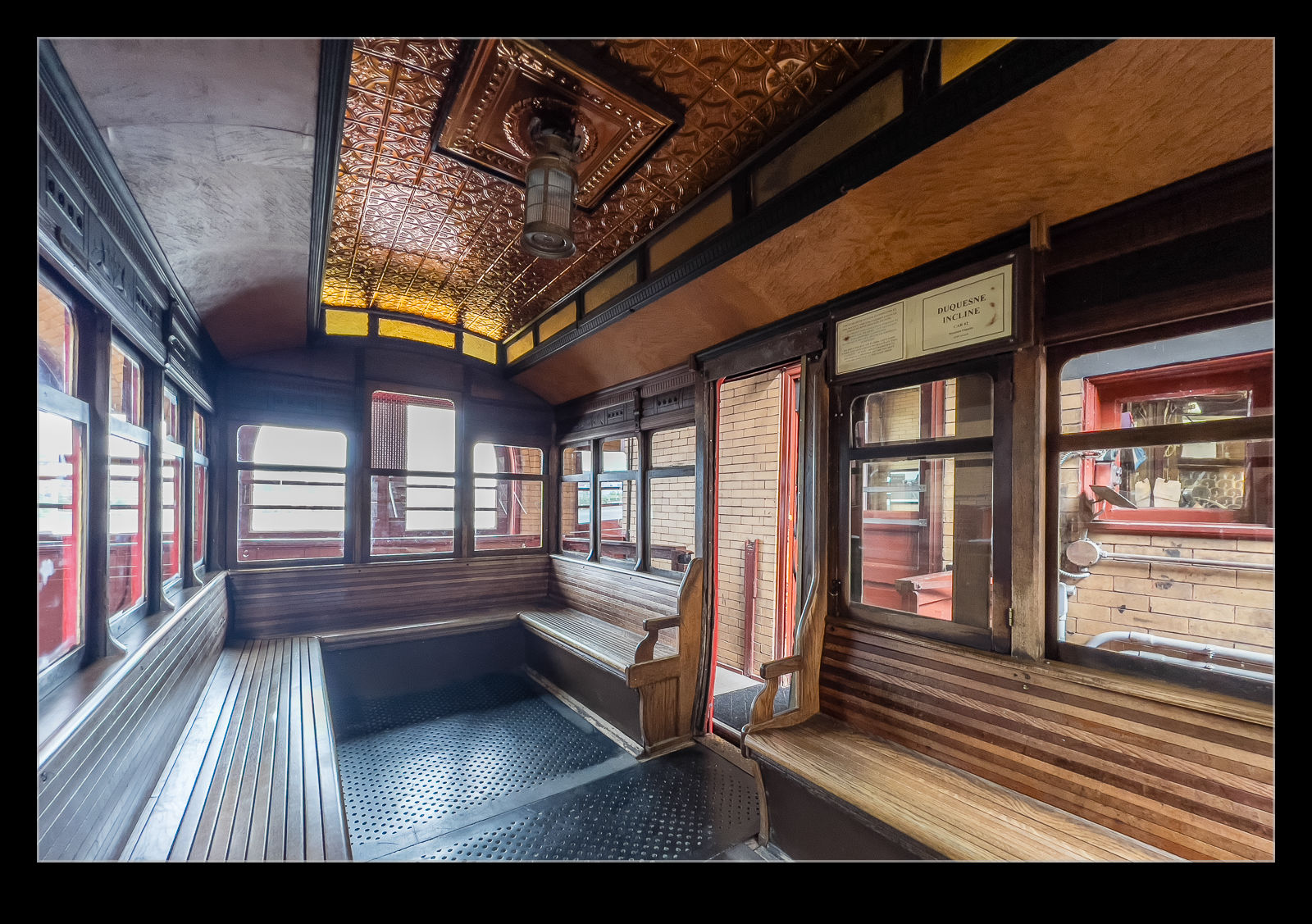
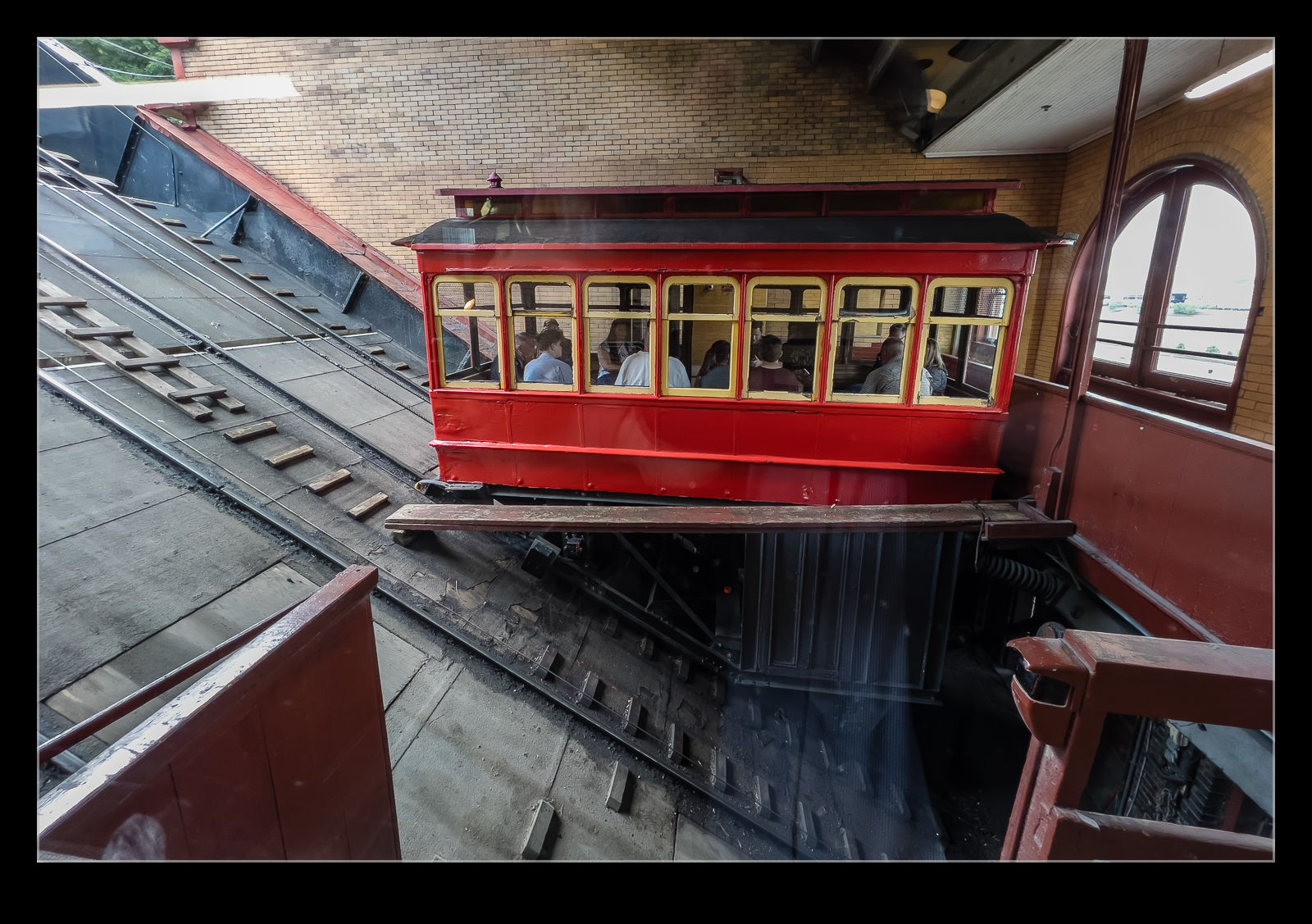
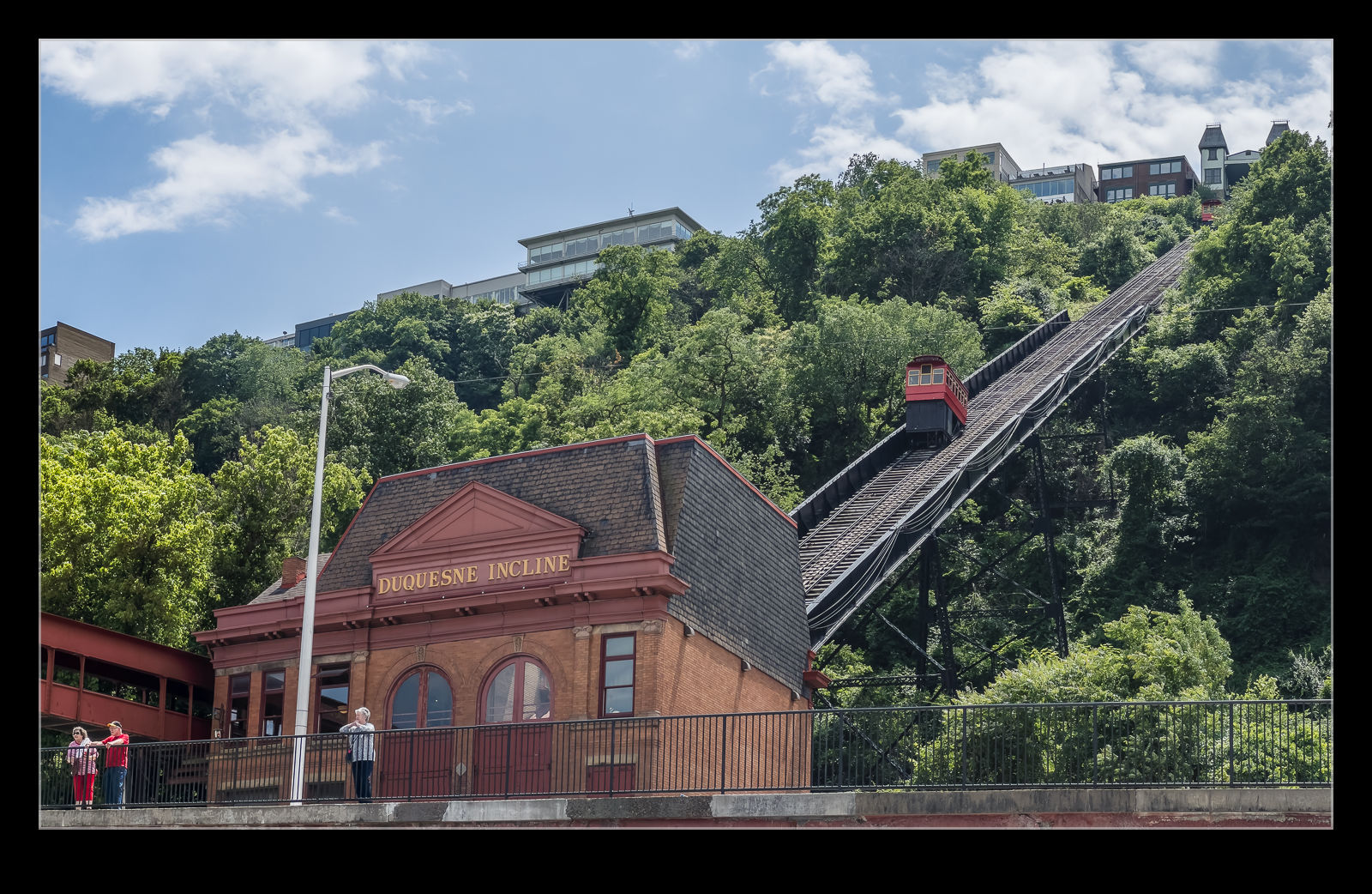
I chose to try the Duquesne Incline.  My Uber driver told me that this was the better one as the view from the top covered the downtown better, but I won’t claim this was an informed choice on my part.  However, I will take being lucky any time.  The incline was built in the late 1800s to get workers from the industrial lands along the rivers to their homes up on the hills overlooking the city.  There are two cars on individual tracks (not all funiculars are configured this way) with a cable connecting them after passing through the equipment room at the top of the hill.  The weight of the cars counterbalances to a reasonable extent so the power required is only what is necessary to overcome any weight differential and the friction of the system.
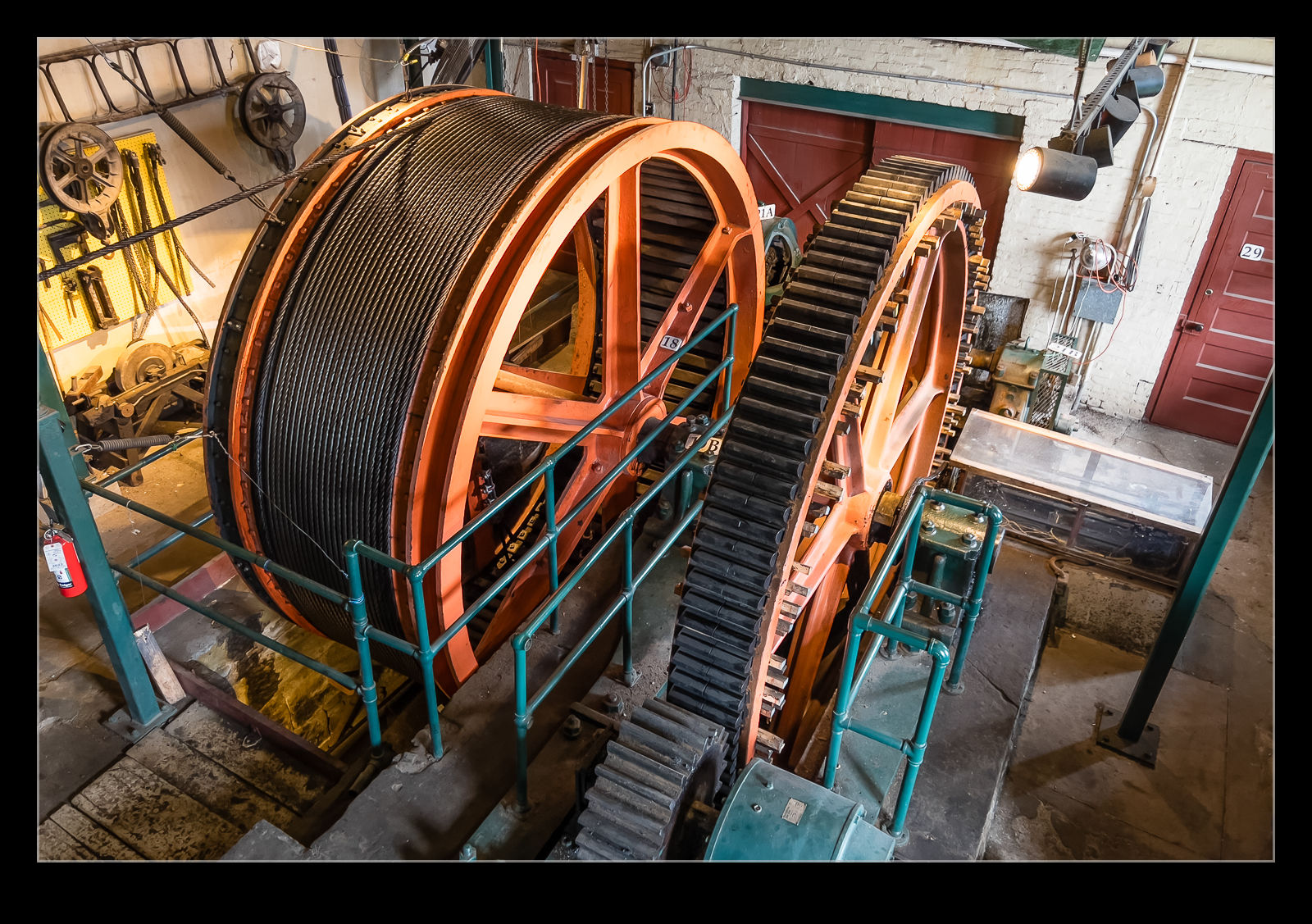
At the top of the hill, you can walk down under the station to see the machinery at work.  The sheaves reminded me of a visit many years ago to the Cable Car Barn in San Francisco.  This is on a smaller scale, of course.  Watching the cars heading up and down the grade was pretty cool and the viewing deck at the top provided a great view across the city.  This is all part of the Pittsburgh transit system so you can use the Incline as a connection to your bus journey if you want.  If you find yourself in Pittsburgh and have a little time, do check out either the Duquesne Incline or the Monongahela Incline.  They are quite something.
Clifton Rocks Railway

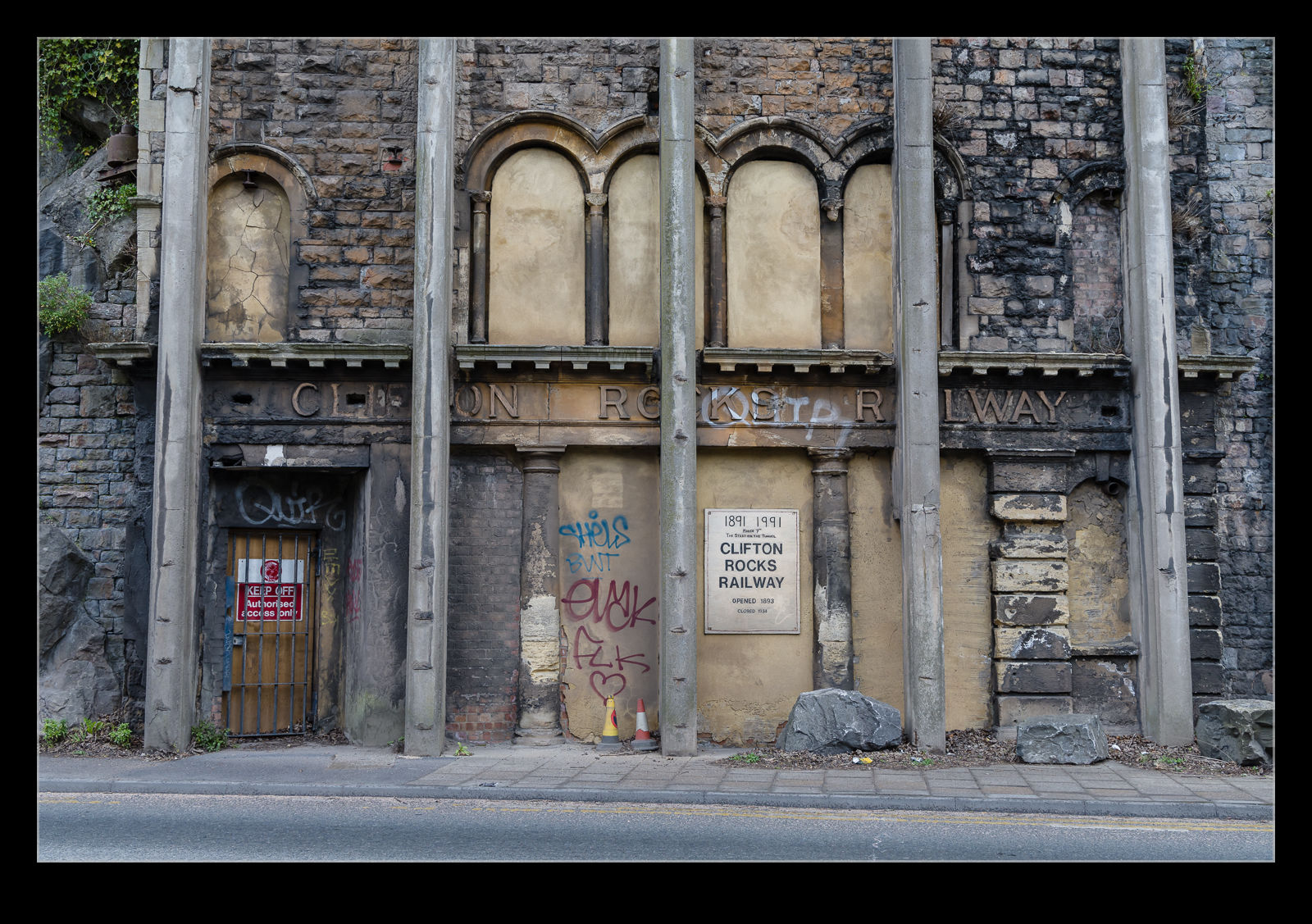
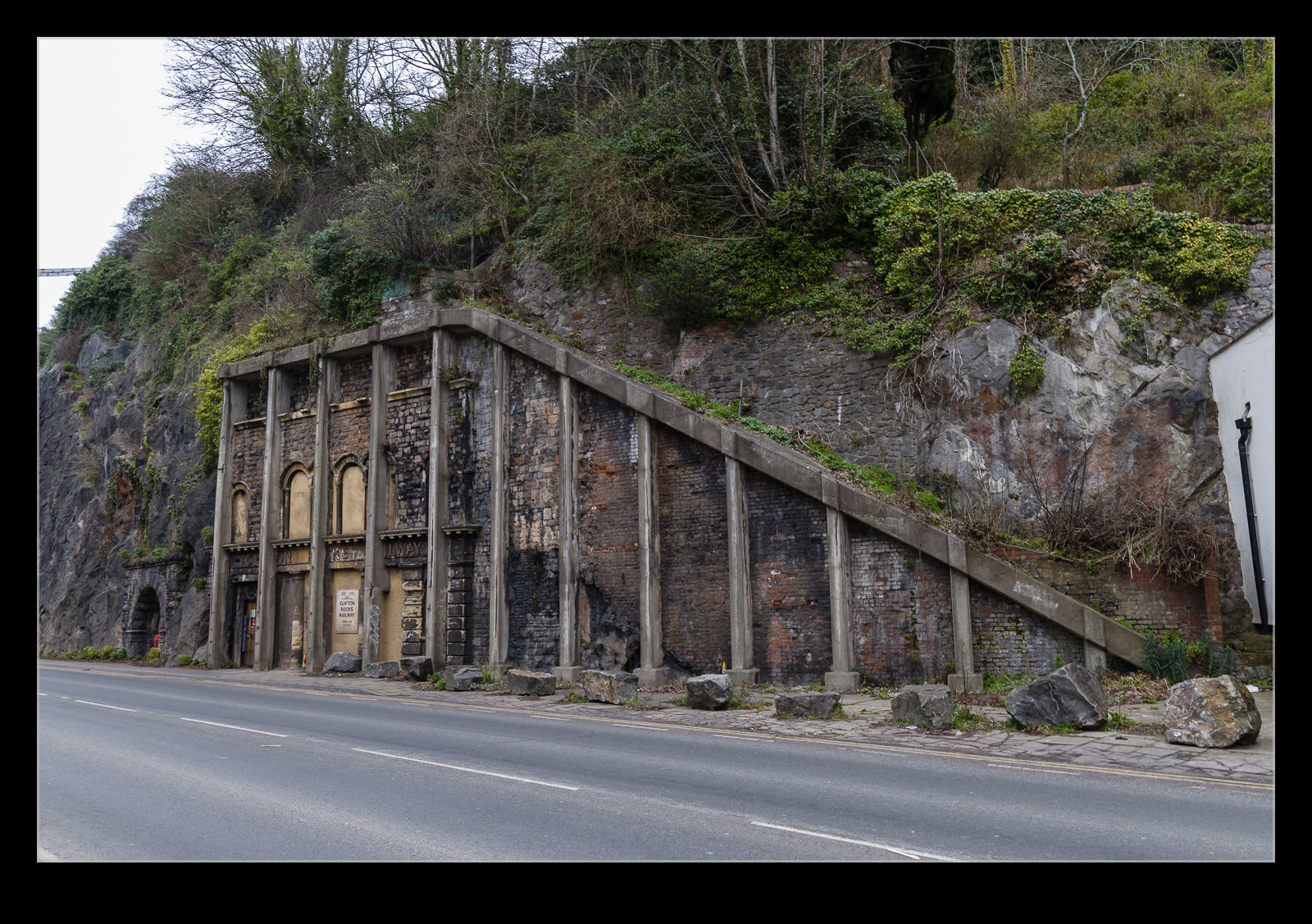
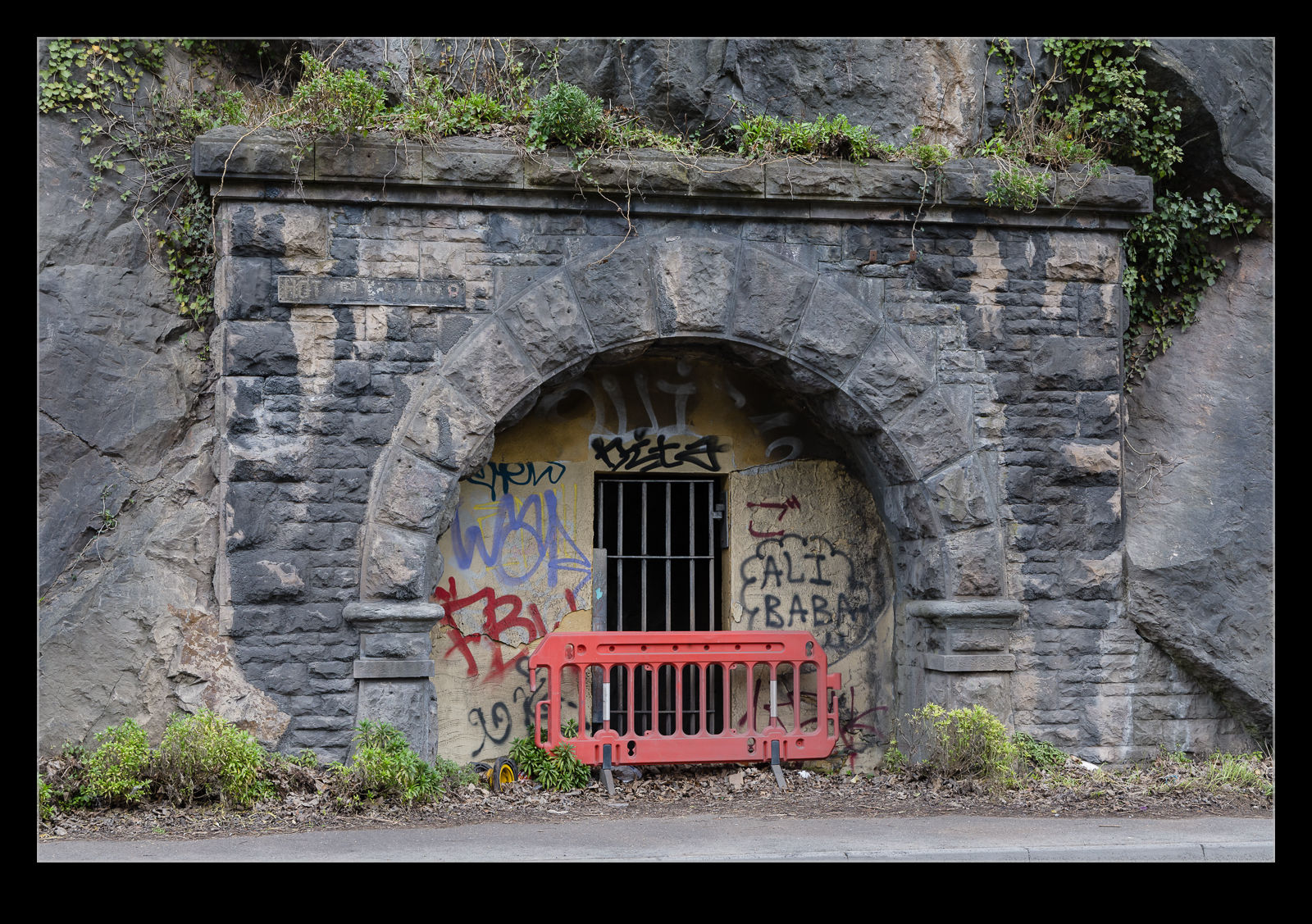
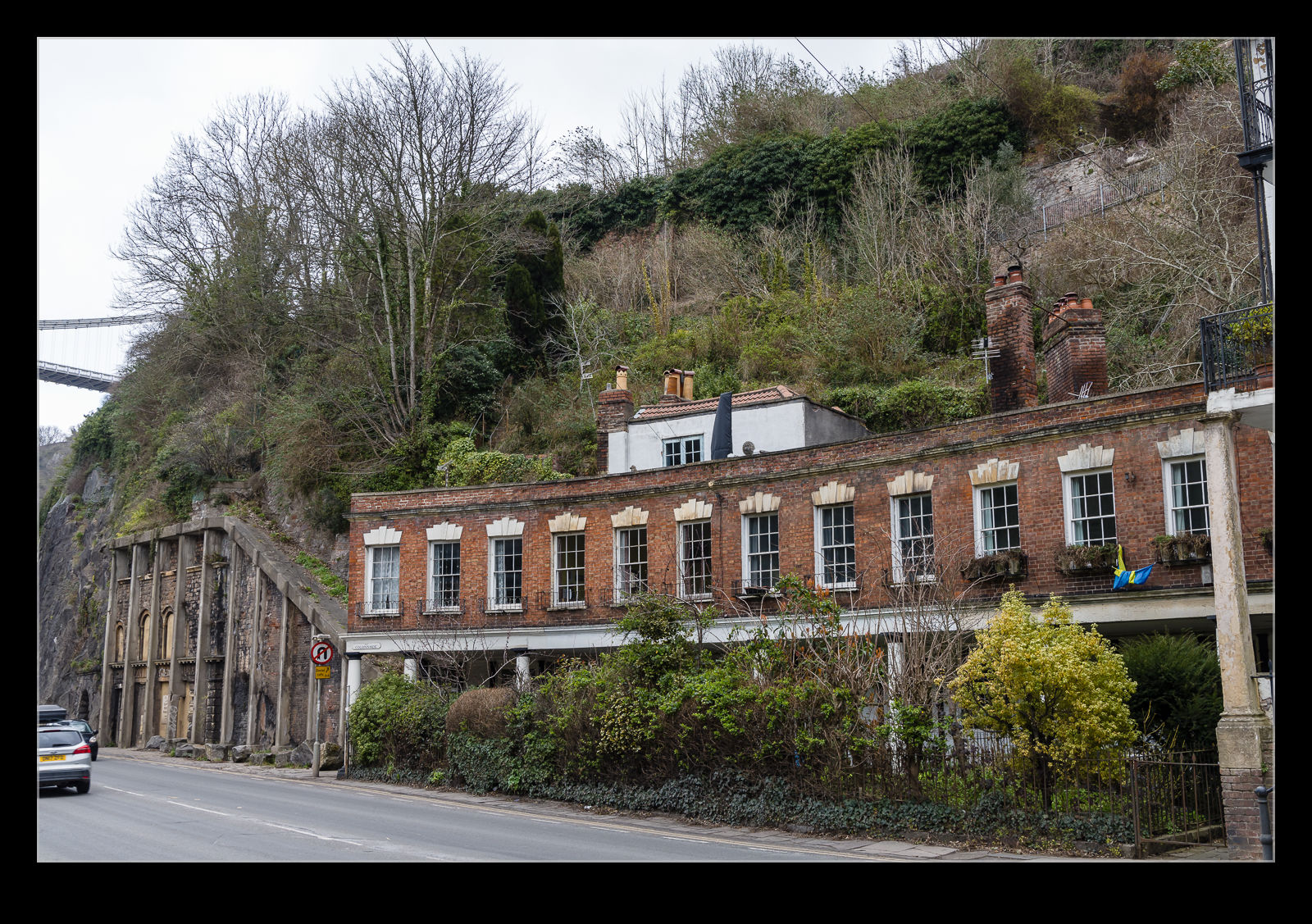
The area of Bristol known as Clifton sits on the top of the hill overlooking the Avon.  To get from the water to Clifton is quite a climb.  These days you would drive up there but, in the days, when vessels would be bringing passengers in by boat along the river, an alternative was required.  The Clifton Rocks Railway was the solution.  This was a funicular railway that ran in a tunnel from alongside the river up to near the suspension bridge.

Built in the 1890s, it operated until the 1930s when the decline in passenger numbers meant it was no longer viable.  The tunnels were used as office space during the Second World War with the BBC being one of the tenants and they continued to use the space into the 1960s.  There is now an effort to restore aspects of the tunnels although the railway will never operate again given the usage the tunnels have had since service ended.  The station at the bottom is still visible but is now alongside a busy roadway so might easily be missed as you drive past.

German Day at Exotics@RTC

My first visit to Exotics@RTC this year was delayed.  Early events were canceled for weather reasons and then, when they got going, I was doing other things and couldn’t go.  The first time I was able to make it was for the German Day.  I have done this day in previous years, and I like the types of vehicles that show up.  Yes, there will be a lot of modern Audis and BMWs but there will also be some far older and more interesting vehicles.  A Porsche tractor was one of these.

I won’t go into great details about any individual vehicles, not least because I am not very knowledgeable about them.  If they are in the center section, my assumption is that it is because they are unusual, rare and expensive but maybe something lesser can sneak in too.  I wouldn’t know the difference.  Here you go with some images of the various vehicles.

Elizabeth Line Station

Last year, while we were staying in London, I got to take my first trip on the Elizabeth Line or what was known for a long time as Crossrail.  This is a major addition to the transportation network of the town and appears to have been very successful.  I only took one trip through the core of town and one to the airport.  It was a very quick way to cover a journey that previously was a lot more drawn out.  However, the thing that impressed me most was the stations.  They are huge.  The trains are long from the start, but they have built capacity to have them longer and the platforms are about 250m long as a result.  You need to know which end to get out to make sure you don’t find yourself several blocks from where you intended when you get to the surface.

Birmingham Trams

The tram system in Birmingham was built after I had last been there.  We were staying in the center of the city so I didn’t need to use it to get anywhere but our route from the hotel to the evening’s entertainment took as past some of the route.  I noted this for the following morning when I took a little stroll around the city which was much quieter on a Sunday morning than it had been on a Saturday night.  The tram service was clearly less frequent too.  However, I did see some of them come through and wasn’t going to miss a quick shot while I was at it!

Car Transporters Are So Elegant

Having grown up by the sea, I always like looking at passing ships.  However, there are some that are just a little bit harder to like.  Car transporters are that type of ship.  While on the Isle of Wight, I saw this one passing by.  I was going to take a shot of it because when don’t I take a photo but this is a prime example of just how lacking in grace this type of ship is.

The Most Unpopular Bridge

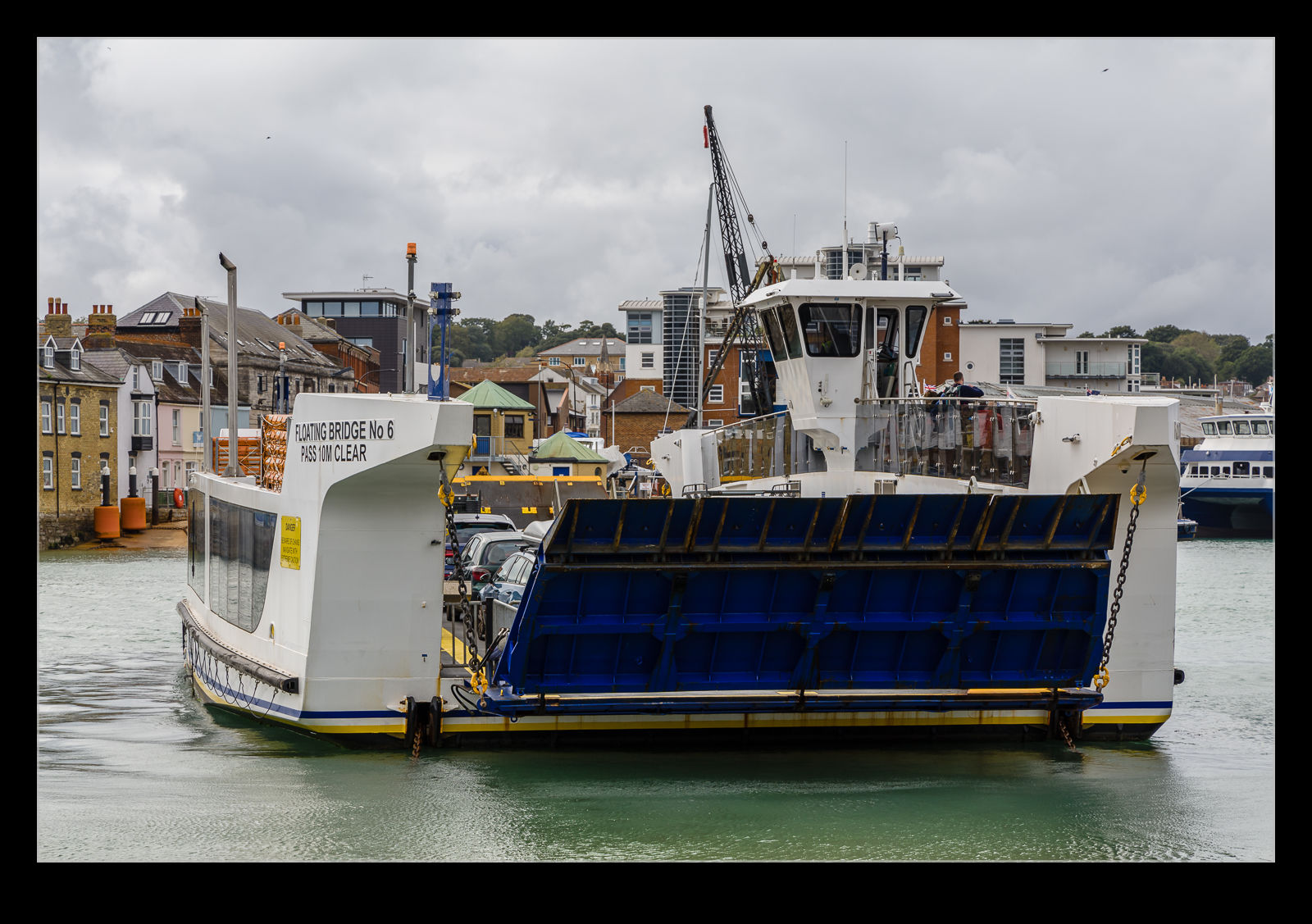
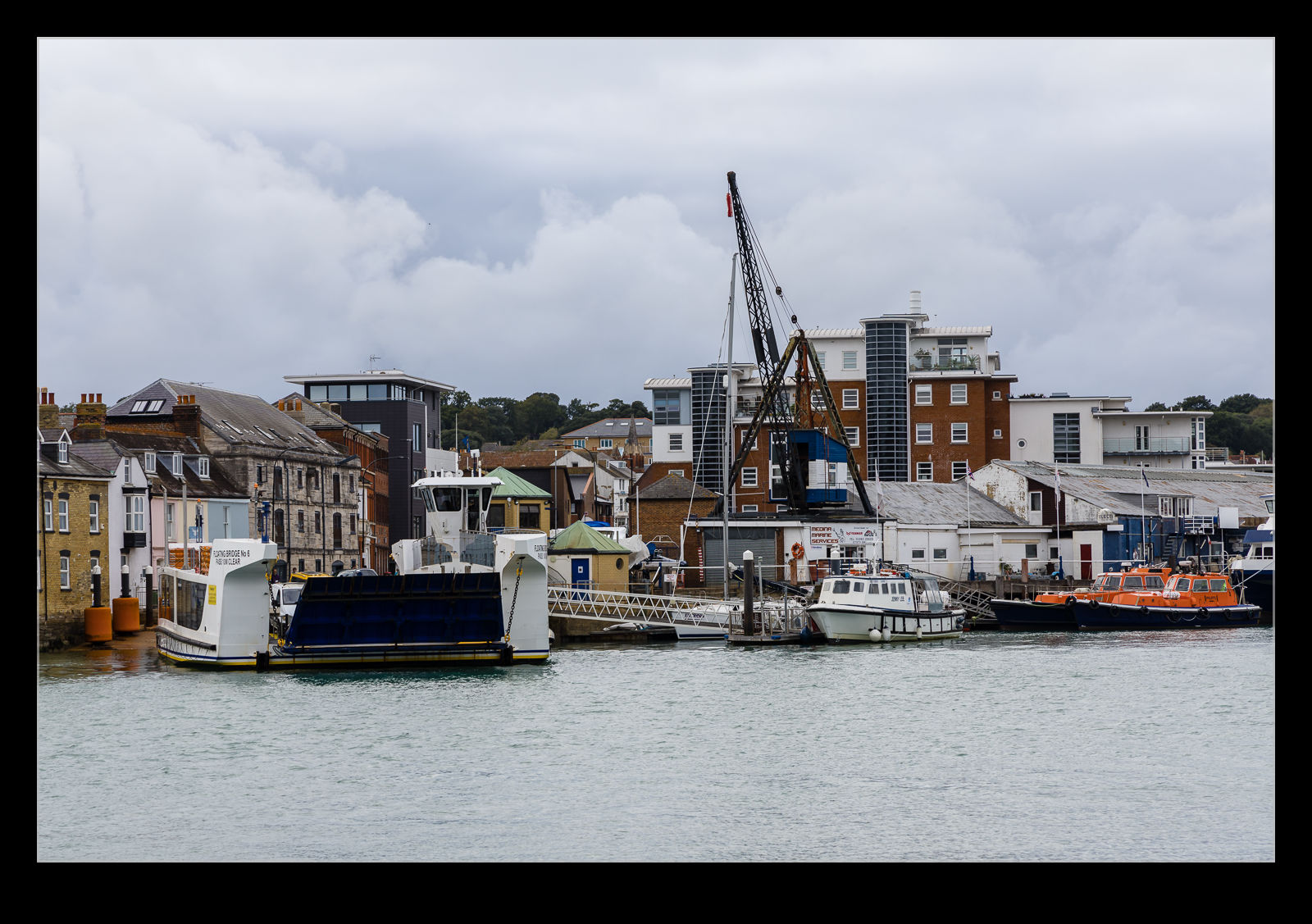
I spent a lot of my childhood in a town called Cowes on the Isle of Wight.  Cowes was on the coast by the outfall of the River Medina.  The other side of the river was East Cowes and the two were connected by a chain ferry known to everyone as the floating bridge.  I remember as a small boy when the previous floating bridge got replaced with a newer and larger version.  This same one was in service until relatively recently.  A new one was ordered and its introduction to service has not been smooth.

I see the content of some Isle of Wight Facebook groups and complaints about the new bridge are widespread.  Like most people, I don’t know the actual details of what is behind the problems, but the online experts know everything, and the accusations of corruption are widespread.  In my experience, the most likely problem is just a screw up.  People make mistakes a lot and looking for a deeper reason is usually fruitless.  I don’t even know if it is all working properly now, and everyone is rehashing old stories or whether it is still problematic.

We did take a trip on it though.  It was working and we needed to get from East Cowes to Cowes so we gave it a go.  Everything was fine.  However, it was busy and the car in front of us was the last one to get on.  That did give me some time to get some photos of it and I also took a little video too.  As an aside, while we were in Portsmouth, I saw the old bridge laid up awaiting its fate.

Slotting A Large Ferry In A Narrow Space

The car ferry terminus at Portsmouth has moved locations over the years.  The current Gunwharf location is tucked in quite a tight spot and the ferries are getting ever larger.  It requires some skill to get a boat that big in to the berth frequently and quickly.  I had multiple opportunities to watch them do this when in Portsmouth and when waiting to board so I got stills and video.  A little video of them working is below.

We also were close to the terminus when we had our lunch on Spice Island.  The ferries actually come around Spice Island and in to dock and the view along the shore looks almost continuous so, when the ferry goes in or comes out, it looks like it is emerging from the land.  For some reason, I don’t tire of watching this happen.

MV Royal Iris Decaying Slowly

The Thames is a busy waterway for commercial shipping and has plenty of docks and wharves along its shores.  Seeing boats tied up is no surprise but seeing one that is sinking is not what I would have expected.  That is exactly what I found, though.  This old ferry was sitting at an awkward angle and looking very unwell.  I came upon it from the stern and then had to go inshore as the path deviated away from the river but it was soon back on the water and I was able to look back at the sad vessel.  A little research when I got home told me it is the MV Royal Iris, once a Mersey ferry.  She is not looking at her prime now!

Woolwich Ferry

I last used the Woolwich Ferry around 1990.  At no point since then have I needed to do so.  However, on my exploitation of the eastern parts of the Thames (at least while still in London), I started out in North Woolwich and needed to get to Woolwich.  The foot tunnel was an option but the ferry runs frequently and is free so it was my preferred option.  From what I have read, they replaced both ferries relatively recently.  One of them has an obvious name – the Dame Vera Lynn.  The other one is named Ben Woollacott in honor of a young crewman who lost his life on duty a few years ago.  I think that is a nice touch.

The two ferries run at the same time with each loading on opposite sides of the river and then departing at the same time.  There is an odd “dance” that they do with one going upstream  and one down as they cross each other before then sliding in to the dock to unload and repeat the process.  When I boarded the ferry, I didn’t know how this worked so was quite confused as we headed up river.  However, it all became clear quite quickly.

The ferries are very maneuverable.  They was in which the crews can put them wherever they need to while operating on a river that has some strong currents is quite impressive.  They seem to slide into the berths sideways when coming from one direction while they approach the northern side in a more traditional way.  If you haven’t heard of a Voith Schneider drive, I suggest you look them up.  Very clever stuff.

I made the crossing and got some shots and video while doing so but my interest was now piqued so I ended up spending a little longer on the south bank of the river watching them repeat the process to see how it looked from the outside.  A slick operation.  As I got off, I saw the holding area for the vehicle traffic that was waiting to board.  It seemed that there was a lot more going south to north than in the other direction at that time of day.