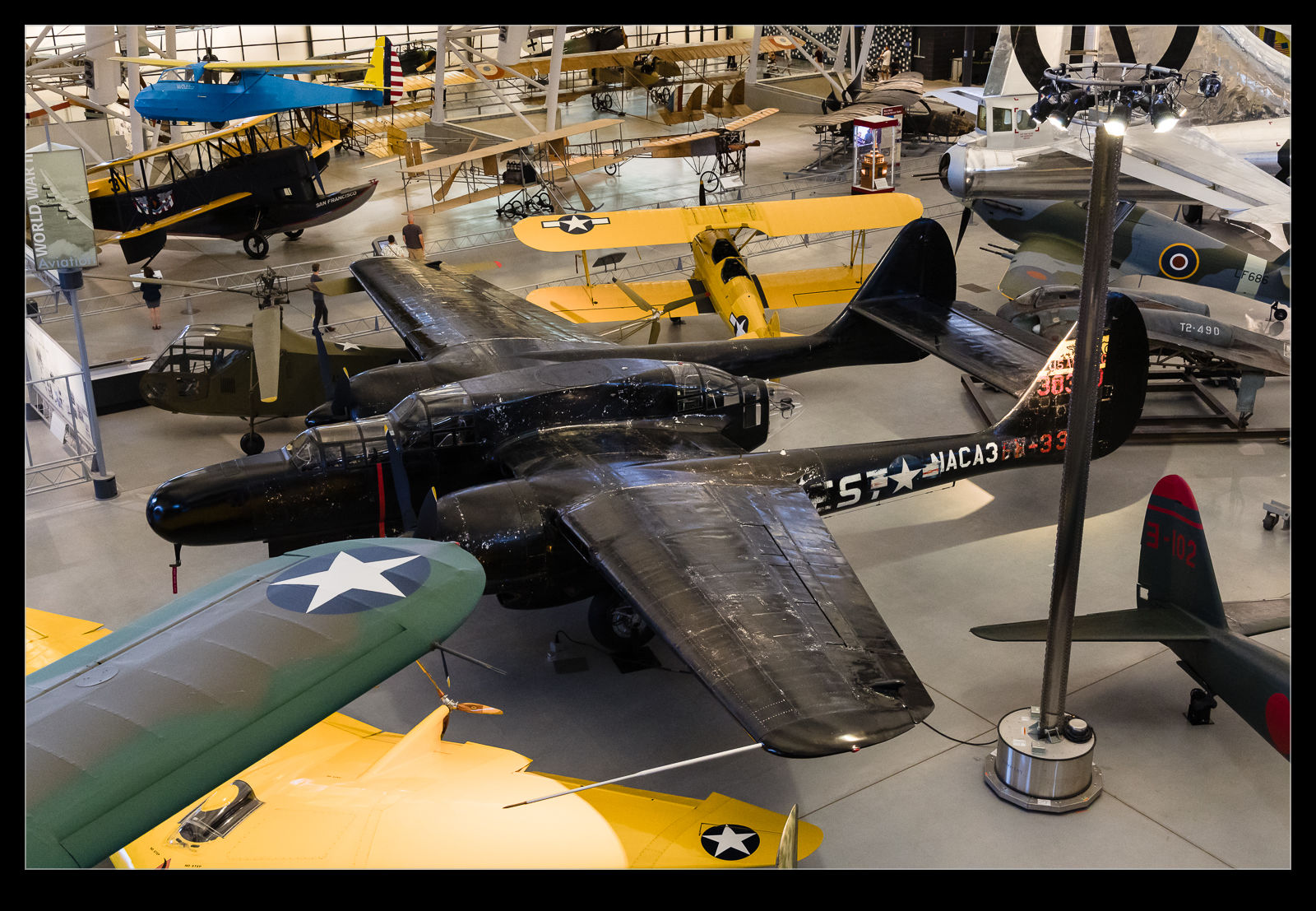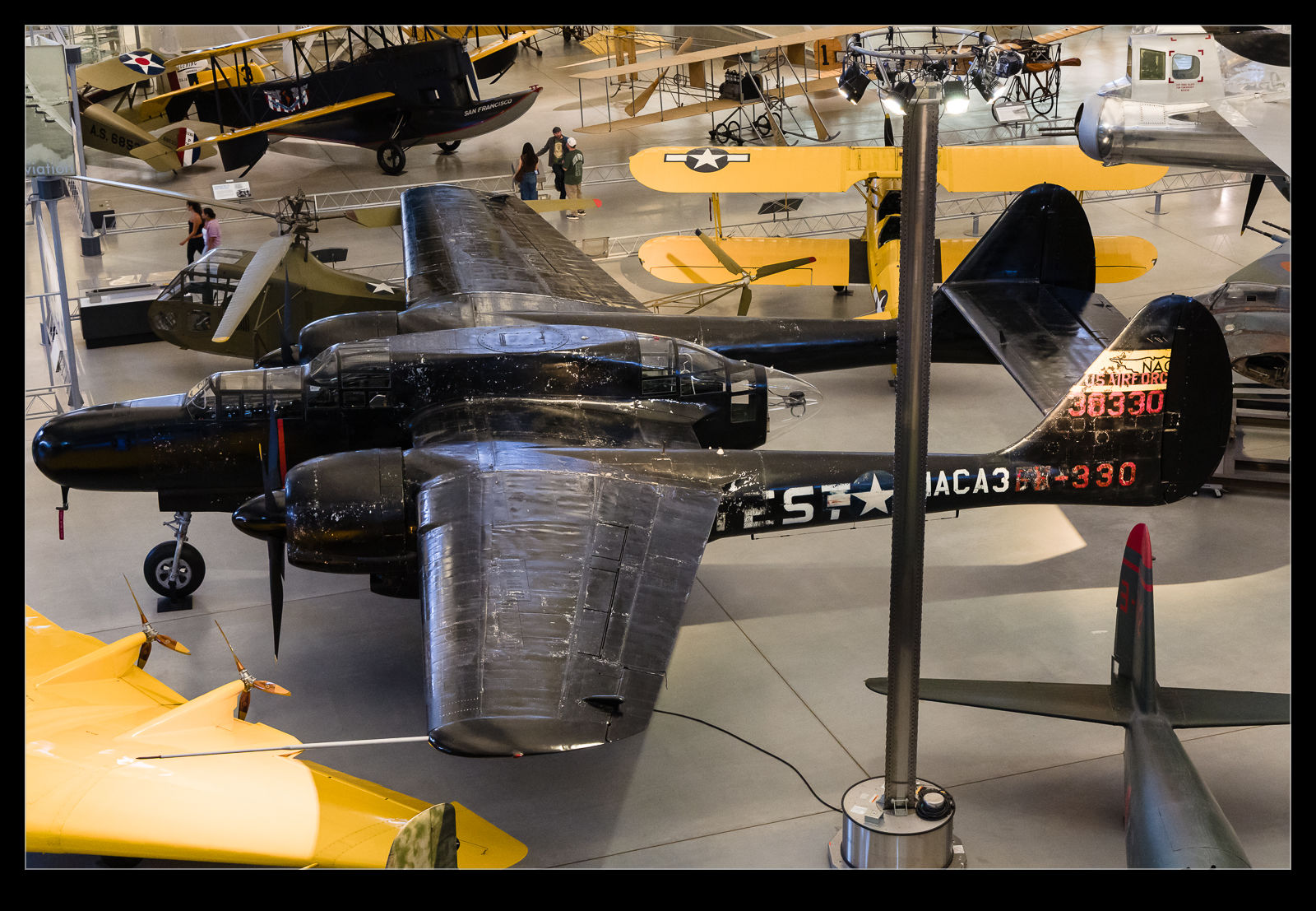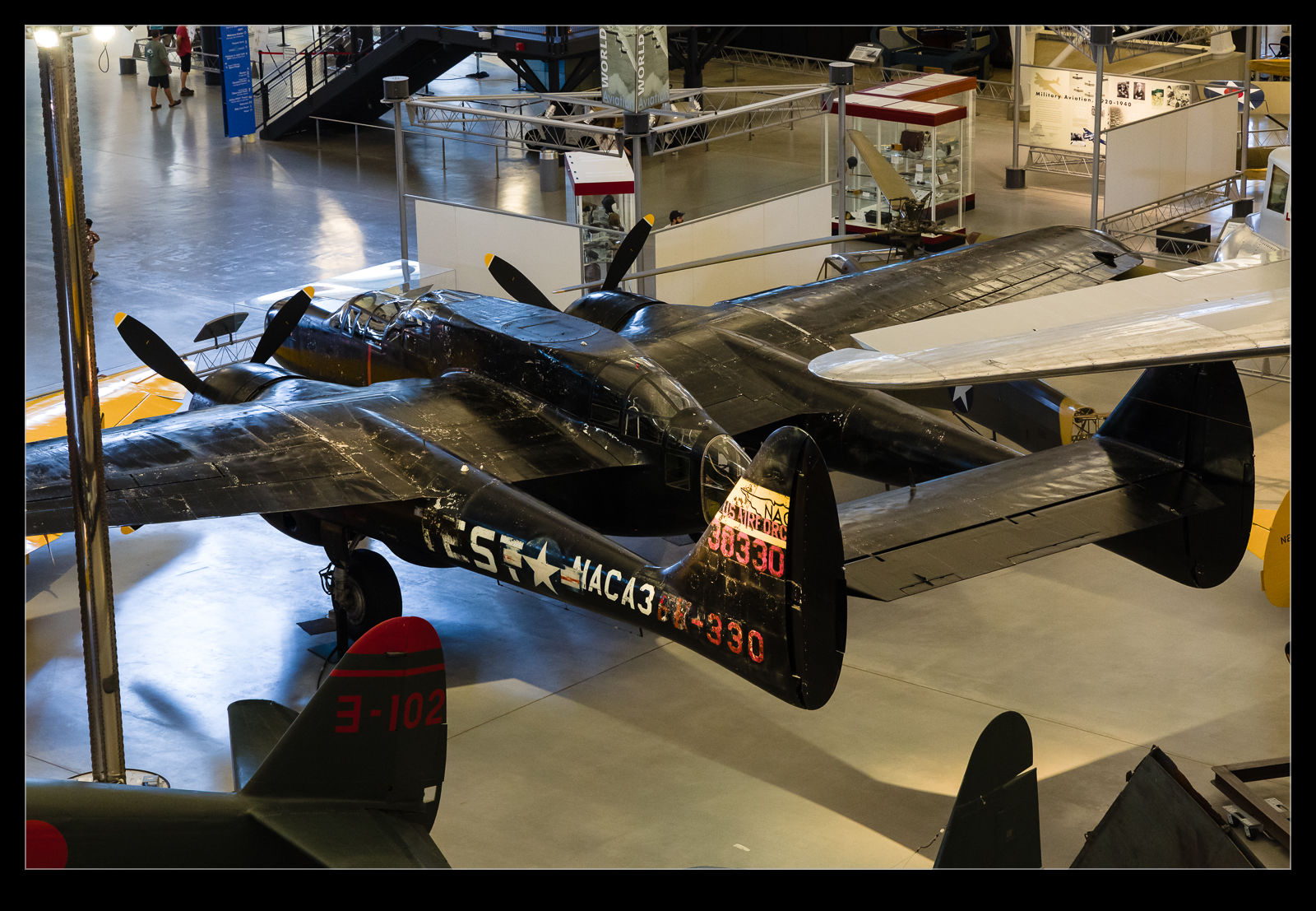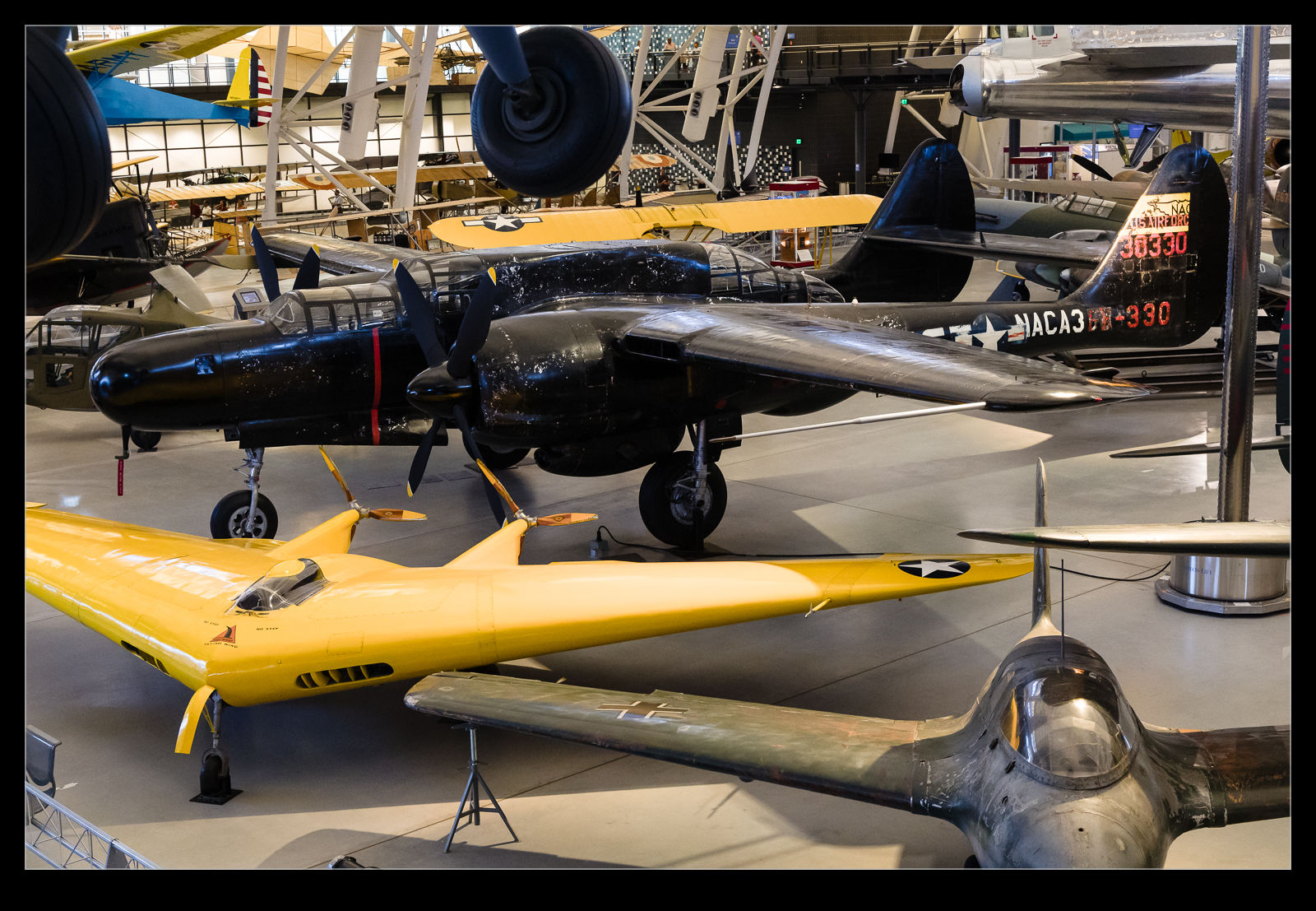
Tag Archives: NASM

The X-35B and Its Propulsion System

The F-35 is in widespread service in considerable numbers with many more to come in due course. However, before the F-35, there was the X-35 – the Lockheed Martin contender in the JSF competitive fly off. Up against the Boeing X-32, two X-35s were built. One of them was initially used to demonstrate the proposed Air Force configuration before it was modified with the vertical lift system proposed for what became the F-35B in USMC service.

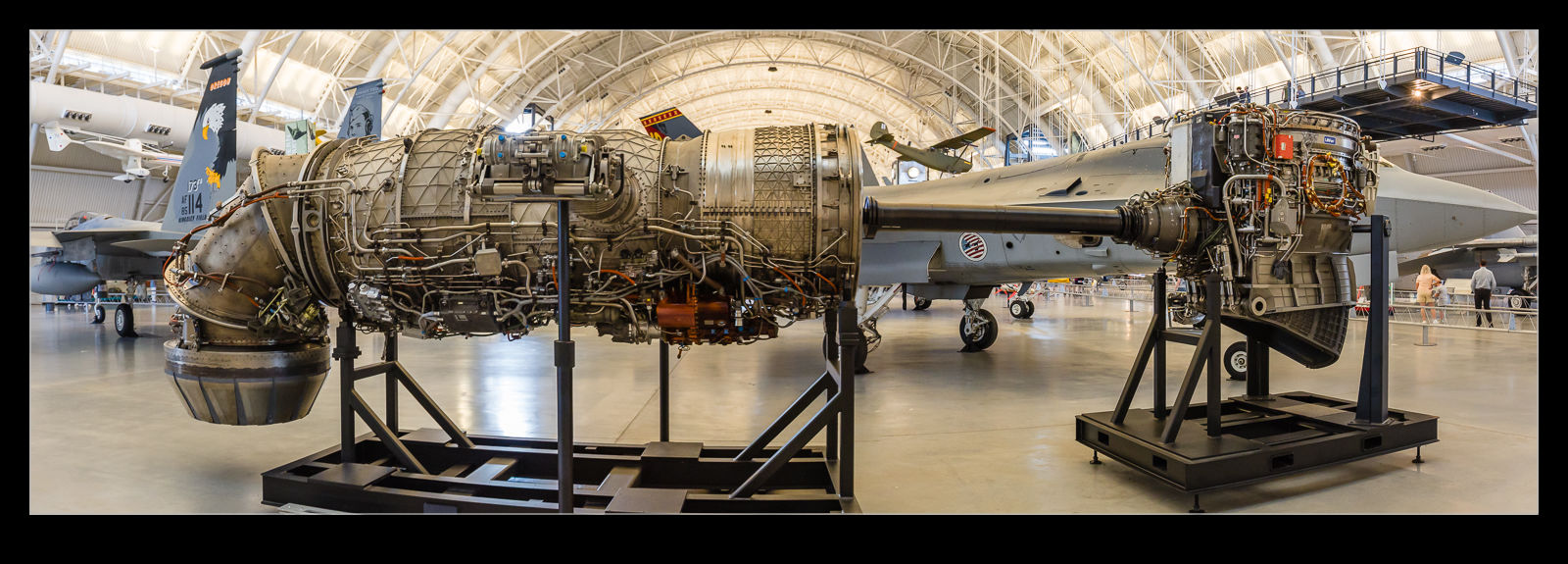
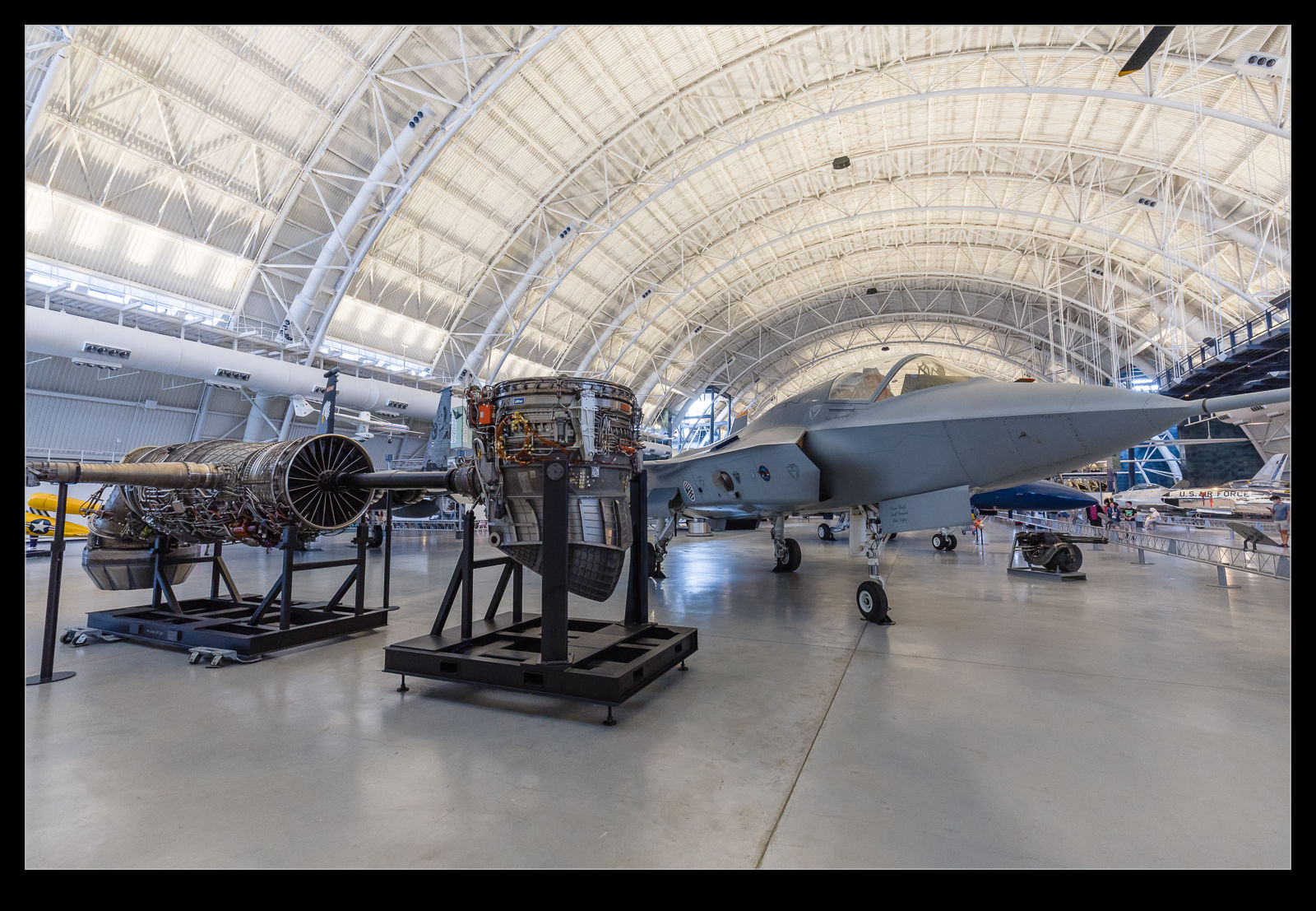
With the competition complete, the demonstrators were superfluous and the X-35B airframe made its way to the National Air and Space Museum. Here it sits on display. What is the most interesting part – at least to me – is that they have taken the propulsion system out of the jet and put it on display separately. You can see the main engine as well as the lift fan module, the shaft coupling the two, the nizzle that both have to direct the flow and the roll posts that are used to provide both additional lift and roll control in the hover.

It is a cool demonstration of the basic configuration that is now operational in the F-35B. it has certainly been developed since this design, but the basic principles remain the same. Unlike the Harrier that had the engine in the centre of gravity of the aircraft (not a very convenient location) and redirected all thrust through four nozzles, this configuration has a mighty engine at the rear which can be vectored down when required through a three bearing nozzle that is both simple and ingenious but then a shaft drive from the same engine to a fan module that sits behind the cockpit drawing air from above and directing it down with some ability to vector it too. This forward fan balances against the rear main nozzle. It provides a significantly higher amount of vertical thrust than the Harrier ever managed and allows a larger and more capable aircraft to land vertically at the end of missions. Quite a smart piece of design.

Discovery from Every Angle

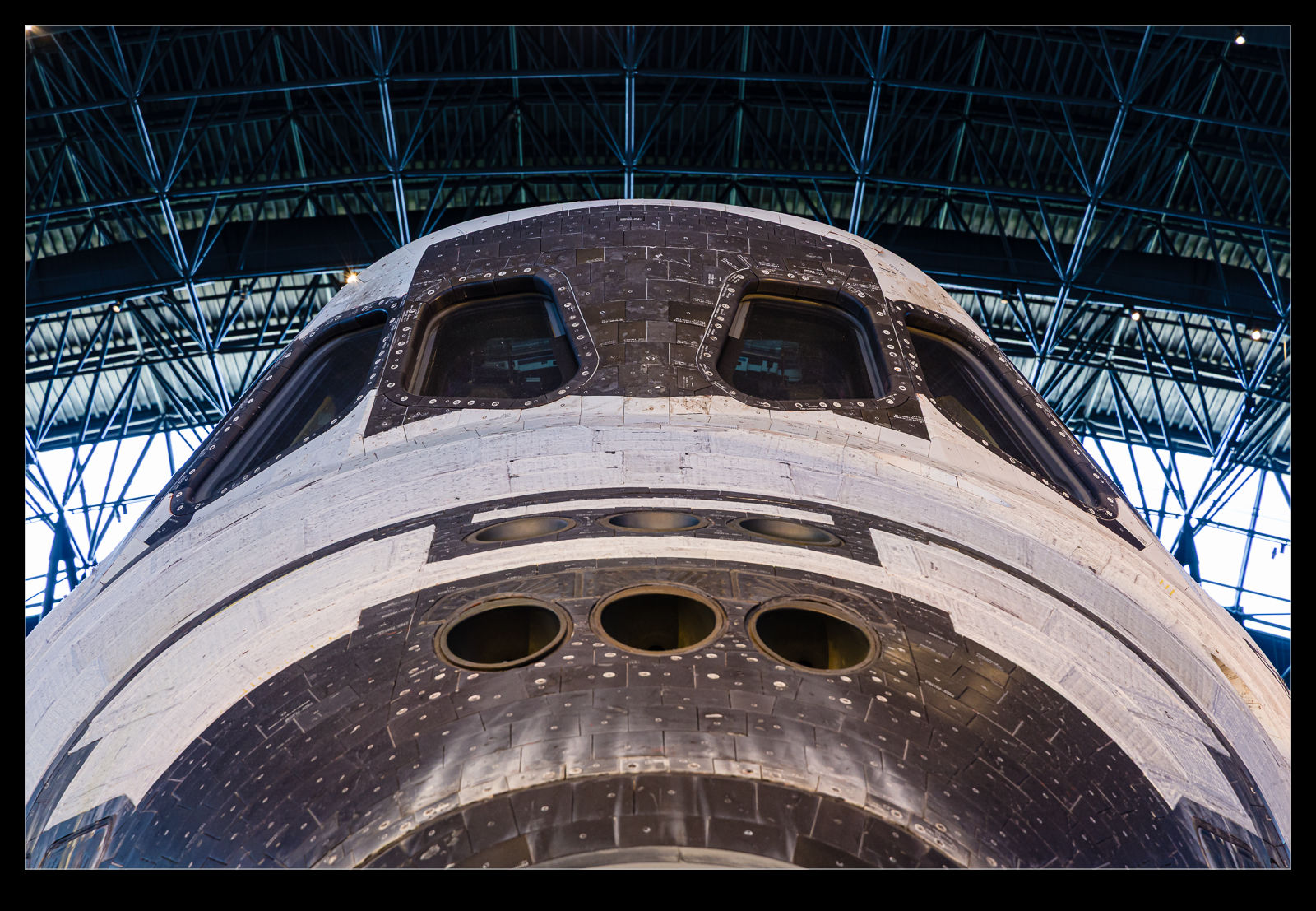
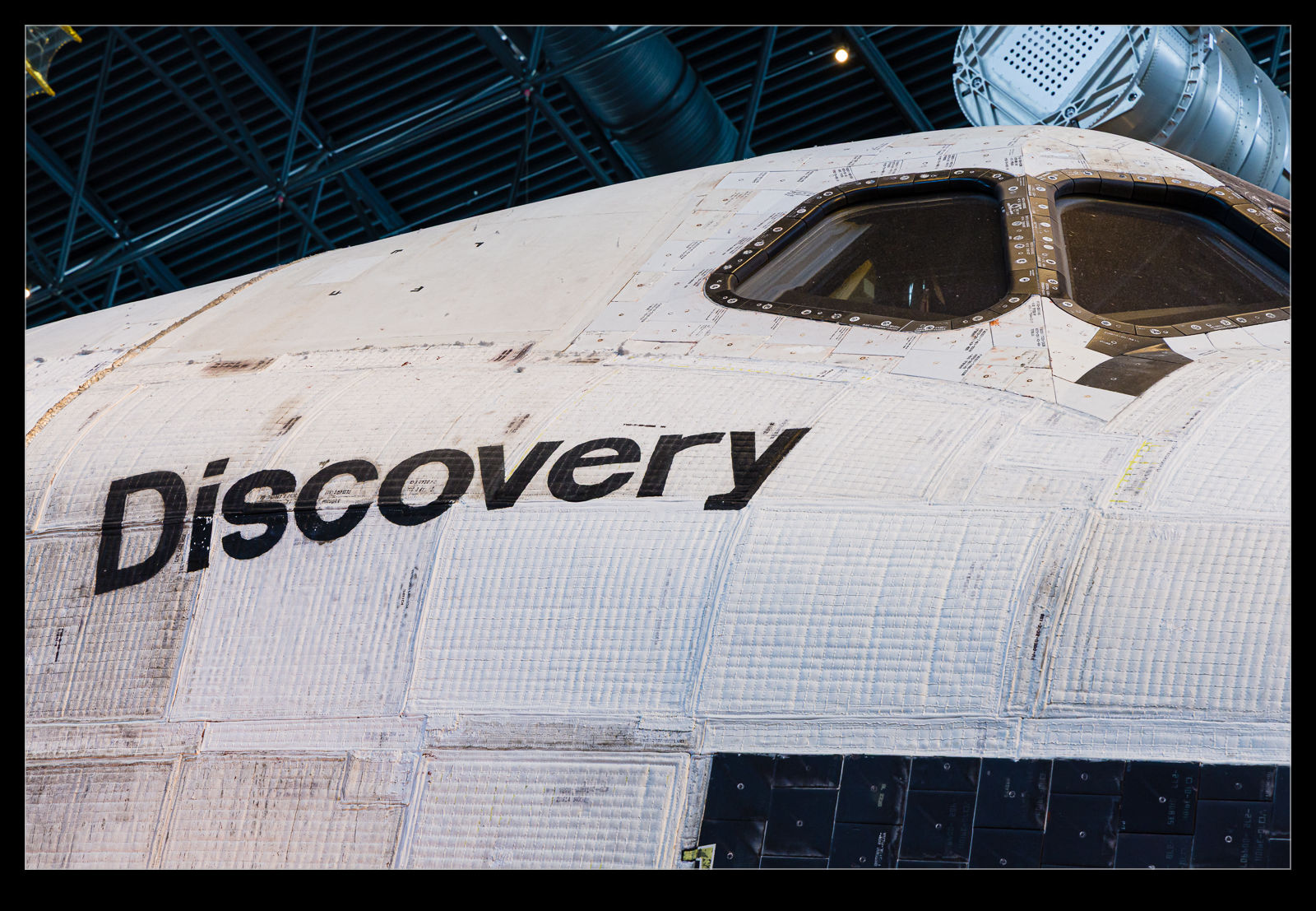
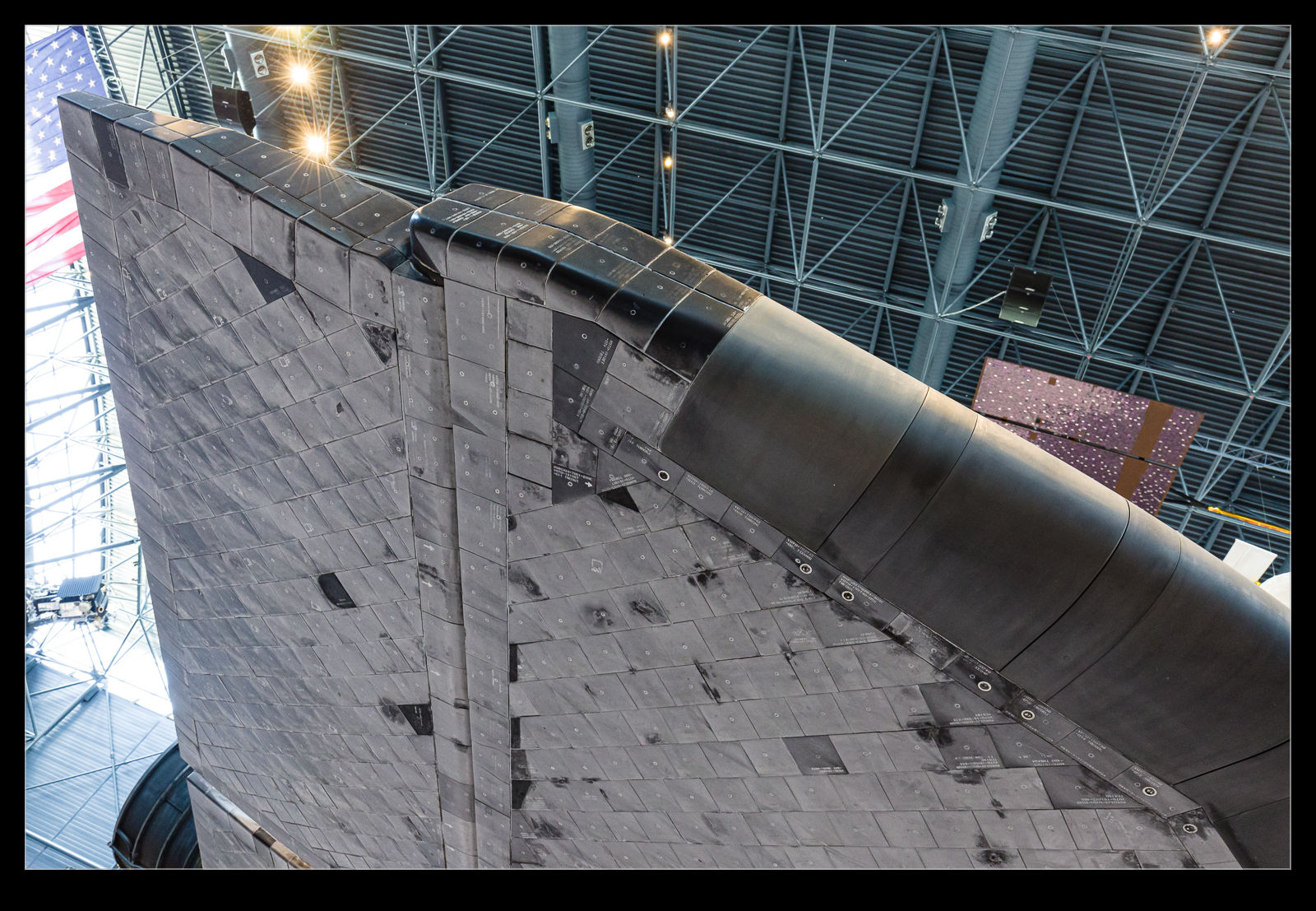
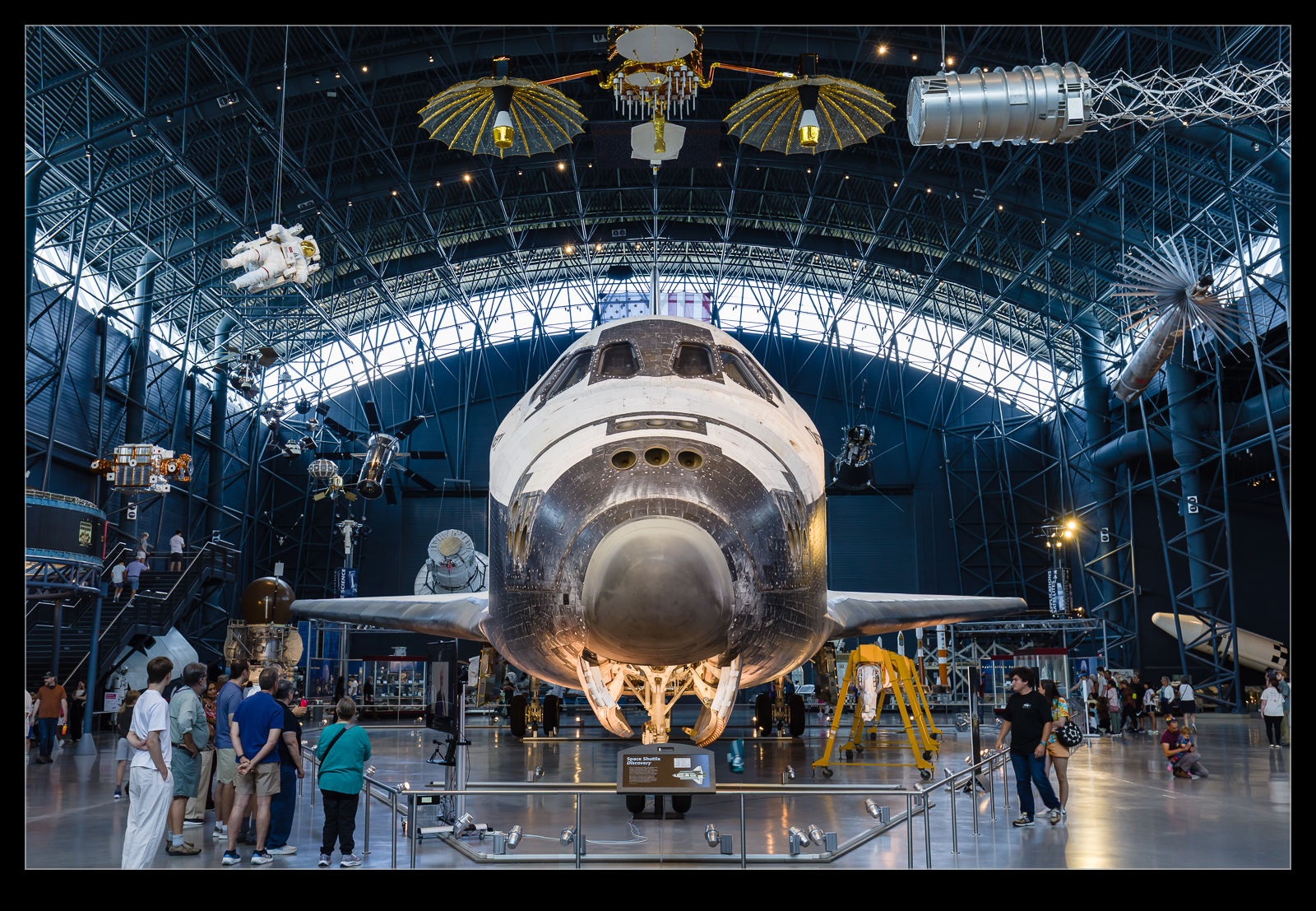
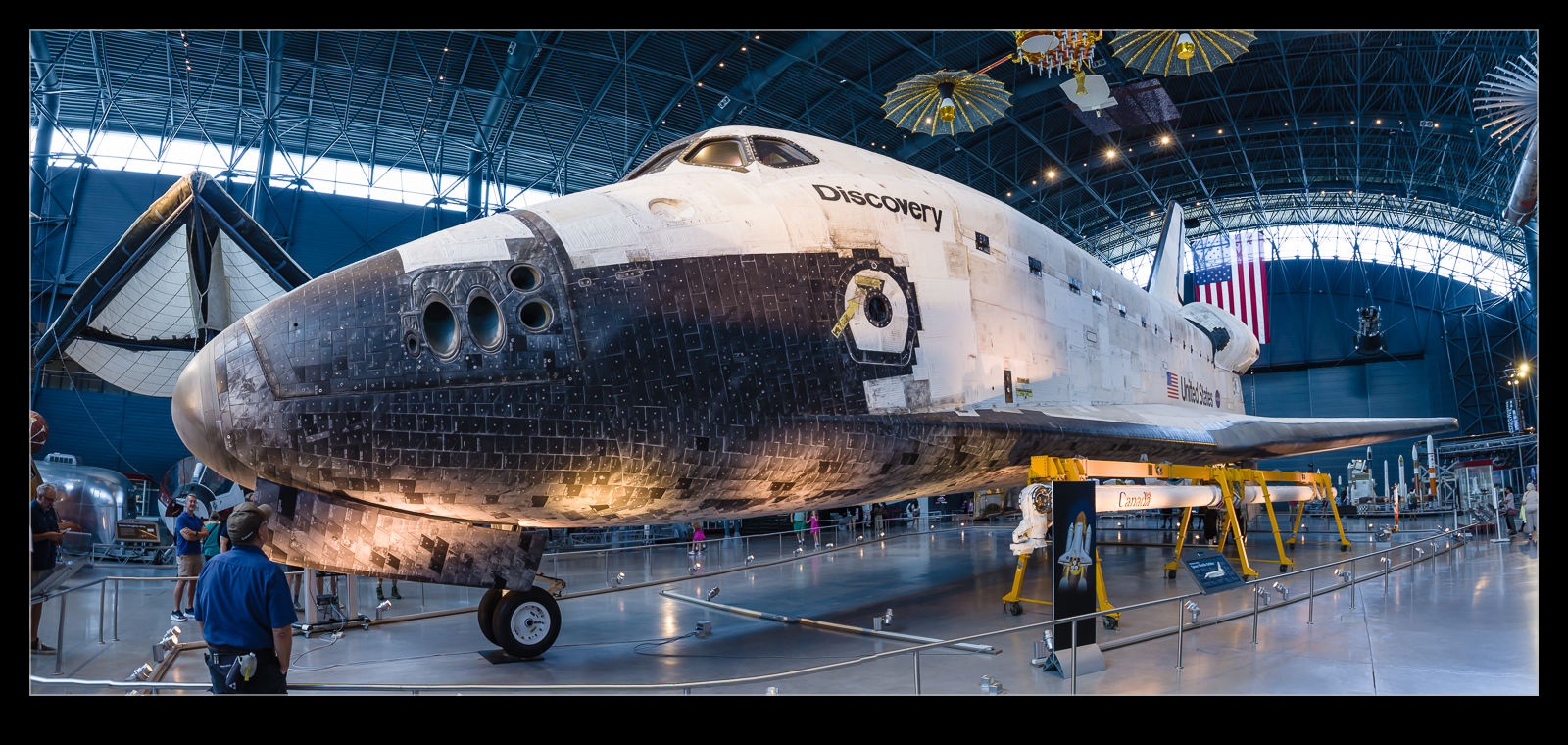
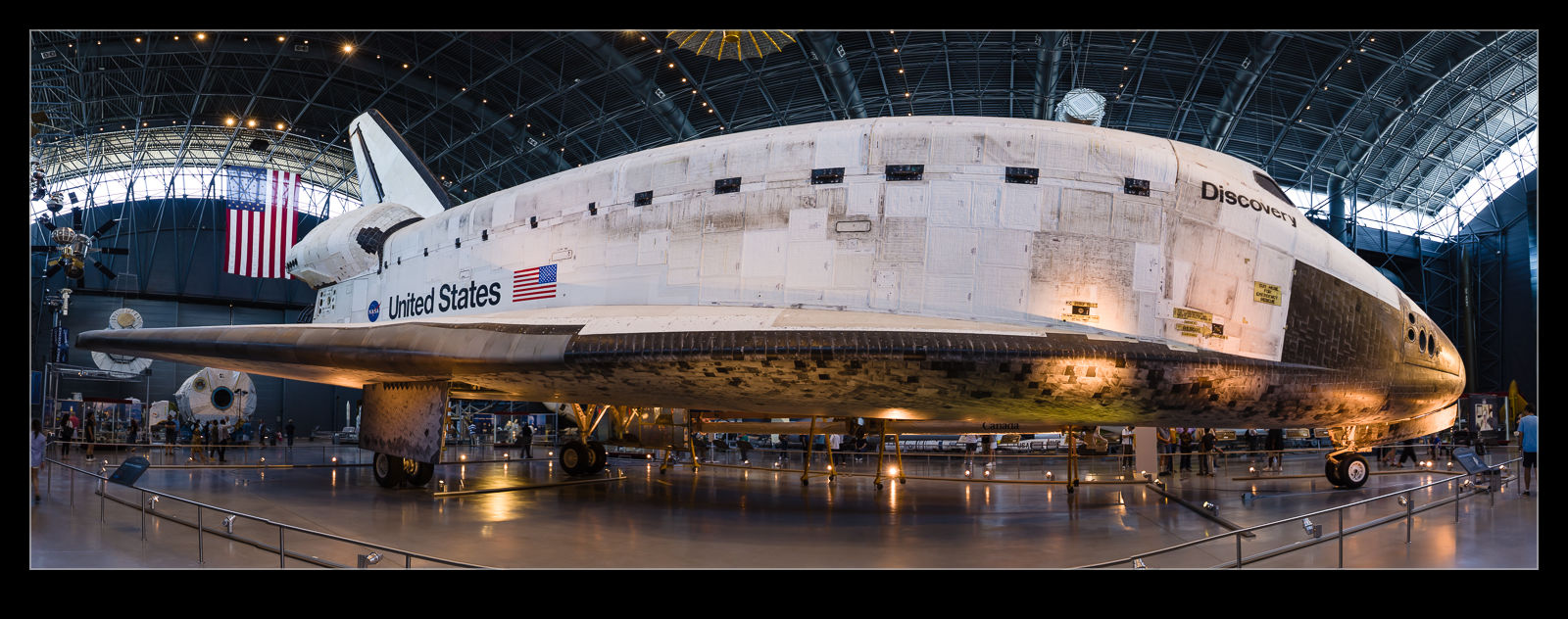
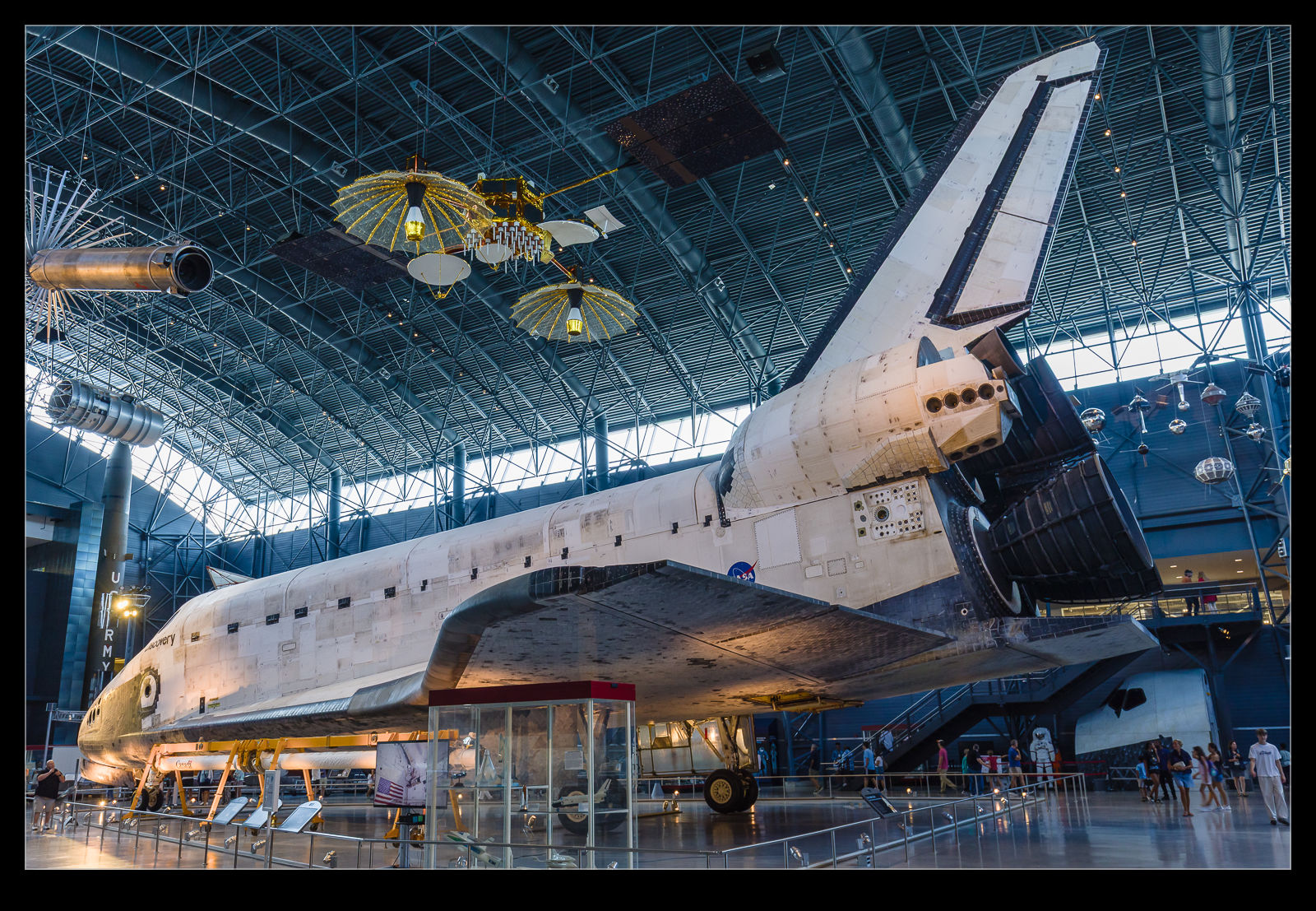
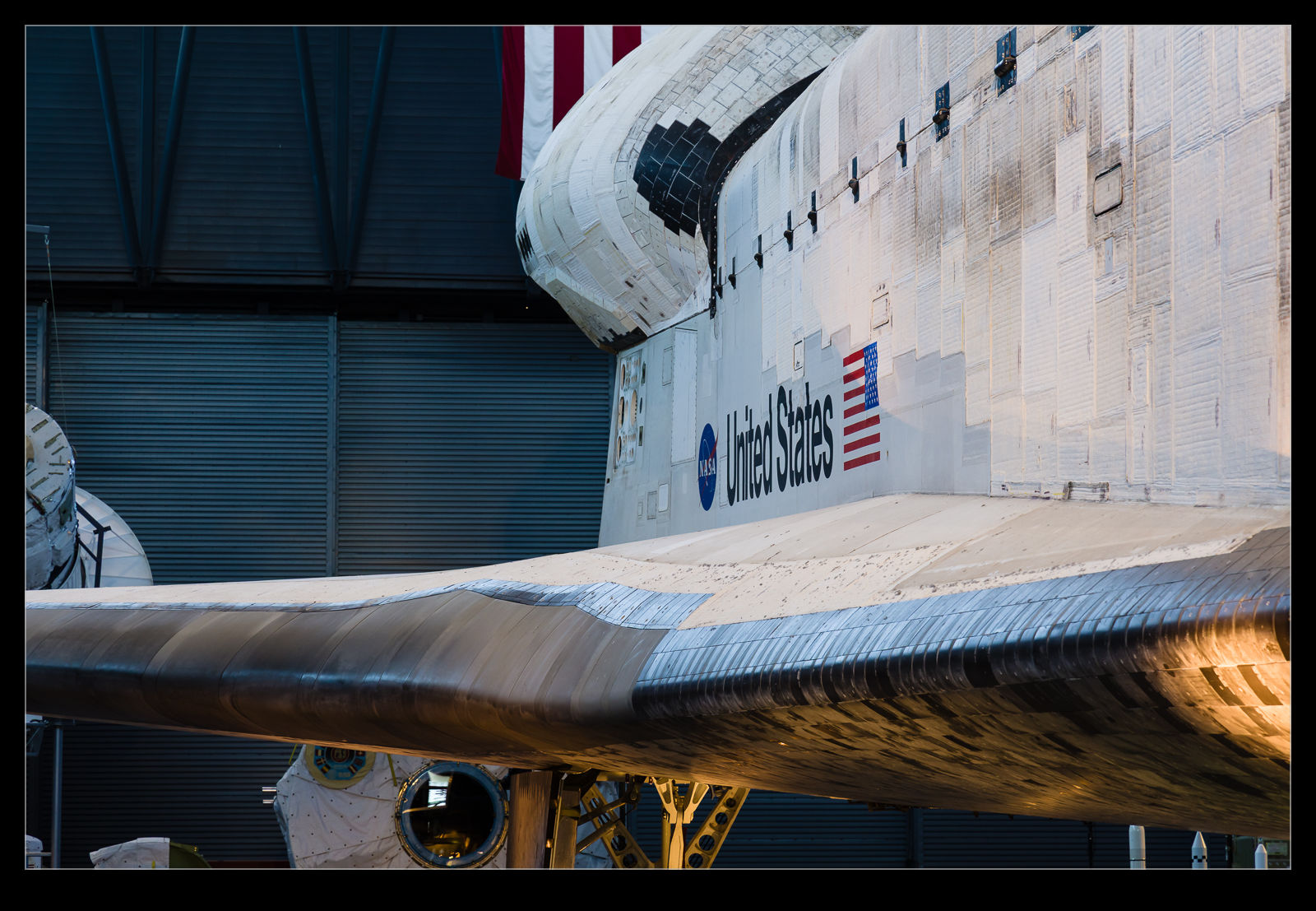
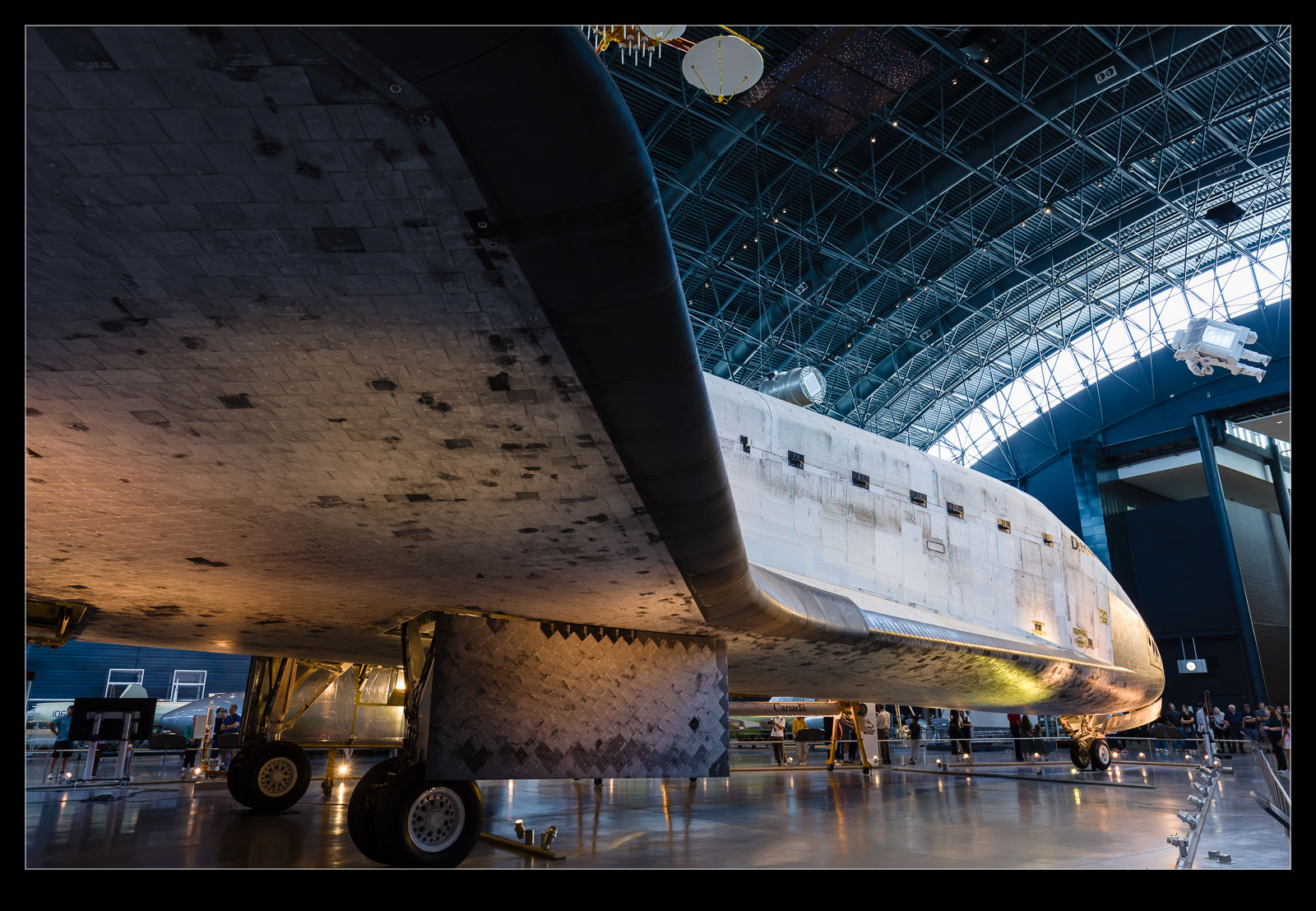
The last time I visited the Udvar-Hazy facility, it was the home of the Enterprise – the first of the Space Shuttles and the one that was used only for atmospheric testing but, despite original plans, never went to space. When the shuttle programme ended, the orbiters were distributed to museum locations and Discovery was allocated to NASM replacing Enterprise. Therefore, this time I went, it was a first time to see Discovery.

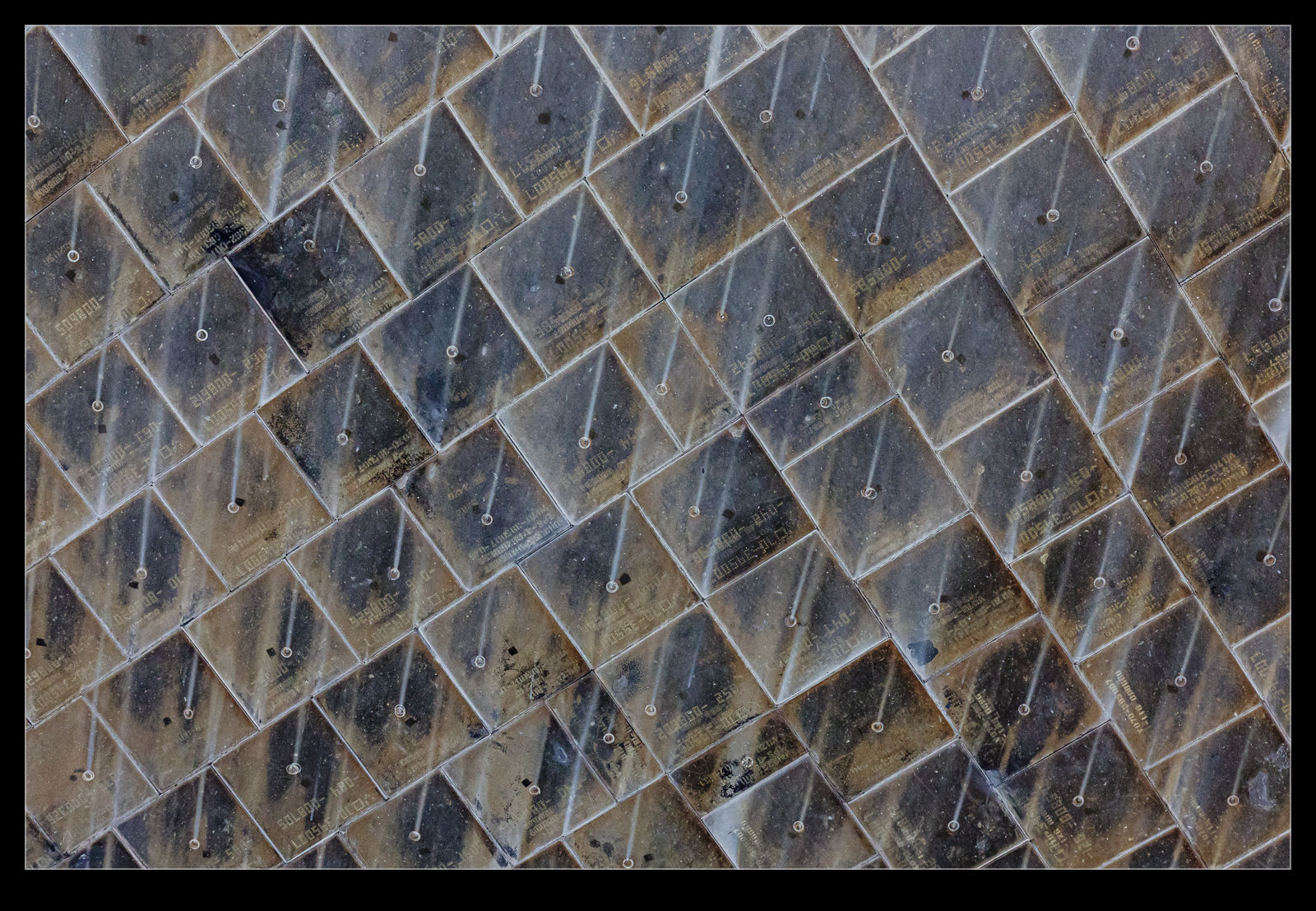
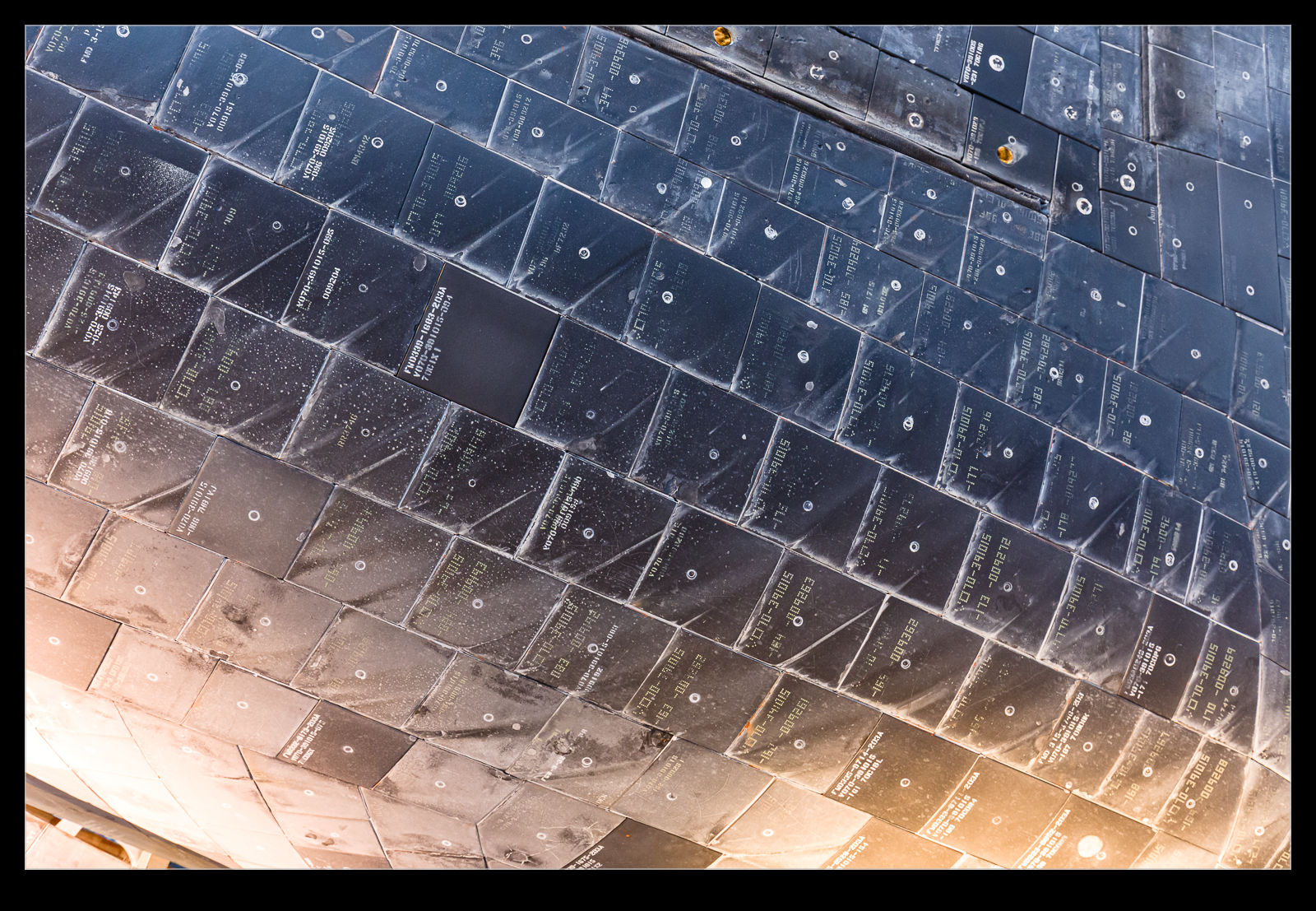
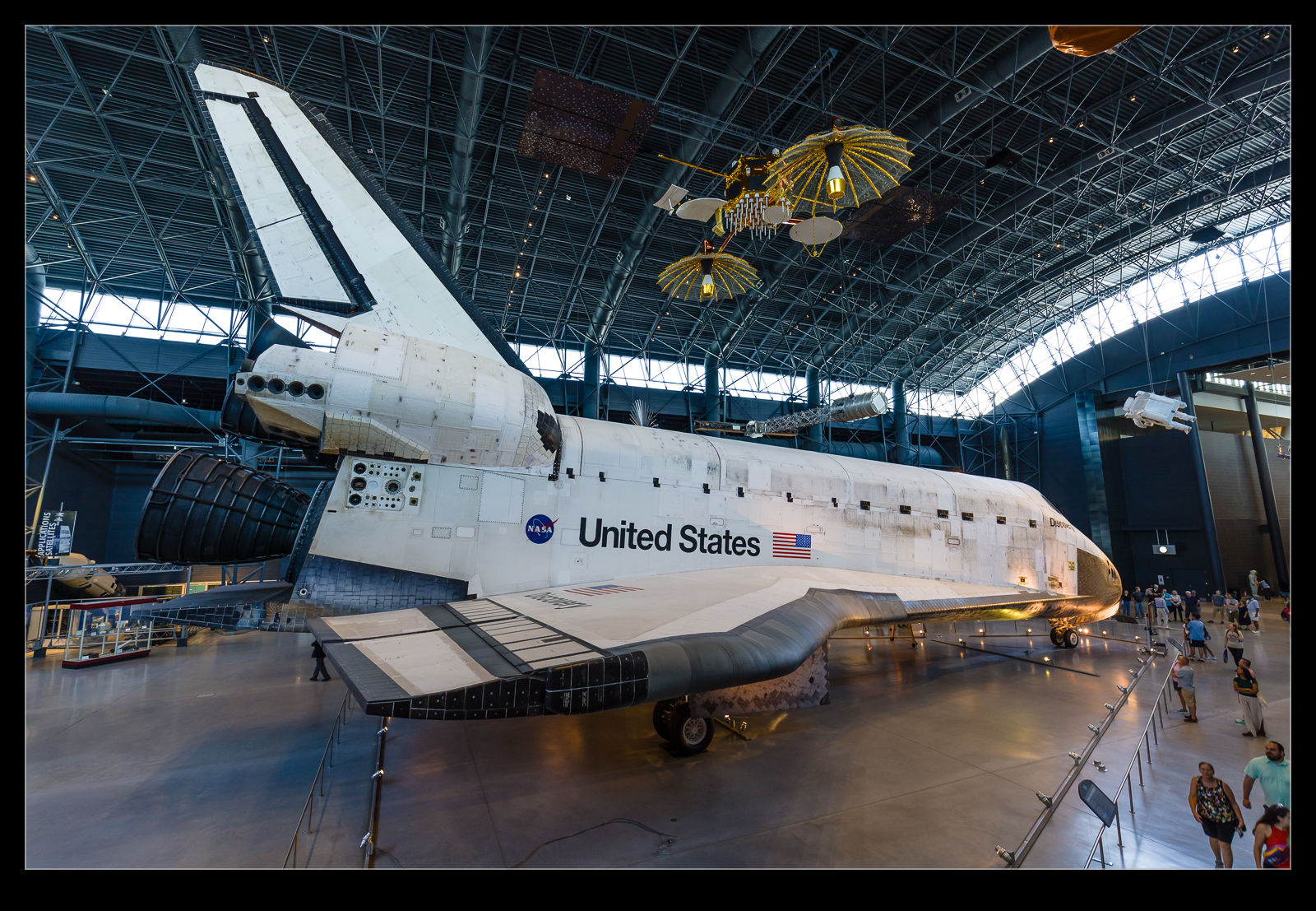
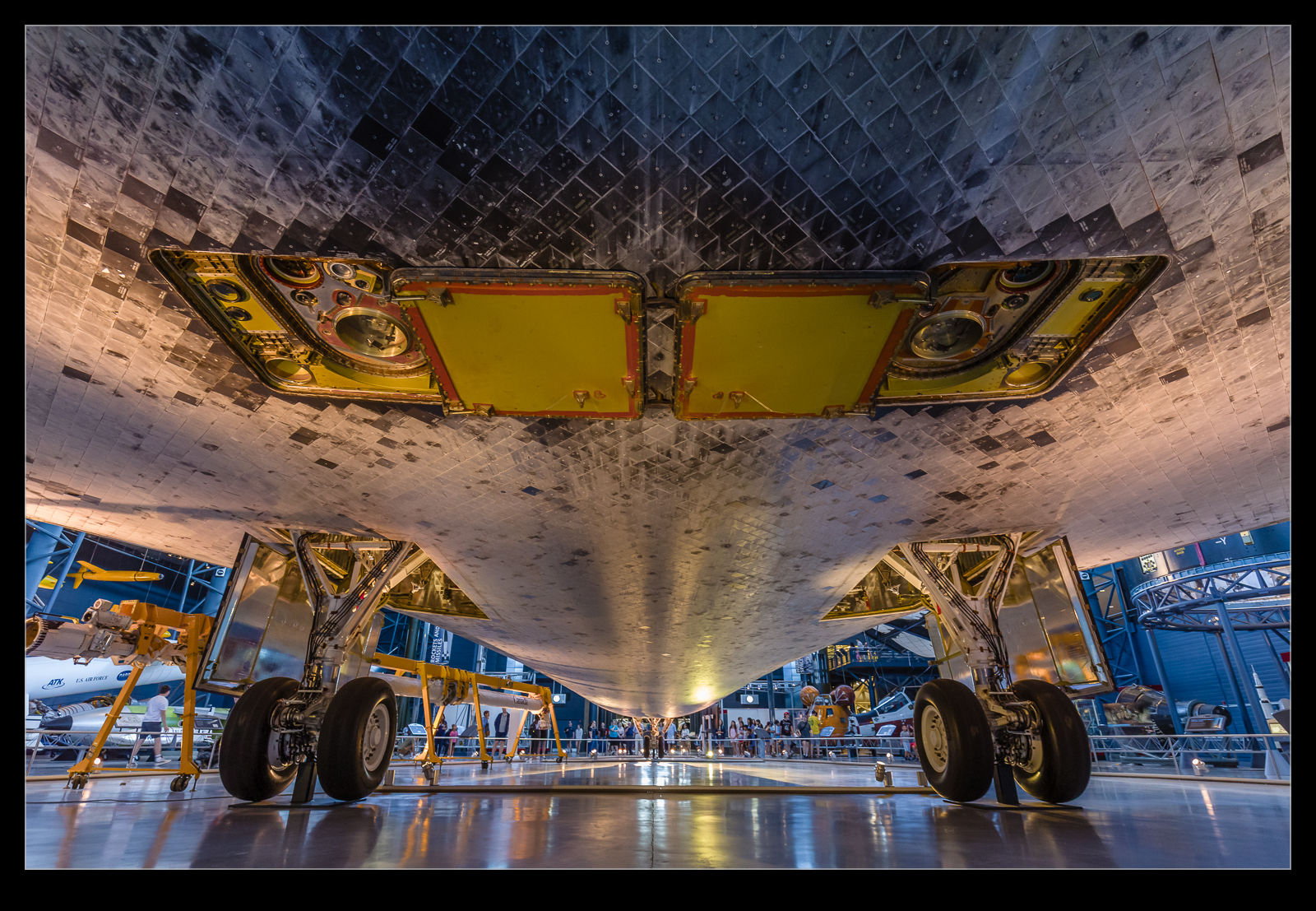
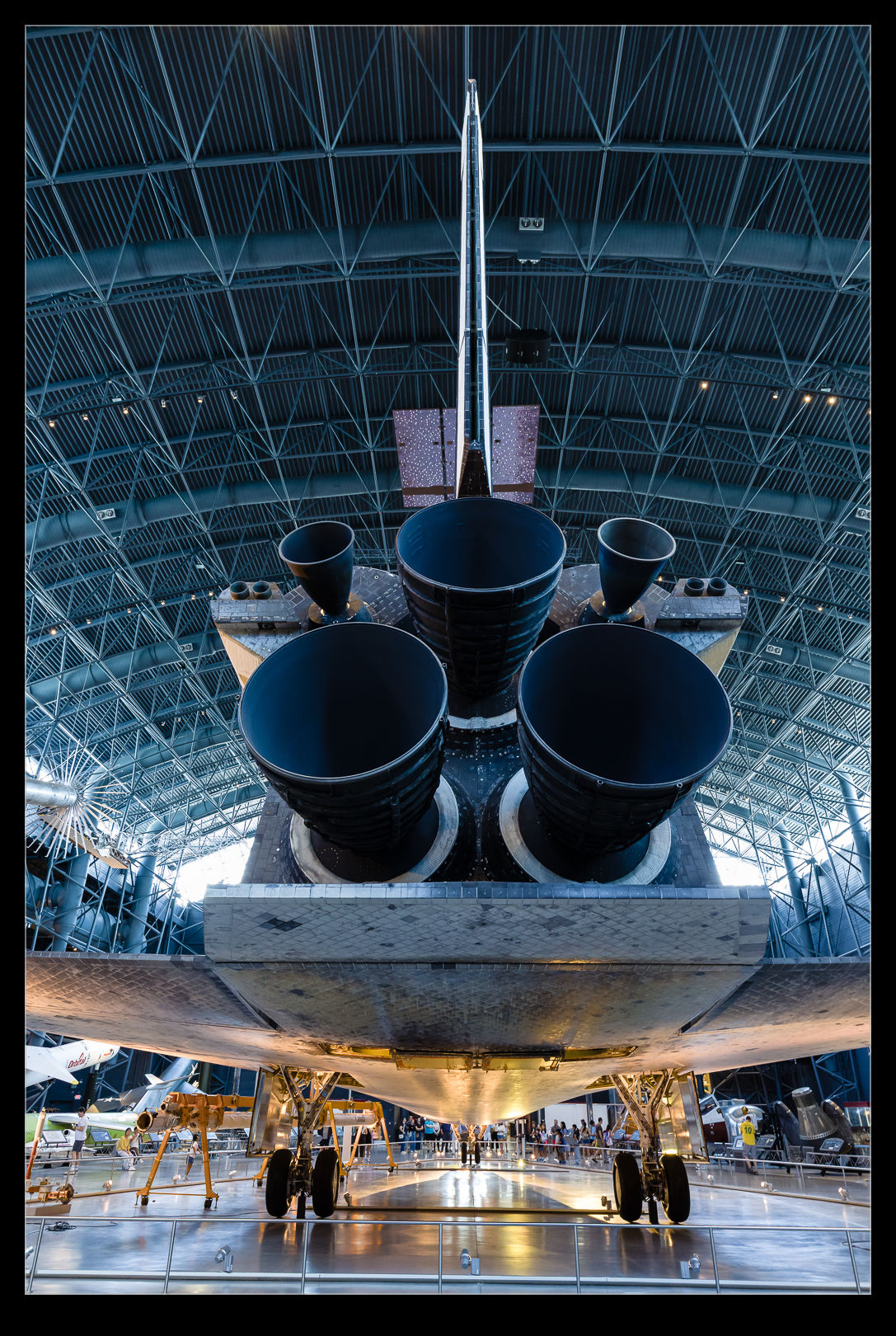
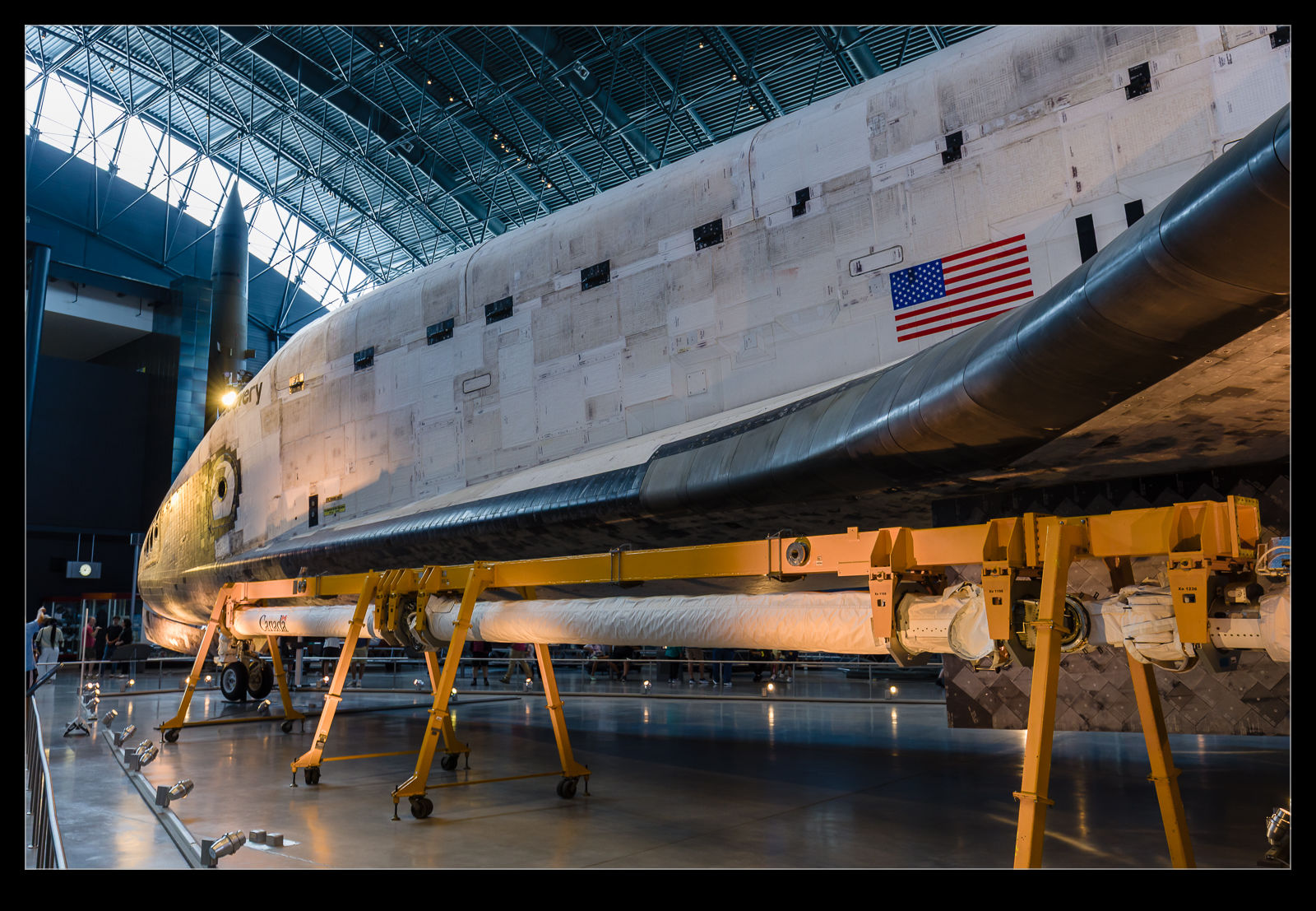
Of course, everyone visiting is interested in a shuttle so there were always people around the orbiter. I just had to embrace that and get whatever shots I could make work. There are some detail shots that I took which I will deal with separately. They have more of an abstract feel to them. Here I shall just focus on the wider view of the orbiter.

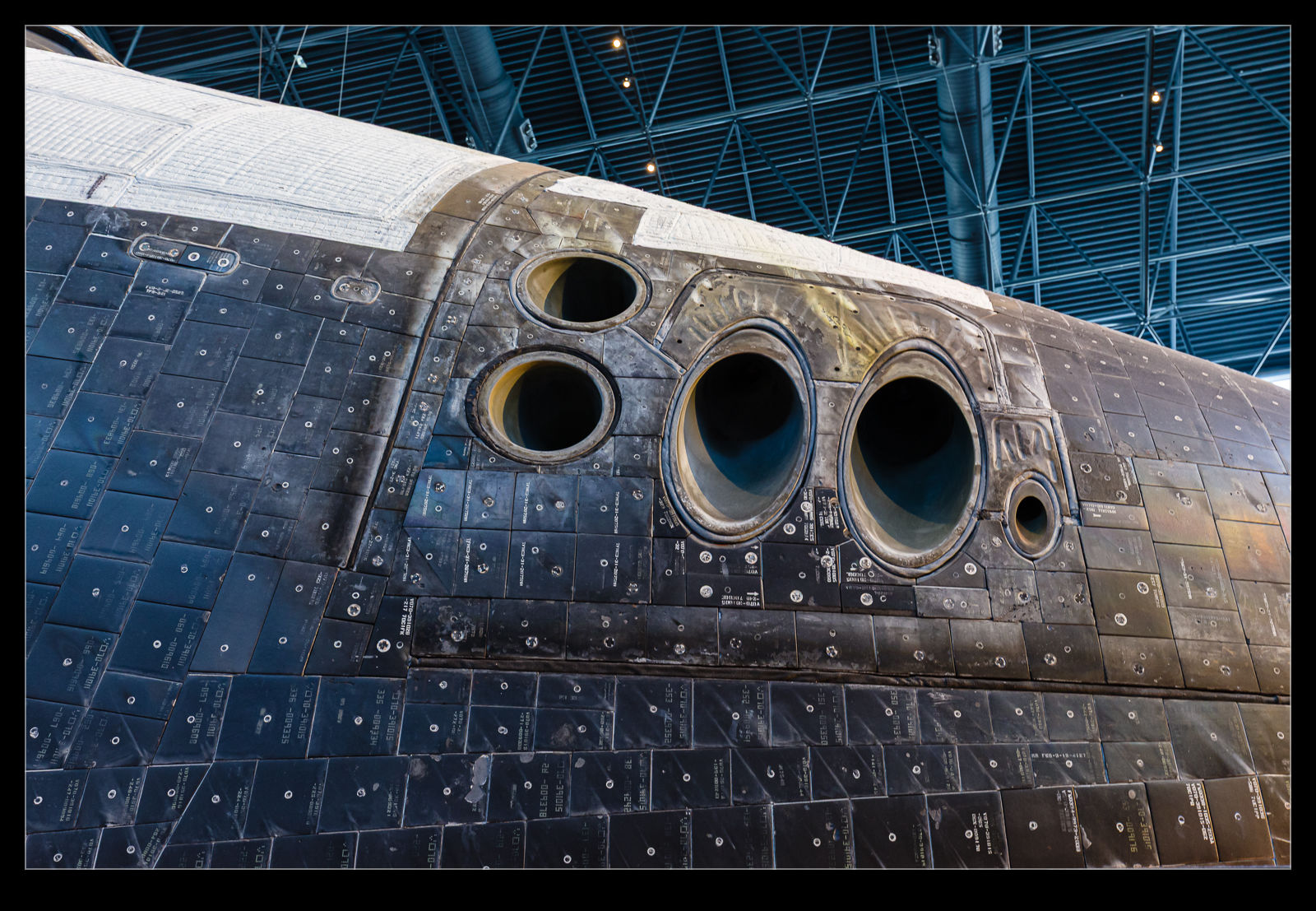
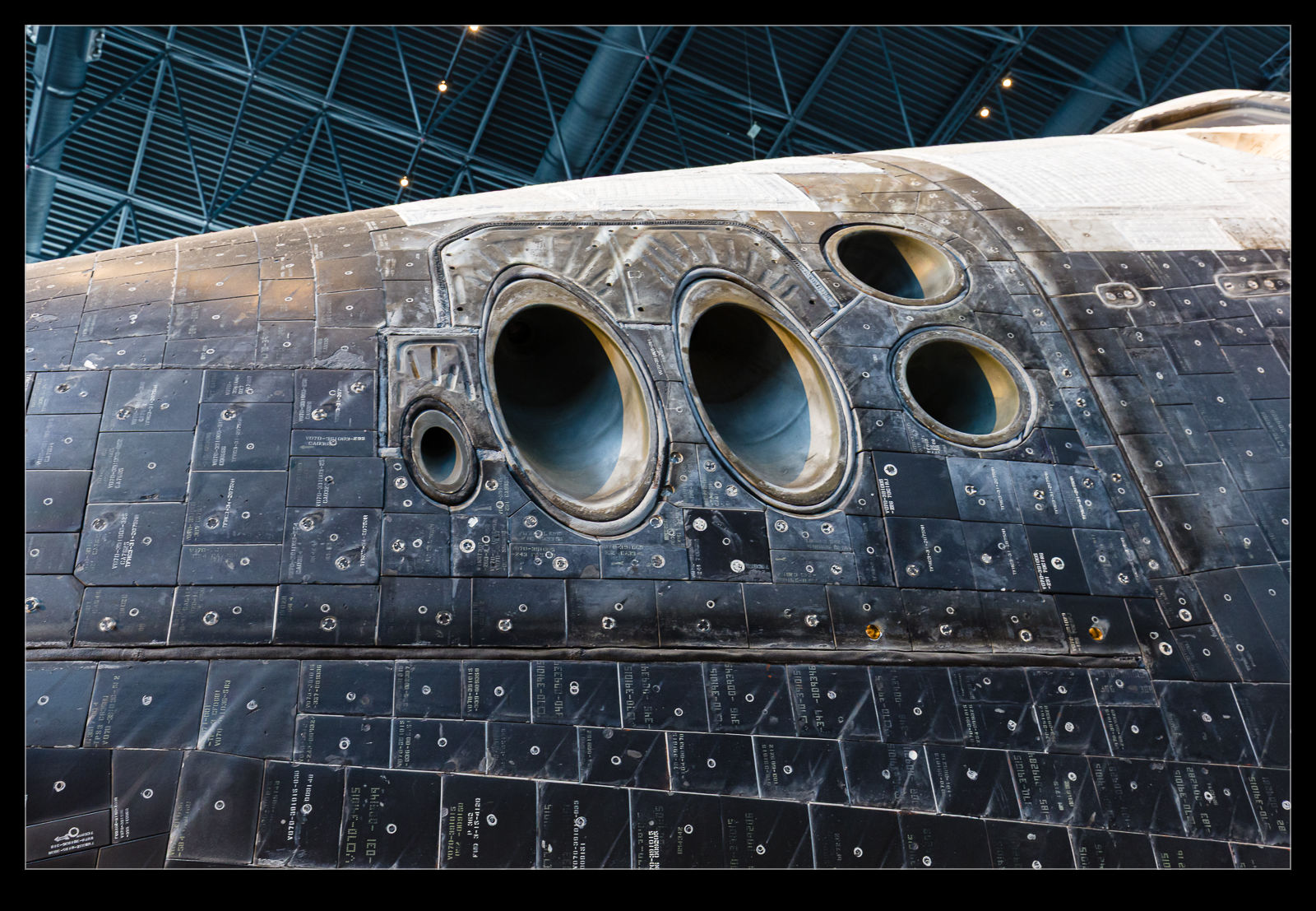
As something that was designed to travel at such high Mach numbers, it is actually quite a blunt airframe. The nose has a chunky look to it and the leading edges are very thick. The lines of the wings are interesting and the underside is simple. However, the way it is displayed has the undercarriage extended and the ports that fed fuel from the external tank into the three main engines are opened up.

There is a balcony that overlooks the space hall where Discovery sits. This allows you to get a more level view and one from a distance that takes everything in while not being blocked by people or exhibits in front. I did also take some panoramas from down on the ground level. Being that close to the airframe that big makes for a quite distorted view. I find that rather interesting.

I have now seen three of the flying shuttles. Discovery on this visit, Endeavour as it was being completed in the museum in Los Angeles and Atlantis when it flew to space. Columbia and Challenger are gone, of course. Enterprise completes the set.

Opportunistic Trip to Udvar-Hazy Center

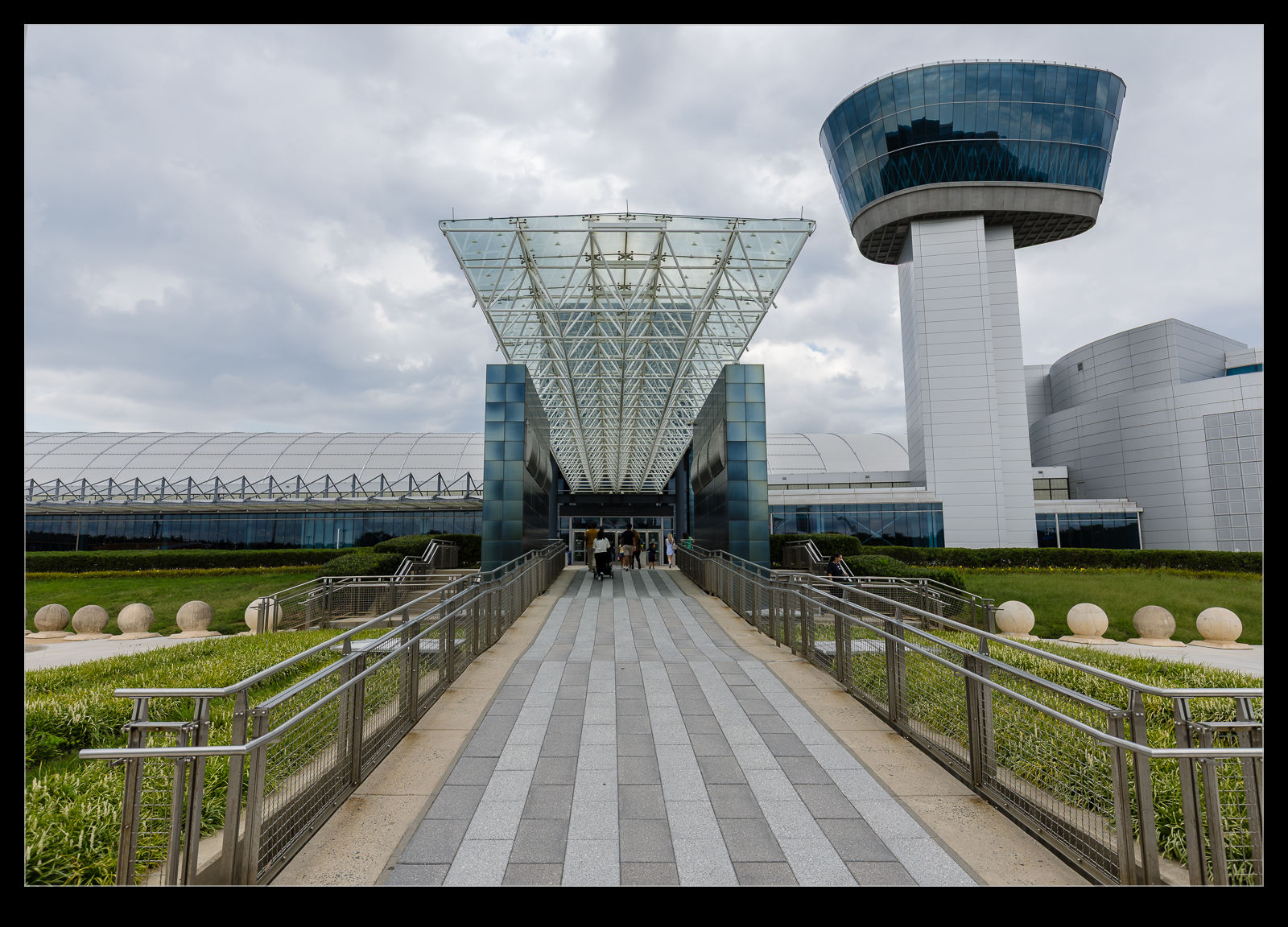
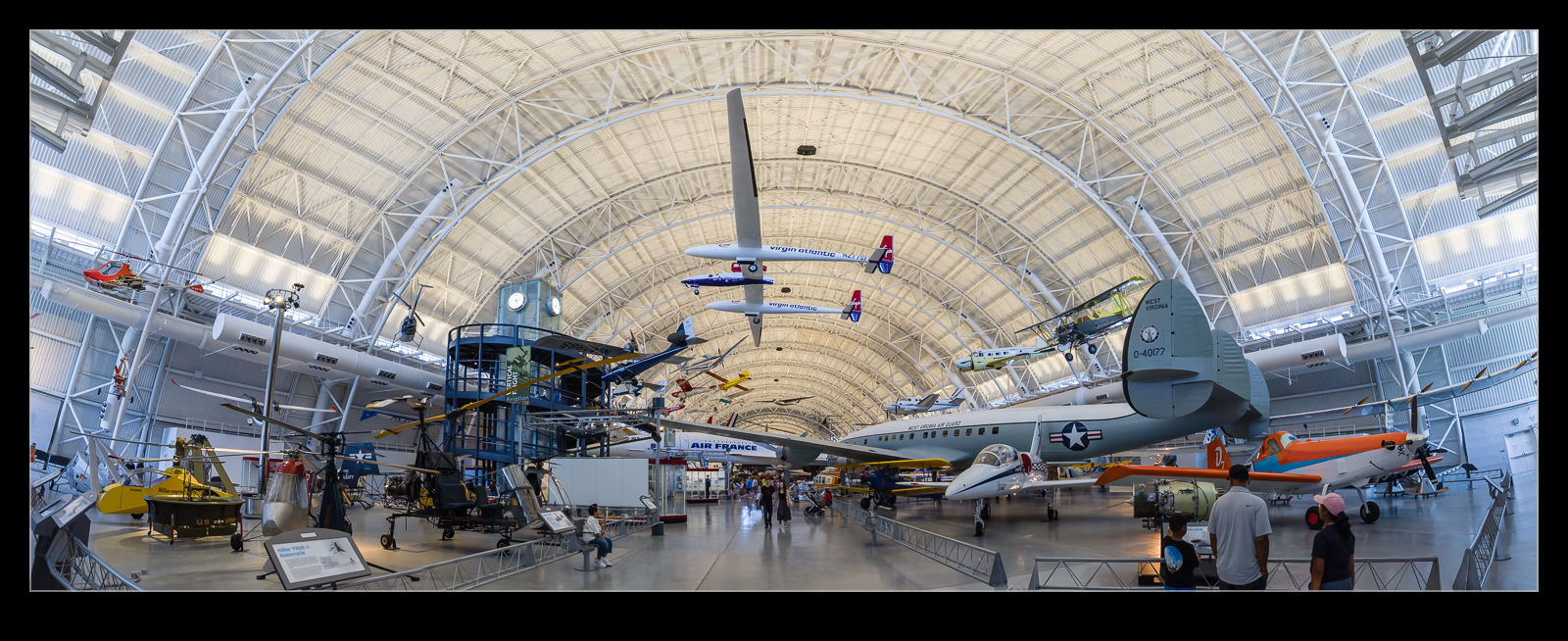
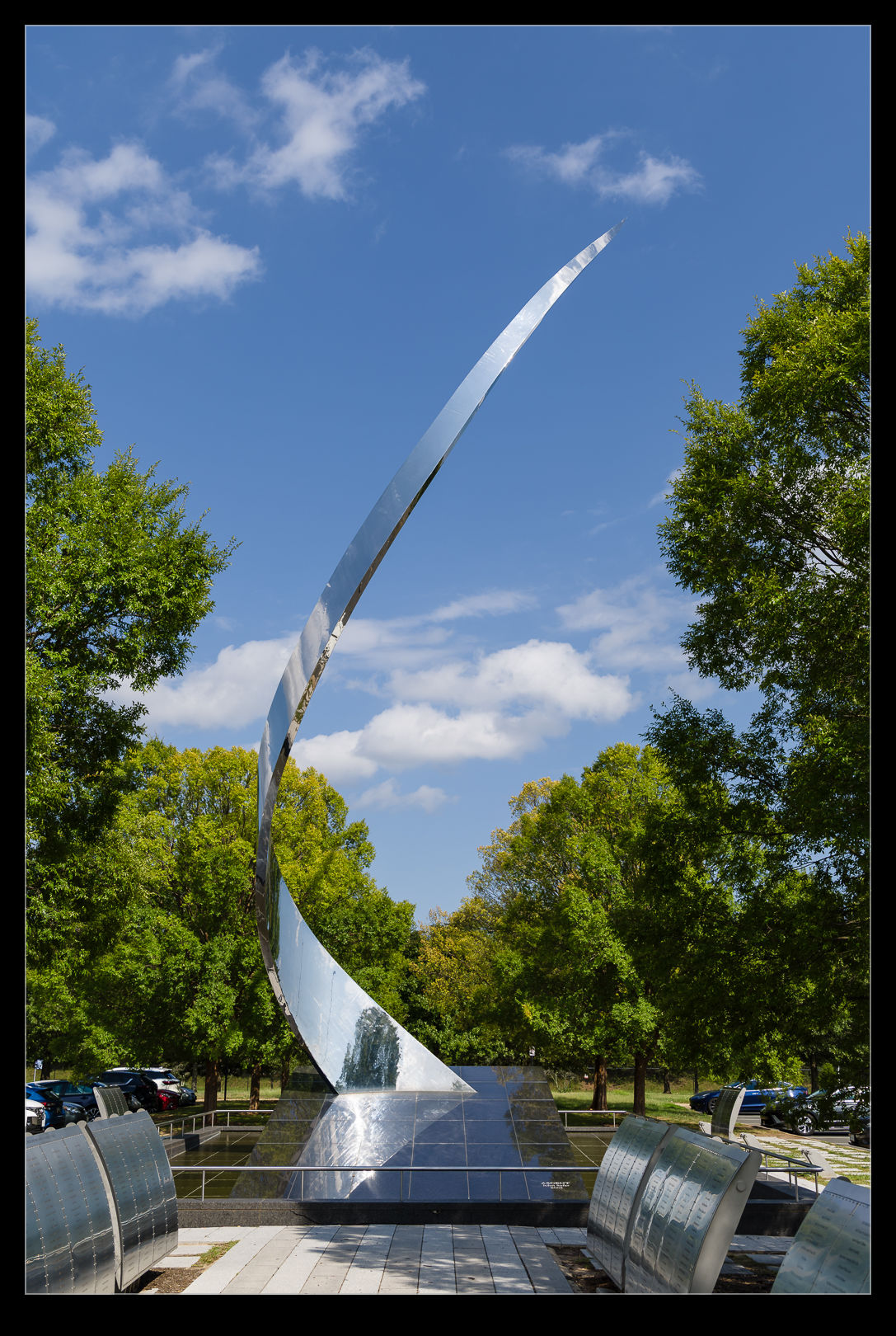
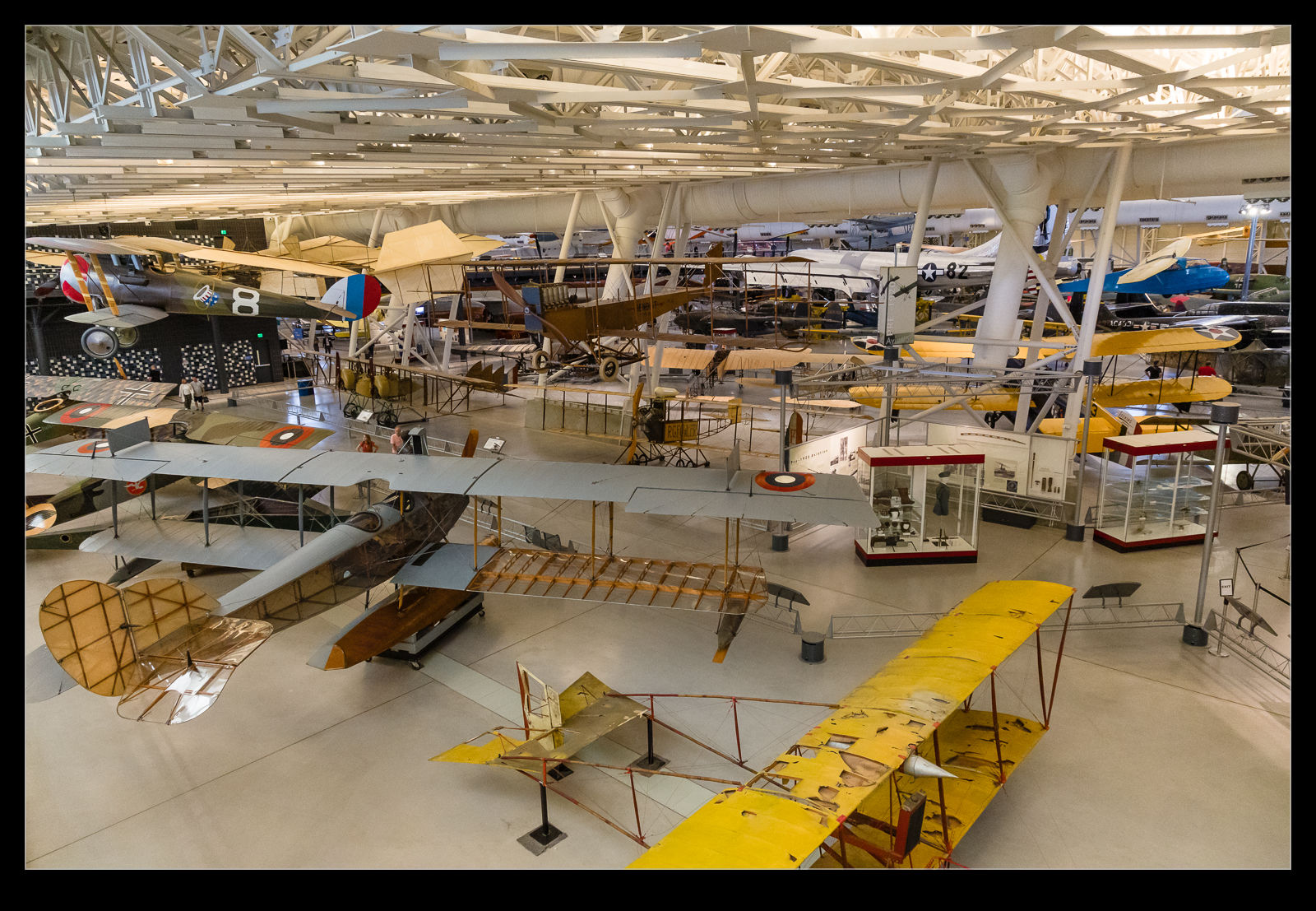
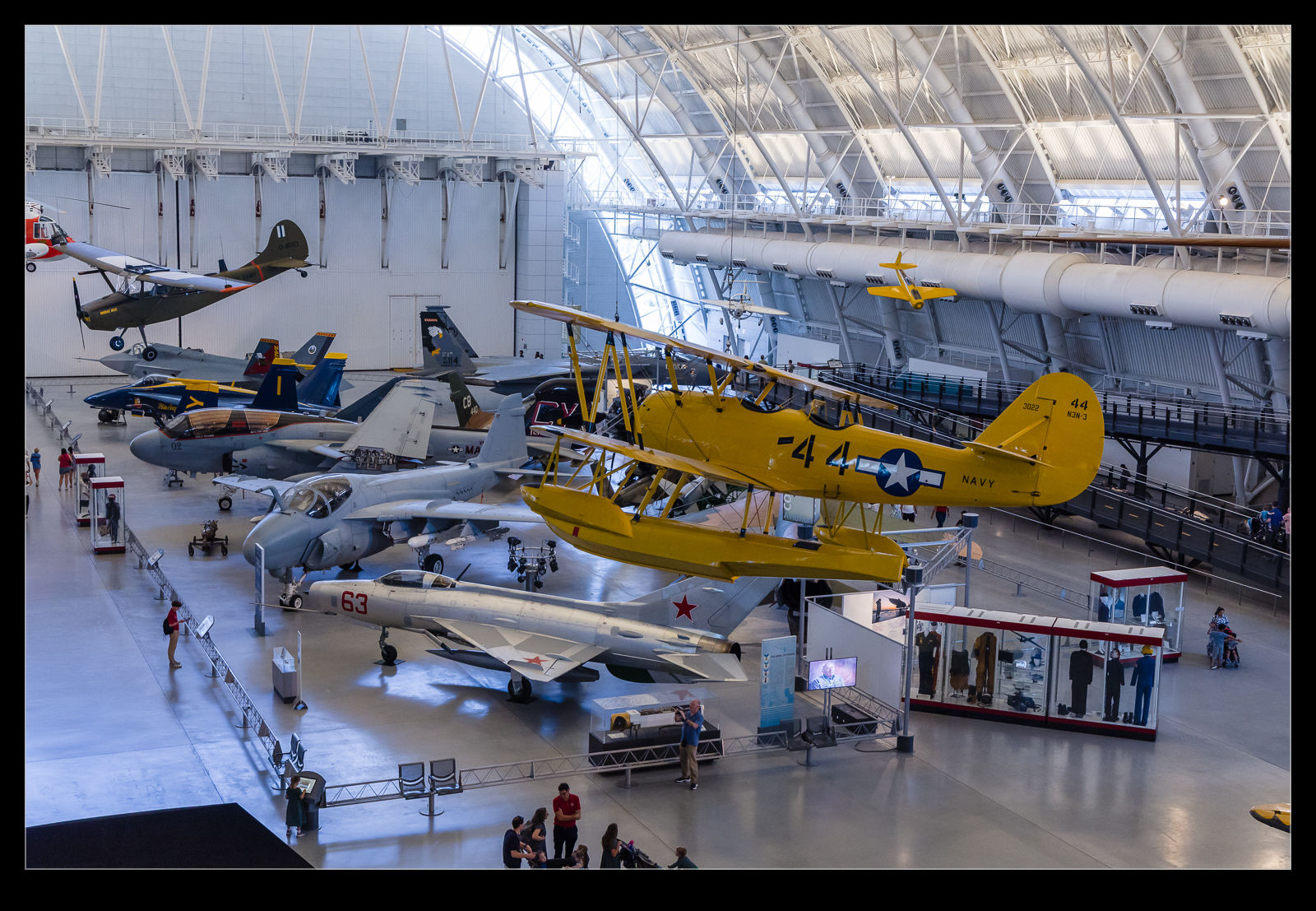
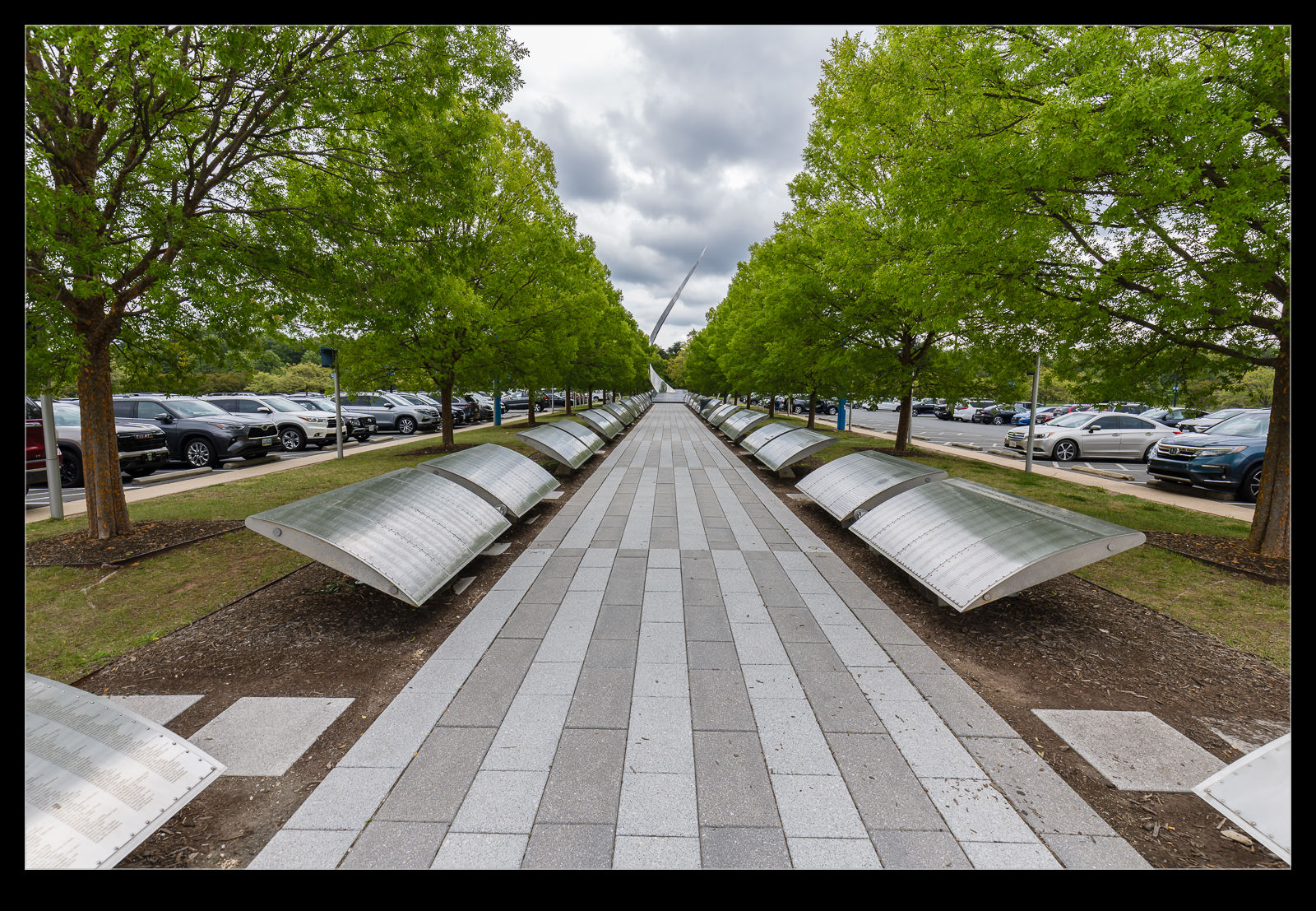
We had a quick trip that we made to Northern Virginia for a family wedding. We were only in the area for a few days before heading back to the UK. Since we had an overnight flight back, we needed to head to the airport in the late afternoon. Since we were checking out of the hotel and going to the airport, it provided a little spare time to swing by the National Air and Space Museum’s Steven Udvar-Hazy facility which is located on the south end of Dulles Airport.

I have been to Udvar-Hazy once before but that was a long time ago and I was looking forward to seeing some of the exhibits again and also seeing what had changed. There was still a lot of empty space when I had gone before but I was expecting things to have filled up a bit in the meantime. This was indeed the case.

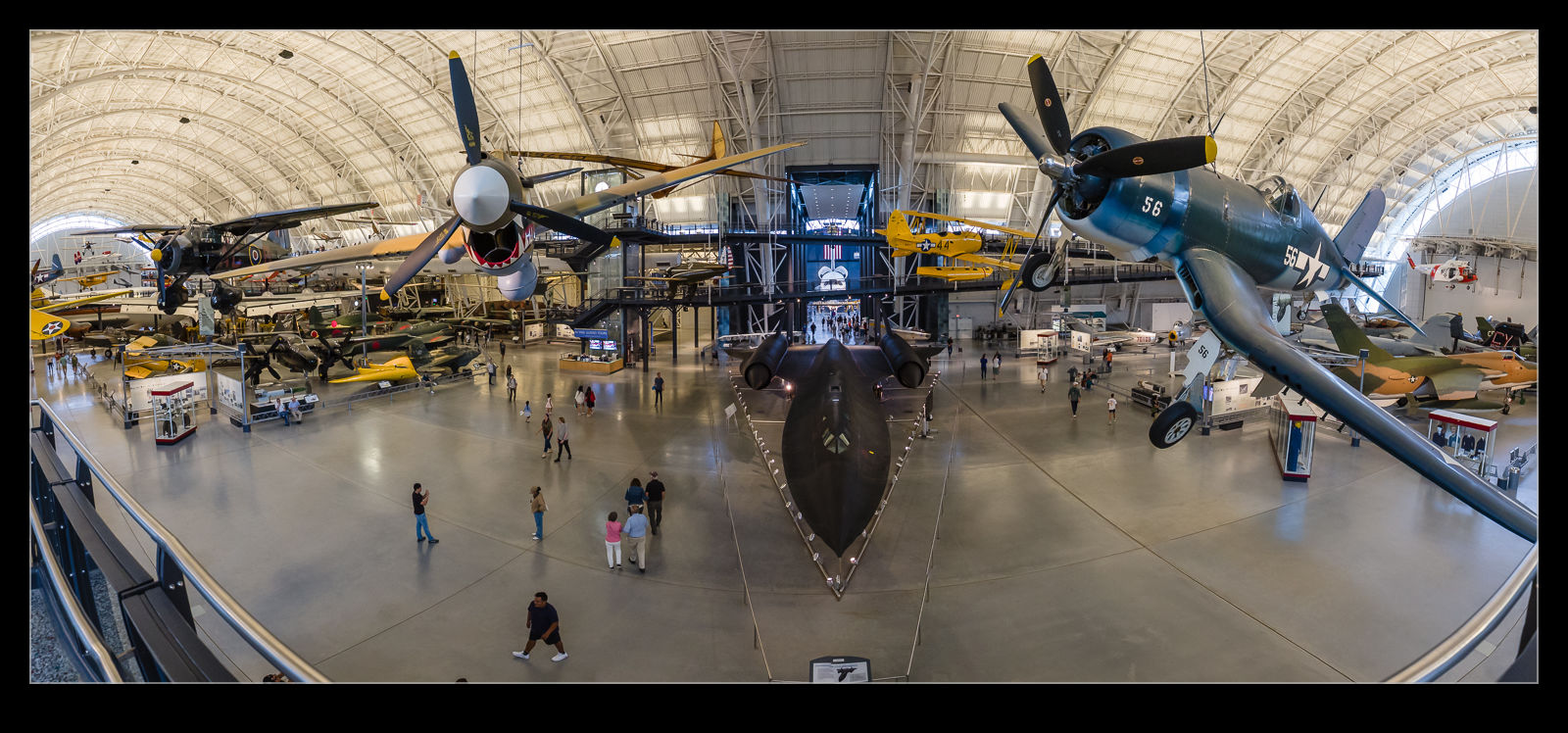
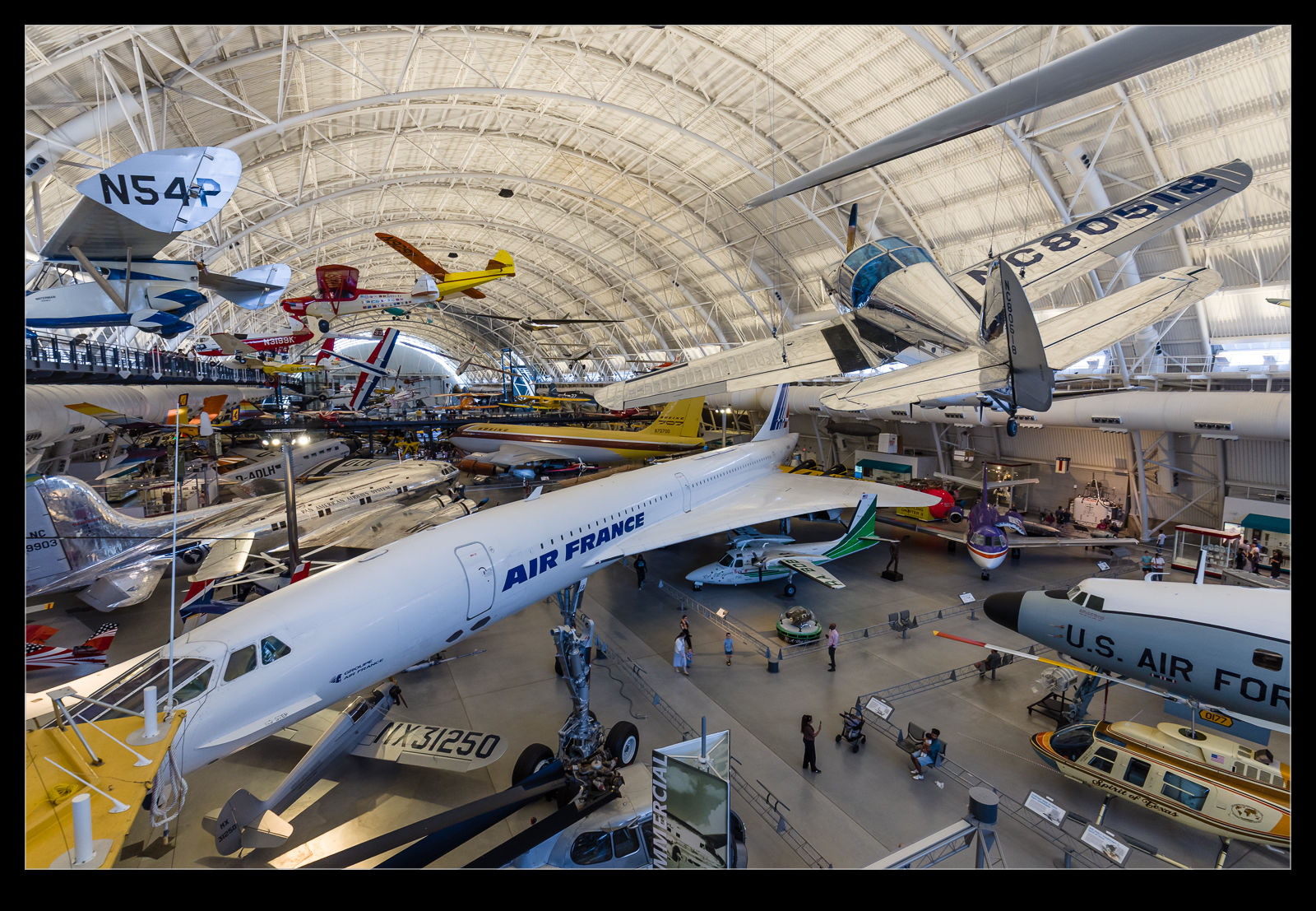
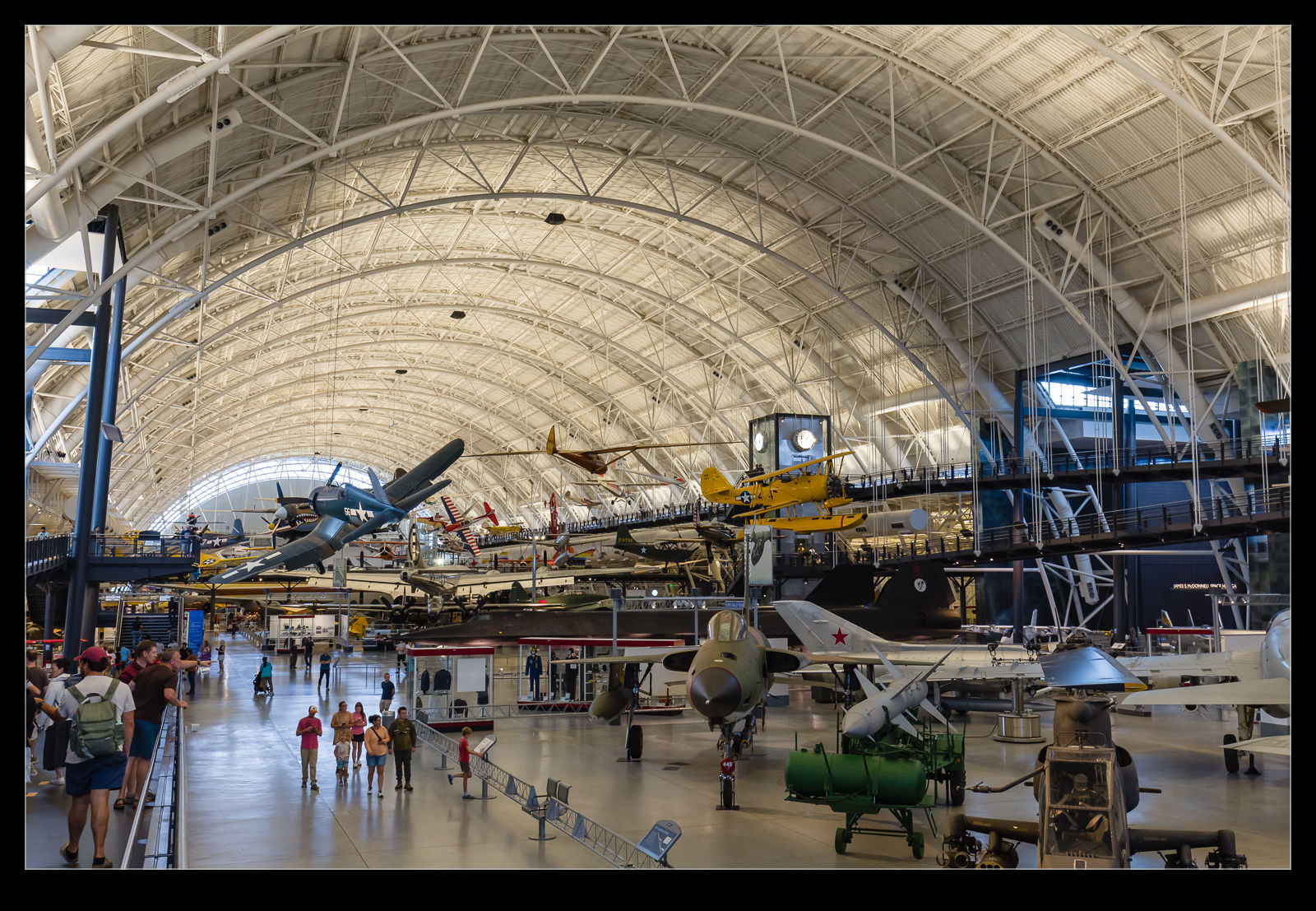
There is so much to see at this place, one post is not even going to scratch the surface. There will be a string of individual posts about specific exhibits that will come in the weeks to come. This is more a quick overview of what we saw. The time we had there wasn’t enough to do everything that was available. Putting aside the IMax theatre which would only have been something to do if I had been there for a full day, there is the tower that they have which overlooks the airport. No time to get to that.

We didn’t have time to go to the café, and the shop was a quick pass but was also abandoned. The later parts of the exhibits were a really rapid run. I didn’t even get to fully explore the elevated walkways. We were there for a while, but it still wasn’t enough.
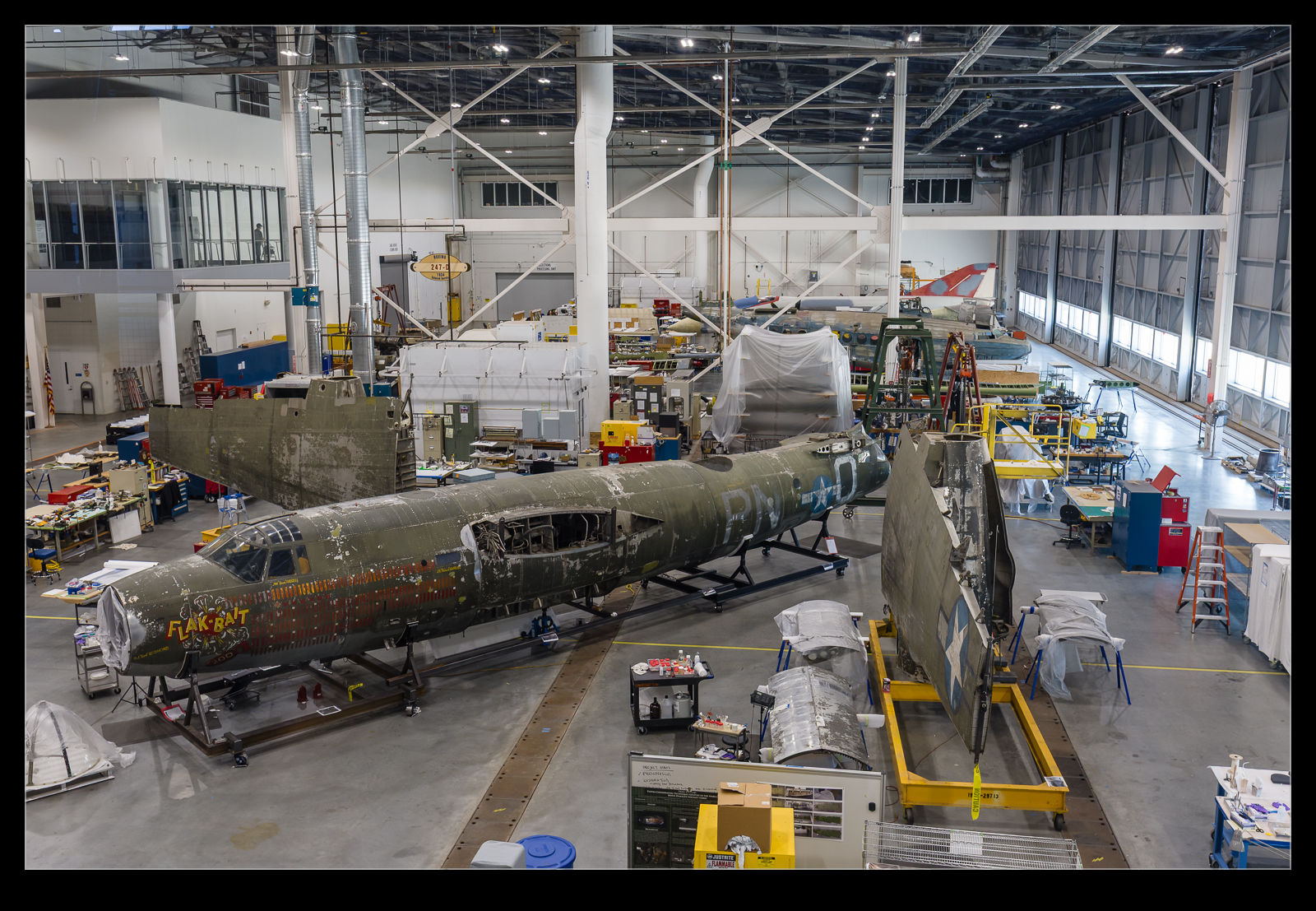
I have no idea when/if I will ever get back there so I was keen to get as much as I could and minimise how much Nancy was getting dragged around. I think we did as well as we could. I hadn’t seen the restoration space in my previous visit so having a look through the windows to see what was down there was good. Here are some shots that give an overview of the place. Now you know that there will be plenty more to come.

Boeing Dash 80

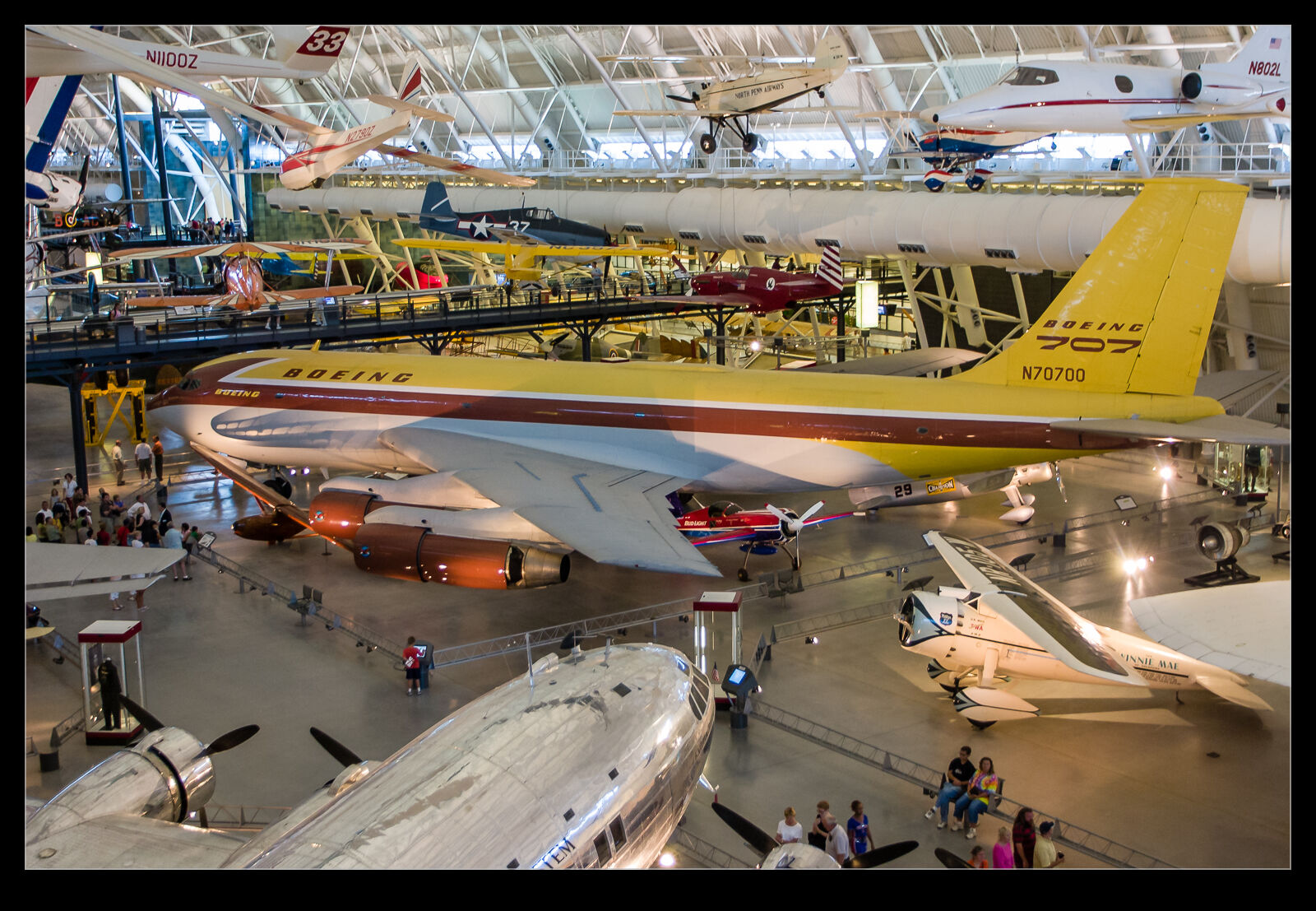
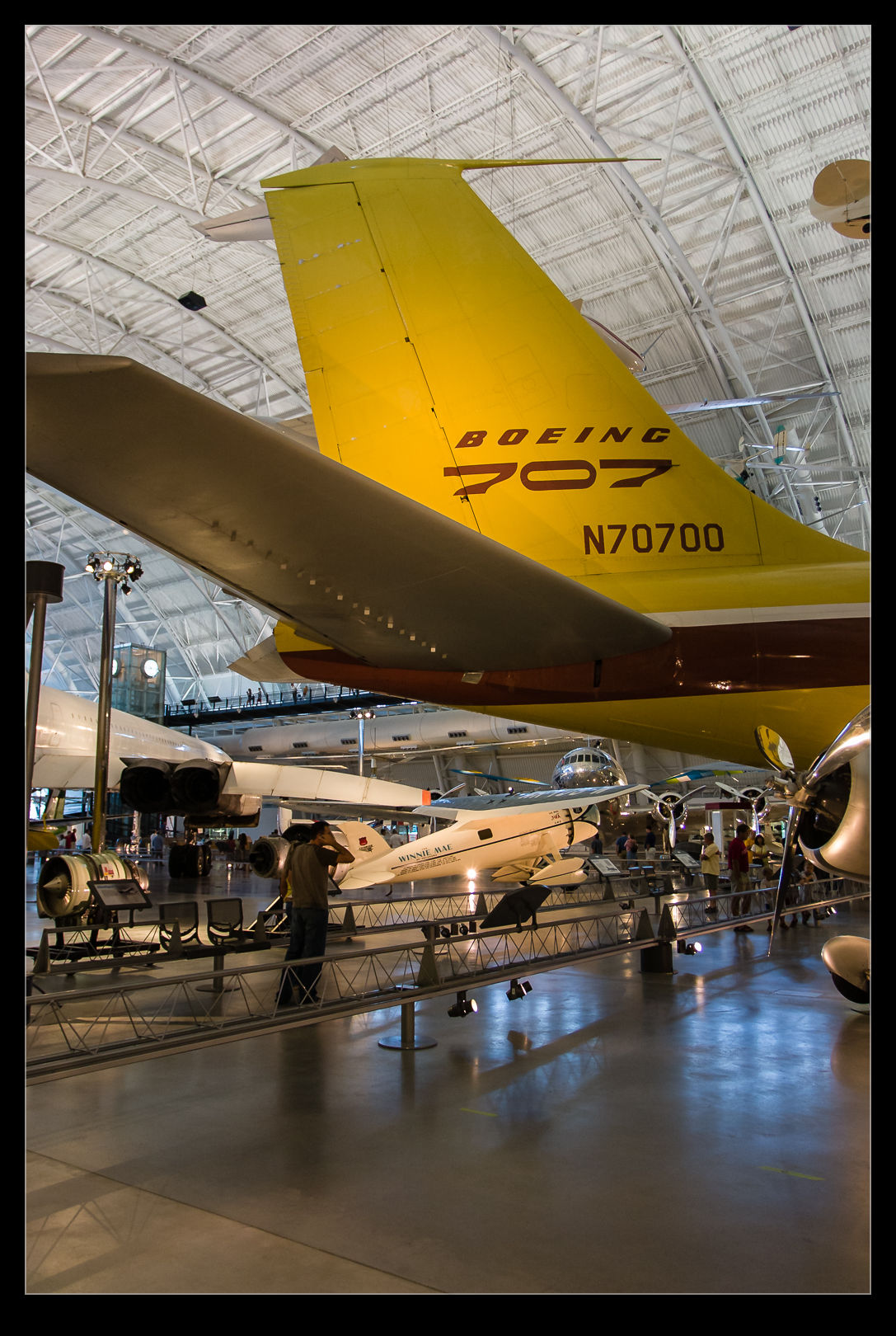
While the Comet may have been the first jet airliner, it was a configuration that was not well suited to development.  Boeing put together its development approach to the jet airliner through a project called the Dash 80.  The shape of the airframe may look familiar but this was a one off.  It was a hand built aircraft and undertook development that then migrated into two further airframes.  One was what became the C-135 family while the other was enlarged and became the Boeing 707.

The Dash 80 get used for all sorts of things but finally ended being donated to the Smithsonian and ferried to the Udvar-Hazy facility at Dulles.  That is where I got to see it on a visit there in the mid 2000s.  I haven’t been back since and would love to check this place out again.  Here are some old shots of this historic jet.