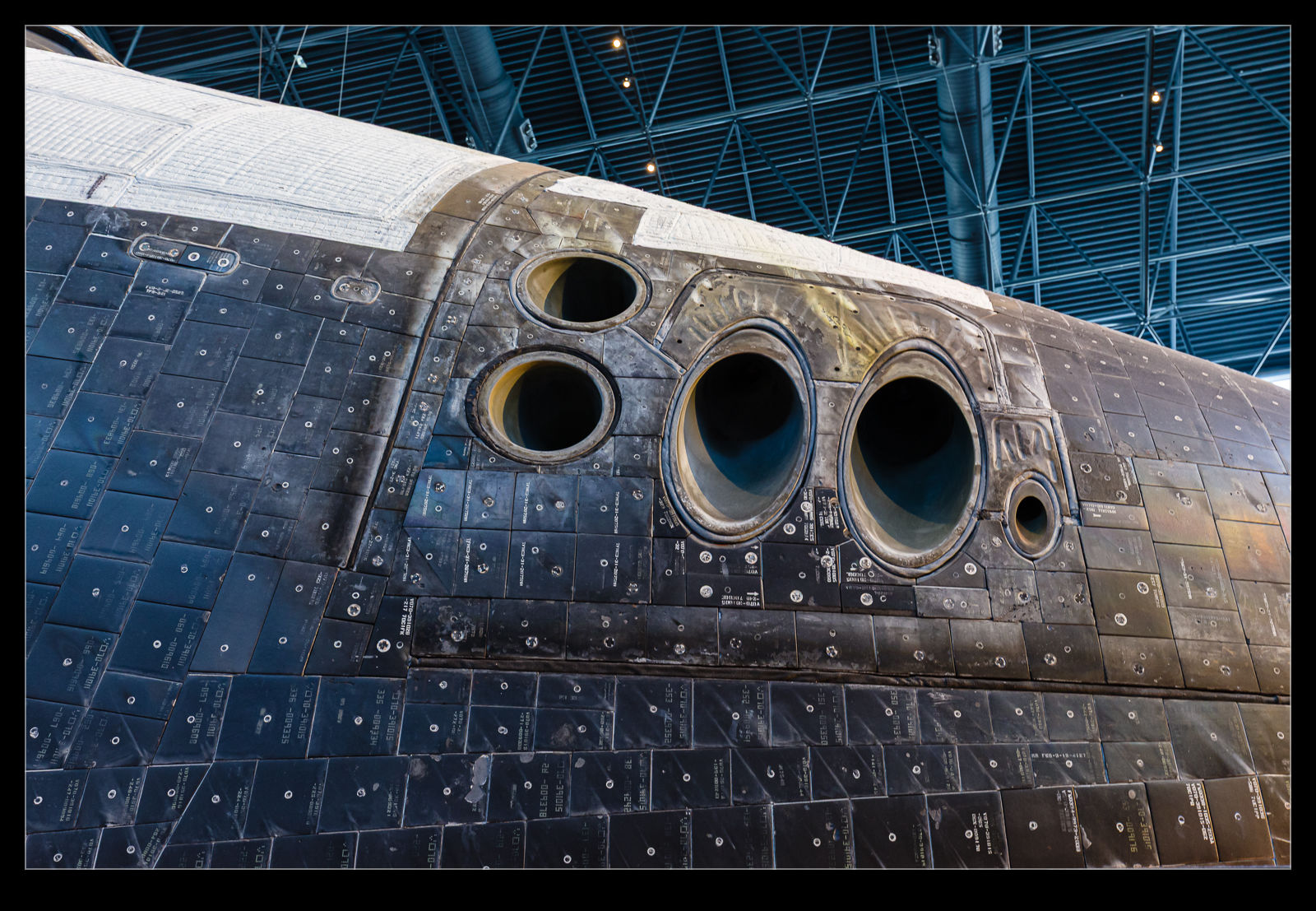
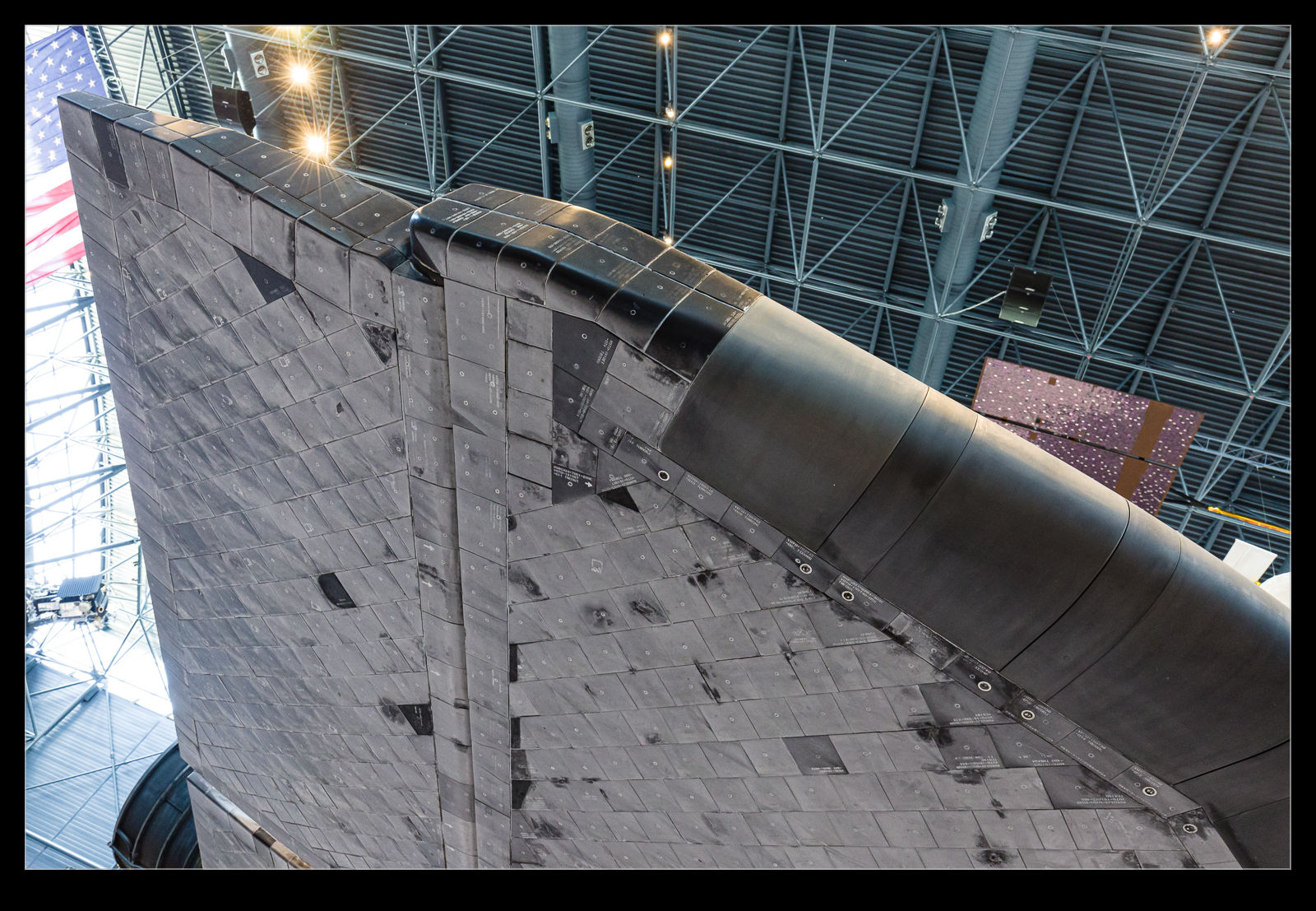
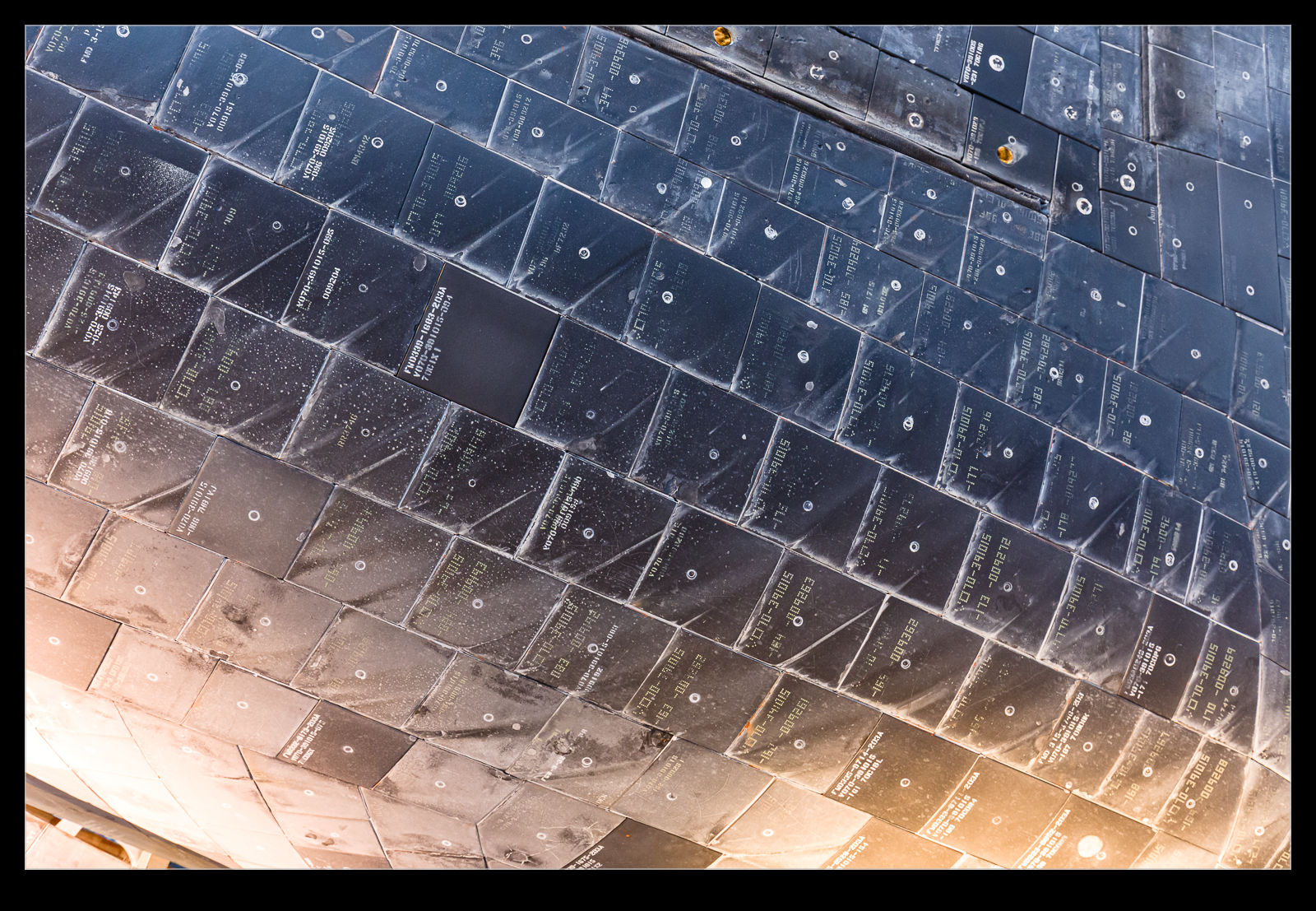
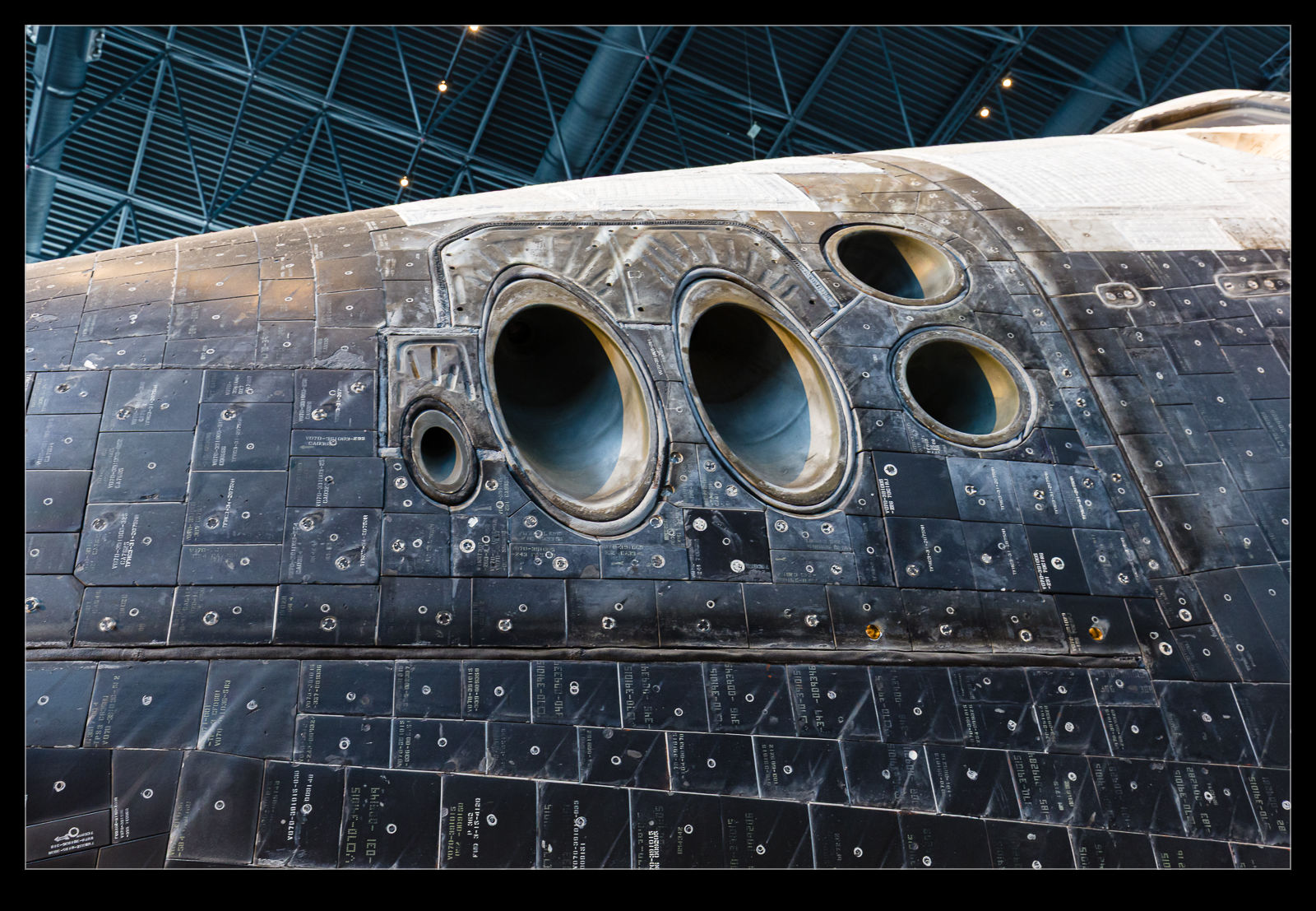
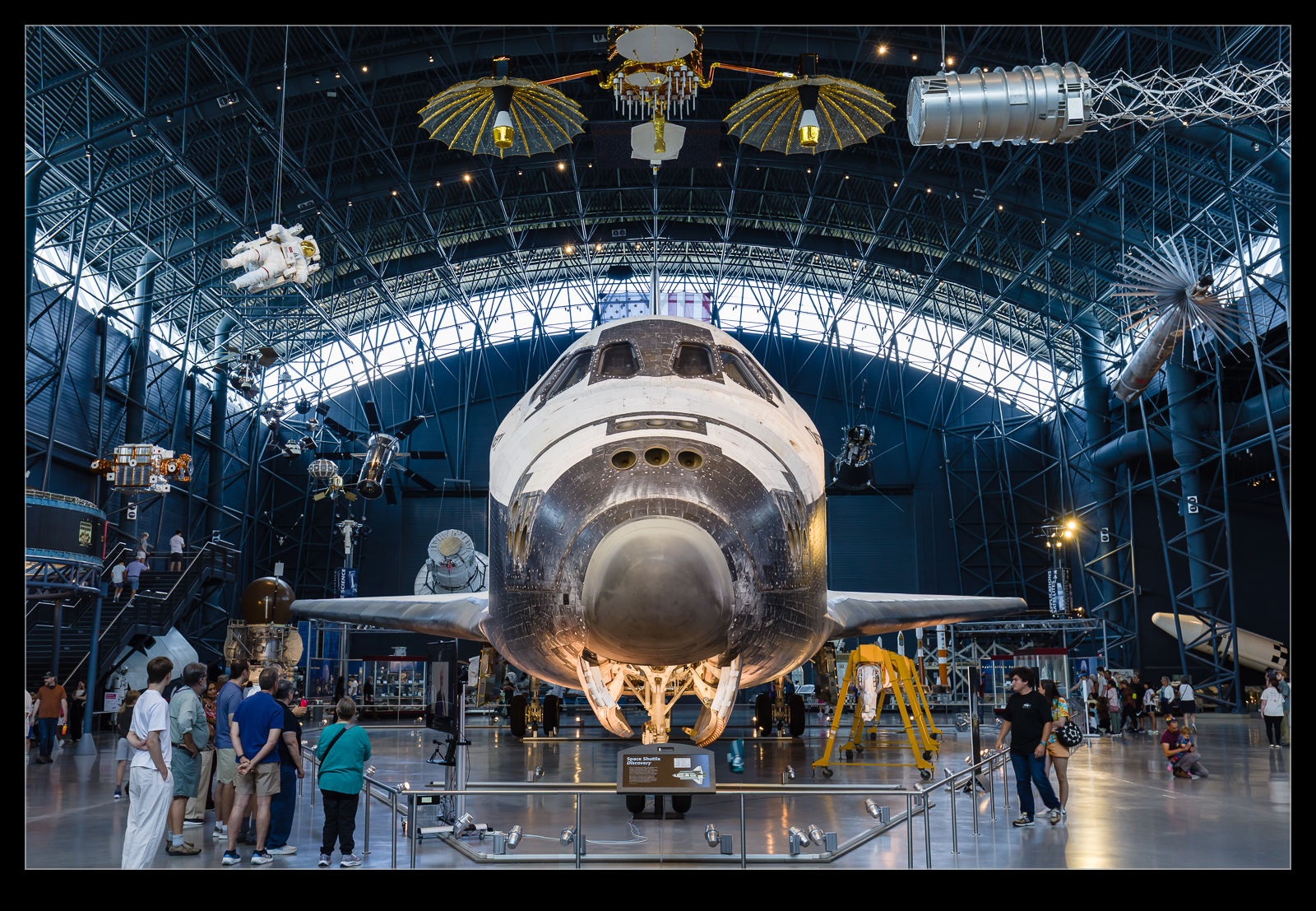
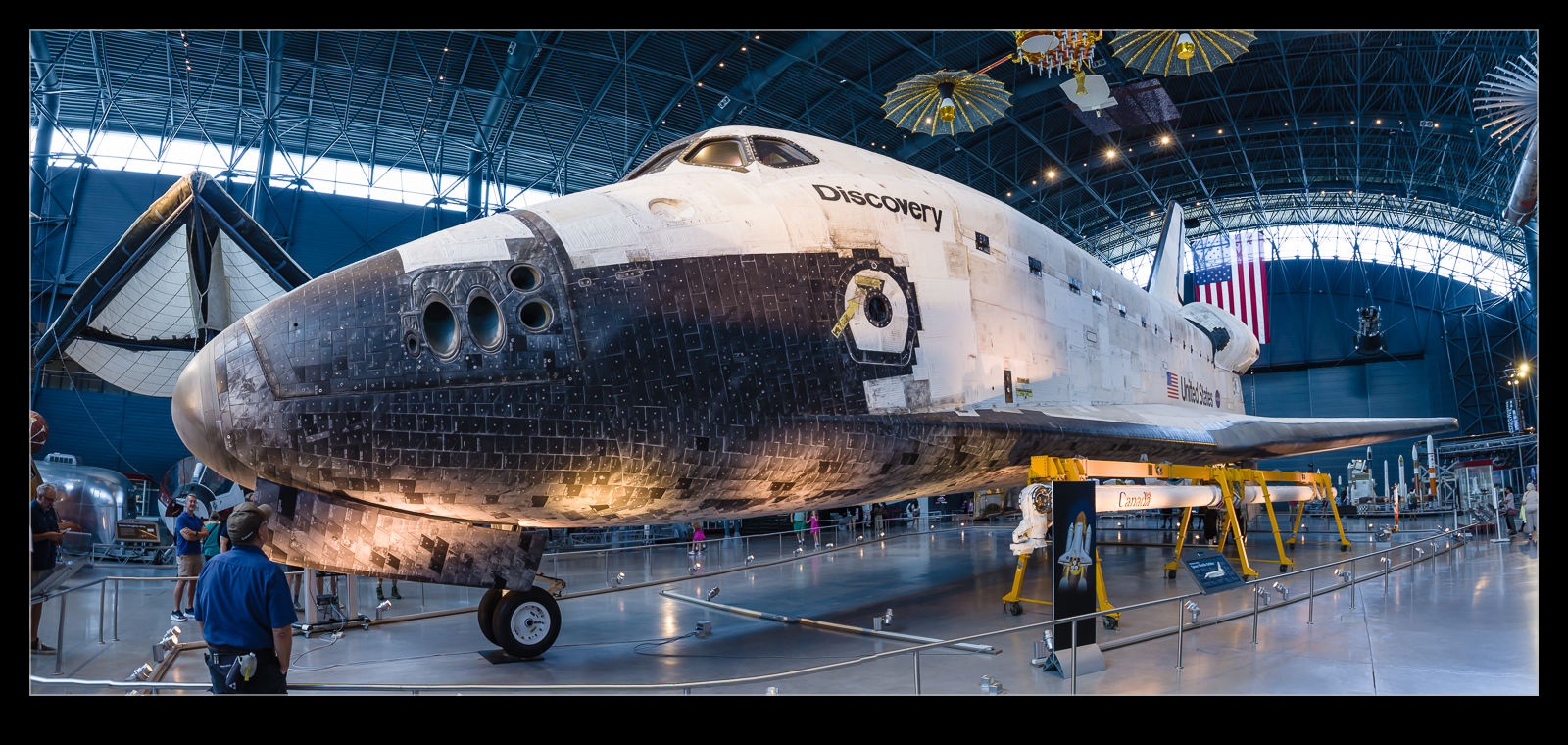
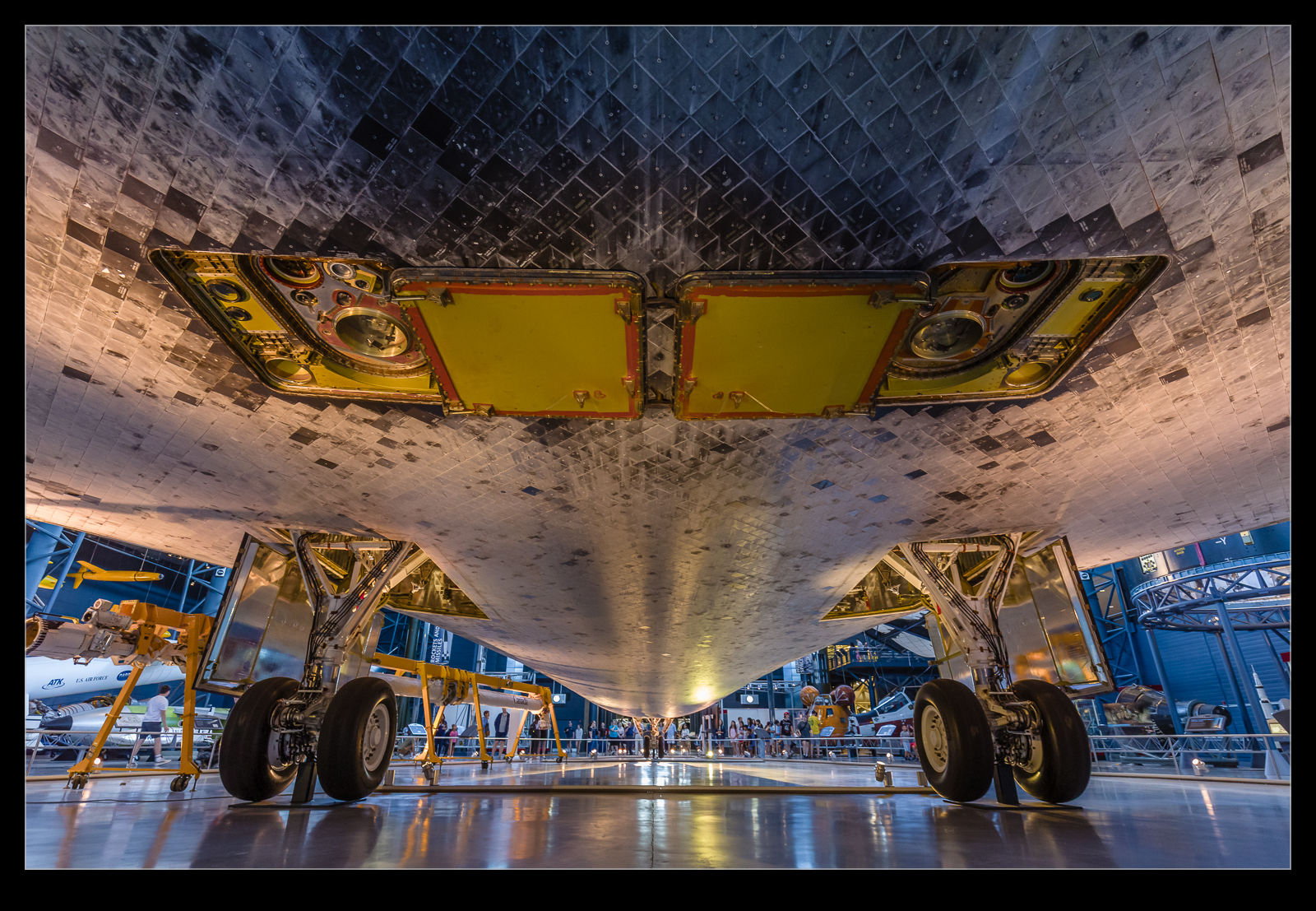
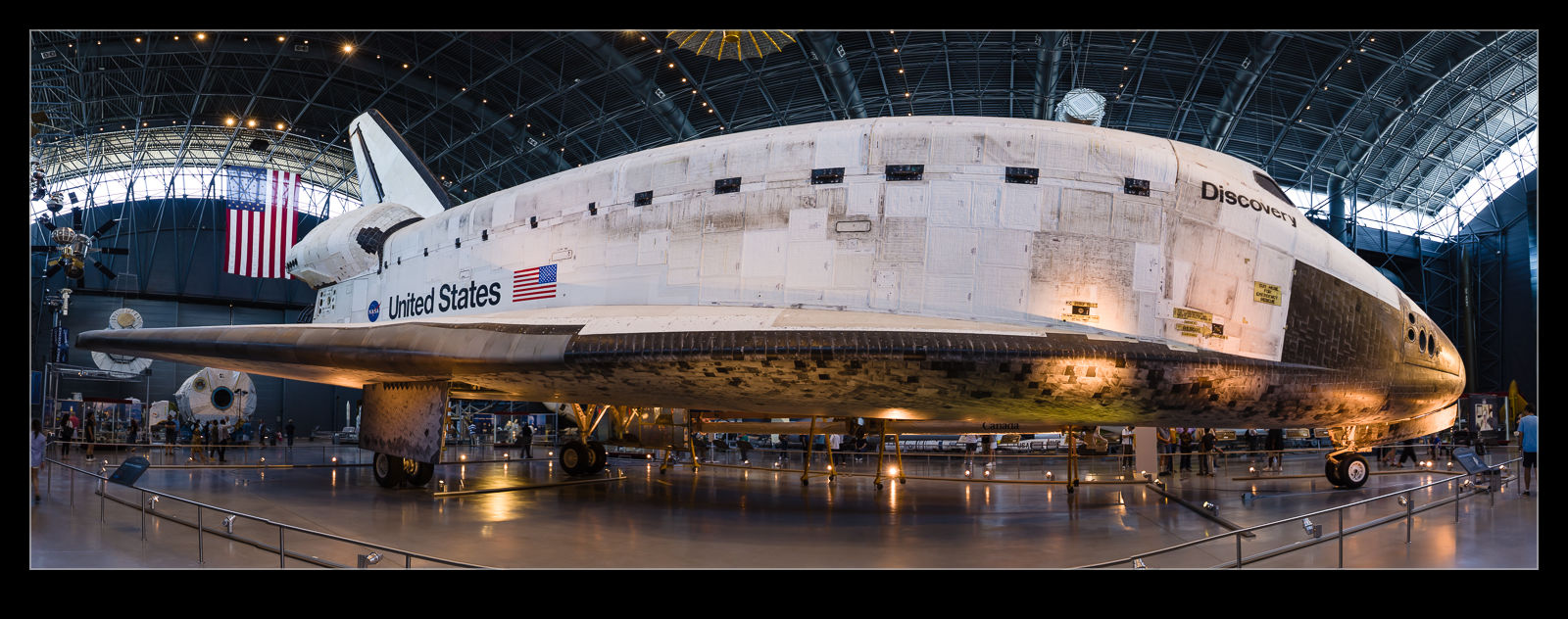
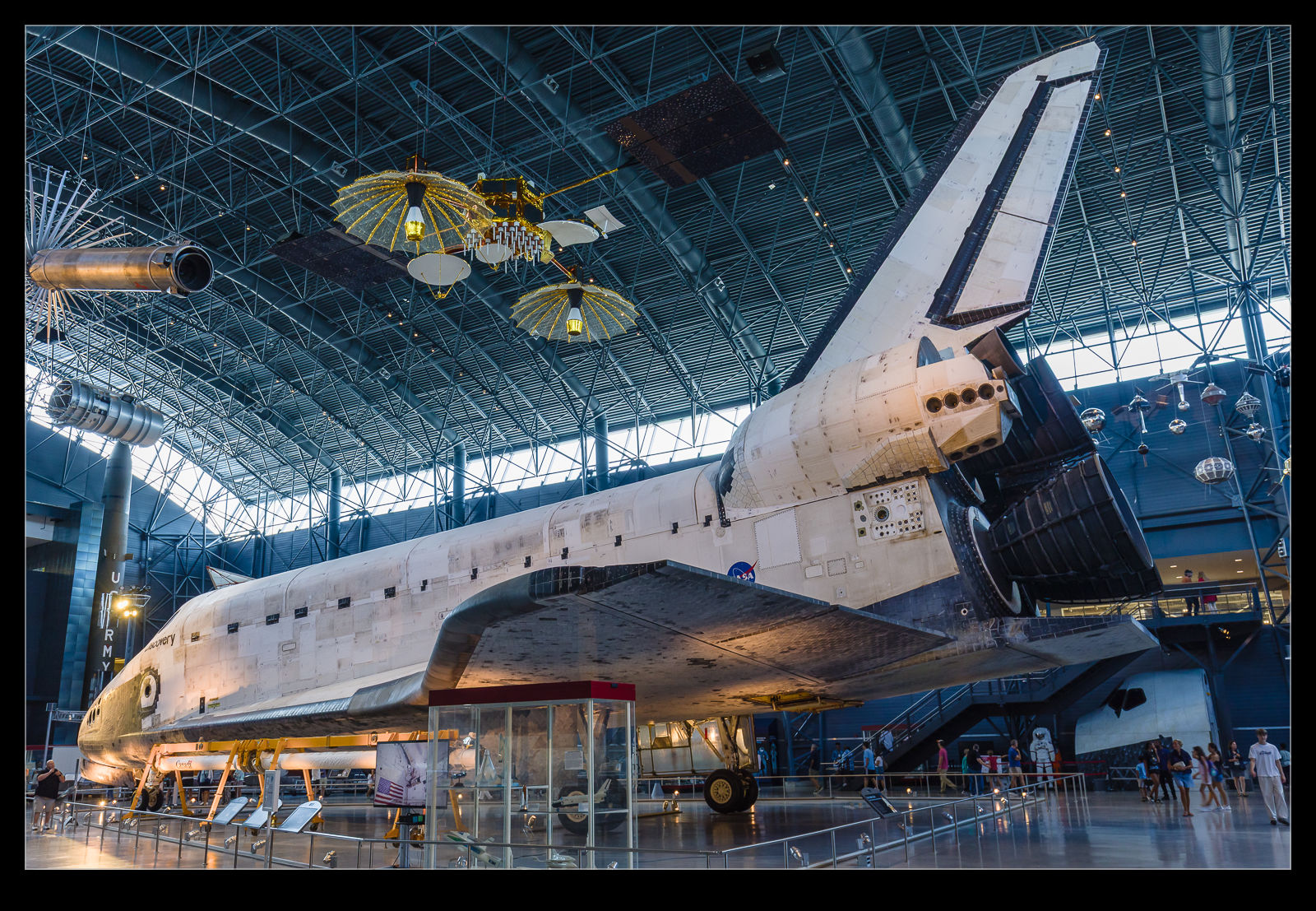
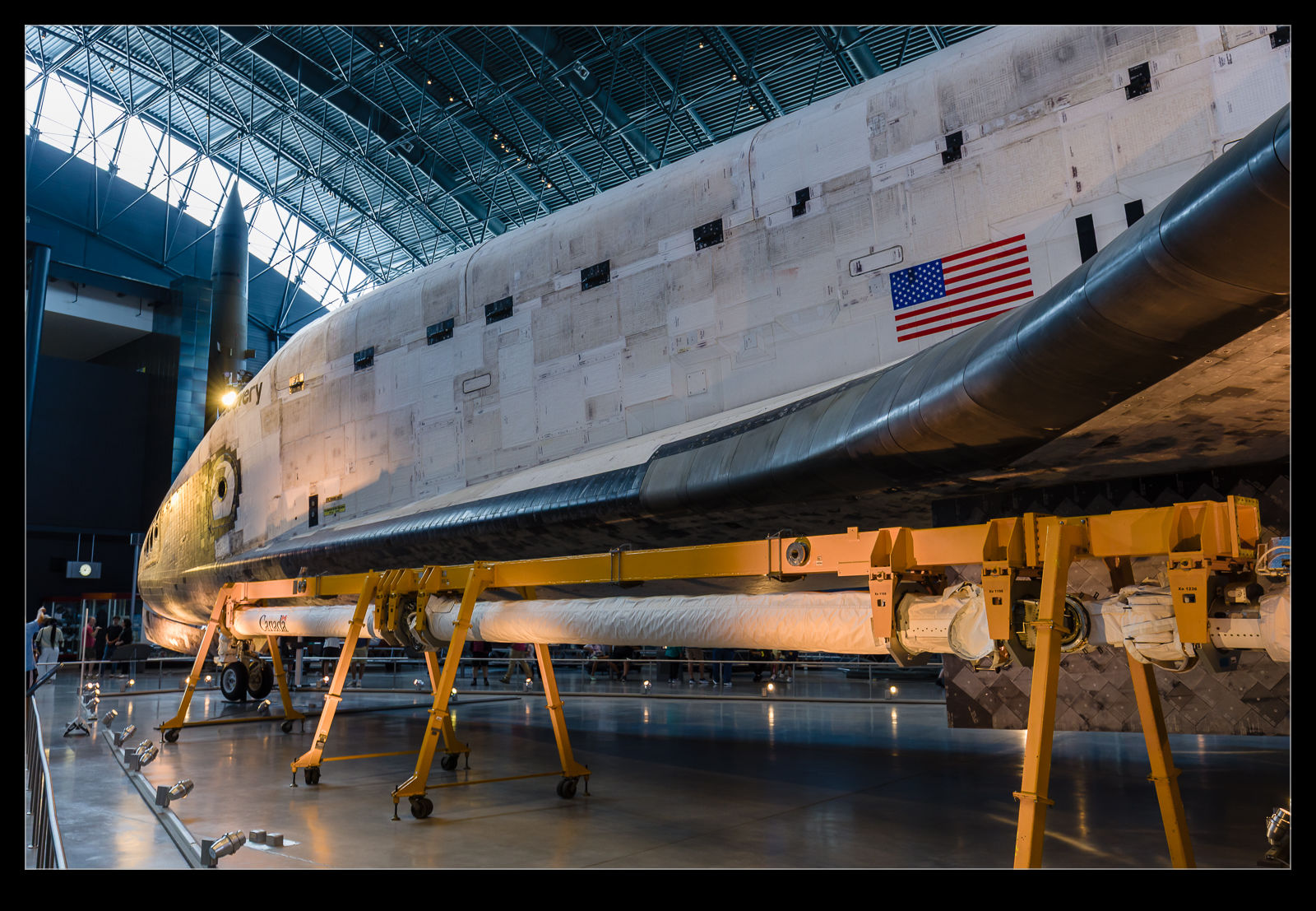
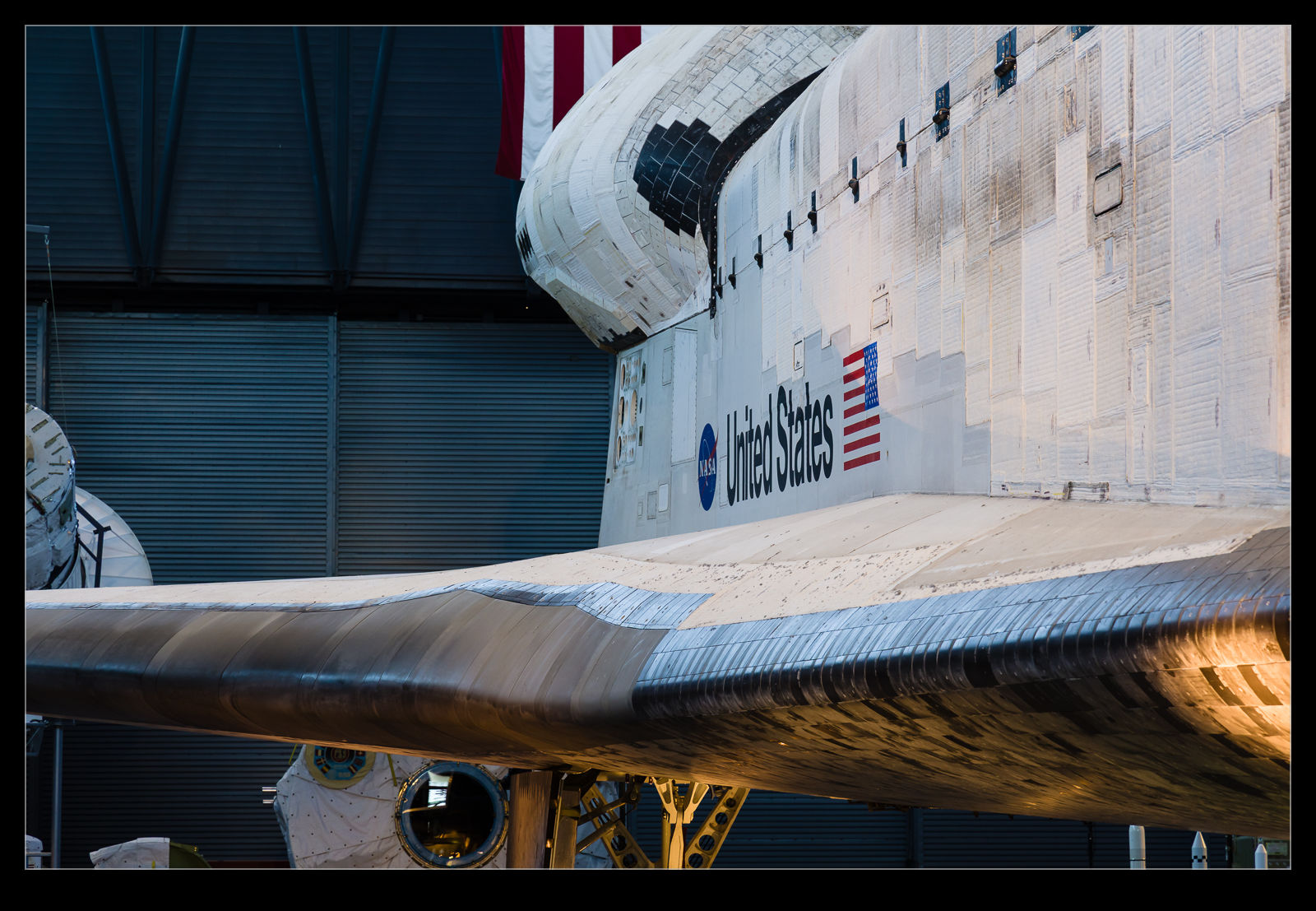
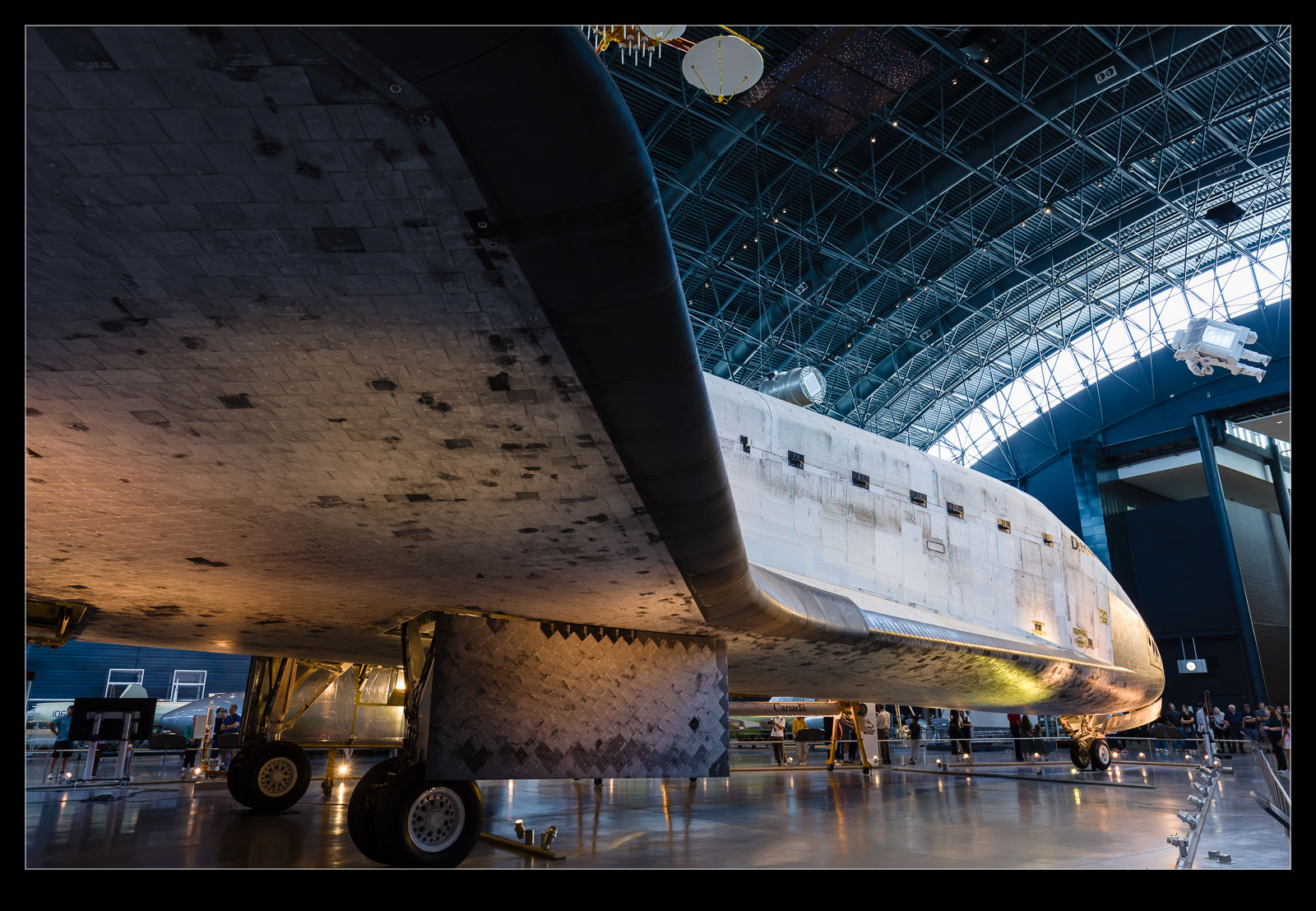
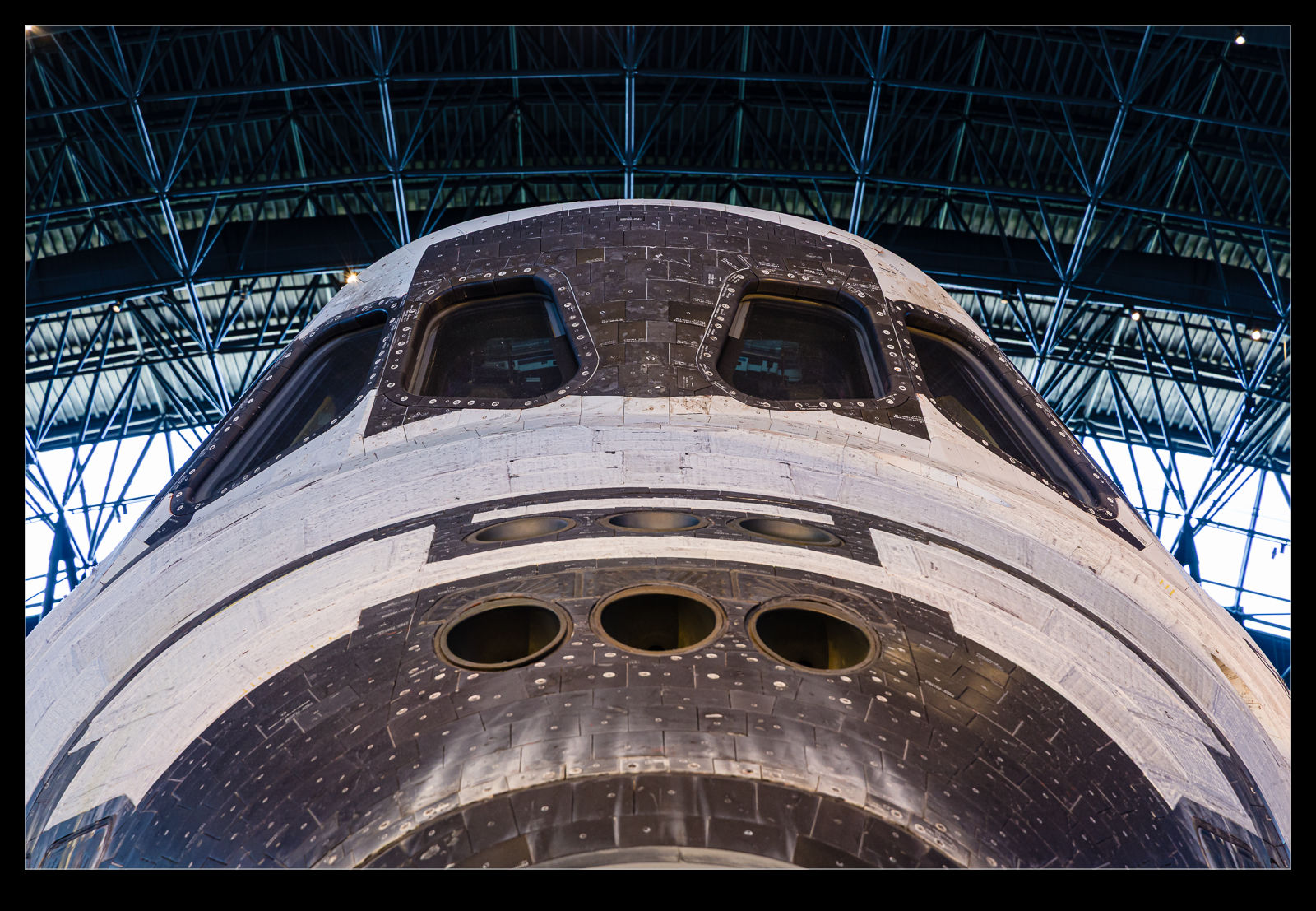
 The previous post I created about the Space Shuttle, Discovery, had a number of shots of the whole orbiter. However, as I walked around, I found the lighting showed off the texture of the vehicle’s surface in a really interesting way. Not long before I went to Udvar-Hazy, I had seen a video that showed how the tiles had been made for the shuttle. That included a bit about the integrity that was required after which a hole was drilled in each tole for a moisture protection system. This hole created a hot spot which shows on all of the tiles on Discovery.
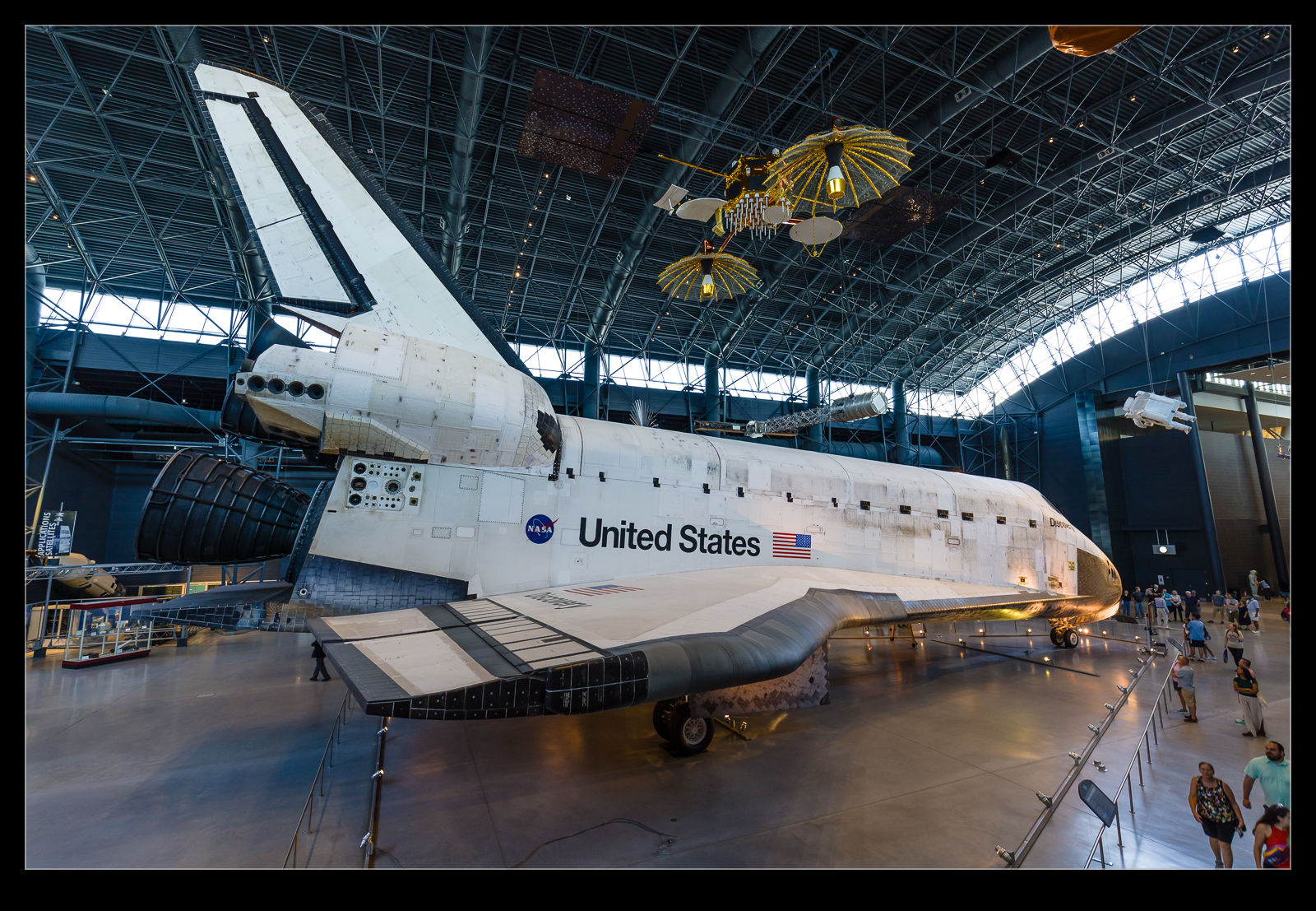
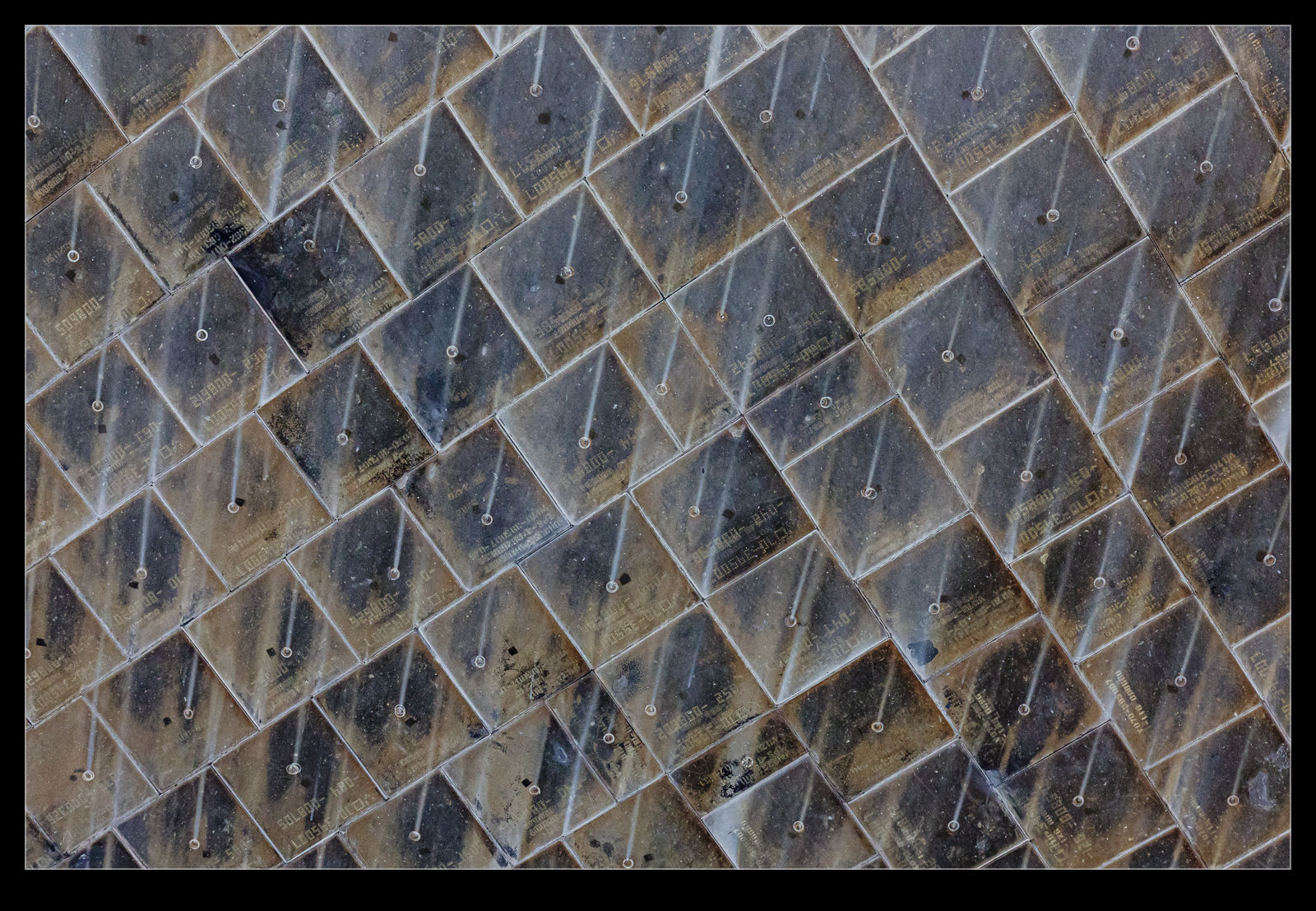 The tiles were used in the hottest areas of the airframe during reentry. Initially, the whole shuttle was covered in tiles but, over time, they changed to using a blanket type of insulation in the areas that were less stressed. The texture of these blankets looks rather rough for something that flies at such speeds. I guess it did the job nicely, though.
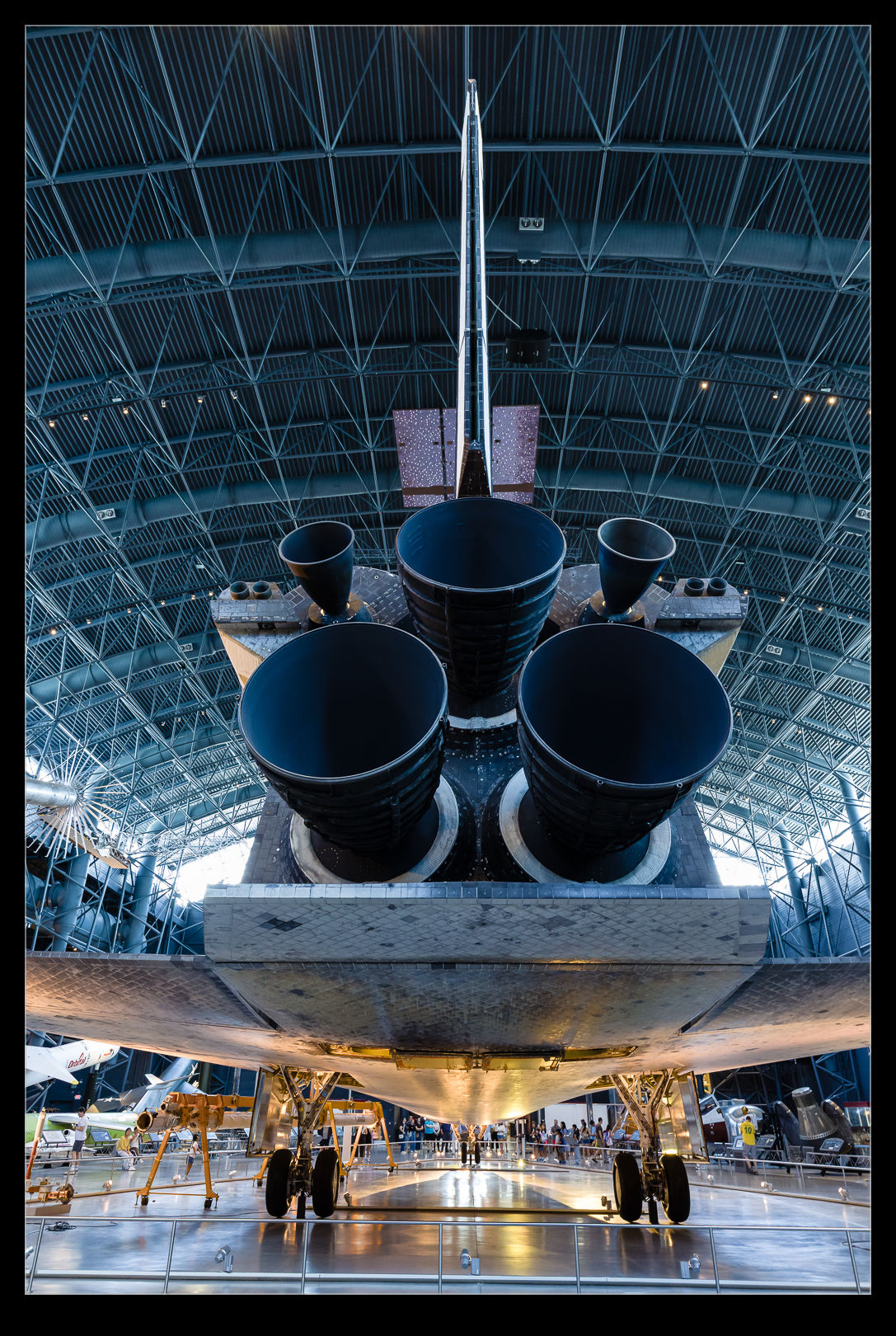
 I also liked some of the details around the reaction control system nozzle and on the corners of some of the control surfaces. They look both tough but also quite delicate. An odd contradiction in my perceptions. To think that this was originally designed in the 1970s and then constantly improved up to the point when it was retired is quite something looking at it in 2026.