Tag Archives: jet

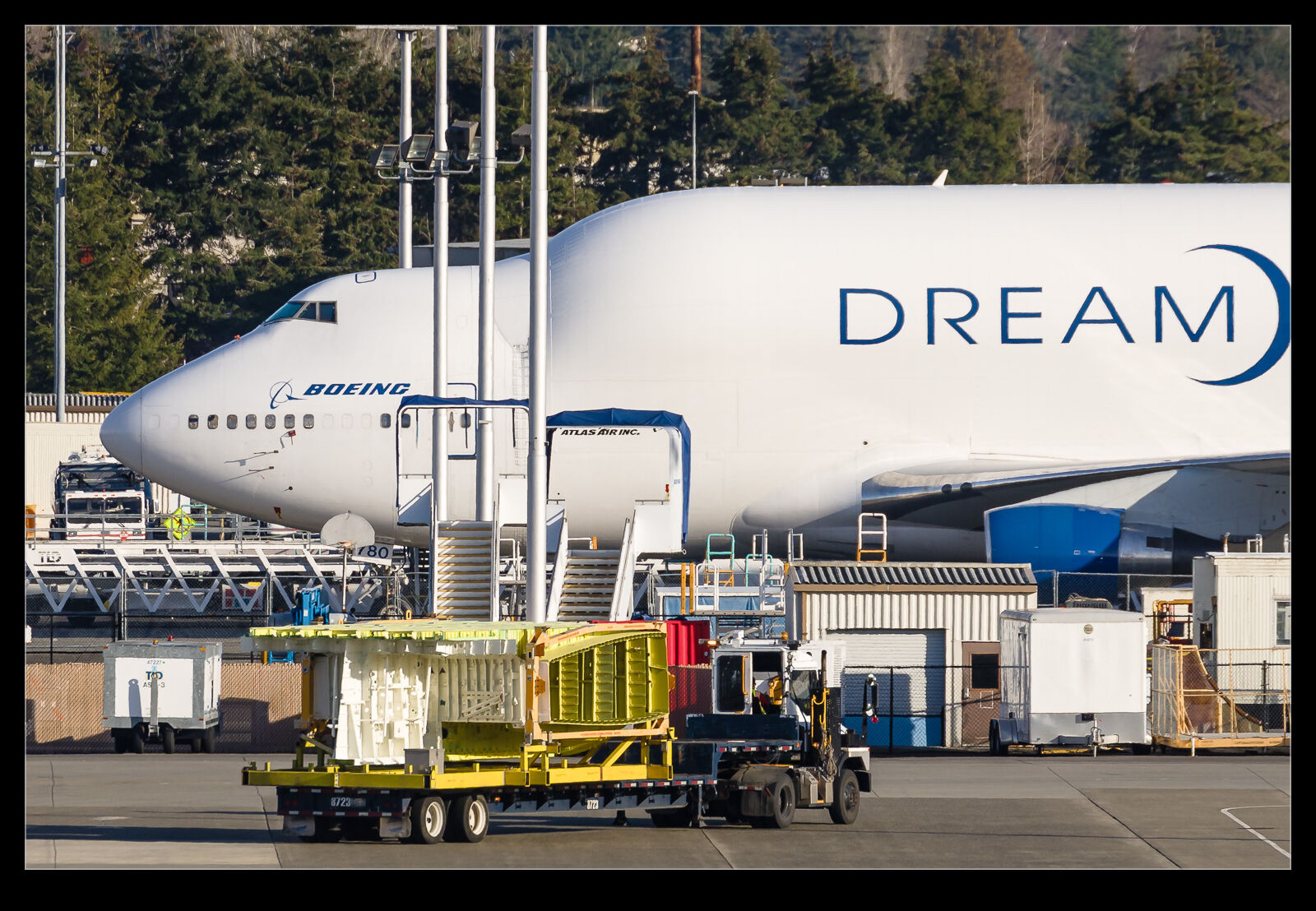
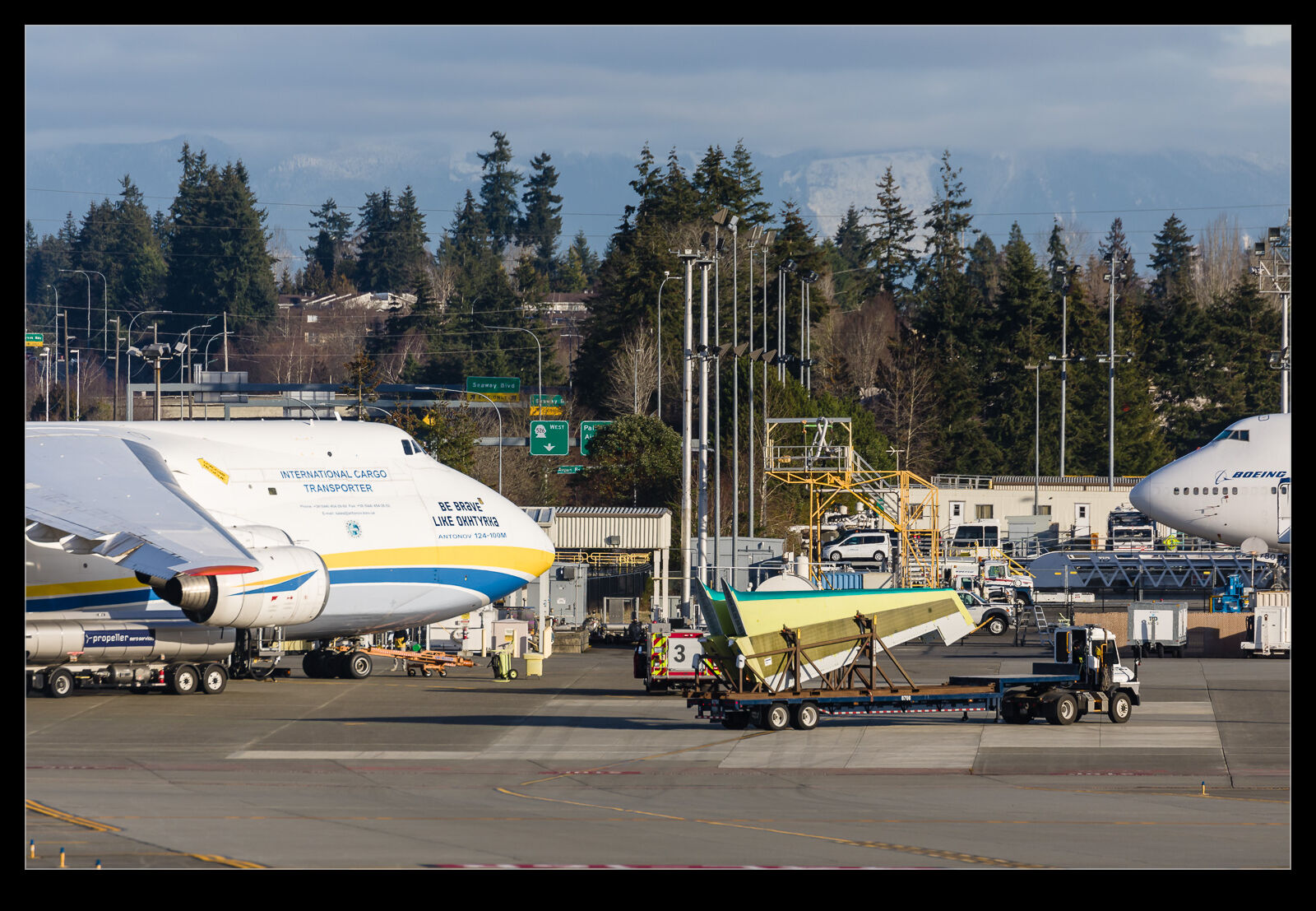
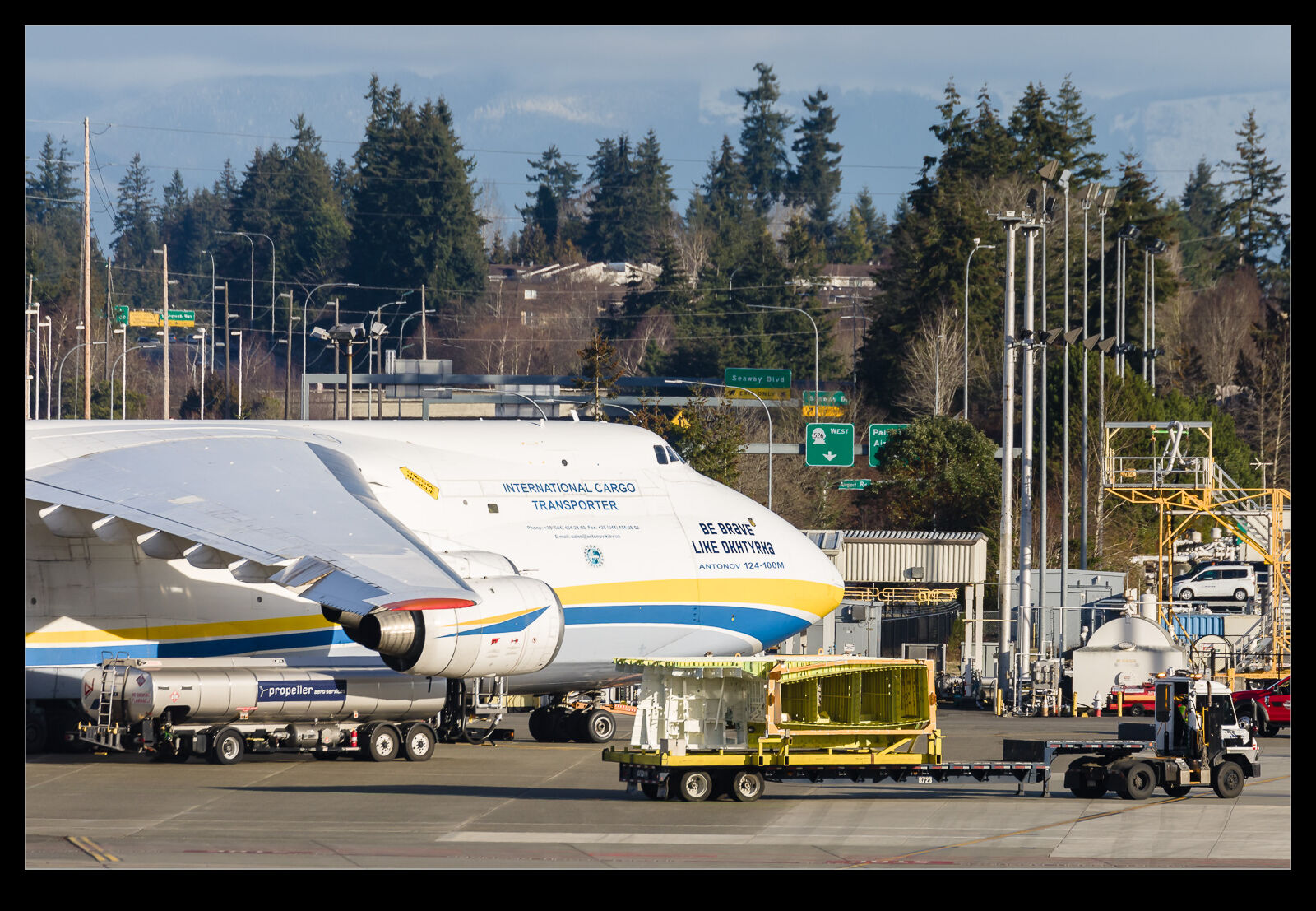
Dreamlifters Are Still Here Occasionally

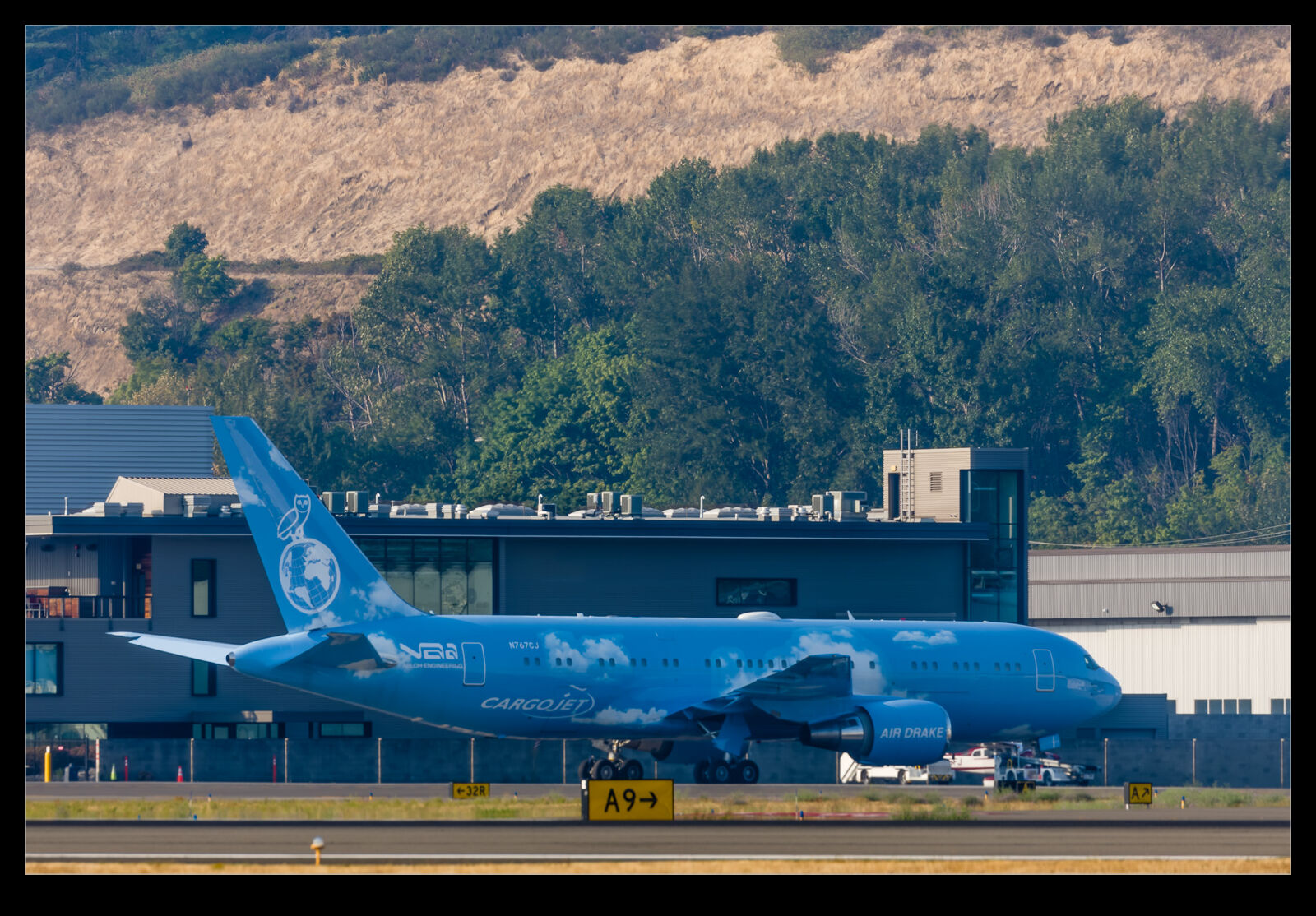
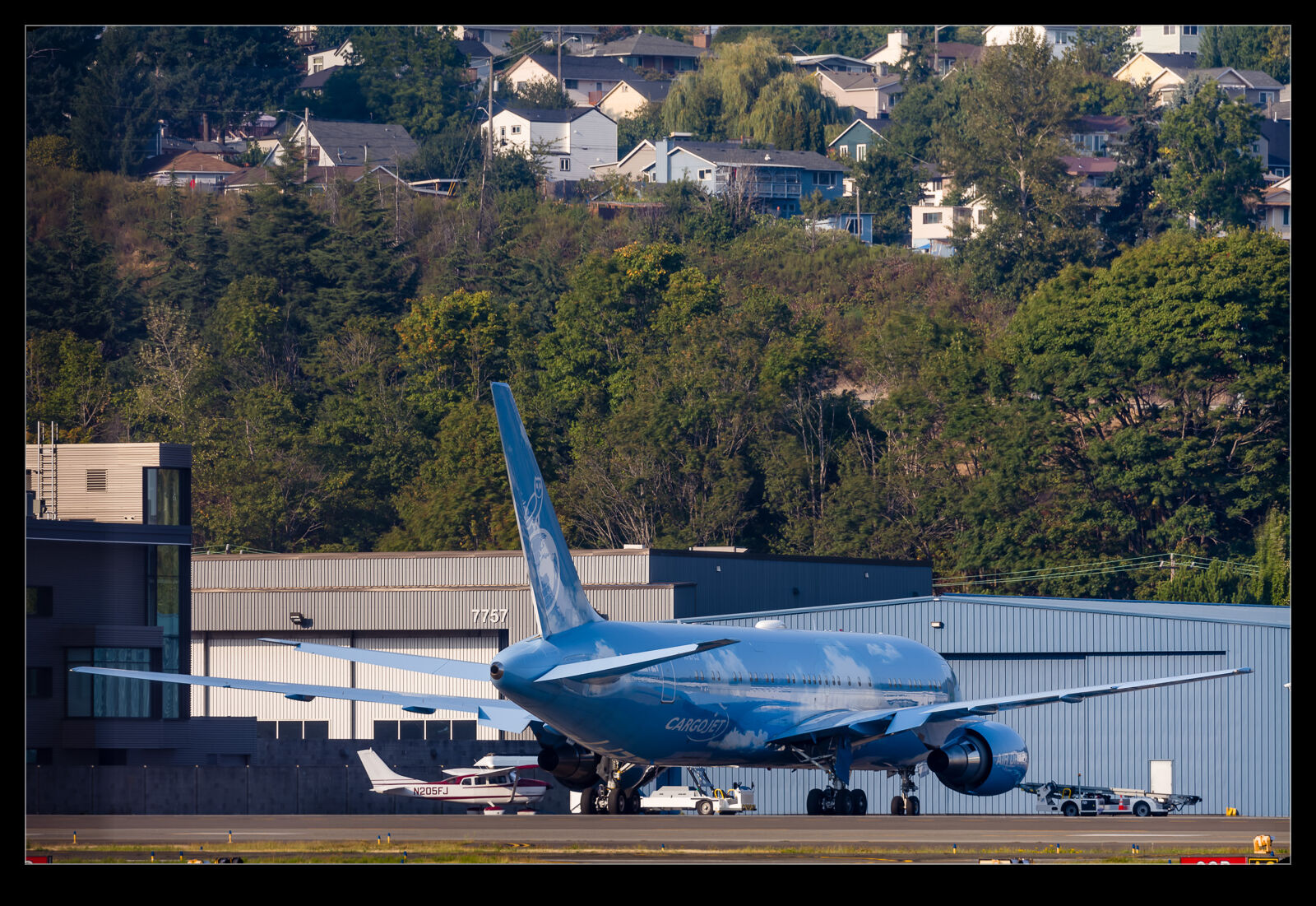
The end of production of Boeing 787s at Everett meant that there was no longer a need for the Dreamlifter operations to support Dreamliner production.  However, while the Dreamlifter base has closed, there are still some production activities at Everett on the 767/KC-46 line that require large structures to be delivered and the Dreamlifters are used for this sometimes.  I understand at least one of them is currently stored, but the others are active.

I only rarely find myself at Everett when the Dreamlifter is there, but it has happened a few times over the last few months.  Here are a few of the shots I have got since these things became a little bit rarer up this way.

My Buddy Was Flying This

Getting a British Airways 777-200ER arriving at SEA would not normally be a priority unless the light was great and I was going to get Mt Rainier in the background.  If the weather was cloudy and it was arriving from the north, might not seem to be that much of a deal.  However, if it is being flown by someone I know, that is a different story.  My friend, Paul, was the skipper on this flight and I was meeting him to have some time around Seattle before he headed home the following day.

The clouds were a shame but the light wasn’t totally bad.  I figured it would need a bit of work in post to try and make the best of the shots but the lack of heat haze did help a bit.  I was able to grab a few shots of the jet as it came down the approach and then as it was over the threshold prior to touchdown.  Not the greatest shots Paul will have of him flying but, hopefully there are not too bad.

Typhoon Air Data System

Working through some older shots for another project, I ended up looking at some shots of an RAF Typhoon displaying.  As I was zoomed in on some of the shots, it was interesting to see the air data vanes on the underside of the front fuselage as the plane maneuvered.  There are several vanes around the underside of the front fuselage and the differences between them can tell yaw and pitch angles.  In one shot when the jet was climbing straight up, the vanes are all pointing in similar directions.  Shortly before this, as the jet was pulling hard, the angle of attack was higher and the flow up around the front fuselage results in some significant differences in vane angle.

This is the sort of thing that is very important when designing and clearing a flight control system.  We had a front fuselage wind tunnel model for the Typhoon during the development program.  This was used for intake design but also for air data system modeling.  The way in which the various vanes move is vital to understanding the control law requirements.  It is also important when considering failure modes.  If one vane should fail, how much it impacts the flight control behavior and how much the system detect the failure.  Will the aircraft be vulnerable to control loss in the interim?  The Tornado did not have as complex a flight control system, but it did have augmentation of the controls and, as it rolled, you would get quite different readings from the angle of attack probes on each side of the fuselage.  How much of a difference was normal versus what was a failure was an interesting analysis problem which I enjoyed working on.  My days on Typhoon were relatively limited and shortly before first flight so I never got involved with the results of the testing program, but I do enjoy looking at the resulting aircraft whenever I get the chance.

Almost Directly Under the Approach

Photographing airliners can be a little “samey” since there are lots of very similar jets and getting a shot of them from the side looks much like any other shot unless the aircraft is specially painted or the lighting is particularly unusual.  Consequently, every once in a while, it is fun to try and shoot from a different angle.  The approach to SEA when the planes are on a southerly flow brings them in over a part of Burien where you can get yourself pretty much under the flightpath.

It won’t take too long before you are again getting a sequence of repetitive images, so it isn’t going to be useful for much time, but it is a chance to do something a little different.  Head on shots from a distance are possible.  Then you can get the shot looking up from the underside.  This might be a tight shot of a part of the airframe, or a wide angle shot of the whole thing.  An opportunity to do something a little different when you are photographing aircraft that are not ones where you care about missing the shot as you might when something special is coming in.

Air Canada Instead of Jetz

It’s not unusual to see Canadian A320s in Boeing Field.  They provide a lot of sports charters but, until recently, these were usually undertaken by Jetz aircraft.  More recently, it seems that they have transitioned to jets in the Air Canada core colors.  Since Air Canada has been taking delivery of lots of 737 Max aircraft recently, maybe they are cascading some of the older mainline jets to the charter operations.  I don’t really know.  I only know I have shot a few of their aircraft at Boeing Field recently.

Ault Field Morning Arrivals

I had taken a day off to go to Coupeville earlier this year.  Since I was heading to Whidbey Island for the day, I went to Ault Field at the beginning of the day to see if there was any traffic.  I went to Moran Beach to see if anything was coming in when the light is still favorable in that location.  I actually got pretty lucky.  There were a bunch of Growlers already up and about and they were recovering before I had to move off.  Some squadron jets including some in special schemes were coming in.  Recovering overhead me while others were on the approach, it felt pretty busy.  Here are some of the shots from that morning.

SEA Saturday Afternoon Departures

Earlier in the year, I was down at SEA for a reason that now escapes me.  However, I had some time to kill, and the traffic was on a northerly flow which means it is easier to get reasonable afternoon light on the departing jets.  Consequently, I hung out for a while to photograph some of the jets heading out.  The majority of traffic is going to be the regular Alaska and Delta narrowbody traffic and that gets pretty repetitive.  However, mid to late afternoon is when a lot of the departures for Europe and the Middle East take place.  This means widebodies.  Here are a bunch of shots of departing aircraft as they climb out and head on their way.

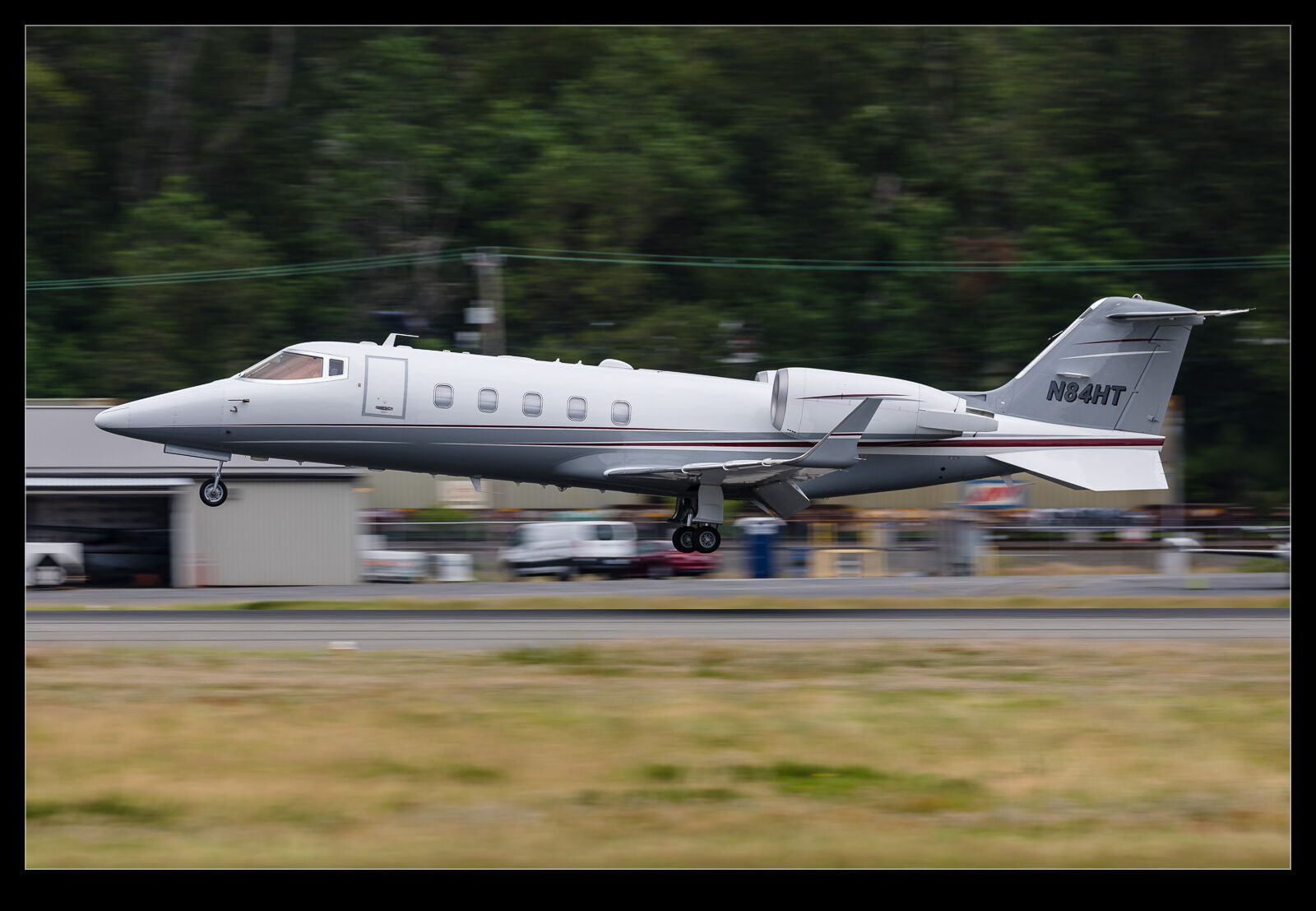
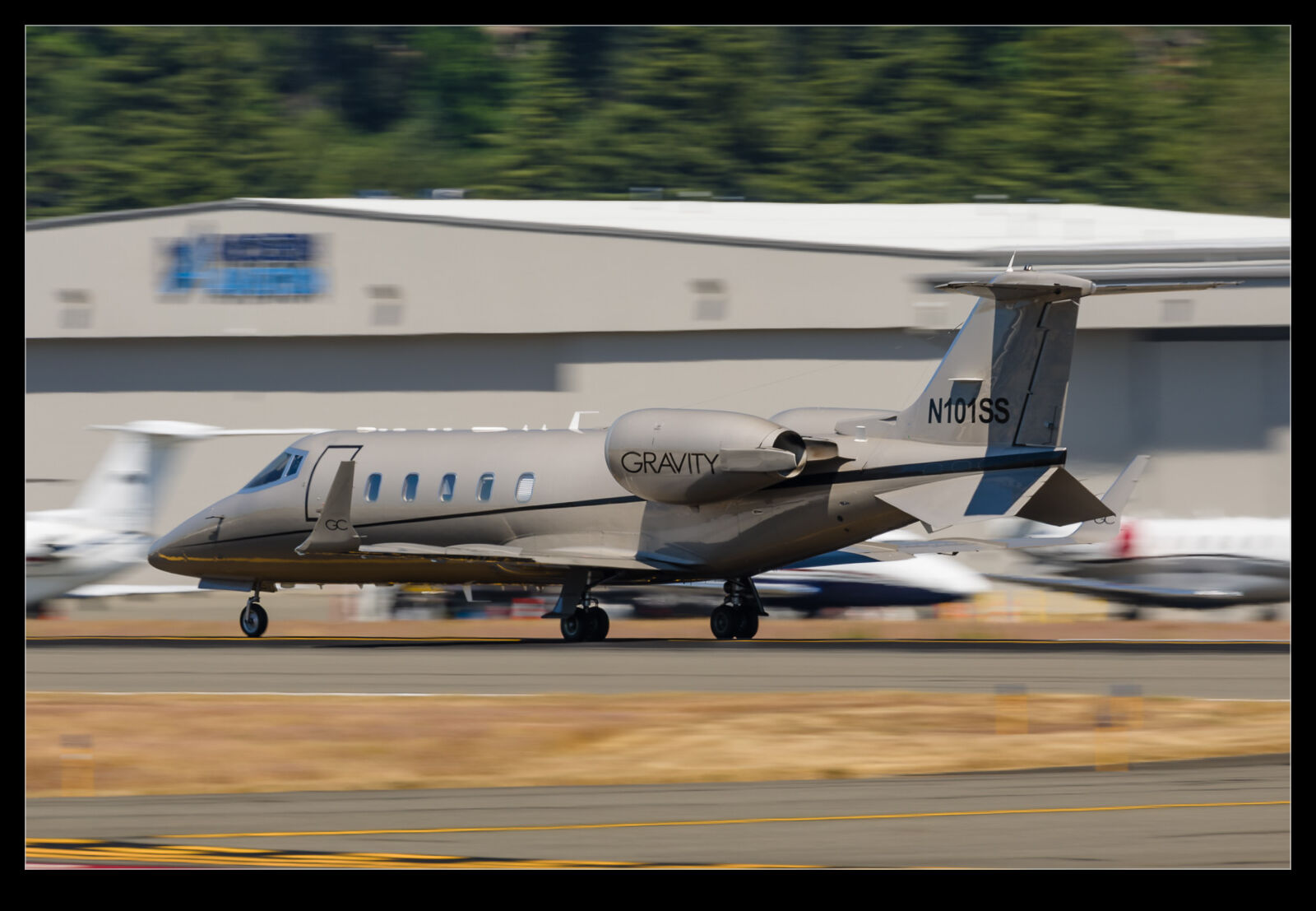
Playing With the Bizjets to Experiment

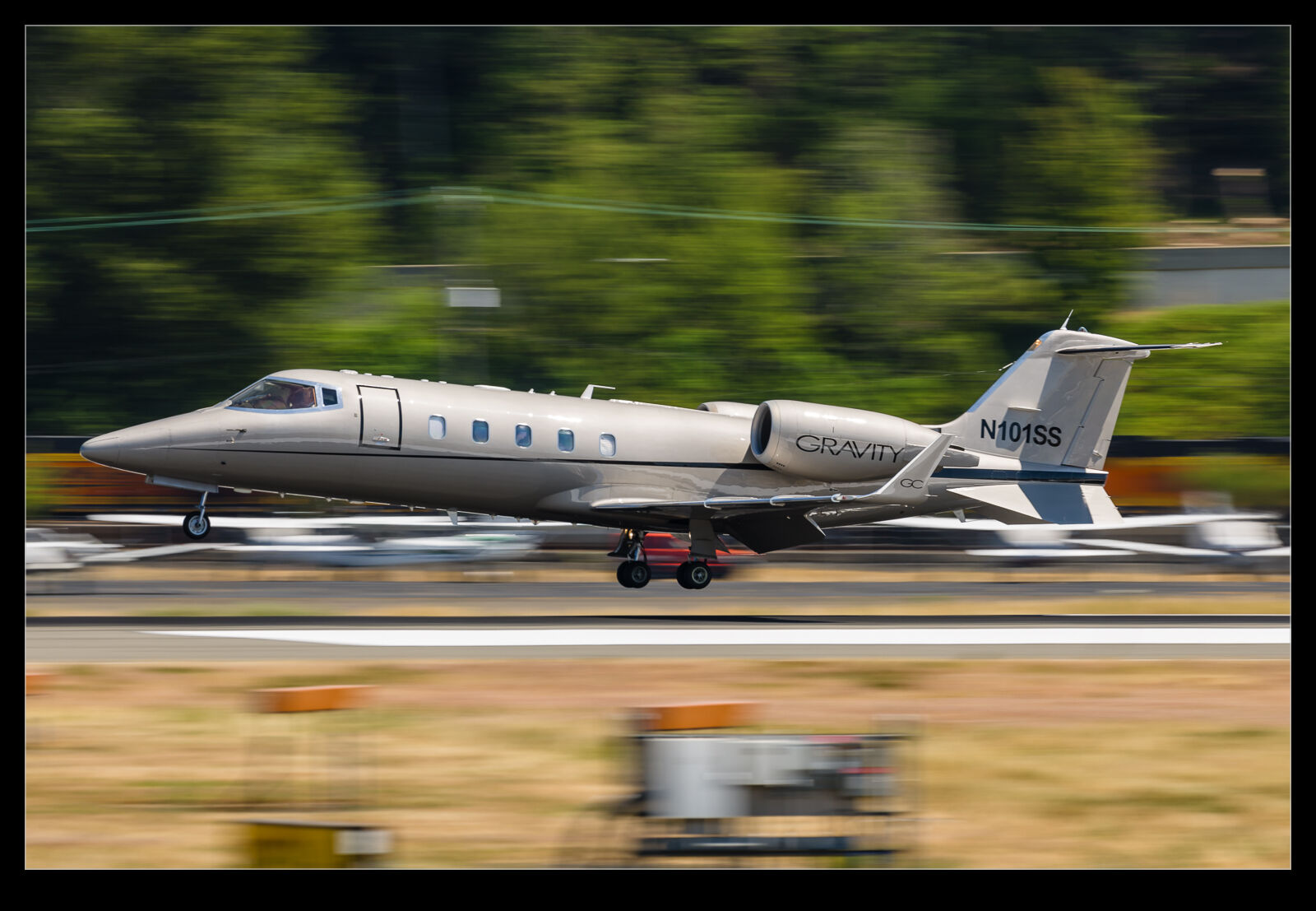
I have been messing around with low shutter speeds for traffic at Boeing Field a lot this year.  Some of those shots have made their way into posts on here.  One sunny afternoon, I was at the field and there was a lot of business jet traffic but nothing terribly special.  This provides a good opportunity to try different things.  I had the polarizer and a neutral density filter.  The polarizer is good on sunny days for taking down the glare and it also cuts the light.  However, the neutral density can really pull the shutter speed down.

Since I didn’t care if the shots were a failure, I was willing to just keep bringing the shutter speed down and down.  I compensated by cranking up the frame rate in order to increase the probability of getting a sharp one.  This is an interesting challenge.  Normally I spend a bit of time culling out shots that just aren’t sharp but, when playing with silly shutter speeds, you need to re-calibrate just how sharp things should be.  What is a little off when zoomed in might be of no concern when looking at the full image.  That is not an excuse to let plainly bad shots through though.

Here are some of the results that weren’t too bad.  Even an average Challenger can look a little more interesting with a very blurry background!

Everts MD-83 Freighter While I Am Waiting

My buddy Chris was visiting Seattle but was stuck in the arrivals line at the airport.  I was waiting to pick him up but, since it was taking longer than expected, I was checking out some other movements.  An Everts MD-83 was scheduled out of Boeing Field.  The weather was not great, and I didn’t know when Chris would finally get through immigration, but I figured I would give it a go.  Sadly for Chris, the MD-83 got moving faster than him.  It was on its way long before he finally got out.  I had plenty of time to get back to SEA to pick him up.

Bulgarian L39

I was doing a favor for a guy I know back from Chicago.  He is researching Bulgarian aircraft that have found their way to the US and one of the planes he was interested in is an L39 Albatros that lives up at not too far from me.  I went up to meet with the owner and get copies of the aircraft documentation.  When I was done, he offered to take me to have a look at the plane in his hangar.  It is a lovely looking jet.  It was in amongst a bunch of other stuff in the hangar which made getting nice shots of it a little tricky, but it was still good to get shots of it.