Tag Archives: fighter

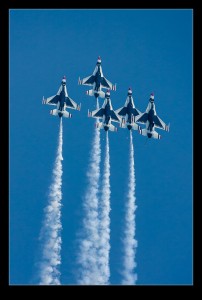
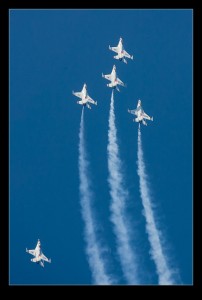
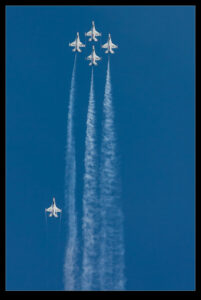
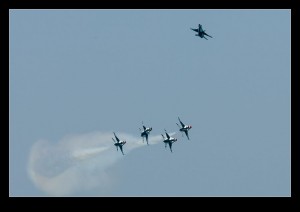
Thunderbirds With One Extra

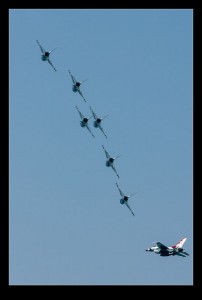
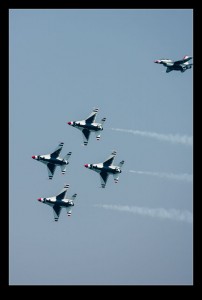
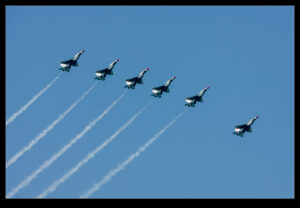
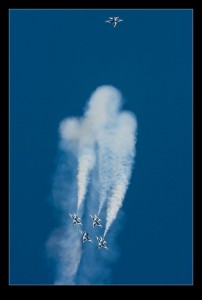
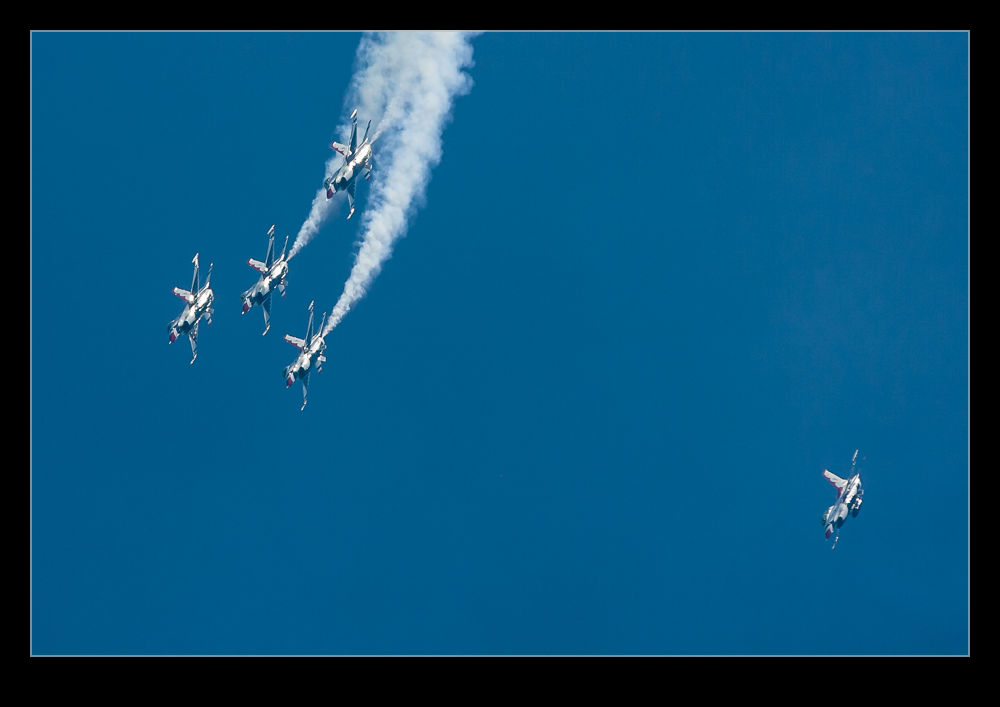
QB5Y4965.jpgWhy is this different and why should I look? Thunderbirds shots are not hard to find online. I have tons of them myself and an appearance by the team at any show is going to result in a ton of shots from the people there. These are shots with a slight difference though. These were taken in Chicago at the Air and Water Show a number of years ago. However, they weren’t taken on the main show days. Instead, they were taken during the Friday practice.

QB5Y5007.jpgBecause it was a practice day, the team carried out their display with a spare aircraft loosely in formation. It was a twin seater so I assume the backseat had a photographer occupying it. (I am not in the least bit jealous of course!) The team flew their normal display routine and the extra jet would position itself around the formation and (hopefully) get some shots of them with some excellent backdrops of the city.
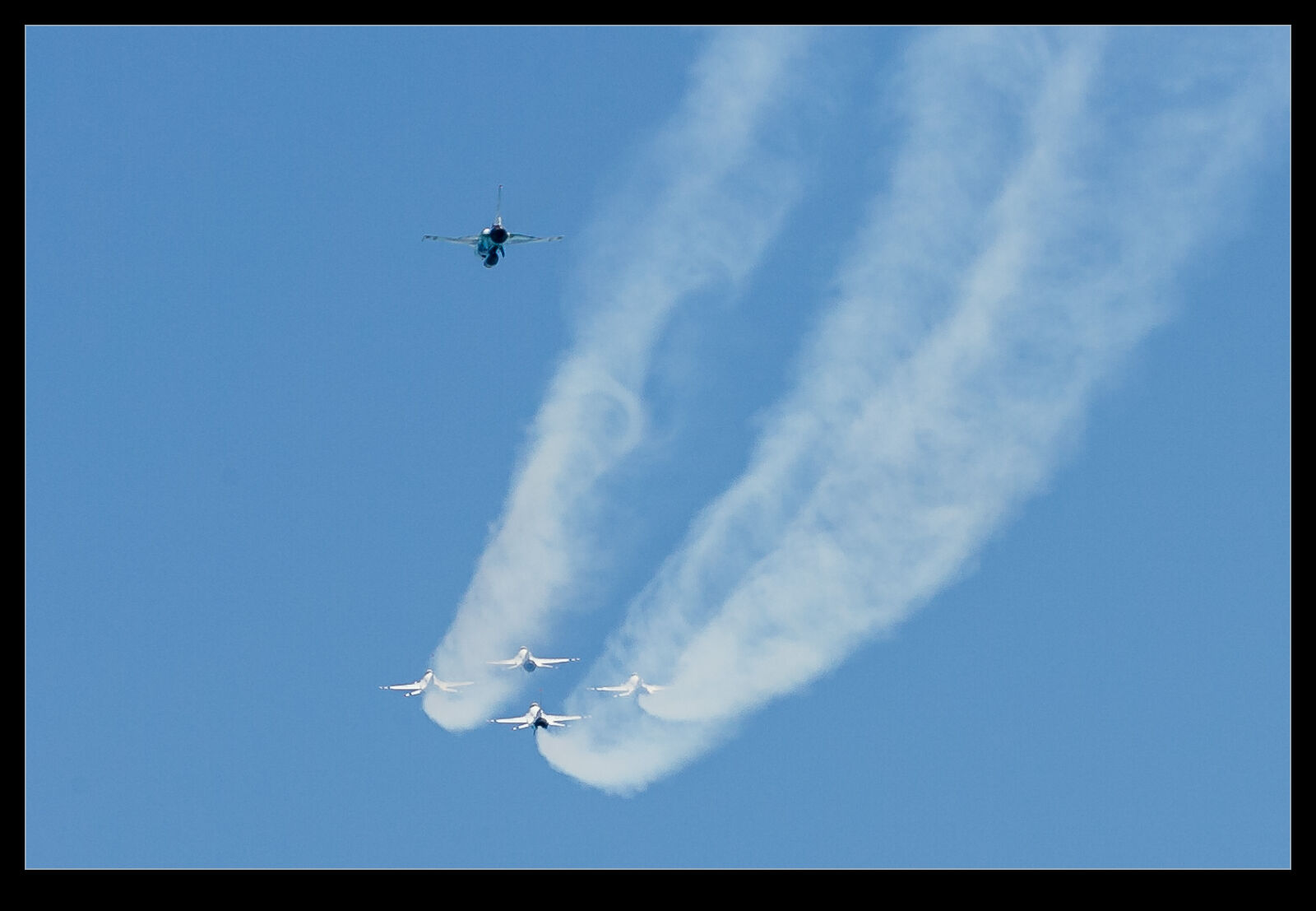
QB5Y4911.jpgFor me, it meant getting pictures of formations that you don’t normally see. I imagine the excess power of the F-16 means there is some scope for the spare jet to position itself well around the formation without running out of energy. It must provide scope to get some cool shots. They had better be cooler than the ones I got that day given the position they had. I am happy with mine all the same.
Collings Foundation at Livermore

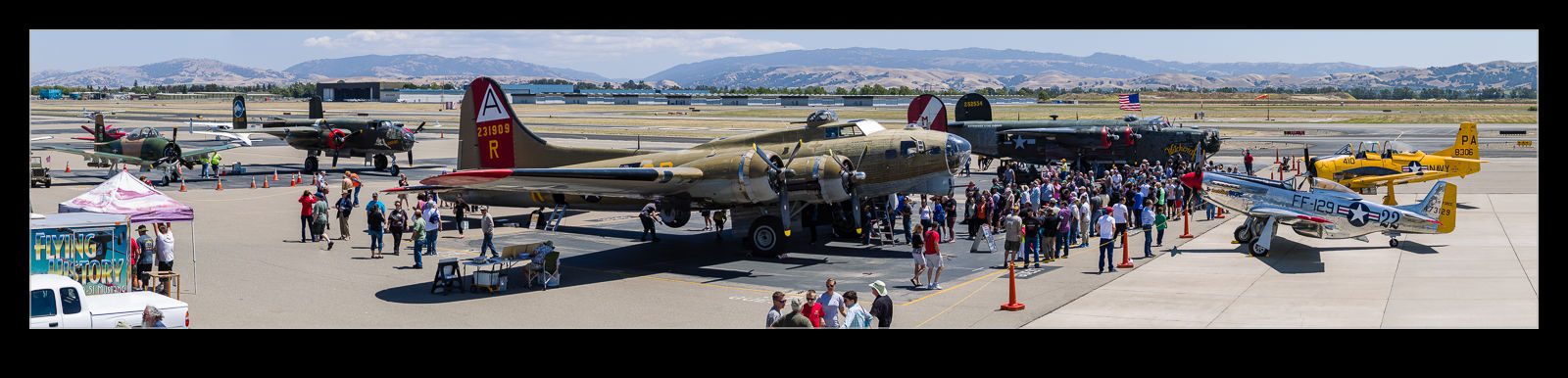
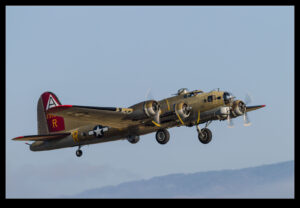
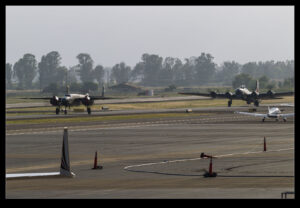
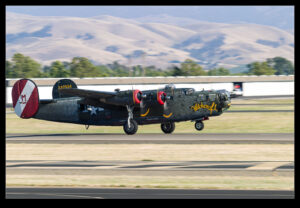
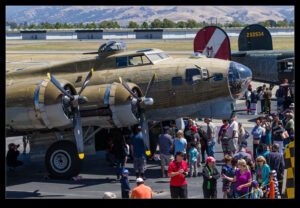
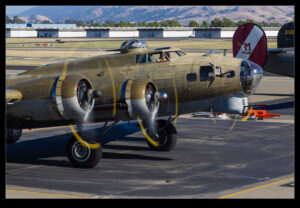
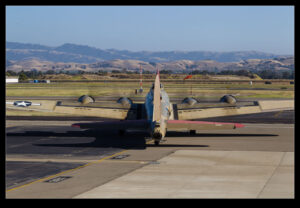
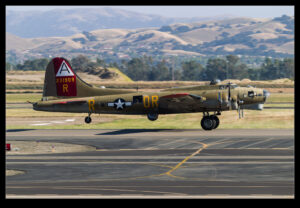
AU0E6426-Pano.jpgThe annual visit of the Collings Foundation to Livermore with their vintage warbirds is a popular event with many people turning out to look at the planes and, in some cases, fly in them. This year I didn’t plan on spending a lot of time there but I did head down for a while to check out how things were progressing. It was a hot day so the heat haze was playing havoc with shots as usual but there was still enough to see.

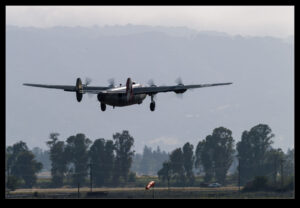
AU0E7522.jpgI had pondered what other spots might be useful for getting a shot or two and tried wandering down the street. However, the area is not pedestrian friendly so that idea didn’t progress too far. I did wrap up the day by driving to the public golf course at the end of the field to see whether I could get a different perspective on the departures. It wasn’t a bad spot but not somewhere I shall try again unless there is a good reason. You get a brief view and have to grab your shots before the planes are behind the trees.

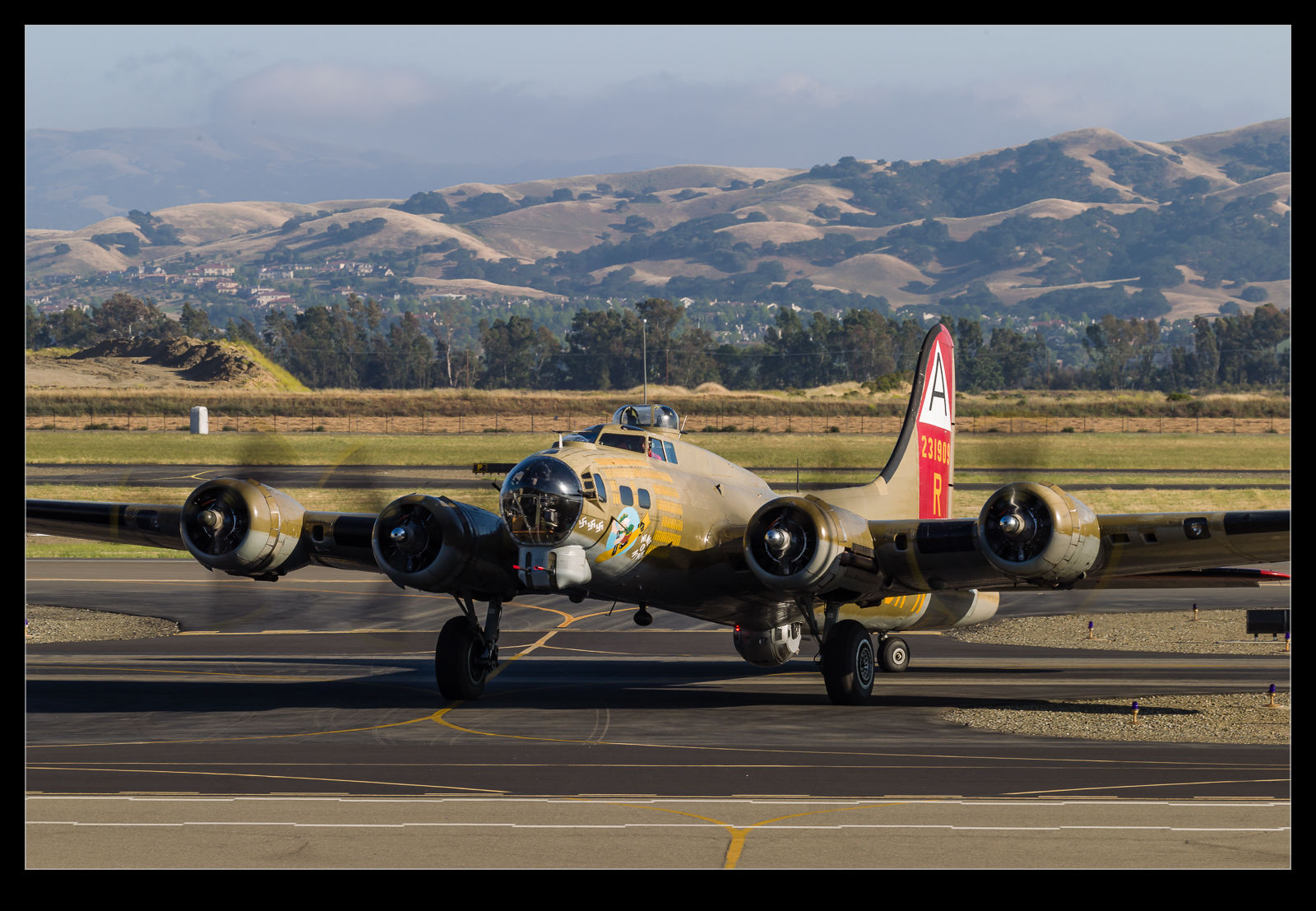
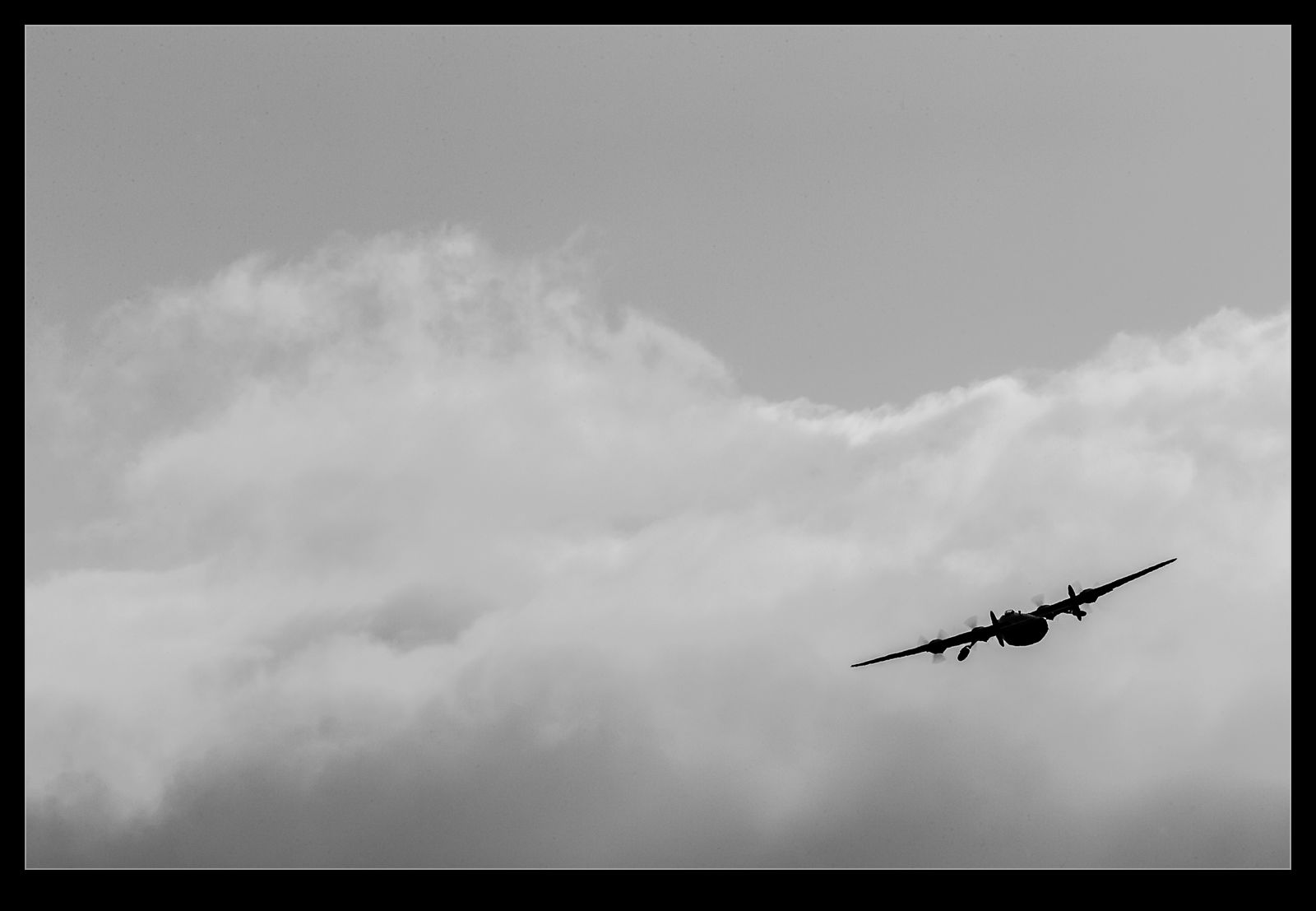
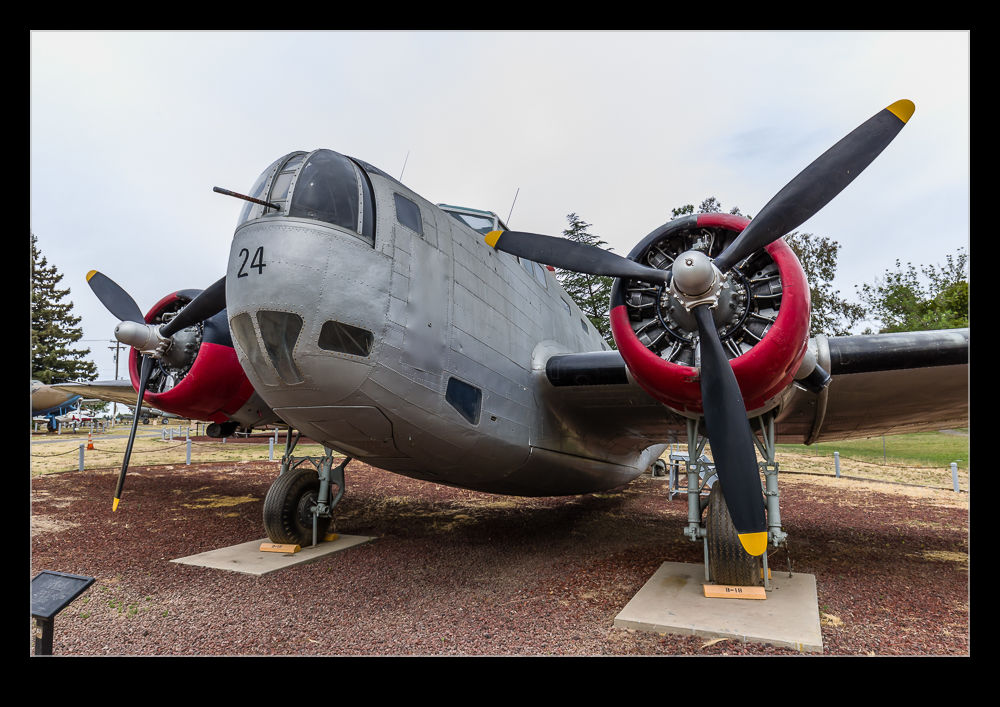
AU0E7640.jpgWhatever the limitations, having the P-51, the B-24 and the B-17 on display is always nice and worth taking time out for given that it is so close to home.
Scorpion

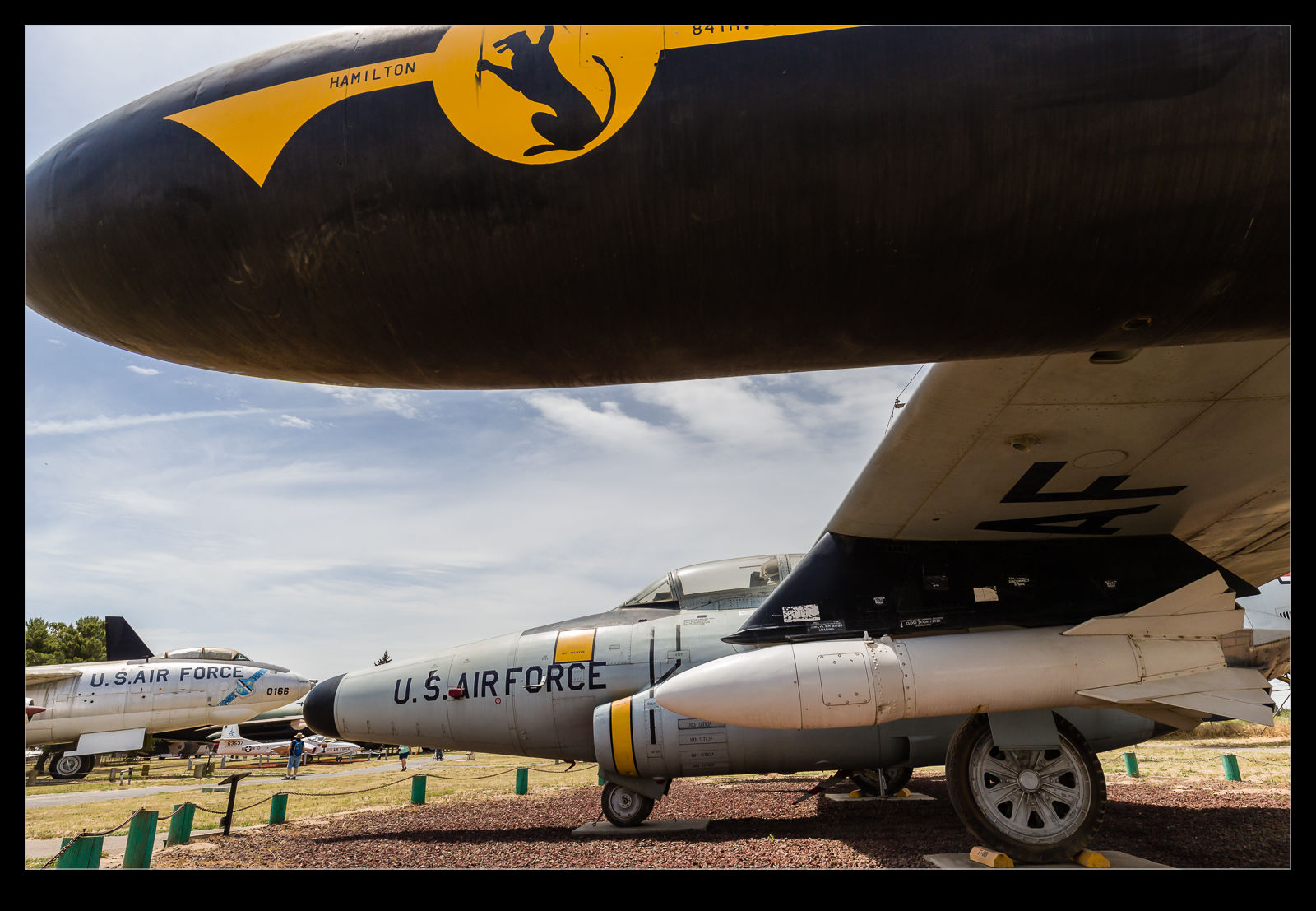
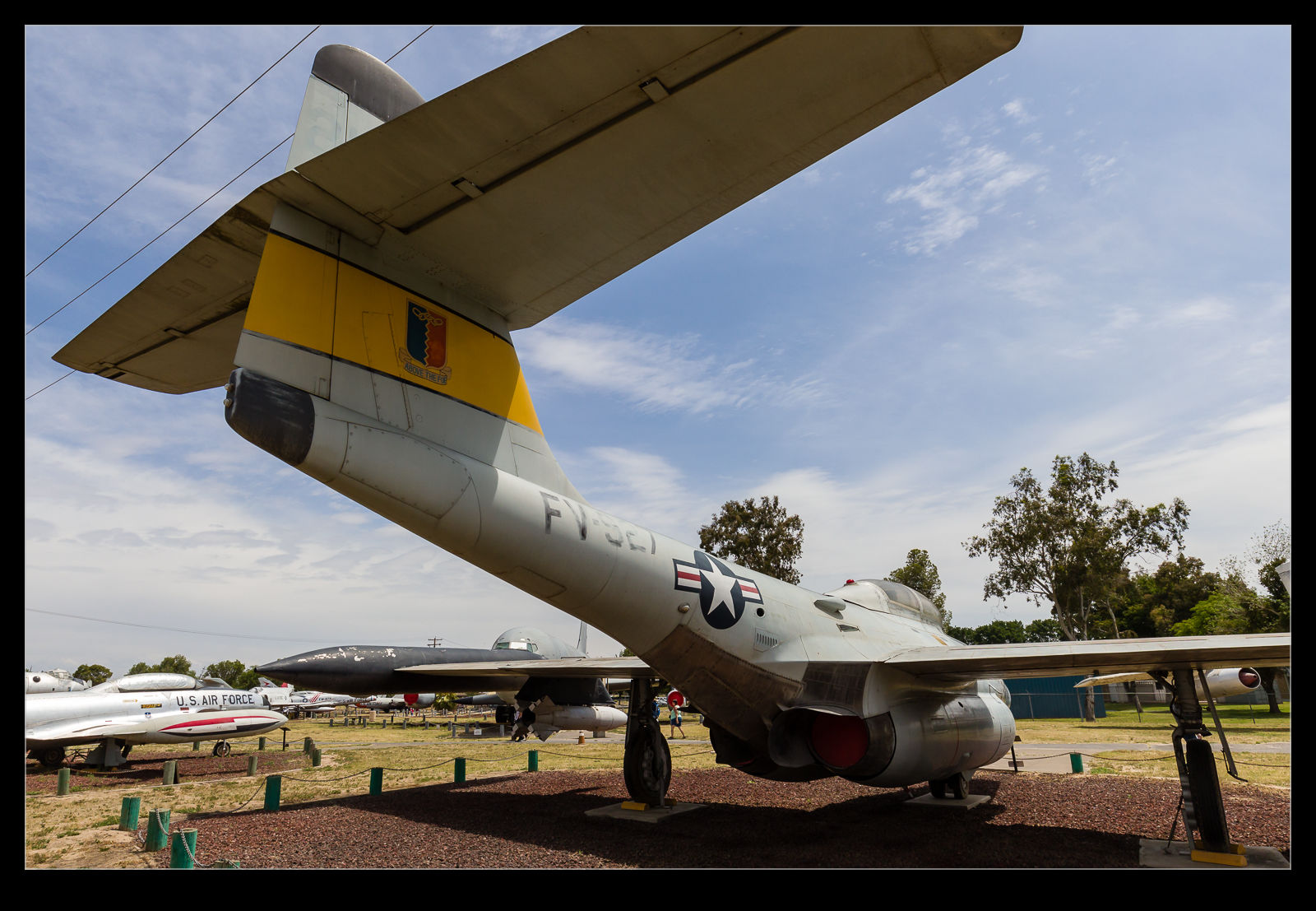
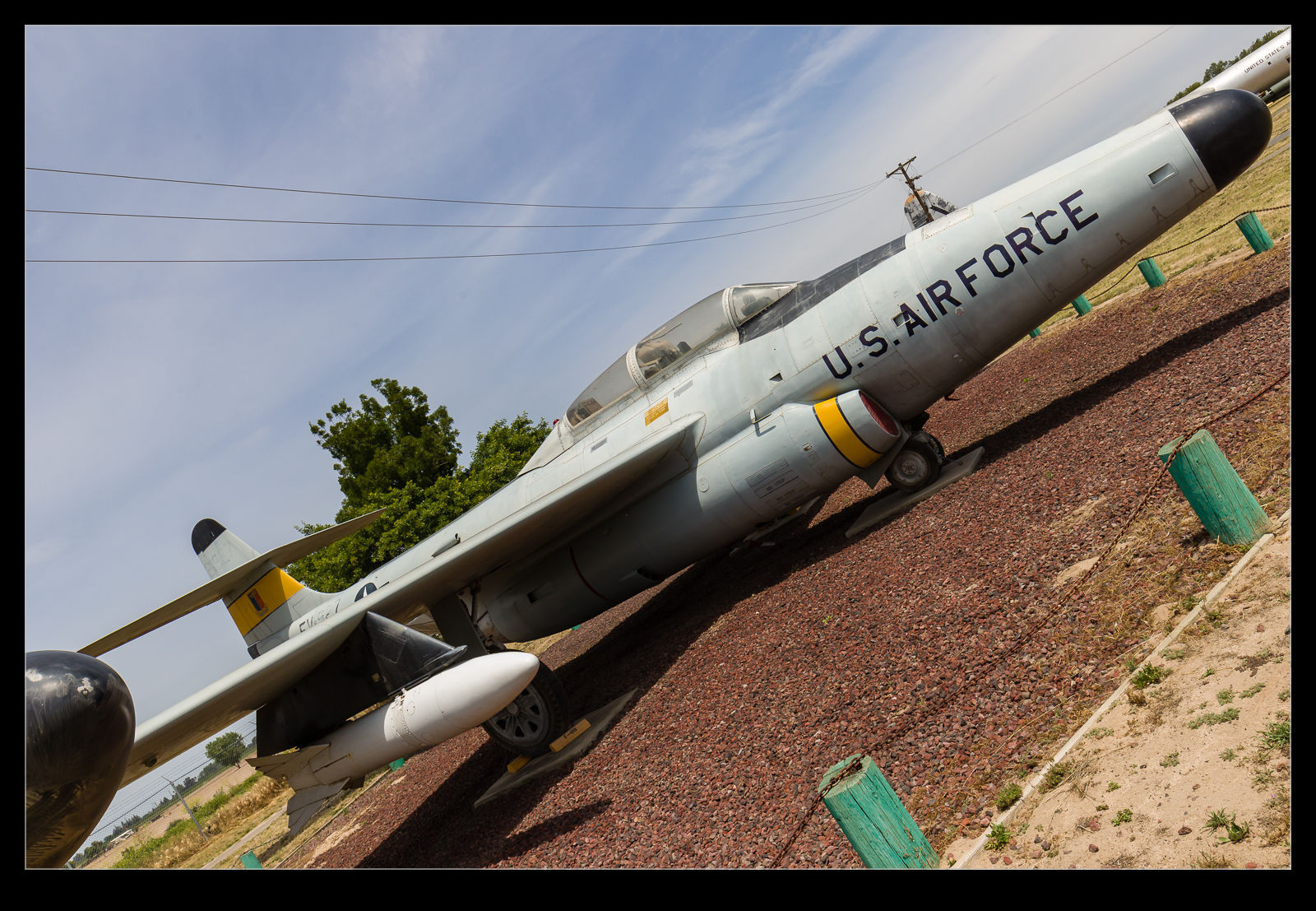
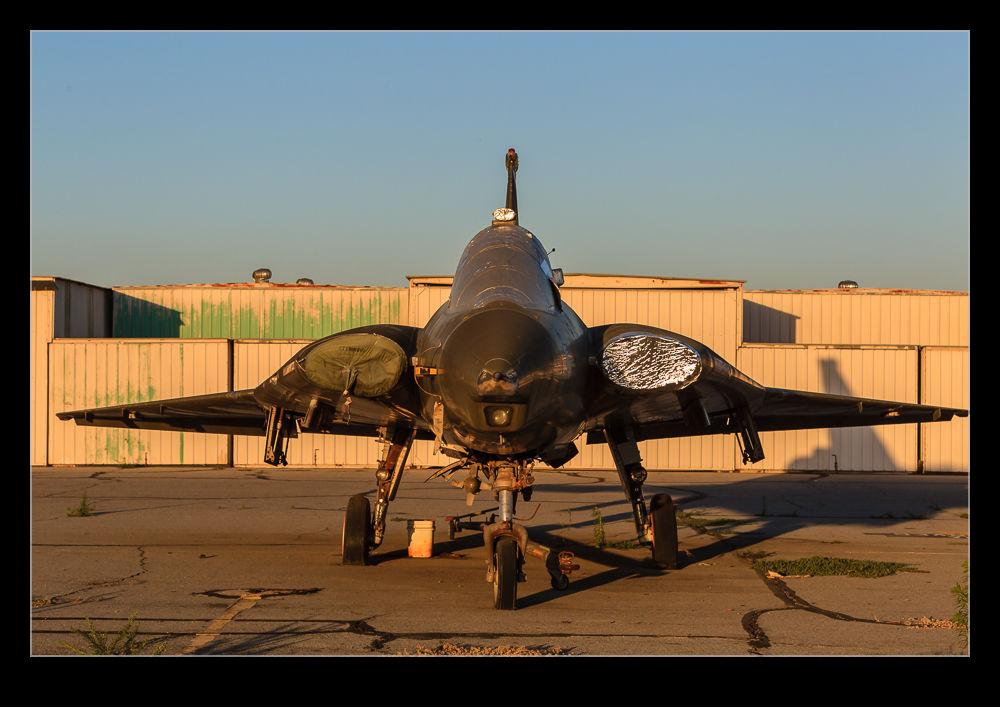
AU0E3957.jpgSome aircraft I blog about are ones that I find cool and wish I had seen in action. This is not one of those. However, it does interest me because it is so different from many of the types from the same era. This is the Northrop F-89 Scorpion. The Castle Air Museum has an example on display and I have seen a few scattered around various museums. The Scorpion is, in theory at least, a fighter. However, looking at it, you might be forgiven for not realizing this. It is a big beast of a lane with an unswept wing and a decidedly chubby appearance.
AU0E3959.jpgIt’s role was to shoot down bombers heading to the US. It was made in an era when jet engines were famously inefficient and having long range and endurance was tricky for a fighter. In order to operate far enough out to shoot the bombers while they were still out of range of their targets, the Scorpion focused on efficiency. It was not a maneuvering fighter. Its job was to get close enough to the bombers to launch its missiles.

AU0E3961.jpgThese missiles look a bit odd too. They are not your traditional air to air missile designed for speed and agility. They also didn’t need to be. The Genie missile had a special warhead. It was a nuclear weapon. As long as it was reasonably close to the target, it was going to take it down. No clever tracking and requirement to get close to have the required effect. Ultimately, this combination was only suitable for a relatively limited type of target and the focus moved to newer fighters and missiles (although the nuclear armed missile concept lasted a lot longer). The Scorpion went into the history books.

One other aspect of the Scorpion is of interest. It had large wing tip fuel tanks to increase endurance. Someone came up with the idea of equipping the jet with unguided rockets and these were installed in the front of the tip tanks. I’m sure it was well worked out but the idea of having rocket exhaust plumes on the front of a fuel tank seemed bizarre to me as a kid.

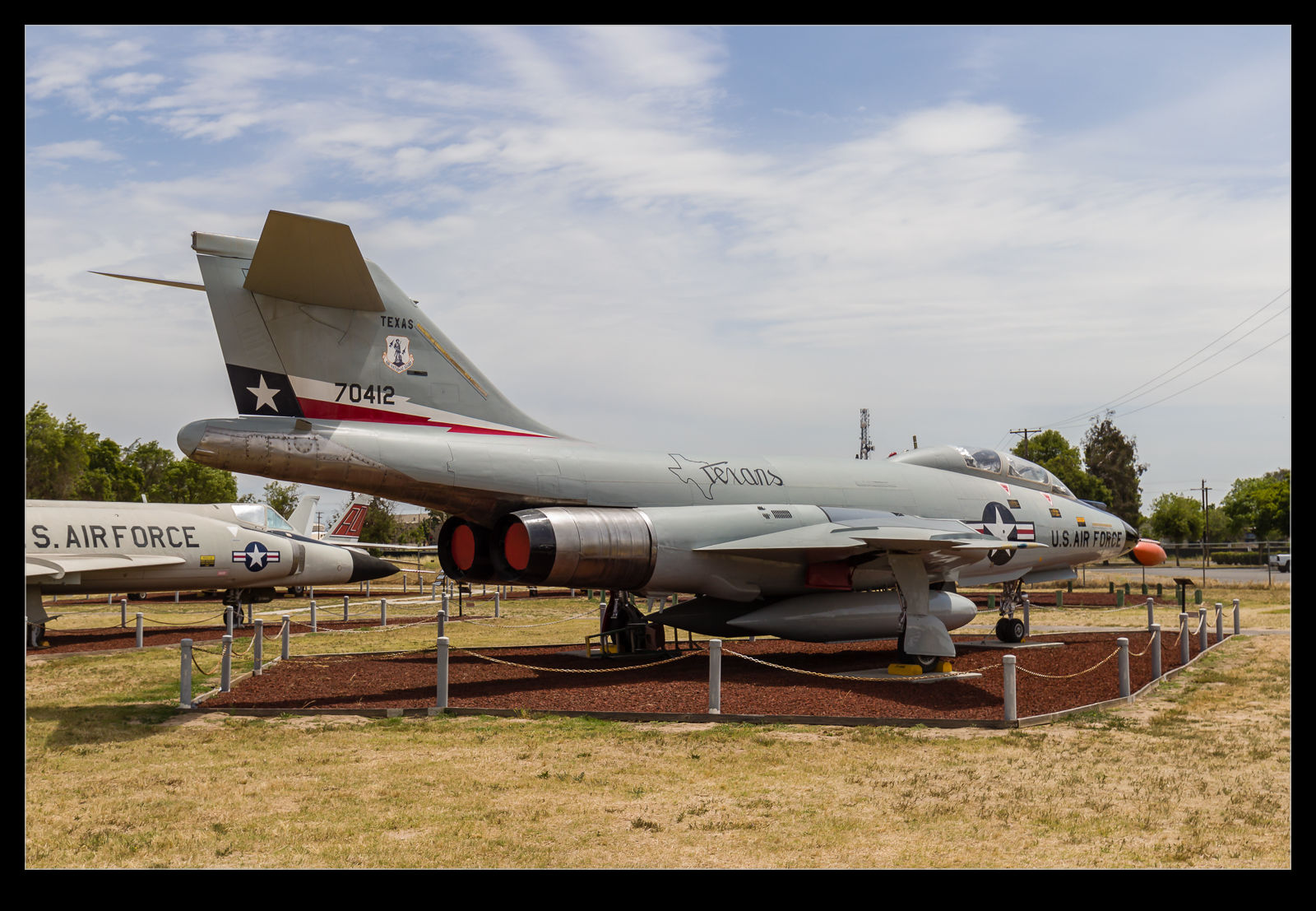
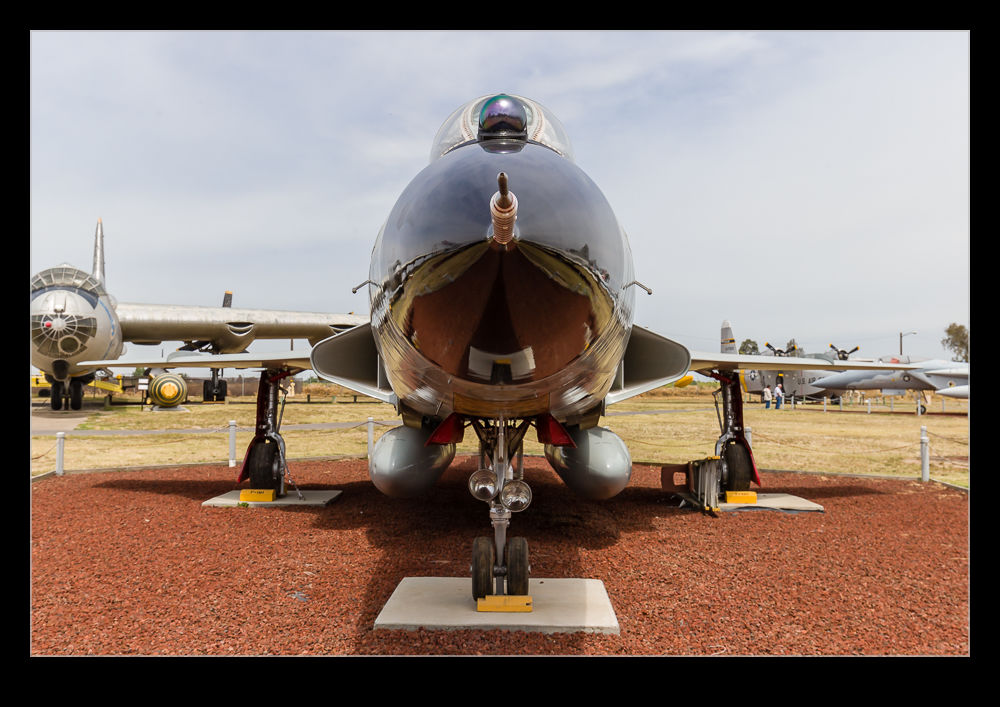
F-101 Voodoo

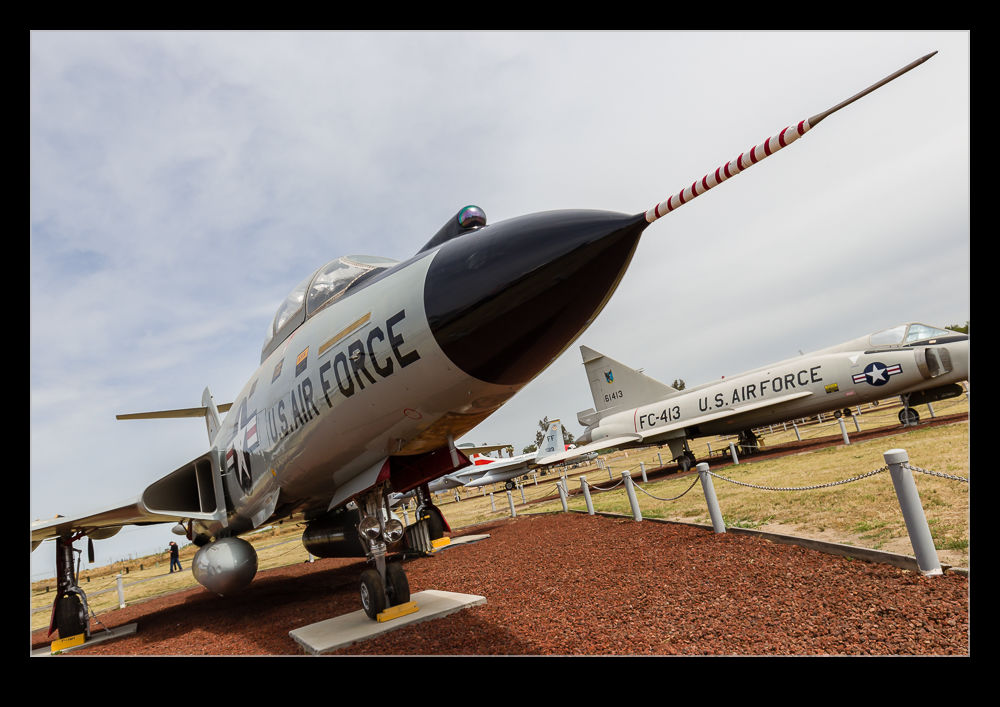
AU0E3855.jpgThe number of aircraft that I wish I had seen but flew either before I was born or when I was too young to get to see them is pretty high. Some of them were actually active but I just never got to see them in action. These are the ones that are more frustrating even though there was no way I was going to have been able to see the, at the time. One such type is the F-101 Voodoo. This is an aircraft that I saw in some of my (many) aircraft books. I am not sure what it was exactly that grabbed my attention but one element was the huge jet pipes along the lower rear fuselage. These seemed unusual to me and gave me the impression of power to go with the sleek fuselage design.
AU0E3946.jpgFighters of that era were very focused on speed, often at the expense of maneuverability. They had small wings so didn’t turn too quickly but they got where they were going in a hurry. That seemed cool to me at the time. Since I never saw them fly, my only option is now to find examples at museums. The Castle Air Museum has one on display and I was very pleased to see it. Everything about the plane looks interesting. The long fuselage, the T-tail configuration, the crank to the wing, the triangular inlets – all of these make it attention grabbing. I wonder how much the engineers at McDonnell enjoyed designing this jet and then seeing it fly. It met a few roles quite well. The Canadians us d it as a long range interceptor patrolling the extensive air space that country has. The USAF turned in into quite a capable reconnaissance platform. Whether it is judged as a success from a historical perspective I do not really know. I just like the look of them and I’m always happy to find a preserved copy.

AU0E3856.jpg

Castle Air Museum

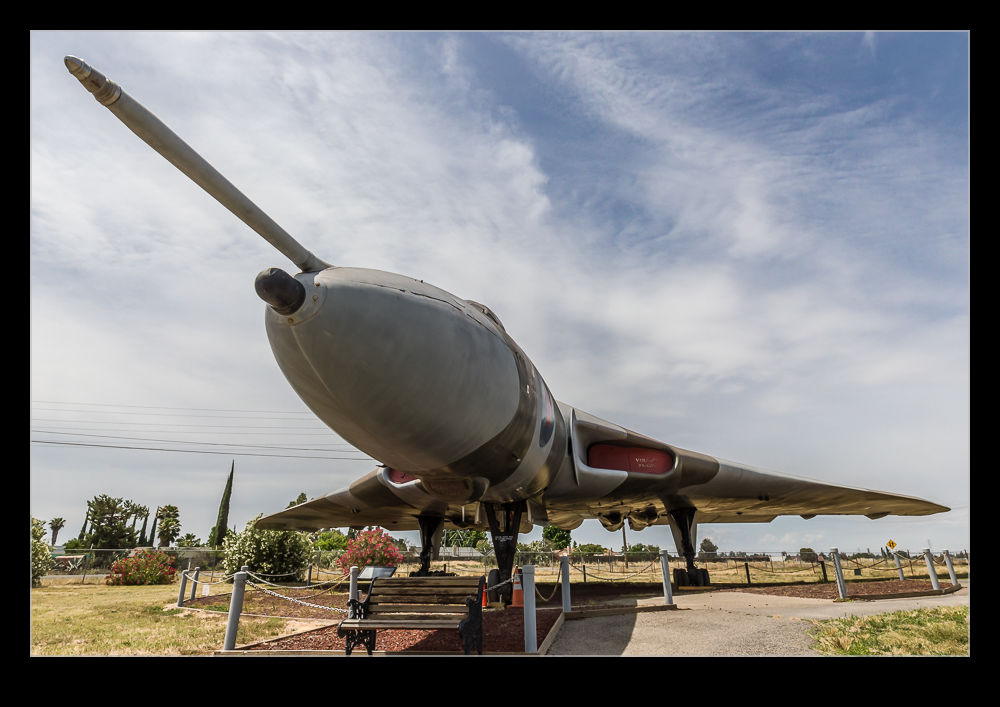
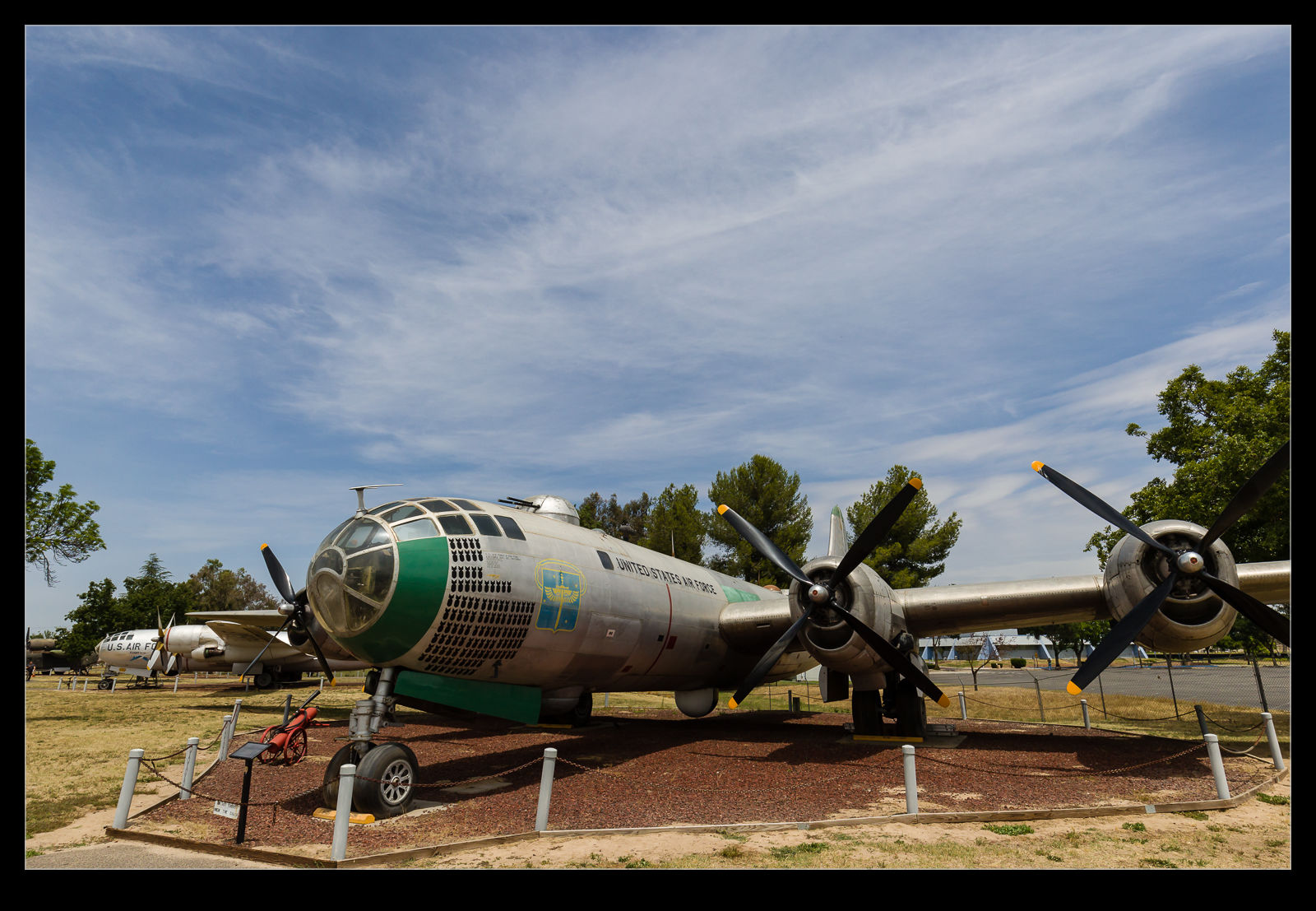
AU0E4021-HDR.jpgIt’s quite strange to think that I live about 90 minutes from a major air museum but have not been to it since moving here. Such is the case with the Castle Air Museum in Atwater CA. Located on the edge of what used to be Castle AFB, the museum has an extensive collection of Cold War and Second World War types, predominantly from the US but also with a variety of types from other countries. The majority of the collection is located outside which, given this is the central valley, should mean it is pretty sunny. How I managed to get there on a cloudy day I do not know. However, it was indeed overcast when we started walking around. Things did clear up a bit later on, though, so I actually went back to get a few extra shots of things I had seen early on.

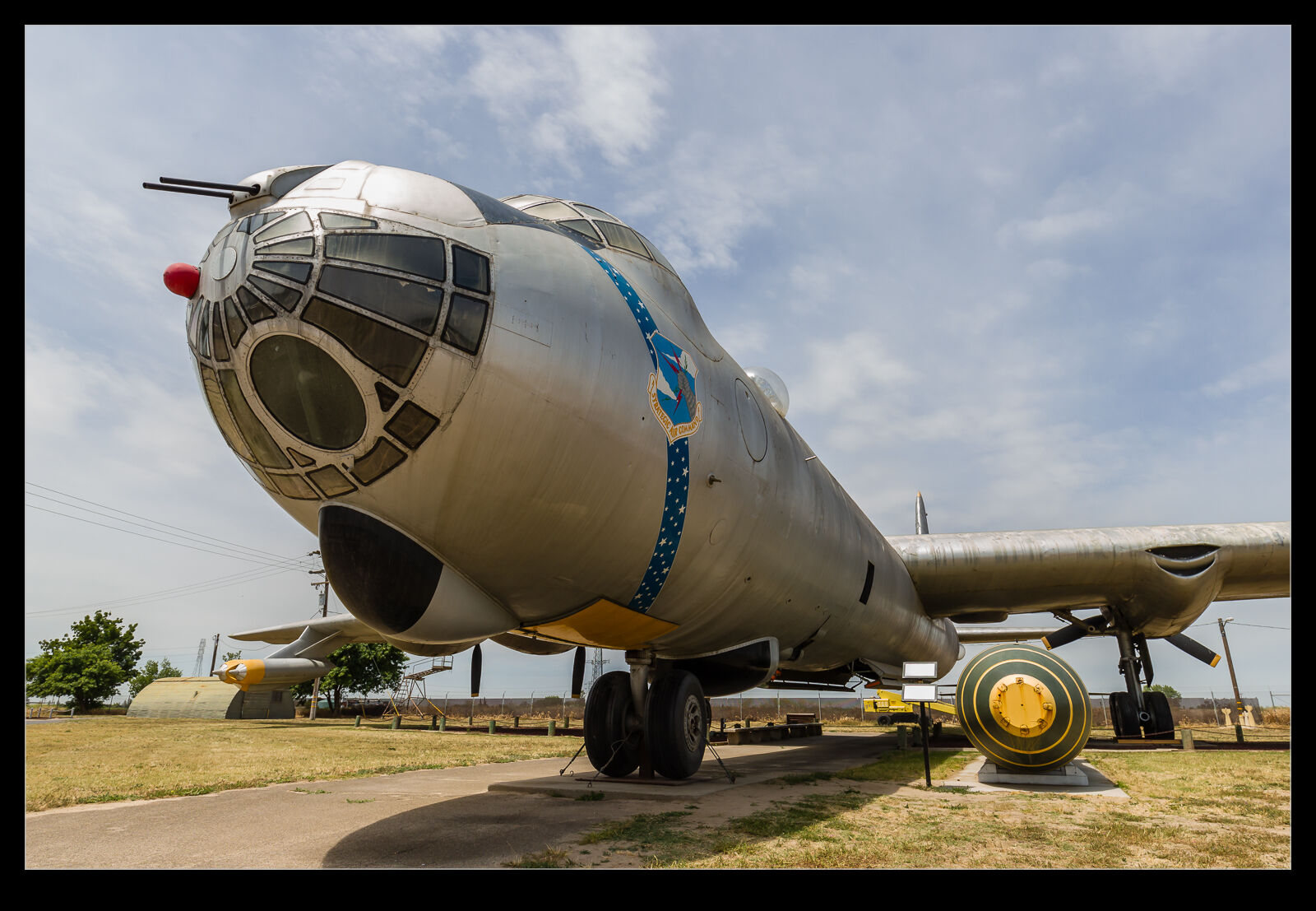
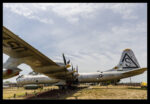
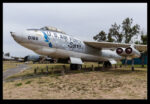
AU0E4048.jpgAs a one-time SAC bomber base, there are quite a few large bombers on display. From the B-29 and B-50 through the enormous B-36 Peacemaker (got to love irony) up to the B-47 and B-52 strategic jets, there are all sorts. Some rarer bomber types are also on show. Not necessarily successful ones but they add to the collection. The Brits are also represented with a Vulcan on display.

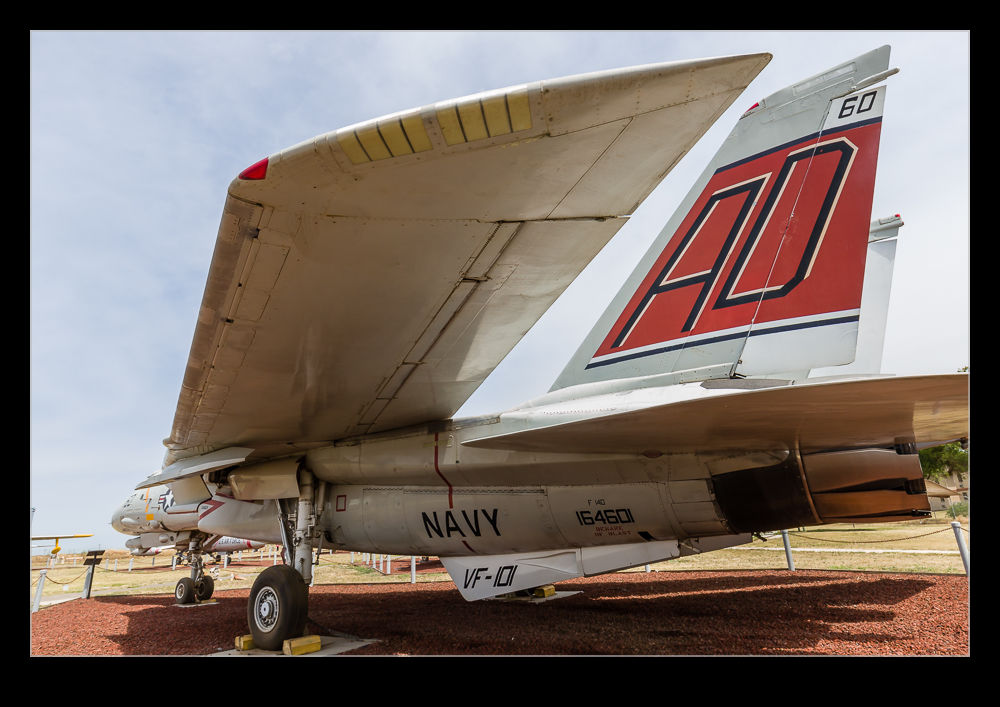
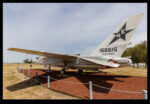
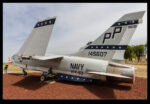
AU0E3943.jpgIt isn’t just bombers though. Plenty of fighters and trainers are included in the collection and a good number come from the US Navy so, despite the base having a USAF history, they have covered both services well. There is enough space to have all of the aircraft well spread out so you can appreciate them from many angles. You also get quite a walk in if you take a look at everything.

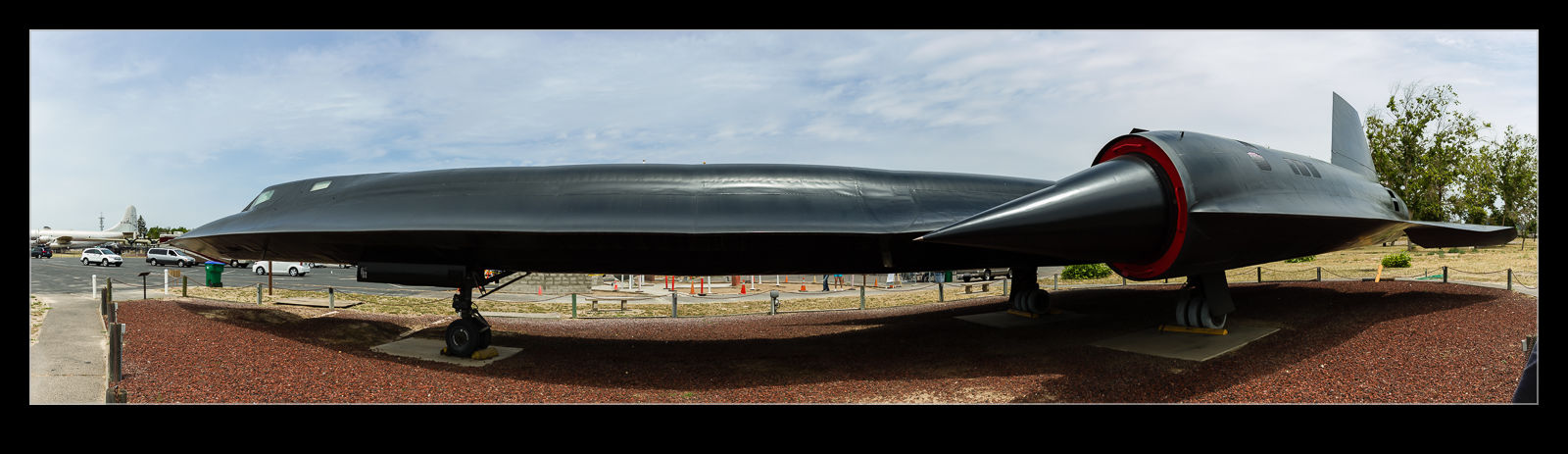
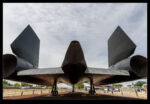
AU0E4062-Pano.jpgOne of the nice additions is an SR-71 Blackbird. There are a few SR-71s on display but not a huge number and seeing another one is always cool. However, they are quite tricky to photograph, particularly outdoors when the black paint scheme really makes for a strong contrast with the daylight. Still worth a go though.

AU0E3874.jpgThere are a few types on display that are worthy of a little extra time so I may post about them separately. If you have even a vague interest in planes, though, make a trip to this museum. Nancy came along and, while she is not a big fan of planes, she found the variety of types quite interesting. High praise indeed!

AU0E3802.jpg

Farnborough ’92 – The Rest

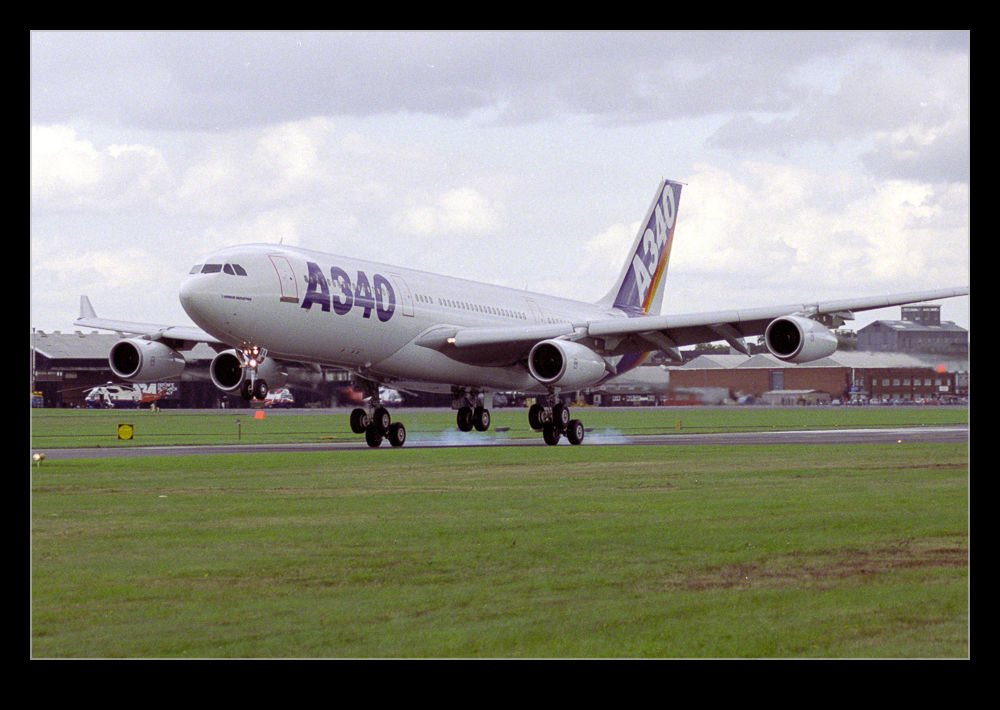
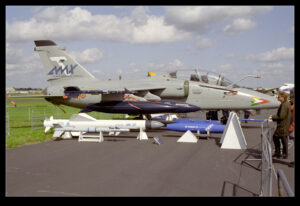
0701-2.jpgThe attendance of the Russian contingent at Farnborough in 1992 was pretty impressive but they weren’t the only game in town. There were plenty of other aircraft on display. The Rafale prototype was there to follow up from the demonstrator a few years before. The first A340 was also part of the flying display.

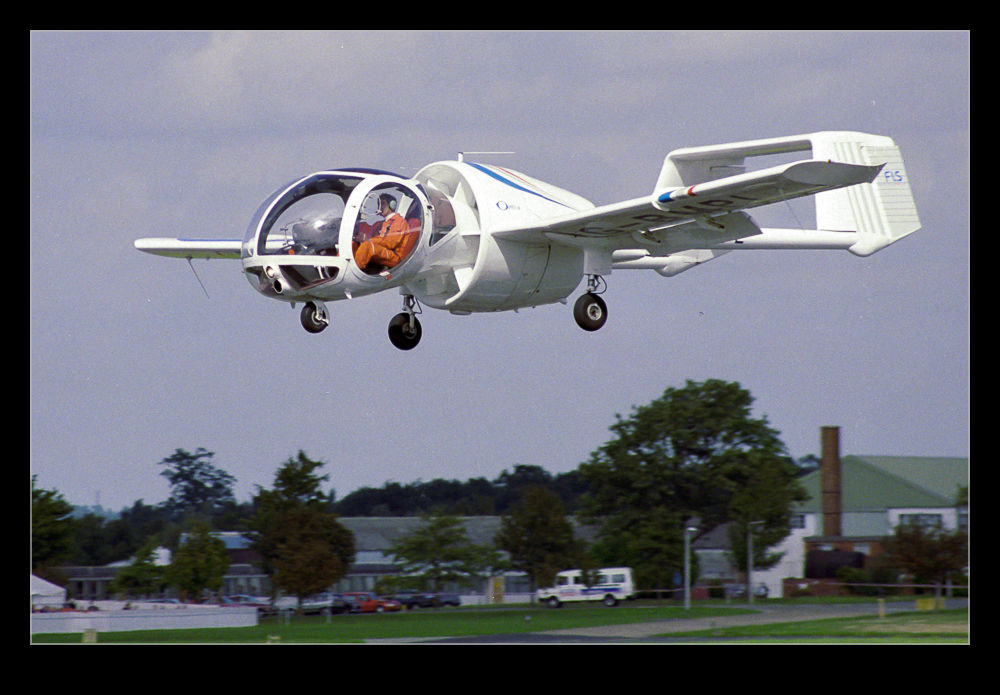
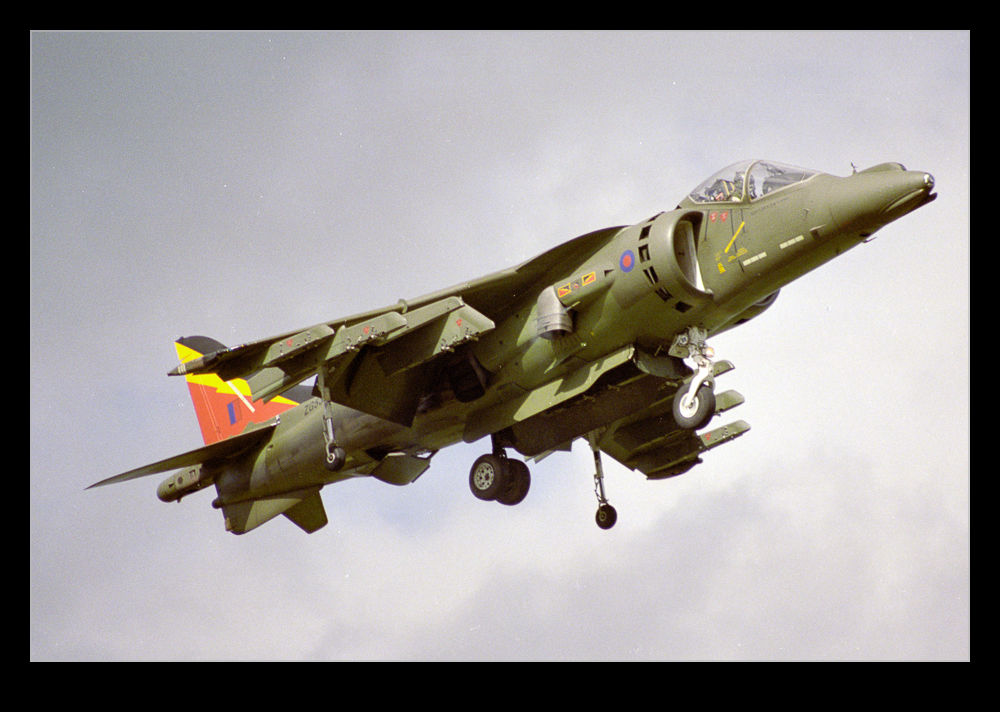
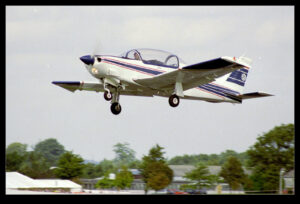
0803.jpgPlenty of smaller types were on show including the Optica and the Pillan. Harriers and Hawks flew and the Gripen development program was represented by one of their jets. The Tucano for the RAF was taking part and the US military had a Black Hawk in the static display. Quite a variety of stuff to enjoy and interesting to see what is still in production today and what has disappeared from service.

0302.jpg

Farnborough 1992 – Here Come the Russians

0902.jpgThe Farnborough Air Show used to be a regular feature for me. I started going when I was studying at university and would go to the trade days each two years as the show came around. When I worked at BAe, they would sometimes make it easy for us to get there. One year I got to ride down on the 146 to RAF Odiham and they took us the rest of the way by bus. Not a bad way to travel for sure.

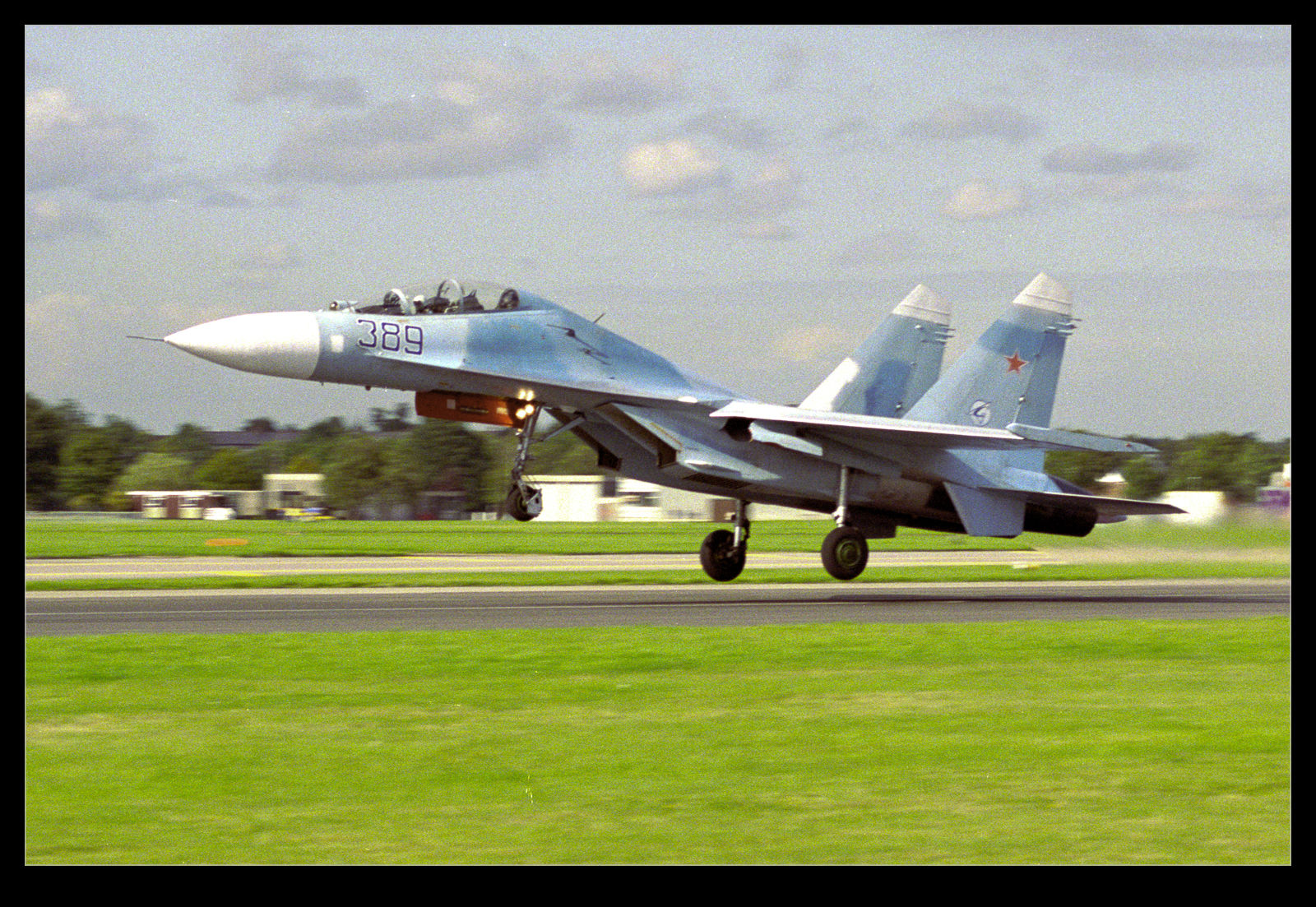
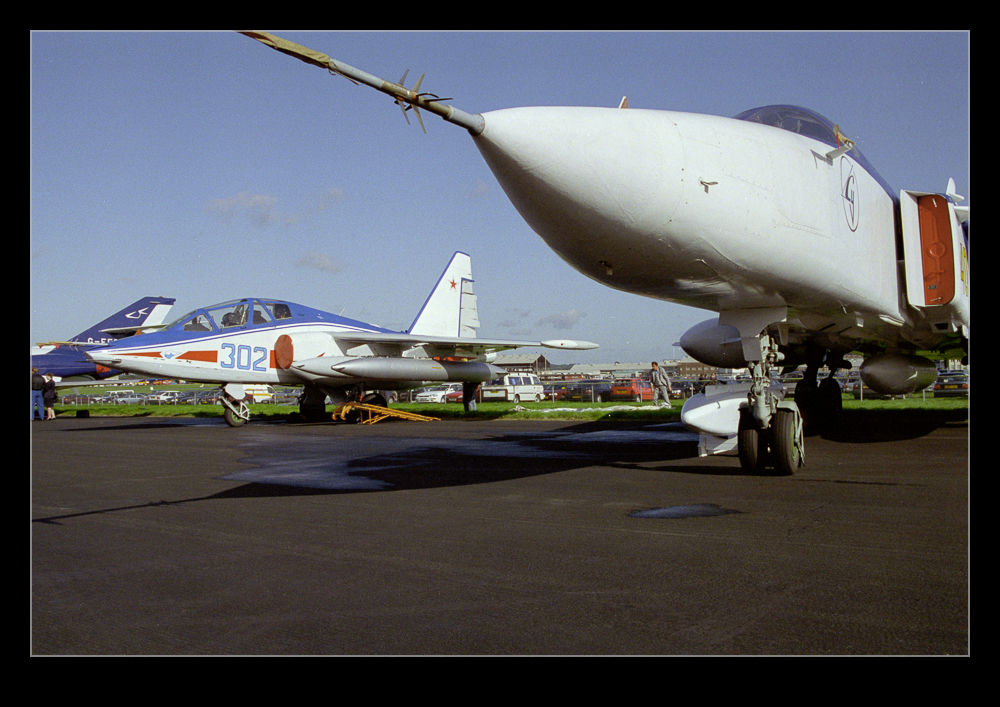
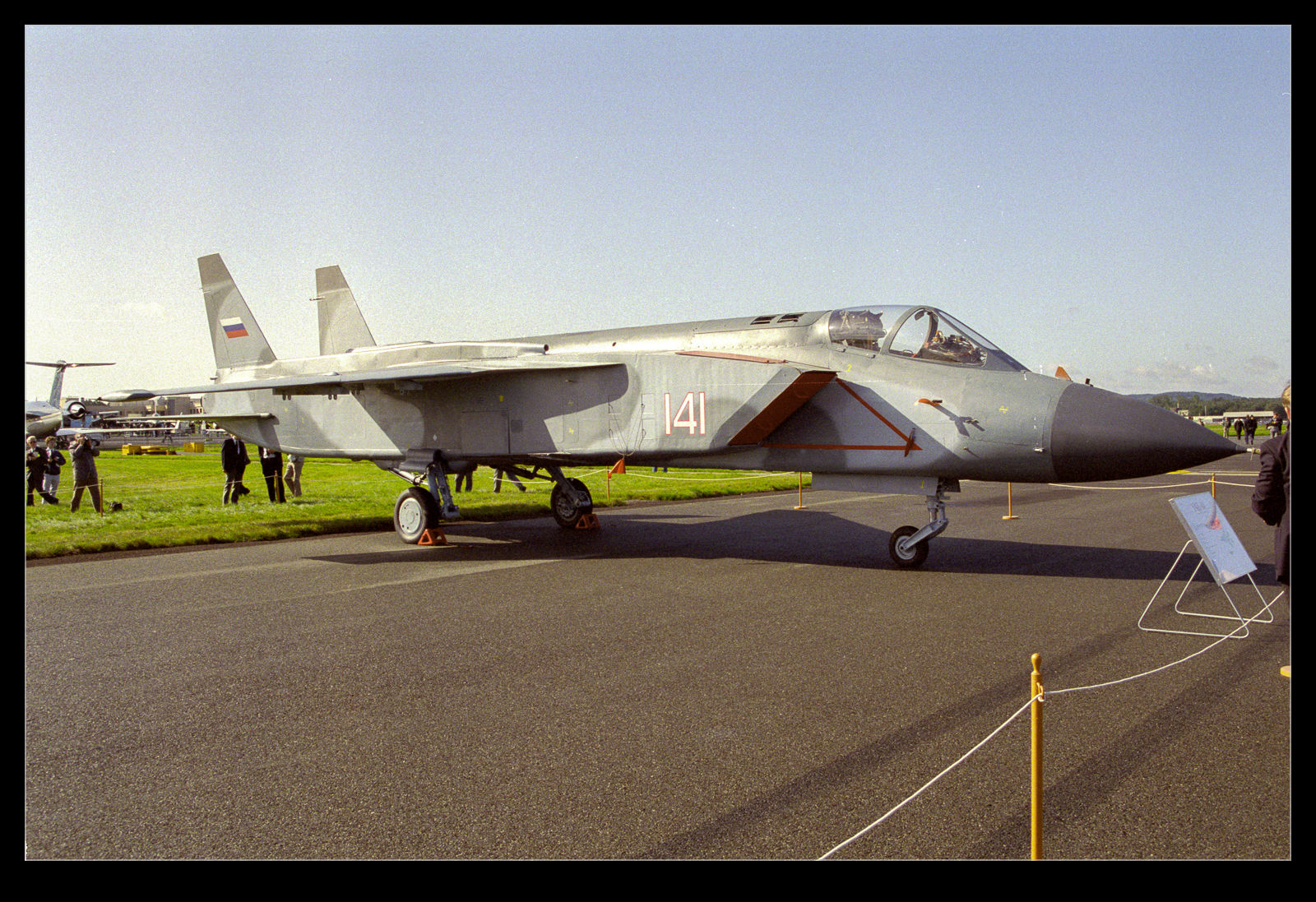
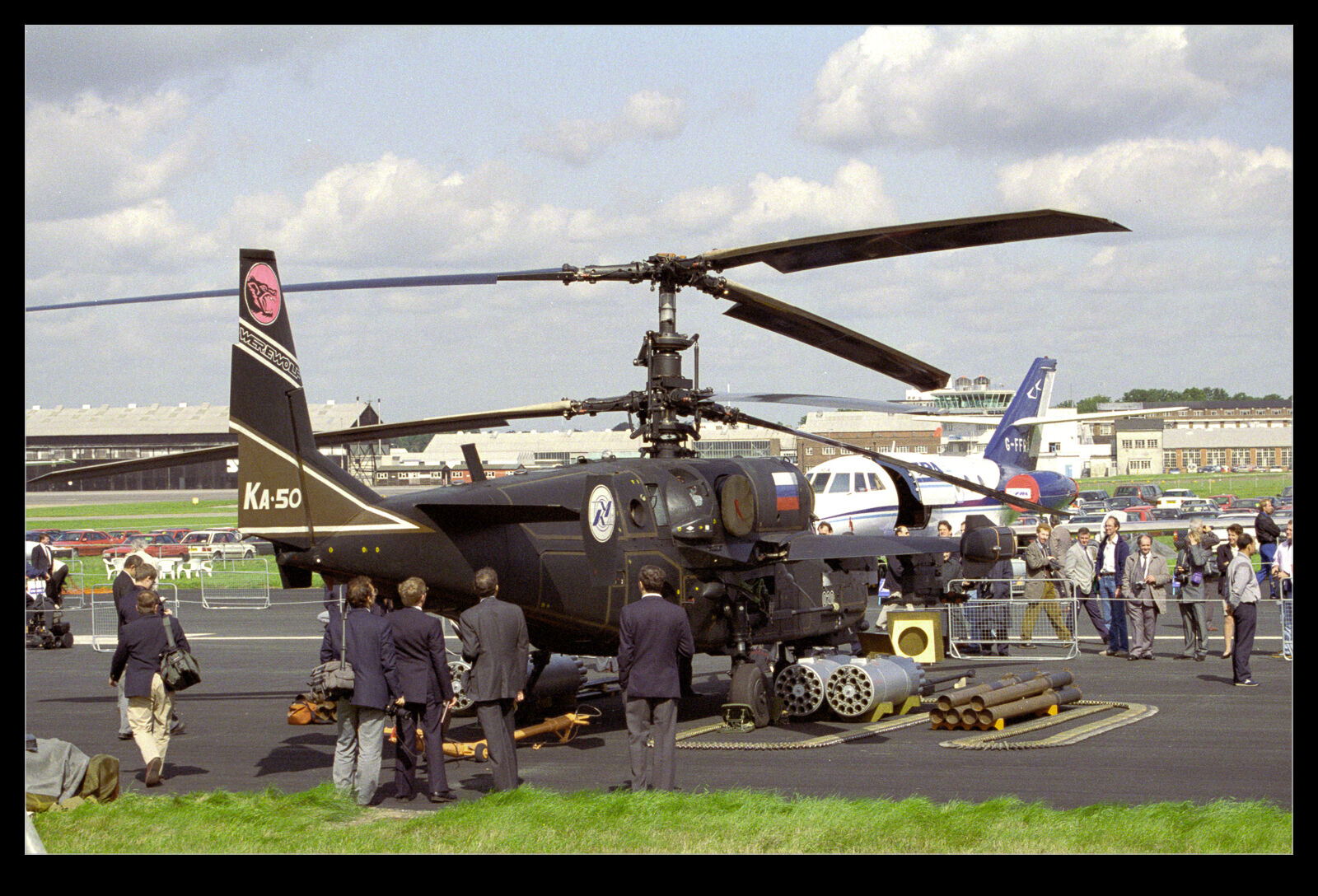
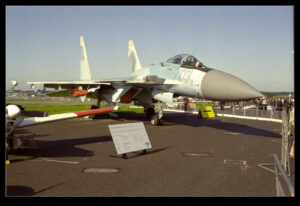
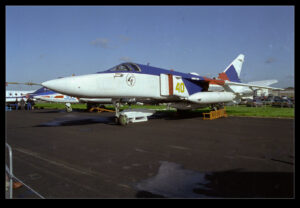
0201.jpgThe Russians started showing up at the shows from, if memory serves, 1988 onwards. They started off with a pair of MiG-29s the first time around and progressively brought more with them each time. 1992 was a particularly good year. Not only were the MiGs there again but Sukhoi SU-29 Flankers were there and, the highlight for me was the Yak-38 Forger and the Yak-141 Freestyle. Sadly, it did not fly the day I was there but those I know who saw it hovering can attest to the noise and spectacle it created. Meanwhile, there were other excellent types there such as the SU-24 Fencer although it was rather brightly painted for an operational type. Support aircraft and airliners were also part of the display as Russia tried to expand its business following the collapse of the Warsaw Pact and the sudden downsizing of their forces.

0702.jpgTimes have changed and I doubt we will get Russian attendance like this at a western trade show for a while. However, nothing stays the same forever so there may well come a time again in the future when some variety will be added to a trade show. With the number of types in service in the west reducing, it would be nice to see things like this again and some of their more recent types would be good to see too.

0501.jpg

Drakens

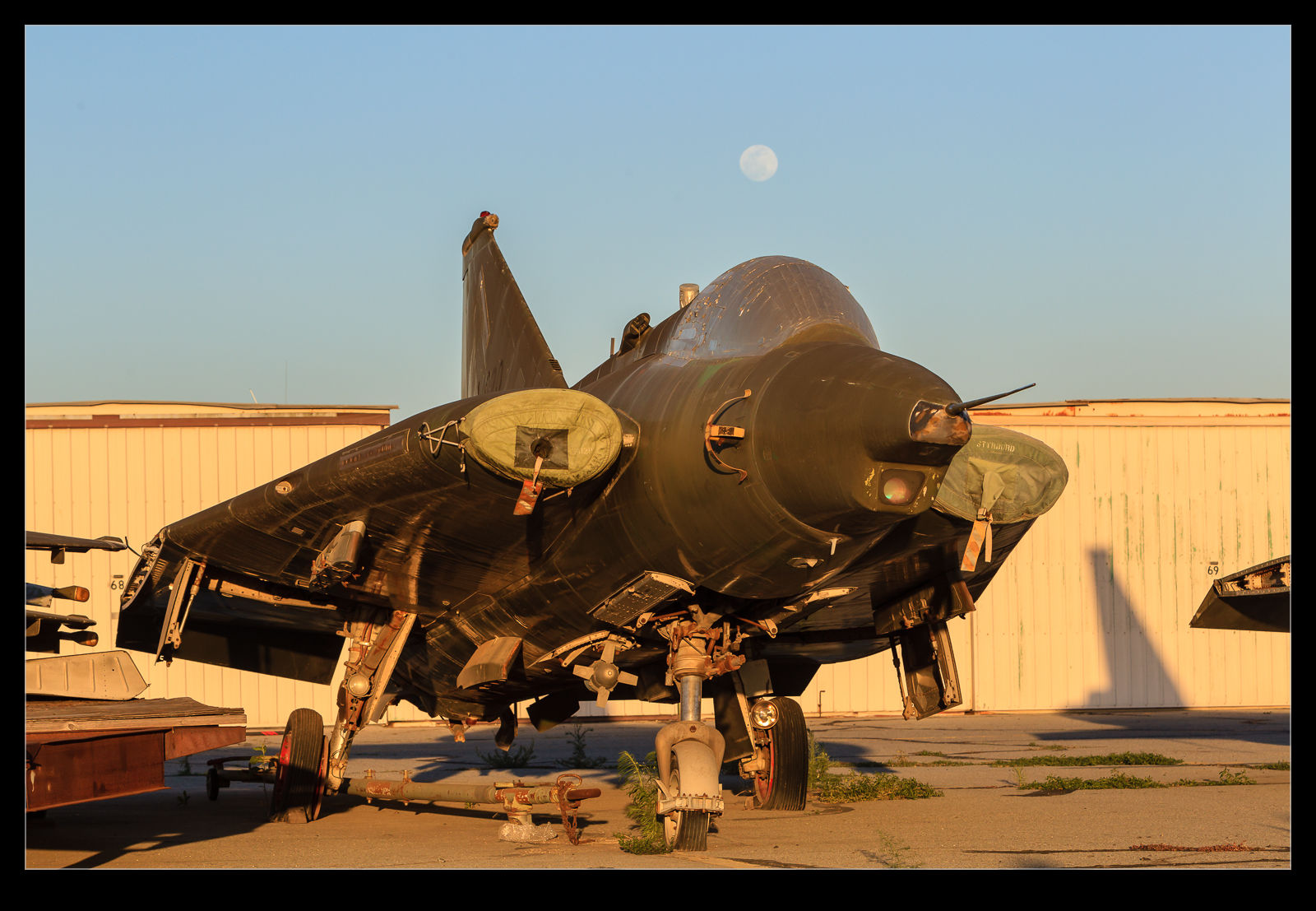
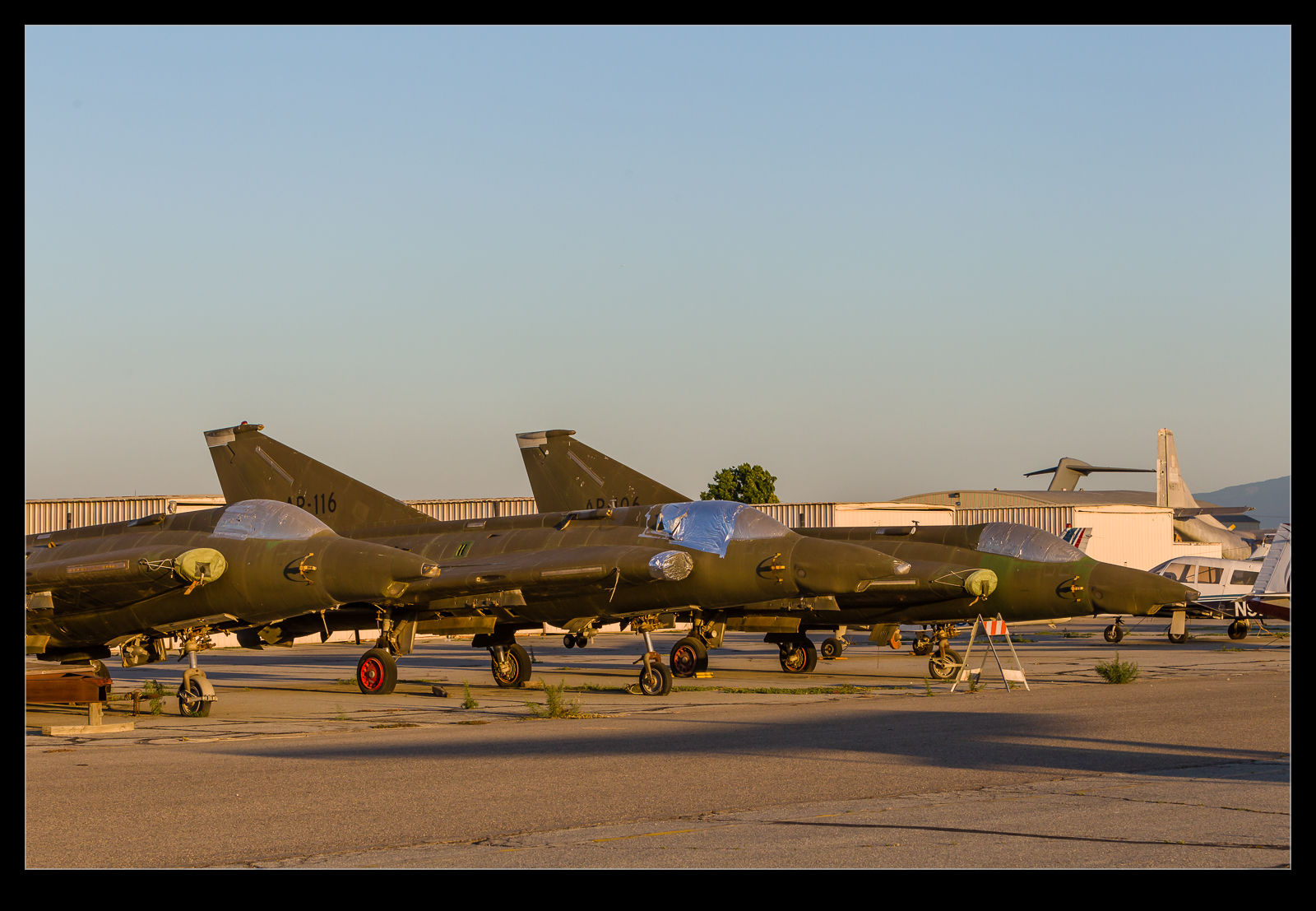
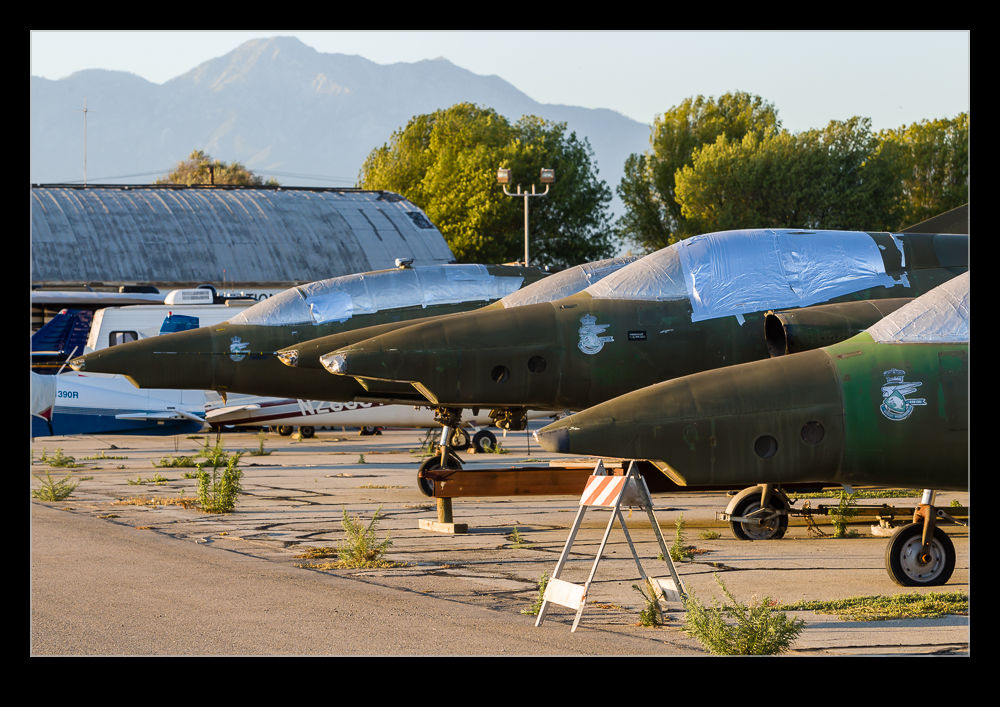
C59F1748.jpgChino Airport is home to all sorts of interesting aircraft, many of which are unlikely to ever fly again but for which the dry environment is one that means they do not deteriorate quickly. The ramp has a collection of single and two seat Saab J-35 Drakens. The Draken is a cracking aircraft and one I sued to see fly a lot in Europe when I was young. I have also seen one flying around at Pt Mugu on a Navy contract.

C59F1752.jpgI am not sure how these jets arrived here but the appear to be Danish in origin.  Most have their wings removed and stacked at one side.  One does have them attached though.  There are single and two seaters and they all have recce noses.  I doubt we shall see them fly again but it is nice to think that you might.

C59F1750.jpg C59F1746.jpg


Helmet Mounted Sights

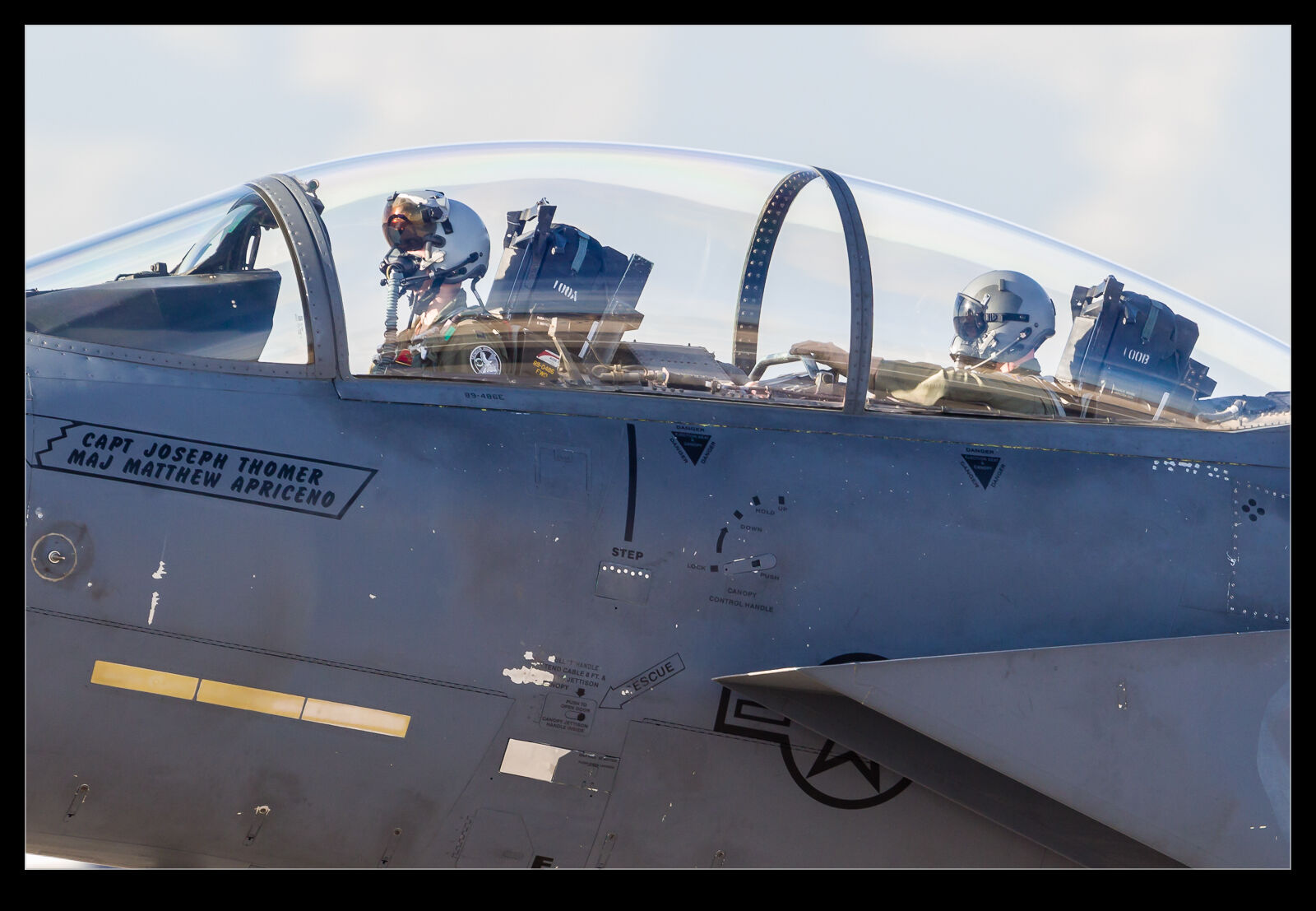
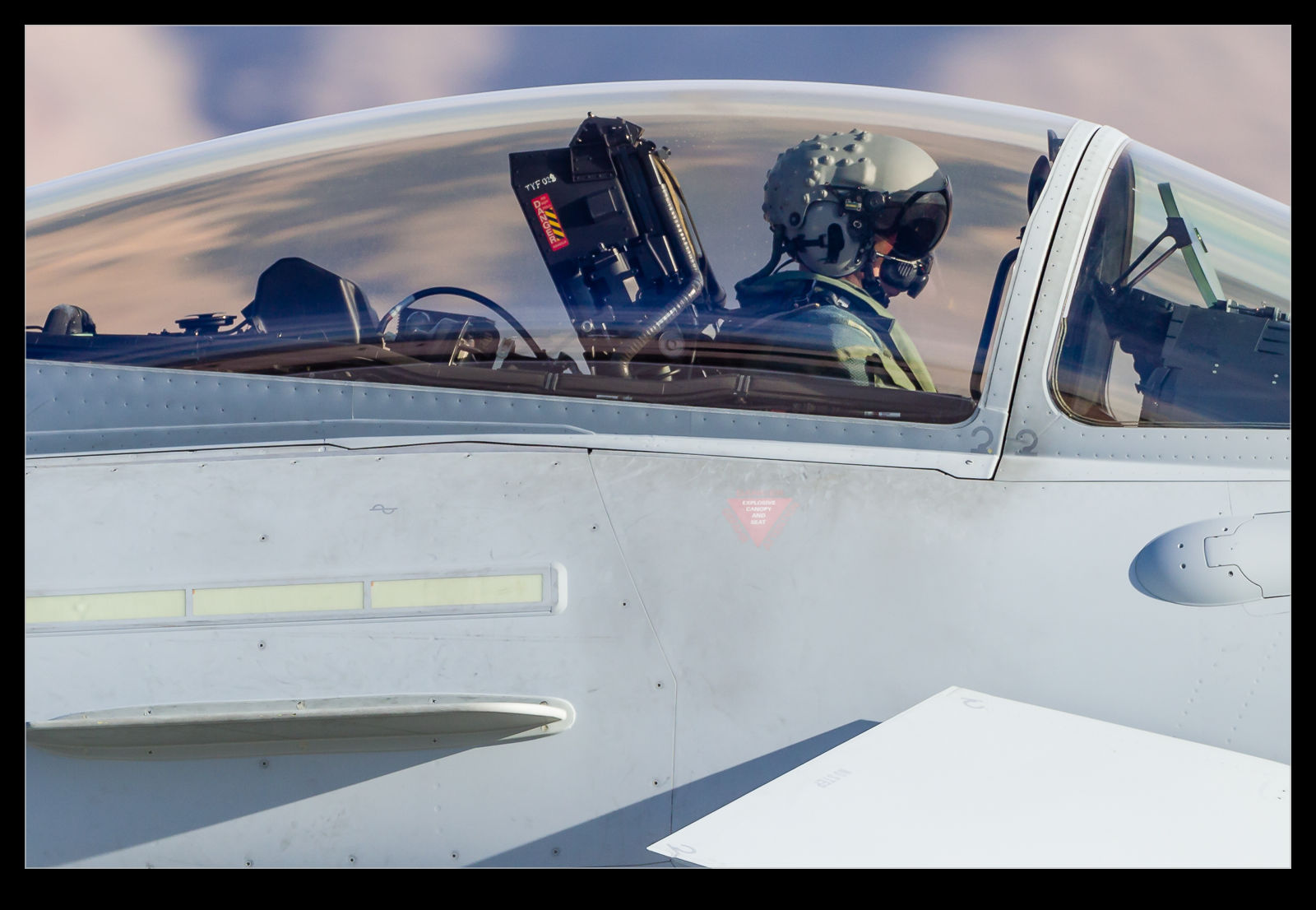
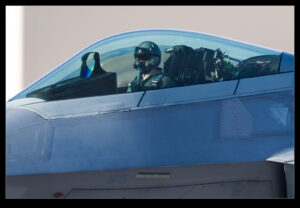
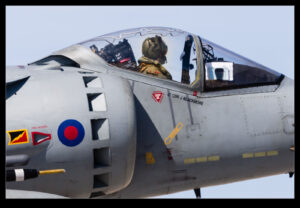
C59F0781.jpgA feature becoming more and more common in fighters these days is a helmet mounted sight/display. These allow the pilot to look at the target he is interested in and designate it or to have his attention cued to something courtesy of the helmet displays. The more complex helmets now coming in to service on the F-35 have access to distributed viewing systems around the aircraft so the pilot can actually look through the aircraft – just as well given how crappy the visibility is from the F-35 cockpit!

C59F0285.jpgThese helmets need to know exactly where they are all the time so they can align accurately with the other sensors on the aircraft. They also have to have the image generator for the pilot displays built in. Consequently, they appear a bit bulky compared to traditional helmets.

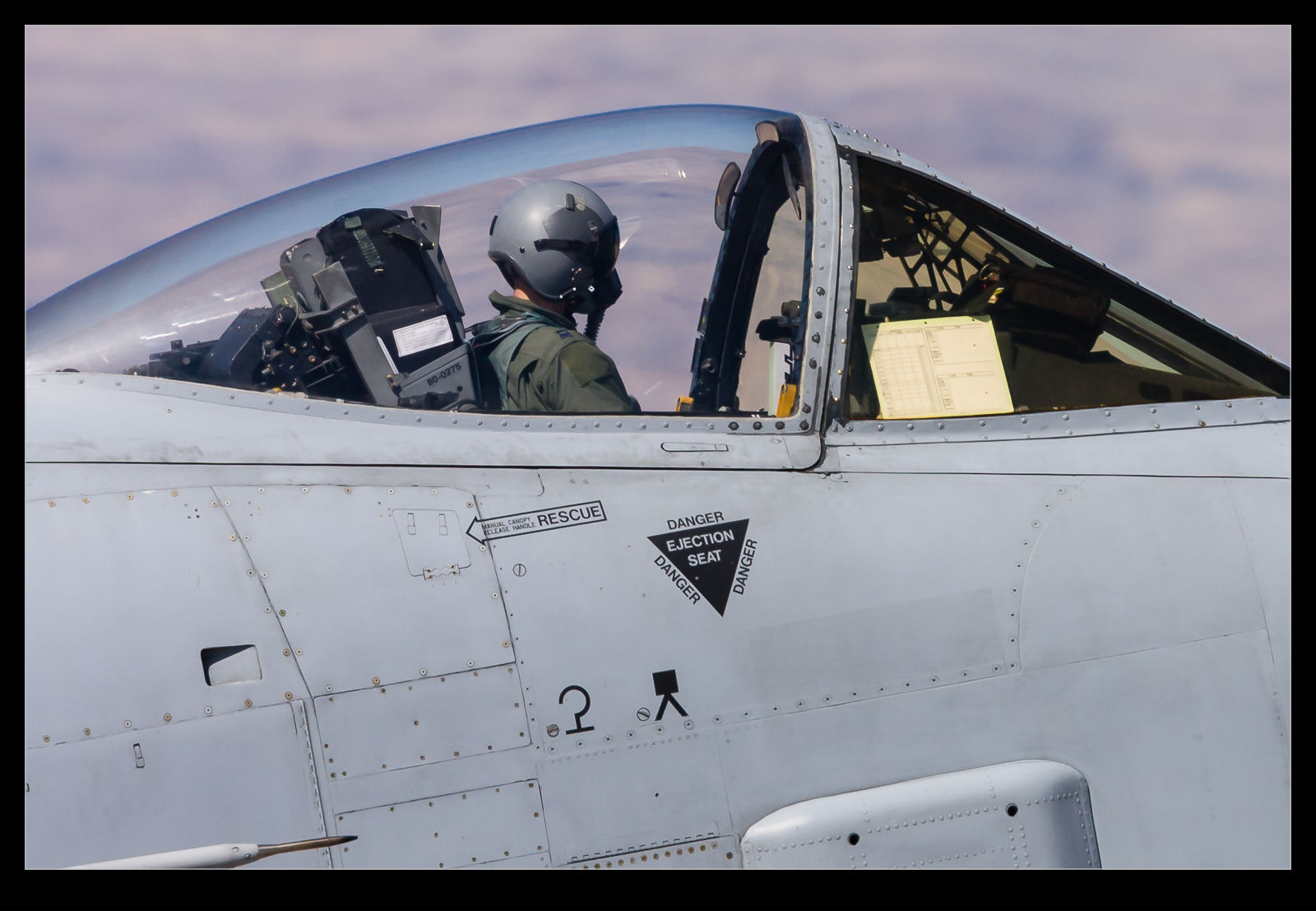
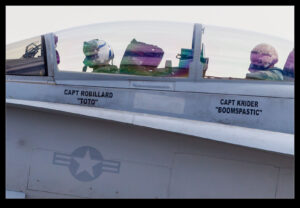
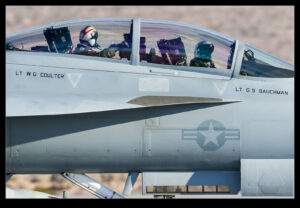
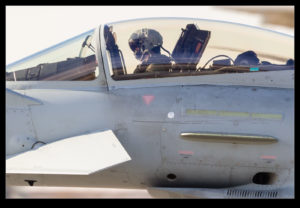
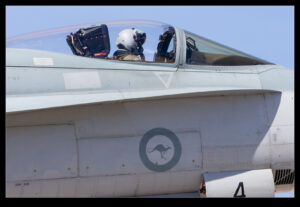
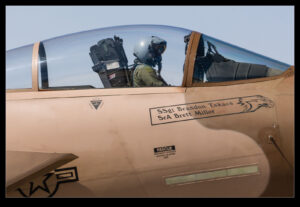
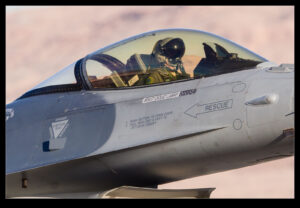
IMG_1322.jpgThey still have to be kept light in weight since the pilot does not want a lot of weight on his or her head when pulling g or, even worse, ejecting. Therefore, the bulk is a space issue but less of a weight issue. Spotting the helmets is not too tricky. The accompanying shots give you a number of different pilot shots and you can see what they are all wearing. Some two seat jets only have the helmet mounted display for one occupant. Compare the normal helmets with the display helmets. The Typhoon’s helmet is very conspicuous with a load of bumps covering the positional sensors.

Hornet After Dark

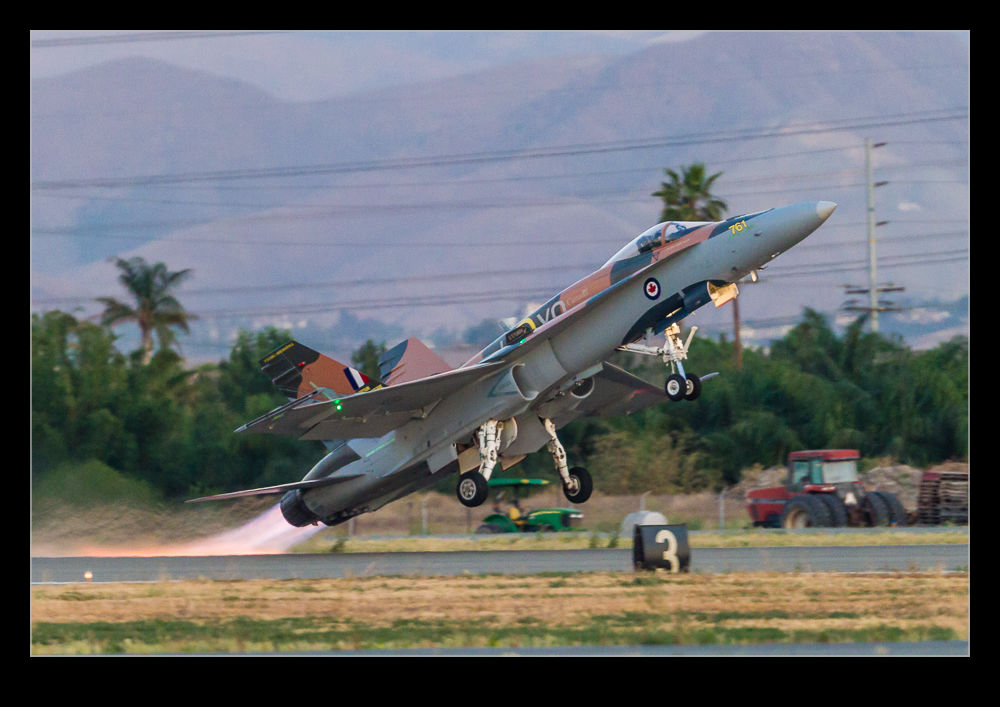
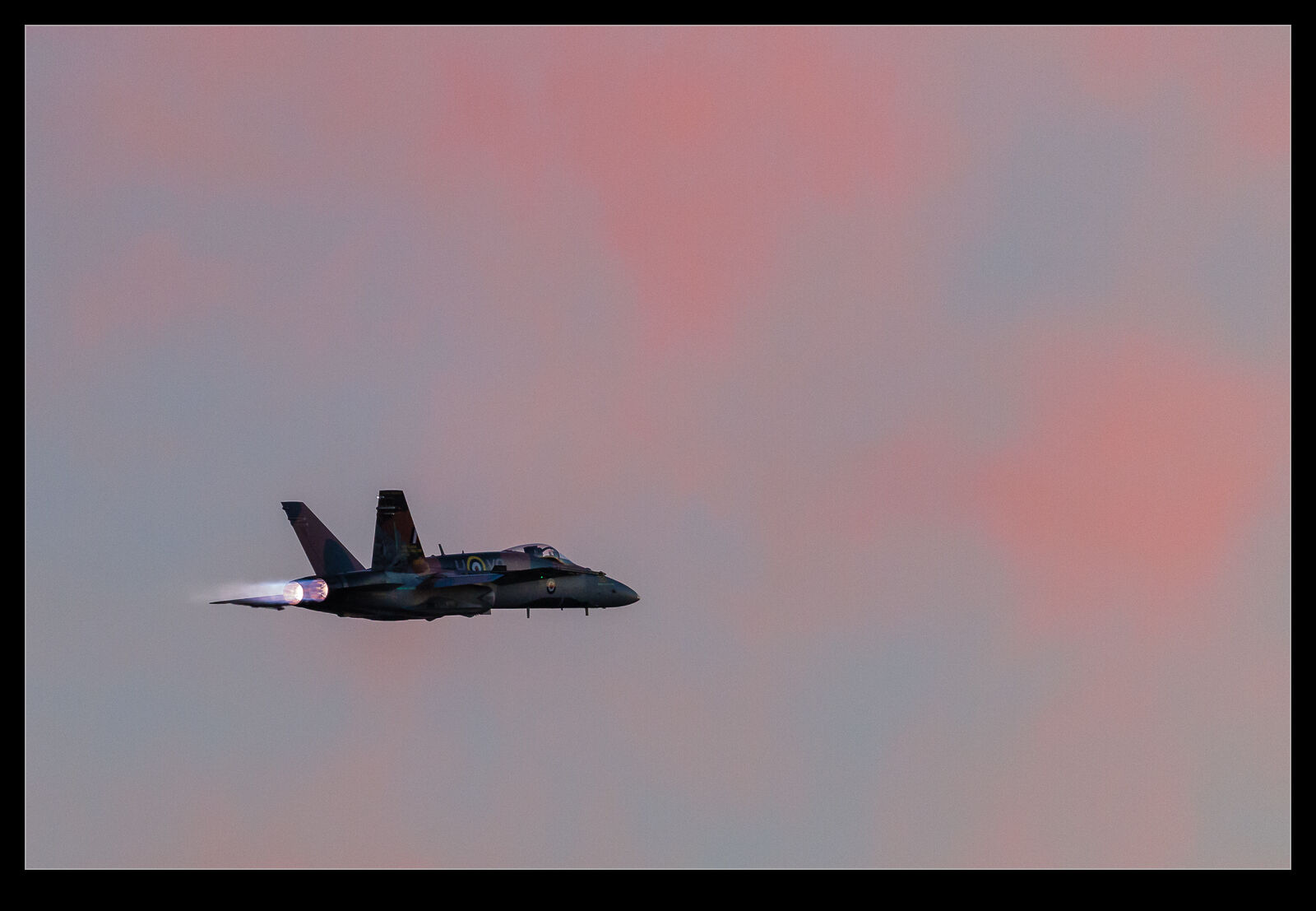
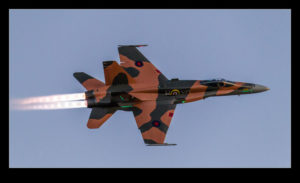
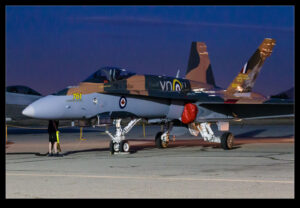
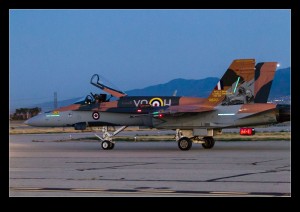
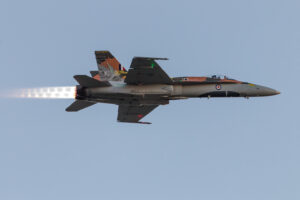
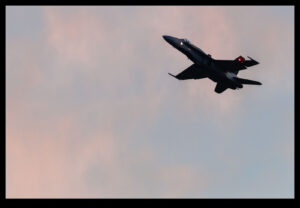
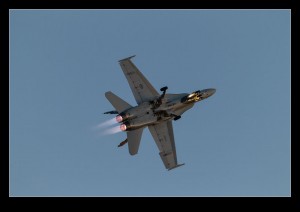
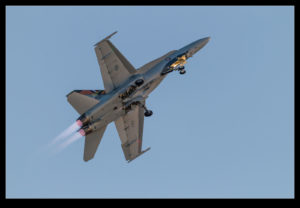
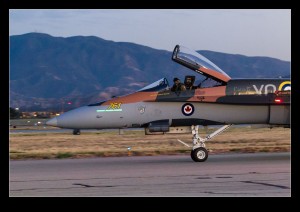
The Canadian Hornet that was at Chino was the last display to fly during the sunset show. (We had a long discussion about whether it is a CF-18 or a CF-188 during the down time but that can be saved for another day.) The aircraft taxied out as the sun was just getting close to setting. We were thinking this would be the perfect combination. Taking off before sunset would allow us to get some shots of it in the low sun when it would look at its best and the, as the sun finally set, we would get the glow of the burners against the darkening sky.

AU0E0401.jpgSadly, they decided to hold their departure until after the sun had already set. I think this was a missed opportunity. It did mean, though, that things were really dark by the end of the display. This was a time that really testing the capabilities of the camera. I was shooting at very high ISO settings in ranges that I would normally avoid. However, getting the shot sharp is better than having a low noise shot that is blurred.

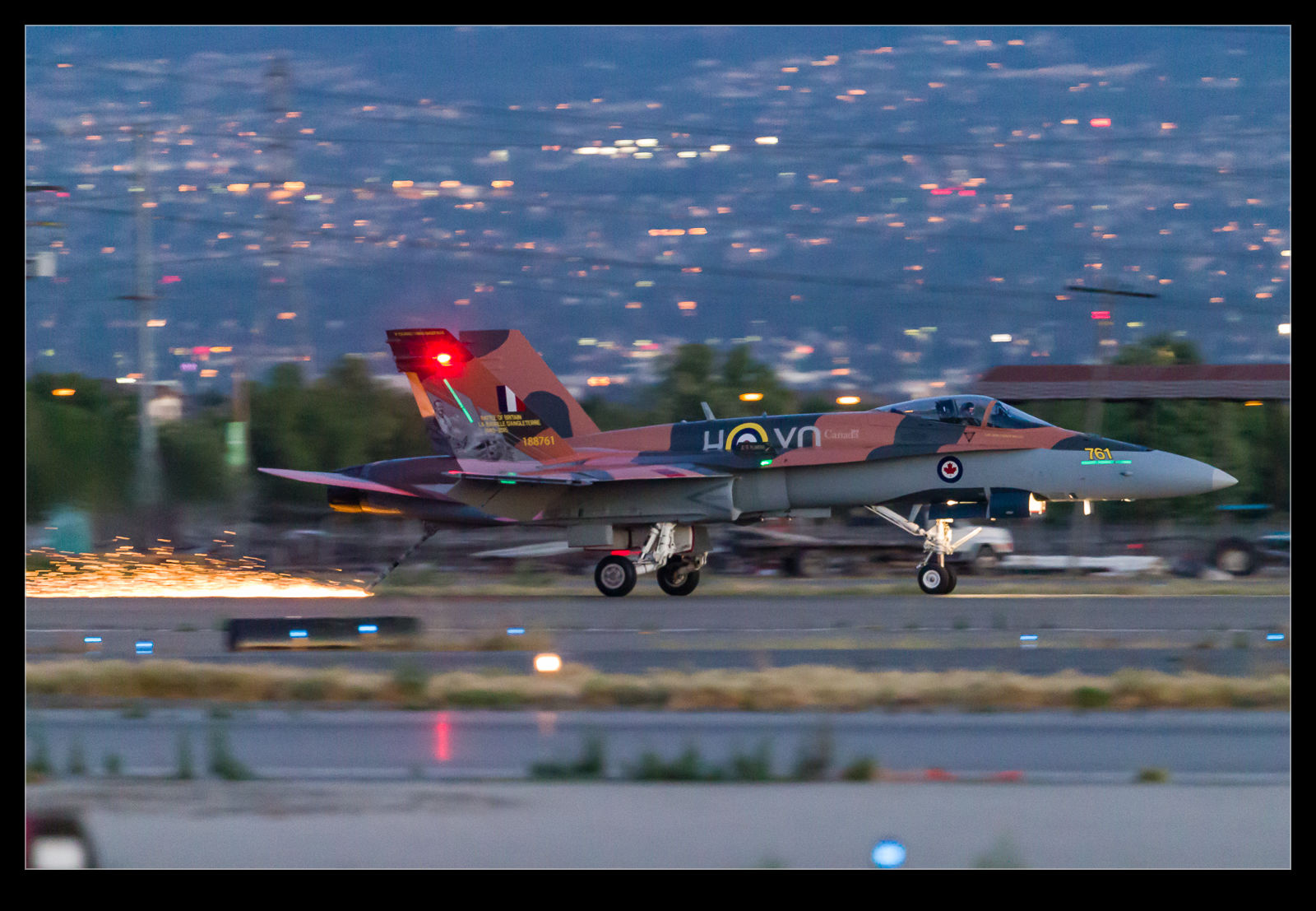
AU0E0345.jpgThe aircraft pulled off the runway pretty aggressively and the burners really showed up nicely against the runway surface. The display itself was fine but the camouflage of the commemorative scheme was a bit tricky in the conditions. The finale of the display was the landing with the hook lowered. The Hornet touched down and the arrestor hook dragged along the runway surface leaving a bright shower of sparks behind it. The effect was pretty dramatic! I talked to one of the maintenance technicians later about it and asked how many of those they could do. One landing is enough to kill the head of the hook. He did say that they are easy to replace and that he had brought five of them on the trip. A neat way to wrap up the show.