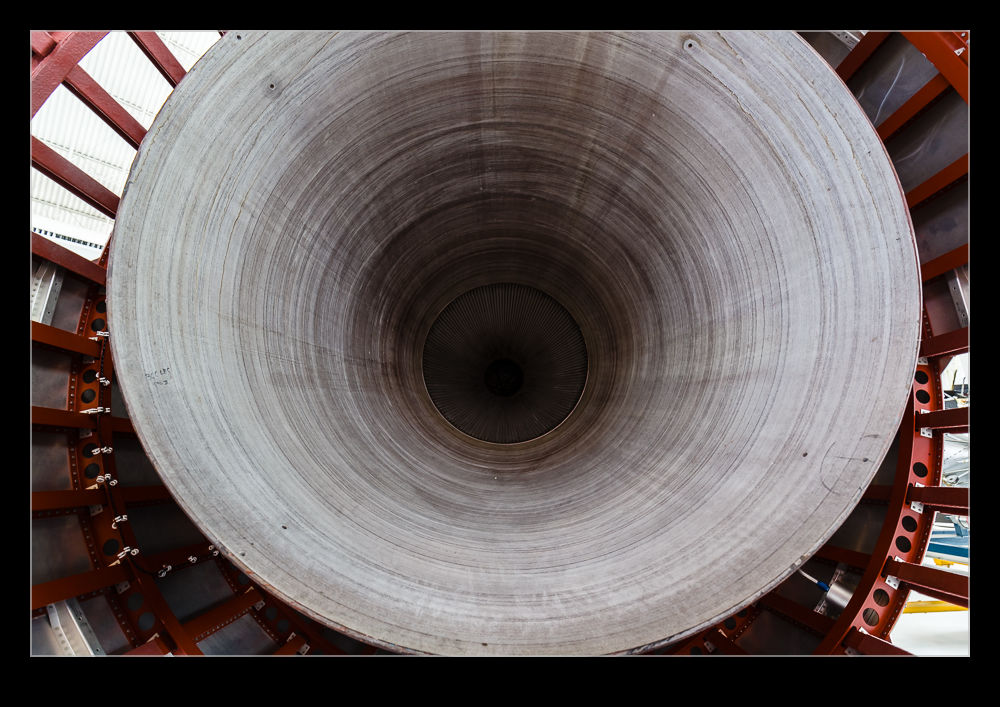
The missile display at Evergreen Aerospace Museum is impressive. They have sourced a lot of different types and they have a Titan IV section lying on its side. You can get up close to the nozzle of the rocket motor and it is a cool thing to see in detail. Looking from a distance, they look very simple but, once you are close up, the complexity of the structure and the cooling structure to stop the plume from burning right through the nozzle are really impressive. The shaping of the nozzle itself, in contrast, is very simple. The expansion ratios are calculated carefully and the profile is a smooth transition to minimize the losses. Quite the contrast.
Category Archives: Pacific Northwest
Edmonds Museum
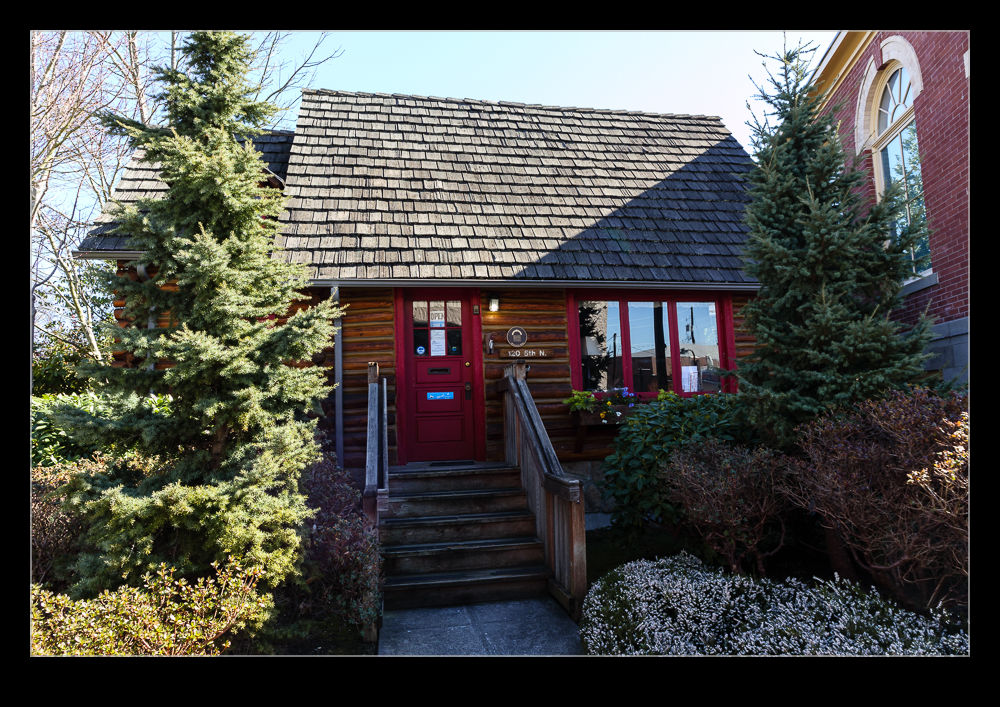
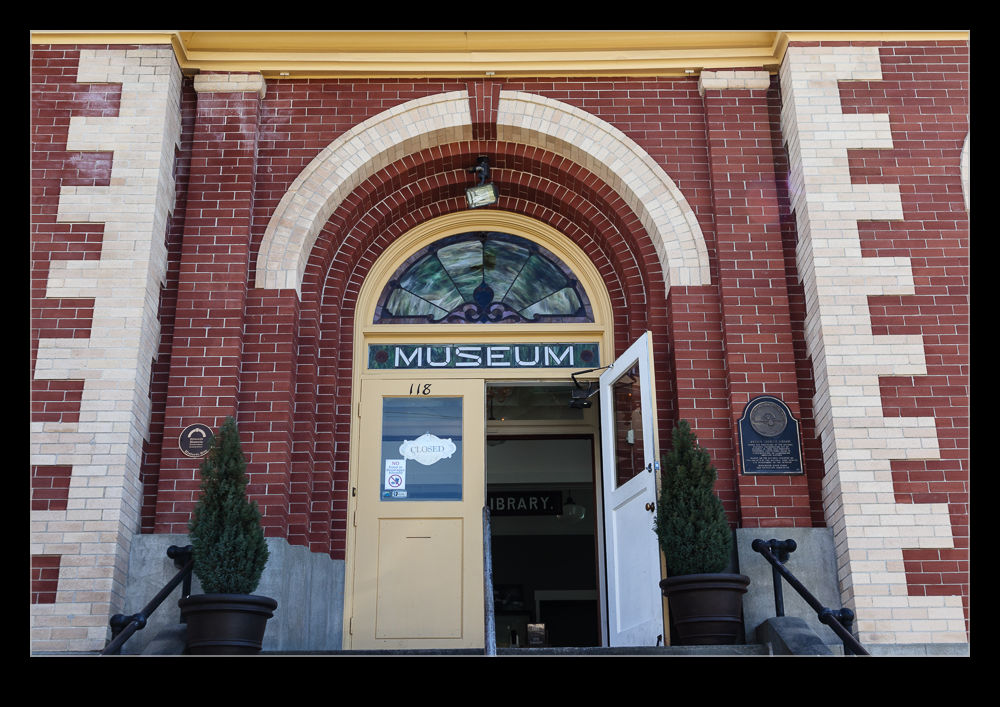
Downtown Edmonds proved to be a great place to wander around. Having enjoyed the waterfront, we walked into the town itself to check out the shops and with a lunch place in mind. There is an interchange with a roundabout in it that has interesting streets heading off in each direction. One of them takes you to the Edmonds Historical Museum. As we walked up to it, it seemed like a pretty familiar structure and there was a good reason.
The building dates back to 1910 and it is a Carnegie Library. We have come across a few of these over the years. While the needs of libraries have outgrown the buildings, they have often found new uses and museums are a popular second life. We didn’t go inside on this occasion. We thought it might be worth a visit another time and we have a visitor coming for whom something like this might be right up their alley.
I-90 Floating Bridge
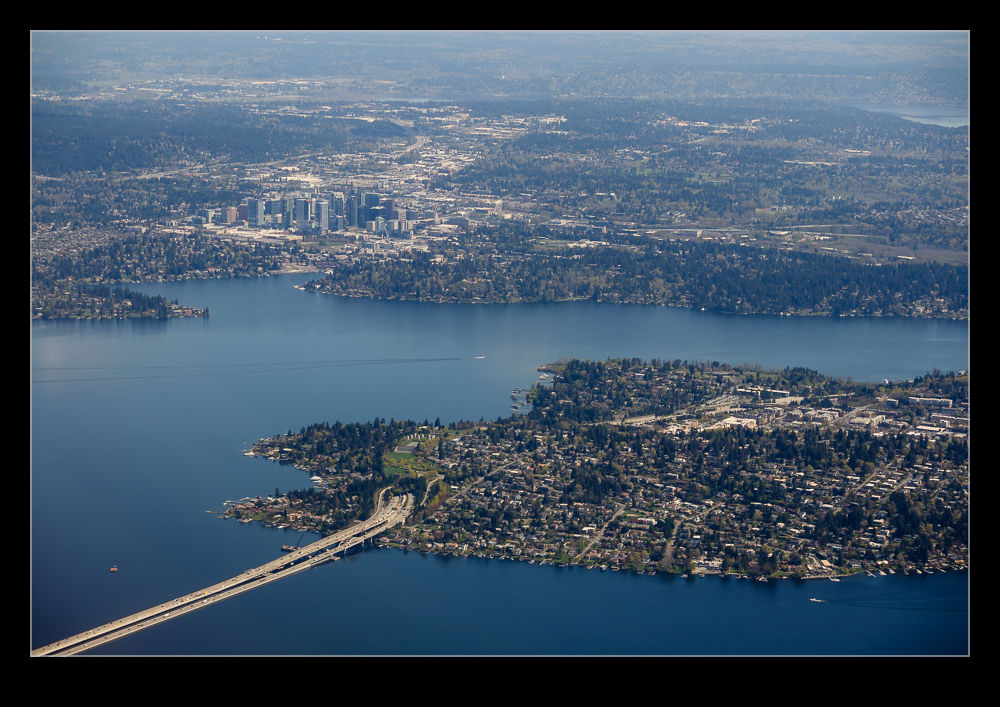
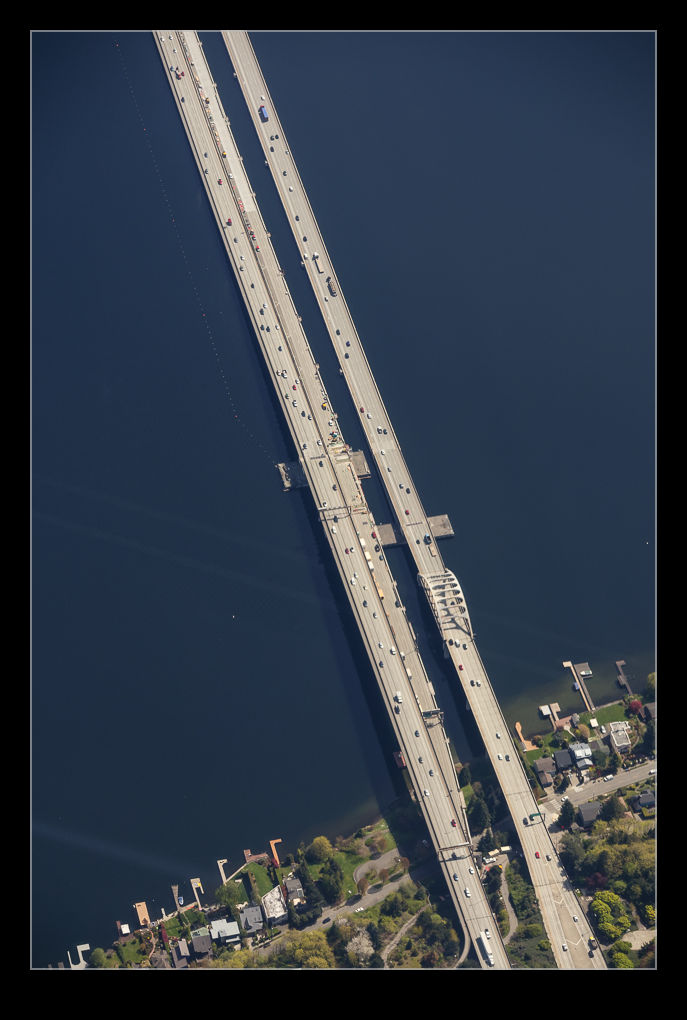
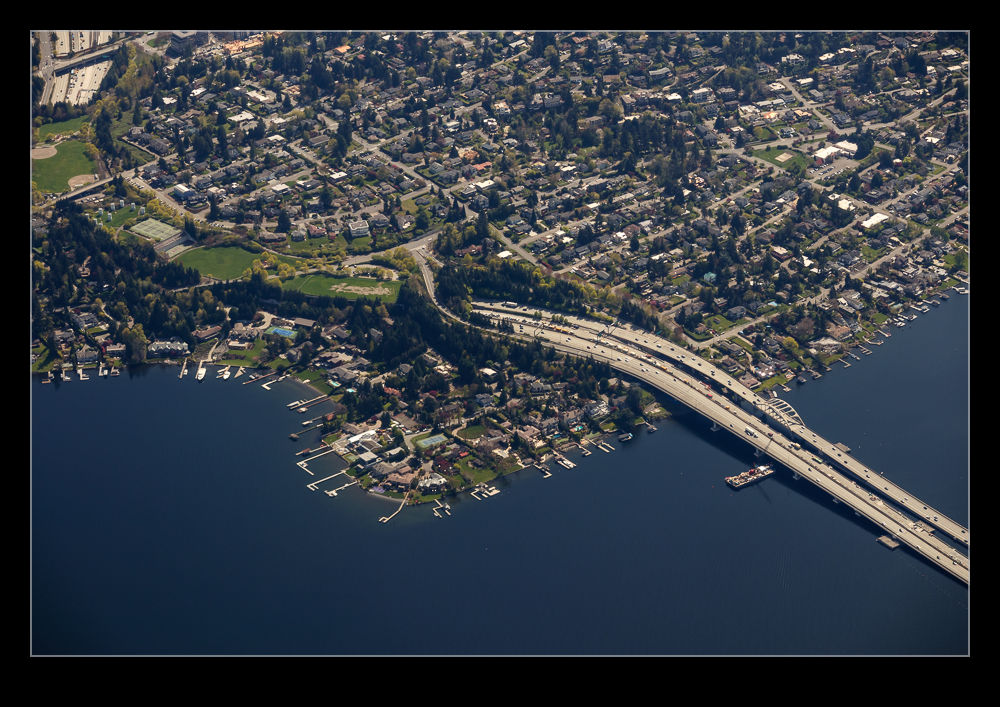
I-90 crosses Lake Washington on a floating bridge. I have driven over it countless times. It crosses from Seattle to Mercer Island which the freeway then crosses before continuing on to the east side. I was on that side of the plane when taking off from SeaTac and got a great view of the bridge. The dead straight floating section and the transition to land looked very interesting from above. The road actually goes through a tunnel on Mercer Island in a long curve which, when I imagined its path, only added to the geometry of the whole.
Little Nosewheel Tug
A post a while back talked about nosewheel tugs that lift the whole nosewheel and move it around. That post can be seen here. I commented then about how large the tug was. I hadn’t then seen that there are far smaller versions of the same concept. This one is in operation at SeaTac. It is suitable for narrow body jets and regional jets. I don’t know whether it is being trialed or whether these will gradually replace the traditional tugs. I guess we shall see in due course.
Eyebrow Windows Still Exist?
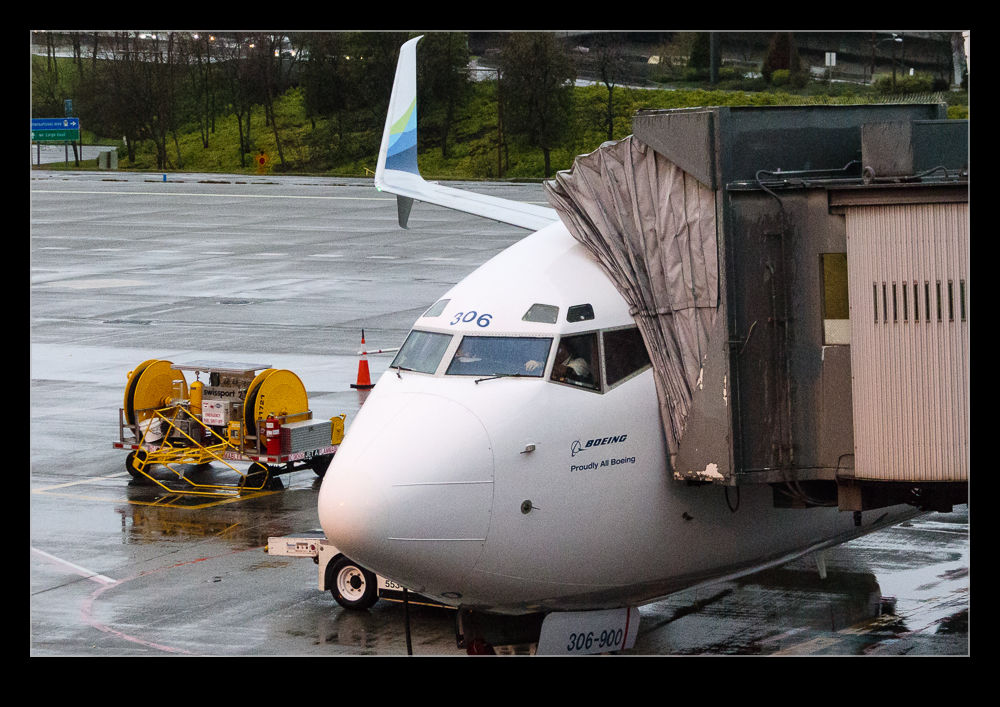
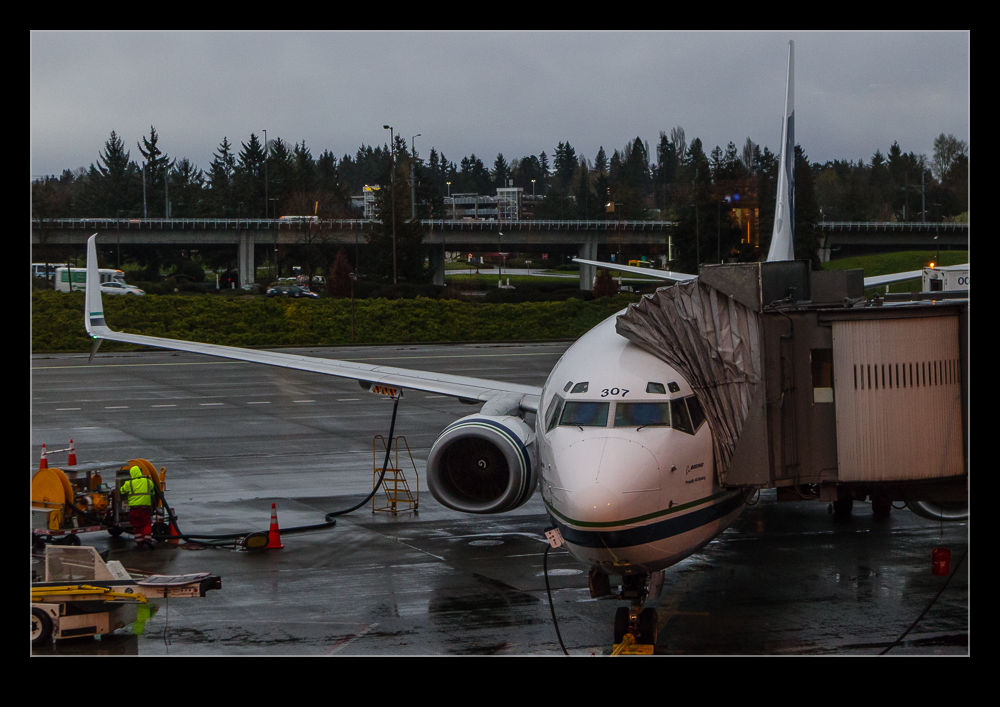
The 737 fuselage is closely tied to the previous generations of Boeing jets like the 707 and 727. It inherited the eyebrow windows above the main cockpit windows. These days, the controlled airspace has made the need for these while maneuvering a lot less. Current jets are built without them and many airlines have reduced maintenance costs by plugging them. I had assumed that they had gone away for most operators. Apparently not for Alaska! Walking through the terminal, I saw one jet with the eyebrows and was surprised. However, then I saw a bunch more so clearly this is still something Alaska see as valuable.
Mt St Helens From Above
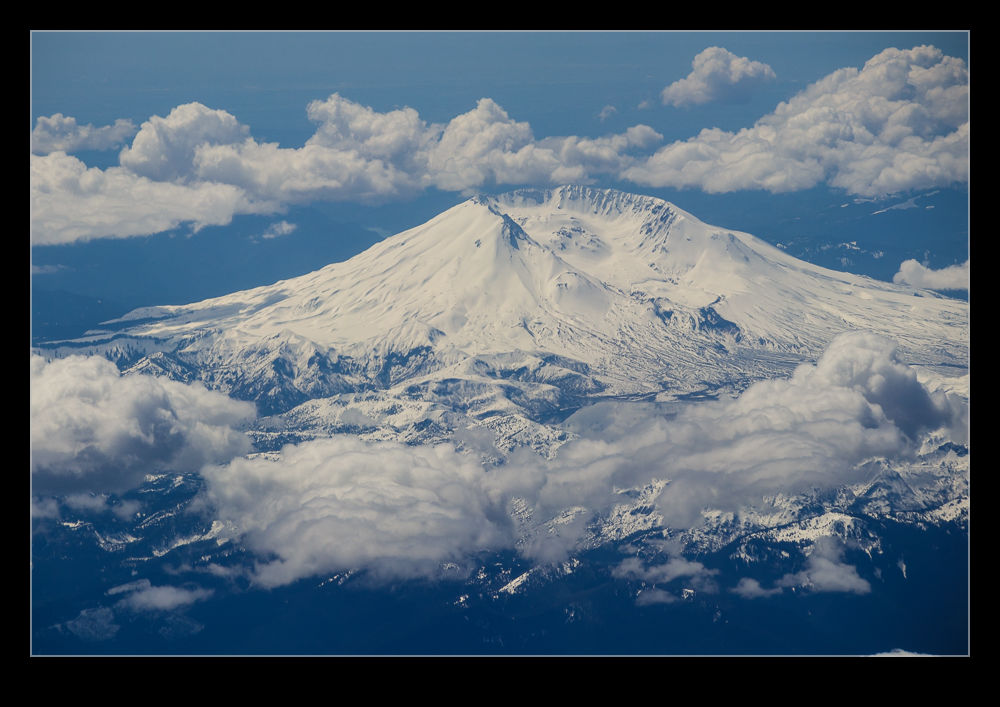
I have been on a couple of flights recently that took my past Mt St Helens. One was coming back home from LA and the other was departing out towards Dallas. In both cases I got a good view of the mountain covered in snow and with hints of clouds lower down. When you live in Seattle, Mt Rainier is a constant reminder of the volcanoes that surround you but Mt St Helens is the one that has reminded everyone about the power that these mountains contain. Hopefully it will be calm for a while.
Japanese Government Comes to Town
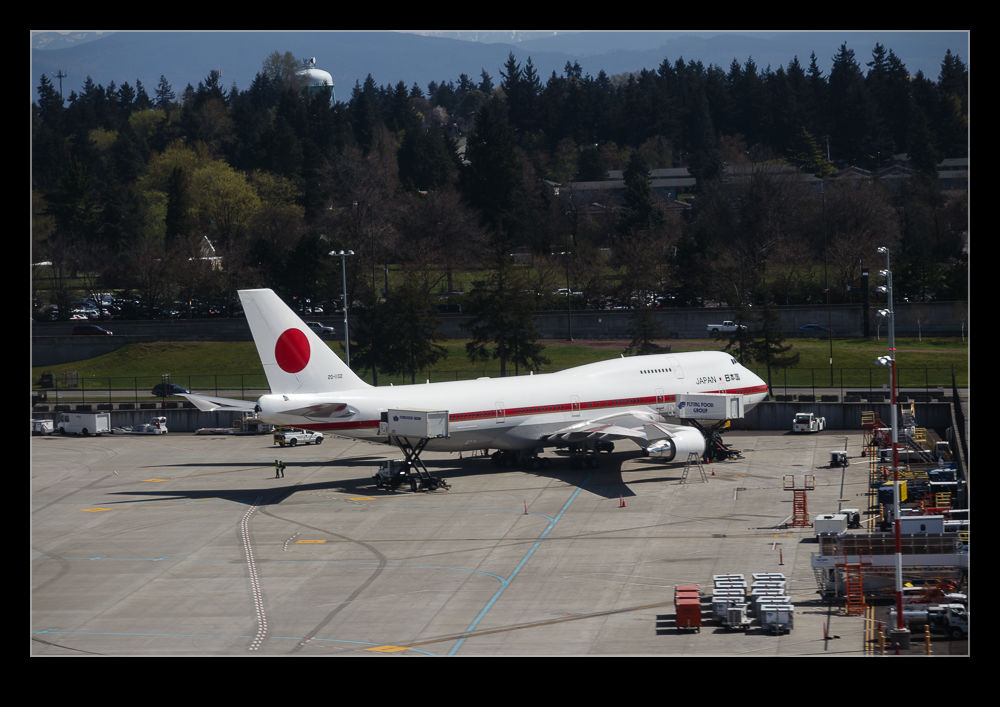
I was sitting at the gate waiting to board a flight when the sound of a heavy jet reversing thrust outside caught my attention. It was a Japanese 747-400. JAL retired their 747s a few years ago and that made an appearance on the blog here. That meant this was a Japanese Government 747. I was really annoyed to have only seen it at the last minute. However, I was on the right side of the plane on takeoff to try and get a look. I did get a shot but looking through the camera made me lose the wider view. The Japanese 747s tend to travel as a pair. Sure enough, a second jet was parked up and I didn’t spot it was there until too late.
Max7 Test Aircraft
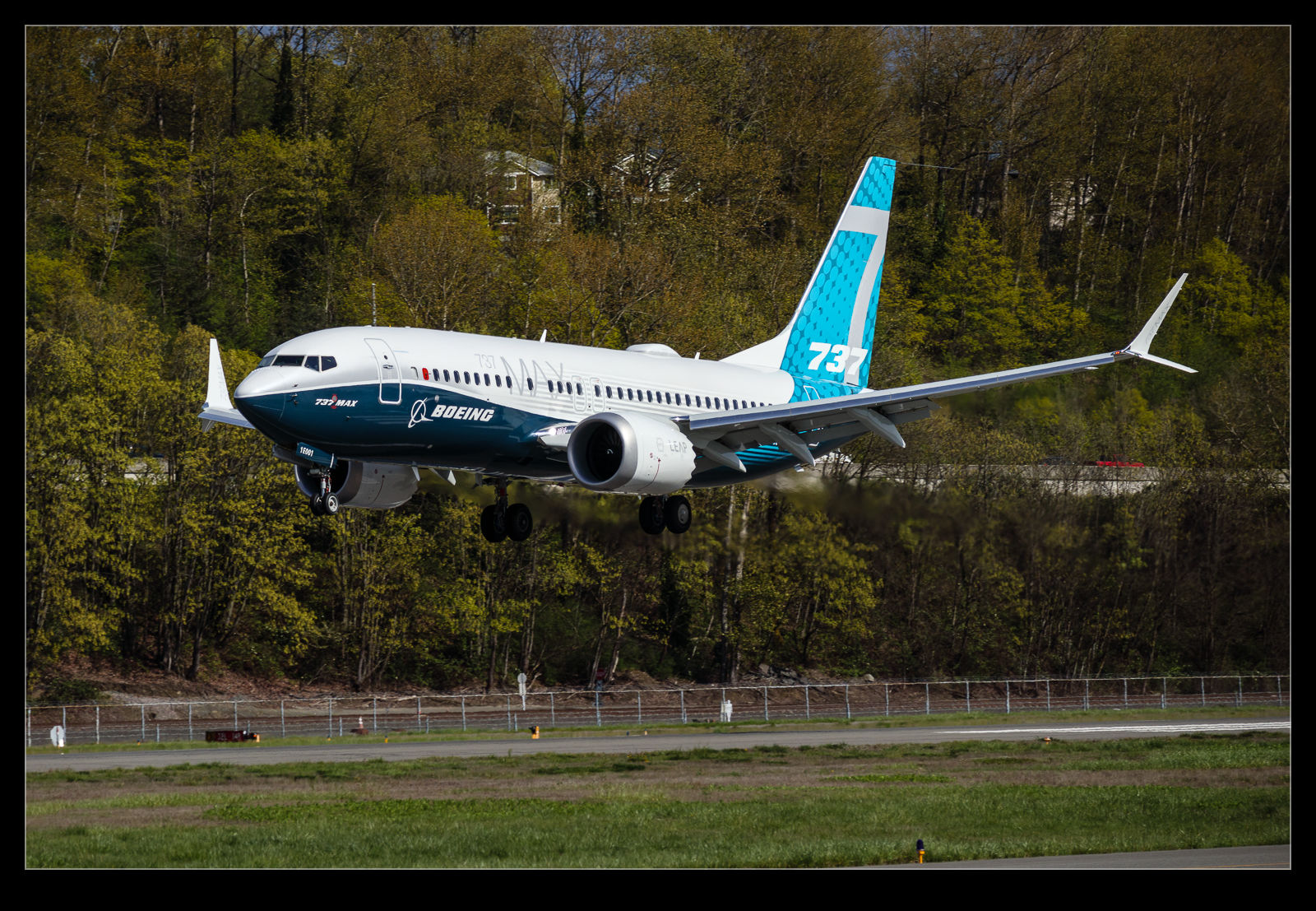
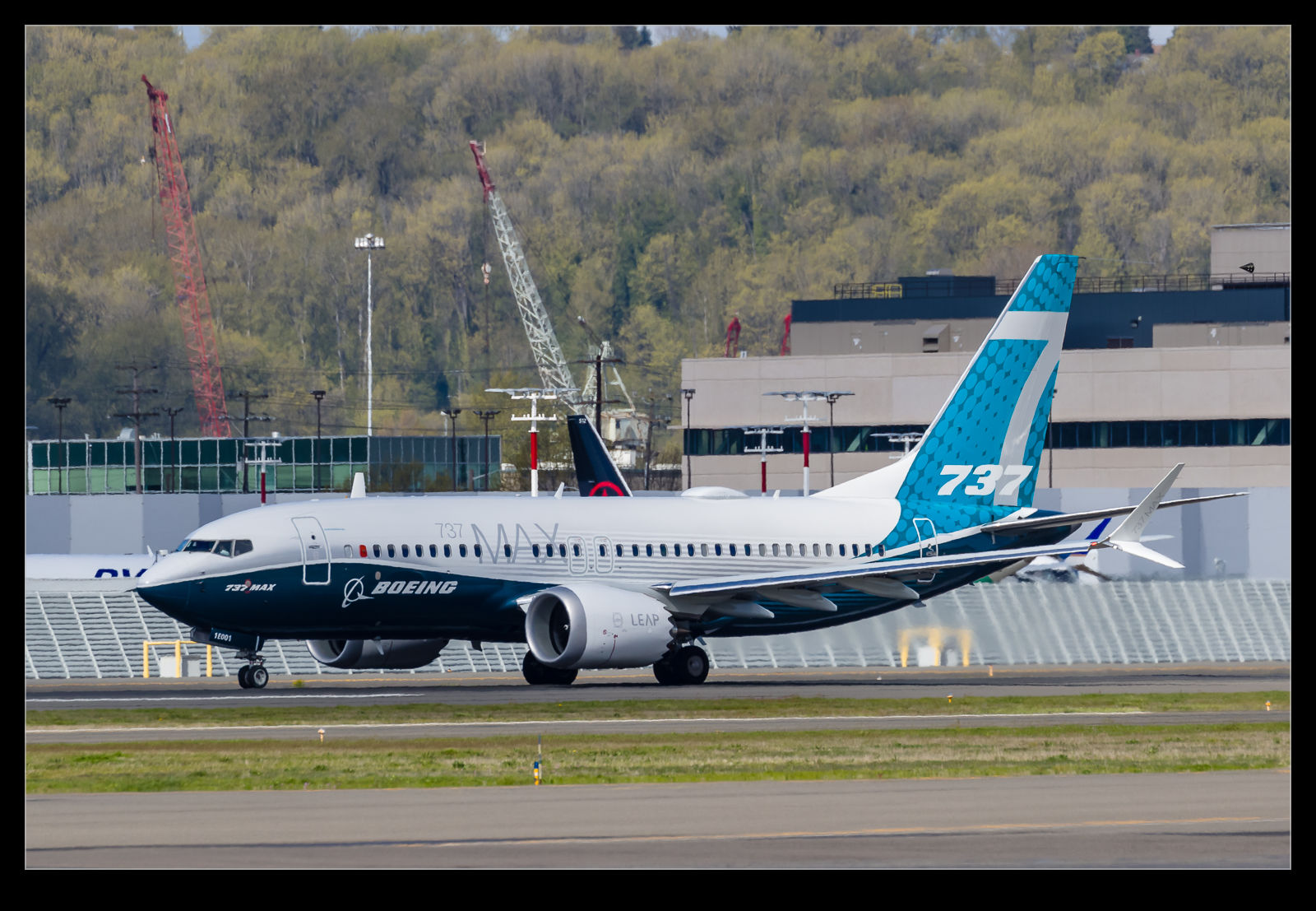
The 737 Max8 and Max9 Jets are both certificated and in service. Next to come along is the Max7. It is a lower priority as a result of a far lower level of orders combined with a redesign it underwent to make it larger than originally intended. It is now flying though. I saw one aircraft on the ramp at Renton when passing by and also saw the first test aircraft landing at Boeing Field. I actually saw it take off as I drove in to the city heading to a meeting and it returned at the end of the day. Neither the Max7 nor the A319neo has sold well so it will be interesting to see how many of these enter service.
Bounce It Down and Do It Again
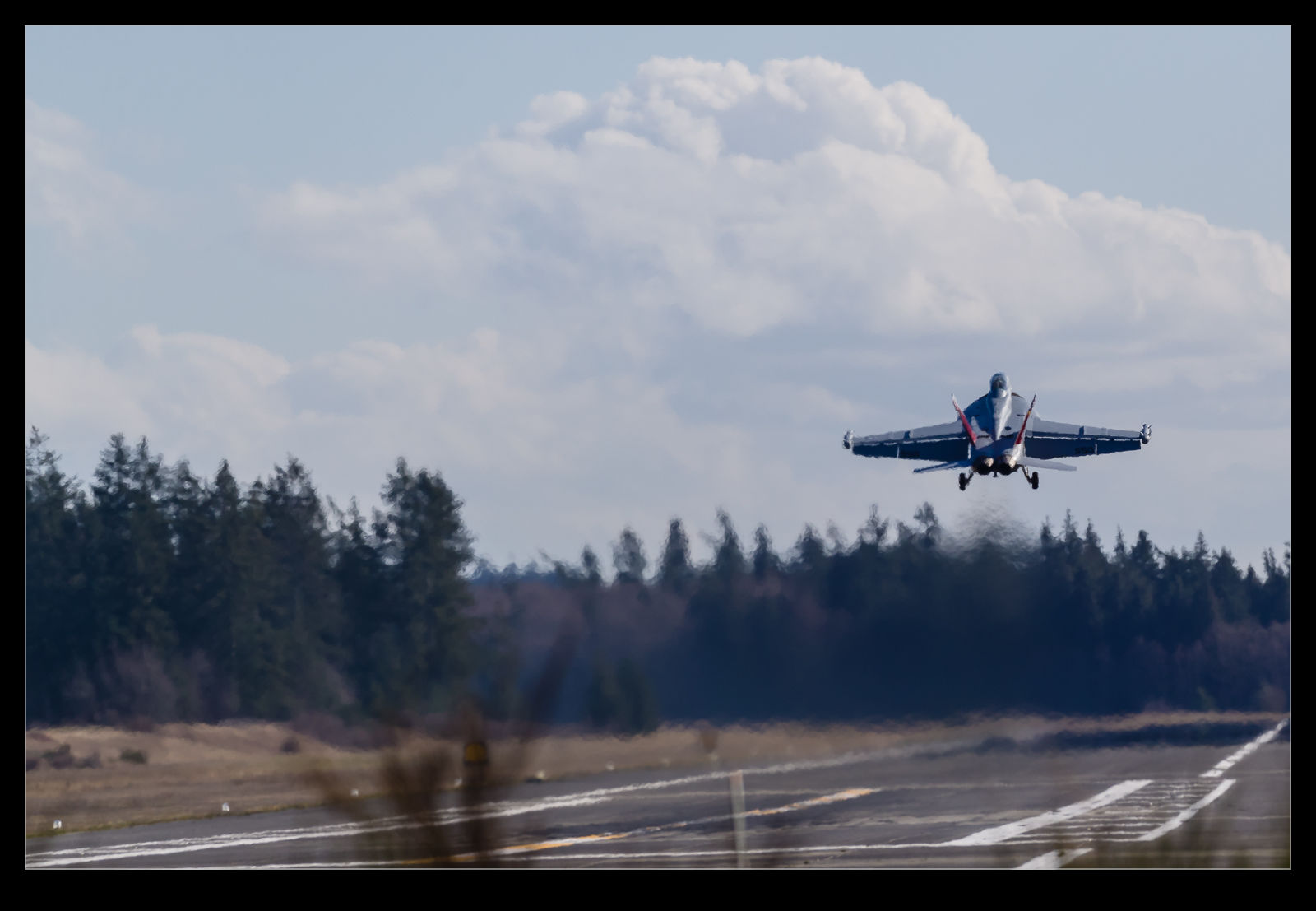
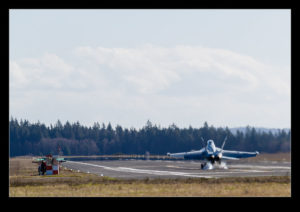
Since the Growler crews were training as if they were on the deck at sea, they don’t flare their landings at all. They hit the runway hard and the tire smoke that results is substantial. Normal landing procedure on a carrier is to go to full throttle as soon as they hit the deck. There isn’t time to react if you miss the wire so hit the gas and, if the wire doesn’t stop you, you fly right off the other end of the deck and climb away. Since there is no wire at Coupeville, that means every touchdown is followed by a rapid rotation and climb away. The climb is pretty steep initially which keeps the speed under control until the power is backed off.
Putting Your Boat in the Water
While walking along the shore in Edmonds, we passed the marina and the loading area for the boats. They had a boat lift for the smaller boats to be taken off trailers and put in the water. A guy brought his boat along just as we got there so I had to watch the process. The two guys running the lifts clearly knew what they were doing but the guy insisted on explaining it all to them. They handled it with good grace.
The lift had a track system that turned through ninety degrees. There were two lifts in parallel if the demand was there. The trailer was driven into position and the lifting straps were brought around. They were then passed under the boat and it was lifted up. Once it was clear of everything, the whole assembly motored along the rails, around the corner and out over the dock. It was then a simple process to lower it down into the water and then move it away.
This was fine for boats of a certain size. If you wanted to put anything larger into the water, a far larger rig was required but that wasn’t needed while we were there so I didn’t get to watch it. In my younger days living in Cowes, I got to see those lifts at work a lot.