Category Archives: Chicago

Up a Big Pole!

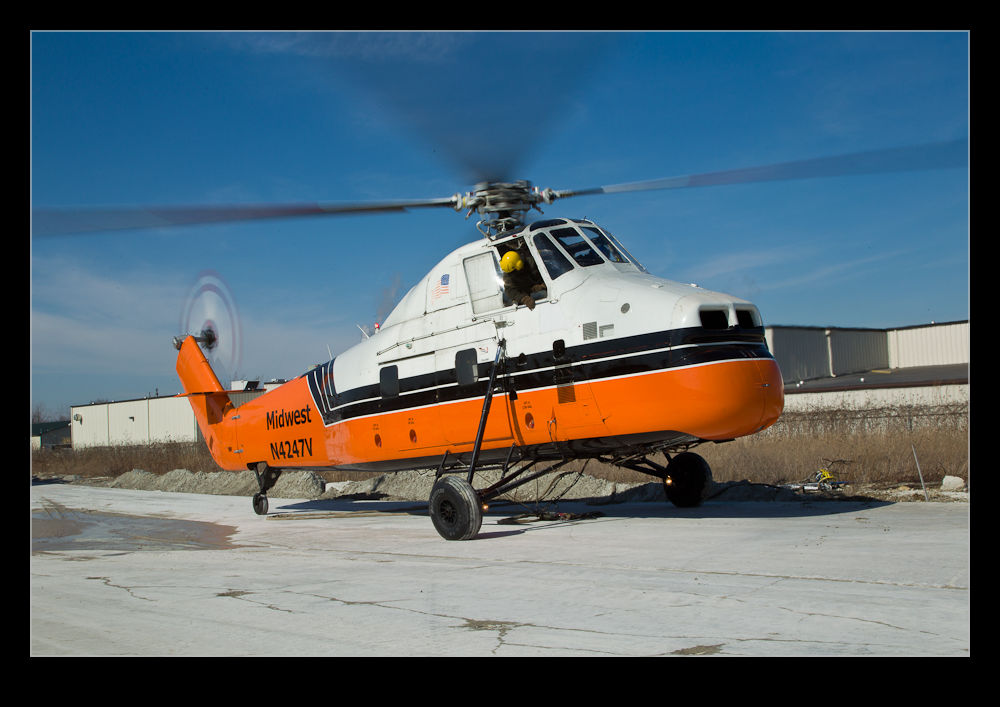
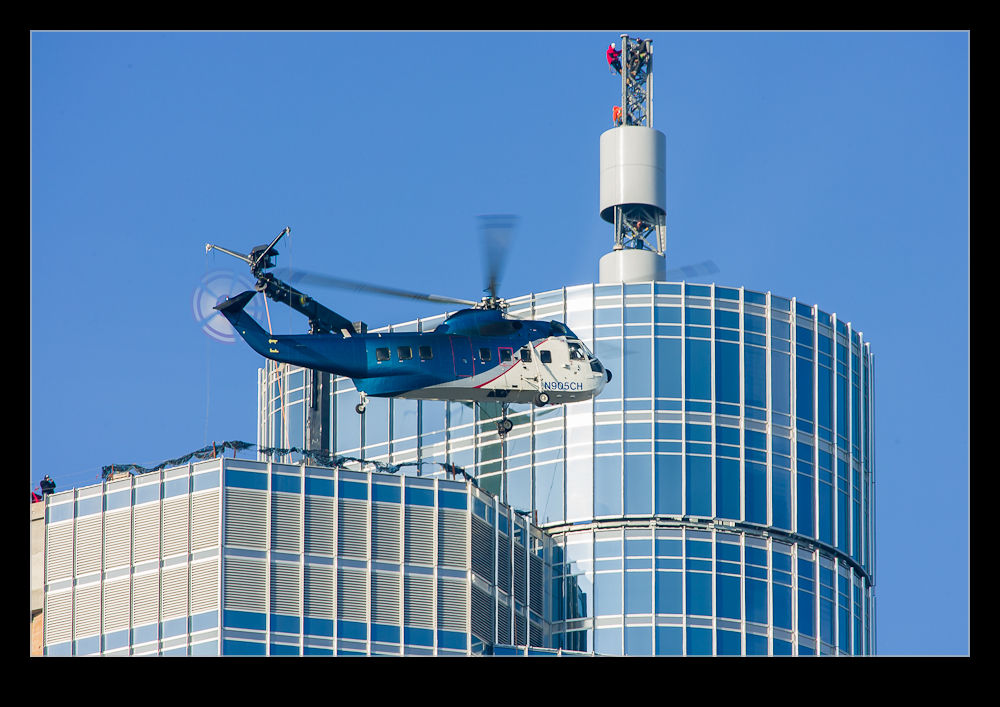
Today we have a bit of a flashback.  Regular readers will know that I shoot a lot of helicopter operations.  Midwest Helicopters is the large local operator so they do most of the work in the city.  However, there other operators that undertake similar work and some of them will work in Chicago at times.  This is often a function of the weight of the loads to be lifted.  Construction Helicopters of Howell MI are one such operator and their S-61N aircraft can lift 10,000lbs – a big increase over the 4,500lbs of the S-58T.  If you need even bigger things lifted, Erickson Aircrane are probably your people!

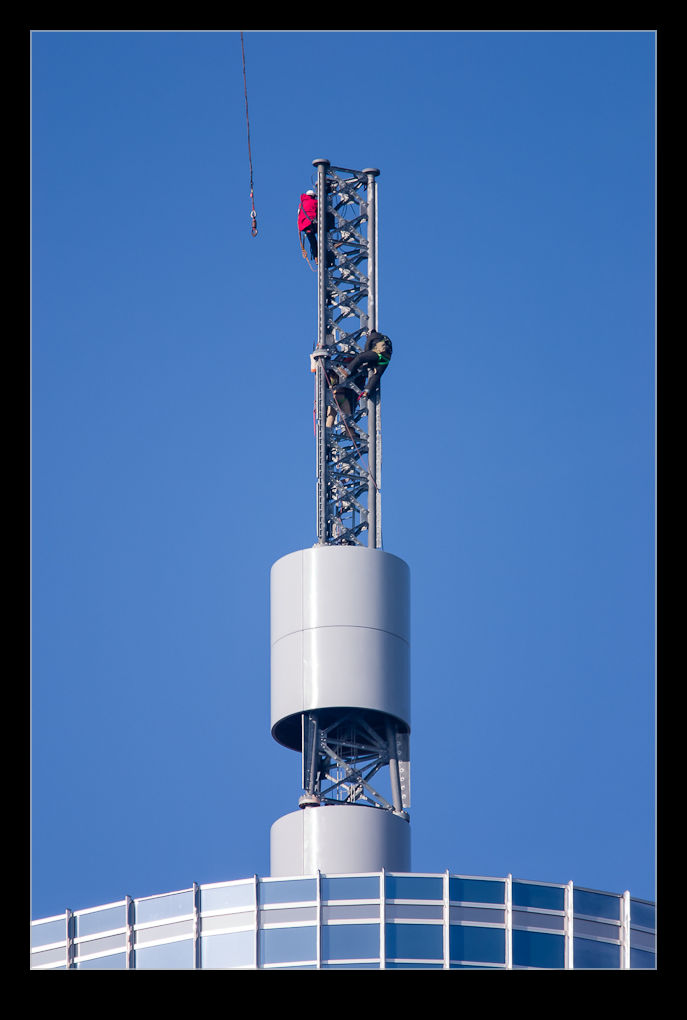
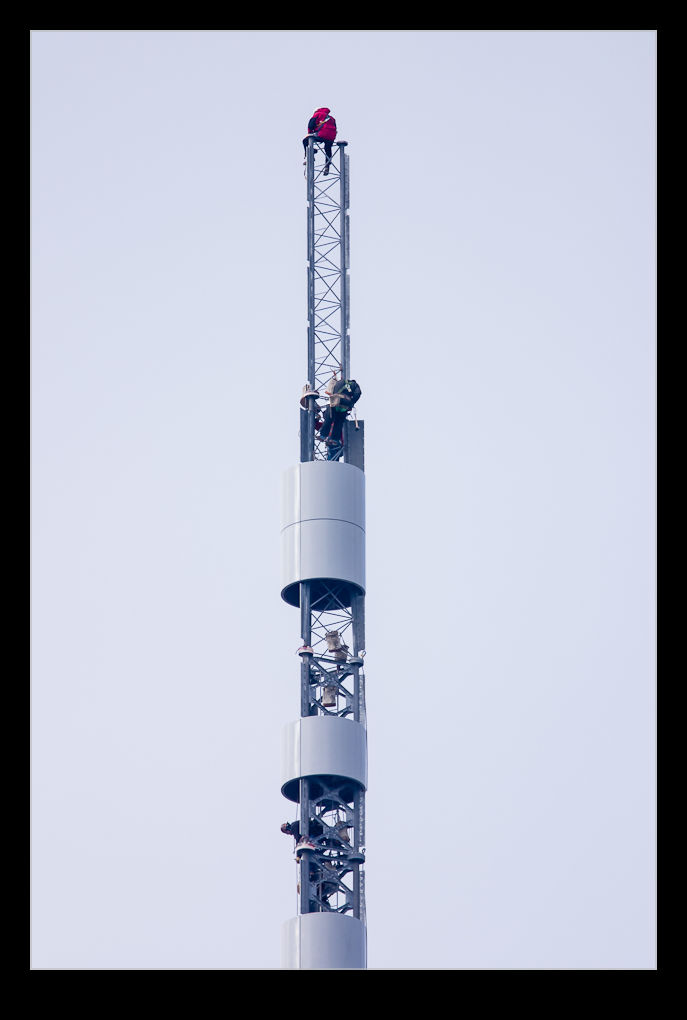
This piece, though, is not about the helicopter so much as the people it was working with.  A few years ago, the Trump International Hotel and Tower was built here in the city – in fact just across the street from us.  We had the best seats to watch the demolition of the old Sun Times building and the growth from a hole in the ground to 92 floors of building.  It was fun to watch, even if it did take a chunk out of our view!  The building was topped off with a spire.  The parts for the spire were lifted to the roof by the construction cranes before they were assembled but it was going to be significantly higher than the rest of the building so those cranes were not suitable for assembling it.  The pieces would be lifted into place by helicopter.
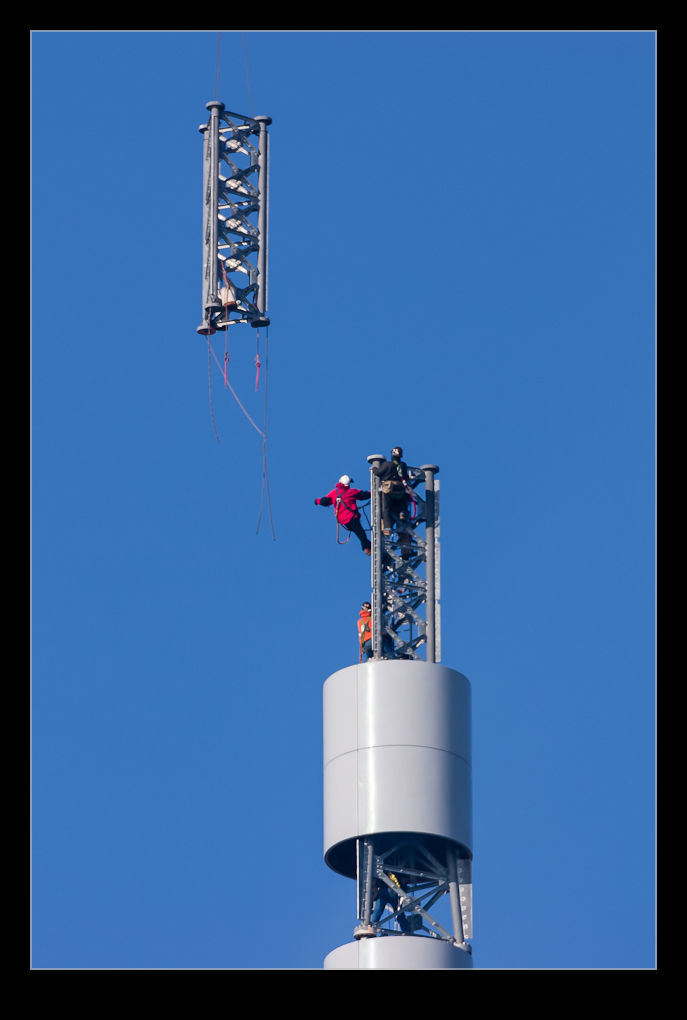


The first attempt at this was unsuccessful as the winds were so strong that keeping each piece in place long enough to secure it proved impossible.  There was a long wait before the second attempt but the job finally went ahead.  The heroes of this story are the guys on the tower.  If you think that the tower itself is over a 1,000′ tall and the spire is a significant (and flexible) structure above that, you can see that this is quite an exposed location to be working.  From talking to the team that assembled it, the most senior guys are the ones at the very top – they want to be there.
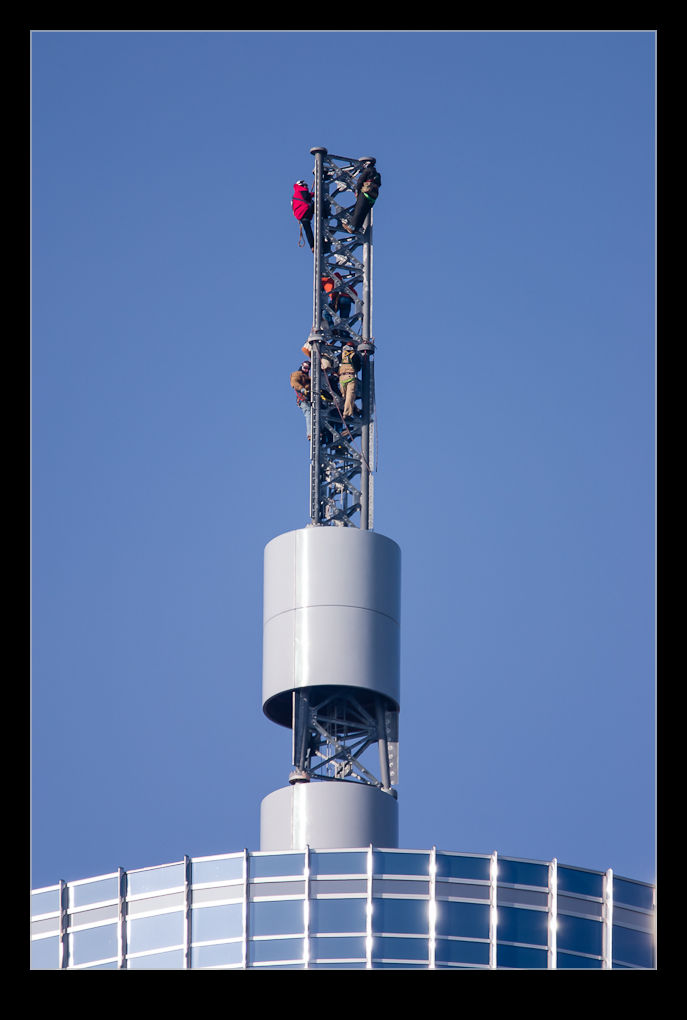


Three guys were on the spire at the top.  As each section was brought into place, they grabbed the tag lines and pulled it into position.  When they had located it, they would put in a bolt in each corner.  Then, one would climb up the new piece to release the lifting line.  The other two would follow while a second group came behind them to insert the additional bolts to finally secure the section.  While they were finishing that off, the next piece was coming in.
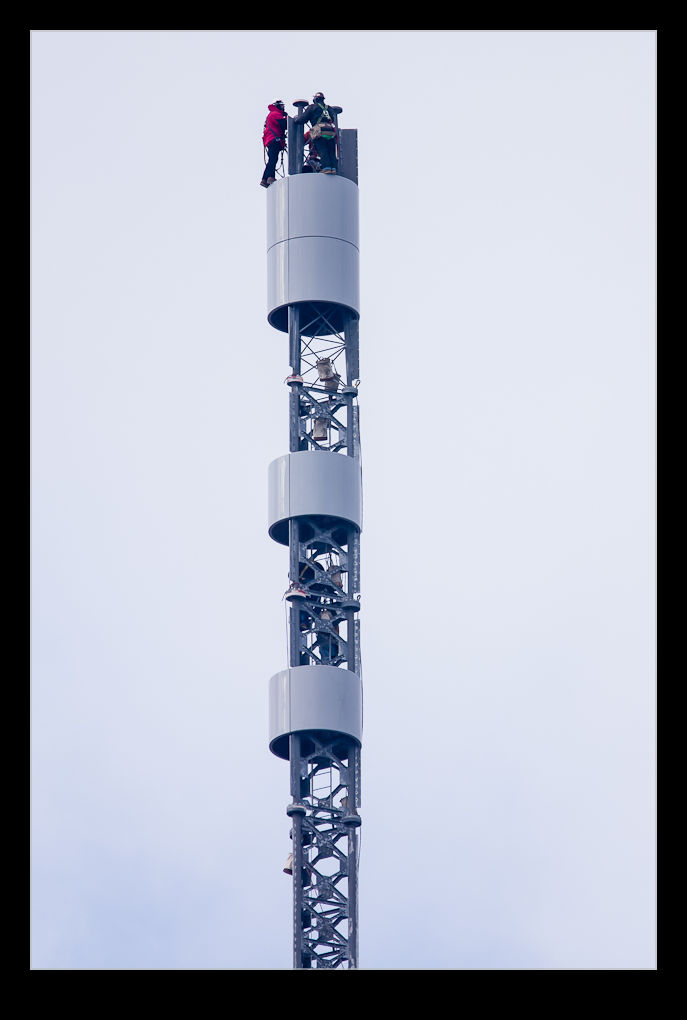


To add to the fun of this, the spire narrows as it gets higher so the working space gets progressively more limited.  All the time you are dealing with whatever wind conditions there are at this height combined with the not inconsiderable down-wash from the helicopter and trying to make sure you maintain your grip and don’t drop anything on the team below you!
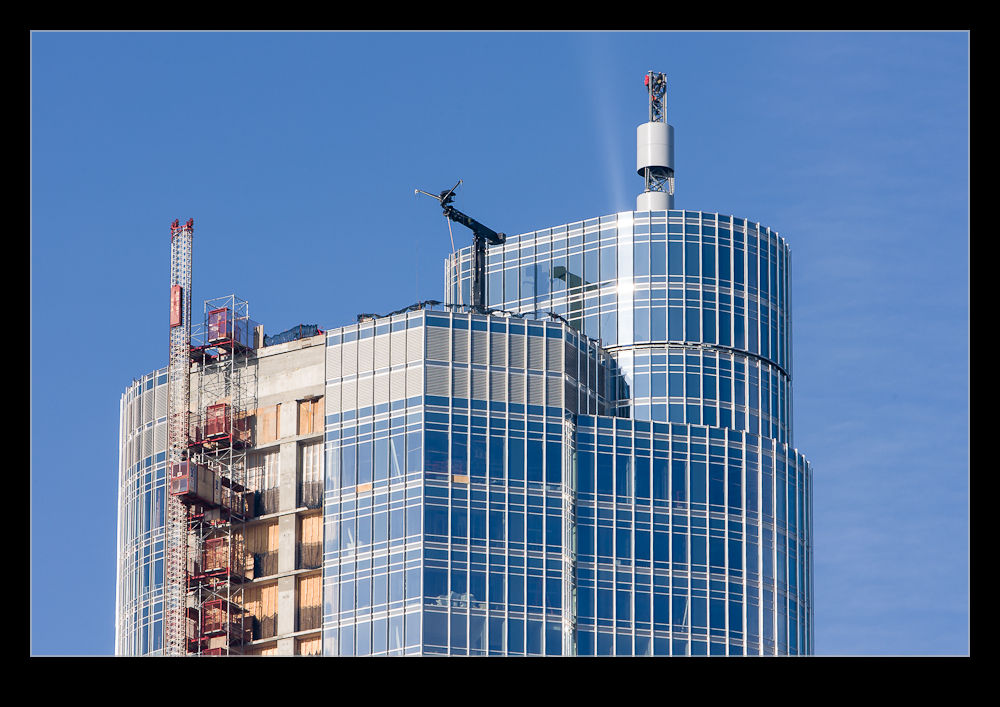
The job ran a little long but they did finish it off and put the final cap in place.  They seemed to do a great job but were so far away from anyone else, I suspect that very few people appreciate exactly what they had done.  It was only recently as I was culling a bunch of old images that I looked again at them as saw exactly what they were doing.  I feel guilty for paying more attention to the helicopter operations when I first shot the job so decided to give them a little publicity now.  Well done everyone.
 

Thornton Quarry Video

The Thornton Quarry lift job with Midwest Helicopters was a full day job so it provided a bunch of opportunity to try different things.  This was true for the stills but it also allowed me to experiment with the video as well.  Since the aircraft was operating all day, I was able to get to multiple locations and see all aspects of the job as they happened.  Normally, this isn’t possible since a lift will only last about 30 minutes.  In that case, you have to pick the location that will get the shots you must have and accept that the alternative shots will not be made.

This time I was able to move around the whole site and capture as much as possible of what was going on.  Some of the clips looked really interesting and the time but they actually proved to be no use.  Some of the boring stuff as it appeared at the time actually ended up being really of use when it came to editing.

At this point, it is important for me to apologize to people like Gerry Holtz.  Gerry is an editor and he does this sort of thing for a living.  Anyone else who knows about editing professionally, you are all due my apologies and my respect.  I am trying a bit with video editing but what I have learned is that it is bloody difficult to do.

On this shoot, most of the video was captured using my SLR.  The rest of it was shot on a GoPro which is such a great little device to get something a little more unusual.  It was handheld (or mounted in the case of the GoPro).  No tripods or dollies and certainly nothing as impressive as a Kessler Crane!

I suspect that to be good at editing it is important to have had some education in the process.  I am doing it the guy way – try something and then try something else and see what happens.  Not even a manual to consult!  Consequently, I make some progress but probably my approach starts from the wrong place.  If I was going to do a lot more of this I would take the training aspect seriously.  However, for the time-being, this is a little side hobby so I will probably stick with what I am doing.

Part of the fun(?) of the edit process is taking all of the disparate elements of the footage and trying to combine them into a coherent timeline.  Part of the engineer in me thinks it should be delivered in the same order it happened.  This is rubbish of course.  The viewer has no concern of course.  As long as the result doesn’t obviously have terrible jumps or continuity issues, no-one is going to be any the wiser.

Also, how much do they need to see.  About eighty lifts were done during the day.  Does the video need to have eighty lifts?  NO!  In the end, I concluded that two lifts were enough to tell the story.  One wasn’t enough but it didn’t need more than two.  I cut the length down as I went but even then it was still quite a long piece.  A pro would probably have it down to a couple of minutes but then, as I mentioned, I am not a video pro.

One lesson I have learned as I have practiced this video stuff is how many of the tools the software has are no use at all.  There are a million transitions between scenes, all of which make it look like you are experimenting with the software but they are a distraction from viewing.  I have learned to use simple transitions that are short so they are not obvious to the viewer.  They just stop the jump being the item the viewer focuses on.

Anyway, the final part of this story is that I was very happy with the result for this video.  Unfortunately, it turns out the company that was doing part of the work is very sensitive about their equipment and doesn’t like the equipment being shown on the video so I have had to remove it from my YouTube channel.  Consequently, I can’t include it in this post.  Oh well…

Winter Zoo Time

A sunny winter weekend is often a good chance to check out the zoo.  Since a lot of the animals are not fond of winter weather, there are only a few that will be outside at this time of year.  Consequently, the zoo doesn’t charge for entry so it is good for those after a cheap day out.  We are members anyway so it doesn’t make a difference to us but it is good to go anyway.

During our previous visit the Snow Leopards had been pretty active.  We were hoping to see them again – they aren’t too bothered by the cold – but we also wanted to see what else was about.  Since you aren’t paying, you can make a short visit without feeling like you should make a full day out of the admission price.  As it happened, the Snow Leopards were soundly asleep while we were there but there were other things to see.

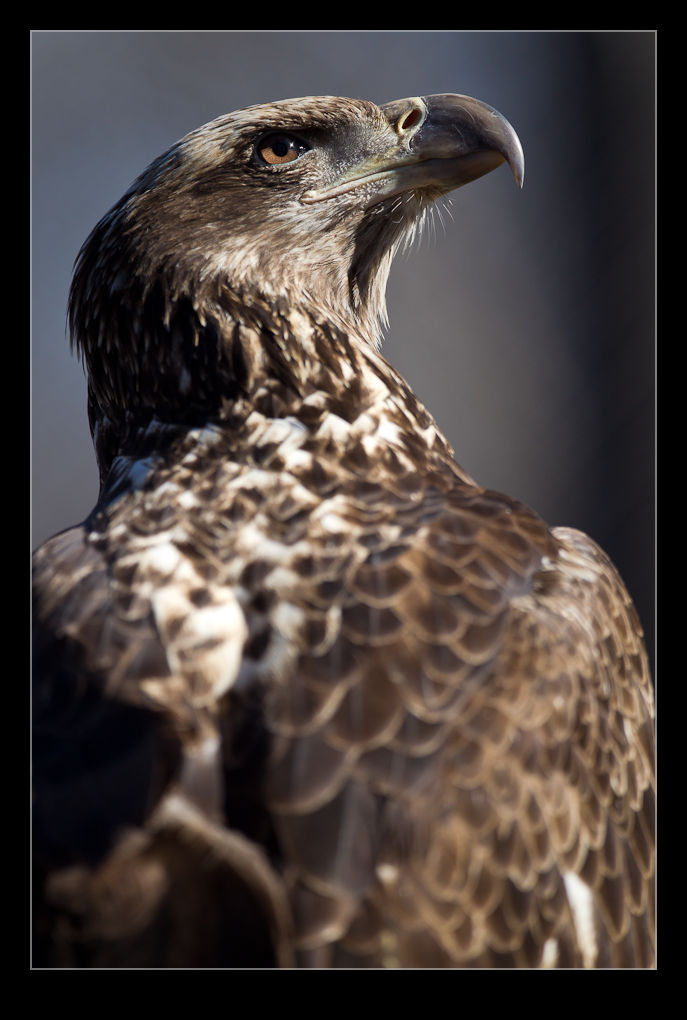
The Tiger was showing more action that is normally the case.  This is one cat that likes to sleep.  However, we timed our arrival well and saw a fair bit of movement.  Tigers are also fine with the cold of course.  Bears are similar.  Both Polar Bears were about and one of the Brown Bears was wandering around its enclosure.

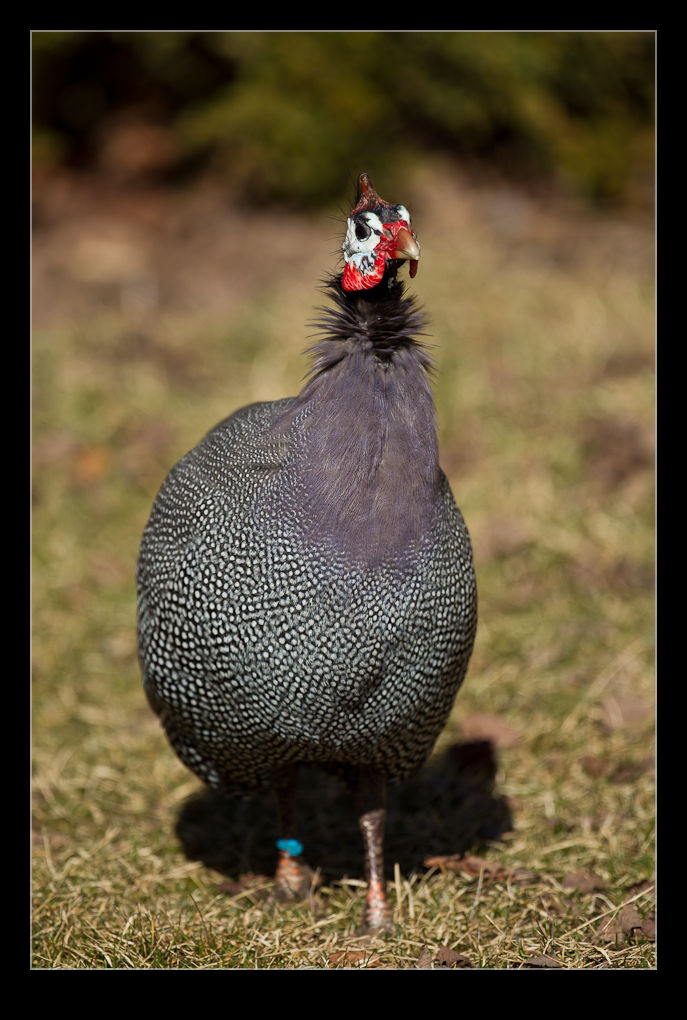
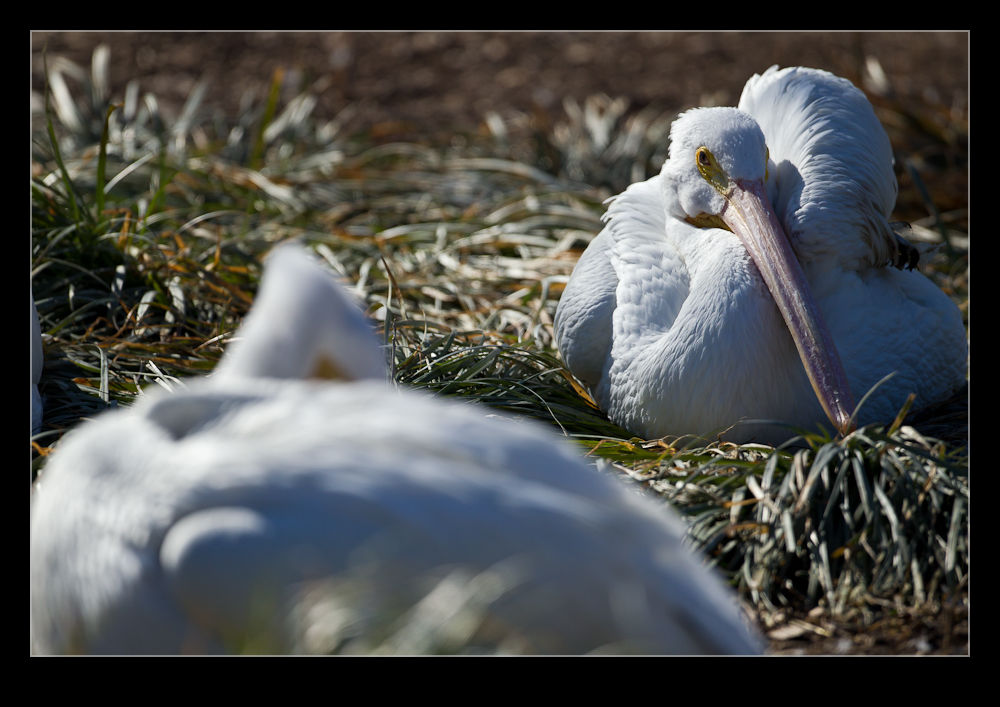
We also saw a few birds wandering around the place.  The Pelicans were out near one of the ponds and another group of birds (I am thinking Guinea Fowl but you can correct me if I am wrong) were also strutting around.  The light was very nice so not a bad afternoon.


Night Skating

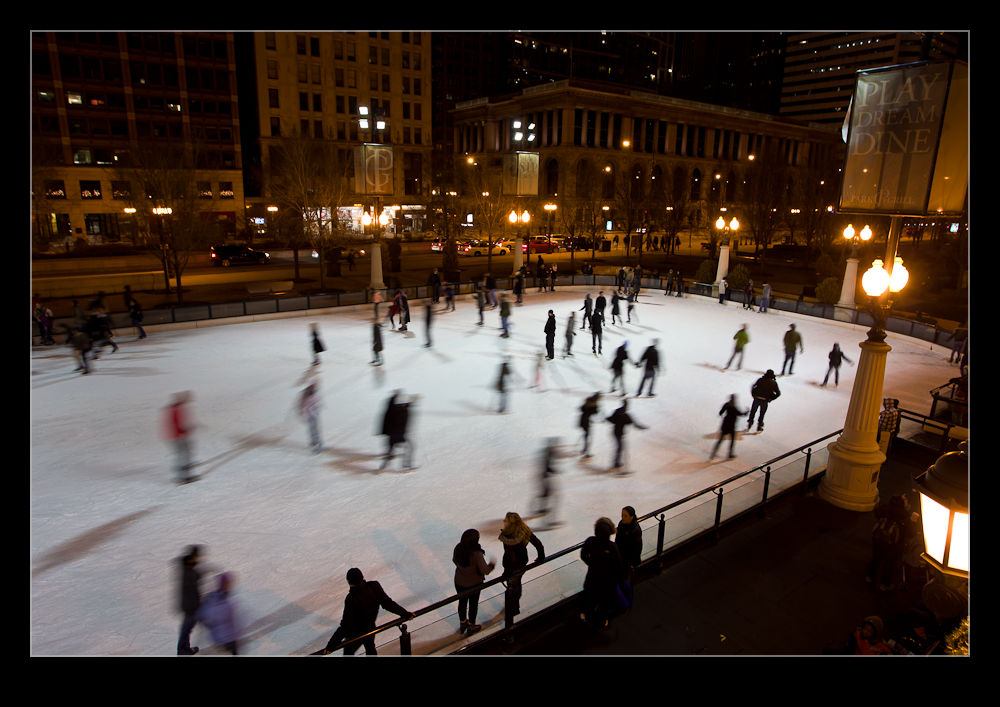
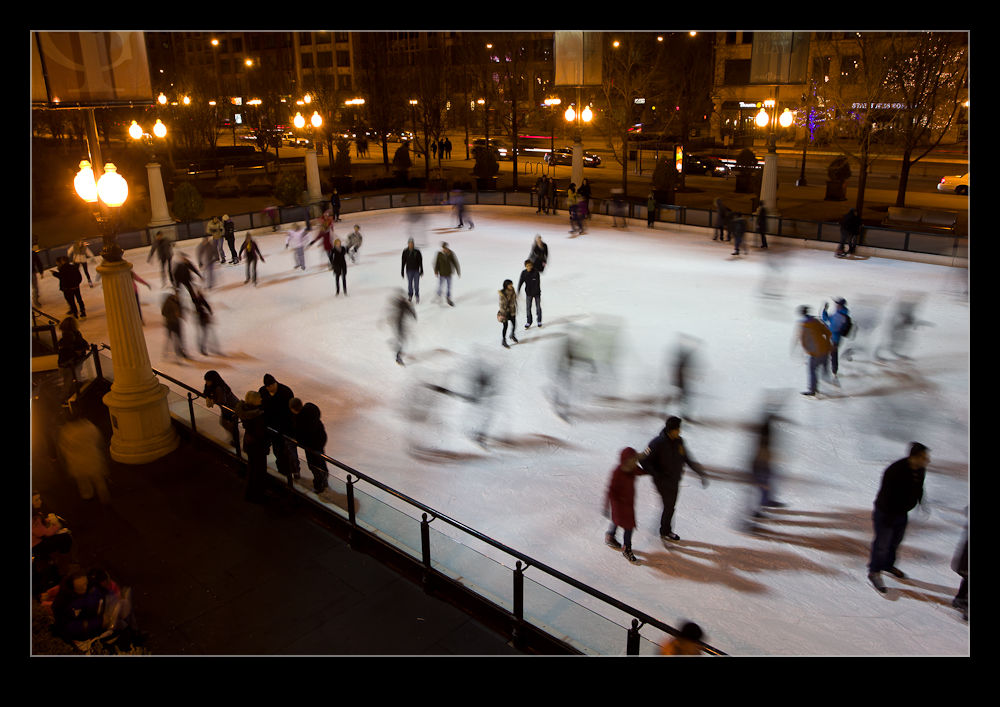
As has been the case a few times recently, I was down in Millennium Park recently at night.  I was there to see something else but, while I was there, I took some time to watch the ice skaters.  There is an ice rink beside Millennium Park that is free to the public to use.  If you don’t have skates, they are available for hire.  However, if you come equipped, you are free to skate!

The rink stays open relatively late each evening and I spent some time from above watching everyone having fun.  Of course, I couldn’t resist the opportunity to take some pictures (and also some video – I figure that all of these clips will one day be part of a larger montage of Chicago footage).  Since it is dark, it is time to try other techniques.

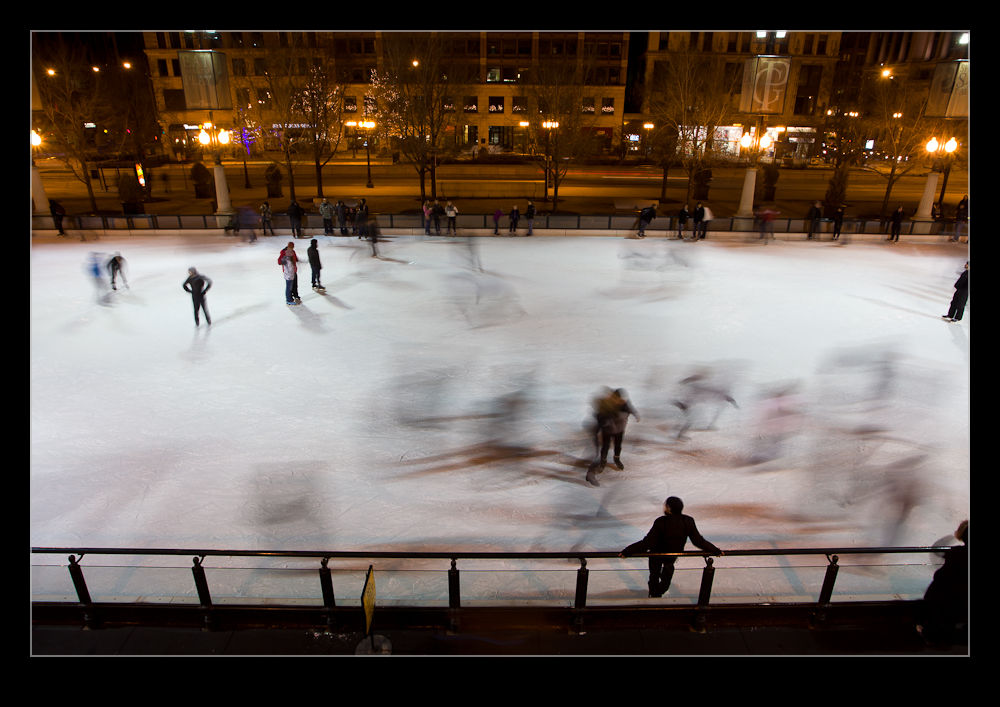
I was surprised how well lit the rink was.  I could get some quite fast shutter speeds if I wanted to.  However, that wasn’t really the point.  I can come during the day if that is what I want.  Instead, the slow shutter speeds were actually what I was looking for.  The question then becomes how slow.

I was mounting the camera to the railings with a flexible arm and clamp so my motion wasn’t a problem.  If the shutter speeds got too long, the blur of the skaters became so vague, it was hard to see whether they were there or not.  A slightly faster speed meant they became a bit more distinct.  This was what I was after.  You still needed to get the larger groups of skaters to make it show up noticeably though.  The perfect combination was when someone would stay totally still (or close to it) during the shot.  Then you had the juxtaposition of the movement and the lack of movement.  That was my favorite.

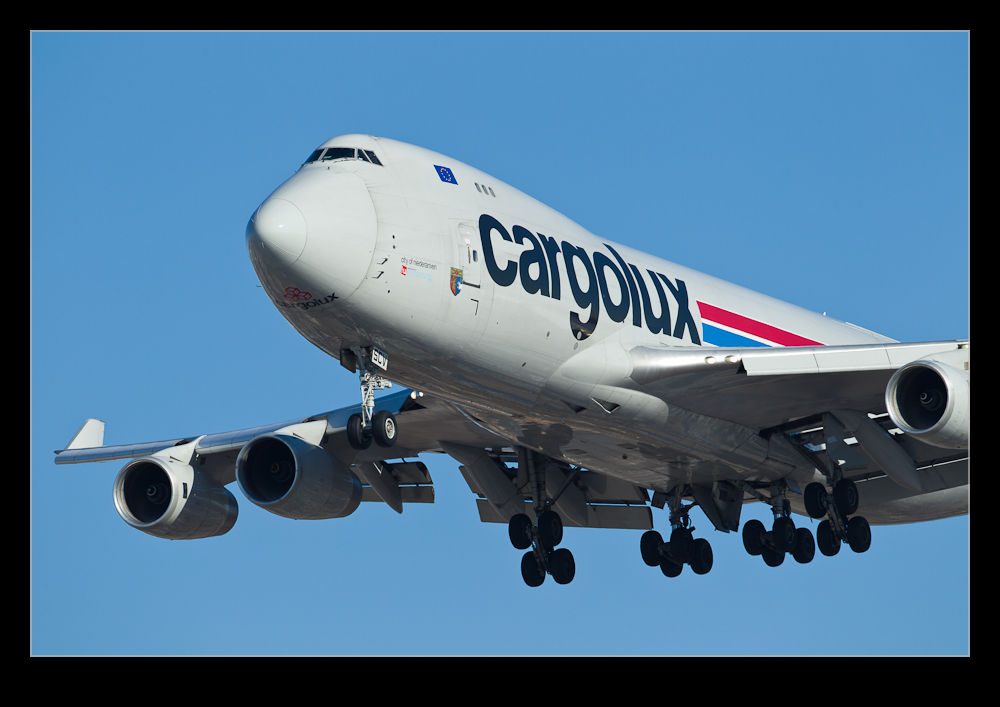
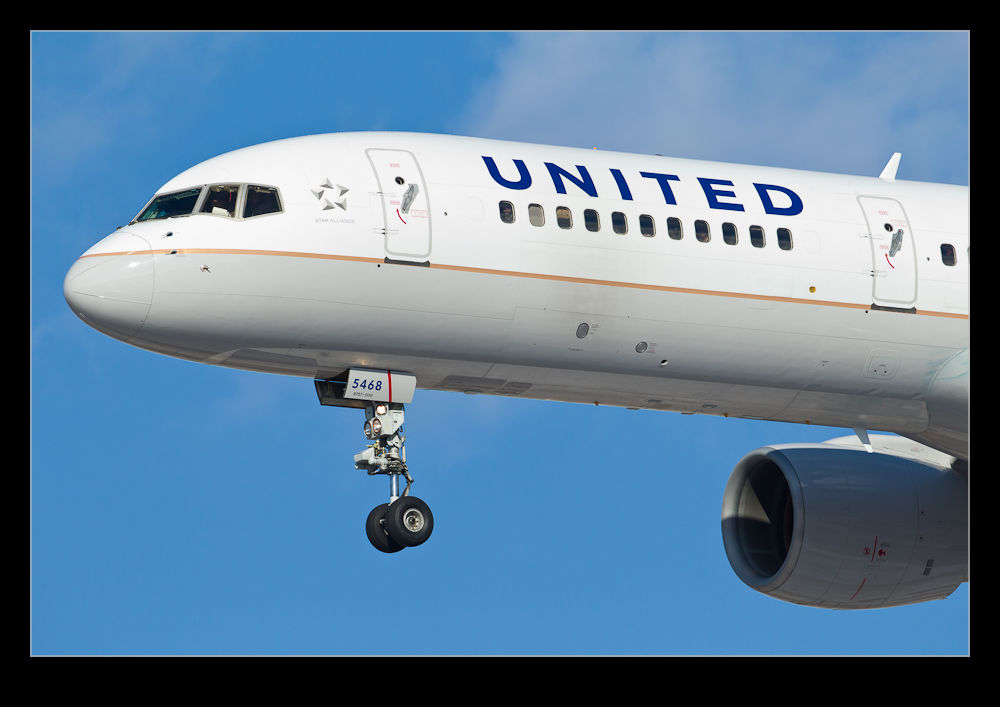
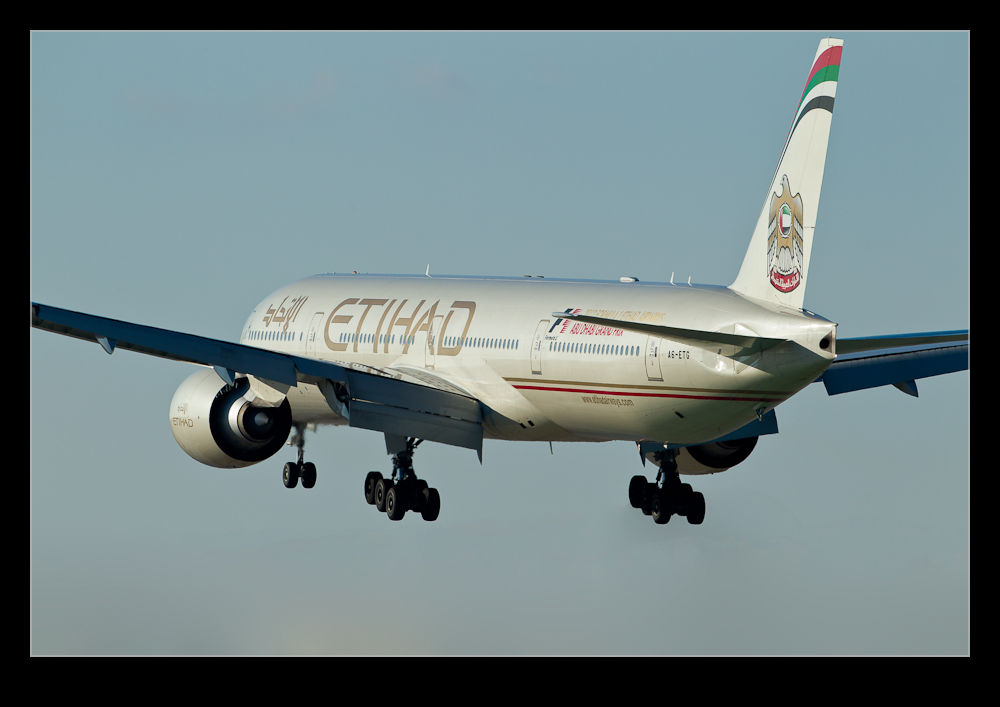
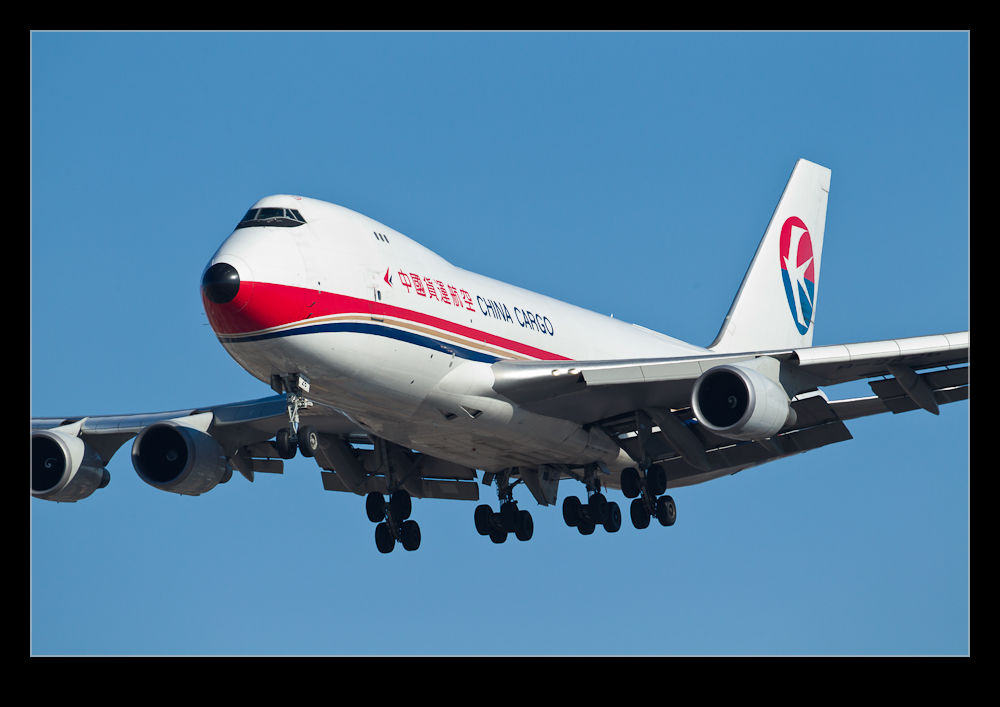
Some O’Hare Arrivals

A bit more time stuck indoors than I would ideally have liked had meant that I was beginning to climb the walls a bit.  Some good weather had been about but I had been unable to get outside to enjoy it.  However, I did get a Sunday when I was able to get out and the weather showed signs of clearing up.  (It had been pretty murky early in the day but the forecast said it would get better and it wasn’t wrong!)

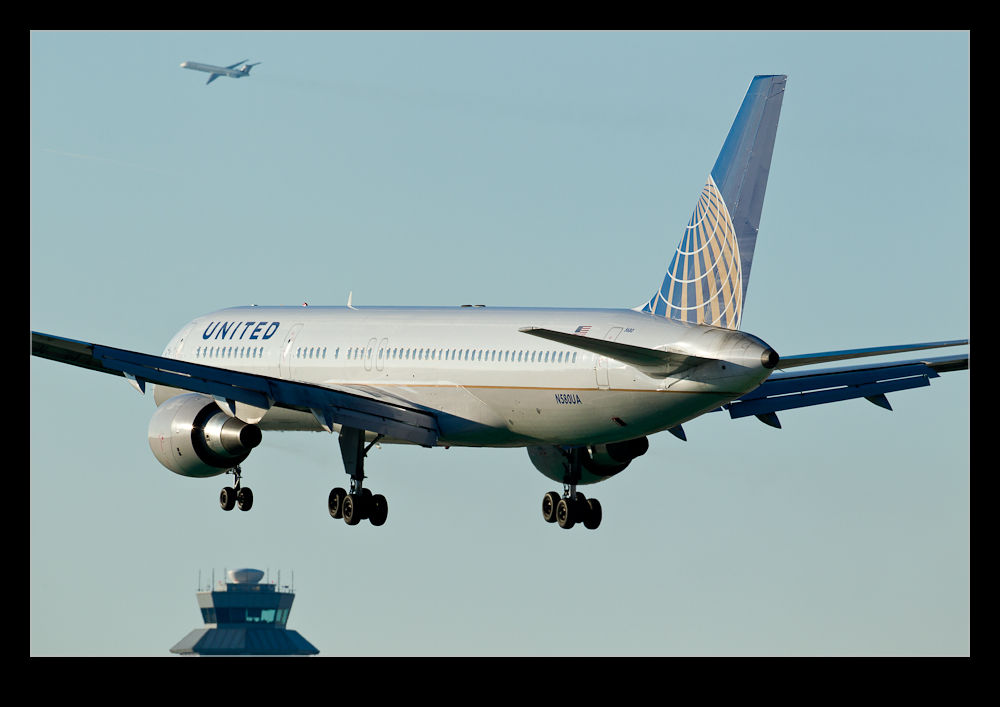
I decided to head to O’Hare to watch some European arrivals.  A strong westerly wind meant the arrival direction would be reliable as far as sun angle was concerned and the low temperatures should hopefully avoid too much heat distortion.  Apart from that, an afternoon out shooting the arrivals is better than plenty of other options even if it isn’t something new and unique.

As it was, there were a fair few interesting aircraft coming in along with the regular O’Hare types of traffic.  I was able to keep close to the car which meant I could hop back out of the chilly wind between interesting targets and listen out on LiveATC’s app on my phone to know when something was coming my way.  Flightaware also allows a bit of planning ahead.

It was a fun afternoon and some good results showed up.  Some new bits to add to the catalog along with some of the familiar stuff and some that will soon no longer be familiar and need to be remembered before they are gone.  Here is a small selection of the day.

Thornton Quarry Part 2

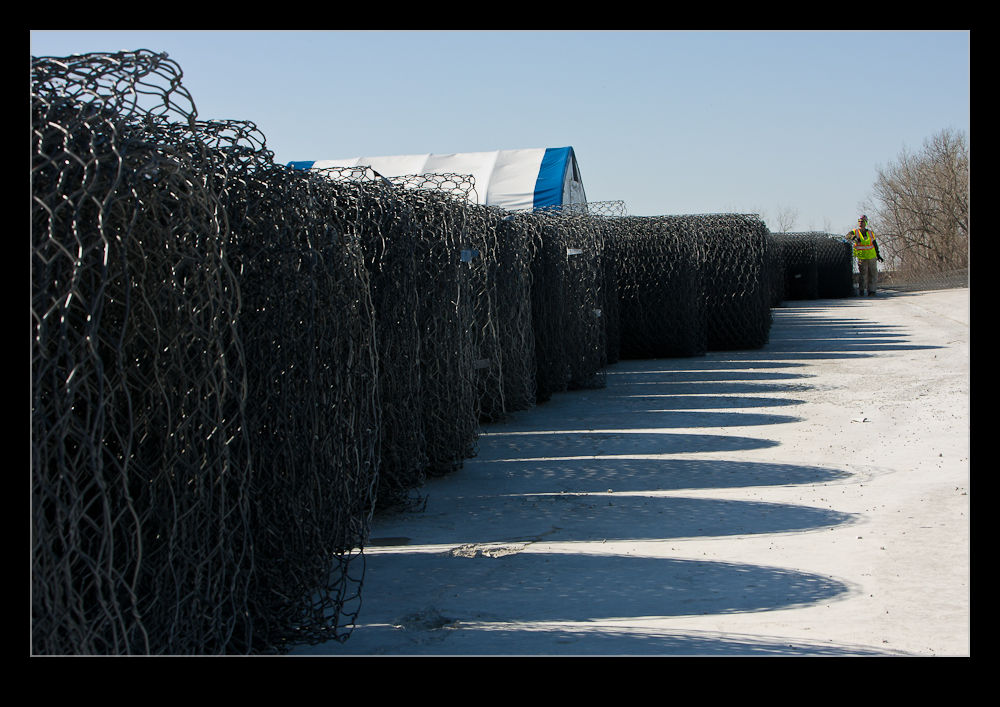
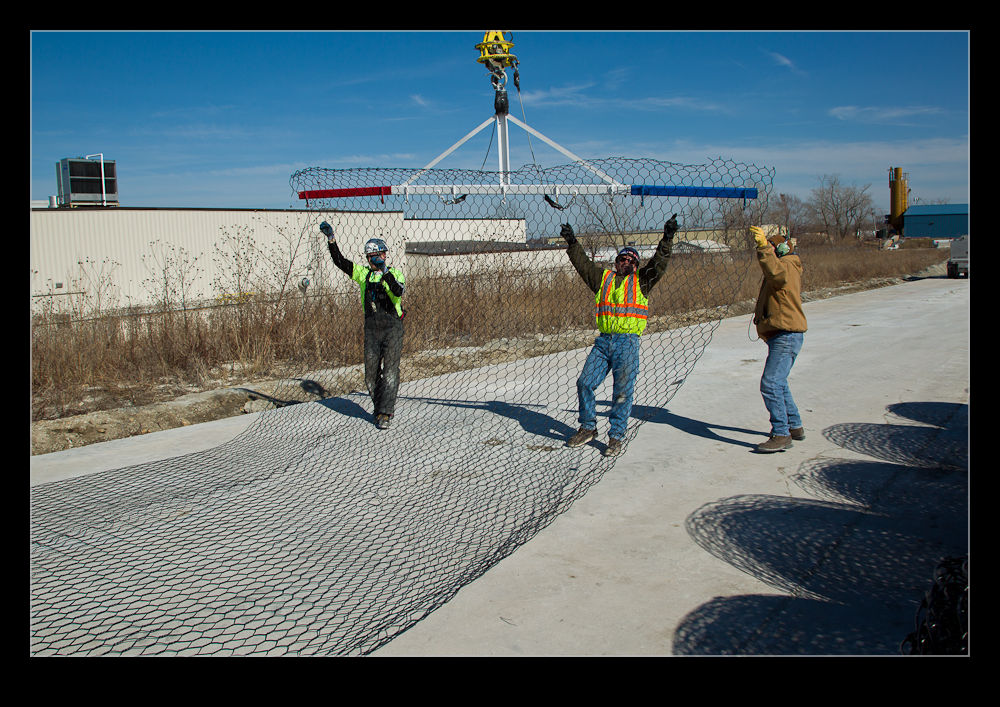
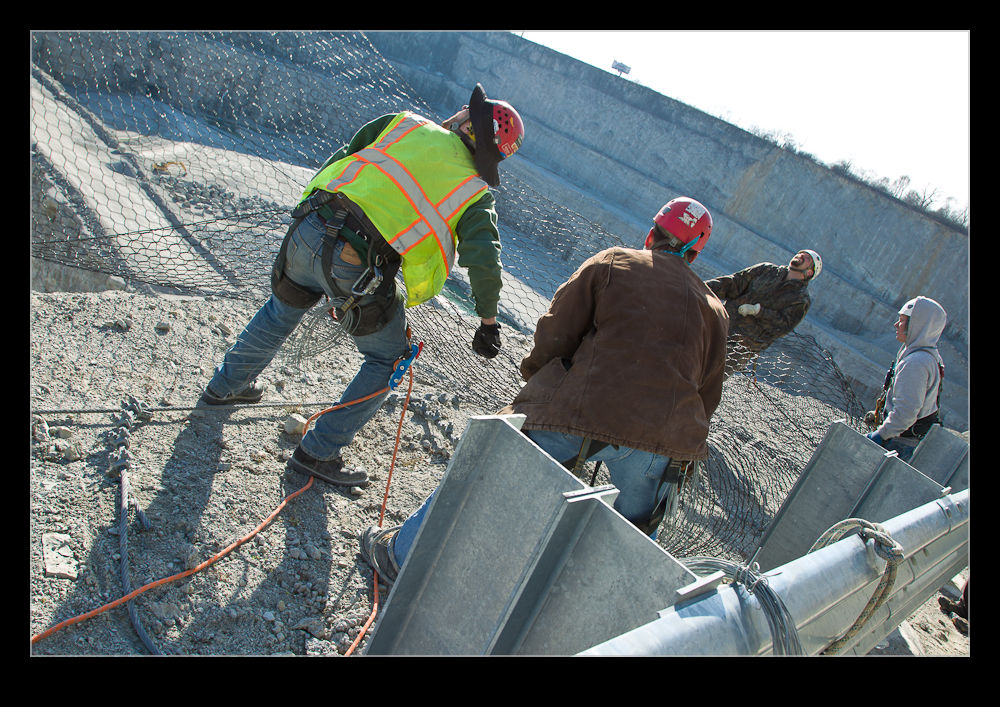
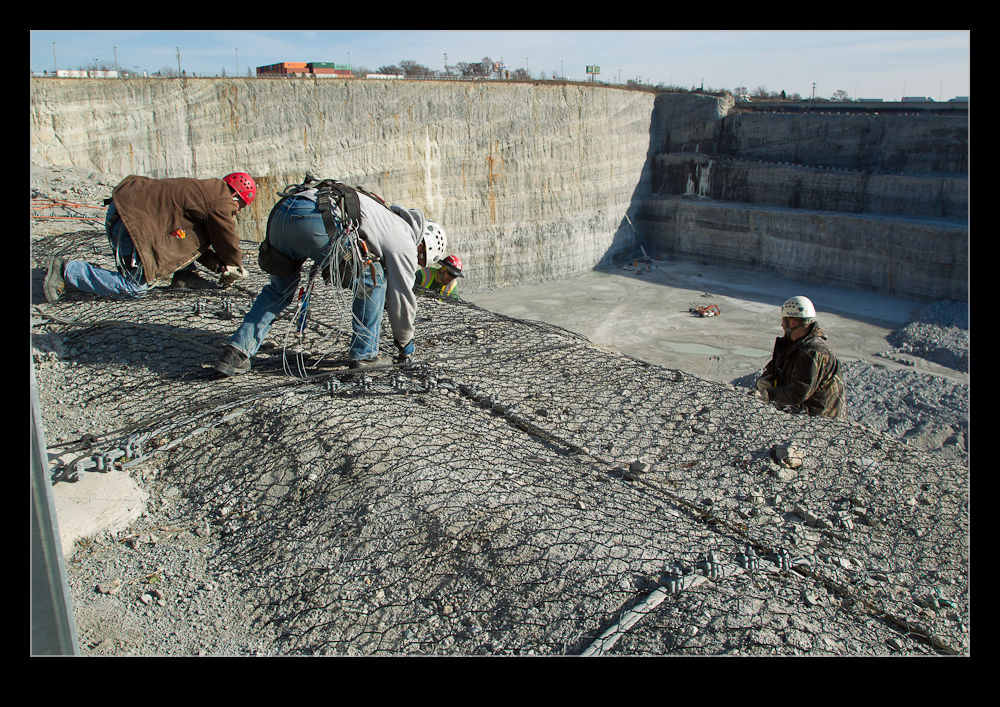
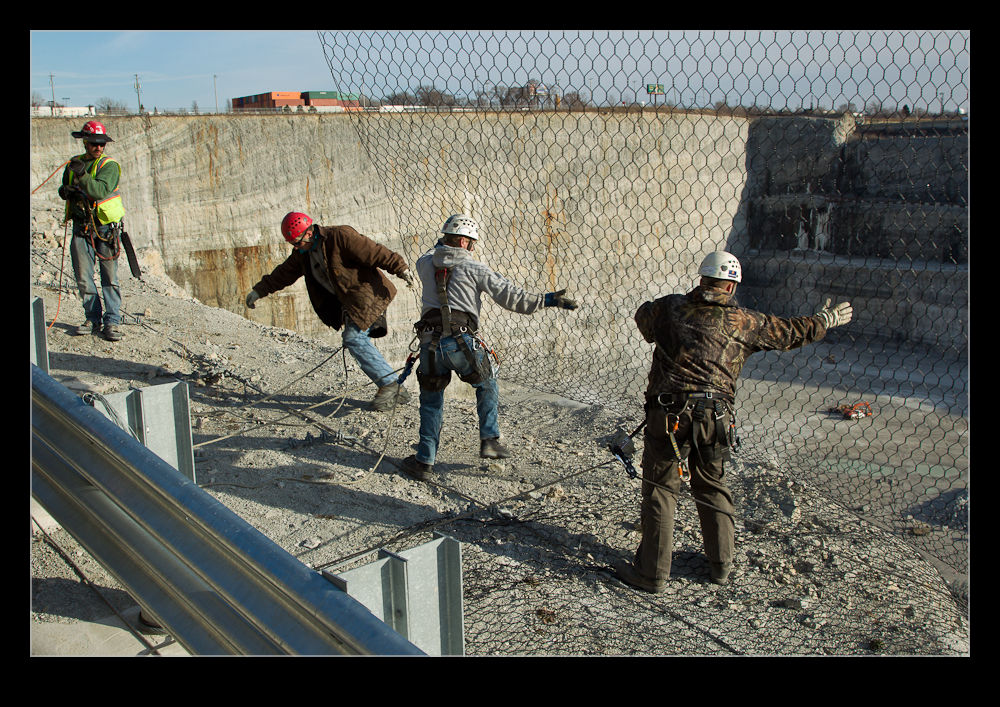
I mentioned before what the lift at the quarry involved.  However, I thought it was worth talking a little bit more about the work of the guys on the ground.  There was a good team spirit needed for this job and the guys worked hard throughout the day to get everything done.  With the many rolls of netting to put in place, there was plenty to do!  These were long rolls.  The later rolls were over 300′ long and they were hanging from 150′ of lifting line!  Also, it could be breezy and keeping the net under control was interesting!

There was one group of guys at the top of the quarry who were responsible for hooking up the nets.  They would put the roll into place and unroll it along the roadway.  When the helicopter came in, it had a special fixture on the end of the line.  This was a spreader bar with hooks for the net.  The bar was attached at the bottom but a ring was placed into a hook to turn it up the other way.  This meant that the hooks would be the right way up to hold the net.  When the release was triggered on the hook, the spreader bar would flip over and the net would fall free.  Then the whole thing could be repeated.

The other guys were on the top of the rock face ready to attach the net.  A wire line was rigged across the top of the rocks.  When the net came in, they guys had to grab the net, bring it into place and start wiring it to the line.  Two guys would be in harnesses and they would head over the edge as the net was lowered to ensure that it was aligned correctly and were it needed to be.  Joining each net down the rock face would follow another day.

The guys worked well together handling the nets into place and making sure they weren’t aligned incorrectly.  If the wind twisted the net, they had some good techniques for getting them back around the right way.  The was vital since the release would not work if it was facing the wrong way!  Jim was flying during all of this with a very long load so he did a great job to stay focused.

Thornton Quarry Part 1

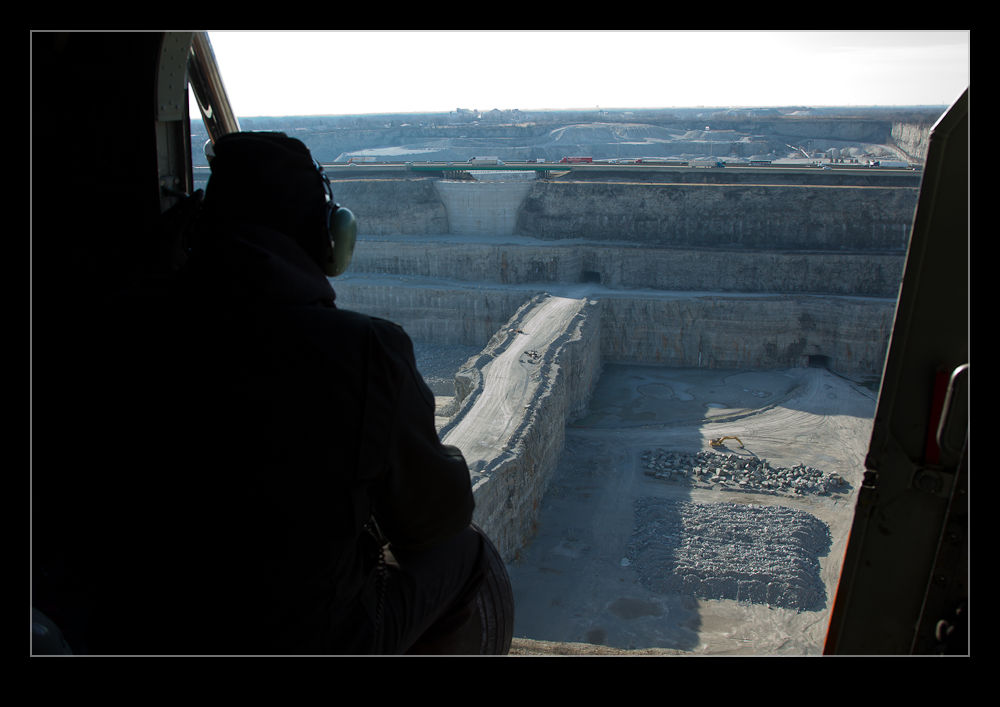
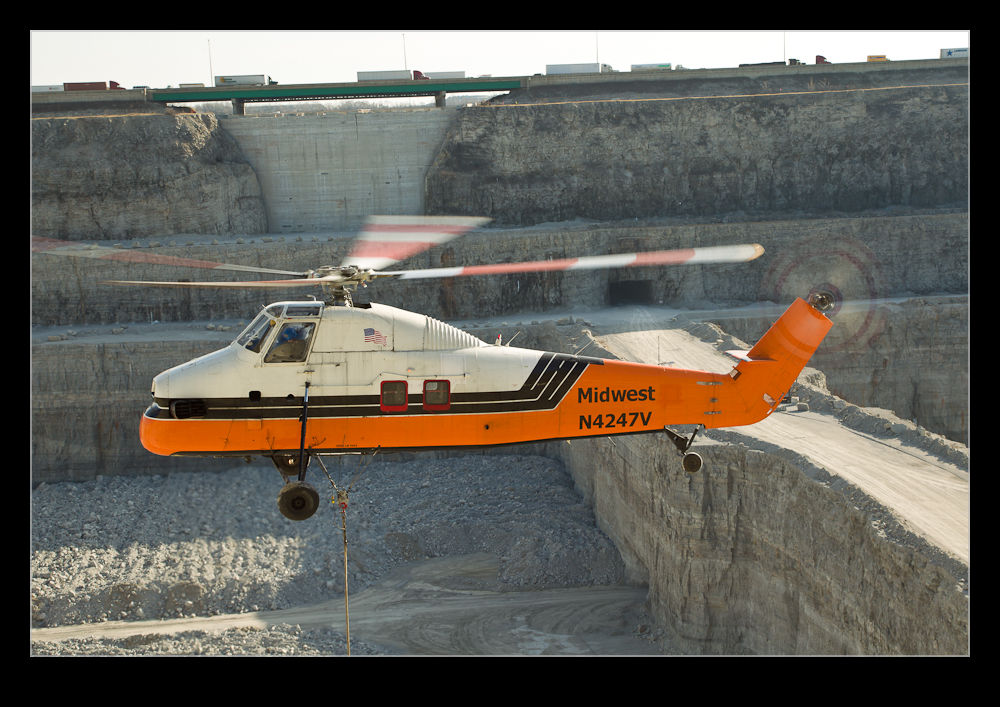
The main job of the day was at a quarry.  This was a more unusual job than the ones I have normally seen with Midwest.  For a start, it was a long job.  This was actually the second day of this job and a third would be required before it was finished.  The task is to place wire netting on rock faces to stop and falling rocks from flying freely at anything below.  The nets hold any debris against the rock face.

You will have seen things like this before.  However, if you are like me, you hadn’t really given any thought to how they are put there.  Today I am going to focus on the flying aspect of the job.  The work of the guys on the ground was a separate issue and I am going to give them their own posting to follow this one.

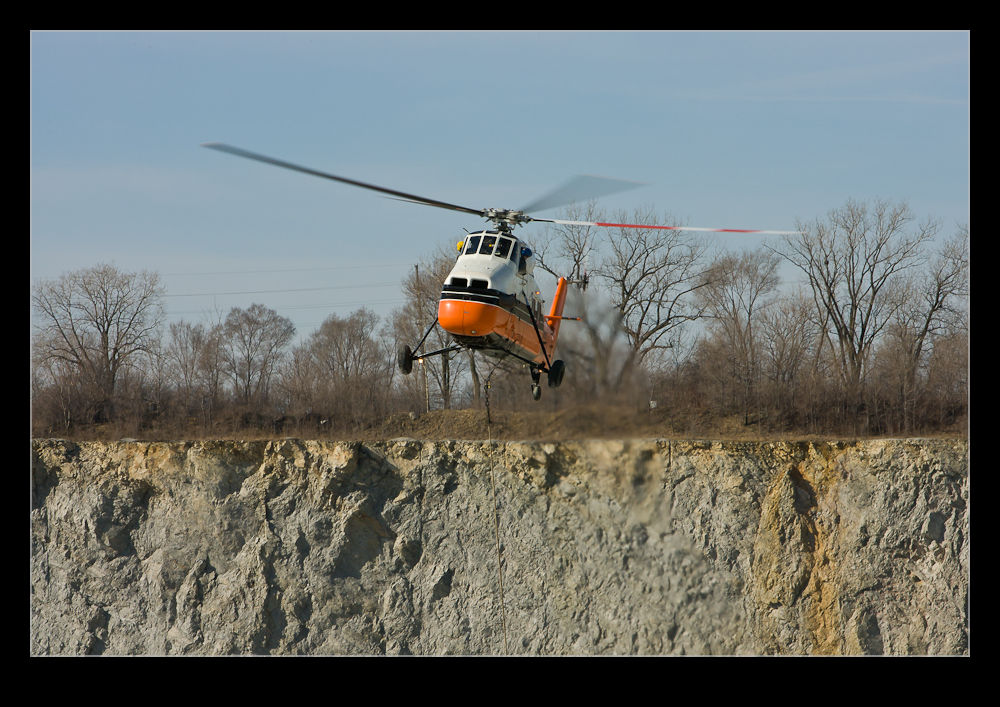
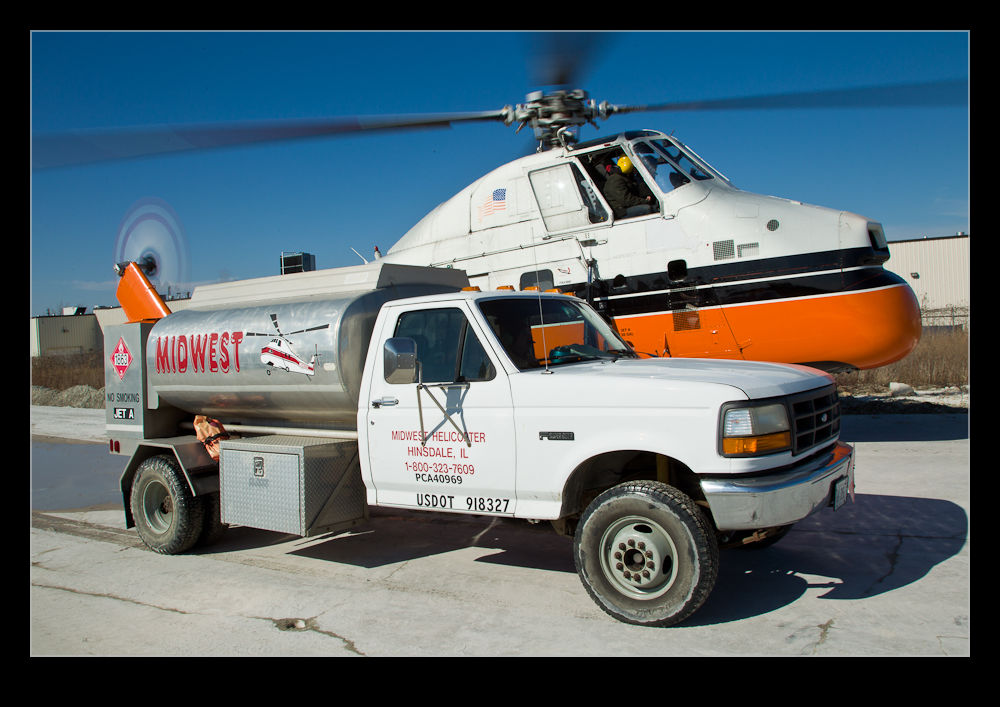
The rolls of net are laid out on the ground and picked up by the helicopter.  Then Jim had to fly this very long roll across to where it was supposed to be placed.  The guys on the ground would attach it and then Jim would lower the net down so the bottom became the top and the top ended up at the bottom.  There are over a hundred of these rolls and each one takes several minutes to place.  Consequently, it was necessary to land several times during the day.  One need was for fuel but another was for a break.  This is a long time to be hovering a helicopter!

The weather was really nice for the majority of the day and I was able to get around the site and see the work from many different locations.  I also got to have a break during the day which most people didn’t so it was easier for me.  Even so, I was bushed at the end of it all.  At least I got to fly back to base and not deal with the traffic!

McCook Lift

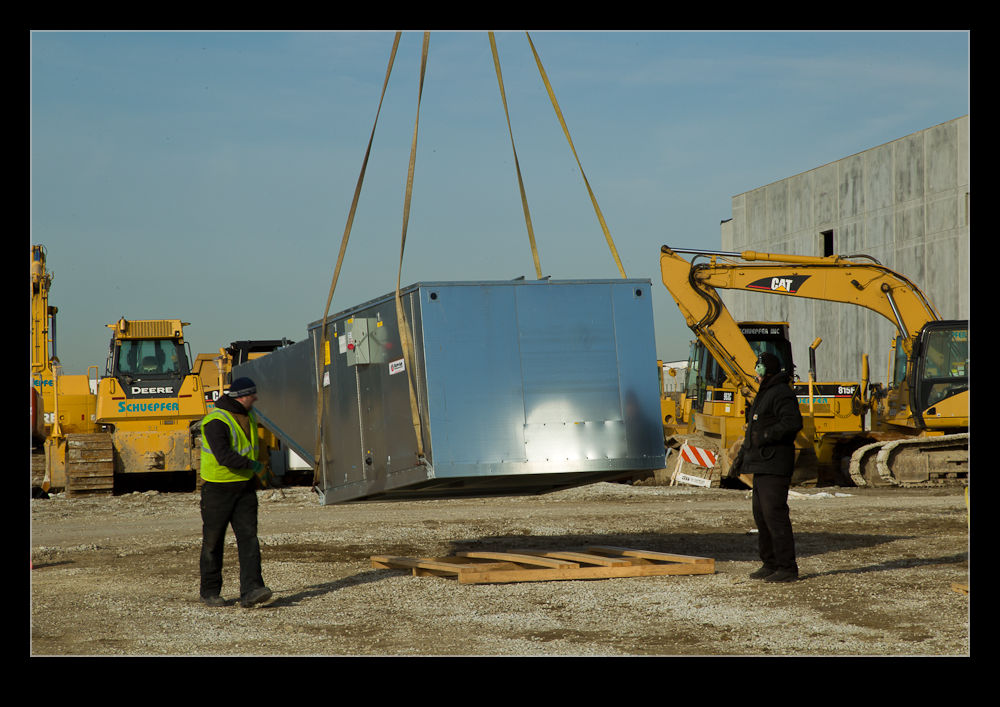
As I hinted previously, my day with Midwest involved a couple of lifts.  The first was a relatively straightforward job.  In common with a lot of jobs it was cooling systems for the roof of a building that was being constructed.  The equipment was laid out on the ground near the building and the guys were ready to roll when we landed.

The location is quite close to Midway airport.  We talked to them as we came in and the traffic from the airport was close to where we were operating.  A couple of times, a low flying Boeing 737 from Southwest could sneak into my shot.  They were obviously well clear of us and there was no problem but it was quite fun to see something different in the background.

The job went off without too many issues and soon the aircraft was back on the ground and we could hop on to head to the next job.

Illuminating the Bean

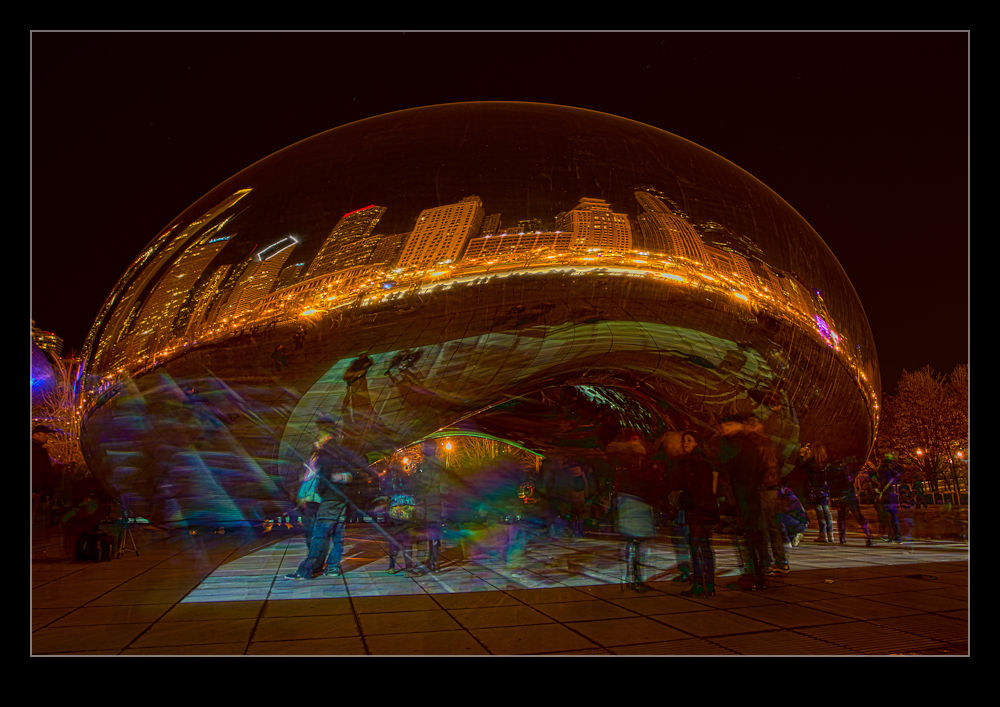
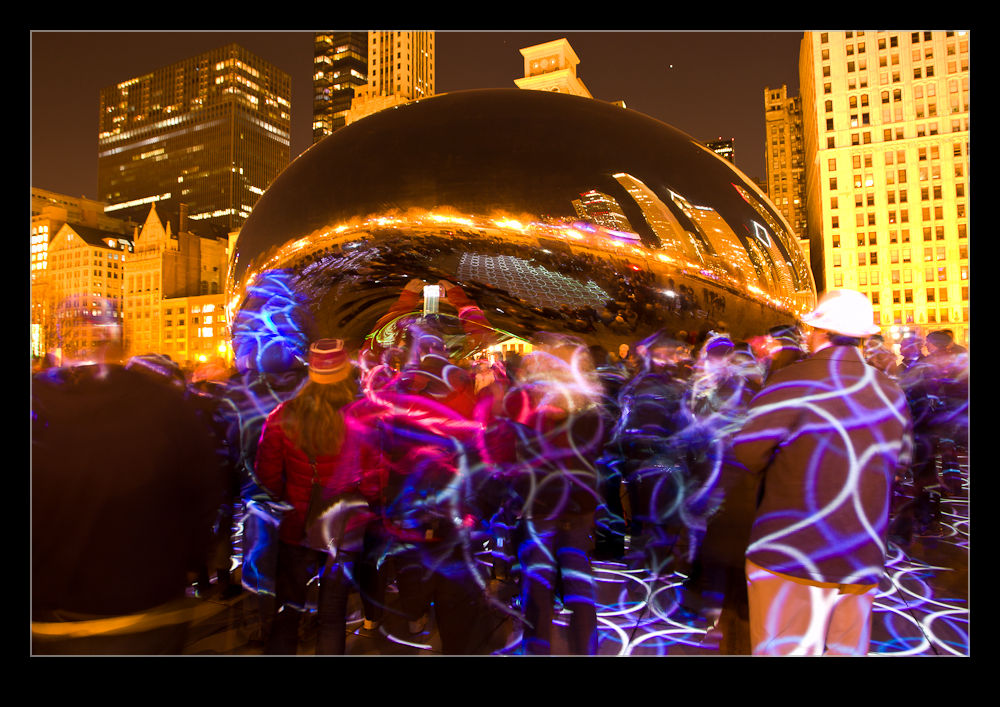
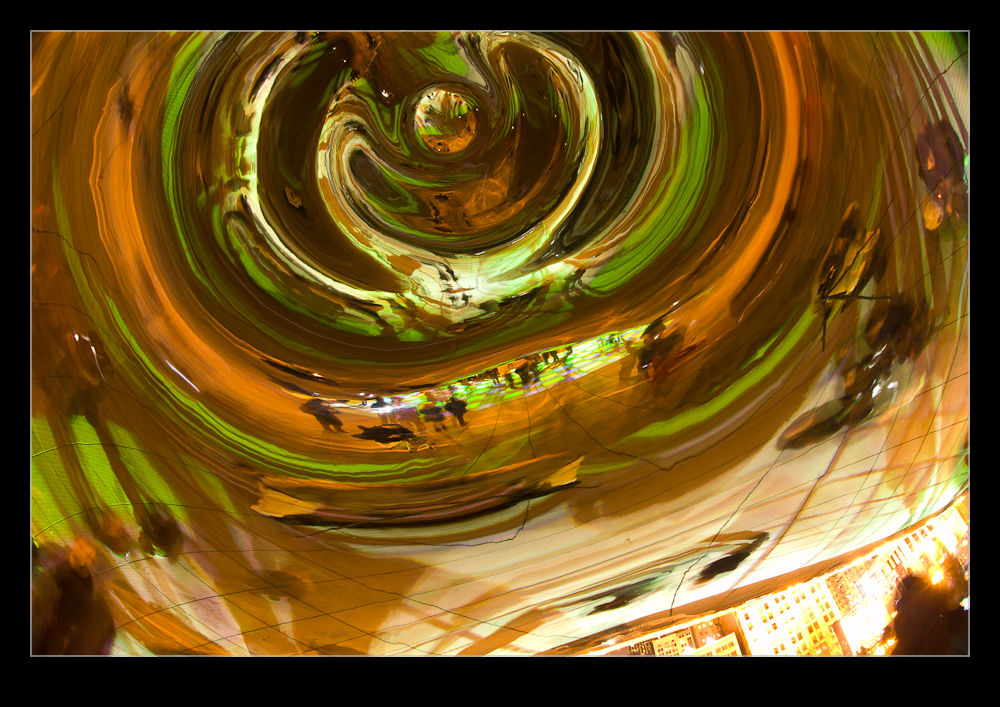
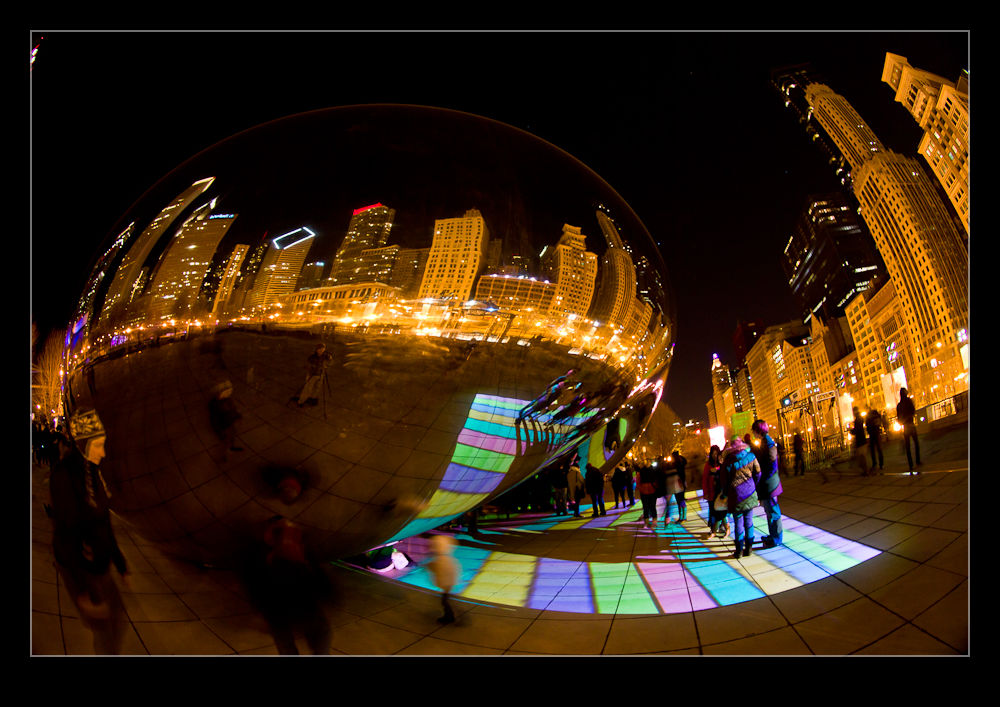
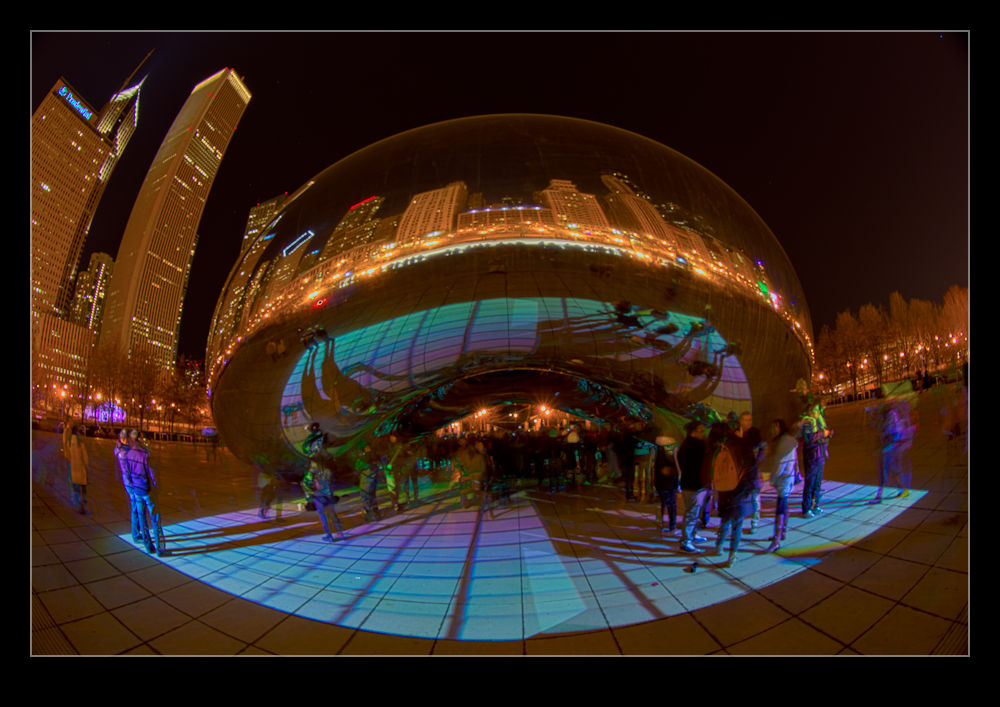
It is easy to get complacent when you have so much going on around you all of the time.  I saw something in the paper about an installation in Millennium Park where there was a light field set up around Cloud Gate (or The Bean to everyone except the artist who created it!).  The lights were illuminating the ground and also reflecting from the surface of the Bean itself.  Sounded worth a look.

I mention it to Nancy and the following day she says the paper mentions the exhibit ends the following day.  It is Sunday so I figure I had better get down there that night to see it before it goes.  Of course, I am not alone in thinking this.  I head down there and it is absolutely packed.  There are plenty of photographers around and one of them tells me how quiet it had been the previous Tuesday.  Great!  I am doing well recently with people telling me how it was better sometime before but they never give me a time machine to make this information truly useful!

Anyway, the presence of all of the people has some good effects.  I set up a time lapse when I first get there since it is busy and the people add something to the time lapse.  Besides, having a lot of people around makes it feel more exciting.  The other benefit is that, while the people obscure the light projections on the ground, they become a screen of their own so seeing the shapes play out on them can be just as good.

I hang around for a while since I figure people will drift off home at some point.  It is Sunday after all.  Sure enough, the numbers do reduce over time but the exhibit ends at 9pm and there are still plenty of people around at that time.  The patterns of light are different on each side of the Bean.  Projectors are mounted on scaffold frames and beam constantly changing patterns down.  There is also musical accompaniment (although I ruin that effect by staying in my own world with my own music – philistine!).

It was certainly worth it.  Someone asked me recently why to live in a city.  After you had seen everything once, what else is left to do.  A fair question if you don’t live in a city.  However, this was one of those things that says to me why it is fun to live in a city.  Something like this was happening and it was less than 15 minutes for me to walk there.

Some Fishy Video

As you might have noticed, there is a bit of theme developing with some of the stuff I post.  Photos are the main focus of what I do but I am also dabbling more with the video side of things.  There are some things that video can show that stills do not represent as well.  Since the 1D MkIV arrived in my hands with the ability to shoot HD video, I have been surprised how many times I have taken some video along with the stills.

Anyway, all of that is a roundabout way of saying that I have got some video from the Shedd Aquarium here in Chicago that goes along with the previous posts on the swimmy things.  It is shot through glass (of course) in the public areas so I know that the reflections are sometimes there but even so,  I hope you like it.