Category Archives: aircraft

Finally, The Aero 45 Is Airborne for Me

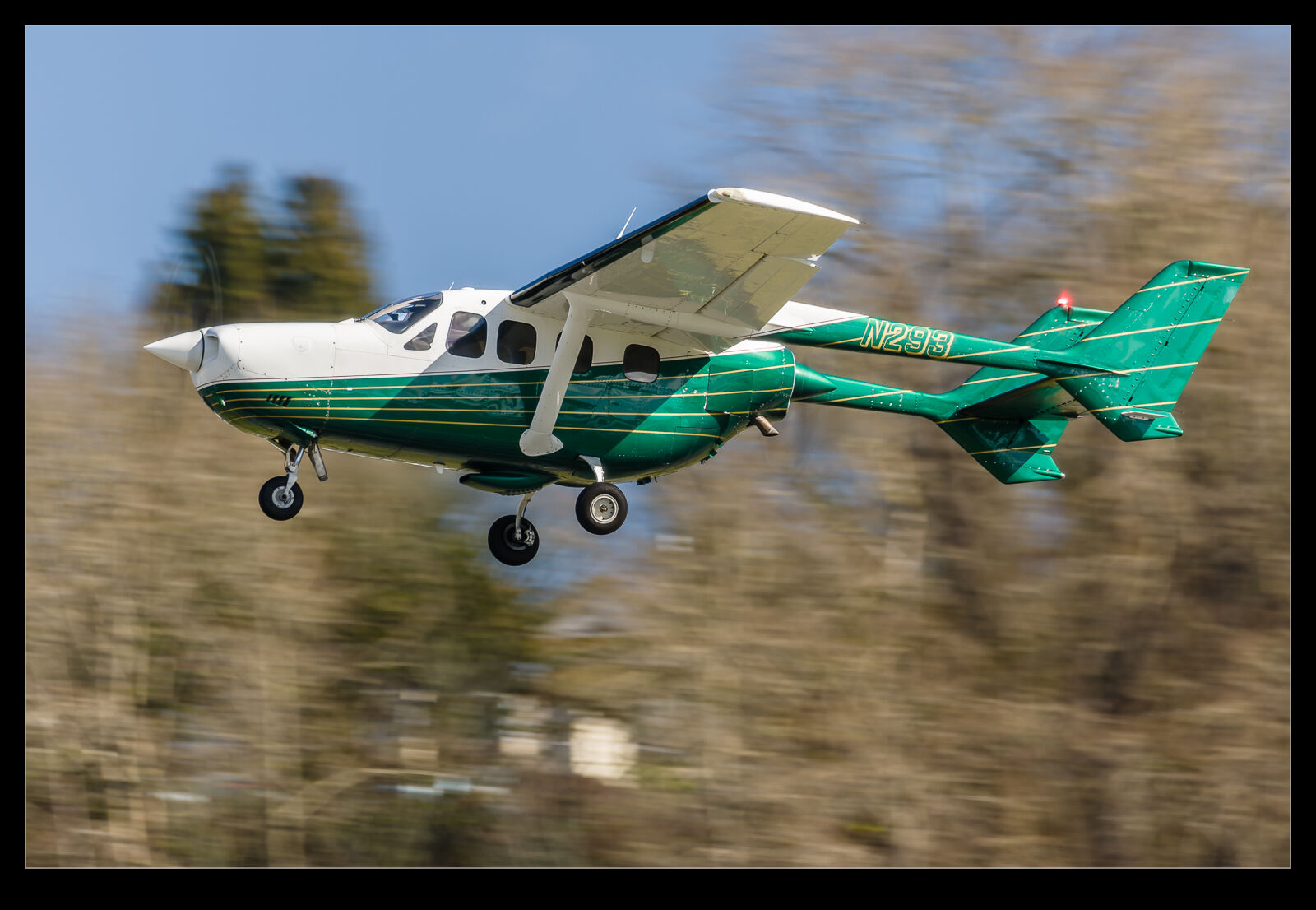
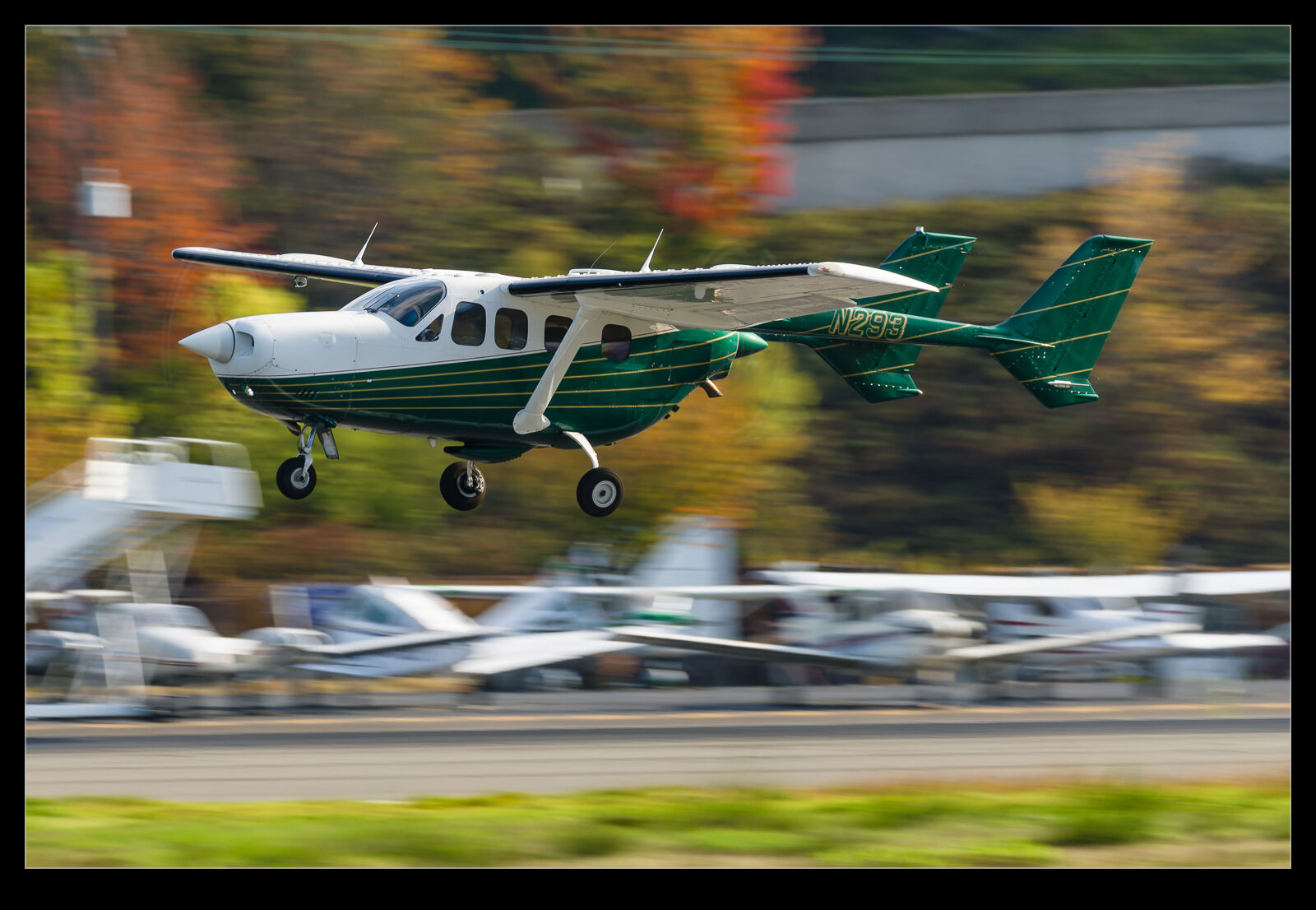
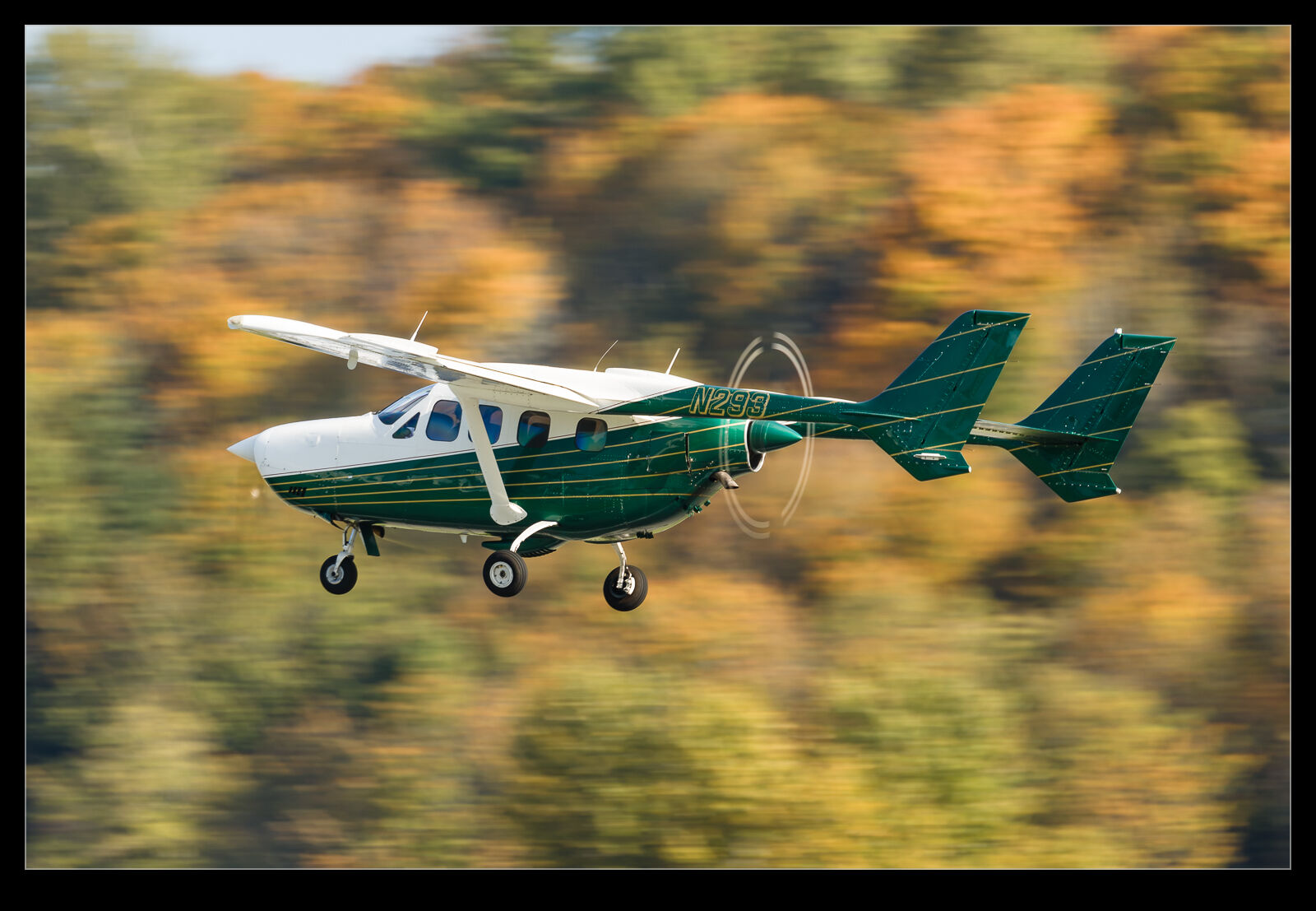
I have seen the Aero Vodochody designed and Let Kunovice built Aero 45 before at events.  However, it was always parked and never in motion.  I think it is such a cool looking like aircraft and reminds me of a mini Heinkel HE-111.  I really wanted to see it flying and I have had two opportunities this year to do so.  First it showed up at Concrete for the fly in.  This was great news as I got it landing from close proximity and then again when it took off.

It was not a lot later that the Arlington show was setting up.  I wasn’t going to be at the show but I was there the day before for some warbird flying and the Aero 45 was coming in to be on static.  (This was a repeat of the first time I saw it in person which was also at Arlington.). Not so close this time but another opportunity to catch it in flight.  What a cool looking plane.  Glad we have it up here in the PNW.

Dreamlifters Are Still Here Occasionally

The end of production of Boeing 787s at Everett meant that there was no longer a need for the Dreamlifter operations to support Dreamliner production.  However, while the Dreamlifter base has closed, there are still some production activities at Everett on the 767/KC-46 line that require large structures to be delivered and the Dreamlifters are used for this sometimes.  I understand at least one of them is currently stored, but the others are active.

I only rarely find myself at Everett when the Dreamlifter is there, but it has happened a few times over the last few months.  Here are a few of the shots I have got since these things became a little bit rarer up this way.

My Buddy Was Flying This

Getting a British Airways 777-200ER arriving at SEA would not normally be a priority unless the light was great and I was going to get Mt Rainier in the background.  If the weather was cloudy and it was arriving from the north, might not seem to be that much of a deal.  However, if it is being flown by someone I know, that is a different story.  My friend, Paul, was the skipper on this flight and I was meeting him to have some time around Seattle before he headed home the following day.

The clouds were a shame but the light wasn’t totally bad.  I figured it would need a bit of work in post to try and make the best of the shots but the lack of heat haze did help a bit.  I was able to grab a few shots of the jet as it came down the approach and then as it was over the threshold prior to touchdown.  Not the greatest shots Paul will have of him flying but, hopefully there are not too bad.

Typhoon Air Data System

Working through some older shots for another project, I ended up looking at some shots of an RAF Typhoon displaying.  As I was zoomed in on some of the shots, it was interesting to see the air data vanes on the underside of the front fuselage as the plane maneuvered.  There are several vanes around the underside of the front fuselage and the differences between them can tell yaw and pitch angles.  In one shot when the jet was climbing straight up, the vanes are all pointing in similar directions.  Shortly before this, as the jet was pulling hard, the angle of attack was higher and the flow up around the front fuselage results in some significant differences in vane angle.

This is the sort of thing that is very important when designing and clearing a flight control system.  We had a front fuselage wind tunnel model for the Typhoon during the development program.  This was used for intake design but also for air data system modeling.  The way in which the various vanes move is vital to understanding the control law requirements.  It is also important when considering failure modes.  If one vane should fail, how much it impacts the flight control behavior and how much the system detect the failure.  Will the aircraft be vulnerable to control loss in the interim?  The Tornado did not have as complex a flight control system, but it did have augmentation of the controls and, as it rolled, you would get quite different readings from the angle of attack probes on each side of the fuselage.  How much of a difference was normal versus what was a failure was an interesting analysis problem which I enjoyed working on.  My days on Typhoon were relatively limited and shortly before first flight so I never got involved with the results of the testing program, but I do enjoy looking at the resulting aircraft whenever I get the chance.

Wichita’s Finest is Everywhere in the Parks

Kenya and Tanzania have many small airstrips scattered around the countryside including in the national parks.  These provide quick transfers between locations if you are willing or able to pay and don’t want the long and bumpy road trips.  There are a variety of types that are used for these services and I shall show some others in upcoming posts.  However, one type does dominate.

The Cessna Grand Caravan is everywhere in the region.  It has the right size for many of the trips, it has sufficient capacity for luggage with the baggage pod beneath he fuselage, it is fine with the rough surface strips that are in most places and it is PT-6 powered so very reliable.  We saw tons of them during the trip and also got to experience a flight on one.  I was surprised to find it was a 1×2 configuration.  I had assumed that they were 1×1 but not in this case.  It got a lot of us in there but getting in and out was not an easy process.  The aisle was minimal!

I have no idea how many Grand Caravans there are in use in rural Africa but I imagine that Cessna has delivered a ton of aircraft from Wichita to the region.  I suspect that the best replacement is another Caravan.  The Islander might once have been this sort of workhorse but the efficiency and reliability of the Caravan must be what has made it so ubiquitous.

Hot Air Balloon Searching for a Landing Spot

Nice evenings during the summer mean balloon flights over Woodinville and the surrounding area.  I was driving home one evening and, as I came up I-405, I could see a balloon that looked like it might be close to home.  Rather than turn towards the house, I headed for one of the nearby fields that has been a landing zone for balloons before (and that have made it into posts on here).  When I got there, the balloon was close but was tracking slightly west of the field so no way it was going to make it in.  It was heading towards the town so I decided to drive towards the south side of the town to see where it might end up.

I was coming around the south side on the road that skirts the town and the traffic had come to a halt.  This was because everyone was watching the balloon low overhead.  I actually took a shot through the sunroof of the car as it came low over me.  I looped around the roundabout but didn’t take the south exit because the crew seemed to be heading that way and I didn’t need to crowd things.

I went around to the next road and looked back across the fields as the balloon continued on its way.  It wasn’t touching down so I guess the area was not ideal.  I figured I might head a little further south and see if it came even further.  I took the road to Redmond and pulled off at one of the field entrances.  Sure enough, they were still drifting south but looked like they might finally be getting close to landing.  I didn’t shoot much video, but I did get a little to emphasize the way the balloon was drifting through the trees.  As I watched it, the ground crew pulled up and started honking at me.  They were incredibly rude.  As soon as I saw them arrive, I was getting out of the way.  Not my fault that they were struggling to catch their balloon, but they behaved like everyone should just get out of their way.  I did anyway but, if you are reading this balloon crew, don’t be assholes to bystanders if you are struggling to recover your balloon and its passengers.

The Cormorant Beats Me Again

One of my goals for going to the air show at Abbotsford this year was to see a Cormorant fly.  I know this would sound like my normal interest in the bird species but this time it means the AW101 version that is flown for Search and Rescue by Canada.  Sure, I have seen plenty of 101s over the years with the British and Italian examples, but I have never seen a Canadian one before.  It was due to display during the show.  When I got there, I was delighted to see it sitting on the operating ramp.

However, my optimism was unjustified.  There was no announcement during the show about what had happened to the SAR demo, but it just didn’t happen.  The day shows did get the demo, but the Friday evening show was a no go.  It was a fun show, so I wasn’t too disappointed, but it was a little frustrating to still have never seen a Cormorant airborne.  One day…

Concrete Fly In

The time between me doing something and its appearance on the blog can vary wildly.  Sometimes, I will aim to get something squeezed in here soon after it happens but that is the exception.  Usually, I have stuff posted out quite far in advance.  As I come up with new topics, they get added to the schedule and, if a topic doesn’t get written about promptly, it can really disappear into the distance.  Such is the case with the Concrete fly in of 2023.

There will be several posts that make it on here from that event in the coming weeks.  I have started writing them up but some of the specific topics will take a while to appear.  However, I shall start things off with a more general post about the fly in.  Held at Mears Field in the interestingly names town of Concrete, it is a popular gathering of planes from around the region.  There is a single runway running east/west in the valley and the planes park up on either side of it.  You are able to walk across the runway at a couple of locations (or further away from them if you want to avoid the air cadets) so just keep you head on a swivel.  The wind seems to change midway through the day, so arrivals were from the west in the morning and the east in the afternoon.

We set up at a spot near the threshold on the eastern end of the field and it provides a good location to watch the landings and the takeoff rolls.  Sometimes, it is easy to forget that you can walk around, and you find you have stayed in one place for ages getting similar shots.  I did try and mix it up from time to time but it was rather sunny and warm and the shade under the wing of a 170 was pretty appealing.

Since I was shooting a lot of light aircraft, I decided to try and make the shots more interesting by keeping the shutter speed low to emphasize speed.  The downside the this is that you are very close to the runway so the parallax effect is quite pronounced.  You can also just miss a ton of shots but why not have some fun.  Few of them are ones you can’t afford to miss.  It does mean a sharp nose is probably combined with a blurry fin.  This will really annoy some viewers and others will never notice.  Since I am shooting for me, I’m the only one that has to care!

More to come of some specific planes and events from the day out with a regular crew of aviation loons.

The Honeywell Demonstrator Comes Back to Seattle

Honeywell’s Boeing 757 demonstrator has been on the blog before.  I caught it at Paine Field during some awful weather.  More recently, it was back in Seattle and I managed to get it again.  This time the weather was a little better.  It was actually getting a bit of a tour of the region in with passes at Paine Field, SEA and Boeing Field.  I thought I was going to be in the wrong place for it but I was fortunate enough to catch it twice in one flight.

I was at SEA as it came in on the outer runway.  A little bit close in on the underside but I figured it would show off the unusual pylon for engine testing that is mounted on the upper side of the front fuselage.  It wasn’t landing there, though.  It then continued on and headed for Boeing Field.  They changed the flow direction around the same time so I was actually able to make it back to Boeing Field before it landed there.  It did then park up at Modern for the day.

Almost Directly Under the Approach

Photographing airliners can be a little “samey” since there are lots of very similar jets and getting a shot of them from the side looks much like any other shot unless the aircraft is specially painted or the lighting is particularly unusual.  Consequently, every once in a while, it is fun to try and shoot from a different angle.  The approach to SEA when the planes are on a southerly flow brings them in over a part of Burien where you can get yourself pretty much under the flightpath.

It won’t take too long before you are again getting a sequence of repetitive images, so it isn’t going to be useful for much time, but it is a chance to do something a little different.  Head on shots from a distance are possible.  Then you can get the shot looking up from the underside.  This might be a tight shot of a part of the airframe, or a wide angle shot of the whole thing.  An opportunity to do something a little different when you are photographing aircraft that are not ones where you care about missing the shot as you might when something special is coming in.