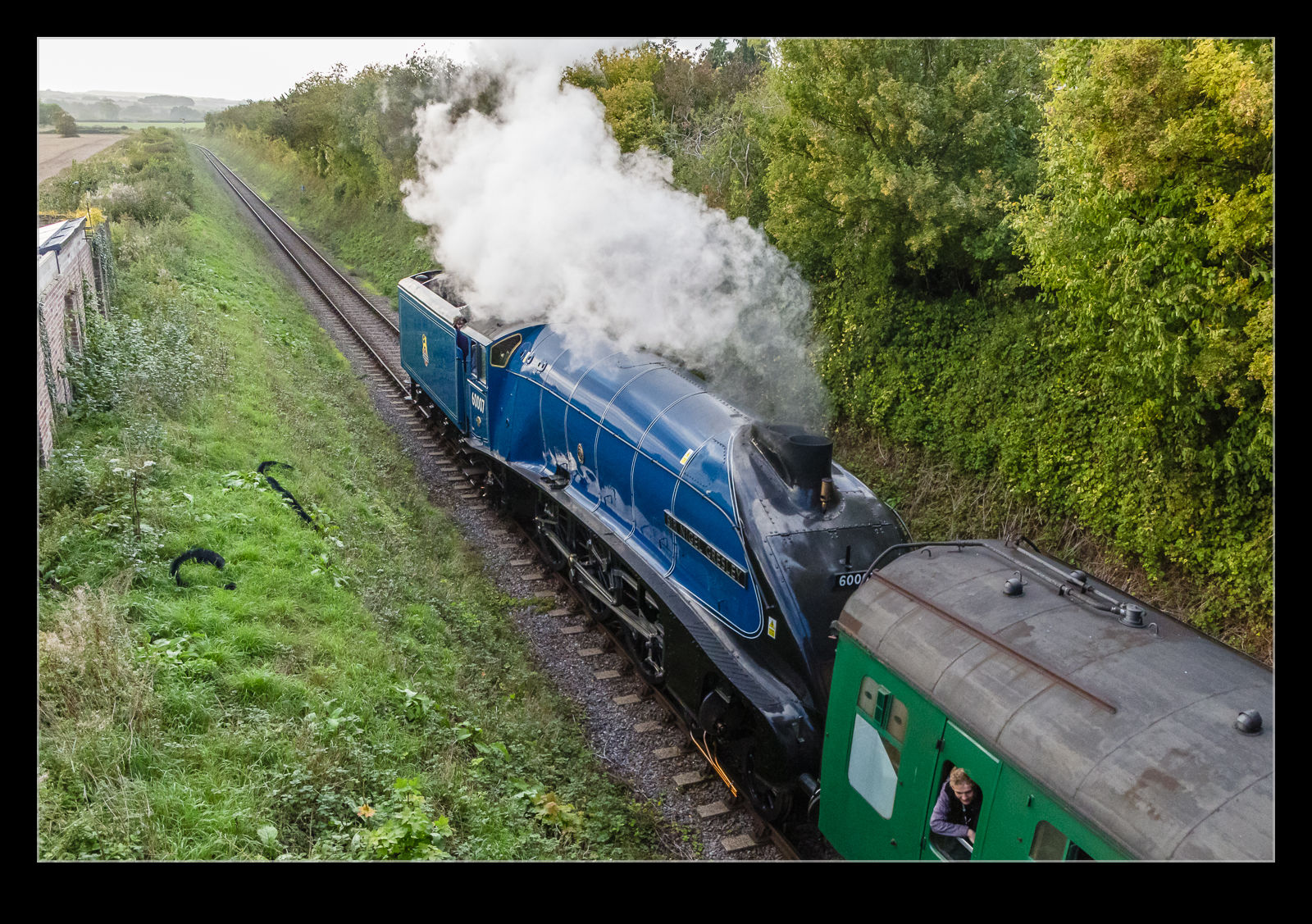
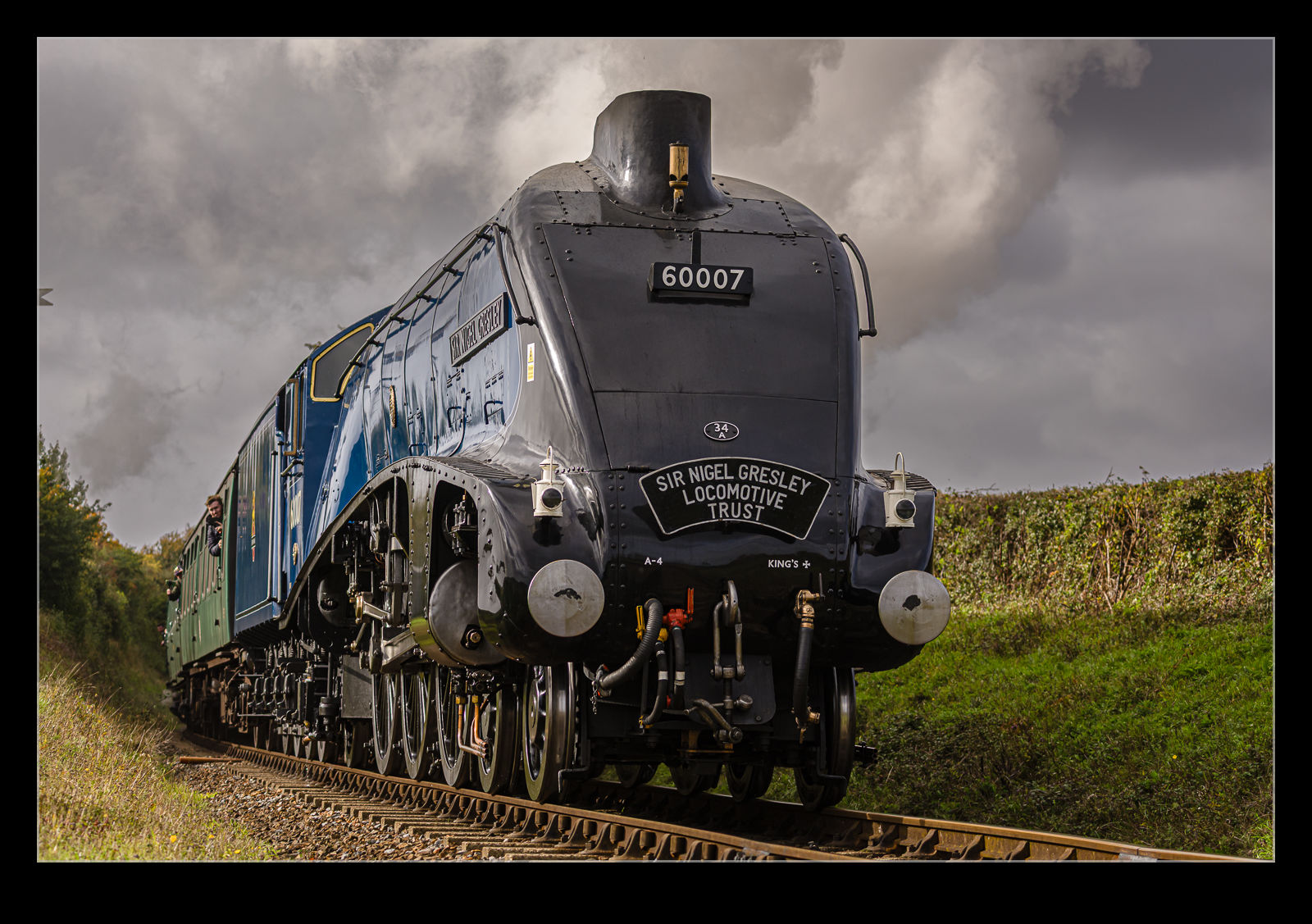
 The Watercress Line had a steam gala in the autumn and, while I was planning on going there for the event, I did end up with a little spare time at the end of Saturday and decided to nip across the see if I could see the trains – specifically one of their headline attractions.They had many locos taking part but the Sir Nigel Gresley was probably the one that attracted a lot of attention and was probably why I was there. I hadn’t seen an A-4 Pacific in motion (although I did recently post about Mallard in my visit to the National Railway Museum).
 There is a footpath that crosses the line between Alresford and Ropley and I thought I would try this out. When I walked there, I found a few other people that had shared the idea. It wasn’t crowded so we could all have space from which to shoot. Because we were right by the track (although behind a fence), I decided that going for a low angle would be best. Earlier in the day, the light would have been more favourable but, the day had been quite overcast so I wasn’t so worried. As it was, the sun did pop out at the right time and provided a little extra pop to the paint.
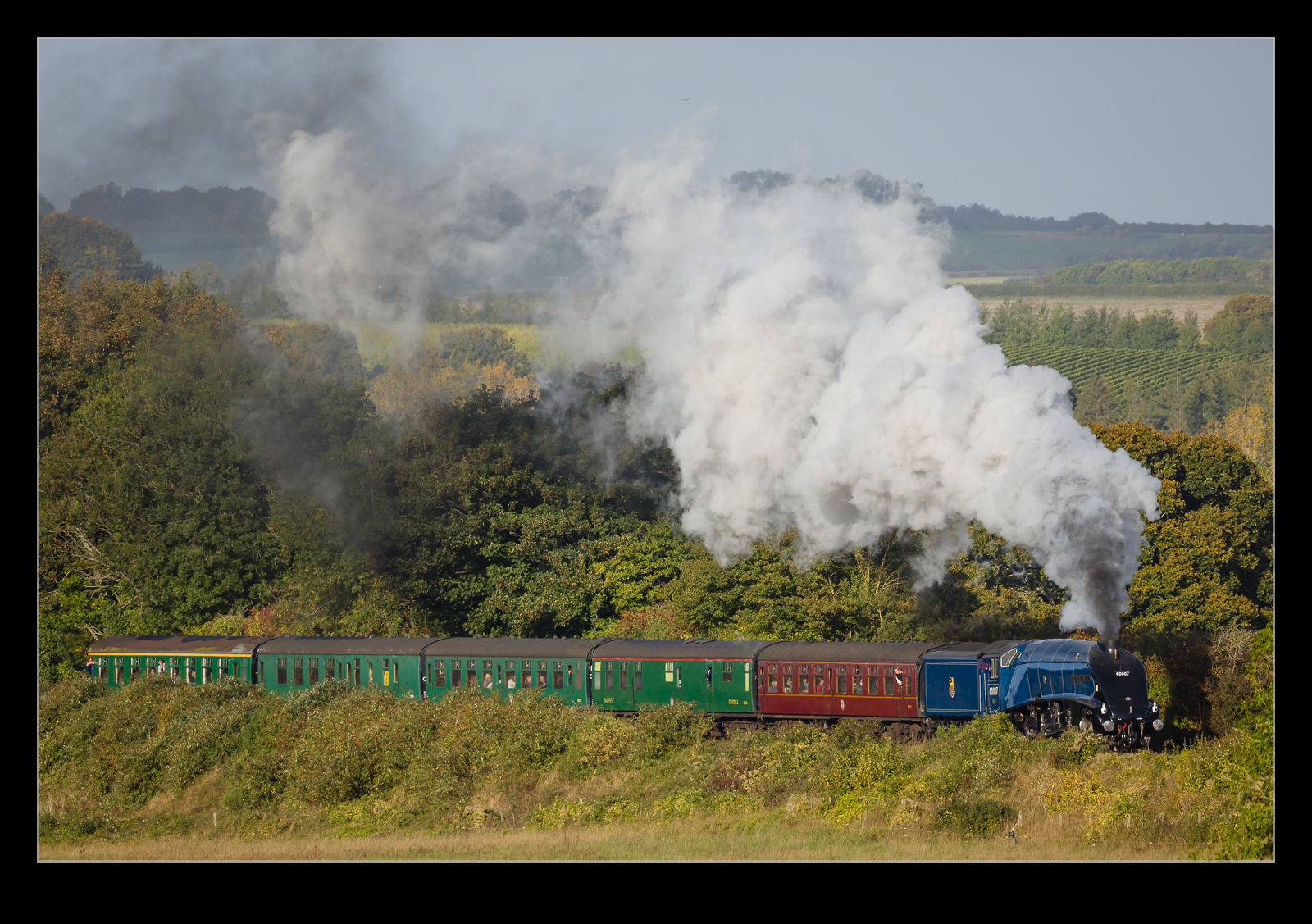
 This crossing is just around the curve from a section of track through trees and a cutting. It is a climb from Alresford towards Ropley so the loco is working hard. Consequently, you get a lot of smoke/steam from the smokestack. That also means that you can hear it coming before you see it. When the train came around the corner, it was framed nicely by the trees and embankment. I was able to get a few different types of shot as it approached.
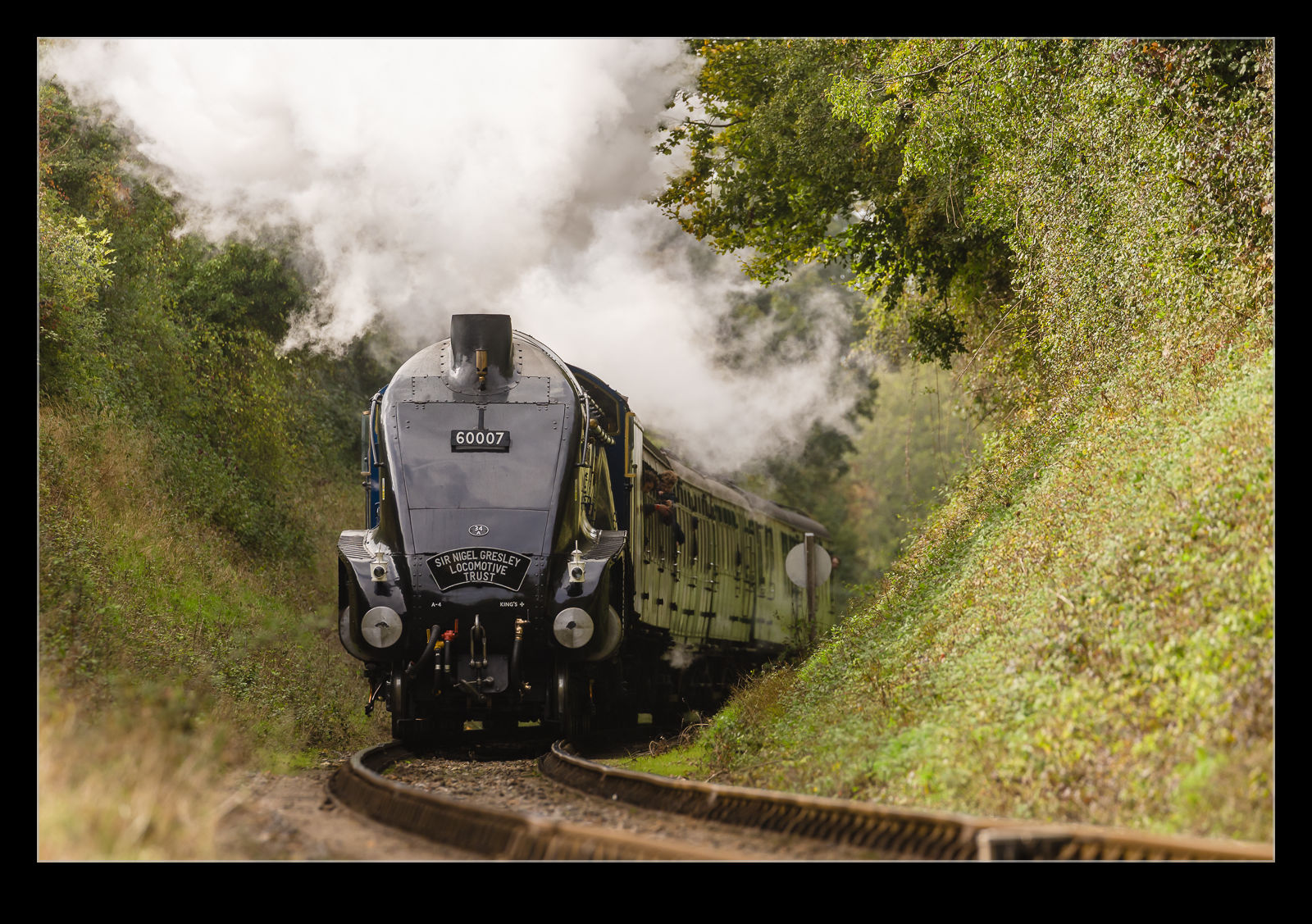
 I had decided to go with a longer zoom when I walked up to the crossing. This meant that I wasn’t going to get a wide shot as the train passed me, but this avoided any fumbling to change cameras at the last moment. Instead, I just shot tighter and tighter as it approached until it was too large to get it in frame. Staying low to the ground gave a more dramatic look to the train is it steamed towards me. Having a cloudy background was not ideal because I would have liked more distinction between the smoke from the loco and the background but a bit of work in processing helped sort that out.
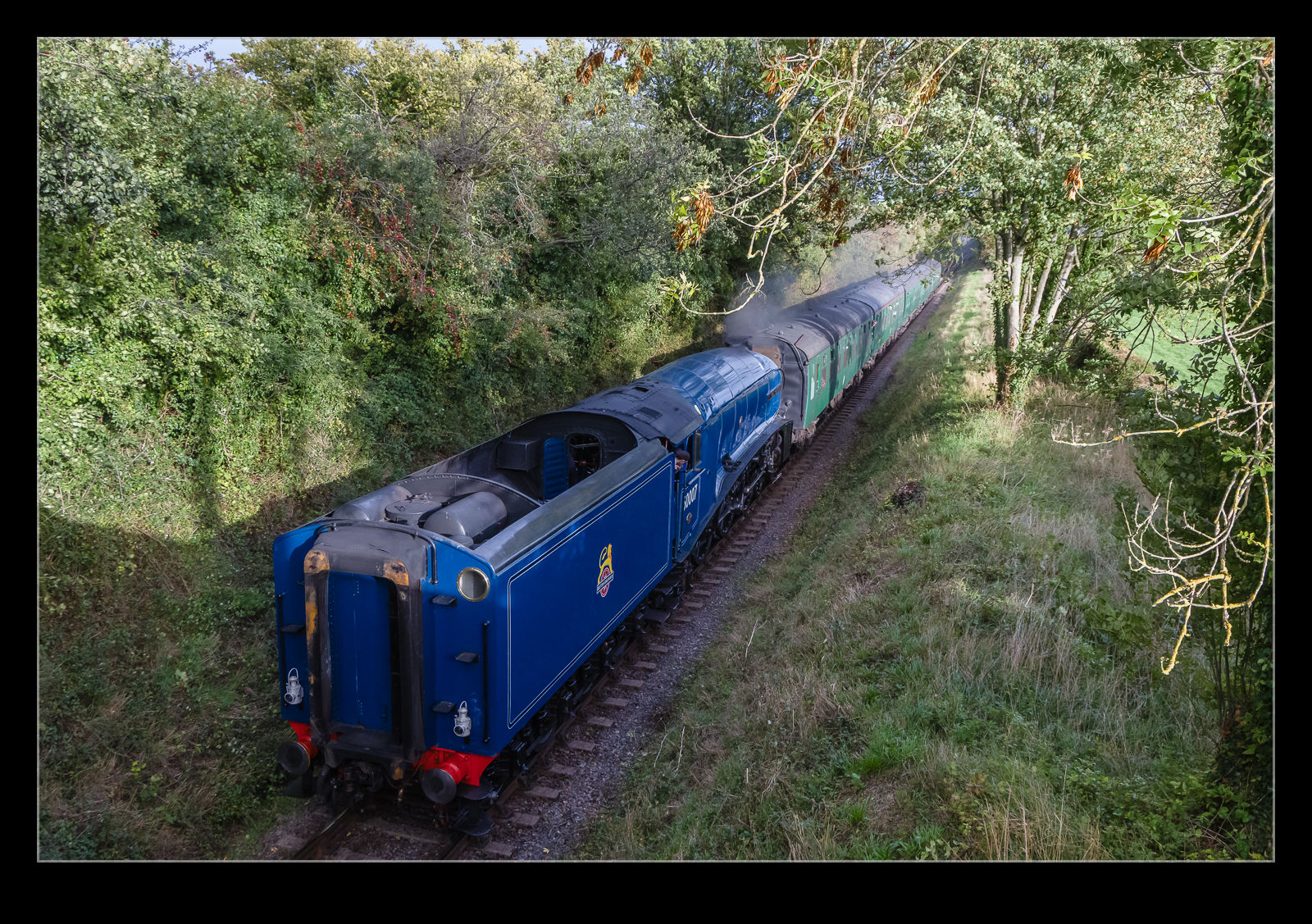
 Having had some success with this, I did try heading to a bridge further down the track later in the afternoon when it was due back. It made the return journey in reverse as it pulled the train back to Alresford. I had anticipated that it would then run around to the front of the train so you can image I was a bit annoyed to find that they put another loco on the front and left the A-4 on the back. Not so photogenic.
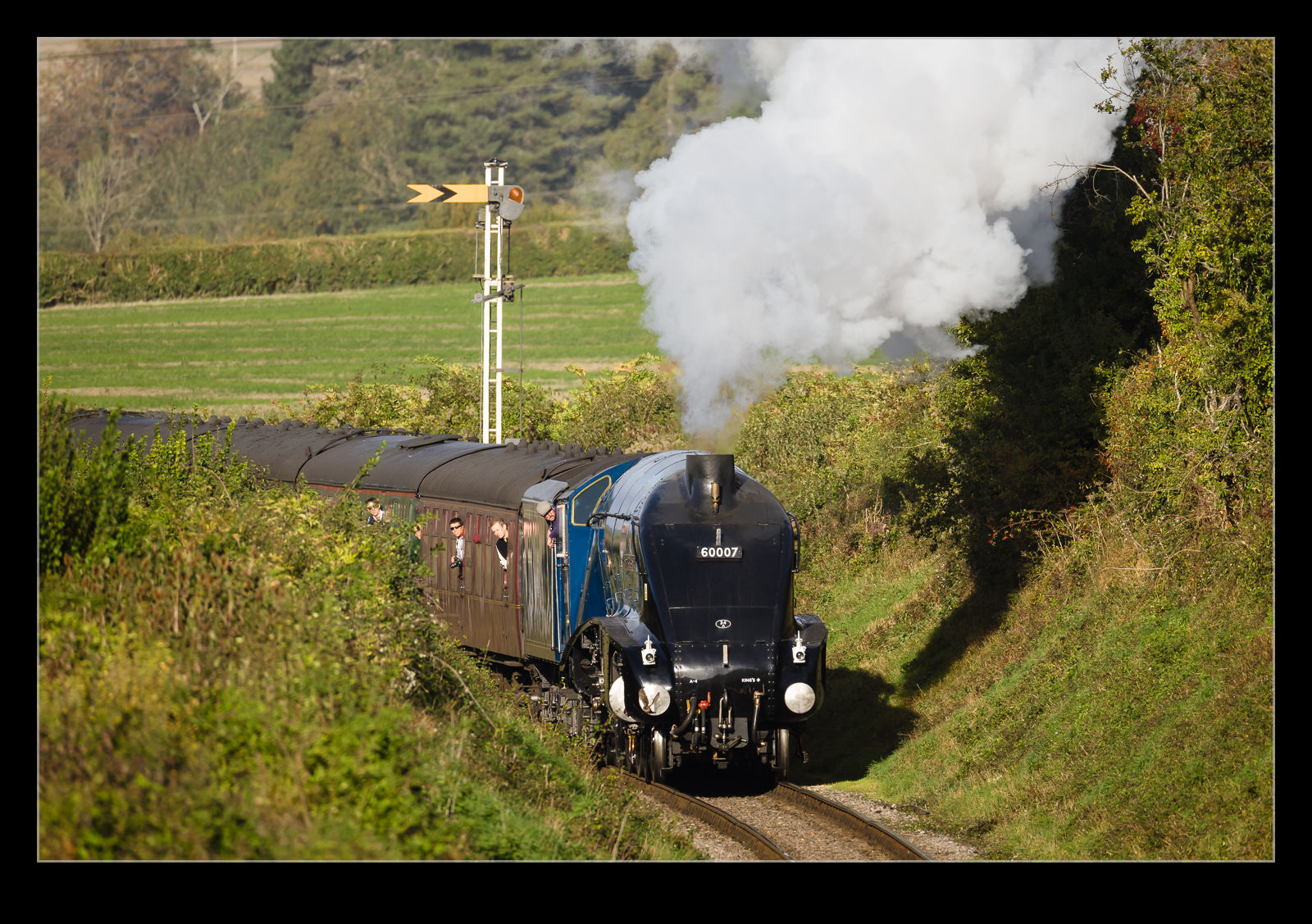
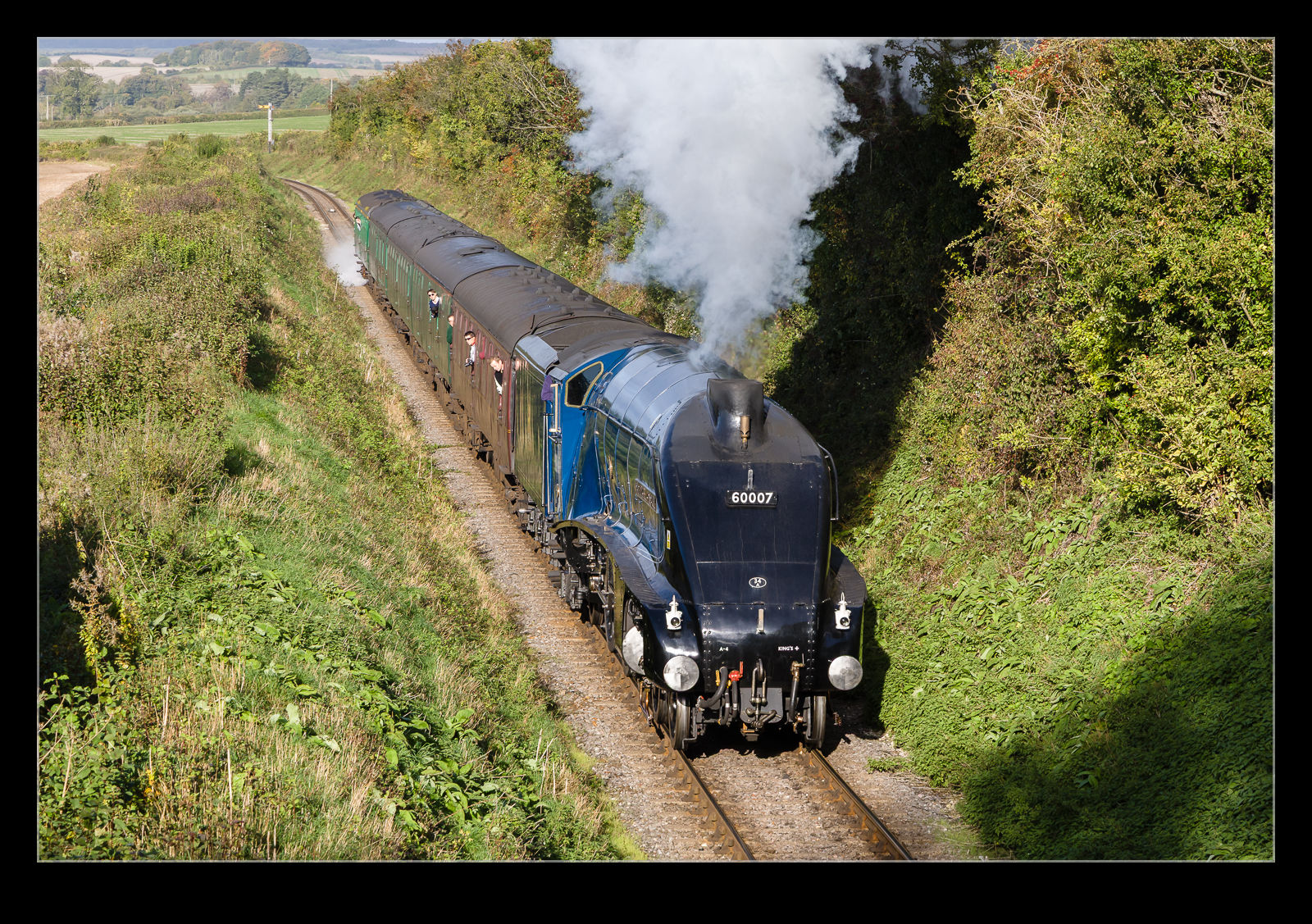 Despite this, I did think that the bridge might be a good spot in the morning and, while Nancy and I had plans to head out on Sunday, I did zip back early to see what there was to see. Again, I was not alone. Quite a few photographers and videographers had come out. This time the conditions were really lovely with the low sun angle providing great illumination. This spot provides a long shot towards Alresford which means you see the train as it starts its climb before it comes around onto a straight section heading to the bridge. The sun really picked out the blue of the loco while it was clearly pulling hard on the climb. A few shots grabbed and then time to head home for the the rest of our day.