Tag Archives: Boeing

National Guard Chinook

AE7I7409.jpgSan Carlos Airport is home to the Hiller Aviation Museum.  In times past they used to have an event called Vertical Challenge.  It was a big gathering of all things rotary winged.  Sadly, the challenge ended but the current team is trying to reestablish something similar.  They have a smaller gathering called Heli Fest and I went along to shoot with the team for this year’s event.  It was a normal day for admissions to the museum but the arrival of a lot of different airframes provided a lot more to see so the visitor numbers were significantly up.
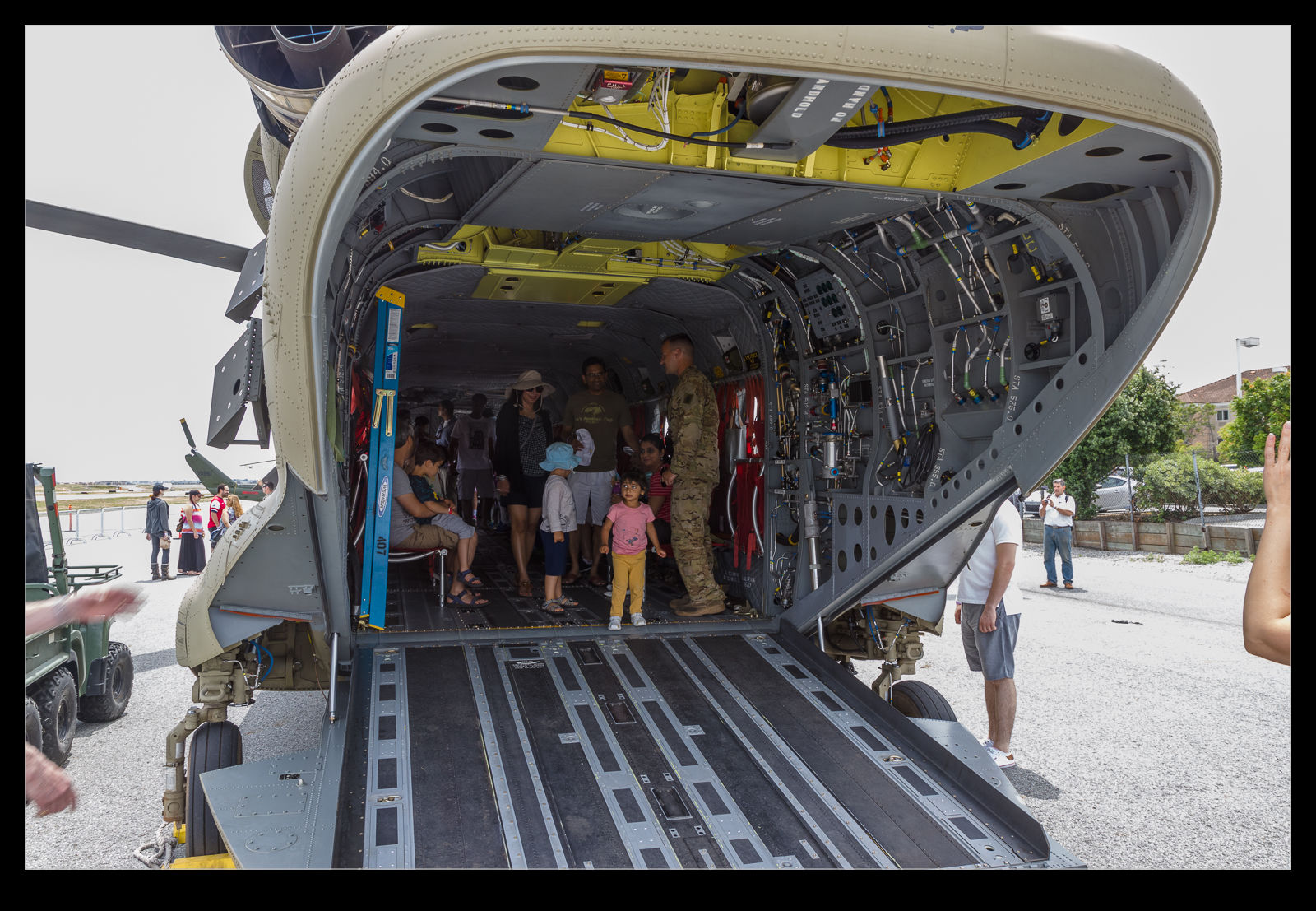
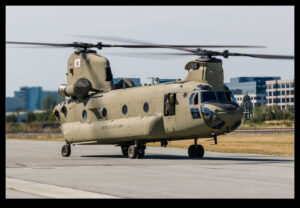
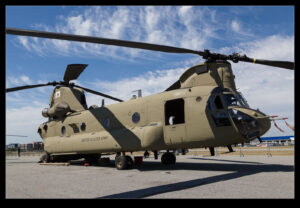
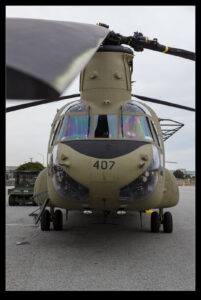
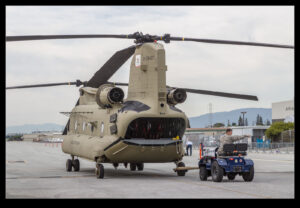
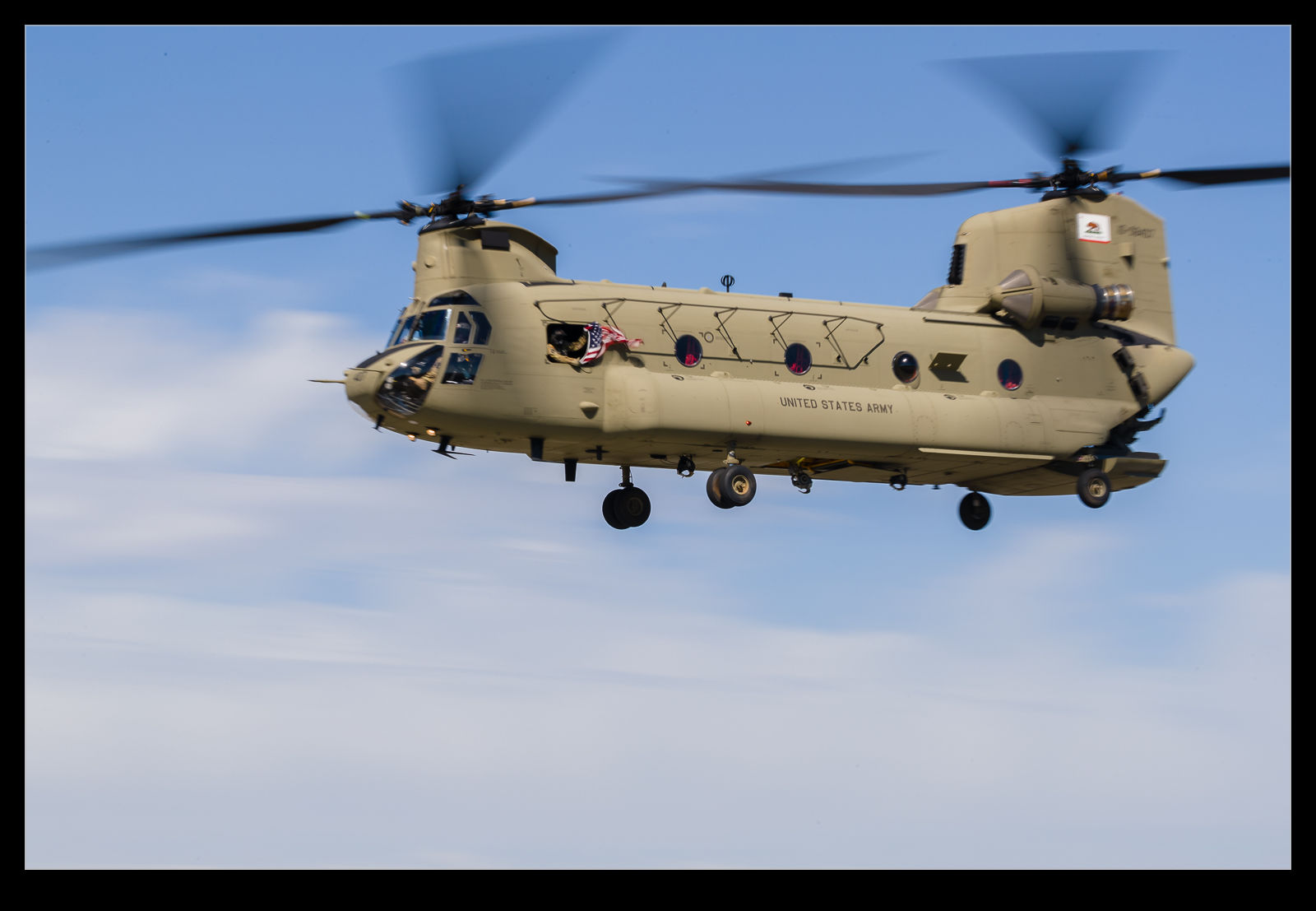
B11I6830.jpgThe biggest visitor was a Boeing CH-47F Chinook for the National Guard unit at Stockton.  They carried out a few passes before landing.  Since the airframe is a little large and has quite a rotor diameter, they shut down on the ramp and were towed in to their parking spot.  Once in place, they were open t visitors to come and look through the helicopter and talk to the crew.
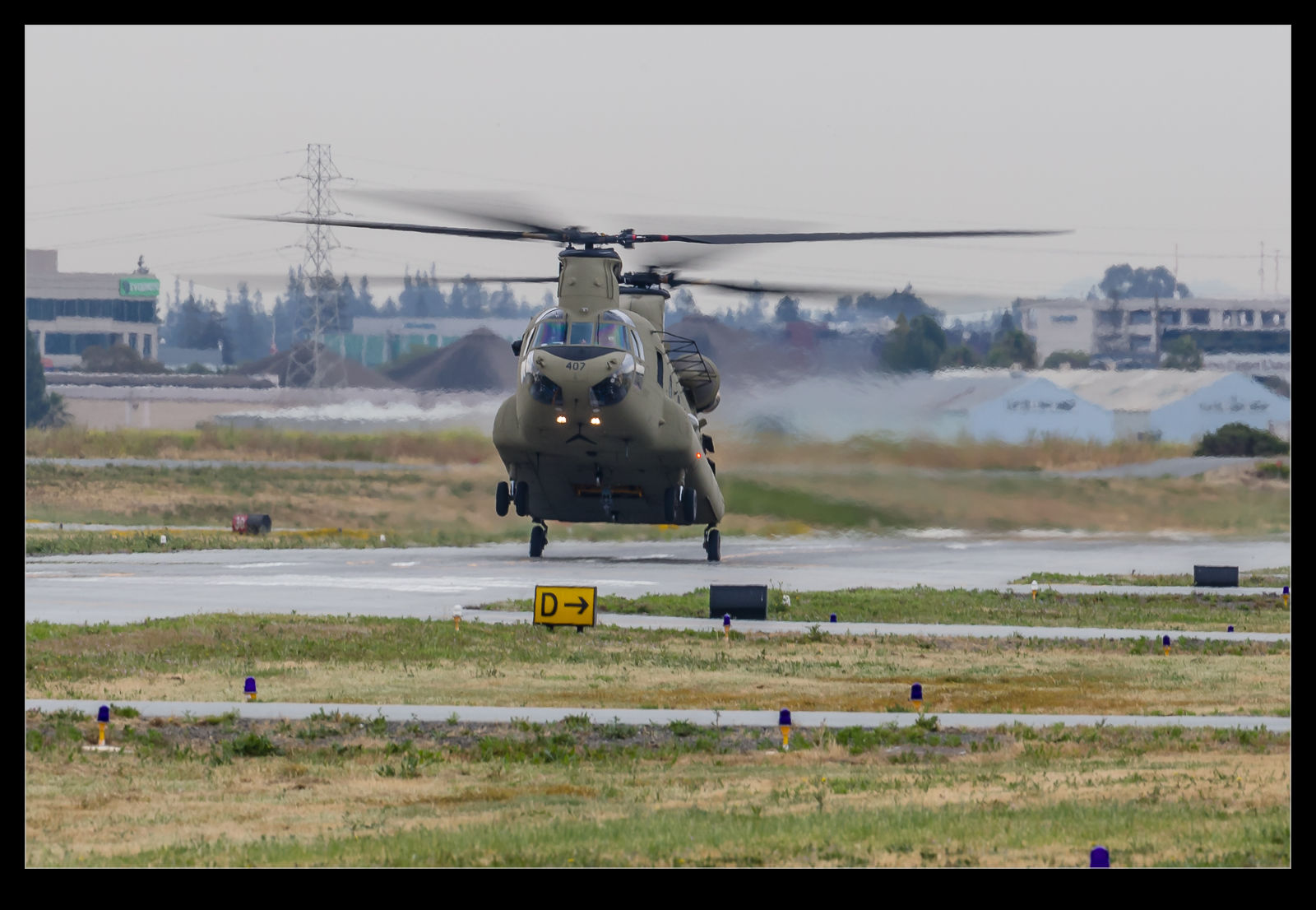
AE7I6776.jpgNo surprise that there was a steady stream of people checking out the Chinook during the course of the day.  It is a great looking machine and the crew was busy answering questions throughout the day.  When things were wrapping up, they taxied out and took off.  A flyby was a necessity prior to going home.  The Chinook is a very fast helicopter to the pass was pretty zippy!
Pan Am

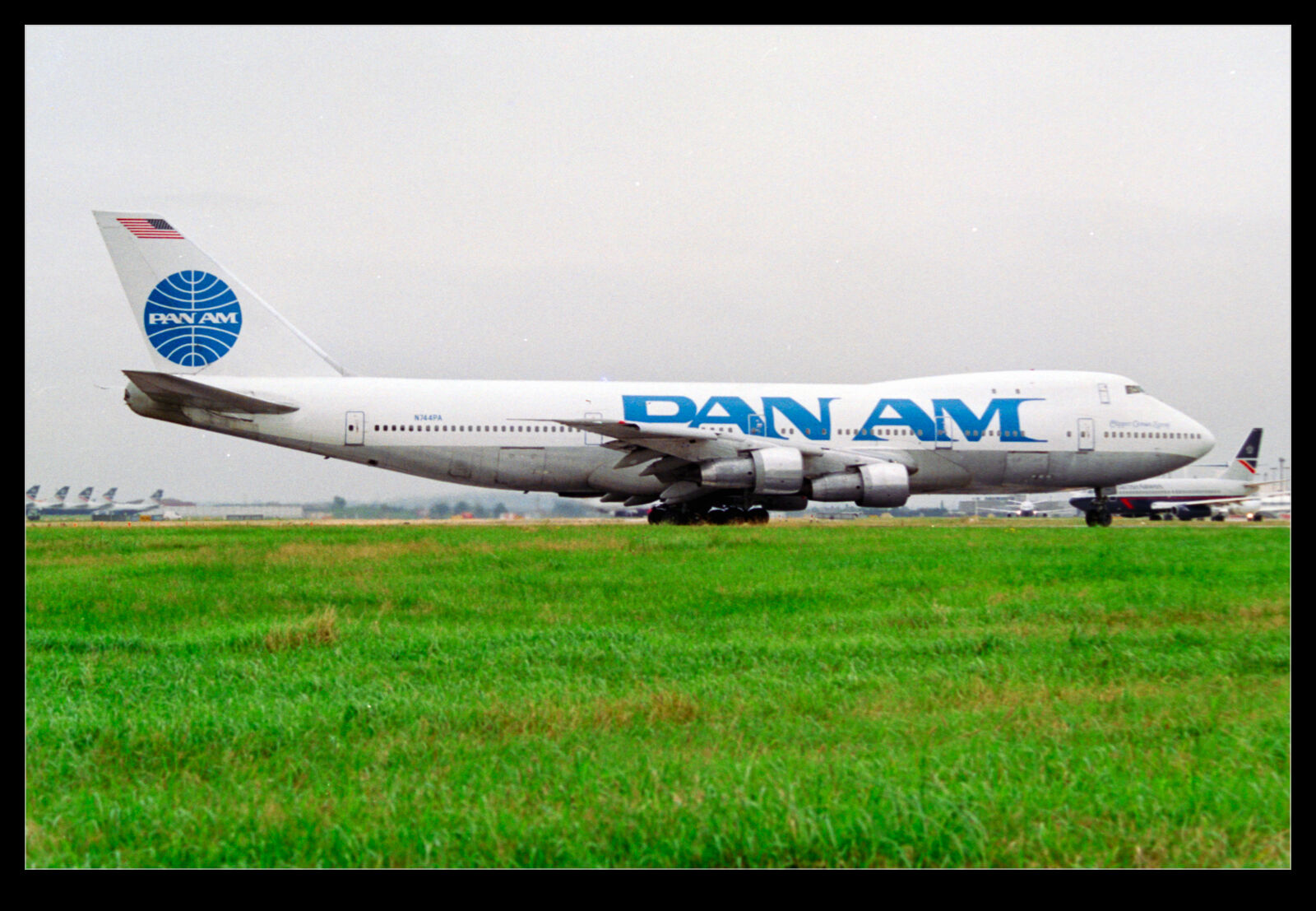
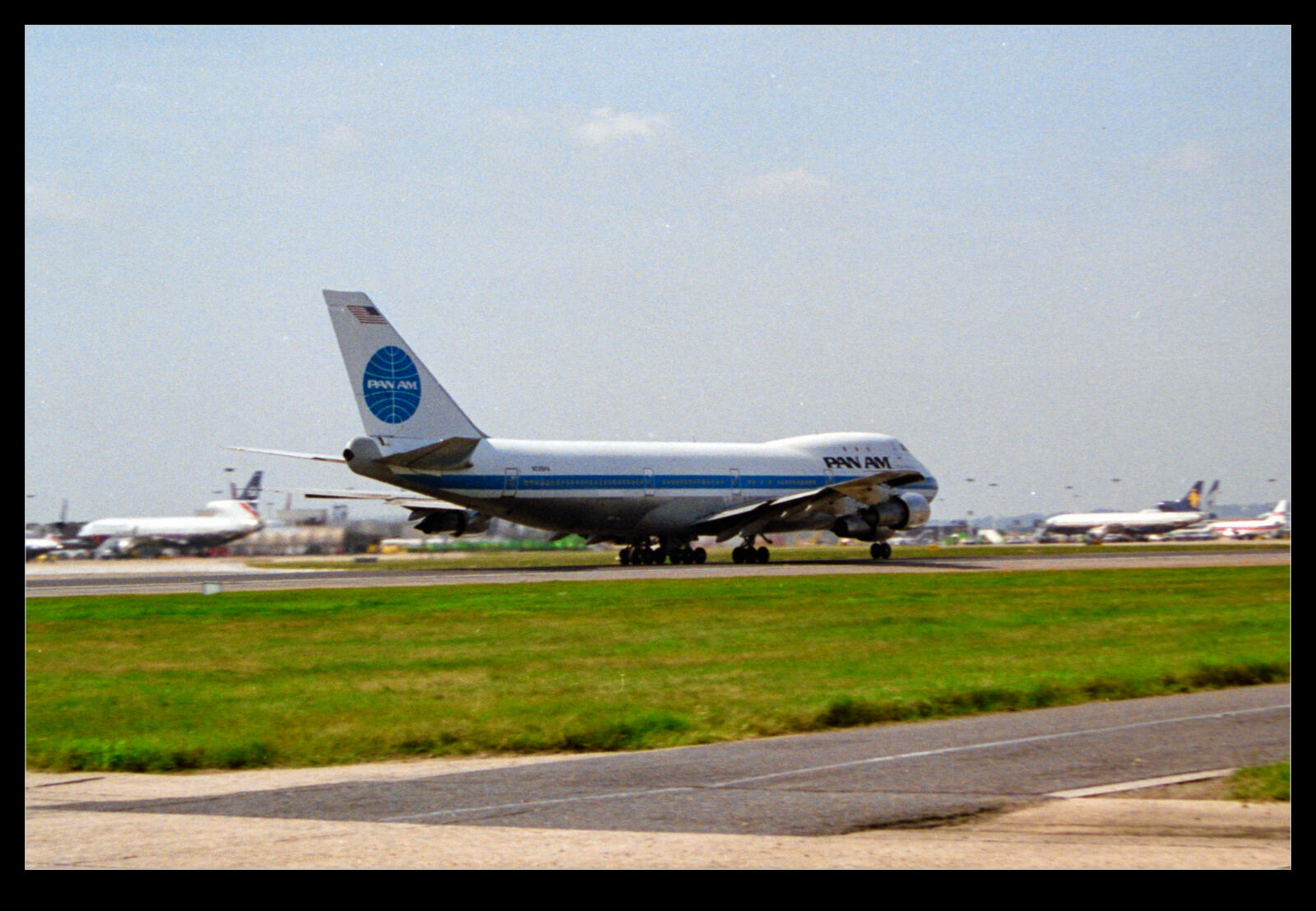
Scan 2-1424.jpgSummer of 88 meant I had probably the coolest job someone like me could ever have. My summer break was spent working for the Civil Aviation Authority (CAA) in the UK. I was involved in noise measuring work around airports in London and the vicinity. I spent a few days inside the fence at Heathrow recording all sorts of things taking off.

Scan 2-1460.jpgI did get some photos while there when it didn’t interfere with making recordings of sound levels. In those days, Pan Am 747s were a regular at Heathrow and here are a couple of their planes heading back across the water. They also had 727s at Heathrow supporting routes to Germany. That was a hangover from the post war split of responsibilities and probably seems anachronistic now.

Vampires Out in Daylight

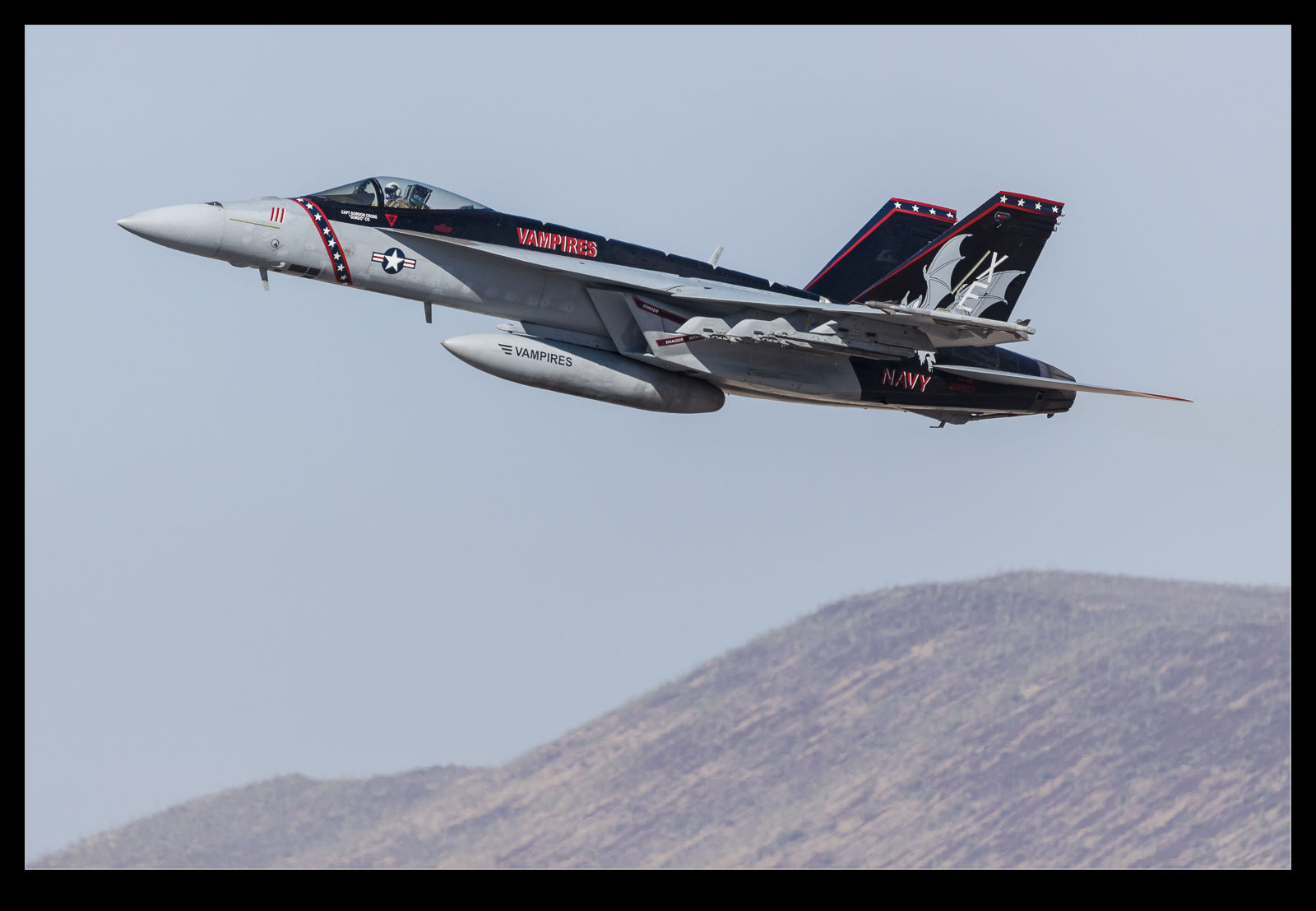
B11I5928.jpgTucson International is a place I was expecting to shoot F-16s of various nations.  I had not expected to see any Super Hornets.  However, the Navy had other plans.  A couple of VX-9 Vampires jets were detached and carrying out missions with some of the based test aircraft.  One of them was the color jet too!  This was a very pleasant surprise.  They took off in the morning for a mission and we got to see them head off.  They returned ahead of my expectations and I wasn’t in the right place to get them on approach.  Even so, a great addition to the day.  I was flying home later that day and, while looking out of the window at the gate, they taxied by again so I guess they were getting a lot of flying in.

Rolls’ Testbed Flies While I Am There – Twice!

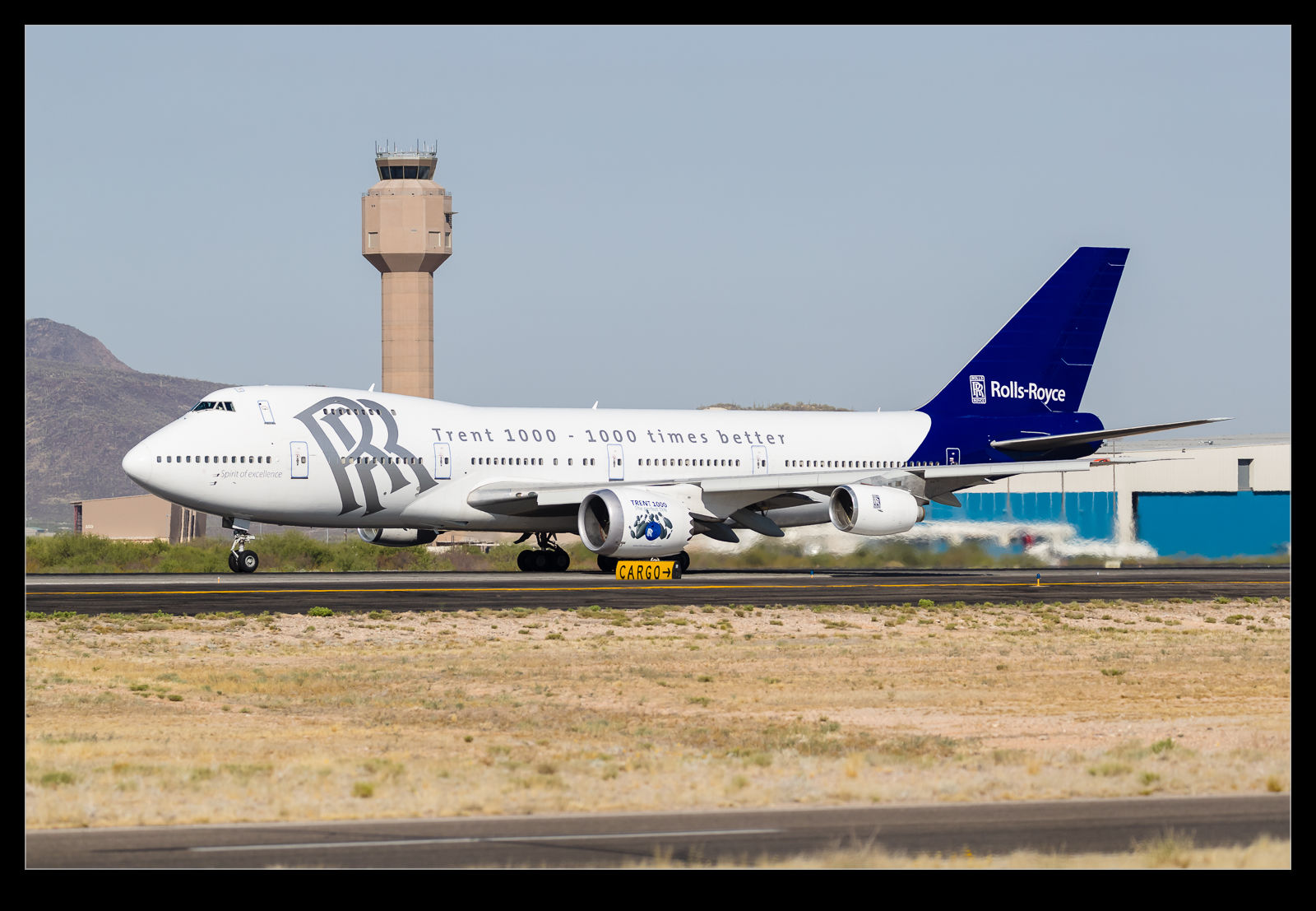
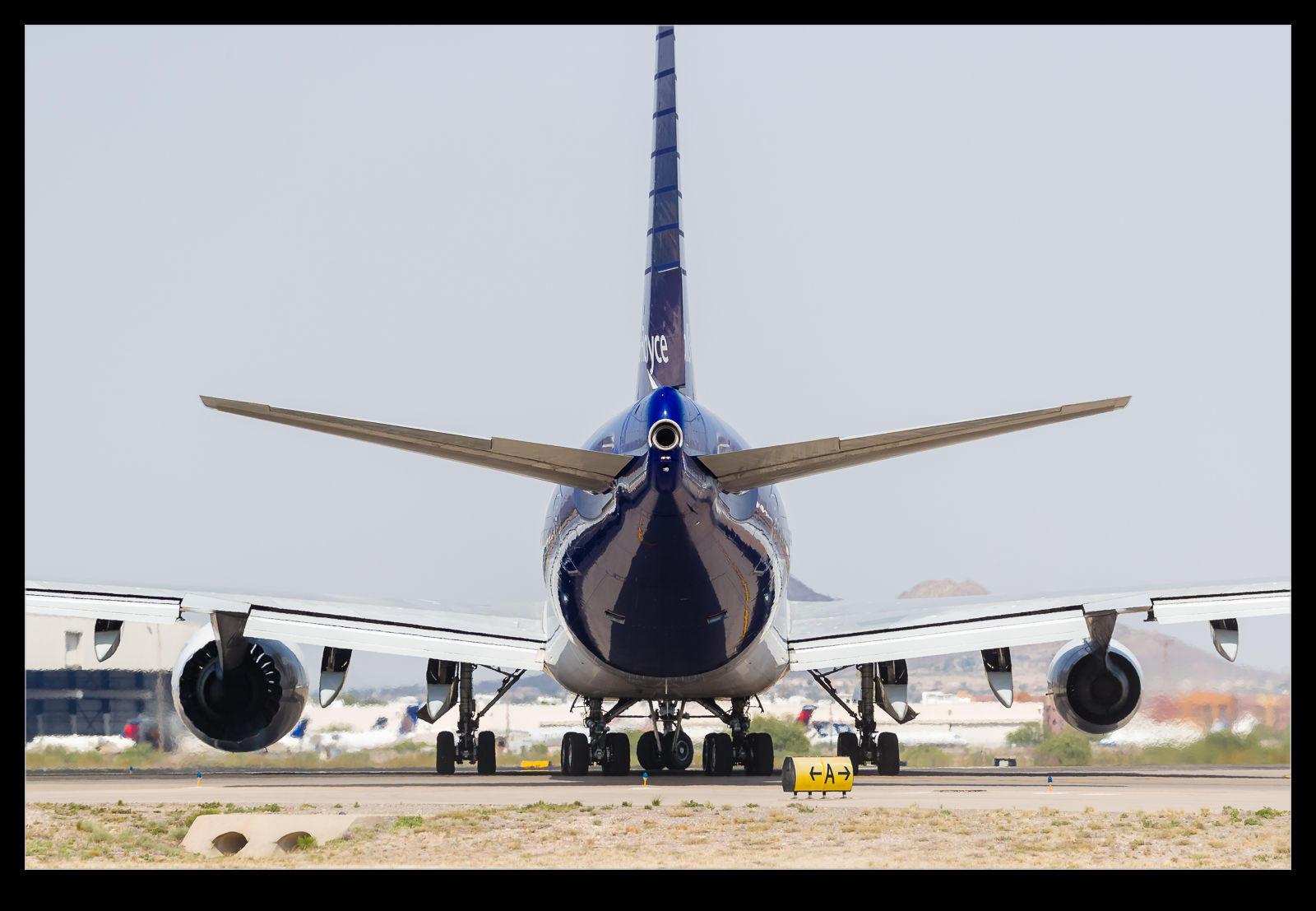
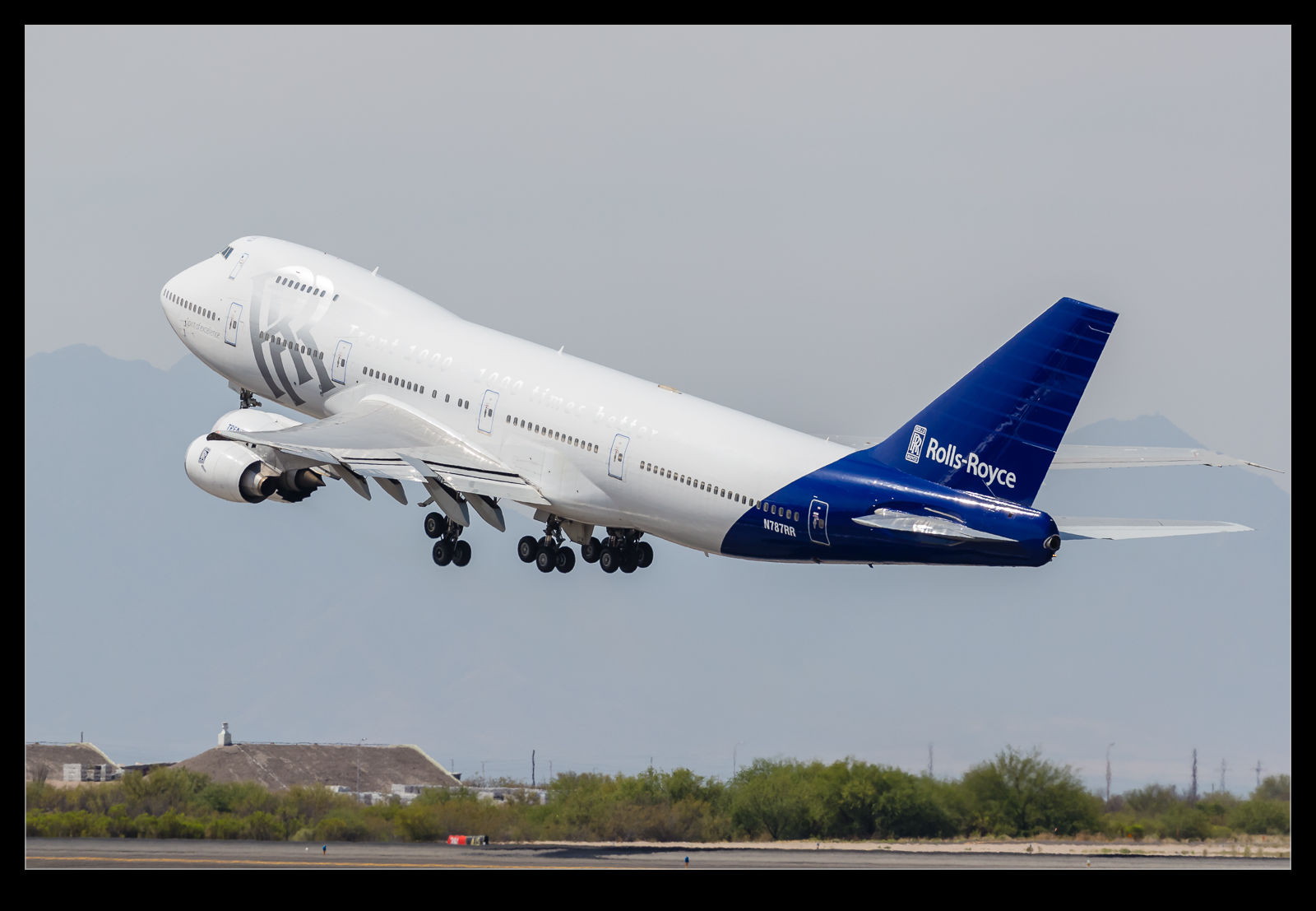
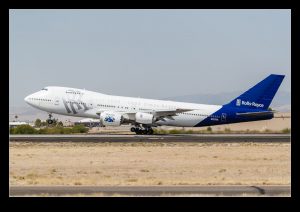
AE7I6300.jpgOn my previous visit to Tucson, I saw the Rolls Royce owned Boeing 747 engine testbed.  This was converted for the Boeing 787 Trent engine development program (hence the registration N787RR).  The Number Two engine was removed and replaced with the test engine.  The other three Rolls RB211s are unchanged.  At various times the testbed has been reported to be without an engine in the test location but there was something there when I was last here – it’s just they didn’t fly.  This time was different.

AE7I6367.jpgI saw the testbed when I left the airport after my flight landed.  The following morning, I headed out to see what F-16 traffic there was and saw online that a flight plan had been filed for the testbed.  I only had a certain amount of time before I was due to be at Hawgsmoke but it was supposed to fly long before that.  Of course, test flying is not usually something that happens to a tight schedule and the takeoff time came and went.  We were beginning to think we might miss it when the sound of some large engines spooling up reached us.  A while later, out she came.

AE7I4746.jpgEngine testbeds require some careful control.  Since one engine is significantly different in thrust from the others, there is a balancing act required to keep the thrust differential within the ability of the control surfaces to overcome.  That means the max thrust is not always going to be used.  Consequently, they use a good portion of the runway for takeoff rotating just passed our location.  That meant I didn’t get the front quarter rotation shot I had in mind.

AE7I4883.jpgNo matter, I still got to see it fly.  The return was about six hours later and I was busy elsewhere at that time.  I figured that was it for this trip.  I was wrong.  The morning of my departure, I had a little time to spare so went back to see what was happening.  Amazingly, the testbed was already being crewed as I drove up.  We got a repeat of the previous day and some similar shots.  I guess I was compensating for not seeing it fly last time!

What Does 40 Years of Design Get You?

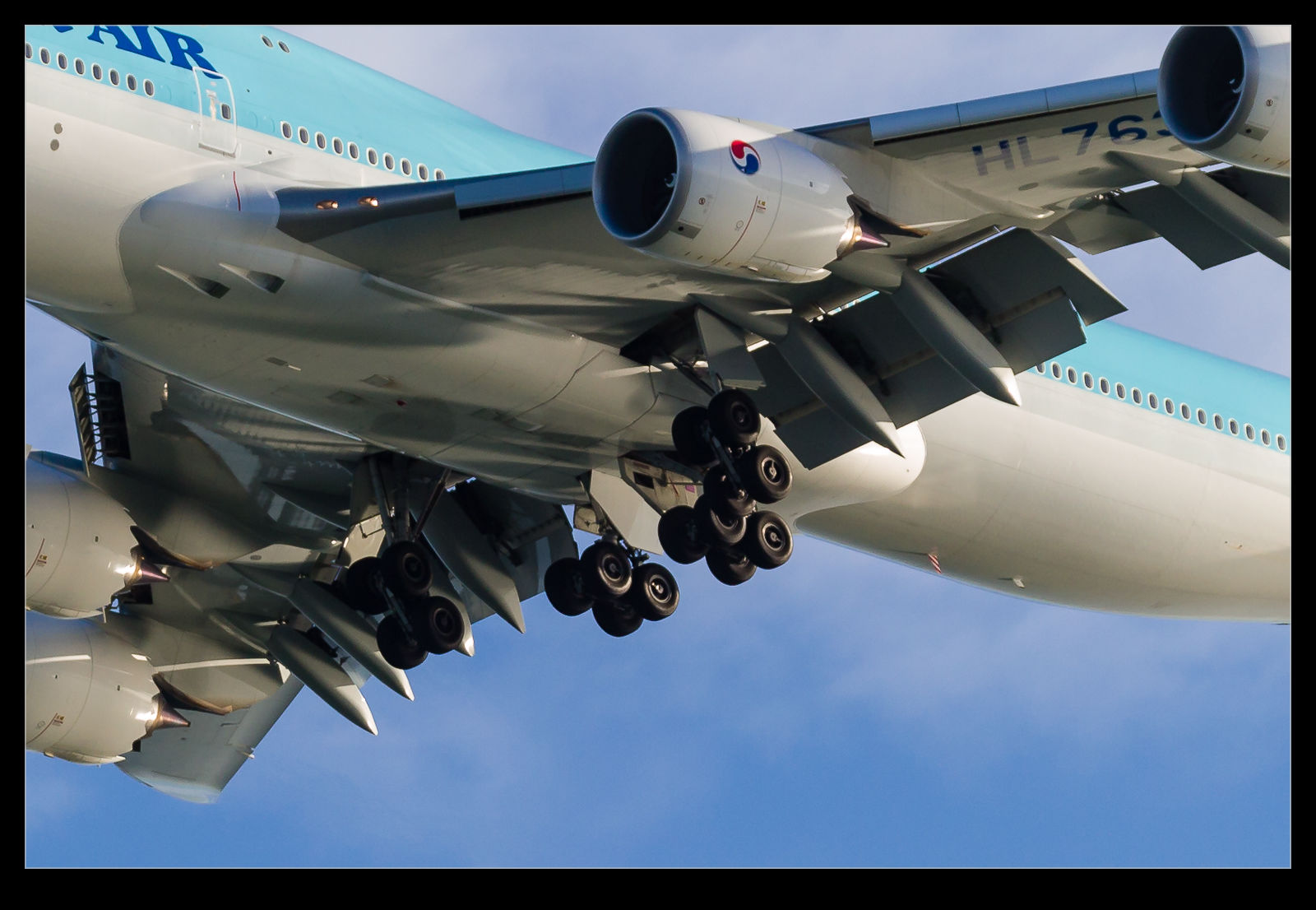
AU0E1641.jpgThe Boeing 747-8 has not been a terribly successful program.  Boeing decided to update the 747 family with new engines and revisions to the wing along with a stretch to the fuselage.  The resulting jet was delayed by its own and other program issues and it came around at a time when there were few passenger airlines interested and the freighter market was taking a kicking.  The result has been anemic sales and a production rate that has steadily reduced as a result of the low demand.  However, from a technical point of view, it is a nice upgrade.

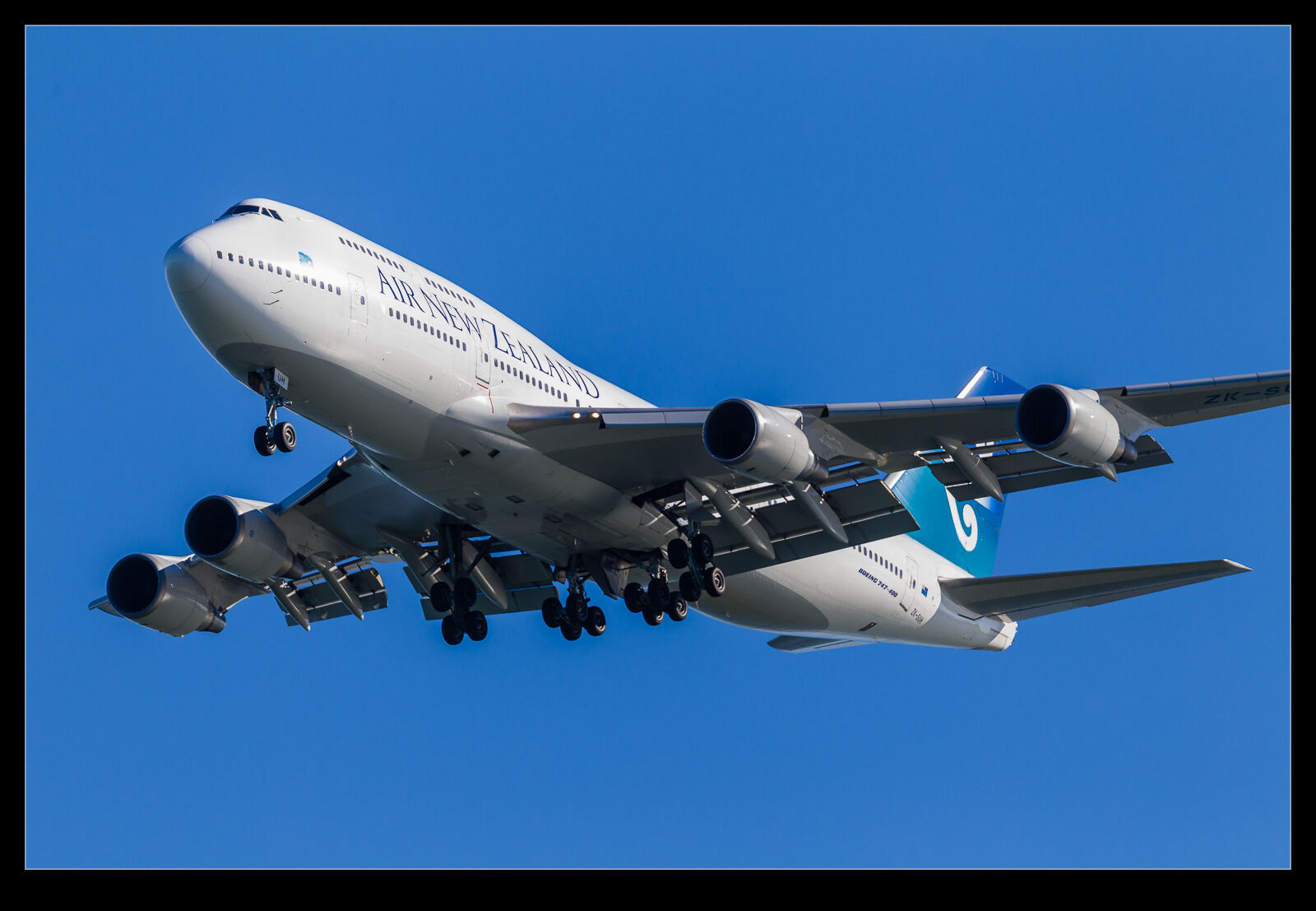
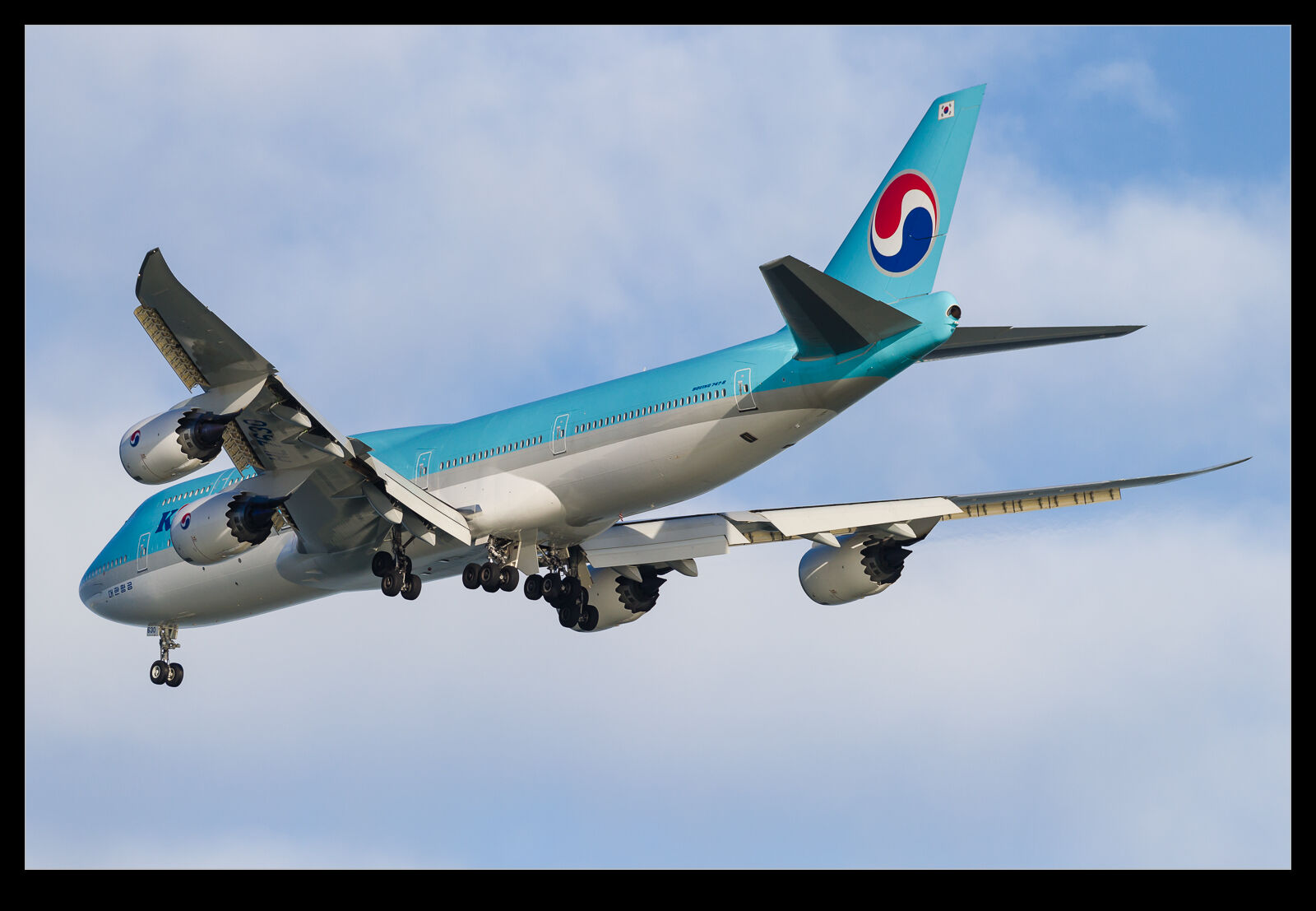
C59F2632.jpgThe wing came in for a lot of attention and was significantly redesigned.  The most conspicuous change is the introduction of the swept tips common to many Boeing designs these days.  Less obvious is that the flap system was completely redesigned.  The original 747 flaps, carried through on the 747-400 are very complex.  Sections are triple slotted.  The Boeing aerodynamicists came up with a single slot design to replace this which apparently has good performance but I imagine is a lot simpler to make and maintain.  Only from the rear on approach can you see the difference.  These shots compare a 747-400 from Air New Zealand with a Korean Air 747-8 and you can see for yourself how much simpler the new design is.

AU0E1681.jpg

WestJet and the House of Mouse

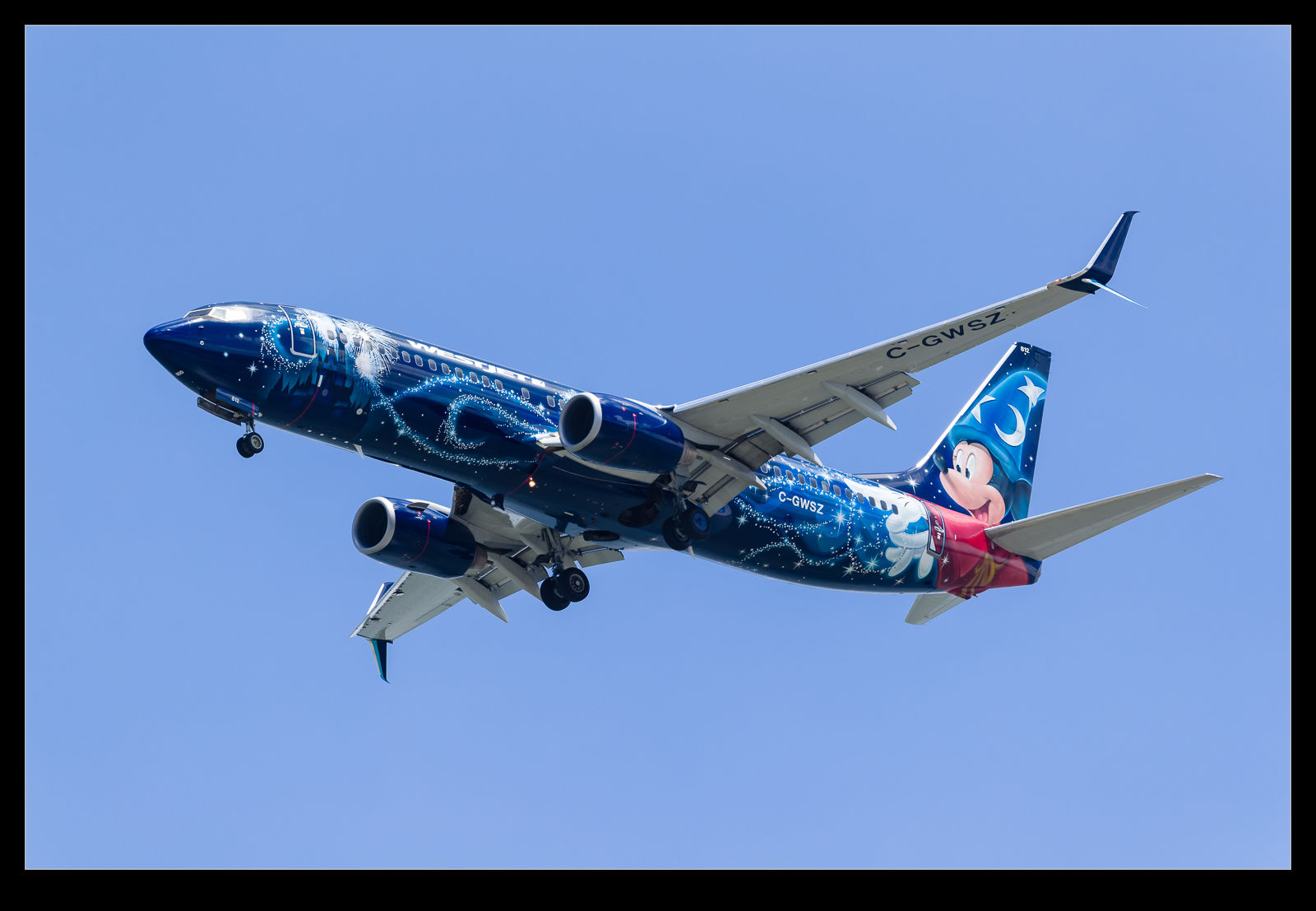
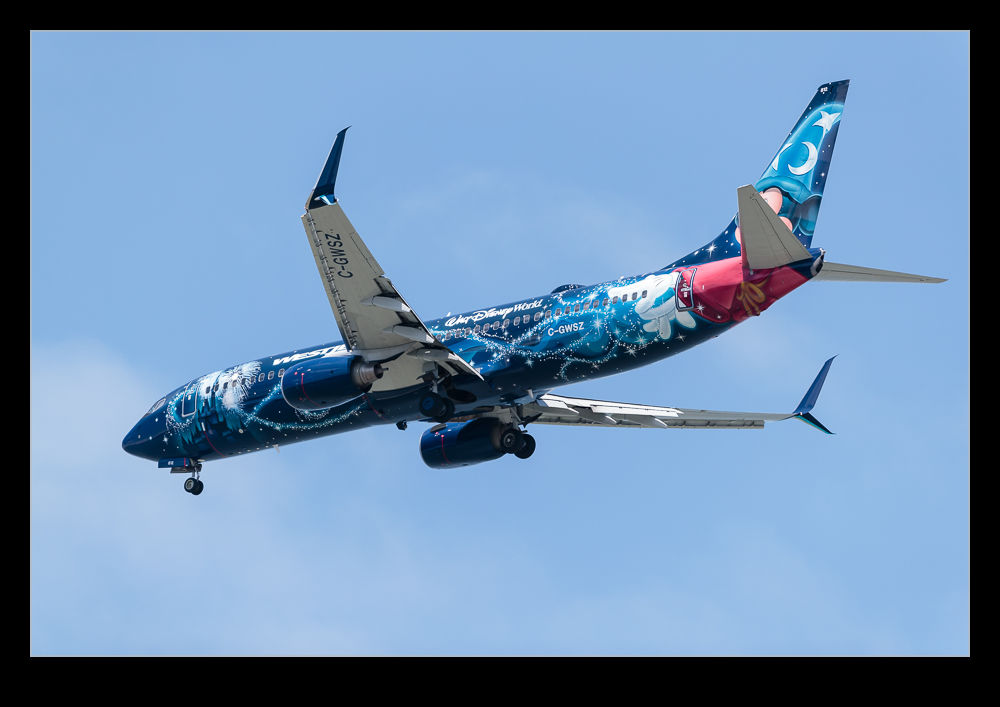
AE7I0543.jpgPromotional paint schemes are not uncommon – particularly with certain airlines.  Alaska has a bunch of them.  This one was a new one for me.  WestJet, a Canadian airline, seems to have a marketing tie up with Disney too.  They have painted a 737 up in an all-over shame that certainly gets your attention, if only to wonder what on earth it is.  I was pleasantly surprised to catch it having had no idea it was on its way.

AE7I0547.jpg

What, No Winglets?

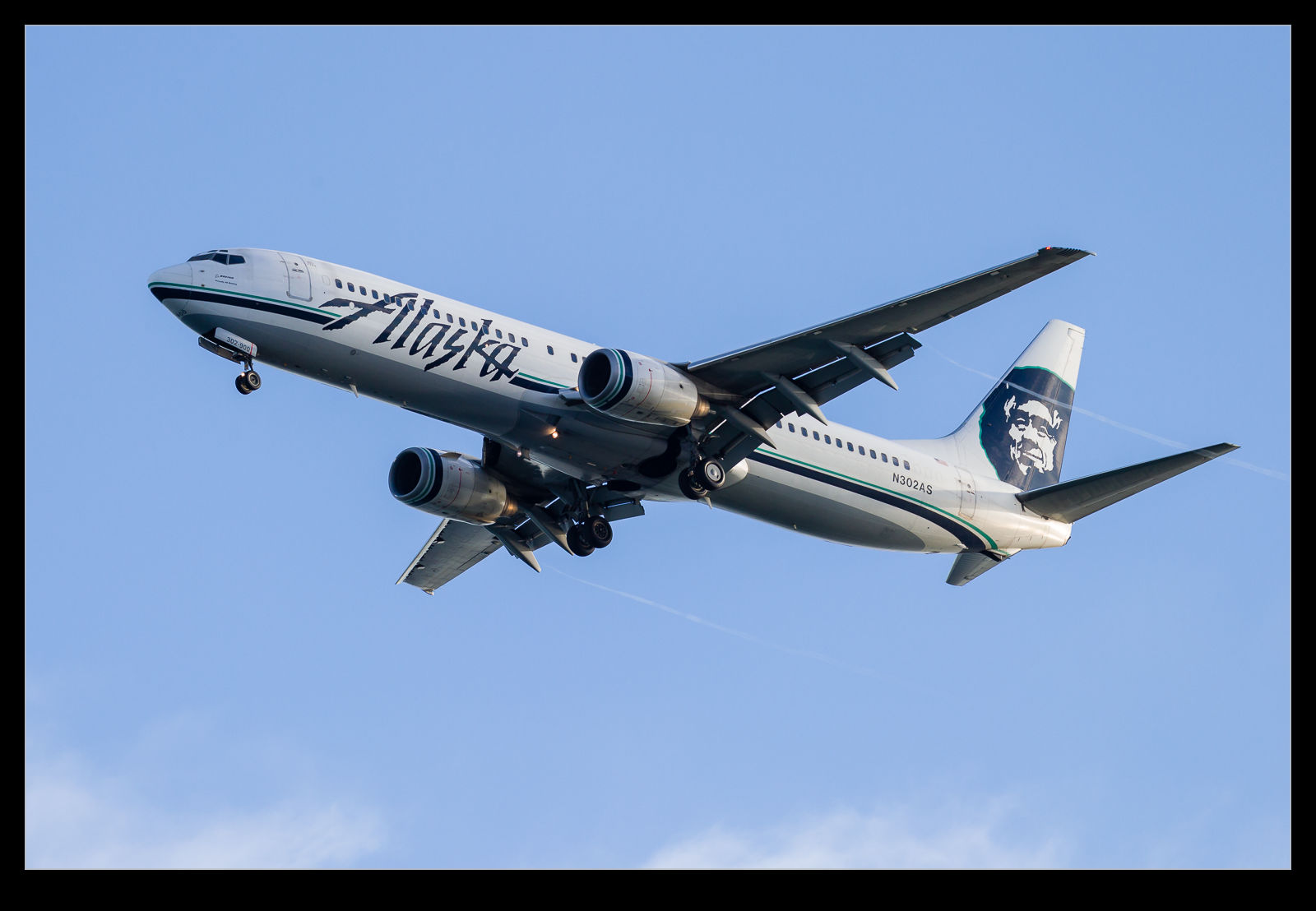
AU0E1246.jpgThere is not a huge amount of variation in airliners these days so coming across something a little different is usually a moment of interest.  While the name Alaska Airlines might suggest an airline focused on Alaska, it is actually headquartered in Seattle and seems to have a wide range of operations all across the west coast.  Consequently, we see a lot of them in both Oakland and SFO.  They have a large fleet of 737-800s and 737-900ERs and both types have been retrofitted with the APB Scimitar winglets.  Apparently, not all of them though.  This example I saw coming by Coyote Point and it not only doesn’t have Scimitars, it doesn’t have winglets at all.  A rare beast these days.

The Camera Might See But Autofocus Doesn’t

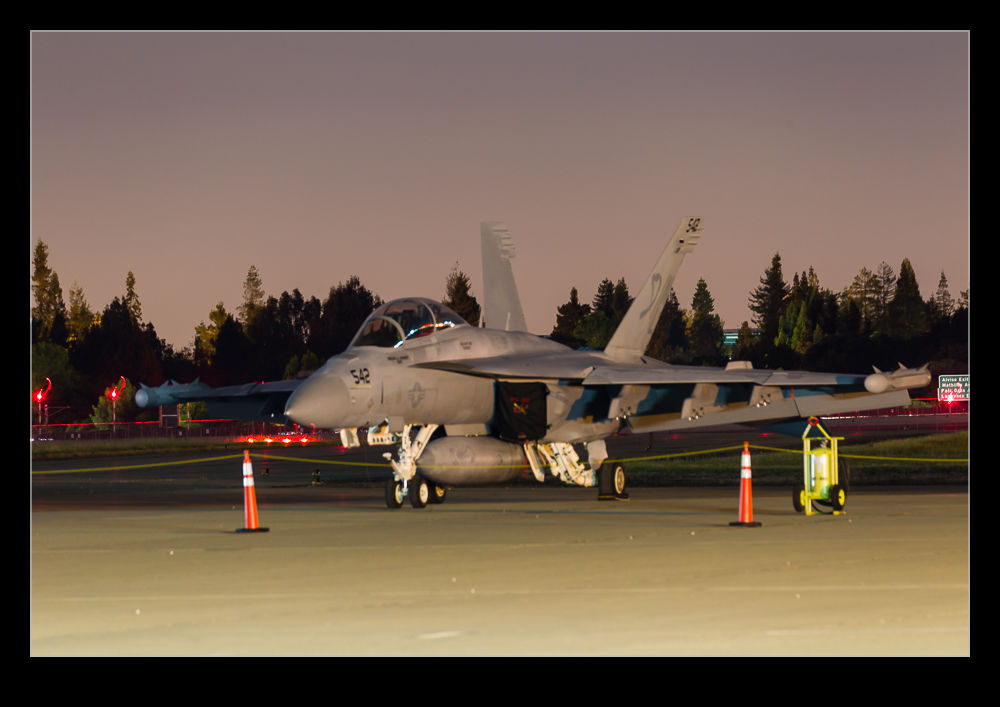
C59F0628.jpgAnd I could barely see much myself!  We were on the ramp at Moffett Field for the arrival of Solar Impulse.  There was some time to wait while we were out there.  As I looked around, I thought I could see something parked further down the ramp.  There was very little light but there appeared to be some aircraft.  I figured it was worth a look given that I had a tripod.

In the days of film shooting, I couldn’t trust the camera metering for long exposures.  Reciprocity failure was part of the issue but the cameras were a lot less advanced in those days.  In this case I trusted the camera for the first shot and it worked out really well.  Sadly, there was nothing to focus on so I made my best forts at focusing on what was visible and it was some background lights.  Sadly, they were too far away to get focus on the aircraft.  The sensor was able to gather the feeble light without any problem though.

It turns out that there was a pair of Navy E/A-18G Growlers sitting on the ramp.  Leave the camera to it and you get a reasonable exposure.  When I saw the shot appear on the screen, I was quite amazed.  I was looking at the jets and I could barely make anything out.  The camera was able to see the whole thing – just out of focus based on my inability to focus it properly.

Texas One Retires (for now)

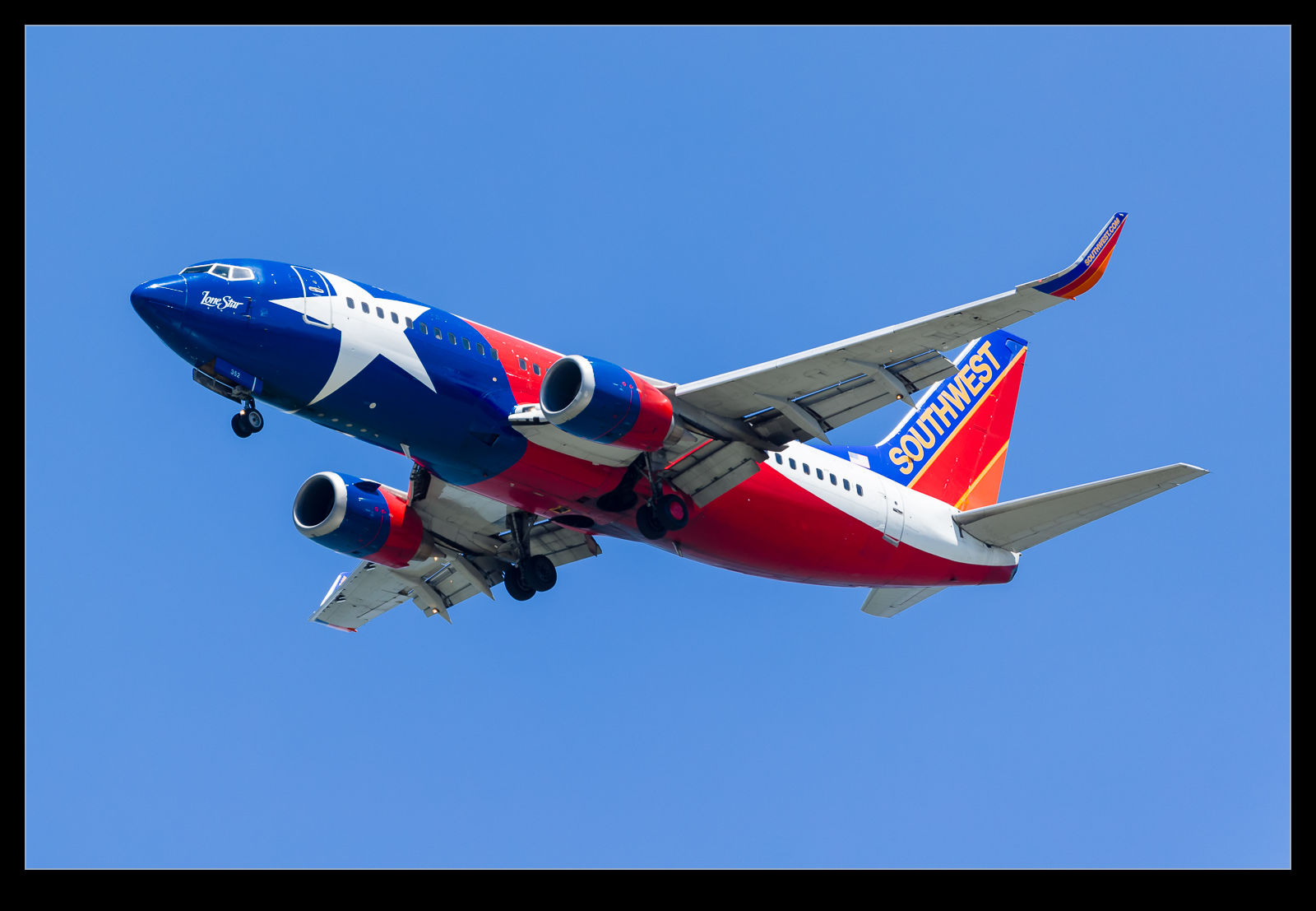
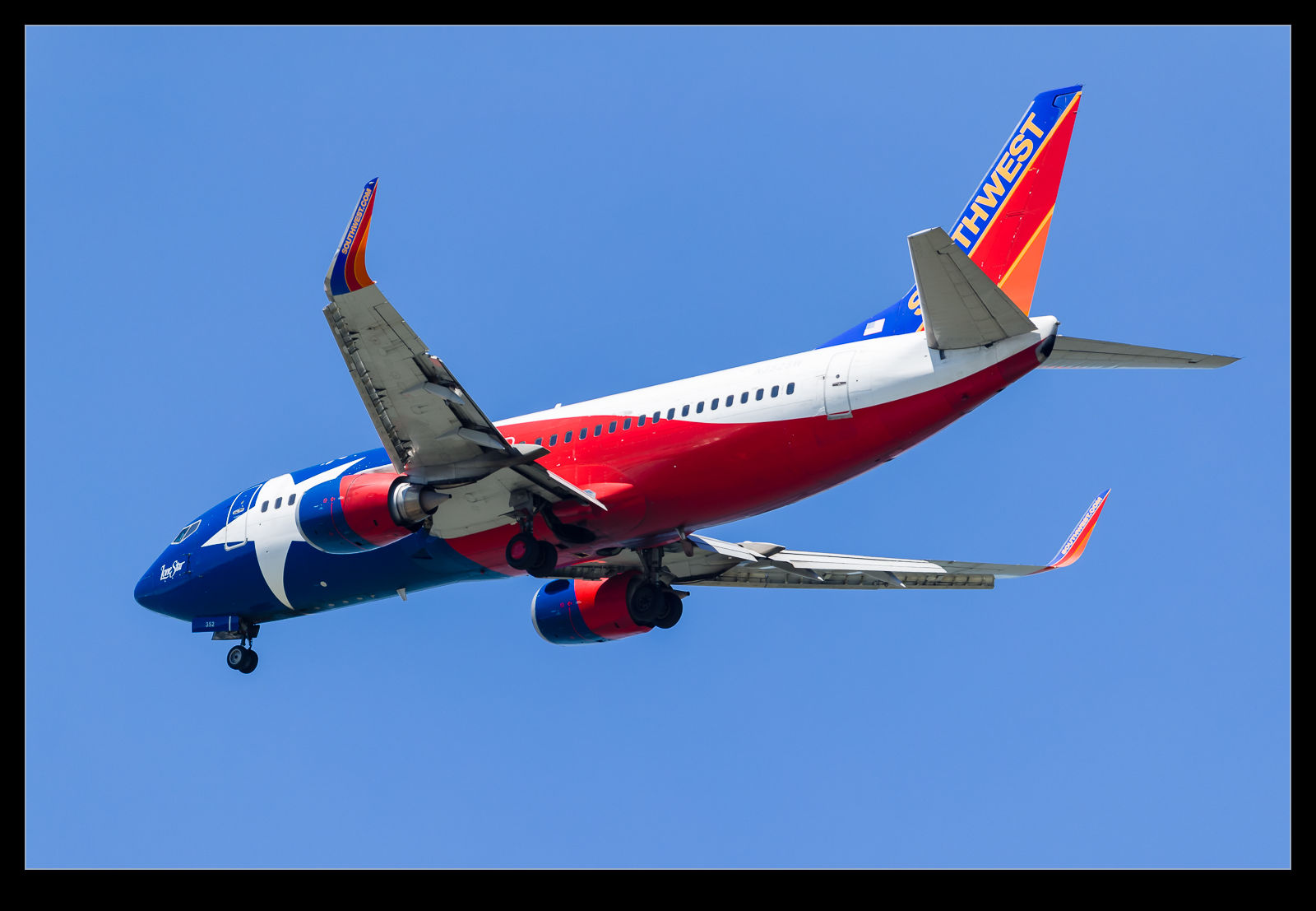
AE7I0650.jpgI saw online this weekend that Southwest Airlines had retired Texas One, a jet painted up in Texas colors.  Texas One is a 737-300 and Southwest is accelerating the withdrawal of the 300 Series jets.  It flew out of Dallas to a facility that will break the jet for parts.  By coincidence, I happened to shoot this very jet the day before when it arrived at SFO.  I had no idea that it would be at the end of its career.  Nice surprise.  For those that like the colors, fear not.  I hear that Southwest will be painting another jet in this scheme before too long.

AE7I0659.jpg

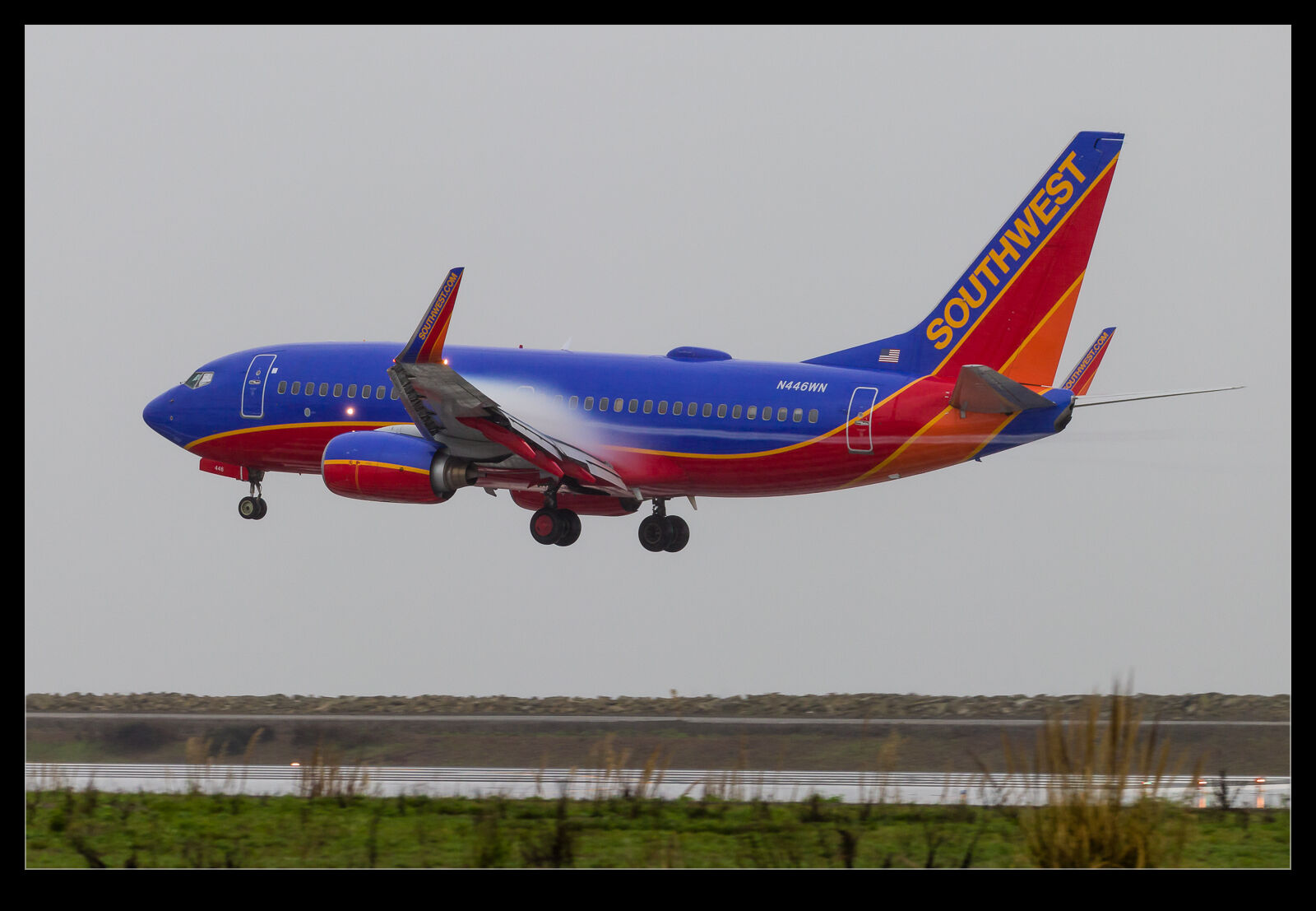
Pulling a Cloud With You

AU0E1411.jpgGetting shots of vapor is a popular thing when shooting fast jets.  An airliner on a damp day can also result in some clouds being formed.  While shooting something special at Oakland, I was getting a few shots to make sure the light metering was working as planned.  A Southwest 737 came in and, as it flared for landing, it had a nice cloud of moisture form over the wing.  Normally these things pop up further out on the approach and don’t make for a good shot but this one was close at hand.