Tag Archives: Boeing

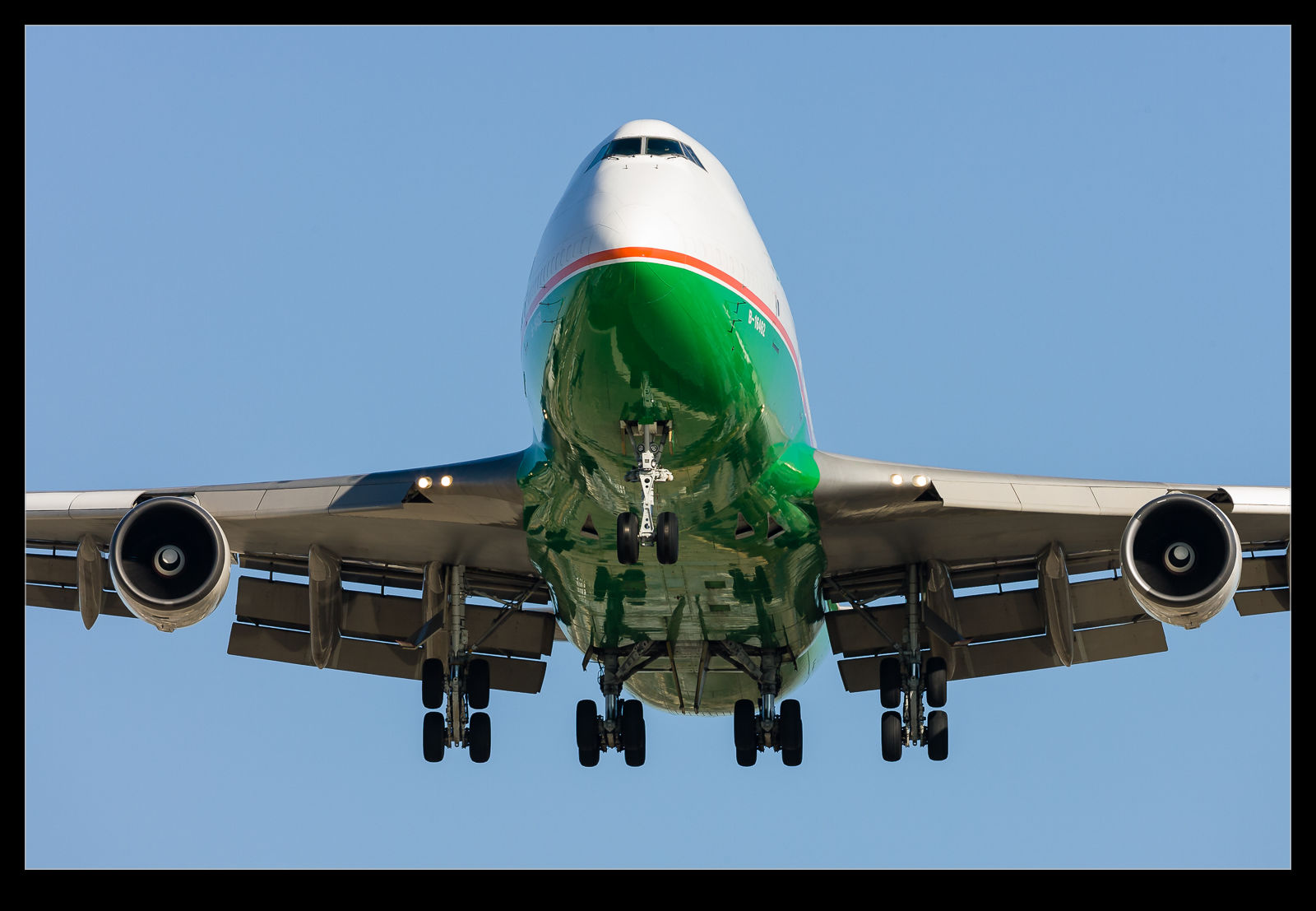
EVA 747s Are the Next to Have Gone

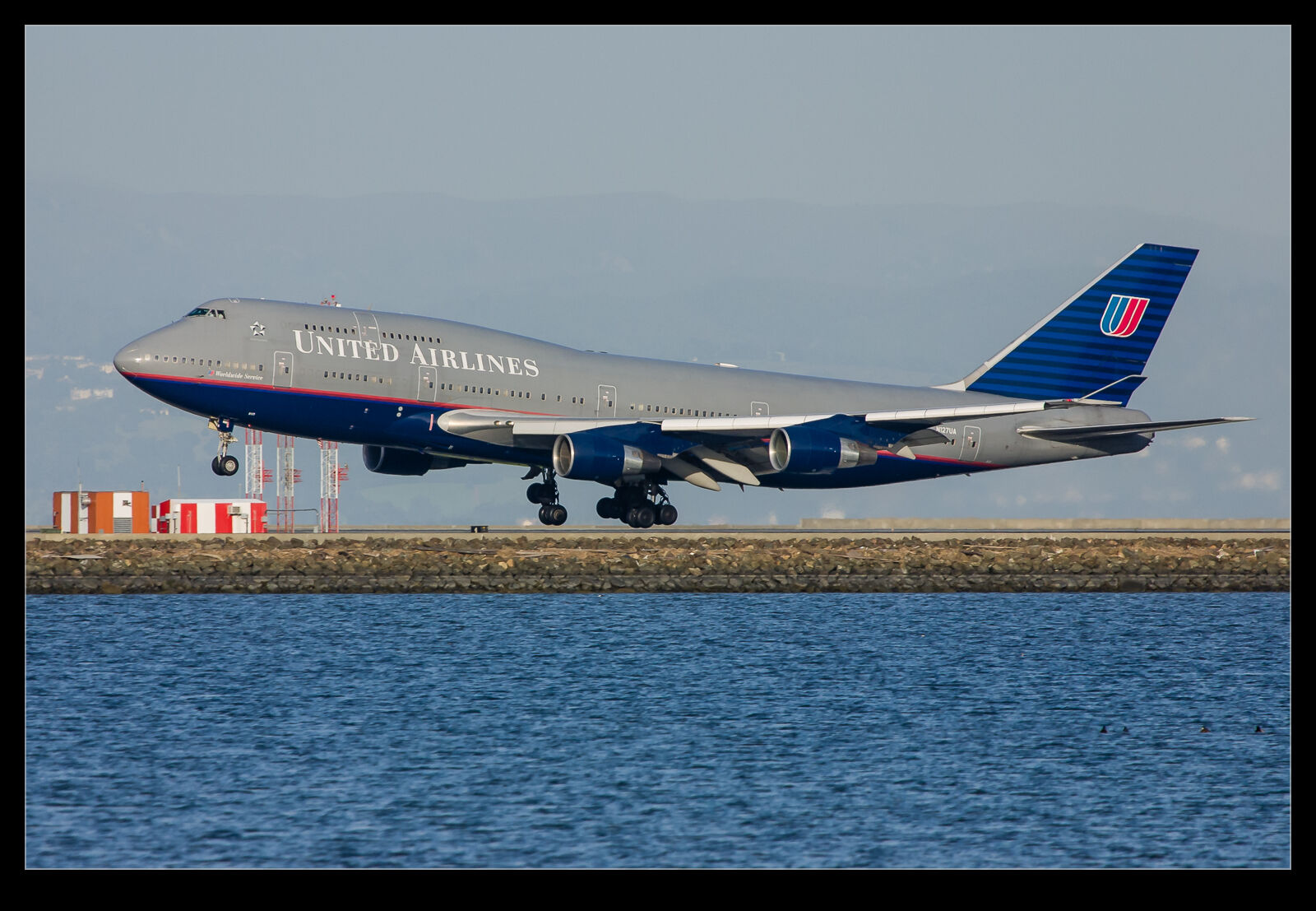
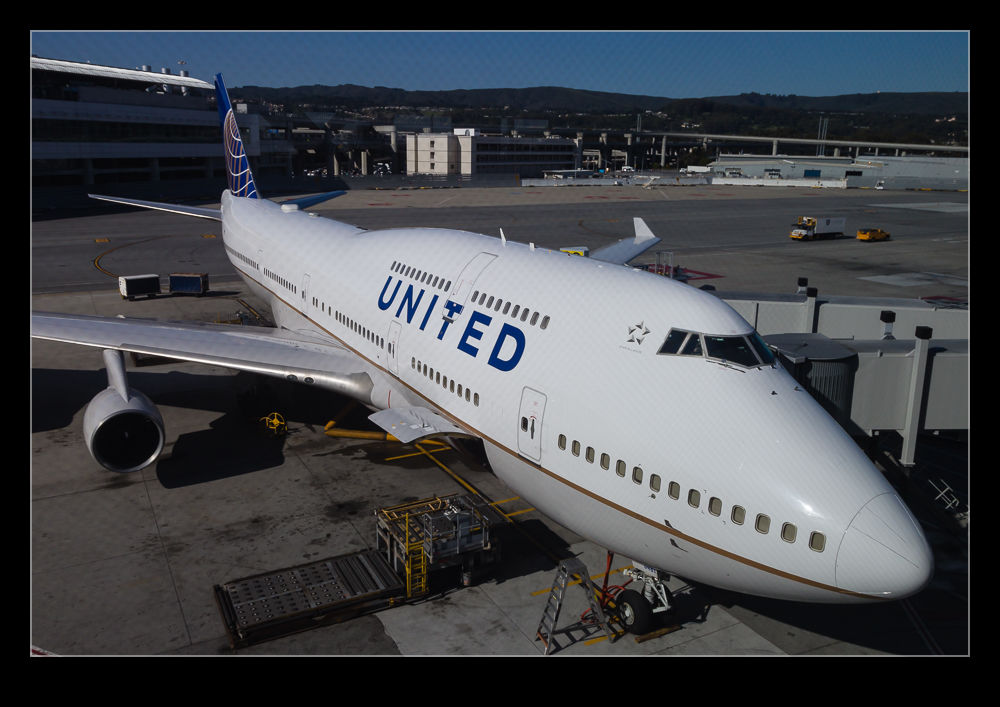
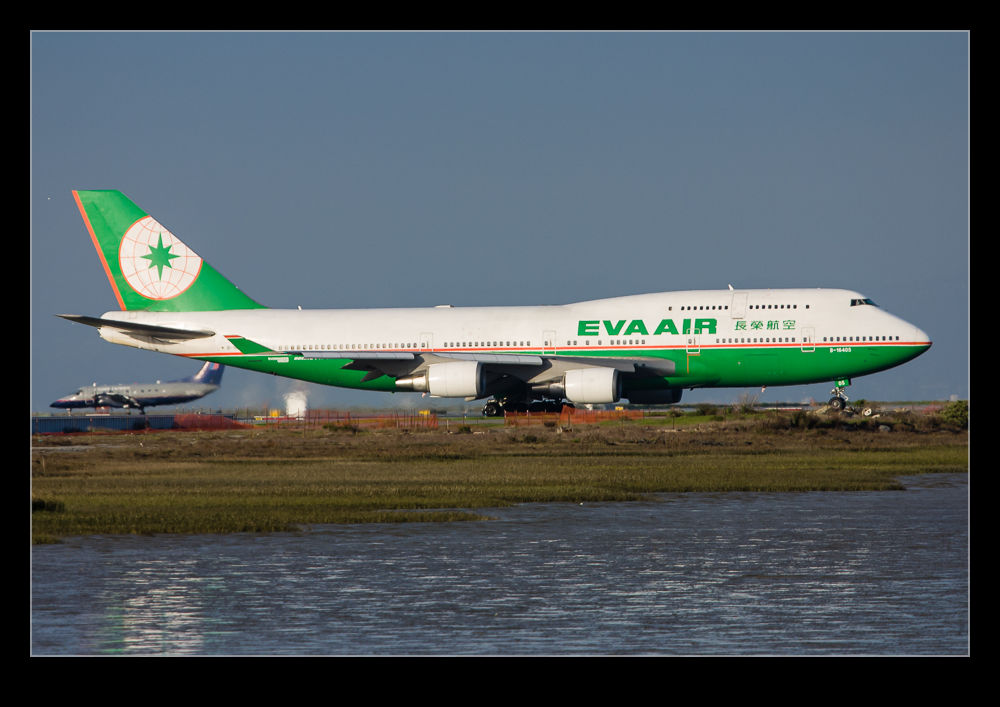
I have documented the demise of some of the fleets of Boeing 747s as airlines progressively send their planes to a new owner or a recycler.  The latest airline to join the trend is EVA Air.  Based in Taiwan and owned by the Evergreen shipping line, the airline was originally launched under the Evergreen name.  However, there was another airline called Evergreen at that time so they had to change the name to EVA Air.  Now Evergreen have gone bust, I guess they could change their name but at this point there seems little reason to do so.

I don’t know whether the retirement of the 747s includes from the freight services or whether it is just passenger use but I suspect the latter.  These shots are just of the passenger jets that I have seen over the years.  They have been harder to see as the 777-300ERs took on more of the routes and now they will be harder still!

The Spooks Are in Town

The subject of this post ended up getting some coverage but, when I saw it, I didn’t know about the interest surrounding it.  I was at BFI awaiting the departure of another aircraft when a turboprop took off over me.  I had the camera to hand so grabbed some shots of what I realized was an Airbus CN235.  Painted in a dark gray scheme, it looked a little odd.  A closer look at the shots showed it had a few lumps and bumps suggestive of an array of antennae.  I figured it was just passing through en route to somewhere more interesting.

However, that wasn’t the case.  It had been spotted flying some patterns over the city.  I had seen some odd flight paths on Flightaware being flown by a plane called Spud21.  I loved the name!  it was flying orbits over the city but I couldn’t see anything else about it.  However, when I saw the plane crop up in the media, the article identified that it was the owner of the Spud21 callsign.

I don’t know what the purpose of the flights was.  It is suggested that the aircraft is owned by the US military but whether it is for their use or is in support of an overseas operator, whether these flights were for testing purposes or were checking out the residents I don’t know.  I do know that it was something a little out of the ordinary though.

A Primer 747 Really Catches the Sun

A primer finish on a jet looks a lot more dramatic in sunny conditions.  The green finish of the protective film is quite reflective so the sun really makes the plane shine.  This 747-8F freighter was carrying out some production test flying from Everett during a visit.  I was getting ready to leave when it came in so I got a bunch of shots.  As I was driving away, I heard the sound of a jet and it turned out the plane had landed, turned around and taken off in the opposite direction.

I was a bit annoyed as I saw it climb and turn pretty sharply – I assume it was lightly loaded.  Then it became apparent it was going to make a teardrop turn and come back in to land again.  Since I was now on the road home, I pulled off into a parking lot somewhere close to the line of the approach path and got the camera back out.  Into view it came and flew across right ahead of me.  I got a few extra shots.  Not the dramatic climbing turn but still a nice to have addition.

787 Development Jets

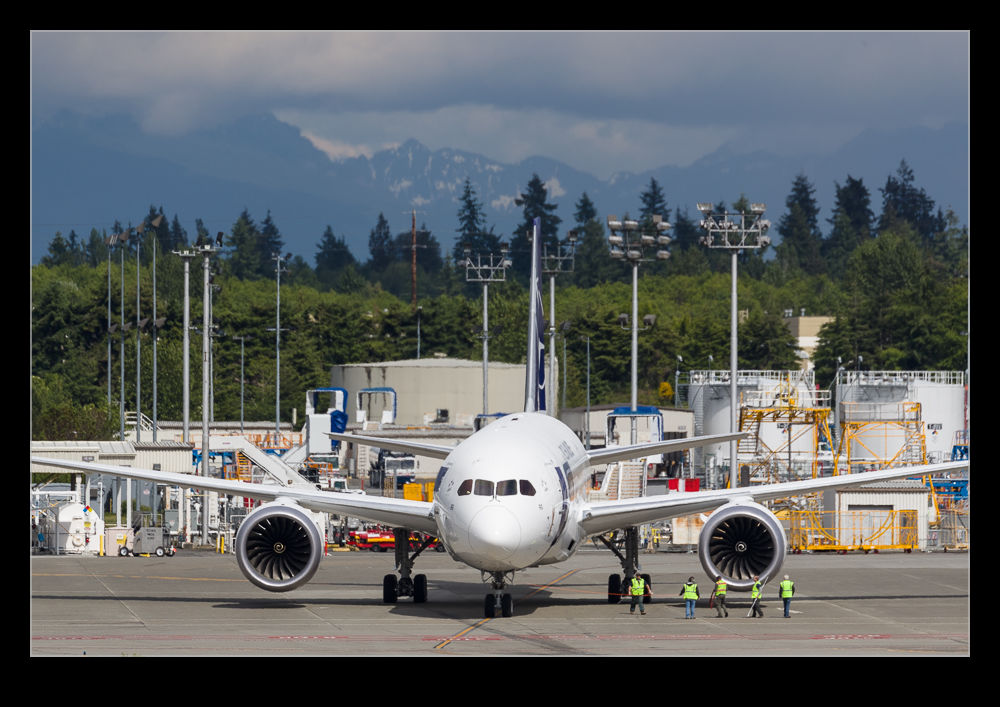
Two versions of the Boeing 787 have been in service for a while.  However, development activities continue.  The 787-10 is still undergoing flight test but work also continues on the older jets.  Some of this is also related to the Dash 10.  I had a post on my first encounter with the 787-10 which I wrote about here.  I have since come across another of the test aircraft.  This one is plain white and doesn’t benefit from the nice house colors that Boeing has.

Meanwhile, one of the 787-8 test aircraft has recently been testing the newest version of the Rolls Royce Trent 1000.  I saw this engine when it was being tested on Rolls’ testbed in Tucson and that was in this post.  Now it has been fitted to its intended platform and is undergoing trials.  These have included lengthy flights around the US including one in which they traced out the planform of the aircraft across multiple states.  If you are going to go flying for 18 hours, you might as well find a way to have fun with it.  The aircraft is carrying the same logo on the engine nacelle that was on the testbed.  Hopefully, the delayed upgraded engine will soon be in service, not just on the Dash 10 but also on the other variants.

T-45 Nose Gear Door Sequencing

With a title like that, who could resist reading this one!  The T-45 is a plane I have a close affinity with.  It was my involvement with the project that first brought me to work in the US and it is responsible for me meeting Nancy.  Aside from that, I got quite involved in many aspects of the plane’s design so feel like I know it quite well.  It did not have a smooth entry to service and went through a multitude of upgrades prior to being accepted in to service.  One of the lesser known items was the nose gear doors.

These were lumped in to a bunch of issues relating to directional stability.  The front fuselage of the T-45 is considerably deeper than the original Hawk but the design originally had the same fin and actually lost the ventral fins that were either side of the airbrake on the original.  Directional control was enhanced by adding a fin cap, modifying the rudder design and adding a new ventral fin on the arrestor hook fairing.  One other change was made too.

The carrier launch requirements meant the simple nose gear was replaced with a far chunkier assembly with dual wheels and the catapult launch bar, all of which was beefier enough to take the catapult launch loads.  Covering this all up were big nose gear doors.  These were originally either open or closed.  If you look at the doors, you can see they are like adding large fins to the front fuselage.  This is very destabilizing.  The rear doors must stay open when the gear is down but the front doors were rescheduled to close again once the gear was down, making a substantial difference in directional stability.  They have to open while the gear is transitioning and stability is reduced during this phase but it doesn’t last long.  However, if you watch the retraction and extension sequence, you get a brief glimpse at how big these doors really are.  From what I understand, a similar issue affected the F-35 and only the first airframe, AA-1, had the old single huge gear door.

Does No-One Want This 747? Tell Me the Story…

This is a request for information from anyone who might know the story.  The 747-8I has not been a huge success for Boeing.  It has sold in limited number with the biggest customer being Lufthansa.  A long time 747 operator, they ordered 20 of the aircraft.  However, they only took delivery of 19 and cancelled the remaining aircraft.  Boeing had originally taken it back to use for trials work and they retained it afterwards.

For a long time, it was stored down in Arizona.  Recently, it was reactivated and I saw it was coming up to Everett again so managed to catch it arriving.  Since it arrived, I don’t know what it has been used for.  I also don’t know why Boeing decided it should return.  Perhaps there is something more to happen with it.  I understand that the two jets that were originally destined for a Russian airline but were never delivered are going to go into the Presidential transport program but I don’t think this jet is part of that.  Does anyone know why it is back?

Emirates’ Latest on Test

An Emirates 777-300ER is hardly a rarity.  They have a huge fleet of them and, since this one is a new build aircraft on test at Boeing, the fleet is going to grow.  What made this one fun was the light.  Some stormy weather had been in the area and the sun was out on the white fuselage while the background was still looking rather mean.  Both on the runway and on the approach, it shone brightly against the background and that is why I am sharing it today.

Max Development and Production Jets

Boeing has completed flight testing of the first version of the 737 Max family, the Max 8.  The Max 9 is currently in flight test and I posted shots of one of those aircraft here.  While some additional flight testing will be carried out on the Max 8, the test fleet is now done.  In due course, these aircraft will be refurbished and sold on to customers.  In the meantime, new production jets are being built for delivery – except when it comes to Southwest.

As a result of a crewing issue, Southwest is delaying taking its jets until they have removed the 737-300 fleet from service.  Consequently, Boeing is building them but not delivering them.  There are a number parked up in the parking lot at Boeing Field and some are still sitting at Renton.  Engines aren’t fitted since this is one way to keep the cost down pending delivery.  They will be fitted and flown nearer the delivery date.

The flight line of these dormant Max 8s sits alongside the municipal part of the airport.  I created a panorama of the jets which you can zoom and pan around below.

Dreamlifter Shape Explored

Since the Dreamlifters are a regular feature around this part of the world, catching a movement is not a big deal.  That gives you a chance to think about shooting the planes in a different way.  I have been interested in the shape of the structure and the texture it has.  Since the Dreamlifters have been built to serve one purpose – that of moving bits of the 787s around the world – they are functional rather than elegant.  The shape is designed to maximize the capacity.

Meanwhile, the modifications have been made to a base airframe so some of the joints between the new structure and the original are pretty agricultural.  The number of fasteners that are visible on the surface are substantial.  This is not a problem.  The plane serves a purpose and it does this well.  The way in which the fuselage shape transitions from the original 747 lines into the Dreamlifter lines are also very interesting.  A tighter shot gives you a good view of how the curves come together.

The Dreamlifter is not a beauty.  I don’t even think it is as good looking as the Belugas that Airbus uses which have a more integrated feel to their design.  However, it does the job well and it is nice to have a different shape in an era when every airliner is looking like every other.  A bit of variety is a welcome thing and, while I am lucky to be close to them on a regular basis, I shall continue to appreciate what I get to see.

Two Tankers

The KC-46 Pegasus tankers have appeared in the blog before but only on the ground.  That post can be found here.  I have finally seen them flying.  A couple of them were airborne on test flights from BFI and, while they had taken off quite far apart, they ended up returning quite close together so I was able to get shots of them both.  They don’t look terribly dissimilar which is what you would expect.  They are fully fitted out with the boom and one of them has the pods so this is what a service aircraft should look like when the Air Force squadrons start to get their hands on them.