Tag Archives: Boeing

El Al 777 Overwing Vortex on Takeoff

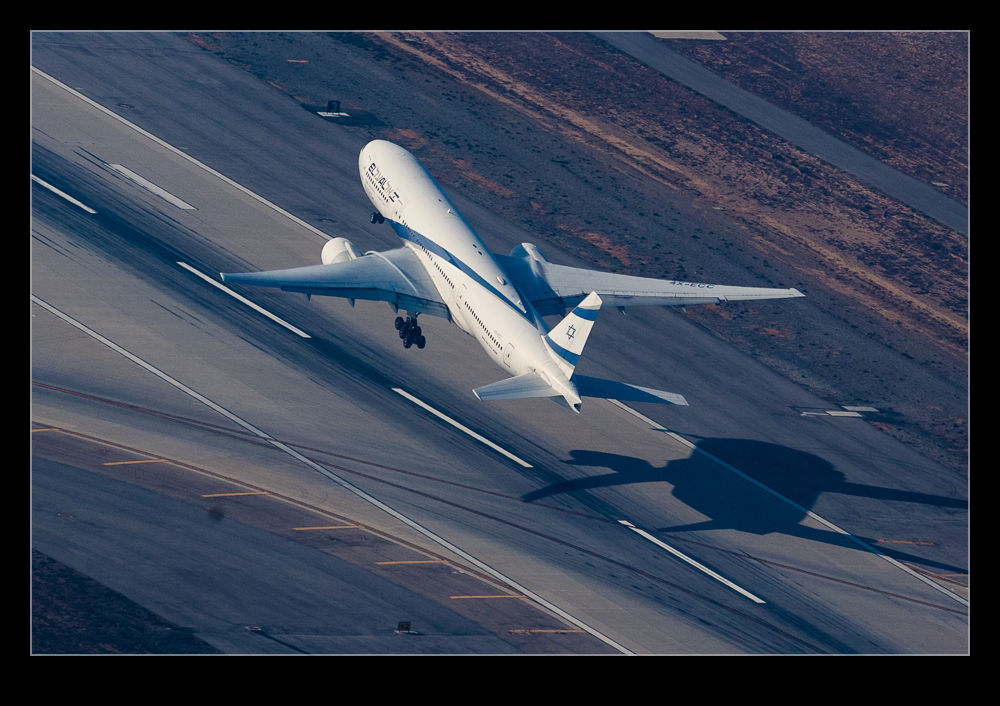
Engine nacelles are optimized for cruise performance.  At high angles of attack, their shape results in some rather awkward flow properties which can influence the wing performance above and behind them.  In order to control things, you will see small vanes attached to one or both sides of the nacelle that generate a vortex that stabilizes the flow somewhat.  As an aircraft rotates at takeoff, the strength of this vortex increases and it will often become visible as moisture in the air condenses within in.  This vortex will stream back up and over the leading edge of the wing.

When you are inside the aircraft, this is pretty easy to see provided the conditions are right.  From head on or aft they are also quite conspicuous.  It isn’t often that you get a good view from above.  When I was flying over LAX in the helicopter, the aircraft departing from the north complex had better light on them.  However, the runways are offset so the rotation point is further west and beyond the area in which we are allowed to fly.  However, you can get a view from above and behind as the jets get airborne.  An El Al 777 took off while I was up and I managed to get some shots of it as it rotated and climbed away and the vortices were clear to see as the angle of attack increased.

Bounce It Down and Do It Again

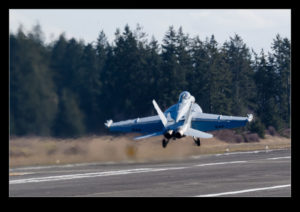
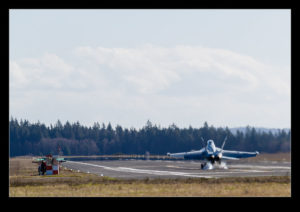
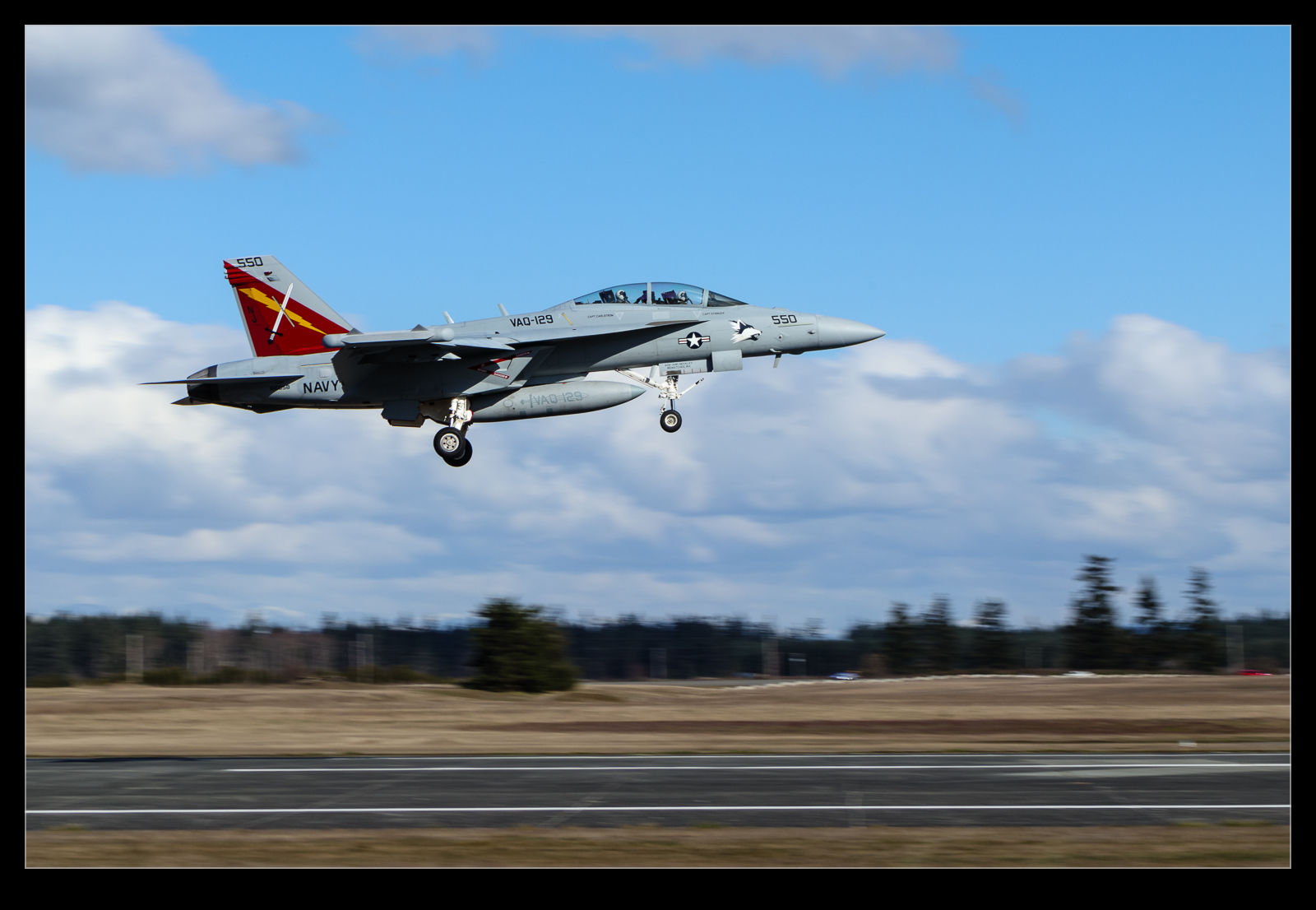
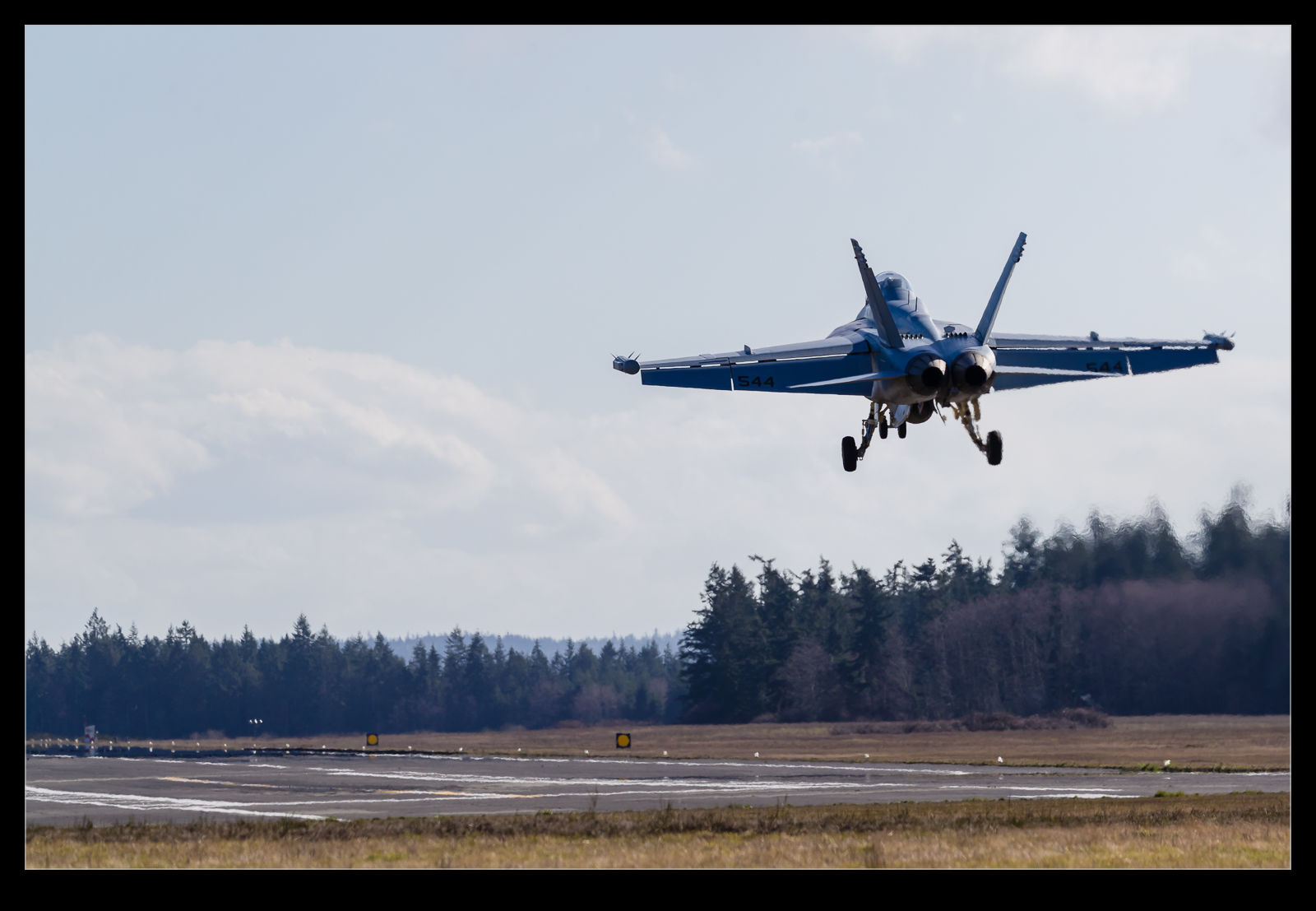
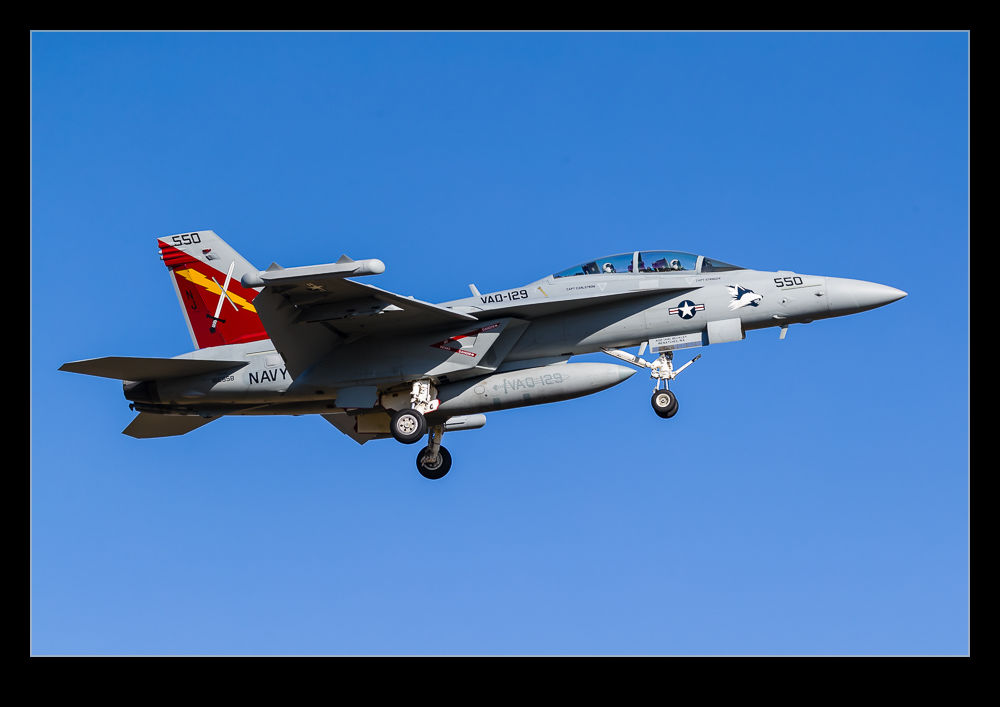
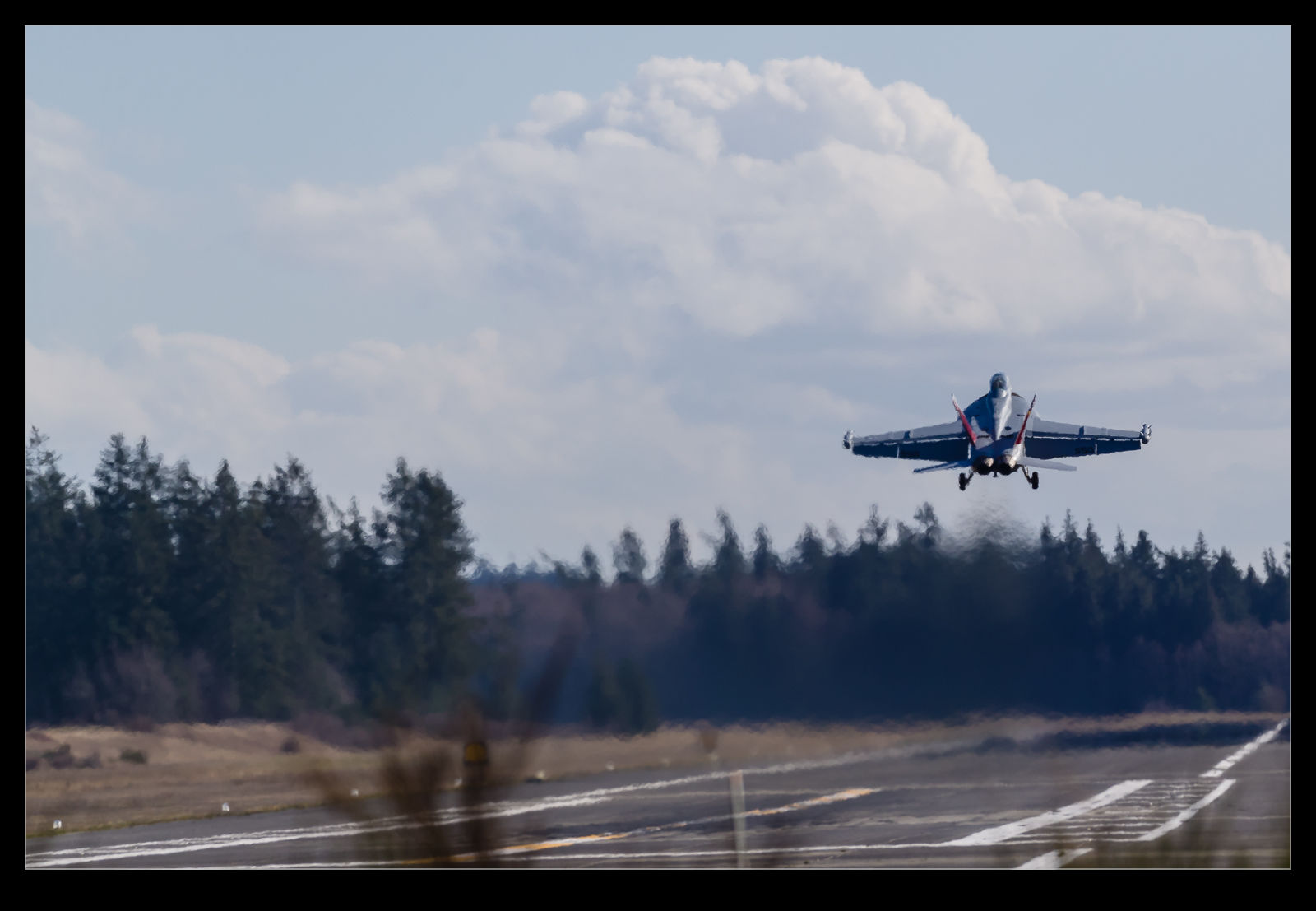
Since the Growler crews were training as if they were on the deck at sea, they don’t flare their landings at all.  They hit the runway hard and the tire smoke that results is substantial.  Normal landing procedure on a carrier is to go to full throttle as soon as they hit the deck.  There isn’t time to react if you miss the wire so hit the gas and, if the wire doesn’t stop you, you fly right off the other end of the deck and climb away.  Since there is no wire at Coupeville, that means every touchdown is followed by a rapid rotation and climb away.  The climb is pretty steep initially which keeps the speed under control until the power is backed off.

The First 737

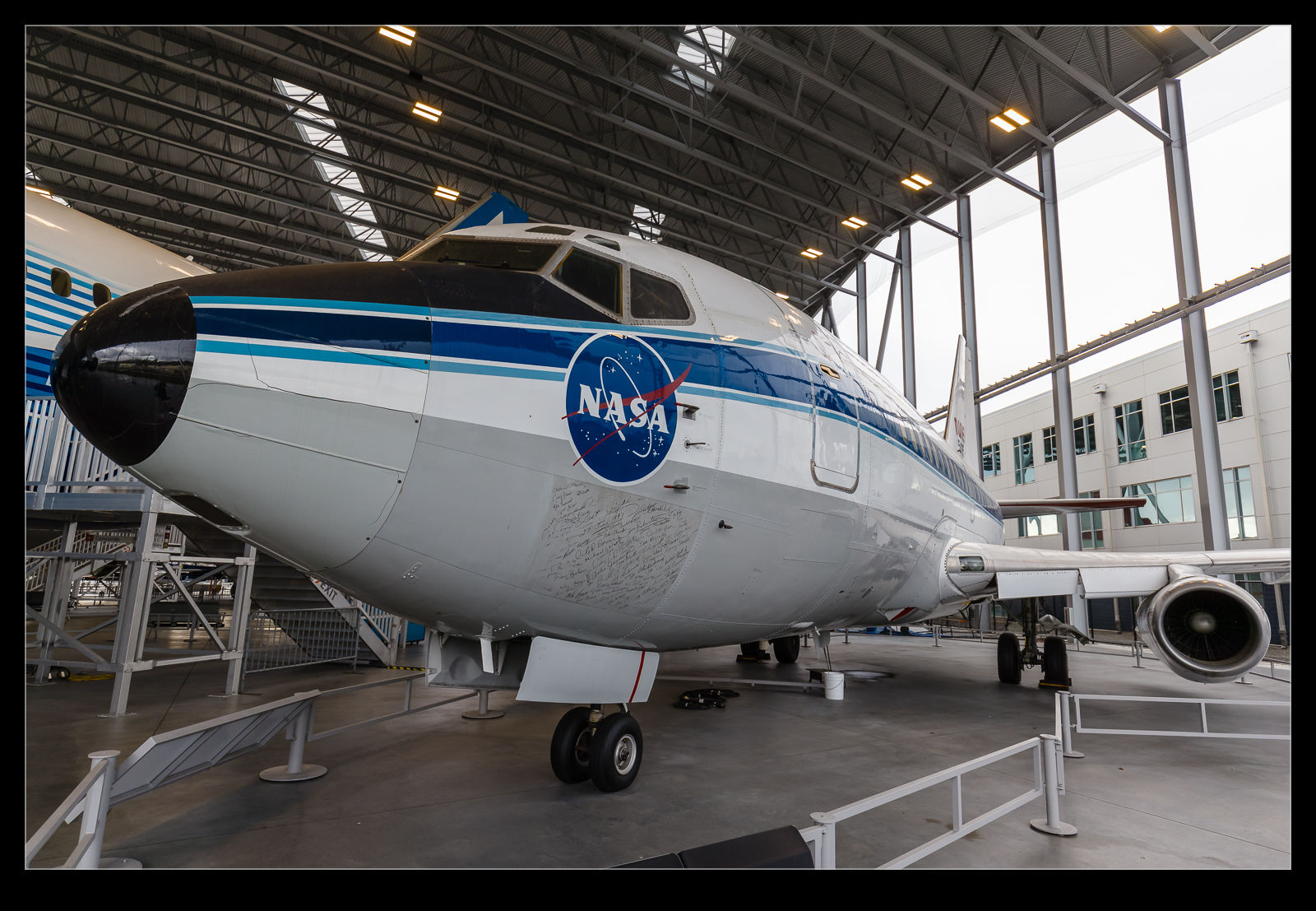
The Museum of Flight has a number of prototypes of Boeing airliners.  They have the first Boeing 737.  This is a 737-100.  Very few of these were built with the 200 series being introduced soon and then taking over completely until the introduction of the 300 series many years later.  (For those of us of a certain age, the 200 series was known as the Classic once the 300/400/500s came into service.  Today they are often called Classic when compared to the NG models which are, themselves, now being superseded by the Max.)

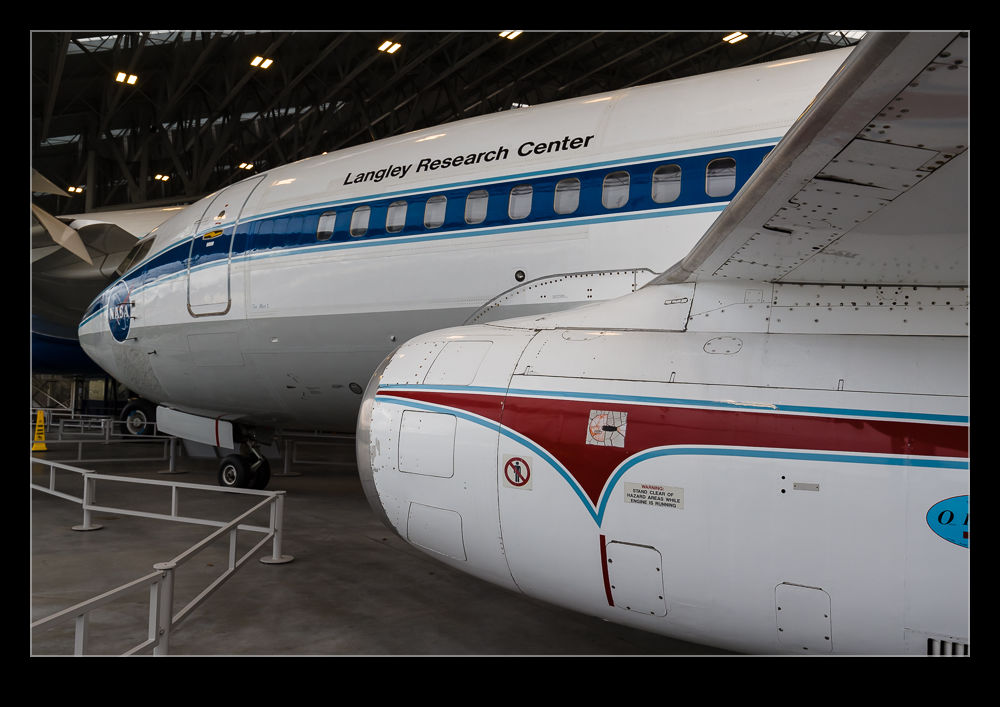
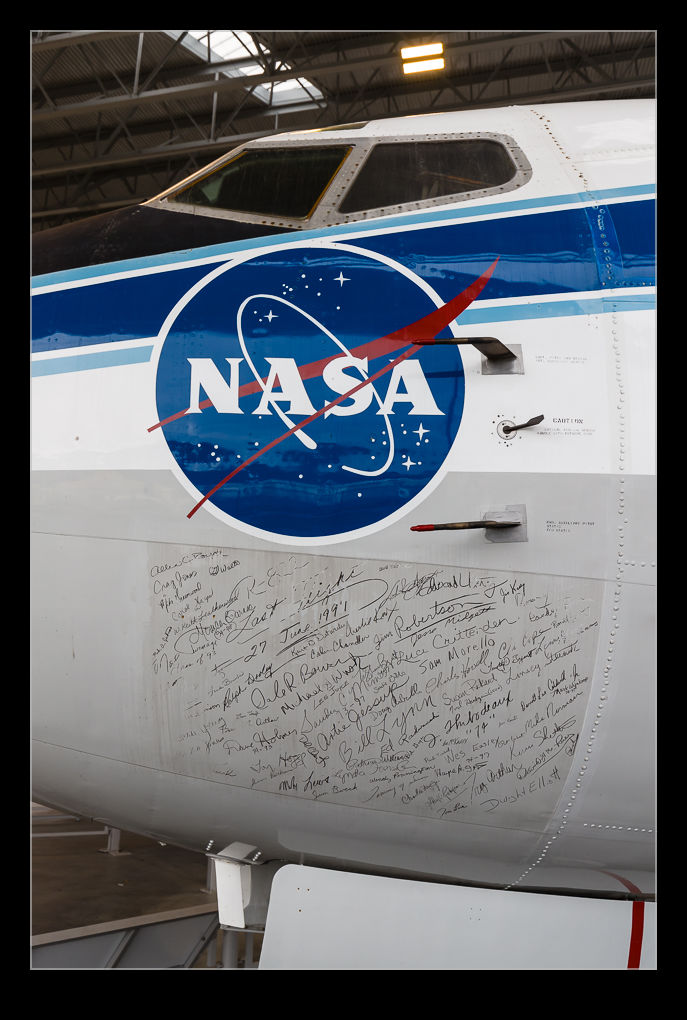
The first airframe ended up with NASA being used for testing duties of all types.  At the end of its testing career with NASA, it made its way back to Boeing Field and to the Museum of Flight’s outside collection.  These are now under cover with a roof having been built over the many aircraft.  The 200 series is a pretty short jet but the 100 is even more so.  It is quite something to see this aircraft and compare it to the big aircraft that are now the staple of Boeing’s output.  The Max 10 will be nearly 50% longer than the original.

The aircraft is displayed in its NASA colors rather than the original in-house colors when it was first built.  Also, since NASA used it for a variety of odd tests, it has a bunch of additions from those test activities.  Since it is parked in amongst the 787 and 747 test aircraft and is kept at the far end of the space, it is a little lost I feel.  However, when you contemplate its place in the history of airliner development, it really is a very significant plane.  There was a time when Boeing contemplated selling the whole program.  How different things could have been!

Growler Overhead

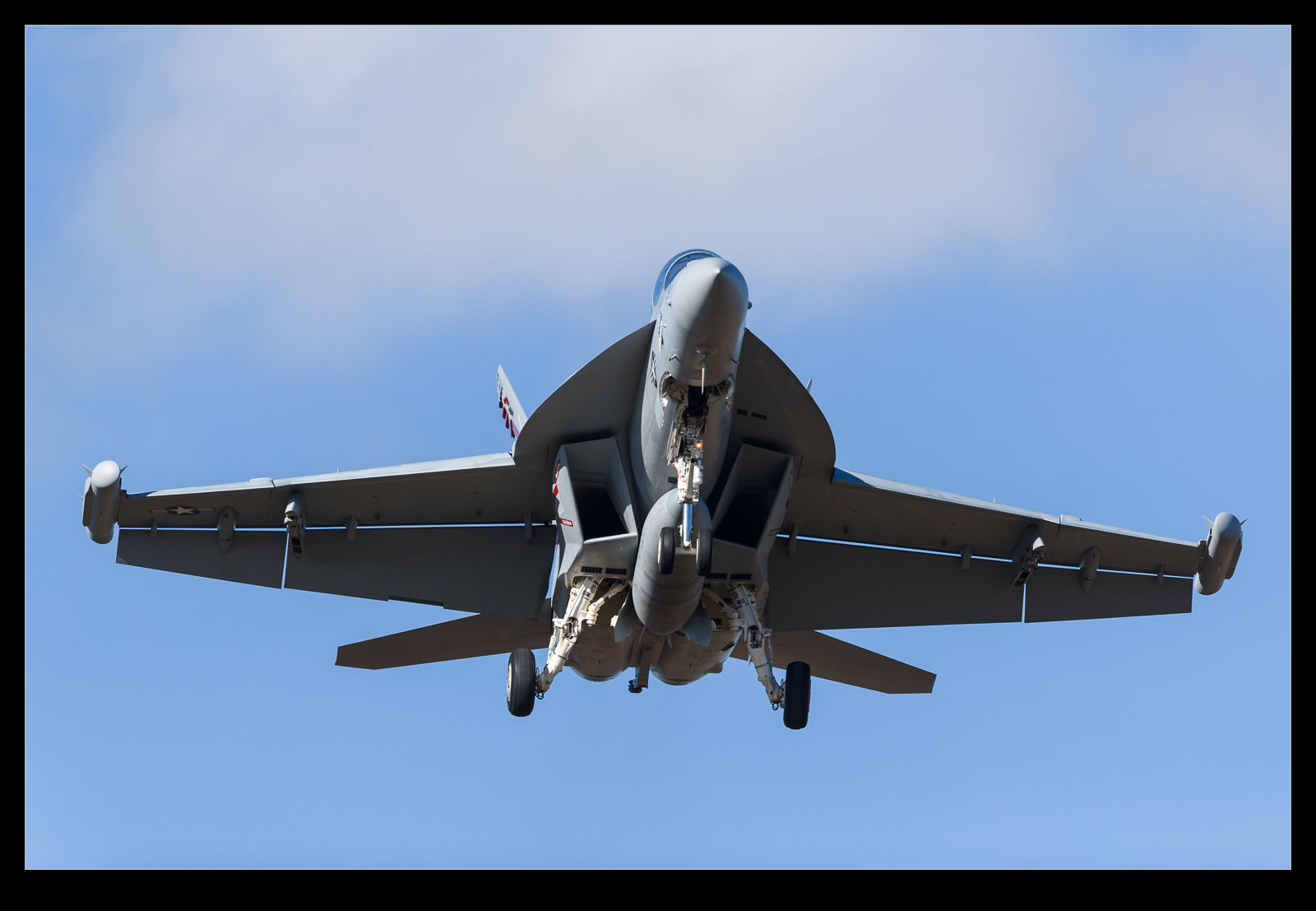
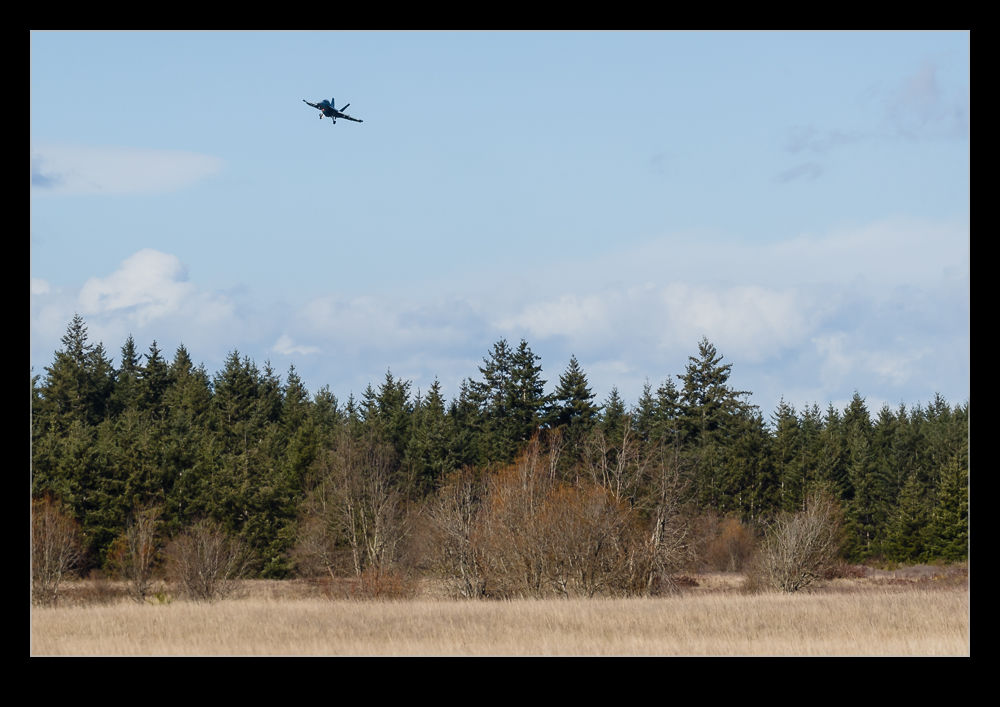
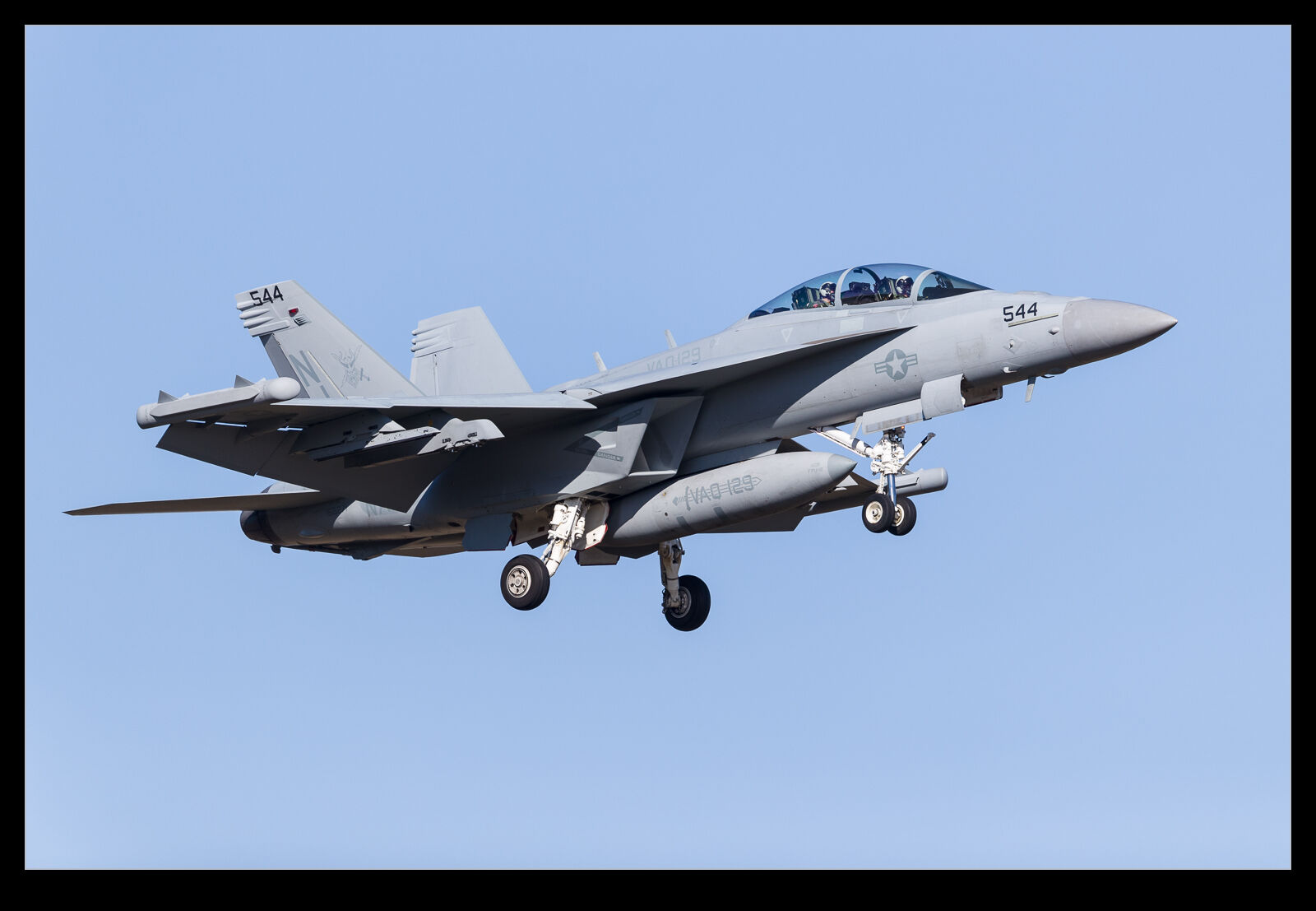
The approach to the runway at Coupeville brings the jets right over one of the local roads.  This meant I had the opportunity to go for some head on type shots of the jets.  As they came right over the top of me, I got a nice view of the underside of the jets.  I also experienced the noise level of a Growler.  I hadn’t thought to bring hearing protection and, if I go back, which I am pretty sure I shall do at some point, I will remember to take some.  You are really quite close and the sound levels are high!

FCLP Training for the Growlers

Naval aviators have to practice the art of landing on a carrier a lot.  Before they ever go to the boat, they undertake a lot of field carrier landing practice.  This involves flying the carrier pattern to a runway as if it was the boat.  The outline of the deck landing area is painted on the runway, the lighting is replicated and the guidance calls are provided by crews alongside the runway just as if they were at sea.  The crews fly around the pattern and thump onto the runway just like it was the deck and then apply power just like they would if they were aiming for a wire.

Of course, there is no wire so they power up and fly away to repeat again.  The goal is to be as practiced with the whole procedure as possible before they ever go to sea.  Naturally, there is still a difference dealing with a static runway in a field as opposed to a moving ship in open sea.  Still, it is the way to prepare.  Naval air stations tend to have separate fields away from the main base at which this training can take place.  They are away from the normal base flying and allow this training to take place uninterrupted.

NAS Whidbey Island has its outlying field at Coupeville.  They announce when flying training will take place there in order to keep the local community aware of the potential noise.  Usually there is little chance for me to go because of work but it turned out that one of the flying days was scheduled to have good weather and I should be able to take time off.  Not only was the weather due to be good but the wind was in a direction that meant they would be flying to the end of the runway that is more accessible.  I planned to be there.

As it happened, something came up at work and I had to go to Seattle before I could leave.  Consequently, I was behind schedule.  I eventually managed to get on my way and I got to Mukilteo just in time to catch a ferry.  Once on the island, I headed up to Coupeville and, sure enough, as I got closer, I could see Growlers flying patterns.  I got to the field and parked up away from the road.  I walked back, all the time hearing jets flying around.  Then I was in position to get some shots.

I kept moving so I could get closer to the touchdown point but the flying stopped as I got closer.  Then they packed up operations.  They were done, at least until the evening.  If I had missed the boat, I would have missed the whole thing!

One of My Better Encounters with the Dreamlifter

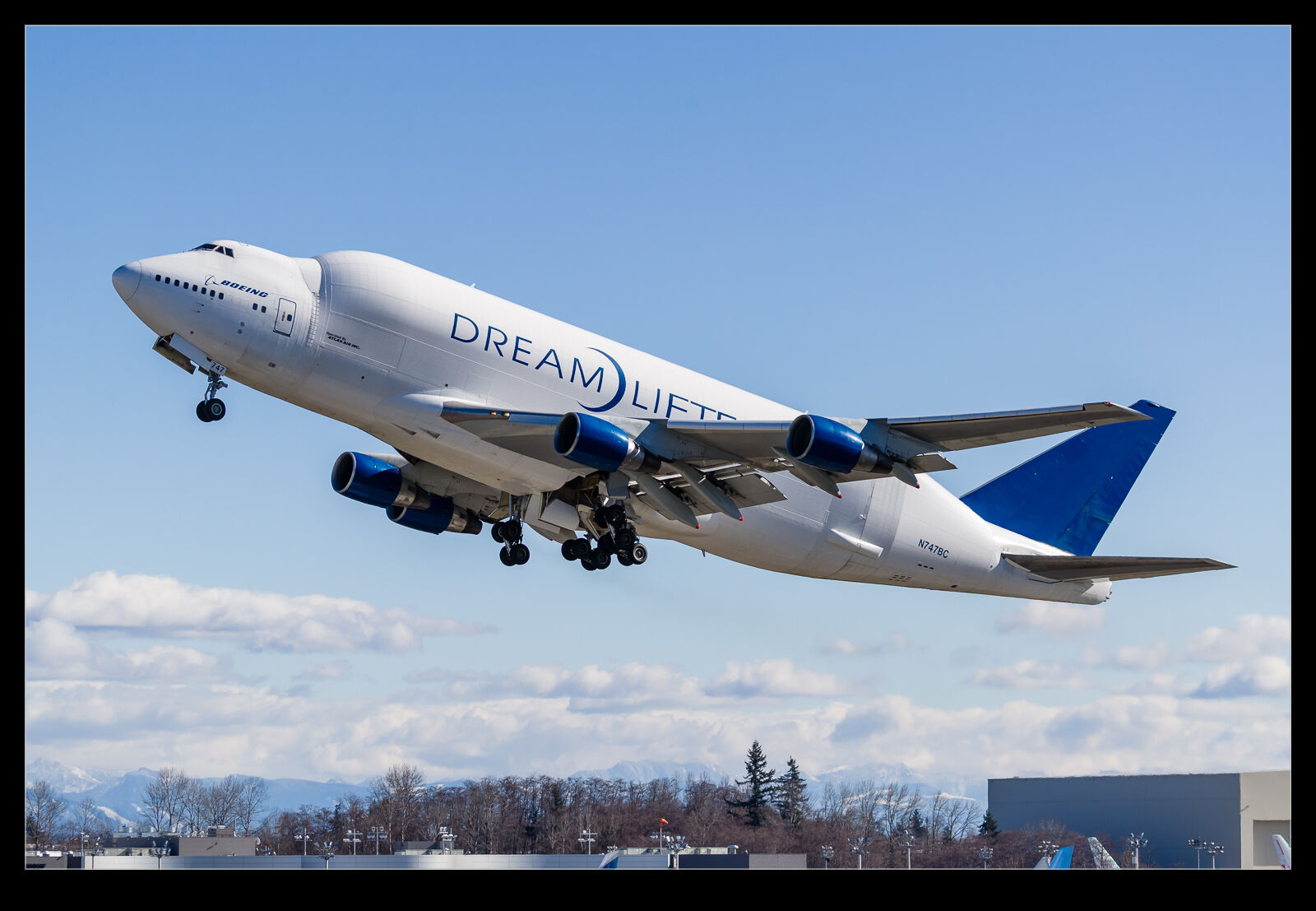
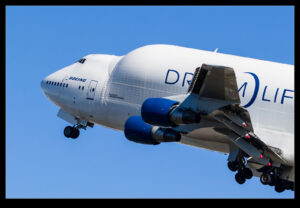
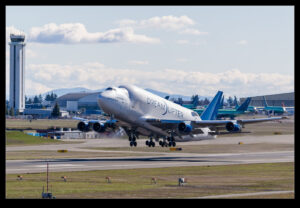
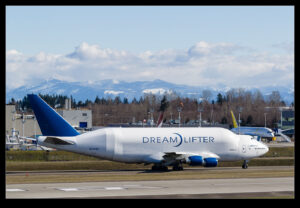
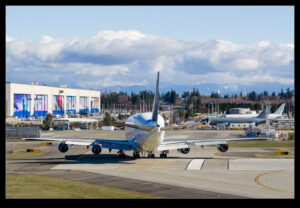
I have had some mixed luck with the Dreamlifter.  Light failing at the wrong moment or the sun setting just before departure are two examples.  On this occasion, though, things worked out pretty well for me.  I was visiting Future of Flight so I was on their viewing deck when the jet departed.  I watched them start up (including some nice puffs of smoke as fuel and oil burned off at ignition) but they were partly obscured by a hangar.

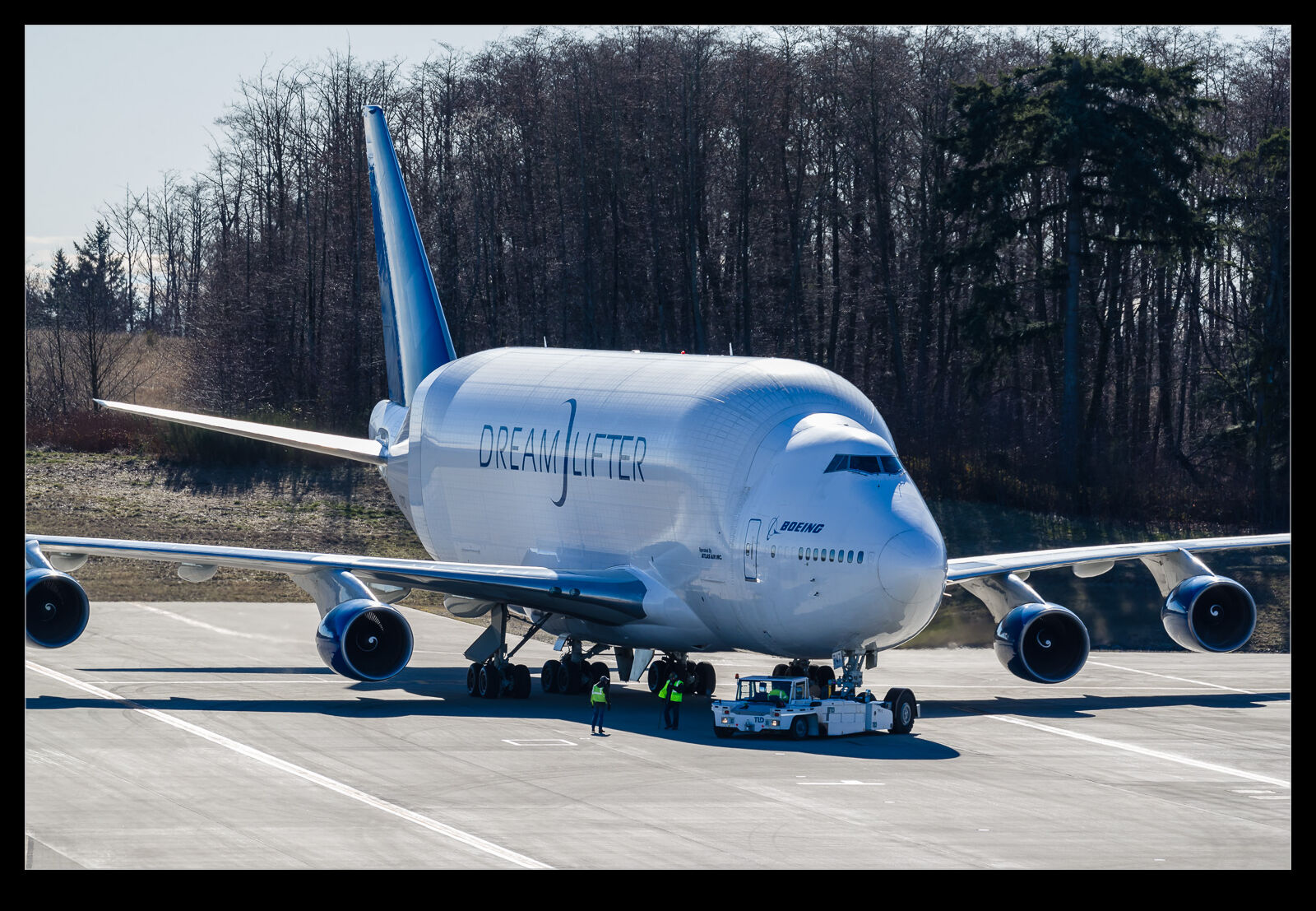
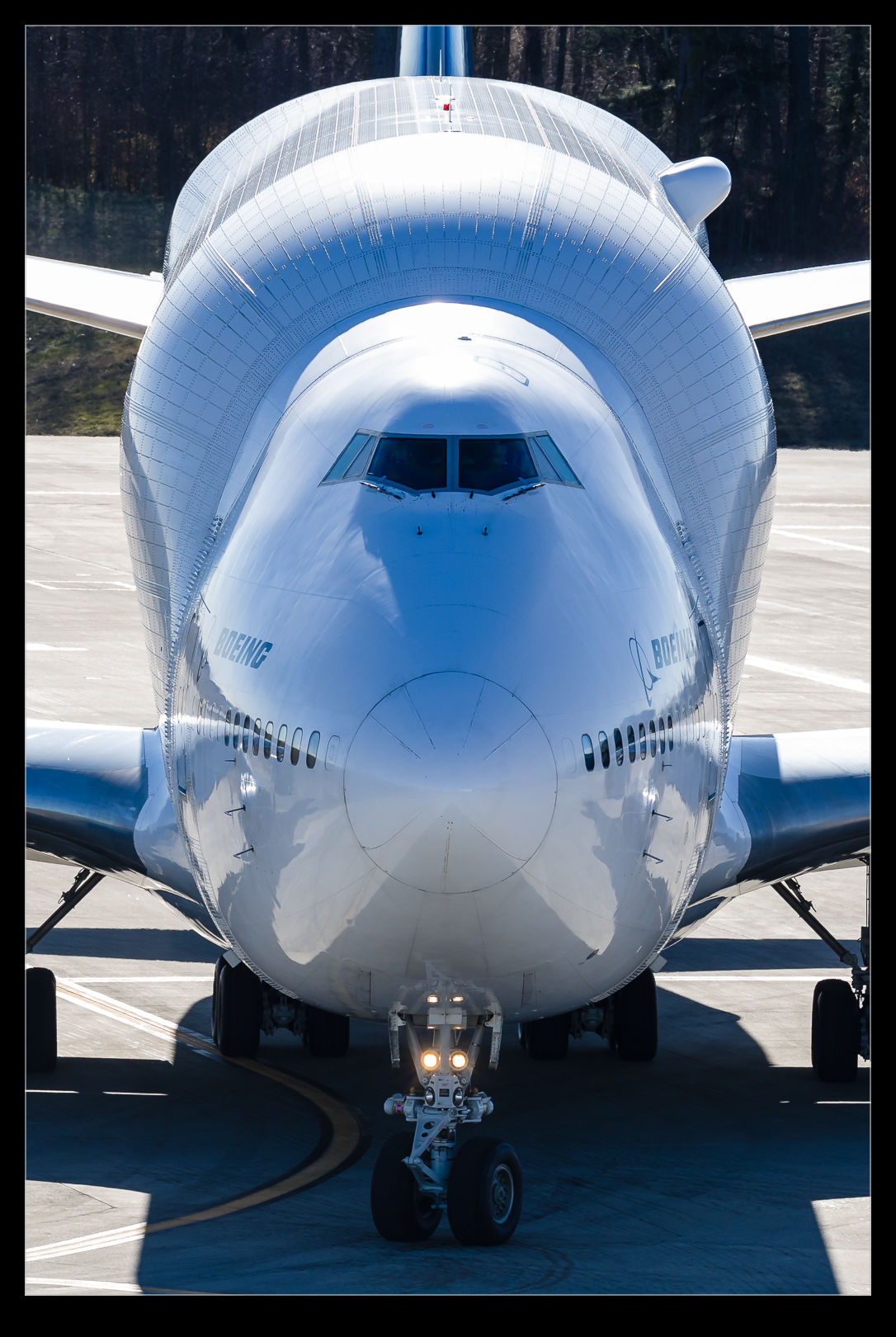
Pushback made everything easier and they then taxied right towards me.  It is true that you are looking into the sun at this point but it was still not a problem to get shots of the plane without a problem.  They taxied out past the parked IL-76 and then held in front of us for a moment.  The wind was good for northerly departures so they taxied across the threshold and then down Alpha to the other end of Paine Field.

Take off had to wait for a couple of Cessnas and then they lined up and headed our way.  I was definitely not alone on the viewing terrace at this point!  Little areas of snow alongside the runway were apparent when the outboard engines disturbed them.  Then they were rotating and climbing towards us.  Finally I got some decent conditions for some shots.  Now, I guess, this will happen a lot and I will wonder why I ever was bothered about not shooting the jet in nice light.

Qantas Celebrates Aborigine Art Again

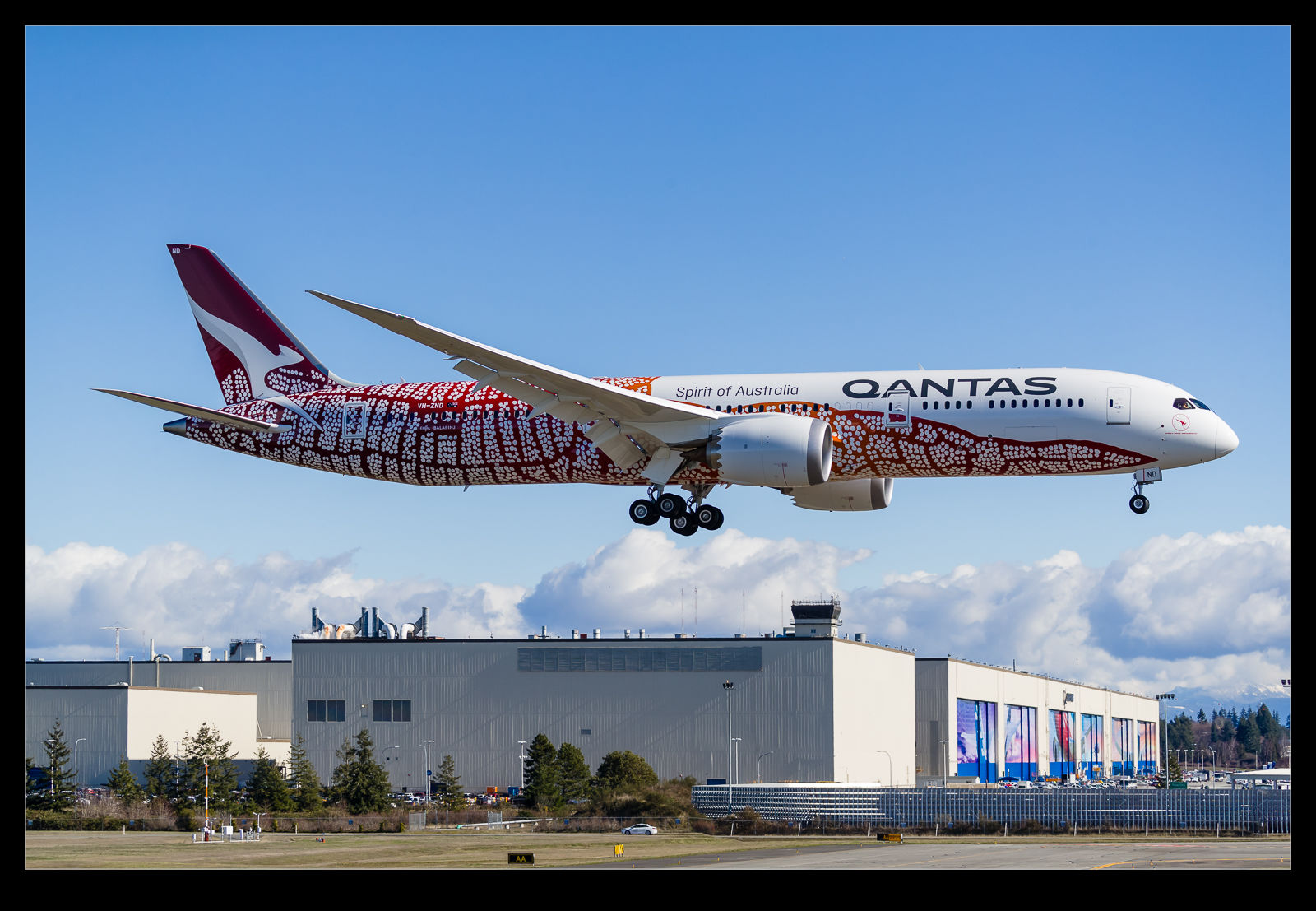
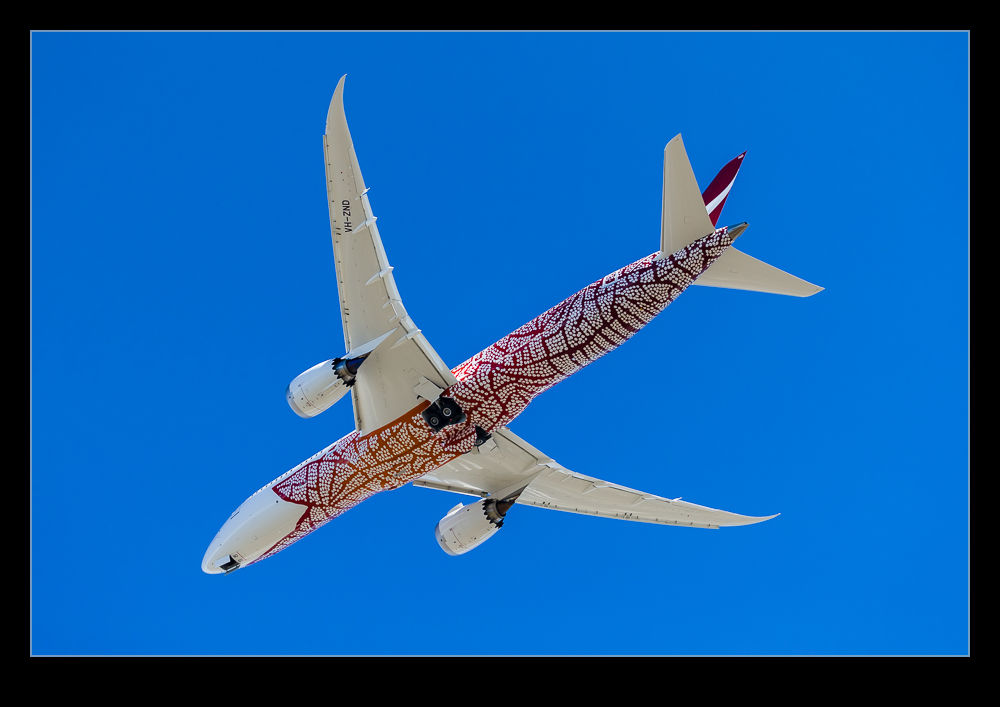
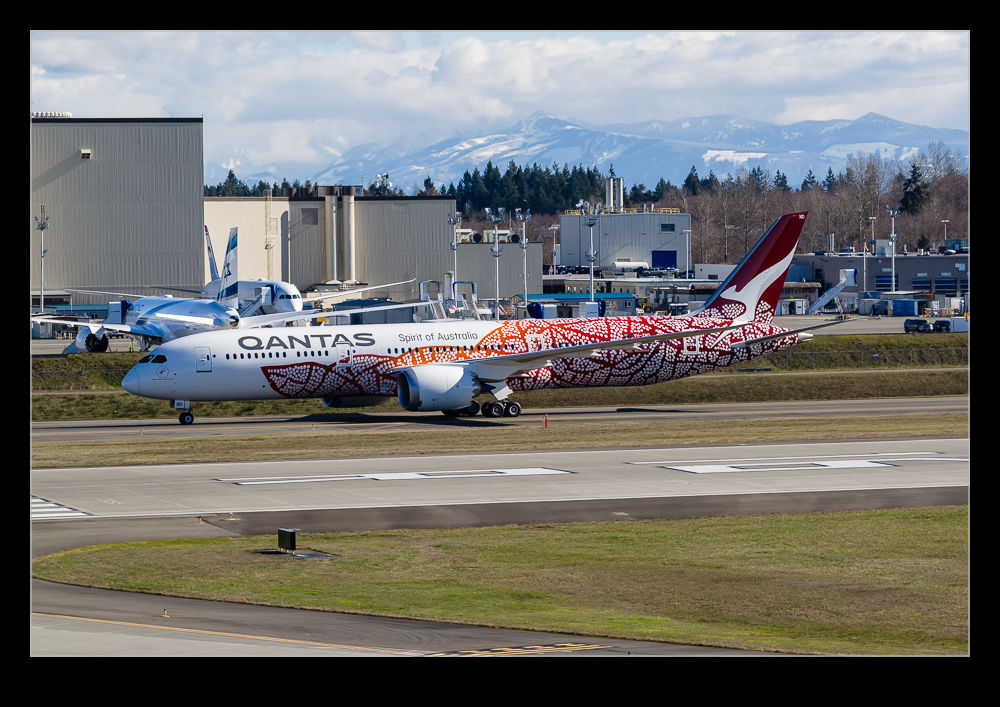
Qantas has decorated previous aircraft with liveries that encompass aborigine art.  Their Wunala Dreaming aircraft was well known around the world and, in an age when airline liveries tend to be rather bland, these colorful jets are a welcome change.  They have taken a similar route with one of their new Boeing 787-9s and I saw it at Paine Field during test flying.  It came in from the south and executed a go around from relatively low level.

Then they caught me out by heading north to turn and make an approach from the opposite direction.  This required some rather swift repositioning by me.  In fact, I got to the parking lot as they were on final approach and, rather than park, I just pulled to the side, ran up the bank, grabbed the shot and then got back in the car to park properly.  It was tight but it worked out okay.

Pegasus Testing with the Hornet (and it’s not raining)

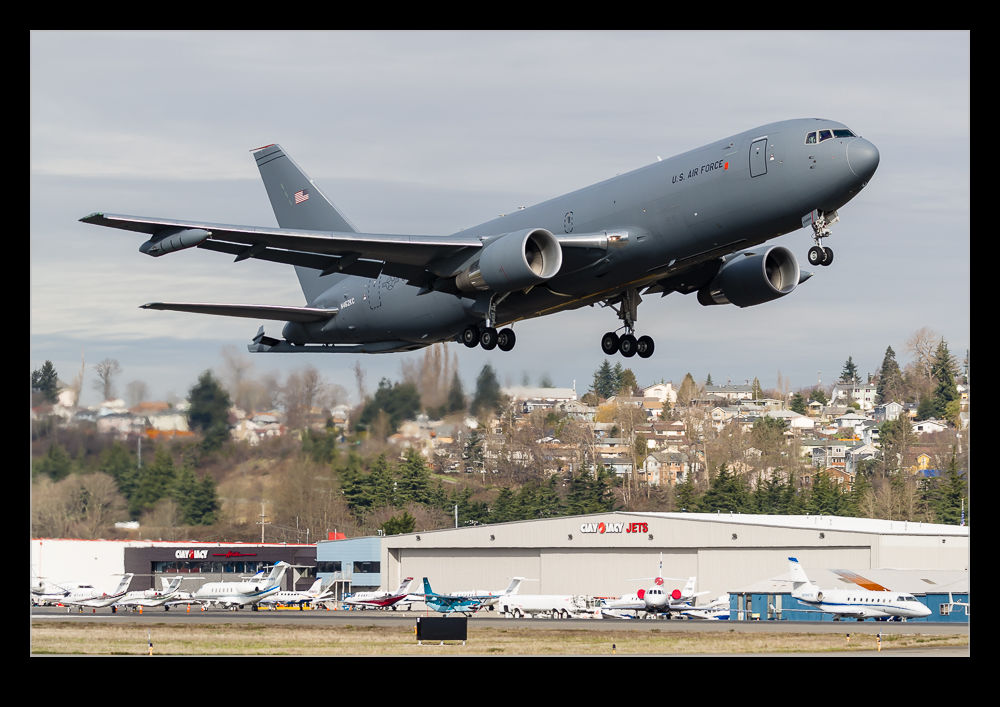
My luck with KC-46s and bad weather broke recently with a Pegasus launching out of Boeing Field on a glorious day.  It was carrying out trials work with a US Navy Hornet.  This jet was the subject of its own post.  The KC-46 followed it down the runway.  It rotated in a good location and the light was so much nicer than I have had recently so I was very happy to get shots of it as it climbed out and headed off to the airspace set aside for testing.

Salty Dog Hornet Goes Tanking

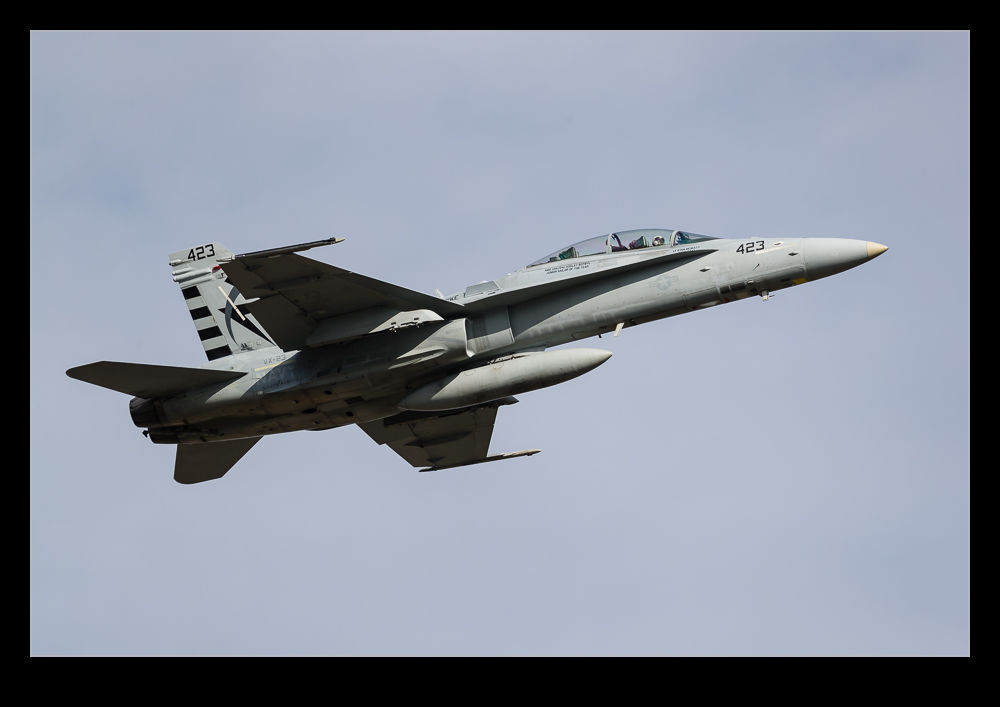
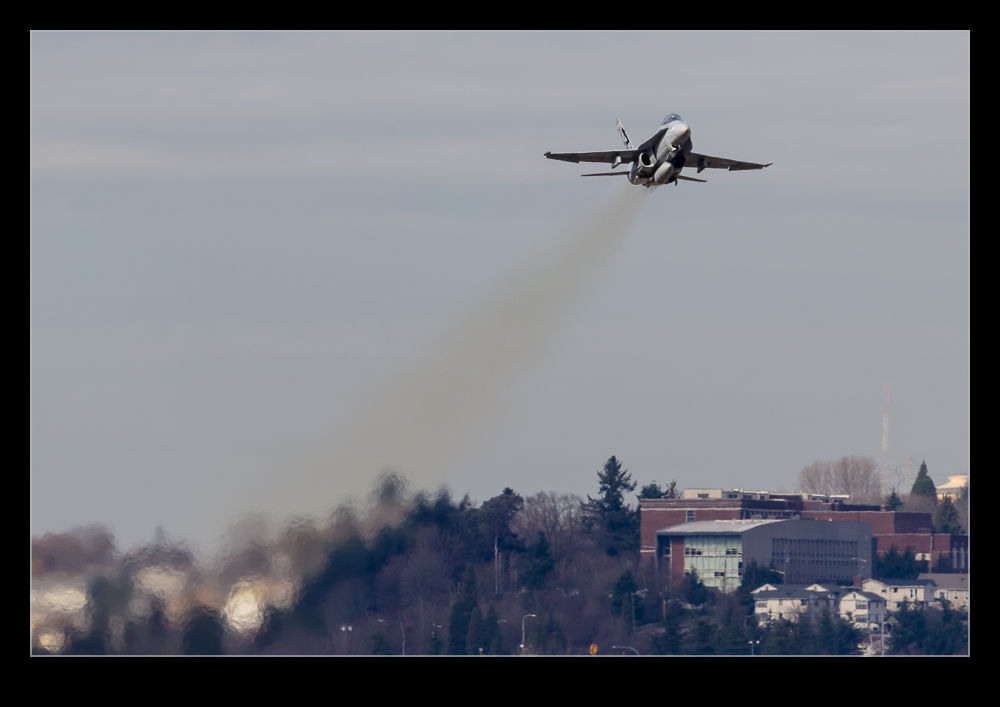
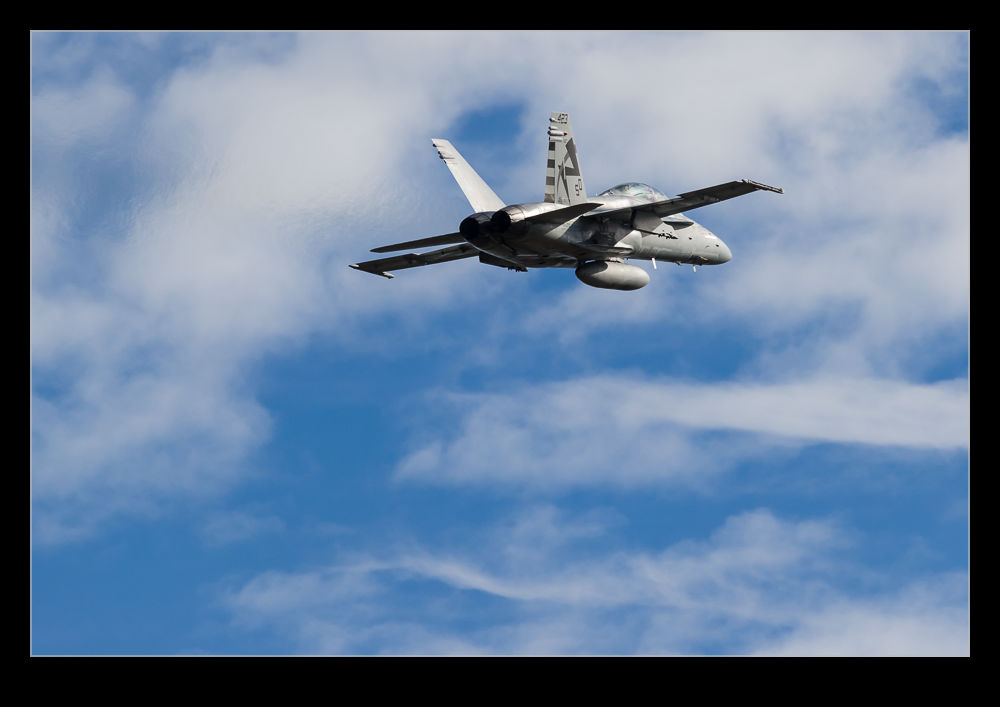
The never-ending test program for the KC-46 Pegasus involves testing with a variety of receiver aircraft.  Recently, the Navy has deployed jets to Boeing Field to work with the tankers.  While I was there, it was a Boeing F/A-18D Hornet that was sent across.  Operating with the call-sign, Salty Dog, the Hornet blasted out of the field ahead of its tanker.  They were scheduled to be up until after dark so I didn’t hang around for their return.

Wamos – A New Airline for Me

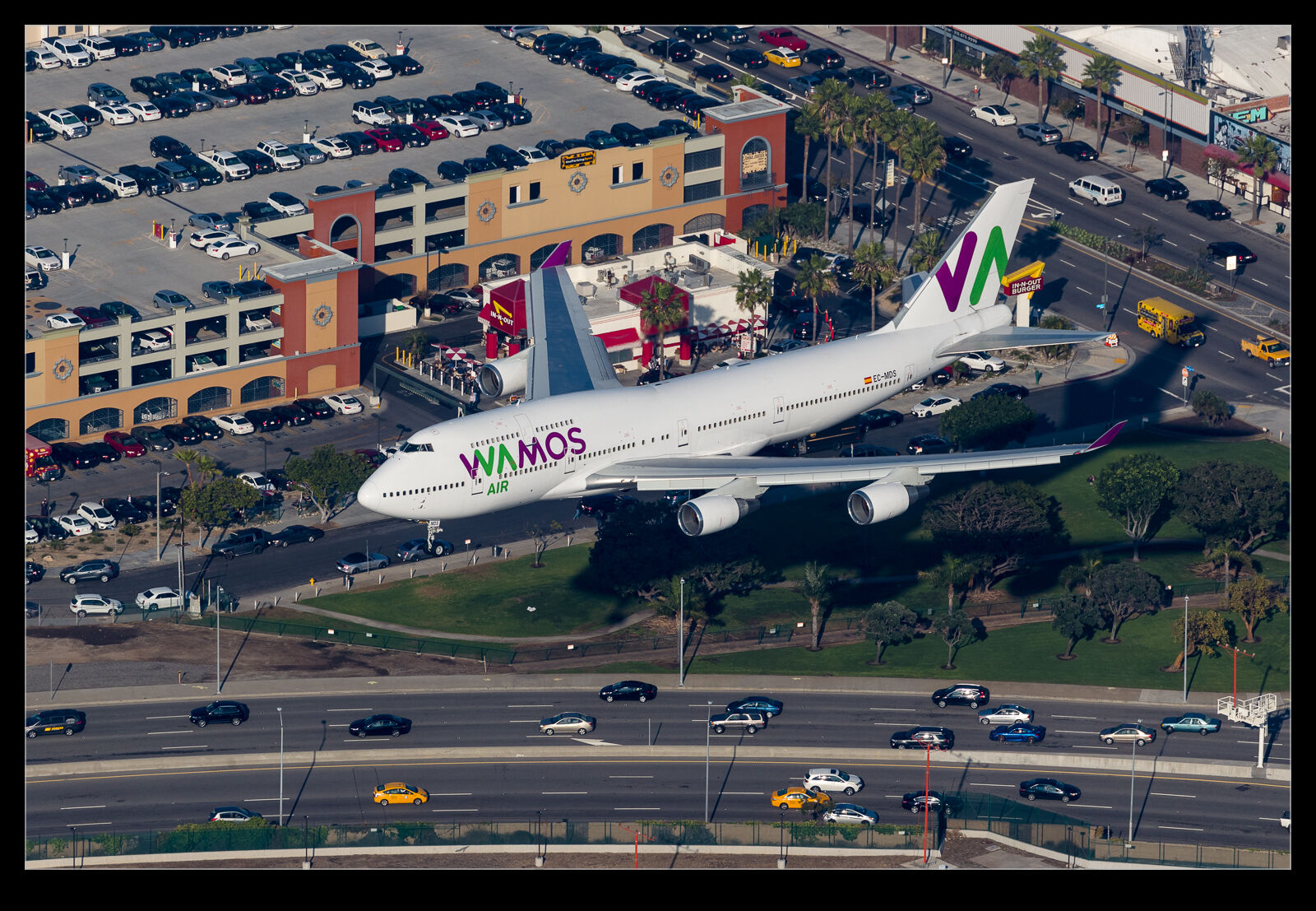
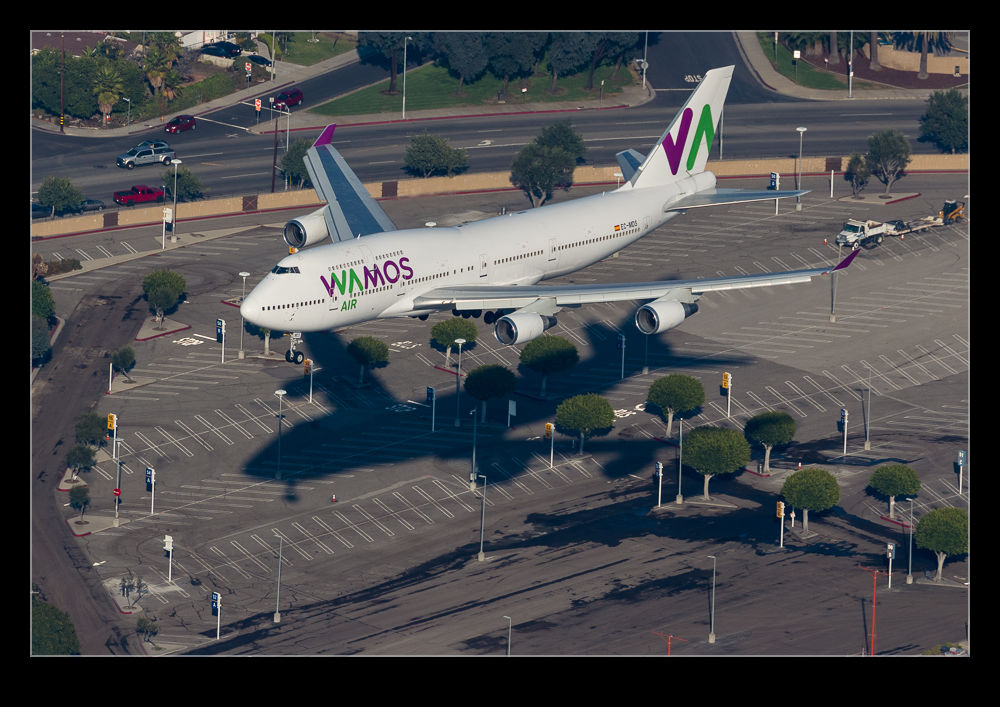
There are many airlines around the world so plenty that you probably haven’t heard of and may never see.  Finding one in your backyard is a surprise though.  There I was hovering over LAX in a Robinson shooting pictures of the arriving and departing jets and a 747-400 appears on the approach.  Since they are becoming fewer and further between these days, this was a good thing.  When I saw the name on it, I had no idea what it was.

Wamos is apparently a Spanish airline.  They have been operating some flights to LA but, up until this point (and the subsequent research I did), I had never heard of them.  I guess we just never crossed paths.  A new airline and a 747 was a pretty sweet combination.  I was definitely on a roll on this flight as I got a number of treats.