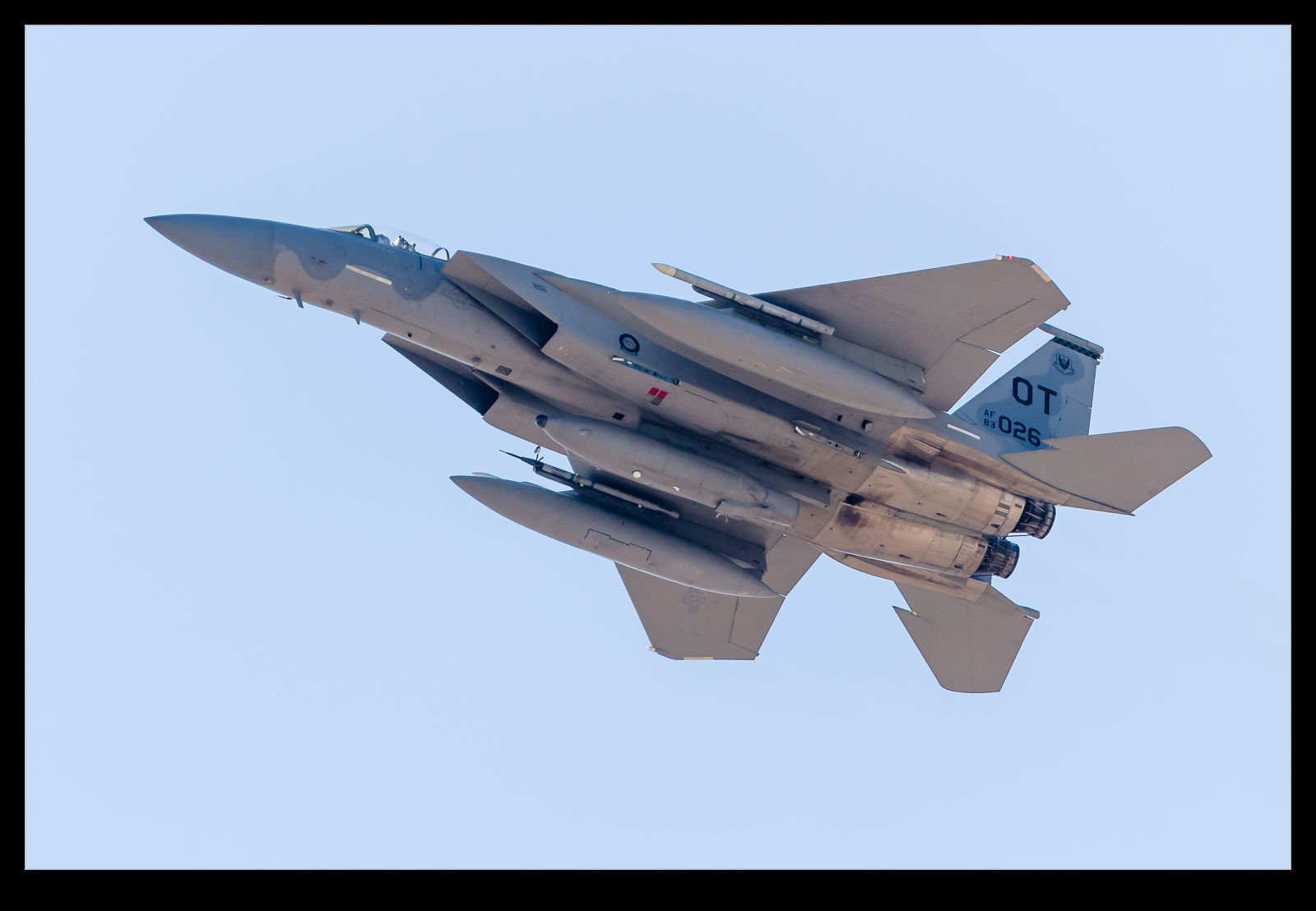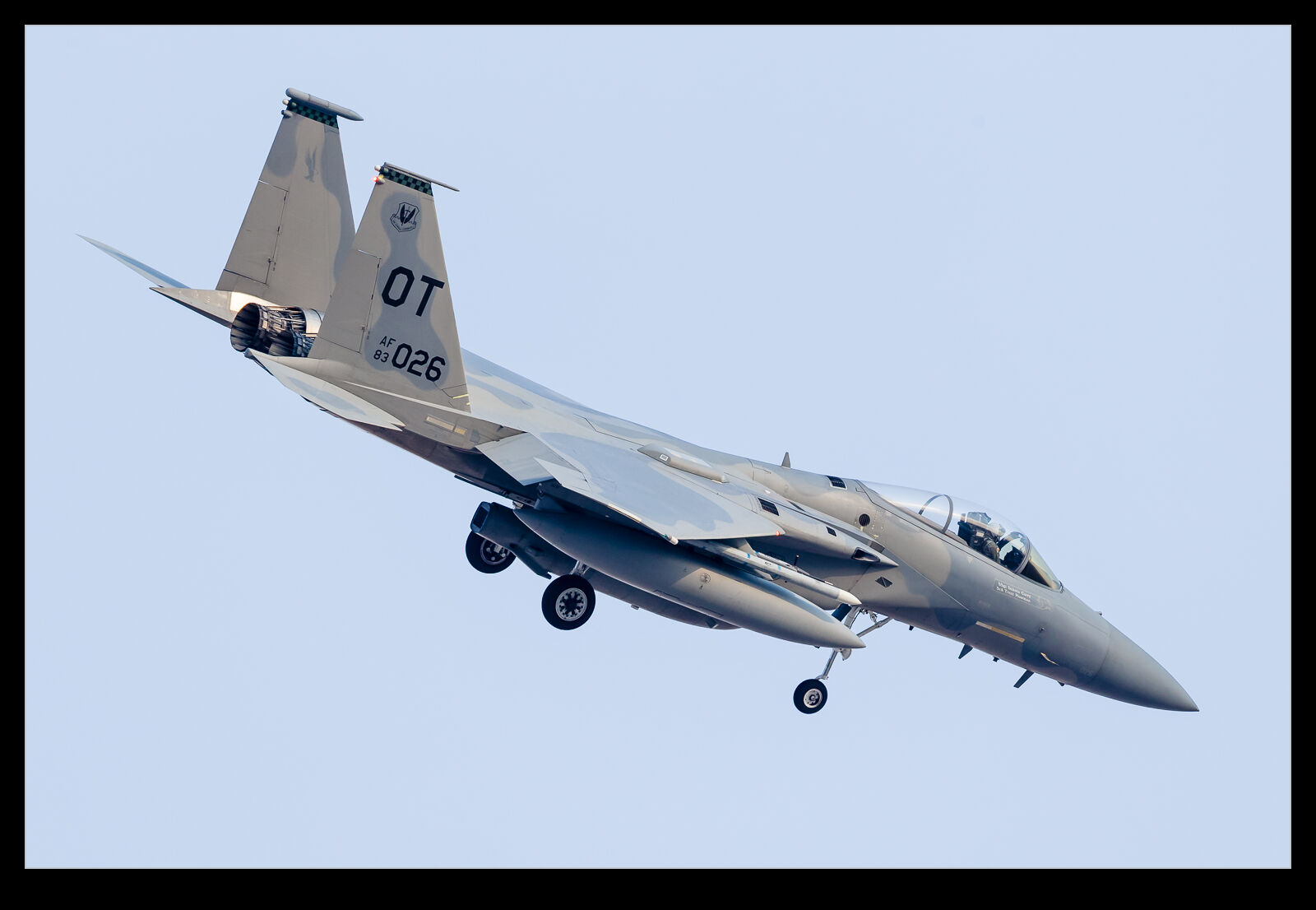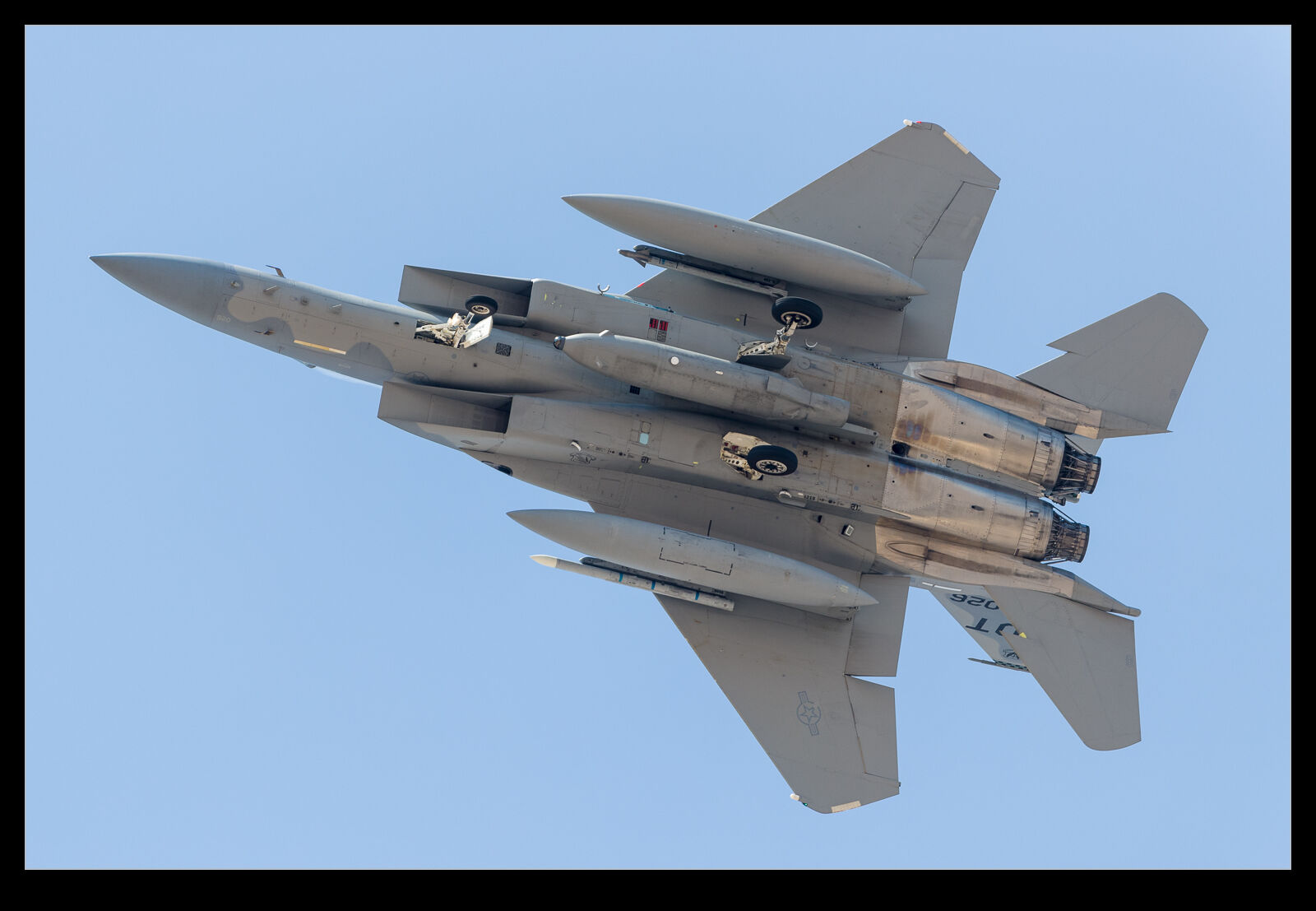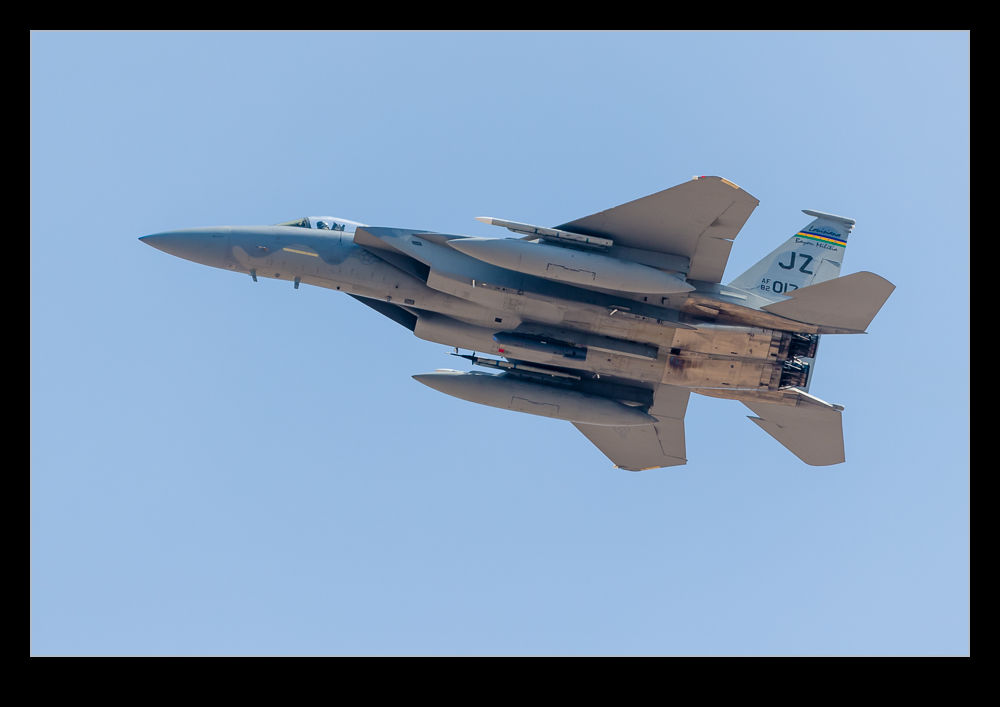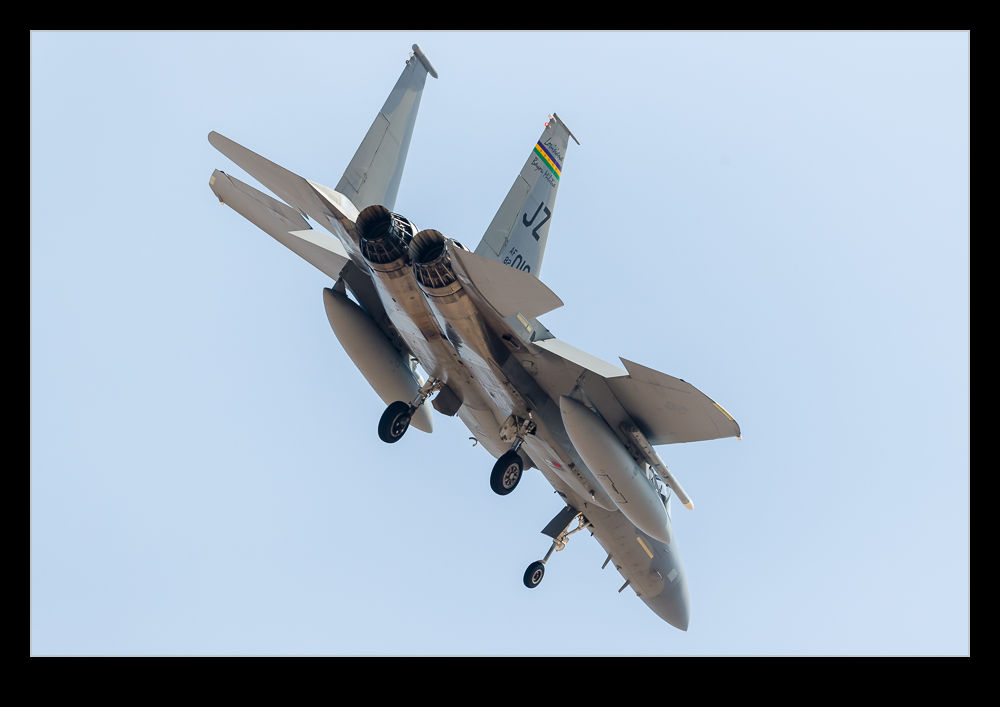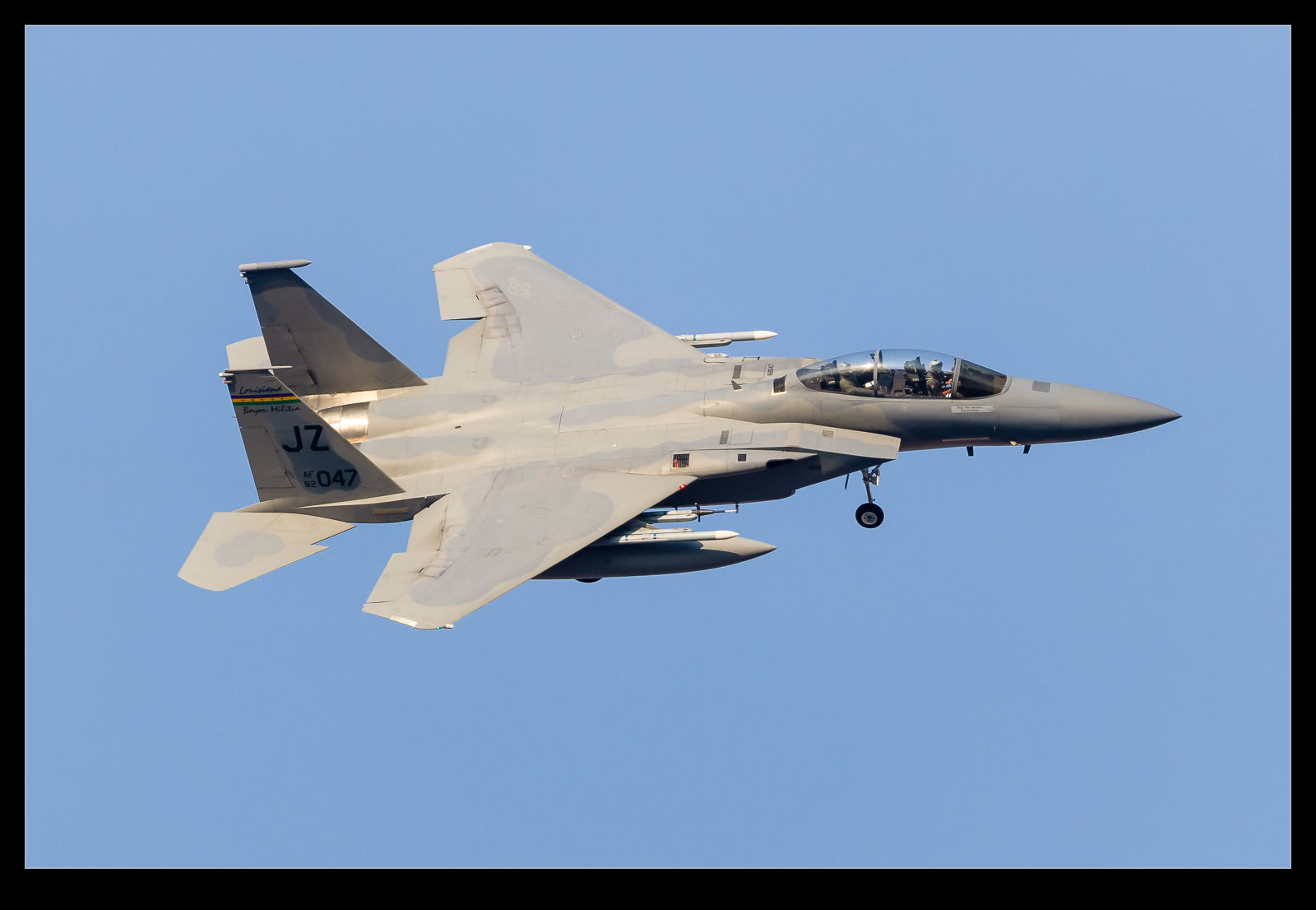
Getting up close with the jets gives you an opportunity to see right into the cockpit while the planes are flying. As the A-10s pull hard off the target on the range they come right towards you. Consequently you can find yourself looking right in through the top of the cockpit. Looking through my shots I could see this view of the pilots. They have a notepad of some sort strapped to one their legs. I assume it is for flight planning purposes but I can’t help but think about the slower transit speed of the A-10. They have a fair bit of time when making their way from DM to the range and back again. Maybe a game of Sudoku or a crossword is a good way to pass the time?
I Never Expected a Sabreliner
Corporate jets show up at SFO on a regular basis. They will be the usual Gulfstreams or Bombardier jets. However, every once in a while something really unusual will show up. I would love to say that it was part of my planning that this worked out but I was very lucky. I saw on Flightaware that something unusual was coming but I didn’t recognize what it was. I am glad I didn’t because the surprise was more fun. A Sabreliner showed up. I didn’t realize anyone was still flying them. Great stuff.
Are New Tires That Expensive?
I was skimming through some shots from Tucson to thin out the shots that I got from that day. I looked at one of the shots because I thought that there was something wrong with the shot. When I checked a few of the surrounding shots, I realized that there was nothing wrong. The shot was real. The F-16 had a tire that was looking very sad. I know that budgets are tight but I think they need to change the tires on this jet.
I Thought I Wouldn’t See This Again
I have been figuring that the A340s would soon be gone. The original versions are certainly not young jets anymore and there are plenty of newer options for airlines. Consequently, they have been disappearing from service with many airlines. That does not mean that they have all gone though. Interestingly, the A340-300 is still actually a pretty efficient jet while the 600 series, while able to carry more and go further, are less efficient for many services. Still, I see plenty of routes now using 777s that used to have A340s.
Consequently, I was quite surprised to see the return of the Philippines A340 on the SFO route. The 777 is also on this route but they have a second rotation and the 340 is currently making this trip. I was really glad to see it show up again. It can’t be too long before these jets are on their way to the desert. Since it is a summer trip, it isn’t a great time to shoot it but the later arrival does reduce the heat haze. It will be cool if I get it again in better conditions but I am glad to have shot it already, just in case I don’t get another chance.
Ah, So That Is What You Look Like When Not Squashed on the Highway
Walking along the shore in Hayward with Nancy, I saw a tail moving in the brush. It was black and white and look awfully like a skunk. Despite the fact we had been chatting as we walked up, we didn’t seem to have spooked it. We stopped and waited to see it come out. Sure enough, it walked on to the trail. However, the sound of the shutter as I took some shots made it jump and it turned right around and ran back into the brush. Nancy commented that it was the first time she had seen a skunk moving around. All of the others she has seen were on the highway. It was definitely a first for me too.
How Low Can You Go?
The high ISO capabilities of modern cameras are a constant source of discussion whenever a new camera comes out. It was quite funny to see everyone get so excited about the multi-million ISO range on the Nikon D5 when it was announced, only to see that the high ranges were nothing more than moose with a bit of an image overlaid on them. Not a big surprise but still funny to see how much everyone was going nuts about it before the reality set in.
Consequently, I was interested to see what the new bodies I bought were really capable of. I have already posted a little about some of the shots I took as the light faded at SFO. I was shooting with a tripod and a gimbal mount to make things easier but I was also working within the ISO range of the camera. I went with auto ISO and exposure compensation while shooting in aperture priory and wide open to get what I could. However, I really wanted to see what was possible so I changed to manual mode, exposure compensation and auto ISO to see what could be done. Auto ISO is not going to use the extended ranges of ISO.

I don’t know about the Nikon cameras but the Canon cameras tend to have three extended range ISO settings at the high end. There is the highest ISO setting that it recognizes and then there are H1, H2 and H3. They don’t name them with the actual ISO settings but you know what they are based on what you see on the camera. The manufacturer does not label them as normal ISO settings because they do not stand behind them as a capability. There is a good reason for that. They are just like the highest Nikon settings. Useful if you have no option but not very good otherwise.
The same was true with my older bodies. They had a very high ISO range that was not great but it would do in a pinch. At the Albuquerque Balloon Fiesta I shot an Aero Commander in the pitch black that flew over and I saw stuff in the shot I couldn’t see with the naked eye. This is with a camera that is ancient by modern standards. I expected a bit more with the latest generation. Certainly, there is more to be achieved with what we have now. However, post processing becomes a part of the story.
My first experience with these shots was in Lightroom. The shots did not look good at all. However, there was a clue in all of this. The first view in Lightroom is based on the JPEG that is baked into the raw file. It looked okay until it was rendering by Adobe at which point it looked a lot worse. This piqued my interest. Sure enough, at the extended ISO ranges, the shots looked pretty awful. Lots of purple backgrounds. These were not going to be any good. However, the initial preview had looked good., is this a case of Lightroom not being able to render the shots well? I figured I should try going to the source.

At various ISAP symposiums, the Canon guys have talked about how their software is the one that you should use since only Canon know how to decode their shots properly. They have the recipe for the secret sauce. Since Digital Photo Professional (DPP), Canon’s own software for decoding raw files, is so terrible to use, I never bother with it. The raw processing in Lightroom (and ACR since they are the same) is so much easier to use normally and works really well. DPP is just awful in comparison. However, we are now dealing with the extremes of capabilities of the camera. The embedded previews seemed better so maybe it is possible that DPP will be able to do a better job.
You can now be the judge. Here are some pairs of shots. They are the same shot in each case. The first is processed in Adobe Lightroom and the second is processed in DPP. I think it is clear that DPP is better able to work with the raw files when it comes to extreme ISO settings. The shots certainly have a more normal look to them. The Lightroom shots look really messed up by comparison. It doesn’t mean I will be using the extended ISO ranges on a regular basis. Jumping to DPP for processing is not helpful on a regular basis. However, if the need arises, I know that I can push the camera a lot further and use DPP to get something that is okay if not great. This could be handy at some point.
Lots of Little Birds Hang Out Together
The marshes are usually good places for bird watching. As I was walking along the shore in Hayward, I passed a few people that were there to watch the birds. Some serious spotting scopes on tripods were a clear indication that these people meant business. Whenever they were set up somewhere, I figured I should take a look in case it was something unusual. Of course, finding out if it is something special does require you to have a clue about birds. I don’t so I didn’t know what I was looking at.
Despite that, I could still see that there were lots of birds. Many of them were hanging out on the mud flats that were just above the water level. I don’t know much about bird behavior either so whether this is a good place to feed or just somewhere to wait for the good feeding times is anyone’s guess. I just liked to see how many of them were together. Maybe there is safety in numbers for them – particularly the ones that are pretty tiny. I imagine they could be vulnerable to predators if they were on their own.
One of the Bigger Corporate Jets
There are plenty of types of corporate jets. However, some organizations (or individuals) decide that what they really need is something a little larger. How about a Boeing 767-200? This one was shooting an approach to SFO. The owner is listed as Blue Sky Holdings. Who are they you wonder? Who can say? They do fly in and out of Moffett Field though and that is owned by quite a large company. Maybe there is a connection? Maybe not?
Either way, it was a cool thing to see pop into the viewfinder one afternoon. Sometimes, you just get lucky. I also like the registration that they have for the jet. N2767 is not bad for a 767-200. Apart from that, the jet is pretty anonymous. You certainly can’t guess anything about it from the outside. I wonder what it looks like inside?
Oakland Has a Thin Building Too
New York has many iconic buildings. One of the more famous buildings is the Flatiron Building. At the narrow intersection of two streets, it makes use of the space available. New York is not alone in having such intersections so it is not alone with buildings to fill the (limited) available space. Oakland has a similar spot where Telegraph splits off from Broadway. The building that sits there is so thin it is actually quite hard to show that it is a building rather than just a tower!
The city has just gone through a rebuild program to create a public space in front of the building and the area is now more accessible than it used to be. From the statue in front the sides of the building can disappear, so thin it is. At the moment the first floor of the building is vacant and available for lease. I did find myself wondering what I could do with such a space but it does look pretty impractical. I imagine that is why it is still empty.
After Dark! Testing the Low Light
The real goal of my shoot after sunset was to see what is possible with the cameras. An awful lot is written these days about the incredible low light capabilities of the latest cameras. I am rather suspicious of some of the claims that are made so I was interested to see what could be done. I have seen reviews in which people describe shooting with ISO settings and claiming they are absolutely clean – no noise! I am imagining that there is a little bit of over enthusiasm in these claims. No one wants to write a review that says nothing much has changed for fear that they won’t get to review the next camera.
Consequently, while I do expect some improvement in capabilities – particularly given I skip generations of cameras when buying my own – I am skeptical that they will be quite so dramatic. Even so, I did anticipate some improvements from my previous bodies and I did get this. I am not talking about noiseless shooting at ridiculous ISO settings. I am able to work in a far higher range though. It is worth noting that a blog post involves relatively low image sizes so the worst of the noise becomes less apparent. Full size images are a lot more harsh. (For this post I won’t focus on a previous issue of mine which is how printing is far more forgiving of noise than a screen is.)
A tricky issue with shooting as the light disappears is the use of exposure compensation. From having some positive exposure comp during the day, as the night comes on, I go through normal exposure to having a bit of negative exposure compensation. It is dark so the shots should be dark. It shouldn’t look like daylight. I ended up playing around with the settings a bit to see whether -1 to -2 should be used. -2 ended up being a bit too much. However, it is a bit of a guessing game depending on what you are shooting and how much light there is in the background.
One good thing about these bodies is their ability to handle some post processing. If the shots were a bit dark, boosting the exposure did not bring as much noise into the shot as I would have expected with my previous bodies. I was able to mess around with them a lot more without things going horribly wrong. I am not getting amazing shots (unless you are comparing them to what you could do in film or early digital days in which case this really should be considered amazing – that’s how spoilt we have become). The contrast at night is harsh so things will always be a bit difficult. However, you can get shots in some very difficult conditions. You won’t get detail in the images like you expect in normal lighting but that really would be phenomenal!