Category Archives: Bay Area

The Camera Might See But Autofocus Doesn’t

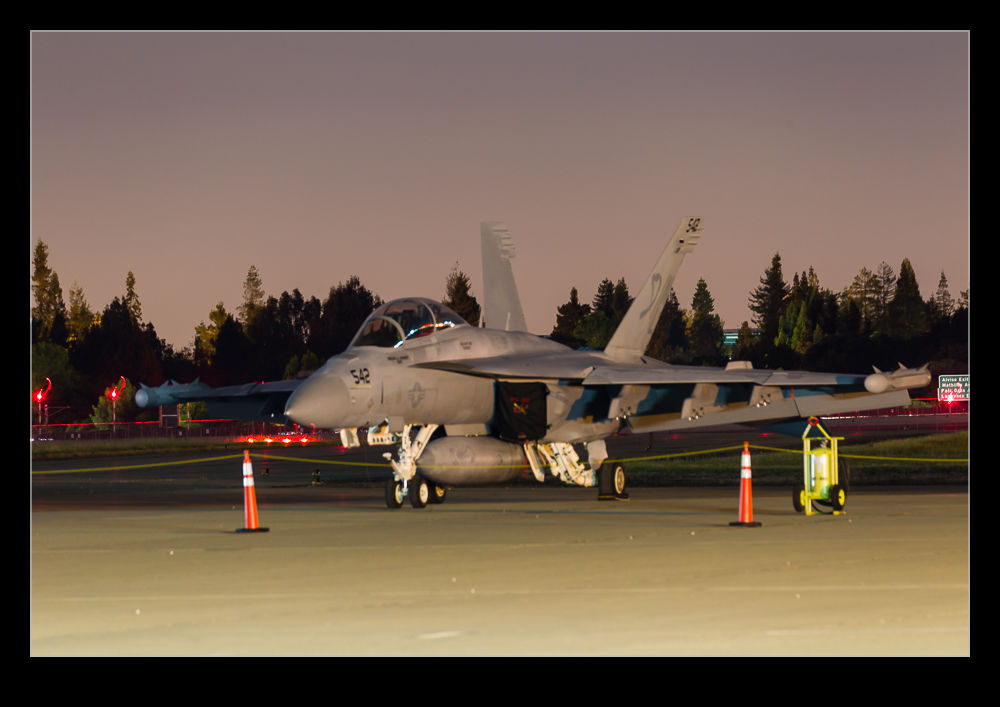
C59F0628.jpgAnd I could barely see much myself!  We were on the ramp at Moffett Field for the arrival of Solar Impulse.  There was some time to wait while we were out there.  As I looked around, I thought I could see something parked further down the ramp.  There was very little light but there appeared to be some aircraft.  I figured it was worth a look given that I had a tripod.

In the days of film shooting, I couldn’t trust the camera metering for long exposures.  Reciprocity failure was part of the issue but the cameras were a lot less advanced in those days.  In this case I trusted the camera for the first shot and it worked out really well.  Sadly, there was nothing to focus on so I made my best forts at focusing on what was visible and it was some background lights.  Sadly, they were too far away to get focus on the aircraft.  The sensor was able to gather the feeble light without any problem though.

It turns out that there was a pair of Navy E/A-18G Growlers sitting on the ramp.  Leave the camera to it and you get a reasonable exposure.  When I saw the shot appear on the screen, I was quite amazed.  I was looking at the jets and I could barely make anything out.  The camera was able to see the whole thing – just out of focus based on my inability to focus it properly.

Baker Beach

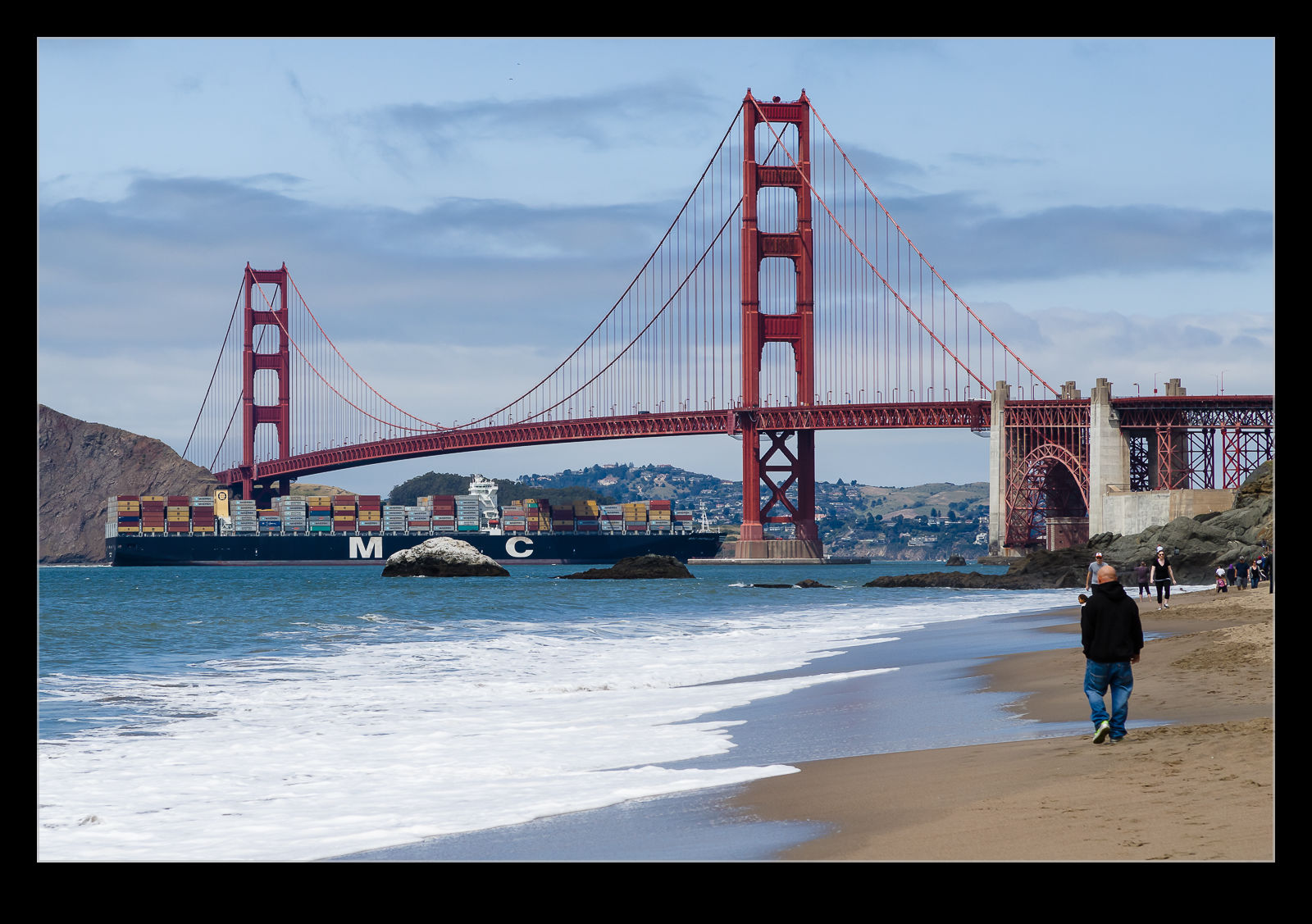
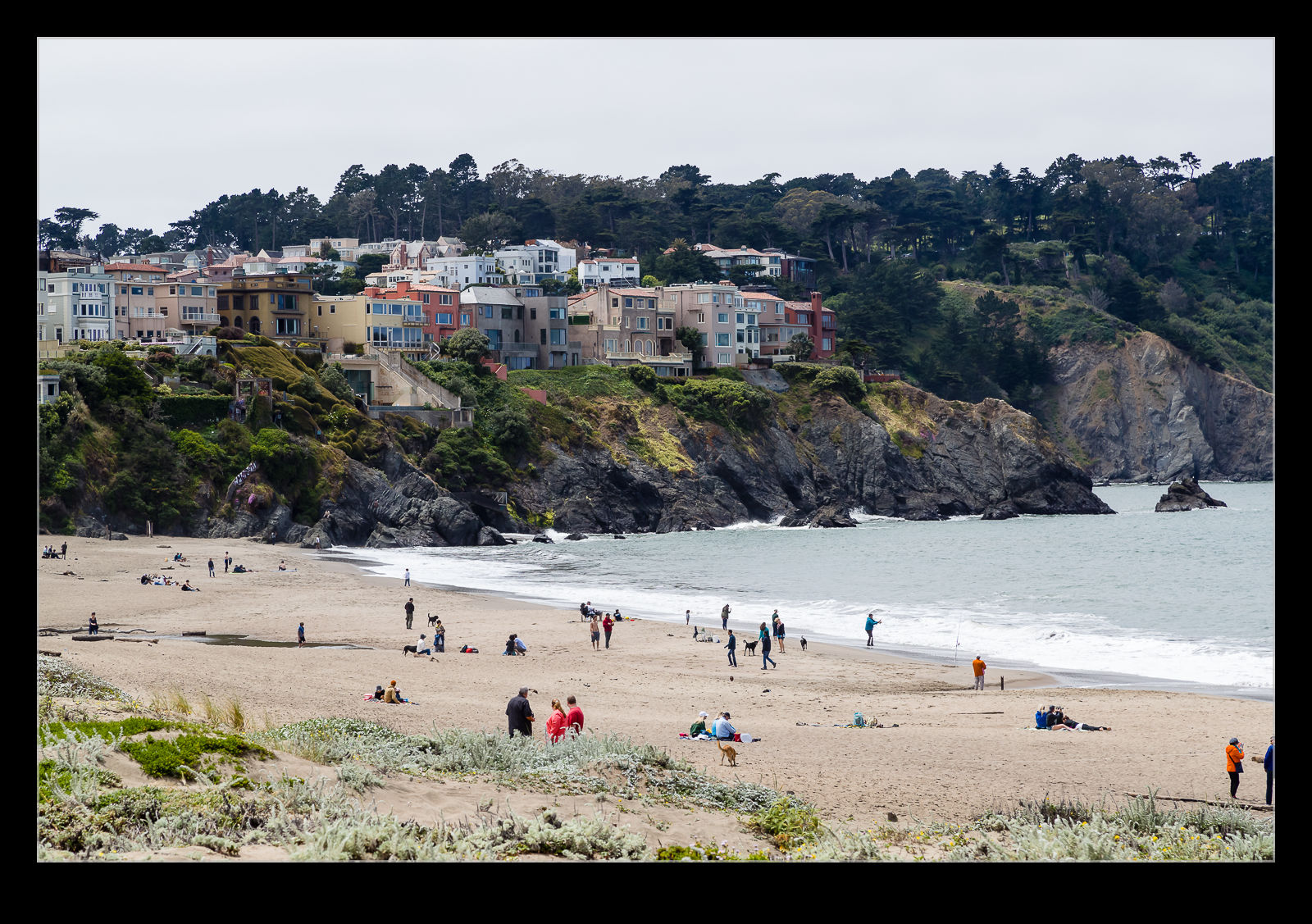
AE7I0054.jpgThe Bay Area is not short of photogenic locations.  Probably the most famous is the Golden Gate Bridge.  I have certainly photographed it many times from different places.  One that I have not shot from before, though, is Baker Beach.  Located on the outside of bridge on the south shore, it provides a nice angle on things.  I had seen plenty of shots from there before but my previous effort at visiting had occurred on a day when visibility on the shore was just good enough to see your hand in front of your face.

AE7I0021.jpgNancy and I decided to check it out as a fall back when something else we had planned proved to be so busy we couldn’t find anywhere to park.  We headed to the beach and strolled along the sand avoiding (most of the time) the waves rolling up on the shore.  The view of the bridge was much as expected.  As we wandered around, a number of container ships came into view heading for the bay.  I was curious to see just how large they looked when compared to the bridge.  We loitered until one of them went under the bridge.  It suddenly looked a lot less impressive, even though it reached a good distance towards the bridge deck.

AE7I0094.jpg

Solar Impulse and Shooting at Midnight

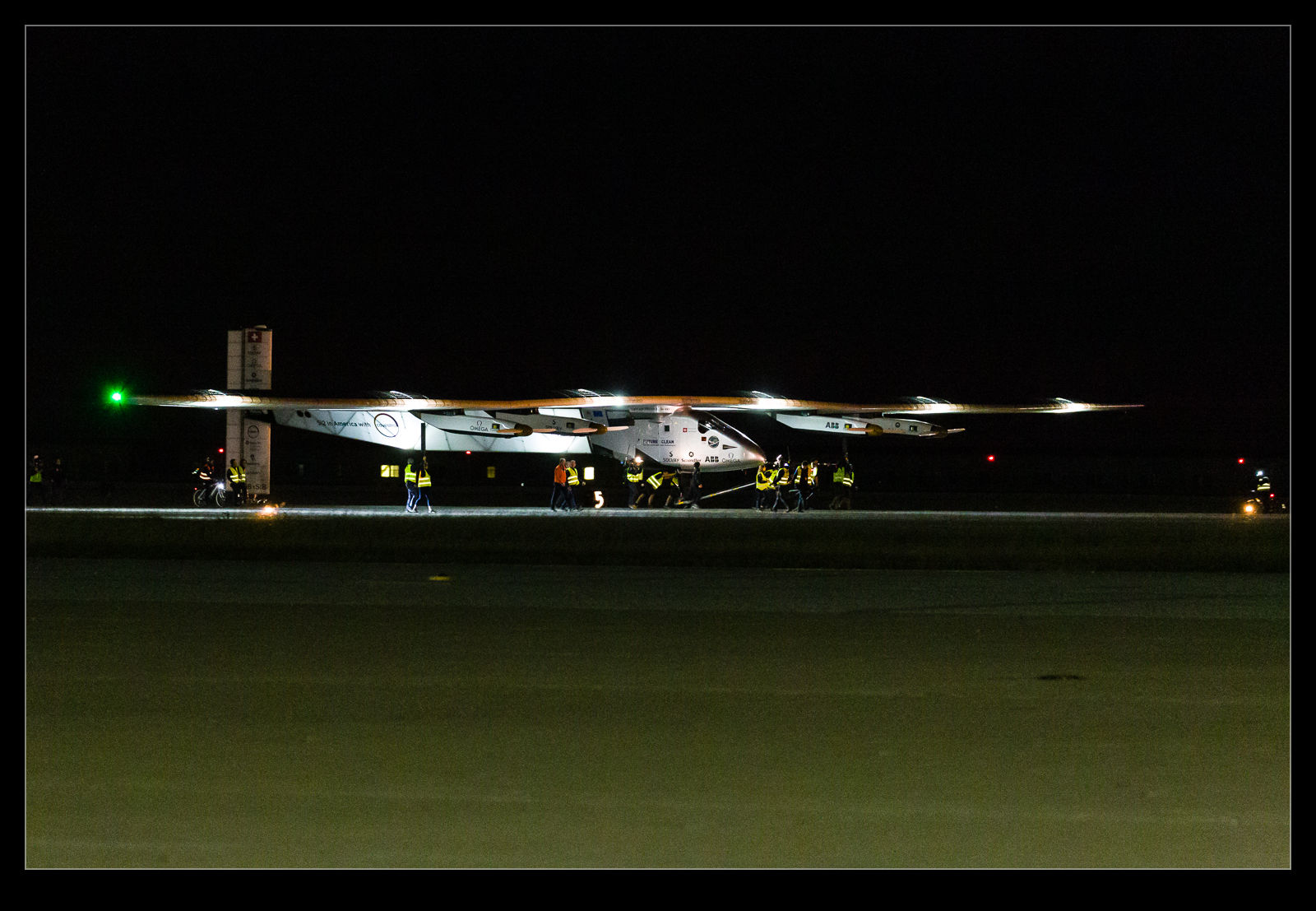
C59F0747.jpgThe round the world trip of Solar Impulse, the solar powered aircraft conceived of by Bertrand Piccard and built/flown by him and Andre Borschberg, resumed its journey after an enforced stay in Hawaii while they dealt with some overheating issues with the batteries.  By the time the batteries were fixed, it was too late in the year to continue.  The aircraft charges its batteries during the day and uses them at night.  If the day is shorter and the night longer, the flight is not sustainable.  The arrival of spring meant they could resume the trip.

AU0E4289.jpgOriginally the leg from Hawaii to the continental US was supposed to go to Phoenix. The break meant they came up with a revised route which included a stop in the Bay Area at Moffett Field in Mountain View.  This meant I could cover it for Global Aviation Resource.  There are two articles I prepared which you can see here and here.

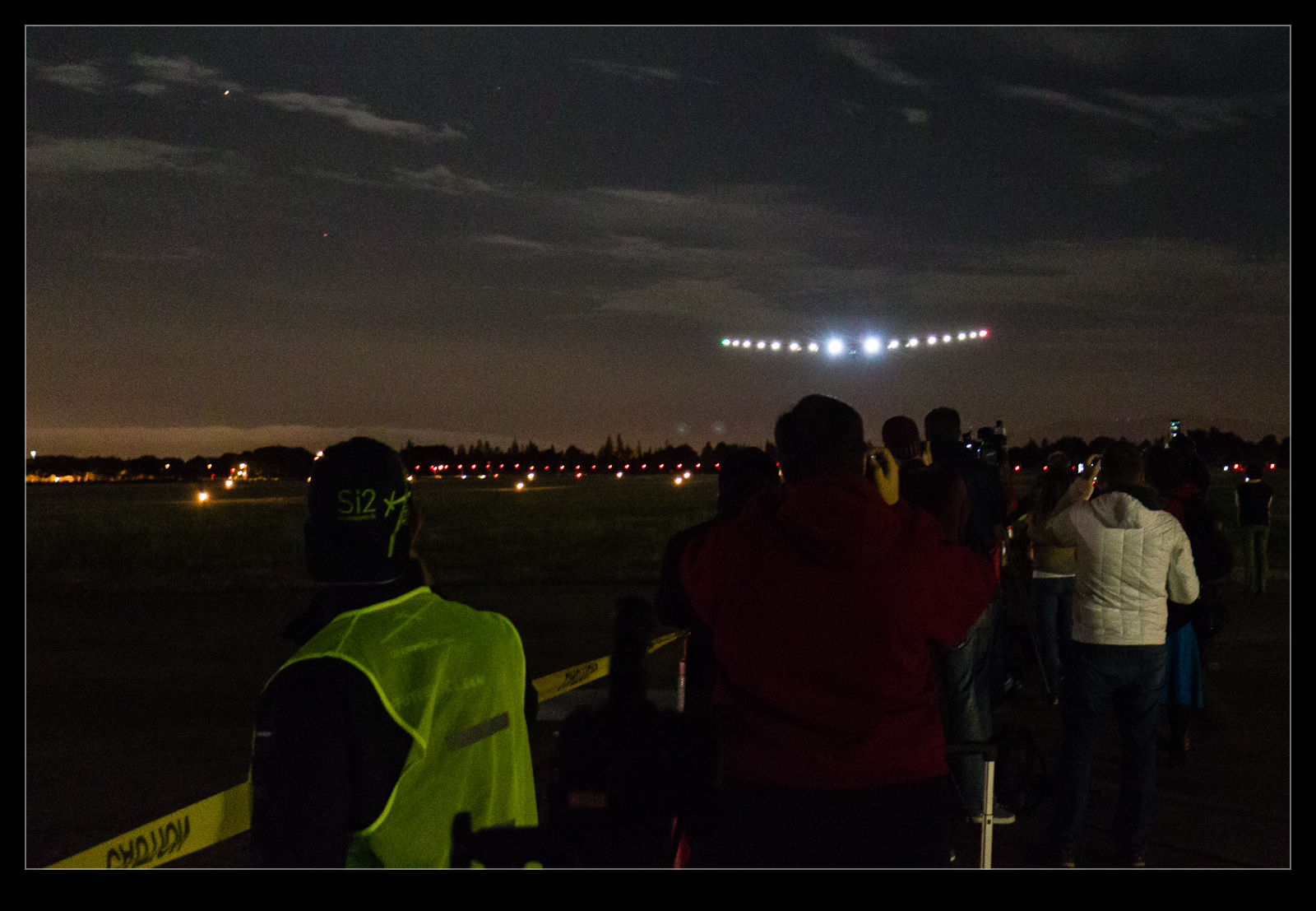
The arrival was scheduled for about midnight.  Late landings and early departures are scheduled to provide the calmest conditions.  The very high aspect ratio, lightweight airframe is sensitive to turbulence.  It also is easier to schedule a very slow aircraft in to the air traffic patterns during the night.  While the time moved around a bit, it ended up being pretty much as expected.  This brought the issue of how to shoot an aircraft at midnight.

C59F0827.jpgI took a second shooter with me in the person of Hayman Tam.  I wanted stills and video for the story and can’t get both at once so we worked on it together.  He would focus on stills and I would get video.  I would also get some stills too.  The plane is sufficiently slow that you can get both for most situations apart from the landing itself.  It didn’t hurt that Hayman had just taken delivery of his D500 which should be a lot better in low light.

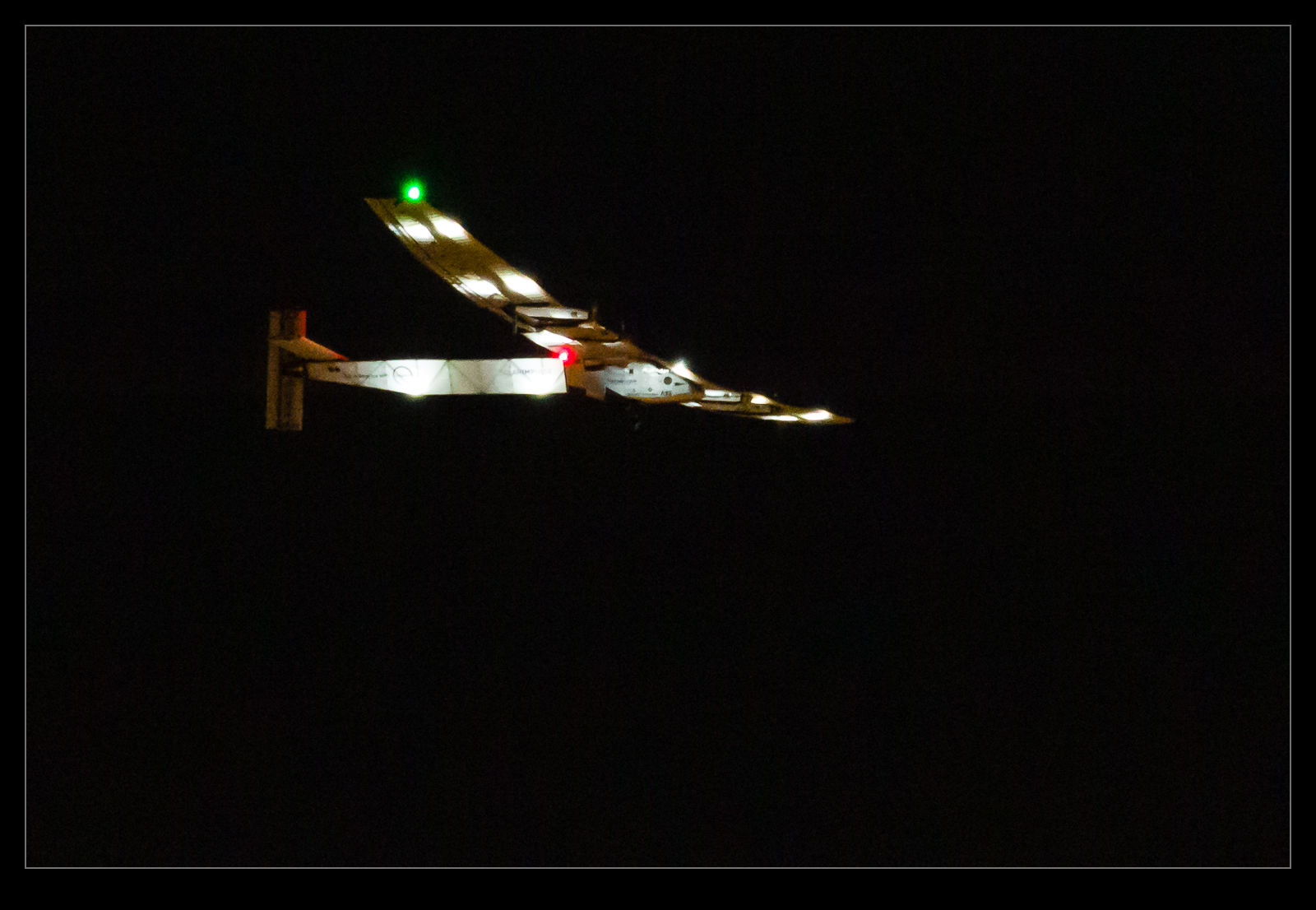
C59F0888.jpgI was mounting my camera and the 100-400 on a gimbal mount to steady it for video.  This was also helpful for getting stills.  Not ideal but better than nothing.  I was at the max ISO for my camera of 12,800 (excluding the extended ranges) with -1 to -2 in exposure compensation.  Even so, it was still a very slow shutter speed.  Some bursts of shooting were necessary to get a reasonable shot.  Fortunately the aircraft has a lot of lights of its own otherwise there wouldn’t be much to see.  It’s a shame my new bodies hadn’t arrived at the time as they might have been able to get better results.  Even so, I was quite pleased with what I got considering that I was shooting in the darkest conditions I have ever tried for a plane.

Texas One Retires (for now)

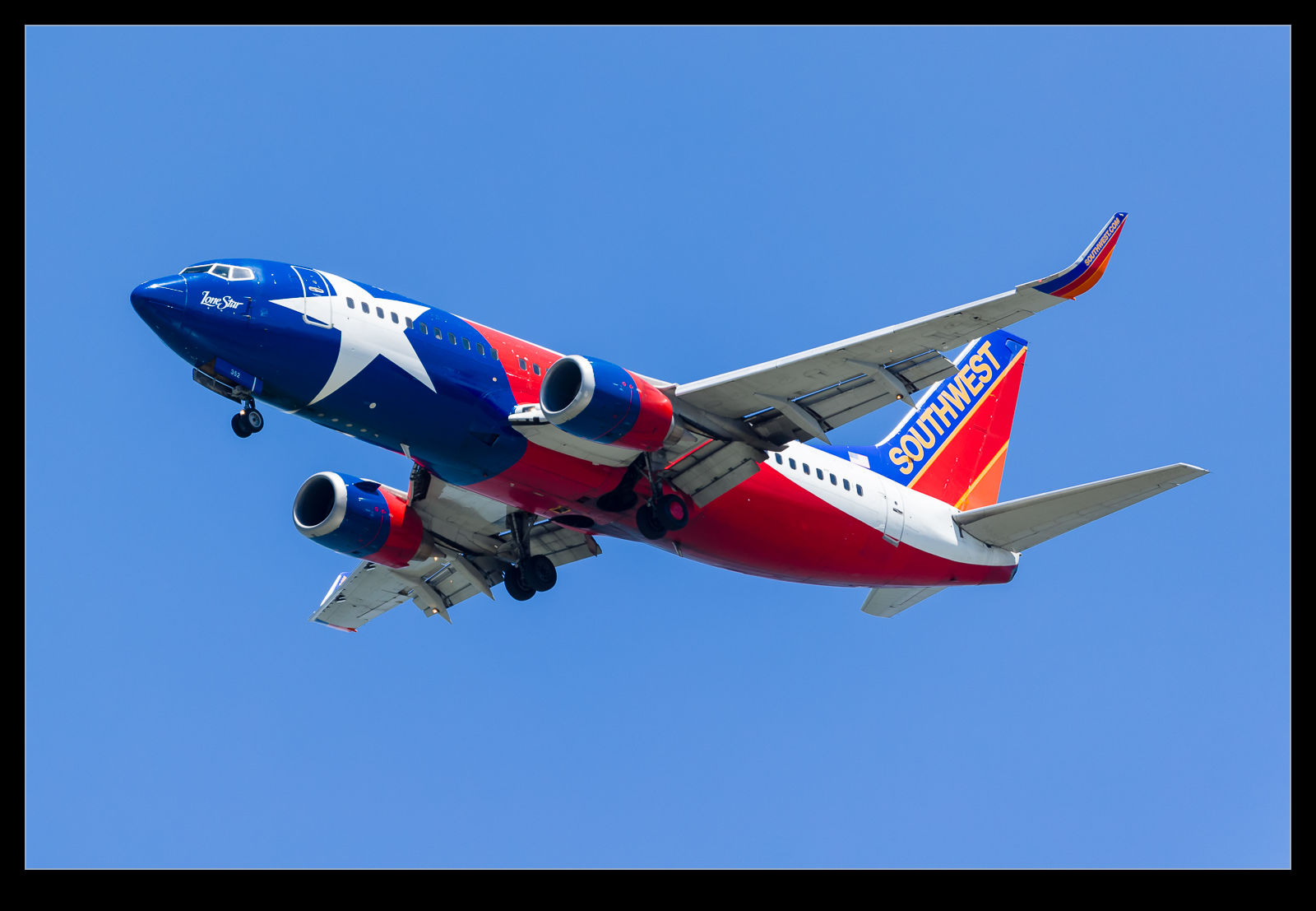
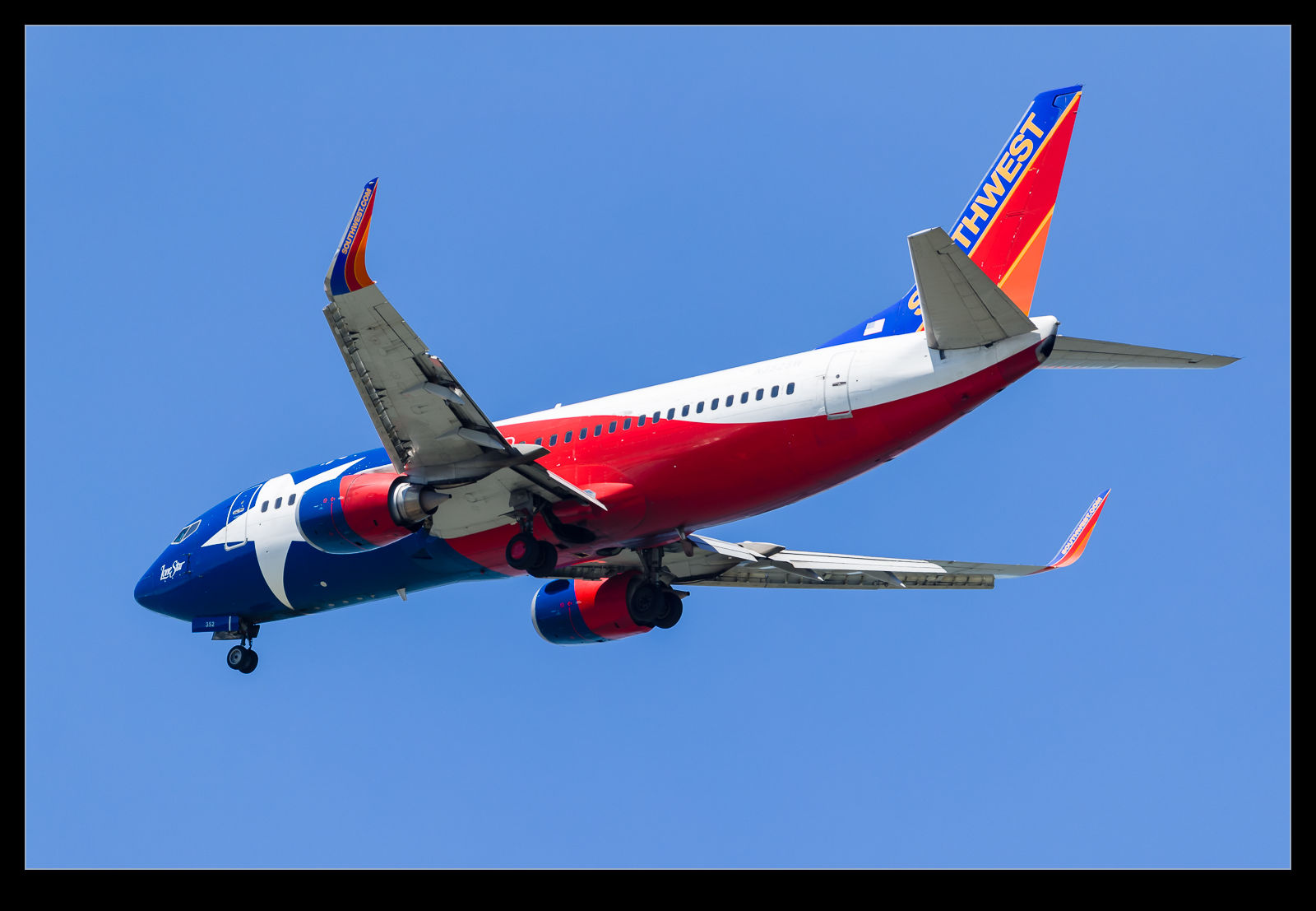
AE7I0650.jpgI saw online this weekend that Southwest Airlines had retired Texas One, a jet painted up in Texas colors.  Texas One is a 737-300 and Southwest is accelerating the withdrawal of the 300 Series jets.  It flew out of Dallas to a facility that will break the jet for parts.  By coincidence, I happened to shoot this very jet the day before when it arrived at SFO.  I had no idea that it would be at the end of its career.  Nice surprise.  For those that like the colors, fear not.  I hear that Southwest will be painting another jet in this scheme before too long.

AE7I0659.jpg

Crosswind Training in the Citabria

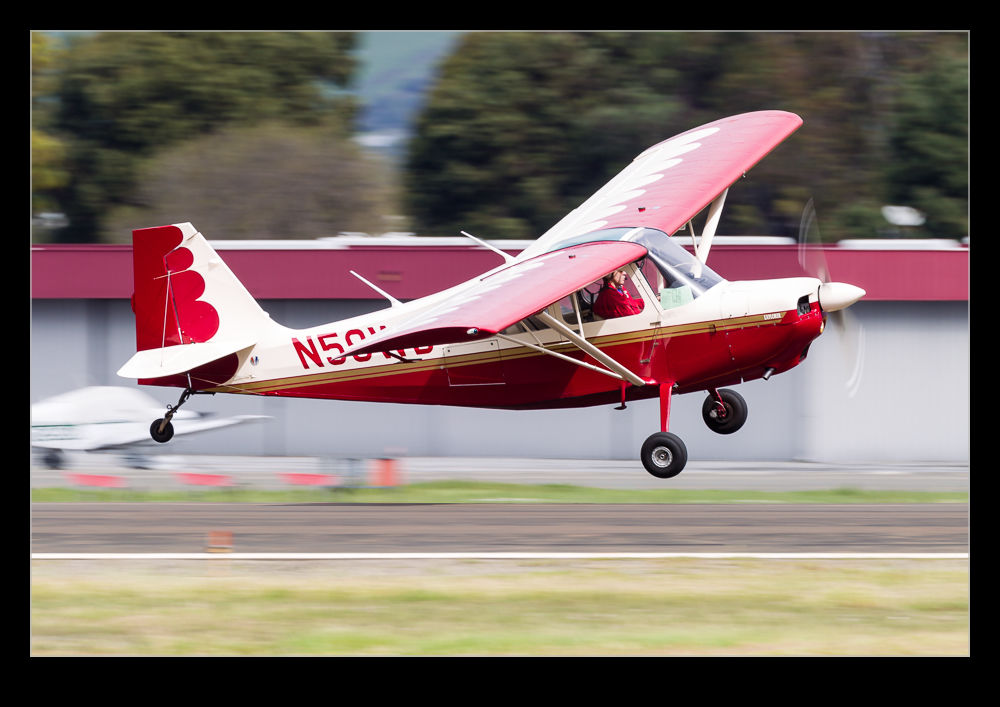
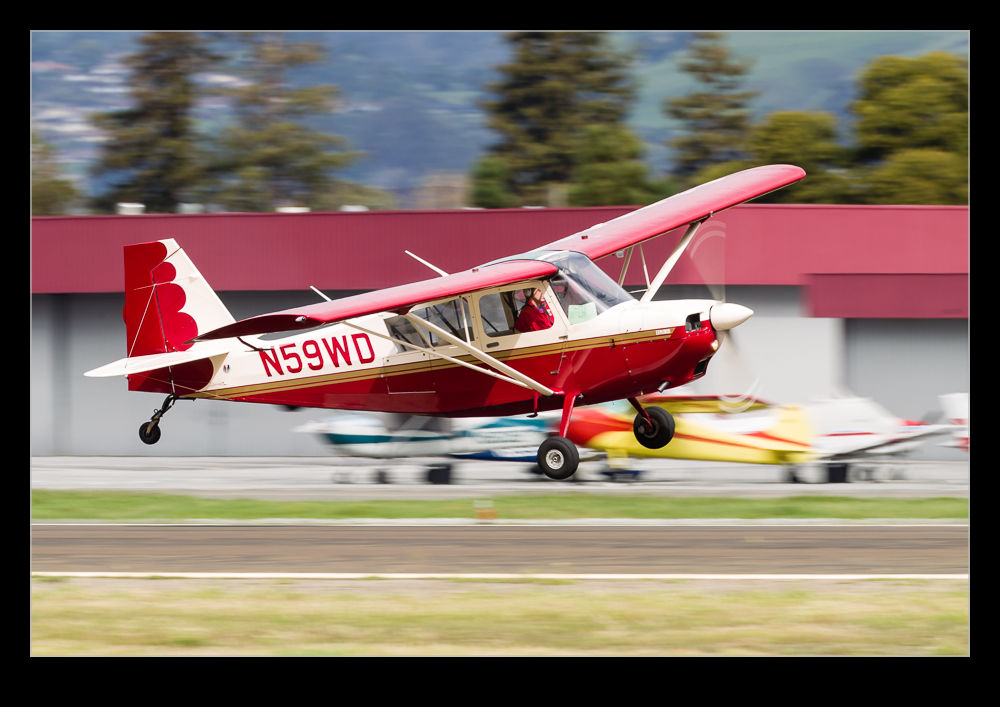
AU0E0833.jpgThis Citabria was flying circuits at Hayward while I was there. The wind was pretty strong and coming across the runway so the pilot was taking the opportunity to practice their crosswind landings. A lot of wing was down into wind in order to compensate for the conditions and, while they occasionally struggled with some of the bigger gusts, they did seem to have good control of the aircraft. I guess awkward conditions are a reason a lot of flyers would stay on the ground but this one saw an opportunity to get some good practice in. Nicely done!

AU0E0829.jpg

Pulling a Cloud With You

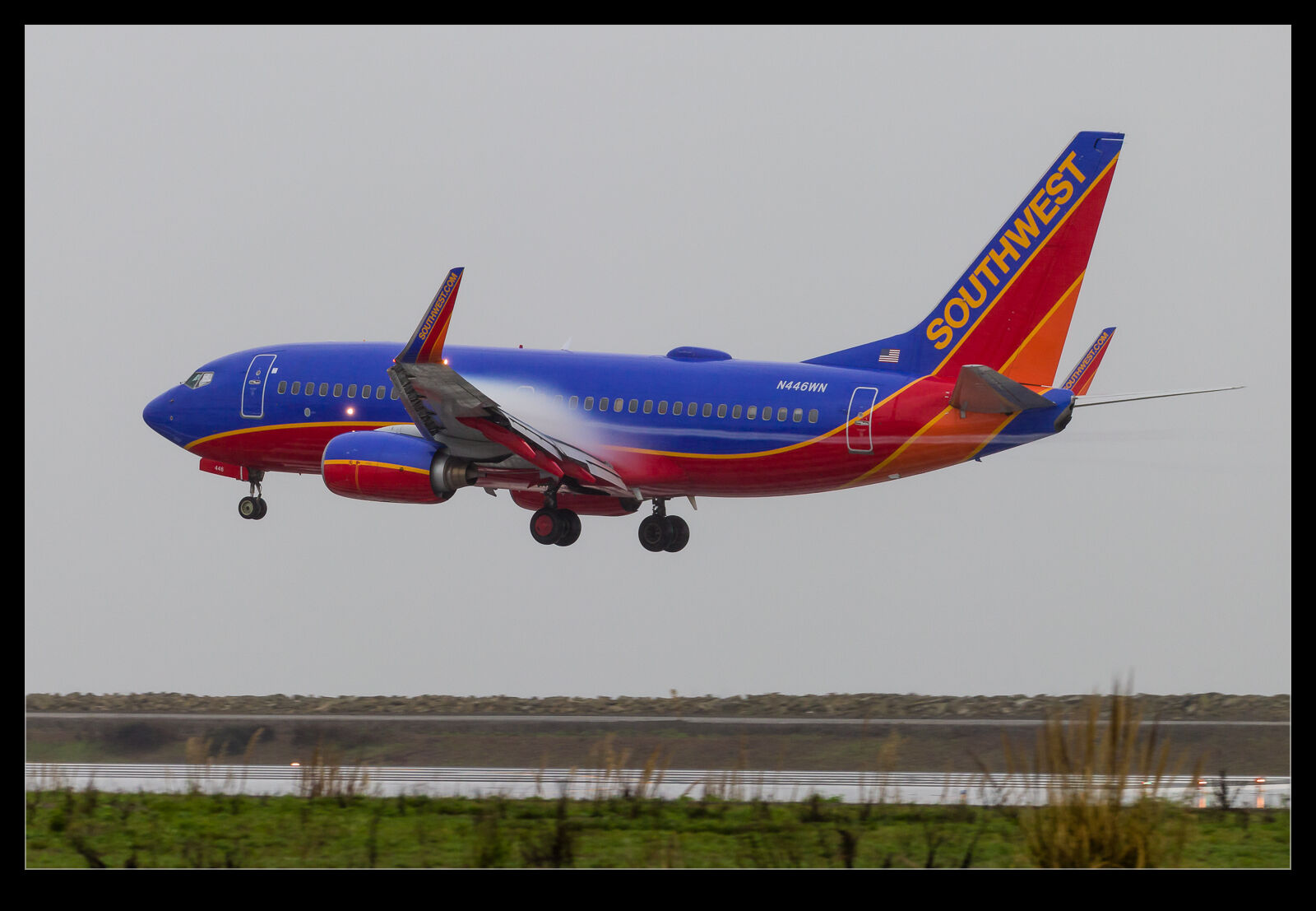
AU0E1411.jpgGetting shots of vapor is a popular thing when shooting fast jets.  An airliner on a damp day can also result in some clouds being formed.  While shooting something special at Oakland, I was getting a few shots to make sure the light metering was working as planned.  A Southwest 737 came in and, as it flared for landing, it had a nice cloud of moisture form over the wing.  Normally these things pop up further out on the approach and don’t make for a good shot but this one was close at hand.

Hyperlapse Oakland Approach

I was a sitting by the window on the approach to Oakland and decided to play with the video functions on my phone.  I have shot video clips a number of times of the approach but it takes a lot longer than you realize and makes for a very dull video without editing aggressively.  Also, the turbulence when handholding a phone means the video is very jerky.  Instead I switched the phone to time lapse mode and pointed it out of the window.  The result is an accelerated version of the approach.  The bumps are smoothed out by the compression of time and the maneuvers become more aggressive.  I let the thing run until we are at the gate since that provides a more natural finish point.  We spent a lot of time facing the water as we descended which is a bit less interesting than I would like but you can see that we are getting closer quite quickly.

Nice Challenger 300

AU0E0437.jpgI may joke about what my favorite business jet would be to buy but, of course, I am not getting one any time soon. That doesn’t stop me considering which would be a good choice. The large cabin ultra long range jets are, without doubt, a nice idea but I would actually like something in the super midsize bracket. This would meet most of my needs (except for paying for it of course). One great looking jet and a good performer is the Bombardier Challenger 300 (and the newer 350). I would certainly be happy with one of these. This example is one that I saw at Hayward recently. Should I get one do you think?

AU0E0452.jpg

Marine Corps C-9

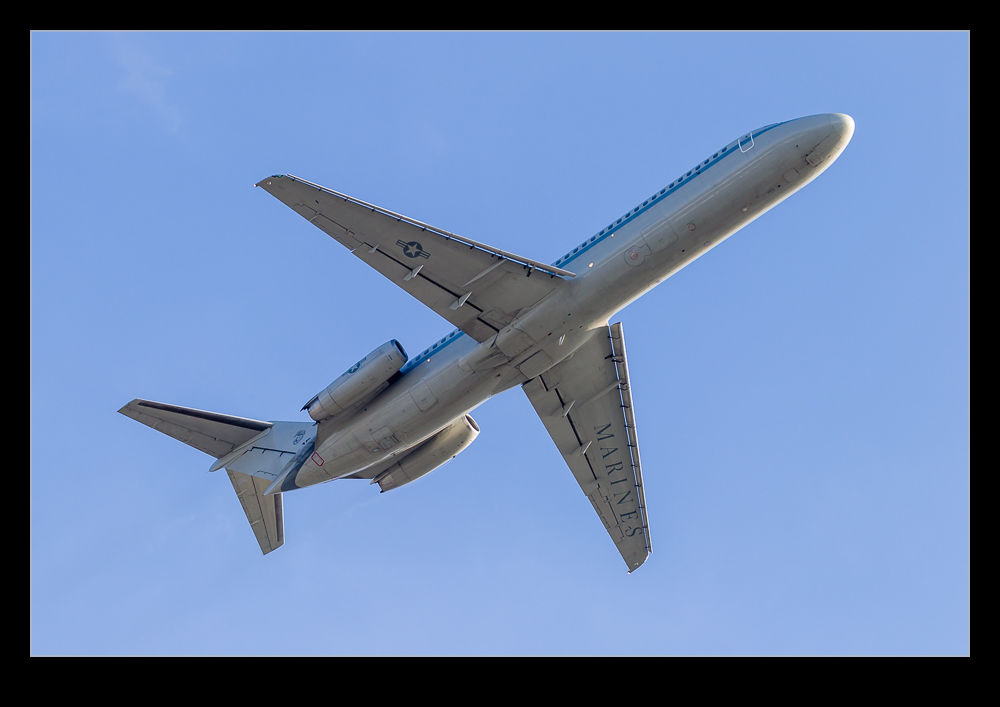
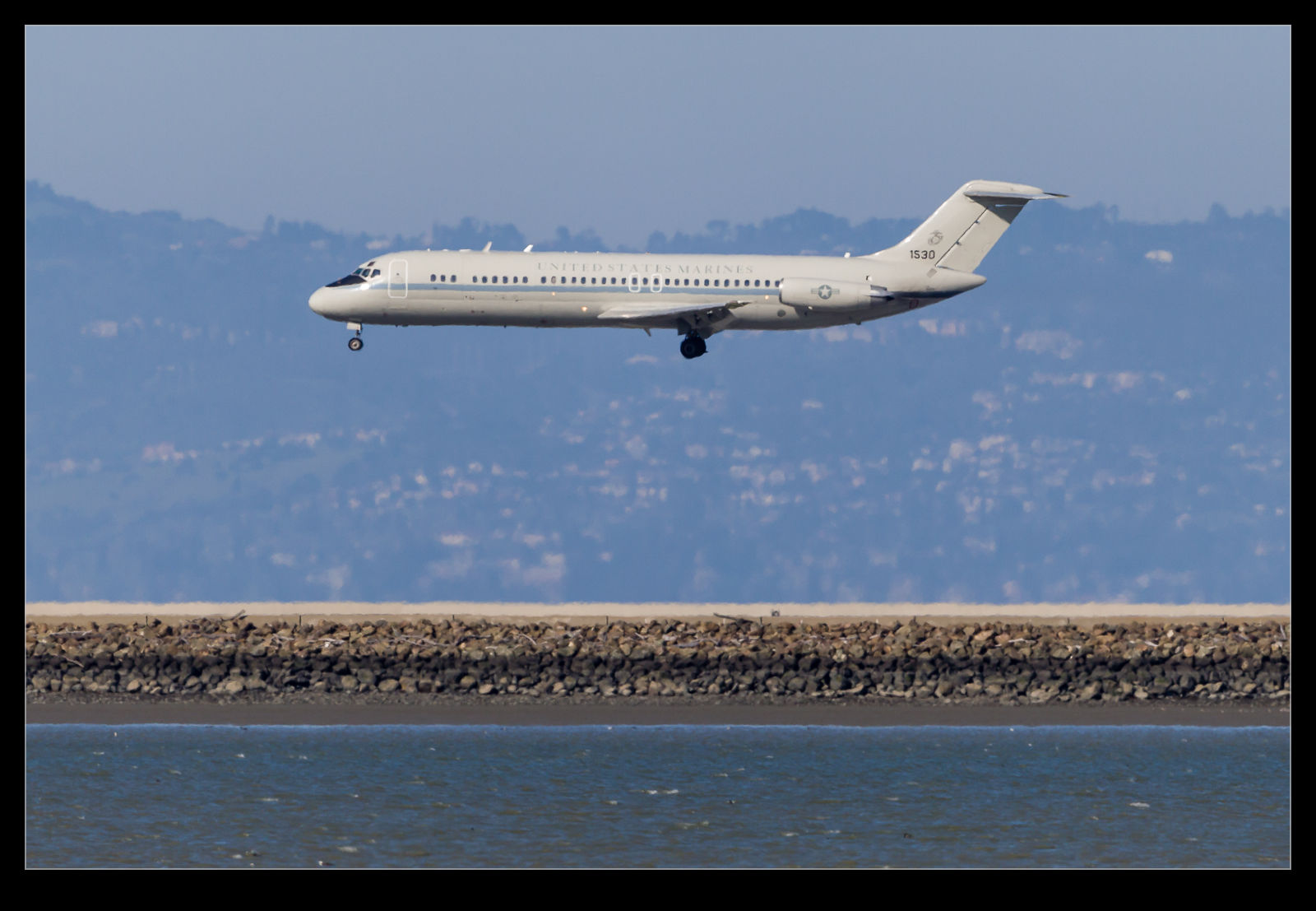
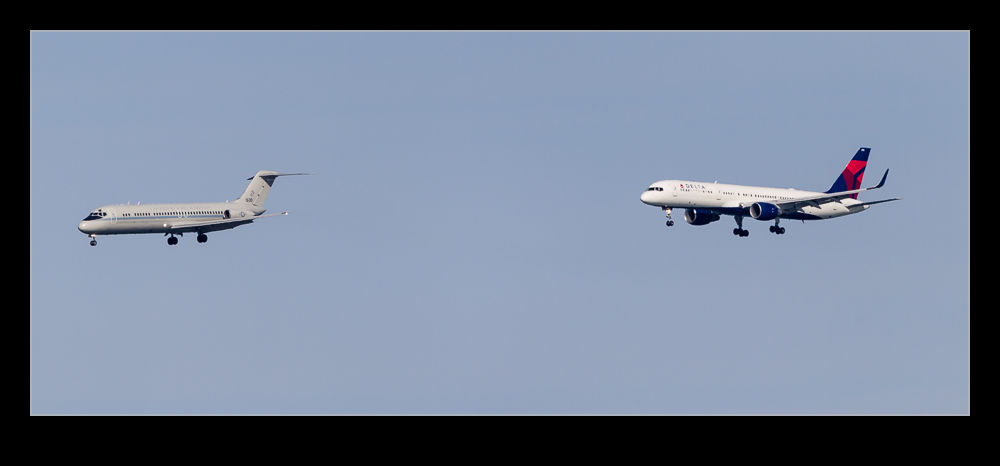
AU0E3039.jpgIf you had asked me whether the McDonnell Douglas C-9 Skytrain was still in service, I would have said no.  Used by the Navy and Marine Corps, the fleet had been wound down as C-40 Clippers were introduced.  I thought that they had all gone by now.  You can guess, then, that I was rather surprised when I saw one at SFO.  Two aircraft were on parallel approaches – one a Delta 757 and the other appearing to be a DC-9/MD-87/Boeing717.  I wasn’t paying a lot of attention but parallel approaches are always worth a shot so I was taking pictures when I realized that the aircraft was a C-9B Skytrain in Marine Corps markings.  The conditions were a bit heat hazy but I wasn’t going to miss this.

C59F9152.jpgI grabbed a bunch of shots as it landed and felt rather pleased with the turn of events.  I then stopped thinking about it.  A little later I moved around to the other end of SFO to get some head on departures of some of the widebodies that were due out.  You don’t get many narrowbodies taking off on the 28s unless the wind is particularly strong down those runways.  One or two will use it but not many.  I saw a narrowbody start its takeoff roll and almost ignored it AGAIN!

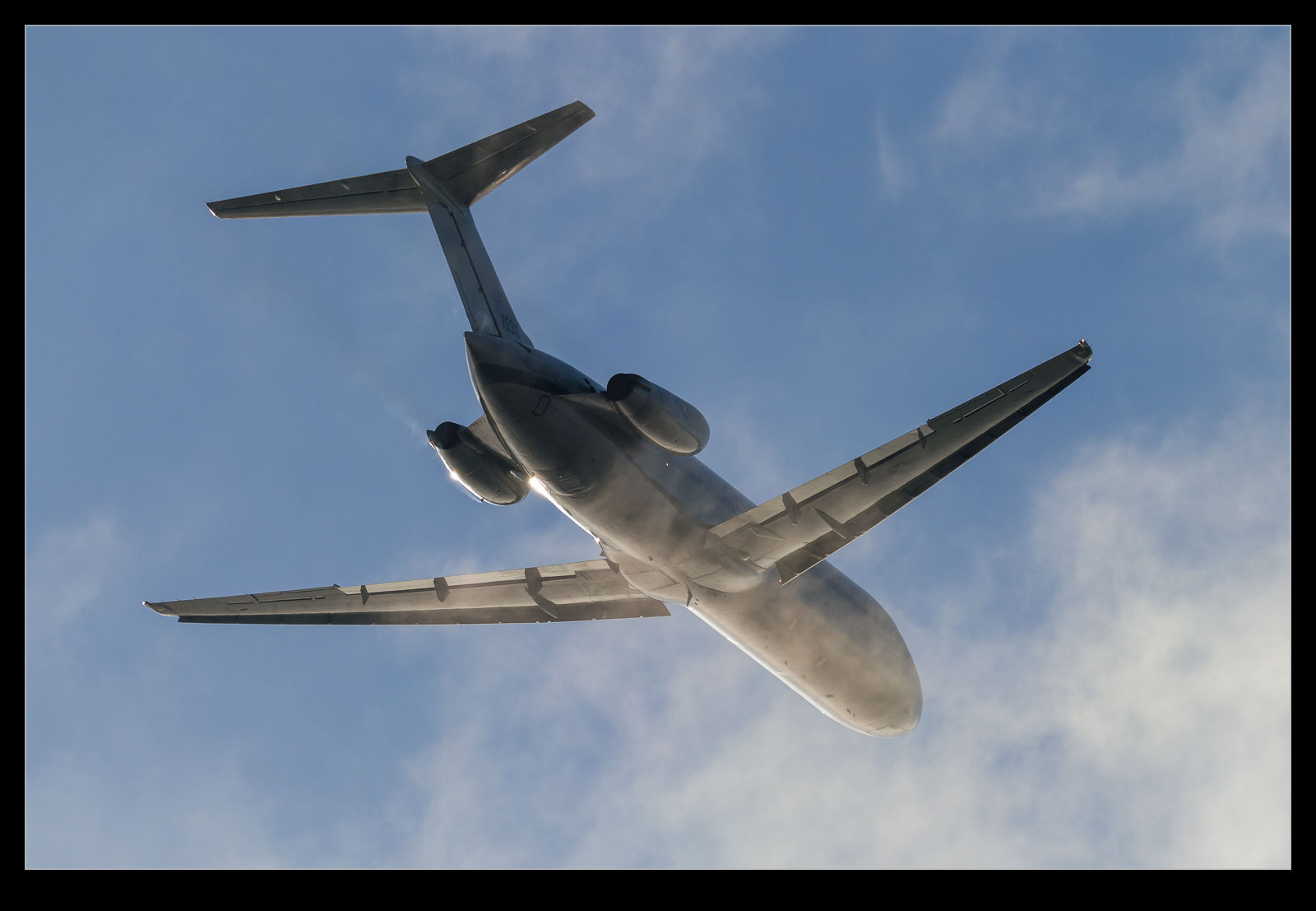
AU0E3064.jpgHowever, I did end up trying some shots and then realizing as it got closer that it was the C-9B again.  I guess it was just my lucky day that I had two opportunities to miss it and didn’t either time.  As it flew overhead, I was able to get some far better angles on it than were possible when on approach.  I also got to experience the noise levels that jets of this vintage came with.  I did a little research afterwards and apparently only two jets remain in use with the Marine Corps and all Navy and Air Force examples are retired.  This one is a rare one indeed, not least because it is based on the east coast.  No idea how long they have left but this was certainly a fortunate encounter.

C59F9125.jpg

Regional Parks Astar

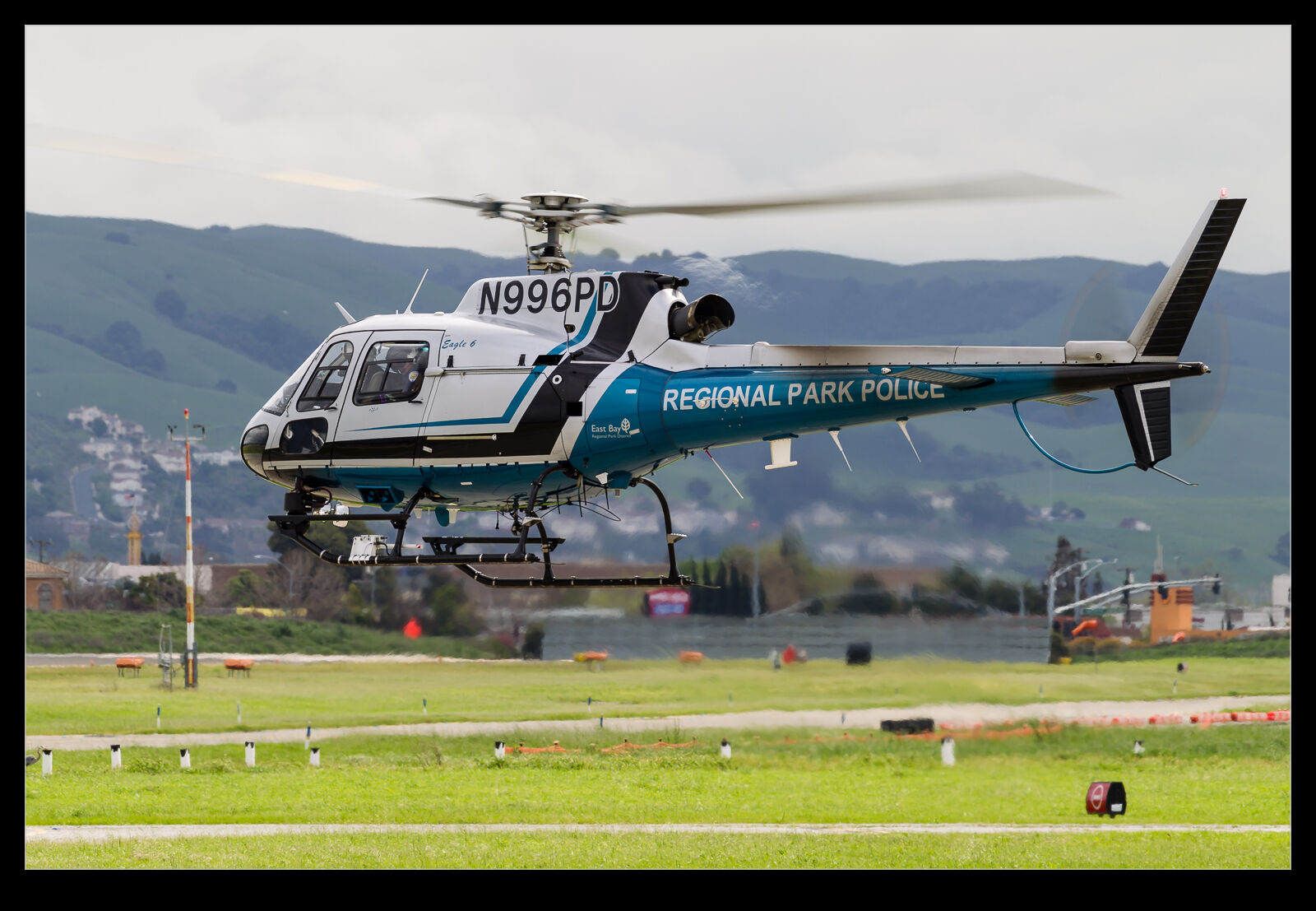
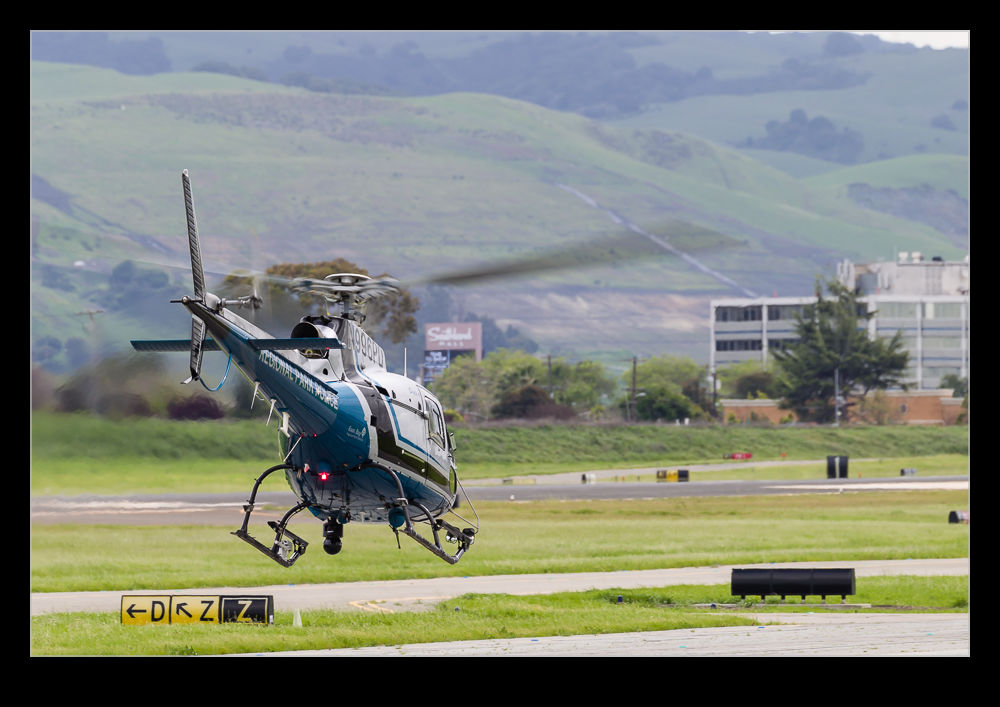
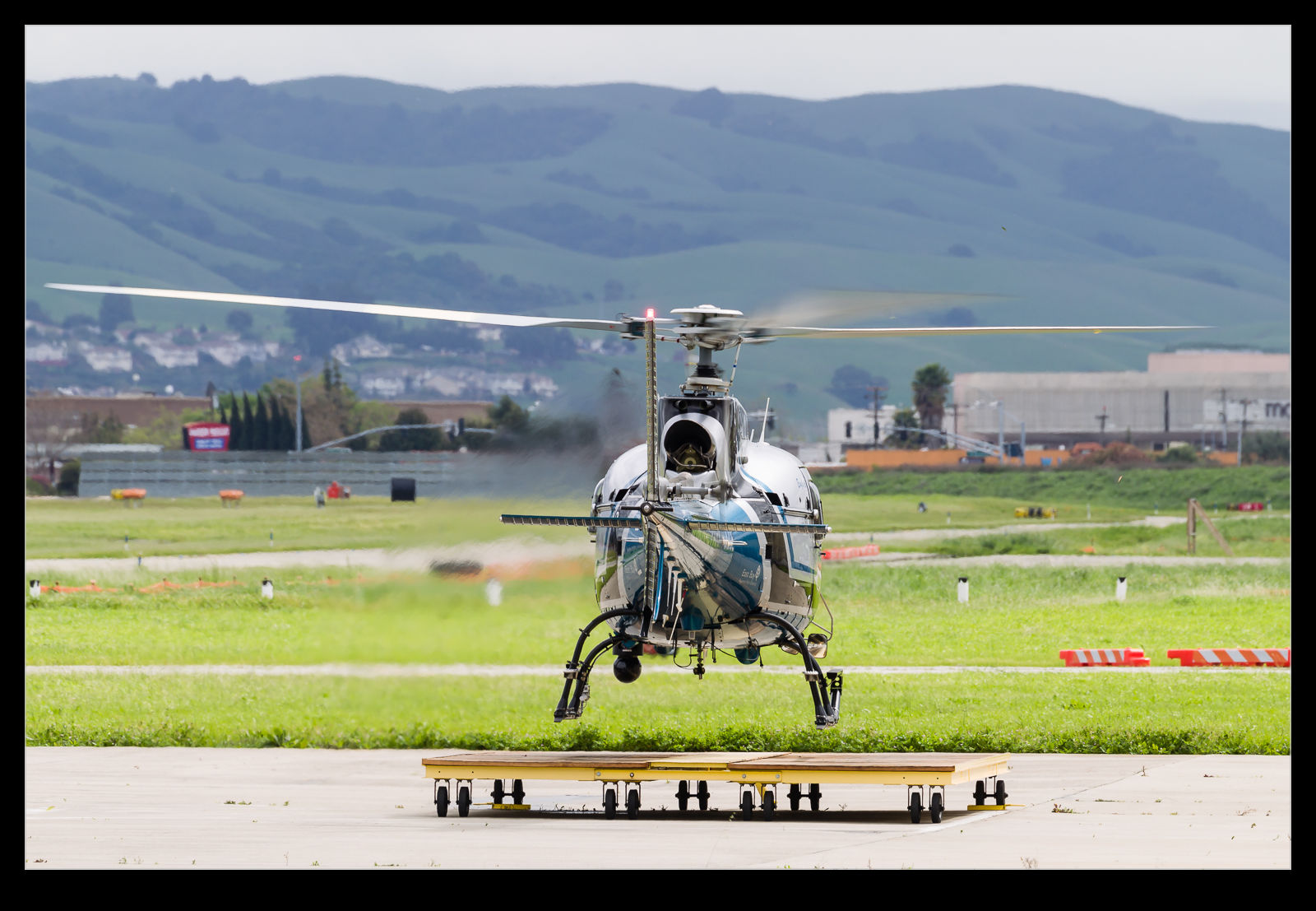
AU0E0640.jpgWhile I was getting lucky catching the Huey at Hayward, this wasn’t the only helicopter I came across in action.  A short distance away from me, an Astar was running up on the ramp.  Before too long, it lifted, taxied across to the active runway and then departed to the southeast.  It turned out to belong to the Regional Parks service.  I had actually seen this airframe before when it had been at Livermore.  This time I was a lot closer to it and able to get a far better view.

AU0E0688.jpgIt is actually quite a nice paint job that they have applied.  Some quick research suggests that they have a couple of these Astars.  I wouldn’t mind finding out more about them and what they are used for.  It could make for a more detailed piece at some point.

AU0E0588.jpg