Tag Archives: USAF

Vipers Sneaking up on Strike Eagle

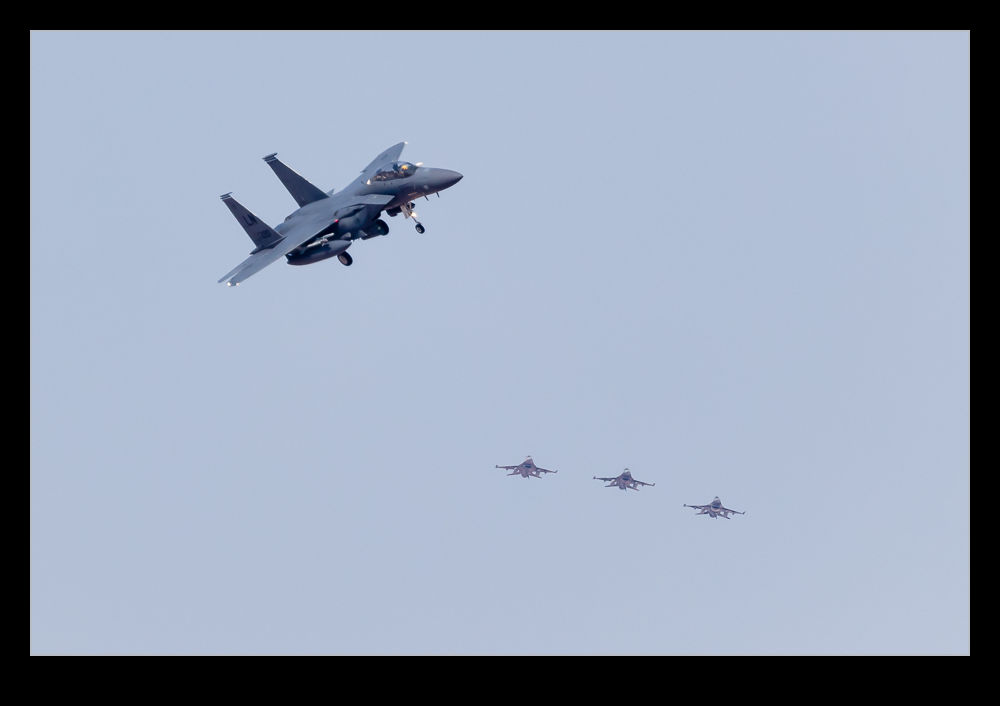
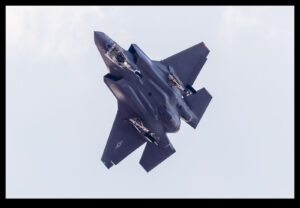
B11I5439.jpgBefore I say anything else, this shot is not original.  I didn’t think of this and I certainly wasn’t the first to shoot it.  Indeed, it is the exact opposite.  This is a shot that I have seen from other people a bunch of times but that I have never achieved.  The recovery for Red Flag has a lot of jets coming home at once.  Jets will break into the pattern and will be turning final when more jets are coming in to the break.  You can get jets coming in overhead directly behind the jet on final turn.  It looks cool but I had not got it before.  This time I got lucky.  I don’t know whether I am pleased with the shot or just glad that I finally happened to get it!

Eagle Inlets

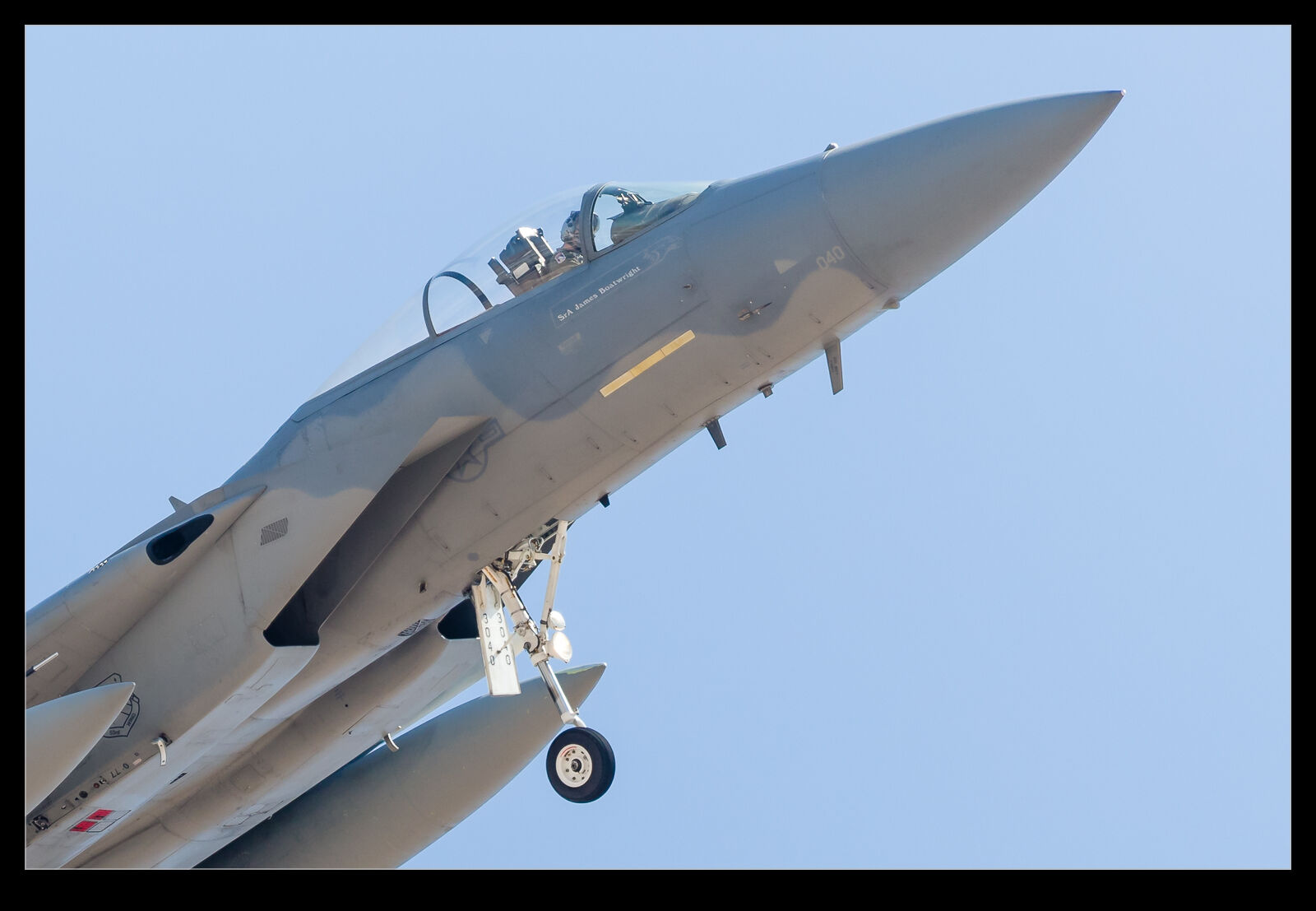
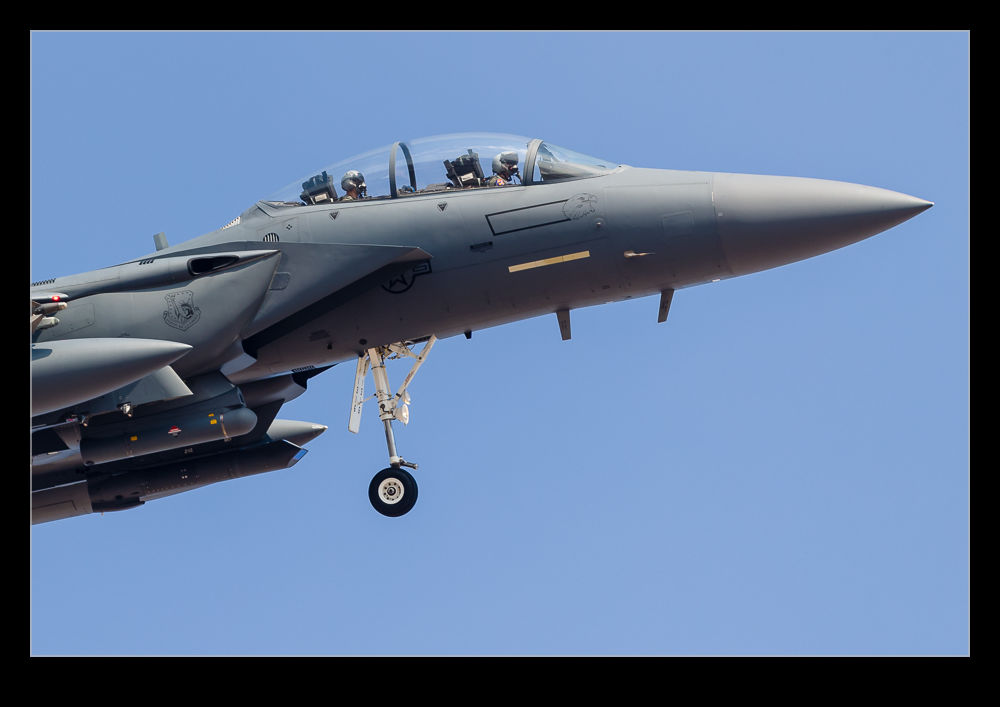
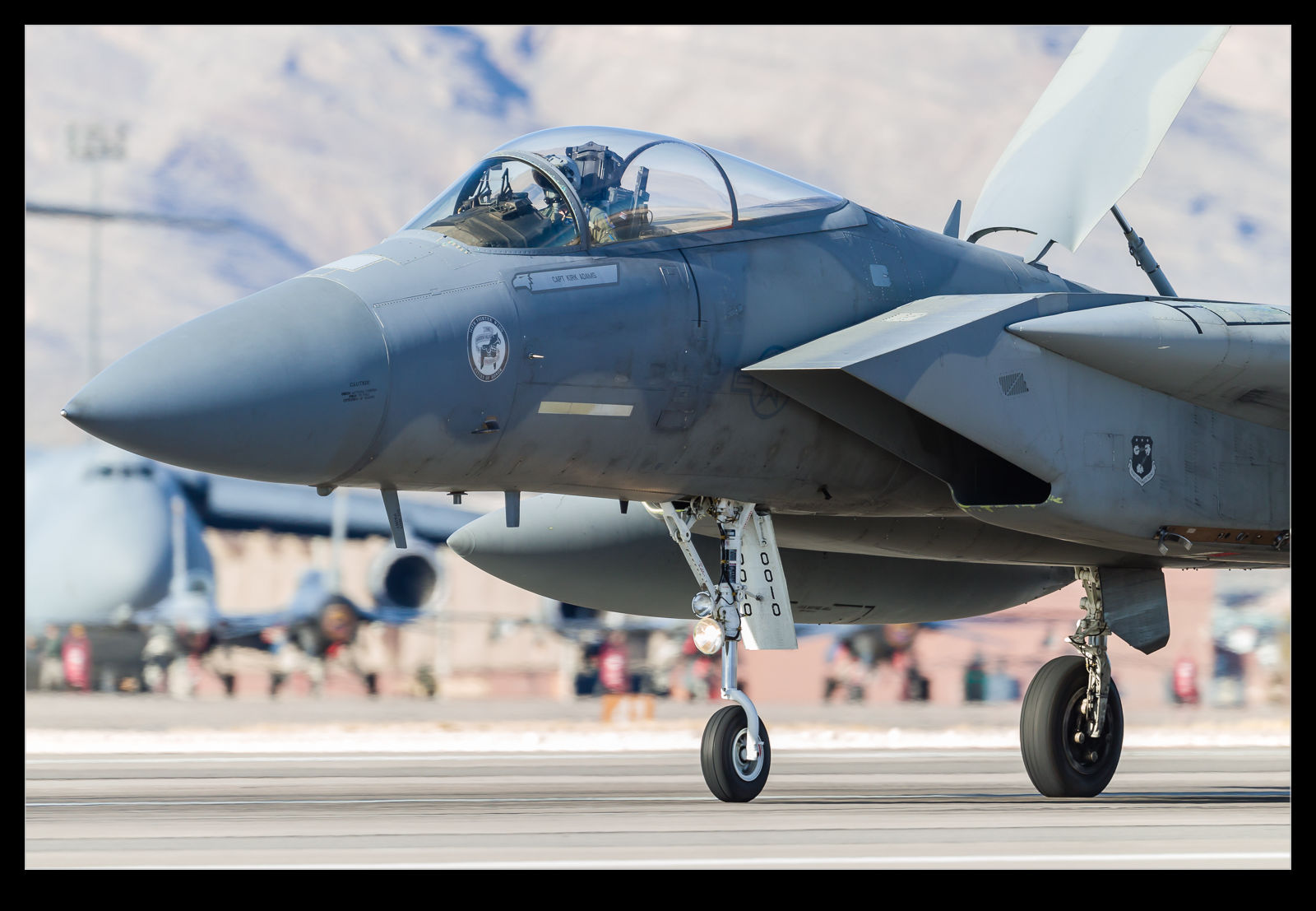
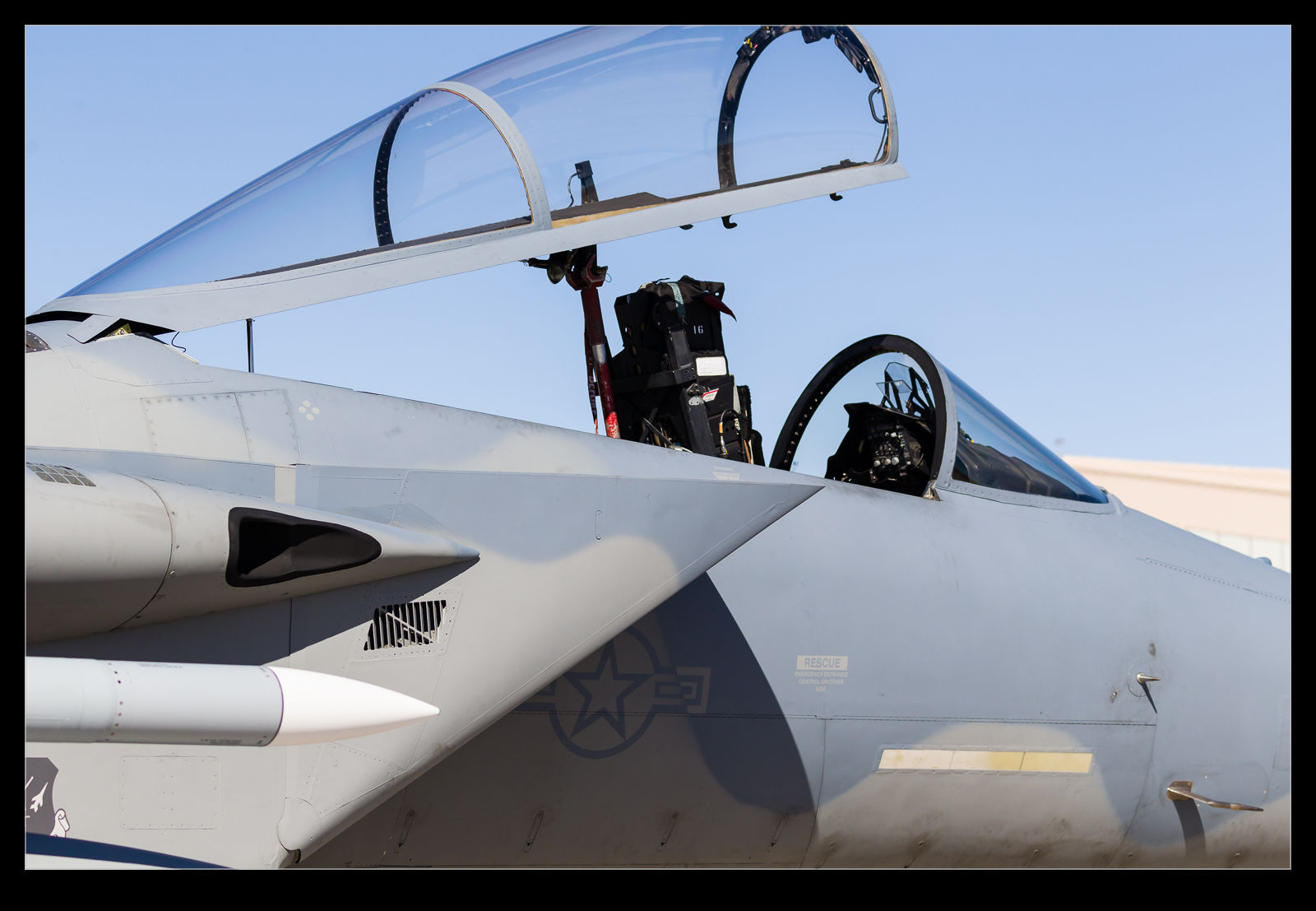
B11I2311.jpgThe F-15 came onto the scene in the 1970s and it has been a major force ever since.  As a kid growing up fascinated with planes, the F-15 and F-14 were two of my favorites.  They each had features I loved.  One of the cool things about the F-15 for me was the inlets.  Big ramp inlets were in vogue at that time.  They combined an angled profile with complex ramps and doors to take flows from above Mach 2 down to subsonic speeds to feed the engines.  (Interestingly the F-16 went with a simple pitot inlet and could still just about make Mach 2.  It used the fuselage to redirect the air into the inlet rather than raking it.)  The F-14 inlets were very sharply angled.  The F-15 didn’t have such a sharp angle but instead took a different approach.  The inlets rotated down towards the approaching air.

B11I5733.jpgThis always struck me as a cool feature and whenever I see F-15s now, I am always looking at the angle of the inlets.  Since they are often at lower speeds when I get to shoot them, they are at higher angles of attack and this means the inlets are rotated down.  McAir’s engineers did a great job of the joint so the top surface doesn’t look too discontinuous.  I include a shot of a parked jet to show the difference.  Even after all these years, I still get a kick out of this.

AU0E7545.jpg C59F5705.jpg

The Lonely Life of the AWACS

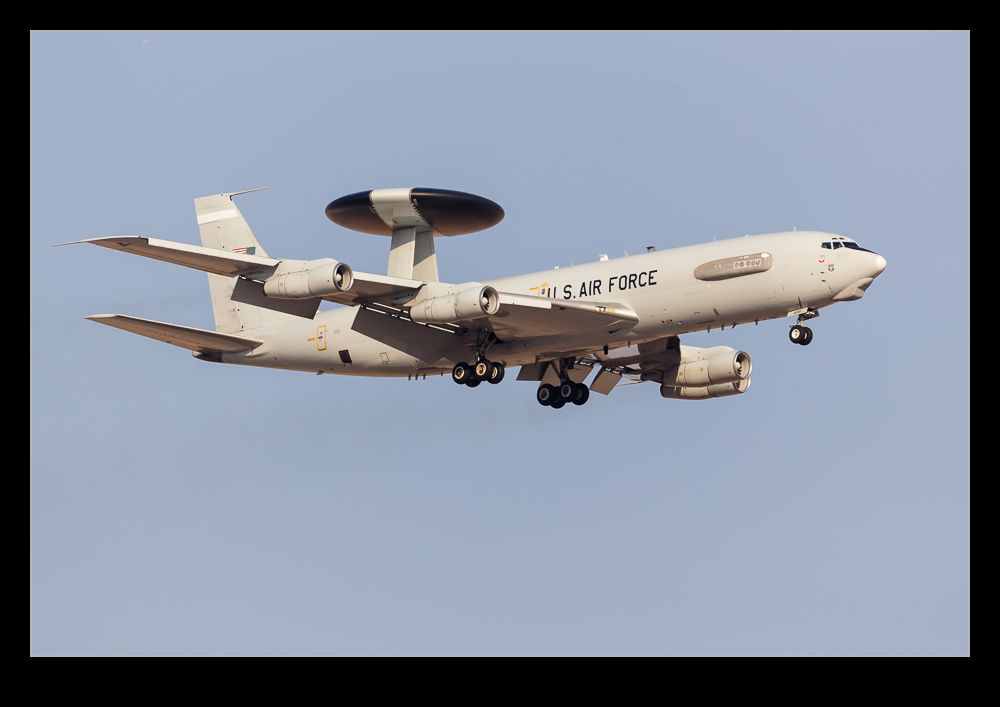
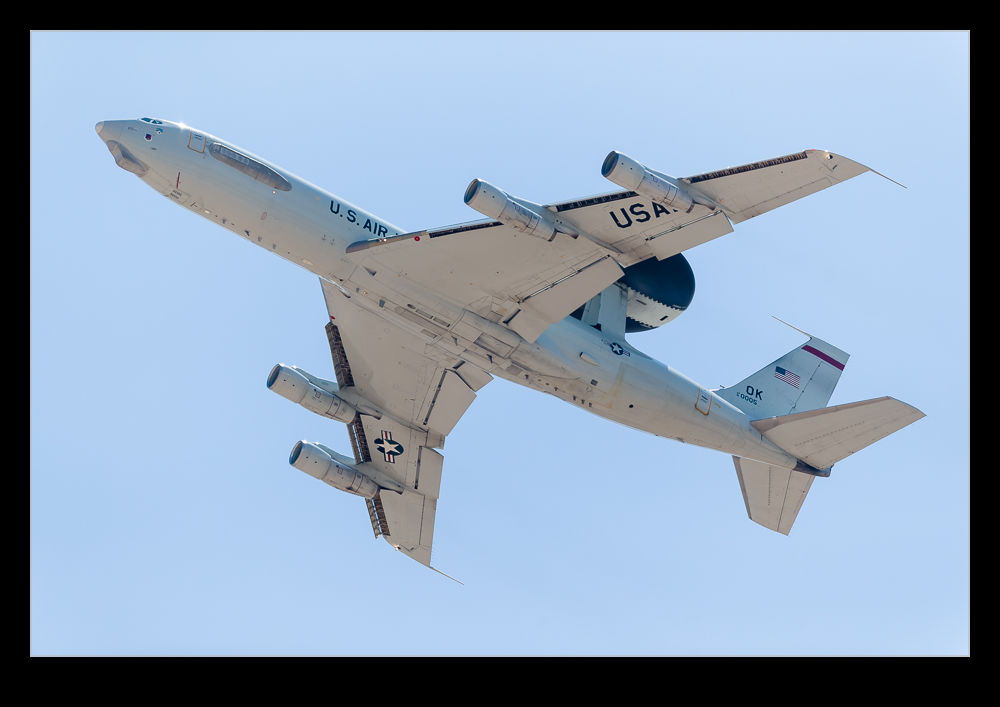
B11I5825.jpgThe beginning and end of an exercise has a common theme.  Long before the fighter start launching, an E-3 AWACS will lumber off the runway and head out towards the exercise area.  It gets on station and sets up to direct the fight as the fast movers enter the range.  It will support the whole mission and will guide the small guys back home at the conclusion of their missions.  It will deal with any of the jets that have to change plans or abort.  With everyone else back on the ground, the AWACS can finally come home.  They are often the last jet back on the ground.  Hopefully everyone outside will stay around for their recovery.  You wouldn’t want them to feel neglected!

B11I2618.jpg

Weapons School F-35s

B11I6272.jpgThe local Nellis traffic gets a bit restricted by the exercise traffic when Red Flag is underway.  Get a mission in during the morning or wait for the gap between the afternoon and the evening evolutions to get airborne.  For those of us outside, they provide some additional aircraft to shoot.  They may also give some variety in types (although given how few types there are these days, not a lot).  Before the F-35 becomes ubiquitous in service and replaces the multiple F-16 units that currently participate, it is something a bit different.

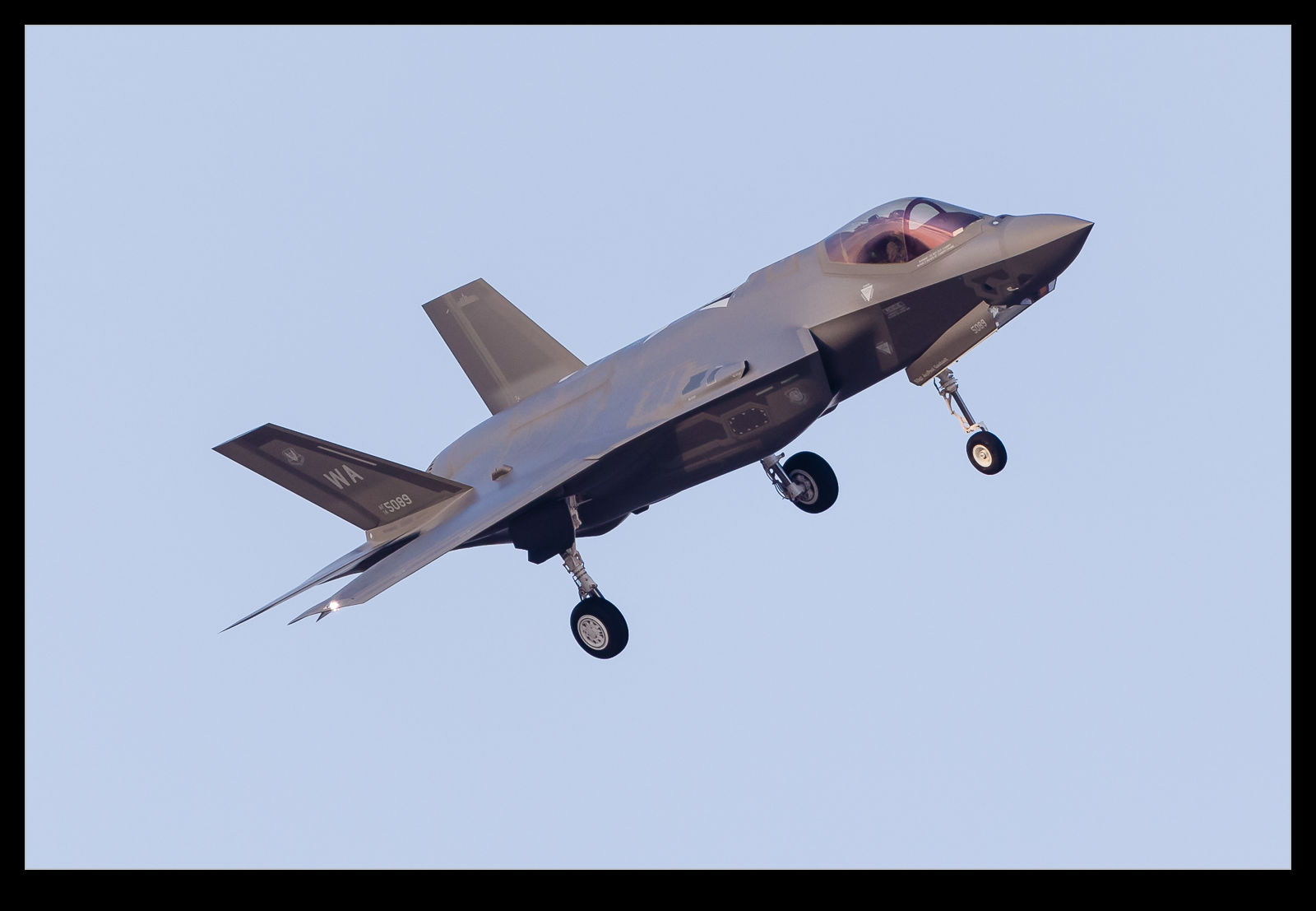
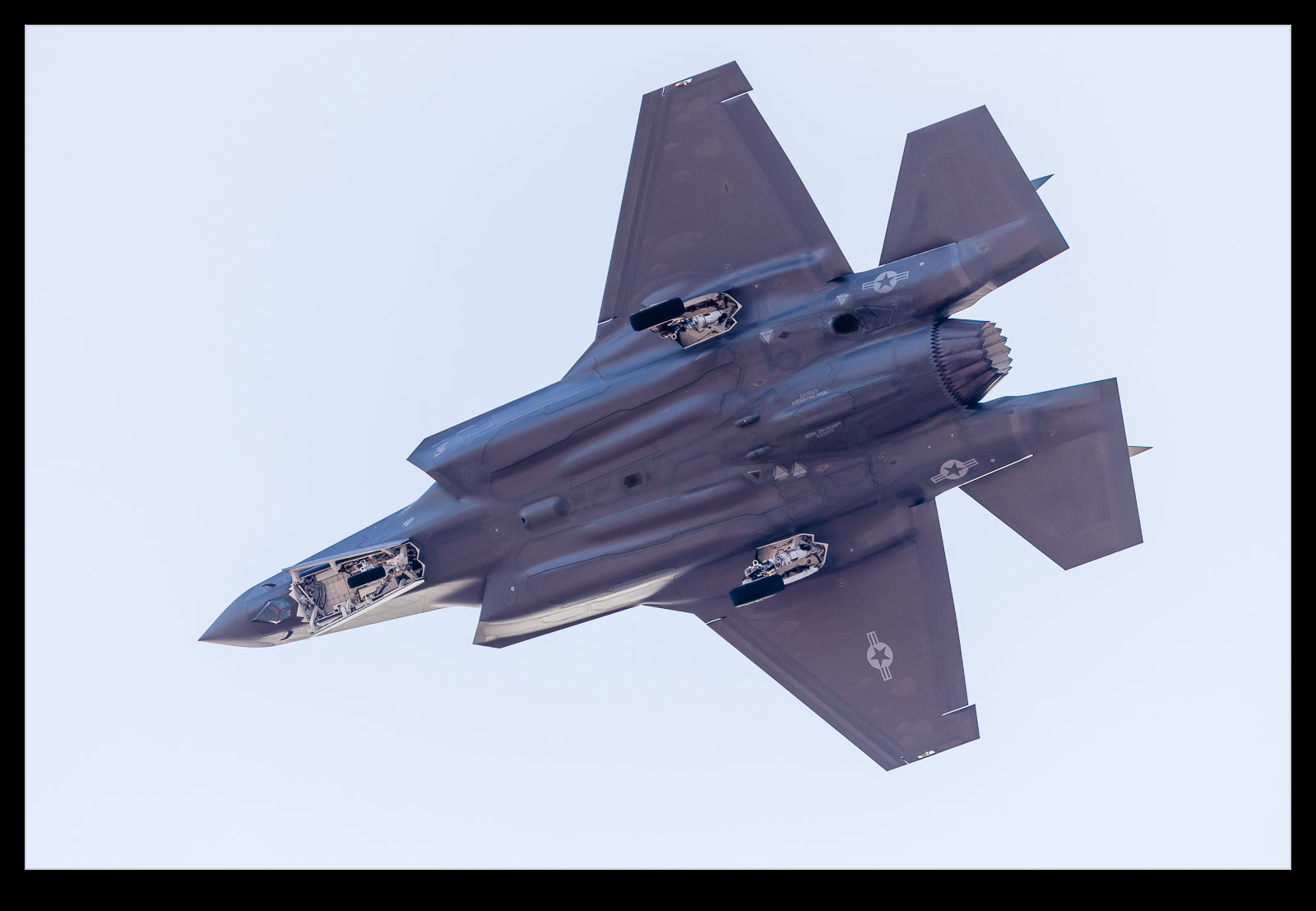
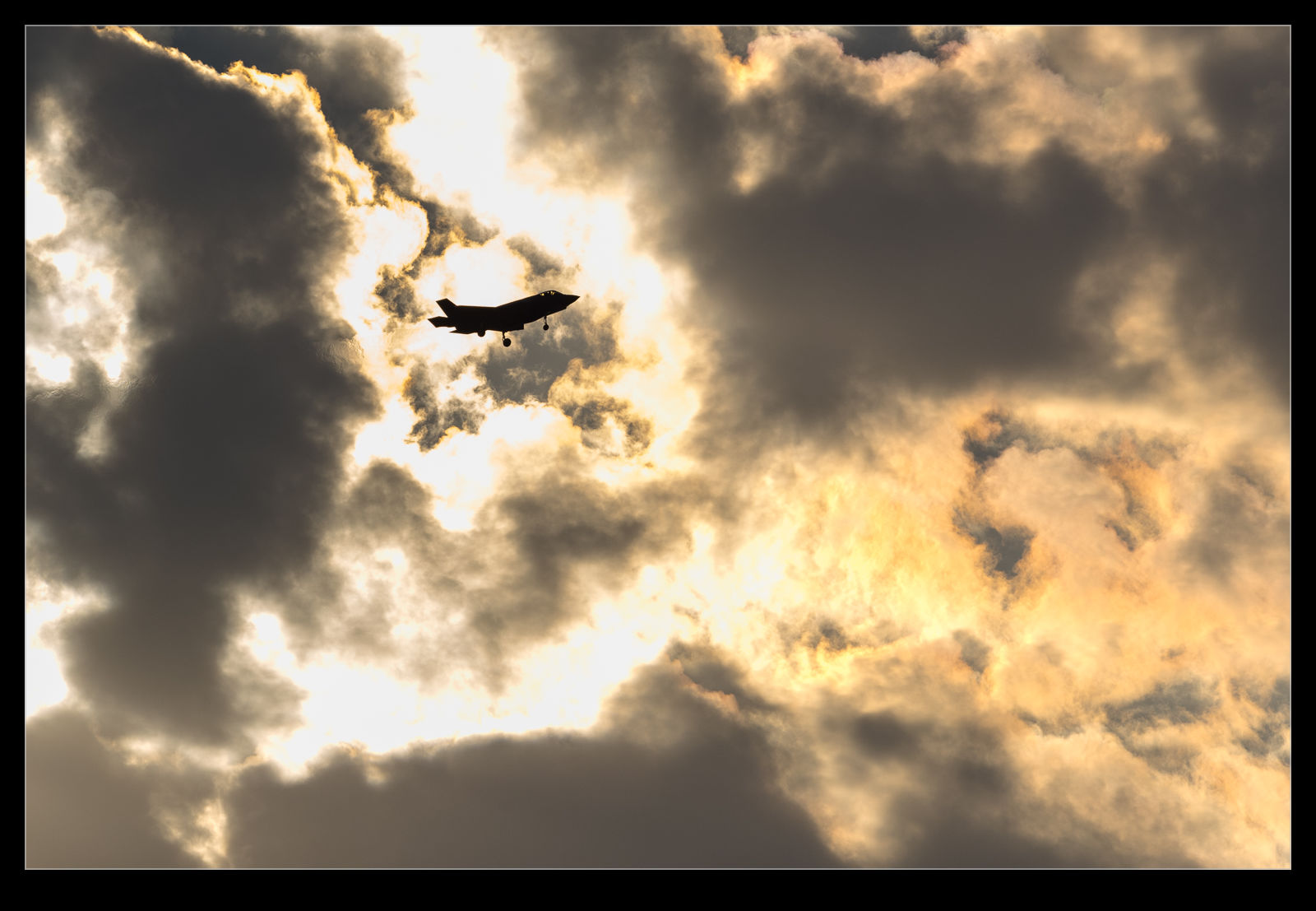
B11I6235.jpgThe Weapons School has a bunch of F-35A jets now.  The first ones to arrive at Nellis were OT jets for operational test and evaluation.  Now the Weapons School is using them to develop tactics and employment.  The lines of the jets are a bit different from the Marine Corp F-35Bs that I shot at a previous exercise.  Without the lift fan, the back of the airframe is smoother while the canopy is blended into the spine in a different way that enhances visibility and fits with the different profile.  The jets were pretty active while I was there so I managed to get a few shots.  I had seen them during previous visits but, when on base we had been barred from shooting them and, while off base, I had always managed to be in the wrong place to get them.  While I am currently pleased to have got some shots, I will soon be used to seeing them around all over the place.

B11I6363.jpg

Bayou Militia Eagles

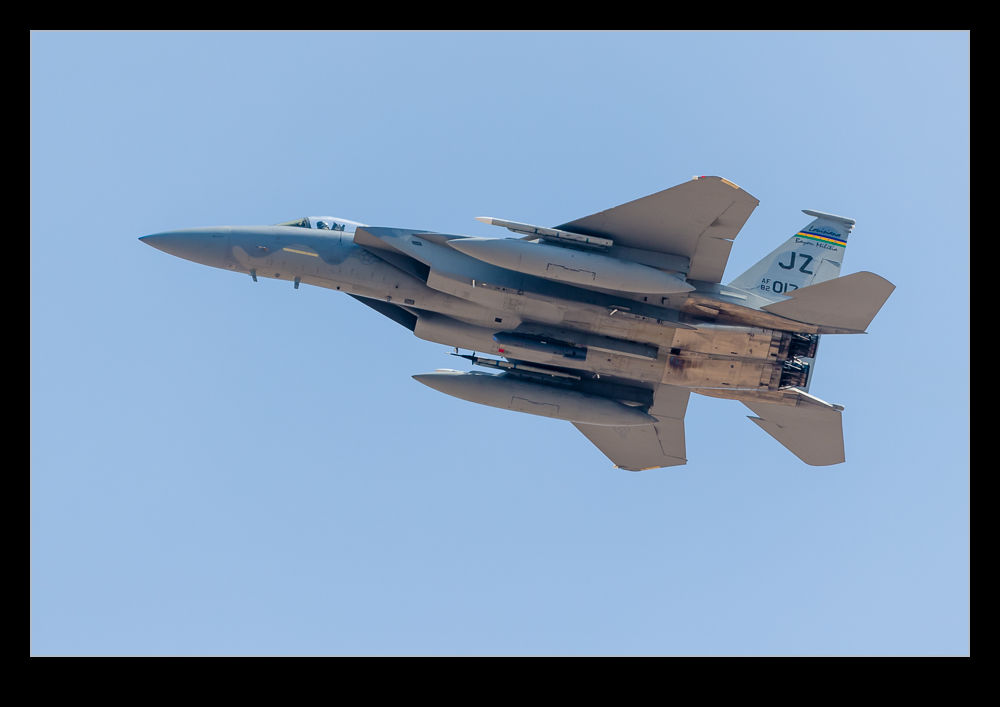
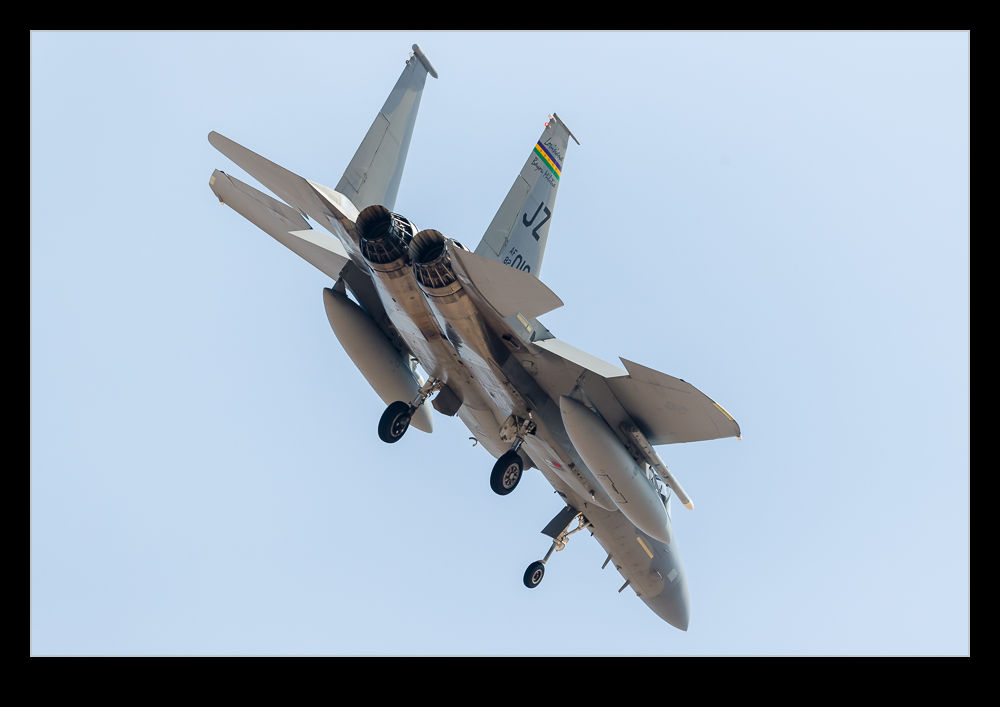
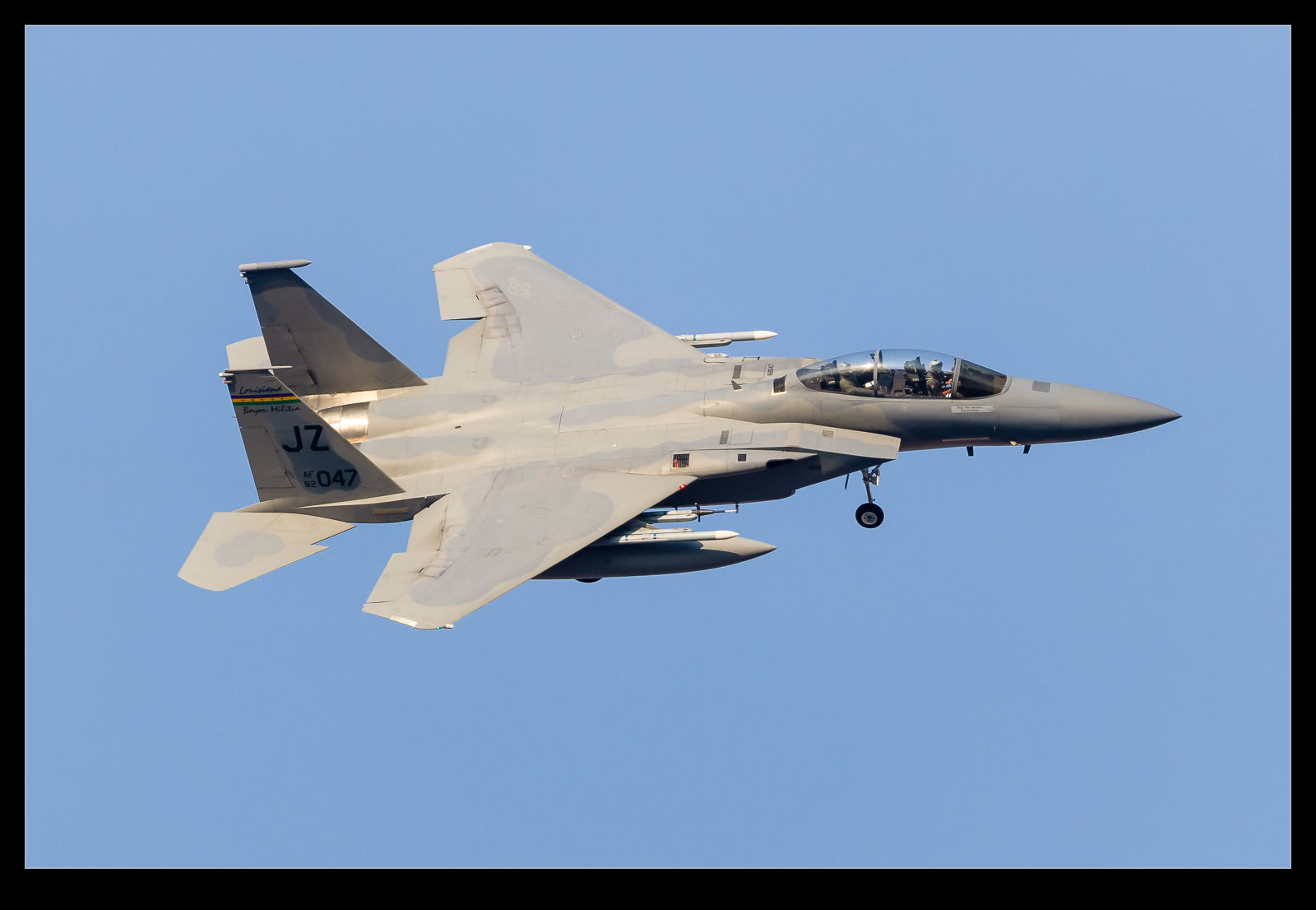
B11I3421.jpgThe F-15 has been in service for a long time now.  It operates with regular Air Force units, reserve units and Air National Guard units.  The Bayou Militia is a unit based at New Orleans in Louisiana.  Their tail code is JZ which, if you think about where they are based, makes a lot of sense.  I had seen pictures of jets from this unit a lot over the years but I hadn’t seen them for myself.  Having them at Red Flag made me a lot happier than makes sense for a unit.

B11I4590.jpgThey put a lot of jets up while I was there including flying at odd times of day.  They were happy to fly tight approaches when nothing else was in the pattern so I got a lot of chances to see the, in action.  I still love the F-15C so it didn’t take much persuasion to get me to watch these guys in action.

B11I5922.jpg

Relaxed Raptor Pilot

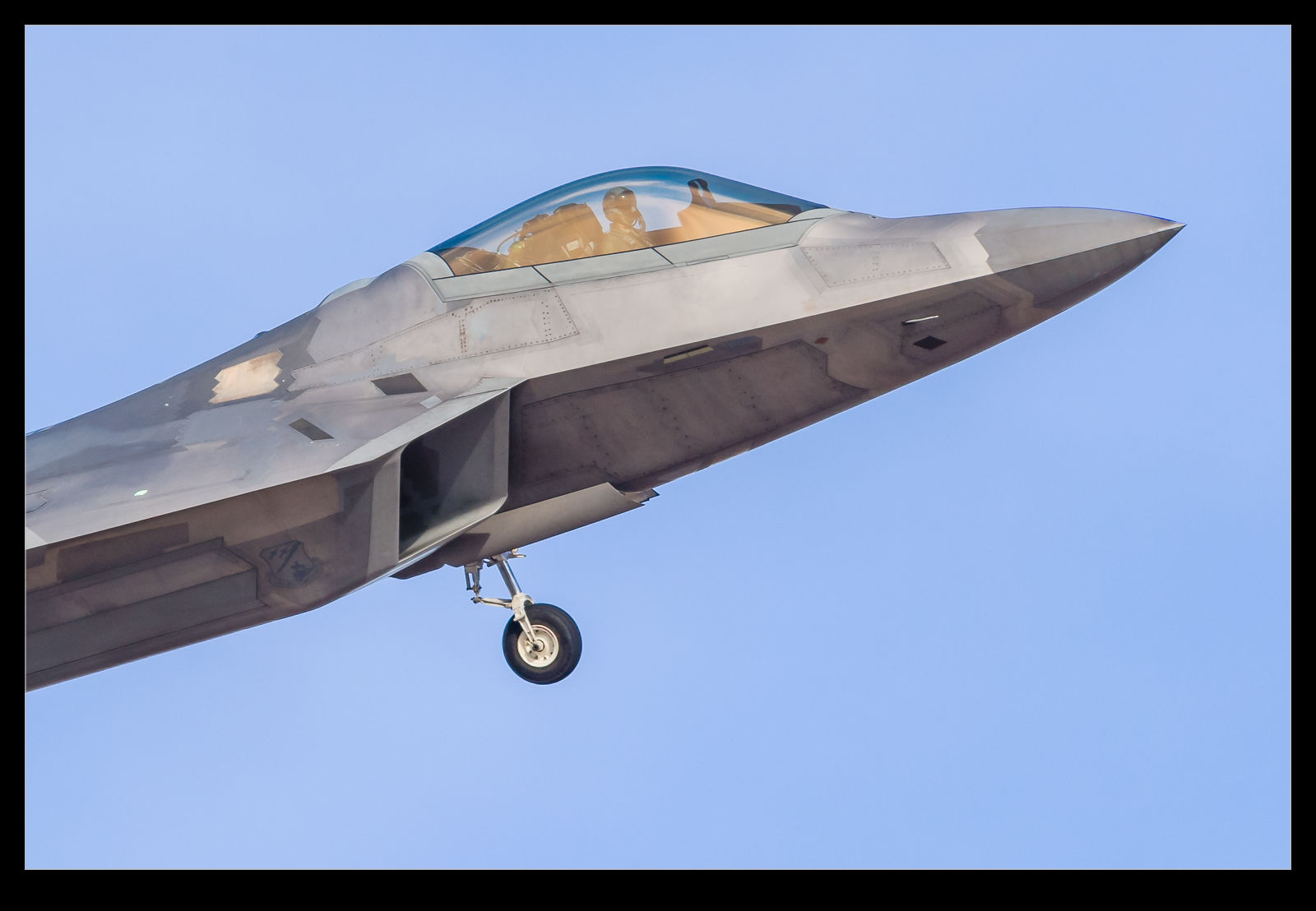
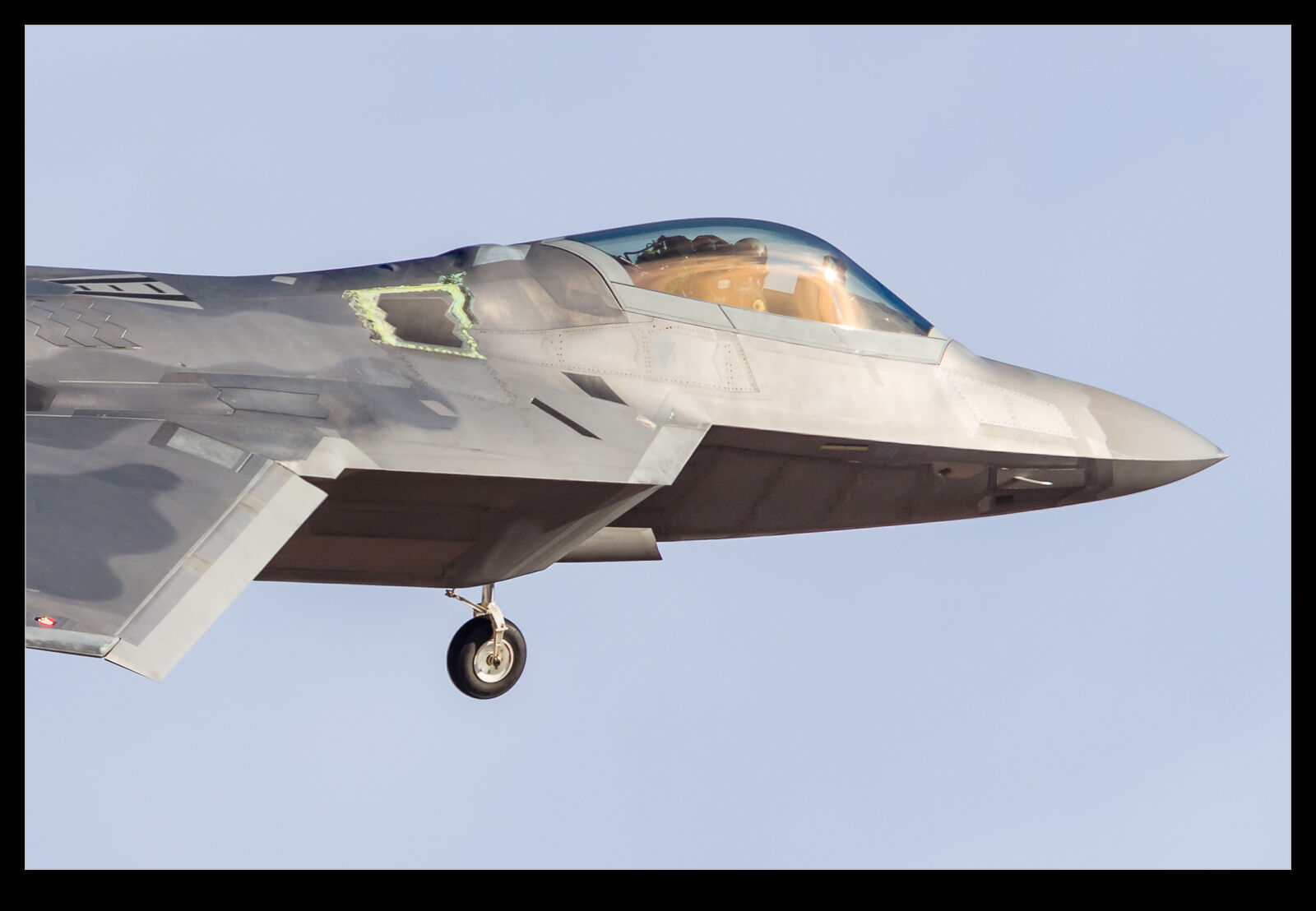
A USAF F-22A turns towards the ranges after takeoff from Nellis AFB as part of a Red Flag mission.

All cool fighter pilots should look like they are not operating a complex and expensive jet.  Instead, they should look like they are out cruising in a convertible with their arm resting on the door just taking in the scenery.  This guy obviously understands what is required and provides the casual look of a person enjoying their day!

iPad Kneepad – Sudoku in an A-10?

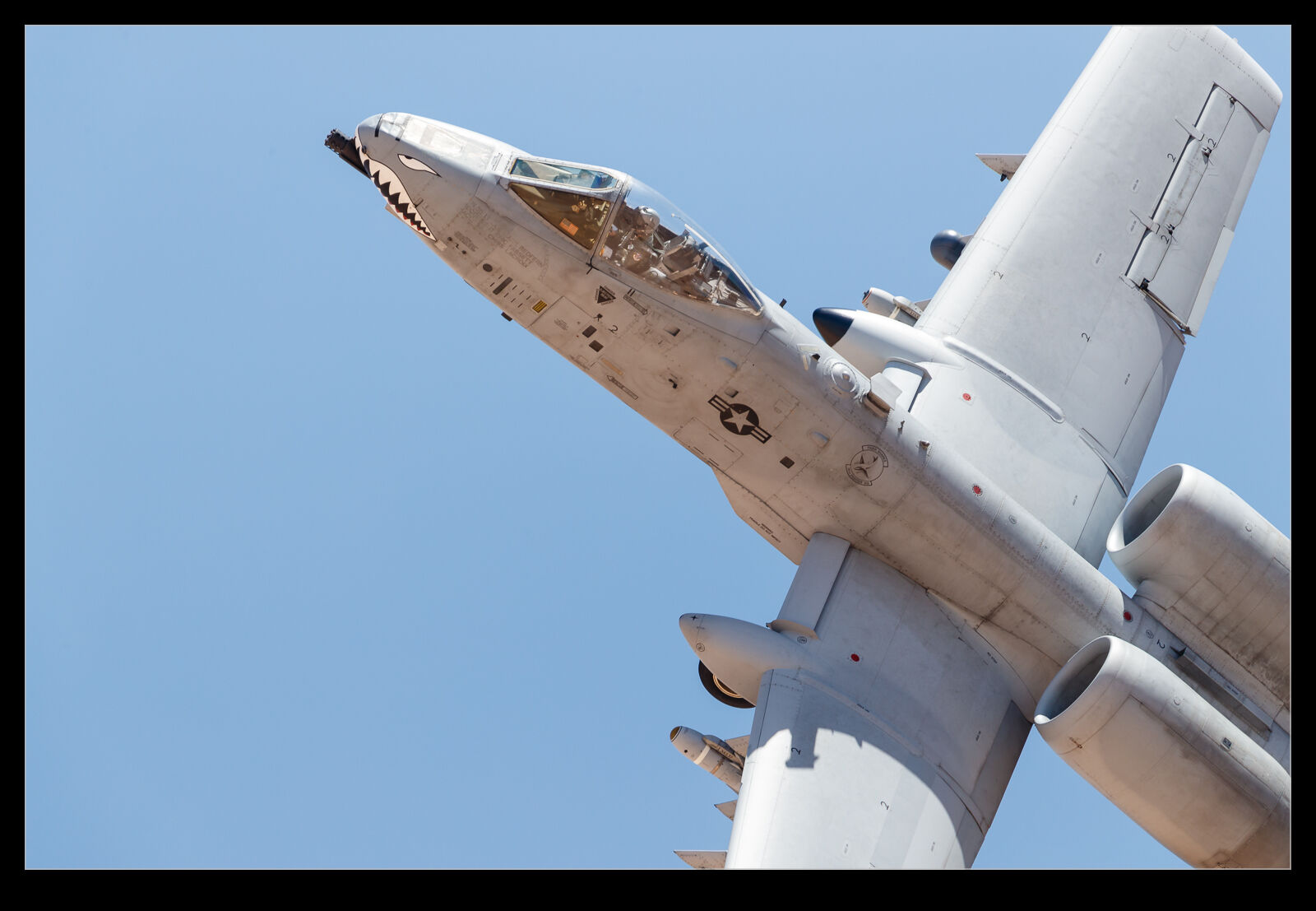
B11I4999.jpgGetting up close with the jets gives you an opportunity to see right into the cockpit while the planes are flying.  As the A-10s pull hard off the target on the range they come right towards you.  Consequently you can find yourself looking right in through the top of the cockpit.  Looking through my shots I could see this view of the pilots.  They have a notepad of some sort strapped to one their legs.  I assume it is for flight planning purposes but I can’t help but think about the slower transit speed of the A-10.  They have a fair bit of time when making their way from DM to the range and back again.  Maybe a game of Sudoku or a crossword is a good way to pass the time?

Can 700mm Reach Into the Cockpit?

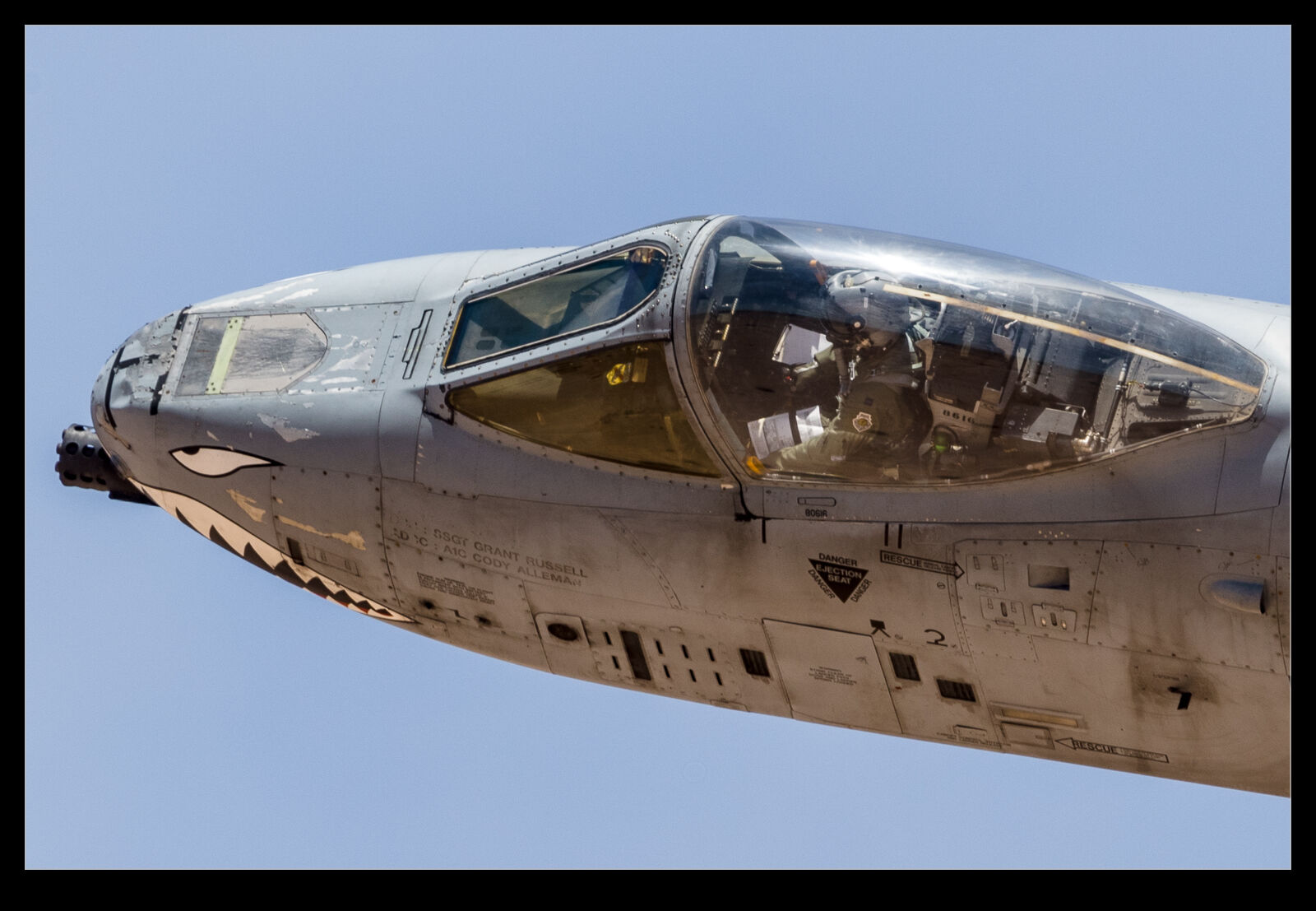
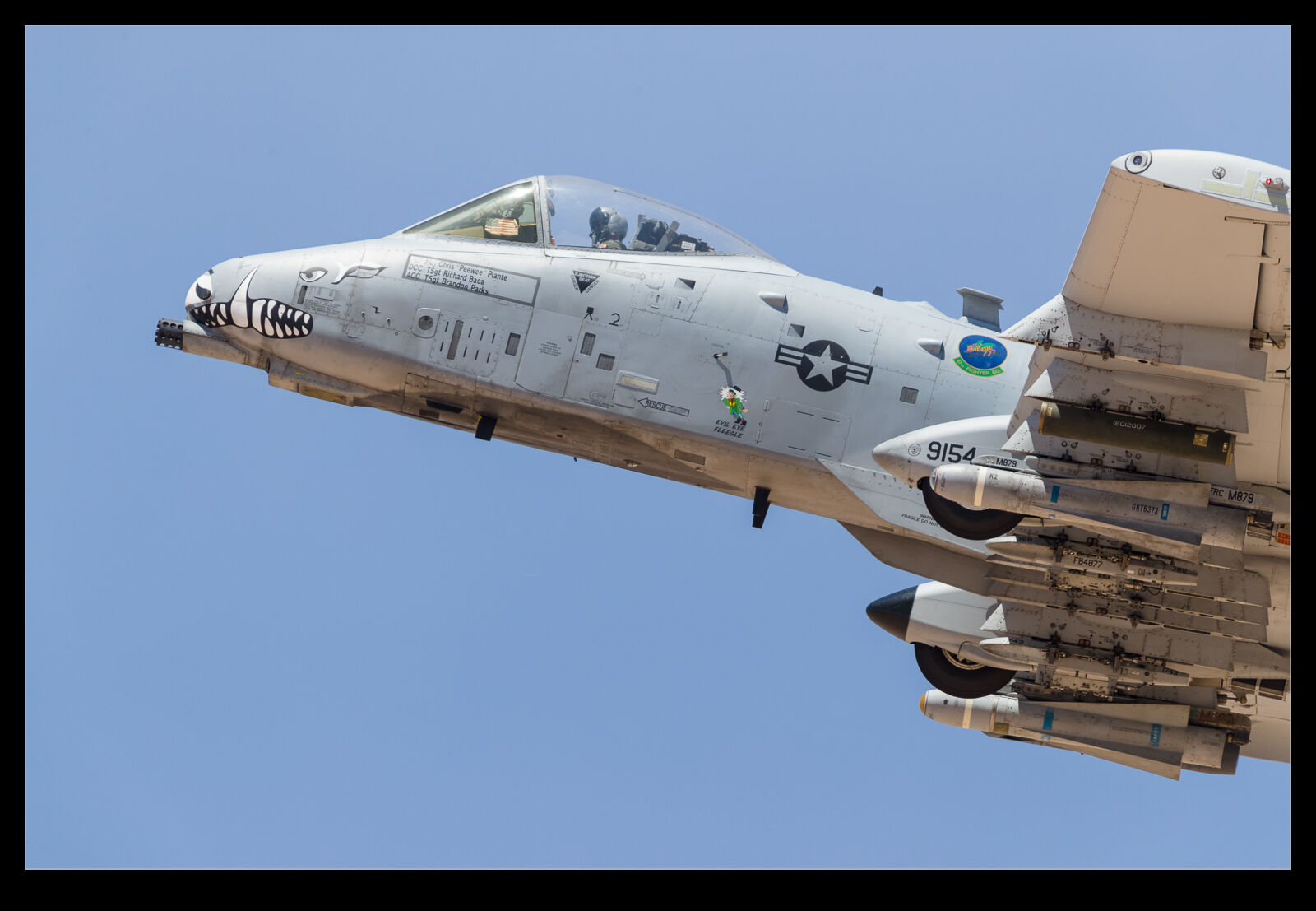
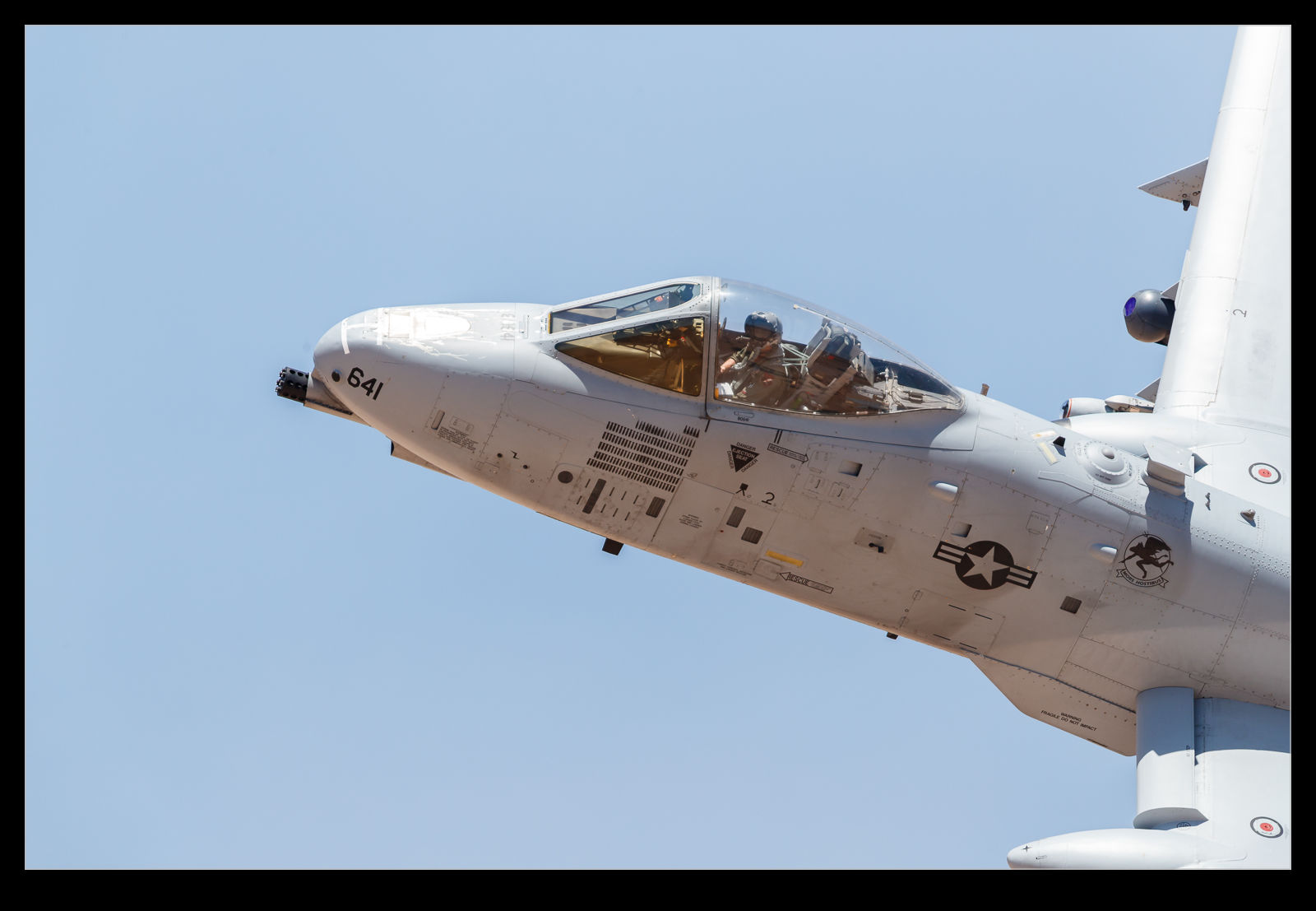
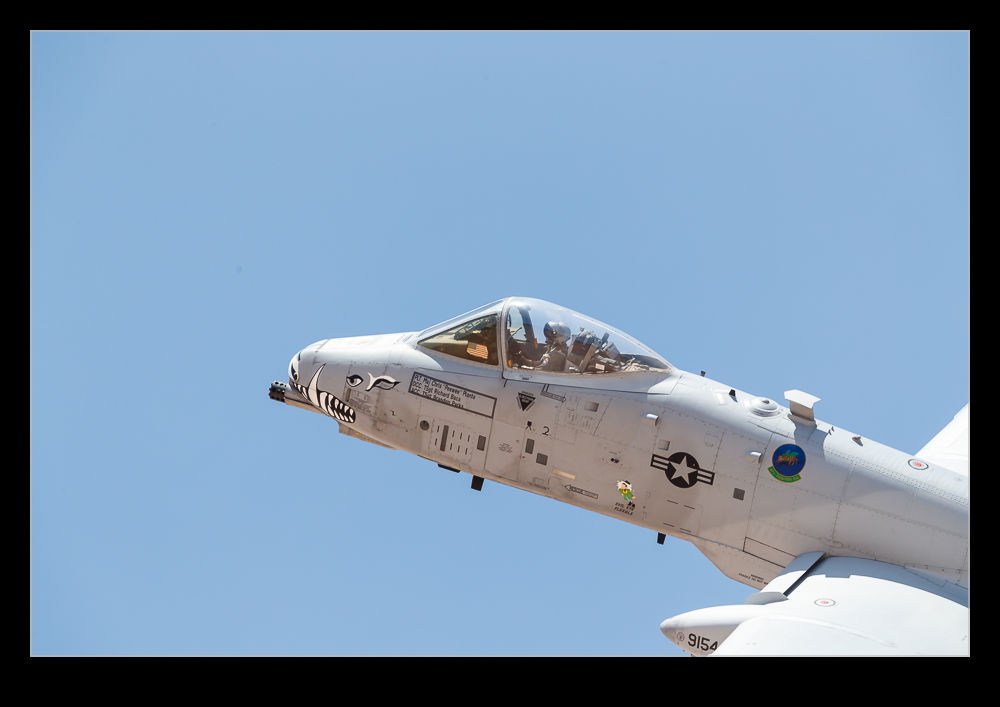
B11I5499.jpgSince changing camera bodies to something that is full frame, one of the things I have been pondering is what I will notice about the reduced reach that I will get with my current lenses.  Obviously there will be a change.  So far it has only really resulted in me changing when I press the shutter since I still work based on what I see through the viewfinder.  While we were out on the range at Hawgsmoke, the jets would carry out a strafing run and then pull towards the range tower where we were located.  Sometimes they would be really close.

B11I5161.jpgI had decided to try putting a 1.4x tele convertor on the 500mm to compensate for the larger sensor size.  This worked well for a number of the shots but, when the jets pulled overhead, it was a touch too much!  These shots are not cropped.  They are really that close and you can see exactly what is in the cockpit.

B11I5392.jpg B11I4686.jpg

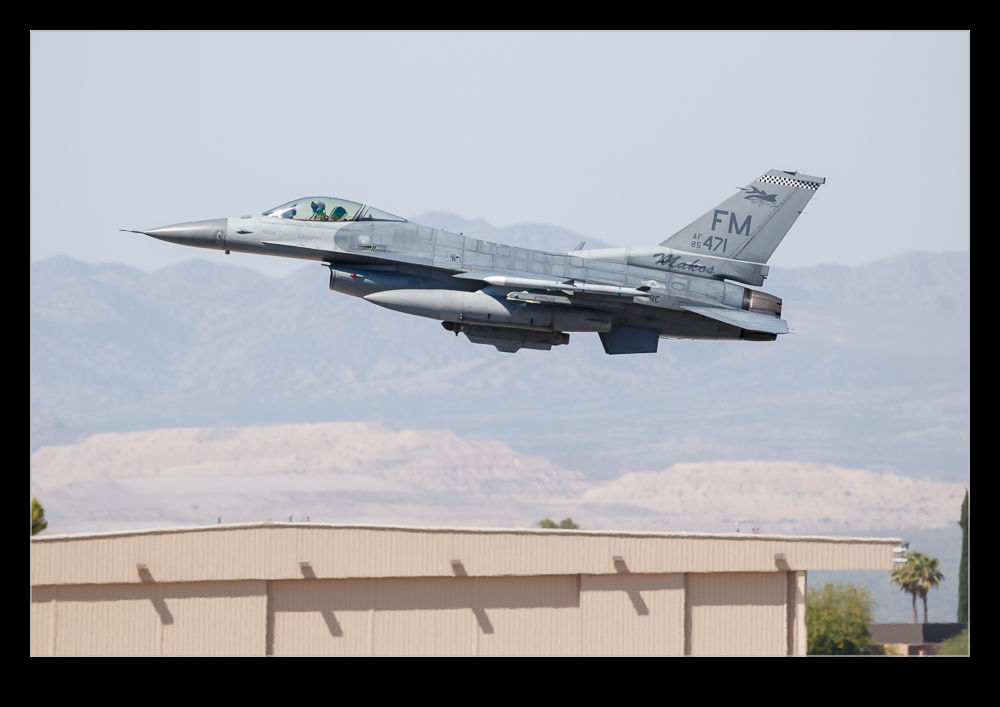
Mako F-16 is a Nice Surprise

B11I6315.jpgI have not seen Mako F-16s very often.  Seeing one taking off from Tucson was quite a surprise and definitely a good one.  It was accompanied by a jet in Texas Reserve markings to so maybe there has been a swap of some jets.

Section Training

B11I5727.jpgIn my previous visits to Tucson International, I have never seen jets taking off or landing as pairs.  It has always been single jets.  This time I had a couple of times when section takeoffs were carried out.  There also appeared to be some arrivals in pairs too.  Nothing too dramatic but a bit of a change from what I have seen there before.