Tag Archives: photo

Goodbye Wicket

I have always had a soft spot for hippos.  No idea why but something about them has always interested me.  I don’t think it has anything to do with Disney and tutus but you never know what your subconscious is trying to conceal.  I don’t even hold it against them that they are the largest killer of humans in the animal kingdom in Africa (I am assuming that bugs and viruses are not included when that stat gets rolled out) and a creature of which you should be very wary.  In fact, I love those menacing looking teeth when they yawn!
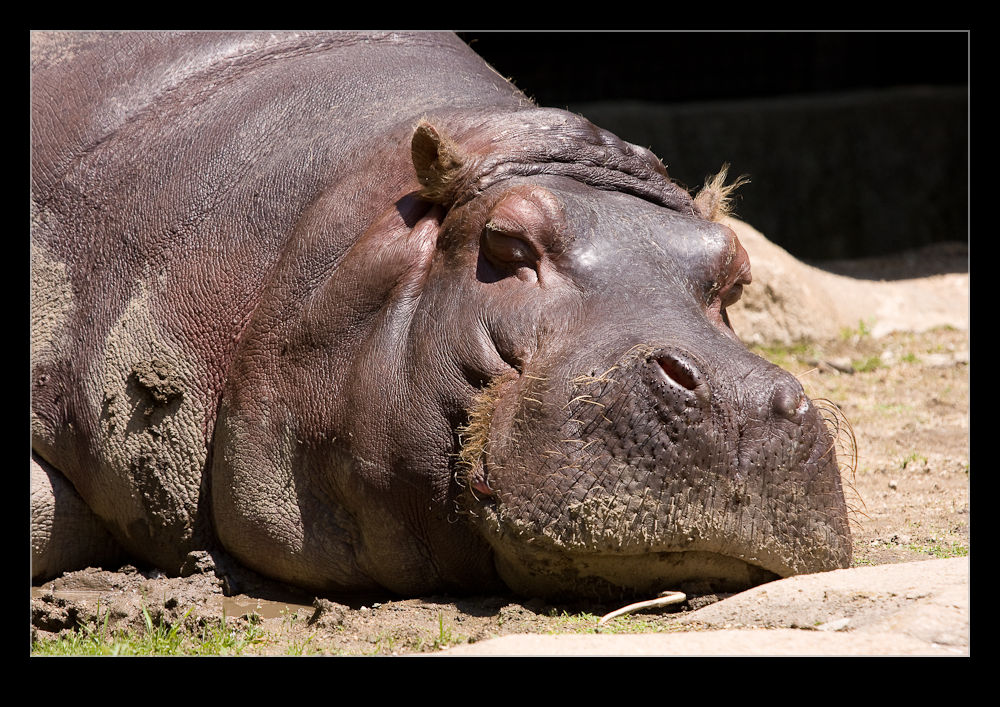
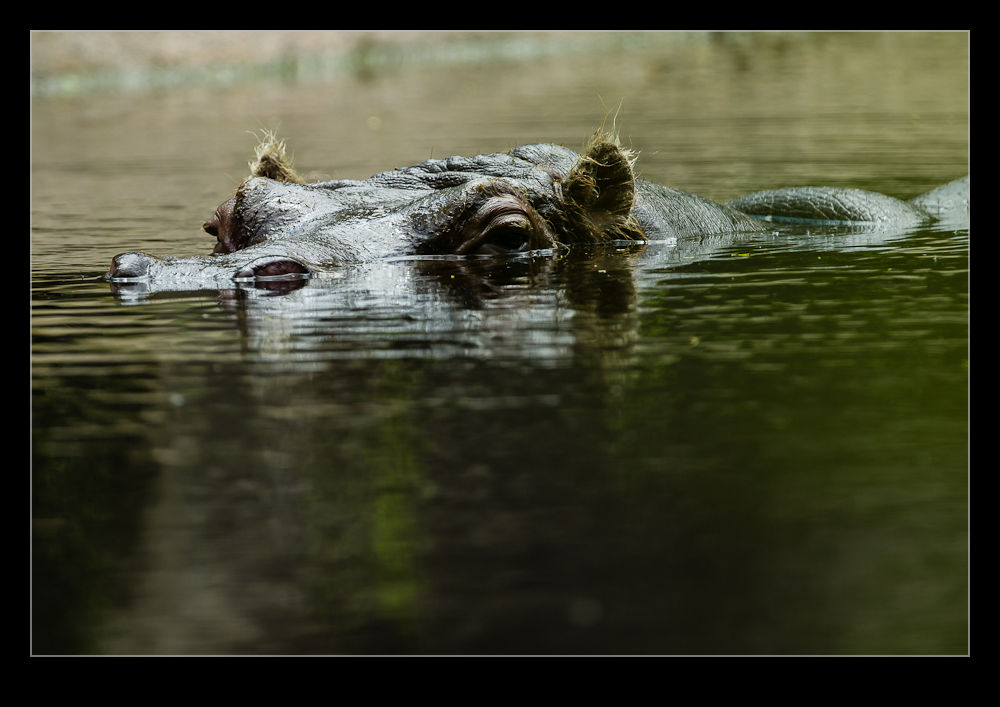
Therefore, I was rather sad to get an email from the Brookfield Zoo announcing that Wicket, the zoo’s lone hippo has left.  We also have a couple of pygmy hippos but Wicket was basically alone and they have decided to move her to another zoo in Colorado so she can be with other animals.  They are going to focus the efforts at Brookfield on the pygmy hippos instead.

We were at the zoo a few weeks ago when Chris was visiting.  We stopped by to see Wicket.  I got some shots of her as she floated – barely breaking the surface in that classic hippo pose.  Chris has good memories of her too.  On a previous visit she left the pool and walked across the enclosure doing something in quite a dramatic way that led to her being known as a hippoo thereafter!
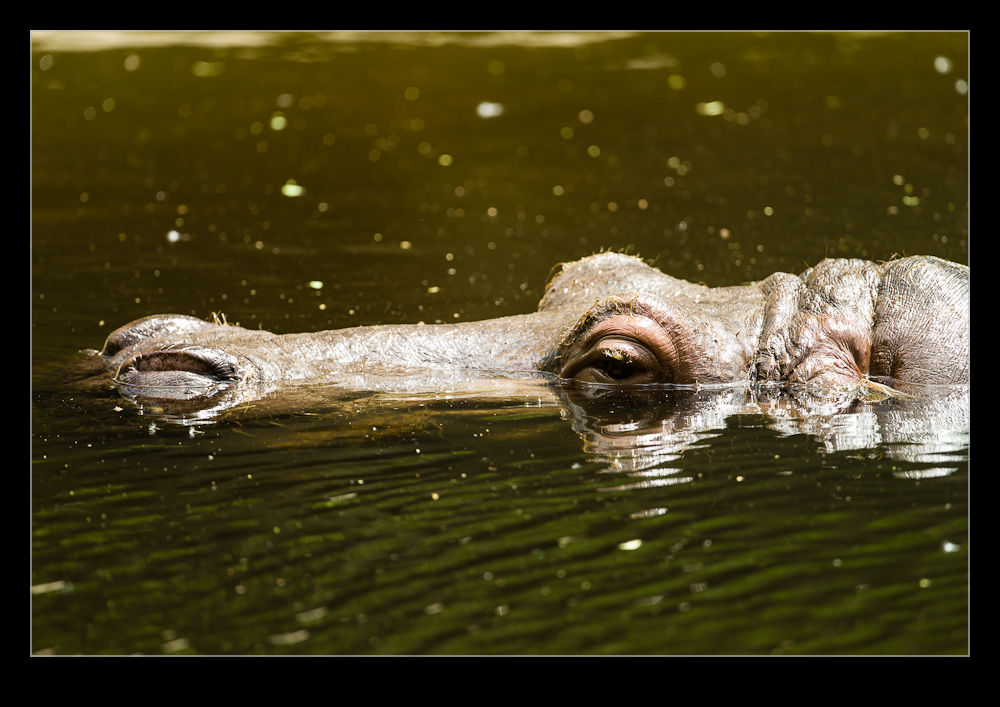
I hope she likes her new home but I’m sorry to see her go.  Have fun Wicket!
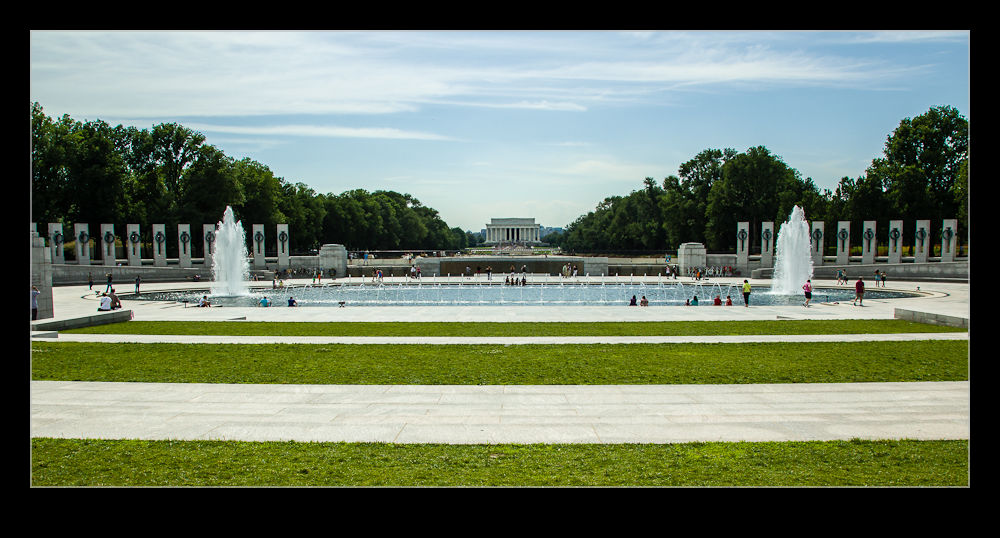
WWII Memorial

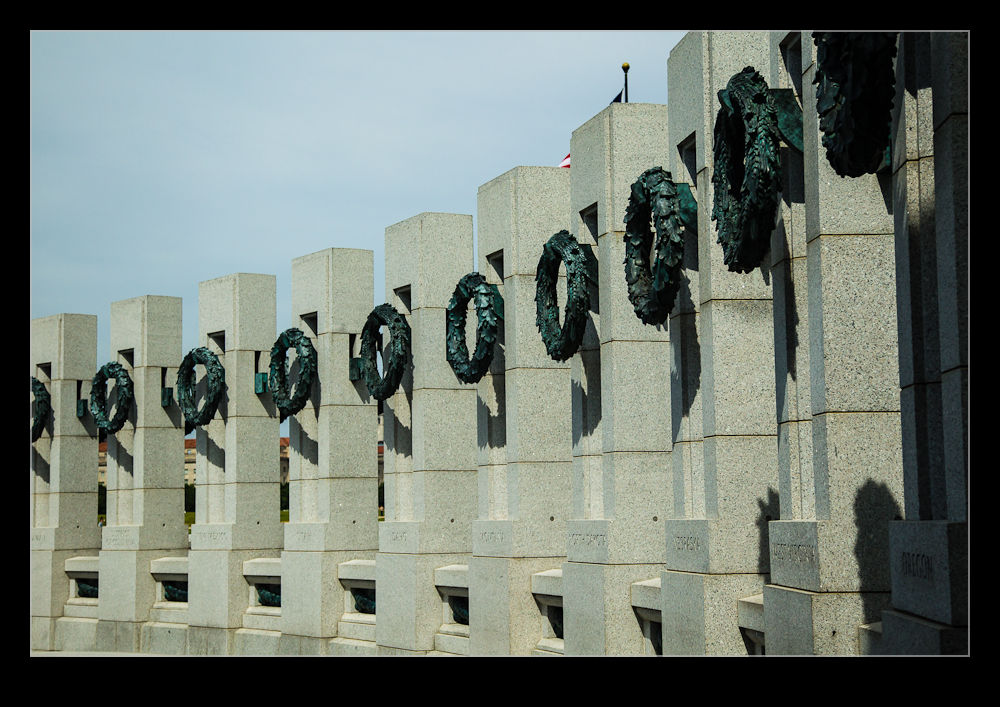
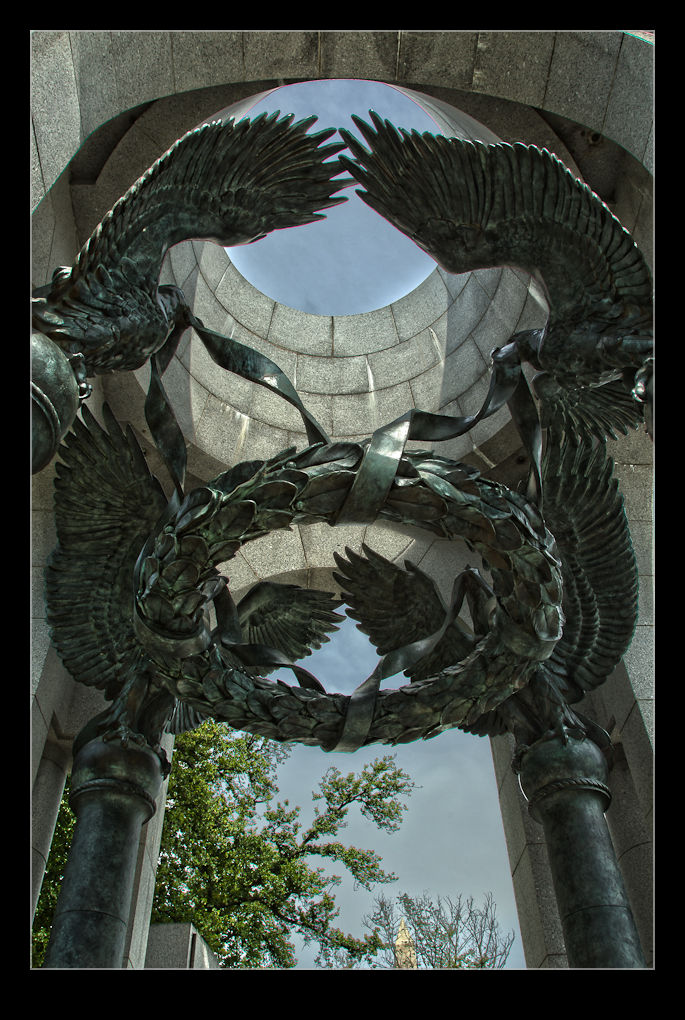
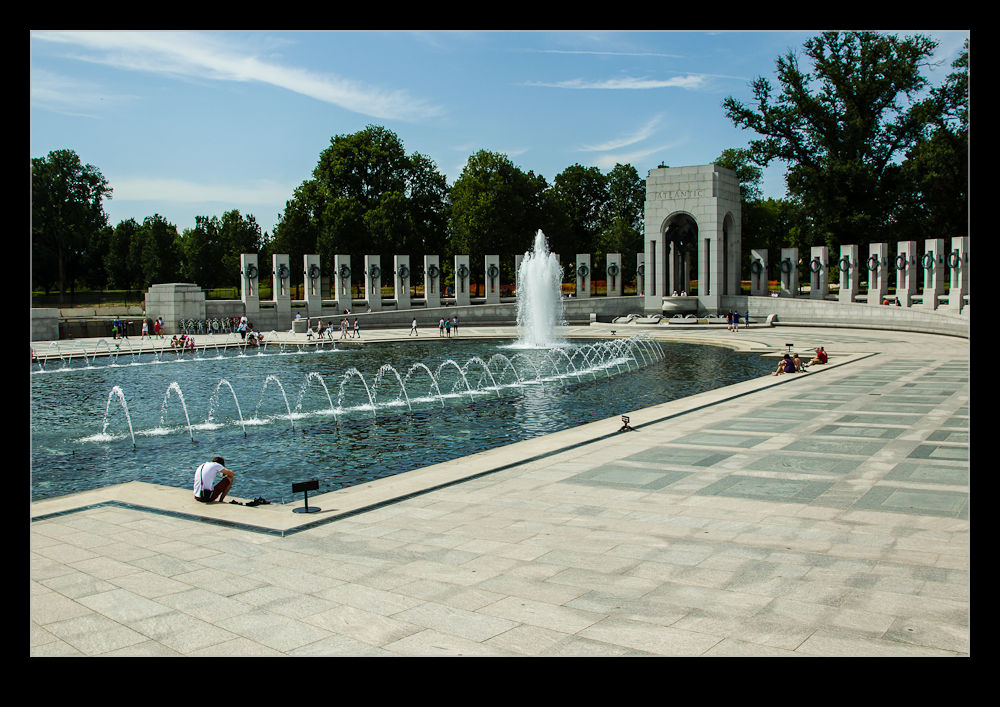
The World War II memorial opened a few years ago, after we were no longer living in DC.  However, I have been to DC a number of times for various work tasks and have had a chance to visit it before.  It is a very large memorial and impresses you with the scale of itself which is probably appropriate given the scale of the conflict and the loss of life it represents.

There are two halves to the memorial, one representing the Pacific conflict and the other the Atlantic.  Each of the states are represented on columns around the site and there are several water features.  On a hot day, the large expanses of light colored stone can make the temperature a little hard after a while so the running water and the areas of shade can be a welcome respite.

The whole design is very classical in its approach.  Whether this is a reflection of the response to previous monuments to conflicts on the Mall or whether it is just what seemed appropriate to those selecting the bidding architects I don’t know.  I think it works well and sometimes you don’t have to be different.  Since the whole installation is so large, a classical approach seems quite appropriate.  It is interesting that it took so long for this memorial to be built but now it is there, it adds an appropriate element to the Mall.

Albert Einstein

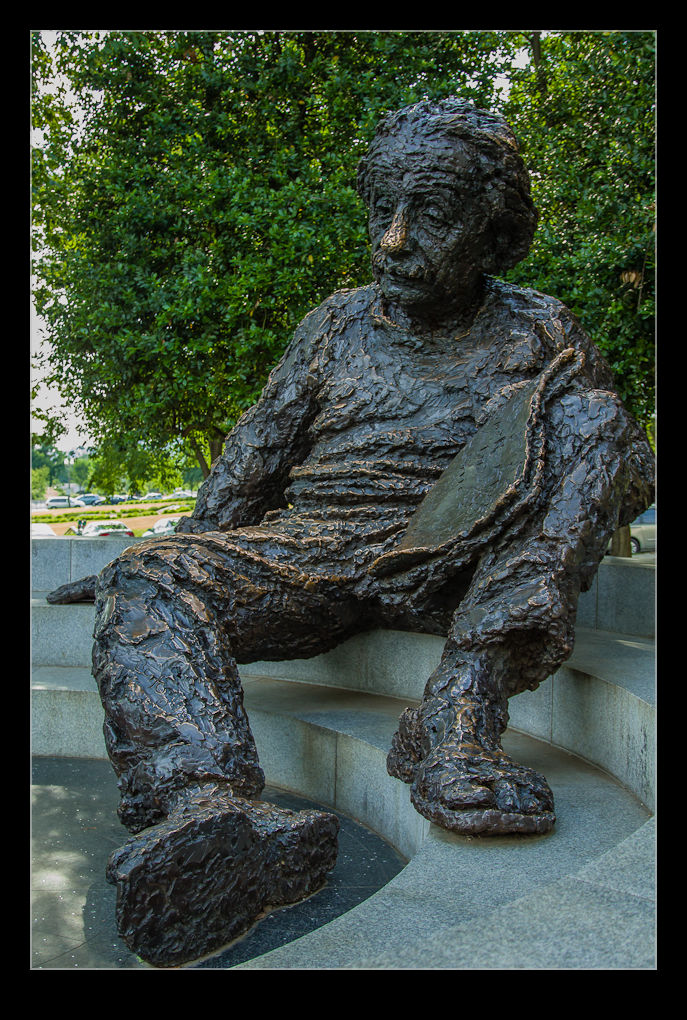
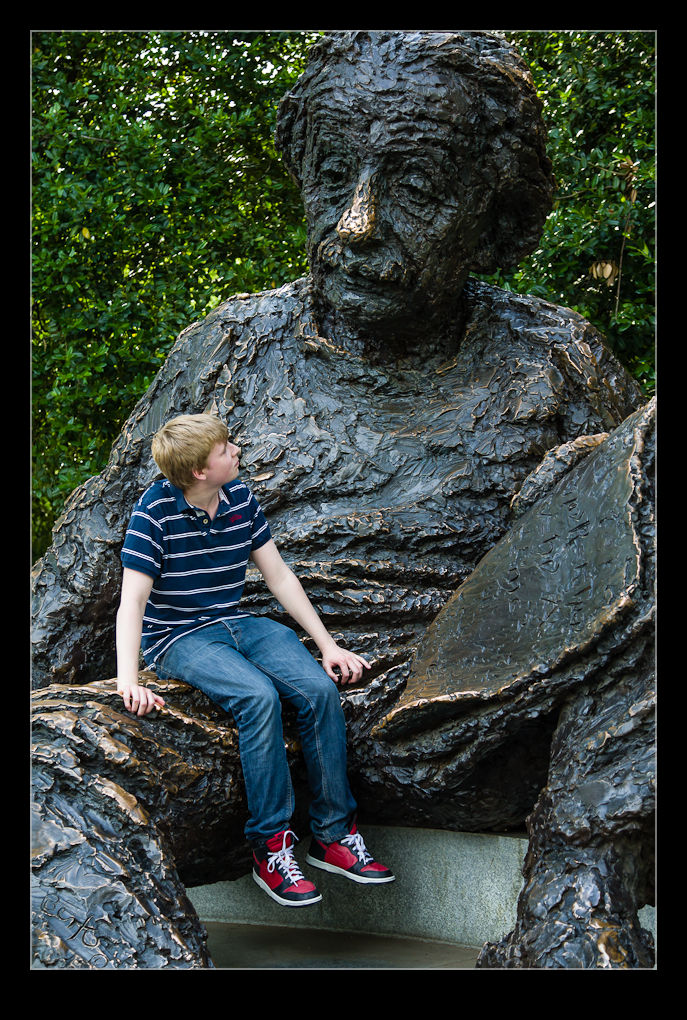
Just across from the Lincoln Memorial is the National Academy of Sciences.  On the grounds in the front of the building is a sculpture of Albert Einstein.  It is a great sculpture since it is quite sizable and impressive yet is in a style that is very relaxed.  It gets a few visitors at a time but isn’t very busy so is a nice distraction from the business of the rest of the Mall.  It is also just the right size to encourage you to sit in his lap.  I include a picture of Chris doing just that so you can gauge the scale.

Korean War Memorial

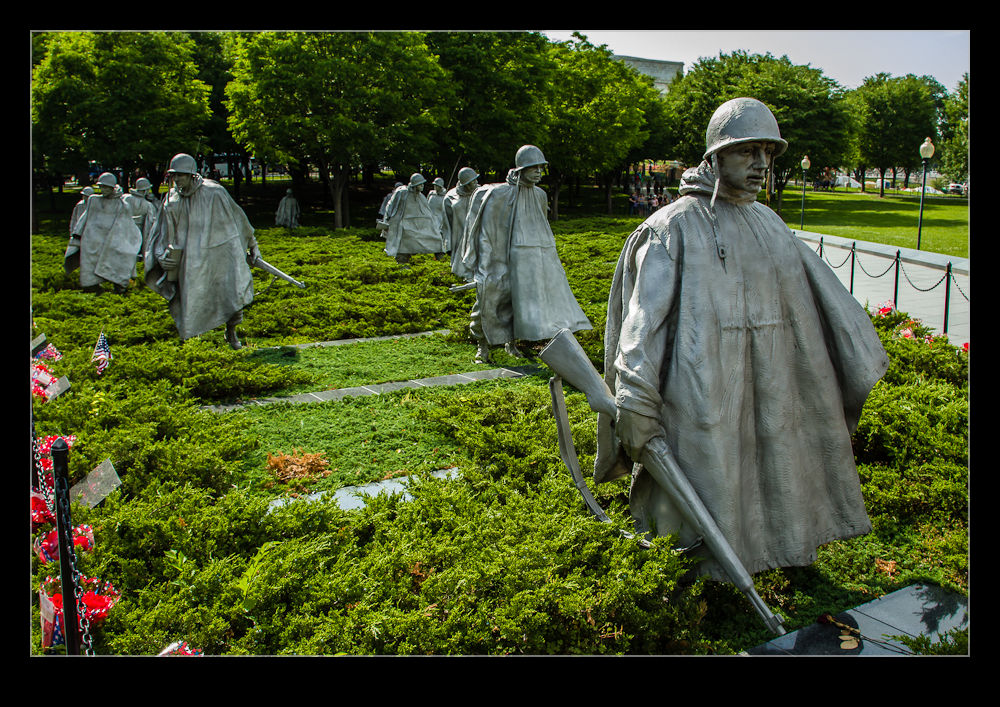
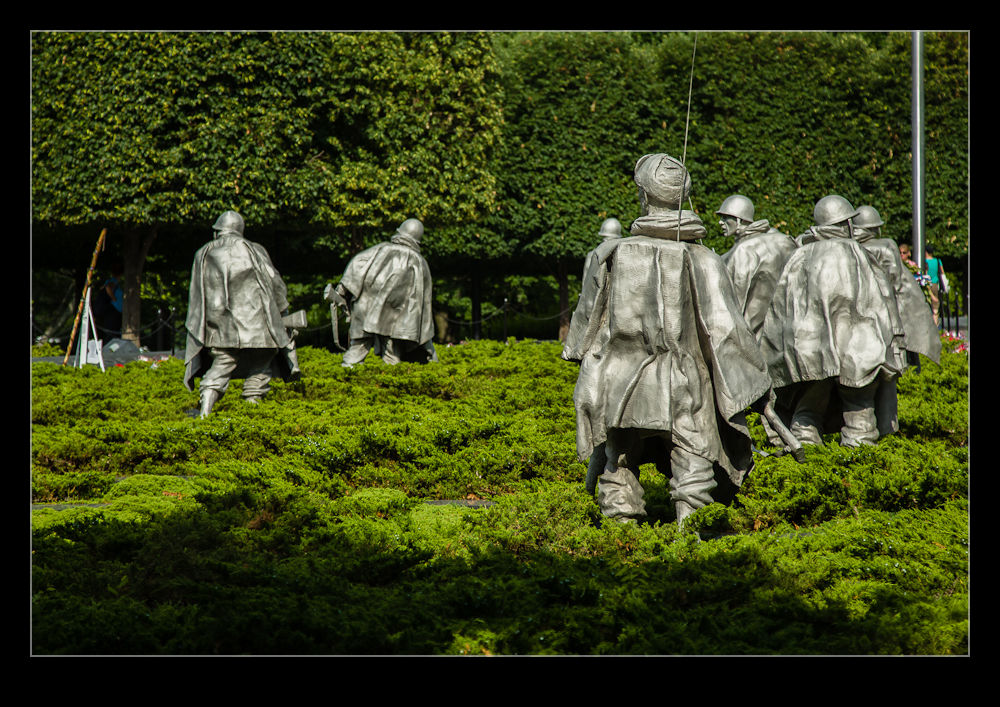
The Korean War Memorial opened around the time I lived in DC in the 90s.  I thought it was really cool when I first saw it and I still think it is an impressive monument.  It is particularly good to see in the rain since the outfits the soldiers are wearing in the sculpture are big ponchos and, on a dull and wet day, the image of the guys out on patrol is particularly evocative.

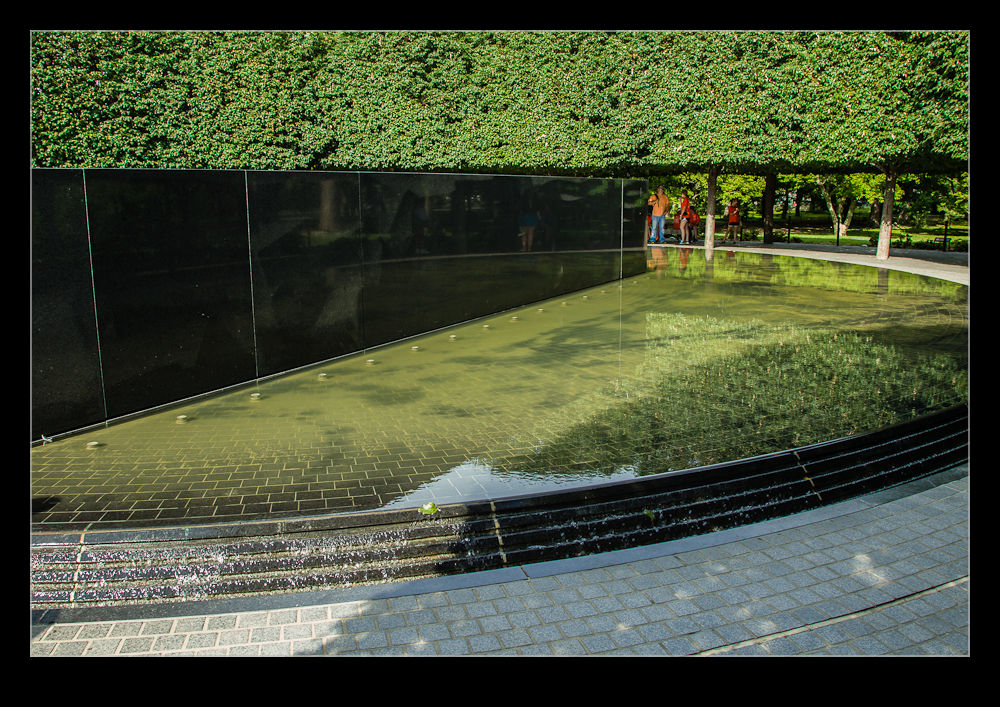
It was sunny this time so the effect wasn’t quite the same but the sculptures are still very impressive.  I had not remembered the water features around the memorial as much as the sculptures so this was a bit of a discovery for me.  The number of visitors was very high so it was hard to get the alone feeling that seems appropriate for the whole place but it is still a very interesting place to visit.

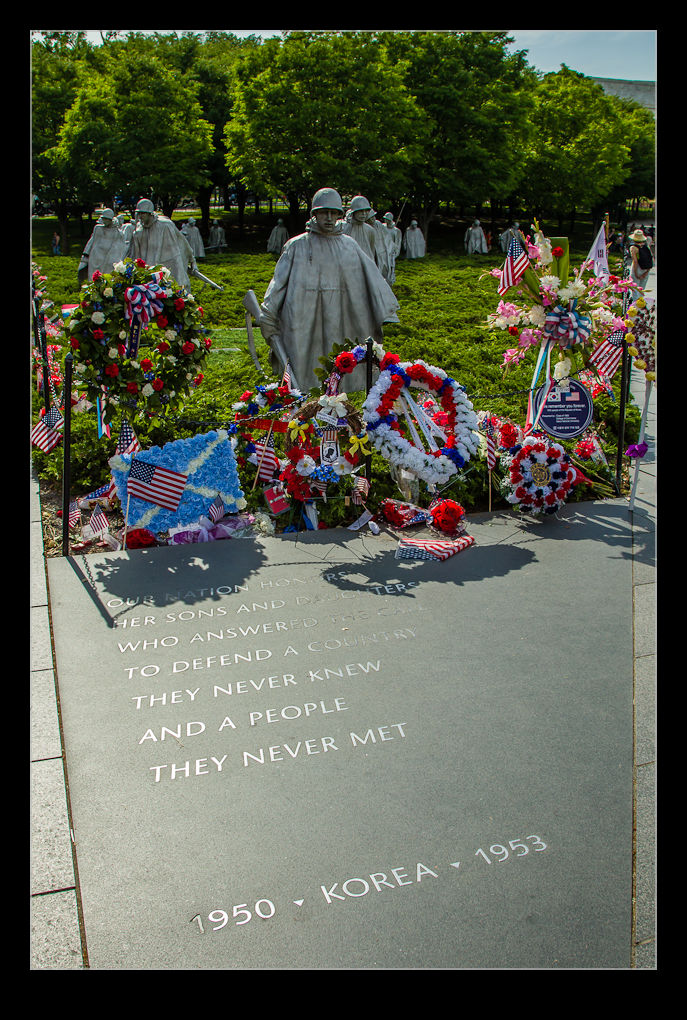
It was not long after Memorial Day when we were there so there were a lot of flowers around the memorial and many personal messages that people had placed.  This always adds a personal feel to any memorial.

US Capitol

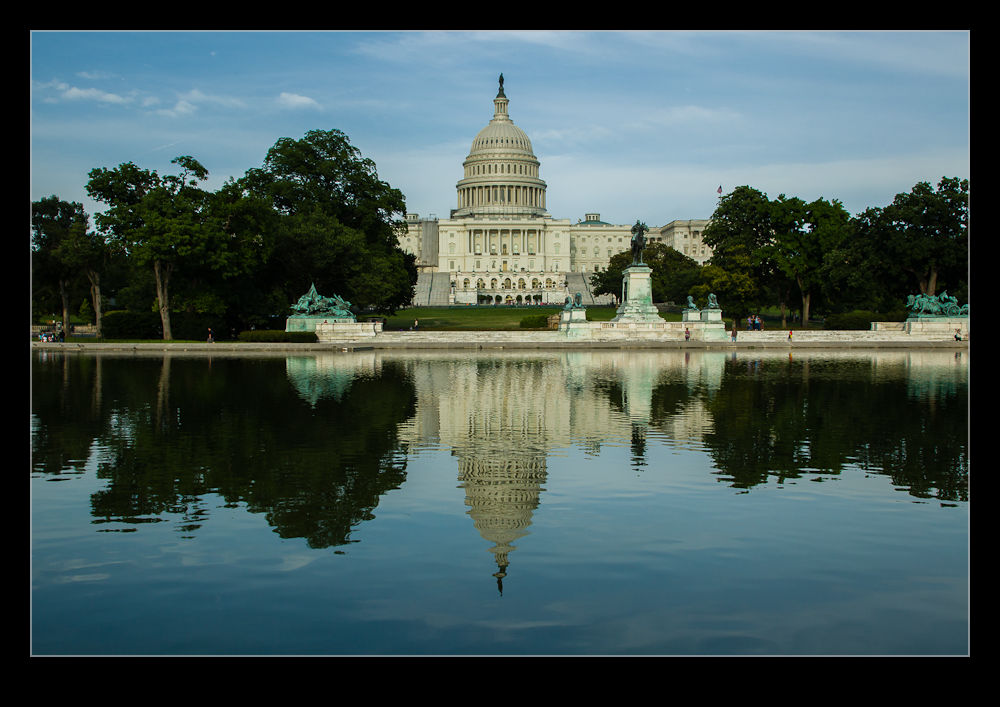
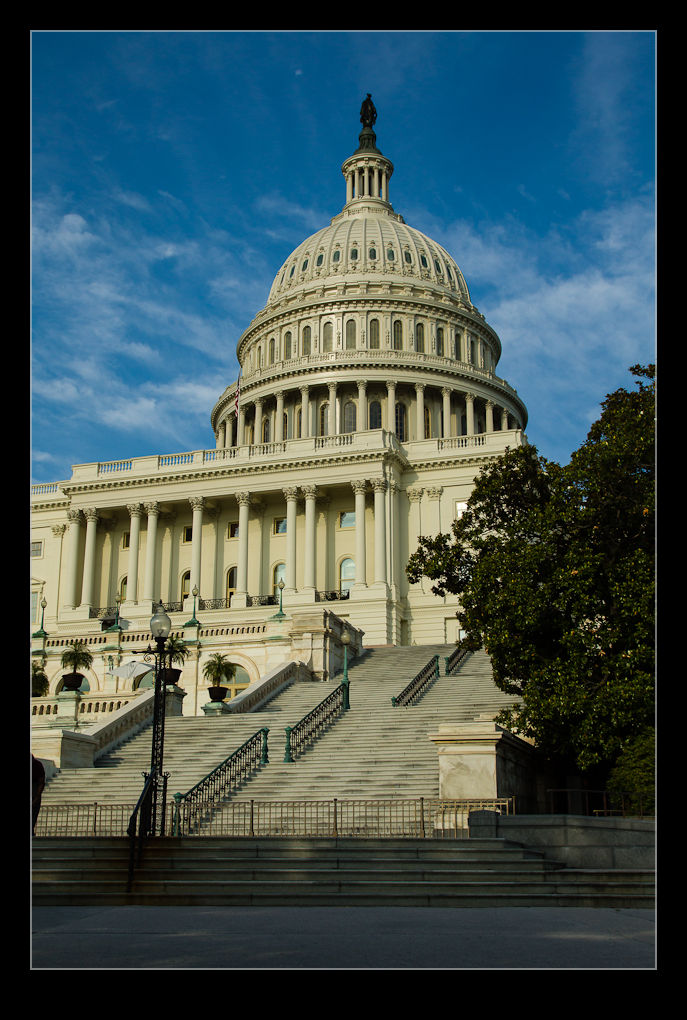
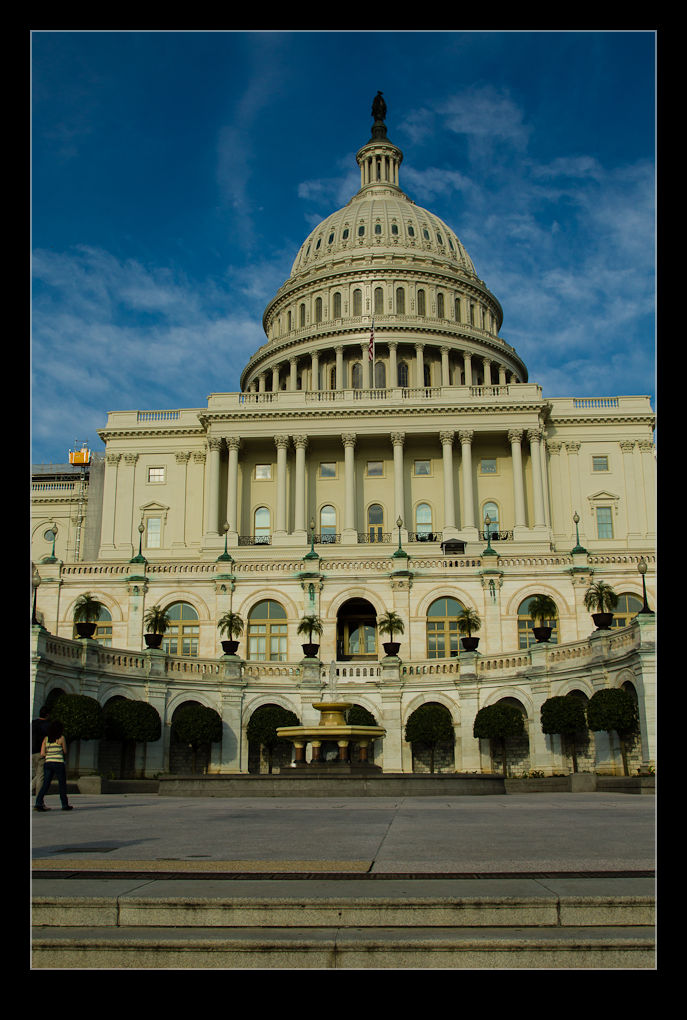
The US Capitol topped and tailed our trip to DC.  We came into Union Station when we entered the city and so the Capitol is just a short walk away.  Chris went and shot some images there while I was in my meeting so I bypassed it when I was trying to catch up with him.  This ended up working in my favor.

On our return leg, the weather had improved from the cloudy skies we had started out with and, more importantly, the sun was starting to go down so the light was getting a lot more friendly.  Also, a third upside was that there weren’t too many people around any more.  Therefore, while we were a bit bushed and also keeping an eye on the time of our train back to the airport, we stopped off and grabbed a few shots of the Capitol before heading home.

Lincoln Memorial

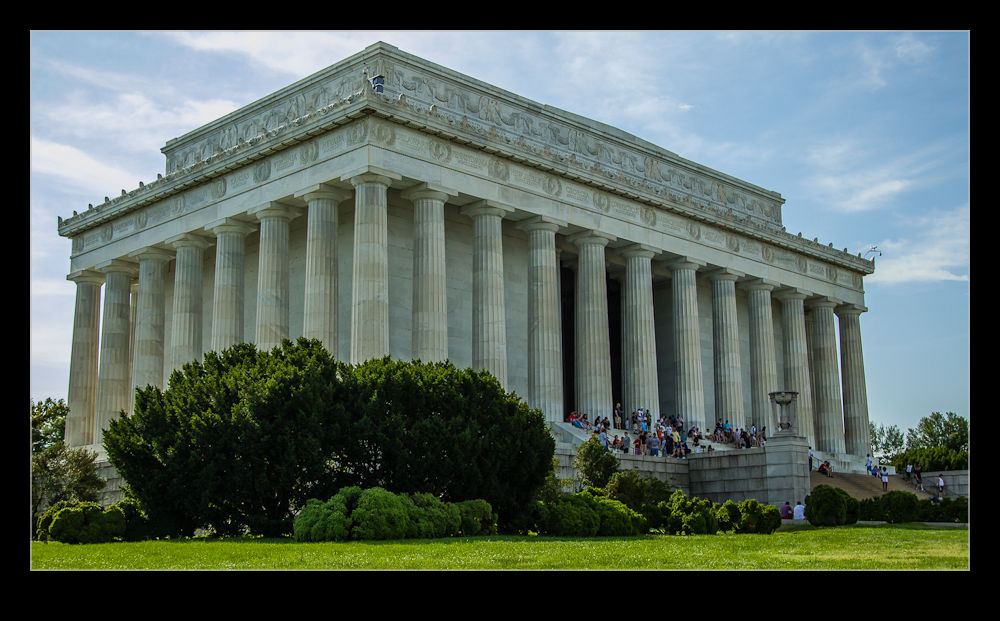
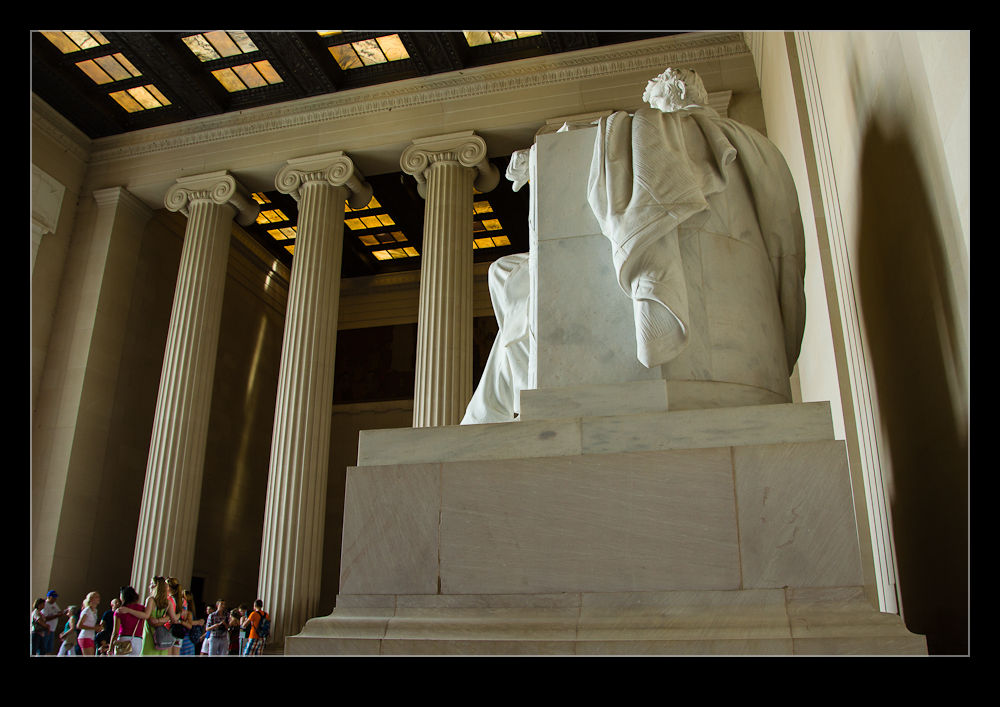
Continuing the Washington tour, we headed to the Lincoln Memorial.  This one isn’t an unfamiliar subject and there is only so much you can do that is new.  I was also a little constrained by the time of day we were there but enough of the excuses.  I still got a few shots of the memorial as we looked around.  It is an impressive structure and very popular.  Consequently, there are a lot of people there at almost any time of day.

With so many people there, you are not often going to get the chance to have the scene clear of people so you make the best of it.  I figured I would go as wide as possible in order to make the people less prominent in the shots.  Whether this really worked or not, I am not sure.  I also decided to do a panorama inside the building to try and get the wide shot without the distortion the fish-eye can bring.

That didn’t stop me playing with the fish as well.  It certainly provides a different look at some things but the large amount of vertical references really shows the distortion.  Still, it was worth a try.

MLK Memorial in DC

The next few posts will all be related.  My nephew, Chris, was staying with us recently and, while he was here, I needed to travel to Washington DC for a meeting.  Since Chris had never seen Washington and my meeting would not take up the whole day, I took him along so he could see a bit more of what the country has to offer a visitor.  It was only one day but Washington is nice and compact when you are looking at some of the more obvious tourist attractions provided you are ready to walk.

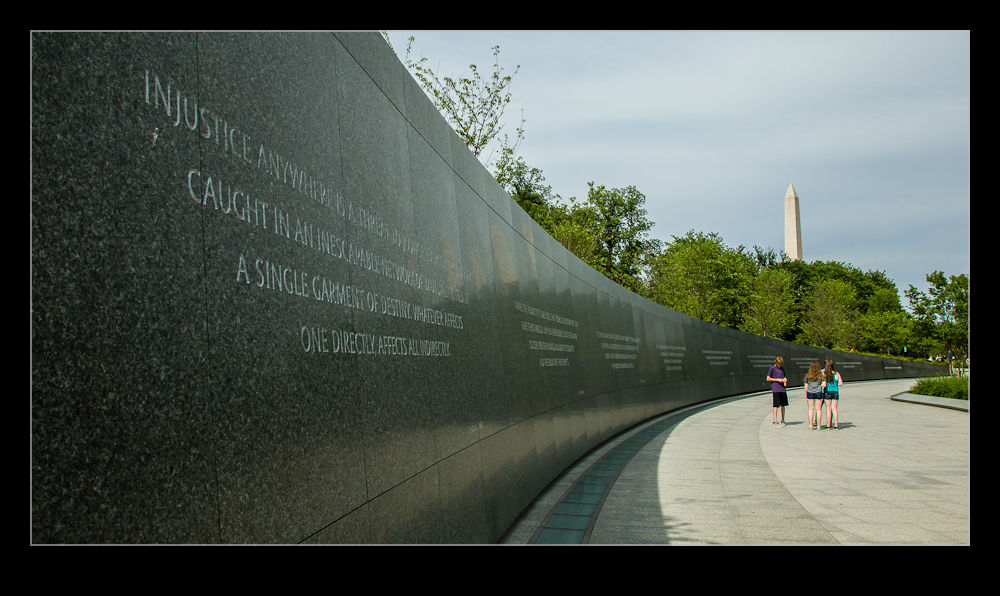
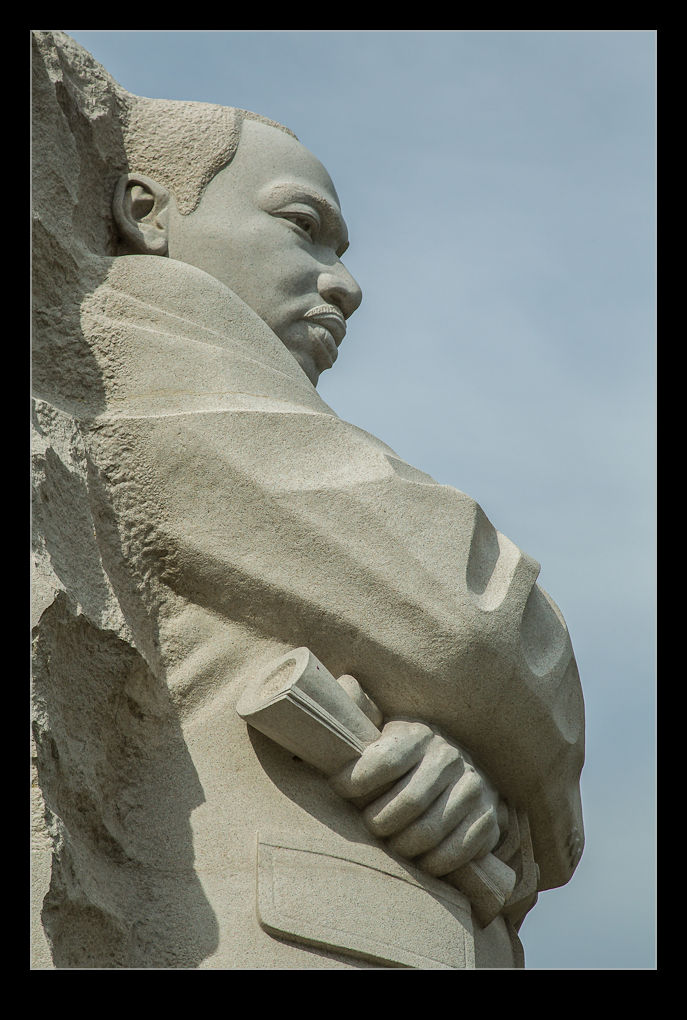
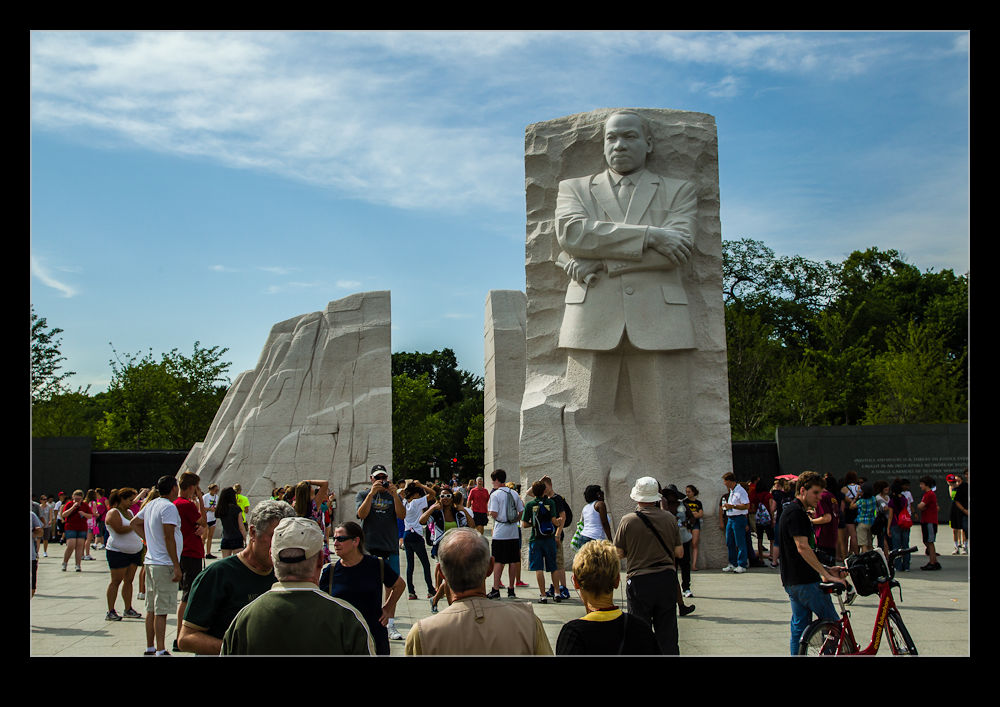
It was an early start and a long day out but we covered a lot of things.  Today I shall start with one that was new to me as well.  The Dr Martin Luther King Jr memorial is a relatively new addition to the collection of monuments around the Mall area in Washington.  I had heard about it and was interested to see how it looked.  I was not alone as there were plenty of people walking across to find it.

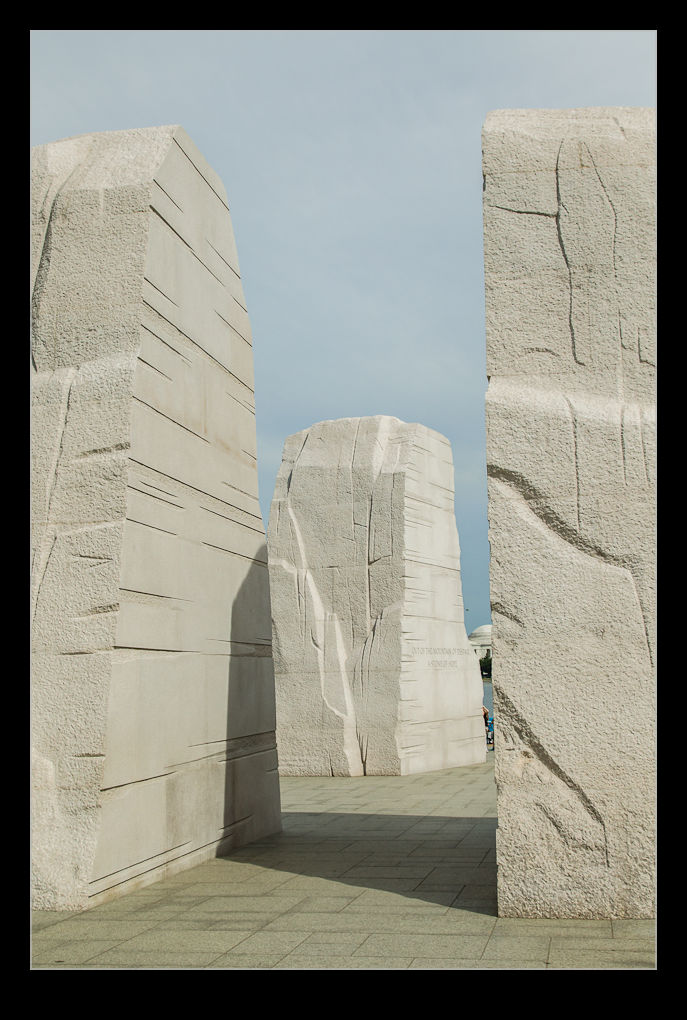
A number of features were of interest to me.  There is a quote from Dr King on one of the stones which says “Out of a mountain of despair, a stone of hope.”  I am not familiar with the full quote and its context but the entrance to the memorial is a large rock from which a central section has been extracted.  This section is placed further into the memorial and it is on this section that his likeness is sculpted.  As I saw the relationship between the two parts, I was quite taken with it.

I know the memorial has not be universally well received but I liked this entrance feature combining with the sculpture, the wall of quotations and the general feel down by the tidal basin.  I imagine that it will be a popular place in years to come.  The Vietnam Memorial was controversial when it was created and it is now considered iconic so we shall see how time judges this memorial too.

Virginia Air and Space Museum

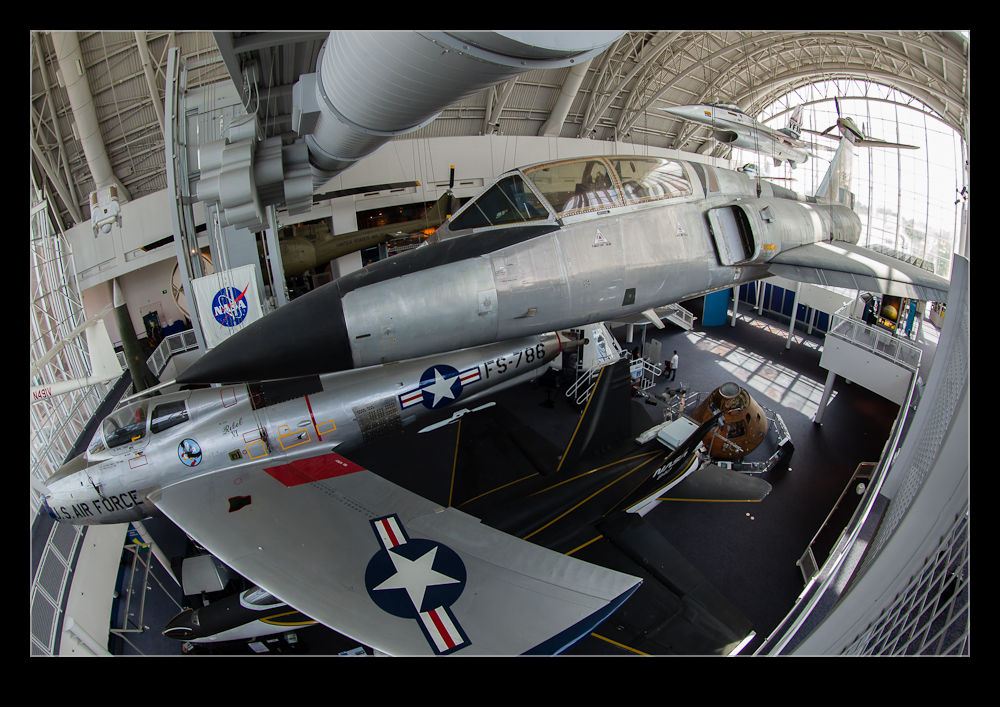
Located in Hampton Virginia is the Virginia Air and Space Museum.  Hayman and I checked it out as part of our tour of local museums.  I had been warned by Liza that everything inside was pretty crowded and she certainly wasn’t wrong about that but more of that later.  The museum is a very modern looking facility with glazing at both end walls allowing lots of light inside.  That also makes for a few problems with the levels of contrast between parts of the building but I doubt they planned it based on the needs of photographers!

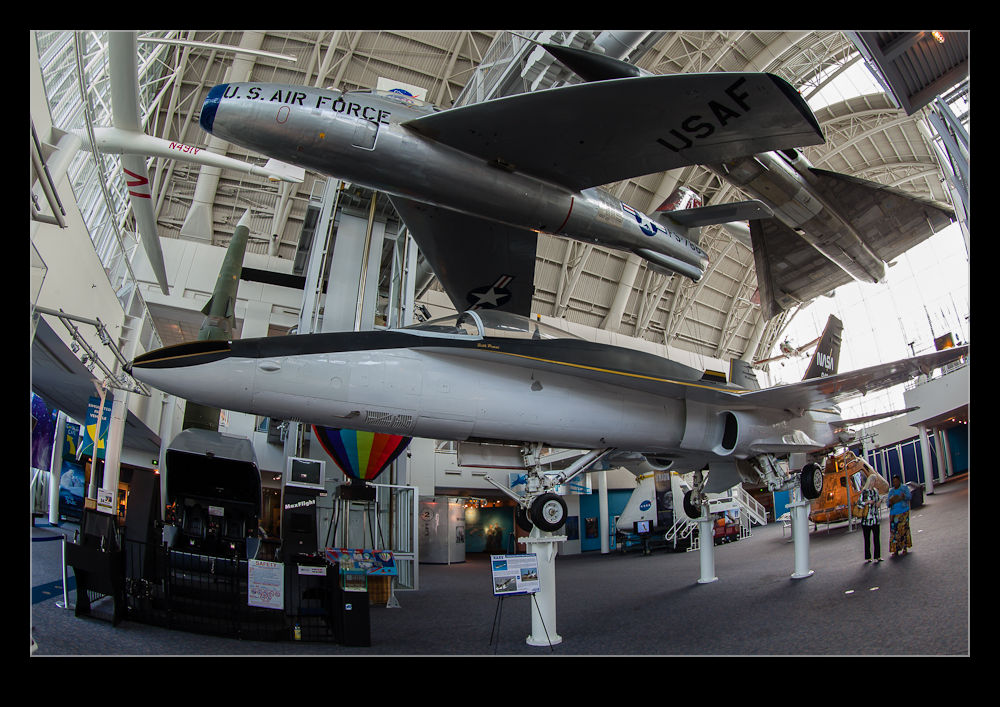
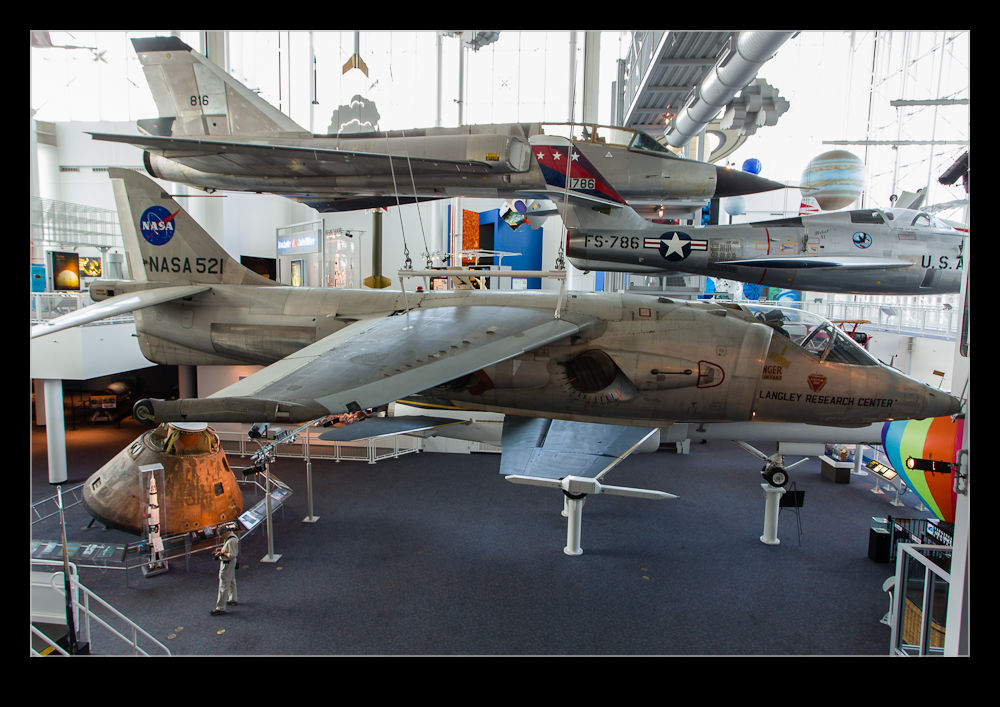
In fact, they really didn’t.  The building has a great collection of aircraft.  The close proximity to NASA facilities has obviously been helpful in getting access to some pretty unusual exhibits.  The Apollo 14 Command Module is on display as is the HARV F/A-18 Hornet, a research F-106 and an XV-6 Kestrel among many other interesting airframes.  They even have an MMU from the Space Shuttle program (although getting a shot of it from the moving elevator was tricky).  The result of all of these exhibits is that they have to be squeezed in.  They are usually suspended from the ceiling which makes them look more dynamic.  However, they do tend to overlap a lot.

This isn’t a problem if you are visiting to see everything which is, after all, the purpose of the museum.  It does, however, make getting photos a bit more tricky.  I ended up using a combination of lenses.  A wide angle zoom and a fisheye zoom were the two I chose.  The fish is a lens that viewers can tire of quickly but, in this case, it was a case of trying to get unobstructed shots where possible.  It also let me try a few odd angles for fun too!

While not a museum I would go back to repeatedly, this was certainly a good place to visit.  I might go back one more time with some new ideas about how to shoot certain things but even that might require the cooperation of the management!  If you are passing and have a couple of hours, do pay it a visit.

NAS Oceana

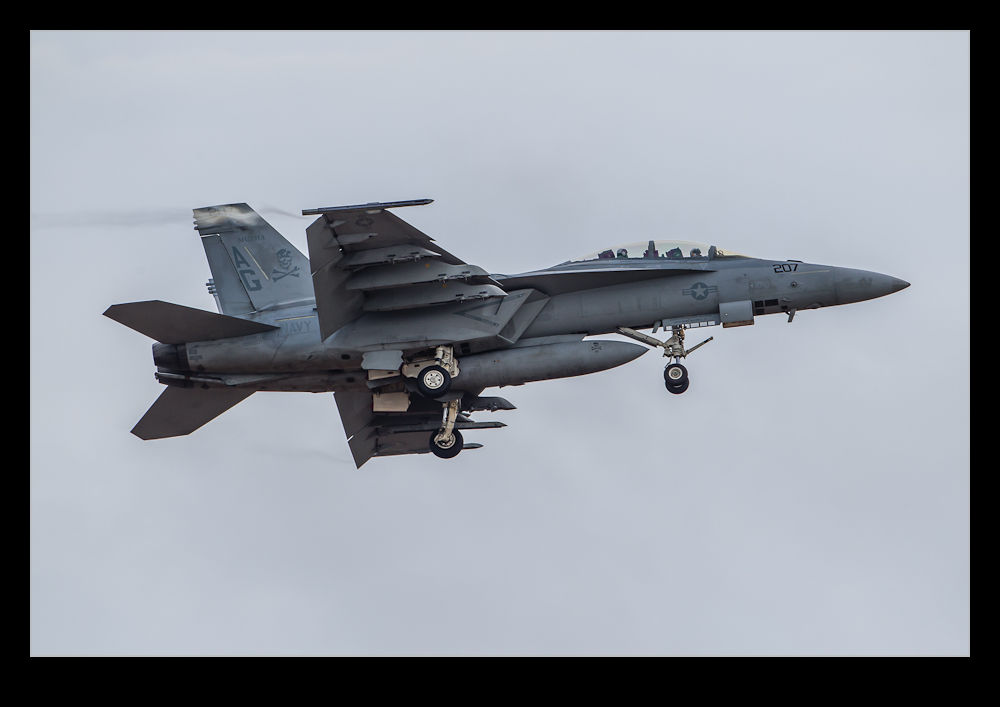
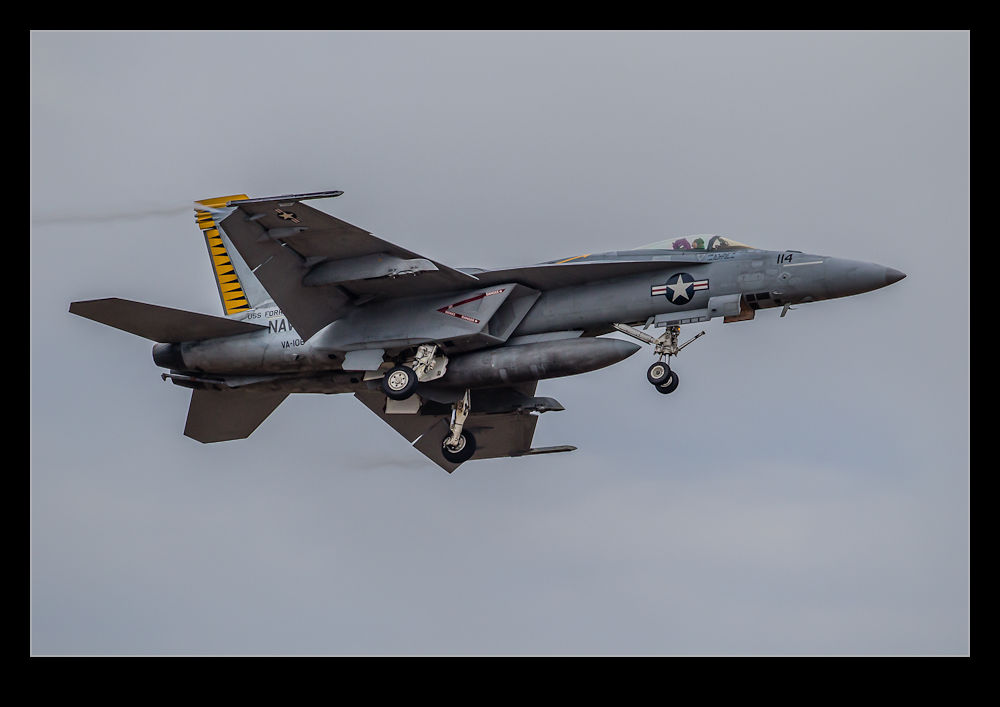
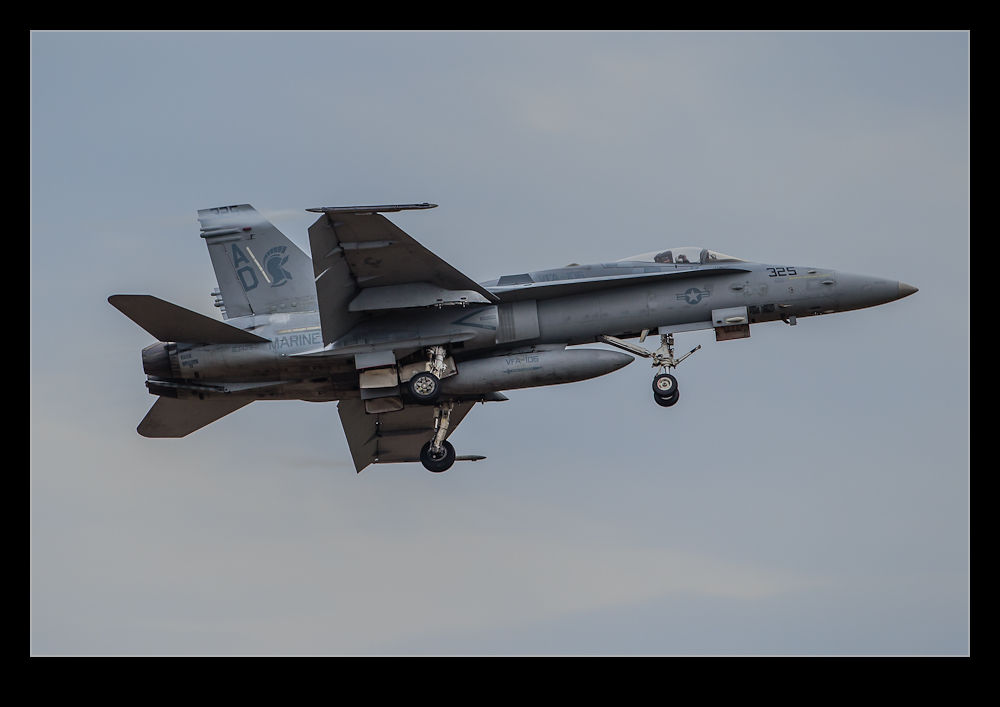
The recent ISAP symposium took me to Norfolk VA.  It is a short drive to Virginia Beach and NAS Oceana – the home of the east coast fighter squadrons for the US Navy.  The field trip for the symposium was going to include a visit to Oceana but, since I was there ahead of the event, I decided to pay a quick visit after my arrival.  A slight delay due to travel complications and then the passing through of a pretty significant storm meant I was a little later than planned but no great problems resulted.

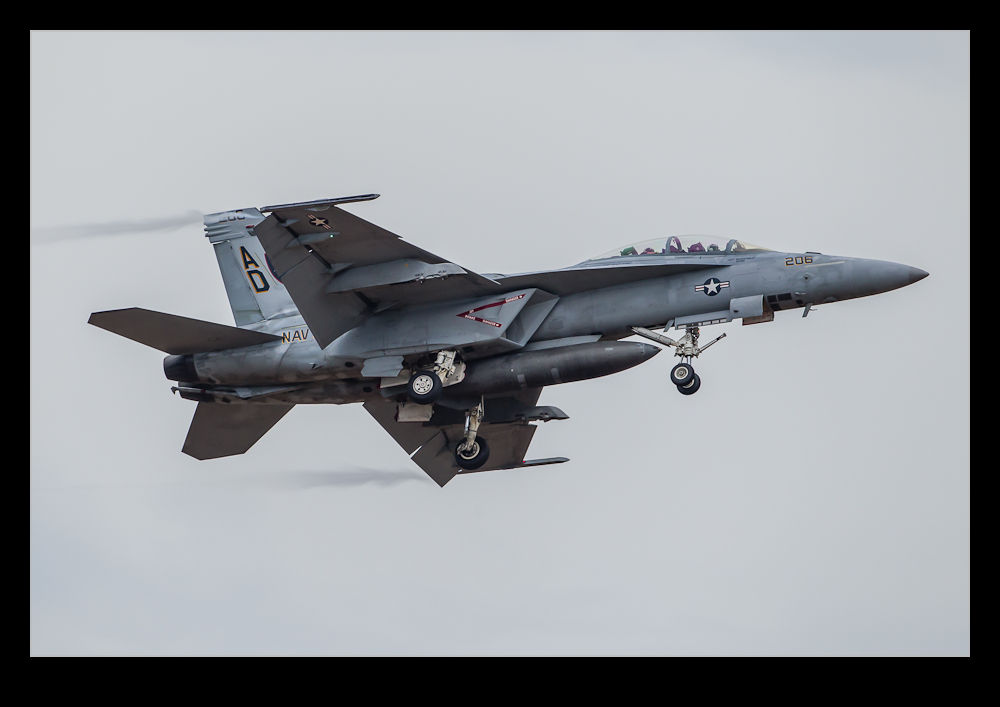
The weather was not great so the light was a bit sparse.  Combined with a cloudy sky, photographing grey jets is always a challenge but I was meeting up with a friend from FenceCheck.com who lives locally so there was always time to chat even if nothing was happening.  However, after a pretty quiet period, a few more jets got up and started flying.  I was supposed to be leaving to go and pick up a friend from the airport but the storm that I had come through was not alone and his inbound flight was significantly delayed.  Therefore, I had the time to see what else would fly.

The activity kept going for a bit was the light was fading fast and my ISO settings were getting higher and higher.  Since the time to pick up my friend was now approaching, I decided to pack up my stuff.  Another jet arrived as I did so.  This didn’t bother me until I realized it was one of the CONA painted aircraft so the kit was rapidly extracted again and a few shots taken.  Then it really was time to go.

Thanks for the advice on the spot to those concerned and also for the chance to catch up.  Maybe not the most ideal conditions but still a fun way to kill an hour or two.

Lightroom 4 and ACR

One of the guest speakers at ISAP this year was Scott Kelby.  Nikon have sponsored Scott to speak at ISAP in the past and it was good that they brought him again this year.  He had a longer slot than in past events and so was able to go into a great level of detail in what he discussed.  He also brought his normal style of presenting which combines a lot of humor with the educational elements.  I find him a good guy to listen to.

I learned a lot of little things from him during the course of his presentation but today I want to focus on just one thing.  This relates to the processing of images using Lightroom 4 and Adobe Camera Raw in Photoshop CS6.  As he pointed out throughout his session and for those of you that don’t already know, these two things are exactly the same.  The processing engine and the controls are identical and the images can be processed in either and get exactly the same results.

What I found fascinating was the level of aggressiveness possible with the controls.  Having used the previous three versions of Lightroom, I have become accustomed to just how much I can use the sliders without the whole thing becoming a total mess.  With Lightroom 4 there is a new processing engine available and the sliders have been changed in their functionality.  I have been getting used to them and experimenting a little with what they do.

What Scott showed us was that you can really be a lot more forceful with the slider use.  Previously, if you used too much of a slider, the image would begin to look really bad.  Now, the sliders are a lot better controlled and you can use far more of the available range without everything becoming scary.  Scott’s methodology through the sequence of sliders also helps out with this.  After his lecture, I went to the laptop and had a go.  It was true.  You really can be a lot more aggressive and the results are really good rather than horrifying!  This was a great learning opportunity and will significantly impact how I approach things in future as well as making me revisit a few previous shots!