Tag Archives: Lockheed Martin

Palmdale Day Out

C59F9459.jpgA few years ago, I was in the LA area with my mate Paul.  We decided to try our luck with a visit to Palmdale.  Home of Air Force Plant 42, Palmdale has a history of interesting aircraft.  The Blackbirds were assembled here as were the Space Shuttles.  The B-2 bombers were also assembled on site.  It is home to some NASA aircraft and continues to support a variety of types.  Consequently, you can see some really interesting stuff.  Alternatively, you can have a day with nothing going on.  It is the luck of the draw.
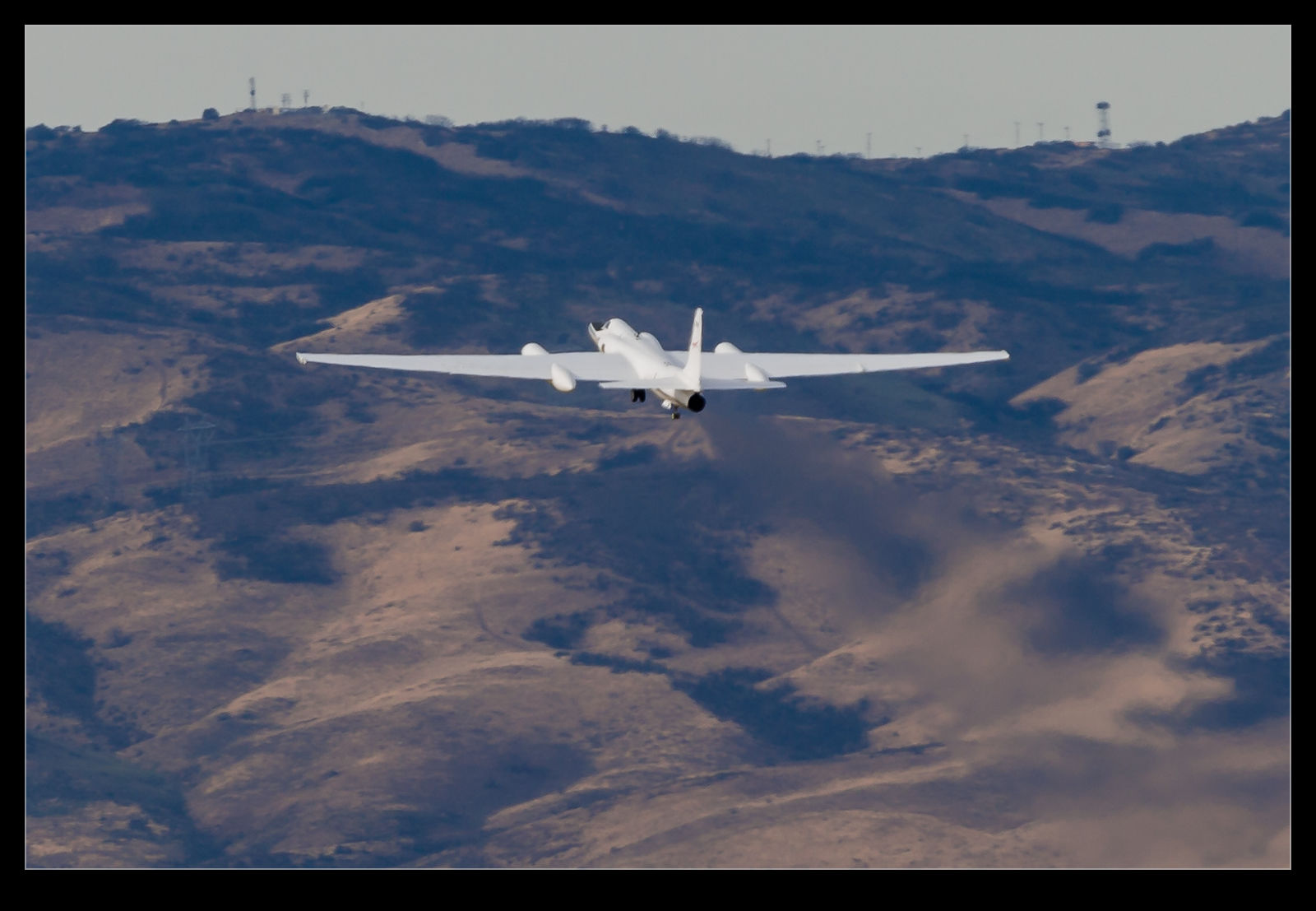
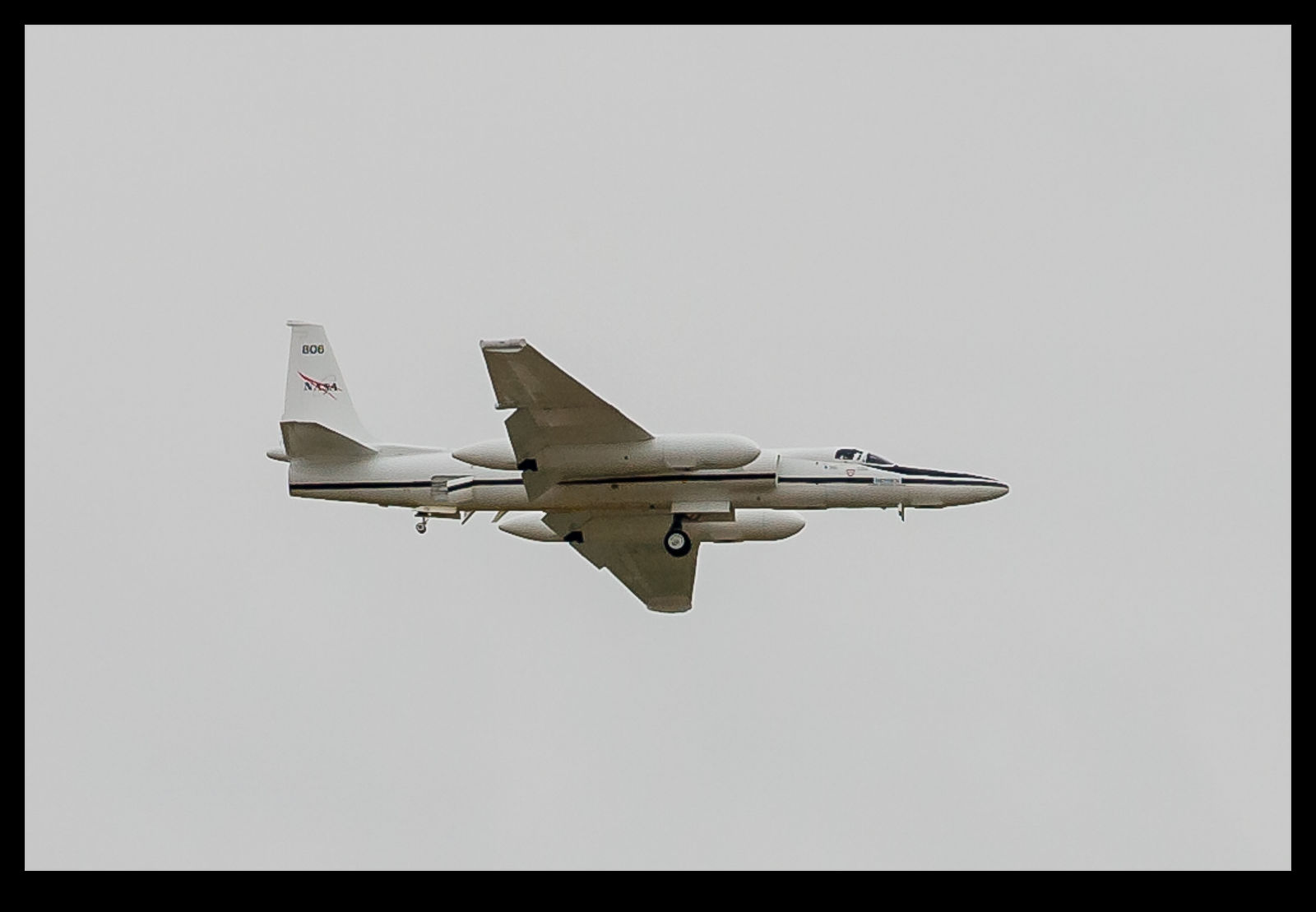
C59F9444.jpgWe decided to try it out anyway and see what we could get.  One of the NASA ER-2s had been active so there was hope that it might be up and about.  One thing we hadn’t anticipated was that the weather was not going to be great.  We had figured it was likely to be clear but actually there was a fair amount of cloud cover all day.  Not ideal but it did keep the temperature down.
QB5Y2449.jpgWe did have success with the ER-2.  Unfortunately, we did not choose well for our locations.  It took off and landed on the runway that we were not close too.  Consequently, we got some shots but they were a bit distant.  We discussed a rapid change of location but, fearing we would get nothing by being in the car at the wrong time, stuck with it.
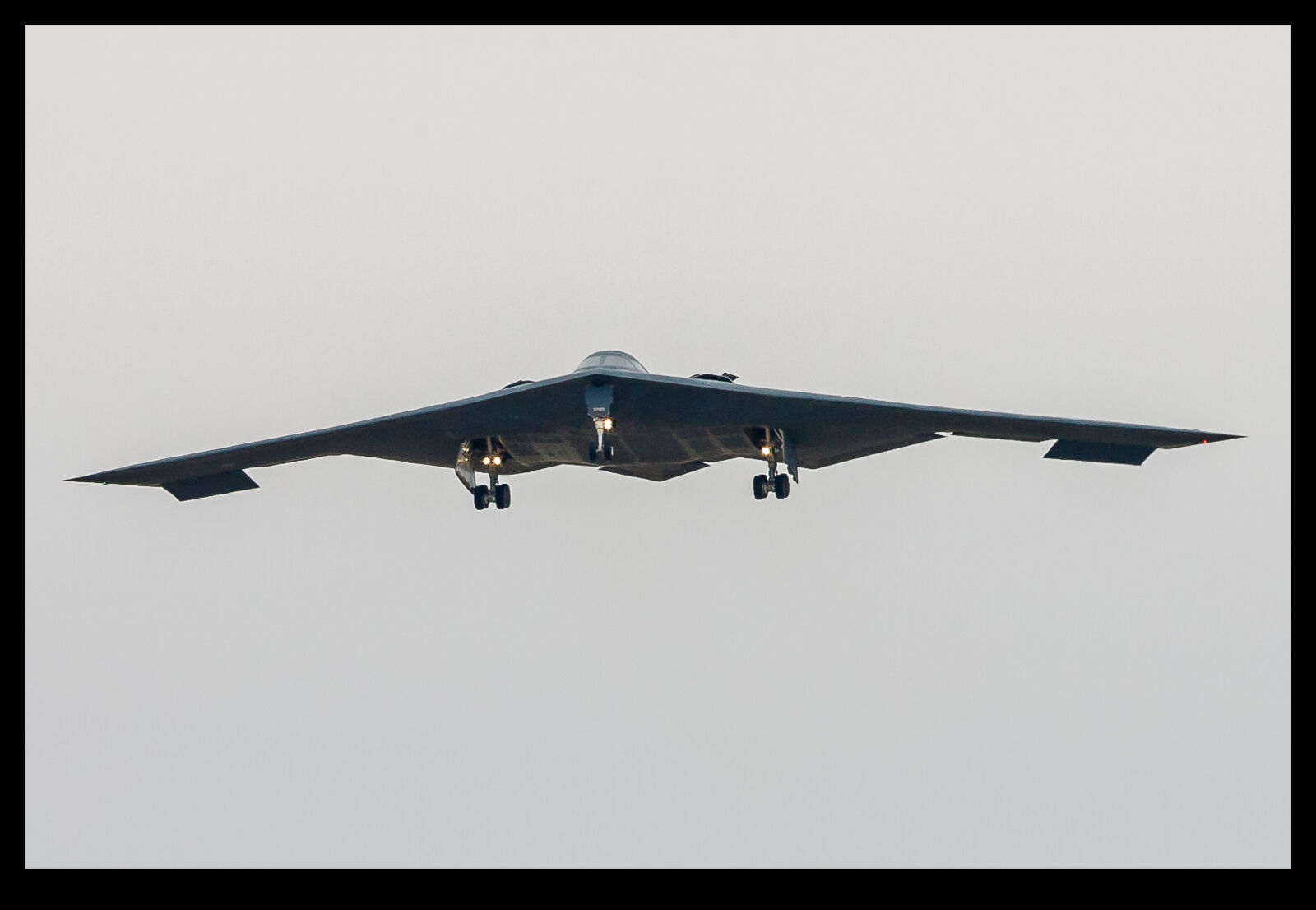
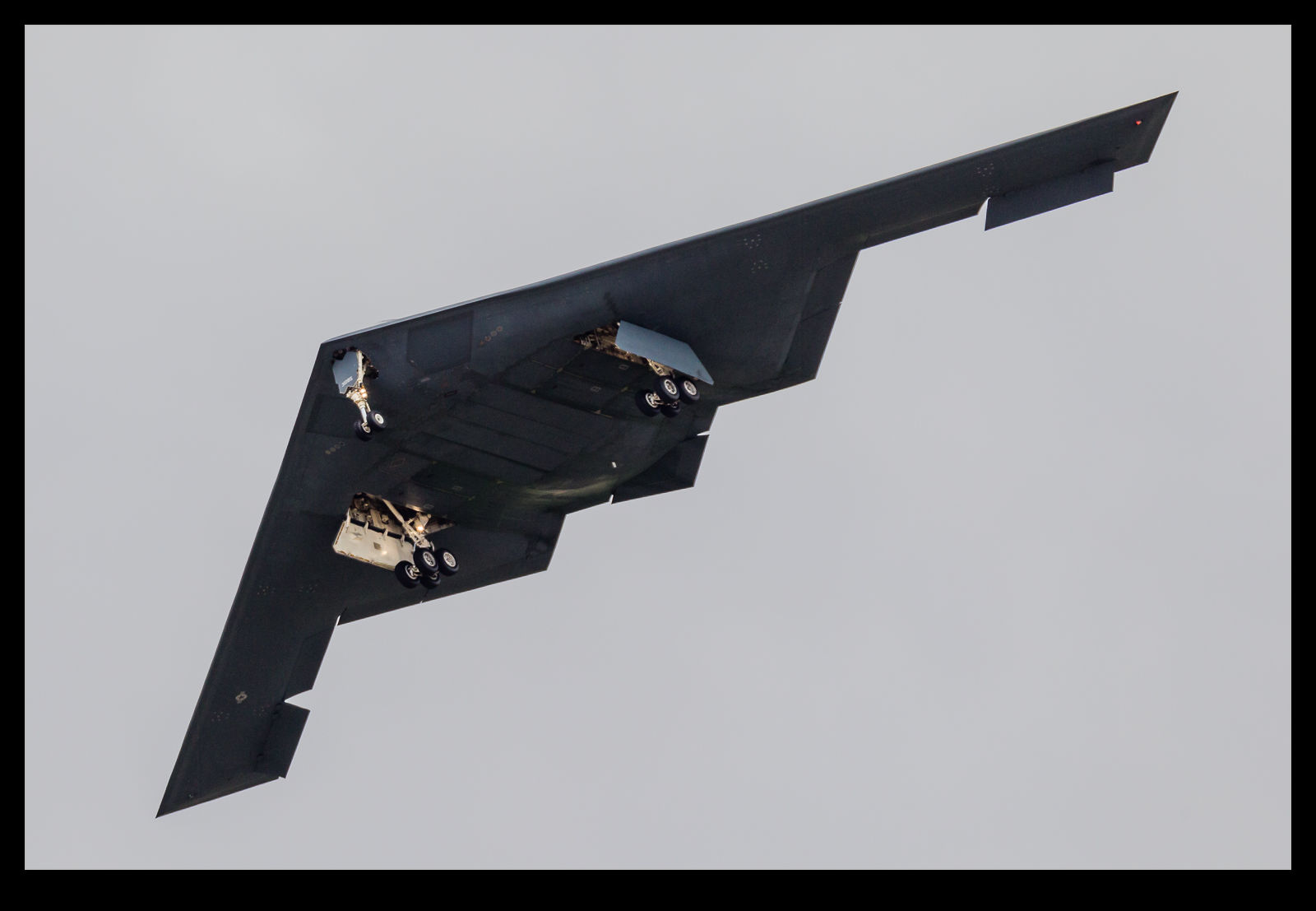
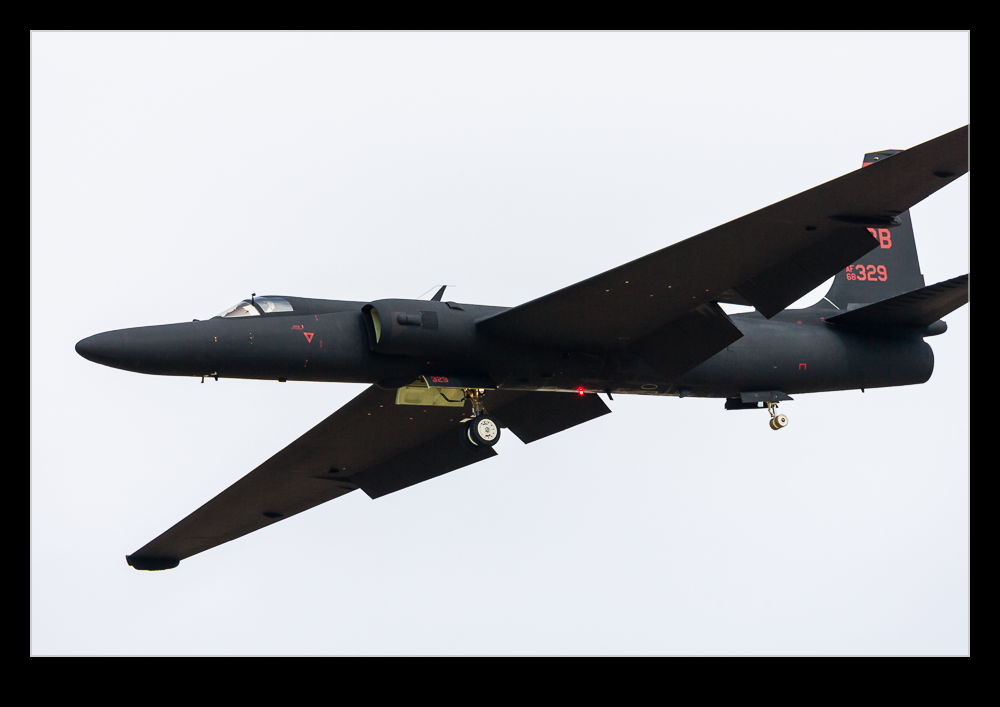
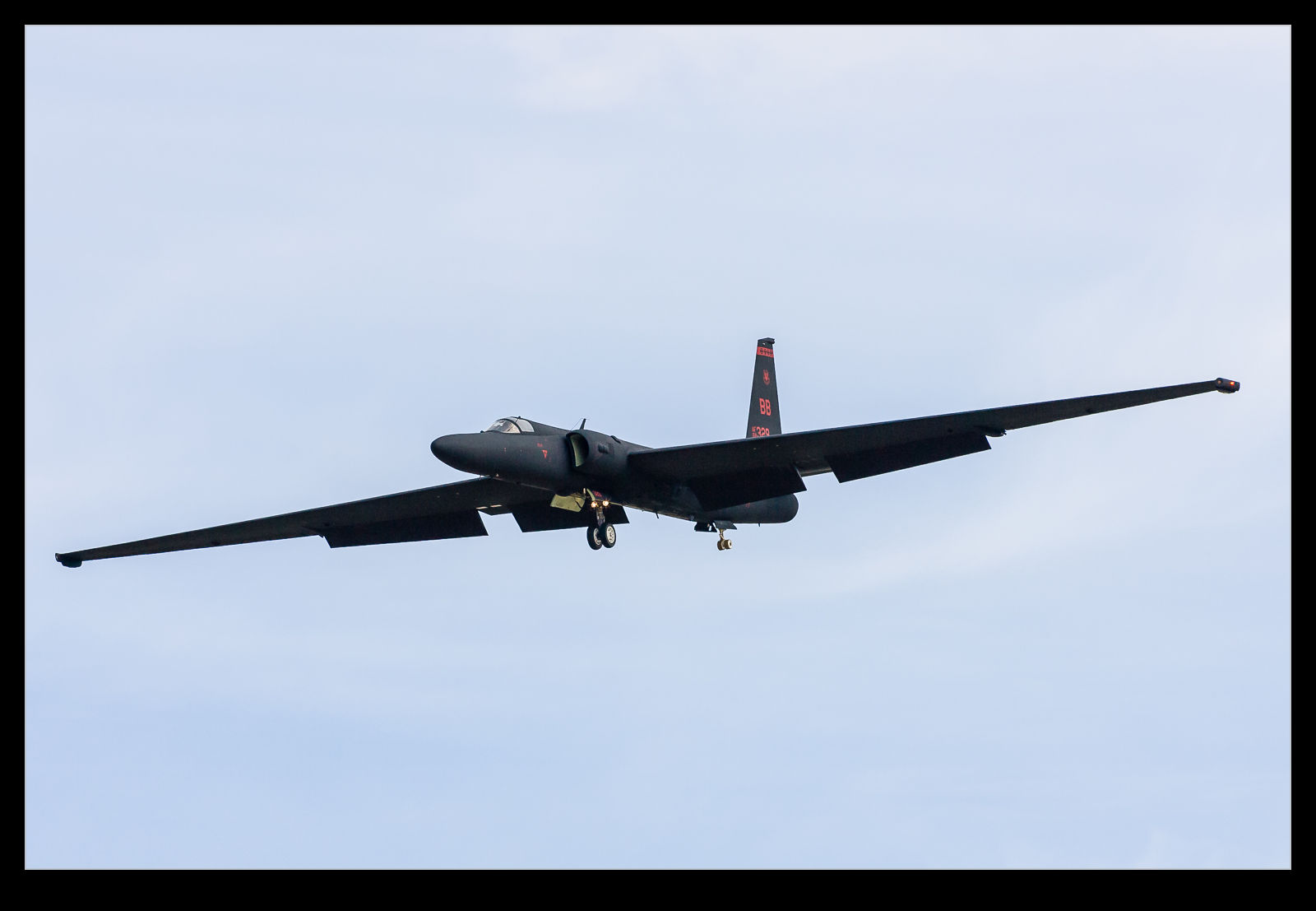
QB5Y2489.jpgOur location was not a total bust though.  We did get a sister ship.  A USAF U-2S came in and we got some shots of that.  It was not alone.  A B-2 also made some approaches.  We figured it was coming from Edwards and heading back there again.  Sadly, shooting black aircraft against a cloudy sky is a bit tricky.  Still, we might have done worse.  After a while, the local movements of Northrop Grumman shuttles had been enough so we decided to get on the road back to LA.
QB5Y2506.jpgQB5Y2435.jpg

Arizona’s F-16s

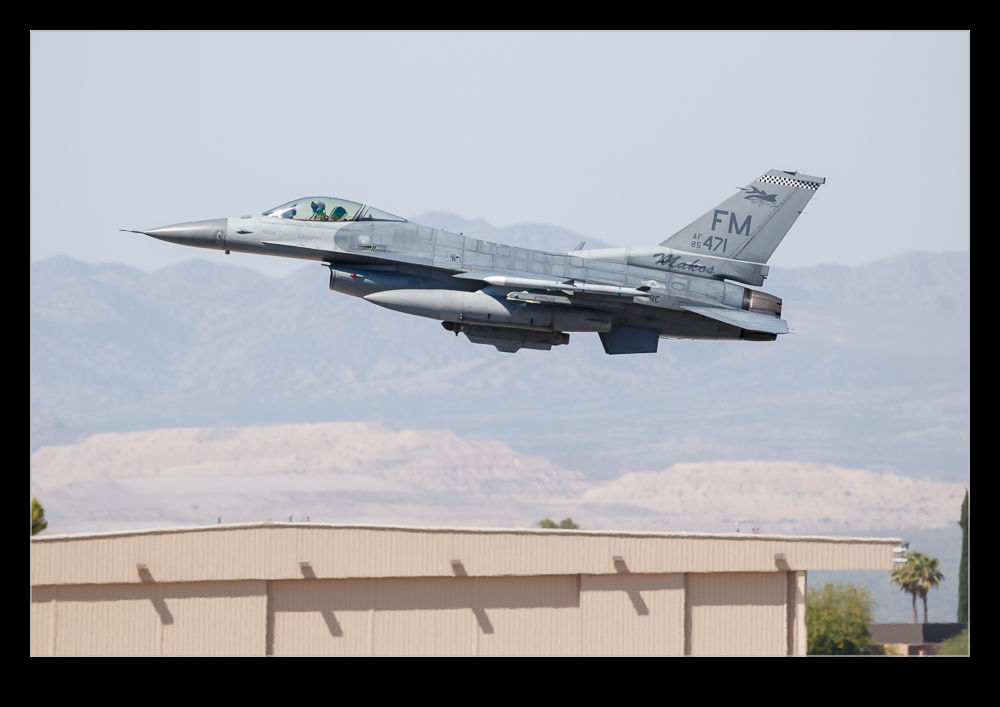
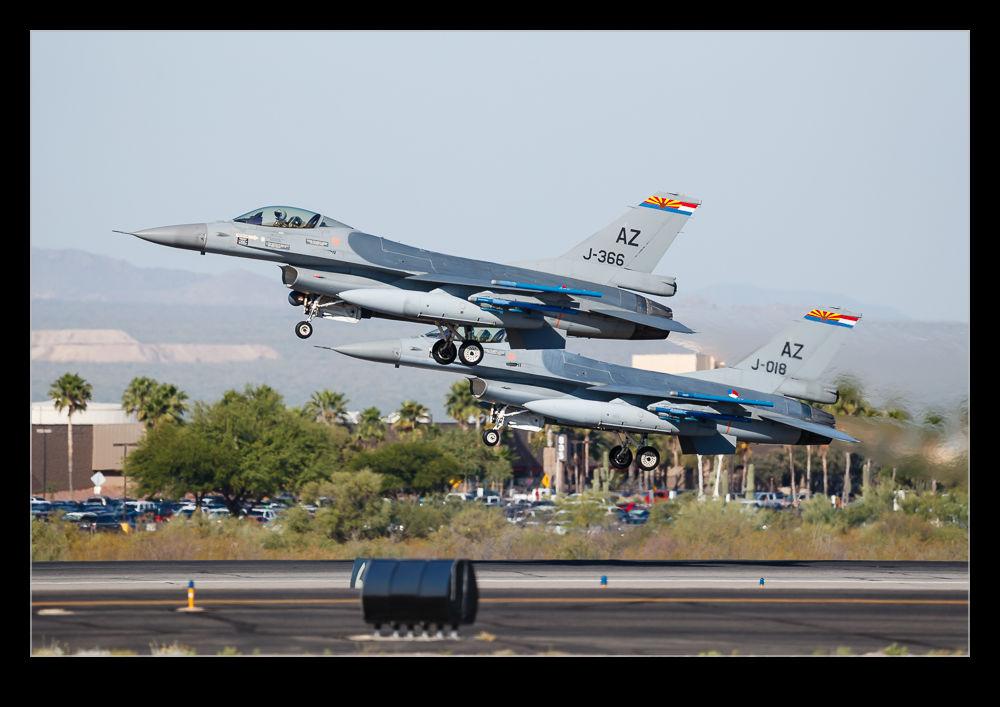
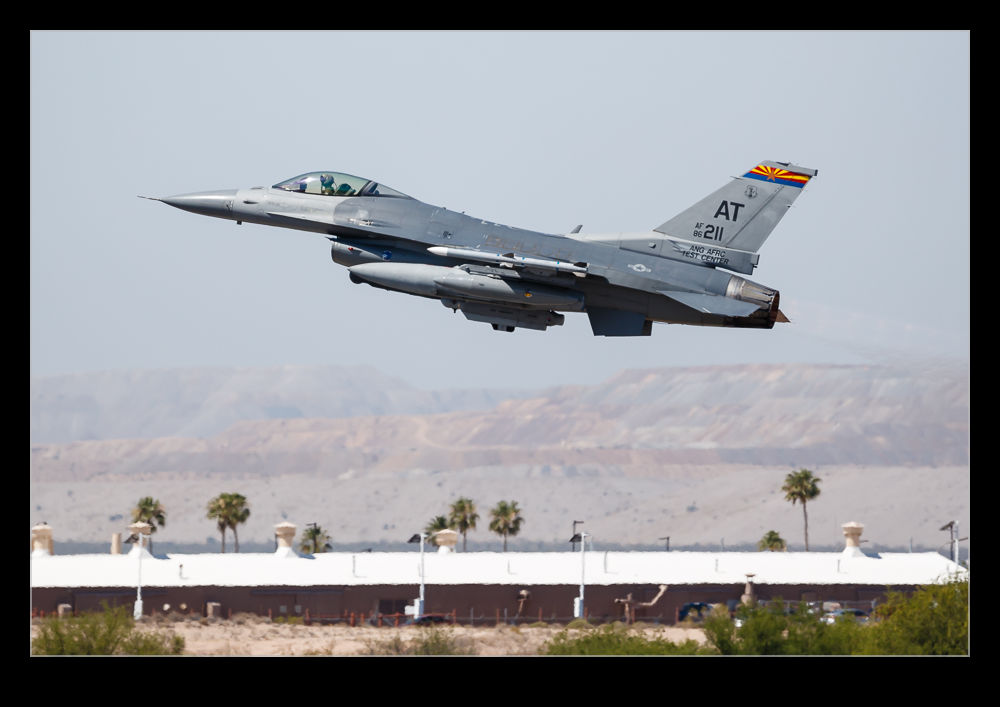
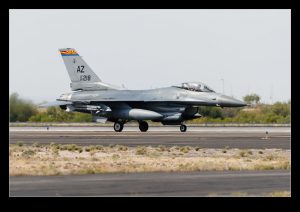
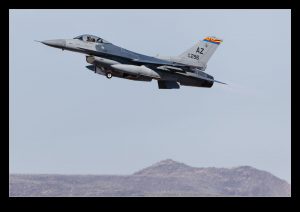
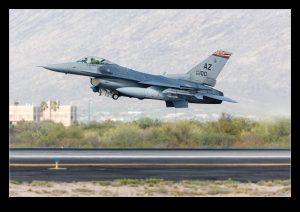
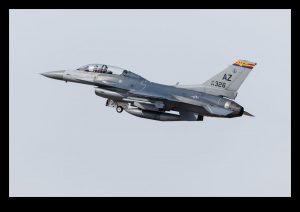
B11I6356.jpgThe home team at Tucson International are the Arizona ANG F-16s.  The Iraqi and Dutch jets may be of interest but the local jets are still worthy of attention.  I didn’t get as much time to shoot them as I would have liked but there were still a few chances to catch some of them departing and recovering so here are a few from those times.

Italian F-16 Not Long For This World

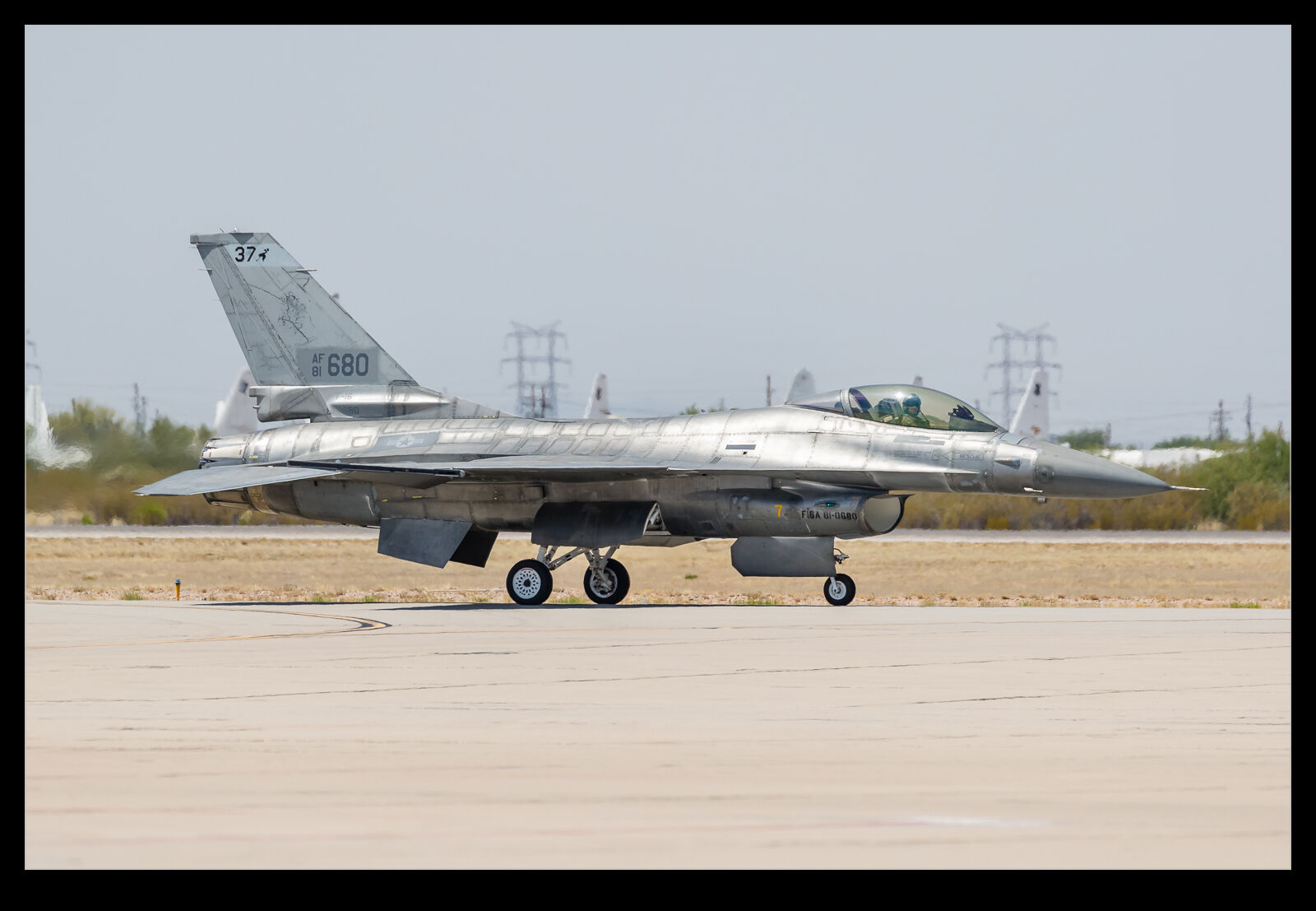
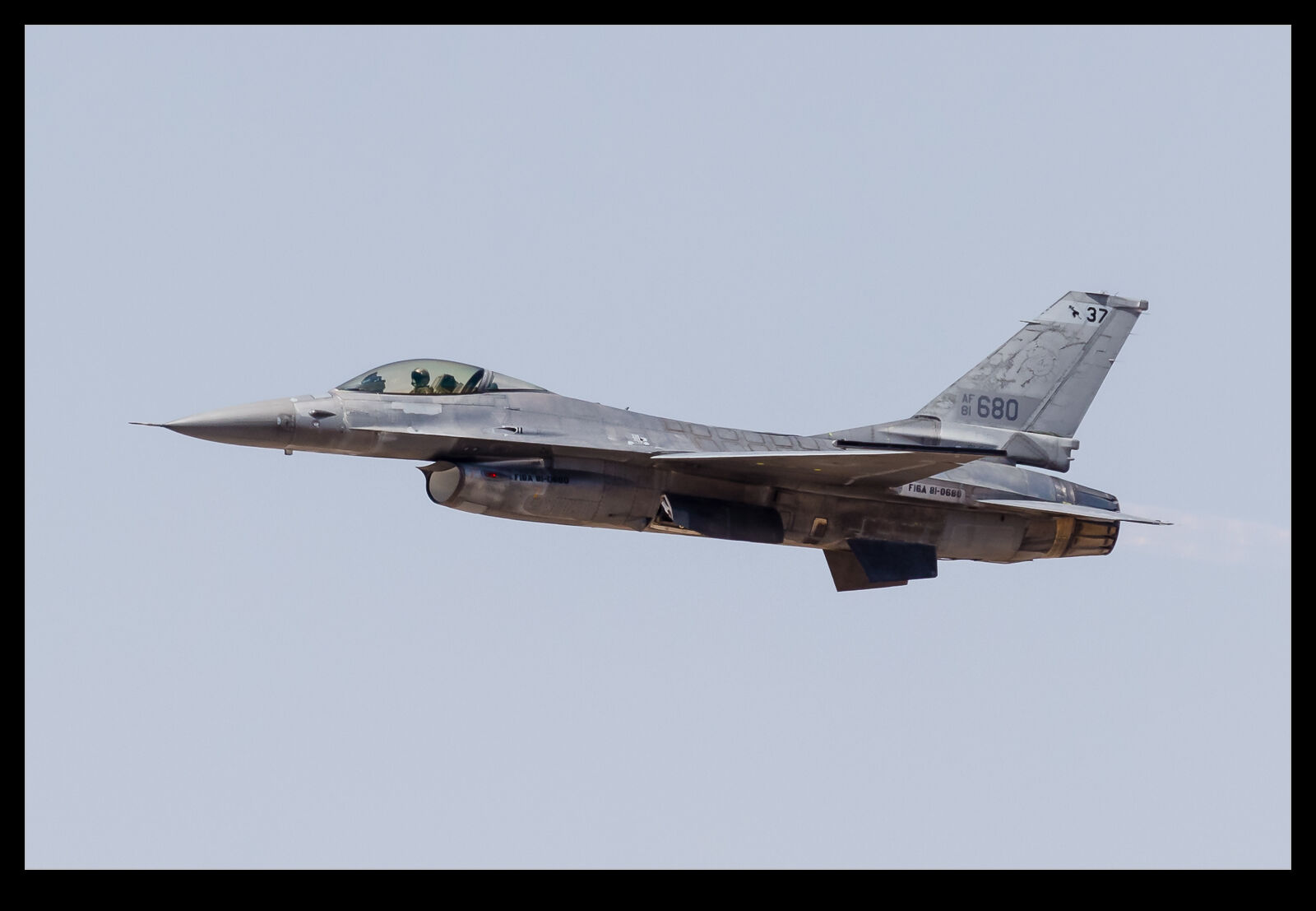
AE7I4903.jpgWhile we were out on the ramp at D-M, an F-16 taxied out for departure.  I was curious about the paint finish at first as it didn’t look like a normal F-16.  It was also short of markings.  Then it became apparent it was an ex-Italian Air Force jet.  I was advised that it was on a check flight prior to being sent off for the conversion to target aircraft.  I guess it has been on storage at AMARG and now is going off to modification followed by an uncertain future.  I wonder how long it will survive.

AE7I5049.jpg

Dutch Training

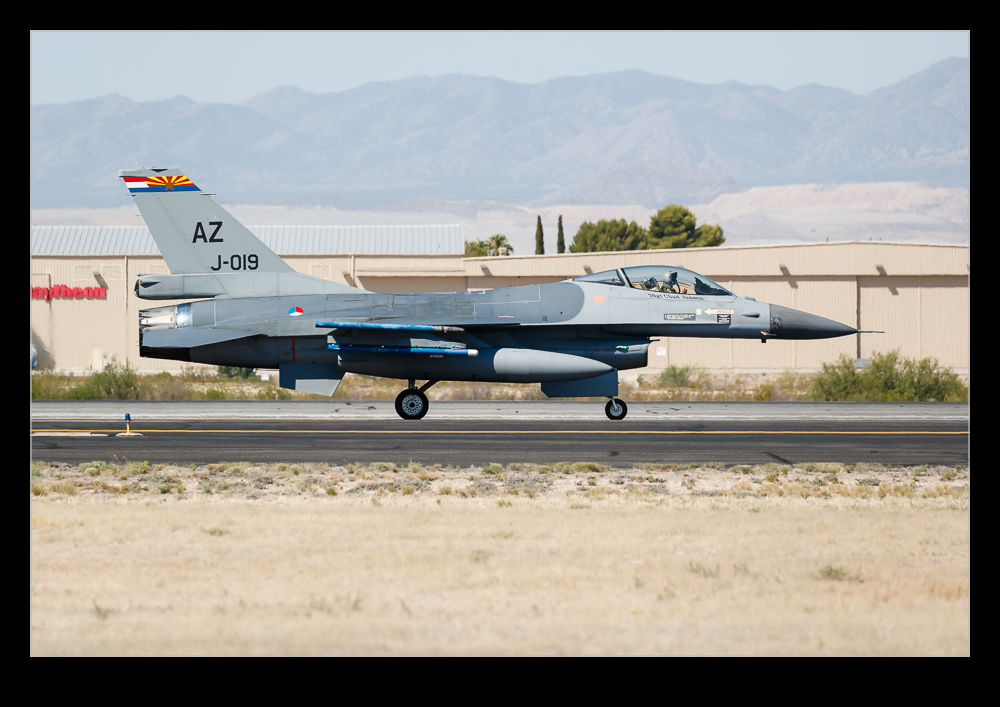
AE7I6448.jpgThe Dutch F-16 training unit has been at Tucson for a while now.  It moved from Springfield IL to join the Arizona ANG unit at the International Airport.  I have seen their jets before but it was nice to see them again.  The Dutch F-16s have been through an extensive upgrade program but the airframes are knocking on a bit.  Built by Fokker as F-16A/Bs in the early days of the program, they have soldiered on while the USAF retired their F-16As a long time ago.  I didn’t get a lot of chance to shoot the Dutch jets but managed to catch a few during my time there.

Iraqi F-16s

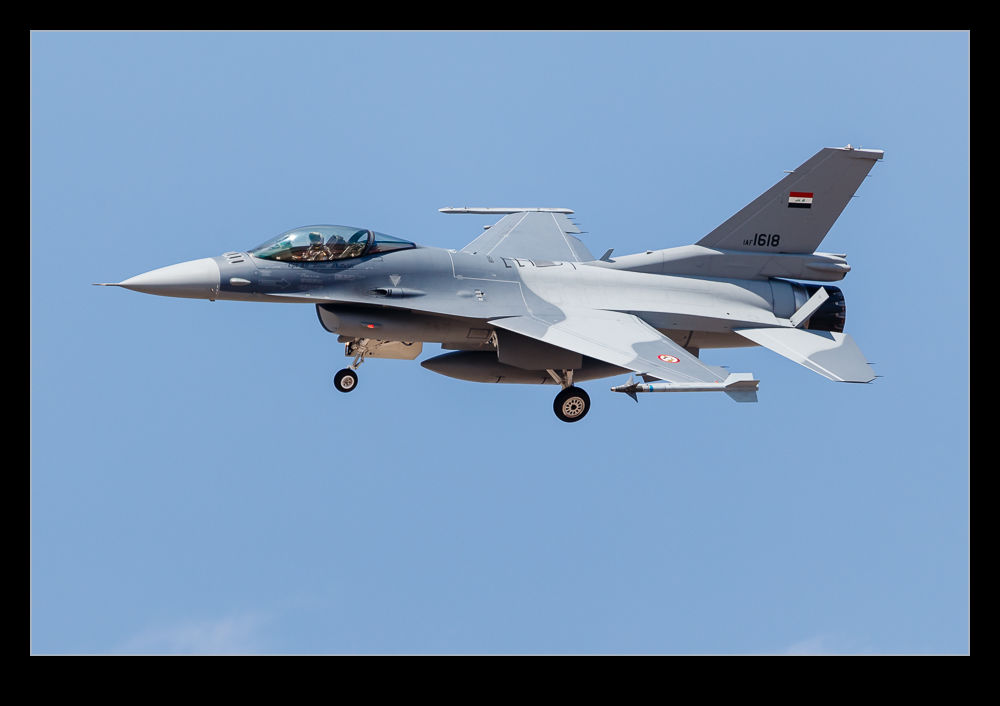
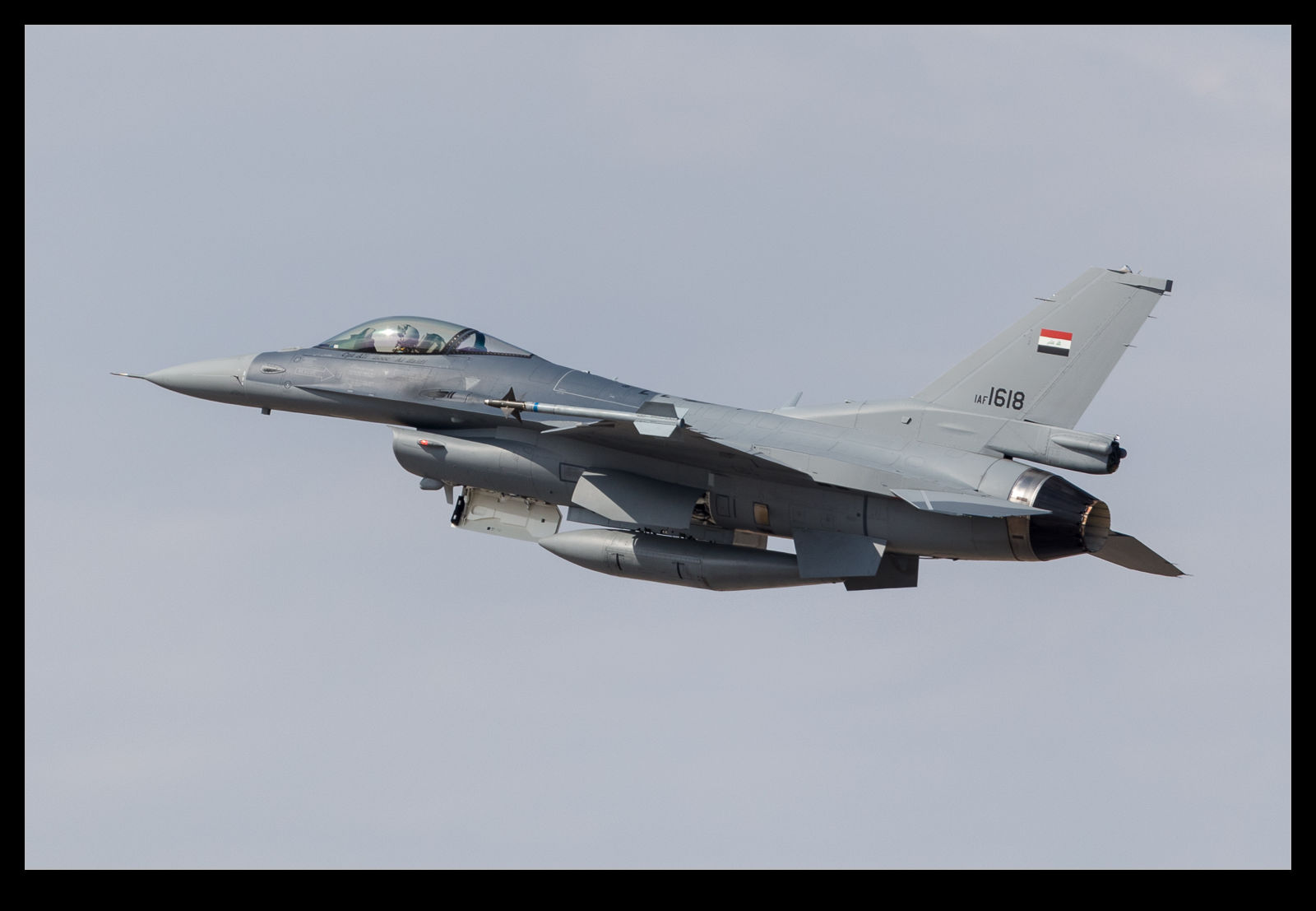
B11I3768.jpgIraq places an order for F-16s a number of years ago.  The first aircraft were not initially delivered to the country but instead went to Tucson to set up a training unit.  There are still some aircraft there being used to train new Iraqi pilots.  Soon the remaining jets will head to Iraq following those that have already been delivered.  I hadn’t seen them before since this all happened since my last visit to Tucson.  They operate from Tucson International, alongside the ANG unit and the Dutch training unit.

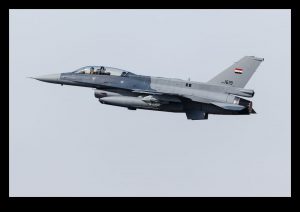
B11I3570.jpgWe had a few movements of the Iraqi jets while I was there and these were, apparently, some of the newer jets to have been delivered.  They have adopted a different camouflage pattern to the normal F-16 scheme so it is easier to recognize it is them as they approach.  I doubt I will be back before they leave the country so this was one of the few times I will likely see these jets.

Transport for the Hawgs

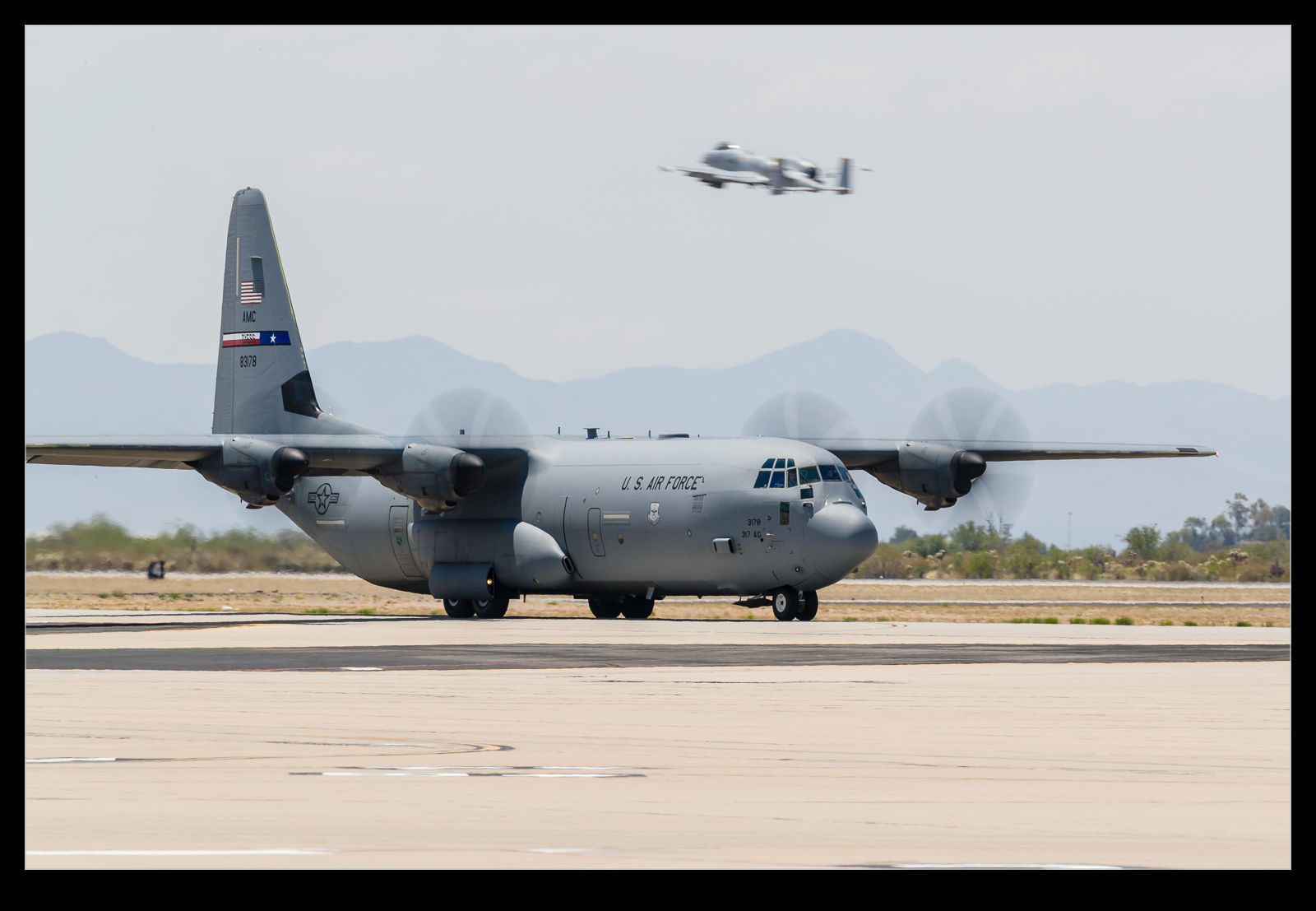
AE7I5174.jpgAll of the A-10s coming in for Hawgsmoke need some support.  There were C-17s and C-5s on the ramp during the exercise.  While we were out watching the jets arrive, a C-130J came in as well.  It landed and then turned to taxi right back passed us.  I don’t know for sure whether it was supporting the A-10s from a unit or it was just a coincidence that it arrived at that time on another mission but I figure that it is a strong chance that is why it was there.

Japanese C-130

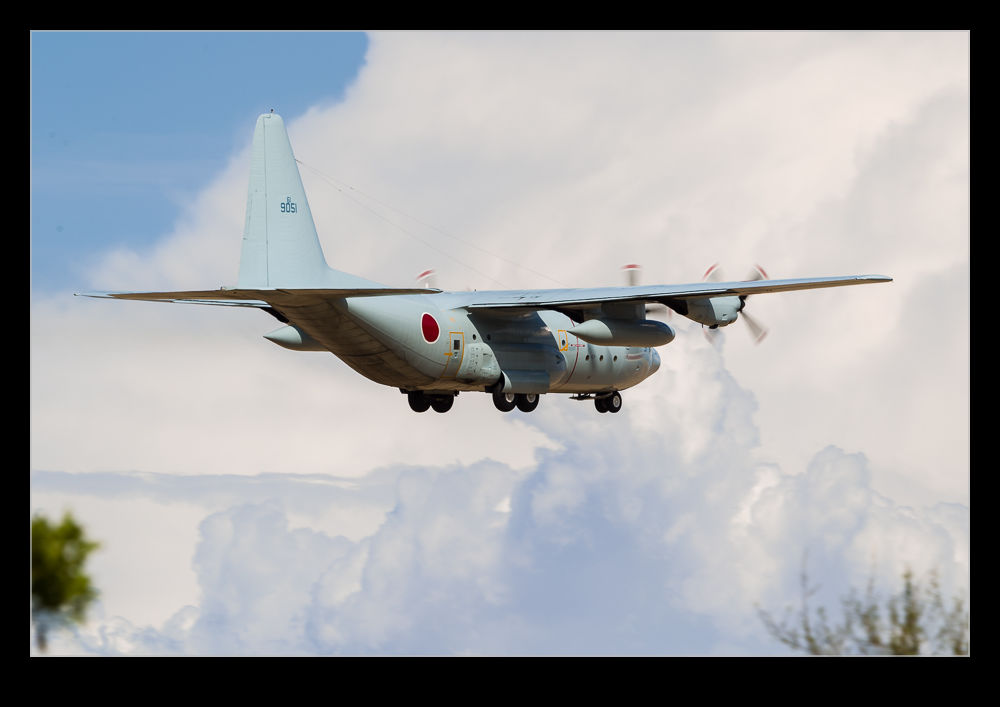
C59F3902.jpgA couple of years ago I was in Tucson for an exercise I was covering for GAR.  There was some time when I was shooting the arrival of the A-10s on the base.  In between the Hawg movements a few other aircraft came in, most of which were what you might expect.  One unusual arrival was a C-130.  I was trying to work out what unit it might belong to as it came in because it was a pale color.  As it got closer, the markings were clearly those of the Japanese Self Defence Force.  This was something I hadn’t seen before.

C59F3922.jpg

Two Aborts in One Launch

C59F6599.jpgRed Flag missions are two periods of intense activity with an intermediate phase of nothing much. The launch develops in to a steady stream of jets taking off as everyone gets airborne for their phase of the mission. They have been preceded by the tankers and AWACS who are setting up to manage the throughout of the smaller jets. Once everyone is gone, the simulated war is occurring somewhere else. Then, everything starts to come back with a steady stream of the jets breaking overhead and landing before the tankers and AWACS come back at the end.

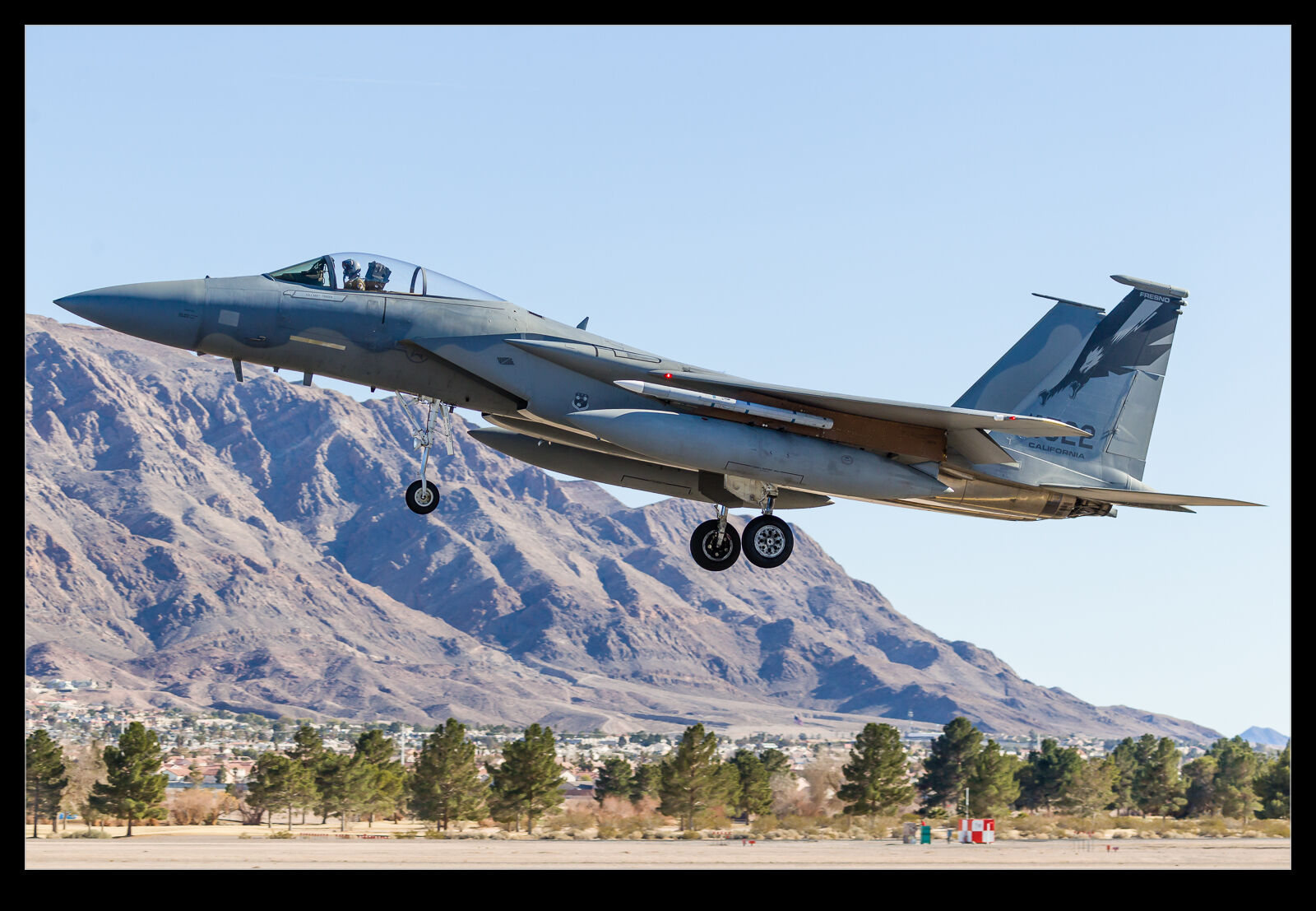
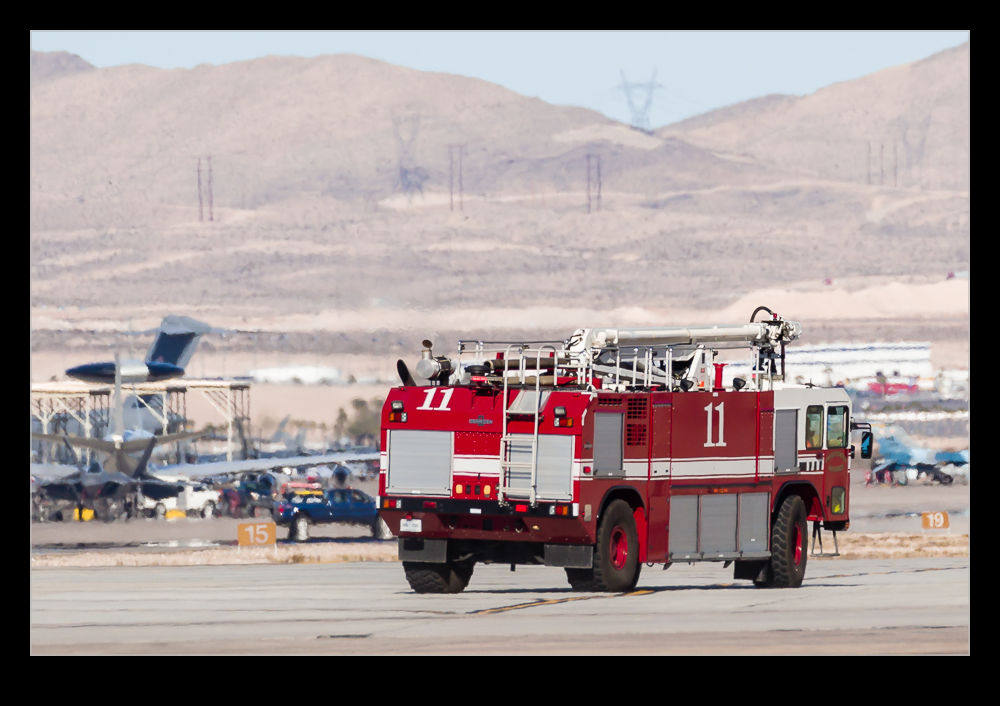
C59F6489.jpgAfter the majority of the launch, we were at the EOR watching the occasional straggler go out or some based planes fitting in. Then we got a pair of F-15s come back. They flew an approach with one jet on the glide path while the other was clearly shepherding them in. The F-15 landed without incident and the wingman powered away to rejoin the flight. Some fire trucks rolled but everything seemed to be under control.

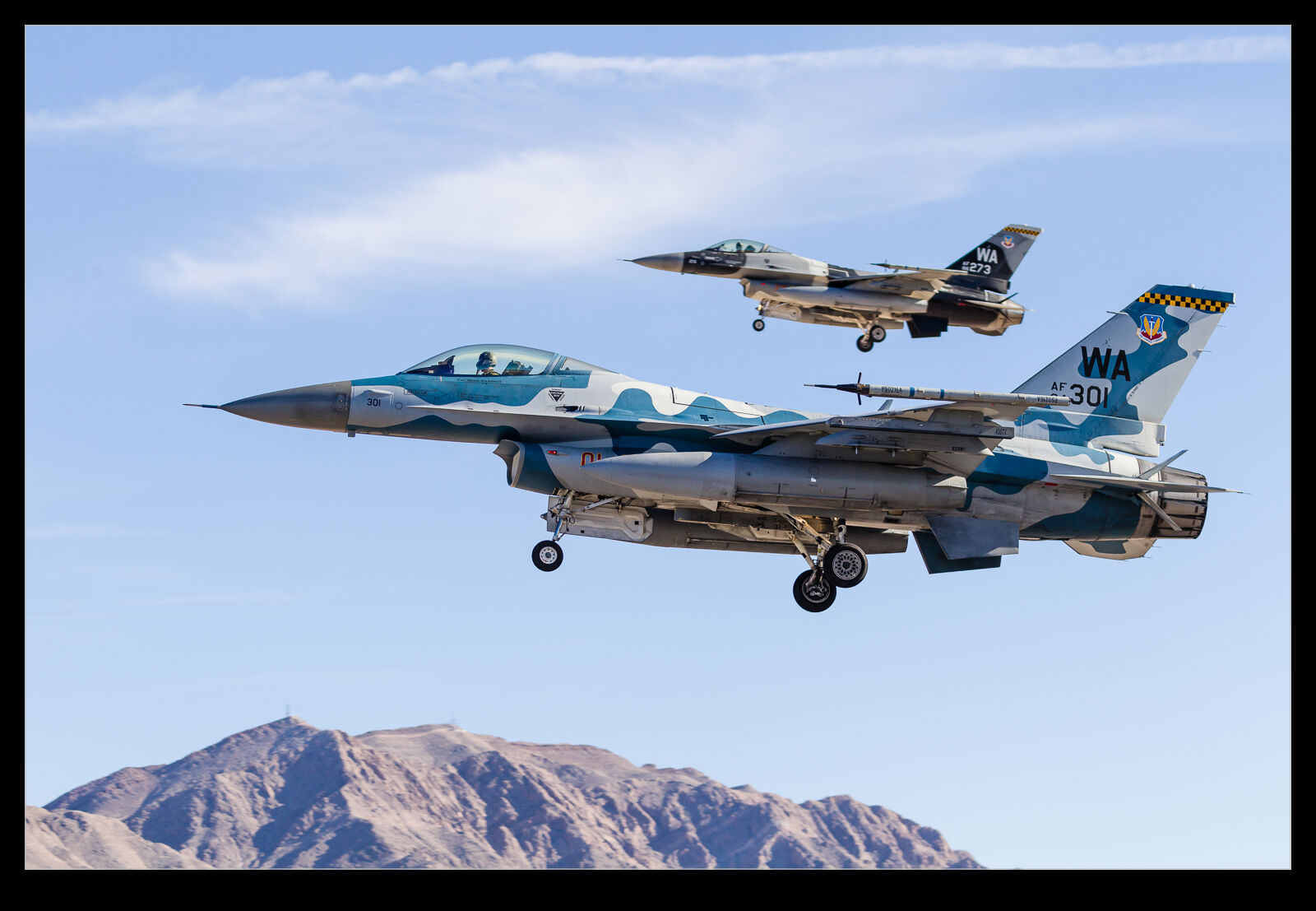
C59F6499.jpgNot long after we had stopped discussing this, a pair of aggressor F-16s came into view. The same procedure and one landed while the other shadowed them down the approach. With a safe touchdown, power on and back to the battle. Technical issues are not uncommon but I was surprised to get two in close succession. Everyone seems to have handled them appropriately and they appear to have ended without further incident.

C59F6497.jpg

Raptor Vortices

C59F1455.jpgA bit more from the Raptor display today. As the jet flew away from the crowd, it pulled in to the vertical. From a view directly astern, we got a brief view of the vortices forming over the forebody. The jet was quite a way off so these shots are cropped quite a bit. I love the way the vortex sits away from the body. Chino was a pretty dry environment so not a lot of vapor to pull from the air but it still showed up nicely.

C59F1459.jpg

Interesting Raptor Control Inputs

C59F1416.jpgIt might be a long time ago that I did anything closely related to the engineering of fighters but there is still a part of me that is a stability and control type of guy. Watching the control inputs and responses of planes is cool as far as I am concerned. With the advent of fly by wire designs, there was considerable scope to play around with the use of the control surfaces to achieve different aims. With no direct linkages to the stick, the pilot can be totally unaware of the choices the system is making for control combinations.

C59F1422.jpgThe engineers may have chosen to program the trailing edges to have different deflections inboard and outboard to offload the outer portion of the wing for example. The F-22 makes use of a variety of interesting control inputs. For example, it doesn’t have a traditional speed brake. I assume this was removed for stealth reasons. Instead, the control surfaces move counter to each other. You may have inboard flaps going down and outboard flaps going up. The moments cancel out but all increase drag incrementally so the effect is like having a speed brake deployed.

Since the aircraft is also unstable, you may have tail deflections that seem at odds with the maneuver being flown. During the Chino show, the usual routine was flown (usual for an F-22 but not many other jets) and, as I look through a bunch of the shots, I see some quite unusual control inputs. If you are in to such things, these may appeal to you. Gary, are you reading this?