Tag Archives: fighter

Take Your Pick When Refueling

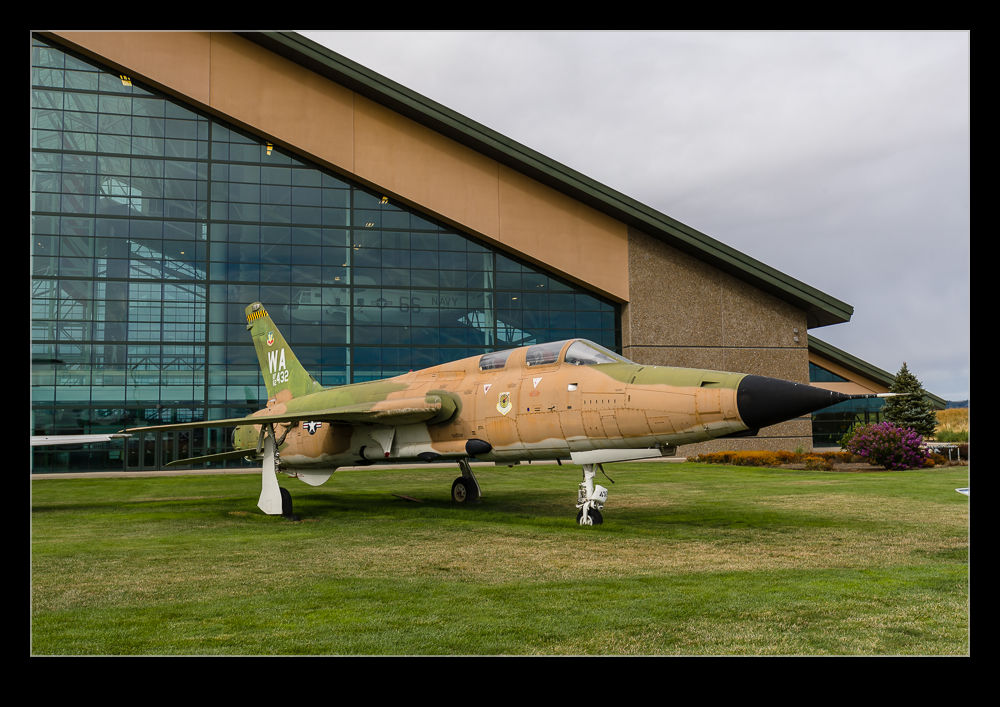
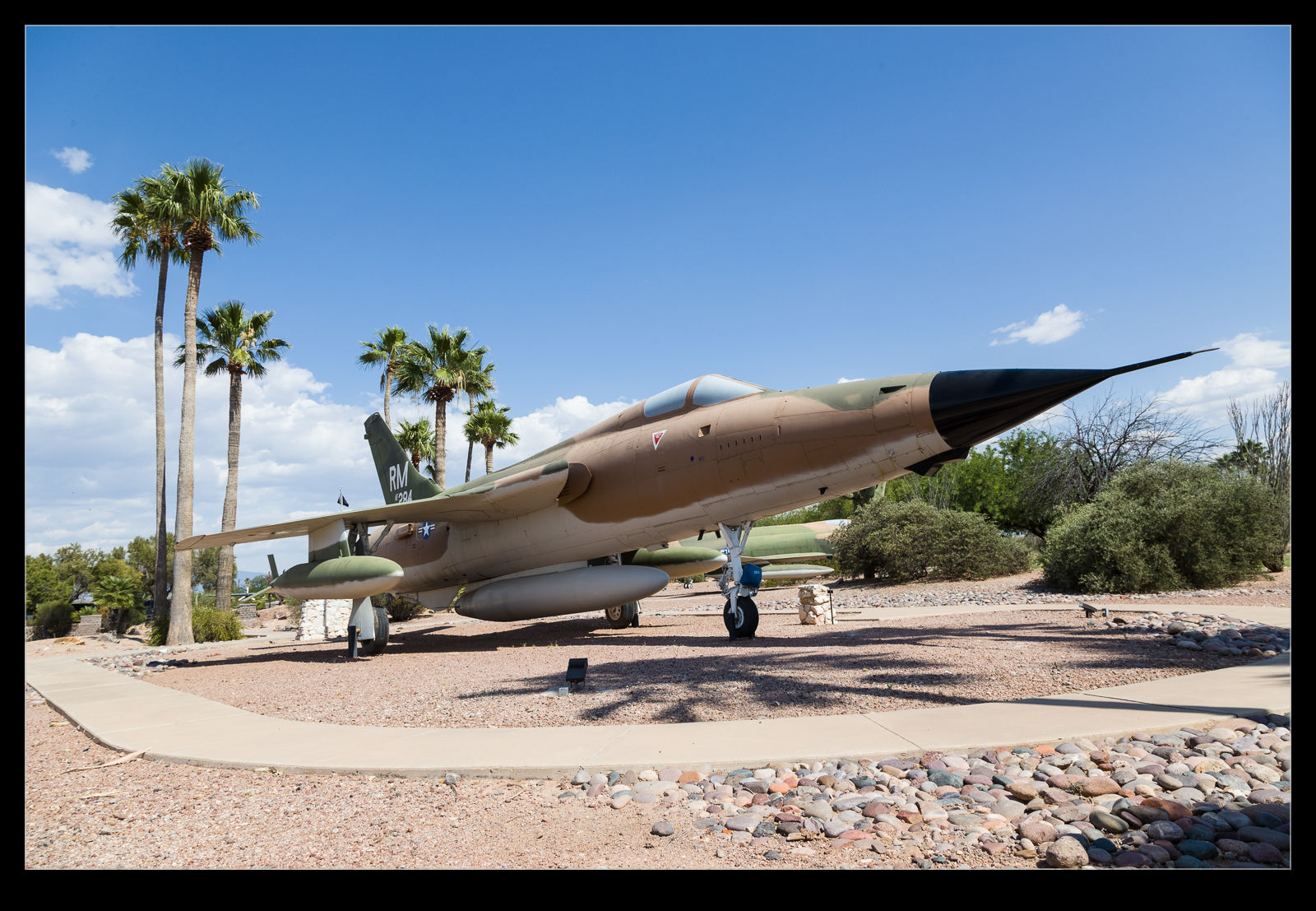
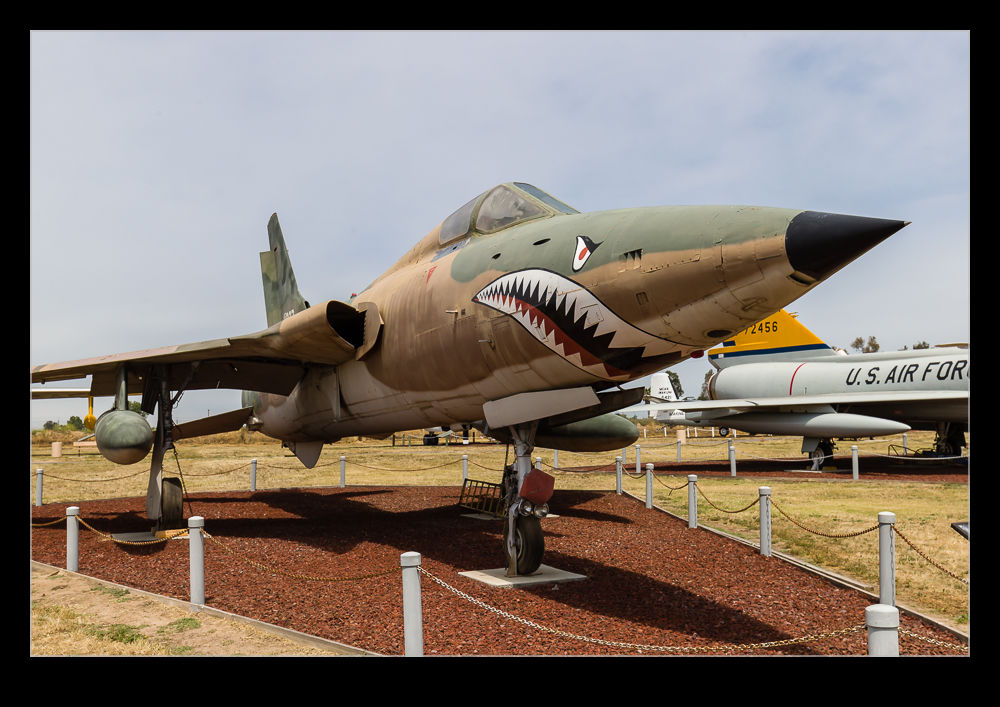
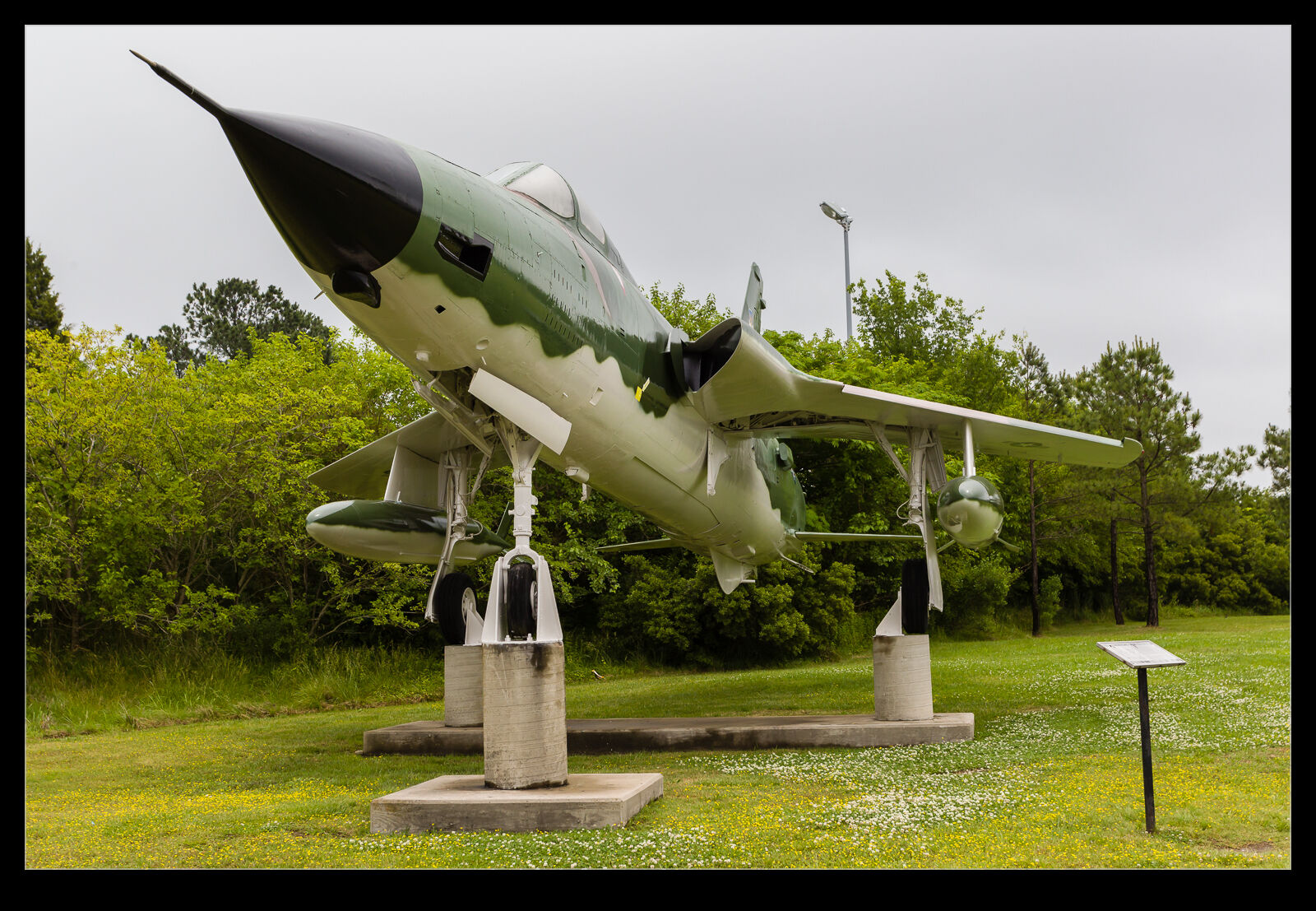
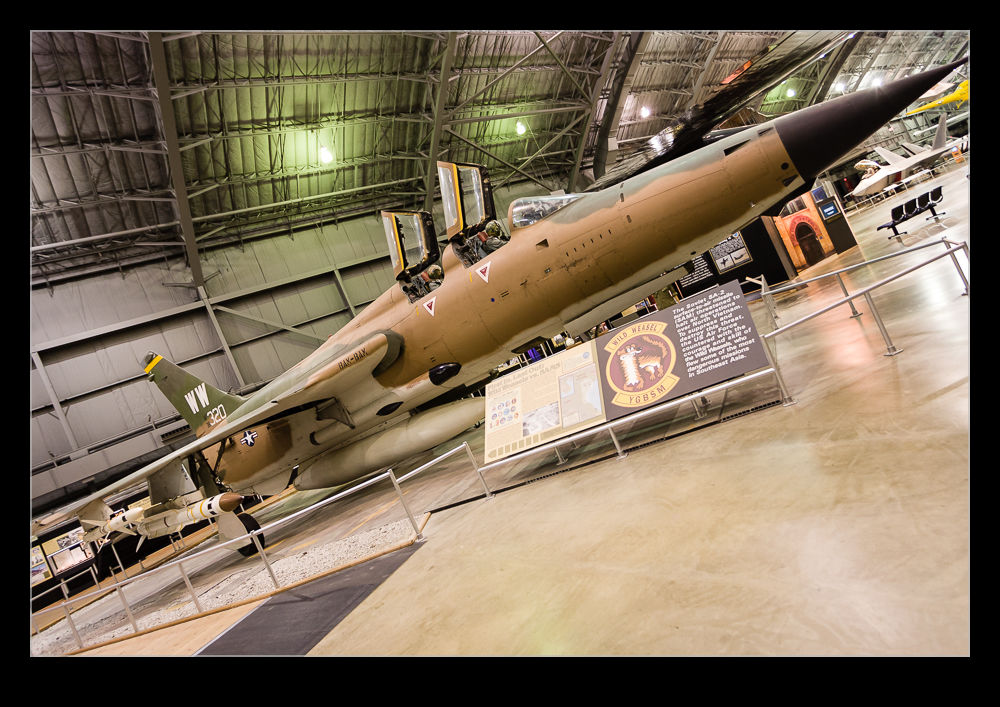
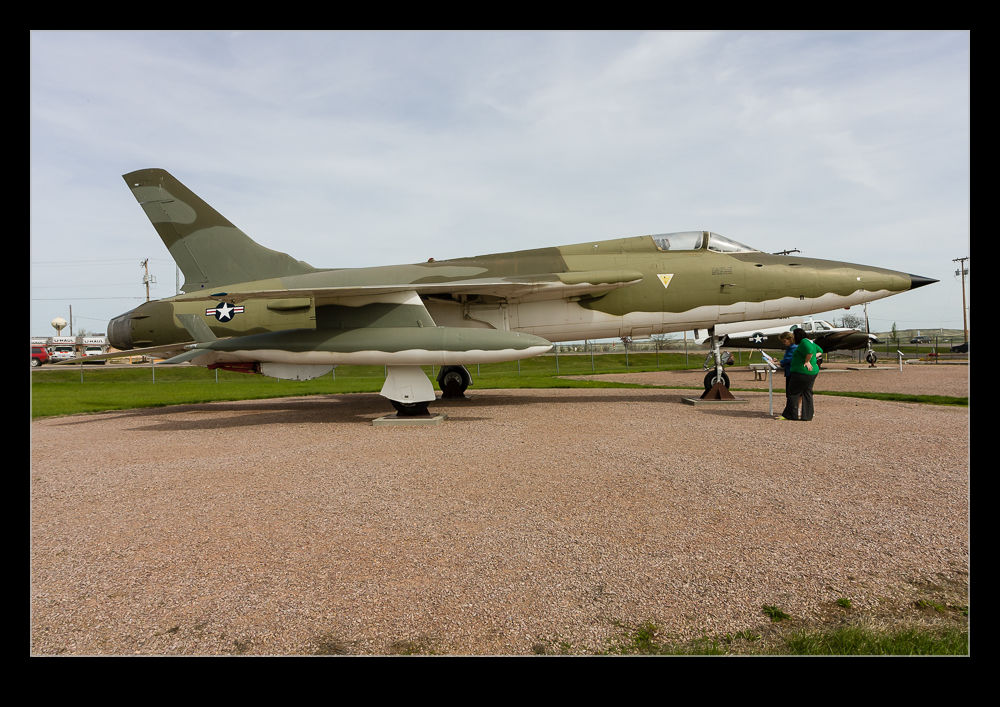
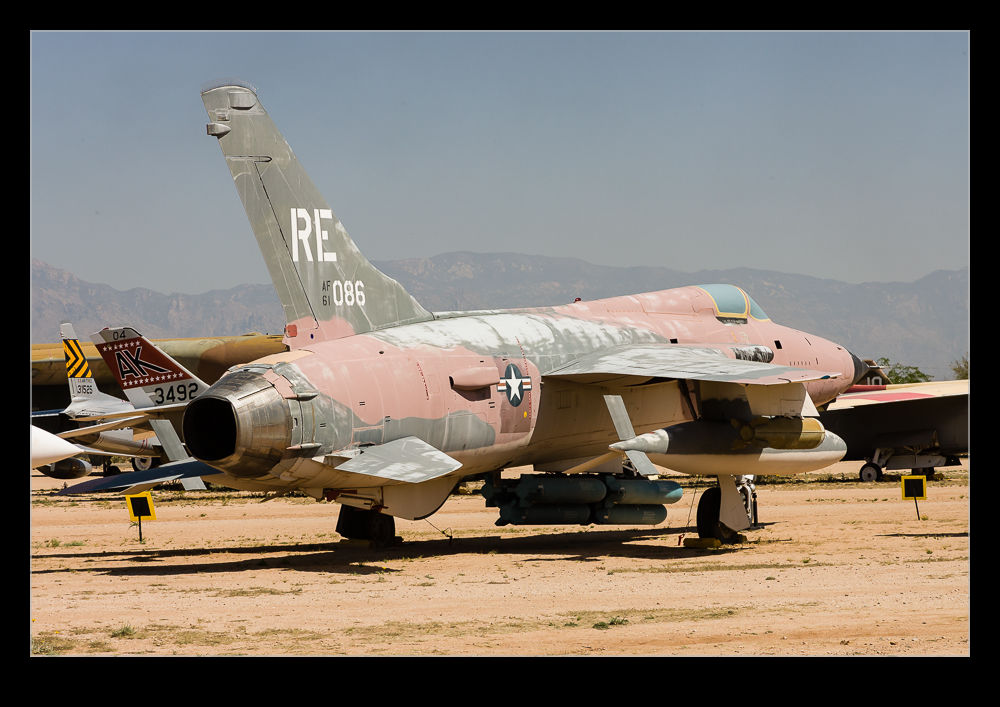
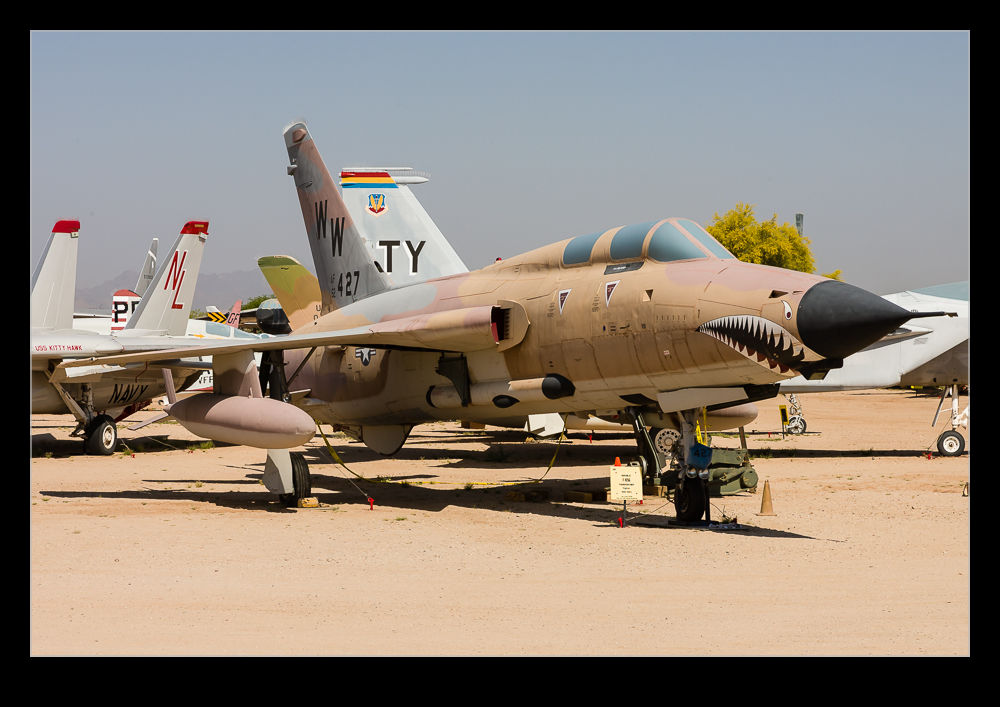
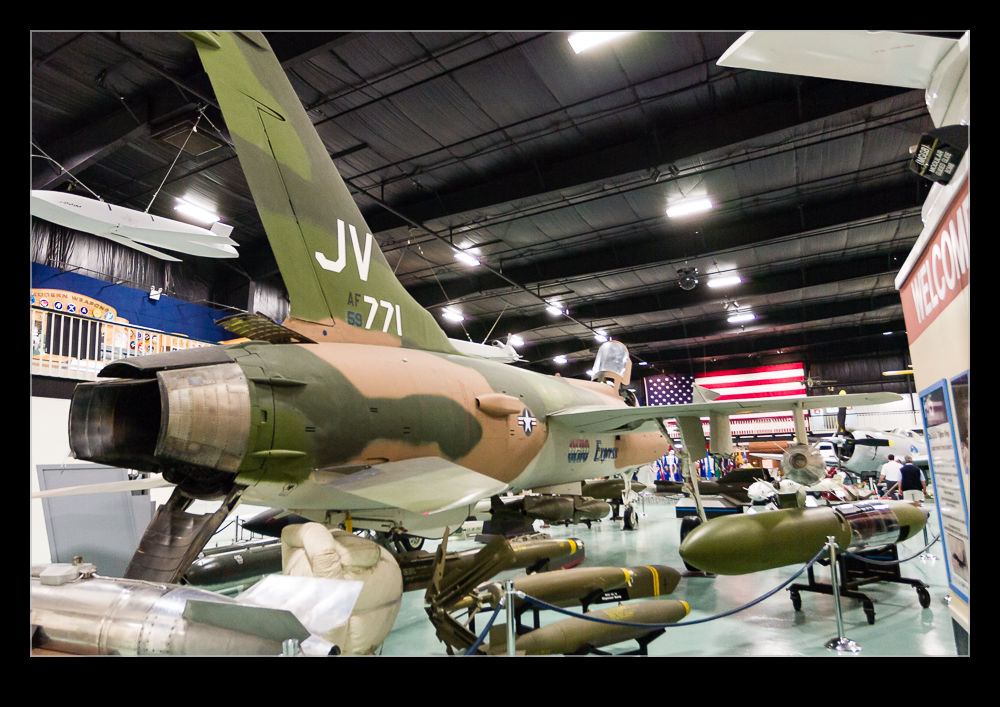
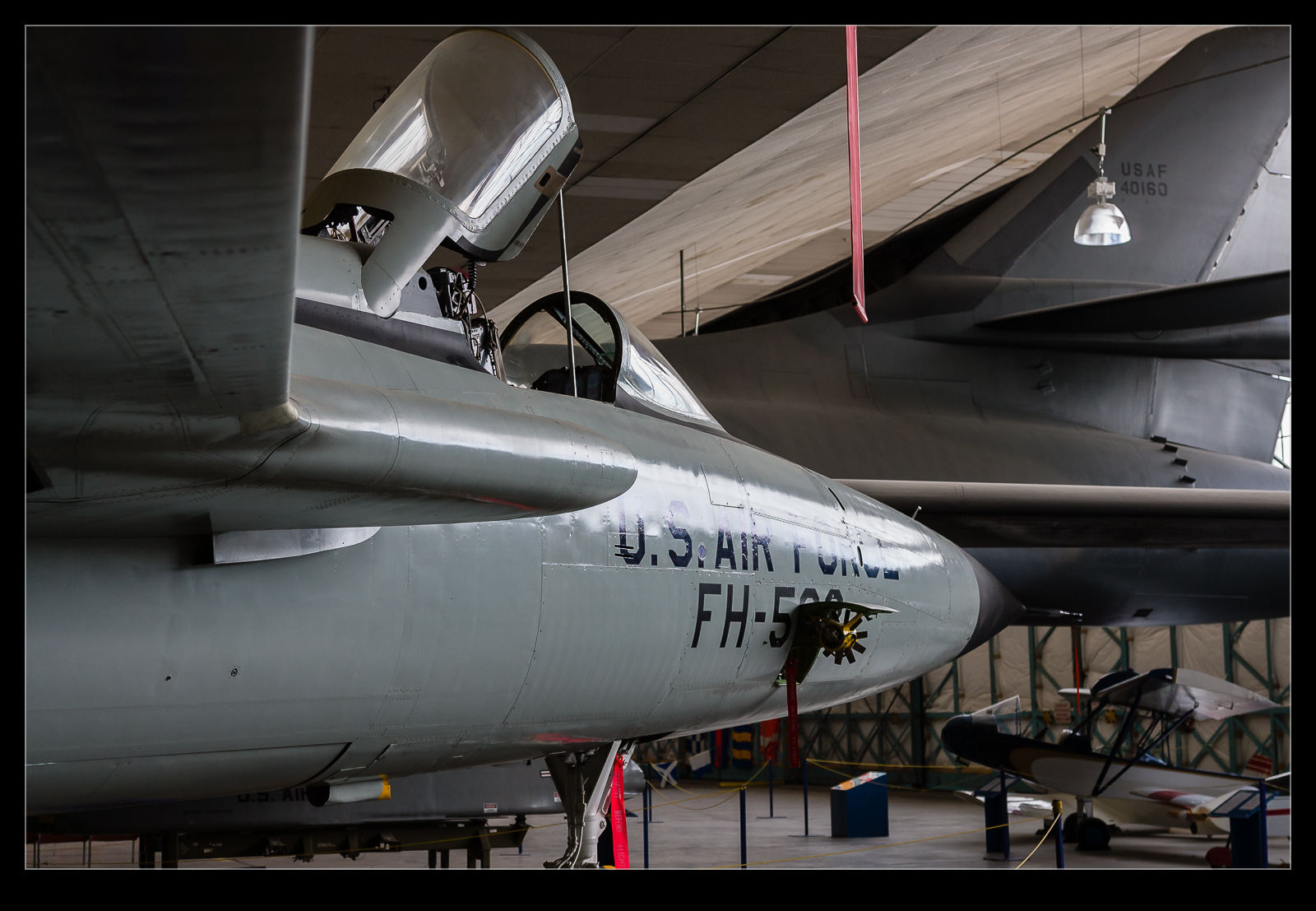
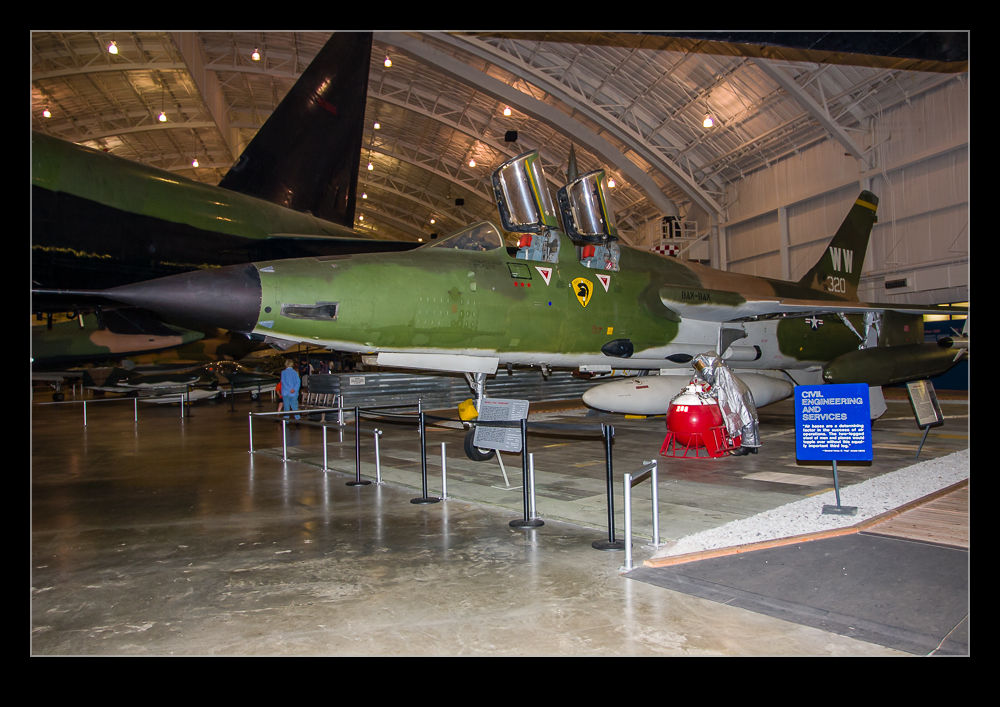
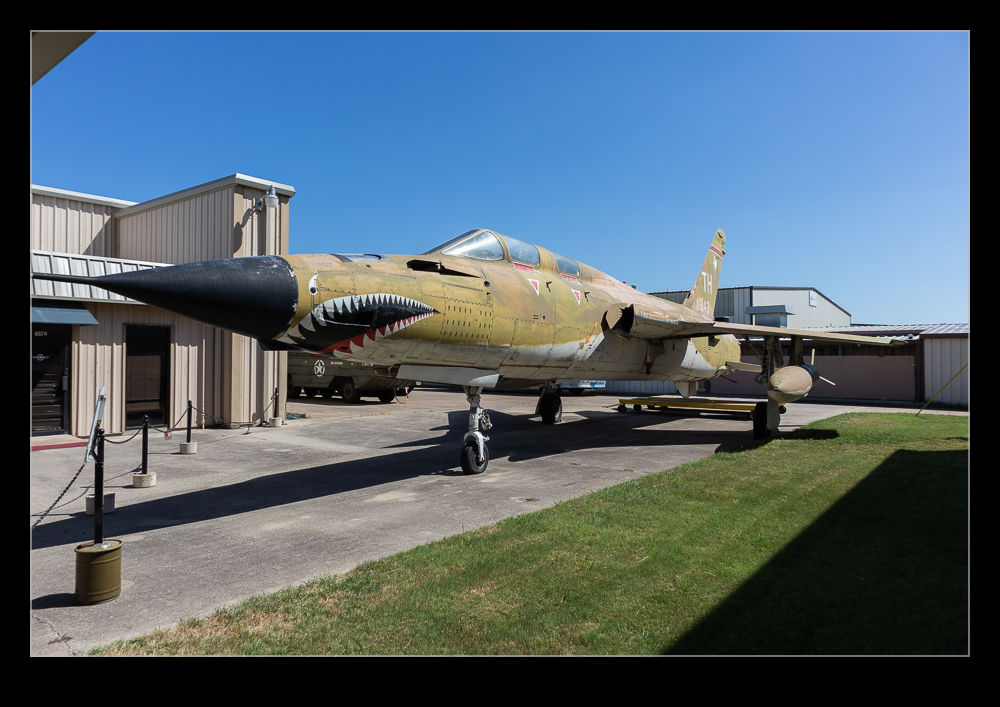
The F-105 Thunderchief (or Thud) is a beast of a plane. Sadly I never got to seem them in action.  One is parked outside at Cavanaugh in Addison TX.  Its camo is a bit bleached by the Texas sun (it was just over 100 degrees the day I arrived and that was towards the end of the afternoon).  The thing that caught my eye, though, was the refueling receptacle or, more specifically, receptacles.  USAF aircraft have the flying boom refueling system.  This was not always the case and jets like the F-100 had flight refueling probes for the hose and drogue method.

I assume that the Air Force was in a transition mode when the F-105 was being designed so they had both.  On the upper side of the nose there is a ramp for boom refueling to take place.  Below that on the port side is a retractable refueling probe for hose and drogue use.  I didn’t realize that any jets had been built for both (aside from the UK and French E-3s which are a bit larger and more able to accommodate the extra kit.  I wonder which one was more regularly used since the techniques for each type differ.

The End of the Day is Always Better

How many times in this blog have I commented on the nice light at the end of the day being the provider of my best shots.  It isn’t just about the shot though.  Stuff just looks better (hence the better shots) when the sun is low.  Mark and I had spent a good day at Coupeville and then at Ault Field but, as the evening was beginning to draw in, we knew a few jets had launched earlier and were due back.  As a result, we anticipated some nice arrivals.  Mark had also scoped out a better spot for the final turn the jets would be making.

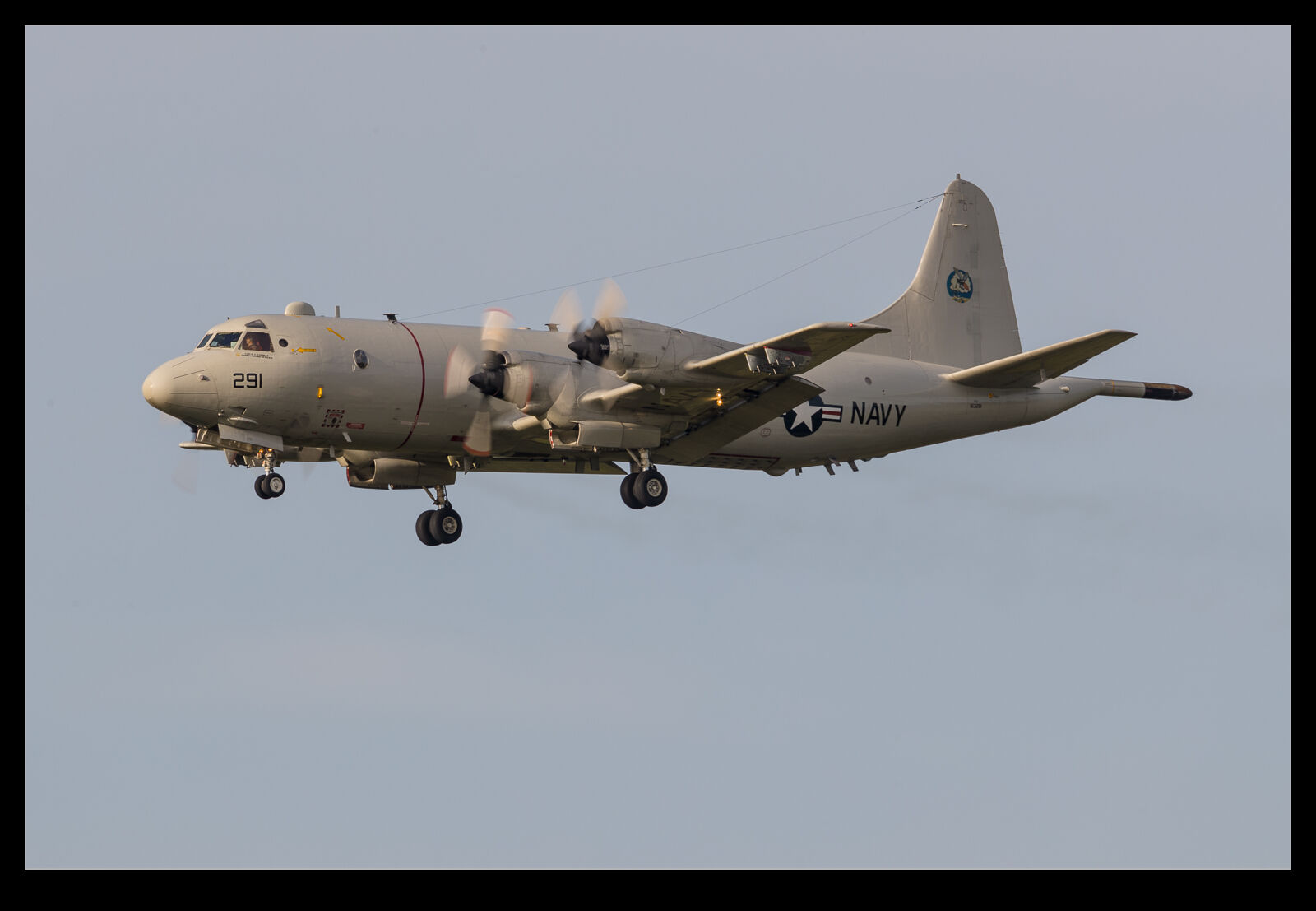
It wasn’t long before we heard some calls on the approach frequency and so we headed to the new location.  Our first trade was not the jets we had expected though.  Some maritime patrol training was done and a couple of aircraft were making straight in approaches.  A P-8 and a P-3 were welcome additions.  They may not have been flying particularly interesting approaches but we would have taken them at any time and in this light all was good.

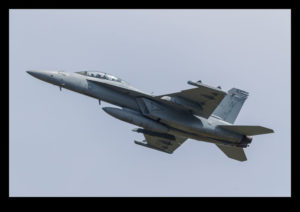
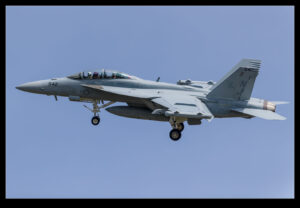
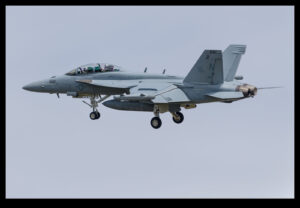
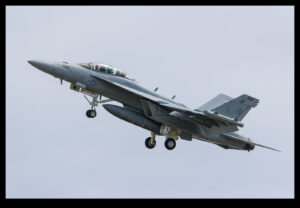
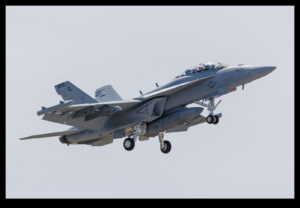
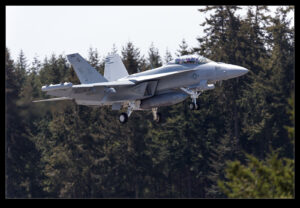
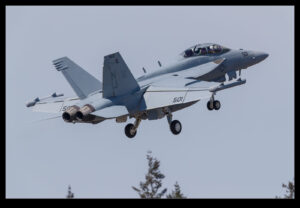
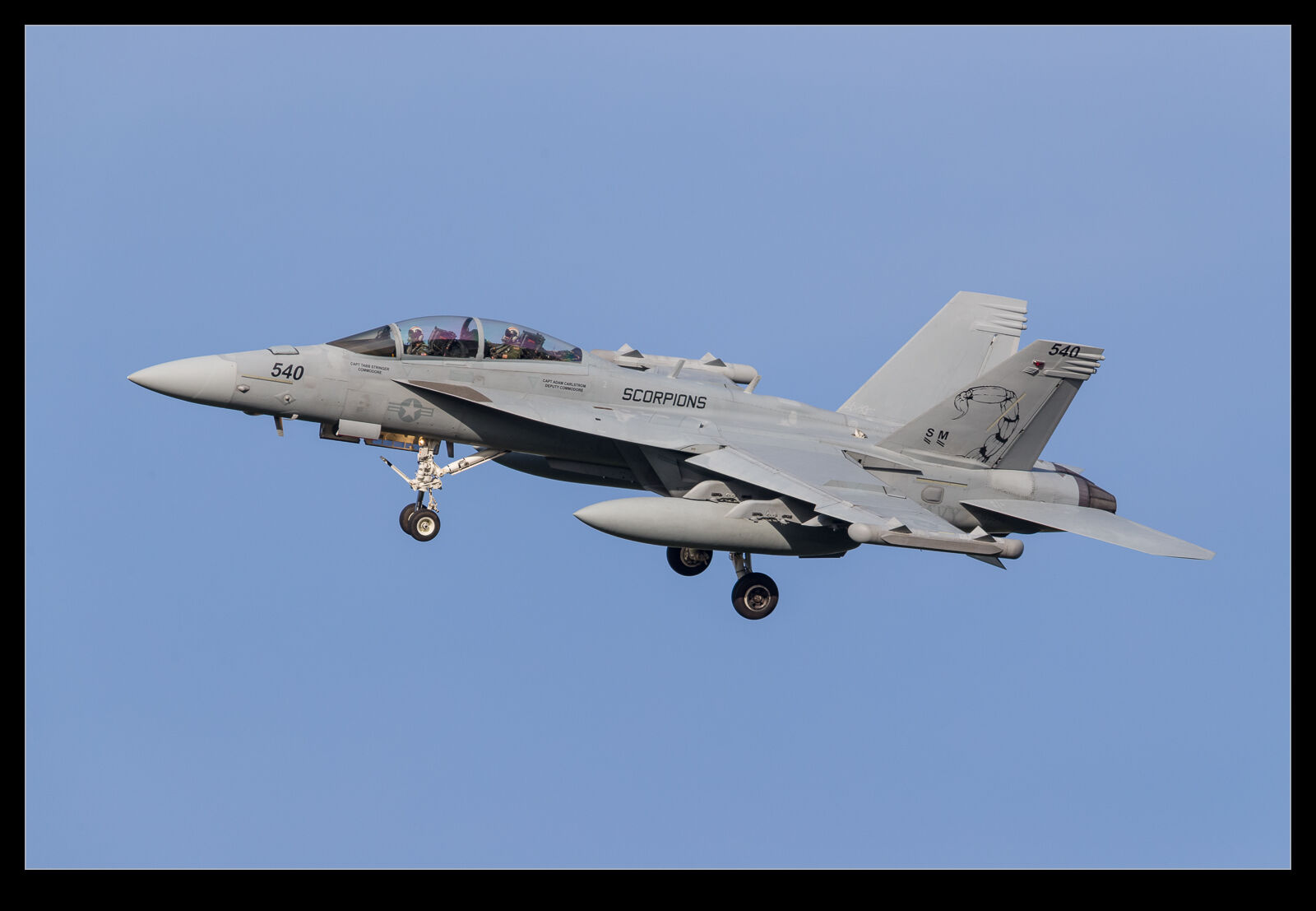
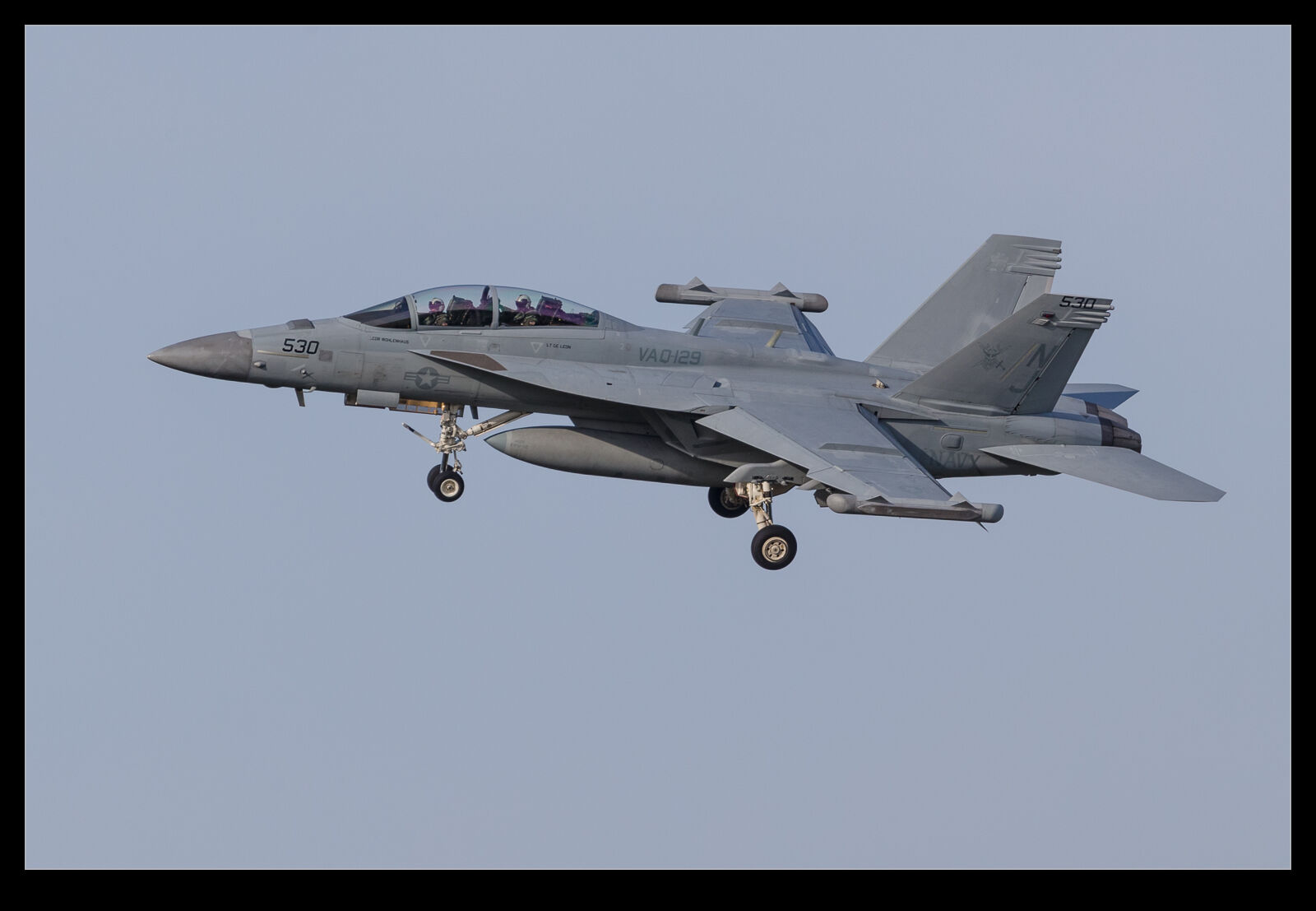
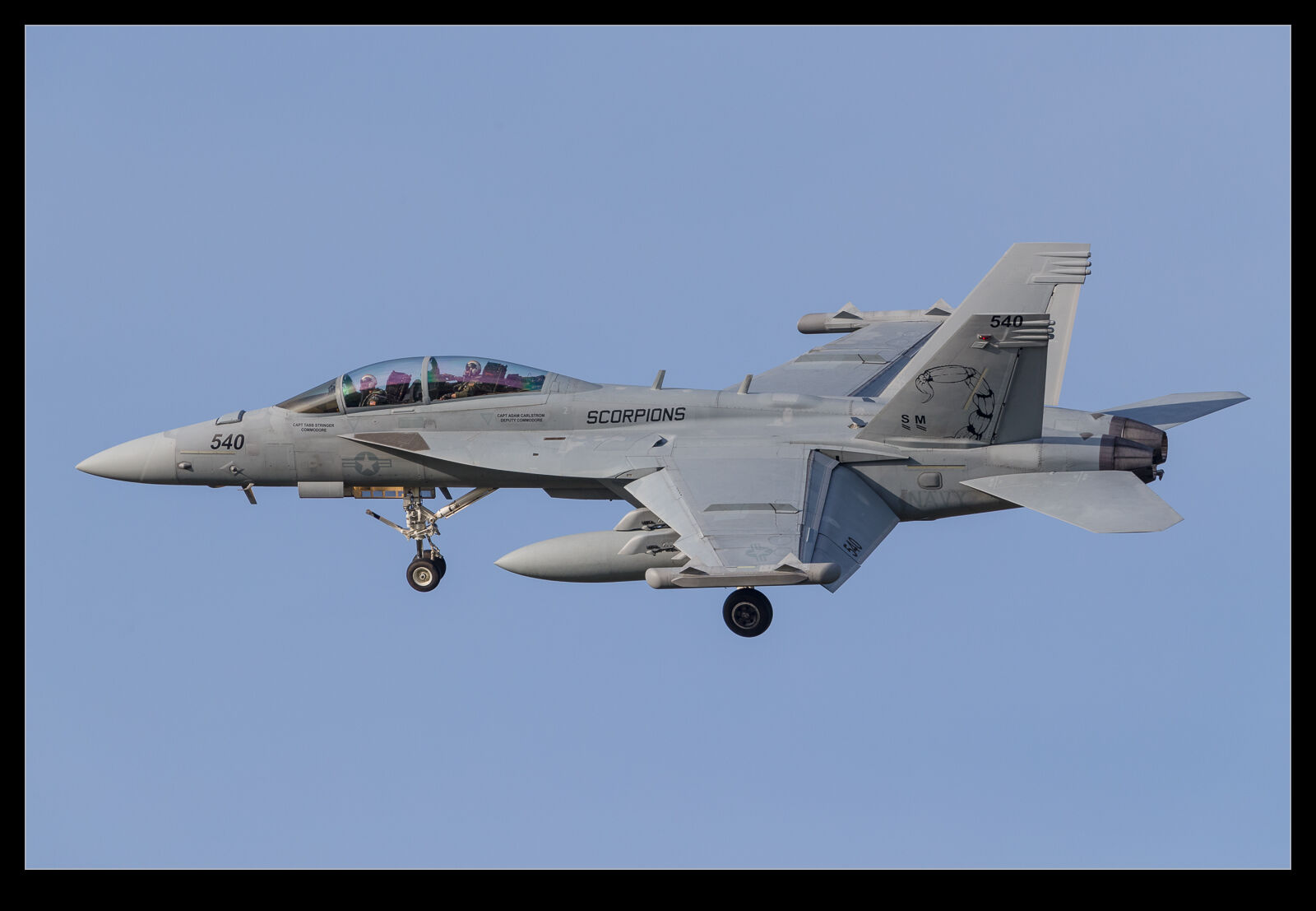
Then the Growlers showed up.  The flew some nice curving approaches around us and the evening light was illuminating their topsides in a great way.  Clearly these were going to be the shots of the day that we were most happy with.  Not only that but they did the decent thing and didn’t land straight away.  Instead, a couple of patterns meant we got a good chance to get some shots of them.  Once they were down, the radio was quiet and we both had drives home to make so we called it a day.  (Sadly, as I got on to I-5 to head south, a C-5 flew over me heading in what appeared to be the direction of Whidbey.  That would have arrived in gorgeous light as it looked really nice as it passed over me!)

More FCLP at Coupeville

My buddy Mark let me know that some more FCLP training was scheduled for Coupeville on a day with a good weather forecast.  Sadly, the wind suggested they would be operating in the opposite direction to that of my last visit (as discussed here and here) but there was the possibility of some morning flying which might mean the sun was on the right side for a while, even if a bit on the tail of the jets.  Unfortunately, the unit didn’t get the memo and they showed up in the middle of the day for the first round of flying so, while the conditions were okay, they were working against us.
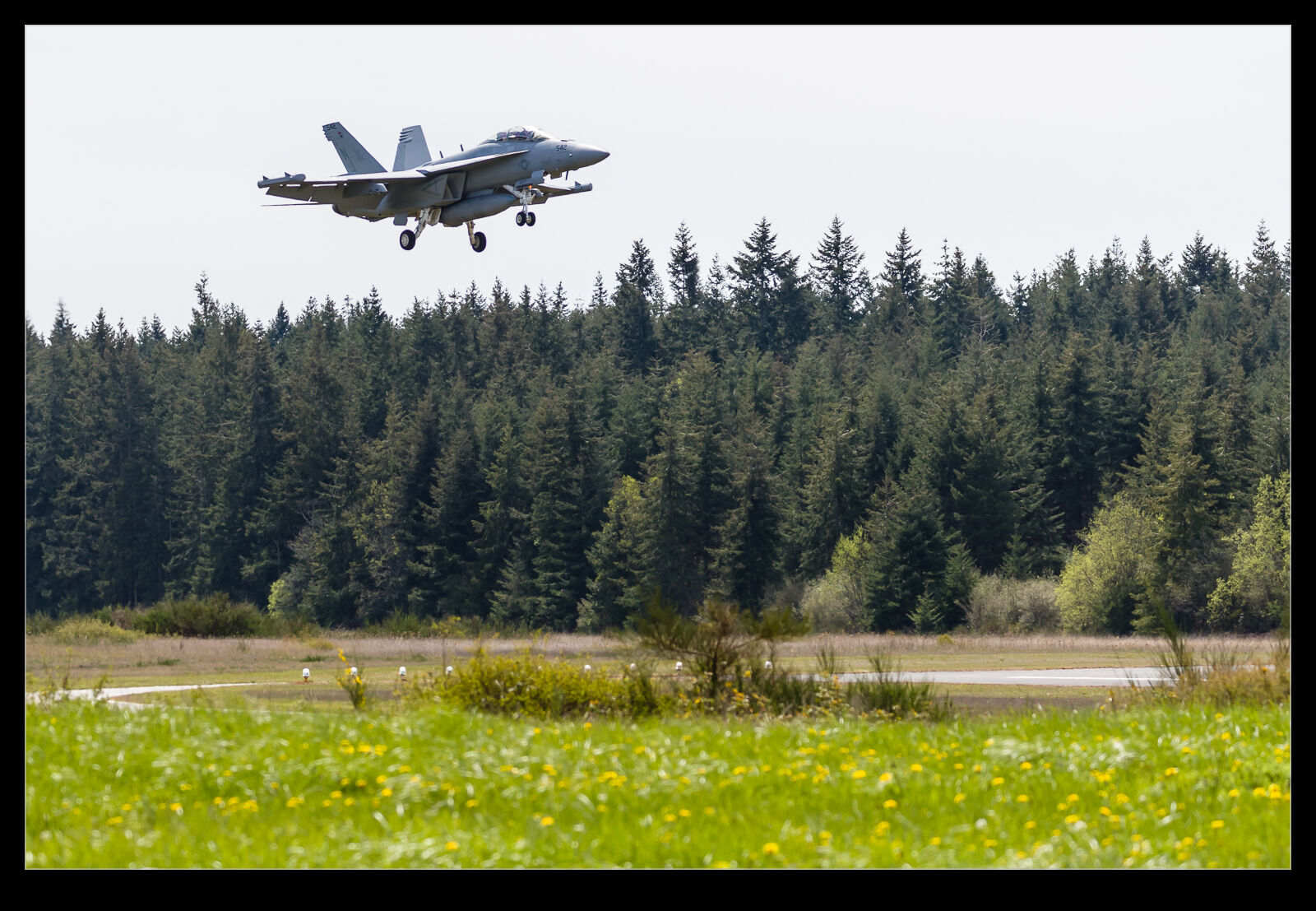
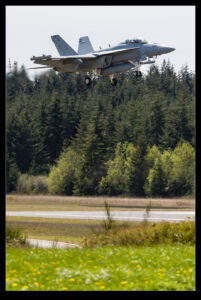
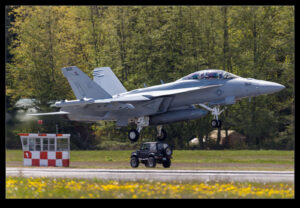
Still, there are a lot worse things to do than watch Growlers bouncing through FCLP training.  You can move along the fence line at Coupeville to try and vary the angle, so Mark and I were zipping to and fro in order to try and find something different.  There are some bushes on the field that can be a touch inconvenient when looking to capture the moment of touchdown but a little experimentation and you could get a good result.
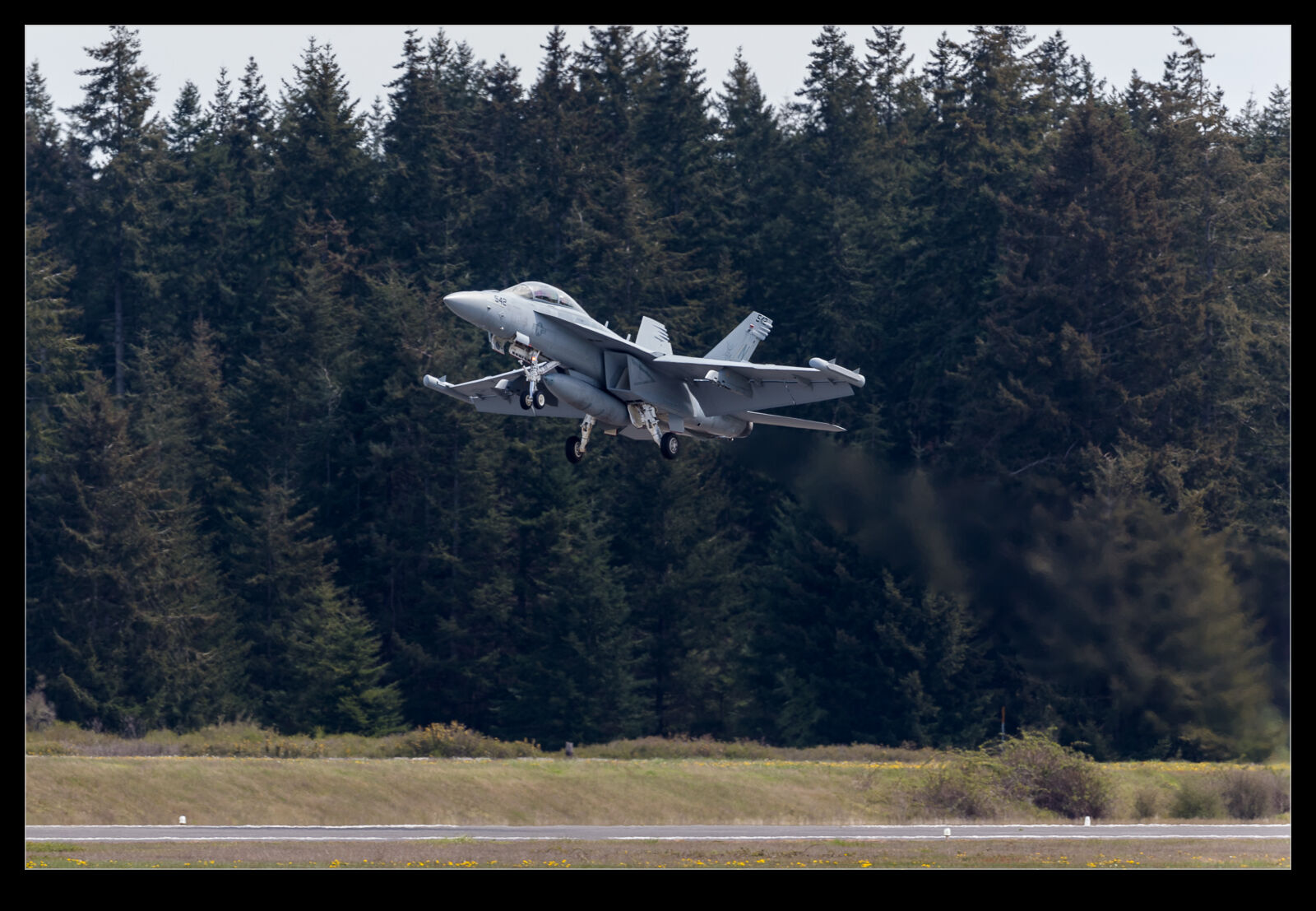
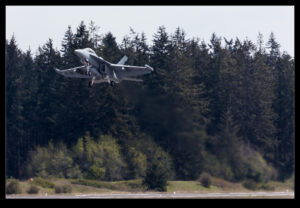
The jets appear to come through a tunnel in the trees as they are on final approach and the trees provide a nice backdrop for touchdown.  As they power up and away again, the light angles are most favorable so you can get a few good shots.  However, they end up pretty samey pretty quickly.
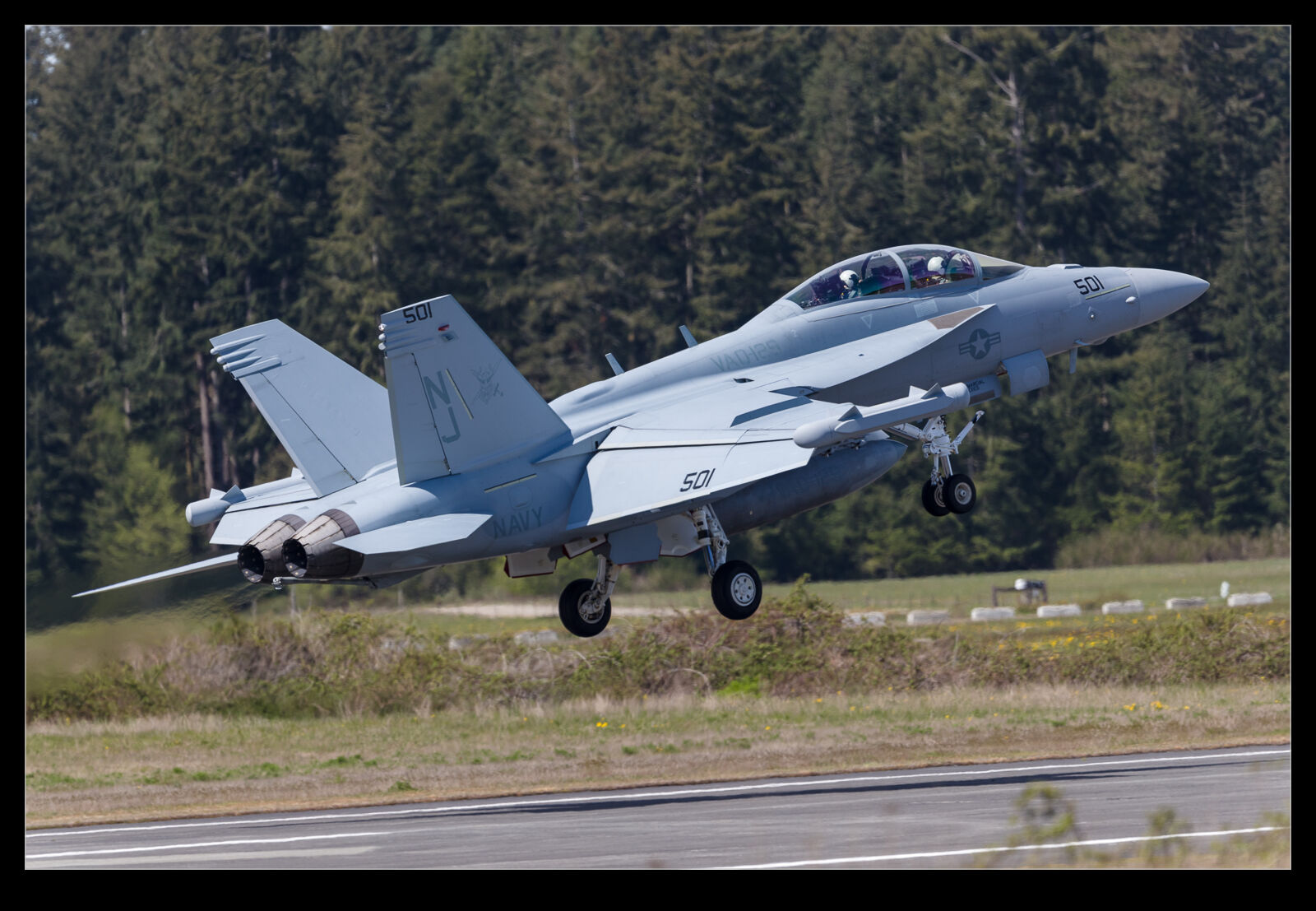
We expected a second batch of jets in the early afternoon so headed to the other side.  Here you are a lot further from the runway so the jets on the ground are rather distant and heat haze is a bit of a problem.  We got a few movements and then headed back to a nearby park where the jets tend to turn over the top of you as they enter the downwind.  The light is a bit better here but, again, the shots are pretty repetitive.  The only change is when the jet is done and it climbs straight out cleaning up as it goes.
With a decent amount of shots made, we decided it was time to try our luck elsewhere.  The Growlers would get back to Ault Field pretty quickly but we were going by car so it was a little longer for us.  However, there was much to justify the trip and that will be apparent in some upcoming posts.

One of the Early F-16s

The early versions of jets are often repurposed throughout their life.  They serve a role for testing but they are not configured like production jets and to make them so is too expensive to be worthwhile.  Besides, they are instrumented to some extent so they can be useful for carrying out alternate tests.  As a result, they often get used for trials, research tasks or development of alternate concepts.  The early F-16s did a lot of this sort of work and ended up in some odd programs like the AFTI effort.  Sitting outside at the Frontiers of Flight museum is one of these test aircraft.  It spent its life with General Dynamics (now Lockheed Martin) at Fort Worth and, once it was done with, it found a new home at the museum.  Compared to the average F-16, this jet will have had a lot of interesting experiences!

Skyray – Or Is It?!

The A-4 Skyhawk had a long and illustrious career in many air forces around the world.  It has a close cousin that didn’t fair so well.  The Skyray shared a few design cues with the Skyhawk but it was designed as a fighter rather than an attack aircraft (although the Skyhawk spent a lot of time as an adversary fighter over the years).  I find the Skyray a more attractive aircraft than the Skyhawk (not that I have anything against the Skyhawk) but that might be more about the rarity value.

I thought I had come across one parked in the parking lot of the Evergreen Aerospace Museum in McMinnville Oregon.  I was surprised to find it there at all and more so to see it sitting outside.  I am not sure what the future is for the jet – obviously some parts are removed for the time being – but I hope it will make it in to restoration.  It certainly is worthy of a good home.  That is even more true because it is not a Skyray.  It is actually a Skylancer.  This was a development of the Skyray that got so modified that it became a new type.  It never got to production and this example was used by NASA before retirement.  In this location, it is possible to get up on the earth bank behind it to get an angle that might be trickier if it ends up inside the museum.

Bounce It Down and Do It Again

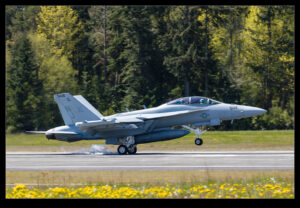
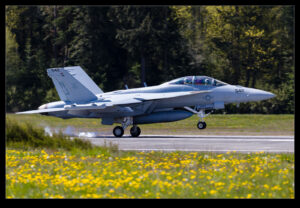
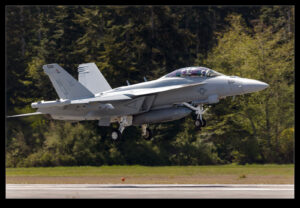
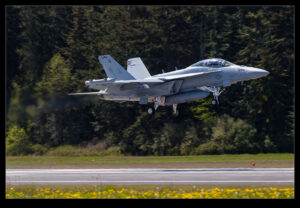
Since the Growler crews were training as if they were on the deck at sea, they don’t flare their landings at all.  They hit the runway hard and the tire smoke that results is substantial.  Normal landing procedure on a carrier is to go to full throttle as soon as they hit the deck.  There isn’t time to react if you miss the wire so hit the gas and, if the wire doesn’t stop you, you fly right off the other end of the deck and climb away.  Since there is no wire at Coupeville, that means every touchdown is followed by a rapid rotation and climb away.  The climb is pretty steep initially which keeps the speed under control until the power is backed off.

Growler Overhead

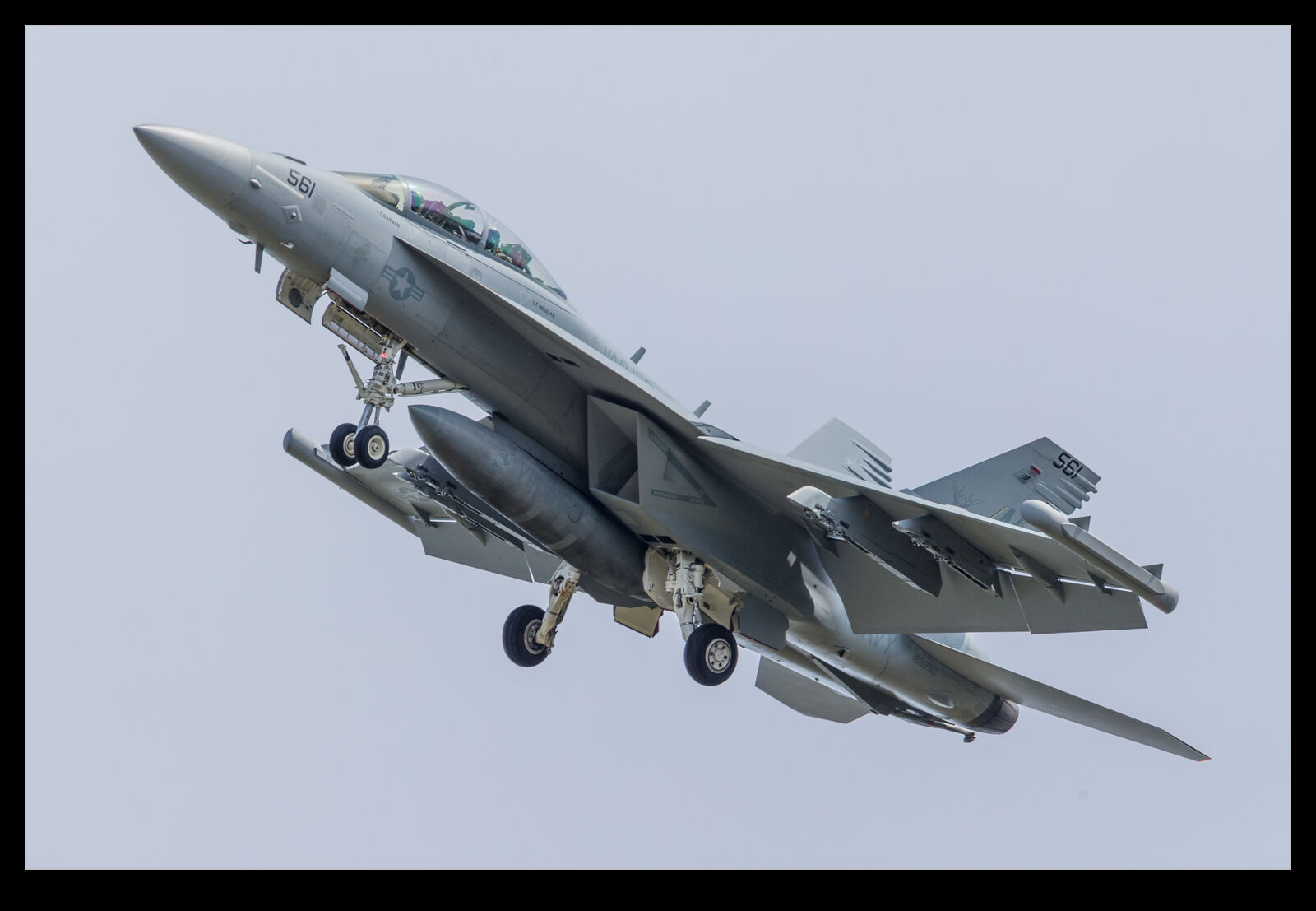
The approach to the runway at Coupeville brings the jets right over one of the local roads.  This meant I had the opportunity to go for some head on type shots of the jets.  As they came right over the top of me, I got a nice view of the underside of the jets.  I also experienced the noise level of a Growler.  I hadn’t thought to bring hearing protection and, if I go back, which I am pretty sure I shall do at some point, I will remember to take some.  You are really quite close and the sound levels are high!

FCLP Training for the Growlers

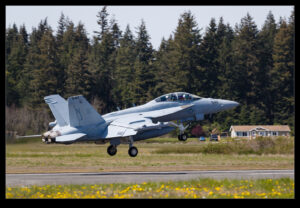
Naval aviators have to practice the art of landing on a carrier a lot.  Before they ever go to the boat, they undertake a lot of field carrier landing practice.  This involves flying the carrier pattern to a runway as if it was the boat.  The outline of the deck landing area is painted on the runway, the lighting is replicated and the guidance calls are provided by crews alongside the runway just as if they were at sea.  The crews fly around the pattern and thump onto the runway just like it was the deck and then apply power just like they would if they were aiming for a wire.

Of course, there is no wire so they power up and fly away to repeat again.  The goal is to be as practiced with the whole procedure as possible before they ever go to sea.  Naturally, there is still a difference dealing with a static runway in a field as opposed to a moving ship in open sea.  Still, it is the way to prepare.  Naval air stations tend to have separate fields away from the main base at which this training can take place.  They are away from the normal base flying and allow this training to take place uninterrupted.

NAS Whidbey Island has its outlying field at Coupeville.  They announce when flying training will take place there in order to keep the local community aware of the potential noise.  Usually there is little chance for me to go because of work but it turned out that one of the flying days was scheduled to have good weather and I should be able to take time off.  Not only was the weather due to be good but the wind was in a direction that meant they would be flying to the end of the runway that is more accessible.  I planned to be there.

As it happened, something came up at work and I had to go to Seattle before I could leave.  Consequently, I was behind schedule.  I eventually managed to get on my way and I got to Mukilteo just in time to catch a ferry.  Once on the island, I headed up to Coupeville and, sure enough, as I got closer, I could see Growlers flying patterns.  I got to the field and parked up away from the road.  I walked back, all the time hearing jets flying around.  Then I was in position to get some shots.

I kept moving so I could get closer to the touchdown point but the flying stopped as I got closer.  Then they packed up operations.  They were done, at least until the evening.  If I had missed the boat, I would have missed the whole thing!

Salty Dog Hornet Goes Tanking

The never-ending test program for the KC-46 Pegasus involves testing with a variety of receiver aircraft.  Recently, the Navy has deployed jets to Boeing Field to work with the tankers.  While I was there, it was a Boeing F/A-18D Hornet that was sent across.  Operating with the call-sign, Salty Dog, the Hornet blasted out of the field ahead of its tanker.  They were scheduled to be up until after dark so I didn’t hang around for their return.

Forgotten F-22 Pass

There are a lot of air shows that I have been to over the years.  You think you remember them well and then something shows up in your archive of images that you have completely forgotten about.  I am a member of a Facebook group that has a different challenge each week and, when I get the next challenge, I work through my catalog to see what I have that might contribute.  It is an interesting exercise in finding stuff that I had forgotten about.

This wasn’t one of those challenges but I was looking for something else when I came across this shot of an F-22 pulling vapor and shockwaves as it did a fast pass at the Rockford Air Show.  Rockford was a great show that I used to go to when I lived in Chicago.  They always got great static displays and performers for the flying display.  The only limitation was that you were pretty much shooting in to the sun.

This F-22 made a fast pass and was clearly pulling a lot of vapor as it went.  I don’t know why I forgot about this sequence but apparently I did.  I had a go at processing them again to see what I could make of the shots this time compared to my technique in 2009.  Not an easy shot to make work but the plane is dramatic enough to make it worthwhile I think.