Tag Archives: Steven Udvar-Hazy Center

Unusual German WWII Planes

The Steve Udvar-Hazy Center has aircraft from across the world and eras but does have some very unusual Second World War aircraft. The US acquired a variety of types at the end of the war from the German programmes which were taken home to evaluate. Some of these ended up in the hands of the Smithsonian when they were no longer needed. Two interesting examples are now on display at Dulles. These include a jet powered bomber and a puss-pull fighter.

The Arado AR234 Blitz is a conventional looking plane if you set aside the engine pods under the wings. To a modern eye, it looks very tame, but I imagine it was something special at the time. Next to it is the Dornier DO335 Pfeil – a push-pull configuration piston engined fighter. This was not a unique design idea for Germany. The US had a similar concept – an example of which I saw in Kalamazoo. So much innovative aerospace concepts were developed in the heat of war and these two are very rare examples of what was underway at that time.

Details on Tiles and Insulation Blankets

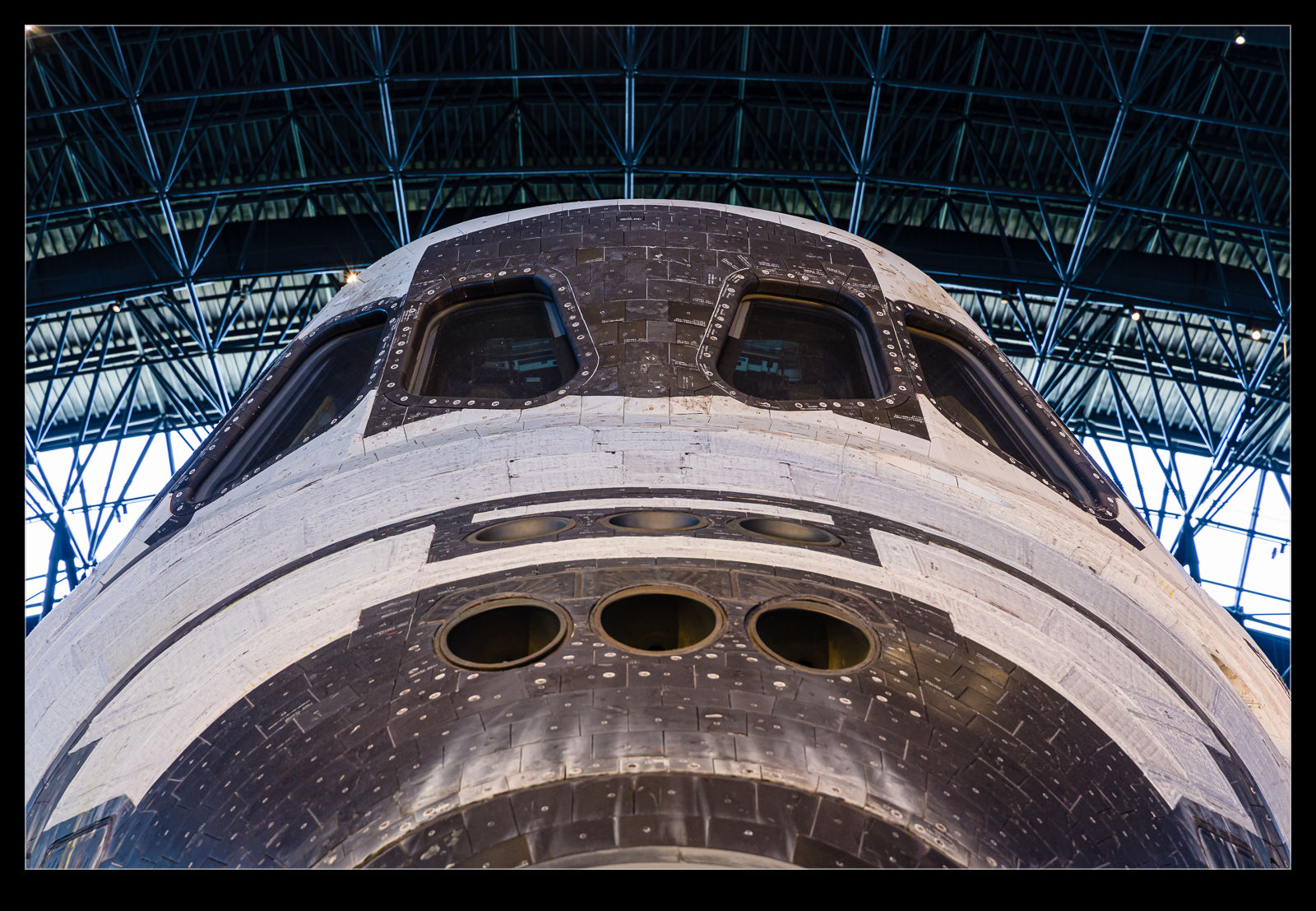
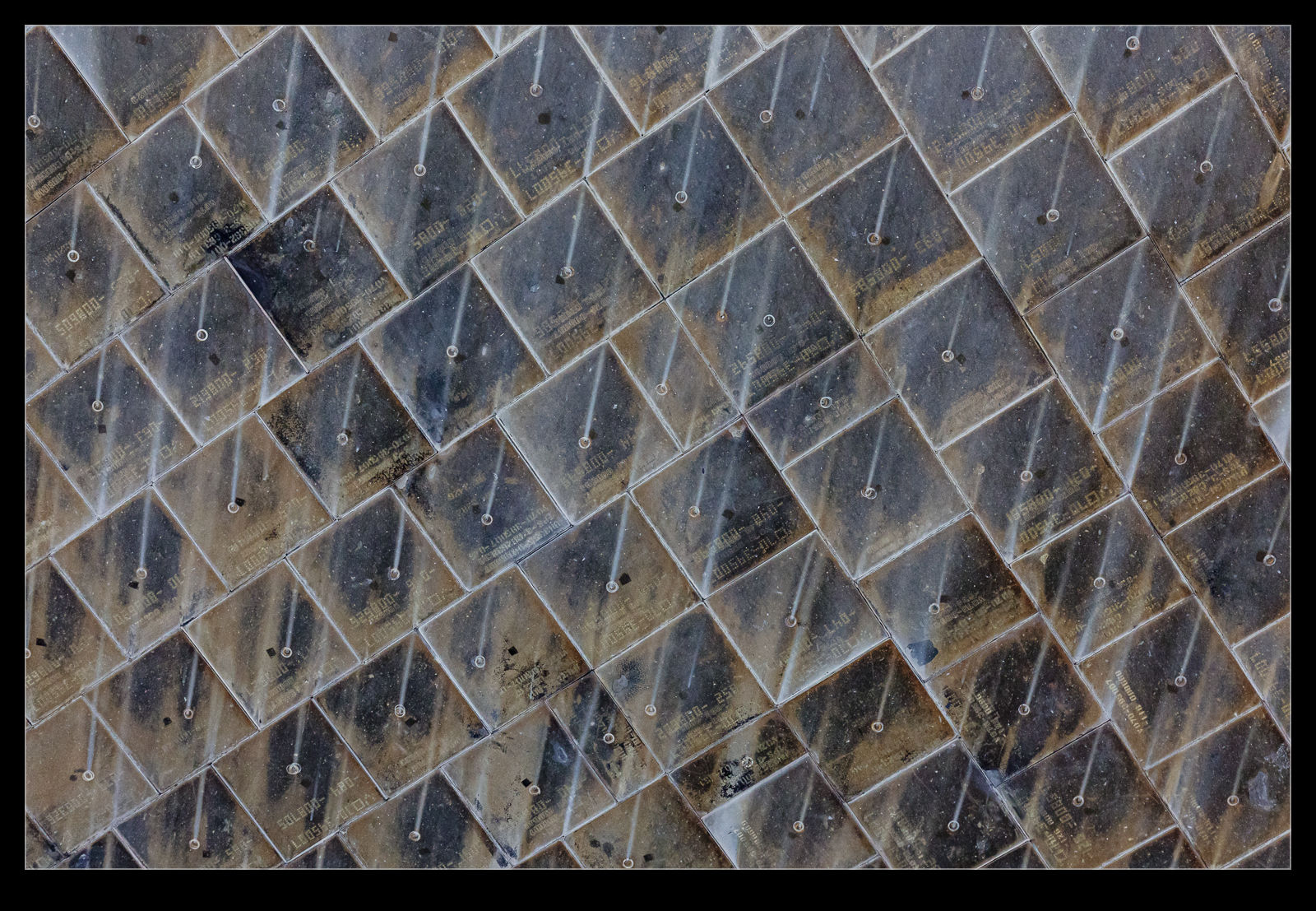
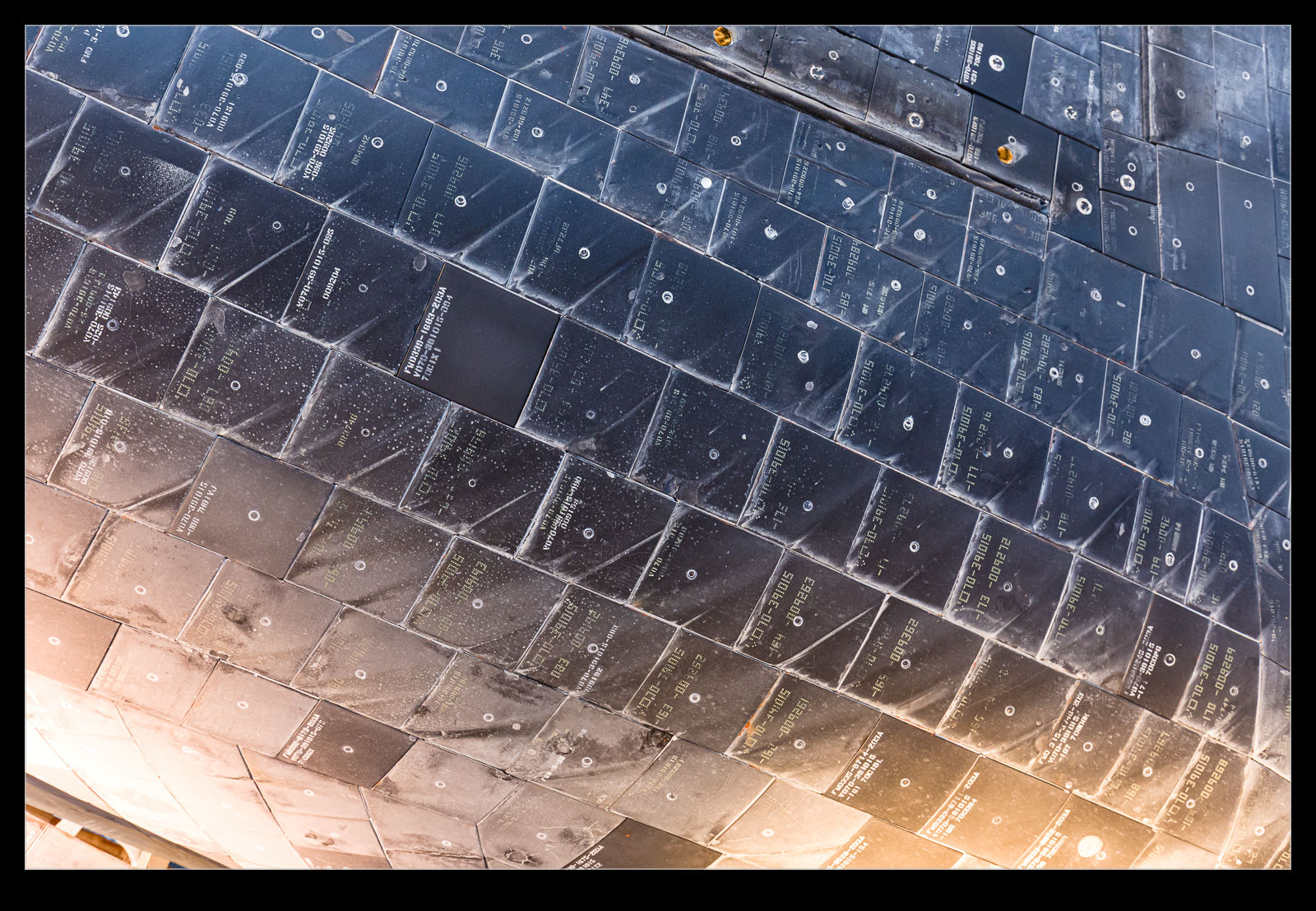
The previous post I created about the Space Shuttle, Discovery, had a number of shots of the whole orbiter. However, as I walked around, I found the lighting showed off the texture of the vehicle’s surface in a really interesting way. Not long before I went to Udvar-Hazy, I had seen a video that showed how the tiles had been made for the shuttle. That included a bit about the integrity that was required after which a hole was drilled in each tole for a moisture protection system. This hole created a hot spot which shows on all of the tiles on Discovery.

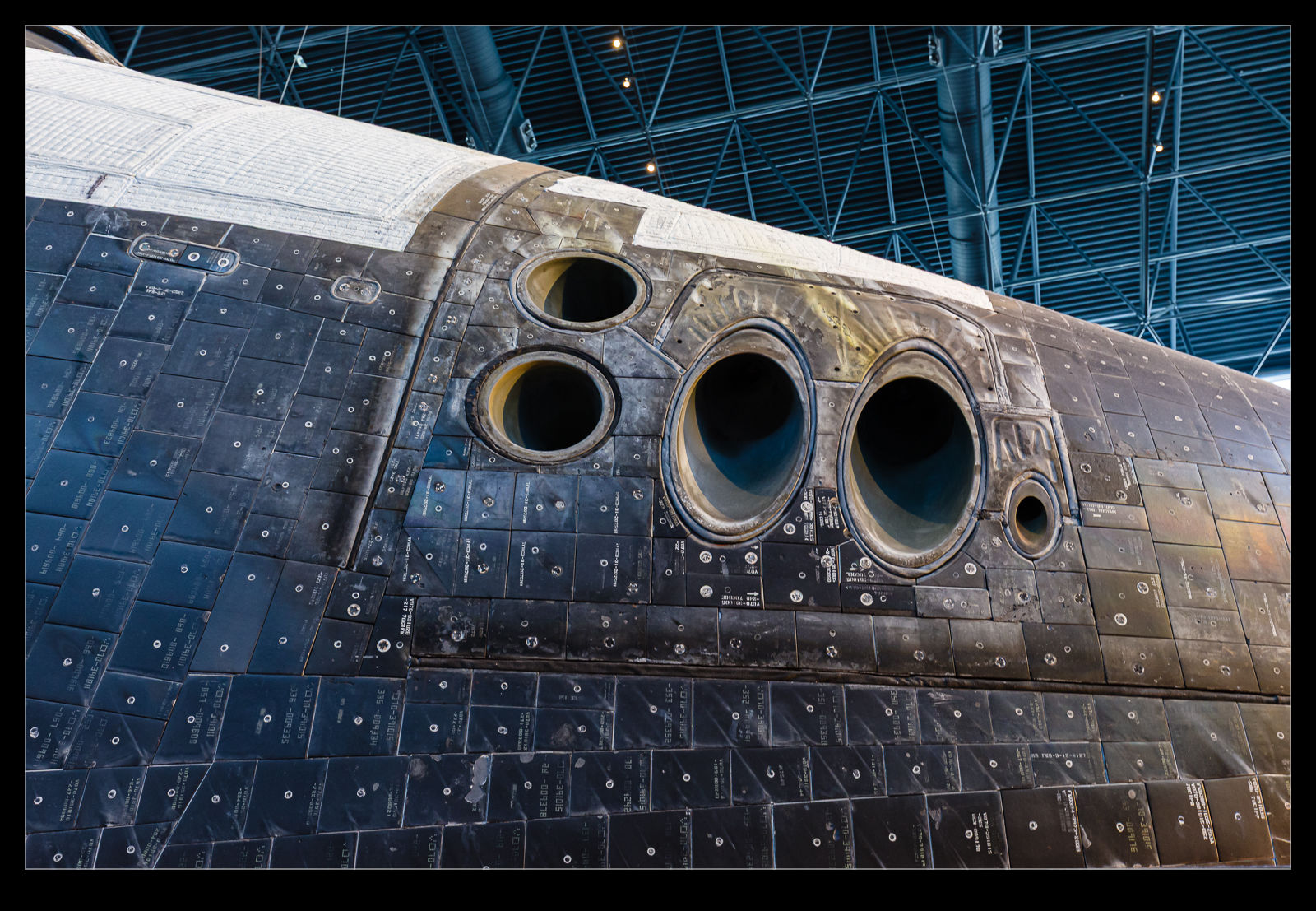
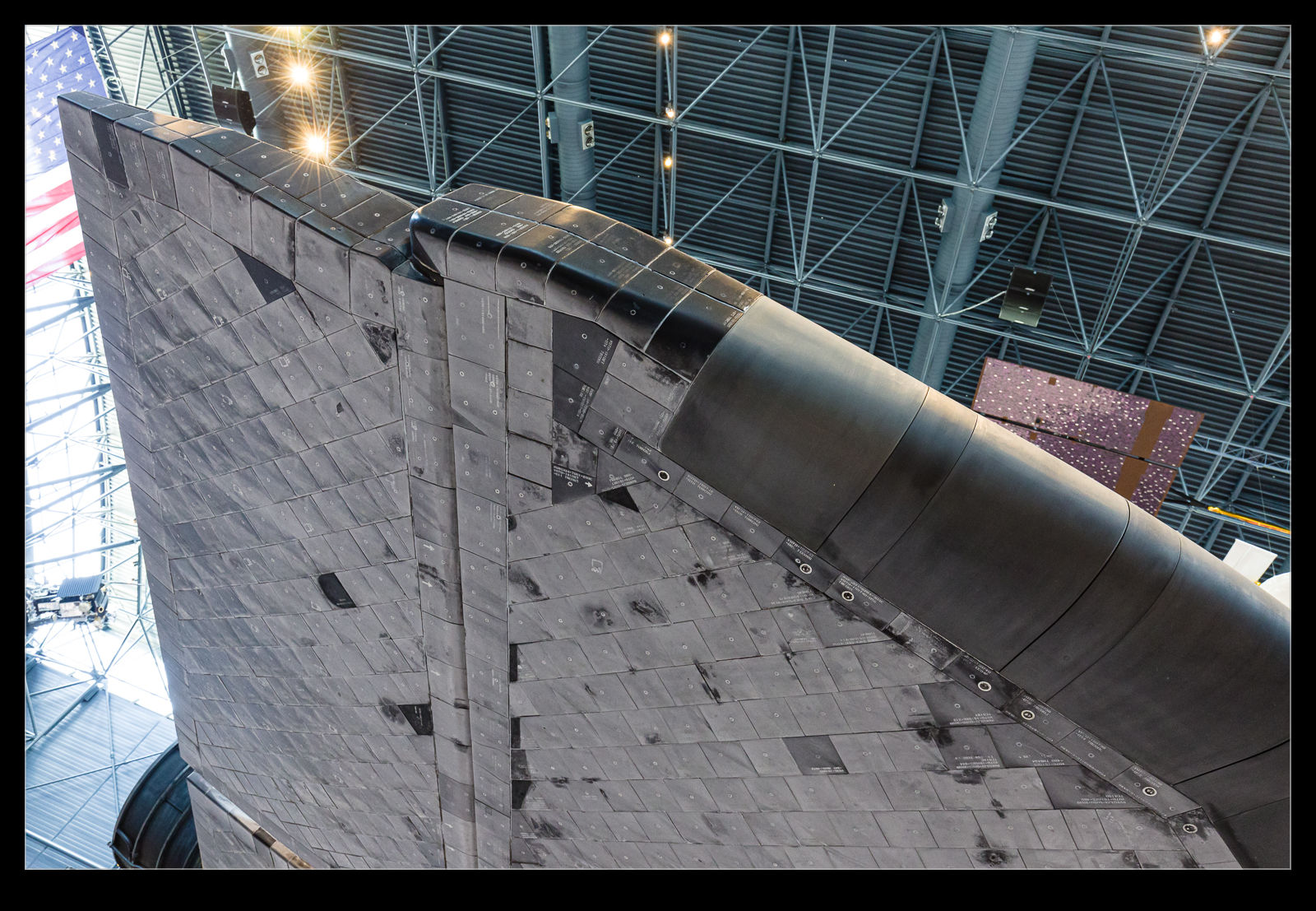
The tiles were used in the hottest areas of the airframe during reentry. Initially, the whole shuttle was covered in tiles but, over time, they changed to using a blanket type of insulation in the areas that were less stressed. The texture of these blankets looks rather rough for something that flies at such speeds. I guess it did the job nicely, though.

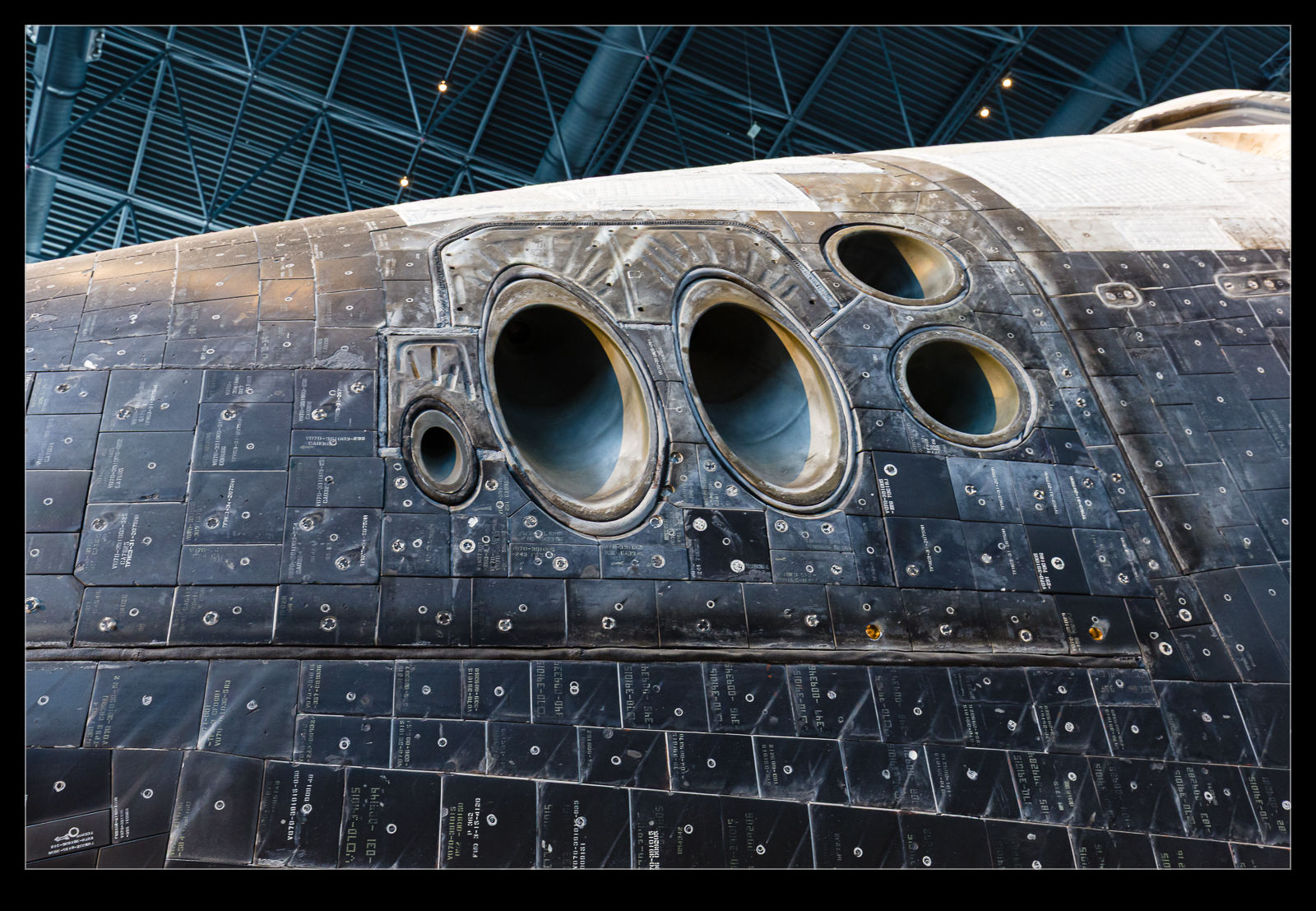
I also liked some of the details around the reaction control system nozzle and on the corners of some of the control surfaces. They look both tough but also quite delicate. An odd contradiction in my perceptions. To think that this was originally designed in the 1970s and then constantly improved up to the point when it was retired is quite something looking at it in 2026.