Category Archives: technique

What’s the best camera?

I suspect you have heard the phrase, the best camera is the one you have with you.  Well, I am a bit of an idiot as I went out to a location the other evening for another reason but didn’t stick a camera in the car.  We headed to Moreton Arboretum out in Lisle.  We are members and go there pretty regularly to wander around.

This time they were running a cheese and wine type of event.  Tables were set up outside, there was a bar and a tapas menu.  A very pleasant way to spend an even out in the warm as the sun gradually headed down.  The photographers amongst you are thinking golden hour.  Why didn’t I think of that.

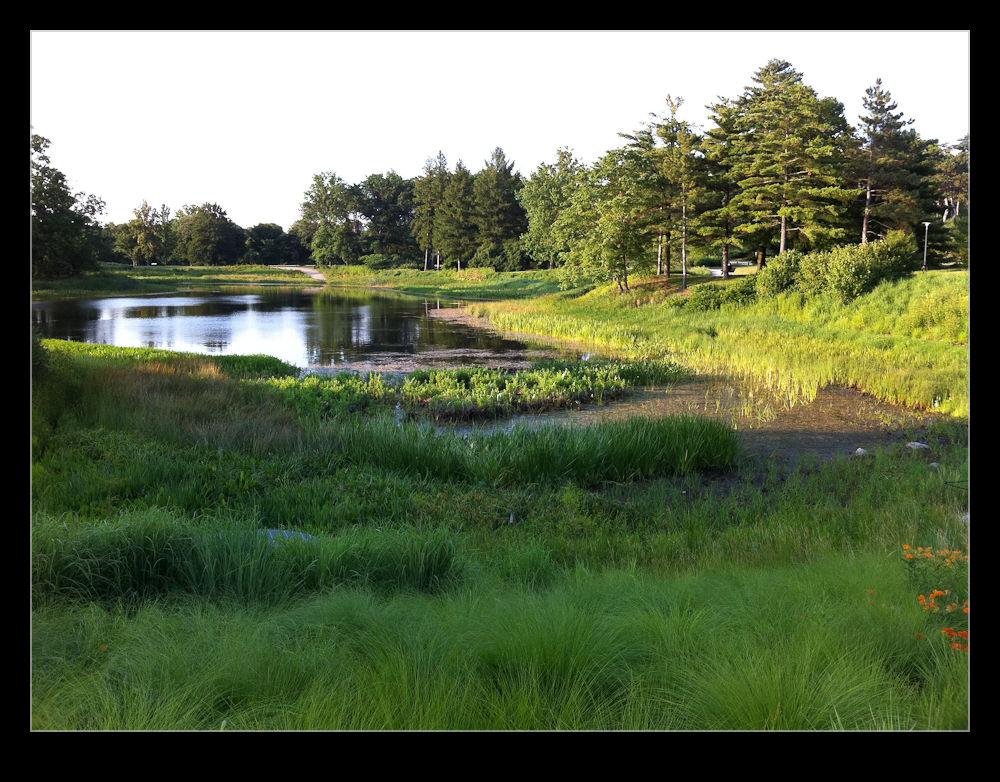
There is a lake near the visitors center which I will have shot a number of times from different directions, usually in the harshest light of the day.  This time I was there when the light was great and as soon as we took a stroll around the lake, I was kicking myself for not having brought my camera with me.

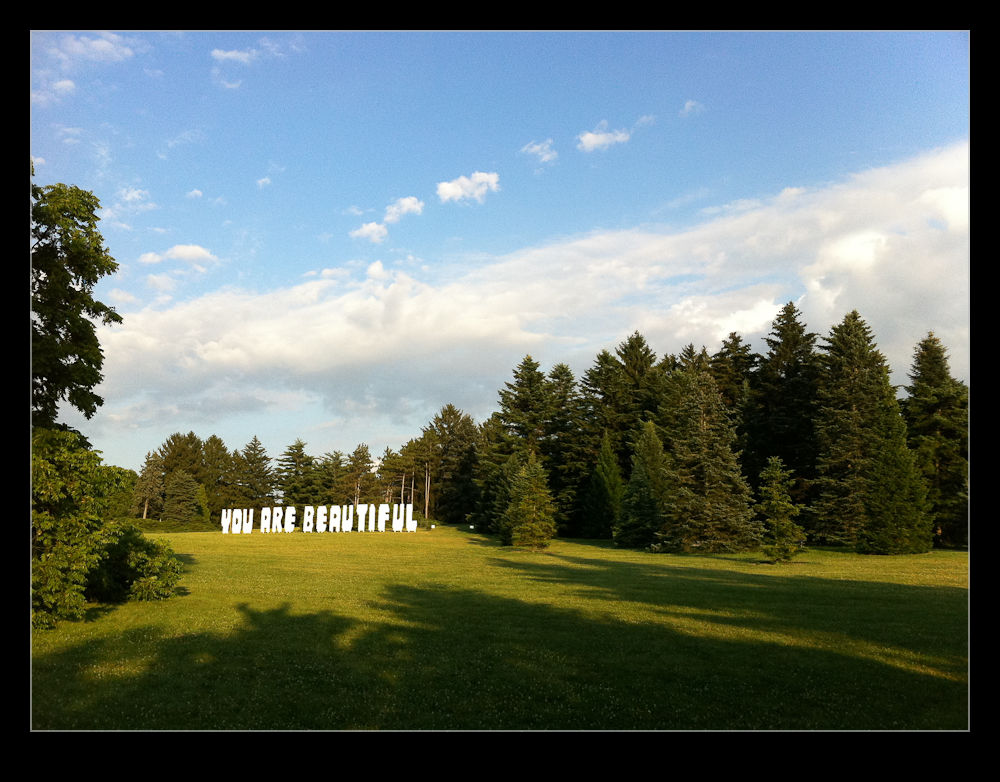
Plan B was my phone.  The camera is okay but not special.  However, it was the best camera I had with me so it would have to do.  It doesn’t handle too much contrast well so a little angling to try and get what I wanted was in order.  Not stunning results but it’s what I got so here you go.

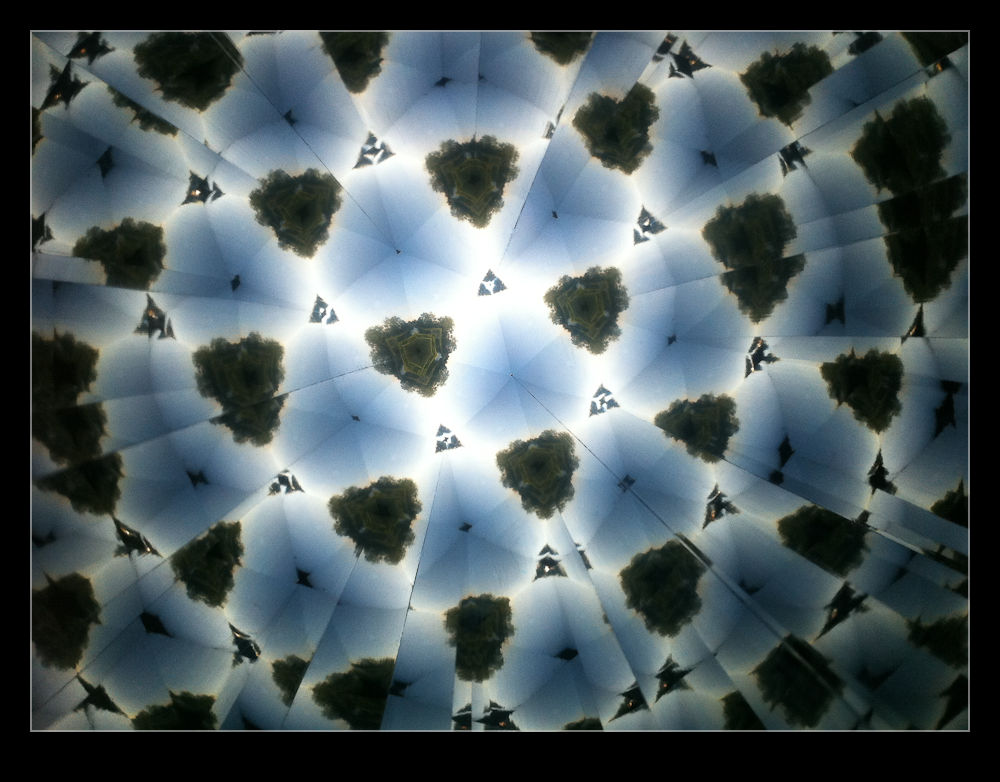
This last shot was something we saw when wandering around.  I might explain more another time…

Flashing at the birds

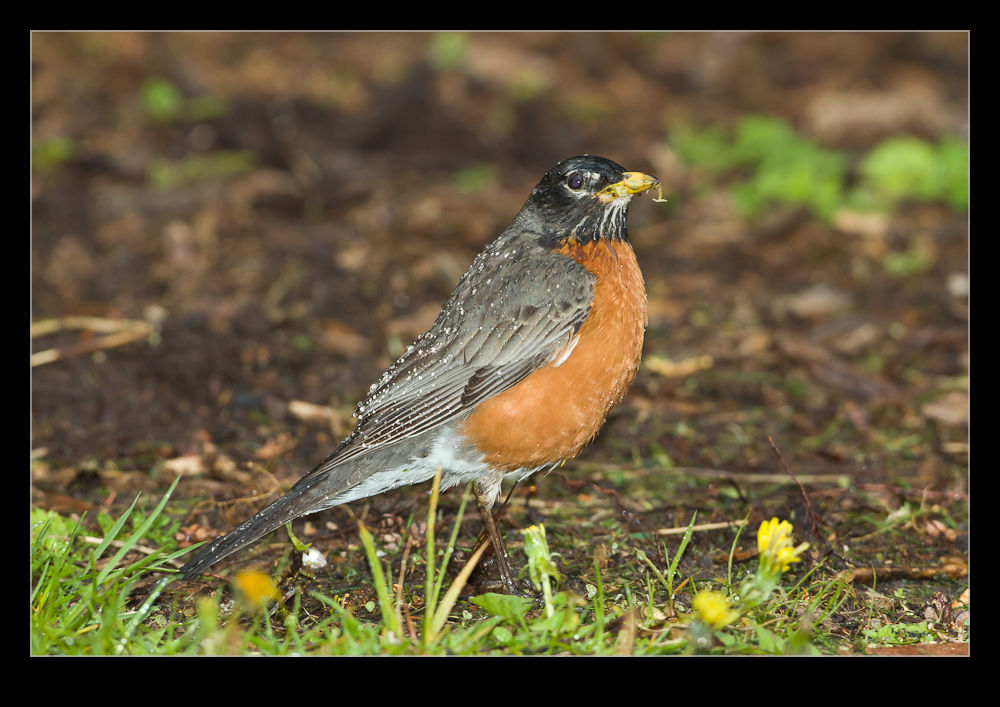
While hanging around up in Door County in Wisconsin, I have been taking a bunch of pictures of the local wildlife. Mainly a lot of birds in the vicinity of our hotel and that is always a fun challenge. To add to the challenge, one of the afternoons that we were back at the hotel, the weather closed in and it began to rain. There was a patch of grass outside our balcony that seemed to be a popular spot for some robins so I started taking some shots.

As you are probably aware, robins are quite bold creatures so, with a little patience, you can end up with them coming reasonably close in. However, with the light having faded fast as the weather deteriorated and the natural shade of the area, it was not looking good to get a good shot. I started out by bumping up the ISO but that was only helping so much and, without a tripod, I was still going to get mixed results.

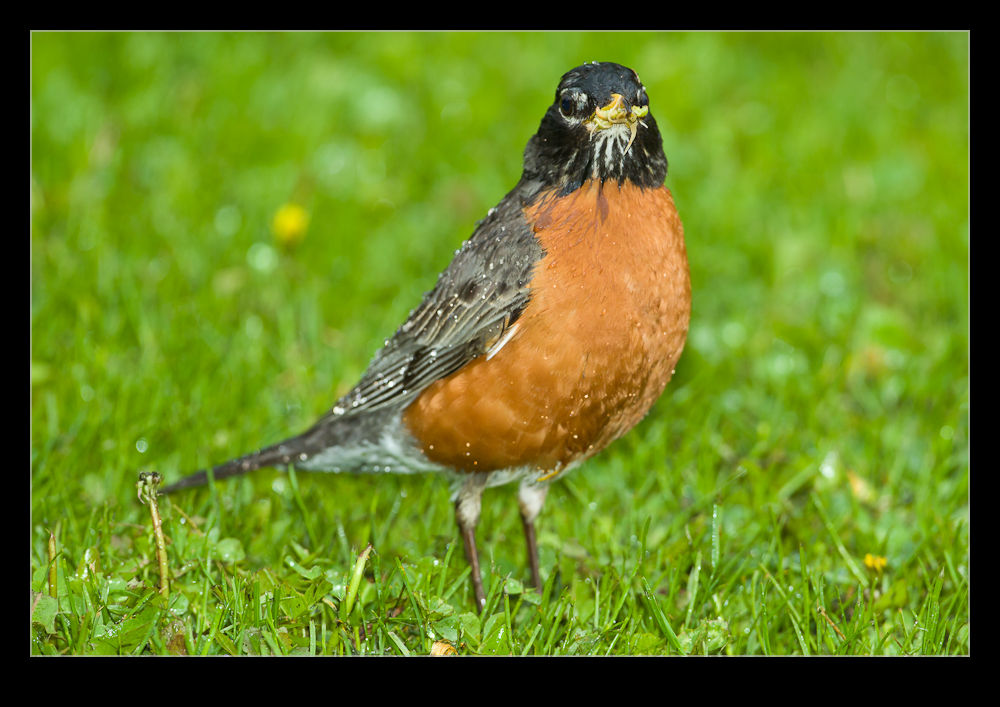
At this point I decided to try something that everyone who shoots wildlife a lot probably does to some extent but that I had not tried before and that was using some flash to boost the excitement. I had no idea how much to use so experimented with a little extra FEC, then zero and ultimately one stop under on FEC. The latter seemed to have the best results judging by the quick view on the back of the camera – always such a reliable indicator!

I was using the flashgun straight with no boost like a Better Beamer (if that is the right name) so it was a bit of a raw experiment but the results seemed to be be pretty pleasing so this is something I will have to think about further in due course.

An alternate canvas

I guess the title is a bit of a lie in this case as the alternate is actually canvas. I haven’t done any canvas printing for a while. I used to have some canvas that printed in one of my previous Epson ink jets but I haven’t used that stuff since changing printers and haven’t ever found profiles from the manufacturer so they must have disappeared not long after I bought the stuff.

I have experimented on printing on a number of finishes in recent times with some printing on metal that has come out well. However, I gently had a client who was interested in a large format panorama. I was hunting for a good printer for this since my regular print outlet does not cater to large format panos at all. I had used another place as a trial but they had produced a really crappy result. While searching for an alternative, I mentioned to the client that I had heard good things about a place that specialized in canvas prints including larger format panos and was he interested. It turned out he had already been wondering about a canvas print.

I prepped the files and sent them off to the place. I told him to hold off paying for it until I had seen whether it was worthwhile. If I don’t like the result, I am not going to have a client paying the price if my name is on the work. The turnaround was really pretty speedy.
I received the canvas and I have to say I was impressed. It was mounted on a wood frame ready stretched. The finish was excellent and the colors looked very vibrant. The packing was also good and the whole product was well protected. I will certainly use this place again if I have anyone after a similar product and I now find myself contemplating some panoramic options for myself to justify a print for home.

Panning for gold

While the title might be a bit inaccurate, you are probably not going to struggle to guess what the topic really is. I have always enjoyed playing with panos since my days of film when it would be a lot less complex and consist of sticking together a large number of 6×4 prints to make a larger collage. The effect was rough and ready but there was something rather cool about the way they came out at the highly accurate results possible today doesn’t have.

While stitching together shots is straightforward given any number of software tools (although Photomerge in Photoshop has got sufficiently good that I rarely need to use anything else), achieving a good pano with the camera in my phone was a different challenge. Without control of the exposure and the white balance, it was hard to make the shots merge cleanly. I then got hold of an app called 360 which would shoot a pano as you gradually moved the camera around. It overlays a grid so you can see the coverage still available and you could pan up and down as well as laterally.

Originally the results were less then ideal. It would have discontinuities on some of the straight lines in the scene and was particularly unhappy in low light or when panning vertically. However, the latest version of the app is now out and it is a dramatic improvement. After playing with it at home briefly, I tried it while on the road the other day. We were heading up passed Green Bay and so stopped off to see Lambeau Field. I’m sure the Bears fans I know will be cursing me for such treachery but I wanted to see such a famous stadium. Anyway, it wasn’t a photo trip so I only had my phone in my pocket at the time. I decided to give the pano a shot using the latest version of the app and I think it did a pretty good job. It was fun to watch new areas that had a different exposure suddenly get corrected to merge with the existing image and straight lines that were originally out of position get jumped to the right place as the app worked out what was wanted.  It isn’t perfect yet.  Some lines still don’t line up and the resolution is surprisingly low compared to a normal shot by the phone.

Nice work by occipital who are the developers. I like what you have done so far and look forward to what you come up with next.

To Shoot or Not to Shoot

Harsh Sky

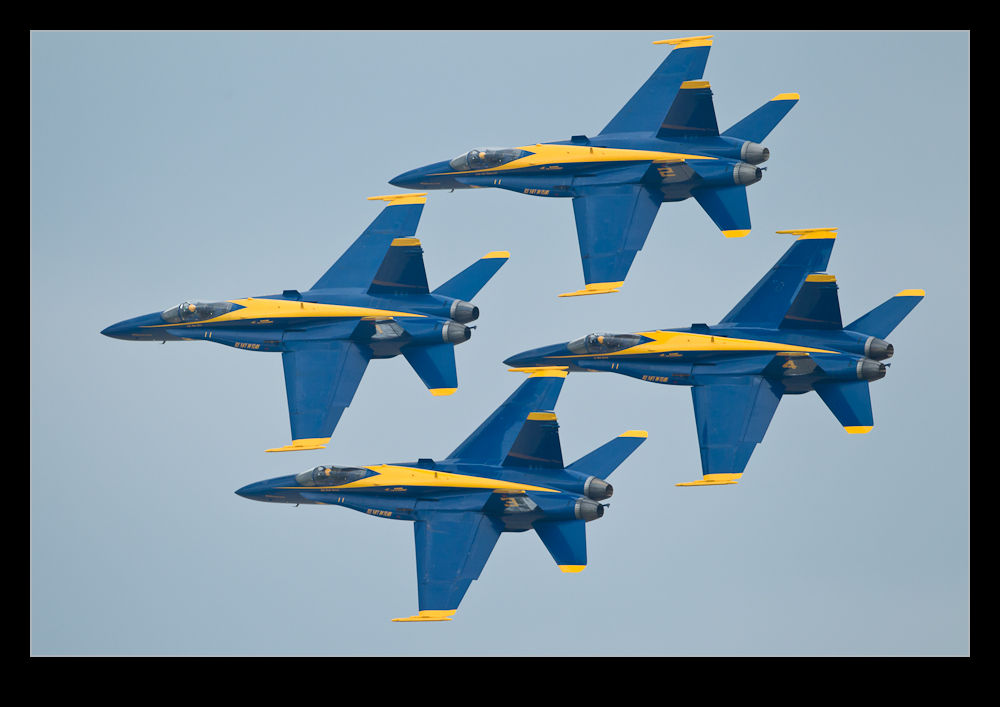
In a previous post I mentioned my trip to Indianapolis for the air show at Mount Comfort.  A few things were going to make getting good shots tricky at this event.  First, the crowd face south at the show so, through the majority of the display, there is a strong chance of back lighting.  Also the forecast was not for great weather.
Dark Cloud Background

This forecast was one of the things that actually helped persuade me to go.  With a lot of cloud, the backlighting might actually have been tempered.  Also, with the possibility of rain, it might even work out that a lot of vapor could show up during the displays.  It could also mean getting drenched with no flying, though, so a chance was taken.  There is always the nice idea of a bit of sun on an aircraft with an evil looking sky behind it.
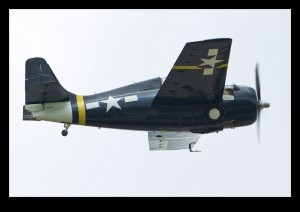
Harsh Sky

When I am at a show with a backlighting issue, I tend to try and go to one extreme of the crowd line.  This can have two advantages.  First you get some different angles from the normal shots that being near show center gives.  Second, by picking the end carefully, you can get sections of the display that at least have the sun on a quarter position rather than head on.
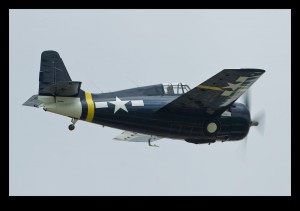
 

Dark Cloud Background

Metering in these situations can be tricky.  You can go with exposure compensation based on your view of the sky brightness with anything between +1 and +2 a possibility.  Alternatively, you might try manual metering based on some pre-readings.  That is a lot easier to go with when the lighting is more consistent – constantly changing skies make manual metering a lot more work.  I have used both.  Of course, with harsh backlight, there is only so much you can
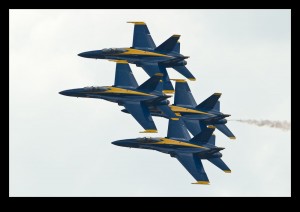
Backlit
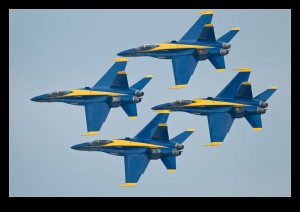
Top Light

do.  Good exposure on the subject is not going to be matched with a great background.  Therefore, there are only going to be certain angles that can get a reasonable chance of a good shot.  Does that stop me shooting at the other angles?  Of course not!!  I have tons of images that are no-hopers but the fun of the shoot and the way things look better through the viewfinder are highly likely to stop the part of the brain that says no point shooting now.  Of course, there is an upside to this.  Tracking the aircraft throughout its pass does put you in a good position to get a better shot when the light is good.

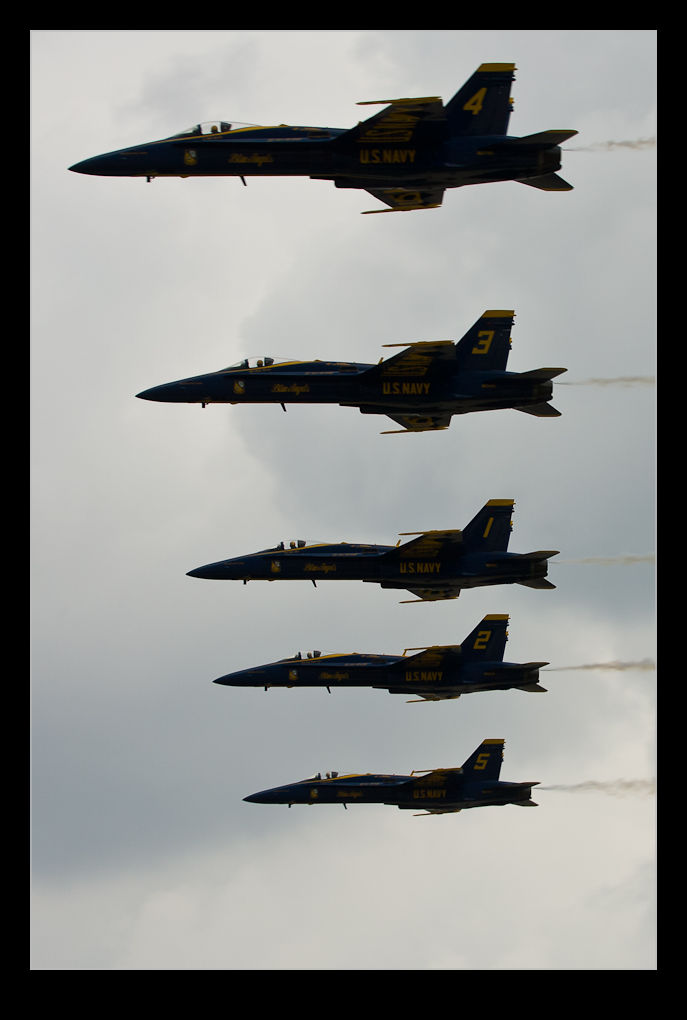
Another thing to look for is exploiting the conditions to get a different look.  Normally when shooting aircraft you are trying desperately to avoid a silhouette.  An alternative is to go for that look deliberately and get something a little different from the normal shot.  It isn’t always going to work but when your options are limited, why not try something else?
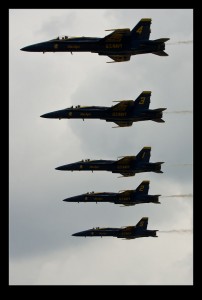
Silhouette

One last thought, panning with aircraft to get a good shot is something that is always worth practicing (if you want to shoot aircraft that is!).  Even crummy conditions can be good panning practice and will set you up well for the time when the conditions are good and you need to be ready.
Lenskirt Review

Living in a high rise in the city, I have a lot of chances to shoot things that I can only see through the windows.  This has been a tricky thing to deal with over time and I have come up with various solutions with varying success.  A couple of times I have thought about making something myself to be the solution but have never got around to it.

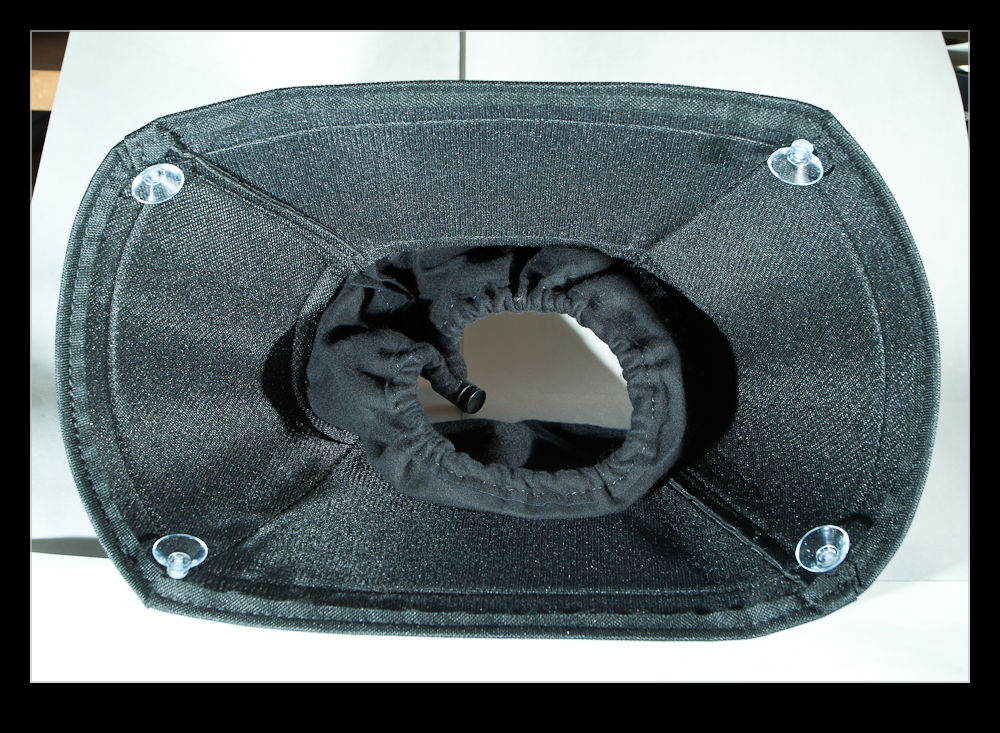
Now someone has made something that pretty much does what I want.  It is called the Lenskirt.  It is a black squared funnel that has a fabric sock at the base which cinches around the barrel of your lens.  I has four suckers at the four corners that will attach it to glass.  The idea is that it blocks any light coming in from the side and reflecting off the glass and back into the lens.

I love this idea.  However, the $49 price seemed a little steep for what it is.  However, i did buy one and it has just arrived.  Overall, I am quite pleased with it.  My suspicions about it being a bit overpriced seem valid but it does do what I want.  Moreover, it handles my widest lens (the 17mm) without any problem.  It allows flexibility of placement so you can shoot at an angle without seeing the skirt.  Therefore, while it is a bit pricey, the alternative is something I have never bothered to do so it is probably worth it to me.

This could have other applications other than shooting through normal windows.  It might be useful in an aircraft when you can’t open a window to shoot out as well.  I am never a fan of shooting through something since the surface is often of poor quality but sometimes you have no choice.

Could it be improved?  Yes.  I would have made the rim stitched to sit flat to a surface when attached rather than having to bend out.  Also, I might consider a slightly more rectangular shape given the format of shooting (although that would impact on the ability to fold it flat).  It is slightly wider than deeper but given the need to look sideways sometimes, a little more width might be good.  (The shot above makes it look a lot wider than it really is by the way!)  I might also have gone for a less reflective black material  just in case.  As I try it more, we shall see if other issues come up.  However, so far, a welcome addition to my bag.

Navy Pier Lift

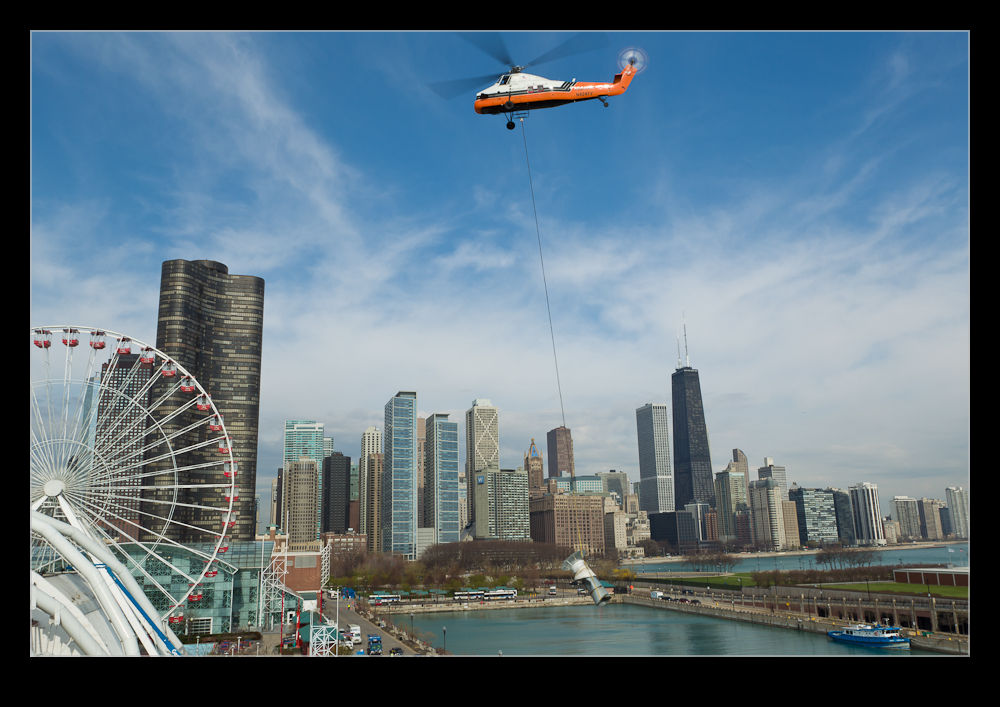
Regular followers of this blog will know that I do a lot of jobs with Midwest Helicopters.  Earlier this week I got a call from Jim telling me that they were planning a job at Navy Pier later in the week.  Given the location of the pier, the possibility of some nice city backdrops was very tempting.  Where to shoot from would depend on where the actual lift was.  For those who haven’t been there, Navy Pier is pretty long!

I went to the website to try and get a contact on the pier who might be able to get me into a location that would be good for shooting.  They have a contact for people wishing to photograph (commercially) on the pier so  I contacted the person and they got back to me a while later.  Turns out, the pier is very focused on what is necessary to get a shoot arranged.  They had a series of terms, most of which were not a problem with the exception of getting them named on my insurance overnight!  They also had a fee which was quite substantial.  Since the shoot was associated with some work for them, they were prepared to consider waiving the fee.  However, the manager was out and by now the lift was the following morning.

Outstanding commitment on the part of my contact meant I got the all clear at 10:30 the night before.  I am very grateful that they tried so hard and it was certainly nice to be totally legitimate.  The morning dawned with some very promising conditions.  We all rolled up to the site and got set.  Unfortunately, the loads were not ready so the lift was postponed for half an hour while the rigging was set up.

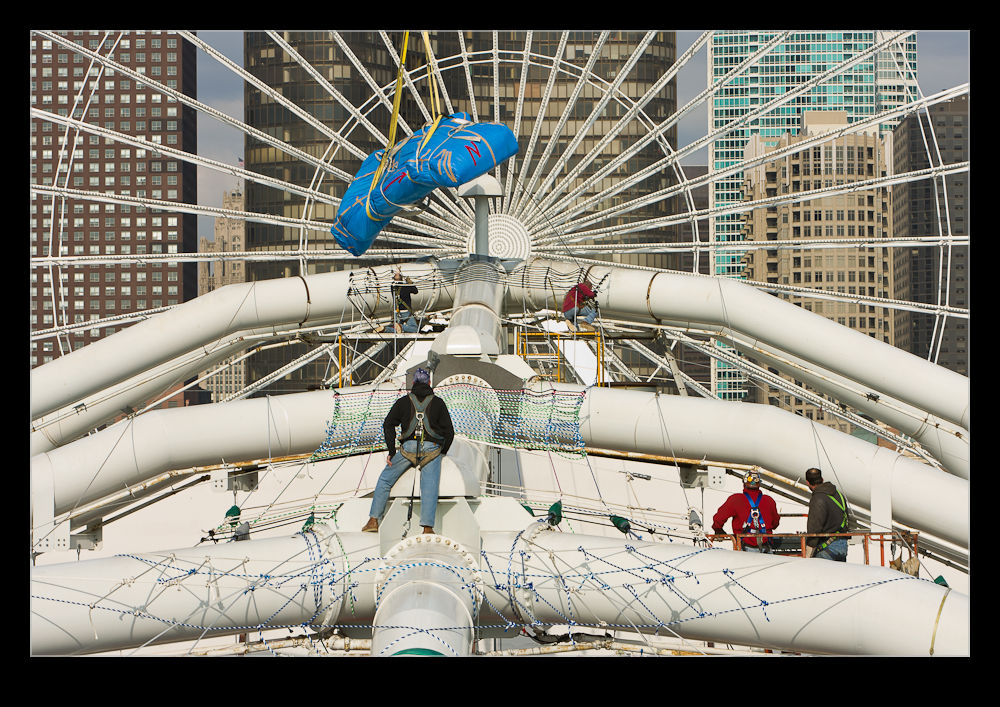
Eventually we went ahead.  A theater on the pier has a fabric cover that had been ripped in a storm.  The new covers were going up and a damaged vent was being brought down.  The guys receiving the loads were working on some temporary cable rigging under the main beams.  They were not in much of a position to manhandle the loads as they came in so Jim was a busy guy making very fine adjustments from the helicopter to get everything in place.  He did a great job and I was well positioned to get some good shots.  I particularly liked the angle looking down the roof line at the heart of the Ferris wheel behind the theater.

I was with Brian on the parking deck.  He had an idea for a shot that I hadn’t considered.  He would be hooking on the lift line as the helicopter hovered at head height.  He wanted a shot that was a city panorama with the hook up as part of the scene.  I hadn’t considered doing a pano with action in it before but gave it a go.  I actually tried several during the lift and they actually came out quite well.

Stitching the pano of Brian was harder than I thought.  Photoshop did a great job of creating the pano and totally excluding the helicopter since it was only in one shot.  However, the layer was still there so some delicate masking work could bring it back in.  It was actually really cool to watch it appear on the monitor.  The pano is not something that will always have a place on a shoot but it is an interesting idea to add to the shoot list.

For more pictures of the lift, you can go to this gallery.

Time Lapse Fun

One gift I got for my birthday was an intervalometer.  I have been interested in time lapse photography for years but never got around to trying it out properly.  The intervalometer I got was a third party device which is a fraction of the price of the official Canon version!  A couple of posts ago I included some time lapse video in Chicago.  Here are a few more videos that I have put together in the recent months.

Bean in the rain

After the trip to the Cultural Center from my previous post, I headed across to the Bean to try some other ideas.  I was interested to use the intervalometer to do some more experiments with time lapse photography.  Ever since I have got it, I have been experimenting with different ways of compressing events in time.  To date I had focused on larger scenes transitioning over periods of an hour or more.  This time I was looking at getting a short result that portrayed the movement of people around a busy scene like the Bean.

What I hadn’t planned on was the rain.  The day had been looking pretty unpleasant for quite a while but, since I was more interested in the movement of the people rather than a picturesque shot of the landmark, I wasn’t too bothered.  Besides, this was an experiment so, if I screwed a few things up and learned my lesson, I would be better prepared when a better day came along.  However, the rain that started around the time I arrived was a little more persistent than I had expected.

In such circumstances, where does everyone go to shelter?  Under the Bean of course.  I quickly joined them when I realized the rain was getting heavy.  As I sheltered under there, it was obvious that this might be an chance anyway.  I thought everyone would just stand under there so nothing would work from a motion perspective but I was wrong.  Despite the lack of anything to do for a while, people were constantly on the move.  I stuck the camera low to the ground under the surface of the sculpture and left it to do its thing for a while.

As the rain eased off, I headed outside to try and different look at people passing by.  I even decided to see what a slow moving person in front of a busy scene might look like.  I’m not obvious and it isn’t great but when you find a way to have fun in the rain, you do.

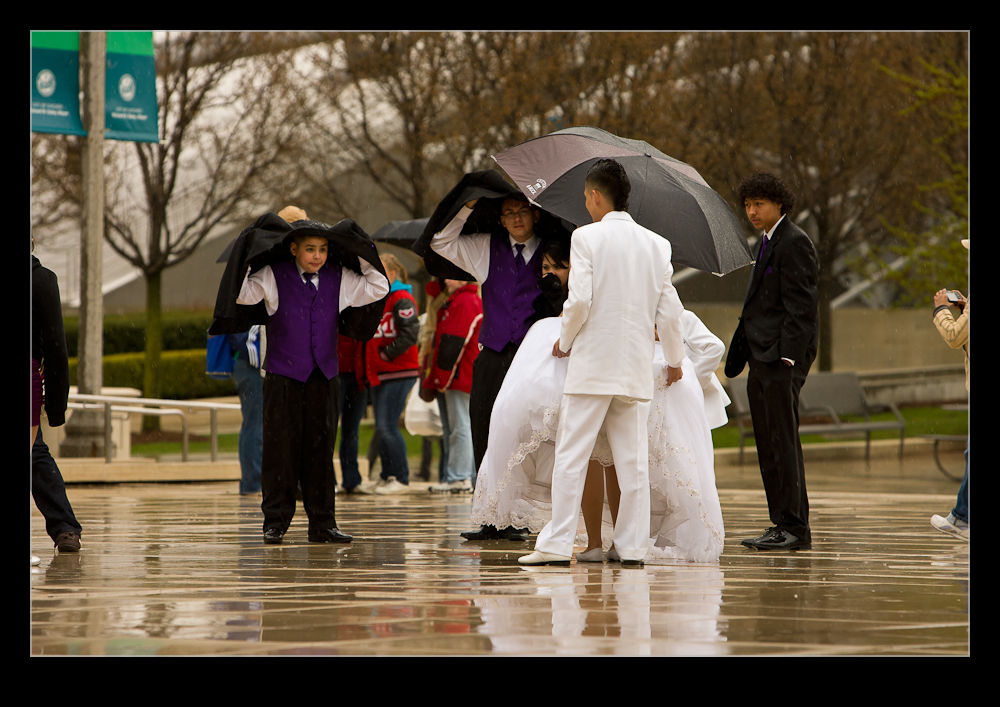
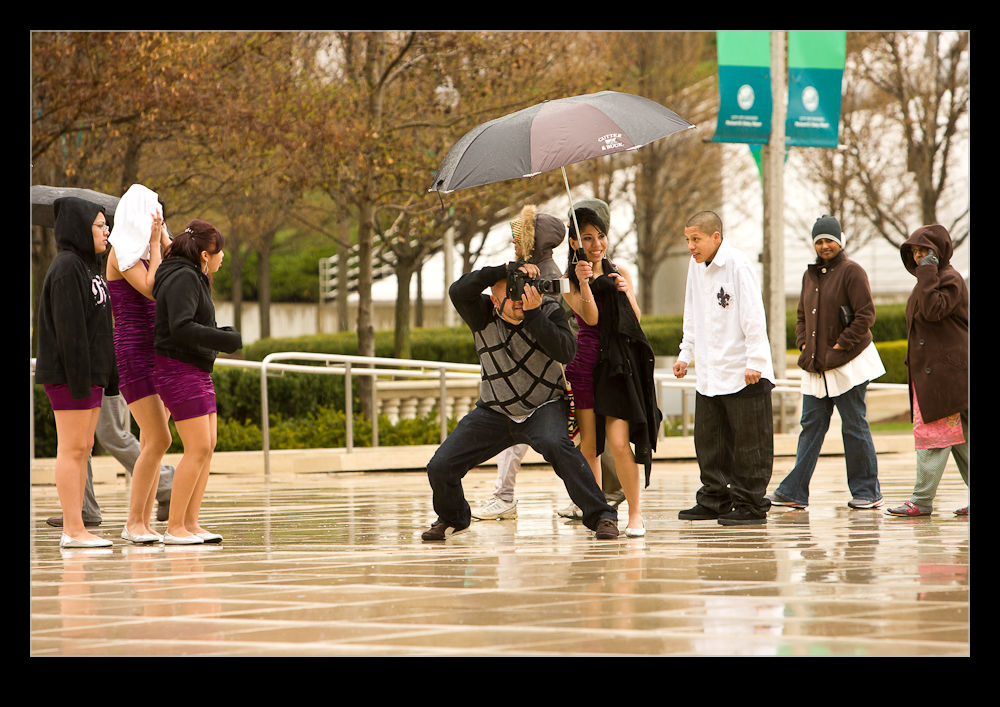
While the time lapse was underway, I noticed another group had arrived.  At this time of year it is no surprise to see wedding parties arrive to get some pictures in Millennium Park.  When it is pouring with rain, it’s not what they were hoping for but I guess you can’t come back another day when you only have one wedding day!  I felt bad for the people as they struggled to get their shots as the rain fell but the photographer was a determined guy and they were going to get it done.  I do hope they look good when they see them.

Cultural Center Part 2

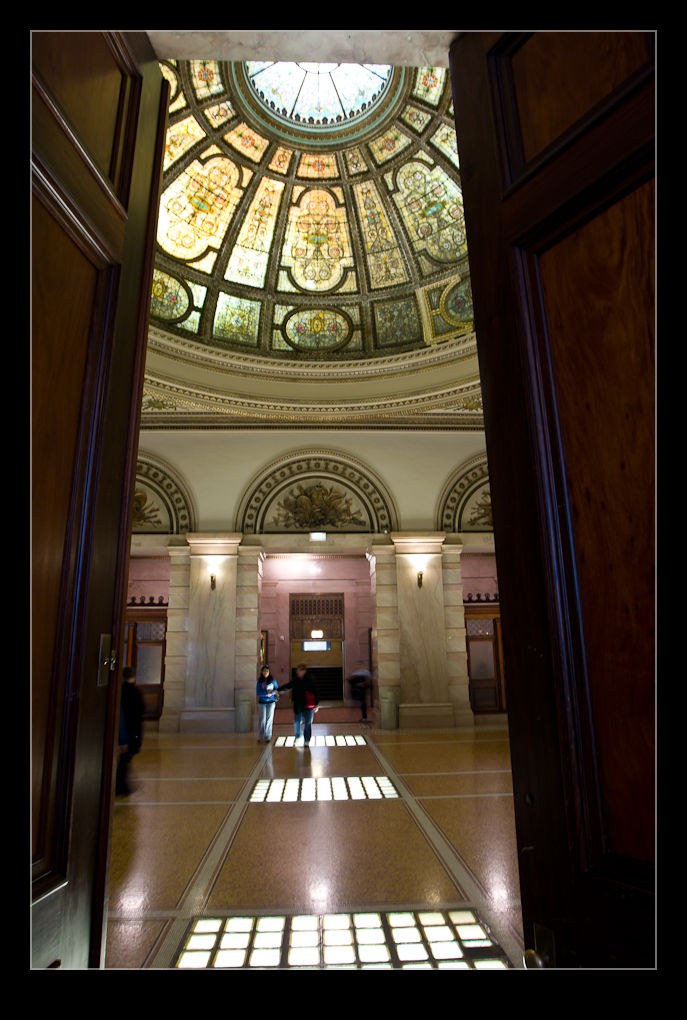
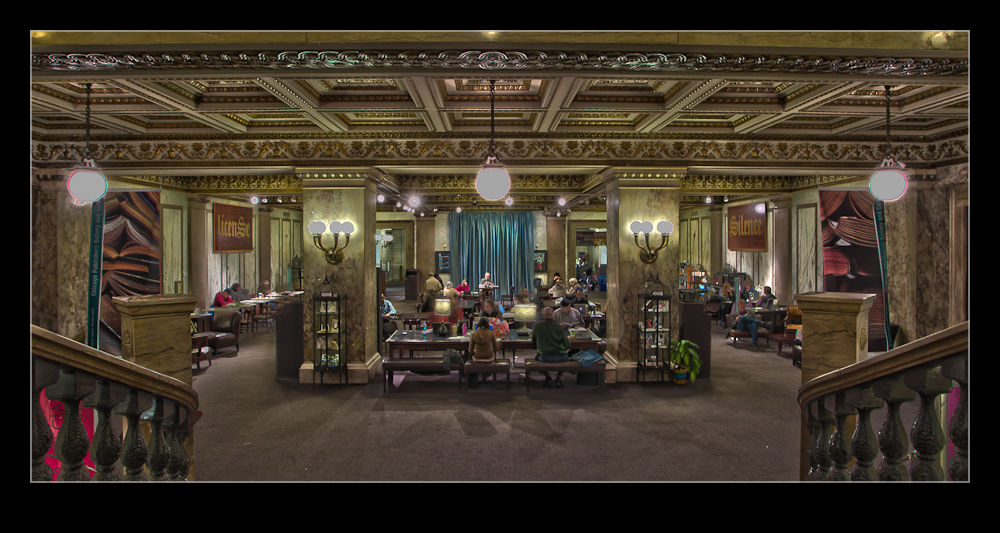
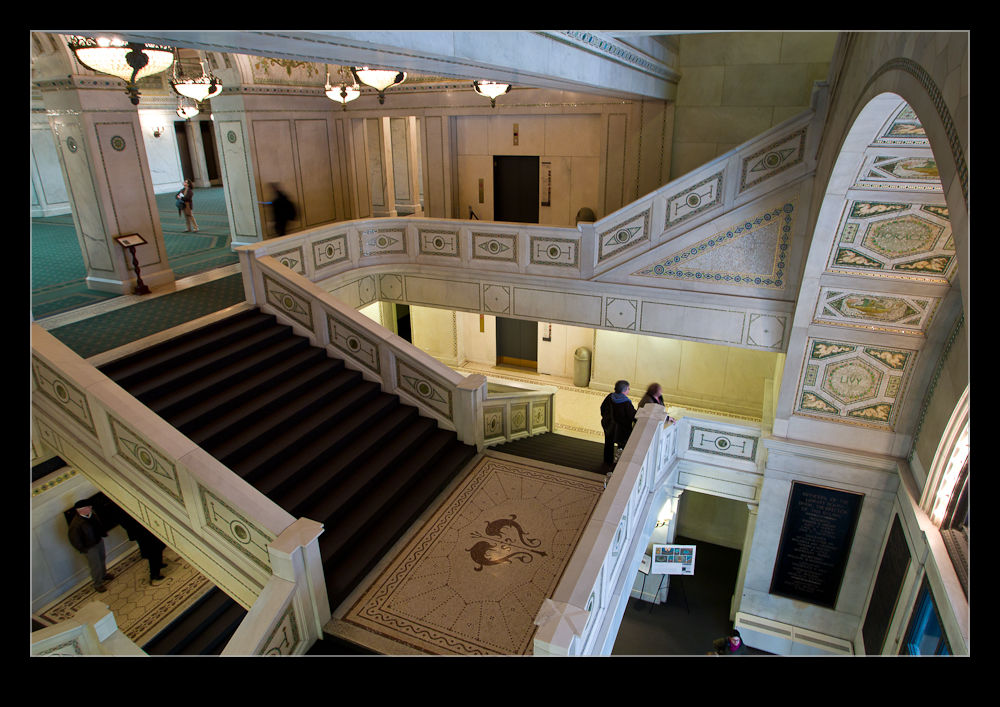
After the visit of Bonnie, Gary and Julie the other week, I was determined to head back to the Cultural Center and have a bit more of a plan this time.  Following on from my wanderings along the river to watch the bridges opening, I headed across to the Cultural Center to take another look at what I could get.

This time I had two advantages.  First, having been there before, I had a better idea what I was looking at.  Second, during our previous visit, a private event had been taking place in one of the halls under the glass domes so we could only see it obliquely.  This time, no events were taking place and I had freedom to wander where I wanted.  This proved even better because I hadn’t realized that there was another room further on that also was fascinating to see.

What I hadn’t brought with me was a proper tripod.  I had a couple of supports that I had brought (including a Gorillapod) but they were only useful in certain situations.  Therefore, I had to practice my best hand holding at low shutter speeds for some of the shots.  All good practice!  For a lot of the locations, this wasn’t a problem.  However, in the open rooms, ramping up the ISO was necessary although balancing the shutter speed against the noise levels was a trade off that had to be made.

The interior has a lot of interesting places to shoot.  Some of them offer clear opportunities and this time I came equipped with a wider lens to accommodate the width of shot available.  Some of the other areas have great detail and interesting features but I have yet to find a good way to represent that in the shots.  At least that leaves me with more reasons to go back for another try.

There is a wide range of light within some of the rooms and trying to represent that tends to lead me to some HDR work.  I tried out a bunch of shots with HDR and when I got home, experimented with different ways of processing the HDR.  Some of these are aimed at a realistic interpretation and some are more dramatic.  The patterns and colors can make the dramatic finishes look very interesting but too much of the same thing gets boring fast so I am still playing with other finishes.  For those HDR experts out there, let me know if you have some good ideas.