Tag Archives: air show

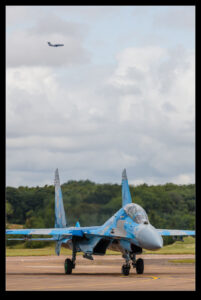
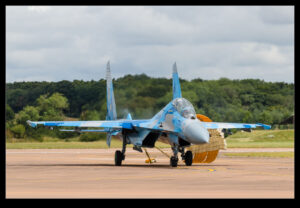
Ukrainian Sukhois

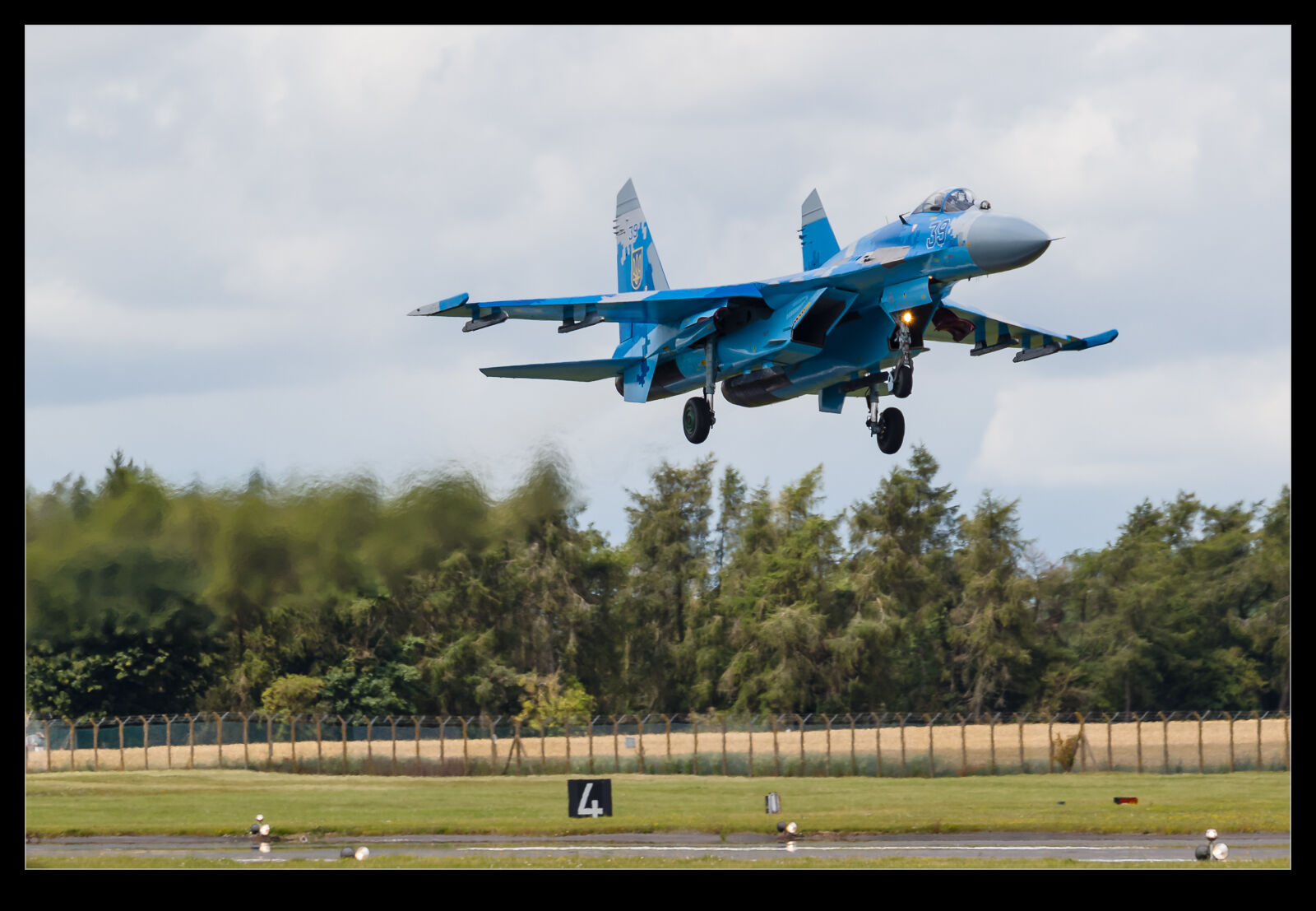
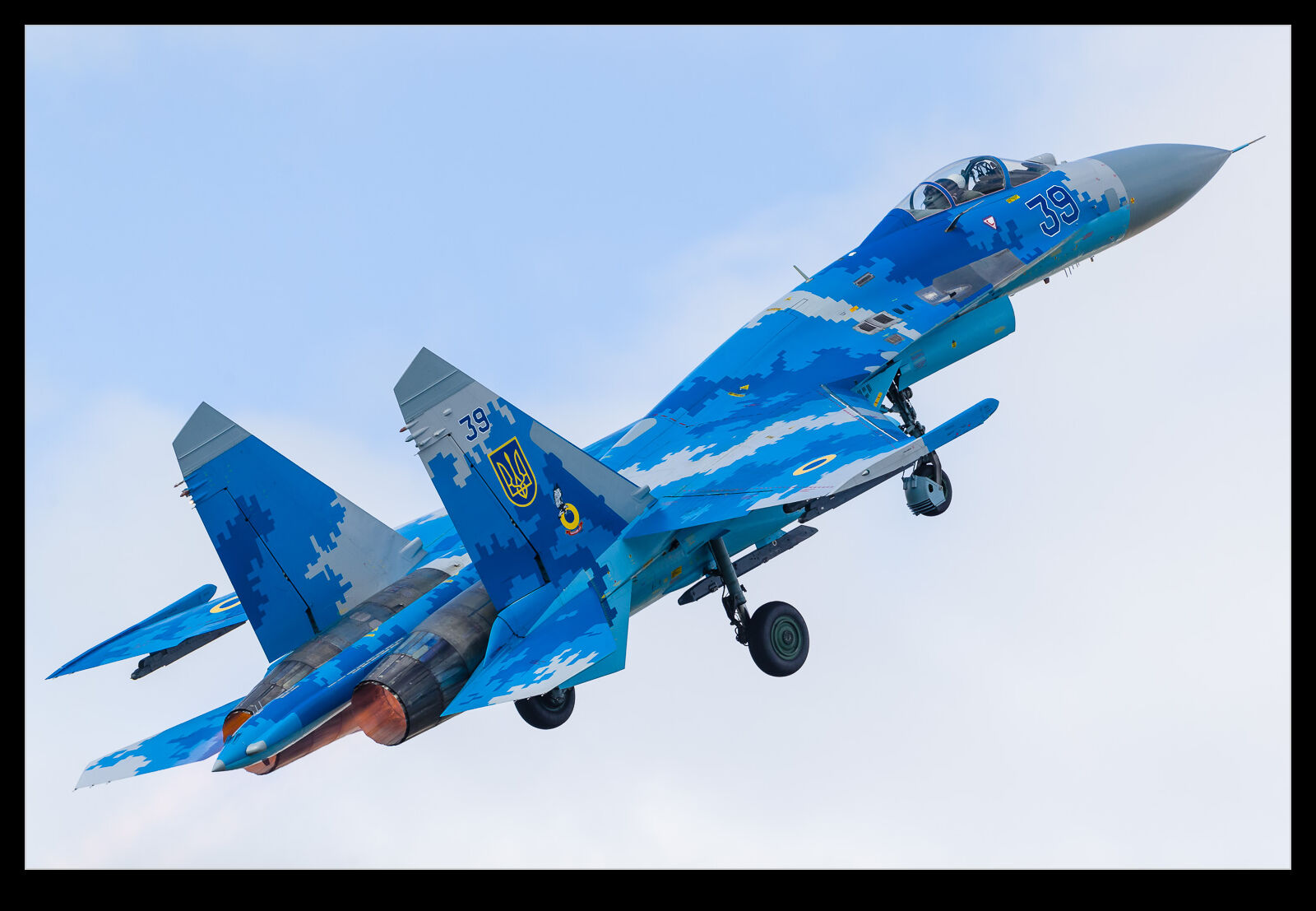
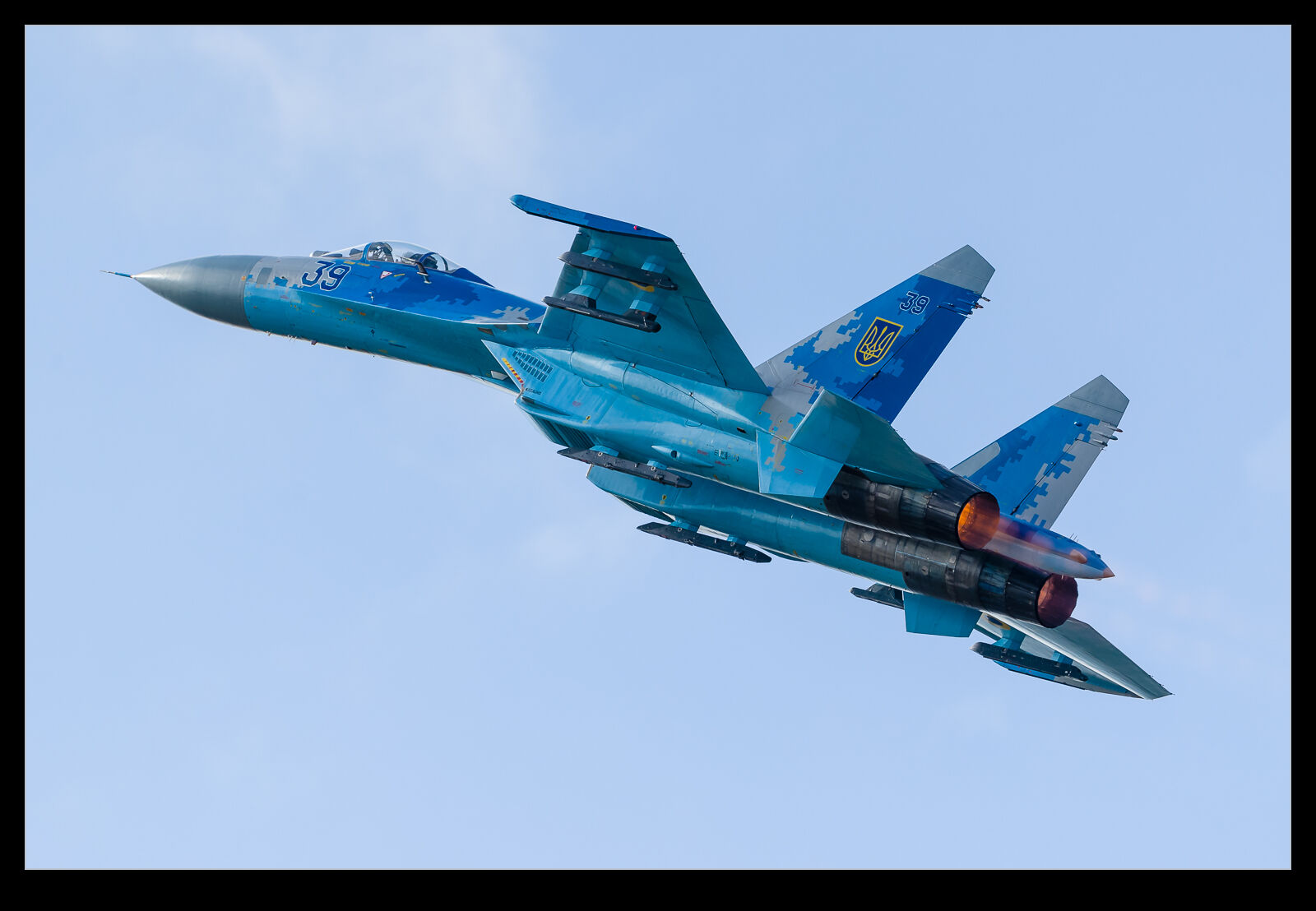
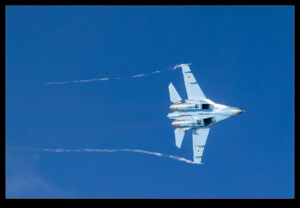
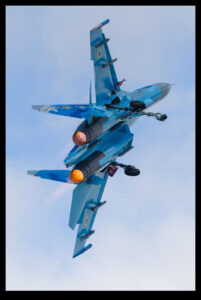
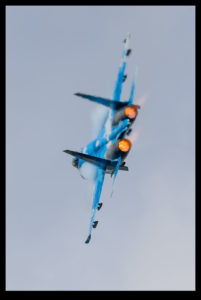
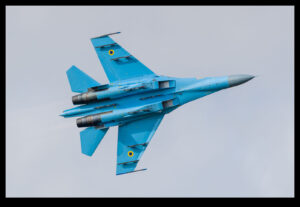
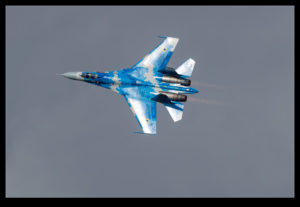
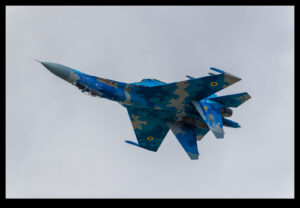
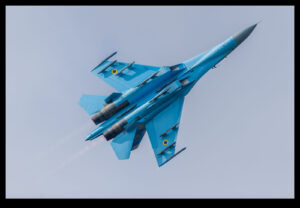
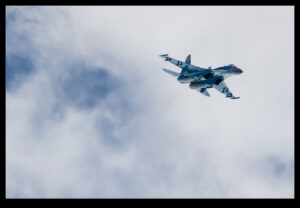
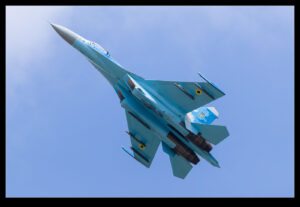
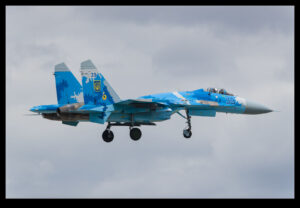
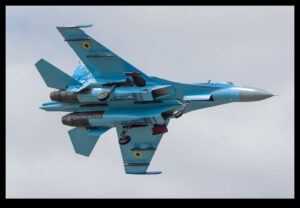
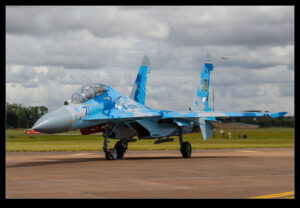
Non-Western jets are always a strong attraction at a Western air show and the appearance of the Ukrainian Sukhois at RIAT was no exception.  The SU-27 is a beast of a jet and quite an impressive performer at a show.  The arrival was cool and the practice display was welcome.  I was a bit annoyed as I didn’t have the camera to hand when the jet thundered off the runway and turned towards us and blasted over our heads at the Western Park and View.

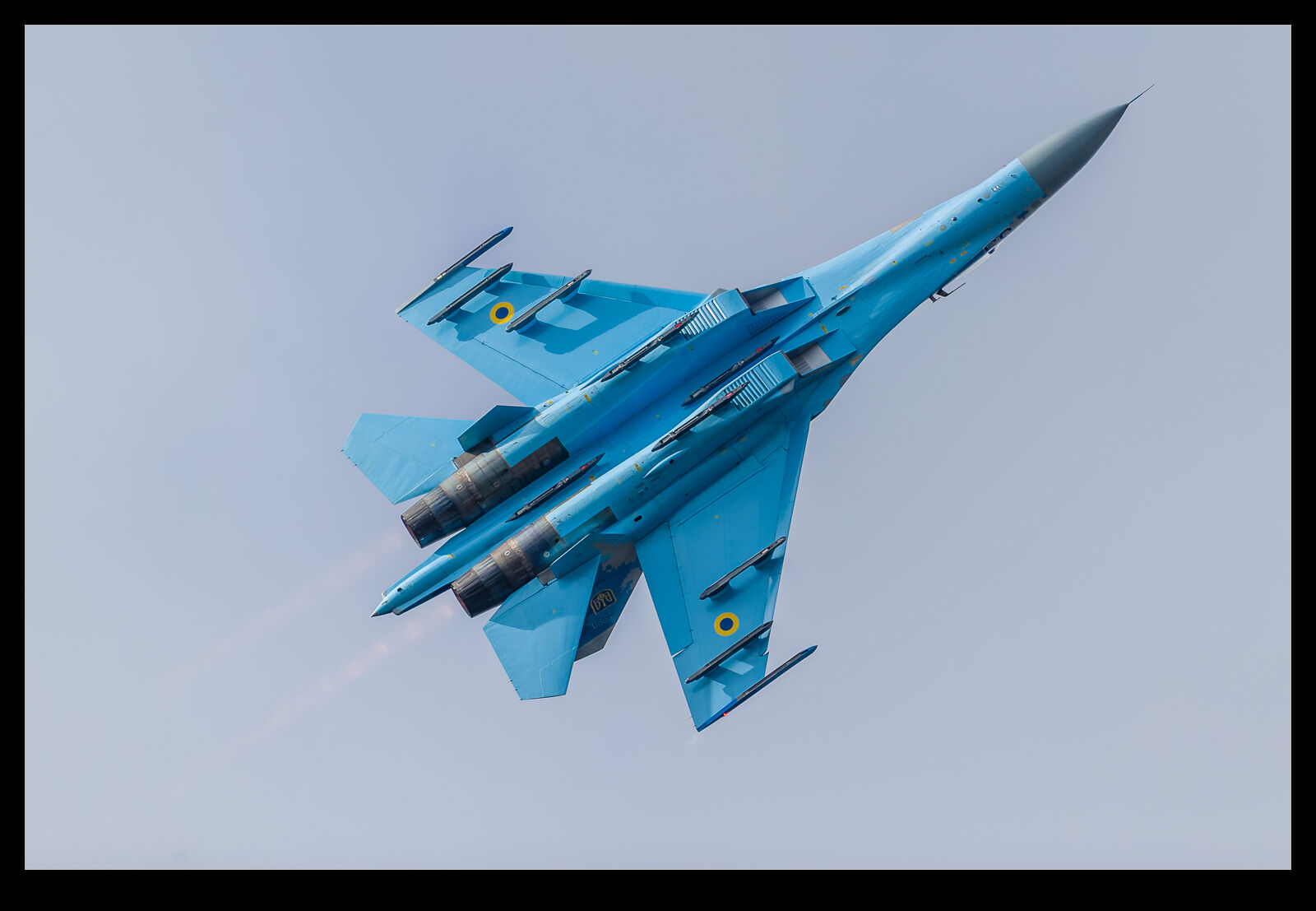
The light wasn’t great for any of the times I saw the jet fly but the sky blue camo scheme it wore seemed to do a good job of picking up the light as it maneuvered around the display.  Plenty of blasts of power for the engines combined with a damp atmosphere allowing a bit of vapor to be pulled from the air was pretty cool.  The front fuselage shape is a little odd and this shows more so when on the ground where it droops down.  Once airborne, things are different.
Something photos don’t show is the way in which the auxiliary inlet doors on the underside of the intakes flap around in certain flight regimes.  Looking through the viewfinder, you could see them oscillating a lot but only video would show that off.  It was a long time since I had last seen the Ukrainian jets at Fairford and this was my first time to shoot them digitally.  They were accompanied by an IL-76 and I suspect that will get a post one day!


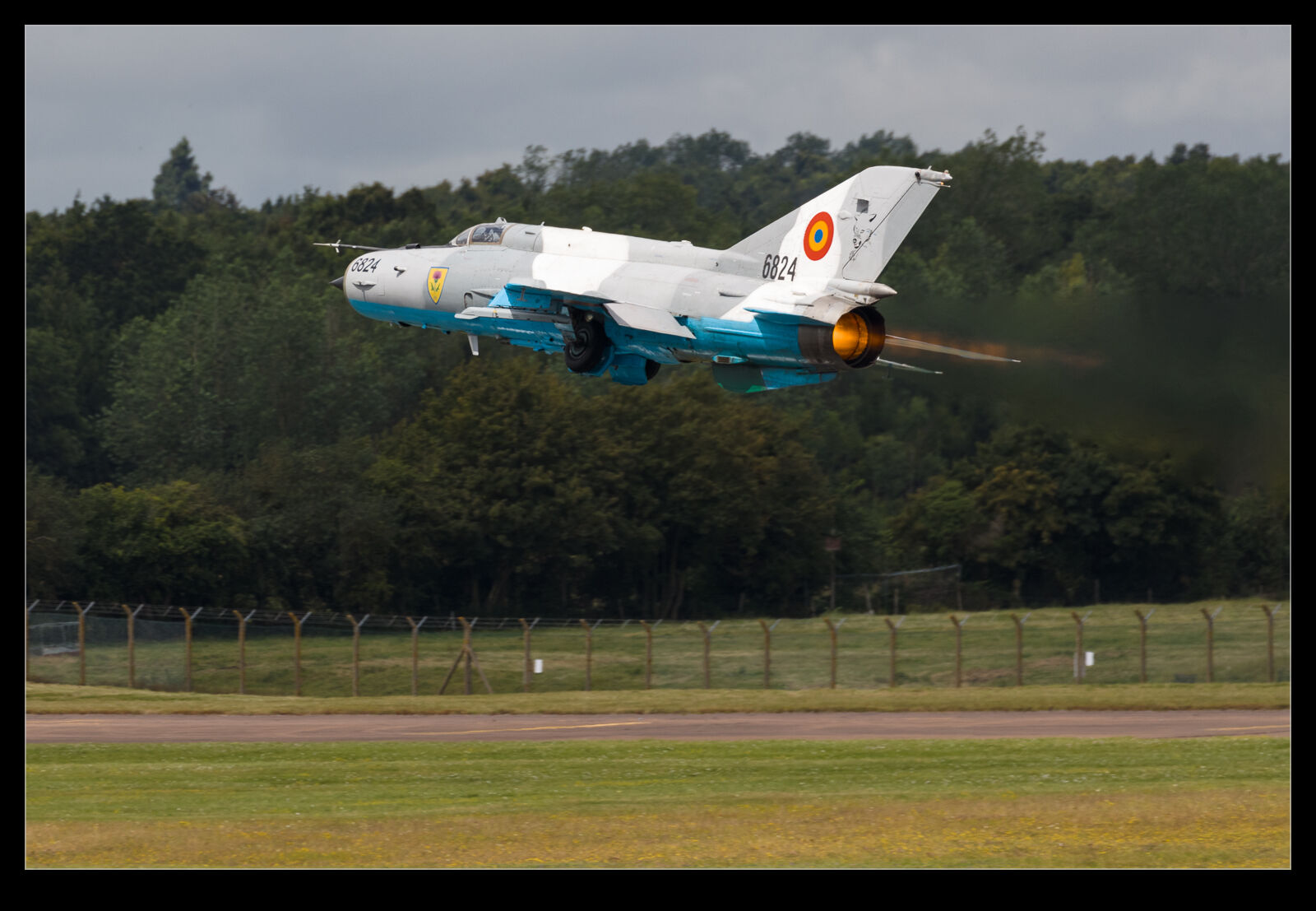
Romanian LanceRs

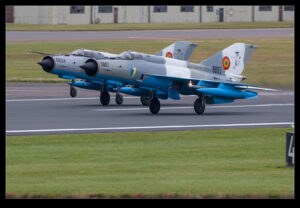
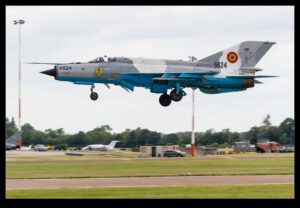
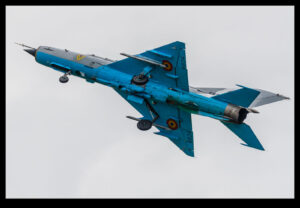
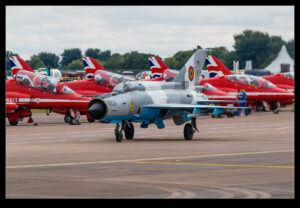
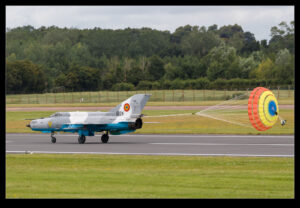
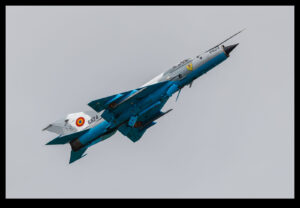
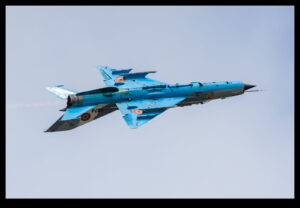
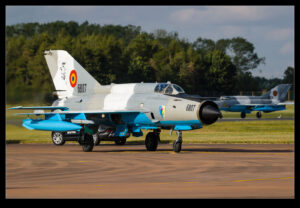
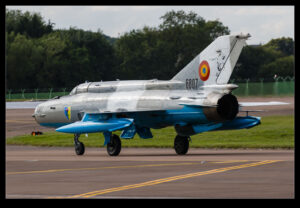
RIAT proved to be a lot of fun with such a variety of types to see.  The shooting conditions were less than ideal but that shouldn’t take away from what was there and the effort that went in to organizing it all – I’m looking at you Tom if you are reading this.  Your team did a great job.  One of the stars of the show was actually a rather aged type.  Romania brought a pair of MiG-21 LanceR jets.  The last time I shot an active MiG-21 was at Rockford many years ago and that was privately owned.  These were very definitely active.

Their arrival on the Thursday certainly got everyone excited and the display itself was great.  The jet is from an era when the current levels of maneuverability had not been achieved but the jet can still put on quite a show.  The speed is something to behold, particularly on final approach when it fairly screams in to land.  I got to shoot it from a couple of locations including being at the departure end on the Sunday of the show and getting slightly closer to the jet as it taxied out.  I understand that they will disappear before too long to be replaced with something more generic – F-16s I think – so it was time to enjoy something old school for perhaps the last time.

Lots of Prop Vortices

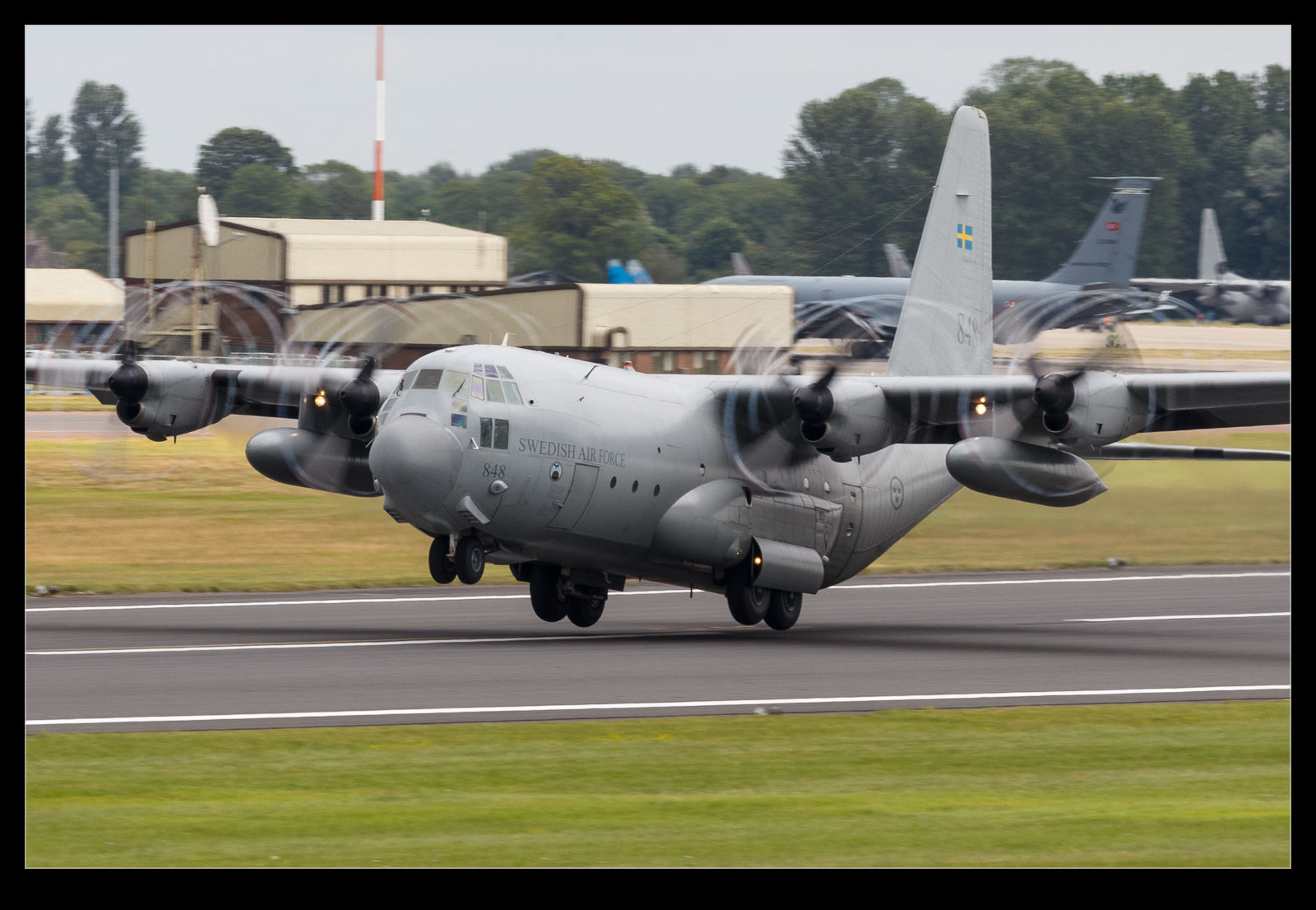
Departure day at RIAT was a bit overcast, much like the majority of the show.  The damp atmosphere did have the positive effect of meaning many of the more powerful prop aircraft were pulling vortices from the tips of their propellers.  This was most obvious earlier in their take off runs but you could get a  pretty good view of it even head on from where I was sitting in the FRIAT stand.  Here is one of the Hercs that was beating the air into submission.

Concorde Formations Flypast

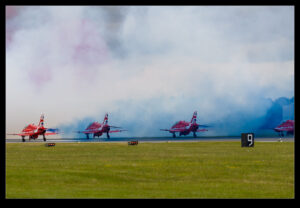
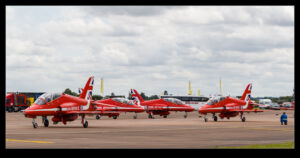
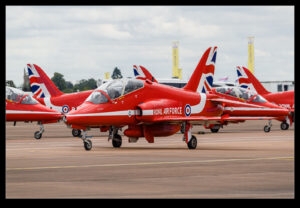
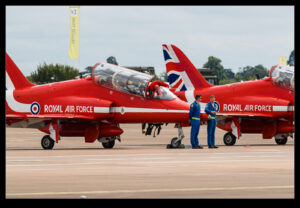
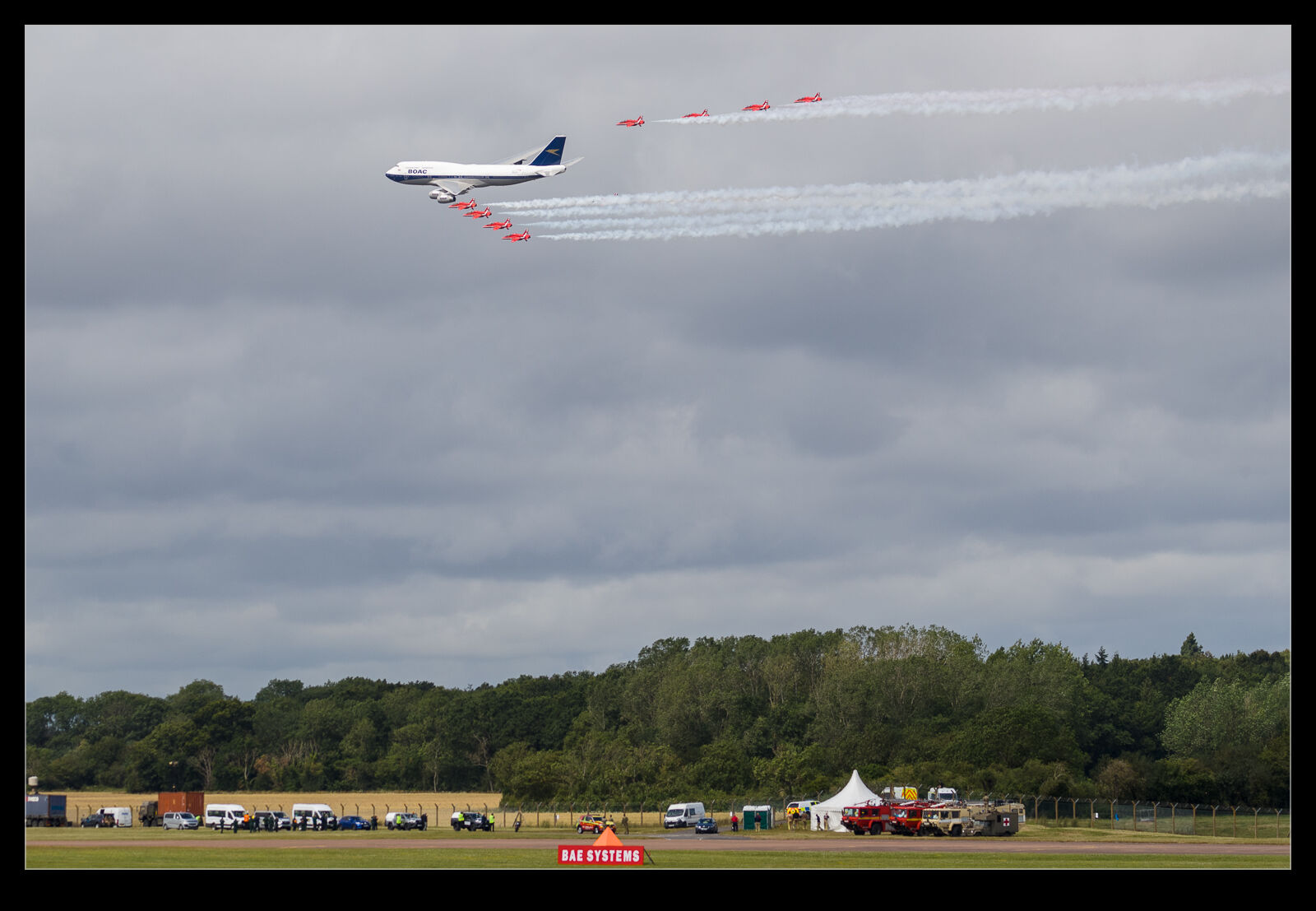
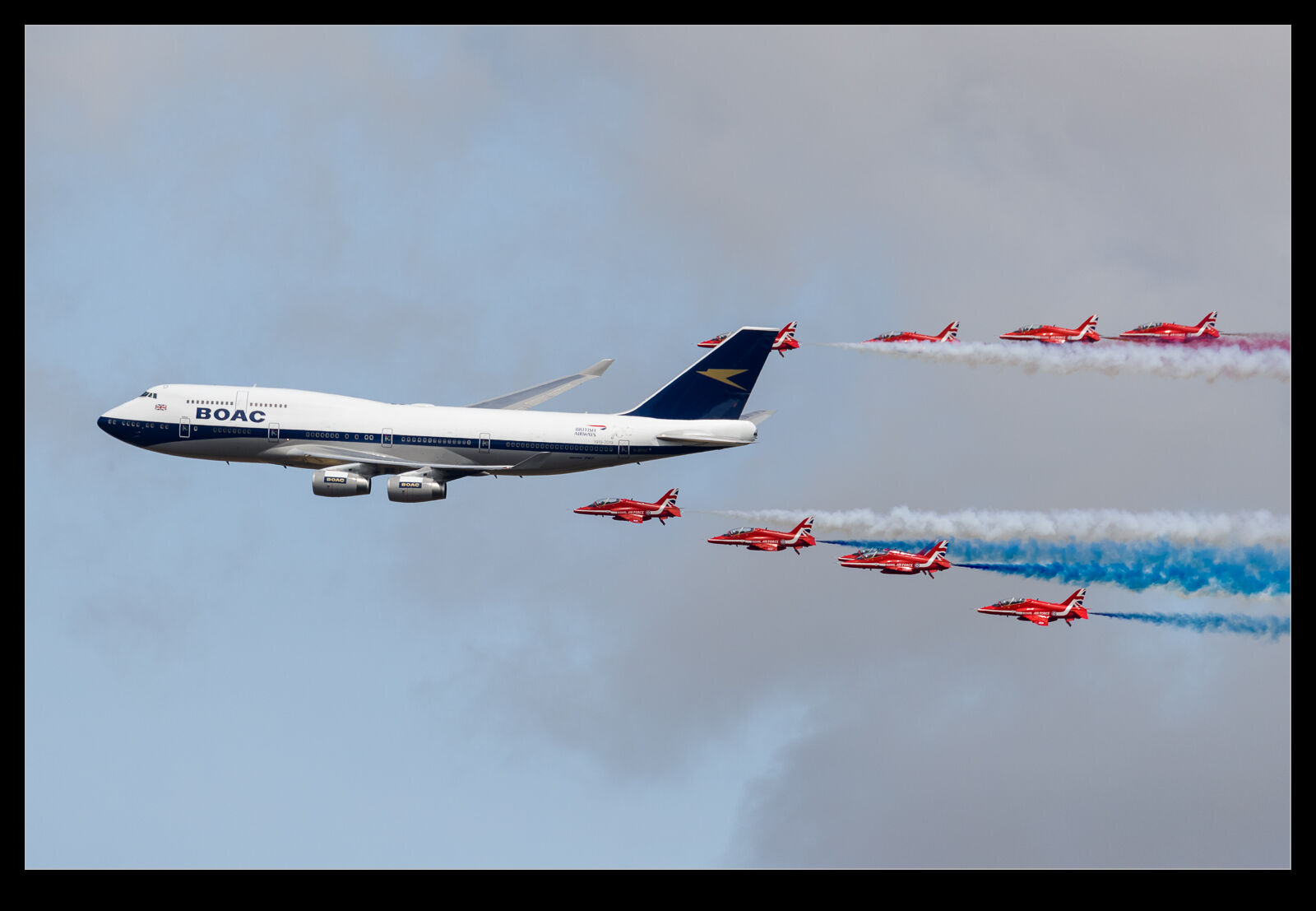
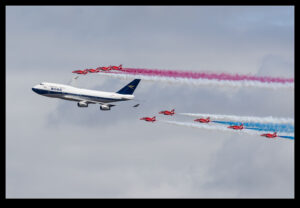
RIAT is known for putting together formations of different types to celebrate certain events.  The fiftieth anniversary of the first flight of Concorde resulted in two display teams getting together.  Concorde was an Anglo-French collaboration and so was the celebration in this case.  The Red Arrows and the Patrouille de France both fly formations to represent Concorde so, for this joint effort, both teams got airborne and flew their two Concorde formations in line astern.  They made passes in each direction with the national anthems of each country playing – one on the first pass and the other on the second.  It was a simple demonstration but an impressive one all the same.

Forgotten F-22 Pass

There are a lot of air shows that I have been to over the years.  You think you remember them well and then something shows up in your archive of images that you have completely forgotten about.  I am a member of a Facebook group that has a different challenge each week and, when I get the next challenge, I work through my catalog to see what I have that might contribute.  It is an interesting exercise in finding stuff that I had forgotten about.

This wasn’t one of those challenges but I was looking for something else when I came across this shot of an F-22 pulling vapor and shockwaves as it did a fast pass at the Rockford Air Show.  Rockford was a great show that I used to go to when I lived in Chicago.  They always got great static displays and performers for the flying display.  The only limitation was that you were pretty much shooting in to the sun.

This F-22 made a fast pass and was clearly pulling a lot of vapor as it went.  I don’t know why I forgot about this sequence but apparently I did.  I had a go at processing them again to see what I could make of the shots this time compared to my technique in 2009.  Not an easy shot to make work but the plane is dramatic enough to make it worthwhile I think.

An Old School Cobra

The Cobra is still a big part of Marine Corps aviation with the Zulu model the current favorite as it replaces the previous Whiskey models.  However, the Cobra started out life as an Army attack helicopter.  While they are long retired from Army service, old examples still are airworthy and one of them was performing at the Olympia air show.  I was rather pleased to see it when it initially arrived and then it performed a flying display alongside a Huey.

A lightly loaded Cobra is still an agile beast and this one was being thrown around with some zeal.  Unfortunately, the sky was rather overcast so the shape was a bit disguised by the shadows but it was still great to see the narrow fuselage combined with the broad chord rotor as it thrashed its way around the display.  What a cool looking machine.

The Only Airworthy Huskie

This one is about as rare as something gets.  If you are the only airworthy example, the only thing that is going to beat you is the only example at all.  The Kaman Huskie is a neat little helicopter.  It features the Kaman intermeshing rotor design which removes the requirement for a tail rotor and results in a pretty compact configuration.  These used to be in widespread service with the US forces.  Now they are scrapped or in museums.

This one lives in Olympia and it comes out to fly at their annual air show.  Apparently, there are only about 14 hours left on the rotor blades and there are no more blades so the flying is rationed carefully to get a few more years out of her.  Kaman’s rotor blade design includes control surfaces on the blade so these are not a simple item.

Seeing her towed out was a lot of fun and I was delighted when she taxied out and took off for the display.  What a fascinating shape and something genuinely different.  I was so pleased, even if the light was rather sketchy.  A cloudy Huskie is better than no Huskie at all.

So Close to a Gear Up Landing

A gear up landing is never something you want to have.  What is worse is doing it in front of a lot of people.  However, the crowd can sometimes be a benefit.  The open house at Paine Field included some flybys by various types and one Navion was the last in his group to recover.  Coming down the approach with flap deployed but no gear he looked very odd.  I imagine the horn should have been blaring but, whatever the reason, he continued.  Much frantic waving by the crowd and a call from the air boss had the desired effect, fortunately.  A go around ensued followed by a normal approach a landing.  I understand many beers were bought that night.

Blue Angels at Oceana (And High ISO)

I have only been to the Oceana show once.  I headed down there with my friends Ben and Simon.  We weren’t terribly lucky with the weather.  There was flying during the show but things were overcast and deteriorated as the show went on.  The finale of the show was, naturally for a big Navy base, the Blue Angels.  I was shooting with a 1D Mk IIN in those days and that was a camera that was not happy at high ISO settings.

The problem was, the light was not good and the ISO needed to be cranked up a bit.  Amusingly, if you were shooting today, the ISO levels would not be anything that caused concern.  Current cameras can shoot at ISO levels without any noise levels that would have been unthinkable back then.  However, I did learn something very important with this shoot.  The shot above is one that I got as one of the solo jets got airborne.  I used it as a test for processing.

I processed two versions of the image, one with a lot of noise reduction dialed in and one with everything zeroed out.  I think combined them in one Photoshop image and used a layer mask to show one version in one half of the image and the other for the second half.  When I viewed the final image on the screen, the noise in one half was awfully apparent.  It was a clear problem.  However, I then printed the image.  When I did so, things were very different.  If you looked closely, you could see a little difference.  However, when you looked from normal viewing distances, there was no obvious difference between the two.

My takeaway from this is that viewing images on screens has really affected our approach to images.  We get very fixated on the finest detail while the image as a whole is something we forget.  We print less and less these days and the screen is a harsh tool for viewing.

Canadian Hornet Cockpit Displays

AU0E0371.jpgPreviously I may have mentioned my recent efforts to go through images I took a long time ago. The evening show at Chino had a number of performers and one of them was the Canadian Hornet demo. When I go through my images, part of my process is to render all of them at 100% and then view the full size image on one screen and the zoomed in version on the other. This allows me to see whether the shot is sharp and also whether there is anything glaringly wrong with it like bits cut off or someone’s head in the way.

AU0E0375.jpgI was going through the shots of the Hornet which flew after the sun had gone below the horizon, I noticed that, as it flew over the top of a loop, I had a view into the cockpit. Normally, this would be dark as the brightness of the day overpowered the shade of the cockpit. However, since it was pretty dark, the glow of the multifunction displays on the panel is clearly visible. We aren’t going to be able to see the details of the displays themselves but they are very conspicuous which is not the norm.