Category Archives: Travel

Brandywine Falls Provincial Park

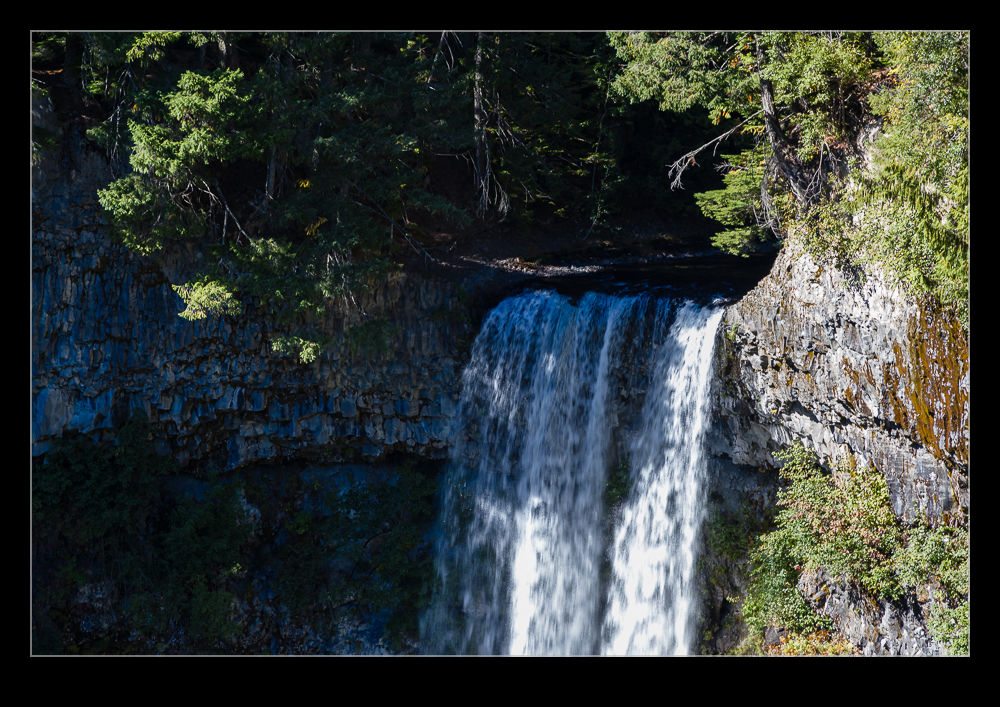
We took a trip up to Whistler for a long weekend.  On the drive up there, we went past Brandywine Falls Provincial Park.  The falls themselves were actually pretty close to the highway so this did not involve a particularly strenuous hike.  However, after being in the car for a long drive, it was nice to get out and stretch the legs.  Besides, it was a lovely day.

I was not anticipating the falls being very full given the time of year but it turns out they must have a reasonably good source of water and they were flowing strongly.  The park has built a viewing deck that allows visitors to get out to the edge in safety and get a good view of the falls themselves.  The trail continues on for a way as well so you can look back at the falls from a variety of angles.  While it was later in the day, the light was still a bit tricky.  The falls were in deep shade while the sun was shining on the surrounding forest.  The contrast was harsh which meant the exposure was a compromise.  Modern sensors do have considerable latitude to accommodate this variation though.  It was possible to pull out details from both the highlights and the shadows within Lightroom.

Billy Bishop Airport

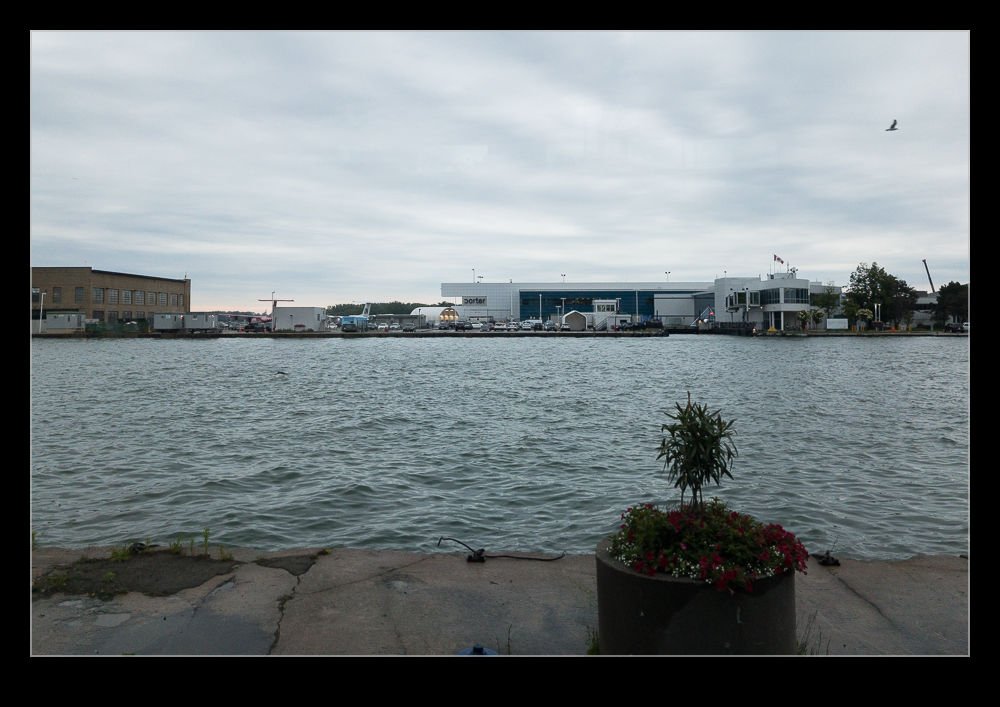
Over 20 years ago we took a trip to Toronto.  While we were up the CN Tower, I took a photo of Toronto City Centre Airport, located on the island just offshore from the city.  It wasn’t a busy looking airport at that time.  Since then, things have moved on a bit.  Now it is a busy hub for Porter Airlines, flying their Bombardier Q400s across Canada and into the US.  (Depending on a planning approval, they may add C Series jets to this location.)

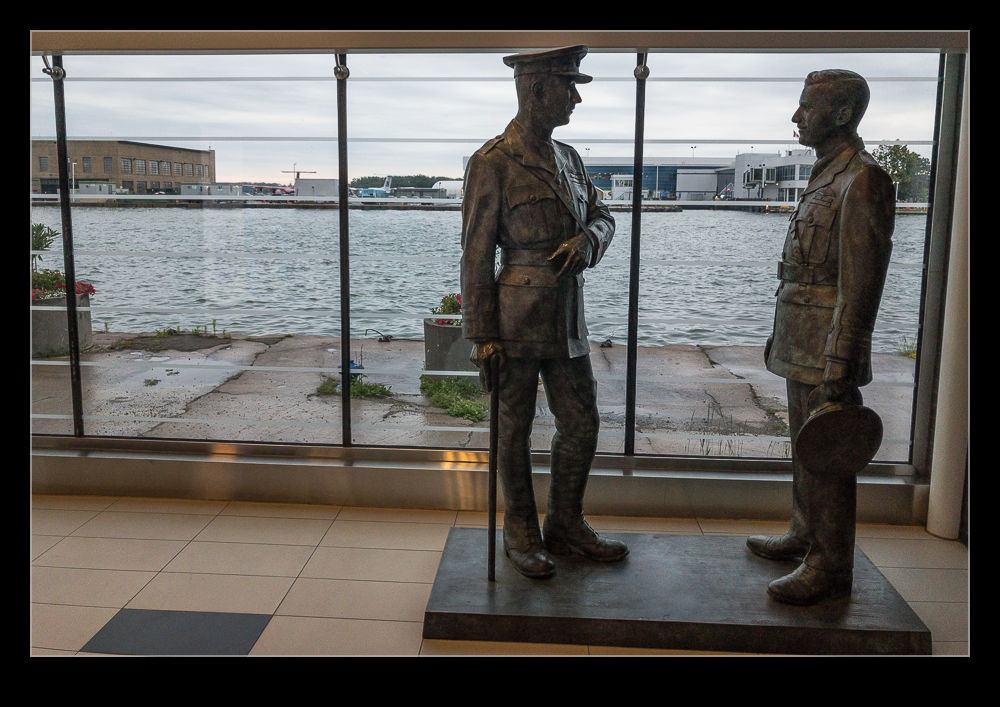
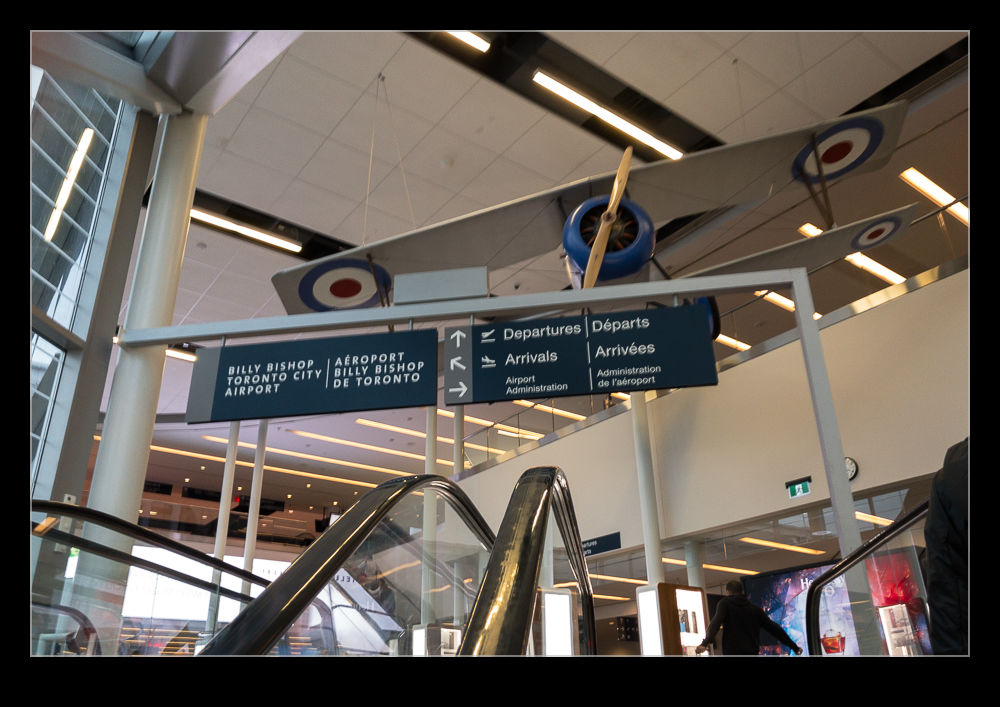
I recently had to fly from Toronto to Chicago and, with Midway as the better airport for me, Billy Bishop Airport as it is known, provided the better option.  A tunnel has been built between the land and the airport which means you don’t need to take a ferry anymore.  It is a compact airport but pretty neat.  The tunnel provides good access and, as you come up from there on the escalators, you get some displays of the aircraft Billy Bishop flew.  There is also a statue of him on the land side of the tunnel.  If you get to fly through there, it is definitely a fun place to transit through as it is far smaller than the average city airport.

They Both Float, But…

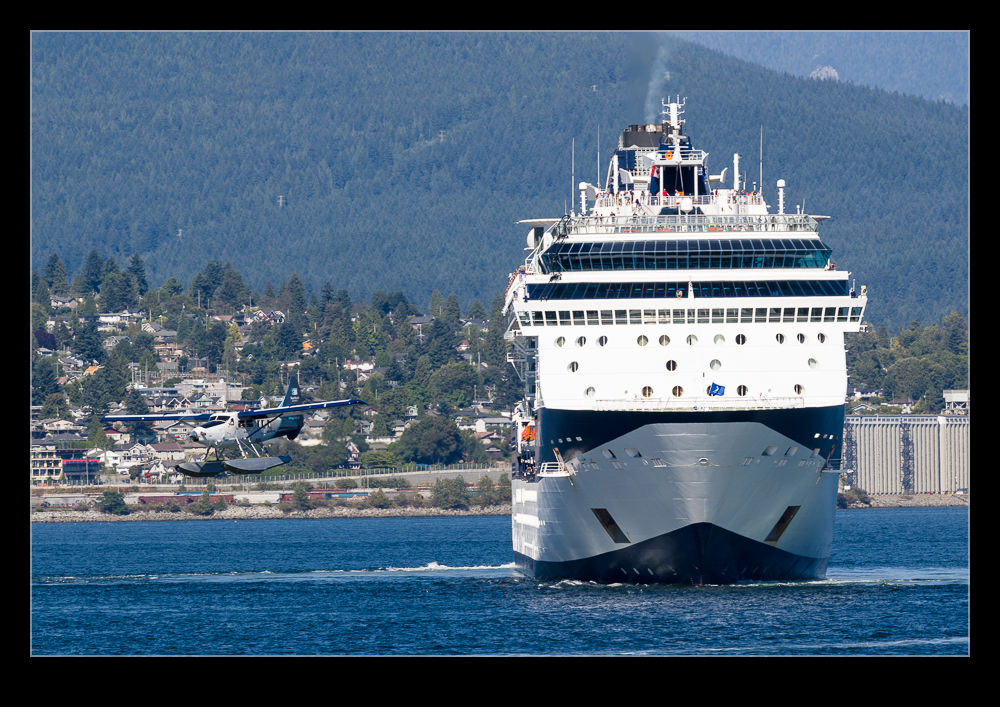
This is the cruise ship that our family had been traveling on when they arrived in Vancouver.  It was heading back out the same day and we watched it leave port and head out.  As it was turning to head back to the open sea, one of the local Otter floatplanes was making its approach to land (or whatever the correct word is when it is water rather than land).  It passed in front of the ship.  Both vessels are comfortable in the water but one is on a rather different scale than the other.

Walking Through the Treetops

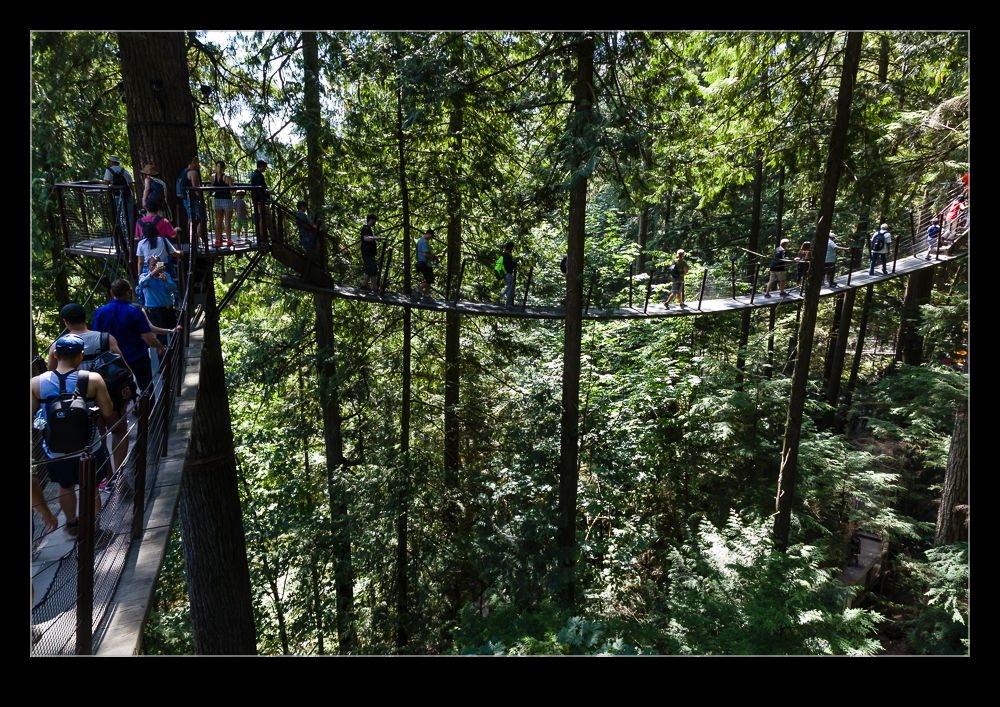
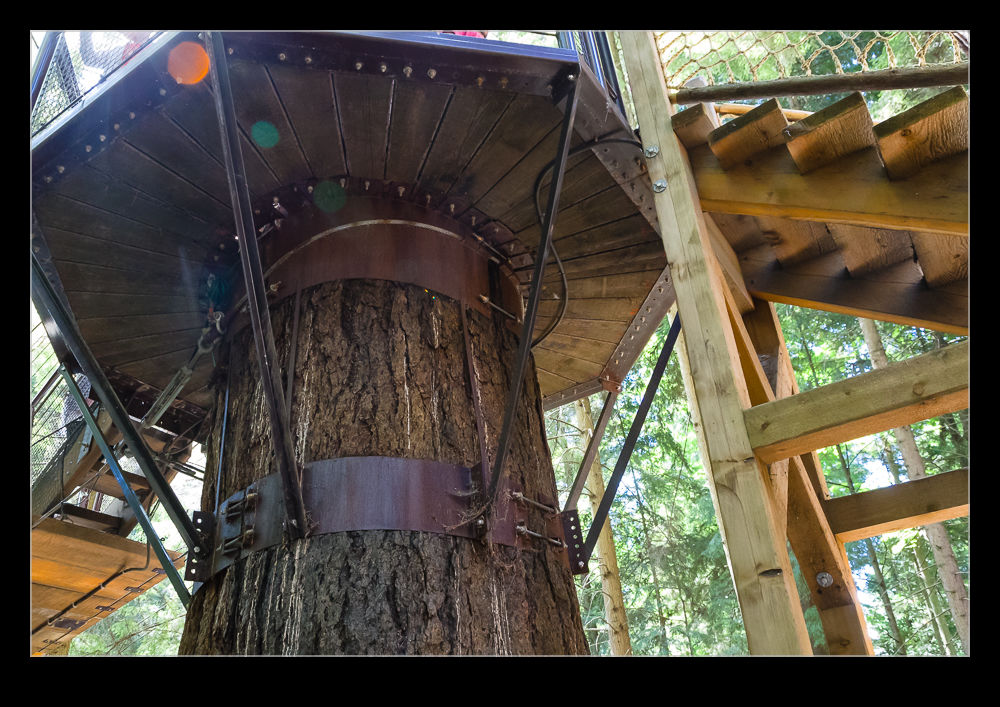
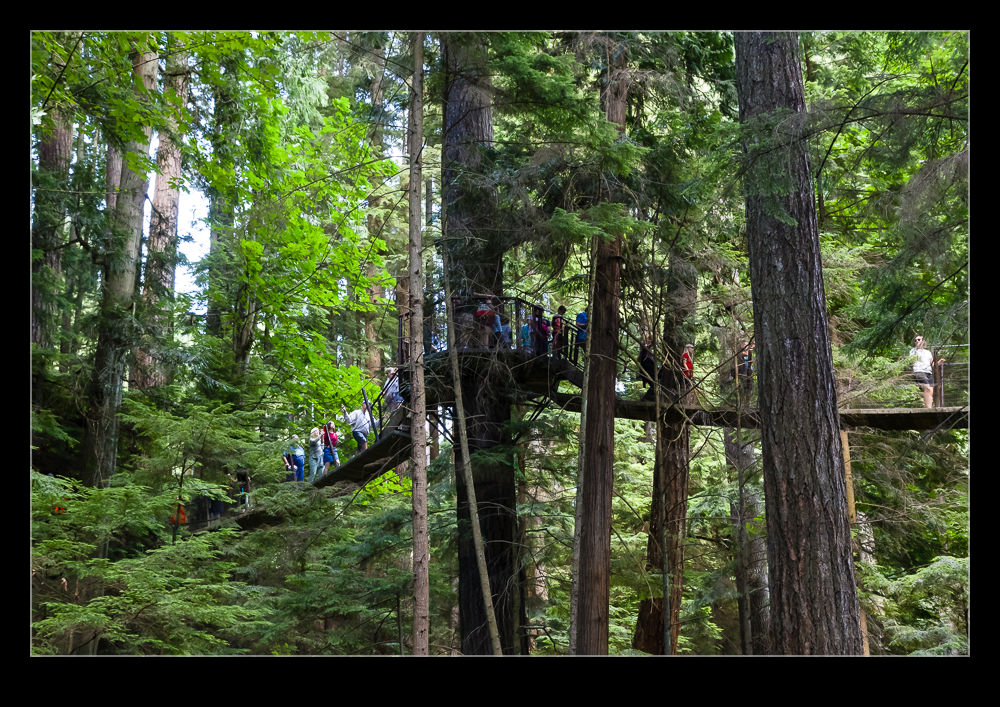
Aside from the suspension bridge at Capilano, there is a treetop walk.  This is on the opposite side of the bridge and is an interesting attraction.  They have built a number of walkways that run through the treetops.  These are old growth trees that are really substantial.  Without cutting in to the trees, they have mounted platforms around the trunks and strung walkways between them.  You get to walk along these walkways from tree to tree.

You are up in the higher parts off the tree so you have a different perspective to that which you would normally get walking along the ground.  Indeed, you can get so used to being up there that you forget you are off the ground.  Every once in a while, it is a good idea to look down to see just how far you are from the base of some of the trees.

There are so many people up there with you that it is easy to become a bit fixated on keeping going.  The walkways are one way so you are all moving along in the same direction.  You can start following the person in front and lose perspective on where you are.  However, at each tree there is space to step aside and let people pass.  Then you can take a moment to look around and embrace your surroundings.  I highly recommend you do this if you visit.  Look up and look down and see exactly where you are – up with the squirrels in the treetops.


We Weren’t Alone Watching the Sun Vanish

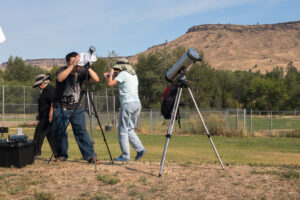
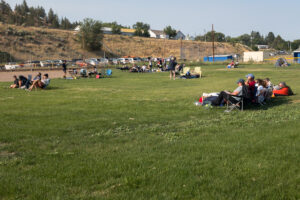
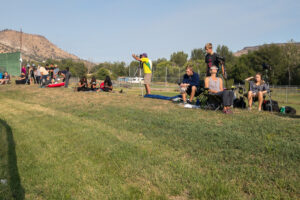
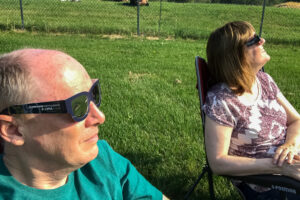
Everything I have posted about the eclipse so far is about us and what we saw.  However, we weren’t alone.  There were lots of people watching in the same place as us.  During the initial stages of the eclipse, I wandered around the site to get a few pictures of people enjoying the experience.  I didn’t have another camera other than my phone so that had to make do but these are some of the shots of everyone enjoying a rare experience that I got.

The Lucky Shot I Got By Accident

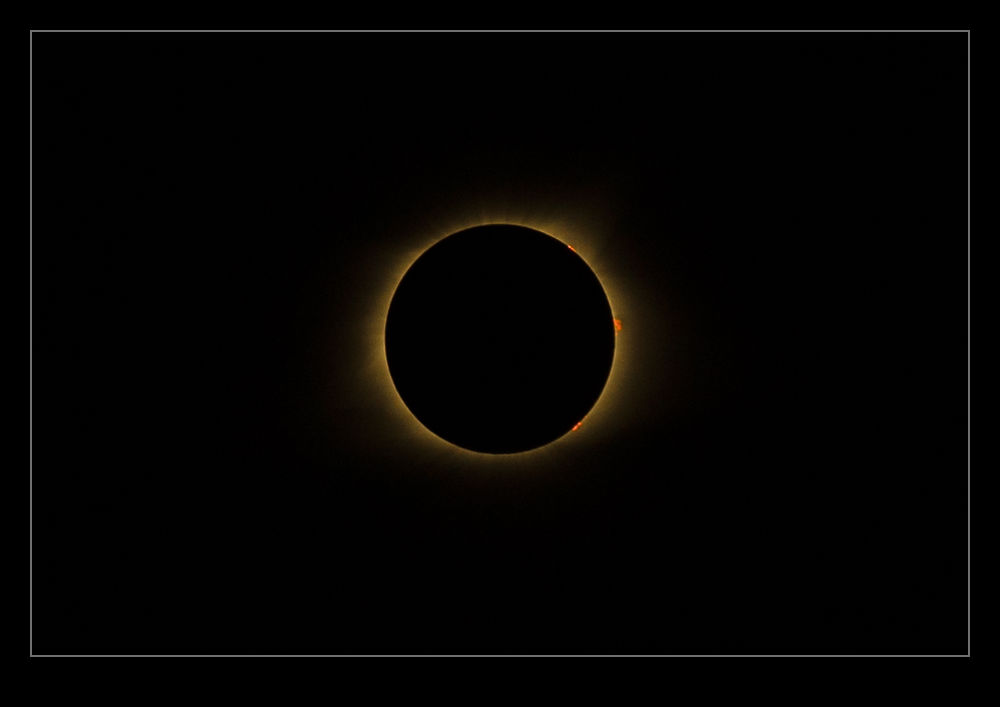
When totality occurred during the eclipse, I was literally and figuratively in the dark.  I had practiced shots of the sun prior to the day to get the exposure right and, while the eclipse covered up the sun, the remaining section was unaffected so the exposures were right.  Besides, I bracketed each shot because, we, why not?  At totality, I removed the solar filter and switched to program mode because I didn’t want to have to work anything other than the shutter.  I still bracketed the shots.

I got shots that I really liked but, I didn’t get anything that showed any detail around the edge of the eclipse.  Everything was bright.  Even with wide bracketing, the shots were quite blown out.  I was a little disappointed by this but it was a minor thing.  Seeing the eclipse had proved to be far more satisfying than any shot I got.  However, it turns out an error of mine had a lucky side effect.

I had been shooting a time lapse sequence on the other camera.  When I removed the solar filter (eventually) during totality, I didn’t change the exposure.  Consequently, the shots were a lot more underexposed than the shots on the other camera.  While the subject was a lot smaller in the frame because of the framing for the time lapse progression, I still had some detail of the eclipse and I realized some solar flares were visible on the side of the eclipse.  I hadn’t planned this – it just happened by luck and I am happy to take all the luck I can get.  As they say, “Better to be lucky than good!”

Trying a Time Lapse of the Eclipse

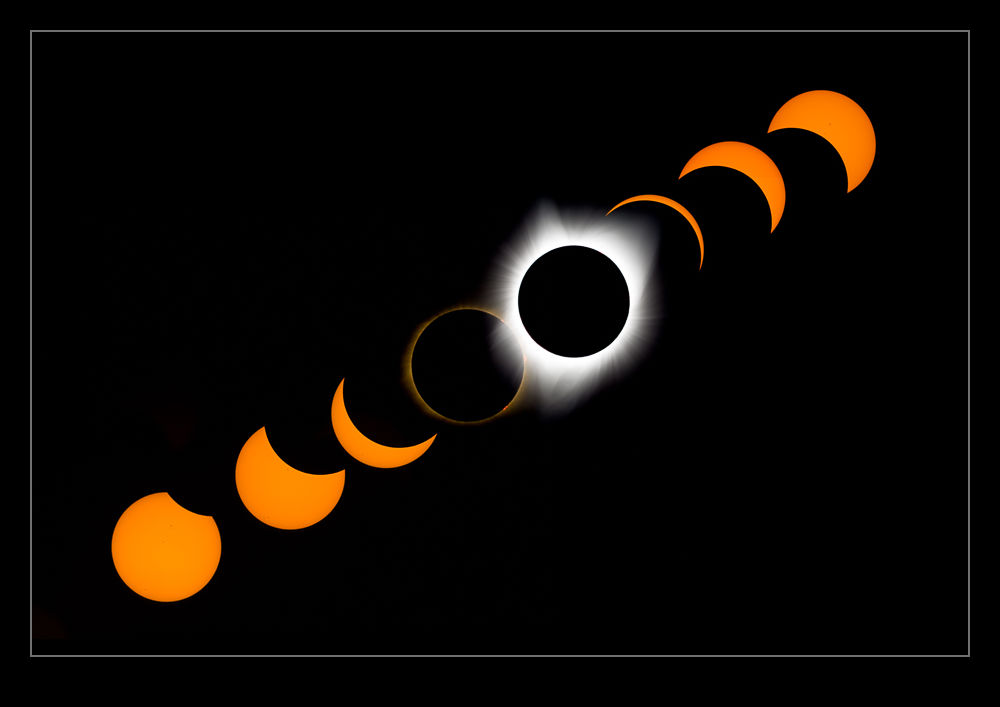
When thinking about the eclipse and what photos I wanted to get, I did contemplate running a video of the transition.  However, since the start to finish was going to be over two hours, I figured that would be a lot of video that would never get used or would only be seen speeded up.  Therefore, a time lapse seemed like the best option.  I set up a camera with the 100-400 lens on it can’t at an angle to, hopefully, align with the direction the sun progressed across the sky.  I didn’t know how much time it would take to cross the viewfinder so I planned on taking a number of sequences with re-positioning after each pass.

This ran just fine during the eclipse itself.  My only problems came at totality when I really lost the plot on what I was supposed to do, so overcome was I by the sight of the corona.  I initially forgot to remove the solar filter so everything was just dark.  When I did take it off, I had not adjusted from the manual exposure I had been running up to that time.  However, in the scheme of the eclipse, the totality moment was fleeting so is not a big part of the time lapse anyway.

I have edited together the sequences I shot and here is the resulting video.

Shooting the Tight Shots

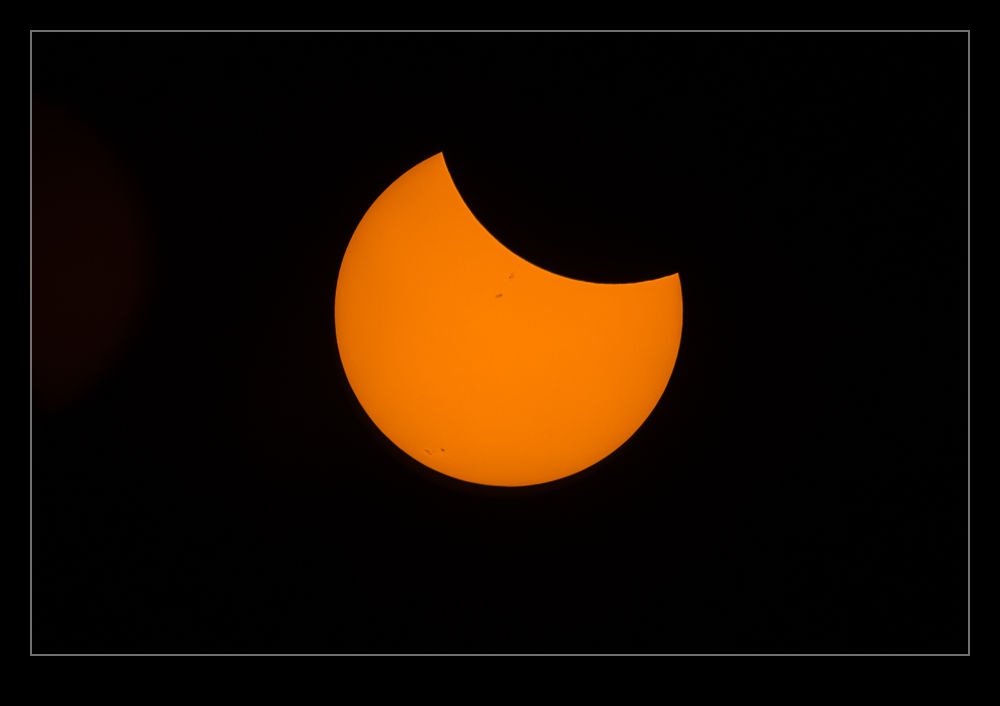
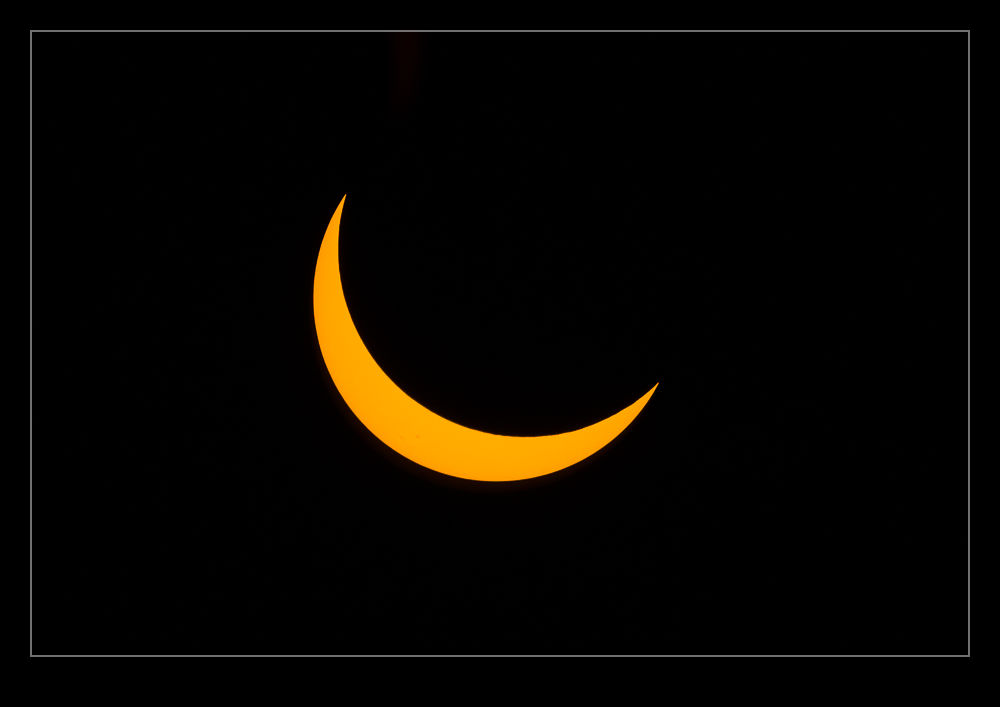
One camera was set up for the eclipse with the 500mm and the 1.4x teleconvertor.  This was the one I was aiming to get the detail shots with.  I had a solar filter mounted on the lens and had experimented a little with exposures in the days before the eclipse.  A few trial shots showed that the exposures were not too bad and I bracketed everything anyway to be on the safe side.  This set up was very sensitive to the progression of the sun across the sky so, I had to regularly reset the location.  I wished I had a different head on the tripod but the ball head was okay, just a touch sensitive to adjust.  A cable release meant I could stand and watch while triggering the camera without having to be distracted.

From first contact to totality took over an hour.  At times, it seemed to be moving quickly and at others you felt like it hadn’t moved at all or you even imagined it had retreated.  Of course it hadn’t, but you could imagine all sorts of things while waiting.

As the level of obscuration increased, it was interesting to see how little some things changed.  Indeed, even when the sun was almost totally gone, the ambient light levels were actually very high.  There was something about the quality of the light that was different though.  We didn’t have a lot of wildlife nearby so some of the things that we had heard about in advance didn’t affect us.  (The mosquitoes certainly were happy judging by the number of bites on my legs!)  As totality approached, we did see a bunch of vultures flying high above us and I wondered what they were about to do when they found themselves in the dark at altitude.  The drop in light levels was rapid and staring around as it happened was very weird.

When totality hit, the last hint of the sun disappeared through our glasses and we took them off.  The view that greeted us is something I shall never forget.  The images are a great reminder but I had seen shots of previous eclipses plenty of times.  Seeing it in person was a rare time when the word awesome truly deserved to be used.  I looked up at the corona and was overwhelmed.  It was stunning.  I felt like it couldn’t be real – like someone had created a CGI effect in front of me.  I can’t imagine what the effect on people was in centuries past.  Since you can’t look at the sun directly and the light doesn’t change too much until the last minute, this would come as a hell of a shock to someone unprepared.  The corona that is left would make you think something apocalyptic was happening.  Knowing it was coming, I was unprepared.  They must have freaked out!

The light on the horizon meant you could still make things out.  It wasn’t totally dark which is what I had anticipated.  I also think some of the high-level cloud was making the corona look a little diffuse.  For a couple of minutes we just stared.  I remembered to take the filter off the long lens but forgot about it on the time lapse camera initially.  I also didn’t change the exposure on that camera even then although more on that another time.  After just over two minutes, the sun peeked back out and everyone cheered for some reason we probably couldn’t explain afterwards.  The light levels rapidly came back up and suddenly it was over.  Sure, there was another hour or so as the transit completed but somehow it was done.  We weren’t in a hurry but people around us started to pack up and leave and, in due course so did we.  As we got to the car, we took one more look through the glasses at the still partially obscured sun and then we started the trek home.

Planning for the Eclipse

A couple of years ago I started thinking about the total solar eclipse.  We were living in California at the time and I had not long before been to an aviation shoot in Madras Oregon.  Madras was almost directly on the centerline of the path of totality so I thought about booking a hotel.  However, I didn’t do it then and time rolled on.  This year we moved to Washington so now Madras was a bit closer – just over five hours away if traffic is flowing freely.

As things got closer, it was time for a more thoughtful approach to what might be involved and this is where Nancy played the leading role.  She was not particularly interested in the eclipse but she knew I was.  Indeed, at one point in the run up she actually asked me if I would prefer to make the trip alone.  I can tell you that, having witnessed everything, she is really glad I didn’t want that!  Salem was the closest place with a good position for the totality.  Situated on I-5 south of Portland, that also meant a lot of other people were going to be going there so that was a non-starter.  Madras is further east which adds a bit to the drive but we focused on that.

We decided to stay in Portland the night before and set out early.  Plenty of people had been flooding in over the previous few days but, no doubt, others would be doing the same as us.  We also chose not to go to Madras itself but to go to Warm Springs just north of Madras.  This is a Native American reservation and they were welcoming people to the baseball fields to watch the eclipse.  The area is very dry so the chances of cloud obscuring things were a lot lower than closer to the coast.  To get there should take just under two hours from our hotel near Portland’s airport.  We decided to leave at 3am to give ourselves plenty of margin.

We did have a Plan B.  While there was a lot of time in the schedule for traffic, if it got really bad, we might just find ourselves on the highway when the eclipse happened.  As long as we got south of Mt Hood, we would be in the path of totality and, if you looked at the charts for timing, you didn’t have to get too far in to have a reasonably long period of totality.  We packed plenty of food and water and assumed, if it was totally congested, we would be with a huge bunch of people on the road and would enjoy it all together.

Getting up just after 2am, we checked the traffic reports online.  Everything was currently clear.  Good news but not necessarily to be relied on to last.  If we were leaving then, how many others were doing the same?  We put our stuff in the car and off we went.  The roads were pretty open and, as we got onto route 26, we were in a steady stream of cars but nothing that would slow you down.  We headed off into the wilderness.  This is a trip that takes you through some great scenery – if it is light.  Instead, we were out in the pitch black.  The stars around us were amazing to see since there was no light pollution if you weren’t looking ahead in the path of the headlights.

The traffic never materialized.  We got to Warm Springs in an hour and fifty minutes, arriving at the parking area fifteen minutes before it was due to open.  We met the nice people looking after things and they informed us we were the first to arrive and to park at the end of the row (which was hard to see in the pitch dark).  We parked up and had a few hours to kill so set the seats in the car up as a sofa and took it easy.  Nancy couldn’t sleep but I dozed off a few times.  Meanwhile, more cars arrived and people started milling around as it gradually got lighter.

Once the sun was up, we went off to look around the town and stretch our legs.  Then we set up our spot for the viewing.  I had brought two main cameras.  One was the longest lens combination I could get and the other had the 100-400 on it which I was planning to use for a time lapse.  I had bought solar filters for both a while back and B&H had shipped them with loads of viewing glasses.  We had shared some with friends already but we carried loads of spares in case anyone needed some.  No-one did though.  Everyone around us was well prepared so our spares stayed in the bag.  Meanwhile, I set the time lapse camera at an angle to see if I would track the path of the sun across the frame.  (I got this wrong as I did not have a steep enough angle.  I tweaked it a couple of times but it wasn’t ideal.  It worked but was a bit wonky!)

Lastly, I opened up the Solar Eclipse Tracker app on my phone which provided an audible guide to what was coming up and we got ready.  The skies were pretty clear initially with a hint of wildfire smoke in the distance.  As the time got closer, some high-level cloud did come in but nothing too significant.  Then it all started.  More to come…

Logging on a Big Scale

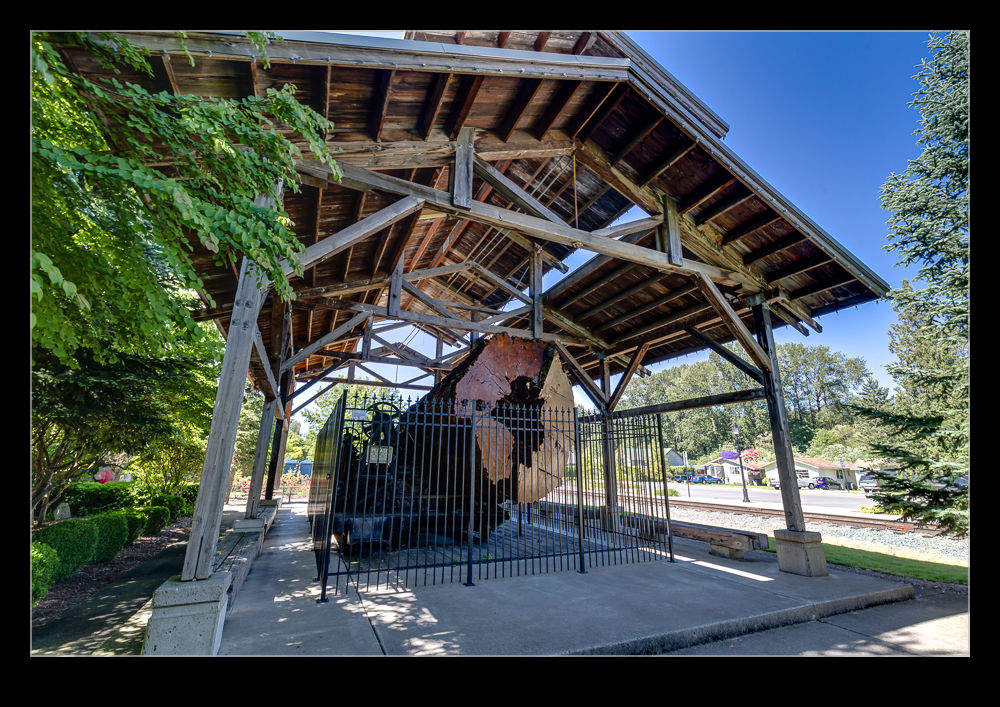
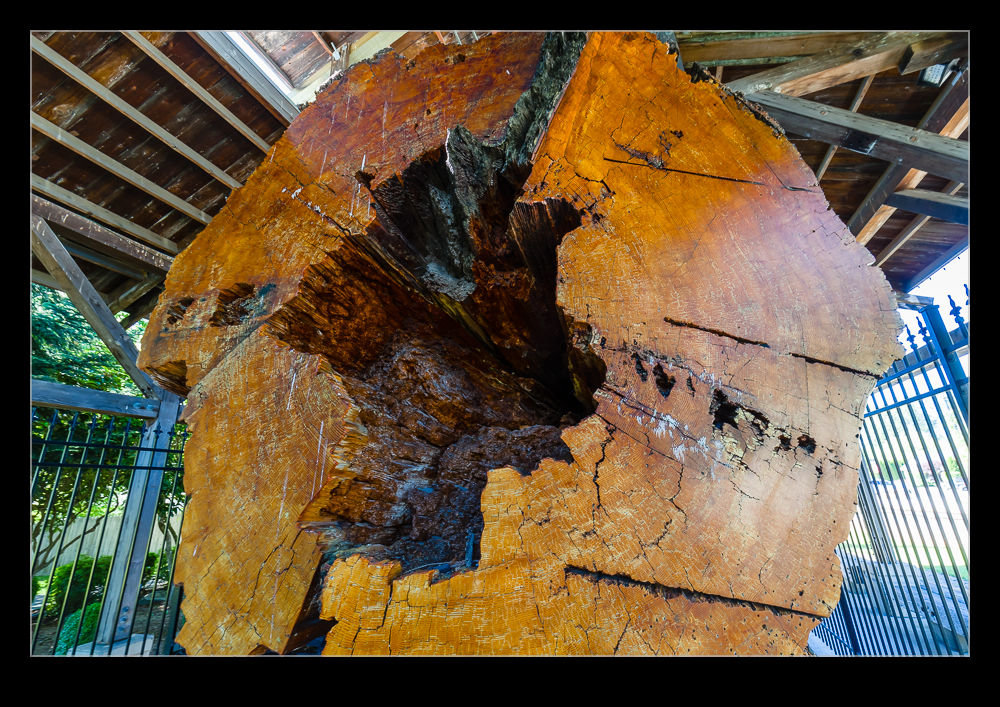
Before tourism became a big feature of Snoqualmie, it was a logging town.  Much of the Pacific Northwest was in the lumber business providing vast amounts of timber to the country as a whole.  Lumber is still important but it is nowhere near the business it once was.  The trees they were cutting in those days were very old and had grown to significant dimensions.  As they cut through the growth, the trees they were cutting were getting smaller.  In the center of the town they have an exhibit that includes a stand that was used for cutting the timber.  In it is included a log.  This thing is huge.  Bear in mind that they were often much larger than this and you will see just what sort of trees they were cutting in those days.