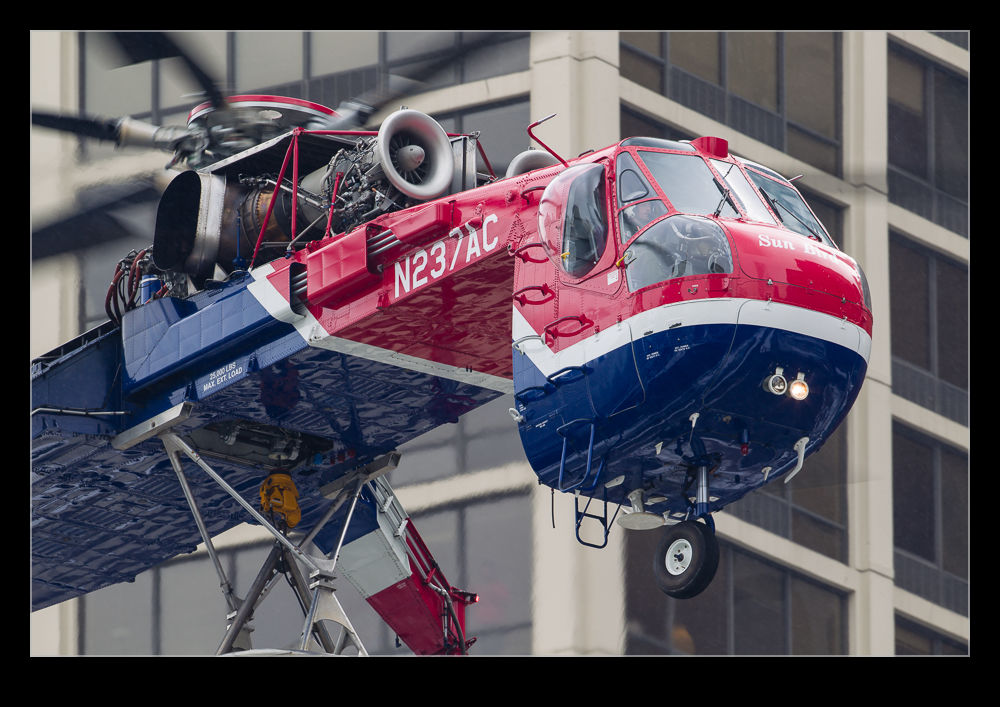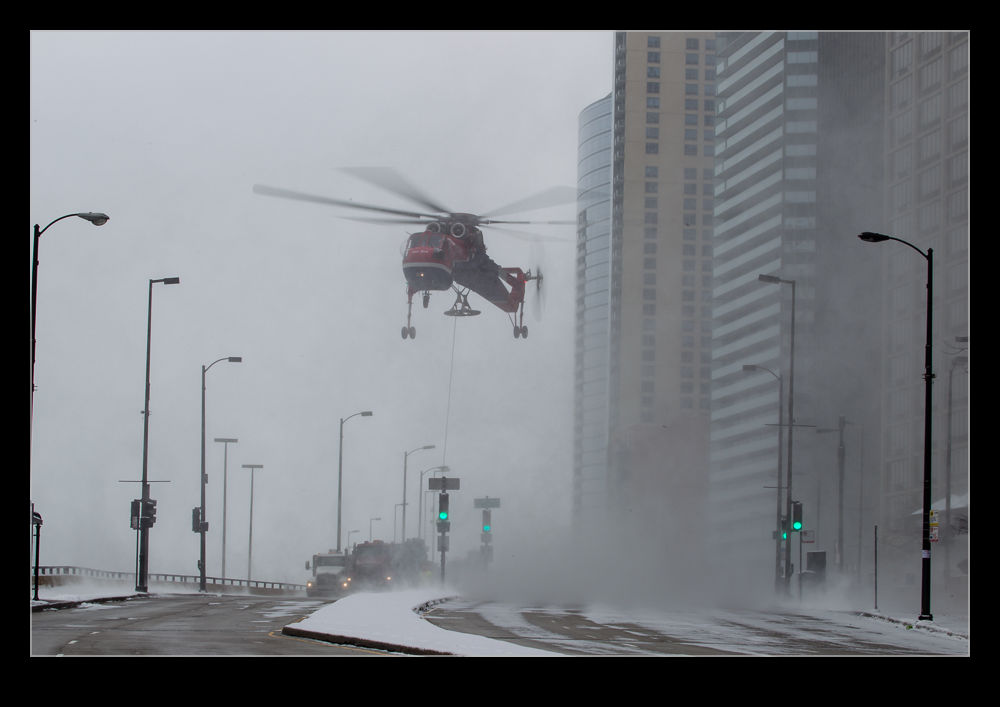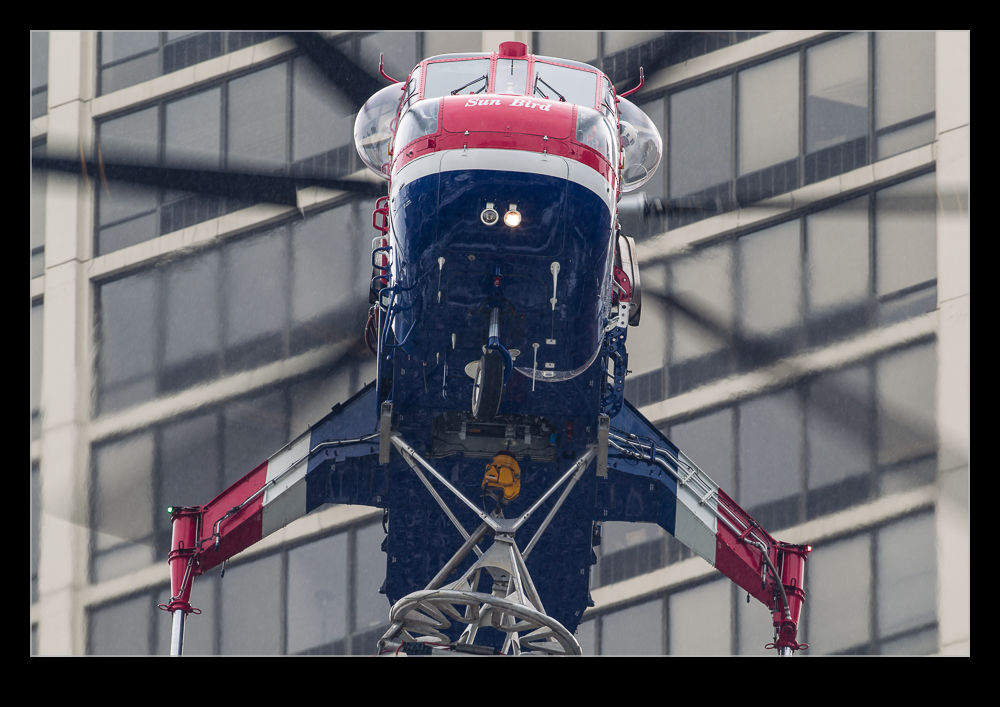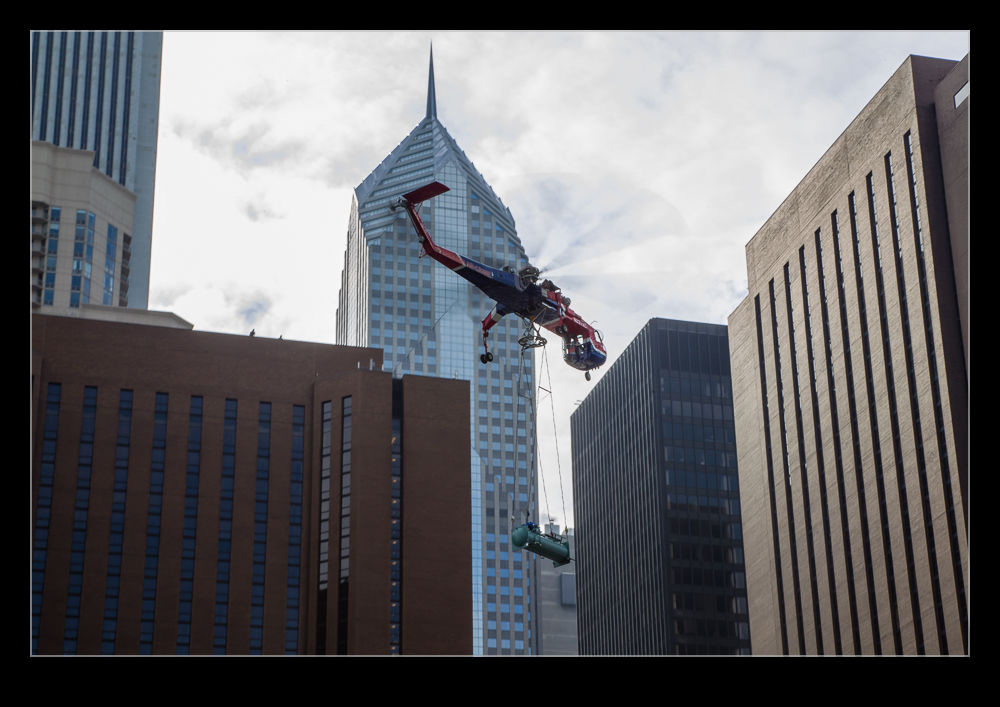
Tag Archives: helicopter

Some Board of Trade Video

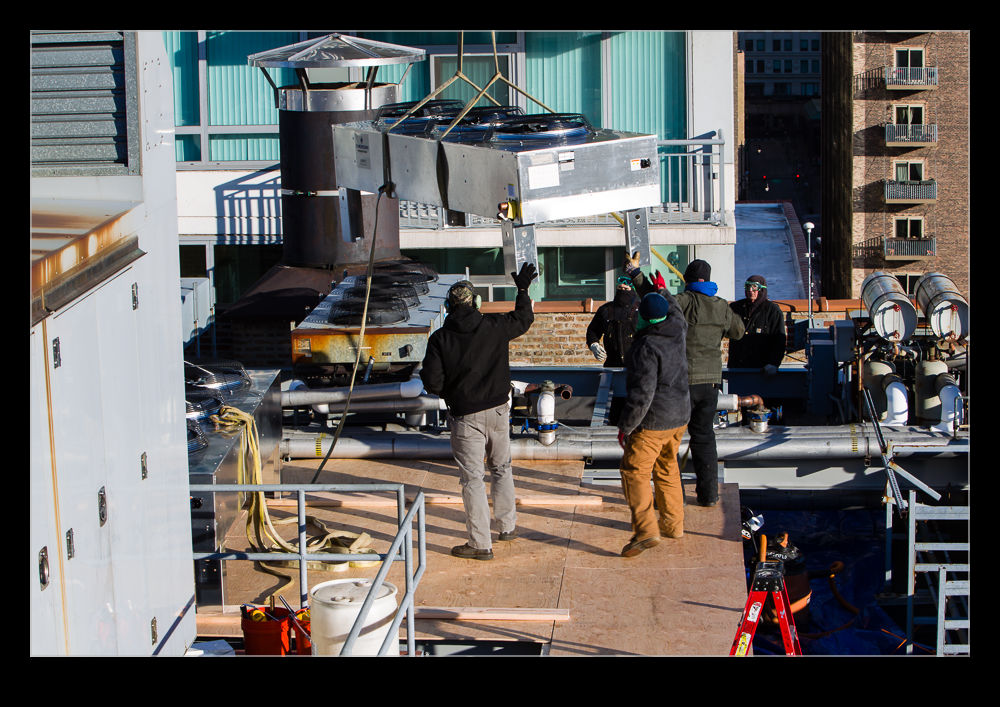
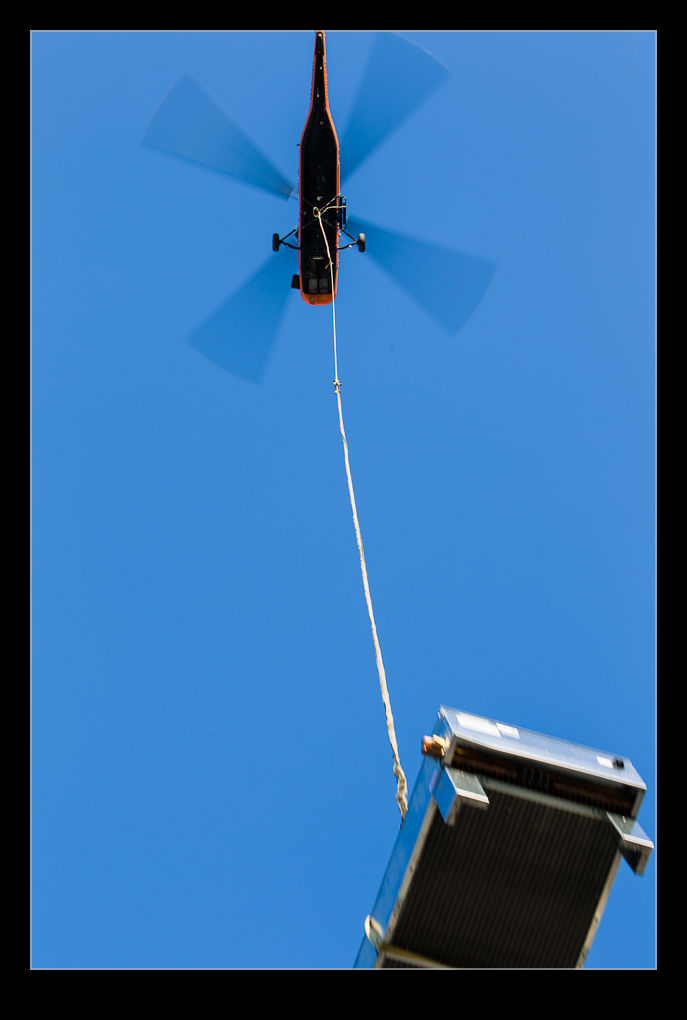
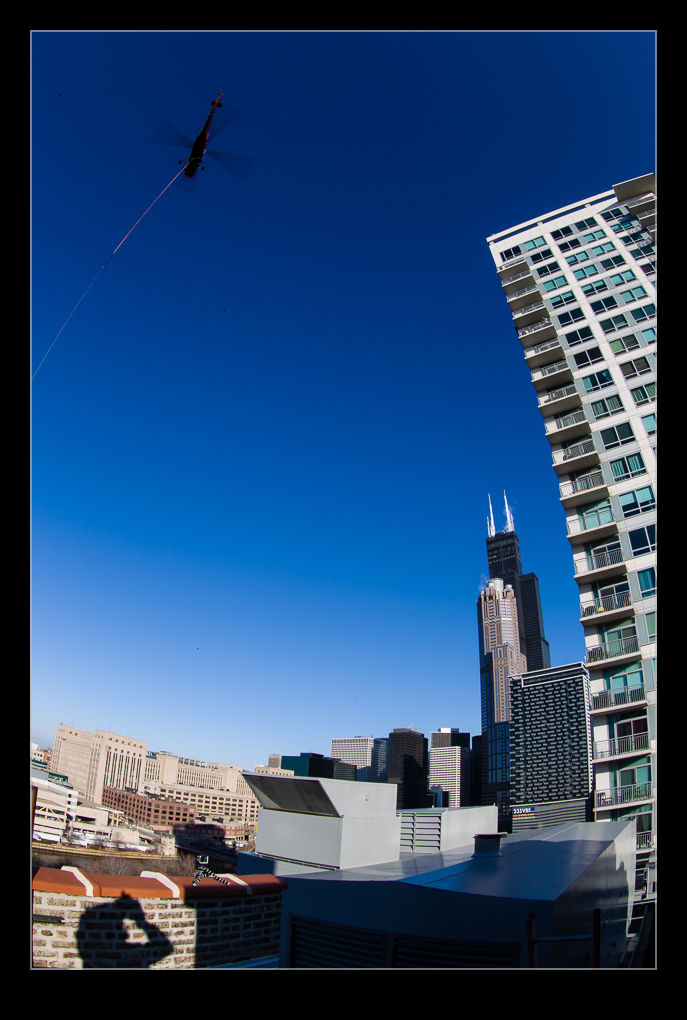
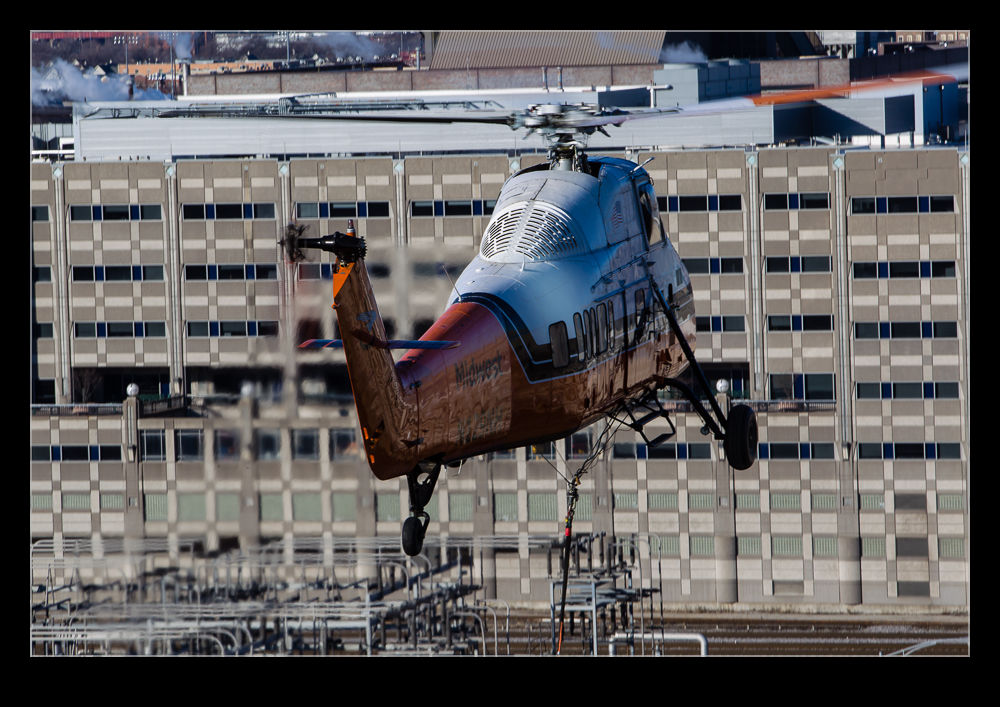
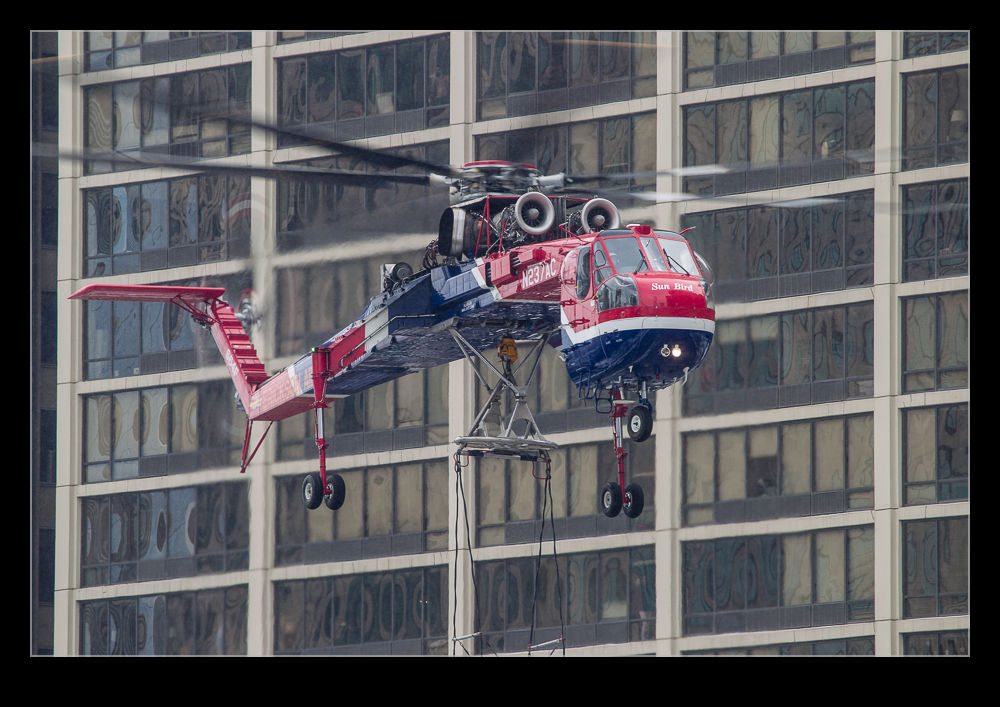
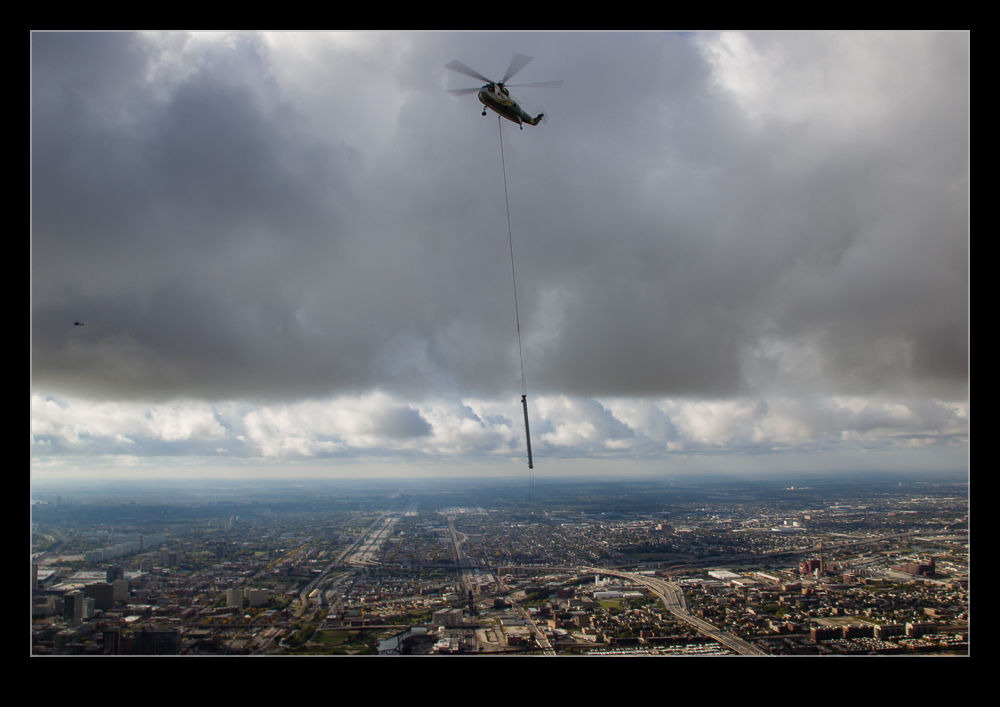
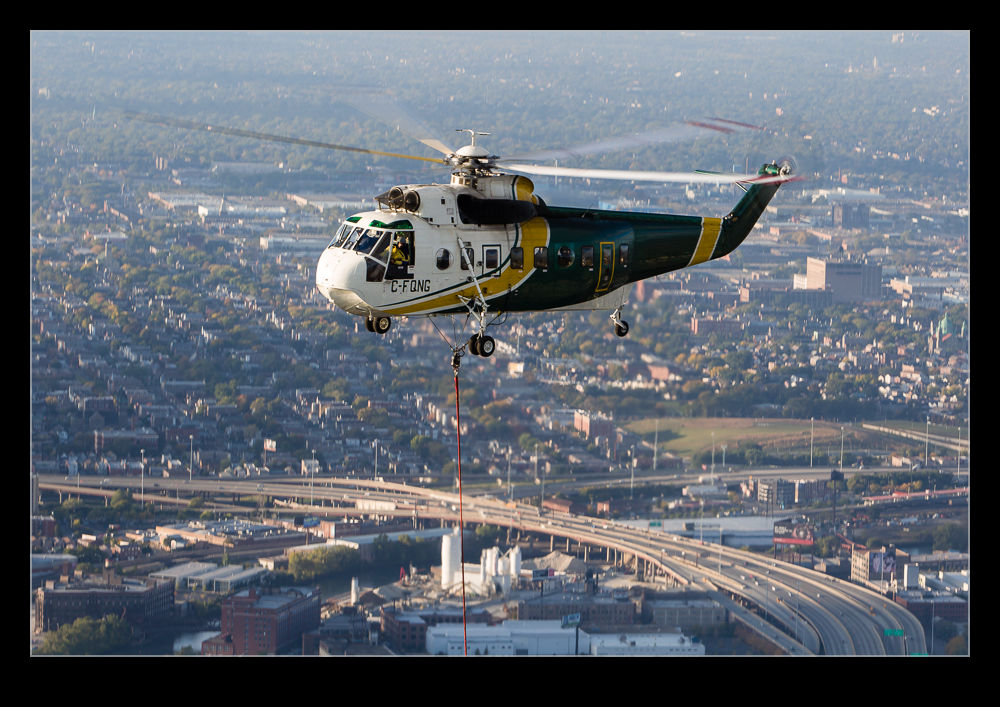
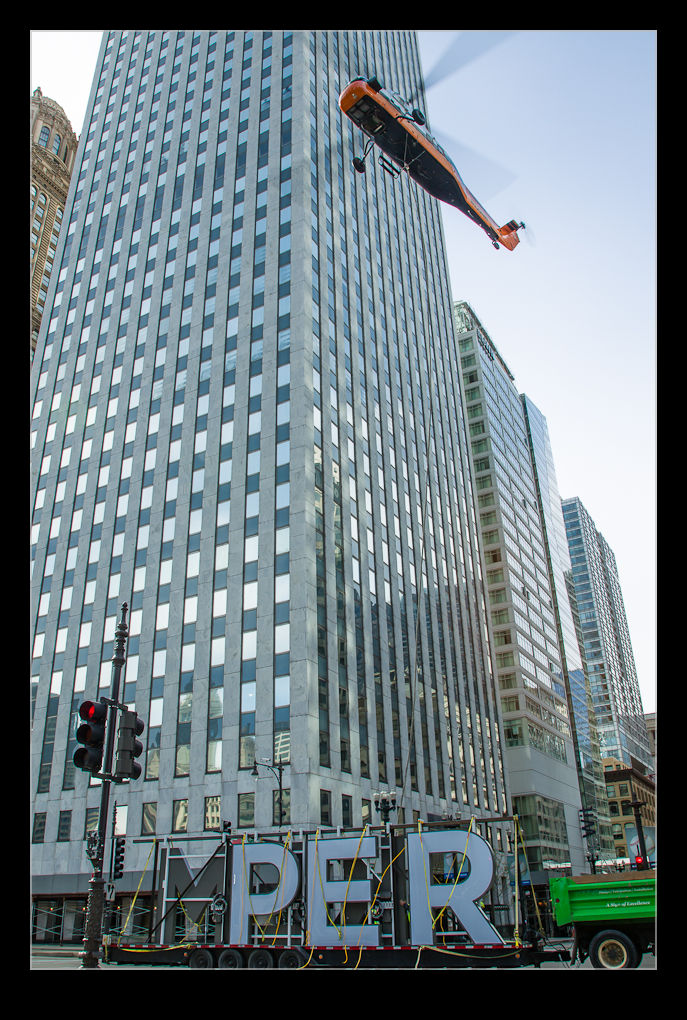
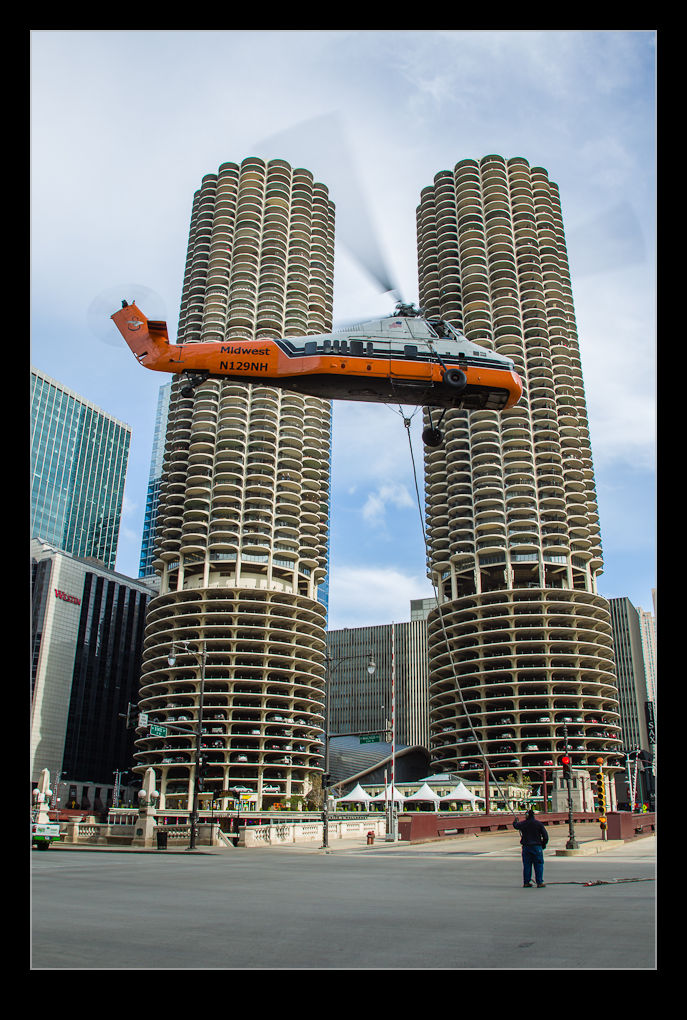
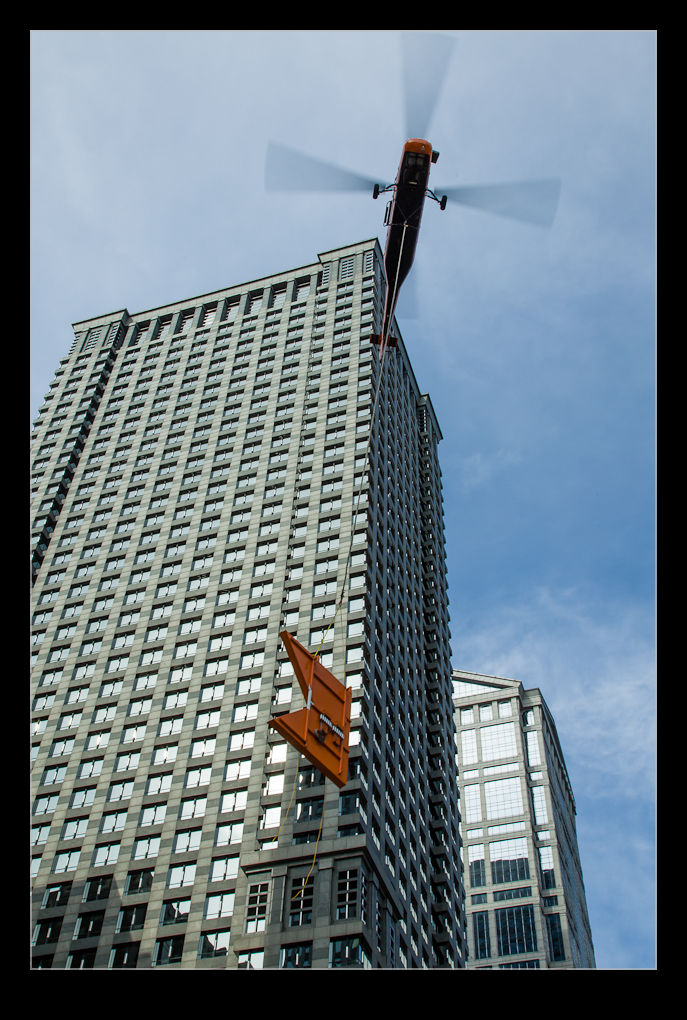
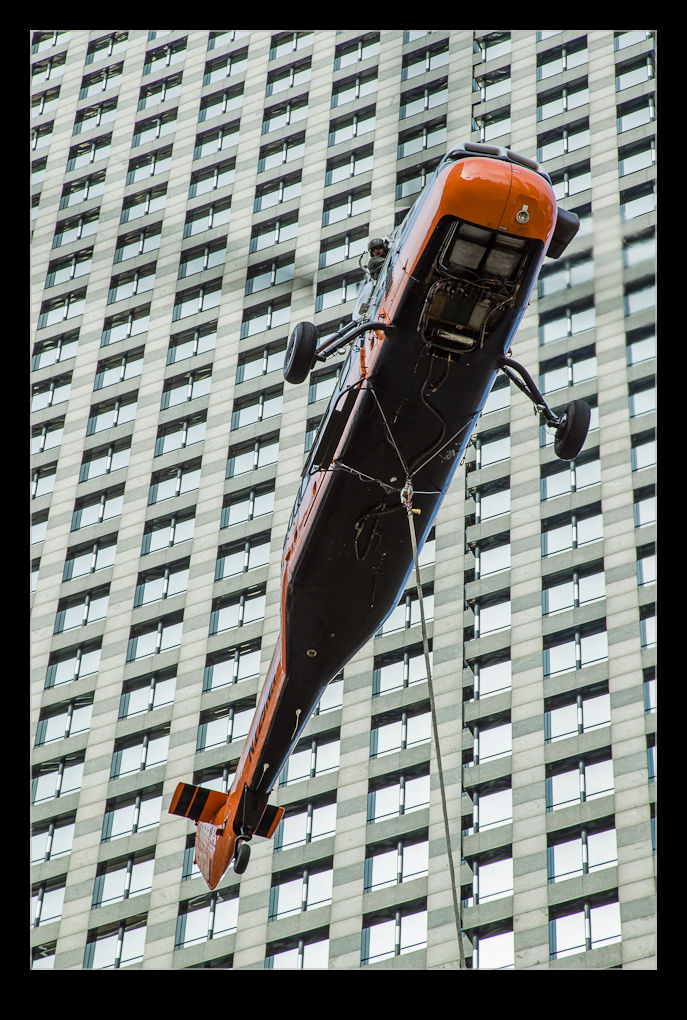
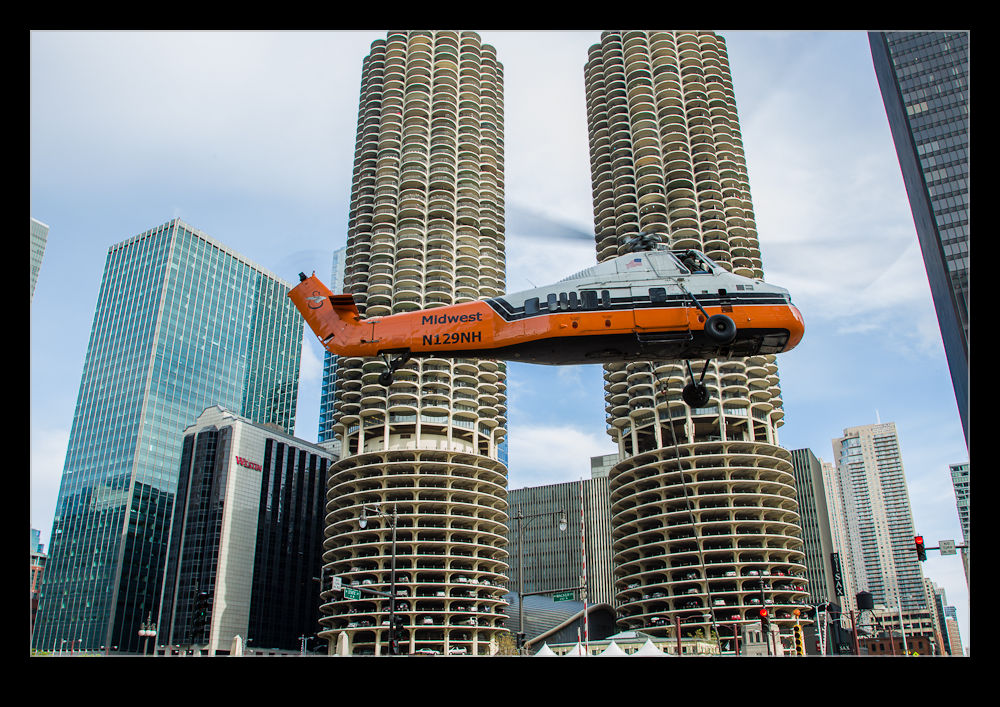
Over a year ago I shot a job that Midwest were undertaking on the Board of Trade building here in Chicago.  The job was spread over three weekends and I was there for the first two.  The job involved lifting a lot of steelwork and piping into location at the back of the building where the steelwork was then assembled using the helicopter to move the individual pieces into position.

All of this was a touch trickier since the assembly location was close to the building which is pretty high.  Therefore, 300′ of lifting line had to be used which made the job of maneuvering the helicopter to position the loads just that bit harder!  The final week involved the cooling towers being put in place but I could not be there for that.

I shot a bunch of stills but also got a fair amount of video which, at the time I did nothing with.  While doing some work on my database recently, I realized just how much footage I had and decided to have a shot at editing it down to something a bit more digestible.  Here is the result.

How Soon I Forget!

As I have mentioned in previous posts and my regular readers will know, I have been going through a process of culling old images that will never (and should never) see the light of day again.  This is part of my desire to be a lot more efficient in keeping good images and ditching bad ones in part to reduce storage requirements but also to allow me to focus back on the good shots when I need something.

One of the things it has also done is remind me of just how many good projects I have been involved with.  While many projects are one off jobs, there are quite a few regular clients that I shoot with on numerous occasions.  I have my new workflow for going through those images and creating Smart Collections in Lightroom to help me manage them.  I decided it would be helpful to go back and create similar collections for previous jobs before I changed the workflow.

I added a bunch of these collections from memory but then started going through all of the shots from the clients by searching on the keywords.  It was really surprising to me to find some of the jobs we had done together a while back that I had quite forgotten about.  I had a bunch more Smart Collections to create as a result but the outcome is that I now have better access to images from some regular clients in a more organized way than my previous searches based on keywords alone.

A second outcome of this is that I changed from using stars to identify good shots to using the Pick flag.  Since I have a mix of methods, I will be going back and reassessing which are the better shots and marking them as Picks.  Interestingly, some of the ones I had starred previously have not made it through my recent cull since a second look showed they were really not quite good enough.  Often an adjacent shot is actually better so now I need to make my selections anew.

This is going to take a long time.  I am well advanced in culling shots of civil aircraft but my military stuff has yet to be dealt with.  I’m sure we shall have some crummy days ahead which I can put to good use.  Of course, my rate of shooting is going to be going up so maybe I will be struggling to stay ahead of this for a while!

Up a Big Pole!

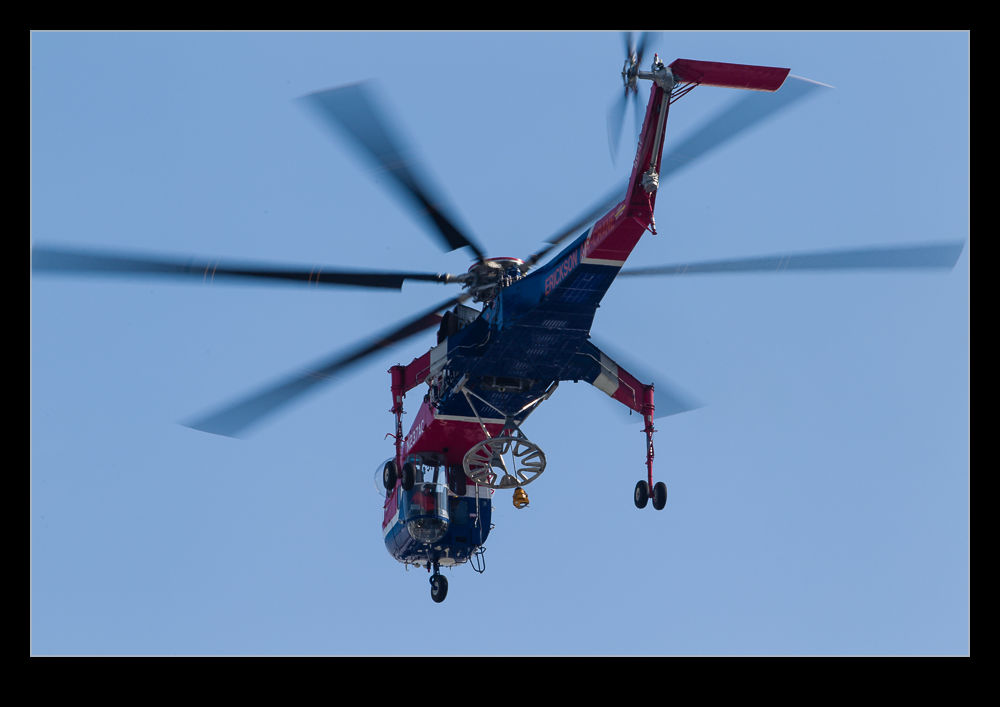
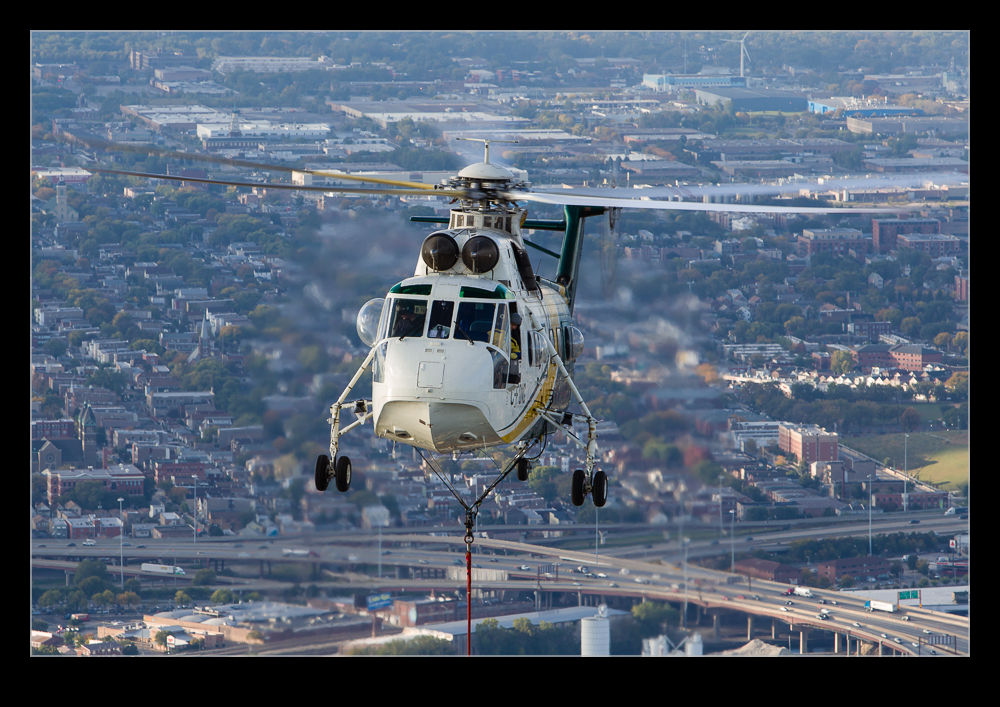
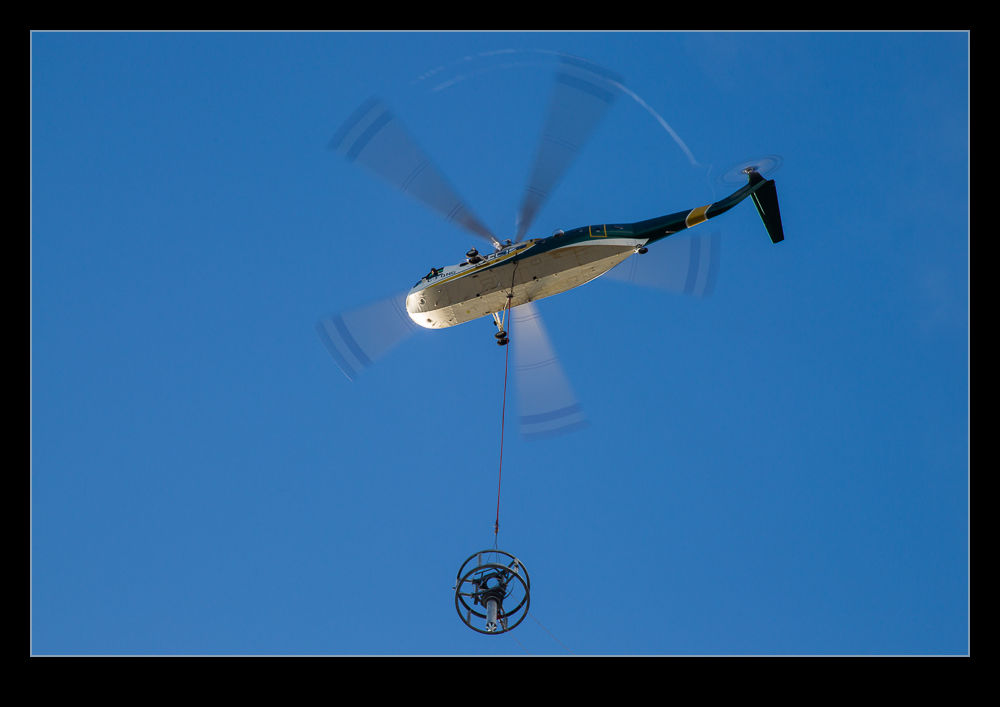
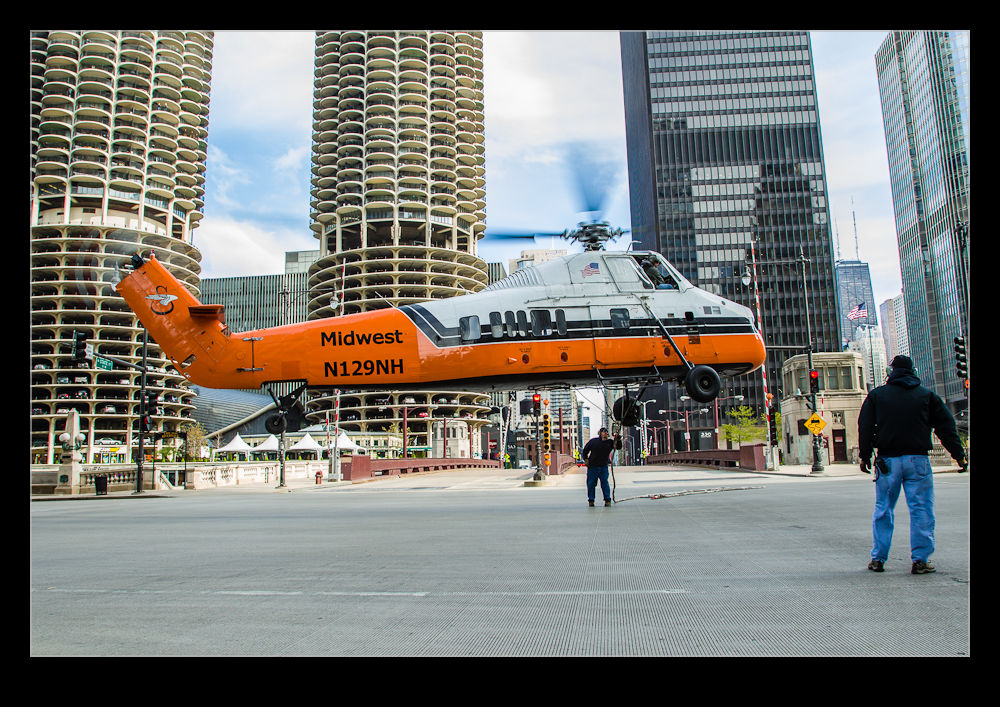
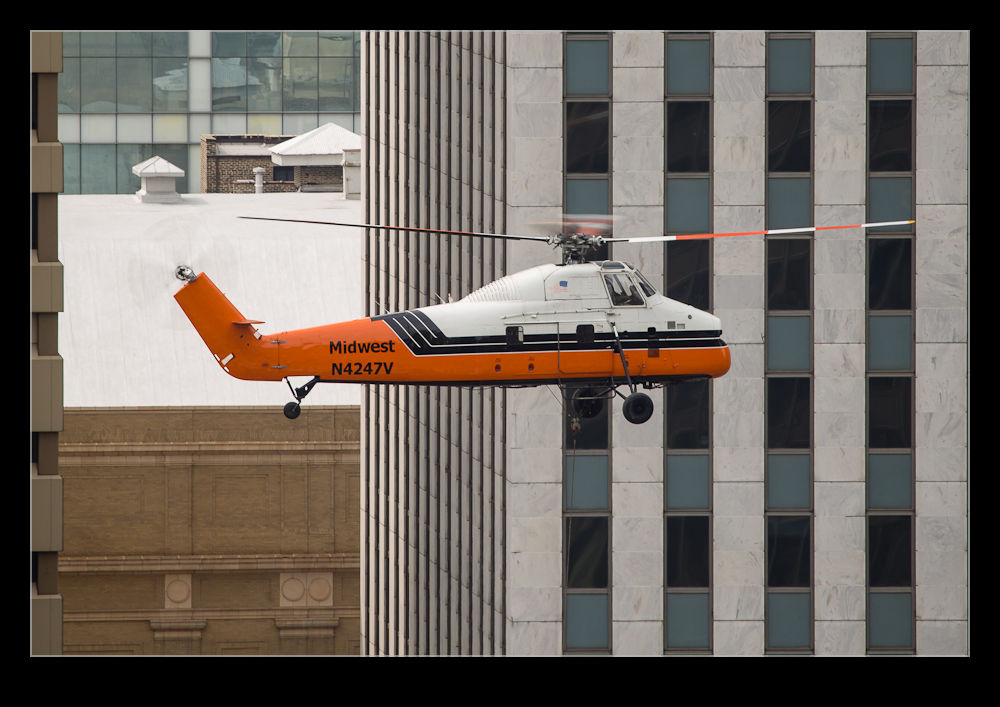
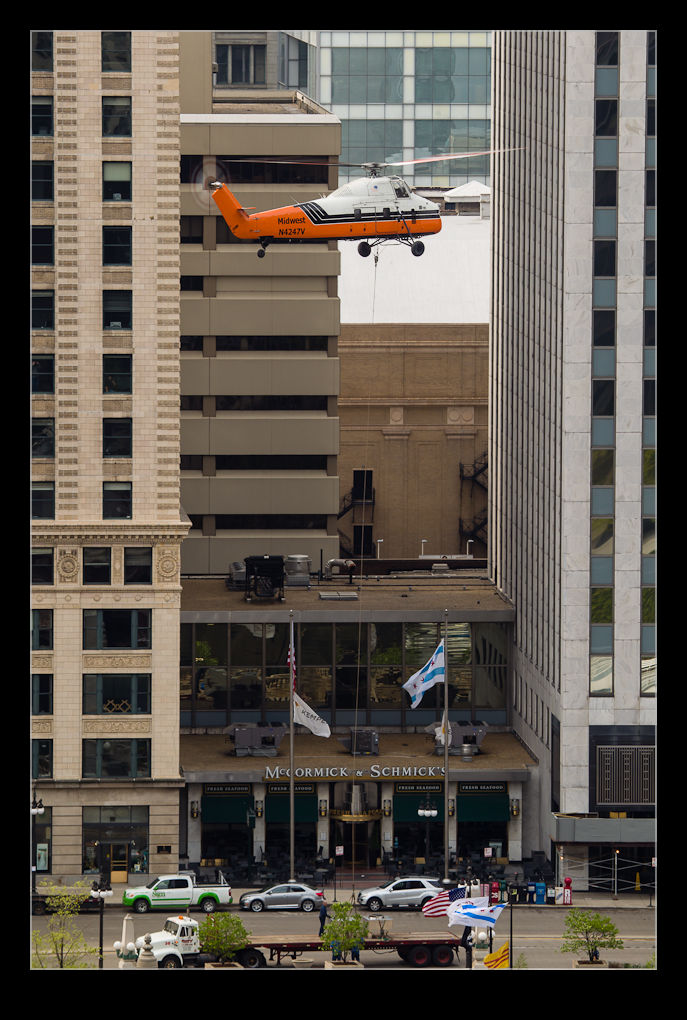
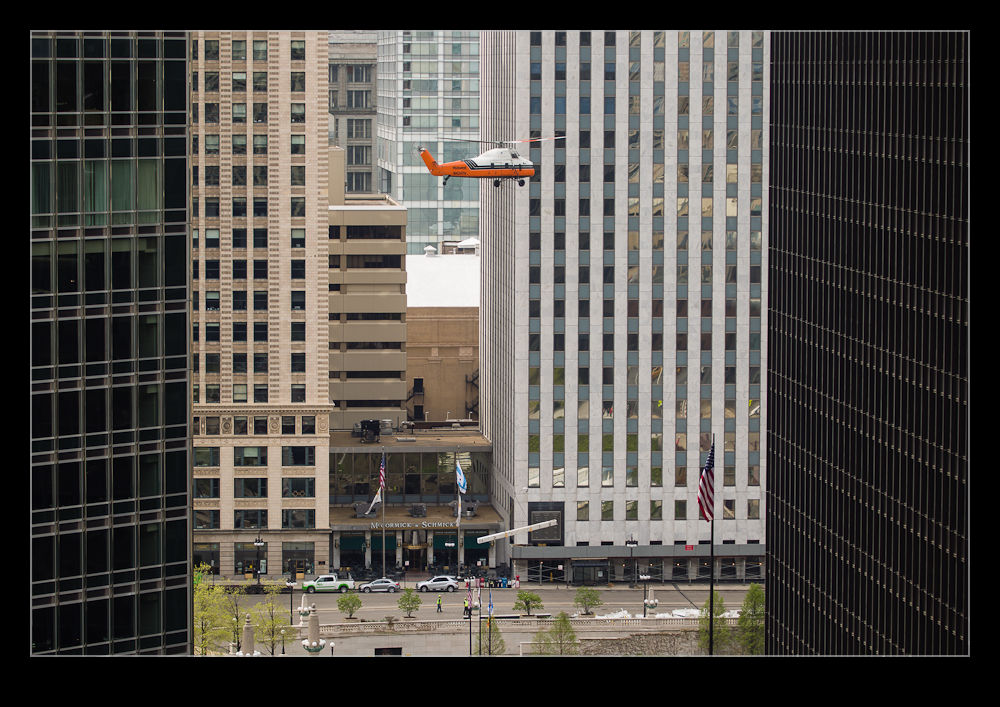
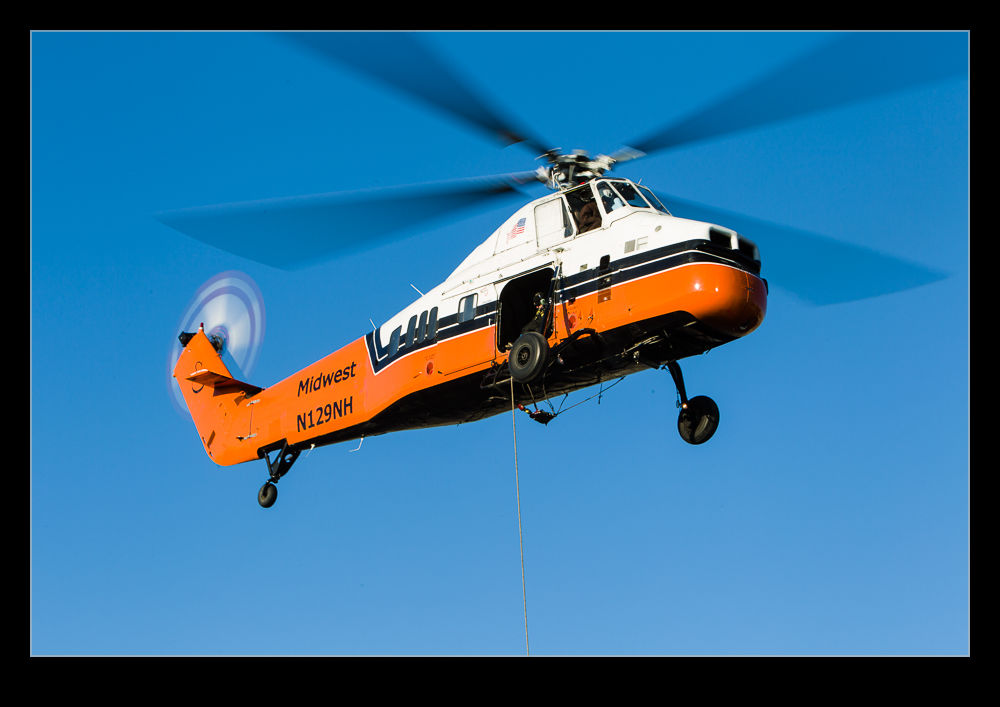
Today we have a bit of a flashback.  Regular readers will know that I shoot a lot of helicopter operations.  Midwest Helicopters is the large local operator so they do most of the work in the city.  However, there other operators that undertake similar work and some of them will work in Chicago at times.  This is often a function of the weight of the loads to be lifted.  Construction Helicopters of Howell MI are one such operator and their S-61N aircraft can lift 10,000lbs – a big increase over the 4,500lbs of the S-58T.  If you need even bigger things lifted, Erickson Aircrane are probably your people!

This piece, though, is not about the helicopter so much as the people it was working with.  A few years ago, the Trump International Hotel and Tower was built here in the city – in fact just across the street from us.  We had the best seats to watch the demolition of the old Sun Times building and the growth from a hole in the ground to 92 floors of building.  It was fun to watch, even if it did take a chunk out of our view!  The building was topped off with a spire.  The parts for the spire were lifted to the roof by the construction cranes before they were assembled but it was going to be significantly higher than the rest of the building so those cranes were not suitable for assembling it.  The pieces would be lifted into place by helicopter.


The first attempt at this was unsuccessful as the winds were so strong that keeping each piece in place long enough to secure it proved impossible.  There was a long wait before the second attempt but the job finally went ahead.  The heroes of this story are the guys on the tower.  If you think that the tower itself is over a 1,000′ tall and the spire is a significant (and flexible) structure above that, you can see that this is quite an exposed location to be working.  From talking to the team that assembled it, the most senior guys are the ones at the very top – they want to be there.


Three guys were on the spire at the top.  As each section was brought into place, they grabbed the tag lines and pulled it into position.  When they had located it, they would put in a bolt in each corner.  Then, one would climb up the new piece to release the lifting line.  The other two would follow while a second group came behind them to insert the additional bolts to finally secure the section.  While they were finishing that off, the next piece was coming in.


To add to the fun of this, the spire narrows as it gets higher so the working space gets progressively more limited.  All the time you are dealing with whatever wind conditions there are at this height combined with the not inconsiderable down-wash from the helicopter and trying to make sure you maintain your grip and don’t drop anything on the team below you!

The job ran a little long but they did finish it off and put the final cap in place.  They seemed to do a great job but were so far away from anyone else, I suspect that very few people appreciate exactly what they had done.  It was only recently as I was culling a bunch of old images that I looked again at them as saw exactly what they were doing.  I feel guilty for paying more attention to the helicopter operations when I first shot the job so decided to give them a little publicity now.  Well done everyone.


Thornton Quarry Video

The Thornton Quarry lift job with Midwest Helicopters was a full day job so it provided a bunch of opportunity to try different things.  This was true for the stills but it also allowed me to experiment with the video as well.  Since the aircraft was operating all day, I was able to get to multiple locations and see all aspects of the job as they happened.  Normally, this isn’t possible since a lift will only last about 30 minutes.  In that case, you have to pick the location that will get the shots you must have and accept that the alternative shots will not be made.

This time I was able to move around the whole site and capture as much as possible of what was going on.  Some of the clips looked really interesting and the time but they actually proved to be no use.  Some of the boring stuff as it appeared at the time actually ended up being really of use when it came to editing.

At this point, it is important for me to apologize to people like Gerry Holtz.  Gerry is an editor and he does this sort of thing for a living.  Anyone else who knows about editing professionally, you are all due my apologies and my respect.  I am trying a bit with video editing but what I have learned is that it is bloody difficult to do.

On this shoot, most of the video was captured using my SLR.  The rest of it was shot on a GoPro which is such a great little device to get something a little more unusual.  It was handheld (or mounted in the case of the GoPro).  No tripods or dollies and certainly nothing as impressive as a Kessler Crane!

I suspect that to be good at editing it is important to have had some education in the process.  I am doing it the guy way – try something and then try something else and see what happens.  Not even a manual to consult!  Consequently, I make some progress but probably my approach starts from the wrong place.  If I was going to do a lot more of this I would take the training aspect seriously.  However, for the time-being, this is a little side hobby so I will probably stick with what I am doing.

Part of the fun(?) of the edit process is taking all of the disparate elements of the footage and trying to combine them into a coherent timeline.  Part of the engineer in me thinks it should be delivered in the same order it happened.  This is rubbish of course.  The viewer has no concern of course.  As long as the result doesn’t obviously have terrible jumps or continuity issues, no-one is going to be any the wiser.

Also, how much do they need to see.  About eighty lifts were done during the day.  Does the video need to have eighty lifts?  NO!  In the end, I concluded that two lifts were enough to tell the story.  One wasn’t enough but it didn’t need more than two.  I cut the length down as I went but even then it was still quite a long piece.  A pro would probably have it down to a couple of minutes but then, as I mentioned, I am not a video pro.

One lesson I have learned as I have practiced this video stuff is how many of the tools the software has are no use at all.  There are a million transitions between scenes, all of which make it look like you are experimenting with the software but they are a distraction from viewing.  I have learned to use simple transitions that are short so they are not obvious to the viewer.  They just stop the jump being the item the viewer focuses on.

Anyway, the final part of this story is that I was very happy with the result for this video.  Unfortunately, it turns out the company that was doing part of the work is very sensitive about their equipment and doesn’t like the equipment being shown on the video so I have had to remove it from my YouTube channel.  Consequently, I can’t include it in this post.  Oh well…

Thornton Quarry Part 2

I mentioned before what the lift at the quarry involved.  However, I thought it was worth talking a little bit more about the work of the guys on the ground.  There was a good team spirit needed for this job and the guys worked hard throughout the day to get everything done.  With the many rolls of netting to put in place, there was plenty to do!  These were long rolls.  The later rolls were over 300′ long and they were hanging from 150′ of lifting line!  Also, it could be breezy and keeping the net under control was interesting!

There was one group of guys at the top of the quarry who were responsible for hooking up the nets.  They would put the roll into place and unroll it along the roadway.  When the helicopter came in, it had a special fixture on the end of the line.  This was a spreader bar with hooks for the net.  The bar was attached at the bottom but a ring was placed into a hook to turn it up the other way.  This meant that the hooks would be the right way up to hold the net.  When the release was triggered on the hook, the spreader bar would flip over and the net would fall free.  Then the whole thing could be repeated.

The other guys were on the top of the rock face ready to attach the net.  A wire line was rigged across the top of the rocks.  When the net came in, they guys had to grab the net, bring it into place and start wiring it to the line.  Two guys would be in harnesses and they would head over the edge as the net was lowered to ensure that it was aligned correctly and were it needed to be.  Joining each net down the rock face would follow another day.

The guys worked well together handling the nets into place and making sure they weren’t aligned incorrectly.  If the wind twisted the net, they had some good techniques for getting them back around the right way.  The was vital since the release would not work if it was facing the wrong way!  Jim was flying during all of this with a very long load so he did a great job to stay focused.

Thornton Quarry Part 1

The main job of the day was at a quarry.  This was a more unusual job than the ones I have normally seen with Midwest.  For a start, it was a long job.  This was actually the second day of this job and a third would be required before it was finished.  The task is to place wire netting on rock faces to stop and falling rocks from flying freely at anything below.  The nets hold any debris against the rock face.

You will have seen things like this before.  However, if you are like me, you hadn’t really given any thought to how they are put there.  Today I am going to focus on the flying aspect of the job.  The work of the guys on the ground was a separate issue and I am going to give them their own posting to follow this one.

The rolls of net are laid out on the ground and picked up by the helicopter.  Then Jim had to fly this very long roll across to where it was supposed to be placed.  The guys on the ground would attach it and then Jim would lower the net down so the bottom became the top and the top ended up at the bottom.  There are over a hundred of these rolls and each one takes several minutes to place.  Consequently, it was necessary to land several times during the day.  One need was for fuel but another was for a break.  This is a long time to be hovering a helicopter!

The weather was really nice for the majority of the day and I was able to get around the site and see the work from many different locations.  I also got to have a break during the day which most people didn’t so it was easier for me.  Even so, I was bushed at the end of it all.  At least I got to fly back to base and not deal with the traffic!

McCook Lift

As I hinted previously, my day with Midwest involved a couple of lifts.  The first was a relatively straightforward job.  In common with a lot of jobs it was cooling systems for the roof of a building that was being constructed.  The equipment was laid out on the ground near the building and the guys were ready to roll when we landed.

The location is quite close to Midway airport.  We talked to them as we came in and the traffic from the airport was close to where we were operating.  A couple of times, a low flying Boeing 737 from Southwest could sneak into my shot.  They were obviously well clear of us and there was no problem but it was quite fun to see something different in the background.

The job went off without too many issues and soon the aircraft was back on the ground and we could hop on to head to the next job.

Frosty Start

The good team at Midwest Helicopter called me up recently to see if I wanted to go out on a job they had scheduled.  There were two jobs on the one day, one of which was going to be a long one.  Anyway, I need to get there first thing to be ready to head on out with the team.  I was going to ride in the aircraft so no messing around in Chicago traffic for me during the day.  Just sail across.

It had been a cold night so there was ice on the ground and frost on the aircraft.  I am not much use to the guys while they are getting ready.  Telling me what to do would probably take longer than doing it themselves and they would probably want to check whatever I had done anyway.  Therefore, I took the chance to get some shots on the ground of them getting ready and of the aircraft.

Normally I see the aircraft when it arrives at the job so getting it at rest was a nice change.  Also, the weather was great with lovely soft morning light so it was a great opportunity.  Here are some shots of the morning.  The jobs themselves will follow in the days to come.

Millennium Park and a Helicopter? Result!

The good folks at Midwest Helicopters were recently undertaking another lift in downtown Chicago and invited me to come along.  This one required two goes since the date of the first attempt awoke to find cloud base down amongst the buildings – not ideal conditions for a flight of any sort let alone one that requires weaving between the buildings downtown.

The forecast for the second attempt was considerably better.  In the end it didn’t quite turn out that way with a slightly grey and overcast morning for the lift.  This was a mixed blessing really.  I was going to be facing east so would have had some awkward lighting angles if the sun had been strong.  However, cloudy skies are not a great backdrop.  This limits some of what you can get but, in this case that wasn’t too much of a problem.

Cloudy skies also soften the light in total which can avoid some of the harsher contrasts that you can get shooting aircraft.  Since Midwest’s fleet are painted orange and white, this contrast on the airframe alone can sometimes be a problem.  Moreover, I have a lot of pictures of their fleet.  Shots against a blue sky are not terribly new but something that brings in the different backgrounds in which the work is being done are a lot more interesting.

The location for the lift was a building directly across from Millennium Park.  This should be a photogenic location.  In advance of the job I was pondering where a good spot to shoot from would be.  Involving the Bean would be a good feature.  However, if I shot from near there, I would basically have one shot and miss the rest.  Getting a reflection in the Bean was another idea.  However, the shape of the Bean acts as a very wide angle viewer which means getting anything specific reflected in it – especially something not too large like a helicopter – is problematic.  The idea seems good but it is hard to make it happen.  If we had a second lift, I would certainly give it a go but I had to make this one count.

The roof was going to be the location of choice again.  This way I can get the aircraft with the park in the background, have it flying in front of other buildings, look down on it while it is low to the ground and also get some of what is happening on the roof as the load is set.  This was a little more tricky since I was actually operating mainly from a slightly lower section of roof than that on which the loads were being delivered.  I also had to make sure to keep myself out from underneath the path of the loads as they came up.

All in all, it went pretty well.  I got some good shots and most of what I was hoping for.  Sometimes you wish you could instruct the crew where to fly for the benefit of the shot but that isn’t why they are there!  However, it was funny at one point to look at the images and notice that Jim, the pilot, must have just spotted me as he brought a load up since he is briefly looking directly at me and grinning!  A couple of frames later and the grin is gone and he is back focused on the task – a task that requires quite a bit of concentration!