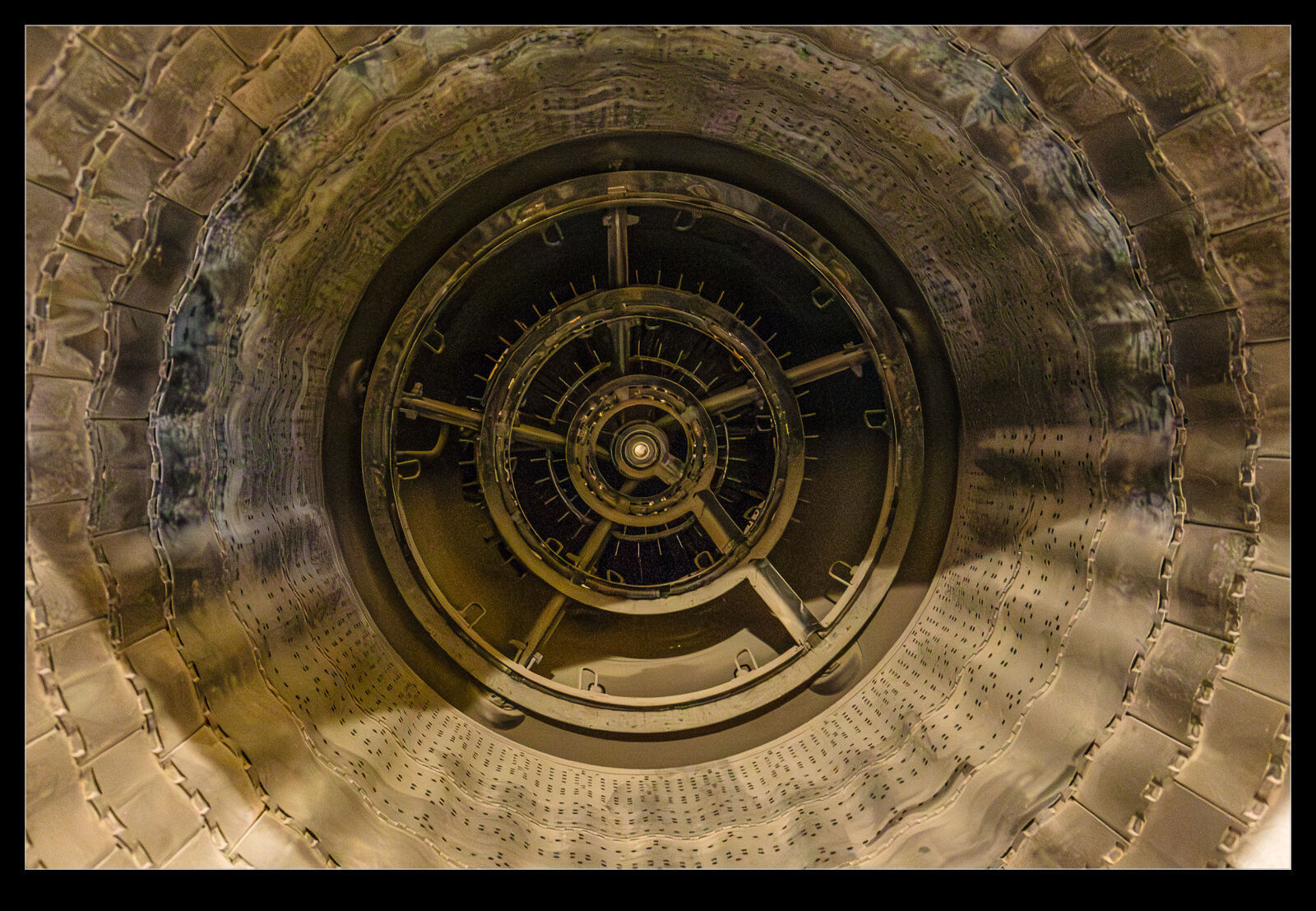
 British defence projects have a bit of a reputation for trying something that will boost domestic content but that compromises overall performance. In fact, some civil aviation projects would probably fit that description. One such project was the procurement of the F-4 Phantom. To boost UK content, the J-79 engine that was used in all other variants was replaced by the Rolls Royce Spey. This engine made it into various civil and military aircraft over the years. For the Phantom, it needed an afterburner.
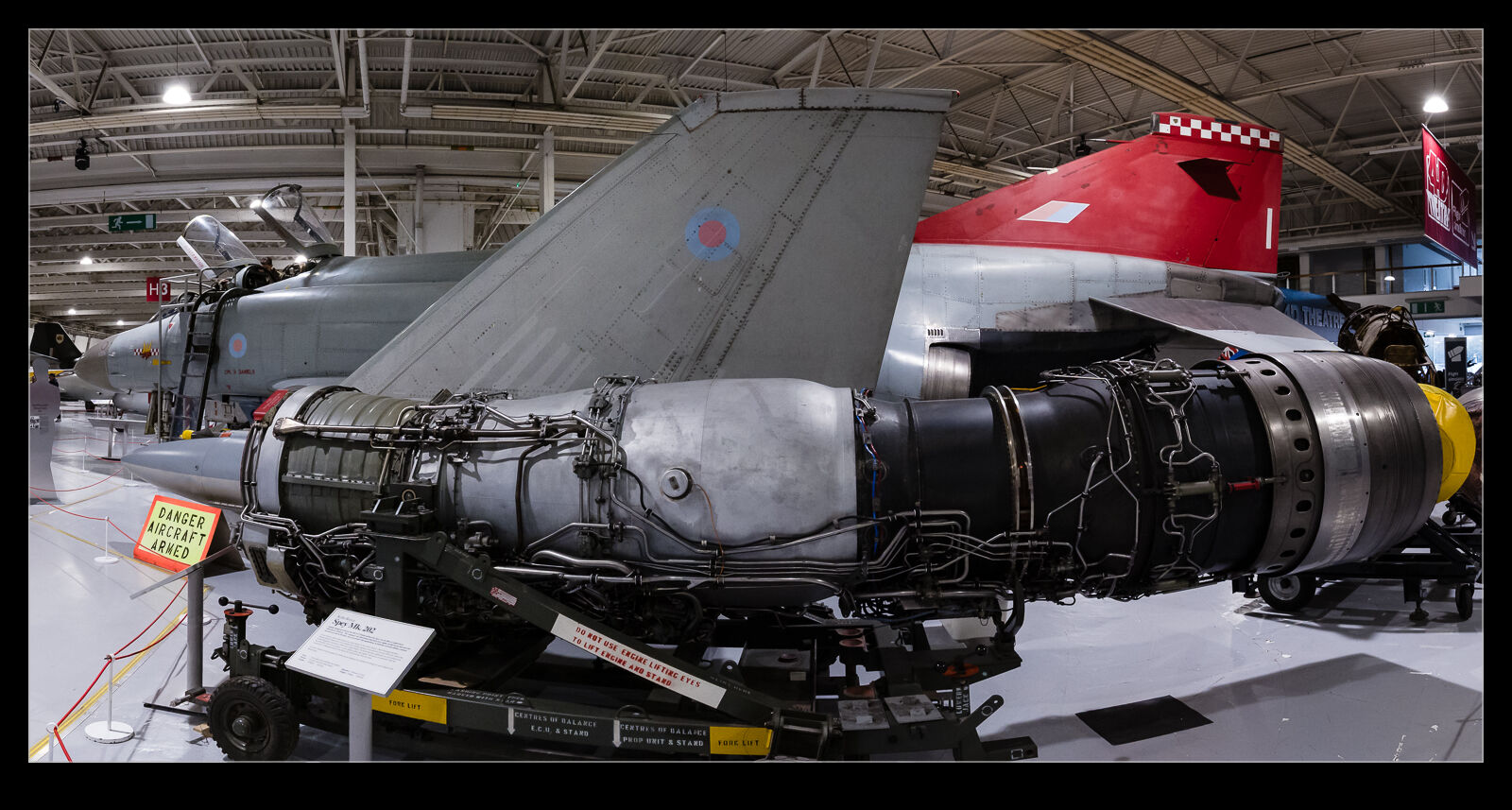 An example of the engine is on display at the RAF Museum in Hendon. I was first interested by the patterns of the flameholders in the afterburner so took some shots looking straight up the jet pipe. Then I moved around to the side. It is so easy to see where the original engine ends and where the added afterburner starts. It does not look like an integrated design whatsoever. It worked well enough although the redesign of the fuselage to accommodate it resulted in significantly increased drag. Top speed was reduced as was climb performance. One upside was that the Spey was a turbofan so, in the original ground attack role the Phantom had in the RAF, it actually improved low level fuel burn. It probably wasn’t so welcome once they moved across to the air defence role, though.