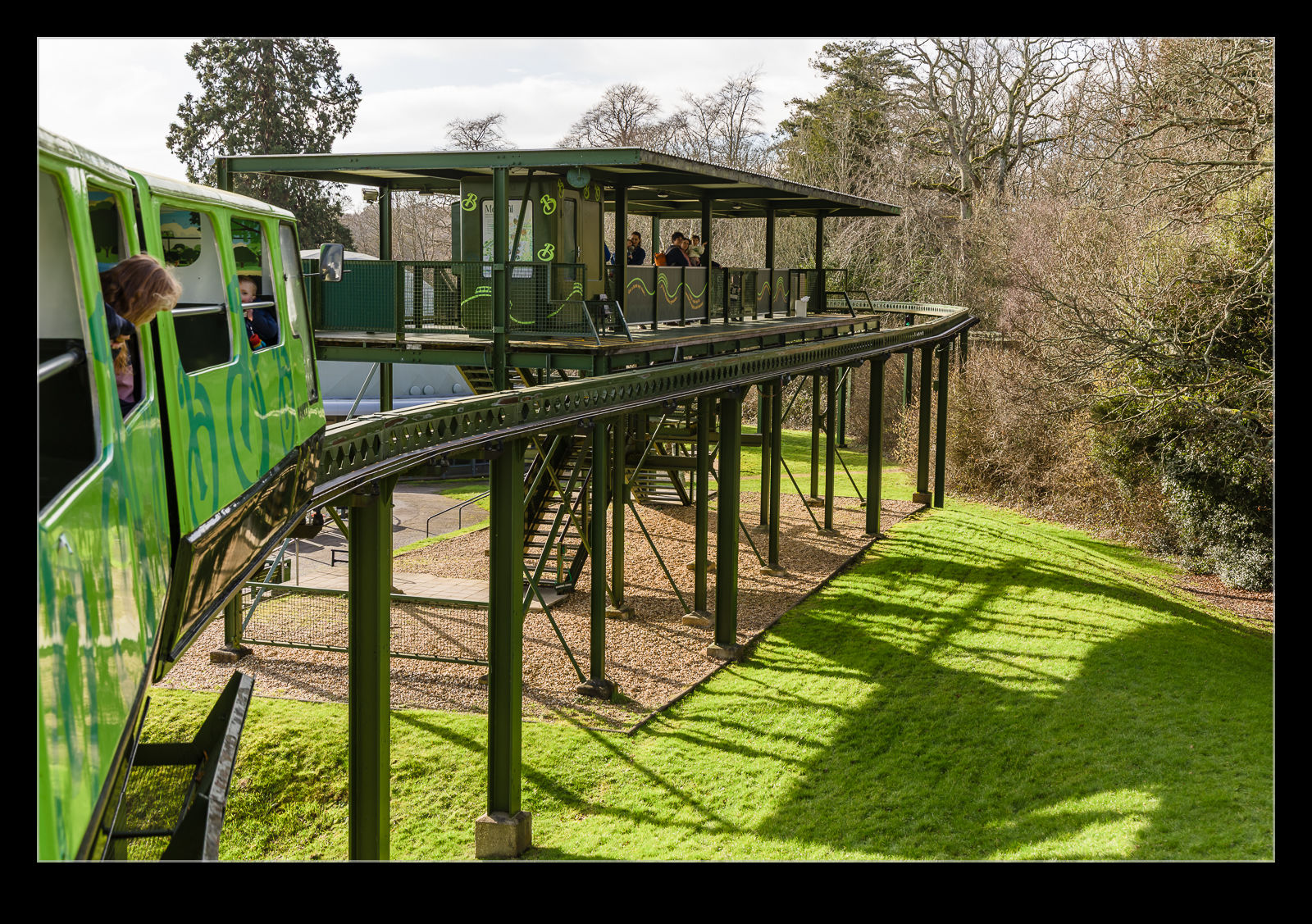
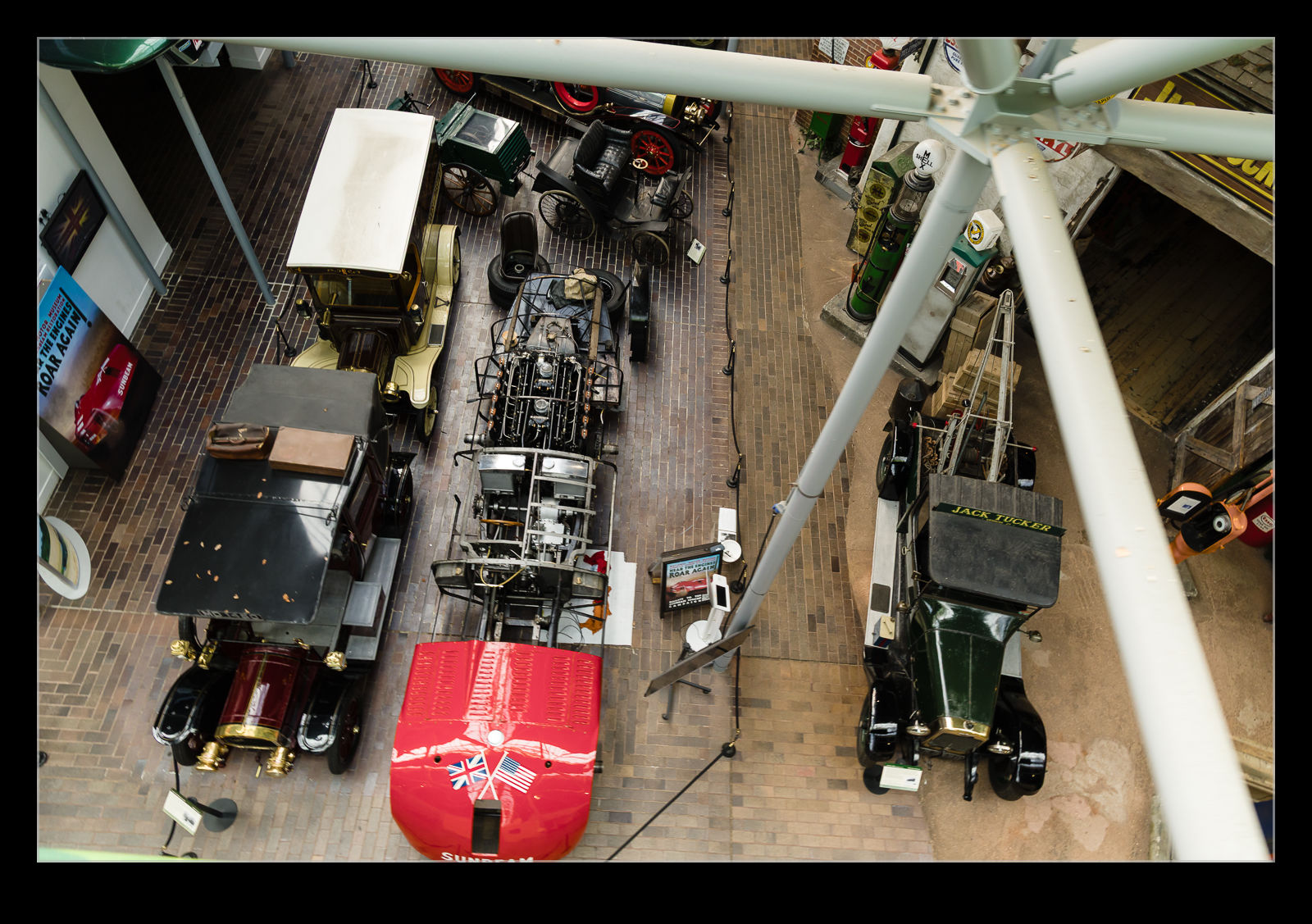
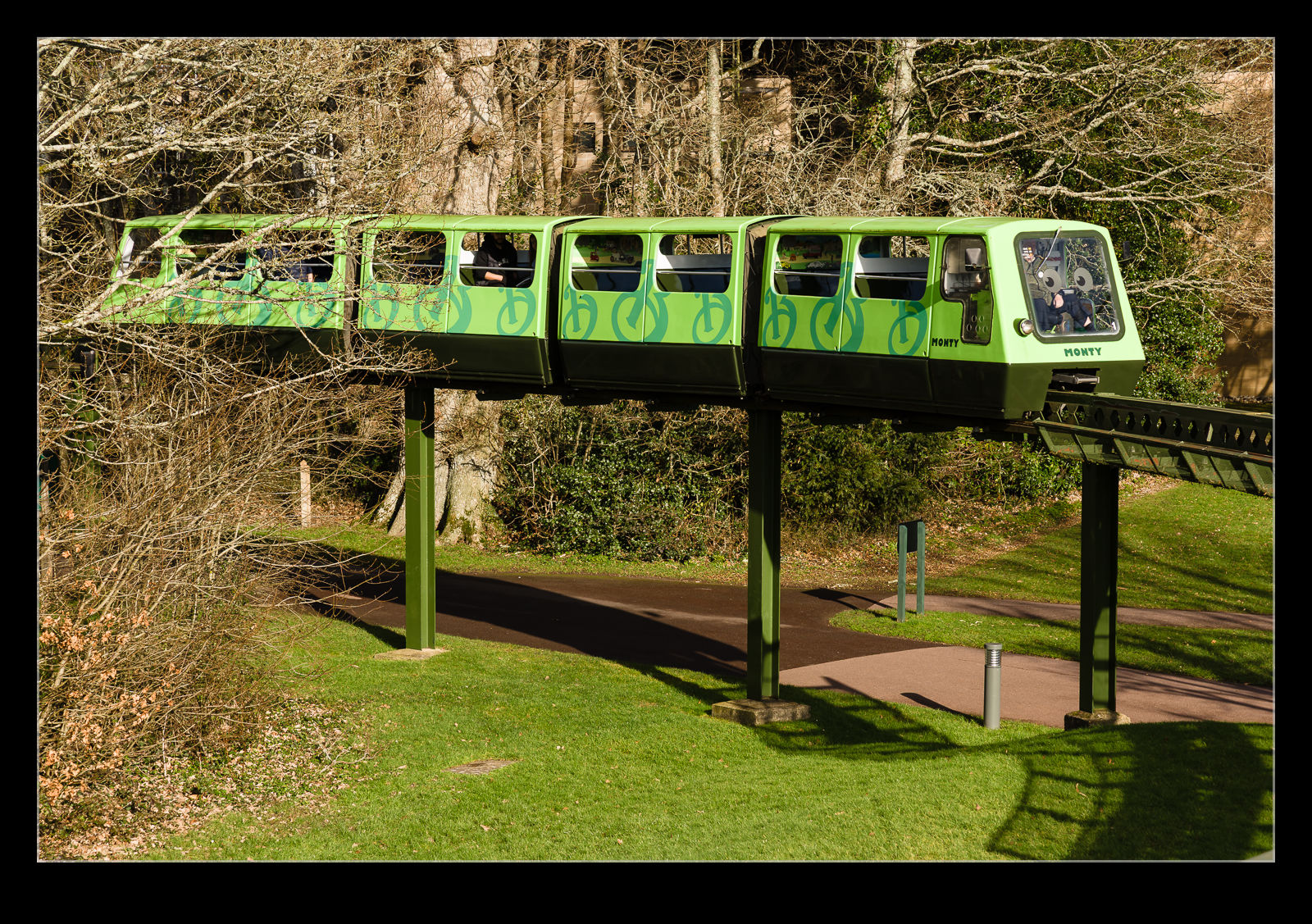
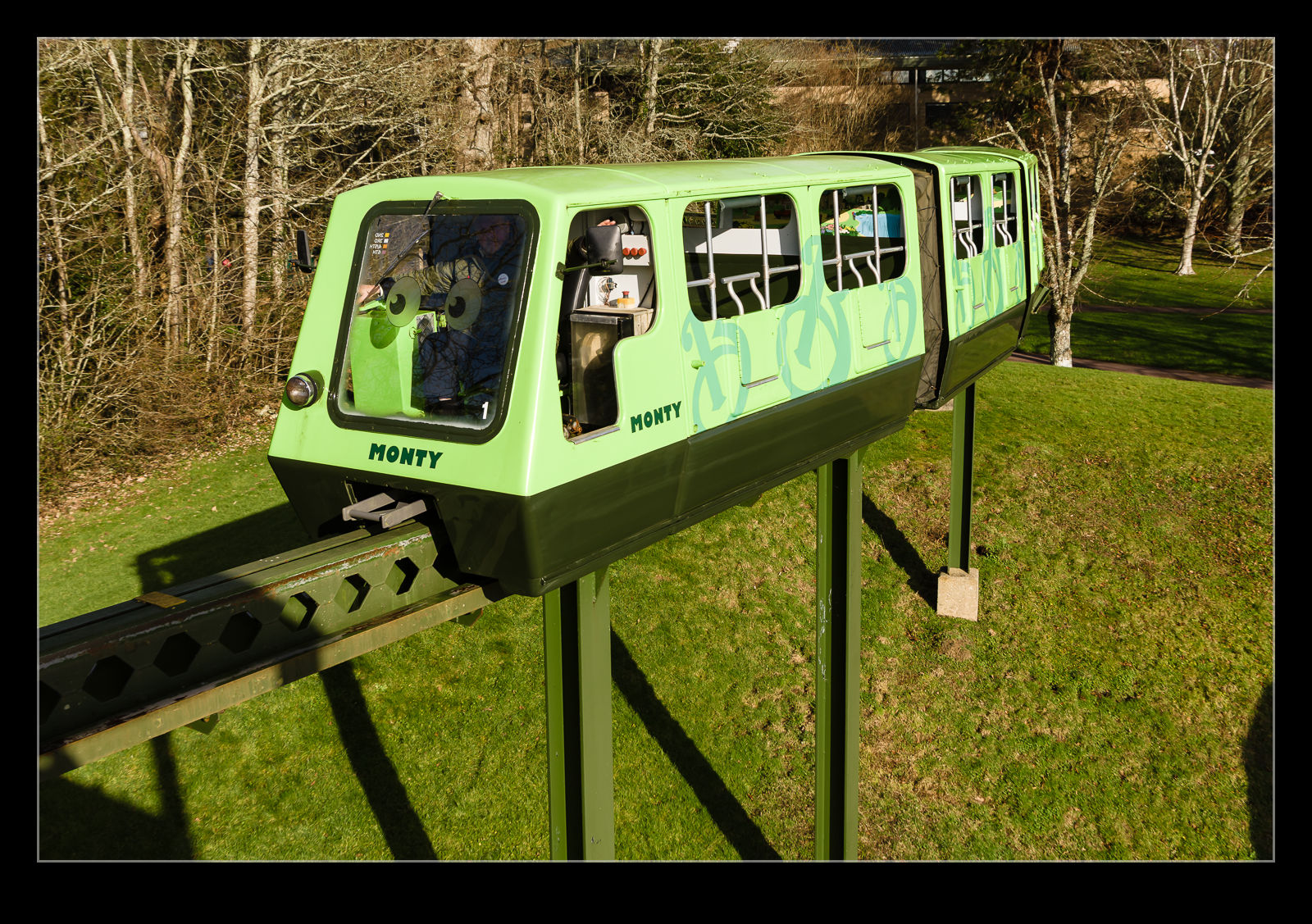
 We made a return trip to Beaulieu with a few of the family in late January. Unlike our previous visit, the weather was a bit nicer, and it wasn’t raining. This meant we were able to have a trip on the Monorail. When I went to Beaulieu as a kid, the monorail was seen as something new and innovative. It runs around the grounds including going through the middle of the museum – shutter doors open and close at each side of the building to give it access without making the museum exposed to the outside weather permanently.
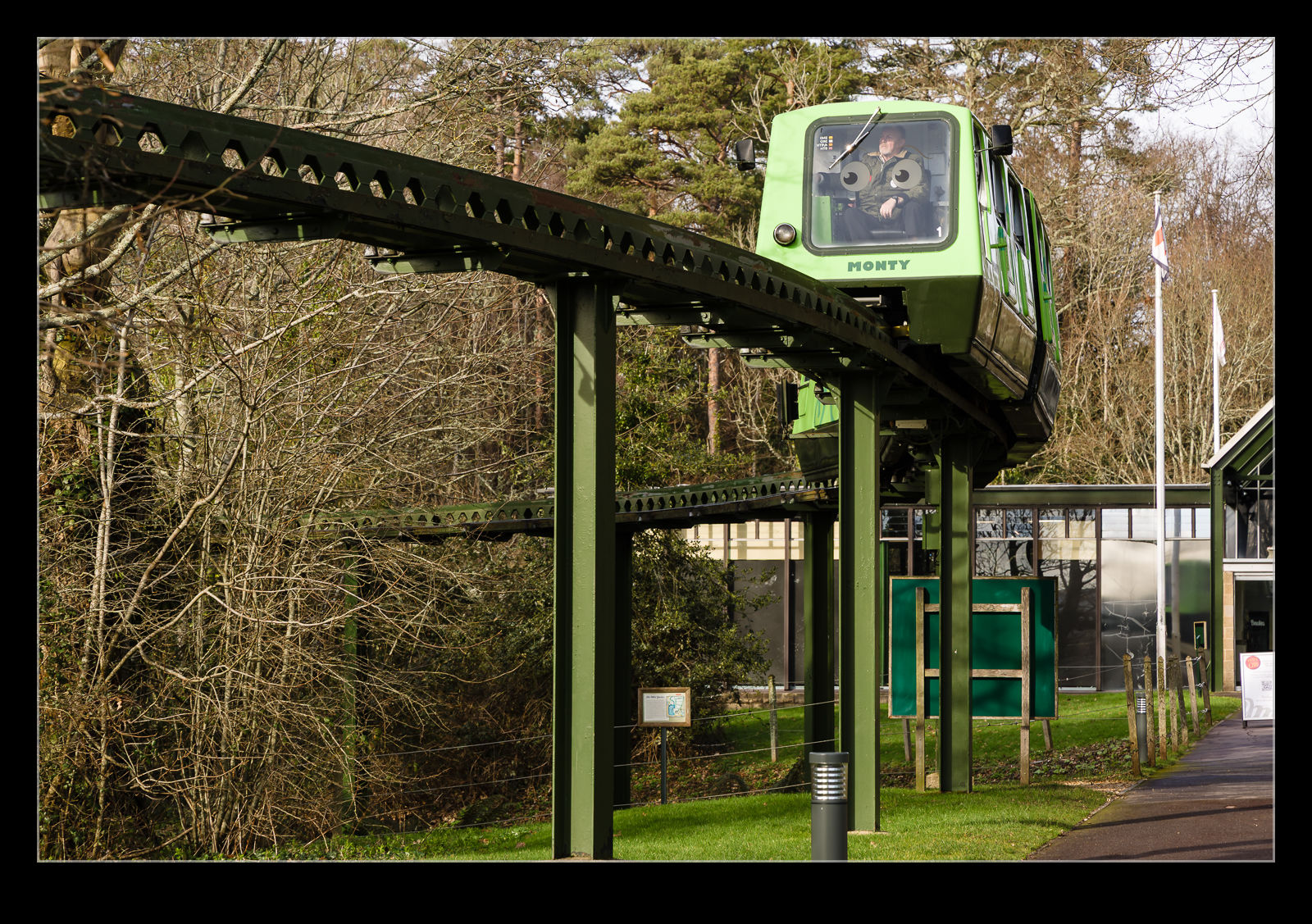 It is a pretty small vehicle. Getting in and out as an adult requires bending over a long way. Once you are inside, it is fine. There are no windows, so you are exposed if the weather is unfavourable which is why we hadn’t gone on it on our previous visit. The train we went on is called Monty – a reference to the Montague family. There is a second train that was stored on a siding as we came by. It is only a short ride but a pleasant trip around the grounds and gives a different perspective on both the buildings and the content of the museum building itself.